Edit Content
Click on the Edit Content button to edit/add the content.

SNG Plant Cost Pakistan 2026: LPG vs Gas ROI

Industrial gas facility illustrating SNG plant cost Pakistan and energy cost comparison framework

SNG Plant Cost in Pakistan 2026: LPG vs Natural Gas ROI Analysis

The Energy Reality in Pakistan 2026: Why SNG Economics Matter More Than Ever

Pakistan’s industrial sector is operating in a far more complex energy environment in 2026 than it did even five years ago. Gas is no longer a background utility. It is the backbone of boilers, thermic fluid heaters, furnaces, dryers and captive power systems. When gas supply becomes uncertain, production schedules are immediately disrupted. This is the context in which discussions around SNG plant cost Pakistan have gained serious attention among engineers and industrial decision makers.

Indigenous natural gas production continues to decline, while overall demand from domestic, commercial and industrial sectors keeps increasing. Seasonal curtailment during winter months has become routine. According to published regulatory updates from OGRA, allocation adjustments frequently prioritise domestic consumers, leaving industrial users exposed to load management and pressure drops.

For factories operating continuous processes, even a few hours of shutdown can create cascading losses. Export orders may be delayed. Raw materials may be wasted. Restart cycles increase wear and tear on equipment. These indirect costs are rarely reflected in simple tariff comparisons.

At the same time, RLNG imports were expected to stabilise the supply gap. However, RLNG pricing is directly linked to international LNG benchmarks and exchange rate fluctuations. When global prices rise or the rupee weakens, industrial users feel the impact almost immediately.

To understand the energy position more clearly, the following table summarises the 2026 fuel reality in Pakistan.

Fuel Option Supply Reliability Price Stability Control Level Main Risk Driver
Pipeline Natural Gas Seasonal curtailment Regulated but periodically revised Low Policy and allocation shifts
RLNG Import dependent Linked to global LNG markets Low International volatility
LPG based SNG Independent after installation Market linked but contract manageable High Procurement management

The critical takeaway from this comparison is operational control. Pipeline gas may appear economical on paper, but availability constraints reduce its practical reliability. RLNG improves supply continuity but introduces global pricing exposure.

In contrast, LPG based SNG systems allow industries to manage storage, blending and delivery internally. Businesses already familiar with structured LPG infrastructure, as outlined in LPG Energy in Pakistan, understand the operational discipline required for safe and regulated fuel handling. SNG plants build upon this foundation by producing pipeline grade synthetic gas with controlled calorific value and pressure.

Another way to evaluate the situation is through a risk adjusted perspective.

Evaluation Factor Pipeline Gas RLNG LPG based SNG
Winter Downtime Risk High Moderate Low
Budget Forecast Accuracy Medium Low Medium to High
Long Term Planning Security Low Medium High
Exposure to External Decisions High High Moderate

In 2026, energy decisions cannot rely solely on nominal cost per MMBTU. Industrial leadership must evaluate risk adjusted fuel cost, production continuity and long term stability. Energy has shifted from being a passive utility input to a strategic production variable. That shift is precisely why SNG economics now demand deeper technical and financial evaluation in Pakistan’s industrial sector.

SNG Plant Cost in Pakistan: CAPEX Breakdown and Real Market Pricing

When industrial investors search for SNG plant cost in Pakistan, they usually expect a single headline number. In reality, capital expenditure varies widely depending on plant capacity, automation level, redundancy requirements and the proportion of imported equipment. A realistic cost analysis must break down SNG plant capital cost Pakistan into structured components rather than relying on generic estimates.

At a fundamental level, total CAPEX for an SNG project can be divided into five major categories: core process equipment, LPG storage infrastructure, civil and mechanical works, instrumentation and automation, and engineering and commissioning.

The table below summarises a typical cost structure distribution for an industrial LPG based SNG plant in Pakistan.

Cost Component Typical Share of Total CAPEX Key Elements Included
Core Process Equipment 35 to 45 percent Vaporizers, mixers, air blowers, pressure regulators
LPG Storage and Handling System 15 to 25 percent Storage tanks, transfer pumps, safety valves
Civil and Mechanical Works 10 to 20 percent Foundations, pipe racks, structural supports
Instrumentation and Automation 10 to 20 percent PLC panels, gas analysers, sensors, interlocks
Engineering and Commissioning 5 to 10 percent Process design, site supervision, testing

Core equipment forms the backbone of the system. Industrial grade vaporizers and regulators, similar to those described in Industrial LPG Vaporizers in Lahore, represent a significant portion of machinery cost. The quality and capacity of these components directly affect system stability and long term operating efficiency.

Storage infrastructure is another major contributor. Larger plants require bulk LPG tanks with integrated safety systems, compliant with standards discussed in LPG Storage Compliance in Pakistan. The size of storage determines supply buffer capacity, which in turn influences procurement strategy and risk management.

Instrumentation and automation are often underestimated in early budgeting stages. Modern SNG plants increasingly rely on programmable logic controllers, automatic blending valves and calorific value monitoring systems. While this raises SNG plant engineering cost Pakistan, it significantly enhances reliability and safety.

Indicative capital cost ranges in 2026 vary depending on plant capacity. The following table provides a simplified reference.

Plant Capacity Range Estimated Capital Cost Profile
Up to 500 Nm3 per hour Moderate six figure USD equivalent
500 to 2000 Nm3 per hour Low to mid seven figure USD equivalent
Above 2000 Nm3 per hour Multi million USD equivalent

Currency fluctuation remains a major pricing variable. Imported analysers, control systems and specialised mixers are sensitive to exchange rate movements. A depreciation of the rupee between project approval and procurement can increase total SNG plant project cost Pakistan substantially.

It is important to understand that there is no universal price tag. SNG plant setup cost Pakistan depends on scale, redundancy requirements, safety integration and long term operational objectives. A properly engineered system may require higher initial investment, but it reduces performance risk and unplanned modification expense later.

Operating Cost Analysis: SNG Plant Cost per MMBTU vs LPG vs Pipeline Gas

After capital investment is approved, the real test of viability lies in operating economics. For industrial users, SNG plant operating cost Pakistan is evaluated primarily through cost per MMBTU delivered to the burner. However, in 2026, nominal fuel price alone does not provide the full picture. Reliability, volatility exposure and efficiency must also be factored into the equation.

An LPG based SNG system generates synthetic gas by vaporising LPG and blending it with controlled air ratios to match natural gas calorific value. The core operating cost drivers include LPG procurement price, electricity consumption for blowers and control systems, routine maintenance and manpower.

The following table outlines the main operating cost components of an SNG plant.

Operating Cost Component Cost Sensitivity Level Key Influencing Factors
LPG Feedstock High Bulk contract pricing, seasonal demand
Electricity Consumption Low to Moderate Blower size, automation load
Maintenance and Servicing Moderate Vaporizer servicing schedule
Manpower and Supervision Low to Moderate Automation level
Safety and Compliance Low Inspection frequency

Among these, LPG procurement remains the dominant variable. Industries that negotiate structured bulk supply contracts can reduce volatility impact. Tools such as the LPG Consumption Calculator Pakistan help estimate realistic fuel requirements and improve budgeting accuracy.

To better understand the economic comparison, it is useful to evaluate SNG against other available fuel options.

Parameter Pipeline Natural Gas RLNG LPG based SNG
Nominal Cost per MMBTU Lower on tariff basis Medium to High Medium
Supply Reliability Low in winter Moderate High
Price Volatility Exposure Policy driven Global market driven Market linked but manageable
Downtime Risk High during curtailment Moderate Low

Pipeline natural gas may appear cheaper per MMBTU. However, this calculation ignores downtime. When allocation cuts occur, production losses often exceed savings achieved through lower tariff rates.

RLNG offers relatively stable supply but exposes industries to global LNG price fluctuations and currency movements. Budget predictability becomes difficult during periods of international volatility.

LPG based SNG systems provide greater control once installed. Industries manage storage and procurement internally. Proper vaporizer servicing, as discussed in LPG Vaporizer Maintenance, ensures efficiency remains consistent and operational cost predictable.

Another critical factor is calorific value control. SNG blending allows industries to fine tune output gas composition, improving combustion stability. Consistent flame characteristics reduce fuel wastage and enhance thermal efficiency in boilers and furnaces.

In 2026, operating cost evaluation must move beyond headline fuel prices. The cheapest tariff does not always translate into the lowest total energy cost. Risk adjusted cost per MMBTU, which includes reliability and continuity, provides a more accurate framework for industrial decision making in Pakistan.

Small, Mini, Commercial and Industrial SNG Plant Cost in Pakistan

One of the most common misconceptions in the market is that there is a single benchmark price for an SNG plant. In reality, small scale SNG plant cost Pakistan varies dramatically depending on capacity, application and operational complexity. A bakery running limited thermal load cannot be evaluated in the same way as a textile mill operating 24 hour dyeing lines.

The first step in understanding SNG plant setup cost Pakistan is to classify plants by gas demand measured in Nm3 per hour. Capacity directly influences equipment sizing, storage requirements and automation complexity.

The table below provides a practical segmentation of SNG plant categories used in Pakistan.

Plant Category Typical Gas Demand Range Application Examples Capital Cost Profile Scalability
Mini SNG Plant Low flow rates Small bakeries, restaurants, light commercial units Lower capital investment Limited
Small Commercial Moderate flow rates Hotels, poultry farms, food processing Medium investment Moderate
Mid Industrial Continuous medium load Ceramics, plastics, mid scale textiles High investment Designed for expansion
Large Industrial High continuous load Major textile mills, glass, steel, chemicals Multi million scale investment High with redundancy

Mini and small commercial systems often resemble structured LPG vapour networks with added mixing control. Applications similar to those described in LPG for Bakeries Pakistan demonstrate how regulated gas supply improves process consistency even at lower volumes.

Industrial systems, however, involve more complex engineering. Large capacity vaporizers, dual air blowers, parallel regulation lines and advanced control panels become necessary. Redundancy is often integrated to ensure uninterrupted supply. Facilities with 24 hour operations cannot afford single point failures.

The financial profile also scales accordingly.

Capacity Level Typical Investment Nature
Mini to Small Commercial Moderate six figure USD equivalent
Mid Industrial Low to mid seven figure USD equivalent
Large Industrial Multi million USD equivalent

Another important variable affecting SNG plant project cost Pakistan is storage capacity. Larger LPG tanks increase initial investment but provide better procurement leverage and supply security. Industries with seasonal demand fluctuations may opt for larger storage to stabilise operating cost.

Location also influences pricing. Urban industrial estates with developed infrastructure reduce civil and installation expenses. Remote or underdeveloped sites increase transportation and construction cost.

Automation level is another differentiator. Smaller systems may operate with semi automatic controls, while industrial plants integrate PLC based monitoring and safety interlocks similar in principle to frameworks outlined in Industrial LPG Automation. Higher automation increases capital cost but improves long term reliability.

Ultimately, there is no universal SNG plant price Pakistan. Cost is a function of scale, operational risk tolerance and long term production strategy. Understanding capacity requirements is therefore the foundation of any realistic financial evaluation.

Hidden Costs and Risk Variables in SNG Plant Projects

When evaluating SNG plant project cost Pakistan, most feasibility discussions focus on equipment price and installation charges. However, experienced project managers understand that the true financial picture extends beyond visible machinery. Hidden costs and risk variables can significantly alter total investment and long term performance.

The first major hidden factor is regulatory compliance. Industrial gas systems in Pakistan must align with safety standards, pressure vessel codes and site specific approvals. Depending on storage capacity and plant size, additional inspections or certifications may be required. Delays in documentation or redesign due to non compliance can increase both timeline and cost. Guidance frameworks similar to those discussed in LPG Storage Compliance in Pakistan illustrate how structured planning reduces such risks.

The following table summarises common hidden cost categories in SNG plant projects.

Hidden Cost Category Potential Financial Impact Typical Cause
Regulatory Delays Project timeline extension Incomplete approvals or redesign
Currency Fluctuation Increased equipment cost Exchange rate volatility
Design Modifications Rework and retrofit expense Undersized or improperly specified components
Site Preparation Adjustments Additional civil works Soil conditions or layout constraints
Safety Upgrades Added system cost Insurance or compliance requirements

Currency fluctuation is particularly relevant in Pakistan’s 2026 economic climate. Many advanced SNG components such as gas analysers, PLC systems and precision mixing valves are imported. A depreciation of the rupee between project approval and procurement can increase SNG plant installation cost Pakistan without any change in technical scope.

Engineering design accuracy is another critical variable. Improperly sized vaporizers or inadequate air blending control can cause combustion instability and efficiency loss. Retrofitting after commissioning is significantly more expensive than correct initial specification. Safety integration, including detection systems such as those referenced in LPG Leak Detection Technologies, reduces long term operational risk.

Insurance and fire protection requirements also contribute to hidden expenses. Larger installations may require enhanced safety systems and separation distances. Compliance with fire protection measures similar to those outlined in LPG Fire Safety Equipment can add to initial capital outlay but reduce liability exposure.

Another often overlooked cost is operational preparedness. Staff training, emergency response planning and routine maintenance scheduling must be incorporated into financial modelling. Without structured procedures, unplanned downtime risk increases.

The real SNG plant engineering cost Pakistan therefore extends beyond hardware. It includes regulatory planning, currency exposure, safety integration and operational readiness. Only by incorporating these variables into feasibility studies can industries avoid underestimating total project investment and long term risk exposure.

SNG vs LPG vs LNG: ROI Framework for Industrial Decision Makers

Once capital and operating costs are understood, the conversation naturally shifts to return on investment. For industrial management in Pakistan, the question is not simply which fuel is cheaper, but which option provides the strongest long term stability. A structured SNG vs LPG cost Pakistan comparison requires evaluating both financial metrics and operational risk exposure.

ROI in energy projects typically depends on three variables: capital expenditure, operating cost per MMBTU and avoided downtime losses. Many industrial facilities focus only on fuel tariff comparison, but this narrow view can misrepresent true financial performance.

The table below outlines a simplified ROI comparison framework for 2026.

Evaluation Parameter Pipeline Natural Gas RLNG LPG based SNG
Initial Capital Investment Minimal Minimal Moderate to High
Fuel Cost Volatility Exposure Medium High Medium
Supply Reliability Low in winter Moderate High
Downtime Risk High Moderate Low
Operational Control Low Low High
Long Term Planning Flexibility Low Medium High

Pipeline gas requires little upfront investment because infrastructure already exists. However, recurring curtailments reduce practical usability. When winter load management occurs, factories may lose production days. Those losses must be considered part of energy cost.

RLNG provides relatively stable physical supply, but pricing is sensitive to international LNG markets and exchange rate shifts. Sudden global price increases directly impact industrial operating budgets.

LPG based SNG systems involve higher SNG plant capital cost Pakistan initially, but they introduce supply independence. Industries can manage bulk procurement and storage internally. Proper vaporizer sizing, as explained in LPG Vaporizer Sizing Guide, ensures efficiency and reduces long term wastage.

A simplified payback estimation model can illustrate the concept.

Factor Example Scenario
Annual Downtime Loss from Curtailment Significant production loss
SNG Installation Cost Defined capital investment
Annual Fuel Cost Difference Moderate increase or neutral
Net Annual Risk Adjusted Savings Downtime avoided minus added fuel cost

If avoided downtime and improved production stability outweigh incremental fuel cost differences, payback may occur within a reasonable period depending on plant size.

Another strategic element is export competitiveness. International buyers value reliable supply chains. Energy instability can indirectly reduce contract credibility.

In 2026, ROI analysis must include risk adjusted metrics rather than only nominal tariff comparison. Energy reliability, budgeting predictability and operational autonomy contribute directly to industrial resilience.

For many sectors in Pakistan, the decision is no longer between cheapest fuel options. It is between vulnerable dependency and structured energy control. SNG plants introduce capital intensity, but they also offer a measurable reduction in systemic risk.

SNG Plant Feasibility Study and Investment Modelling in Pakistan

Before committing capital, a structured feasibility study is essential. In Pakistan’s current economic environment, no serious industrial investor proceeds with an SNG project without detailed financial modelling. The objective is not simply to estimate SNG plant investment cost Pakistan, but to evaluate technical suitability, commercial viability and risk exposure over the project lifecycle.

A comprehensive SNG plant feasibility study Pakistan typically consists of five core components: demand assessment, technical configuration, capital estimation, operating cost modelling and financial sensitivity analysis.

The first step is accurate gas demand profiling. Many feasibility errors originate from incorrect load assumptions. Industries must analyse hourly peak demand, average daily consumption and seasonal variation. Historical fuel usage data can be processed using tools such as the LPG Consumption Calculator Pakistan to generate realistic baseline figures.

The second component is technical configuration selection. This includes vaporizer sizing, blending ratios, storage capacity and automation level. Overdesign increases capital burden, while underdesign compromises reliability. Engineering frameworks similar in concept to those discussed in Industrial LPG Automation highlight how automation improves stability in medium and large scale installations.

The table below outlines a simplified structure of an SNG feasibility model.

Feasibility Component Key Variables Considered
Demand Assessment Nm3 per hour, seasonal peaks, load factor
Technical Design Vaporizer capacity, redundancy, storage size
Capital Cost Estimation Equipment, civil works, automation, commissioning
Operating Cost Projection LPG price assumptions, electricity use, maintenance
Financial Modelling Payback period, IRR, NPV, sensitivity analysis

Financial modelling must incorporate both direct and indirect benefits. Direct benefits include avoided pipeline curtailment losses and improved production continuity. Indirect benefits may involve enhanced export credibility and reduced emergency fuel procurement.

Sensitivity analysis is particularly important in Pakistan due to currency volatility and LPG price fluctuations. The following table illustrates typical sensitivity variables.

Sensitivity Variable Impact on Project Viability
LPG Price Increase Raises operating cost
Exchange Rate Depreciation Increases imported equipment cost
Reduced Downtime Loss Improves ROI
Increased Production Volume Accelerates payback

A realistic SNG plant business plan Pakistan should evaluate best case, base case and worst case scenarios. Industrial decision makers often focus on nominal fuel savings, but risk adjusted savings frequently determine actual profitability.

Financing structure also plays a role. Projects funded through internal capital differ from those financed through loans, where interest rate assumptions affect overall return metrics.

In 2026, feasibility modelling must move beyond simple payback calculations. Industrial resilience, production stability and energy independence are now measurable economic factors. A disciplined investment model ensures that SNG plant project cost Pakistan is evaluated not as a standalone expense, but as a long term strategic asset decision.

LPG System for Textile Mills in Pakistan

Engineered LPG system for textile mills showing storage tank, vaporizer and regulated burner supply

The Energy Reality of Pakistan’s Textile Sector and the Role of LPG Systems

Pakistan’s textile sector continues to operate under persistent energy constraints. Gas pressure fluctuations, winter curtailments and uneven regional distribution are not temporary disturbances; they are structural realities of the industrial landscape. For mills running continuous dyeing ranges, stenters, singeing machines and steam boilers, even minor instability can interrupt production flow or compromise fabric quality.

In this context, the discussion around an LPG system for textile mills moves beyond contingency planning. It becomes a question of engineered reliability.

Gas Instability and Process Sensitivity

Textile processes are thermally sensitive and combustion dependent. Singeing requires precise flame characteristics. Dyeing and finishing depend on stable steam pressure. Dryers and stenters must operate within controlled temperature bands to avoid shade variation or fabric distortion.

A sudden drop in pipeline gas pressure does not merely reduce output. It alters combustion behaviour, affects air gas ratios and can destabilise burners across an entire production line.

Industrial zones such as Faisalabad, Lahore and Karachi regularly experience seasonal load management, particularly during winter months. Many mills respond by switching fuels in an unstructured manner, leading to inconsistent flame performance and operational inefficiencies.

A properly engineered LPG backbone provides controlled energy continuity rather than emergency fuel switching. Broader industrial trends and supply considerations are examined in LPG energy dynamics in Pakistan, where increasing industrial uptake reflects reliability concerns.

From a macro perspective, energy diversification is widely recognised as an industrial resilience strategy. The International Energy Agency highlights fuel diversification as a mechanism to reduce systemic production risk in manufacturing economies.

Cost Pressure and Industrial LPG Economics

Engineers often evaluate LPG purely on a per unit price comparison with pipeline natural gas. However, this narrow assessment overlooks hidden operational costs.

Industrial stakeholders closely monitor the industrial LPG price per kg in Pakistan and track the prevailing LPG gas rate for industry. Yet real operational economics must account for:

  • Production downtime
  • Batch reprocessing
  • Quality rejects
  • Combustion inefficiencies

In high-output textile environments, a single disruption can outweigh marginal fuel price differences over an extended period.

Accurate assessment of LPG consumption in textile mills is therefore essential before any infrastructure decision is made. Consumption modelling should include:

  • Peak thermal load across simultaneous equipment
  • Steam generation demand
  • Standby redundancy planning
  • Winter vaporisation derating

Structured estimation methods similar to those discussed in the LPG consumption calculator guide for Pakistan help prevent undersized vaporizers or inefficiently oversized systems.

Bulk Supply and Infrastructure Planning

The shift towards bulk LPG supply for industries in Pakistan reflects growing recognition that cylinders are inadequate for textile-scale demand. Textile units require bulk storage tanks, vaporizers and regulated distribution networks designed for continuous load.

An LPG system for textile mills is not simply a tank connected to a pipeline. It is an integrated energy framework that typically includes:

  • Bulk storage vessels
  • Engineered vaporisation units
  • Multi-stage pressure regulation
  • Air gas mixing is where required
  • Flame monitoring and safety controls

When properly designed, such systems provide consistent calorific value, controlled pressure and stable combustion across high-load textile machinery.

Regional Industrial Context

Industrial clusters such as Faisalabad represent dense textile ecosystems where collective gas shortages can disrupt entire supply chains. As a result, demand for engineered industrial LPG solutions in Faisalabad and other hubs continues to increase.

From an engineering standpoint, LPG offers controllable calorific value, reliable availability and scalable infrastructure. In Pakistan’s textile landscape, this resilience is no longer optional.

An LPG system for textile mills is not merely a substitute fuel strategy. It represents a structured response to chronic grid instability, rising industrial demand and the need for predictable combustion performance across energy-intensive processes.


Core Components of an Industrial LPG System for Textile Mills

An effective LPG system for textile mills is more than a single piece of equipment. It is a coordinated energy delivery architecture engineered around process demand, combustion stability and safety compliance. Textile facilities operate multiple thermal loads at the same time. Singeing machines, textile dryers, stenters and steam boilers draw fuel at varying pressures and flow rates. Without proper integration, flame instability and pressure fluctuation become unavoidable. For this reason, understanding each core component is essential before installation begins.

For textile scale consumption, cylinders are neither practical nor safe for sustained operations. Mills require bulk storage tanks sized according to daily consumption, refill cycles and expansion planning. Tank selection should consider peak LPG consumption in textile mills, delivery logistics and scheduling, safety buffer margins and future production scaling. Improper tank sizing can result in vaporisation limitations, particularly during winter when natural evaporation rates decline. Safe storage principles, including separation distances, earthing and pressure relief design, are explained in the LPG storage tank safety guide. In addition, compliance with national standards and coordination with OGRA-approved LPG companies is critical to minimise operational and regulatory risk. Broader compliance considerations are addressed in LPG storage compliance in Pakistan, while regulatory oversight frameworks can be referenced through the Oil and Gas Regulatory Authority of Pakistan.

LPG stored in tanks exists in liquid form. Textile equipment requires a consistent supply of vapour phase gas under controlled pressure. Natural vaporisation from the tank surface area is insufficient for high-demand textile operations, particularly where steam generation and large burners operate simultaneously. An LPG vaporizer for industrial use ensures a continuous gas phase supply, stable outlet pressure, controlled temperature management and prevention of regulator freezing. The thermodynamic process behind vaporization is explained in detail in how LPG vaporizers work. For mills operating multiple production lines, vaporizer capacity must reflect peak hourly demand rather than average daily consumption, as undersized vaporizers can cause pressure drops during simultaneous burner firing and directly affect flame quality.

After vaporisation, the gas must pass through multi-stage regulation before reaching process equipment. Textile burners operate within defined pressure bands. Excess pressure can cause flame lifting and overheating, while insufficient pressure may result in incomplete combustion and unstable flame patterns. Industrial-grade regulation strategies are detailed in the industrial LPG regulator guide. A properly engineered LPG system for textile mills typically includes first-stage pressure reduction near the storage tank, second-stage regulation close to process lines, slam shut valves and pressure relief and monitoring instrumentation. These measures ensure controlled and uniform distribution across extended production halls.

Industrial LPG pipeline installation must account for flow velocity, pressure drop and material compatibility. Textile plants often span large areas, and uneven distribution can lead to burner imbalance between machines. Pipelines should incorporate certified fittings, isolation valves and protective safety components. Hardware such as LPG safety valves in Pakistan plays a critical role in preventing overpressure incidents. Proper routing also reduces mechanical stress, simplifies inspection and improves long term maintenance efficiency.

Textile processes vary in combustion sensitivity. Singeing machines require sharp, stable flames. Textile dryers demand uniform heat distribution. Fabric dyeing and finishing rely on consistent steam quality. Compatibility between LPG calorific value and burner design is fundamental. In some installations, air gas mixing systems are introduced to stabilise combustion and maintain consistent flame characteristics, particularly when converting natural gas burners to LPG. Incorrect burner configuration can result in soot formation, fabric scorching or inefficient fuel utilisation. Access to appropriate components and replacements is essential for sustained performance, as discussed in burner spare parts in Pakistan.

When examined collectively, storage tanks, vaporizers, regulators, pipelines and burners form a single engineered network. An LPG system for textile mills must be designed as an integrated framework rather than assembled in isolation. Each component directly influences combustion stability, safety compliance and production continuity. In high-output textile environments, system integration determines whether LPG operates as a reliable industrial backbone or becomes a source of operational vulnerability.


Vaporizer Selection Framework for Textile Operations

Selecting the correct vaporizer is one of the most critical engineering decisions within an LPG system for textile mills. Vaporisation capacity directly affects combustion stability, pressure consistency and overall production reliability. In textile environments where multiple high-load machines operate simultaneously, vaporizer selection must be driven by peak process demand rather than average fuel consumption.

Textile mills typically operate singeing machines, dryers, stenters and steam boilers at overlapping intervals. Each of these systems draws fuel differently. Steam boilers demand sustained thermal input, while singeing lines require sharp, controlled flame characteristics. LPG-powered stenters for textiles often cycle burners depending on temperature feedback. This variation means that vaporizer sizing cannot rely on simplified daily usage calculations alone.

A structured approach begins with calculating peak hourly LPG consumption in textile mills. It requires evaluating total burner ratings across all connected equipment and identifying worst-case simultaneous firing conditions. Guidance on calculating accurate vaporisation loads can be found in the LPG vaporizer sizing guide. Engineers must also account for redundancy margins to prevent pressure drops during unexpected load surges.

One common mistake in industrial installations is sizing vaporizers based on nominal tank withdrawal capacity. Natural vaporisation declines significantly in winter due to reduced ambient temperature. In colder months, inadequate vaporisation leads to regulator freezing, pressure instability and flame inconsistency. The technical principles behind phase conversion and heat transfer are outlined in the industrial LPG vaporizer working principle.

When selecting equipment, engineers typically compare three primary vaporizer types: water bath vaporizers, electric vaporizers and direct-fired vaporizers. Water bath units offer stable heat transfer and are widely used in continuous industrial operations. Electric vaporizers provide compact installation but require reliable power infrastructure. Direct-fired vaporizers can handle high capacities but demand strict combustion control and monitoring. A comparative technical overview is available in the LPG vaporizer types comparison guide.

For textile singeing machines, stable outlet pressure is essential to maintain precise flame geometry. Any fluctuation can alter the fabric surface treatment. Similarly, LPG steam generation for textile mills depends on consistent calorific input. Undersized vaporizers may function adequately at partial load yet fail during simultaneous boiler and dryer operation. Oversized vaporizers, on the other hand, introduce unnecessary capital cost and operational inefficiency.

Thermodynamic modelling plays a key role in the correct selection. Engineers should evaluate vaporisation rate per hour, ambient temperature impact, required outlet pressure and future expansion planning. In large-scale mills, dual vaporizer configurations are often installed to ensure standby continuity. This redundancy strategy prevents total shutdown in the event of maintenance or unexpected load spikes.

Maintenance considerations must also influence equipment choice. Vaporizer performance gradually declines without routine inspection, scale removal and heating element verification. Preventive service intervals are discussed in LPG vaporizer maintenance practices. Ignoring maintenance reduces efficiency and increases long-term operating costs.

From an international engineering perspective, industrial vaporisation systems are governed by combustion and heat transfer standards recognised globally. References such as the Engineering Toolbox provide technical data on vaporisation rates and fuel properties, supporting accurate system design calculations.

Ultimately, vaporizer selection for textile operations is not a procurement decision; it is an engineering calculation exercise. It requires accurate load assessment, seasonal derating analysis and process-specific understanding. Within an LPG system for textile mills, the vaporizer serves as the thermal stabiliser. Its sizing and configuration determine whether downstream burners receive consistent energy or experience fluctuations that compromise combustion stability and production output.


Flame Control, Combustion Stability and Wobbe Index Matching

Within an LPG system for textile mills, vaporisation and storage ensure fuel availability, but flame control determines process quality. Textile production is highly sensitive to combustion stability. Even minor variations in flame temperature, shape or intensity can affect fabric finish, moisture removal and colour uniformity.

Flame behaviour is governed by fuel composition, pressure regulation and air gas ratio control. When mills convert natural gas burners to LPG, combustion characteristics change significantly. LPG has a higher calorific value and a different density compared to pipeline natural gas. Without proper adjustment, this difference alters flame geometry and heat distribution.

A key engineering parameter in this context is the Wobbe Index. The Wobbe Index measures the interchangeability of fuel gases based on heating value and specific gravity. For stable combustion, the Wobbe Index of LPG must align with burner design specifications. Technical background on this parameter can be referenced through the Engineering Toolbox explanation of the Wobbe Index.

If Wobbe Index alignment is ignored, several operational issues may arise. Flame lifting can occur due to excessive gas velocity. Yellow tipping and soot formation may develop if the air gas mixture becomes imbalanced. In textile dryers and finishing ranges, such instability results in uneven heating patterns.

Singeing machines present a particularly sensitive case. LPG for textile singeing machines must deliver sharp, stable and well-defined flames. Irregular combustion may damage the fabric surface or reduce singeing efficiency. Precise pressure control combined with appropriate nozzle configuration is therefore essential. Industrial-grade control mechanisms are described in the industrial LPG regulator guide.

Pressure stability also plays a decisive role in combustion control. After vaporisation, multi-stage regulation ensures that downstream burners receive fuel within defined pressure limits. Inadequate regulation leads to oscillating flame patterns, especially in high-demand systems where multiple burners fire simultaneously. Solutions related to regulator performance and pressure stability are further discussed in industrial gas regulator systems in Pakistan.

Air gas mixing is another critical factor. LPG contains higher energy content per unit volume than natural gas. During conversion projects, burner air intake settings must be recalibrated. In some installations, dedicated LPG air mixer systems are installed to maintain consistent combustion characteristics. This becomes especially important in fabric dyeing and finishing operations, where steam quality depends on controlled boiler combustion.

Cold weather introduces additional combustion risks. Reduced ambient temperature can lower vaporisation efficiency and increase the likelihood of regulator icing. Regulator freezing disrupts pressure balance and destabilises flame output. Practical mitigation strategies are outlined in the LPG regulator freezing solutions.

Beyond flame stability, safety remains central. Combustion irregularities may indicate incomplete mixing or pressure surges. Routine inspection of burner nozzles, control valves and ignition systems reduces the risk of flashback or overfiring. Access to certified components, such as those discussed in burner spare parts in Pakistan, ensures sustained operational reliability.

From a process perspective, LPG vs SNG for industrial use comparisons often focus on fuel price and availability. However, combustion behaviour and flame controllability are equally important. LPG offers stable calorific value when properly regulated, but only if Wobbe Index alignment and air fuel ratio calibration are addressed during system design.

In textile manufacturing, flame control is not simply about maintaining heat. It is about protecting product quality, ensuring uniform process output and sustaining equipment longevity. Within an LPG system for textile mills, combustion stability becomes the operational bridge between energy infrastructure and finished fabric quality.


Storage, Compliance and OGRA Regulations in Industrial LPG Installations

In textile manufacturing, fuel reliability must be matched by regulatory compliance. An LPG system for textile mills cannot be treated solely as an energy solution; it must also satisfy safety codes, inspection requirements and national regulatory frameworks. Improper storage or non-compliant installation exposes mills to operational shutdowns, legal penalties and significant safety risks.

Bulk LPG storage is governed by clear design and placement principles. Tank capacity must align with consumption forecasts, yet physical installation must follow defined separation distances from buildings, ignition sources and boundary walls. Earthing, pressure relief valves and excess flow protection are not optional components. These measures are discussed in detail in the LPG storage compliance in Pakistan guide.

The Oil and Gas Regulatory Authority oversees licensing and operational standards for LPG storage and distribution. Textile mills sourcing fuel from OGRA-approved LPG companies reduce exposure to supply irregularities and regulatory violations. Official regulatory information and licensing frameworks are available through the Oil and Gas Regulatory Authority of Pakistan.

Storage design must also consider refill logistics. Industrial LPG price per kg in Pakistan may fluctuate, and mills often optimise refill schedules to manage cost exposure. However, extending refill cycles beyond safe thresholds introduces vaporisation constraints and operational risk. Tanks should be sized to maintain adequate reserve stock while avoiding excessive stagnation.

Safety equipment integration is another critical compliance element. Industrial installations must include flame arrestors, pressure relief devices and certified safety valves. Protective hardware, such as that detailed in LPG fire safety equipment, ensures that potential ignition incidents are contained before escalation.

Leak detection systems form a second layer of defence. Even well-installed pipelines and valves may degrade over time due to vibration, corrosion or mechanical stress. Modern installations increasingly incorporate gas leak monitoring systems connected to automatic shutoff valves. Technologies and implementation strategies are explored in LPG leak detection technologies.

Standby configuration also influences compliance and operational continuity. Many textile mills adopt an LPG standby system for industries model, allowing dual tank arrangements or parallel vaporizer configurations. This design reduces total shutdown risk during maintenance or inspection intervals. It also provides resilience in the event of unexpected fuel delivery delays.

Periodic inspection and certification are integral to long-term compliance. Storage vessels, pipelines and safety valves require scheduled testing and documentation. Mills that treat compliance as a one-time installation task often face future regulatory complications. A structured maintenance and inspection programme supports both safety and audit readiness.

From an engineering standpoint, compliance enhances reliability. Correctly spaced tanks reduce thermal stress and mechanical strain. Properly calibrated pressure relief valves protect downstream regulators and burners. Leak detection systems reduce downtime associated with emergency shutdowns.

Internationally, industrial LPG storage standards are often aligned with frameworks such as NFPA codes for liquefied petroleum gas systems. While local enforcement varies, global standards reinforce core safety principles that apply equally in textile facilities across Pakistan.

In high-output textile environments, storage and compliance are not peripheral concerns. They are foundational requirements. An LPG system for textile mills must be engineered to meet regulatory standards from the outset, ensuring that energy continuity is supported by structural safety and documented compliance.


LPG vs SNG Systems for Textile Mills in Pakistan

Fuel selection in textile manufacturing is no longer a simple matter of availability. Many mills evaluating an LPG system for textile mills also assess the feasibility of an SNG system for textile mills, particularly in regions where pipeline gas supply remains inconsistent. The decision between LPG and Synthetic Natural Gas is technical, economic and operational.

SNG plants typically produce a methane-rich gas by reforming LPG or other hydrocarbons to simulate the calorific value of natural gas. A Synthetic Natural Gas plant in Pakistan is often installed where large facilities require fuel characteristics similar to pipeline gas while maintaining independence from grid fluctuations. However, this additional processing stage introduces complexity.

From a thermodynamic perspective, LPG has a higher calorific value per unit volume than SNG. This means LPG delivers more energy for the same volumetric flow, which can benefit high-intensity processes such as textile singeing machines and LPG-powered stenters for textiles. However, higher calorific value also requires precise burner calibration and Wobbe Index matching to maintain flame stability.

In contrast, SNG aims to replicate natural gas properties, reducing the need for extensive burner modification when converting natural gas burners to LPG alternatives. This can simplify retrofitting in facilities with legacy burner systems. However, the SNG production process consumes energy, which affects overall system efficiency.

Cost structure is another decisive factor. Industrial LPG price per kg in Pakistan fluctuates based on global pricing and domestic supply dynamics. SNG systems introduce capital expenditure for reforming units, compressors and control systems. The total lifecycle cost must therefore consider not only fuel price but also plant maintenance, electricity consumption and system complexity.

From an infrastructure standpoint, LPG systems are comparatively straightforward. Storage tanks, vaporizers and pressure regulators form a direct supply chain from bulk storage to the combustion point. These components are discussed in technical comparisons, such as the LPG vaporizer types comparison guide. SNG systems add reforming reactors, mixing chambers and additional monitoring layers, increasing mechanical and operational requirements.

Pressure stability also differs. LPG vaporisation systems, when properly sized, deliver consistent outlet pressure with minimal delay. SNG plants depend on a steady upstream LPG supply and reformer performance. Any interruption in the reforming process can affect downstream pressure continuity.

Automation capability plays an increasing role in decision-making. Modern LPG systems can integrate flow monitoring, pressure sensors and smart metering solutions. Developments in control integration are explored in industrial LPG automation. While SNG plants also support automation, their control architecture is inherently more complex due to the additional processing stage.

Operational risk should not be underestimated. LPG systems involve well-understood storage and vaporisation principles. SNG systems introduce chemical reforming processes that require specialised maintenance expertise. For textile facilities focused primarily on fabric production rather than energy engineering, system simplicity often enhances reliability.

International energy analysis from organisations such as the International Energy Agency emphasises diversification and decentralised fuel strategies as tools for industrial resilience. In Pakistan’s textile context, both LPG and SNG can provide alternatives to unstable grid supply, but their suitability depends on scale, capital capacity and operational priorities.

Ultimately, the comparison between LPG vs SNG for industrial use is not purely about fuel substitution. It is about evaluating infrastructure complexity, combustion control requirements, lifecycle cost and reliability. For many textile mills, a well-engineered LPG system offers a direct, controllable and scalable solution. In larger integrated facilities, SNG may provide compatibility advantages. The optimal choice depends on technical evaluation rather than short-term price comparison.


Installation Strategy, Conversion Projects and Operational Risk Management

Designing an LPG system for textile mills is only half the equation. Execution determines whether the system performs reliably under real production conditions. Installation must be phased, controlled and aligned with plant operations to avoid unnecessary shutdowns or safety exposure.

Textile facilities rarely have the luxury of prolonged downtime. Continuous dyeing lines, finishing ranges and boiler systems often operate on tight delivery schedules. For this reason, the installation strategy must begin with a load mapping exercise and a shutdown planning matrix. Critical equipment should be identified, and phased tie-in points should be scheduled during planned maintenance windows.

Industrial LPG installation companies in Pakistan typically follow a staged approach. First comes civil preparation and tank foundation work. This is followed by storage vessel placement, pipeline routing and pressure regulation setup. Vaporizer integration and burner calibration are usually performed after mechanical completion to minimise production interruption.

Pipeline installation deserves particular attention. Industrial LPG pipeline installation must account for pressure drop over long distances, expansion allowances and isolation valves for sectional shutdown. Poor routing decisions increase leak risk and complicate inspection access. Technical best practices for fittings and hose connections are discussed in the LPG hose and fitting guide.

Conversion projects require additional caution. When converting natural gas burners to LPG, nozzle sizing, air intake adjustment and regulator recalibration must be performed carefully. Incorrect conversion leads to flame instability and excessive fuel consumption. Burner configuration and component reliability are closely linked to the quality of parts used, as outlined in burner spare parts in Pakistan.

Operational risk management extends beyond mechanical installation. Emergency preparedness must be incorporated into the commissioning phase. Mills should implement documented procedures covering leak detection, emergency shutdown and fire response. Practical guidance is available in the LPG emergency response plan guide.

Leak detection systems add an additional safety layer. Modern gas detection sensors can trigger automatic shutoff valves when abnormal gas concentration is detected. Integration strategies and device selection are explored in LPG gas leak detector systems in Pakistan. For textile environments with large enclosed production halls, early detection significantly reduces hazard exposure.

Service scheduling is equally important. An LPG system for textile mills should operate under a defined maintenance framework. Vaporizers, regulators and safety valves require periodic inspection. Establishing a documented inspection routine reduces unexpected downtime and extends equipment life. Structured maintenance intervals are described in the LPG system service schedule guide.

Redundancy planning also plays a role in risk management. Many mills install dual vaporizers or standby tank configurations to maintain continuity during maintenance or supply interruptions. An LPG standby system for industries model reduces total shutdown probability and improves production resilience.

International safety standards, such as those developed by the National Fire Protection Association, emphasise layered protection in industrial fuel systems. These principles align closely with best practice installation strategies for textile facilities in Pakistan.

Ultimately, installation strategy is not simply a construction task. It is a coordinated operational transition. When carefully planned and professionally executed, an LPG system for textile mills integrates smoothly into the production flow. When rushed or under-engineered, it introduces avoidable operational risk. Careful sequencing, compliance adherence and proactive maintenance transform LPG infrastructure from a fuel alternative into a stable industrial energy backbone.


Future Proofing Textile Energy Infrastructure with Engineered LPG Systems

Energy planning in Pakistan’s textile sector is shifting from short term fuel substitution towards long term resilience. An LPG system for textile mills is increasingly evaluated not just as a backup solution, but as part of a structured energy strategy designed to withstand supply volatility, cost fluctuation and regulatory tightening.

Future proofing begins with scalability. Textile operations rarely remain static. Capacity expansions, additional stenters, higher output boilers and new finishing lines gradually increase thermal demand. An LPG system engineered with an expansion margin avoids repeated infrastructure modification. Vaporizer capacity, pipeline diameter and regulator sizing should all accommodate projected growth rather than current load alone.

Cost predictability also influences long-term planning. The industrial LPG price per kg in Pakistan can fluctuate based on global supply conditions. However, system efficiency plays an equally important role in controlling expenditure. Accurate metering and monitoring help mills understand real LPG consumption in textile mills and identify inefficiencies before they escalate. Modern integration tools discussed in industrial LPG automation enable centralised monitoring of pressure, flow and burner performance.

Automation improves more than reporting. Real-time data supports proactive maintenance and combustion optimisation. Mills operating high precision processes such as fabric dyeing and finishing benefit from stable flame conditions that can be digitally monitored and adjusted.

Redundancy planning further strengthens resilience. An LPG standby system for industries approach, including dual vaporizers or parallel tank configurations, reduces the probability of a complete shutdown during maintenance or supply interruption. This layered configuration transforms LPG from a reactive alternative into a reliable energy backbone.

Regulatory alignment remains central to sustainability. Future enforcement standards may place greater emphasis on documented compliance, safety audits and environmental monitoring. Maintaining alignment with OGRA-approved LPG companies and following guidance outlined in LPG storage compliance in Pakistan protects mills from unexpected regulatory disruption. Official updates and regulatory frameworks can be reviewed through the Oil and Gas Regulatory Authority of Pakistan.

Global industrial trends also point towards diversification of fuel sources to strengthen manufacturing stability. According to analysis by the International Energy Agency, decentralised and flexible energy infrastructure reduces vulnerability to supply shocks. For Pakistan’s textile exporters operating in competitive global markets, uninterrupted production directly influences delivery performance and buyer confidence.

Future-ready LPG systems also incorporate structured maintenance planning. Scheduled inspection of vaporizers, regulators and safety valves ensures performance does not degrade over time. Documented service cycles, such as those outlined in the LPG system service schedule guide, support long-term reliability.

Ultimately, the question is not whether textile mills require alternative fuels. The question is how those fuels are engineered into the plant’s operational framework. An LPG system for textile mills designed with scalability, automation, compliance and redundancy in mind becomes more than a substitute for pipeline gas. It becomes an integrated infrastructure asset.

For textile operators evaluating long term energy strategies, the objective should be structured implementation rather than temporary conversion. Engineering assessment, load analysis and compliance planning form the foundation of a resilient LPG installation. Mills seeking technical guidance or system evaluation can review project capabilities through the About Indus 3 page or initiate a technical consultation via the contact page.


Strategic Outlook and Implementation Roadmap for Textile Mills

For textile manufacturers in Pakistan, energy planning is no longer reactive. The volatility of pipeline gas supply, fluctuating industrial LPG price per kg in Pakistan and increasing compliance scrutiny have forced mills to rethink fuel infrastructure at a strategic level. An LPG system for textile mills must therefore be evaluated not as a short-term substitution, but as part of a structured implementation roadmap.

The first step in this roadmap is a technical assessment. Mills should begin with a detailed energy audit covering peak load mapping, steam generation demand, burner ratings and projected expansion. Accurate measurement of LPG consumption in textile mills ensures that vaporizer capacity, tank sizing and pressure regulation are aligned with actual operational demand. Overestimation leads to unnecessary capital expenditure, while underestimation results in combustion instability and pressure drops.

The second phase involves infrastructure configuration. This includes selection of bulk storage, engineered vaporizers and multi-stage pressure control systems. Integration with automation platforms improves monitoring and provides data visibility across production lines. Advanced control strategies are discussed in industrial LPG automation, where digital monitoring enhances both efficiency and safety.

Compliance alignment forms the third layer of implementation. Engagement with OGRA-approved LPG companies ensures fuel sourcing remains within regulatory frameworks. Storage placement, safety valves and inspection documentation must adhere to national guidelines outlined in LPG storage compliance in Pakistan. Regulatory oversight continues to evolve, and mills that embed compliance into system design avoid future operational disruption. Broader policy updates can be referenced through the Oil and Gas Regulatory Authority of Pakistan.

Operational resilience requires redundancy planning. An LPG standby system for industries configuration, including dual vaporizers or parallel storage tanks, reduces exposure to supply delays or maintenance shutdowns. In high-output textile clusters such as Faisalabad and Karachi, such redundancy directly influences export timelines and buyer commitments.

Long-term sustainability also depends on maintenance governance. Vaporizers, regulators and safety components must operate under structured service intervals. Preventive inspection programmes described in the LPG system service schedule guide support sustained efficiency and reduce emergency repair costs.

From a macroeconomic perspective, industrial fuel diversification aligns with international manufacturing resilience strategies. The International Energy Agency consistently highlights decentralised and flexible fuel systems as tools for mitigating supply risk. For Pakistan’s textile sector, which competes in global export markets, uninterrupted production is not simply an operational goal; it is a commercial necessity.

Strategically engineered LPG infrastructure transforms fuel from a variable cost factor into a controllable production asset. When properly sized, regulated and monitored, an LPG system for textile mills delivers predictable combustion performance across singeing, dyeing, finishing and steam generation processes.

For textile operators seeking structured implementation rather than ad hoc conversion, technical evaluation and system design support are essential. Detailed engineering guidance and project consultation are available through the Indus 3 team, and direct coordination can be initiated via the contact page.

Building Long-Term Energy Resilience in Pakistan’s Textile Industry

Energy volatility has shifted from being a seasonal inconvenience to a structural constraint within Pakistan’s textile sector. Gas pressure instability, winter curtailments and uneven regional supply have compelled mills to reassess how fuel infrastructure is designed and managed. In this environment, an LPG system for textile mills represents more than an alternative energy source. It becomes part of a broader resilience strategy.

Across singeing lines, stenters, textile dryers, and steam boilers, combustion stability directly influences fabric quality and production continuity. Vaporizer sizing, Wobbe Index alignment, pressure regulation and storage compliance are not isolated technical decisions. They form an interconnected engineering framework that determines whether LPG operates as a stable backbone or a reactive substitute.

Future-ready textile operations are increasingly adopting structured fuel planning models built around scalability and redundancy. Dual vaporizers, standby tank configurations and monitored pressure control systems reduce shutdown risk and improve operational predictability. Digital oversight tools discussed in industrial LPG automation further enhance performance visibility and fuel efficiency.

Regulatory alignment also plays a defining role. Storage configuration, safety valve integration and documented inspection cycles must comply with national standards outlined in LPG storage compliance in Pakistan. Engagement with licensed suppliers and adherence to OGRA frameworks ensure long-term operational security. Regulatory guidance remains accessible through the Oil and Gas Regulatory Authority of Pakistan.

From a global manufacturing perspective, diversification of industrial fuel sources is increasingly recognised as a resilience measure. The International Energy Agency highlights flexible and decentralised energy systems as critical tools for mitigating supply disruption in export-driven economies. For Pakistan’s textile exporters, uninterrupted thermal energy translates directly into delivery reliability and buyer confidence.

Ultimately, the viability of an LPG system for textile mills depends on the engineering discipline. Correct load assessment, professional installation, calibrated burner conversion and structured maintenance transform LPG from a backup fuel into an integrated industrial asset. When planned with scalability and compliance in mind, LPG infrastructure supports both operational stability and commercial competitiveness.

Textile operators evaluating energy strategy upgrades benefit from a technical feasibility assessment before implementation. Detailed system design, vaporizer selection guidance and compliance support can be reviewed through the Indus 3 technical team or initiated via direct consultation through the contact page.


Engineering Driven LPG Integration for Sustainable Textile Operations

The discussion around an LPG system for textile mills ultimately returns to one central principle: engineered integration determines performance. Storage capacity, vaporizer sizing, combustion stability, regulatory compliance and automation must operate as a unified framework. When any one element is underdesigned or misaligned, production reliability is compromised.

Pakistan’s textile sector operates within an energy environment defined by volatility. Pressure drops, supply curtailments and regional distribution gaps are not temporary disruptions but recurring operational constraints. In such conditions, fuel infrastructure cannot be reactive. It must be calculated, scalable and compliant from the outset.

A properly engineered LPG system provides predictable calorific value, controllable pressure and stable flame characteristics across singeing, drying, dyeing and steam generation processes. Unlike improvised fuel switching, structured LPG integration aligns vaporisation rate with peak demand, ensures Wobbe Index compatibility, and incorporates multi-stage regulation to protect downstream burners.

Compliance further strengthens sustainability. Storage placement, certified safety valves and documented inspection cycles aligned with LPG storage compliance in Pakistan reduce regulatory exposure and operational risk. Oversight frameworks issued by the Oil and Gas Regulatory Authority of Pakistan reinforce the importance of structured installation and licensed supply chains.

Automation and monitoring are increasingly shaping industrial fuel strategy. Real-time flow measurement, pressure tracking and preventive maintenance scheduling enhance efficiency and extend equipment life. Integrated monitoring approaches outlined in industrial LPG automation demonstrate how data visibility strengthens combustion control and cost management.

Globally, manufacturing economies are prioritising energy diversification to protect supply chains. The International Energy Agency consistently identifies decentralised and flexible fuel systems as resilience enablers. For Pakistan’s textile exporters competing in demanding international markets, uninterrupted thermal performance directly supports delivery commitments and brand credibility.

In practical terms, the decision is not whether LPG can power textile processes. It is whether the system is engineered to match operational realities. Correct load assessment, professionally designed vaporisation capacity, calibrated burner conversion and structured maintenance planning transform LPG from an alternative fuel into a dependable industrial backbone.

Textile mills seeking long-term stability benefit from technical evaluation before implementation. Engineering consultation, vaporizer selection guidance and compliance planning support can be reviewed through the Indus 3 team or initiated directly via the contact page.


Direct Fired vs Electric LPG Vaporizers Guide

Engineering comparison of Direct fired vs electric LPG vaporizers in an industrial LPG installation setting

Choosing Between Direct Fired & Electric LPG Vaporizers for Your Site

The Industrial LPG Shift in Pakistan and Why Vaporizer Choice Now Matters

The debate around Direct fired vs electric LPG vaporizers did not carry the same weight a decade ago. Back then, most industrial LPG installations in Pakistan were supplementary systems. Backup fuel. Temporary conversions. Seasonal demand support.

That has changed.

Across textile clusters, food processing zones, ceramics, steel rerolling mills and poultry farms, LPG has moved from standby fuel to primary energy source. Rising grid instability, diesel price volatility and increasing environmental scrutiny have forced plant operators to rethink energy architecture rather than simply switch fuels.

The conversation today is no longer just about installing an industrial LPG propane vaporizer. It is about building a stable, compliant and scalable fuel system.

From Fuel Switching to Energy Strategy

Many facilities initially approached LPG through simple cost comparison. Diesel versus LPG. Electricity versus LPG. But in practice, long term performance depends heavily on how vapourisation is managed.

Vapourisation is not a peripheral component. It is the heart of the system.

Without stable vapour generation, pressure fluctuates. Burners underperform. Temperature profiles drift. Production losses compound quietly. For industries that rely on controlled heat curves, especially in textiles and food processing, this becomes operational risk.

The broader energy context in Pakistan has accelerated this shift. Electricity tariffs have risen sharply in recent years, and load shedding remains a structural issue in some industrial regions. As covered in LPG Energy in Pakistan, LPG is increasingly positioned as a reliability solution rather than just a fuel alternative.

For many plants evaluating whether to switch to LPG from diesel, the initial decision feels straightforward. The secondary engineering decisions are where complexity begins.

The Rise of SNG and High Demand Systems

Synthetic Natural Gas systems are expanding across major industrial estates. Textile units in Faisalabad and Lahore are installing SNG system for textile industry operations to maintain uninterrupted process heating.

In these setups, vaporizers feed LPG into air mix plants to create a calibrated methane substitute. This requires consistent vapour flow under fluctuating demand.

That is where the difference between vaporizer technologies becomes critical.

Direct fired systems can deliver high output quickly. Electric systems provide stable, controlled heat input without open flame. Each behaves differently under surge loads, cold starts and winter conditions.

For facilities investing in turnkey SNG solutions, the vaporizer is no longer a commodity component. It is a performance determinant.

Why the Choice Now Carries Operational Risk

In previous years, smaller capacity units such as LPG vaporizer 25kg hour or LPG vaporizer 50 kg hr price comparisons dominated procurement discussions. Price per unit output was the main metric.

Today, that metric is incomplete.

Engineers are being asked to justify system uptime, regulatory compliance and energy resilience. OGRA guidelines and international safety frameworks increasingly emphasise installation integrity and hazard classification. The regulatory environment is tightening, not relaxing.

As industrial LPG installations expand, so does scrutiny.

Choosing between direct fired and electric vaporizers now influences:

  • Hazard zone classification

  • Electrical infrastructure requirements

  • Long term maintenance exposure

  • Insurance risk profiles

  • Production stability during winter

The decision sits at the intersection of engineering, compliance and cost control.

This is why the question of Direct fired vs electric LPG vaporizers has moved from technical specification sheets into boardroom discussions. It is no longer about equipment selection alone. It is about how your site intends to manage fuel risk in an environment where energy certainty is no longer guaranteed.

Understanding the Engineering Difference: Direct Fired vs Electric LPG Vaporizers

When evaluating Direct fired vs electric LPG vaporizers, the real distinction is not simply flame versus electricity. It is about how thermal energy is generated, transferred and controlled under industrial load conditions. The engineering logic behind each system influences performance, stability and infrastructure requirements in very different ways. A broader technical overview is available in the LPG vaporizer types comparison guide, but here we focus specifically on operational engineering behaviour.

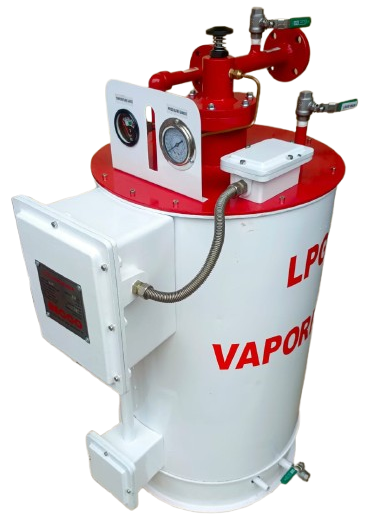
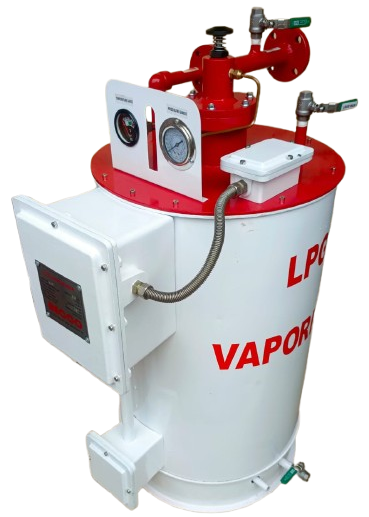
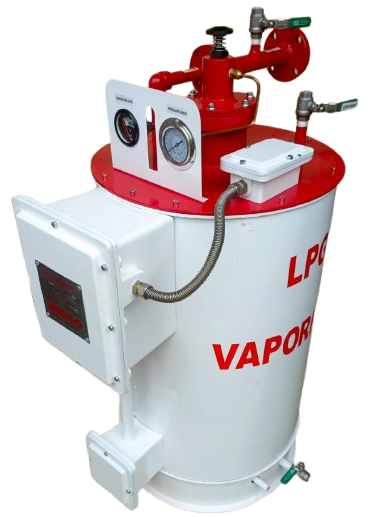
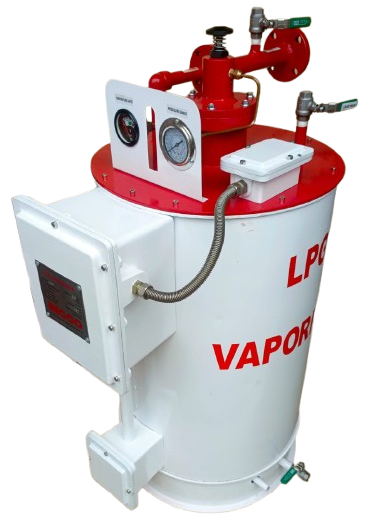
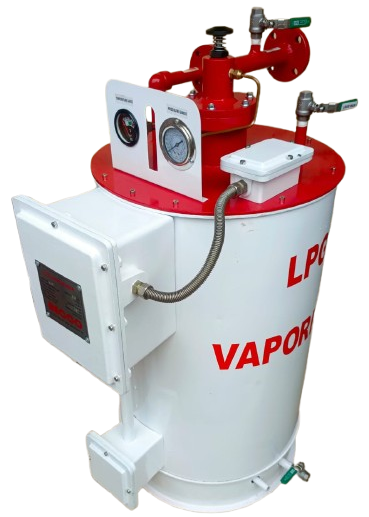
A direct fired vaporizer typically uses a gas burner to heat a water bath or heat exchange chamber. LPG flows through submerged coils while the burner raises the temperature of the surrounding medium. Combustion produces concentrated heat rapidly, allowing high output in a relatively compact footprint. This design is common in heavy industrial LPG propane vaporizer installations where demand can fluctuate sharply. The system generates its own thermal energy on site by burning LPG.

An electric vaporizer, including a dry electric LPG vaporizer, uses heating elements powered by electricity. These elements warm a thermal medium or heat exchanger surface, which in turn vaporises the incoming liquid LPG. There is no open flame. Temperature control is achieved through thermostats, sensors and control panels rather than combustion modulation. The heat source is external to the LPG fuel cycle, relying entirely on grid supply.

The difference in heat generation creates noticeable performance characteristics. Direct fired systems respond quickly to rising demand. When vapour consumption increases, the burner intensifies combustion almost immediately, raising water bath temperature and stabilising output. This rapid scaling makes them suitable for SNG blending systems and large air mix plants where sudden load changes occur. The behaviour of heat exchange under these conditions is further explained in the industrial LPG vaporizer working principle.

Electric vaporizers deliver more gradual and stable heating. They operate within predefined electrical load limits. While they provide consistent vapour generation, their ramp up speed depends on installed electrical capacity and heating element rating. In facilities with predictable and steady demand curves, this controlled behaviour can be advantageous. In environments with aggressive peak loads, it may require careful sizing to avoid pressure dips.

Energy efficiency is often misunderstood in this comparison. A direct fired system consumes LPG to vaporise LPG, which seems inefficient at first glance. However, combustion efficiency in industrial burners can be high, and in sites where electricity is expensive or unreliable, the system may still prove economically viable. Electric vaporizers avoid internal fuel combustion but transfer energy cost directly to the electrical tariff structure. The true efficiency discussion must therefore consider the broader energy ecosystem rather than isolated conversion percentages.

Installation requirements further highlight the contrast. Direct fired units require ventilation, flue gas management and combustion safety controls. They introduce a managed flame zone into the installation layout. Electric systems eliminate combustion but demand sufficient transformer capacity, properly rated cabling and explosion proof enclosures in hazardous zones. Electrical spark risk must be addressed with the same seriousness as flame exposure.

Maintenance profiles also differ. Direct fired vaporizers involve burners, ignition assemblies, flame detectors and gas valves that require periodic inspection and calibration. Electric units reduce combustion related servicing but introduce heating elements, relays and electronic controls that must be monitored for degradation. Neither technology is maintenance free. They simply shift technical responsibility from combustion engineering to electrical engineering.

For a deeper explanation of phase change fundamentals common to both systems, refer to how LPG vaporizers work. Ultimately, the engineering difference between direct fired and electric LPG vaporizers lies in how heat is produced, how quickly it adapts to load variation and how it integrates into your site’s infrastructure. The choice is technical, but its consequences extend well beyond the equipment itself.

Site Constraints That Quietly Decide the Right Vaporizer

When comparing Direct fired vs electric LPG vaporizers, many engineers begin with capacity charts and pricing tables. In reality, the decision is often made by constraints that are not immediately visible in procurement documents. Site conditions, regulatory boundaries and infrastructure limitations quietly shape what is technically feasible long before performance figures are debated.

One of the first constraints is electrical capacity. Electric vaporizers require stable and sufficient transformer load. In older industrial estates across Lahore and Karachi, many facilities operate with limited spare electrical margin. Adding a high capacity dry electric LPG vaporizer may require upgrading transformers, panels or internal distribution networks. This increases capital expenditure and introduces approval delays.

Direct fired systems, by contrast, rely on fuel combustion rather than electrical heating elements. They reduce dependence on grid capacity but introduce combustion zone requirements. Adequate ventilation, safe clearance from combustible materials and proper exhaust routing must be planned carefully. In congested industrial plots, spatial planning becomes critical.

Another decisive factor is hazardous area classification. Facilities handling LPG fall under strict safety expectations, particularly in relation to storage tank placement and vaporizer proximity. Electrical equipment in classified zones must comply with explosion proof standards. This applies strongly to electric vaporizers, where heating elements, contactors and wiring operate near flammable vapour.

Understanding these classifications in detail is essential. The framework outlined in LPG storage compliance in Pakistan explains how site layout and equipment zoning interact with regulatory expectations. The choice between vaporizer technologies often hinges on how easily compliance can be achieved within existing site boundaries.

Ambient temperature is another overlooked variable. In colder northern regions, winter temperatures can reduce natural vaporisation from LPG storage tanks. When demand rises during cold periods, the vaporizer must compensate quickly. Direct fired systems, with their aggressive heat generation, may respond more effectively in extreme conditions. Electric systems must be sized carefully to avoid underperformance during peak winter demand.

Storage tank configuration also plays a role. Larger LPG storage tank solutions require careful integration between tank withdrawal rate and vaporizer capacity. If the tank cannot support sustained liquid withdrawal under heavy load, even the most powerful vaporizer will struggle. Guidance in the LPG storage tank safety guide highlights how withdrawal design and pressure management directly affect downstream vapour stability.

Distance between storage tanks and process areas introduces further complexity. Longer pipeline runs increase pressure drop and heat loss risk. In such cases, system designers must account for pressure regulation and safety valve placement. Proper selection of safety components, including those discussed under LPG safety valves in Pakistan, becomes part of the vaporizer decision process.

Space availability is equally decisive. Direct fired vaporizers may require flue routing and combustion clearance, while electric units demand safe cable routing and electrical isolation panels. In compact sites such as retrofitted textile units or poultry facilities, layout constraints often eliminate one option before cost is even considered.

Engineers frequently discover that what appeared to be a simple comparison between direct fired and electric LPG vaporizers is actually governed by infrastructure realities. Electrical margin, zoning classification, tank configuration, ambient climate and spatial layout collectively narrow the field.

In many projects, the technically superior option on paper becomes impractical once site constraints are mapped. This is why early stage assessment of physical and regulatory limitations is not optional. It is the foundation upon which the vaporizer decision ultimately rests.

Safety, Compliance and Risk Exposure in High Load Environments

The comparison of Direct fired vs electric LPG vaporizers becomes far more serious when examined through the lens of safety and regulatory exposure. In high load industrial environments, vaporisation is not just a thermal process. It is a controlled interaction between flammable fuel, pressure systems and ignition sources. The risk profile differs meaningfully between technologies.

Direct fired vaporizers introduce an open combustion flame into the system. While the flame is contained within a burner chamber, it remains a deliberate ignition source. The safety architecture must therefore include flame failure detection, gas shut off interlocks and temperature controls. Any malfunction in ignition control can create immediate hazard escalation.

Electric vaporizers eliminate combustion, which at first glance reduces perceived fire risk. However, they introduce electrical components operating in potentially hazardous atmospheres. Contactors, heating elements and wiring must be properly rated for classified zones. Electrical spark risk is not theoretical. In poorly designed installations, it can be just as dangerous as an open flame.

This is where compliance standards become decisive. In Pakistan, OGRA approved LPG vaporizer installations are increasingly scrutinised for conformity with safety codes. Explosion proof LPG systems are not optional in regulated industrial environments. Equipment selection must align with hazard zone classification, especially in textile mills and processing plants where large fuel volumes are stored.

A comprehensive understanding of system level protection is outlined in certified LPG safety equipment in Pakistan. Safety valves, pressure regulators and shut off mechanisms must work in coordination with the vaporizer design itself. The vaporizer cannot be evaluated in isolation.

Leak detection adds another layer to the equation. High capacity industrial LPG propane vaporizer systems operate under significant pressure and flow rates. Even minor gasket failure or fitting degradation can release vapour rapidly. Advanced monitoring, including gas detection systems discussed in LPG leak detection technologies, reduces response time during incidents.

In direct fired systems, leak risk combines with flame presence. In electric systems, leak risk combines with potential electrical arc exposure. Both require engineered mitigation strategies.

Risk exposure also increases with system size. Larger capacity vaporizers such as those used in SNG blending plants or heavy textile operations amplify consequences of failure. Pressure instability, overheating or improper shutdown procedures can escalate quickly under high demand. Emergency planning is therefore essential. The structured response framework covered in LPG emergency response planning highlights the importance of drills, isolation valves and clear shutdown protocols.

Insurance considerations increasingly reflect this reality. Insurers assess combustion systems differently from purely electric installations. However, electrical fire risk and compliance documentation are equally reviewed. Poor documentation or uncertified components can increase premiums regardless of vaporizer type.

Another dimension often overlooked is human factor risk. Direct fired systems require combustion tuning and burner calibration. Electric systems require electrical diagnostics and control panel expertise. Skill gaps in maintenance teams increase operational exposure in both cases.

Ultimately, safety comparison between direct fired and electric LPG vaporizers is not about which is inherently safer. It is about which risk profile your site is structurally prepared to manage. Combustion control and flame supervision demand disciplined gas safety protocols. Electrical heating demands rigorous explosion proof design and grounding integrity.

In high load environments where production continuity is critical, the margin for error is narrow. Compliance is not a checklist exercise. It is a system level commitment that must align with the vaporizer technology selected.

Operational Cost, Energy Pricing and Long Term Performance

When analysing Direct fired vs electric LPG vaporizers, cost comparison often begins and ends with equipment price. That approach is incomplete. The real financial impact unfolds over years of operation, not at the point of purchase. Capital cost, energy pricing, maintenance exposure and downtime risk all shape the total cost of ownership.

In Pakistan, electricity tariffs have fluctuated significantly, especially for industrial consumers. Electric vaporizers transfer operating cost directly to the grid. A dry electric LPG vaporizer may appear attractive due to simpler mechanical design, but its financial performance is tied closely to per unit electricity rates. If tariffs rise or peak hour penalties increase, operating cost can escalate quickly.

Direct fired vaporizers, on the other hand, use LPG to generate the heat required for vapourisation. This means a portion of LPG is consumed internally to prepare LPG for process use. While that may appear inefficient on paper, it provides insulation from electricity volatility. In areas where power interruptions are common, fuel based heating offers continuity that grid dependent systems cannot guarantee.

Price comparisons such as LPG vaporizer 50 kg hr price or LPG vaporizer 25kg hour listings do not capture these downstream effects. Equipment cost is only one component. Energy structure determines operational trajectory. A more accurate projection often requires modelling consumption rates using tools like the LPG consumption calculator in Pakistan, especially in facilities with seasonal production cycles.

Maintenance cost is another differentiator. Direct fired systems involve burners, ignition assemblies and flame monitoring components. Over time, combustion systems require calibration, cleaning and occasional replacement of parts exposed to heat stress. Electric vaporizers reduce combustion servicing but introduce heating elements, control boards and electrical contactors that degrade gradually under load.

Neither system eliminates maintenance expense. They shift it into different technical domains. Structured servicing schedules, as outlined in LPG system service schedules, are essential for preventing unplanned downtime regardless of technology choice.

Downtime cost often exceeds energy cost in high output industries. If vapour generation becomes unstable, burner efficiency drops, temperature uniformity declines and production rejects increase. In textile finishing, even minor heat variation can affect fabric quality. In poultry heating systems, temperature instability affects livestock health.

This is where long term performance stability becomes more valuable than marginal energy savings. Direct fired vaporizers typically handle sudden load variation more aggressively, reducing pressure dips during surge demand. Electric systems provide stable controlled output but must be sized carefully to avoid overload during peak consumption.

Maintenance services also vary regionally. Access to skilled propane vaporizer maintenance services influences lifecycle performance. In industrial hubs where combustion technicians are readily available, direct fired systems may be easier to support. In sites with stronger electrical engineering teams, electric vaporizers may integrate more smoothly into existing maintenance frameworks.

The comparison therefore extends beyond fuel and electricity rates. It includes skill availability, service ecosystem maturity and spare parts accessibility.

Ultimately, the financial decision between direct fired and electric LPG vaporizers is not about lowest purchase price. It is about aligning energy cost exposure, maintenance structure and production stability with the realities of your site. Over a five to ten year horizon, those structural factors define the true economic outcome.

Application Based Selection Framework for Textile, Poultry and Process Industries

The debate around Direct fired vs electric LPG vaporizers becomes far clearer when examined through sector specific application demands. Different industries load their fuel systems in different ways. Vapour stability requirements, peak demand behaviour and seasonal variation all influence which technology aligns better with operational realities.

In the textile sector, particularly where SNG system for textile industry operations are installed, demand patterns are often continuous and high volume. Dyeing, stentering and finishing lines operate under tight thermal tolerances. Any pressure instability can affect fabric quality. In these cases, industrial LPG propane vaporizer systems must maintain consistent output under sustained load.

Direct fired vaporizers are frequently selected for textile applications due to their rapid response capability. When production ramps up or multiple lines operate simultaneously, the system must scale vapour generation quickly. Continuous load environments favour equipment that can handle aggressive thermal demand without delay. Integration with automated controls, as discussed under industrial LPG automation, further enhances stability.

Electric vaporizers can also serve textile facilities effectively, particularly where demand curves are predictable and electrical infrastructure is robust. However, in regions where winter grid reliability declines, dependency on electrical heating may introduce operational risk. Textile clusters in colder areas must account for seasonal performance under peak load.

Poultry farms present a different profile. LPG space heater for poultry farm applications depend heavily on temperature consistency during brooding seasons. Demand may not always be as high as textile processing, but reliability is critical. Sudden heating failure directly impacts livestock health and mortality rates.

In such environments, smaller capacity vaporizers are common. Electric units may offer simplicity where load is moderate and stable. However, in larger integrated poultry operations with multiple sheds, direct fired systems provide resilience during cold spells. Seasonal fluctuations discussed in LPG for poultry farms in Pakistan often dictate capacity planning.

Process industries such as food manufacturing and bakeries add another dimension. Baking ovens and food processing lines require precise and uniform heat input. Sudden vapour dips can affect product consistency. Facilities described in LPG for bakeries in Pakistan typically operate in batch cycles rather than fully continuous load.

In these cases, electric vaporizers may provide controlled and stable heating when electrical infrastructure supports them. Their steady thermal behaviour suits environments where demand does not spike aggressively. However, larger food processing plants integrating LPG air mix plant systems may still favour direct fired vaporizers for higher capacity blending operations.

Turnkey SNG solutions introduce even more complexity. Synthetic Natural Gas SNG systems in Pakistan must replicate natural gas characteristics closely. Vapour flow, air mixing ratio and pressure stability all depend on consistent upstream vaporisation. Direct fired systems are often preferred in high capacity SNG blending due to rapid scaling ability, while electric systems are selected where electrical cost and reliability remain favourable.

Application context ultimately simplifies the Direct fired vs electric LPG vaporizers decision. Textile operations under heavy continuous load often lean toward direct fired technology. Poultry and moderate process applications may adopt electric systems where grid stability allows. High capacity SNG blending typically favours aggressive thermal response.

Rather than asking which vaporizer is superior in abstract terms, engineers must examine demand pattern, seasonality, load variability and infrastructure strength. The right technology is the one that matches operational rhythm, not simply nameplate capacity.

Installation, Maintenance and Lifecycle Management Strategy

When evaluating Direct fired vs electric LPG vaporizers, installation and long term service strategy often determine whether the system performs as designed over a ten year horizon. A vaporizer is not a standalone asset. It becomes part of a broader fuel infrastructure that requires disciplined commissioning, preventive maintenance and technical oversight.

Installation complexity differs noticeably between technologies. Direct fired vaporizers require careful burner alignment, combustion air management and flue routing. Clearances must be respected to ensure safe operation. Gas line integrity, ignition system testing and flame safeguard calibration are critical before commissioning. A poorly tuned combustion system can reduce efficiency and increase carbon deposits over time.

Electric vaporizers remove combustion from the equation but introduce electrical design challenges. Load calculations must confirm transformer capacity. Cable sizing, earthing systems and explosion proof enclosures must be verified before energising heating elements. In hazardous LPG zones, electrical isolation and spark containment are non negotiable. Commissioning is as much an electrical engineering exercise as a gas system validation.

Regardless of technology, structured installation by trained professionals significantly reduces long term failure rates. Improper regulator selection or pipeline integration can compromise even the most advanced vaporizer. Coordination with certified installers, such as those outlined in LPG regulator installers in Lahore, ensures system level integrity from tank withdrawal to burner inlet.

Maintenance strategy further separates short term performance from sustainable operation. Direct fired vaporizers require periodic inspection of burners, flame sensors and combustion chambers. Soot accumulation, ignition electrode wear and valve degradation must be monitored systematically. Scheduled servicing reduces the risk of sudden shutdown during peak production.

Electric vaporizers shift maintenance focus toward heating elements, relays and control panels. Over time, heating elements can degrade due to thermal cycling. Contactors may experience wear from repeated switching. Preventive electrical inspection reduces the chance of unexpected failure under load.

Troubleshooting protocols differ accordingly. Combustion related issues such as flame instability or overheating are diagnosed differently from electrical faults such as short circuits or element burnout. A structured diagnostic approach, as described in LPG vaporizer issues diagnosis, helps maintenance teams isolate root causes quickly.

Spare parts ecosystem availability is another lifecycle consideration. Direct fired systems rely on burner components, ignition systems and gas valves. Electric systems depend on heating elements, control modules and electrical protection devices. Access to reliable LPG vaporizer parts and accessories determines downtime exposure. Broader component availability through sources such as burner spare parts in Pakistan strengthens long term support capability.

Lifecycle planning must also include scheduled shutdown windows. High demand industrial facilities cannot afford reactive maintenance during production peaks. Structured servicing intervals, detailed in LPG system service schedule, allow teams to align inspection and component replacement with planned downtime.

Ultimately, installation and lifecycle management define whether direct fired or electric LPG vaporizers deliver their expected value. The more complex the production environment, the more important disciplined commissioning and preventive servicing become. Technology choice influences maintenance discipline, but long term reliability depends on execution rather than equipment alone.

Strategic Decision Matrix and Future Proofing Your LPG Infrastructure

The comparison of Direct fired vs electric LPG vaporizers ultimately moves beyond engineering detail and into strategic infrastructure planning. By the time capacity, compliance and maintenance factors are evaluated, the question becomes broader. Which technology aligns with your site’s long term energy direction, regulatory exposure and expansion roadmap?

A practical decision matrix begins with four structural considerations. First, energy dependency. If your facility operates in a region where electricity tariffs are volatile or grid reliability is inconsistent, relying entirely on electrical heating introduces external vulnerability. Direct fired systems reduce that dependency by internalising thermal generation.

Second, load behaviour. Continuous high volume SNG blending plants and heavy textile operations typically require aggressive response capability. Direct fired vaporizers often perform well under rapid load escalation. Facilities with steady, moderate demand curves and strong electrical infrastructure may find electric systems appropriate.

Third, compliance complexity. Both technologies must meet OGRA approved LPG vaporizer expectations and hazardous area standards. However, sites already managing combustion equipment such as industrial boilers may integrate direct fired vaporizers more naturally. Facilities operating highly controlled electrical environments may prefer maintaining a unified electrical safety framework.

Fourth, expansion potential. Many industrial plants in Pakistan are scaling gradually. Textile exporters, food processors and air mix plant operators often expand capacity in phases. When evaluating industrial LPG propane vaporizer options, engineers should consider whether the system can scale without complete replacement. Modular design and capacity headroom become important.

Future proofing also requires anticipating automation trends. Smart monitoring, remote diagnostics and integrated pressure management are becoming more common. Infrastructure that supports digital integration will age better than purely manual systems. This applies regardless of whether the vaporizer is direct fired or electric.

Turnkey SNG solutions increasingly demand consistent vapour stability integrated with automated air mixing and control panels. Facilities planning to expand into Synthetic Natural Gas systems in Pakistan must ensure that their vaporizer selection supports accurate blending ratios and responsive control logic.

Location specific support is equally strategic. Access to LPG vaporizer suppliers in Lahore or nearby industrial hubs influences long term service resilience. Availability of trained technicians, spare parts inventory and regulatory documentation reduces operational uncertainty over time.

The strategic view therefore reframes the decision. It is not a competition between flame and heating element. It is a choice about how your facility intends to manage energy independence, compliance exposure and production scalability over the next decade.

For organisations assessing system upgrades or new installations, a structured technical evaluation aligned with site constraints and growth plans is essential. Indus 3 provides engineering consultation and supply support for LPG vaporizers in Pakistan, helping industrial operators align equipment selection with regulatory standards and operational goals. Further details about available systems can be explored at Indus 3 LPG Vaporizers or by reviewing the company overview at About Indus 3.

Selecting the right vaporizer is not about choosing the most popular option. It is about building a fuel system architecture that remains stable, compliant and scalable as your site evolves.

Industrial Gas Pressure Regulator Guide 2025

Industrial gas pressure regulator guide showing a complete gas train assembly with regulator and safety valves

Industrial Gas Pressure Regulators: Buyer Guide & Safety Ratings

The Role of Industrial Gas Pressure Regulators in Pakistan’s Energy Infrastructure

Any serious industrial gas pressure regulator guide must begin with infrastructure reality. In Pakistan, pressure regulation is not a component choice. It is an operational survival requirement.

Industrial facilities operate within a supply framework governed by Sui Northern Gas Pipelines Limited (SNGPL), RLNG imports, and variable upstream transmission pressures. Whether the plant is located in Lahore, Faisalabad, Sundar Industrial Estate or a Special Economic Zone, inlet pressure instability is common. That instability must be engineered out at the plant level.

Re-Gasified Liquefied Natural Gas RLNG has improved supply continuity, but it has also introduced variability in calorific value and line pressure. Textile mills in Faisalabad running continuous dyeing lines, food processors operating 24 hour boilers, and generator-based captive power units in Lahore all depend on stable downstream pressure.

Without proper regulation, upstream fluctuation translates directly into burner instability, incomplete combustion, production loss and safety risk.

An industrial gas pressure regulator acts as the boundary between utility supply and process reliability. It reduces high inlet pressure to a stable working pressure suitable for burners, boilers, furnaces or generators. More importantly, it maintains that pressure despite load changes and supply variation.

This is where many plants underestimate system design.

The regulator is not a standalone device. It sits inside a structured gas train, typically including filters, safety shut-off valves and relief mechanisms. When engineers specify a regulator without considering total gas train behaviour, they expose the plant to creeping pressure drift and lock-up failure.

Industrial users operating under SNGPL industrial tariff structures also face economic pressure. Gas allocation constraints, seasonal curtailment and priority sector policies mean many facilities must optimise consumption efficiency. Stable pressure directly improves combustion control, reducing excess air and wasted fuel.

Plants switching from diesel to gas for cost reasons often consult resources such as the Industrial Gas Regulator Pakistan guide to understand sizing and compatibility. However, regulation strategy must be aligned with application. A natural gas regulator for generator applications in Lahore behaves differently from a regulator feeding a multi-burner boiler.

In textile sectors, for example, rapid load changes occur when steam demand spikes. A poorly sized regulator will exhibit droop under load, reducing downstream pressure and affecting steam stability. In food processing, where flame precision affects product consistency, pressure hunting becomes visible in quality variation.

Similarly, facilities relying on LPG backup systems must coordinate regulator behaviour with vaporiser performance. The interaction between vaporisation rate and pressure control is explained in technical discussions such as Industrial LPG Regulator Guide. Even when the primary fuel is natural gas, contingency systems require equal precision.

In Lahore and surrounding industrial hubs, demand for industrial gas pressure regulator solutions has grown alongside captive power generation. Gas engines are sensitive to pressure variation. Even minor deviation can cause knock, derating or shutdown. Regulation here is not optional; it is central to uptime.

From a compliance perspective, OGRA safety expectations require plants to maintain controlled downstream pressure within defined limits. Overpressure incidents can trigger penalties, forced shutdown or equipment damage.

Therefore, an industrial gas pressure regulator guide is not about product selection alone. It is about understanding how Pakistan’s energy supply structure behaves under stress, and how engineering decisions inside the plant determine operational resilience.

Pressure control, when designed properly, becomes invisible. When designed poorly, it becomes the root cause of downtime, inefficiency and risk.

The difference lies in system-level thinking.

Understanding Regulator Types: Direct Operated, Pilot Operated and Multi Stage Systems

An effective industrial gas pressure regulator guide must move beyond brand names and focus on operating principles. The way a regulator controls pressure determines how it behaves under load, how stable combustion remains, and how resilient the plant is to upstream fluctuation.

At the most fundamental level, regulators fall into two mechanical categories: direct operated and pilot operated systems. Each has advantages, but neither is universally suitable.

A direct operated regulator uses a spring and diaphragm arrangement to balance outlet pressure against spring force. As downstream demand increases, outlet pressure drops slightly, allowing the valve to open wider. This simplicity makes it robust and cost-effective for small to medium industrial loads.

However, direct operated systems exhibit droop under higher flow rates. As demand rises, the outlet pressure falls before stabilising. In applications such as small boilers or unit heaters, this is acceptable. In high precision processes, it becomes problematic.

By contrast, a pilot operated regulator uses a smaller control regulator, known as a pilot, to modulate the main valve. This two-layer control system significantly reduces droop and improves response stability. It is better suited for large industrial boilers, textile mills and continuous manufacturing lines where pressure consistency directly impacts output.

In facilities across Lahore and Faisalabad, pilot operated systems are increasingly preferred for high capacity applications because they manage supply pressure effect more effectively. Supply pressure effect refers to the influence of upstream pressure variation on downstream output. Where RLNG pressures fluctuate, pilot systems maintain tighter control.

Another distinction is between single stage gas regulator and multi-stage gas regulator configurations.

A single stage system reduces inlet pressure to final working pressure in one step. It is mechanically simpler but may struggle when inlet pressures are very high or when downstream demand varies rapidly.

Multi-stage systems divide pressure reduction across two regulators. The first stage reduces high transmission pressure to an intermediate level. The second stage fine-tunes pressure to burner requirement. This arrangement improves stability and reduces stress on diaphragms and internal components.

In high pressure LPG applications, multi-stage arrangements are common, particularly where vaporiser output must remain stable. Engineering considerations around freezing and pressure drop are often explored in references such as the Industrial LPG Regulator Guide.

Another important concept is the pressure compensated regulator, which incorporates an inlet pressure compensation diaphragm. This feature reduces the impact of upstream variation on outlet pressure. In environments where supply pressure swings during peak industrial hours, compensation prevents overcorrection.

For ratio control burners, a zero governor or ratio control regulator maintains a precise gas to air ratio. Instead of holding fixed outlet pressure, it matches gas flow proportionally to combustion air pressure. This is common in industrial furnaces and modulating burner systems.

Understanding these distinctions is not academic. It affects how the gas train assembly behaves under stress. A direct operated regulator in a high demand textile boiler may cause steam pressure fluctuation. A pilot operated unit, properly sized, will stabilise output.

Engineers also need to consider lock-up pressure. This is the pressure at which the regulator fully closes when there is no downstream demand. Poorly specified regulators can lock up above safe operating limits, increasing risk unless secondary protection such as slam shut valves is installed.

Manufacturers such as Emerson Fisher and Dungs provide technical specifications detailing droop curves, flow capacity and inlet pressure limits, available through official engineering documentation such as Emerson’s regulator catalogue at https://www.emerson.com/.

The choice between direct and pilot operated systems ultimately depends on flow rate, required accuracy, inlet pressure range and process sensitivity.

An industrial gas pressure regulator guide must therefore evaluate operating physics before evaluating price. In industrial settings, stability is often worth more than initial cost savings.

The regulator is not just a valve. It is a dynamic control mechanism shaping how energy enters the production process.

Key Components Inside an Industrial Gas Train Assembly

An industrial gas pressure regulator guide would be incomplete without examining the full gas train assembly. The regulator may be the central control element, but it does not operate in isolation. In industrial plants, safety and stability depend on how each upstream and downstream component interacts.

A properly engineered gas train is structured in layers. From inlet to burner, each device performs a defined function. When one layer is removed or poorly specified, system integrity weakens.

The first component typically encountered is the gas filter, often DN25 or DN50 depending on pipe size and flow capacity. In Pakistan’s supply environment, gas can carry dust, pipeline debris and moisture. Without filtration, regulator seats and diaphragms wear prematurely. This increases the risk of regulator creep and unstable lock-up.

After filtration, the gas enters the primary pressure regulator. In multi-stage systems, a first stage regulator reduces transmission pressure to an intermediate level before a secondary regulator stabilises it for burner use. This arrangement reduces stress on internal components and improves downstream consistency.

Beyond pressure reduction, safety becomes the priority.

Most industrial gas trains incorporate a Gas Safety Shut-Off Valve SSV, commonly referred to as a slam shut valve. These valves activate automatically when downstream pressure exceeds a preset limit. In overpressure scenarios caused by regulator failure, the slam shut valve isolates supply before damage occurs.

Given increasing awareness of risk, engineers frequently evaluate slam shut valve price Pakistan alongside regulator selection. However, price should never outweigh response time, reset mechanism reliability and certification compliance.

Another critical layer is the Safety Relief Valve SRV. Unlike slam shut valves, SRVs release excess pressure gradually rather than isolating flow entirely. They act as pressure balancing devices when small overpressure events occur. In many industrial boiler applications, both SSV and SRV are installed to provide redundancy.

Protection mechanisms also include Over Pressure Shut-Off OPSO and Under Pressure Shut-Off UPSO devices. OPSO protects downstream equipment from pressure spikes. UPSO prevents burner operation when pressure drops below safe combustion limits. In textile mills and food processing units, underpressure can cause flame instability, leading to incomplete combustion and safety risk.

Many modern systems integrate OPSO and UPSO into the regulator body itself, while others use standalone devices within the train. The configuration depends on capacity and compliance requirements.

Further downstream, double block safety valves are often installed before the burner manifold. These ensure complete isolation during shutdown cycles. Industrial burners require precise sequencing, and gas train integrity directly affects ignition safety.

In facilities upgrading combustion systems, engineers frequently consult component-specific resources such as LPG Safety Valves Pakistan and broader overviews like Certified LPG Safety Equipment Pakistan to align equipment with regulatory expectations.

It is also important to understand pipe sizing and connection integrity. Improper fittings introduce turbulence and pressure loss before gas reaches the regulator. Guidance on fittings and compatibility is discussed in technical references such as the LPG Hose and Fitting Guide.

International manufacturers including Kromschroder and Madas provide standardised gas train layouts for industrial burners. Their documentation illustrates how filters, regulators, safety valves and monitoring devices are layered for fail-safe operation.

What often differentiates a compliant installation from a risky one is not the presence of a regulator, but the integration logic of the entire train.

An industrial gas train assembly should be viewed as a coordinated safety system rather than a collection of parts. Each device anticipates a specific failure mode. Together, they ensure pressure control remains predictable, combustion remains stable and overpressure risk is contained.

When engineers design at system level rather than component level, reliability improves dramatically.

Safety Ratings, Compliance and OGRA Regulatory Framework

Any industrial gas pressure regulator guide must address compliance with the same seriousness as mechanical design. In Pakistan, gas infrastructure is regulated through a layered framework involving OGRA safety standards for gas, SNGPL engineering approvals, and internal plant audits. Equipment selection that ignores compliance eventually becomes a liability.

The Oil and Gas Regulatory Authority sets the overarching regulatory environment for gas transmission, distribution and industrial usage. While OGRA does not approve individual regulators model by model, it enforces compliance standards covering pressure limits, safety devices, inspection protocols and operational responsibility. Official regulatory context can be reviewed through the authority’s documentation at https://www.ogra.org.pk/.

At plant level, compliance begins during the SNGPL industrial gas connection procedure. When a facility applies for a new connection or load enhancement, SNGPL requires submission of a gas train layout, pressure reduction scheme and safety device configuration. Regulators must be rated for inlet pressure class, flow capacity and downstream design limits.

In high demand zones such as Sundar Industrial Estate and Quaid-e-Azam Business Park SEZ, engineering scrutiny has increased. Inspectors examine not only regulator capacity but also whether Safety Relief Valve SRV and Over Pressure Shut-Off OPSO mechanisms are installed correctly.

Pressure reduction systems must demonstrate safe lock-up behaviour. If a regulator locks up above rated burner pressure, an OPSO device is mandatory. If venting occurs, discharge must be safely routed. These are not theoretical considerations; they are conditions for connection approval.

Another compliance factor is certification origin. Industrial regulators imported from Europe often carry CE marking and conform to EN standards. American models may comply with ANSI or CSA specifications. Local authorities expect documentation proving material suitability, pressure rating and temperature class.

For LPG-based systems, compliance extends further. Storage, transport and emergency protocols are governed by safety frameworks detailed in technical guidance such as LPG Storage Compliance in Pakistan and operational planning documents like the LPG Emergency Response Plan. Even when the primary fuel is natural gas, backup LPG installations must meet similar safety thresholds.

Inspection frequency is another critical element. OGRA and distribution companies may conduct random audits. In addition, insurance providers increasingly require documented maintenance schedules. Preventive inspection regimes aligned with resources such as LPG System Service Schedule reduce risk exposure and support compliance reporting.

Safety ratings also determine installation environment. Indoor regulators require vent limiting features or controlled exhaust routing. Outdoor installations must consider weather protection and corrosion resistance. Environmental exposure in coastal regions or industrial zones with chemical emissions accelerates material degradation if improperly specified.

It is also essential to consider underpressure risk. While overpressure is more visible, Under Pressure Shut-Off UPSO systems prevent flame instability during supply dips. In boilers and furnaces, underpressure can cause delayed ignition or flame lift-off. Compliance standards increasingly emphasise protection against both extremes.

Regulatory enforcement in Pakistan has tightened over the past decade. Industrial accidents have resulted in greater oversight of gas handling systems. Engineering managers now recognise that regulator selection is part of risk governance, not merely procurement.

A compliant regulator is not defined only by brand or cost. It is defined by documented pressure class, integrated safety devices, traceable certification and alignment with national regulatory expectations.

In regulated energy infrastructure, safety ratings are not optional enhancements. They are the baseline requirement for operational continuity and legal protection.

Common Failure Modes: Creep, Hunting, Droop and Supply Pressure Effect

No industrial gas pressure regulator guide is complete without examining how regulators fail in real operating conditions. Most breakdowns are not dramatic ruptures. They are subtle performance degradations that compromise efficiency long before they trigger alarms.

Understanding failure modes allows engineers to design preventive strategies rather than reactive repairs.

One of the most common issues is regulator creep. Creep occurs when the regulator valve seat does not fully seal after downstream demand stops. Gas slowly leaks past the seat, causing outlet pressure to rise above the setpoint. Over time, this small pressure rise can activate safety relief valves or stress burner components.

Creep is typically caused by worn seats, debris contamination or diaphragm fatigue. In Pakistan’s industrial supply environment, inadequate filtration increases the likelihood of seat damage. This reinforces why upstream gas filters are not optional components.

A related but distinct issue is hunting. Hunting refers to rapid oscillation of outlet pressure. Instead of stabilising at the setpoint, the regulator repeatedly overcorrects. This results in fluctuating flame intensity, uneven steam pressure and unstable process temperatures.

Hunting often appears in systems where the regulator is oversized for the application. When the flow demand is small relative to regulator capacity, the control mechanism becomes overly sensitive. Incorrect spring selection can also contribute to oscillation.

Then there is droop. Droop is the natural decline in outlet pressure as flow increases. Every regulator has a droop curve. The question is how much droop is acceptable for the application.

In small industrial heaters, minor droop may not affect performance. In textile dyeing lines or food processing boilers, even a small pressure drop can reduce thermal consistency. Pilot operated regulators generally exhibit lower droop compared to direct operated models, which is why they are preferred in high precision operations.

Another critical parameter is lock-up pressure. This is the pressure at which the regulator fully closes when downstream demand ceases. If lock-up pressure exceeds burner design limits, the system relies on secondary protection such as OPSO or SRV devices to prevent damage.

Perhaps less discussed but equally important is Supply Pressure Effect SPE. SPE describes how changes in inlet pressure influence outlet pressure. In regions where upstream transmission pressure fluctuates during peak industrial hours, regulators without proper inlet pressure compensation can pass those variations downstream.

Modern pressure compensated regulators use an inlet pressure compensation diaphragm to minimise SPE. Without compensation, RLNG pressure variation can translate into unstable burner behaviour.

Mechanical degradation is another factor. Diaphragms harden over time due to thermal cycling. Springs lose calibration strength. Internal vent limiters clog with debris. Each of these conditions subtly shifts regulator performance away from specification.

Routine inspection and calibration reduce these risks. Facilities that integrate preventive checks into maintenance schedules often rely on structured programmes similar to those described in LPG System Service Schedule. Although developed for LPG systems, the same principles apply to natural gas regulator maintenance.

When symptoms appear, diagnostic references such as LPG Vaporizer Issues Diagnosis offer a framework for isolating pressure-related instability within broader combustion systems.

In some cases, external calibration services are required. Pressure calibration services in Lahore and other industrial hubs ensure regulators are reset to accurate setpoints following diaphragm or spring replacement.

Manufacturers such as Emerson and Tescom publish performance curves detailing droop, lock-up and SPE behaviour under varying conditions. Reviewing official documentation helps engineers compare expected performance against field observations.

The key insight is that regulator failure rarely announces itself loudly. It emerges gradually through pressure drift, combustion inconsistency or rising fuel consumption.

An industrial gas pressure regulator guide must therefore treat maintenance and failure analysis as core engineering disciplines, not afterthoughts.

Stability is not only achieved at installation. It is preserved through understanding how control systems age under real operating stress.

Brand and Model Comparison: Fisher, Pietro Fiorentini, Vanaz, Dungs and Others

A serious industrial gas pressure regulator guide must eventually confront brand selection. While operating principles determine baseline behaviour, manufacturing precision, material quality and long term reliability differ significantly across brands.

In Pakistan’s industrial market, several international and regional manufacturers dominate specification lists.

The Fisher 627-496 series remains one of the most widely recognised regulators in medium to high capacity industrial installations. Known for stable performance under fluctuating inlet pressures, the Fisher 627 regulator is often specified for boiler gas trains and industrial furnaces. Engineers evaluating Fisher 627 regulator price in Pakistan typically weigh its higher upfront cost against durability and predictable droop curves.

Fisher regulators perform well where RLNG pressure variation is significant. Their pilot operated configurations offer strong resistance to supply pressure effect and improved lock-up stability.

European manufacturers such as Pietro Fiorentini have also gained traction in Pakistan. The Pietro Fiorentini Governor, available in standard and high capacity versions, is common in transmission reduction stations and larger industrial users. For more refined control, the Pietro Fiorentini FE series two-stage regulators offer enhanced stability for sensitive applications.

The Pietro Fiorentini Reflux 819 is often used in distribution and intermediate pressure control scenarios, particularly where gradual modulation is required. These units are valued for smooth response under varying load conditions.

Italian manufacturer Madas provides models such as the Madas RG/2MC DN25, frequently integrated into compact gas train assemblies for industrial burners. These regulators are typically used in mid range boiler systems and light industrial applications.

Indian manufacturer Vanaz has established a strong presence in the region due to competitive pricing and acceptable performance under South Asian gas conditions. The Vanaz R-2301 ammonia regulator and Vanaz R-2322 high pressure regulator are commonly found in specialised applications. The Vanaz V-4321 slam shut off valve is frequently paired with primary regulators to provide overpressure protection.

German manufacturer Dungs produces high quality combustion control components. The Dungs FRS gas pressure regulator is widely used in burner gas trains due to its compact design and integrated safety features. In European engineered burner packages, Dungs is often specified alongside Kromschroder components such as the Kromschroder VGBF 80F10-3.

North American manufacturers such as Maxitrol RV48L gas regulator and Belgas P289 back pressure regulator serve niche applications, particularly where low pressure distribution or back pressure control is required.

In Pakistan’s local manufacturing segment, brands such as Pak Prime industrial gas regulator and Saffire single stage and multi-stage regulators offer cost effective alternatives. These are commonly installed in smaller plants where budget constraints outweigh the need for advanced pilot operated control.

When comparing brands, engineers should evaluate several criteria:

• Flow capacity relative to plant demand
• Droop performance at peak load
• Lock-up pressure behaviour
• Material compatibility with gas quality
• Availability of spare parts locally
• Certification documentation

Price alone does not determine lifecycle cost. In high demand textile mills or continuous process industries, premature diaphragm wear or unstable pressure behaviour can exceed initial savings within months.

Facilities exploring industrial regulator options often review broader technical context such as the Industrial Gas Regulator Pakistan guide or evaluate complementary combustion components through resources like Burner Spare Parts Pakistan.

Official manufacturer documentation, including technical data sheets from Fisher at https://www.fisherregulators.com/ and Pietro Fiorentini at https://www.fiorentini.com/, should always be reviewed before specification.

Ultimately, brand comparison is not about prestige. It is about matching regulator behaviour to process sensitivity, gas supply variability and maintenance capacity.

In industrial pressure control, reliability is measurable. It appears in stable flame, predictable steam pressure and reduced emergency shutdown events.

That is where true value emerges.

Pricing Benchmarks in Pakistan 2025 and SNGPL Industrial Connection Considerations

Any practical industrial gas pressure regulator guide must address pricing realities. Engineers may design for performance, but procurement teams operate within budget constraints shaped by market volatility, import duties and currency fluctuations.

In 2025, industrial gas regulator pricing in Pakistan is influenced by three core factors: brand origin, pressure class and flow capacity.

Imported European and American pilot operated regulators such as Fisher or Pietro Fiorentini typically command a premium due to precision machining, certification documentation and import costs. Exchange rate variation significantly affects final landed price. For large capacity units used in boiler gas trains, pricing may vary widely depending on diaphragm size and body material.

Mid range regulators, including Madas or Dungs units, often sit in the balanced segment. They provide strong performance for industrial burners without reaching the premium bracket of transmission-grade regulators.

Locally assembled or regionally manufactured regulators such as Pak Prime or certain Saffire models offer cost advantages. However, engineers must carefully assess long term durability, particularly under fluctuating RLNG supply pressures.

Specific price categories in the market include:

High pressure LPG regulator 1 inch price typically varies based on whether the unit is single stage or multi-stage and whether it includes integrated OPSO.
Low pressure gas regulator half inch price remains more accessible but is generally suited for smaller process heaters or limited flow applications.
Slam shut valve price Pakistan fluctuates depending on trip mechanism type and reset design.

While price comparison is essential, installation approval adds another dimension.

Under the SNGPL industrial gas connection procedure, facilities must submit regulator specifications as part of their load approval documentation. The regulator must match inlet pressure class and downstream design limits. SNGPL engineers often verify whether the gas train includes appropriate shut-off and relief mechanisms before connection activation.

Industrial tariff structure also influences system design. The SNGPL industrial tariff varies depending on sector classification and supply type, including RLNG allocation. Facilities operating under higher tariff categories often seek efficiency improvements through stable pressure control and improved combustion tuning.

In industrial estates such as Sundar Industrial Estate and Quaid-e-Azam Business Park SEZ, infrastructure standards are increasingly enforced. Gas department inspections may examine pressure reduction station layout and confirm that regulator capacity aligns with approved load.

For facilities evaluating cost optimisation or considering fuel switching strategies, tools such as the LPG Consumption Calculator Pakistan and analytical insights like Switch to LPG from Diesel help contextualise fuel economics beyond regulator price alone.

It is also important to recognise hidden costs:

• Incorrectly sized regulators increase fuel wastage due to unstable combustion.
• Frequent diaphragm replacement increases maintenance expense.
• Non compliant installations risk forced shutdown or penalties.

When evaluating industrial gas regulator price in Pakistan 2025, lifecycle cost must be included in analysis. A lower cost direct operated regulator may appear attractive initially but can produce higher droop under peak demand, affecting boiler efficiency.

Imported regulators may involve longer lead times. Spare parts availability and after-sales technical support must be considered, especially in industrial hubs such as Lahore and Faisalabad.

Official tariff and infrastructure guidance can be reviewed through SNGPL documentation at https://www.sngpl.com.pk/ and regulatory oversight information at https://www.ogra.org.pk/.

Ultimately, pricing decisions should balance capital expenditure with operational reliability. In industrial pressure control, unstable performance often costs more than the regulator itself.

A disciplined procurement strategy aligns engineering performance criteria with regulatory approval and long term operating economics.

Selection Framework for Engineers: How to Choose the Right Industrial Gas Pressure Regulator

Every industrial gas pressure regulator guide eventually comes down to one question: how should engineers actually decide?

By this stage, we have examined infrastructure realities, regulator types, safety devices, failure modes and pricing. The final step is converting that knowledge into a structured selection framework that reduces risk and improves long term stability.

The first decision point is inlet pressure classification.
Engineers must confirm maximum and minimum inlet pressure from SNGPL or RLNG supply. Without this range, regulator sizing becomes guesswork. In high fluctuation zones, a pressure compensated regulator or pilot operated system is often more suitable.

Second is required flow capacity at peak load.
The regulator must handle maximum burner or boiler demand without excessive droop. Textile mills, food processors and generator installations typically experience load spikes. A pilot operated regulator offers tighter pressure control under varying demand compared to a basic direct operated unit.

Third is downstream equipment sensitivity.
High precision combustion systems and modulating burners require stable pressure. In such cases, droop tolerance must be minimal. Where ratio control burners are installed, integration with zero governor or ratio control systems must be considered within the overall gas train assembly.

Fourth is safety architecture.
Selection does not end with the regulator body. Engineers must determine whether the system requires integrated OPSO, UPSO, external slam shut valves or separate SRVs. Compliance with OGRA safety standards for gas and SNGPL approval procedures must be verified before procurement.

For industrial facilities in Lahore and surrounding zones, inspection scrutiny has increased. A properly documented regulator specification simplifies approval and reduces commissioning delays. Facilities evaluating installations in the region often reference technical resources such as the Industrial Gas Regulator Pakistan guide to ensure correct configuration.

Fifth is maintenance capability.
Even the most advanced regulator will degrade without periodic inspection. Availability of spare diaphragms, calibration support and local technical expertise must factor into brand selection. Maintenance planning should align with structured servicing schedules similar to those outlined in LPG System Service Schedule.

Sixth is fuel contingency planning.
Facilities operating dual fuel systems must evaluate how regulators interact with LPG backup arrangements. Stability between vaporiser output and pressure control becomes critical during fuel switching. Broader regulator principles are explored in the Industrial LPG Regulator Guide, which complements natural gas system design.

Finally, engineers must assess long term scalability.
Will plant expansion require higher flow? Will additional burners be installed? Selecting a regulator that operates near maximum capacity from day one leaves little margin for growth.

A practical engineering checklist therefore includes:

• Confirm inlet pressure range
• Calculate peak flow requirement
• Evaluate droop tolerance
• Determine required safety shut-off configuration
• Verify certification and compliance documentation
• Assess spare part availability
• Consider expansion margin

In industrial environments, regulator choice is not merely a procurement decision. It shapes combustion stability, fuel efficiency, compliance exposure and plant uptime.

For facilities seeking project level consultation or specification review, Indus 3 works with engineers across industrial hubs to evaluate system requirements and compliance alignment. Technical discussions can be initiated through the Contact page for structured assessment.

The most reliable systems are rarely the cheapest or the most complex. They are the ones engineered with clarity, documentation and foresight.

Pressure control, when properly selected, becomes invisible to operations. And in industrial energy systems, invisibility is often the highest measure of success.

Top Industrial LPG Vaporizers 2026 Guide

Industrial setup showing Top industrial LPG vaporizers 2026 in a factory environment

Top LPG Vaporizers for Industrial Use in 2026: Features & Comparisons

The Industrial LPG Landscape in 2026: Why Vaporizer Selection Now Demands Precision

Industrial LPG demand in 2026 is no longer driven by fuel switching alone. It is being shaped by reliability pressures, rising electricity tariffs, supply volatility, and stricter compliance expectations across South Asia and the UK.

For many facilities, LPG has shifted from backup fuel to primary energy source. That transition changes everything about how vapourisation systems must be selected and engineered.

The conversation around Top industrial LPG vaporizers 2026 is no longer about brand preference. It is about performance certainty under load.

Manufacturing and Continuous Load Environments

Manufacturing plants, particularly in textiles, food processing, ceramics and steel fabrication, operate on tight thermal margins. A vaporizer failure does not merely reduce efficiency. It halts production.

Modern LPG vaporizers for manufacturing plants must now handle fluctuating demand curves, especially in batch processing lines. Cold start requirements, sudden peak draw and shift-based load variation all influence vaporizer capacity planning.

The engineering emphasis has moved from nominal output rating to stable gas phase delivery under stress.

Facilities reviewing LPG vaporizer applications are increasingly evaluating redundancy design and parallel vaporizer configurations to prevent downtime.

Power Generation and Hybrid Energy Systems

In distributed generation, particularly LPG generator conversion projects, vaporizers serve as the stabilising bridge between liquid storage and combustion equipment.

LPG vaporizers for power generation must respond quickly to dynamic load shifts. Generator ramps during industrial peak hours demand consistent vapour pressure without oscillation.

Pressure instability at this stage translates directly into performance inefficiency at the engine level.

Facilities transitioning from diesel often evaluate long-term fuel economics alongside technical performance. Insights around switching to LPG from diesel show that vapourisation stability directly impacts realised cost savings.

Chemical and Heavy-Duty Operations

The chemical industry introduces another dimension: process sensitivity.

In environments where burners feed reactors, furnaces or thermal oil systems, vapour quality consistency matters as much as volume. LPG vaporizers for chemical industry applications must deliver stable pressure and temperature across prolonged operational cycles.

Similarly, in heavy-duty operations such as foundries and high-capacity industrial ovens, vaporizers must handle sustained demand without overheating or triggering safety cut-offs.

Here, LPG vaporizer capacity ratings are not theoretical. They determine whether operations continue or stall.

Energy Efficiency Is Now a Strategic Variable

Energy cost structures across Pakistan and regional markets continue to evolve. Industrial consumers are measuring not only fuel cost per unit but total system efficiency.

Modern vaporizer design increasingly focuses on thermal transfer optimisation and reduced standby consumption. The broader energy context outlined in LPG energy trends in Pakistan shows how efficiency gains directly affect operating margins.

When evaluating LPG vaporizer energy efficiency, engineers are assessing insulation design, heating element control logic and response time under partial loads.

The margin between adequate and optimised systems is narrowing.

Why Precision Matters in 2026

Global LPG demand projections from organisations such as the International Energy Agency indicate continued industrial reliance on gaseous fuels in transitional energy economies.

At the same time, compliance expectations and system accountability have intensified. Engineers can no longer oversize equipment blindly or rely on conservative assumptions. Oversizing increases energy waste. Undersizing risks freeze-up and pressure drop.

In 2026, vaporizer selection is not a procurement decision. It is a systems engineering exercise.

The top-performing industrial LPG vaporizers are those matched precisely to load profile, environmental conditions and application risk level.

That precision begins with understanding vaporizer types, system architecture and the technical trade-offs between them.

Understanding Industrial LPG Vaporizer Types and System Architectures

Selecting from the various industrial LPG vaporizer types is not a matter of preference. It is a matter of matching thermodynamic design to operational reality.

Each vaporizer architecture solves a specific problem. The mistake many facilities make is assuming one configuration suits all environments. In 2026, that assumption leads to inefficiency, freeze-ups or unstable pressure delivery.

A technical review of LPG vaporizer types comparison shows that performance differences are rooted in heating method, control logic and environmental adaptability.

Electric LPG Vaporizers

Electric systems remain one of the most widely deployed solutions in industrial settings.

In an electric LPG vaporizer comparison, two primary categories emerge: water bath electric units and dry electric models.

Water bath electric vaporizers use immersion heaters to warm a water medium that transfers heat to the LPG coil. These systems provide stable and uniform vapourisation. They are suitable for medium to high-capacity industrial use where steady demand is expected.

Dry electric LPG vaporizer advantages include faster heat response and reduced system complexity. There is no water reservoir to monitor, making them attractive in compact installations. However, dry systems may struggle in extremely high-flow industrial scenarios unless properly sized.

Electric systems are often preferred in urban manufacturing plants where electrical reliability is strong and emissions control is prioritised.

Direct Fired LPG Vaporizers

Where electrical infrastructure is limited or extremely high capacity is required, direct-fired systems remain relevant.

The direct fired LPG vaporizer benefits lie in their high output capability. These units use a burner to heat a water bath or heat exchanger, delivering rapid vapourisation even under heavy industrial load.

They are commonly deployed in:

  • Large manufacturing plants

  • Foundries

  • Power generation facilities

  • High-capacity furnace systems

However, they introduce additional combustion management requirements. Flame monitoring, safety interlocks and exhaust handling must be integrated carefully.

From an engineering perspective, direct-fired units demand disciplined safety integration, particularly in facilities where ambient ventilation varies.

Steam Bath and Indirect-Fired Systems

In process-heavy industries, particularly the chemical sector, steam bath LPG vaporizer features become highly valuable.

These systems use existing plant steam to heat LPG coils. This integration improves overall energy efficiency when steam is already available as part of the production process.

Similarly, indirect-fired LPG vaporizer systems separate the combustion source from the LPG heat exchanger, improving safety margins in hazardous environments.

Steam and indirect-fired systems are commonly used where:

  • Continuous operation is critical

  • High redundancy is required

  • Process stability must remain uncompromised

They are not universal solutions, but in the right industrial ecosystem, they deliver consistent performance.

Ambient Air Vaporizers

The ambient air LPG vaporizer use case is straightforward. These units rely on natural air convection and finned heat exchangers to vaporise LPG.

They offer simplicity and zero external energy consumption.

However, they are heavily dependent on climate. In colder regions or winter-heavy industrial zones, ambient systems can freeze or underperform. Facilities reviewing winter performance scenarios should examine insights on LPG performance in winter conditions.

Ambient vaporizers are best suited for:

  • Low-demand systems

  • Backup applications

  • Mild climate operations

They are rarely appropriate for heavy-duty industrial use without parallel system support.

Architecture Matters as Much as Type

Understanding the heating mechanism is only half the equation. System architecture determines operational stability.

Parallel vaporizer configurations, dual-line setups and redundancy planning are now standard in serious industrial design. As detailed in how LPG vaporizers work, the transition from liquid to gas phase must remain uninterrupted to avoid regulator freezing or pressure drop.

Engineers must consider:

  • Tank pressure behaviour

  • Regulator sequencing

  • Pressure control stages

  • Environmental conditions

  • Load fluctuation frequency

Vaporizer type selection cannot be isolated from overall gas system design.

Capacity Ratings, Energy Efficiency and Performance Under Load

In industrial LPG systems, capacity rating is often misunderstood. A vaporizer labelled for a specific kg per hour output does not automatically guarantee stable performance under real-world operating conditions.

Understanding LPG vaporizer capacity ratings requires more than reading a specification sheet. It demands analysis of load profile, ambient conditions and system design integration.

Rated Capacity vs Actual Operating Demand

Manufacturers typically provide maximum rated output under defined test conditions. These are controlled environments with stable temperatures and predictable flow rates.

Industrial reality is rarely that controlled.

A vaporizer feeding boilers and furnaces in a production facility may face:

  • Morning start-up surge

  • Mid-shift peak demand

  • Intermittent high-draw cycles

  • Night-time low-load operation

When engineers size systems purely on peak theoretical consumption, they often oversize. Oversizing increases electrical consumption, raises standby losses and reduces overall LPG vaporizer energy efficiency.

Conversely, undersizing leads to pressure drop, frost build-up and eventual regulator instability.

For structured capacity planning, the LPG vaporizer sizing guide provides a framework grounded in real consumption data rather than nameplate assumptions.

High-Capacity Solutions for Heavy-Duty Operations

Heavy industrial sectors require specialised design thinking.

High-capacity LPG vaporizer solutions are common in:

  • Foundries

  • Large ceramic kilns

  • Food processing plants

  • Textile dyeing units

  • Industrial furnaces

In these environments, vaporizers must sustain continuous demand for extended hours. It is not unusual for systems to operate near maximum load for 10 to 16 hours per day.

When evaluating a LPG vaporizer for heavy-duty operations, engineers must assess thermal transfer efficiency, heating element redundancy and automatic shutdown logic.

Capacity is not only about output. It is about stability at sustained load.

Performance in Cold Climate Conditions

Temperature has a direct influence on vaporizer behaviour.

In colder climates or winter months, tank pressure drops significantly. This reduces natural vapour pressure available before mechanical vaporisation even begins.

Facilities that ignore cold climate LPG vaporizer performance risk operational bottlenecks during peak winter production periods.

Insights from LPG in winter performance analysis show that winter-related pressure instability is one of the most common causes of freeze-related system failure in South Asian industrial plants.

Design considerations should include:

  • Insulated enclosures

  • Preheating strategies

  • Proper tank sizing

  • Redundant vaporizer staging

Ignoring climate variables is one of the costliest engineering mistakes.

Efficiency Under Partial Load

Industrial energy consumption is rarely linear.

A vaporizer may operate at 30 percent load for extended periods. Poorly designed systems consume nearly the same electrical energy at low output as they do near full capacity.

In 2026, LPG vaporizer energy efficiency evaluation must include part-load efficiency curves, not just peak efficiency ratings.

Industrial operators increasingly use tools such as the LPG consumption calculator to align fuel demand projections with vaporizer staging design.

Energy optimisation is no longer optional. It is directly tied to operational margins.

Boilers, Furnaces and Dynamic Demand Systems

Applications such as boilers and thermal oil heaters create cyclical load behaviour. Burners modulate output depending on process temperature.

Selecting a LPG vaporizer for boilers and furnaces requires evaluating how quickly the system can respond to these dynamic shifts without pressure oscillation.

Response time matters.

A slow-reacting vaporizer may cause flame instability or inefficient combustion. A properly sized and responsive unit maintains steady gas phase supply regardless of burner cycling frequency.

The Engineering Balance

Global industrial energy forecasts from organisations like the International Energy Agency continue to highlight the importance of fuel efficiency and system optimisation in transitional economies.

In practical terms, vaporizer capacity must align with:

  • Maximum demand

  • Average demand

  • Environmental temperature

  • Process criticality

  • Redundancy strategy

Capacity ratings are not marketing numbers. They are engineering constraints.

Safety Engineering and Pressure Control in Modern LPG Vaporizer Systems

In industrial LPG systems, safety is not an accessory. It is embedded into every layer of vaporizer design.

The discussion around the best LPG vaporizer safety features in 2026 centres on redundancy, automation and controlled failure response. Industrial operators are no longer satisfied with basic overheat protection. They expect integrated safety engineering.

Pressure Control as the First Line of Defence

LPG vapour must leave the vaporizer at controlled pressure and temperature. Any deviation introduces risk to downstream regulators, burners and process equipment.

Effective LPG vaporizer pressure control involves multi-stage regulation. The vaporizer output pressure must remain within design tolerance even during sudden demand spikes.

Modern systems typically integrate:

  • High and low pressure cut-offs

  • Automatic shut-off valves

  • Temperature limit switches

  • Pressure relief valves

Pressure instability is often misdiagnosed as regulator failure. In reality, it may originate at the vaporizer stage. The broader function of regulators is explained in the industrial LPG regulator guide, but vaporizer stability remains the foundation.

Integrated Leak Detection and Monitoring

Gas leakage in industrial environments is rarely dramatic at first. It begins as a minor seal weakness or fitting failure.

Modern safety frameworks integrate LPG leak detection technologies directly into system architecture. Sensors placed near vaporizers and regulator stations trigger alarms or automatic shutdowns before concentrations reach hazardous thresholds.

Facilities seeking advanced detection systems can evaluate solutions outlined in LPG leak detection technologies.

The objective is early intervention, not reaction.

Safety Valves and Redundant Shutdown Systems

Pressure relief and safety valves are mechanical safeguards designed to activate when electronic controls fail.

The deployment of certified LPG safety valves remains essential in South Asian industrial installations where voltage fluctuation or power interruptions may affect control panels.

Standards-compliant valve solutions are discussed in LPG safety valves Pakistan.

Redundancy is a recurring theme in 2026 vaporizer design. Dual temperature probes, independent cut-off circuits and mechanical fail-safe valves are now expected in high-capacity industrial systems.

Thermostat Protection and Overheat Prevention

In electric and water bath systems, temperature regulation determines both efficiency and safety.

Improperly calibrated thermostats may cause:

  • Overheating of heating elements

  • Degradation of internal coils

  • Excessive energy consumption

  • Premature system failure

Advanced LPG thermostat safety mechanisms incorporate digital sensors and calibrated shutdown thresholds. These ensure heating stops before system components exceed safe operating limits.

Thermal runaway is rare in properly engineered systems, but when it occurs, it is usually linked to neglected safety calibration.

Emergency Response Integration

Safety engineering extends beyond hardware.

Every industrial LPG installation should align with a documented LPG emergency response plan. In high-capacity vaporizer installations, this includes:

  • Defined isolation points

  • Manual emergency shut-off locations

  • Staff training protocols

  • Evacuation mapping

Operational best practices are outlined in the LPG emergency response plan guide.

Engineering design must anticipate worst-case scenarios. Emergency planning ensures the system can be isolated safely when required.

Compliance and Global Standards

International safety expectations continue to evolve. Bodies such as the International Organization for Standardization and the Occupational Safety and Health Administration publish guidelines influencing industrial safety frameworks worldwide.

In practice, this means vaporizer installations must demonstrate:

  • Proper grounding

  • Certified pressure components

  • Flame failure detection where applicable

  • Clearly labelled hazard zones

Industrial buyers in 2026 are increasingly aware that compliance is not optional. Insurance assessments and regulatory inspections now scrutinise vaporizer systems more rigorously than before.

Application-Based Comparison: Manufacturing, Power Generation and Heavy Industry

A meaningful industrial LPG vaporizer comparison chart cannot be built around brand names alone. It must be structured around application context.

Manufacturing plants, power generation units and heavy industrial operations do not draw gas in the same way. Their load patterns, risk profiles and uptime expectations differ significantly.

Selecting the right vaporizer begins with understanding those operational differences.

Manufacturing Plants: Controlled but Variable Demand

In manufacturing environments such as food processing, textiles and light engineering, LPG is typically used for boilers, ovens, dryers or thermal oil systems.

Here, LPG vaporizers for manufacturing plants must handle predictable base load with periodic demand spikes. Batch processing and shift-based production often create sharp draw increases during start-up hours.

Electric water bath vaporizers are commonly preferred in these facilities because they offer:

  • Stable pressure output

  • Predictable temperature control

  • Lower combustion complexity

Facilities reviewing detailed use cases can explore structured examples in LPG vaporizer applications.

The engineering objective in manufacturing is balance. The vaporizer must support daily peaks without being excessively oversized for average load.

Power Generation: Dynamic and Load-Sensitive Systems

Power generation environments introduce rapid fluctuation.

When LPG is used for generator conversion or distributed energy systems, the vaporizer must respond instantly to engine load variation. A generator ramping up during peak demand can create sharp fuel draw transitions within seconds.

In these cases, LPG vaporizers for power generation require:

  • Fast thermal response

  • Tight pressure control

  • Redundant safety shutdown logic

Electric dry vaporizers and high-capacity water bath systems are common in such setups. Oversizing may improve stability, but only if energy efficiency penalties are understood.

The global shift towards distributed LPG-based power systems, highlighted by organisations like the World LPG Association, reinforces the need for robust vaporizer infrastructure in hybrid energy facilities.

Chemical Industry: Continuous and Process-Critical

Chemical processing environments demand exceptional consistency.

A LPG vaporizer for boilers and furnaces feeding reactors must maintain steady vapour supply over prolonged operating hours. Even minor pressure oscillation can disrupt process integrity.

For this reason, steam bath and indirect-fired systems are frequently deployed in chemical facilities where existing steam networks can be integrated.

LPG vaporizers for chemical industry applications often include:

  • Dual-line vaporizer configurations

  • Backup heating elements

  • Advanced monitoring sensors

Redundancy is not optional. It is a core design principle.

Heavy-Duty Industrial Operations: Sustained High Load

Foundries, steel plants and large kiln operations represent the upper end of industrial demand.

In these environments, vaporizer systems operate close to rated capacity for extended periods. The design challenge is thermal durability and sustained vapour output.

High-capacity industrial LPG vaporizers in such sectors often rely on direct-fired or large-scale water bath systems. These configurations deliver brute output but require disciplined safety integration.

Industrial buyers reviewing regional supply options may consider available systems detailed in LPG vaporizers in Pakistan, particularly for installations aligned with local regulatory frameworks.

Comparative Engineering Considerations

When structuring an internal comparison, engineers typically evaluate:

Load Profile
Steady, cyclical or highly dynamic.

Environmental Conditions
Ambient temperature influence and seasonal variation.

Redundancy Requirement
Single-line vs parallel vaporizer systems.

Energy Source Availability
Reliable electricity, steam integration or combustion fuel.

Maintenance Accessibility
Ease of service and downtime tolerance.

There is no universal best system across all sectors.

A bakery facility using LPG ovens, such as those discussed in LPG for bakeries Pakistan, will not require the same vaporizer configuration as a chemical processing unit or a power generation plant.

Automation, Digital Controls and Smart Monitoring in 2026 Vaporizers

Industrial LPG systems in 2026 are no longer purely mechanical installations. They are increasingly integrated into plant-wide automation networks.

The discussion around LPG vaporizer automation & controls now includes PLC connectivity, digital diagnostics and remote monitoring capabilities. For engineers managing multi-line facilities, this shift changes how vaporizers are specified and operated.

From Manual Thermostats to Digital Control Panels

Traditional vaporizers relied on analogue thermostats and basic on-off heating cycles. While functional, these systems offered limited visibility into performance metrics.

Modern units incorporate a LPG vaporizer digital control panel that allows operators to monitor:

  • Inlet and outlet temperature

  • Output pressure stability

  • Heating element status

  • Alarm history logs

  • Fault detection alerts

Digital panels reduce diagnostic guesswork. When performance deviates from expected parameters, operators can respond before production is affected.

Facilities exploring integrated gas monitoring frameworks can examine structured examples in industrial LPG automation.

PLC Integration and Plant-Wide Connectivity

In medium to large manufacturing environments, vaporizers are often linked to central PLC systems. This integration enables coordinated response across the energy network.

For example:

  • A drop in tank pressure can trigger staged vaporizer activation

  • Excessive temperature readings can initiate controlled shutdown

  • Demand forecasting software can optimise heating cycles

Automation reduces human error. It also enhances efficiency by aligning vaporizer output with real-time consumption data.

For plants adopting digital metering, integration with systems such as smart gas meter solutions provides detailed consumption tracking.

Predictive Maintenance Through Data

One of the most significant developments in recent years is predictive maintenance.

Rather than waiting for performance decline, digital control systems monitor trends in:

  • Heating cycle duration

  • Temperature fluctuations

  • Electrical consumption patterns

  • Pressure response time

When anomalies appear, maintenance teams can intervene before failure occurs.

This approach reduces unplanned downtime and extends component lifespan. It is particularly valuable in high-capacity installations where shutdown costs are significant.

Energy Optimisation Through Intelligent Control

Automation also contributes directly to LPG vaporizer energy efficiency.

Advanced systems adjust heating intensity based on real-time load. Instead of running at full capacity continuously, the vaporizer modulates output in response to demand.

This is especially useful in facilities with cyclical consumption patterns such as boilers and batch furnaces.

Temperature control precision, supported by calibrated LPG thermostat safety mechanisms, ensures that heat transfer remains within optimal range without excess energy waste.

Remote Monitoring and Multi-Site Management

Industrial operators managing multiple plants increasingly demand remote access capability.

Cloud-connected control panels allow technical managers to:

  • Monitor system health from central control rooms

  • Receive instant alerts on mobile devices

  • Analyse performance trends across locations

This is particularly relevant for organisations operating distributed LPG-based systems across different regions.

While automation enhances performance, it must always be paired with mechanical fail-safes. Digital systems support decision-making, but physical safety valves and pressure relief mechanisms remain essential.

The Role of Industrial Manufacturers

Leading industrial LPG vaporizer manufacturers now design systems with automation as a standard feature rather than optional add-on.

The integration of digital logic, sensor arrays and diagnostic displays reflects broader industrial digitisation trends seen across global manufacturing sectors.

Engineering bodies such as the International Organization for Standardization continue to emphasise structured monitoring and system accountability in industrial energy systems.

Automation is no longer about convenience. It is about operational transparency and controlled efficiency.

Intelligent Systems Still Require Proper Installation

Despite advanced controls, automation cannot compensate for poor installation or incorrect sizing.

A digitally monitored but improperly commissioned vaporizer will still suffer from pressure instability or inefficiency.

Technology enhances performance only when the underlying mechanical design is sound.

Installation, Maintenance and Long-Term Operational Reliability

Even the most advanced vaporizer will underperform if installation and maintenance are treated as secondary considerations.

In industrial LPG systems, long-term reliability is built during commissioning, not after the first breakdown. Proper adherence to industrial LPG vaporizer maintenance tips significantly reduces operational risk and energy loss over time.

Installation Is an Engineering Process, Not a Placement Task

An effective industrial LPG vaporizer installation guide begins with site evaluation.

Engineers must assess:

  • Ventilation conditions

  • Proximity to storage tanks

  • Drainage and weather exposure

  • Electrical supply stability

  • Safe clearance from ignition sources

Incorrect placement can cause ambient heat loss, electrical inefficiency or even frost-related malfunction during winter.

Pressure regulation sequencing is also critical. Vaporizers must be correctly integrated with primary and secondary regulators to prevent pressure spikes downstream. The broader regulator framework is explained in the industrial LPG regulator guide, but vaporizer positioning directly affects regulator stability.

Grounding and earthing must comply with safety standards. In electrically heated systems, improper grounding remains a common oversight in smaller installations.

Commissioning and Initial Calibration

Once installed, commissioning requires precise calibration.

Heating elements must be tested for uniform performance. Temperature sensors should be verified for accurate reading. Pressure output must be stabilised before connecting to critical combustion equipment.

Many early system failures are not caused by manufacturing defects. They result from incomplete commissioning.

Engineers who follow structured service protocols reduce the likelihood of early operational issues. A practical framework for routine servicing is available in the LPG system service schedule.

Preventive Maintenance Over Reactive Repairs

Industrial vaporizers operate under thermal stress. Without routine inspection, minor issues escalate.

Key preventive measures include:

  • Inspecting heating elements for scaling or corrosion

  • Verifying thermostat calibration

  • Checking pressure gauges for drift

  • Cleaning internal coils in water bath systems

  • Inspecting electrical connections for heat damage

Structured maintenance guidance can be reviewed in LPG vaporizer maintenance practices.

Preventive intervention is significantly less expensive than emergency repair in high-capacity industrial settings.

Diagnosing Common Operational Issues

Even well-maintained systems may experience performance irregularities.

Common symptoms include:

  • Frost formation on pipelines

  • Inconsistent outlet pressure

  • Frequent safety shutdown activation

  • Increased energy consumption

Accurate LPG vaporizer issues diagnosis requires systematic troubleshooting rather than guesswork.

Pressure drop during peak demand often indicates undersizing. Frost build-up may signal inadequate heating capacity or regulator sequencing errors. Repeated thermostat trips can indicate sensor malfunction or insulation degradation.

Diagnostic insights are detailed in LPG vaporizer issues diagnosis, which outlines step-by-step evaluation procedures.

Winter Operation and Freeze Prevention

In colder months, maintenance intensity must increase.

Tank pressure decreases naturally in winter. If the vaporizer is marginally sized, freeze-up becomes more likely. Proper insulation, controlled heating cycles and staged vaporizer activation reduce seasonal instability.

Solutions addressing freeze-related challenges are discussed in LPG regulator freezing solutions.

Seasonal inspection is not optional in regions experiencing sharp temperature variation.

Long-Term Reliability and Component Lifespan

Over a five to ten year period, vaporizer durability depends on:

  • Build quality

  • Electrical component reliability

  • Proper insulation

  • Routine inspection discipline

  • Environmental protection

High-capacity installations operating continuously in heavy-duty environments must adopt stricter inspection cycles than light industrial users.

Global safety bodies such as the Occupational Safety and Health Administration emphasise documented inspection practices in industrial fuel systems. While local compliance requirements vary, structured maintenance documentation protects both operational continuity and regulatory standing.

Strategic Selection Framework: Choosing the Best Industrial LPG Vaporizer in 2026

Selecting the best industrial LPG vaporizer 2026 is not about choosing the highest capacity unit or the most technologically advanced model. It is about structured alignment between operational demand, environmental conditions and long-term energy strategy.

By this stage, the variables are clear. Capacity, safety engineering, automation, installation discipline and industry application all influence performance. The final step is bringing them into a decision-making framework.

Step 1: Define the Load Profile Clearly

Before reviewing suppliers or manufacturers, engineers must define:

  • Maximum hourly LPG consumption

  • Average operational demand

  • Peak surge duration

  • Seasonal variation

A structured LPG vaporizer selection guide always begins with accurate consumption data. Without it, oversizing or undersizing becomes inevitable.

Facilities can use technical planning insights from the LPG vaporizer sizing guide to ground calculations in real-world operating patterns rather than assumptions.

Load definition is the foundation of intelligent selection.

Step 2: Match Technology to Energy Infrastructure

The next decision concerns heating method.

Electric systems offer precision and cleaner integration in manufacturing environments with stable power supply. Direct-fired systems deliver high output where electrical infrastructure may be constrained. Steam bath systems integrate efficiently in process-heavy plants.

The question is not which technology is superior. It is which configuration integrates most effectively into the facility’s existing energy ecosystem.

Industrial buyers evaluating available configurations can review regional system options in LPG vaporizers in Pakistan.

Step 3: Assess Risk and Redundancy Requirements

High-capacity manufacturing and chemical facilities cannot tolerate single-point failure.

When determining how to choose industrial LPG vaporizer systems, engineers must evaluate:

  • Whether dual vaporizers are required

  • Whether parallel lines should be staged

  • Whether automation integration is necessary

  • Whether backup power is required for electric systems

Risk tolerance varies by sector. A bakery line can tolerate brief downtime. A chemical reactor may not.

The most reliable systems are those designed with controlled redundancy, not reactive repair strategies.

Step 4: Evaluate Safety and Compliance Alignment

Safety features should not be treated as optional upgrades.

Pressure control systems, temperature limit switches, certified safety valves and integrated leak detection must align with both internal safety policies and broader regulatory expectations.

Global organisations such as the World LPG Association continue to emphasise structured safety compliance across industrial LPG infrastructure.

Industrial decision-makers must ensure selected systems meet recognised engineering standards, especially in regions where regulatory enforcement is tightening.

Step 5: Analyse Long-Term Operational Economics

The best vaporizer is not the cheapest at purchase. It is the most stable across its service life.

Long-term cost evaluation should include:

  • Energy consumption efficiency

  • Maintenance frequency

  • Replacement part availability

  • Downtime risk exposure

  • Automation integration capability

Industrial LPG vaporizer manufacturers increasingly provide lifecycle performance metrics. Buyers should assess these critically rather than relying on headline specifications.

Step 6: Supplier Capability and Technical Support

System selection extends beyond hardware.

Reliable LPG vaporizer suppliers industrial operations provide:

  • Technical consultation

  • Installation guidance

  • Spare parts availability

  • Structured maintenance support

A technically competent supplier adds value beyond equipment supply.

For structured procurement discussions or technical clarification, industrial operators can review available product categories via the Indus 3 shop page or reach out directly through the contact page.

Engineering Decision, Not Marketing Decision

The conversation around the Top industrial LPG vaporizers 2026 ultimately comes down to disciplined engineering evaluation.

There is no universal best system. There is only the system that best aligns with:

  • Application

  • Load profile

  • Environmental condition

  • Safety expectation

  • Operational strategy

In 2026, industrial LPG vaporizer selection demands structured thinking rather than reactive purchasing.

Facilities that treat vaporizer infrastructure as strategic energy assets, rather than peripheral components, will achieve stronger reliability, better efficiency and reduced operational risk over the long term.

How to Extend LPG Equipment Lifespan: Maintenance Schedules & Tips

LPG equipment maintenance tips with a focus on safety checks, burner cleaning, and preventative care.

The Importance of LPG Equipment Maintenance

LPG equipment plays a crucial role in various industrial processes, from heating systems to fuel-powered machinery. Ensuring that these systems are well-maintained is essential not only for safety but also for efficiency and cost-effectiveness. Regular maintenance extends the lifespan of the equipment, reduces the risk of breakdowns, and ensures compliance with safety standards. In this section, we will explore why proper LPG equipment maintenance is vital and the long-term benefits it brings to businesses and households.

Safety First: Preventing Hazardous Situations

One of the most significant reasons to maintain LPG equipment is safety. Gas leaks, explosions, and fires are some of the most dangerous hazards associated with poorly maintained LPG systems. Regular inspections and servicing help identify potential risks before they escalate. This includes checking valves, regulators, and hoses for signs of wear or damage, and ensuring that safety devices are functioning correctly. Ensuring your equipment is well-maintained not only protects people but also minimizes the risk of significant property damage.

Optimising Efficiency and Performance

LPG equipment that isn’t regularly serviced can lose efficiency over time, leading to increased fuel consumption and reduced performance. A well-maintained system operates at its optimal level, consuming less fuel and providing better performance, which directly impacts operational costs. For instance, regularly cleaning LPG burners and checking pressure regulators can ensure that the system operates efficiently, preventing energy waste and lowering operational expenses.

Cost Savings Over Time

While maintenance may seem like an additional expense, it actually saves money in the long run. By identifying and addressing small issues early, you can avoid costly repairs or replacements. Regular servicing also helps extend the lifespan of critical components such as LPG vaporizers, regulators, and cylinders. For businesses that rely heavily on LPG equipment, such as restaurants, factories, or warehouses, the cost of replacing damaged equipment due to neglect can be far higher than the cost of regular maintenance.

Compliance with Safety Regulations

LPG equipment is subject to stringent safety regulations and standards, particularly in industrial environments. These regulations ensure that equipment is operated safely and efficiently, which is crucial to avoid legal repercussions. By maintaining equipment regularly and ensuring it meets the required safety standards, businesses can stay compliant with local regulations, thus avoiding fines and legal troubles. It also boosts the credibility of the company in the eyes of clients, suppliers, and regulatory authorities.

Peace of Mind for Operators and Engineers

Routine maintenance provides peace of mind for engineers, operators, and plant managers who are responsible for overseeing the safe operation of LPG equipment. With a well-maintained system, the likelihood of unexpected breakdowns is greatly reduced, which allows the team to focus on other critical tasks. It also builds a culture of safety and responsibility, ensuring that the equipment remains in top condition.

By adhering to a regular LPG equipment maintenance schedule, businesses can not only extend the life of their equipment but also avoid costly downtime, ensure safety, and improve overall system efficiency. As we continue exploring LPG maintenance, we’ll look at specific maintenance schedules and the key steps involved in keeping your equipment running smoothly.

For more in-depth information on maintaining your LPG system, be sure to check out our LPG vaporizer maintenance guide and explore our LPG safety equipment page.

Common LPG Equipment Problems and How to Prevent Them

LPG equipment is designed to last for years, but like all mechanical systems, it is susceptible to wear and tear. While regular maintenance can help keep these systems running smoothly, it’s important to understand the common issues that can arise with LPG equipment and the steps that can be taken to prevent them. By identifying potential problems early, you can save time, money, and avoid safety hazards.

1. LPG Leaks: The Silent Threat

One of the most common and dangerous issues with LPG equipment is gas leakage. Even a small leak can lead to significant safety risks, including the potential for explosions or fire. Leaks can occur in any part of the LPG system, from the cylinder and valves to the hoses and connections. Signs of a leak include a distinctive smell of gas, unusual hissing noises, or visual damage to components.

Prevention Tips:

  • Regularly inspect LPG hoses for cracks, abrasions, or signs of wear. Replace hoses that show signs of damage.

  • Ensure all connections are properly tightened and sealed. Use a soapy water solution to check for bubbles, which can indicate a leak.

  • Replace old or worn-out seals and O-rings that can cause leaks around the valves or regulator.

For detailed guidance on detecting and preventing leaks, refer to our LPG leak detection technologies page.

2. Burner Inefficiency and Carbon Build-up

Burners in LPG equipment can suffer from inefficiencies over time, especially if they are not cleaned and maintained regularly. Carbon build-up, dirt, and soot can clog burner ports, leading to poor combustion. This reduces the burner’s efficiency, causing uneven flame distribution, excessive fuel consumption, and even the risk of carbon monoxide production in poorly ventilated areas.

Prevention Tips:

  • Regularly clean the LPG burners to remove any build-up of soot or carbon. Use a soft brush or compressed air to clean burner ports.

  • Schedule annual inspections to ensure the burners are functioning properly. If the flame is not consistent or the burner is difficult to light, it may require professional servicing.

  • Replace any worn-out burner components, such as the flame screen or nozzle, to maintain optimal performance.

For additional information on maintaining and cleaning LPG burners, check out our LPG vaporizer maintenance guide.

3. Regulator Failures

The regulator is a critical component that controls the pressure of the LPG being delivered to the system. A malfunctioning or faulty regulator can result in low pressure, inconsistent flame quality, or even total equipment failure. Regulators are subject to wear, corrosion, and damage due to environmental conditions, particularly in industrial settings.

Prevention Tips:

  • Inspect regulators regularly for signs of wear or corrosion. If the regulator is leaking or has damaged parts, replace it immediately.

  • Ensure that regulators are protected from excessive moisture or dirt, which can interfere with their operation.

  • Follow the manufacturer’s guidelines for the recommended replacement intervals for regulators.

To learn more about LPG regulators, visit our Industrial LPG Regulator Guide.

4. Hoses and Fittings Wear and Tear

LPG hoses and fittings are exposed to a wide range of stresses, including pressure fluctuations, weather conditions, and physical wear. Over time, hoses can crack, leak, or degrade, which can lead to system failures and safety risks.

Prevention Tips:

  • Regularly inspect hoses for signs of wear, cracks, or abrasions. Replace any hoses that show signs of damage or are more than 5 years old.

  • Check all fittings to ensure they are properly secured and not showing signs of rust or corrosion.

  • Make sure hoses are routed correctly to avoid unnecessary bending or pinching, which can accelerate wear.

Learn more about the proper maintenance and replacement of LPG hoses in our LPG Hose and Fitting Guide.

5. Pressure Regulator Freezing

Pressure regulators in LPG systems can freeze, particularly in colder climates or during periods of high demand. When this happens, the regulator may fail to function properly, leading to fluctuating gas pressure or a complete shutdown of the system.

Prevention Tips:

  • Ensure that regulators are kept clean and free of contaminants such as dirt or debris.

  • In colder environments, use anti-freeze treatments or install heaters to prevent freezing.

  • Regularly inspect regulators for signs of condensation or freezing, particularly during the winter months.

For more information on how to handle regulator freezing, visit our LPG Regulator Freezing Solutions page.

6. Valve and Cylinder Issues

The valves and cylinders are central to the safe storage and delivery of LPG. Over time, valves can wear out, and cylinders may become damaged due to improper handling or environmental conditions.

Prevention Tips:

  • Always inspect valves for proper sealing and function. If you notice any signs of leakage or malfunction, replace the valve immediately.

  • Store cylinders in a cool, dry place away from direct sunlight and heat sources to prevent damage and ensure safe storage.

  • Regularly check the cylinder connections for rust or corrosion and clean them as necessary.

Learn more about cylinder safety and valve inspections in our LPG Cylinder Safety guide.


By understanding these common LPG equipment problems and following preventive maintenance practices, you can significantly reduce the likelihood of failures and improve the longevity and safety of your systems. Regular inspections, cleaning, and replacements are key to maintaining optimal performance and avoiding costly downtime or safety hazards.

For a comprehensive list of maintenance tasks, refer to our LPG Equipment Maintenance Checklist.

Key Maintenance Schedules for Optimal LPG Equipment Performance

A well-maintained LPG system not only performs more efficiently but also ensures safety and extends the equipment’s lifespan. However, to achieve this, a strategic and consistent maintenance schedule is crucial. In this section, we will outline the recommended maintenance intervals for various LPG equipment, focusing on the key components such as vaporizers, regulators, burners, and hoses. By adhering to these schedules, businesses can avoid unexpected failures, reduce operational downtime, and ensure the long-term performance of their LPG systems.

1. LPG Vaporizers: Annual Maintenance

LPG vaporizers are essential for converting liquid LPG into gas, a process that requires precise control over temperature and pressure. If not maintained properly, these devices can become inefficient, leading to poor gas output, pressure issues, or even system failures.

Maintenance Schedule:

  • Monthly: Check for any visible wear, corrosion, or leaks around the vaporizer. Ensure that the pressure and temperature gauges are functioning properly.

  • Annually: Conduct a thorough inspection by a professional. This should include cleaning, recalibration of gauges, and a detailed check of all internal components.

  • Every 3–5 years: Consider replacing critical parts, such as the heating element or seals, to prevent any failures due to wear and tear.

For in-depth guidance on maintaining LPG vaporizers, refer to our LPG Vaporizer Maintenance guide.

2. LPG Regulators: Bi-Annual Inspection

LPG regulators are responsible for maintaining consistent pressure levels, ensuring a safe and efficient flow of gas. A malfunctioning regulator can cause pressure imbalances, leading to operational inefficiencies or dangerous situations.

Maintenance Schedule:

  • Every 6 months: Inspect the regulator for signs of wear, leaks, or corrosion. Ensure the pressure settings are within the recommended range for the system.

  • Annually: Clean the regulator, replace any seals or O-rings that have degraded, and test its functionality.

  • Every 5 years: Replace the regulator entirely to ensure optimal performance, especially if it shows signs of significant wear or failure.

You can read more on LPG regulators in our Industrial LPG Regulator Guide.

3. LPG Burners: Quarterly Cleaning and Inspection

LPG burners require regular cleaning to prevent the build-up of carbon and soot, which can impair their performance and efficiency.

Maintenance Schedule:

  • Monthly: Check the flame pattern to ensure it’s even and stable. A yellow or fluctuating flame indicates a problem that may require immediate attention.

  • Quarterly: Clean the burner and its components to remove carbon deposits. Ensure that the burner ports are free from any blockages.

  • Annually: Perform a comprehensive inspection of the burner system, replacing parts such as the flame sensor or nozzle if necessary.

For more information on burner maintenance, check out our LPG Vaporizer Maintenance page, where we also discuss burner care.

4. LPG Hoses: Semi-Annual Inspection and Replacement

LPG hoses carry gas from cylinders to regulators, vaporizers, and appliances. Over time, these hoses can degrade, crack, or become damaged, which can lead to dangerous gas leaks.

Maintenance Schedule:

  • Every 3 months: Visually inspect hoses for any visible damage such as cracks, abrasions, or bulges.

  • Every 6 months: Perform a more thorough check, including using a soapy water solution to test for leaks. Replace any hoses that show significant wear.

  • Annually: Replace hoses that are more than 5 years old or have been subjected to harsh environmental conditions.

For more details on LPG hoses and fittings, refer to our LPG Hose and Fitting Guide.

5. LPG Cylinders: Annual Inspection and Testing

LPG cylinders are the storage vessels for LPG gas, and they need to be handled and maintained with care to ensure safety. Improper handling or lack of maintenance can result in hazardous situations, including leaks or explosions.

Maintenance Schedule:

  • Every 6 months: Check the cylinder valve for leaks and ensure the valve is functioning correctly.

  • Annually: Conduct a professional inspection of the cylinder. This includes checking for corrosion, dents, and any other structural damage.

  • Every 10 years: Have the cylinder tested and re-certified according to safety standards to ensure it is safe for continued use.

Learn more about cylinder safety and inspections in our LPG Cylinder Safety guide.

6. LPG System: Overall Annual Servicing

A comprehensive servicing of the entire LPG system should be done annually to ensure all components, from the regulator to the hose, are functioning optimally. This service includes an in-depth check of the entire system, along with cleaning, calibrating, and replacing any worn-out parts.

Maintenance Schedule:

  • Annually: Perform a full system check by a certified professional to ensure everything is operating efficiently. This includes checking the entire gas line for leaks, testing the burner and vaporizer, and ensuring that all safety features are functioning properly.

For more on system servicing, see our LPG System Service Schedule page.

LPG Equipment Safety Checks: Essential Tips

Ensuring the safety of your LPG equipment is a top priority. A malfunctioning system or undetected issue can lead to catastrophic accidents, including gas leaks, fires, and even explosions. Conducting routine safety checks is critical to prevent such hazards. In this section, we will outline essential safety checks that should be performed regularly to ensure the safety of LPG systems, both in industrial and household settings.

1. Checking for LPG Leaks: The Primary Safety Concern

Gas leaks are the most significant safety risk associated with LPG equipment. A small leak can quickly escalate into a dangerous situation, with potential for fire or explosion. It’s essential to regularly check the system for signs of leakage, including valves, regulators, hoses, and cylinders.

Safety Check Tips:

  • Smell Test: LPG has a distinctive, strong odour. If you smell gas, immediately turn off the system and conduct a thorough check.

  • Soapy Water Test: For connections, valves, and hoses, use a soapy water solution to detect leaks. Apply the solution to the suspected area; bubbles will form if there is a leak.

  • Visual Inspection: Look for any physical damage, wear, or deterioration in the equipment, especially hoses and connections.

  • Ensure Proper Ventilation: Always ensure that gas is being stored and used in a well-ventilated area to reduce the risk of gas buildup.

For more information on detecting and preventing LPG leaks, visit our LPG Gas Leak Detector page.

2. Regular Valve and Regulator Inspections

The valves and regulators in an LPG system are crucial for controlling the gas flow and maintaining the correct pressure. If these components are malfunctioning, they can cause dangerous fluctuations in pressure, potentially leading to leaks or system failure.

Safety Check Tips:

  • Valve Inspection: Ensure that valves are not obstructed or showing signs of rust or corrosion. If a valve fails to open or close properly, replace it immediately.

  • Regulator Functionality: Check the regulator to ensure it is operating at the correct pressure. Faulty regulators can lead to unsafe pressure levels, which could compromise the safety of the system.

  • Pressure Test: Regularly perform pressure tests to confirm that the system is holding the correct amount of pressure and isn’t leaking.

Learn more about LPG regulators in our Industrial LPG Regulator Guide.

3. Hose and Fitting Safety Checks

Hoses and fittings are a vital part of the LPG system and are susceptible to wear and tear. Even a small crack or tear in the hose can lead to gas leaks, which is a serious safety risk. Regular inspections are necessary to ensure that the hoses and fittings are in good condition and securely connected.

Safety Check Tips:

  • Visual Inspection: Regularly check hoses for cracks, abrasions, or any signs of physical damage. Replace any hoses that show visible signs of wear.

  • Tightness Check: Ensure all fittings are tightened securely. Loose connections can lead to gas leaks, especially under pressure.

  • Use of Correct Hoses: Ensure that hoses are the correct type and size for the equipment being used, as improper hoses can result in poor performance and increased safety risks.

For a detailed guide on maintaining hoses, visit our LPG Hose and Fitting Guide.

4. Cylinder Safety Checks

LPG cylinders are the storage units for the gas, and their integrity is crucial for safety. Any damage to the cylinder can result in leaks or, in the worst case, an explosion. Regular cylinder checks help prevent such dangerous situations.

Safety Check Tips:

  • Cylinder Condition: Visually inspect the cylinder for signs of rust, corrosion, or physical damage. Any cylinder that shows signs of significant wear should be replaced.

  • Valve Check: Check the cylinder’s valve to ensure it is functioning properly. If the valve leaks or is damaged, replace it immediately.

  • Cylinder Handling: Always handle cylinders with care, ensuring they are stored in a secure, upright position. Never expose cylinders to extreme heat or direct sunlight, as this can cause the gas inside to expand and increase pressure.

For more detailed cylinder safety tips, check our LPG Cylinder Safety guide.

5. Burner and Appliance Safety Inspections

Burners and other LPG-powered appliances need regular inspections to ensure they are operating safely. A malfunctioning burner can lead to inefficient combustion, increased fuel consumption, and even fire hazards.

Safety Check Tips:

  • Burner Flame Test: Check the burner flame regularly. A yellow or irregular flame can be a sign of incomplete combustion or a malfunctioning burner.

  • Check for Carbon Build-Up: Clean the burners regularly to prevent carbon build-up, which can block gas flow and reduce combustion efficiency.

  • Proper Ventilation: Ensure that all appliances using LPG are properly ventilated to avoid dangerous gas accumulation.

For further information on burner maintenance, see our LPG Vaporizer Maintenance page.

6. Pressure Relief Valve Testing

Pressure relief valves are essential for protecting the system from excessive pressure. If the pressure rises beyond safe levels, the relief valve automatically releases excess gas. If the valve is blocked or malfunctioning, it can lead to catastrophic equipment failure.

Safety Check Tips:

  • Test the Valve: Ensure that the pressure relief valve is operational by testing it regularly. If it fails to function correctly, replace it immediately.

  • Check for Blockages: Ensure that the valve is not obstructed by dirt, debris, or corrosion.

7. General Safety Practices

Beyond individual equipment checks, it’s important to follow general safety practices to keep the LPG system running safely and efficiently.

Safety Check Tips:

  • Routine Inspections: Conduct regular safety inspections of the entire LPG system, checking all components for damage, leaks, and wear.

  • Training and Awareness: Ensure that all personnel are properly trained in handling LPG equipment and are aware of emergency procedures.

  • Emergency Shutoff: Ensure that the emergency shutoff valves are easily accessible and functional in case of a gas leak or fire.

    How to Clean LPG Burners and Prevent Corrosion

    LPG burners are integral components in LPG-powered systems, responsible for ensuring efficient and safe combustion. However, over time, these burners can accumulate dirt, soot, and carbon, which can affect their performance. Regular cleaning and corrosion prevention are crucial for maintaining optimal burner function and extending the lifespan of the equipment. In this section, we will provide step-by-step instructions on how to clean LPG burners effectively, as well as tips to prevent corrosion that can degrade performance and safety.

    1. Why Clean LPG Burners Regularly?

    A dirty burner can cause several issues, including uneven flame distribution, inefficient gas combustion, and increased fuel consumption. Additionally, the accumulation of carbon deposits can lead to flame failure or poor heating performance. Cleaning the burners regularly ensures that the LPG system operates efficiently, reducing unnecessary fuel consumption and minimizing the risk of equipment failure.

    Key Benefits of Cleaning LPG Burners:

    • Improved combustion efficiency and energy savings.

    • Reduced risk of carbon monoxide production.

    • Enhanced flame consistency and burner performance.

    • Prevention of component wear caused by carbon build-up.

    2. Tools Required for Cleaning LPG Burners

    Before beginning the cleaning process, ensure that you have the following tools and materials:

    • A soft brush (preferably a wire brush or toothbrush).

    • Compressed air or a vacuum cleaner.

    • A cleaning solution (mild detergent or specialized burner cleaner).

    • A damp cloth.

    • Protective gloves and safety glasses.

    3. Step-by-Step Guide to Cleaning LPG Burners

    Follow these steps to clean your LPG burners effectively:

    Step 1: Turn Off the Gas Supply

    • Safety should always come first. Ensure the gas supply is turned off completely before beginning any cleaning process. Disconnect the LPG cylinder from the equipment, if applicable, and allow the burner to cool down.

    Step 2: Remove the Burner from the Equipment

    • Once the burner is cool, carefully remove it from the LPG system. Depending on the model, you may need to unscrew it or detach it using a wrench.

    Step 3: Brush Off Loose Dirt and Debris

    • Using the soft brush, gently scrub away any loose dirt, soot, or debris from the surface of the burner. Be thorough but careful not to damage the burner’s delicate components.

    Step 4: Clean the Burner Ports

    • The burner ports are where the gas flows through to produce the flame. These areas are particularly prone to clogging due to soot and carbon build-up. Use the soft brush to carefully clean the ports, removing any blockages that could interfere with the flame.

    Step 5: Clean the Burner with Compressed Air

    • Once you’ve brushed off any visible dirt, use compressed air or a vacuum cleaner to blow out any remaining debris from inside the burner. This will help ensure that all small particles are removed from the burner, which could otherwise cause blockage during operation.

    Step 6: Soak in Cleaning Solution (If Necessary)

    • If the burner is heavily soiled, you may want to soak it in a cleaning solution for a deeper clean. Use a mild detergent or a specialized burner cleaner mixed with warm water. Let the burner soak for 10–15 minutes before scrubbing it again with a brush to remove stubborn deposits.

    Step 7: Dry the Burner Thoroughly

    • After cleaning, use a dry cloth to wipe the burner and ensure it is completely dry before reinstalling it. Moisture left on the burner can cause corrosion, which could affect its performance.

    Step 8: Reinstall the Burner

    • Once the burner is clean and dry, carefully reinstall it back into the LPG system. Ensure that it is securely fitted, and all connections are tight.

    4. Preventing Corrosion in LPG Burners

    Corrosion can be a major issue for LPG burners, especially in industrial environments where they are exposed to high levels of heat, moisture, and gases. Over time, corrosion can cause damage to the burner, leading to inefficiency and safety hazards. Here’s how you can prevent corrosion in your LPG burners:

    Corrosion Prevention Tips:

    • Use Corrosion-Resistant Materials: When replacing parts of your LPG system, opt for corrosion-resistant materials, such as stainless steel or aluminum, which are less prone to rust.

    • Apply Protective Coatings: You can apply heat-resistant, anti-corrosion coatings to the burner surface to protect it from rust and degradation caused by exposure to moisture and heat.

    • Regular Inspections: Regularly inspect the burners for signs of corrosion or rust, especially around the burner ports and base. Early detection can prevent further damage.

    • Maintain Proper Ventilation: Ensure that the area where the LPG equipment is used is well-ventilated. Lack of ventilation can lead to moisture accumulation, which accelerates corrosion.

    5. Signs of Corrosion and When to Replace LPG Burners

    Even with regular cleaning and maintenance, burners may still suffer from wear and corrosion over time. Here are some signs that indicate the need for burner replacement:

    • Visible Rust or Corrosion: If the burner shows significant rust or corrosion, it’s time to replace it. Corroded burners are less efficient and can be dangerous to use.

    • Flame Issues: If the flame is uneven or fluctuating, despite cleaning, it may indicate internal corrosion or blockage that cleaning alone cannot resolve.

    • Cracks or Holes: Any physical damage to the burner, such as cracks or holes, can compromise safety and performance. In this case, replacement is essential.

    For more tips on maintaining your LPG system, visit our LPG Vaporizer Maintenance page.

    Troubleshooting LPG Gas Equipment: What You Need to Know

    LPG gas systems are integral to many industrial operations, and when they fail, the impact can be both costly and dangerous. Troubleshooting LPG equipment effectively ensures that minor issues are addressed before they evolve into more significant problems. This section outlines common troubleshooting practices for LPG gas equipment, including vaporizers, regulators, burners, and hoses. We’ll also provide insights into diagnosing issues, correcting them, and maintaining equipment reliability.

    1. Common Symptoms of LPG Equipment Malfunctions

    LPG equipment malfunctions can manifest in several ways, including inconsistent flame, pressure irregularities, unusual noises, or even complete system failure. Recognizing the signs early is critical to preventing prolonged downtime or equipment damage.

    Key Symptoms to Watch For:

    • Inconsistent Flame: A fluctuating or weak flame can indicate problems with the regulator, burner, or gas flow. A yellow or orange flame is a clear sign of incomplete combustion, which can be caused by dirty burners or improper air-to-gas ratios.

    • Low or High Pressure: Pressure irregularities often point to issues with the regulator or gas supply line. Low pressure can lead to inefficient operation, while high pressure may indicate a faulty regulator.

    • Hissing Noises or Leaks: A hissing sound can signify a gas leak. Check all connections, hoses, and fittings for leaks immediately.

    • Unusual Odour: A strong gas smell typically indicates a leak or malfunction. Take immediate action to shut off the gas supply and inspect the system.

    2. Diagnosing Common LPG Equipment Issues

    Once you’ve identified a symptom, the next step is to diagnose the underlying issue. Here’s how to approach common LPG equipment problems:

    Flame Inconsistencies:

    • Check the Burner: Ensure that the burner is clean and free from soot or debris that might block the flow of gas. A dirty burner can cause uneven or low flames.

    • Check the Regulator: Verify that the regulator is properly adjusted and not clogged or damaged. A faulty regulator can lead to inconsistent gas flow, resulting in a weak or unstable flame.

    • Inspect the Gas Supply: Ensure that the gas supply is uninterrupted. Sometimes, pressure drops or inconsistent gas flow can be caused by a partially closed valve or a block in the gas line.

    Pressure Issues:

    • Inspect the Regulator: The regulator plays a vital role in maintaining proper pressure levels. A malfunctioning regulator may fail to maintain consistent pressure, causing fluctuations. If the regulator appears damaged or old, replace it.

    • Check for Leaks: Use soapy water to check for leaks around the regulator, valves, and hoses. A gas leak can reduce pressure and cause unsafe conditions.

    • Assess the Gas Line: Blockages or damage in the gas supply line can cause low pressure. Inspect the line for any kinks, damage, or obstructions.

    Gas Leaks:

    • Immediate Action: If a gas leak is detected, immediately turn off the gas supply and ventilate the area to disperse the gas. Use a soapy water solution to check connections and fittings for leaks.

    • Inspect Hoses and Fittings: Over time, hoses and fittings can wear out, causing leaks. Regularly inspect and replace old or cracked hoses.

    • Check Cylinder Valves: Leaks can also originate from the cylinder’s valve. Ensure the valve is properly closed and inspect it for damage.

    3. Corrective Measures for Common LPG Equipment Problems

    Once you’ve identified the root cause of the issue, here are some corrective measures you can take to restore normal operation:

    Flame Issues:

    • Clean the Burner: Use a soft brush and a mild detergent to clean the burner and remove carbon deposits. This will restore proper flame distribution and efficiency.

    • Replace the Regulator: If cleaning and adjusting the regulator does not resolve the issue, replacing it with a new one may be necessary.

    • Adjust the Air-to-Gas Ratio: A poor air-to-gas ratio can lead to incomplete combustion. Adjust the mixture to ensure efficient combustion and a stable flame.

    Pressure Irregularities:

    • Replace the Regulator: If the regulator is the source of pressure problems, replacing it with a new, properly calibrated regulator will resolve the issue.

    • Repair Gas Line Issues: If the gas line is blocked or damaged, repair or replace the line to restore normal pressure.

    Gas Leaks:

    • Tighten Connections: If leaks are detected around connections or fittings, tighten them with the appropriate tools. Ensure that all connections are sealed properly.

    • Replace Worn Hoses: If hoses show signs of wear or damage, replace them immediately. Use high-quality, certified LPG hoses for the best performance.

    • Replace Faulty Cylinder Valves: If the cylinder valve is damaged or leaking, replace it to ensure a secure seal.

    4. Professional LPG System Servicing

    Some issues, especially those involving complex components like vaporizers or pressure regulators, may require professional attention. Regular servicing by a certified technician ensures that your LPG system remains in top condition and reduces the risk of major malfunctions.

    When to Call a Professional:

    • Inconsistent or unstable flame that cannot be fixed through cleaning or adjusting.

    • Gas supply issues that persist despite repairing the regulator or gas line.

    • Leaks that cannot be contained by tightening connections or replacing parts.

    • Signs of significant wear or damage to vital components such as the vaporizer or regulator.

    Routine servicing and timely troubleshooting will help keep your LPG equipment running efficiently, reduce downtime, and extend the equipment’s lifespan.

    For professional servicing and troubleshooting, visit our LPG System Service Schedule for a comprehensive guide.

    When to Seek Professional LPG System Servicing

    While regular maintenance and troubleshooting can resolve many common issues with LPG equipment, there are times when professional servicing is essential. Professional servicing ensures that your LPG system remains in optimal condition, adheres to safety regulations, and prevents long-term damage. In this section, we will outline the situations when it is necessary to seek professional LPG system servicing and how this can benefit your equipment’s performance and safety.

    1. Complex Component Failures

    Certain components of LPG systems, such as vaporizers, regulators, and burners, are complex and require a high level of expertise for maintenance and repair. Attempting to repair or adjust these components without proper training can lead to further damage, safety hazards, or ineffective repairs.

    When to Seek Professional Help:

    • Vaporizer Issues: If the vaporizer fails to convert LPG from liquid to gas properly, it can affect the entire system. A professional should inspect and service the vaporizer to ensure it functions correctly.

    • Regulator Problems: If the regulator is malfunctioning and causing consistent pressure issues, a certified technician can recalibrate or replace the regulator safely.

    • Burner Failures: When the burner exhibits persistent flame inconsistencies, it could indicate underlying issues that require professional cleaning, repairs, or parts replacement.

    2. Gas Leaks That Cannot Be Fixed by Simple Checks

    Gas leaks are one of the most dangerous issues with LPG systems. While minor leaks can often be resolved through tightening connections or replacing seals, more severe leaks require expert attention. Persistent or untraceable leaks are often signs of underlying issues that could compromise the entire system’s safety.

    When to Seek Professional Help:

    • Persistent Leaks: If gas leaks continue despite tightening fittings, replacing hoses, and using leak detection methods like the soapy water test, it’s time to call a professional.

    • Difficult-to-Trace Leaks: If leaks cannot be traced to a specific location (e.g., from the cylinder, valve, or regulator), a professional can use advanced tools like gas detectors to pinpoint the source of the leak.

    3. Compliance with Safety Standards and Regulations

    LPG systems are subject to strict safety standards and regulations, particularly in industrial settings. Failing to comply with these standards can result in fines, legal issues, or unsafe operating conditions. Professional servicing ensures that the LPG system adheres to the required regulations and operates in compliance with safety codes.

    When to Seek Professional Help:

    • Inspection for Certification: Some LPG equipment, particularly large-scale industrial systems, requires certification to ensure it meets local safety regulations. Professionals are trained to conduct the necessary inspections and issue certifications.

    • Compliance with Local Regulations: In certain industries, local or national regulations require regular servicing by certified professionals to ensure LPG systems are compliant with the latest safety codes.

    4. Equipment Age or High Use

    As LPG systems age or experience heavy usage, certain components may wear out faster. While regular maintenance can extend the lifespan of the equipment, older systems or those in continuous use may require more frequent professional servicing to ensure they remain safe and efficient.

    When to Seek Professional Help:

    • Older Equipment: LPG systems that are several years old, particularly those over 10 years old, may require expert attention to address wear and tear that can’t be detected by routine checks.

    • High Usage Systems: Equipment that is in continuous use, such as in industrial plants or commercial kitchens, will experience greater stress and wear, making professional servicing essential to maintain reliability and efficiency.

    5. Inability to Resolve Performance Issues

    If you’ve followed all standard troubleshooting steps and maintenance routines but still experience performance issues with the LPG system, it’s time to call in a professional. Persistent problems that don’t respond to basic fixes can signal underlying technical faults that need professional expertise.

    When to Seek Professional Help:

    • Unresolved Flame Issues: If the flame remains inconsistent despite cleaning burners, checking air-to-gas ratios, and adjusting the system, a professional may need to assess the system’s components for deeper issues.

    • Pressure Problems: If low or high pressure continues despite replacing or adjusting the regulator, a professional can ensure that the entire gas flow system is functioning as it should.

    6. Safety Concerns or Emergency Situations

    LPG systems are potentially hazardous if not properly maintained. If you suspect a safety risk—such as a significant gas leak, malfunctioning safety devices, or compromised equipment—immediate professional assistance is necessary to prevent accidents and ensure the safety of everyone involved.

    When to Seek Professional Help:

    • Emergency Situations: If you detect a major gas leak, notice strong gas smells, or experience system failures that pose an immediate safety risk, don’t attempt to fix the problem yourself. Seek professional help immediately to address the situation safely.

    • Failed Safety Devices: If safety devices such as pressure relief valves or shutoff valves fail to operate correctly, it’s essential to have a professional assess and repair the system.

    7. Professional Servicing Benefits

    While performing routine maintenance is important, professional servicing offers several key advantages:

    • Expertise: Certified technicians have specialized knowledge and tools to diagnose complex issues that may not be apparent during regular maintenance checks.

    • Safety Assurance: Professional servicing ensures that all safety protocols are followed, reducing the risk of accidents or hazards associated with LPG systems.

    • Compliance: Professional servicing helps ensure that your system complies with local and industry-specific regulations, which is critical for legal and insurance purposes.

    • Long-Term Cost Savings: While professional servicing may incur a cost, it can save money in the long run by preventing costly repairs, extending the life of your equipment, and improving efficiency.

      The Future of LPG Equipment Maintenance and Safety Trends

      The landscape of LPG equipment maintenance and safety is evolving as new technologies, industry standards, and innovations continue to shape the way LPG systems are designed, maintained, and operated. In this final section, we will explore the future trends in LPG equipment maintenance and safety, highlighting advancements that could impact efficiency, safety, and cost-effectiveness for industrial professionals and engineers. Understanding these trends will help you stay ahead of the curve and maintain the highest safety standards for your LPG systems.

      1. Integration of IoT and Smart Technology in LPG Systems

      The integration of Internet of Things (IoT) technology into LPG equipment is set to revolutionize the way systems are maintained. IoT-enabled devices allow for real-time monitoring of LPG system performance, enabling proactive maintenance and immediate response to issues such as leaks, pressure irregularities, or burner failures.

      Future Trends:

      • Real-Time Monitoring: IoT sensors can monitor various parameters such as gas pressure, temperature, flow rates, and burner performance in real-time. This allows for immediate identification of potential problems before they escalate into major failures.

      • Predictive Maintenance: With IoT, it’s possible to predict when components such as regulators or hoses will need maintenance or replacement, reducing downtime and avoiding unexpected failures.

      • Remote Diagnostics: Technicians can access real-time data remotely, allowing for quicker troubleshooting and reducing the need for onsite visits.

      The adoption of IoT in LPG systems is becoming more common, and businesses will benefit from integrating these technologies to enhance efficiency, safety, and overall system performance.

      2. Automation of Maintenance Tasks

      Automation is increasingly being integrated into the maintenance and servicing of LPG systems. From automatic cleaning systems for burners to self-adjusting pressure regulators, automation is reducing the manual effort required for routine maintenance and ensuring more precise adjustments.

      Future Trends:

      • Self-Diagnosing Systems: Automation in LPG systems will allow the equipment to self-diagnose issues and notify operators of potential problems. This can significantly reduce the time spent on manual inspections and improve the overall reliability of the system.

      • Automatic Burner Cleaning: Automated systems that clean burners and remove carbon deposits can prevent common issues like clogged burner ports, improving combustion efficiency and extending the life of the burner.

      • Automated Safety Checks: Systems that can automatically run safety checks, such as leak detection or pressure monitoring, are becoming more common. These checks will be conducted without human intervention, reducing the likelihood of human error and increasing safety.

      These advancements will not only streamline maintenance but also enhance system reliability, making automated solutions a key part of the future of LPG equipment maintenance.

      3. Enhanced Safety Features Through Advanced Sensors

      As safety remains a primary concern in the LPG industry, advancements in sensor technology are improving the detection of leaks, pressure imbalances, and other potential hazards. These sensors are becoming more sensitive and precise, allowing for faster responses to any signs of danger.

      Future Trends:

      • Smart Leak Detectors: New sensor technologies are enabling the detection of even the smallest gas leaks, providing instant alerts to prevent hazardous situations. These sensors can be integrated with IoT systems to automatically shut off the gas supply if a leak is detected.

      • Pressure Monitoring: Advanced pressure sensors will continuously monitor the system and provide real-time data to ensure that the pressure remains within safe limits. If the pressure rises above or falls below the safe threshold, the system can trigger an alarm or take corrective action.

      • Flame Failure Detection: Improved sensors will monitor the flame’s characteristics more accurately, quickly identifying any failures in the burner and preventing unsafe combustion.

      These advanced sensors will significantly enhance the safety of LPG systems, helping businesses comply with safety standards while reducing the risk of accidents.

      4. Sustainable LPG System Design and Eco-Friendly Innovations

      The LPG industry is also seeing a shift towards more sustainable and eco-friendly technologies. With a growing emphasis on reducing carbon emissions and improving energy efficiency, new LPG equipment designs are focusing on minimizing environmental impact while maintaining high performance.

      Future Trends:

      • Energy-Efficient Vaporizers: Innovations in vaporizer technology are making it possible to convert LPG into gas more efficiently, using less energy in the process. This will lead to significant cost savings and reduced environmental impact.

      • Reduced Carbon Emissions: New burner and combustion technologies are being developed to produce cleaner flames with fewer carbon emissions, making LPG systems more environmentally friendly.

      • Eco-Friendly Materials: The use of more sustainable materials in the manufacturing of LPG components, such as recyclable metals and corrosion-resistant alloys, is helping to reduce the overall environmental footprint of LPG systems.

      These eco-friendly innovations will not only help reduce operational costs but will also ensure that LPG systems meet increasing environmental regulations and standards.

      5. Enhanced Training and Certification for Technicians

      As LPG systems become more complex and technology-driven, the demand for skilled technicians who are trained in new technologies and safety practices is growing. In the future, technicians will need to stay up-to-date with advancements in system design, IoT integration, and safety protocols to effectively maintain and service LPG equipment.

      Future Trends:

      • Advanced Certification Programs: Training programs will evolve to include certifications for new technologies such as IoT-enabled systems, automated maintenance tools, and advanced sensor technologies.

      • Continuous Education: Technicians will need to engage in continuous education to stay informed about the latest trends in LPG system maintenance, troubleshooting, and safety.

      • Virtual Reality Training: Virtual reality (VR) training modules are becoming more common for technician education, allowing technicians to practice repairs and maintenance in a safe, simulated environment.

      Ensuring that technicians are properly trained and certified will be key to maintaining the high standards of safety, efficiency, and reliability that modern LPG systems require.

      6. Regulatory Changes and Compliance

      As the LPG industry evolves, so too will the regulations that govern it. New safety standards and environmental guidelines are expected to emerge in the coming years, pushing businesses to adopt more advanced and compliant equipment.

      Future Trends:

      • Stricter Safety Regulations: Regulatory bodies are likely to impose stricter requirements for the installation, maintenance, and inspection of LPG systems. Compliance with these standards will be essential to avoid penalties and ensure operational safety.

      • Environmental Compliance: As environmental regulations tighten, LPG systems will need to meet stricter emissions standards, leading to the development of cleaner, more efficient technologies.

      Staying ahead of regulatory changes and ensuring compliance with evolving safety and environmental standards will be essential for businesses in the LPG industry.

      For businesses and industries relying on LPG systems, regular maintenance and safety checks are key to ensuring long-term efficiency and safety. By following the tips and schedules outlined in this guide, you can extend the lifespan of your LPG equipment, prevent costly breakdowns, and maintain a safe working environment.

      If you’re looking for expert assistance with your LPG system maintenance or need high-quality parts, get in touch with us today. Let us help you keep your operations running smoothly and safely.

Industrial LPG Burner Maintenance Best Practices for Efficiency

Industrial LPG burner maintenance best practices shown through structured inspection and clean, stable combustion in an industrial gas system

The Role of LPG Burner Maintenance in Industrial Energy Reliability

In industrial operations, LPG burners are not just combustion devices. They function as load-bearing elements of the entire energy system. When burner performance declines, the impact rarely stays localised. It surfaces as unstable flames, inefficient fuel use, uneven heating, and eventually production losses.

This is why LPG burner maintenance best practices should be viewed as a reliability discipline rather than routine housekeeping.

Across South Asian industrial facilities, LPG systems often operate under demanding conditions. High dust levels, variable fuel quality, extended operating hours, and limited shutdown windows place continuous stress on burners. Without a structured maintenance approach, even a correctly designed burner slowly drifts away from its optimal operating range.

Industrial burners are precision assemblies. Gas flow rate, air to fuel ratio, and ignition stability must remain within defined tolerances. When maintenance is inconsistent, small deviations accumulate over time. A partially blocked jet or early-stage corrosion on the burner head may appear minor, but it increases fuel consumption, destabilises combustion, and accelerates wear on connected components.

From an energy efficiency perspective, regular LPG burner maintenance directly influences system output. Clean burners deliver stable flame geometry, consistent heat transfer, and reduced unburnt gas losses. In continuous-duty applications such as boilers, furnaces, bakeries, and process heaters, these improvements translate into measurable operating cost reductions.

Reliability is another critical factor that is often underestimated. Poor burner condition disrupts gas draw characteristics, placing irregular loads on regulators, hoses, and vaporizers. This can contribute to pressure fluctuations, regulator freezing, and intermittent flame failure. Many of these secondary issues are addressed within a broader LPG system service schedule, but the burner itself remains one of the most frequent starting points for system instability.

Maintenance best practice begins with recognising the burner as part of an integrated gas system rather than a standalone component. Effective gas burner maintenance aligns burner inspection cycles with vaporizer performance, regulator health, and actual fuel demand. A solid understanding of phase change behaviour, as explained in how LPG vaporizers work, helps maintenance teams diagnose burner-related issues with greater accuracy.

Workforce practices also play a major role. In many plants, burner maintenance is reduced to surface cleaning performed during breakdowns. This reactive approach restores operation temporarily but often masks underlying efficiency losses. Proper maintenance focuses on repeatable procedures, condition-based inspection, and basic performance checks rather than improvised fixes.

Safety considerations further reinforce the importance of disciplined burner upkeep. Poorly maintained burners are more prone to delayed ignition, flame lift-off, and localised gas accumulation near combustion zones. These conditions are well-documented contributors to near-miss incidents in industrial LPG installations. Maintaining burner integrity therefore supports both operational uptime and risk control.

In energy-intensive operations, the burner is the point where fuel value is either realised or wasted. A structured maintenance approach protects that value by ensuring predictable heat output, stable combustion, and controllable energy costs throughout the life of the system.

Establishing this context is essential. Once the role of burner maintenance is clearly understood, it becomes easier to identify why neglected burners lead to specific performance problems and how those problems can be prevented through systematic maintenance practices.

Common Industrial LPG Burner Problems Caused by Poor Maintenance

Most industrial LPG burner failures do not occur suddenly. They develop gradually as a result of skipped inspections, inconsistent cleaning, or delayed component replacement. By the time a burner shows visible malfunction, the underlying issue has often been present for weeks or months.

One of the most common outcomes of poor maintenance is unstable flame behaviour. Operators frequently report yellow or lifting flames, delayed ignition, or flames that fluctuate under constant load. These LPG burner flame issues are typically linked to partially clogged gas jets, carbon deposits on burner ports, or incorrect air to fuel ratios caused by dirt ingress. Without routine cleaning, even minor contamination can disturb combustion stability.

Clogging is another widespread problem in industrial environments. Dust, oil vapours, and airborne particles gradually restrict gas passages. When steps are not taken to prevent gas burner clogging, burners begin to draw gas unevenly. This leads to incomplete combustion, higher fuel consumption, and increased thermal stress on burner components. Over time, clogging also affects upstream equipment by creating irregular gas demand.

Maintenance neglect also contributes directly to LPG burner performance issues such as reduced heat output and longer warm-up times. These symptoms are often misattributed to fuel quality or regulator faults. In reality, worn burner heads, damaged mixing tubes, or blocked jets are frequently responsible. Proper diagnosis requires understanding burner condition before adjusting pressure or flow settings.

Another recurring issue is ignition failure. Burners that are not cleaned or inspected regularly are more prone to delayed ignition, which increases the risk of local gas accumulation. This is particularly dangerous in enclosed industrial settings. Regular inspection routines help identify early warning signs such as fouled igniters or restricted pilot passages before they escalate into safety hazards.

Leak-related problems also surface more often when maintenance is inconsistent. Cracked seals, hardened hoses, or loose fittings near the burner assembly can go unnoticed during daily operation. These issues not only reduce system efficiency but also raise safety concerns. Broader system-level risks associated with leaks are covered in detail within LPG fault analysis resources such as LPG vaporizer issues and diagnosis, but burner-level leaks remain a frequent root cause.

Troubleshooting becomes significantly more complex when routine maintenance is ignored. Operators may attempt repeated adjustments to pressure regulators or air shutters without addressing the actual fault. This trial-and-error approach often worsens the situation, masking the original problem and accelerating component wear. Effective LPG stove troubleshooting at an industrial level depends on clean, well-maintained burners as a baseline condition.

Spare part degradation is another overlooked consequence. Burner nozzles, caps, and mixing components are designed with specific tolerances. When cleaning is skipped or incorrect tools are used, parts deform or corrode prematurely. This leads to unplanned LPG burner parts replacement, increased downtime, and higher lifecycle costs. Access to correct components, such as those outlined in burner spare parts in Pakistan, becomes critical once damage has occurred.

In many cases, these problems appear simultaneously. A poorly maintained burner may exhibit flame instability, reduced output, and ignition delays at the same time. Treating these symptoms individually without addressing maintenance gaps leads to recurring failures.

Understanding how poor maintenance translates into specific burner problems is essential. It allows maintenance teams to move away from reactive fixes and towards systematic prevention, which is the foundation of reliable and efficient industrial LPG burner operation.

Operational Constraints in Industrial Burner Maintenance Environments

Even when the importance of maintenance is well understood, industrial LPG burner upkeep is rarely straightforward. Real-world operating conditions introduce constraints that shape how maintenance is planned, executed, and sometimes deferred. Recognising these constraints is essential for building realistic and effective routines rather than idealised checklists that never get followed.

One of the most common constraints is limited downtime. Many industrial plants operate on tight production schedules where shutting down a burner, even briefly, has cost implications. As a result, routine LPG burner inspection is often postponed until a visible fault appears. This reactive pattern increases the likelihood of compounded issues because early warning signs are missed during normal operation.

Workforce capability is another factor. In many facilities, burner maintenance is handled by general technicians rather than gas specialists. While this approach may keep systems running in the short term, it often leads to inconsistent inspection depth and improper cleaning methods. Without access to the best LPG stove maintenance tools or clear procedures, technicians may rely on visual checks alone, leaving internal components unassessed.

Environmental conditions further complicate maintenance. Industrial sites in South Asia frequently expose burners to dust, humidity, and temperature fluctuations. These factors accelerate corrosion and contamination. Without proactive gas burner corrosion prevention, burner components degrade faster than expected, shortening service intervals and increasing replacement frequency. Environmental exposure also affects hoses and fittings near the burner assembly, making regular LPG hose check tips an essential part of any inspection routine.

Fuel quality variability adds another layer of complexity. Inconsistent LPG composition can lead to residue build-up and altered combustion behaviour. When maintenance teams are unaware of these fuel-related influences, they may misinterpret symptoms as mechanical faults rather than environmental or supply-driven effects. This often results in unnecessary adjustments or component changes.

Access constraints also play a role. Burners installed in compact or enclosed plant layouts are harder to inspect thoroughly. Components may be partially hidden or difficult to remove without disturbing adjacent equipment. In such cases, maintenance tasks are often simplified or skipped altogether. Over time, this creates uneven maintenance coverage across the system.

Documentation gaps are a less visible but equally important constraint. Many plants lack formal records of burner inspections, cleaning intervals, or part replacements. Without historical data, maintenance decisions rely heavily on memory or assumptions. Structured documentation frameworks, such as those encouraged within an LPG hose and fitting guide, help standardise inspection practices and reduce reliance on individual judgement.

Finally, budget prioritisation influences maintenance quality. Burner upkeep is often viewed as a low-cost activity compared to larger equipment servicing. This perception leads to deferred part replacement and improvised repairs. Over time, these shortcuts increase total cost of ownership through higher fuel use, unplanned downtime, and premature equipment failure.

Understanding these operational constraints allows maintenance planners to design realistic inspection routines that fit actual site conditions. By aligning maintenance frequency, tooling, and documentation with environmental and operational realities, plants can maintain burner performance without disrupting production. This practical alignment is a necessary step before addressing the safety and compliance risks that emerge when constraints are ignored.

Safety Risks and Compliance Gaps in LPG Burner Systems

Safety risks in industrial LPG burner systems rarely stem from a single failure. They emerge when routine maintenance, inspection discipline, and compliance checks gradually fall out of alignment. Over time, small oversights create conditions where minor faults escalate into serious incidents.

One of the most significant risks is gas leakage at or near the burner assembly. Worn seals, loose fittings, and degraded hoses are common in high-temperature zones. Without a structured LPG burner safety checklist, these issues often go unnoticed during daily operation. Even minor leaks reduce combustion efficiency and increase the risk of gas accumulation in confined spaces.

Ignition-related hazards are another concern. Poorly maintained burners are more prone to delayed ignition or flame instability. When gas is released without immediate ignition, it can accumulate briefly before lighting, creating a flashback risk. Regular inspection routines help identify early warning signs such as fouled igniters, restricted pilot lines, or inconsistent flame sensing before they become safety-critical.

Hose integrity is frequently overlooked in burner-focused maintenance. Hoses exposed to radiant heat, vibration, or chemical contaminants degrade faster than expected. Without consistent LPG hose check tips integrated into inspection routines, cracks and hardening may only be detected after failure. These risks extend beyond the burner itself and can compromise the entire gas supply line.

Corrosion presents a slower but equally dangerous threat. Moisture, chemical vapours, and temperature cycling accelerate metal degradation in burner components and nearby fittings. Effective gas burner corrosion prevention requires both environmental awareness and regular physical inspection. Corroded parts may still function temporarily, but their structural integrity is compromised, increasing the likelihood of sudden failure under load.

Compliance gaps often arise from documentation rather than equipment condition alone. Many industrial sites operate LPG systems that are mechanically sound but poorly documented. Missing inspection records, undocumented part replacements, and informal maintenance practices make it difficult to demonstrate compliance during audits. This becomes particularly important in jurisdictions where regulatory oversight is increasing and incident reporting requirements are tightening.

Leak detection practices also vary widely between facilities. Some rely solely on manual checks, while others integrate detection equipment at critical points. Understanding modern approaches to LPG stove leak detection, as outlined in resources on LPG leak detection technologies, helps close the gap between traditional inspection and current safety expectations.

Fire risk management is another area where maintenance discipline plays a decisive role. Burners operating with unstable flames or incomplete combustion increase local heat stress and raise ignition risks in surrounding materials. Integrating burner maintenance with broader safety measures, including appropriate fire protection equipment such as those covered in LPG fire safety equipment, strengthens overall risk control.

Ultimately, safety and compliance are not separate from maintenance. They are outcomes of consistent inspection, timely intervention, and clear procedures. When burner maintenance is treated as a technical routine rather than a safety-critical process, compliance gaps widen and risks multiply. Addressing these gaps requires structured maintenance strategies that balance operational demands with safety obligations, which sets the stage for more efficient and reliable system performance.

Structured Maintenance Strategies for LPG Burner Efficiency

Improving LPG burner efficiency in industrial settings is rarely achieved through isolated actions. It requires a structured maintenance strategy that aligns inspection routines, cleaning practices, and component replacement with actual operating conditions. Without structure, maintenance becomes reactive, and efficiency gains remain inconsistent.

The foundation of any effective strategy is preventive maintenance. Rather than waiting for visible faults, preventive routines focus on maintaining baseline burner condition. This includes scheduled cleaning, inspection of flame quality, and verification of air to fuel ratios. These practices directly support LPG burner efficiency tips by ensuring combustion remains stable and predictable over time.

A common mistake is treating all burners the same. Industrial applications vary widely in duty cycle, thermal load, and environmental exposure. A burner operating continuously in a bakery environment faces different stresses than one used intermittently in a batch process. Maintenance strategies should reflect these differences by adjusting inspection frequency and cleaning intensity accordingly.

Cleaning strategy plays a central role. Effective LPG burner cleaning tips go beyond surface-level debris removal. Burner ports, jets, and mixing zones must be kept free from carbon deposits and dust buildup. Cleaning intervals should be defined based on observed residue patterns rather than fixed calendar dates. This approach prevents over-cleaning while still maintaining combustion efficiency.

Another key element is inspection sequencing. Visual inspection alone is not sufficient for industrial burners. Structured routines should include checks for flame colour, flame stability, ignition response time, and unusual noise. These indicators provide early insight into efficiency loss before fuel consumption rises noticeably. Linking burner checks with broader system inspections, as outlined in an LPG system service schedule, helps ensure consistency across the gas network.

Documentation is often overlooked but has a direct impact on efficiency. Recording inspection findings, cleaning actions, and minor adjustments creates a performance history for each burner. Over time, patterns emerge that highlight recurring issues or gradual degradation. This data-driven approach supports informed decisions about adjustments and part replacement rather than guesswork.

Maintenance strategies should also account for operator interaction. Simple practices such as keeping burner areas clean, avoiding unauthorised adjustments, and reporting abnormal flame behaviour contribute to easy gas stove maintenance at an industrial level. When operators understand how daily actions affect burner efficiency, maintenance teams face fewer avoidable issues.

Alignment with system-level performance is another strategic consideration. Burner efficiency is influenced by upstream factors such as vaporizer output and regulator stability. Understanding how these elements interact, as discussed in resources on LPG vaporizer applications, helps maintenance planners avoid focusing narrowly on the burner while ignoring system-wide inefficiencies.

Ultimately, structured maintenance strategies convert routine tasks into measurable efficiency improvements. By standardising inspection logic, tailoring cleaning intervals, and integrating documentation, industrial facilities can maintain consistent burner performance. This structured approach lays the groundwork for applying practical maintenance frameworks and tools, which turn strategy into repeatable action.

Practical Maintenance Frameworks Used in Industrial Gas Systems

Translating maintenance strategy into consistent action requires clear frameworks. In industrial LPG systems, maintenance frameworks provide structure to inspections, define responsibility, and reduce variability in how burners are assessed across shifts and sites. Without such frameworks, even well-intentioned maintenance plans tend to erode over time.

A widely used approach is checklist-based maintenance. A structured gas burner maintenance guide typically breaks inspections into visual, functional, and condition-based checks. Visual checks cover flame appearance, soot accumulation, and obvious physical damage. Functional checks focus on ignition response, flame stability, and shutdown behaviour. Condition-based checks assess wear on burner components, seals, and fittings. This layered approach ensures that issues are identified before they affect efficiency or safety.

Inspection frequency is another key element of effective frameworks. Rather than fixed schedules, many industrial facilities adopt tiered inspection intervals. High-duty burners are inspected more frequently, while low-utilisation units follow extended cycles. This risk-based prioritisation helps maintenance teams allocate time and resources efficiently without compromising performance.

Parts lifecycle management is central to these frameworks. Burner components such as nozzles, caps, and mixing tubes are subject to thermal stress and gradual wear. Defining clear criteria for LPG burner parts replacement prevents overuse of degraded components and avoids unnecessary downtime. Access to standardised components, such as those outlined in burner spare parts in Pakistan, supports predictable maintenance planning and inventory control.

Tool standardisation also plays a role. Using inappropriate tools can damage delicate burner parts and alter tolerances. Maintenance frameworks typically specify approved cleaning tools, torque limits, and inspection instruments. Having access to the best LPG stove maintenance tools ensures that cleaning and adjustment tasks are repeatable and do not introduce new faults during servicing.

Safety integration is another defining feature of effective frameworks. Maintenance checklists often incorporate elements of an LPG burner safety checklist, ensuring that leak checks, hose condition, and isolation procedures are verified during routine inspections. This integration reduces the risk of safety steps being skipped under time pressure.

Frameworks also emphasise documentation and traceability. Recording inspection outcomes, component changes, and observed anomalies creates a maintenance history for each burner. Over time, this data helps identify patterns such as recurring clogging, premature corrosion, or performance drift. Documentation also supports compliance requirements and simplifies handovers between maintenance teams.

Some facilities extend these frameworks by aligning burner maintenance with valve and control inspections. Coordinating burner checks with components such as safety valves and control valves, as covered in LPG safety valves in Pakistan, improves system-wide reliability and reduces isolated maintenance efforts.

Ultimately, practical maintenance frameworks bring discipline to daily operations. They reduce dependence on individual experience, improve consistency across teams, and create a shared understanding of what “good condition” looks like. By establishing these frameworks, industrial plants create a foundation that allows execution-level best practices to be applied effectively and safely.

Execution-Level Best Practices: Cleaning, Inspection, and Replacement

At the execution level, LPG burner maintenance becomes a matter of discipline, consistency, and correct technique. Even well-designed maintenance frameworks fail if day to day practices are rushed or improvised. Execution-level best practices focus on doing the right tasks, in the right order, using the right methods.

Cleaning is usually the first and most visible maintenance activity. Effective LPG burner cleaning tips start with isolating the gas supply and allowing components to cool fully before any work begins. Cleaning should target burner ports, gas jets, and mixing areas where dust, oil vapour, and carbon deposits accumulate. Compressed air and soft brushes are preferred tools, as hard objects can alter port geometry and disrupt flame patterns.

Understanding how to clean gas jets correctly is particularly important. Jets should be removed carefully, cleaned without enlarging the orifice, and reinstalled using correct torque. Over-cleaning or using sharp tools often causes more damage than neglect, leading to long-term efficiency loss and unstable combustion.

Inspection should always follow cleaning. Visual checks confirm that burner ports are clear and that no cracks or deformation are present. Functional checks then assess ignition response, flame colour, and flame stability under load. Consistent blue flames with well-defined edges indicate proper air to fuel mixing. Yellow or noisy flames signal incomplete combustion or airflow imbalance and should be addressed before returning the burner to service.

Hygiene around the burner area also affects performance. Simple LPG stove hygiene tips such as keeping burner surroundings free from dust buildup, oil residue, and packaging debris reduce the rate of recontamination after cleaning. In industrial kitchens and processing environments, hygiene directly influences maintenance frequency and burner lifespan.

Replacement decisions require careful judgement. Components should be replaced based on condition rather than failure alone. Excessive corrosion, distorted burner heads, or repeated clogging are signs that LPG burner parts replacement is necessary. Delaying replacement often leads to repeated shutdowns and higher overall costs. Using correct components from reliable sources, such as those outlined in burner spare parts in Pakistan, ensures compatibility and predictable performance.

Hoses and fittings near the burner should be inspected during every service. Heat exposure and vibration accelerate hose degradation, making regular checks essential. Replacing hoses at the first sign of cracking or hardening prevents leaks and improves overall system stability. Guidance from structured resources like the LPG hose and fitting guide helps standardise inspection criteria.

Troubleshooting should follow a logical sequence. When performance issues arise, cleaning and inspection should be completed before adjusting pressure or airflow settings. Many cases of LPG stove troubleshooting are resolved simply by restoring the burner to a clean, unobstructed condition. Adjustments made on dirty burners often mask the real problem and create new ones.

Execution-level best practices turn maintenance plans into reliable outcomes. By applying consistent cleaning methods, thorough inspections, and timely replacement decisions, industrial facilities can maintain burner efficiency and stability. These practices reduce unplanned downtime and create a strong foundation for long-term performance management and professional servicing considerations.

Long-Term Performance, Professional Servicing, and Future Outlook

Sustaining LPG burner performance over the long term requires more than routine cleaning and inspection. It depends on how maintenance practices evolve as operating conditions change, equipment ages, and regulatory expectations increase. Industrial facilities that view burner upkeep as a static task often struggle with recurring inefficiencies and unplanned downtime.

Over time, even well-maintained burners experience gradual performance drift. Metal fatigue, repeated thermal cycling, and environmental exposure slowly alter combustion characteristics. This is why routine LPG burner inspection must be complemented by periodic performance reviews rather than relying solely on visual condition. Tracking flame stability, fuel consumption trends, and ignition reliability over months provides insight into when deeper intervention is required.

Professional servicing plays a critical role at this stage. While in-house teams handle day-to-day maintenance effectively, specialised inspections help identify issues that are not immediately visible. These include subtle air-fuel imbalances, early-stage component deformation, and compatibility problems between burners and upstream equipment. Engaging professional LPG burner servicing at defined intervals supports objective assessment and prevents maintenance blind spots from developing.

Long-term efficiency also depends on alignment with system upgrades. Changes in production load, fuel supply arrangements, or vaporizer capacity directly influence burner performance. Maintenance strategies should be reviewed whenever system modifications occur to ensure burners are still operating within their intended design parameters. Broader system considerations, such as component sourcing and configuration, are often supported through structured supply and service ecosystems available via industrial platforms like the Indus 3 shop page.

Another important aspect is lifecycle planning. Burners are often kept in service until failure, even when efficiency losses make continued operation uneconomical. Planned replacement based on condition and performance data reduces long-term costs and improves operational predictability. Access to technical guidance and component availability through experienced suppliers simplifies these decisions and reduces procurement delays.

Regulatory and safety expectations are also evolving. Documentation, traceability, and demonstrable maintenance practices are becoming more important during audits and inspections. Facilities that integrate burner maintenance records into broader compliance systems are better positioned to adapt to these changes without disruption.

Looking ahead, industrial LPG systems are moving toward greater monitoring and automation. While manual maintenance remains essential, data-driven insights will increasingly inform inspection frequency and servicing scope. Burners that are maintained within a structured framework today are easier to integrate into these future systems tomorrow.

For industrial operators, the goal is not just to keep burners running, but to keep them running efficiently, safely, and predictably over their entire service life. Reviewing maintenance practices periodically and seeking expert input when performance plateaus helps maintain this balance.

For organisations looking to assess their current burner maintenance approach or explore professional servicing options, engaging with experienced LPG system specialists through Indus 3 or initiating a technical discussion via the contact page can provide clarity on next steps without disrupting ongoing operations.

LPG System Design in Pakistan for Hot and Cold Climates

Industrial LPG system layout illustrating climate-aware LPG system design Pakistan across hot and cold operating environments

Understanding Pakistan’s Climate Extremes and Their Impact on LPG System Design

Designing an LPG system in Pakistan cannot be approached as a generic engineering task. The country’s geography creates operating conditions that directly influence how LPG behaves in storage, vaporisation, pressure regulation, and distribution. Any credible discussion around LPG system design Pakistan must start with climate, not equipment selection.

Large parts of Pakistan experience ambient temperatures exceeding 45°C during summer, particularly in Sindh, southern Punjab, and Balochistan. At the same time, northern regions and elevated industrial zones can reach near-freezing temperatures in winter. These extremes are not short-term anomalies. They define the normal operating environment for LPG systems across the country.

LPG is highly temperature-sensitive by nature. Its vapour pressure, expansion characteristics, and boiling rate change significantly with ambient conditions. When these variations are not accounted for during design, systems may appear functional during mild weather but become unstable, inefficient, or unsafe under peak heat or cold.

In hot climates, higher ambient temperatures increase internal tank pressure and accelerate LPG expansion. This places sustained stress on storage vessels, safety relief valves, pressure regulators, and downstream piping. Systems that are designed with minimal safety margins often experience pressure fluctuations, frequent relief valve activation, and shortened component life during summer months. These issues are commonly observed in installations where imported design assumptions are applied without local adjustment.

Cold conditions introduce a different set of challenges. As temperatures fall, LPG vaporisation capacity drops sharply. Cylinders and bulk tanks may struggle to supply sufficient vapour during high-demand periods, resulting in pressure loss at burners and inconsistent combustion. This problem is especially common in winter operations for food processing units, poultry farms, and industrial heaters, where designers underestimate vapour draw-off requirements or rely solely on natural vaporisation. These risks are explored further in Indus 3’s technical overview of LPG behaviour during winter in Pakistan.

Climate impact is not limited to industrial systems. Residential and commercial LPG installations face similar vulnerabilities, particularly where cylinders are installed outdoors without thermal consideration or proper ventilation planning. A setup that works acceptably in moderate temperatures can quickly become unreliable or hazardous during seasonal extremes. This is why LPG gas safety design principles must be adapted to local environmental conditions rather than assumed to be universally applicable.

Another critical factor is daily temperature variation. In many regions, day-to-night temperature swings of 15 to 20°C are common. These fluctuations cause repeated pressure cycling within tanks and pipelines, increasing fatigue stress on joints, valves, and flexible connections. Over time, this cycling accelerates wear and raises the likelihood of leaks, even when individual components meet standard specifications.

For engineers, contractors, and plant operators, the implication is clear. Climate must be treated as a primary design input from the earliest planning stage. Effective LPG system design in Pakistan requires realistic assessment of temperature ranges, demand patterns, and equipment exposure. These factors directly influence storage selection, vaporisation strategy, regulator sizing, safety margins, and long-term maintenance planning.

As highlighted in Indus 3’s broader discussion on LPG’s role in Pakistan’s energy mix, systems engineered with local climatic realities consistently outperform those based on generic templates. They deliver stable pressure, improved safety, and predictable performance throughout the year.

In Pakistan’s environment, climate-aware LPG system design is not an optional enhancement. It is the foundation of reliability, compliance, and operational safety.

Why Generic LPG Designs Fail in Pakistan: Common Engineering Blind Spots

Many LPG installations in Pakistan fail not because of poor equipment quality, but because of inappropriate design assumptions. A significant number of systems are planned using generic templates borrowed from Europe, the Middle East, or supplier catalogues, with little adaptation to local operating realities. On paper, these designs may appear compliant. On site, they often underperform or become unsafe.

One of the most common blind spots is the assumption that ambient conditions are moderate and stable. Generic LPG system layouts typically assume narrow temperature ranges, predictable vapour pressure, and consistent demand profiles. In Pakistan, none of these assumptions hold true. When systems designed for mild climates are exposed to extreme summer heat or winter cold, pressure control becomes unstable and safety margins shrink rapidly.

Another recurring issue is the misinterpretation of regulations. Many designers treat LPG regulations in Pakistan as a box-ticking exercise rather than an engineering framework. In practice, OGRA LPG design rules set minimum requirements, not optimal design targets. Systems that are engineered to the bare minimum often struggle with long-term reliability, especially when demand increases or operating conditions change. Indus 3 has highlighted this compliance gap in its overview of LPG storage compliance requirements in Pakistan.

Cost-driven decisions also play a major role. In an effort to reduce initial installation cost, designers may undersize storage tanks, omit vaporizers, or select regulators with insufficient capacity. These choices rarely fail immediately. Instead, problems surface during peak load, seasonal extremes, or system expansion. When pressure drops disrupt production or safety devices begin activating frequently, the perceived savings disappear quickly.

A particularly dangerous blind spot is the lack of system-level safety thinking. Generic designs often focus on individual components rather than how those components interact under stress. For example, a regulator may be technically rated for the required flow, but when paired with undersized piping and exposed to high inlet pressure during summer, it may behave unpredictably. Safety incidents rarely result from a single faulty part. They emerge from poorly integrated systems.

Another issue unique to Pakistan is the variation in site conditions. Many installations are built in congested industrial areas, retrofitted into existing facilities, or installed in locations with limited safety distances. Generic LPG layouts assume open space, clear separation zones, and ideal ventilation. When these assumptions are applied without adjustment, critical safety distances are compromised and risk exposure increases. This challenge is frequently observed in older industrial clusters and commercial zones.

There is also a tendency to underestimate the importance of local operating practices. Maintenance schedules, operator training levels, and emergency response readiness vary widely across sectors. Designs that rely heavily on perfect operational discipline may work in controlled environments but fail in real-world Pakistani conditions. This is why system safety standards must be matched with realistic operating behaviour, not idealised scenarios.

From a regulatory standpoint, LPG regulations in Pakistan are evolving, but enforcement remains inconsistent. This creates a false sense of security for systems that technically meet paperwork requirements but lack engineering resilience. Referencing OGRA guidance, such as that published by the Oil and Gas Regulatory Authority of Pakistan, should inform design decisions rather than replace proper engineering judgement.

Ultimately, generic LPG designs fail because they ignore context. Climate, demand variability, site constraints, and local compliance realities all shape system performance. Effective LPG system design Pakistan requires engineers to move beyond imported templates and engage with local conditions from the outset.

Without that shift in mindset, even well-funded LPG projects risk becoming operational liabilities rather than reliable energy systems.

Thermal, Pressure, and Load Constraints in Hot & Cold Climate LPG Installations

At the core of every reliable LPG installation is a clear understanding of how temperature, pressure, and load interact. In Pakistan’s climate, these three variables rarely stay within comfortable margins. When designers underestimate any one of them, system stability suffers. This is why LPG consumption calculation methods must be grounded in local operating realities rather than catalogue assumptions.

Temperature is the primary driver of LPG vapour pressure. In hot conditions, elevated ambient temperatures increase vapour pressure inside storage tanks. While this can improve vapour availability, it also raises inlet pressure to regulators and downstream components. If regulators are not selected with sufficient pressure tolerance, they can hunt, chatter, or fail prematurely. Over time, repeated exposure to high inlet pressure accelerates wear and compromises control accuracy.

Cold conditions reverse the problem. As temperature drops, LPG vapour pressure falls sharply. Natural vaporisation from cylinders or bulk tanks may no longer meet peak demand, even if total daily consumption appears modest. This is where many systems fail in winter. Designers often size tanks based on volume alone and ignore vapour draw-off limits. The result is pressure collapse at burners, unstable flames, and production interruptions during early morning or night-time operations.

Load behaviour adds another layer of complexity. Many Pakistani facilities operate with highly variable demand profiles. Batch processes, multiple burners starting simultaneously, or sudden load increases place short-term stress on the system. A design that works under average load may fail under peak conditions. This is why LPG consumption calculations must consider maximum simultaneous demand, not just daily totals. Indus 3 provides practical tools for this analysis through its LPG consumption calculator for Pakistan.

Tank sizing decisions are often misunderstood in this context. A larger tank does not automatically guarantee adequate vapour supply in cold weather. Vapour generation depends on tank surface area, liquid temperature, and heat transfer from the environment. In colder regions, even bulk tanks may require assistance from vaporizers to maintain stable pressure. Designers who rely solely on tank capacity frequently underestimate this limitation, leading to seasonal performance issues.

Vaporizer selection becomes critical when natural vaporisation is insufficient. Electric, steam, or hot-water vaporizers each introduce different operational and safety considerations. The correct choice depends on load consistency, ambient temperature, and available utilities. Oversizing vaporizers increases capital cost and energy consumption, while undersizing them results in pressure drops under peak demand. Guidance on this balance is covered in detail in Indus 3’s LPG vaporizer sizing guide.

Pressure regulation must also be approached as a system, not a single device. Regulators need to handle both high inlet pressures during summer and low vapour pressure conditions during winter. Multi-stage regulation is often necessary for industrial installations, especially where long pipeline runs or fluctuating loads are involved. Selecting regulators purely based on nominal flow rate without considering inlet pressure range is a common and costly mistake.

Engineering references such as vapour pressure curves and heat transfer models, including those published by sources like the Engineering Toolbox, are useful for understanding propane behaviour under varying conditions. However, they must be interpreted in the context of local climate and real operating patterns rather than applied blindly.

In Pakistan, thermal, pressure, and load constraints are not theoretical concerns. They shape daily system performance. Robust LPG system design accounts for seasonal extremes, peak demand scenarios, and pressure variability from the outset. When these factors are integrated early, systems remain stable, efficient, and predictable throughout the year.

Safety Risks Amplified by Climate: Distance, Ventilation, and Pressure Control

Safety risks in LPG systems do not increase linearly with temperature changes. In Pakistan’s climate, they compound. Heat, cold, and rapid temperature swings magnify weaknesses in layout, pressure control, and protective devices. This is why LPG system safety standards Pakistan must be interpreted through a climate-aware lens rather than applied mechanically.

High ambient temperatures elevate internal pressure in storage tanks and pipelines. When safety distances are marginal or ventilation is inadequate, this pressure increase raises the consequences of even minor leaks. In congested industrial zones and commercial areas, tanks are often installed closer to buildings or ignition sources than recommended. Under summer conditions, the margin for error narrows further, increasing the risk of vapour accumulation and flash fire scenarios.

Cold weather introduces different but equally serious hazards. Reduced vapour pressure can cause regulators to operate at the edge of their control range. In some cases, moisture within the system freezes, leading to regulator icing and partial blockage. Operators may attempt unsafe workarounds such as manual heating or bypassing regulators, which significantly increases risk. These behaviours are rarely anticipated in generic designs but are common in real-world winter operations.

Ventilation is another area where climate amplifies risk. In hot regions, LPG vapour disperses quickly in open areas but can accumulate rapidly in semi-enclosed spaces such as sheds, basements, or poorly ventilated plant rooms. Designers often underestimate how temperature-driven expansion affects vapour release rates during a leak. Proper ventilation planning must account for worst-case summer conditions, not average airflow assumptions.

Safety distances are frequently treated as static numbers rather than dynamic risk controls. In practice, required separation between tanks, buildings, and ignition sources should increase as stored volume and ambient temperature rise. Systems designed to minimum spacing requirements may technically comply on paper but offer little real protection during extreme heat. Indus 3 addresses these concerns in its detailed guidance on LPG storage tank safety in Pakistan.

Pressure control is the final and most critical safety layer. Relief valves, excess flow valves, and emergency shut-off devices must be selected and positioned with climate-driven pressure variation in mind. In hot conditions, relief valves may activate more frequently if tank sizing and shading are inadequate. In cold conditions, excess flow devices can trip unexpectedly due to pressure instability, interrupting supply and encouraging unsafe manual intervention.

Leak detection and early warning systems play a vital role in mitigating these risks. Climate extremes increase the likelihood of seal degradation, hose fatigue, and joint movement due to thermal expansion and contraction. Continuous monitoring using appropriate LPG gas leak detectors provides a layer of protection that static inspections cannot. This approach is increasingly recommended for high-risk installations, as discussed in Indus 3’s overview of LPG gas leak detection solutions in Pakistan.

International safety guidance, such as that published by the UK Health and Safety Executive on LPG storage and use, reinforces the importance of ventilation, separation, and pressure relief as integrated controls rather than isolated measures. These principles apply equally in Pakistan but require stronger emphasis due to climatic stress.

In practice, climate-aware safety design means assuming that systems will be pushed to their limits. Adequate safety distances, robust ventilation, and resilient pressure control are not optional enhancements. They are essential safeguards against risks that are intensified by Pakistan’s operating environment.

Designing the Core LPG System: Storage, Vaporizers, and Regulators

Once climate, load, and safety risks are understood, the focus shifts to the heart of the LPG installation. Storage, vaporisation, and pressure regulation form the core of any LPG system. In Pakistan’s operating environment, these elements must be designed as an integrated unit rather than as independent components. Decisions made at this stage largely determine whether a system remains stable year-round or struggles during seasonal extremes.

Storage selection is the first major design decision. Many smaller installations rely on cylinders due to lower upfront cost and simpler logistics. While cylinders can work for low and steady demand, they are inherently limited in vapour generation, particularly in cold conditions. As consumption increases, cylinder-based systems often become unstable, requiring frequent changeovers and creating pressure fluctuation at the point of use. For industrial and high-demand commercial applications, bulk storage tanks provide better continuity and control, but only when correctly sized and positioned.

Tank sizing is frequently misunderstood. Designers often focus on total LPG volume without considering vapour withdrawal capacity. In cold climates, a large tank with insufficient surface area or poor exposure to ambient heat may still fail to meet peak demand. In hot climates, undersized tanks experience higher pressure cycling, increasing stress on relief devices. Proper sizing must balance storage capacity, vapour generation, and safety margins, particularly when systems operate close to maximum load.

Vaporisers become essential when natural vaporisation cannot reliably meet demand. This is common in northern regions, winter operations, and continuous industrial processes. Electric and hot-water vaporizers are widely used in Pakistan, while steam vaporizers are typically limited to facilities with existing boiler infrastructure. The choice depends on load consistency, available utilities, and maintenance capability. Selecting a vaporizer solely based on maximum flow rating often leads to oversizing or poor efficiency. A practical comparison of available options is outlined in Indus 3’s guide to LPG vaporizer types and applications.

Pressure regulation ties the system together. Regulators must handle wide inlet pressure variations caused by temperature changes while delivering stable outlet pressure to burners and equipment. In many Pakistani installations, single-stage regulation is used where multi-stage control would be more appropriate. This can result in pressure instability during summer peaks or winter low-pressure conditions. Industrial systems with long pipelines or fluctuating loads typically require staged regulation to maintain control across the full operating range.

Regulator selection should consider not only flow capacity but also inlet pressure tolerance, response characteristics, and environmental exposure. Regulators installed outdoors must withstand heat, dust, and moisture without loss of performance. Improper selection or placement often leads to issues such as regulator freezing, pressure hunting, or premature failure. Indus 3’s technical overview of industrial LPG regulator selection highlights these risks in detail.

Cylinder-based systems also require careful regulation design. High-pressure cylinder output combined with variable ambient temperature places significant demand on first-stage regulators. Inadequate regulation at this point can cascade into downstream instability, affecting appliances and increasing safety risk.

Ultimately, storage, vaporizers, and regulators must be designed as a coordinated system that reflects real operating conditions. Treating them as isolated purchases is one of the most common reasons LPG installations underperform in Pakistan. When these core elements are correctly matched to climate, load, and safety requirements, the system delivers consistent pressure, improved safety, and predictable performance throughout the year.

LPG Pipeline Sizing, Layout, and Material Selection for Pakistani Sites

Once storage, vaporisation, and regulation are correctly defined, the LPG distribution pipeline becomes the deciding factor in whether that capacity actually reaches the point of use. In Pakistan, pipeline design is one of the most frequent causes of pressure loss, unstable combustion, and hidden safety risks. Effective LPG distribution pipeline design requires more than selecting a pipe diameter from a table.

Pipeline sizing must always start with realistic flow conditions. Many systems are designed using average consumption values rather than maximum simultaneous demand. This approach almost guarantees pressure drop during peak operation. Burners starting together, batch processes, or cold-weather vaporisation losses can all push flow beyond assumed limits. When the pipeline is undersized, even a well-sized tank and regulator cannot compensate. Pressure loss accumulates silently along the line until it appears as flame instability at the appliance.

Pipe diameter selection should be based on maximum flow rate, operating pressure, total run length, and allowable pressure drop. Long horizontal runs, vertical elevation changes, and multiple fittings all increase resistance. Designers often overlook the cumulative effect of elbows, valves, and tees, especially in retrofitted industrial sites. Tools such as LPG pipeline diameter calculators are useful, but only when applied with conservative assumptions and verified against real layouts.

Layout design is equally important. Straight, short runs with minimal direction changes perform better and are easier to inspect and maintain. In Pakistani facilities, pipelines are often routed around existing structures with little consideration for pressure loss or future expansion. Sharp bends, unnecessary loops, and poorly supported spans increase both hydraulic resistance and mechanical stress. Over time, thermal expansion and contraction further strain joints and fittings, increasing leak risk.

Material selection must reflect both pressure class and environmental exposure. Copper and steel piping are commonly used, while flexible hoses are typically limited to short connections near appliances. Each material behaves differently under temperature variation. Steel expands and contracts significantly, requiring proper supports and expansion allowances. Flexible hoses are vulnerable to heat, UV exposure, and mechanical damage if misused. Indus 3’s practical guidance on LPG hose and fitting selection highlights where flexibility is appropriate and where rigid piping is safer.

Valve placement is another critical but frequently neglected aspect. Isolation valves should be positioned to allow sectional shutdown without disrupting the entire system. In many installations, a single upstream valve controls large distribution networks, forcing operators to take unsafe shortcuts during maintenance or emergencies. Correct valve zoning improves both safety and operational flexibility, particularly in large industrial plants.

Compliance with LPG system layout design standards also requires attention to accessibility and inspection. Pipelines routed through concealed spaces, drains, or poorly ventilated areas complicate leak detection and emergency response. In hot climates, exposed pipelines should be protected from direct solar heating where possible to reduce pressure variation. In colder regions, condensation and corrosion risks must be addressed through proper material choice and coating.

Practical execution matters as much as design. Poor workmanship during installation can negate even the best engineering plan. Misaligned joints, improper threading, and inadequate supports all contribute to long-term failure. This is why a documented LPG piping installation checklist is essential for contractors and site supervisors. Indus 3 supports this approach through its range of certified valves and fittings designed for local conditions, including those detailed in its overview of LPG brass valves used in Pakistan.

In Pakistan’s operating environment, pipeline design is not a secondary detail. It is the link between theoretical capacity and real performance. When sizing, layout, and materials are selected with climate, load, and site constraints in mind, LPG distribution systems remain stable, safe, and efficient over their full service life.

From Paper to Plant: Installation, Testing, and Compliance Execution

Even the most carefully engineered LPG system can fail if execution on site does not match design intent. In Pakistan, the gap between drawings and real installations is where many LPG projects encounter their most serious problems. This stage is not about design theory. It is about translating specifications into a safe, compliant, and durable working system under real site conditions.

Installation quality is the first critical variable. Contractors often work under tight timelines and budget pressure, which can lead to shortcuts that compromise long-term reliability. Common issues include improper pipe threading, misaligned flanges, inadequate supports, and poor sealing at joints. These defects may not cause immediate failure, but they significantly increase the likelihood of leaks and pressure instability over time, especially under repeated thermal expansion and contraction.

A structured LPG piping installation checklist is essential to control these risks. Every joint, valve, and regulator should be installed according to manufacturer specifications and verified before commissioning. Supports must be correctly spaced to handle pipe weight and thermal movement. Flexible connections should be limited to approved locations and never used as a substitute for proper pipe routing. These details are particularly important in Pakistan, where high ambient temperatures accelerate material fatigue.

Testing and commissioning are often treated as formalities, but they are the last opportunity to identify hidden weaknesses before the system goes live. Pressure testing should be carried out at appropriate test pressures and durations, with clear documentation. Leak testing must include all joints, valves, and fittings, not just visible sections. In practice, many systems pass initial checks only to develop leaks weeks later due to poor workmanship or incorrect assembly.

Compliance adds another layer of complexity. LPG regulations in Pakistan, including OGRA LPG design rules, define minimum safety and documentation requirements. However, compliance should be viewed as a baseline, not a guarantee of safe operation. Systems that meet paperwork requirements but ignore practical site realities often struggle during audits or inspections. Indus 3 highlights this disconnect in its guidance on LPG system service and inspection schedules, where ongoing verification is emphasised alongside initial approval.

Maintenance planning should be integrated from day one. Access for inspection, valve operation, and component replacement must be built into the layout. Too often, systems are installed in cramped spaces that make routine maintenance difficult or unsafe. This discourages proper servicing and increases reliance on temporary fixes. Clear maintenance access is not a convenience. It is a safety requirement.

Cost considerations also influence execution quality. While installation cost is a legitimate concern, reducing scope at the execution stage often leads to higher long-term expense. Replacing underspecified components, retrofitting safety devices, or correcting layout errors is far more costly than doing the job correctly the first time. This is particularly relevant for industrial users, where downtime carries a direct financial impact.

Transport, handling, and on-site storage of LPG equipment must also follow safety protocols. Damage during transport or improper storage before installation can compromise equipment integrity. Indus 3 addresses these risks in its overview of LPG transportation and handling safety in Pakistan, which complements installation best practices.

Ultimately, successful LPG system deployment depends on disciplined execution. Clear documentation, trained installers, thorough testing, and realistic compliance interpretation are all required to bridge the gap between design and operation. In Pakistan’s demanding environment, attention to execution is not optional. It is what determines whether a system remains safe and reliable long after commissioning.

Future-Ready LPG System Design in Pakistan: Compliance, Efficiency, and Expert Support

As LPG adoption continues to expand across industrial, commercial, and residential sectors, the expectations placed on system design are changing. Compliance alone is no longer sufficient. Future-ready LPG system design Pakistan must deliver safety, efficiency, adaptability, and long-term resilience under increasingly demanding operating conditions.

Regulatory requirements in Pakistan are gradually evolving, particularly around storage safety, inspection practices, and documentation. OGRA LPG design rules and related standards establish an essential compliance framework, but they should be treated as a starting point rather than a final objective. Systems designed strictly to minimum requirements often lack the flexibility needed to handle demand growth, climate extremes, or changes in operational use. Forward-looking designs anticipate these pressures rather than reacting to them after failures occur.

Efficiency is becoming a central design driver. Rising energy costs and tighter operational margins mean that poorly optimised LPG systems are no longer acceptable. Oversized vaporizers, excessive pressure losses, and unstable regulation all translate into wasted energy and higher operating costs. At the same time, undersized systems lead to downtime, product quality issues, and increased safety risk. Future-ready design balances capacity with precision, ensuring that every component operates within its optimal range throughout the year.

Automation and monitoring are playing an increasingly important role in this shift. Technologies such as pressure monitoring, gas detection, and smart metering allow operators to identify inefficiencies and safety issues before they escalate. These tools are particularly valuable in Pakistan’s climate, where rapid temperature changes can stress systems without warning. Indus 3 explores these advancements in its discussion on industrial LPG automation and control solutions, highlighting how data-driven oversight improves both safety and performance.

Another defining characteristic of future-ready systems is adaptability. Many LPG installations begin with modest demand and expand over time as operations grow. Designs that allow for additional storage, upgraded vaporizers, or extended pipeline networks reduce the need for disruptive retrofits. This requires foresight at the design stage, including space allocation, modular layouts, and staged regulation strategies.

Expert input becomes increasingly valuable as systems grow more complex. LPG system design is inherently multidisciplinary, combining thermodynamics, mechanical engineering, safety management, and regulatory interpretation. In Pakistan’s context, local experience matters. Understanding how climate, site constraints, and enforcement realities intersect is critical to making sound design decisions. This is where specialised LPG consulting services add real value, not by selling equipment, but by reducing risk over the system’s life cycle.

For organisations planning new installations or reassessing existing systems, an independent design review can identify hidden vulnerabilities before they lead to incidents or downtime. Indus 3’s engineering team supports this approach through technical guidance, compliance insight, and practical design support tailored to local conditions. Information about the company’s background and expertise is available on its About Us page.

A future-ready LPG system is not defined by the latest component or the lowest upfront cost. It is defined by how well it performs under stress, how safely it operates across seasons, and how easily it adapts to change. In Pakistan’s demanding environment, thoughtful design supported by experienced technical partners is the most reliable path to long-term safety and efficiency.

LPG Vaporizer vs Natural Vaporization: Which to Choose | Indus3

Visual comparison of LPG vaporizer vs natural vaporization for industrial use

When discussing LPG systems, understanding the methods of vaporization is crucial to ensuring optimal performance and efficiency. Two primary methods are typically used: LPG vaporizers and natural vaporization. Both serve the same purpose of converting liquid LPG into a gaseous state for use in applications like heating, cooking, and industrial processes, but they operate in fundamentally different ways.

What is LPG Vaporization?

LPG vaporization refers to the process where liquid LPG (propane or butane) is heated to its boiling point, causing it to change into a gas. This heating process is controlled using an LPG vaporizer, a mechanical device designed to ensure consistent and efficient vaporization, regardless of ambient temperatures. LPG vaporizers come in various types, including electric, water bath, and air-heated vaporizers, each designed for specific industrial needs. These devices ensure that LPG gas is delivered at a consistent flow and pressure, even in cold weather or high-demand situations.

What is Natural Vaporization?

On the other hand, natural vaporization relies on the ambient temperature of the environment to convert liquid LPG into gas. In this method, the vaporization process occurs without additional heat sources. The liquid LPG absorbs heat from the surrounding environment, typically from the walls of the storage tank or the ambient air, to transition into a gaseous state. While this process works under mild conditions, it can be inefficient in colder climates or high-demand applications, leading to issues such as reduced vaporization rates or even tank freeze-ups.

Key Differences in Process and Efficiency

The primary difference between these two methods lies in how the heat for vaporization is provided. LPG vaporizers use an external heat source, whether electric, water-based, or air-heated, to ensure that the gas is vaporized at a controlled rate. This makes them far more reliable in colder climates or during periods of high gas demand. In contrast, natural vaporization is entirely dependent on the surrounding environment, making it less predictable and sometimes inadequate for industrial applications that require consistent gas flow.

For a deeper understanding of how LPG vaporizers function, particularly in industrial settings, you can check out our LPG Vaporizer Sizing Guide. Similarly, learn about the detailed working principles of LPG vaporizers for more technical insights into their operation.

As we explore the nuances of each method in this guide, we will discuss when it’s best to rely on natural vaporization versus when an LPG vaporizer is required for optimal performance.

The Principle of LPG Vaporization

LPG vaporization is a crucial process that converts liquid propane or butane into gas, which is then used for various applications, including heating, cooking, and industrial processes. In this process, liquid LPG stored in a tank or cylinder is exposed to heat, typically through a vaporizer, causing it to boil and change state into a gas. The conversion is not just a simple phase change; it requires sufficient heat to overcome the liquid’s boiling point, allowing it to vaporize effectively.

In an LPG vaporizer, heat is introduced through several methods, each designed for specific environmental and operational needs. These include electric vaporizers, water bath vaporizers, and air-heated vaporizers, which ensure that the LPG is vaporized efficiently and safely. This controlled process helps maintain consistent gas flow and pressure, critical for high-demand industrial applications or cold environments where natural vaporization would fail.

Types of LPG Vaporizers

Understanding the different types of LPG vaporizers is key to selecting the right one for your needs. Each type has distinct advantages depending on the operational environment and demand:

  1. Electric Vaporizers: These vaporizers use electric heaters to generate the necessary heat for vaporization. Electric vaporizers are ideal for areas where a stable power supply is available and where precise temperature control is necessary. They are often used in industrial settings where large quantities of gas are needed consistently.

  2. Water Bath Vaporizers: These vaporizers use water, heated by a burner or electrical element, to transfer heat to the LPG. They are commonly used in colder climates where heat transfer from ambient air is insufficient. The water bath vaporizer is effective because water can hold and transfer heat efficiently, maintaining a steady vaporization rate.

  3. Air-Heated Vaporizers: Air-heated vaporizers use ambient air to provide the necessary heat for vaporization. These are more energy-efficient in moderate climates but may struggle in extremely cold weather. They are often used in smaller operations where gas demand is moderate.

Each of these vaporizer types plays a crucial role in ensuring that LPG is vaporized at a consistent rate, which is vital for maintaining pressure and flow in systems like gas burners, industrial heaters, and generators. For more detailed comparisons of the types of vaporizers, check out our LPG Vaporizer Types Comparison.

The Importance of Heat Transfer in LPG Vaporization

One of the most important factors in LPG vaporization is heat transfer efficiency. The efficiency of the heat transfer process directly affects the speed and consistency of the vaporization process. If the heat is transferred poorly or insufficiently, the LPG may not vaporize efficiently, leading to low gas output or fluctuating pressure. This is particularly problematic in applications where a steady supply of gas is essential, such as in industrial heating systems or in LPG-powered generators.

Effective heat transfer can be achieved through various methods, including the use of thermal jackets, heat exchangers, and optimized vaporizer designs. High-performance vaporizers are engineered to maximize heat exchange while minimizing energy loss, ensuring that the vaporization process remains reliable under varying environmental conditions. Understanding how different vaporizers manage heat transfer is crucial for selecting the right system based on your operational requirements.

To dive deeper into how LPG vaporizers work and the principles of heat transfer, take a look at our comprehensive LPG Vaporizer Guide. This resource provides valuable insights into the technical aspects of vaporizer operations and will help you make informed decisions when selecting the right system for your needs.

By understanding these fundamentals, we can now explore the differences between LPG vaporizers and natural vaporization, highlighting where each method excels and where one may fall short.

Fundamental Differences in Operation

The primary difference between LPG vaporizers and natural vaporization lies in how they provide the necessary heat to convert liquid LPG into gas. LPG vaporizers are designed to supply controlled, external heat, ensuring a consistent vaporization rate regardless of environmental factors. This heat is supplied either through electricity, a water bath, or air-heating methods. These vaporizers are reliable and can maintain a constant gas flow, even under challenging conditions such as low ambient temperatures or high gas demand.

In contrast, natural vaporization relies solely on ambient temperature to provide heat. The liquid LPG absorbs heat from the surrounding environment, typically from the walls of the storage tank or from the surrounding air, to vaporize. While this process can work efficiently under ideal conditions (such as in warmer climates or during low demand), it becomes less effective when external temperatures drop or when the gas demand spikes.

Environmental Impact on Performance

One of the key limitations of natural vaporization is its dependence on ambient temperature. During colder weather or in regions with freezing temperatures, the natural heat from the environment is insufficient to adequately vaporize LPG. This can result in a reduced vaporization rate or, in extreme cases, even cause the propane or butane in the tank to freeze, halting the flow of gas entirely. In these situations, the tank pressure may drop, and the vaporizer may fail to supply gas at the required rate, leading to operational disruptions.

Conversely, LPG vaporizers are designed to function optimally in a wider range of temperatures, including colder environments. The use of artificial heat sources ensures that the LPG remains in a gaseous state regardless of the weather, making vaporizers a more reliable solution in colder climates or high-demand applications. For more on how ambient temperature impacts vaporization, check out our LPG in Winter Guide.

Vaporization Capacity and Demand Handling

Natural vaporization is typically more suited for low-demand applications where the gas flow rate is relatively low and the temperature remains within a manageable range. However, when gas demand increases significantly, natural vaporization may not provide the necessary gas output. In high-demand scenarios—such as in industrial heating, large-scale cooking, or in areas with fluctuating gas consumption—a vaporizer is the more effective solution.

LPG vaporizers can maintain a consistent gas flow, even under these high-demand conditions. Whether you’re running a large industrial process, a commercial kitchen, or a high-capacity generator, vaporizers ensure that there’s always an adequate supply of gas available. Additionally, vaporizers can be sized to meet specific requirements, allowing for scalable solutions based on the demand at any given time.

Efficiency and Reliability

While natural vaporization is cost-effective and simple, it does have limitations in terms of efficiency and reliability. As previously mentioned, the process depends heavily on external conditions, such as ambient temperature and tank size. In colder temperatures or during periods of high usage, these limitations can result in inconsistent vaporization, leading to system downtime or pressure issues.

On the other hand, LPG vaporizers offer higher efficiency and reliability. They provide a consistent vaporization rate, ensuring a steady gas supply regardless of environmental conditions. Moreover, many modern vaporizers come with features designed to maximize heat transfer and minimize energy waste, further enhancing their efficiency.

For a deeper understanding of how these systems work in different settings, you can refer to our LPG Vaporizer Issues Diagnosis guide, which provides a detailed analysis of potential challenges and solutions.

Conclusion of Key Differences

In summary, the key differences between LPG vaporizers and natural vaporization come down to the level of control over the vaporization process and the reliability of the system. LPG vaporizers offer greater control, performance, and reliability, especially in demanding environments, while natural vaporization is more suited to smaller, low-demand applications where the environmental conditions are favourable. Understanding these distinctions will help you make an informed decision about which method to choose for your LPG system, based on your specific needs and conditions.

As we continue exploring, the next section will delve into the factors affecting natural vaporization in LPG tanks, helping you understand the limitations and challenges associated with relying on natural vaporization alone.

Temperature Dependence

One of the most significant factors affecting natural vaporization is the ambient temperature. As the name suggests, natural vaporization relies on the heat from the surrounding environment to vaporize LPG. This process is highly dependent on the temperature of the air, the LPG tank, and even the surrounding soil if the tank is buried.

In warmer conditions, natural vaporization works relatively efficiently. The liquid LPG absorbs enough heat from the environment to transition into a gas. However, as temperatures drop, the rate of natural vaporization slows down significantly. In cold weather, the LPG in the tank may not receive enough heat, resulting in reduced vaporization rates. This can cause a decrease in pressure and even freeze-ups within the tank, which are a major concern, particularly in colder climates or during winter months. To learn more about how to address these challenges in cold weather, refer to our LPG in Winter Guide.

Tank Size and Insulation

The size of the LPG tank also plays a crucial role in the efficiency of natural vaporization. Larger tanks have a greater volume of liquid LPG, and this larger volume requires more time to vaporize naturally. In high-demand situations, where more gas is needed at once, larger tanks may struggle to provide sufficient gas flow due to slower vaporization rates.

Additionally, the insulation of the tank can affect the amount of heat it absorbs. Tanks that are poorly insulated will lose heat to the surrounding environment, further decreasing the efficiency of natural vaporization. This is why in certain applications, such as large industrial operations or remote locations, using an LPG vaporizer becomes essential. Vaporizers offer a solution by providing a consistent and controlled heat source, regardless of the tank size or insulation. You can learn more about vaporizer sizing in our LPG Vaporizer Sizing Guide.

LPG Composition and Vaporization Rates

The composition of LPG itself also affects how easily it can be vaporized. LPG is typically a mixture of propane and butane, and the ratio of these gases influences the vaporization process. Propane, for example, vaporizes at a lower temperature than butane, which means that mixtures with a higher proportion of butane may require more heat to vaporize effectively.

This factor is particularly relevant in industrial settings where LPG is used in large quantities. A higher proportion of butane in the LPG mix can lead to slower vaporization rates, making it harder for natural vaporization to keep up with demand. In these cases, relying on a vaporizer may be the only way to ensure a consistent gas supply.

To optimize vaporization and address composition-related challenges, some industries use LPG blends that are designed to maximize the vaporization rate under varying temperatures. If you’re dealing with propane-butane mixtures, understanding the properties of each is crucial to maintaining efficient vaporization. For more insights, refer to our guide on LPG Vaporizer Maintenance, which covers strategies to enhance vaporizer performance.

Environmental Considerations

The surrounding environment—such as altitude, humidity, and wind speed—also plays a role in natural vaporization. In high-altitude regions, where atmospheric pressure is lower, natural vaporization may not occur at the same rate as it would at sea level. This is because the boiling point of LPG decreases with lower atmospheric pressure, which can slow down the vaporization process.

Humidity can also affect the efficiency of natural vaporization. In areas with high humidity, the air is already saturated with moisture, making it harder for LPG to absorb sufficient heat from the air. This can lead to inefficient vaporization, requiring larger or more frequent tanks to meet demand.

Understanding how these environmental factors influence natural vaporization can help in planning and mitigating potential issues. In many cases, an LPG vaporizer may be the solution to overcome these environmental challenges.

Inadequate Vaporization Symptoms

When natural vaporization is insufficient, it manifests in several ways. The most common symptom is a drop in tank pressure. As vaporization slows down, the amount of gas available for use decreases, causing pressure to fall. This can lead to inconsistent gas delivery or even system shutdowns if the pressure drops too low. In extreme cases, the tank may freeze, especially during winter months or in high-demand situations.

Another sign of insufficient vaporization is a decrease in the flow rate of gas to equipment. If the vaporization rate cannot keep up with the demand for gas, there will be a noticeable reduction in performance, especially in heating systems or industrial applications that require continuous and high-volume gas flow.

To address these issues, installing an LPG vaporizer may be necessary to maintain a consistent and reliable gas supply. Vaporizers ensure that the LPG remains in a gaseous state, even under challenging conditions. For troubleshooting vaporizer issues, refer to our LPG Vaporizer Issues Diagnosis guide.

Conclusion of Natural Vaporization Limitations

In conclusion, while natural vaporization is a cost-effective and simple method for vaporizing LPG, it comes with a range of limitations. It is highly susceptible to environmental factors such as temperature, humidity, and altitude, and may not be sufficient in high-demand or colder climates. For industrial operations or areas with fluctuating gas needs, using an LPG vaporizer provides a more reliable and efficient solution.

In the next section, we’ll explore when it’s best to use an LPG vaporizer instead of relying on natural vaporization, helping you make an informed decision based on your specific requirements.

When Natural Vaporization Isn’t Enough

In many situations, natural vaporization is simply not adequate to meet the demands of an industrial or commercial application. The limitations of natural vaporization, particularly in cold weather or high-demand environments, can lead to inconsistent gas supply, reduced system performance, or even complete failure of the vaporization process. In these instances, an LPG vaporizer becomes an essential tool to ensure a steady and reliable gas supply.

A key indicator that natural vaporization won’t meet your needs is when the system is struggling to maintain pressure or gas flow. If the gas demand exceeds what the natural vaporization process can supply—particularly in colder temperatures or during periods of high usage—the vaporizer will ensure that the gas remains in a vaporized state, ready for use. This is especially critical in industries like manufacturing, food processing, or any setting where consistent gas flow is required for equipment to function correctly.

For example, in cold climates, natural vaporization may struggle to provide sufficient gas due to lower ambient temperatures. During winter months, ambient temperatures can cause significant drops in vaporization rates, which could compromise industrial heating systems, leading to operational inefficiencies. In such cases, relying on a vaporizer ensures that the LPG is always heated to the required temperature, regardless of the external environment.

High-Demand Applications and Consistent Gas Flow

When dealing with high-demand applications, such as in large-scale manufacturing or commercial cooking operations, maintaining a constant gas flow is critical. Industrial systems that rely on LPG for heating, power generation, or chemical processes require an uninterrupted supply of gas at a consistent pressure. Natural vaporization, which is dependent on environmental factors, can become inconsistent in these settings, especially during peak demand or in areas where the weather is less predictable.

For instance, large gas burners used in industrial furnaces or boilers require a substantial amount of gas at a steady pressure. In these applications, relying on natural vaporization can result in fluctuations in gas pressure, which can cause the burners to function inefficiently or shut down entirely. An LPG vaporizer ensures that the system can supply a constant, controlled flow of gas, regardless of the external temperature or demand fluctuations. This makes vaporizers the preferred choice for high-demand applications that require reliability.

Cold Climates and Outdoor Installations

In regions with cold climates or areas where LPG tanks are used outdoors, natural vaporization is often insufficient. As ambient temperatures drop, the heat available to vaporize the LPG decreases, leading to a reduced vaporization rate. In extreme cases, the LPG in the tank can freeze, halting the vaporization process entirely. This can be particularly problematic for outdoor installations, where heating options are limited and natural vaporization struggles to keep up with demand.

Using an LPG vaporizer in these situations is essential to ensure reliable vaporization. A vaporizer can maintain a consistent heat source, ensuring that the LPG is heated to the necessary temperature to remain in a gaseous state, even in freezing conditions. For example, in cold regions of Pakistan, where temperatures can drop significantly, using a water bath or electric vaporizer will guarantee that the LPG supply is uninterrupted.

Industrial and Commercial Efficiency

In industrial and commercial settings, where large amounts of LPG are required on a regular basis, efficiency is key. Relying on natural vaporization alone can result in wasted time and energy, especially when the vaporization rate cannot keep up with the demand. In such environments, an LPG vaporizer is a more efficient solution, as it ensures that the LPG is vaporized quickly and efficiently, meeting the system’s demands without delay.

LPG vaporizers are designed to optimize heat transfer and minimize energy consumption. Unlike natural vaporization, which can be slow and inefficient, vaporizers provide a controlled environment where the liquid LPG is quickly transformed into gas, ensuring that the system operates at peak efficiency. For industries that rely heavily on LPG, such as food processing or chemical manufacturing, using a vaporizer is crucial to maintain consistent production and avoid costly downtimes.

Choosing the Right Vaporizer for Your Needs

When deciding whether to use an LPG vaporizer, it’s essential to consider your specific needs, such as the size of the operation, the climate, and the gas demand. For example, a small restaurant may be able to rely on natural vaporization during moderate weather conditions, but a large factory operating in a colder region will likely need a vaporizer to ensure a consistent supply of gas.

The type of vaporizer you choose will also depend on your requirements. Electric vaporizers are ideal for consistent, controlled heating in industrial applications, while water bath vaporizers are better suited for extremely cold environments. Air-heated vaporizers offer an efficient and cost-effective solution for moderate conditions.

For more information on selecting the right vaporizer, check out our LPG Vaporizer Sizing Guide, which can help you determine the appropriate vaporizer type and size based on your operational requirements.

Conclusion of When to Use a Vaporizer

In summary, an LPG vaporizer is essential when natural vaporization fails to meet the demands of an application. Whether due to cold weather, high gas demand, or the need for consistent performance, vaporizers ensure that LPG remains in a gaseous state at the necessary flow and pressure. By selecting the right vaporizer based on your specific needs, you can ensure a reliable, efficient LPG supply for your operation, no matter the external conditions.

In the next section, we will examine the performance of LPG vaporizers in both cold and high-demand climates, and how they stand up to natural vaporization in these challenging environments

Understanding LPG Vaporization Efficiency

Efficiency in LPG vaporization directly impacts the overall performance of gas systems, particularly in industrial applications. The goal is to ensure that the vaporizer converts liquid LPG into gas quickly and consistently, without wasting energy or losing heat. Inadequate vaporization can lead to issues such as reduced pressure, poor system performance, or even complete shutdowns, especially in high-demand scenarios.

Optimizing LPG vaporization efficiency ensures that the system operates at maximum capacity, which is critical for industries that rely on a steady supply of gas. To achieve this, a combination of proper vaporizer selection, regular maintenance, and strategic heat management is essential.

In industrial settings where LPG is used for heating, power generation, or chemical processing, ensuring optimal vaporization efficiency is vital. Whether you’re running a large-scale operation or a smaller, high-demand setup, here are key strategies to enhance the efficiency of LPG vaporization.

Choosing the Right Vaporizer for Your Application

The first step in optimizing LPG vaporization efficiency is selecting the right vaporizer for your specific needs. Vaporizers come in various types, including electric, water bath, and air-heated models, and each has its advantages depending on the operational environment.

  • Electric Vaporizers: Best for environments where a consistent and reliable power supply is available. These vaporizers offer precise control over temperature and can be easily adjusted to meet the demand of the system.

  • Water Bath Vaporizers: Ideal for colder climates, these vaporizers use heated water to transfer heat to the LPG, ensuring that it vaporizes efficiently even in freezing conditions. Water bath vaporizers are highly effective in maintaining stable vaporization rates during high-demand periods.

  • Air-Heated Vaporizers: Most effective in mild climates, air-heated vaporizers use ambient air to transfer heat to the LPG. These are an energy-efficient option for environments where temperatures are not too low and gas demand is moderate.

Selecting the appropriate vaporizer based on environmental conditions and system requirements is critical for ensuring efficient operation. To help you make the right choice, consider consulting our LPG Vaporizer Sizing Guide for more detailed advice on selecting the ideal vaporizer type.

Maximizing Heat Transfer Efficiency

Heat transfer efficiency is a key factor in optimizing vaporization performance. The faster and more effectively heat is transferred from the vaporizer to the LPG, the more efficiently the gas will vaporize. This ensures that the system provides a steady and reliable gas supply, without excessive energy consumption.

Several strategies can help maximize heat transfer efficiency in LPG vaporization systems:

  1. Insulation: Proper insulation of both the vaporizer and LPG storage tanks helps minimize heat loss, allowing the system to maintain a consistent temperature and maximize vaporization rates. Insulating pipes and tank walls reduces energy wastage and keeps the LPG heated to the optimal temperature.

  2. Heat Exchangers: Installing a heat exchanger in the system can significantly improve heat transfer. Heat exchangers are designed to increase the surface area through which heat is transferred, helping to vaporize more LPG with less energy.

  3. Vaporizer Maintenance: Regular maintenance is essential to ensure that the vaporizer continues to operate at peak efficiency. Over time, buildup of debris or wear and tear on internal components can reduce heat transfer efficiency. Scheduling regular inspections and cleaning can prevent such issues, ensuring the system continues to run smoothly.

For more information on maintaining the performance of your vaporizer, check out our LPG Vaporizer Maintenance guide.

Optimizing Flow Rates for Consistent Performance

Another important factor in optimizing LPG vaporization is controlling the flow rate of LPG to the vaporizer. If the flow rate is too high, the vaporizer may struggle to keep up with the demand, resulting in inefficient vaporization. On the other hand, if the flow rate is too low, the system may not provide enough gas to meet operational needs.

To achieve optimal flow rates, consider the following:

  • Vaporizer Sizing: Ensure that the vaporizer is sized correctly to handle the peak gas demand of the system. An undersized vaporizer will not be able to meet high flow rates, while an oversized vaporizer may lead to wasted energy.

  • Pressure Regulators: Use pressure regulators to control the pressure of the LPG entering the vaporizer. This ensures that the vaporizer receives a consistent flow of LPG at the correct pressure, which is crucial for efficient vaporization.

  • Flow Meters: Installing flow meters allows you to monitor and adjust the flow of LPG to the vaporizer. This helps ensure that the system is always operating within the optimal range for efficient vaporization.

Utilizing Advanced Technologies for Efficiency

Modern LPG vaporization systems are increasingly being equipped with advanced technologies designed to improve efficiency. For example, some vaporizers come with integrated thermostats that monitor temperature in real-time and adjust heat output to maintain consistent vaporization rates. These systems can automatically adjust to changing environmental conditions, ensuring that the vaporizer remains efficient even during fluctuations in gas demand or external temperatures.

In addition, some advanced vaporizers use automated control systems that allow operators to monitor and adjust settings remotely. These systems provide more precise control over vaporization rates, improving overall system efficiency and reducing the need for manual intervention.

For more details on how automation and advanced technologies can enhance your LPG vaporization system, explore our guide on Industrial LPG Automation.

Improving Vaporizer Efficiency with Regular Monitoring

Regular monitoring and diagnostics are essential for ensuring that your LPG vaporization system is operating efficiently. By using monitoring systems that track key performance indicators—such as vaporization rate, temperature, and gas pressure—you can identify any inefficiencies or potential problems early on. This allows you to take corrective action before issues escalate, minimizing downtime and reducing energy costs.

Additionally, implementing predictive maintenance tools that analyze system data can help forecast when maintenance is needed, preventing unexpected failures and ensuring the vaporizer continues to operate at peak efficiency.

Conclusion: Achieving Optimal LPG Vaporization Efficiency

In industrial applications, optimizing LPG vaporization efficiency is critical for maintaining system performance, reducing energy costs, and ensuring a reliable gas supply. By selecting the right vaporizer, maximizing heat transfer, controlling flow rates, and using advanced technologies, you can significantly enhance the efficiency of your vaporization system.

For industries facing cold climates, high-demand periods, or complex applications, investing in the right vaporizer and implementing efficiency strategies will help ensure continuous operation without disruptions.

As we move into the next section, we’ll wrap up with a strategic overview of when to use an LPG vaporizer versus relying on natural vaporization, helping you make the most informed decision for your LPG system.

Recap of Key Insights

When deciding between LPG vaporizers and natural vaporization for your system, several factors must be considered to ensure optimal performance. Natural vaporization, while cost-effective and simple, often falls short in high-demand applications or extreme environmental conditions, such as cold climates. The reliance on ambient temperature makes it less predictable and efficient during colder weather or high-gas usage periods.

In contrast, LPG vaporizers offer greater control, reliability, and efficiency, especially in these challenging scenarios. Whether it’s the steady heat provided by electric, water bath, or air-heated vaporizers, these systems are designed to ensure that LPG is consistently vaporized at the required rate, regardless of the weather or demand.

When to Choose an LPG Vaporizer

You should opt for an LPG vaporizer when:

  • Cold Climates: Natural vaporization struggles when temperatures drop. A vaporizer provides a steady heat source, ensuring consistent vaporization even in freezing conditions.

  • High-Demand Applications: Industries such as manufacturing, power generation, and commercial kitchens require constant, high-volume gas supply. A vaporizer ensures that there is no interruption in gas flow, even when demand spikes.

  • Industrial Settings: Large-scale operations or complex industrial systems often require precise, efficient vaporization that can’t be provided by natural vaporization, especially when gas is needed at specific pressures or in large quantities.

  • Operational Reliability: If your system requires continuous operation without the risk of failure due to fluctuating vaporization rates, an LPG vaporizer guarantees that the system will always operate efficiently.

When Natural Vaporization May Work

Natural vaporization might still be suitable for smaller-scale or less-demanding applications, particularly in regions with consistently warm climates. If gas demand is low, the ambient temperature is sufficient, and the application does not require a precise flow of gas, natural vaporization could be a cost-effective solution.

However, even in these cases, it’s essential to regularly monitor the system to ensure that the rate of vaporization is consistent and that external conditions are not causing issues. For larger applications or where gas supply consistency is critical, relying solely on natural vaporization can lead to system inefficiencies and downtime.

The Benefits of Vaporizers in Industrial Settings

LPG vaporizers are the preferred choice for industrial and commercial applications where a steady and reliable gas supply is essential. Whether you are working in an environment where temperatures fluctuate or where gas demand varies throughout the day, vaporizers ensure that your system operates efficiently and without interruption.

Beyond efficiency, vaporizers also provide the flexibility to tailor the vaporization process to your specific needs. Whether through optimizing heat transfer, adjusting vaporizer capacity, or automating control processes, vaporizers offer greater precision and adaptability compared to natural vaporization methods.

If you’re unsure whether to rely on natural vaporization or invest in an LPG vaporizer for your application, our team at Indus3 is here to help. We specialize in providing tailored solutions to meet the unique needs of industries across Pakistan. Whether you’re looking to optimize your existing LPG system or explore new vaporization technologies, we can guide you in making the best choice for your operation.

To learn more about selecting the right vaporizer or to get advice on improving your LPG system’s performance, explore our LPG Vaporizer Applications guide, or get in touch with us today to discuss your specific requirements.

By understanding the differences between LPG vaporization and natural vaporization, you can make an informed decision that ensures consistent performance, efficiency, and cost-effectiveness for your business.

LPG Vaporizer Sizing Guide for Industrial Systems | Indus 3

Industrial LPG vaporizer installation diagram illustrating an LPG vaporizer sizing guide for factory boiler systems

Understanding LPG Vaporiser Sizing for Industrial Applications

Correct LPG vaporiser sizing is the foundation of a safe, efficient, and reliable industrial gas system. In factories, boiler rooms, and process plants, the vaporiser is not an accessory or optional add-on. It is the component that determines whether liquid LPG is converted into stable vapour at the correct pressure and flow rate for your equipment. This LPG vaporizer sizing guide is written to help engineers, contractors, and plant managers make sizing decisions based on real operating conditions rather than assumptions.

Across Pakistan’s industrial sector, many LPG installations are still designed using rough estimates. These systems may appear to operate normally during low demand, but problems surface when production increases. Pressure drops, unstable flames, icing at the vaporiser outlet, and frequent burner shutdowns are common outcomes. In almost every case, the root cause is incorrect vaporiser sizing rather than faulty equipment.

What an LPG Vaporiser Does in an Industrial System

An LPG vaporiser converts liquid LPG from bulk storage tanks into vapour before it reaches boilers, furnaces, ovens, or other combustion equipment. This conversion requires controlled heat input and sufficient capacity to maintain vapour flow under changing demand.

Industrial facilities rarely operate at a constant load. Start-ups, batch processing, and simultaneous equipment operation create sudden increases in LPG consumption. A correctly sized vaporiser absorbs these changes without allowing liquid carryover or pressure instability. This is why experienced teams treat vaporiser sizing as a system-level decision rather than a simple product selection.

Facilities that work with industrial LPG system specialists understand that vaporiser performance is directly linked to the overall LPG system design. Proper sizing supports consistent combustion, improved fuel efficiency, and reduced wear on downstream components.

Why Incorrect Sizing Causes Operational Problems

Undersized vaporizers struggle to meet peak demand. When vaporisation capacity is exceeded, LPG flashes too quickly, drawing heat from the surroundings. This leads to icing, reduced heat transfer, falling outlet pressure, and burner flame instability. Production interruptions often follow.

Oversizing is not a safe alternative. Larger vaporizers increase capital cost, electrical or heat input requirements, and installation complexity. They may also operate inefficiently at partial loads, creating control challenges without delivering additional reliability.

Plants that do not follow a structured LPG vaporizer sizing guide for factories often experience repeated maintenance issues and unplanned downtime. This is why organisations rely on teams with 24+ years of LPG engineering experience to review demand, operating conditions, and safety margins before selecting capacity.

Why Pakistani Factories Face Unique Sizing Challenges

LPG vaporiser sizing in Pakistan must account for local operating realities. Seasonal temperature variation has a direct impact on vaporisation efficiency, particularly during colder mornings in Lahore and other industrial zones of Punjab. Vaporizers sized for average conditions may perform well in summer and struggle in winter.

Industrial load patterns also vary widely. Many facilities operate multiple burners or boilers across different shifts, creating fluctuating demand throughout the day. LPG quality, storage configuration, and supply pressure further influence system behaviour.

From a regulatory perspective, stable vapour supply is a safety expectation. Oversight from bodies such as the Oil and Gas Regulatory Authority of Pakistan reinforces the importance of safe and consistent gas delivery. Pressure equipment safety principles referenced by the Petroleum and Explosives Safety Organization also highlight the link between correct sizing and operational safety.

Facilities that design systems around complete LPG system solutions benefit from better alignment between storage, vaporisation, and downstream equipment. When sizing is done correctly at the design stage, approvals are smoother, commissioning is faster, and long-term performance is more predictable.

How to Calculate LPG Demand Before Selecting a Vaporiser

Before choosing any LPG vaporiser, calculating actual LPG demand is the most critical step. Skipping this stage or relying on rough estimates is the main reason industrial vaporizers fail to perform as expected. A proper demand calculation ensures the vaporiser can support operations safely, efficiently, and without pressure instability. This step sits at the core of any reliable LPG vaporizer sizing guide.

In industrial environments, LPG demand is rarely constant. Boilers, furnaces, dryers, and ovens behave differently depending on process conditions, shift schedules, and start-up cycles. Understanding how much LPG your system consumes, and when it consumes it, allows engineers to size vaporizers based on real operating behaviour rather than nameplate assumptions.

Understanding LPG Consumption in kg per Hour

Industrial LPG demand is always calculated in kilograms per hour. Most boilers and burners specify fuel input in kilowatts or BTU. These values must be converted into LPG mass flow to determine vaporiser capacity requirements.

For example, a boiler rated for a certain heat input will consume a predictable amount of LPG at full load. However, industrial systems rarely operate at full load continuously. This is why engineers do not size vaporizers based on maximum ratings alone.

A structured approach to how to size an LPG vaporizer starts by converting each appliance’s rated input into kg per hour and then evaluating how those loads behave during real operation. This prevents common mistakes such as undersizing for peak demand or oversizing based on theoretical maximums.

Boiler Load, Burner Ratings, and Diversity Factors

Most industrial facilities operate more than one LPG-consuming appliance. Boilers may cycle on and off, while furnaces ramp up during production peaks. Some equipment may operate continuously, while others run intermittently.

This is where diversity factors become important in LPG vaporizer capacity calculation. Diversity reflects the reality that not all equipment operates at maximum output at the same time. Simply adding all maximum ratings together often results in unnecessary oversizing.

For example, two boilers may each be capable of full output, but operational data may show that they rarely peak simultaneously. Engineers evaluate operating schedules, production patterns, and historical usage to apply realistic diversity assumptions.

Facilities that involve industrial LPG system specialists early benefit from demand calculations that reflect actual usage rather than worst-case assumptions that inflate system cost.

Continuous Demand Versus Peak Demand

Another critical distinction is between continuous demand and peak demand. Continuous demand represents average LPG consumption during normal operation. Peak demand represents short-term spikes such as cold starts, burner ignition, or batch processing.

Vaporizers must handle peak demand without pressure collapse, but they do not need to operate at peak capacity continuously. Effective LPG vaporizer flow rate sizing balances these two conditions by allowing sufficient headroom for spikes while maintaining efficient operation during normal loads.

In Pakistan’s industrial sector, particularly in manufacturing zones around Lahore, peak demand events often occur during shift changes or morning start-ups. Systems that ignore these spikes experience burner instability at the worst possible times.

From a safety and compliance perspective, stable gas supply under peak conditions is essential. Guidance from the Oil and Gas Regulatory Authority of Pakistan and pressure safety principles promoted by the Petroleum and Explosives Safety Organization both emphasise adequate capacity and controlled operation in industrial LPG systems.

Once demand has been clearly defined in kg per hour, engineers can begin reviewing vaporiser options with confidence. Many facilities compare calculated demand against available equipment within industrial LPG equipment ranges to understand realistic capacity options before final selection.

LPG Vaporiser Flow Rate and Capacity Explained

Once LPG demand has been calculated accurately, the next step is understanding how vaporiser flow rate and capacity ratings translate into real industrial performance. Many sizing errors happen at this stage, not because demand calculations were wrong, but because capacity figures were misunderstood. A practical LPG vaporizer sizing guide must explain what these ratings actually represent under operating conditions found in factories and boiler systems.

Manufacturers publish flow rate and capacity data to guide selection, but these values are often based on specific assumptions. If those assumptions do not match site conditions, the vaporiser may underperform even though it appears correctly sized on paper.

What LPG Vaporiser Flow Rate Actually Represents

LPG vaporiser flow rate refers to the amount of vapour the unit can deliver over time, typically expressed in kilograms per hour. This figure represents vapour output, not the volume of liquid LPG entering the vaporiser. Confusing liquid flow with vapour flow is a common and costly mistake.

In an industrial system, vapour flow must remain stable even when demand changes suddenly. If the vaporiser cannot supply vapour at the required rate, pressure drops occur downstream. Burners respond poorly to this instability, leading to flame fluctuations, inefficient combustion, or shutdowns.

This is why engineers focus on LPG vaporizer flow rate guide principles that match vapour output to peak system demand rather than average consumption. Facilities that consult industrial LPG system specialists early often avoid flow-related issues because sizing decisions are tied to actual operating behaviour.

How to Read an LPG Vaporiser Capacity Chart

Capacity charts are essential tools, but only when interpreted correctly. Most LPG vaporizer capacity charts assume specific conditions such as ambient temperature, inlet pressure, and available heat input. These conditions are rarely identical to those found on-site.

For example, a vaporiser rated for a certain kg per hour output may only achieve that capacity at a defined temperature. During colder conditions, output can drop significantly if heat transfer is limited. This is particularly relevant for industrial facilities operating in Lahore and surrounding regions during winter months.

Engineers following vaporizer sizing for LPG systems best practices treat capacity charts as guidance rather than absolute limits. Safety margins are applied to ensure the vaporiser performs reliably across seasonal temperature changes and fluctuating loads.

Why Nameplate Capacity Alone Is Not Enough

Nameplate capacity often reflects maximum theoretical output under ideal conditions. Relying solely on this value can lead to undersized systems that struggle during peak demand or cold weather operation.

Two vaporizers with identical nameplate capacities may perform very differently depending on heat source design, control accuracy, and installation quality. This is why capacity selection must consider the entire system rather than a single specification.

From a safety perspective, operating a vaporiser continuously near its maximum limit increases stress on downstream regulators, valves, and burners. Pressure stability is a key concern in LPG system design, and inadequate flow capacity can compromise it.

Regulatory guidance reinforces this approach. Principles supported by the Oil and Gas Regulatory Authority of Pakistan and pressure safety frameworks promoted by the Petroleum and Explosives Safety Organization both highlight the importance of stable gas delivery and controlled operation.

Facilities often review calculated demand against available equipment within industrial LPG equipment options to confirm that selected vaporizers can sustain required output with appropriate headroom. Engineers may also validate selections by referencing a structured LPG vaporizer sizing guide for factories before procurement.

Understanding flow rate and capacity correctly ensures vaporisers are selected for real-world performance rather than catalogue values. In the next section, the guide explains how heat input and ambient temperature directly affect vaporiser output, and why these factors must be considered alongside flow rate when finalising capacity.

Heat Input and Temperature Factors in LPG Vaporiser Sizing

Even when LPG demand and flow rate are calculated correctly, vaporiser performance can still fall short if heat input and temperature conditions are ignored. Vaporisation is a heat-driven process. Without sufficient and consistent heat transfer, liquid LPG cannot convert into vapour at the required rate. This is why heat input and ambient temperature are critical components of any accurate LPG vaporizer sizing guide.

In industrial environments, especially across Pakistan, temperature-related performance issues are one of the most common causes of vaporiser underperformance.

Understanding LPG Vaporiser Heat Capacity

Every LPG vaporiser relies on an external heat source to convert liquid LPG into gas. Depending on the vaporiser type, this heat may come from electricity, steam, hot water, or ambient air. The amount of heat available directly limits how much LPG can be vaporised in a given time.

This relationship is often described as LPG vaporizer heat capacity sizing. Even if a vaporiser appears large enough based on flow rate alone, insufficient heat input will restrict vapour output. In practical terms, this means the vaporiser becomes the bottleneck in the system.

Industrial designers therefore treat heat input as a core sizing parameter. Heat availability must match peak vaporisation demand, not just average operation. Facilities that plan systems holistically often review heat requirements alongside complete LPG system solutions to ensure compatibility between vaporizers, power supply, and process utilities.

Impact of Ambient Temperature on Vaporisation

Ambient temperature plays a major role in vaporiser performance. As temperature drops, more energy is required to vaporise LPG. Vaporizers sized without considering seasonal conditions may perform adequately during warm months and fail during colder periods.

In Lahore and other industrial regions of Punjab, early winter mornings frequently expose marginally sized systems. Vaporizers struggle to maintain output during start-up, leading to pressure drops and delayed burner ignition.

Engineers following a structured LPG vaporizer sizing formula account for worst-case ambient conditions rather than average temperatures. This approach ensures reliable vapour supply throughout the year and avoids seasonal operational issues.

Facilities that consult industrial LPG system specialists early typically factor ambient temperature into sizing calculations, preventing cold-weather failures that disrupt production.

Why Cold Conditions Cause Icing and Pressure Drop

When LPG vaporises rapidly without enough heat input, it absorbs heat from its surroundings. This rapid heat loss lowers surface temperature and causes moisture in the air to freeze on the vaporiser. This phenomenon, known as icing, reduces heat transfer efficiency even further.

As icing builds up, vapour output drops, outlet pressure falls, and burners become unstable. Operators often misinterpret this as a supply or equipment fault, when the real issue is insufficient heat capacity for the operating conditions.

Correct sizing prevents this chain reaction. Vaporizers selected using a comprehensive LPG vaporizer capacity selection guide maintain enough thermal margin to avoid icing, even during peak demand or cold starts.

Safety and Regulatory Implications

From a safety standpoint, unstable vapour supply increases stress on downstream regulators, control valves, and burners. This can trigger nuisance shutdowns or create unsafe combustion conditions.

Regulatory oversight reinforces the importance of thermal adequacy. Guidance issued by the Oil and Gas Regulatory Authority of Pakistan emphasises stable and safe LPG supply in industrial installations. Pressure equipment safety principles promoted by the Petroleum and Explosives Safety Organization also highlight the link between controlled vaporisation and system safety.

Facilities that design systems with proper heat input margins not only improve reliability but also reduce compliance risk during inspections.

Understanding how heat input and temperature affect vaporiser performance is essential before final capacity selection. In the next section, the guide focuses on safety, compliance, and regulatory considerations in Pakistan, and explains how correct vaporiser sizing supports both operational safety and regulatory approval.

Safety, Compliance, and Regulatory Considerations in Pakistan

LPG vaporiser sizing is not only a technical decision. It is a safety and compliance requirement for industrial facilities operating in Pakistan. A vaporiser that cannot supply stable vapour under all operating conditions introduces risk at every downstream component, including regulators, valves, burners, and boilers. For this reason, safety authorities and inspectors consistently link system reliability back to correct sizing. Any serious LPG vaporizer sizing guide must address regulatory expectations alongside engineering performance.

Incorrect sizing often becomes visible during inspections or after incidents. Pressure instability, repeated burner shutdowns, and icing are not viewed as normal operational issues. They are treated as indicators of poor system design.

OGRA Guidelines and LPG System Responsibility

In Pakistan, industrial LPG installations fall under the oversight of the Oil and Gas Regulatory Authority of Pakistan. While OGRA does not approve individual vaporiser models, it sets the regulatory framework that requires safe, stable, and controlled gas supply in industrial environments.

From a compliance perspective, vaporiser sizing supports several core expectations. The system must be capable of meeting peak demand without pressure collapse. It must operate within the limits of connected equipment. It must also avoid operating conditions that increase the likelihood of icing, flame instability, or emergency shutdowns.

Facilities that follow a documented LPG vaporizer sizing guide for factories are far better positioned during audits and site reviews. Clear demand calculations, capacity justification, and safety margins demonstrate that sizing decisions were made responsibly rather than by approximation.

Pressure Equipment Safety and PESO Principles

Pressure stability is central to LPG system safety. Principles promoted by the Petroleum and Explosives Safety Organization emphasise controlled pressure, predictable operation, and equipment used within defined limits. Although PESO guidelines are often associated with pressure vessels and hazardous materials, the same principles apply to LPG vaporisation systems.

Undersized vaporizers are frequently forced to operate at or beyond their effective limits during peak demand. This places unnecessary stress on regulators and safety valves and increases the likelihood of nuisance trips or unsafe conditions.

Correct vaporizer sizing for LPG systems ensures that pressure control devices function as intended. Stable vapour supply reduces system cycling, improves burner safety, and lowers the risk of abnormal operating events.

Why Proper Sizing Supports Inspection and Approval

During inspections, authorities focus less on brand selection and more on system behaviour. Inspectors assess whether the LPG system can support connected loads safely under all expected conditions. Vaporiser sizing plays a direct role in this assessment.

Facilities that involve experienced engineers early often prepare sizing documentation that includes demand calculations, safety margins, and operating assumptions. This documentation simplifies inspections and reduces the likelihood of corrective actions after installation.

Plants that work with a trusted LPG compliance partner typically experience fewer delays because system design decisions align with both operational needs and regulatory expectations.

Operational Safety Beyond Compliance

Safety is not limited to passing inspections. Stable vaporiser performance reduces operator intervention, limits emergency shutdowns, and improves overall plant reliability. Poorly sized systems force operators to compensate manually, increasing human error risk.

Facilities that design LPG systems as part of complete LPG system solutions benefit from better coordination between storage, vaporisation, and downstream equipment. This integrated approach improves both safety and efficiency.

When safety and compliance are considered from the beginning, vaporiser sizing becomes a protective measure rather than a regulatory hurdle. Correct sizing reduces risk exposure, improves plant confidence, and supports long-term operational stability.

With regulatory and safety considerations clearly defined, the next section focuses on practical decision-making. It explains how to translate demand calculations and safety margins into selecting the right LPG vaporiser capacity for your specific facility.