Edit Content
Click on the Edit Content button to edit/add the content.

LPG System Design in Pakistan for Hot and Cold Climates

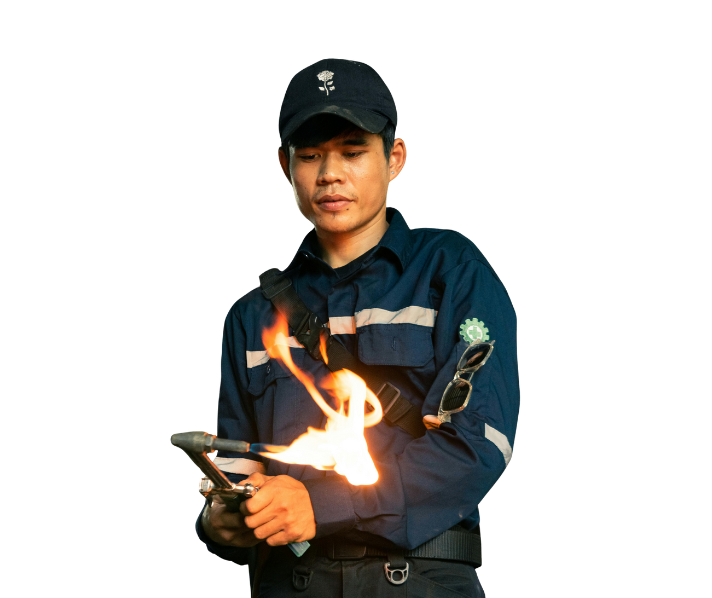
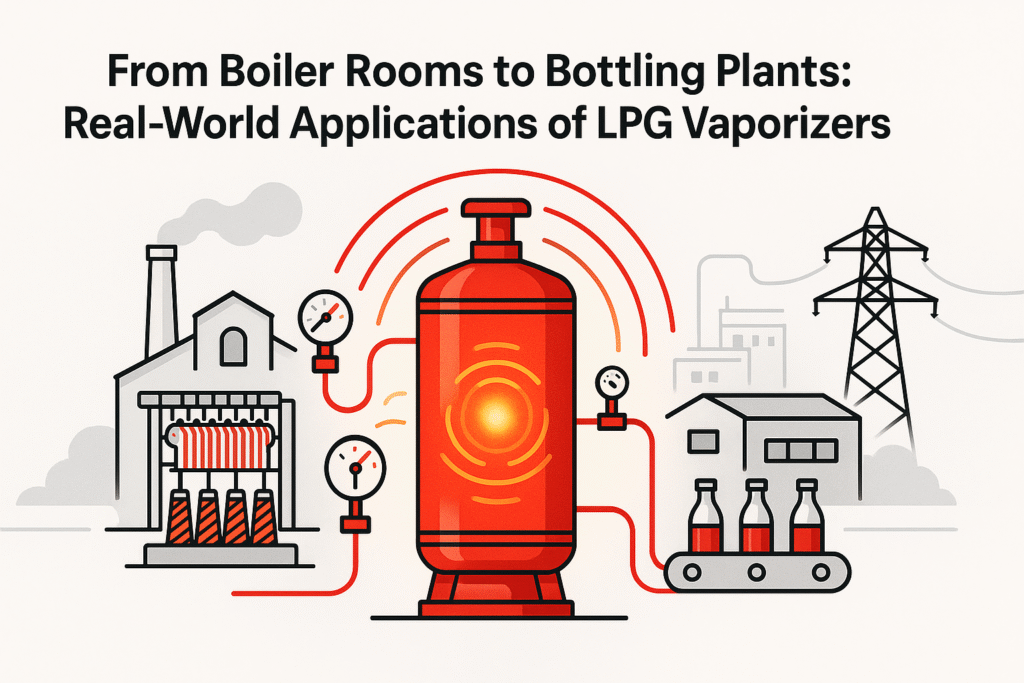
Industrial LPG system layout illustrating climate-aware LPG system design Pakistan across hot and cold operating environments

Understanding Pakistan’s Climate Extremes and Their Impact on LPG System Design

Designing an LPG system in Pakistan cannot be approached as a generic engineering task. The country’s geography creates operating conditions that directly influence how LPG behaves in storage, vaporisation, pressure regulation, and distribution. Any credible discussion around LPG system design Pakistan must start with climate, not equipment selection.

Large parts of Pakistan experience ambient temperatures exceeding 45°C during summer, particularly in Sindh, southern Punjab, and Balochistan. At the same time, northern regions and elevated industrial zones can reach near-freezing temperatures in winter. These extremes are not short-term anomalies. They define the normal operating environment for LPG systems across the country.

LPG is highly temperature-sensitive by nature. Its vapour pressure, expansion characteristics, and boiling rate change significantly with ambient conditions. When these variations are not accounted for during design, systems may appear functional during mild weather but become unstable, inefficient, or unsafe under peak heat or cold.

In hot climates, higher ambient temperatures increase internal tank pressure and accelerate LPG expansion. This places sustained stress on storage vessels, safety relief valves, pressure regulators, and downstream piping. Systems that are designed with minimal safety margins often experience pressure fluctuations, frequent relief valve activation, and shortened component life during summer months. These issues are commonly observed in installations where imported design assumptions are applied without local adjustment.

Cold conditions introduce a different set of challenges. As temperatures fall, LPG vaporisation capacity drops sharply. Cylinders and bulk tanks may struggle to supply sufficient vapour during high-demand periods, resulting in pressure loss at burners and inconsistent combustion. This problem is especially common in winter operations for food processing units, poultry farms, and industrial heaters, where designers underestimate vapour draw-off requirements or rely solely on natural vaporisation. These risks are explored further in Indus 3’s technical overview of LPG behaviour during winter in Pakistan.

Climate impact is not limited to industrial systems. Residential and commercial LPG installations face similar vulnerabilities, particularly where cylinders are installed outdoors without thermal consideration or proper ventilation planning. A setup that works acceptably in moderate temperatures can quickly become unreliable or hazardous during seasonal extremes. This is why LPG gas safety design principles must be adapted to local environmental conditions rather than assumed to be universally applicable.

Another critical factor is daily temperature variation. In many regions, day-to-night temperature swings of 15 to 20°C are common. These fluctuations cause repeated pressure cycling within tanks and pipelines, increasing fatigue stress on joints, valves, and flexible connections. Over time, this cycling accelerates wear and raises the likelihood of leaks, even when individual components meet standard specifications.

For engineers, contractors, and plant operators, the implication is clear. Climate must be treated as a primary design input from the earliest planning stage. Effective LPG system design in Pakistan requires realistic assessment of temperature ranges, demand patterns, and equipment exposure. These factors directly influence storage selection, vaporisation strategy, regulator sizing, safety margins, and long-term maintenance planning.

As highlighted in Indus 3’s broader discussion on LPG’s role in Pakistan’s energy mix, systems engineered with local climatic realities consistently outperform those based on generic templates. They deliver stable pressure, improved safety, and predictable performance throughout the year.

In Pakistan’s environment, climate-aware LPG system design is not an optional enhancement. It is the foundation of reliability, compliance, and operational safety.

Why Generic LPG Designs Fail in Pakistan: Common Engineering Blind Spots

Many LPG installations in Pakistan fail not because of poor equipment quality, but because of inappropriate design assumptions. A significant number of systems are planned using generic templates borrowed from Europe, the Middle East, or supplier catalogues, with little adaptation to local operating realities. On paper, these designs may appear compliant. On site, they often underperform or become unsafe.

One of the most common blind spots is the assumption that ambient conditions are moderate and stable. Generic LPG system layouts typically assume narrow temperature ranges, predictable vapour pressure, and consistent demand profiles. In Pakistan, none of these assumptions hold true. When systems designed for mild climates are exposed to extreme summer heat or winter cold, pressure control becomes unstable and safety margins shrink rapidly.

Another recurring issue is the misinterpretation of regulations. Many designers treat LPG regulations in Pakistan as a box-ticking exercise rather than an engineering framework. In practice, OGRA LPG design rules set minimum requirements, not optimal design targets. Systems that are engineered to the bare minimum often struggle with long-term reliability, especially when demand increases or operating conditions change. Indus 3 has highlighted this compliance gap in its overview of LPG storage compliance requirements in Pakistan.

Cost-driven decisions also play a major role. In an effort to reduce initial installation cost, designers may undersize storage tanks, omit vaporizers, or select regulators with insufficient capacity. These choices rarely fail immediately. Instead, problems surface during peak load, seasonal extremes, or system expansion. When pressure drops disrupt production or safety devices begin activating frequently, the perceived savings disappear quickly.

A particularly dangerous blind spot is the lack of system-level safety thinking. Generic designs often focus on individual components rather than how those components interact under stress. For example, a regulator may be technically rated for the required flow, but when paired with undersized piping and exposed to high inlet pressure during summer, it may behave unpredictably. Safety incidents rarely result from a single faulty part. They emerge from poorly integrated systems.

Another issue unique to Pakistan is the variation in site conditions. Many installations are built in congested industrial areas, retrofitted into existing facilities, or installed in locations with limited safety distances. Generic LPG layouts assume open space, clear separation zones, and ideal ventilation. When these assumptions are applied without adjustment, critical safety distances are compromised and risk exposure increases. This challenge is frequently observed in older industrial clusters and commercial zones.

There is also a tendency to underestimate the importance of local operating practices. Maintenance schedules, operator training levels, and emergency response readiness vary widely across sectors. Designs that rely heavily on perfect operational discipline may work in controlled environments but fail in real-world Pakistani conditions. This is why system safety standards must be matched with realistic operating behaviour, not idealised scenarios.

From a regulatory standpoint, LPG regulations in Pakistan are evolving, but enforcement remains inconsistent. This creates a false sense of security for systems that technically meet paperwork requirements but lack engineering resilience. Referencing OGRA guidance, such as that published by the Oil and Gas Regulatory Authority of Pakistan, should inform design decisions rather than replace proper engineering judgement.

Ultimately, generic LPG designs fail because they ignore context. Climate, demand variability, site constraints, and local compliance realities all shape system performance. Effective LPG system design Pakistan requires engineers to move beyond imported templates and engage with local conditions from the outset.

Without that shift in mindset, even well-funded LPG projects risk becoming operational liabilities rather than reliable energy systems.

Thermal, Pressure, and Load Constraints in Hot & Cold Climate LPG Installations

At the core of every reliable LPG installation is a clear understanding of how temperature, pressure, and load interact. In Pakistan’s climate, these three variables rarely stay within comfortable margins. When designers underestimate any one of them, system stability suffers. This is why LPG consumption calculation methods must be grounded in local operating realities rather than catalogue assumptions.

Temperature is the primary driver of LPG vapour pressure. In hot conditions, elevated ambient temperatures increase vapour pressure inside storage tanks. While this can improve vapour availability, it also raises inlet pressure to regulators and downstream components. If regulators are not selected with sufficient pressure tolerance, they can hunt, chatter, or fail prematurely. Over time, repeated exposure to high inlet pressure accelerates wear and compromises control accuracy.

Cold conditions reverse the problem. As temperature drops, LPG vapour pressure falls sharply. Natural vaporisation from cylinders or bulk tanks may no longer meet peak demand, even if total daily consumption appears modest. This is where many systems fail in winter. Designers often size tanks based on volume alone and ignore vapour draw-off limits. The result is pressure collapse at burners, unstable flames, and production interruptions during early morning or night-time operations.

Load behaviour adds another layer of complexity. Many Pakistani facilities operate with highly variable demand profiles. Batch processes, multiple burners starting simultaneously, or sudden load increases place short-term stress on the system. A design that works under average load may fail under peak conditions. This is why LPG consumption calculations must consider maximum simultaneous demand, not just daily totals. Indus 3 provides practical tools for this analysis through its LPG consumption calculator for Pakistan.

Tank sizing decisions are often misunderstood in this context. A larger tank does not automatically guarantee adequate vapour supply in cold weather. Vapour generation depends on tank surface area, liquid temperature, and heat transfer from the environment. In colder regions, even bulk tanks may require assistance from vaporizers to maintain stable pressure. Designers who rely solely on tank capacity frequently underestimate this limitation, leading to seasonal performance issues.

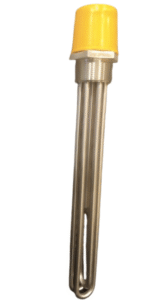
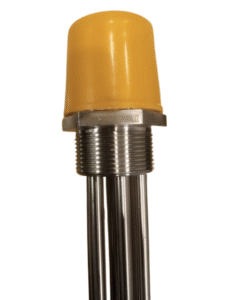
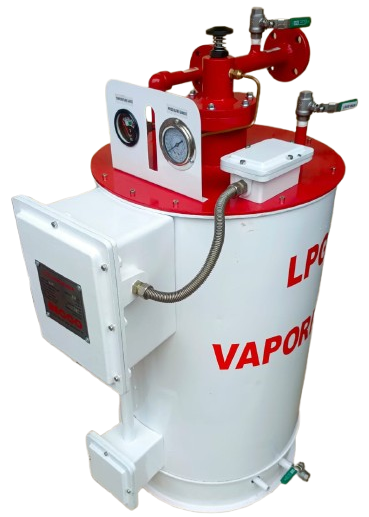
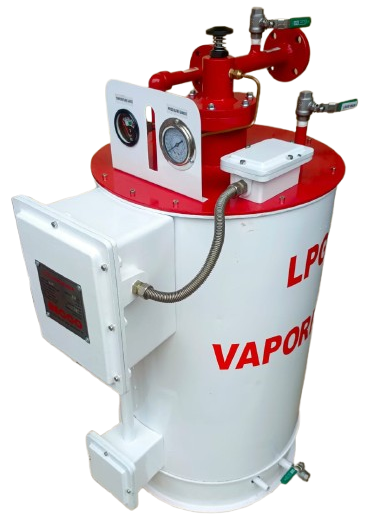
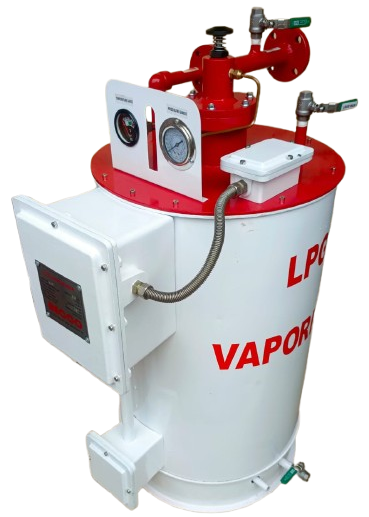
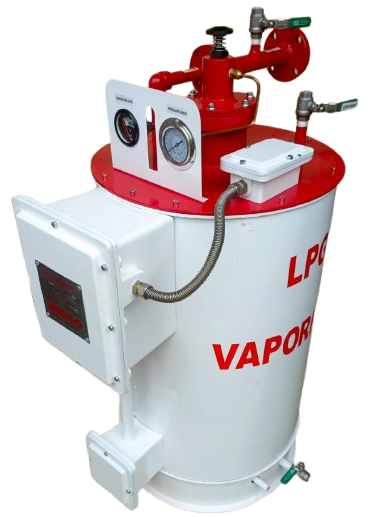
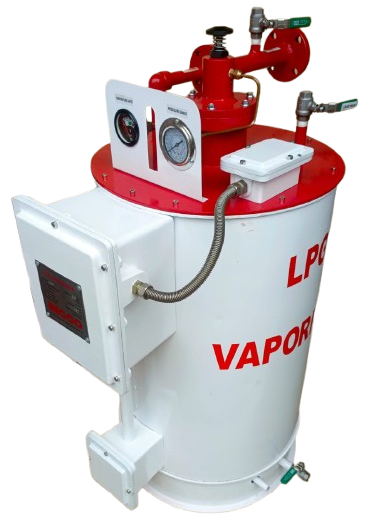
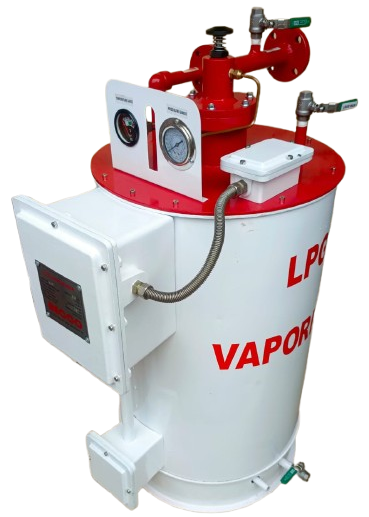
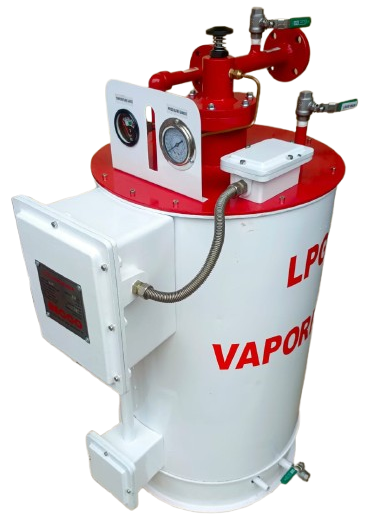
Vaporizer selection becomes critical when natural vaporisation is insufficient. Electric, steam, or hot-water vaporizers each introduce different operational and safety considerations. The correct choice depends on load consistency, ambient temperature, and available utilities. Oversizing vaporizers increases capital cost and energy consumption, while undersizing them results in pressure drops under peak demand. Guidance on this balance is covered in detail in Indus 3’s LPG vaporizer sizing guide.

Pressure regulation must also be approached as a system, not a single device. Regulators need to handle both high inlet pressures during summer and low vapour pressure conditions during winter. Multi-stage regulation is often necessary for industrial installations, especially where long pipeline runs or fluctuating loads are involved. Selecting regulators purely based on nominal flow rate without considering inlet pressure range is a common and costly mistake.

Engineering references such as vapour pressure curves and heat transfer models, including those published by sources like the Engineering Toolbox, are useful for understanding propane behaviour under varying conditions. However, they must be interpreted in the context of local climate and real operating patterns rather than applied blindly.

In Pakistan, thermal, pressure, and load constraints are not theoretical concerns. They shape daily system performance. Robust LPG system design accounts for seasonal extremes, peak demand scenarios, and pressure variability from the outset. When these factors are integrated early, systems remain stable, efficient, and predictable throughout the year.

Safety Risks Amplified by Climate: Distance, Ventilation, and Pressure Control

Safety risks in LPG systems do not increase linearly with temperature changes. In Pakistan’s climate, they compound. Heat, cold, and rapid temperature swings magnify weaknesses in layout, pressure control, and protective devices. This is why LPG system safety standards Pakistan must be interpreted through a climate-aware lens rather than applied mechanically.

High ambient temperatures elevate internal pressure in storage tanks and pipelines. When safety distances are marginal or ventilation is inadequate, this pressure increase raises the consequences of even minor leaks. In congested industrial zones and commercial areas, tanks are often installed closer to buildings or ignition sources than recommended. Under summer conditions, the margin for error narrows further, increasing the risk of vapour accumulation and flash fire scenarios.

Cold weather introduces different but equally serious hazards. Reduced vapour pressure can cause regulators to operate at the edge of their control range. In some cases, moisture within the system freezes, leading to regulator icing and partial blockage. Operators may attempt unsafe workarounds such as manual heating or bypassing regulators, which significantly increases risk. These behaviours are rarely anticipated in generic designs but are common in real-world winter operations.

Ventilation is another area where climate amplifies risk. In hot regions, LPG vapour disperses quickly in open areas but can accumulate rapidly in semi-enclosed spaces such as sheds, basements, or poorly ventilated plant rooms. Designers often underestimate how temperature-driven expansion affects vapour release rates during a leak. Proper ventilation planning must account for worst-case summer conditions, not average airflow assumptions.

Safety distances are frequently treated as static numbers rather than dynamic risk controls. In practice, required separation between tanks, buildings, and ignition sources should increase as stored volume and ambient temperature rise. Systems designed to minimum spacing requirements may technically comply on paper but offer little real protection during extreme heat. Indus 3 addresses these concerns in its detailed guidance on LPG storage tank safety in Pakistan.

Pressure control is the final and most critical safety layer. Relief valves, excess flow valves, and emergency shut-off devices must be selected and positioned with climate-driven pressure variation in mind. In hot conditions, relief valves may activate more frequently if tank sizing and shading are inadequate. In cold conditions, excess flow devices can trip unexpectedly due to pressure instability, interrupting supply and encouraging unsafe manual intervention.

Leak detection and early warning systems play a vital role in mitigating these risks. Climate extremes increase the likelihood of seal degradation, hose fatigue, and joint movement due to thermal expansion and contraction. Continuous monitoring using appropriate LPG gas leak detectors provides a layer of protection that static inspections cannot. This approach is increasingly recommended for high-risk installations, as discussed in Indus 3’s overview of LPG gas leak detection solutions in Pakistan.

International safety guidance, such as that published by the UK Health and Safety Executive on LPG storage and use, reinforces the importance of ventilation, separation, and pressure relief as integrated controls rather than isolated measures. These principles apply equally in Pakistan but require stronger emphasis due to climatic stress.

In practice, climate-aware safety design means assuming that systems will be pushed to their limits. Adequate safety distances, robust ventilation, and resilient pressure control are not optional enhancements. They are essential safeguards against risks that are intensified by Pakistan’s operating environment.

Designing the Core LPG System: Storage, Vaporizers, and Regulators

Once climate, load, and safety risks are understood, the focus shifts to the heart of the LPG installation. Storage, vaporisation, and pressure regulation form the core of any LPG system. In Pakistan’s operating environment, these elements must be designed as an integrated unit rather than as independent components. Decisions made at this stage largely determine whether a system remains stable year-round or struggles during seasonal extremes.

Storage selection is the first major design decision. Many smaller installations rely on cylinders due to lower upfront cost and simpler logistics. While cylinders can work for low and steady demand, they are inherently limited in vapour generation, particularly in cold conditions. As consumption increases, cylinder-based systems often become unstable, requiring frequent changeovers and creating pressure fluctuation at the point of use. For industrial and high-demand commercial applications, bulk storage tanks provide better continuity and control, but only when correctly sized and positioned.

Tank sizing is frequently misunderstood. Designers often focus on total LPG volume without considering vapour withdrawal capacity. In cold climates, a large tank with insufficient surface area or poor exposure to ambient heat may still fail to meet peak demand. In hot climates, undersized tanks experience higher pressure cycling, increasing stress on relief devices. Proper sizing must balance storage capacity, vapour generation, and safety margins, particularly when systems operate close to maximum load.

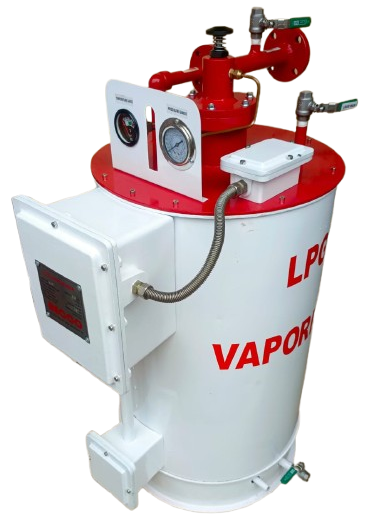
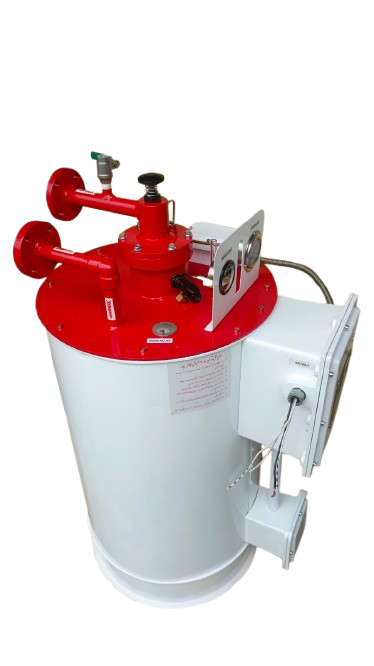
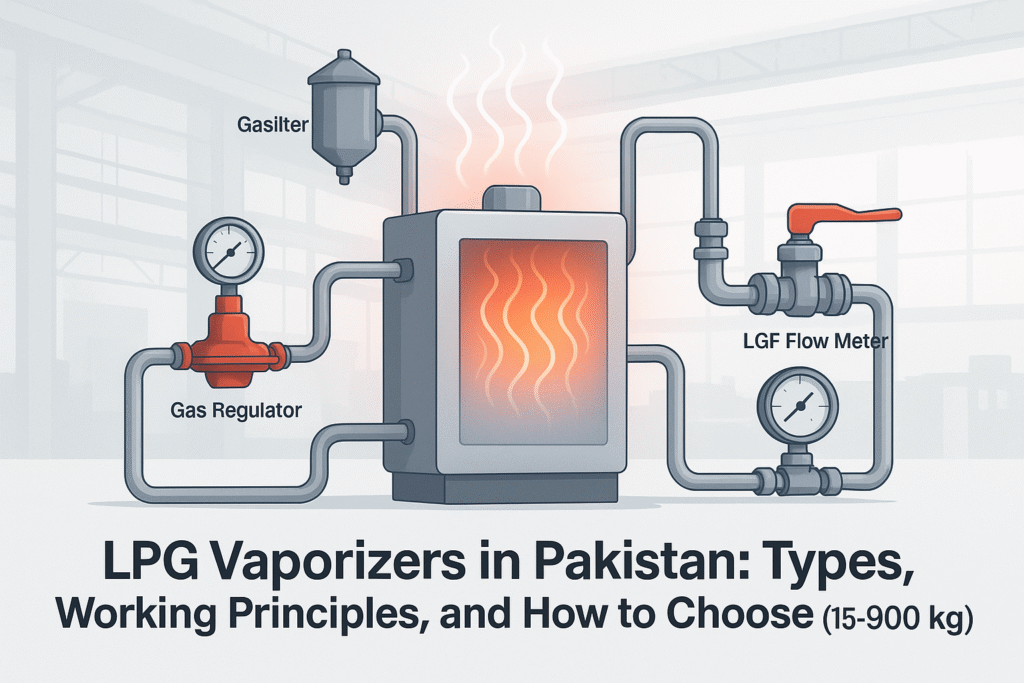
Vaporisers become essential when natural vaporisation cannot reliably meet demand. This is common in northern regions, winter operations, and continuous industrial processes. Electric and hot-water vaporizers are widely used in Pakistan, while steam vaporizers are typically limited to facilities with existing boiler infrastructure. The choice depends on load consistency, available utilities, and maintenance capability. Selecting a vaporizer solely based on maximum flow rating often leads to oversizing or poor efficiency. A practical comparison of available options is outlined in Indus 3’s guide to LPG vaporizer types and applications.

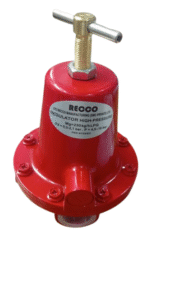
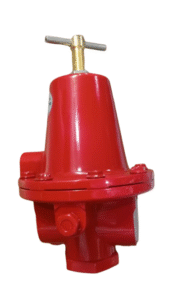
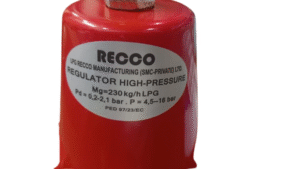
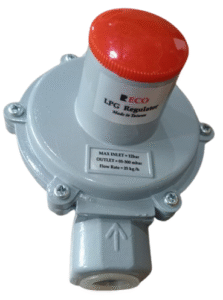
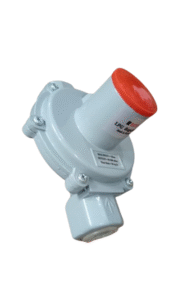
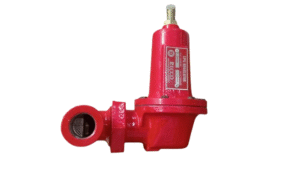
Pressure regulation ties the system together. Regulators must handle wide inlet pressure variations caused by temperature changes while delivering stable outlet pressure to burners and equipment. In many Pakistani installations, single-stage regulation is used where multi-stage control would be more appropriate. This can result in pressure instability during summer peaks or winter low-pressure conditions. Industrial systems with long pipelines or fluctuating loads typically require staged regulation to maintain control across the full operating range.

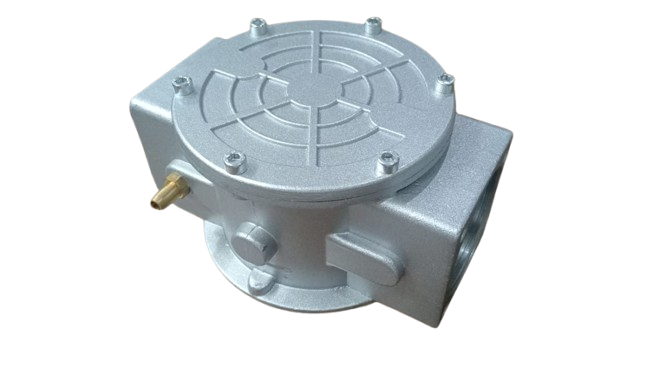
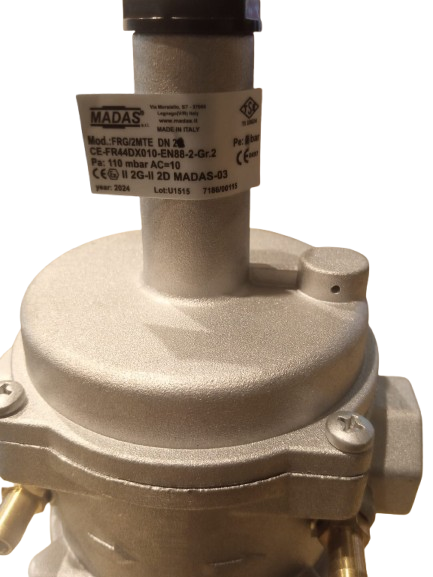
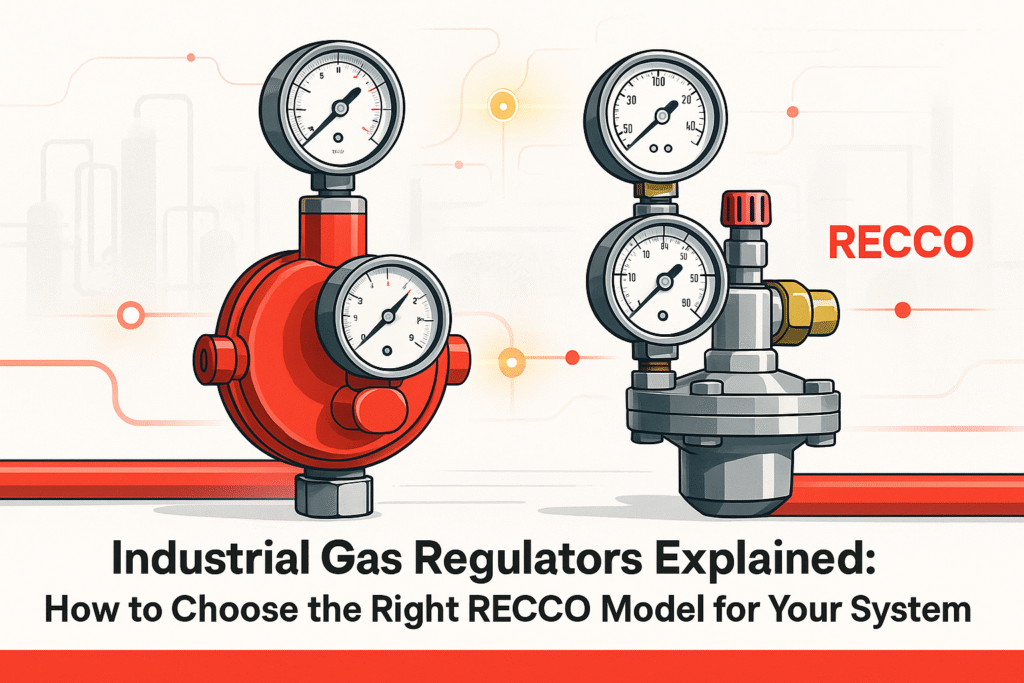
Regulator selection should consider not only flow capacity but also inlet pressure tolerance, response characteristics, and environmental exposure. Regulators installed outdoors must withstand heat, dust, and moisture without loss of performance. Improper selection or placement often leads to issues such as regulator freezing, pressure hunting, or premature failure. Indus 3’s technical overview of industrial LPG regulator selection highlights these risks in detail.

Cylinder-based systems also require careful regulation design. High-pressure cylinder output combined with variable ambient temperature places significant demand on first-stage regulators. Inadequate regulation at this point can cascade into downstream instability, affecting appliances and increasing safety risk.

Ultimately, storage, vaporizers, and regulators must be designed as a coordinated system that reflects real operating conditions. Treating them as isolated purchases is one of the most common reasons LPG installations underperform in Pakistan. When these core elements are correctly matched to climate, load, and safety requirements, the system delivers consistent pressure, improved safety, and predictable performance throughout the year.

LPG Pipeline Sizing, Layout, and Material Selection for Pakistani Sites

Once storage, vaporisation, and regulation are correctly defined, the LPG distribution pipeline becomes the deciding factor in whether that capacity actually reaches the point of use. In Pakistan, pipeline design is one of the most frequent causes of pressure loss, unstable combustion, and hidden safety risks. Effective LPG distribution pipeline design requires more than selecting a pipe diameter from a table.

Pipeline sizing must always start with realistic flow conditions. Many systems are designed using average consumption values rather than maximum simultaneous demand. This approach almost guarantees pressure drop during peak operation. Burners starting together, batch processes, or cold-weather vaporisation losses can all push flow beyond assumed limits. When the pipeline is undersized, even a well-sized tank and regulator cannot compensate. Pressure loss accumulates silently along the line until it appears as flame instability at the appliance.

Pipe diameter selection should be based on maximum flow rate, operating pressure, total run length, and allowable pressure drop. Long horizontal runs, vertical elevation changes, and multiple fittings all increase resistance. Designers often overlook the cumulative effect of elbows, valves, and tees, especially in retrofitted industrial sites. Tools such as LPG pipeline diameter calculators are useful, but only when applied with conservative assumptions and verified against real layouts.

Layout design is equally important. Straight, short runs with minimal direction changes perform better and are easier to inspect and maintain. In Pakistani facilities, pipelines are often routed around existing structures with little consideration for pressure loss or future expansion. Sharp bends, unnecessary loops, and poorly supported spans increase both hydraulic resistance and mechanical stress. Over time, thermal expansion and contraction further strain joints and fittings, increasing leak risk.

Material selection must reflect both pressure class and environmental exposure. Copper and steel piping are commonly used, while flexible hoses are typically limited to short connections near appliances. Each material behaves differently under temperature variation. Steel expands and contracts significantly, requiring proper supports and expansion allowances. Flexible hoses are vulnerable to heat, UV exposure, and mechanical damage if misused. Indus 3’s practical guidance on LPG hose and fitting selection highlights where flexibility is appropriate and where rigid piping is safer.

Valve placement is another critical but frequently neglected aspect. Isolation valves should be positioned to allow sectional shutdown without disrupting the entire system. In many installations, a single upstream valve controls large distribution networks, forcing operators to take unsafe shortcuts during maintenance or emergencies. Correct valve zoning improves both safety and operational flexibility, particularly in large industrial plants.

Compliance with LPG system layout design standards also requires attention to accessibility and inspection. Pipelines routed through concealed spaces, drains, or poorly ventilated areas complicate leak detection and emergency response. In hot climates, exposed pipelines should be protected from direct solar heating where possible to reduce pressure variation. In colder regions, condensation and corrosion risks must be addressed through proper material choice and coating.

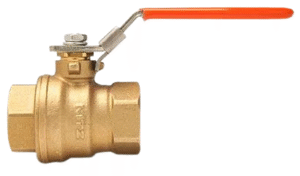
Practical execution matters as much as design. Poor workmanship during installation can negate even the best engineering plan. Misaligned joints, improper threading, and inadequate supports all contribute to long-term failure. This is why a documented LPG piping installation checklist is essential for contractors and site supervisors. Indus 3 supports this approach through its range of certified valves and fittings designed for local conditions, including those detailed in its overview of LPG brass valves used in Pakistan.

In Pakistan’s operating environment, pipeline design is not a secondary detail. It is the link between theoretical capacity and real performance. When sizing, layout, and materials are selected with climate, load, and site constraints in mind, LPG distribution systems remain stable, safe, and efficient over their full service life.

From Paper to Plant: Installation, Testing, and Compliance Execution

Even the most carefully engineered LPG system can fail if execution on site does not match design intent. In Pakistan, the gap between drawings and real installations is where many LPG projects encounter their most serious problems. This stage is not about design theory. It is about translating specifications into a safe, compliant, and durable working system under real site conditions.

Installation quality is the first critical variable. Contractors often work under tight timelines and budget pressure, which can lead to shortcuts that compromise long-term reliability. Common issues include improper pipe threading, misaligned flanges, inadequate supports, and poor sealing at joints. These defects may not cause immediate failure, but they significantly increase the likelihood of leaks and pressure instability over time, especially under repeated thermal expansion and contraction.

A structured LPG piping installation checklist is essential to control these risks. Every joint, valve, and regulator should be installed according to manufacturer specifications and verified before commissioning. Supports must be correctly spaced to handle pipe weight and thermal movement. Flexible connections should be limited to approved locations and never used as a substitute for proper pipe routing. These details are particularly important in Pakistan, where high ambient temperatures accelerate material fatigue.

Testing and commissioning are often treated as formalities, but they are the last opportunity to identify hidden weaknesses before the system goes live. Pressure testing should be carried out at appropriate test pressures and durations, with clear documentation. Leak testing must include all joints, valves, and fittings, not just visible sections. In practice, many systems pass initial checks only to develop leaks weeks later due to poor workmanship or incorrect assembly.

Compliance adds another layer of complexity. LPG regulations in Pakistan, including OGRA LPG design rules, define minimum safety and documentation requirements. However, compliance should be viewed as a baseline, not a guarantee of safe operation. Systems that meet paperwork requirements but ignore practical site realities often struggle during audits or inspections. Indus 3 highlights this disconnect in its guidance on LPG system service and inspection schedules, where ongoing verification is emphasised alongside initial approval.

Maintenance planning should be integrated from day one. Access for inspection, valve operation, and component replacement must be built into the layout. Too often, systems are installed in cramped spaces that make routine maintenance difficult or unsafe. This discourages proper servicing and increases reliance on temporary fixes. Clear maintenance access is not a convenience. It is a safety requirement.

Cost considerations also influence execution quality. While installation cost is a legitimate concern, reducing scope at the execution stage often leads to higher long-term expense. Replacing underspecified components, retrofitting safety devices, or correcting layout errors is far more costly than doing the job correctly the first time. This is particularly relevant for industrial users, where downtime carries a direct financial impact.

Transport, handling, and on-site storage of LPG equipment must also follow safety protocols. Damage during transport or improper storage before installation can compromise equipment integrity. Indus 3 addresses these risks in its overview of LPG transportation and handling safety in Pakistan, which complements installation best practices.

Ultimately, successful LPG system deployment depends on disciplined execution. Clear documentation, trained installers, thorough testing, and realistic compliance interpretation are all required to bridge the gap between design and operation. In Pakistan’s demanding environment, attention to execution is not optional. It is what determines whether a system remains safe and reliable long after commissioning.

Future-Ready LPG System Design in Pakistan: Compliance, Efficiency, and Expert Support

As LPG adoption continues to expand across industrial, commercial, and residential sectors, the expectations placed on system design are changing. Compliance alone is no longer sufficient. Future-ready LPG system design Pakistan must deliver safety, efficiency, adaptability, and long-term resilience under increasingly demanding operating conditions.

Regulatory requirements in Pakistan are gradually evolving, particularly around storage safety, inspection practices, and documentation. OGRA LPG design rules and related standards establish an essential compliance framework, but they should be treated as a starting point rather than a final objective. Systems designed strictly to minimum requirements often lack the flexibility needed to handle demand growth, climate extremes, or changes in operational use. Forward-looking designs anticipate these pressures rather than reacting to them after failures occur.

Efficiency is becoming a central design driver. Rising energy costs and tighter operational margins mean that poorly optimised LPG systems are no longer acceptable. Oversized vaporizers, excessive pressure losses, and unstable regulation all translate into wasted energy and higher operating costs. At the same time, undersized systems lead to downtime, product quality issues, and increased safety risk. Future-ready design balances capacity with precision, ensuring that every component operates within its optimal range throughout the year.

Automation and monitoring are playing an increasingly important role in this shift. Technologies such as pressure monitoring, gas detection, and smart metering allow operators to identify inefficiencies and safety issues before they escalate. These tools are particularly valuable in Pakistan’s climate, where rapid temperature changes can stress systems without warning. Indus 3 explores these advancements in its discussion on industrial LPG automation and control solutions, highlighting how data-driven oversight improves both safety and performance.

Another defining characteristic of future-ready systems is adaptability. Many LPG installations begin with modest demand and expand over time as operations grow. Designs that allow for additional storage, upgraded vaporizers, or extended pipeline networks reduce the need for disruptive retrofits. This requires foresight at the design stage, including space allocation, modular layouts, and staged regulation strategies.

Expert input becomes increasingly valuable as systems grow more complex. LPG system design is inherently multidisciplinary, combining thermodynamics, mechanical engineering, safety management, and regulatory interpretation. In Pakistan’s context, local experience matters. Understanding how climate, site constraints, and enforcement realities intersect is critical to making sound design decisions. This is where specialised LPG consulting services add real value, not by selling equipment, but by reducing risk over the system’s life cycle.

For organisations planning new installations or reassessing existing systems, an independent design review can identify hidden vulnerabilities before they lead to incidents or downtime. Indus 3’s engineering team supports this approach through technical guidance, compliance insight, and practical design support tailored to local conditions. Information about the company’s background and expertise is available on its About Us page.

A future-ready LPG system is not defined by the latest component or the lowest upfront cost. It is defined by how well it performs under stress, how safely it operates across seasons, and how easily it adapts to change. In Pakistan’s demanding environment, thoughtful design supported by experienced technical partners is the most reliable path to long-term safety and efficiency.

Share this post :

Facebook
Twitter
LinkedIn
Pinterest

Leave a Reply

Your email address will not be published. Required fields are marked *