Choosing Between Direct Fired & Electric LPG Vaporizers for Your Site
The Industrial LPG Shift in Pakistan and Why Vaporizer Choice Now Matters
The debate around Direct fired vs electric LPG vaporizers did not carry the same weight a decade ago. Back then, most industrial LPG installations in Pakistan were supplementary systems. Backup fuel. Temporary conversions. Seasonal demand support.
That has changed.
Across textile clusters, food processing zones, ceramics, steel rerolling mills and poultry farms, LPG has moved from standby fuel to primary energy source. Rising grid instability, diesel price volatility and increasing environmental scrutiny have forced plant operators to rethink energy architecture rather than simply switch fuels.
The conversation today is no longer just about installing an industrial LPG propane vaporizer. It is about building a stable, compliant and scalable fuel system.
From Fuel Switching to Energy Strategy
Many facilities initially approached LPG through simple cost comparison. Diesel versus LPG. Electricity versus LPG. But in practice, long term performance depends heavily on how vapourisation is managed.
Vapourisation is not a peripheral component. It is the heart of the system.
Without stable vapour generation, pressure fluctuates. Burners underperform. Temperature profiles drift. Production losses compound quietly. For industries that rely on controlled heat curves, especially in textiles and food processing, this becomes operational risk.
The broader energy context in Pakistan has accelerated this shift. Electricity tariffs have risen sharply in recent years, and load shedding remains a structural issue in some industrial regions. As covered in LPG Energy in Pakistan, LPG is increasingly positioned as a reliability solution rather than just a fuel alternative.
For many plants evaluating whether to switch to LPG from diesel, the initial decision feels straightforward. The secondary engineering decisions are where complexity begins.
The Rise of SNG and High Demand Systems
Synthetic Natural Gas systems are expanding across major industrial estates. Textile units in Faisalabad and Lahore are installing SNG system for textile industry operations to maintain uninterrupted process heating.
In these setups, vaporizers feed LPG into air mix plants to create a calibrated methane substitute. This requires consistent vapour flow under fluctuating demand.
That is where the difference between vaporizer technologies becomes critical.
Direct fired systems can deliver high output quickly. Electric systems provide stable, controlled heat input without open flame. Each behaves differently under surge loads, cold starts and winter conditions.
For facilities investing in turnkey SNG solutions, the vaporizer is no longer a commodity component. It is a performance determinant.
Why the Choice Now Carries Operational Risk
In previous years, smaller capacity units such as LPG vaporizer 25kg hour or LPG vaporizer 50 kg hr price comparisons dominated procurement discussions. Price per unit output was the main metric.
Today, that metric is incomplete.
Engineers are being asked to justify system uptime, regulatory compliance and energy resilience. OGRA guidelines and international safety frameworks increasingly emphasise installation integrity and hazard classification. The regulatory environment is tightening, not relaxing.
As industrial LPG installations expand, so does scrutiny.
Choosing between direct fired and electric vaporizers now influences:
-
Hazard zone classification
-
Electrical infrastructure requirements
-
Long term maintenance exposure
-
Insurance risk profiles
-
Production stability during winter
The decision sits at the intersection of engineering, compliance and cost control.
This is why the question of Direct fired vs electric LPG vaporizers has moved from technical specification sheets into boardroom discussions. It is no longer about equipment selection alone. It is about how your site intends to manage fuel risk in an environment where energy certainty is no longer guaranteed.
Understanding the Engineering Difference: Direct Fired vs Electric LPG Vaporizers
When evaluating Direct fired vs electric LPG vaporizers, the real distinction is not simply flame versus electricity. It is about how thermal energy is generated, transferred and controlled under industrial load conditions. The engineering logic behind each system influences performance, stability and infrastructure requirements in very different ways. A broader technical overview is available in the LPG vaporizer types comparison guide, but here we focus specifically on operational engineering behaviour.
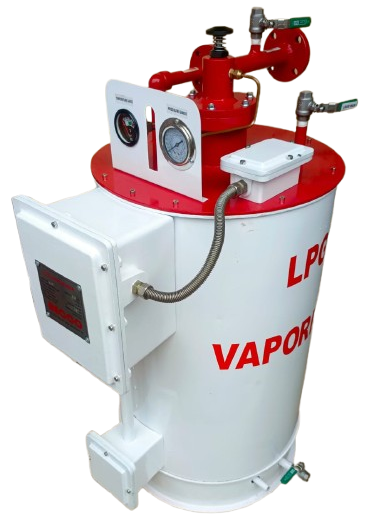
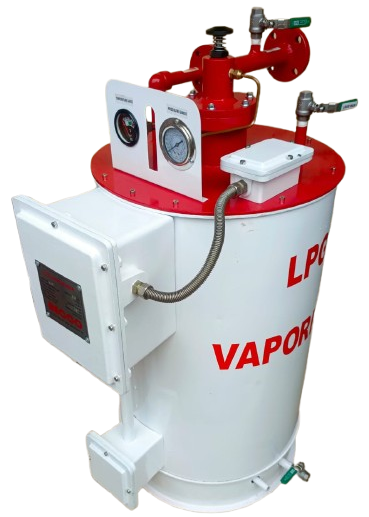
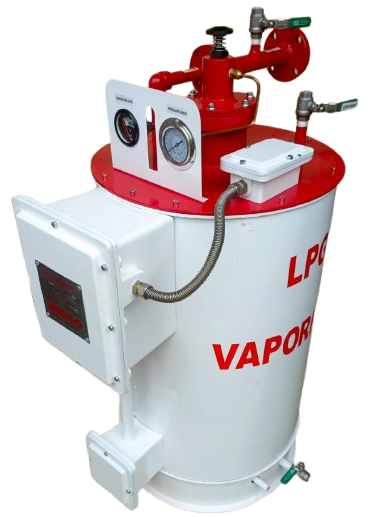
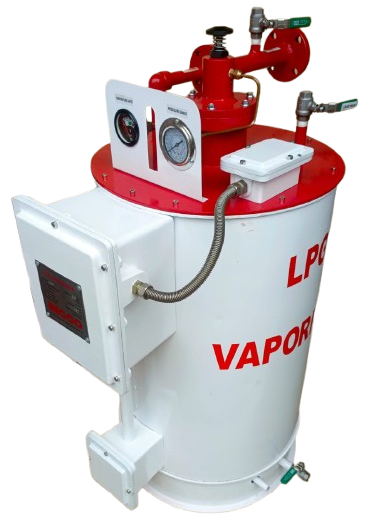
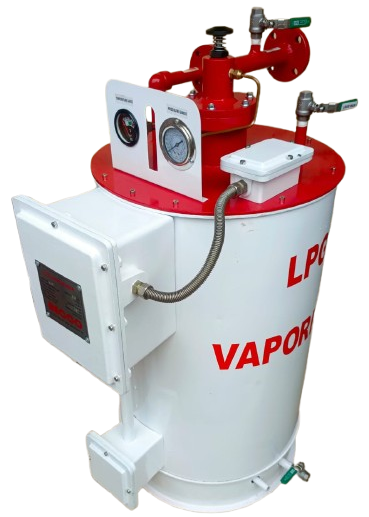
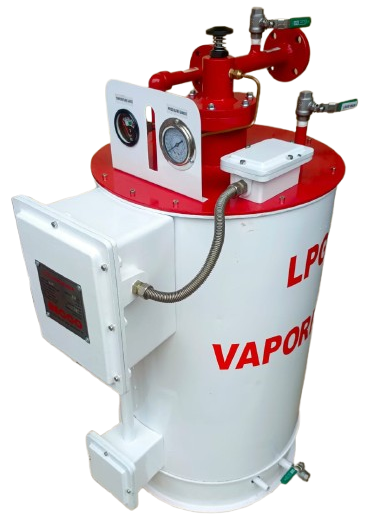
A direct fired vaporizer typically uses a gas burner to heat a water bath or heat exchange chamber. LPG flows through submerged coils while the burner raises the temperature of the surrounding medium. Combustion produces concentrated heat rapidly, allowing high output in a relatively compact footprint. This design is common in heavy industrial LPG propane vaporizer installations where demand can fluctuate sharply. The system generates its own thermal energy on site by burning LPG.
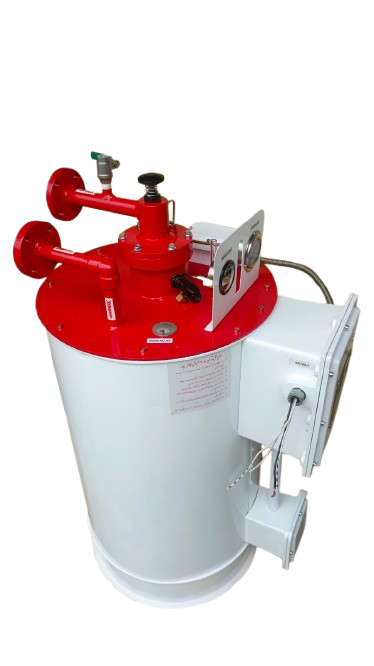
An electric vaporizer, including a dry electric LPG vaporizer, uses heating elements powered by electricity. These elements warm a thermal medium or heat exchanger surface, which in turn vaporises the incoming liquid LPG. There is no open flame. Temperature control is achieved through thermostats, sensors and control panels rather than combustion modulation. The heat source is external to the LPG fuel cycle, relying entirely on grid supply.
The difference in heat generation creates noticeable performance characteristics. Direct fired systems respond quickly to rising demand. When vapour consumption increases, the burner intensifies combustion almost immediately, raising water bath temperature and stabilising output. This rapid scaling makes them suitable for SNG blending systems and large air mix plants where sudden load changes occur. The behaviour of heat exchange under these conditions is further explained in the industrial LPG vaporizer working principle.
Electric vaporizers deliver more gradual and stable heating. They operate within predefined electrical load limits. While they provide consistent vapour generation, their ramp up speed depends on installed electrical capacity and heating element rating. In facilities with predictable and steady demand curves, this controlled behaviour can be advantageous. In environments with aggressive peak loads, it may require careful sizing to avoid pressure dips.
Energy efficiency is often misunderstood in this comparison. A direct fired system consumes LPG to vaporise LPG, which seems inefficient at first glance. However, combustion efficiency in industrial burners can be high, and in sites where electricity is expensive or unreliable, the system may still prove economically viable. Electric vaporizers avoid internal fuel combustion but transfer energy cost directly to the electrical tariff structure. The true efficiency discussion must therefore consider the broader energy ecosystem rather than isolated conversion percentages.
Installation requirements further highlight the contrast. Direct fired units require ventilation, flue gas management and combustion safety controls. They introduce a managed flame zone into the installation layout. Electric systems eliminate combustion but demand sufficient transformer capacity, properly rated cabling and explosion proof enclosures in hazardous zones. Electrical spark risk must be addressed with the same seriousness as flame exposure.
Maintenance profiles also differ. Direct fired vaporizers involve burners, ignition assemblies, flame detectors and gas valves that require periodic inspection and calibration. Electric units reduce combustion related servicing but introduce heating elements, relays and electronic controls that must be monitored for degradation. Neither technology is maintenance free. They simply shift technical responsibility from combustion engineering to electrical engineering.
For a deeper explanation of phase change fundamentals common to both systems, refer to how LPG vaporizers work. Ultimately, the engineering difference between direct fired and electric LPG vaporizers lies in how heat is produced, how quickly it adapts to load variation and how it integrates into your site’s infrastructure. The choice is technical, but its consequences extend well beyond the equipment itself.
Site Constraints That Quietly Decide the Right Vaporizer
When comparing Direct fired vs electric LPG vaporizers, many engineers begin with capacity charts and pricing tables. In reality, the decision is often made by constraints that are not immediately visible in procurement documents. Site conditions, regulatory boundaries and infrastructure limitations quietly shape what is technically feasible long before performance figures are debated.
One of the first constraints is electrical capacity. Electric vaporizers require stable and sufficient transformer load. In older industrial estates across Lahore and Karachi, many facilities operate with limited spare electrical margin. Adding a high capacity dry electric LPG vaporizer may require upgrading transformers, panels or internal distribution networks. This increases capital expenditure and introduces approval delays.
Direct fired systems, by contrast, rely on fuel combustion rather than electrical heating elements. They reduce dependence on grid capacity but introduce combustion zone requirements. Adequate ventilation, safe clearance from combustible materials and proper exhaust routing must be planned carefully. In congested industrial plots, spatial planning becomes critical.
Another decisive factor is hazardous area classification. Facilities handling LPG fall under strict safety expectations, particularly in relation to storage tank placement and vaporizer proximity. Electrical equipment in classified zones must comply with explosion proof standards. This applies strongly to electric vaporizers, where heating elements, contactors and wiring operate near flammable vapour.
Understanding these classifications in detail is essential. The framework outlined in LPG storage compliance in Pakistan explains how site layout and equipment zoning interact with regulatory expectations. The choice between vaporizer technologies often hinges on how easily compliance can be achieved within existing site boundaries.
Ambient temperature is another overlooked variable. In colder northern regions, winter temperatures can reduce natural vaporisation from LPG storage tanks. When demand rises during cold periods, the vaporizer must compensate quickly. Direct fired systems, with their aggressive heat generation, may respond more effectively in extreme conditions. Electric systems must be sized carefully to avoid underperformance during peak winter demand.
Storage tank configuration also plays a role. Larger LPG storage tank solutions require careful integration between tank withdrawal rate and vaporizer capacity. If the tank cannot support sustained liquid withdrawal under heavy load, even the most powerful vaporizer will struggle. Guidance in the LPG storage tank safety guide highlights how withdrawal design and pressure management directly affect downstream vapour stability.
Distance between storage tanks and process areas introduces further complexity. Longer pipeline runs increase pressure drop and heat loss risk. In such cases, system designers must account for pressure regulation and safety valve placement. Proper selection of safety components, including those discussed under LPG safety valves in Pakistan, becomes part of the vaporizer decision process.
Space availability is equally decisive. Direct fired vaporizers may require flue routing and combustion clearance, while electric units demand safe cable routing and electrical isolation panels. In compact sites such as retrofitted textile units or poultry facilities, layout constraints often eliminate one option before cost is even considered.
Engineers frequently discover that what appeared to be a simple comparison between direct fired and electric LPG vaporizers is actually governed by infrastructure realities. Electrical margin, zoning classification, tank configuration, ambient climate and spatial layout collectively narrow the field.
In many projects, the technically superior option on paper becomes impractical once site constraints are mapped. This is why early stage assessment of physical and regulatory limitations is not optional. It is the foundation upon which the vaporizer decision ultimately rests.
Safety, Compliance and Risk Exposure in High Load Environments
The comparison of Direct fired vs electric LPG vaporizers becomes far more serious when examined through the lens of safety and regulatory exposure. In high load industrial environments, vaporisation is not just a thermal process. It is a controlled interaction between flammable fuel, pressure systems and ignition sources. The risk profile differs meaningfully between technologies.
Direct fired vaporizers introduce an open combustion flame into the system. While the flame is contained within a burner chamber, it remains a deliberate ignition source. The safety architecture must therefore include flame failure detection, gas shut off interlocks and temperature controls. Any malfunction in ignition control can create immediate hazard escalation.
Electric vaporizers eliminate combustion, which at first glance reduces perceived fire risk. However, they introduce electrical components operating in potentially hazardous atmospheres. Contactors, heating elements and wiring must be properly rated for classified zones. Electrical spark risk is not theoretical. In poorly designed installations, it can be just as dangerous as an open flame.
This is where compliance standards become decisive. In Pakistan, OGRA approved LPG vaporizer installations are increasingly scrutinised for conformity with safety codes. Explosion proof LPG systems are not optional in regulated industrial environments. Equipment selection must align with hazard zone classification, especially in textile mills and processing plants where large fuel volumes are stored.
A comprehensive understanding of system level protection is outlined in certified LPG safety equipment in Pakistan. Safety valves, pressure regulators and shut off mechanisms must work in coordination with the vaporizer design itself. The vaporizer cannot be evaluated in isolation.
Leak detection adds another layer to the equation. High capacity industrial LPG propane vaporizer systems operate under significant pressure and flow rates. Even minor gasket failure or fitting degradation can release vapour rapidly. Advanced monitoring, including gas detection systems discussed in LPG leak detection technologies, reduces response time during incidents.
In direct fired systems, leak risk combines with flame presence. In electric systems, leak risk combines with potential electrical arc exposure. Both require engineered mitigation strategies.
Risk exposure also increases with system size. Larger capacity vaporizers such as those used in SNG blending plants or heavy textile operations amplify consequences of failure. Pressure instability, overheating or improper shutdown procedures can escalate quickly under high demand. Emergency planning is therefore essential. The structured response framework covered in LPG emergency response planning highlights the importance of drills, isolation valves and clear shutdown protocols.
Insurance considerations increasingly reflect this reality. Insurers assess combustion systems differently from purely electric installations. However, electrical fire risk and compliance documentation are equally reviewed. Poor documentation or uncertified components can increase premiums regardless of vaporizer type.
Another dimension often overlooked is human factor risk. Direct fired systems require combustion tuning and burner calibration. Electric systems require electrical diagnostics and control panel expertise. Skill gaps in maintenance teams increase operational exposure in both cases.
Ultimately, safety comparison between direct fired and electric LPG vaporizers is not about which is inherently safer. It is about which risk profile your site is structurally prepared to manage. Combustion control and flame supervision demand disciplined gas safety protocols. Electrical heating demands rigorous explosion proof design and grounding integrity.
In high load environments where production continuity is critical, the margin for error is narrow. Compliance is not a checklist exercise. It is a system level commitment that must align with the vaporizer technology selected.
Operational Cost, Energy Pricing and Long Term Performance
When analysing Direct fired vs electric LPG vaporizers, cost comparison often begins and ends with equipment price. That approach is incomplete. The real financial impact unfolds over years of operation, not at the point of purchase. Capital cost, energy pricing, maintenance exposure and downtime risk all shape the total cost of ownership.
In Pakistan, electricity tariffs have fluctuated significantly, especially for industrial consumers. Electric vaporizers transfer operating cost directly to the grid. A dry electric LPG vaporizer may appear attractive due to simpler mechanical design, but its financial performance is tied closely to per unit electricity rates. If tariffs rise or peak hour penalties increase, operating cost can escalate quickly.
Direct fired vaporizers, on the other hand, use LPG to generate the heat required for vapourisation. This means a portion of LPG is consumed internally to prepare LPG for process use. While that may appear inefficient on paper, it provides insulation from electricity volatility. In areas where power interruptions are common, fuel based heating offers continuity that grid dependent systems cannot guarantee.
Price comparisons such as LPG vaporizer 50 kg hr price or LPG vaporizer 25kg hour listings do not capture these downstream effects. Equipment cost is only one component. Energy structure determines operational trajectory. A more accurate projection often requires modelling consumption rates using tools like the LPG consumption calculator in Pakistan, especially in facilities with seasonal production cycles.
Maintenance cost is another differentiator. Direct fired systems involve burners, ignition assemblies and flame monitoring components. Over time, combustion systems require calibration, cleaning and occasional replacement of parts exposed to heat stress. Electric vaporizers reduce combustion servicing but introduce heating elements, control boards and electrical contactors that degrade gradually under load.
Neither system eliminates maintenance expense. They shift it into different technical domains. Structured servicing schedules, as outlined in LPG system service schedules, are essential for preventing unplanned downtime regardless of technology choice.
Downtime cost often exceeds energy cost in high output industries. If vapour generation becomes unstable, burner efficiency drops, temperature uniformity declines and production rejects increase. In textile finishing, even minor heat variation can affect fabric quality. In poultry heating systems, temperature instability affects livestock health.
This is where long term performance stability becomes more valuable than marginal energy savings. Direct fired vaporizers typically handle sudden load variation more aggressively, reducing pressure dips during surge demand. Electric systems provide stable controlled output but must be sized carefully to avoid overload during peak consumption.
Maintenance services also vary regionally. Access to skilled propane vaporizer maintenance services influences lifecycle performance. In industrial hubs where combustion technicians are readily available, direct fired systems may be easier to support. In sites with stronger electrical engineering teams, electric vaporizers may integrate more smoothly into existing maintenance frameworks.
The comparison therefore extends beyond fuel and electricity rates. It includes skill availability, service ecosystem maturity and spare parts accessibility.
Ultimately, the financial decision between direct fired and electric LPG vaporizers is not about lowest purchase price. It is about aligning energy cost exposure, maintenance structure and production stability with the realities of your site. Over a five to ten year horizon, those structural factors define the true economic outcome.
Application Based Selection Framework for Textile, Poultry and Process Industries
The debate around Direct fired vs electric LPG vaporizers becomes far clearer when examined through sector specific application demands. Different industries load their fuel systems in different ways. Vapour stability requirements, peak demand behaviour and seasonal variation all influence which technology aligns better with operational realities.
In the textile sector, particularly where SNG system for textile industry operations are installed, demand patterns are often continuous and high volume. Dyeing, stentering and finishing lines operate under tight thermal tolerances. Any pressure instability can affect fabric quality. In these cases, industrial LPG propane vaporizer systems must maintain consistent output under sustained load.
Direct fired vaporizers are frequently selected for textile applications due to their rapid response capability. When production ramps up or multiple lines operate simultaneously, the system must scale vapour generation quickly. Continuous load environments favour equipment that can handle aggressive thermal demand without delay. Integration with automated controls, as discussed under industrial LPG automation, further enhances stability.
Electric vaporizers can also serve textile facilities effectively, particularly where demand curves are predictable and electrical infrastructure is robust. However, in regions where winter grid reliability declines, dependency on electrical heating may introduce operational risk. Textile clusters in colder areas must account for seasonal performance under peak load.
Poultry farms present a different profile. LPG space heater for poultry farm applications depend heavily on temperature consistency during brooding seasons. Demand may not always be as high as textile processing, but reliability is critical. Sudden heating failure directly impacts livestock health and mortality rates.
In such environments, smaller capacity vaporizers are common. Electric units may offer simplicity where load is moderate and stable. However, in larger integrated poultry operations with multiple sheds, direct fired systems provide resilience during cold spells. Seasonal fluctuations discussed in LPG for poultry farms in Pakistan often dictate capacity planning.
Process industries such as food manufacturing and bakeries add another dimension. Baking ovens and food processing lines require precise and uniform heat input. Sudden vapour dips can affect product consistency. Facilities described in LPG for bakeries in Pakistan typically operate in batch cycles rather than fully continuous load.
In these cases, electric vaporizers may provide controlled and stable heating when electrical infrastructure supports them. Their steady thermal behaviour suits environments where demand does not spike aggressively. However, larger food processing plants integrating LPG air mix plant systems may still favour direct fired vaporizers for higher capacity blending operations.
Turnkey SNG solutions introduce even more complexity. Synthetic Natural Gas SNG systems in Pakistan must replicate natural gas characteristics closely. Vapour flow, air mixing ratio and pressure stability all depend on consistent upstream vaporisation. Direct fired systems are often preferred in high capacity SNG blending due to rapid scaling ability, while electric systems are selected where electrical cost and reliability remain favourable.
Application context ultimately simplifies the Direct fired vs electric LPG vaporizers decision. Textile operations under heavy continuous load often lean toward direct fired technology. Poultry and moderate process applications may adopt electric systems where grid stability allows. High capacity SNG blending typically favours aggressive thermal response.
Rather than asking which vaporizer is superior in abstract terms, engineers must examine demand pattern, seasonality, load variability and infrastructure strength. The right technology is the one that matches operational rhythm, not simply nameplate capacity.
Installation, Maintenance and Lifecycle Management Strategy
When evaluating Direct fired vs electric LPG vaporizers, installation and long term service strategy often determine whether the system performs as designed over a ten year horizon. A vaporizer is not a standalone asset. It becomes part of a broader fuel infrastructure that requires disciplined commissioning, preventive maintenance and technical oversight.
Installation complexity differs noticeably between technologies. Direct fired vaporizers require careful burner alignment, combustion air management and flue routing. Clearances must be respected to ensure safe operation. Gas line integrity, ignition system testing and flame safeguard calibration are critical before commissioning. A poorly tuned combustion system can reduce efficiency and increase carbon deposits over time.
Electric vaporizers remove combustion from the equation but introduce electrical design challenges. Load calculations must confirm transformer capacity. Cable sizing, earthing systems and explosion proof enclosures must be verified before energising heating elements. In hazardous LPG zones, electrical isolation and spark containment are non negotiable. Commissioning is as much an electrical engineering exercise as a gas system validation.
Regardless of technology, structured installation by trained professionals significantly reduces long term failure rates. Improper regulator selection or pipeline integration can compromise even the most advanced vaporizer. Coordination with certified installers, such as those outlined in LPG regulator installers in Lahore, ensures system level integrity from tank withdrawal to burner inlet.
Maintenance strategy further separates short term performance from sustainable operation. Direct fired vaporizers require periodic inspection of burners, flame sensors and combustion chambers. Soot accumulation, ignition electrode wear and valve degradation must be monitored systematically. Scheduled servicing reduces the risk of sudden shutdown during peak production.
Electric vaporizers shift maintenance focus toward heating elements, relays and control panels. Over time, heating elements can degrade due to thermal cycling. Contactors may experience wear from repeated switching. Preventive electrical inspection reduces the chance of unexpected failure under load.
Troubleshooting protocols differ accordingly. Combustion related issues such as flame instability or overheating are diagnosed differently from electrical faults such as short circuits or element burnout. A structured diagnostic approach, as described in LPG vaporizer issues diagnosis, helps maintenance teams isolate root causes quickly.
Spare parts ecosystem availability is another lifecycle consideration. Direct fired systems rely on burner components, ignition systems and gas valves. Electric systems depend on heating elements, control modules and electrical protection devices. Access to reliable LPG vaporizer parts and accessories determines downtime exposure. Broader component availability through sources such as burner spare parts in Pakistan strengthens long term support capability.
Lifecycle planning must also include scheduled shutdown windows. High demand industrial facilities cannot afford reactive maintenance during production peaks. Structured servicing intervals, detailed in LPG system service schedule, allow teams to align inspection and component replacement with planned downtime.
Ultimately, installation and lifecycle management define whether direct fired or electric LPG vaporizers deliver their expected value. The more complex the production environment, the more important disciplined commissioning and preventive servicing become. Technology choice influences maintenance discipline, but long term reliability depends on execution rather than equipment alone.
Strategic Decision Matrix and Future Proofing Your LPG Infrastructure
The comparison of Direct fired vs electric LPG vaporizers ultimately moves beyond engineering detail and into strategic infrastructure planning. By the time capacity, compliance and maintenance factors are evaluated, the question becomes broader. Which technology aligns with your site’s long term energy direction, regulatory exposure and expansion roadmap?
A practical decision matrix begins with four structural considerations. First, energy dependency. If your facility operates in a region where electricity tariffs are volatile or grid reliability is inconsistent, relying entirely on electrical heating introduces external vulnerability. Direct fired systems reduce that dependency by internalising thermal generation.
Second, load behaviour. Continuous high volume SNG blending plants and heavy textile operations typically require aggressive response capability. Direct fired vaporizers often perform well under rapid load escalation. Facilities with steady, moderate demand curves and strong electrical infrastructure may find electric systems appropriate.
Third, compliance complexity. Both technologies must meet OGRA approved LPG vaporizer expectations and hazardous area standards. However, sites already managing combustion equipment such as industrial boilers may integrate direct fired vaporizers more naturally. Facilities operating highly controlled electrical environments may prefer maintaining a unified electrical safety framework.
Fourth, expansion potential. Many industrial plants in Pakistan are scaling gradually. Textile exporters, food processors and air mix plant operators often expand capacity in phases. When evaluating industrial LPG propane vaporizer options, engineers should consider whether the system can scale without complete replacement. Modular design and capacity headroom become important.
Future proofing also requires anticipating automation trends. Smart monitoring, remote diagnostics and integrated pressure management are becoming more common. Infrastructure that supports digital integration will age better than purely manual systems. This applies regardless of whether the vaporizer is direct fired or electric.
Turnkey SNG solutions increasingly demand consistent vapour stability integrated with automated air mixing and control panels. Facilities planning to expand into Synthetic Natural Gas systems in Pakistan must ensure that their vaporizer selection supports accurate blending ratios and responsive control logic.
Location specific support is equally strategic. Access to LPG vaporizer suppliers in Lahore or nearby industrial hubs influences long term service resilience. Availability of trained technicians, spare parts inventory and regulatory documentation reduces operational uncertainty over time.
The strategic view therefore reframes the decision. It is not a competition between flame and heating element. It is a choice about how your facility intends to manage energy independence, compliance exposure and production scalability over the next decade.
For organisations assessing system upgrades or new installations, a structured technical evaluation aligned with site constraints and growth plans is essential. Indus 3 provides engineering consultation and supply support for LPG vaporizers in Pakistan, helping industrial operators align equipment selection with regulatory standards and operational goals. Further details about available systems can be explored at Indus 3 LPG Vaporizers or by reviewing the company overview at About Indus 3.
Selecting the right vaporizer is not about choosing the most popular option. It is about building a fuel system architecture that remains stable, compliant and scalable as your site evolves.