Click on the Edit Content button to edit/add the content.

Industrial LPG Vaporizer Working Principle Explained | Indus 3

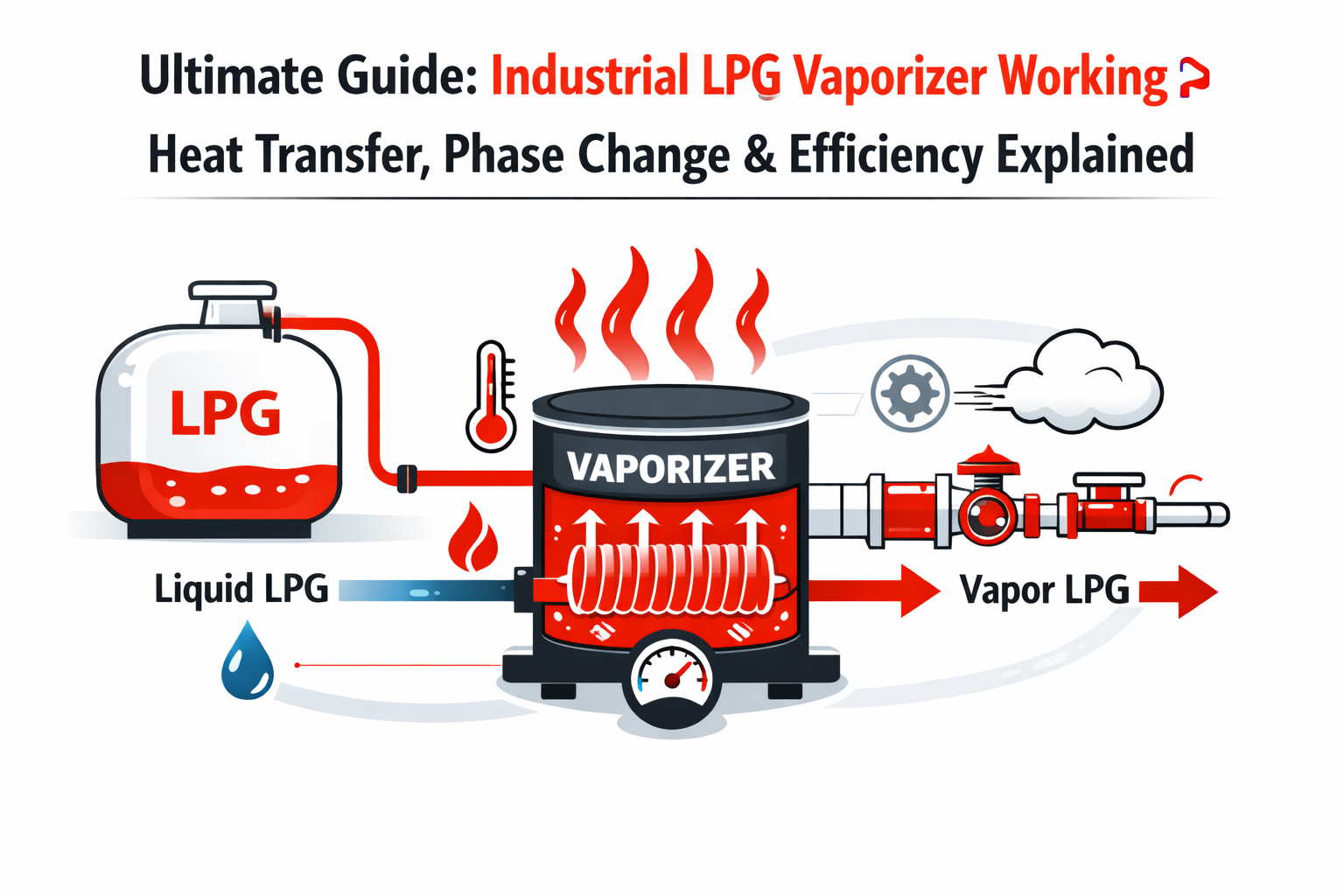
Diagram illustrating the industrial LPG vaporizer working principle, showing liquid LPG heated and converted into regulated vapour

What Is the LPG Vaporizer Working Principle?

The industrial LPG vaporizer working principle is based on a simple but critical physical process: converting liquefied petroleum gas from its liquid state into a stable, usable gas by supplying controlled heat. In industrial environments, LPG is stored and transported as a liquid under pressure to save space. However, burners, boilers, furnaces, and process equipment require LPG in gaseous form. This is where vaporizers become essential.

At its core, how an LPG vaporizer works is straightforward. Liquid LPG enters the vaporizer under controlled pressure. Inside the system, heat is transferred to the liquid through a designed heat source, such as electricity, hot water, or combustion gases. As LPG absorbs this heat, it undergoes a phase change—from liquid to vapour—and exits the vaporizer as dry, regulated gas ready for downstream use. The entire process is engineered to be stable, predictable, and safe, even under fluctuating demand.

This controlled approach is fundamentally different from natural vaporization. In small cylinders or low-demand setups, LPG can vaporise naturally by absorbing heat from the surrounding air. However, this method has clear limitations. As demand increases, the liquid LPG cools rapidly, reducing vapour pressure and gas flow. In colder conditions or high-consumption industrial operations, natural vaporization becomes unreliable. This comparison between vaporizer vs natural vaporization explains why industrial systems cannot depend on ambient heat alone.

In industrial LPG vaporizer working scenarios, the goal is not just to produce gas, but to do so consistently. Factories in high-demand zones—such as textile processing units, food manufacturing plants, and ceramic industries around Lahore—require uninterrupted gas flow throughout long operating cycles. Vaporizers ensure that gas production remains stable regardless of ambient temperature, cylinder size, or consumption spikes. This reliability is essential for process safety, product quality, and operational efficiency.

From a system perspective, an LPG vaporizer acts as a controlled energy exchange unit. Liquid LPG flows in, heat is applied in a regulated manner, and gaseous LPG flows out at the required pressure and temperature. A typical system flow diagram would show liquid LPG entering the vaporizer, passing through a heat exchange zone, and exiting as vapour into the gas distribution line. This visual representation helps engineers understand how phase change is managed without exposing the system to thermal stress or pressure instability.

Across Pakistan, especially in industrial clusters, properly designed vaporization systems are a core part of compliant LPG infrastructure. Suppliers such as Indus 3 support these installations by engineering complete industrial LPG systems in Pakistan that align with operational and regulatory needs. For facilities evaluating equipment configurations, understanding vaporization principles is just as important as selecting the right capacity or control method. You can explore relevant system categories under industrial LPG vaporizers at https://indus3.pk/shop-page/, while broader system context is available at https://indus3.pk/.

This section establishes the foundation of the LPG vaporizer working principle. In the following sections, the discussion will move deeper into heat transfer behaviour, phase change mechanics, system components, and safety controls—building a complete technical understanding step by step.

Thermodynamics of LPG Vaporization: Heat Transfer & Phase Change

Understanding the thermodynamics behind LPG vaporization is essential for designing safe and reliable industrial gas systems. While the science itself is well established, its real value lies in how it is applied inside an LPG vaporizer under operating conditions found in factories, processing plants, and boiler rooms.

At the centre of the process is LPG vaporizer heat transfer. LPG is stored as a liquid under pressure, even at normal ambient temperatures. To convert this liquid into gas, energy must be supplied in the form of heat. This energy does not raise the temperature of the LPG immediately. Instead, it is used to overcome intermolecular forces, allowing the liquid to change state. This required energy is known as latent heat. In practical terms, latent heat explains why LPG can absorb significant thermal energy during vaporization without a sudden rise in temperature.

This concept is critical in industrial systems. If heat were added too aggressively or unevenly, it could cause unstable vapor production or thermal stress on components. Modern vaporizers therefore apply heat gradually and uniformly, ensuring that the phase change happens in a controlled and predictable manner. This controlled input of energy is what separates engineered vaporization from uncontrolled boiling.

Another key factor is boiling point variation under pressure. LPG does not have a single fixed boiling point. As pressure increases, the temperature required for LPG to vaporise also increases. In industrial installations, LPG is often delivered at higher pressures to maintain flow stability. The vaporizer must therefore supply enough heat to match this elevated boiling point. This relationship between pressure and temperature is central to the LPG vaporiser phase transition explanation used by system designers and safety engineers.

In applied settings, vaporizers continuously balance three variables: incoming liquid flow, operating pressure, and available heat input. When these are correctly matched, the vaporizer gas production process remains stable, producing dry gas at consistent pressure. If demand rises suddenly, the vaporizer responds by transferring more heat to the incoming liquid LPG. If demand falls, heat input is reduced to prevent overheating or superheating of the gas.

A useful way to visualise this is through an illustrated phase-change diagram. Such a diagram typically shows liquid LPG entering the vaporizer, absorbing heat through a heat exchange surface, and gradually transitioning into vapour before exiting into the gas line. The emphasis is not on temperature spikes, but on energy absorption during the phase change itself. This visual helps operators understand why vaporizers rely on controlled heat transfer rather than direct flame contact or uncontrolled heating.

From an engineering standpoint, these principles are applied daily by teams with deep system-level experience. At Indus 3, more than 24+ years of LPG engineering expertise have gone into designing vaporization systems that respect these thermodynamic limits while meeting industrial demand across Pakistan. Their solutions are built around controlled heat exchange rather than brute-force heating, which improves reliability and operational safety.

For further technical validation, these principles align with established engineering references such as the GPSA Engineering Data Book, which details phase change behaviour and heat transfer considerations for hydrocarbon gases. Manufacturer technical manuals for industrial vaporizers also reinforce the importance of latent heat management and pressure-dependent boiling points in safe system design.

Facilities evaluating system layouts can explore heat exchanger-based LPG vaporizers to see how these thermodynamic principles are implemented in real equipment designs at https://indus3.pk/shop-page/. More background on Indus 3’s engineering approach is available at https://indus3.pk/about-us/.

With the thermodynamic foundation now clear, the next sections will break down how these principles are translated into physical components, system layouts, and operational controls within industrial LPG vaporizers.

Key Components of an Industrial LPG Vaporizer System

A stable and predictable gas output from an LPG vaporizer is not the result of a single component. It is achieved through a coordinated system where each element performs a specific mechanical or control function. Understanding these components helps engineers diagnose performance issues and design systems that remain reliable under varying load conditions.

At the heart of the system is the heat exchange assembly. The LPG vaporizer heat exchanger function is to transfer thermal energy from a controlled heat source into the liquid LPG stream. This is where the actual phase change takes place. The exchanger is designed to provide uniform heat distribution, preventing localised overheating while ensuring complete vaporization before gas exits the unit.

Within this assembly, the vaporizer heat exchanger coil role is particularly important. Liquid LPG flows through specially designed coils or tubing that maximise surface contact with the heat source. The coil geometry controls flow velocity and heat absorption time, ensuring the liquid absorbs sufficient energy to fully vaporise. Proper coil design also reduces pressure drop, which helps maintain steady downstream gas flow.

Heat exchangers are supported by inlet and outlet control valves that regulate how much liquid enters the vaporizer at any given time. These valves respond to system demand, opening or closing to match gas consumption. Their role is purely functional: they maintain balance between incoming liquid supply and outgoing gas demand, preventing starvation or flooding within the vaporizer body.

Equally critical is LPG vaporizer pressure regulation. Pressure regulators are positioned downstream of the vaporizer to stabilise gas pressure before it reaches burners or process equipment. Even when vaporization is complete, unregulated pressure fluctuations can disrupt combustion or process accuracy. Regulators smooth out these variations, ensuring consistent gas delivery regardless of upstream changes in supply pressure.

Sensors form the monitoring backbone of the system. Temperature sensors verify that sufficient heat is being transferred within the vaporizer, while pressure sensors confirm that gas output remains within safe operating limits. These sensors do not control the system directly but provide real-time feedback to control mechanisms or operators. In automated installations, sensor data is often linked to control valves or heat input systems to maintain equilibrium.

Safety-related components are integrated into this same framework. Relief valves protect against overpressure, while thermal cut-outs prevent excessive heating if flow conditions change unexpectedly. Although these elements are often passive, they are essential to maintaining stable operation under abnormal conditions.

For clarity, engineers often rely on a cutaway schematic illustration to visualise how these components interact. Such a diagram typically shows liquid LPG entering the coil, heat being applied through the exchanger wall, vapour forming within the coil, and regulated gas exiting through pressure control devices. This visual reinforces the idea that stability comes from system balance, not from any single part working in isolation.

In practical installations, these components are engineered as integrated assemblies rather than standalone parts. Suppliers offering complete LPG vaporizer systems design each element to work together under defined operating conditions. A broader overview of integrated system design can be found at https://indus3.pk/.

For those assessing equipment configurations or replacement parts, understanding individual functions is essential. Relevant industrial LPG vaporizer components can be explored in context at https://indus3.pk/shop-page/, where system-level compatibility is prioritised over isolated component selection.

With the mechanical roles of each component now established, the next sections will examine how different vaporizer designs arrange these elements to suit specific industrial applications and operating environments.

Types of LPG Vaporizers and Their Working Mechanisms

LPG vaporizers are classified by how heat is generated and controlled, not by capacity or branding. From an operational perspective, each type applies energy differently to achieve stable gas production. Understanding these differences helps engineers match vaporizer behaviour to load patterns, site conditions, and safety requirements—without assuming one design is universally superior.

Dry-Type LPG Vaporizer Working

Dry-type vaporizers rely on indirect heat transfer without immersing LPG in water or exposing it to flame. Heat is supplied through an internal exchanger—often electric or oil-heated—and transferred uniformly to the LPG flowing through coils or channels. The defining feature is tight heat control. Because there is no liquid bath, thermal response is quick and predictable, making dry-type units suitable for installations where demand fluctuates frequently.

Operationally, dry-type systems are compact and clean. They perform well in indoor settings where space is limited and environmental exposure must be minimised. Their control logic focuses on modulating heat input to match gas demand, reducing the risk of overheating or incomplete vaporization.

Water Bath LPG Vaporizer Principle

The water bath LPG vaporizer principle uses a heated water reservoir as the heat source. Liquid LPG passes through coils submerged in the bath, absorbing heat gradually from the surrounding water. The water acts as a thermal buffer, smoothing out short-term demand changes and providing stable vaporization over long operating cycles.

From an operational standpoint, water bath vaporizers are valued for thermal stability. They tolerate steady, high loads well and are less sensitive to rapid demand swings. However, they require ongoing water quality management and additional safety monitoring to ensure consistent bath temperature. These systems are often selected where continuous operation and thermal inertia are beneficial.

Direct-Fired LPG Vaporizer Working

In direct-fired LPG vaporizer working, heat is generated by a burner flame that transfers energy to the vaporizer’s heat exchange surfaces. This approach provides high heat intensity and rapid response, which can be advantageous in large industrial installations with substantial and consistent gas demand.

Operational control is more complex, as combustion must be carefully managed. Flame supervision, exhaust handling, and thermal shielding are integral to safe operation. Direct-fired units are typically installed in well-ventilated outdoor or semi-outdoor environments where combustion by-products can be safely managed. Their suitability depends heavily on site layout and regulatory compliance.

Electric LPG Vaporizer Working

Electric LPG vaporizer working is based on resistance heating elements embedded within or around the heat exchanger. Electrical energy is converted directly into heat, which is then transferred to the LPG stream. This method offers precise temperature control and clean operation, as there is no combustion or water medium involved.

Operationally, electric vaporizers are straightforward to automate and integrate into controlled environments. They are commonly used where electrical supply is reliable and emissions must be minimised. Their performance is closely tied to power availability, making electrical infrastructure a key consideration during system selection.

Operational Comparison and Application Suitability

A comparison diagram can be useful here, showing each vaporizer type mapped against its heat source, control method, and typical installation environment. Such a visual reinforces that selection is about application fit, not ranking.

Engineers evaluating options can review LPG vaporizer categories at https://indus3.pk/shop-page/ to understand how these designs are positioned for different operational needs. For site-specific guidance—particularly where safety constraints or load variability are involved—an industrial vaporizer consultation via https://indus3.pk/contact/ helps align vaporizer behaviour with real-world conditions.

The next section will examine how efficiency and operating conditions further influence vaporizer performance once a suitable type has been selected.

LPG Vaporizer Efficiency Factors and Operating Conditions

In industrial LPG systems, efficiency is not about achieving maximum output at all times. It is about producing gas consistently, safely, and predictably while using energy in a controlled manner. Understanding LPG vaporizer efficiency factors helps operators recognise how daily operating conditions influence system behaviour over time.

One of the most important factors is heat consistency. Vaporizers perform best when heat is applied evenly and steadily. Irregular heat input can lead to unstable vaporization, where gas quality fluctuates or liquid carryover becomes a risk. Consistent heat transfer allows LPG to complete its phase change smoothly, supporting reliable downstream pressure and combustion stability. From an operational standpoint, this means maintaining stable heat sources and avoiding abrupt start–stop cycles whenever possible.

Load matching is equally critical. Vaporizers are designed to operate within defined flow ranges. When gas demand aligns with the vaporizer’s operating window, heat input and LPG flow remain balanced. Problems arise when demand repeatedly exceeds or falls far below the expected range. Excessive load can strain heat transfer surfaces, while prolonged underloading can reduce thermal efficiency. Operators benefit from understanding typical consumption patterns and selecting operating modes that reflect real usage rather than peak assumptions.

Another often overlooked factor is insulation. Proper insulation around heat exchangers and piping reduces unwanted heat loss to the environment. Without adequate insulation, a portion of supplied energy is wasted, forcing the system to work harder to maintain vaporization. This does not immediately cause failure, but over time it affects operational stability and energy utilisation. Insulation quality becomes especially relevant in outdoor installations or facilities exposed to wind and temperature variation.

Ambient conditions also play a significant role. Surrounding air temperature influences how much supplemental heat a vaporizer must provide. In colder environments, more energy is required to achieve the same vaporization rate. Conversely, in warmer climates, the system may need less active heating. This is why LPG vaporizer operation temperature is managed as a range rather than a fixed value. Operators monitor temperature trends to ensure vaporization remains complete without overheating the gas.

A practical way to visualise these interactions is through a temperature control loop illustration. Such a diagram typically shows sensors monitoring gas temperature, a controller adjusting heat input, and feedback maintaining equilibrium. This loop demonstrates that efficiency is not static—it is continuously managed through feedback and adjustment rather than set once and ignored.

From a system perspective, efficiency is achieved when all these factors work together: stable heat input, appropriate load, effective insulation, and awareness of environmental influence. This operational mindset is central to industrial gas system optimisation, an approach refined through decades of field experience. More context on this engineering philosophy can be found at indus3.

For facilities reviewing equipment configurations, understanding efficiency behaviour helps inform better operational decisions rather than chasing nominal performance figures. Equipment designed with balanced heat transfer and control logic—such as high-efficiency LPG vaporizers—supports this stability-focused approach. Relevant system designs can be explored at our product page.

With efficiency drivers now clarified, the next section will focus on safety features and regulatory considerations that ensure these systems operate reliably under both normal and abnormal conditions

Safety Features and Regulatory Compliance in LPG Vaporizers

Safety is not an add-on in LPG vaporization systems; it is embedded into the design, control logic, and operational layout. Industrial installations handle pressurised, flammable media, which means LPG vaporizer safety features must function reliably under both normal and abnormal conditions. Each protective mechanism serves a defined role in preventing escalation from a fault into a hazardous event.

One of the primary safeguards is the pressure relief valve. This device protects the vaporizer and downstream piping from excessive internal pressure. If pressure rises beyond a preset limit—due to blocked outlets, abnormal heat input, or regulator failure—the relief valve opens automatically to discharge excess pressure in a controlled manner. This function is central to pressure regulation, ensuring that pressure excursions do not compromise mechanical integrity or create rupture risks.

Automatic shut-off systems form another critical layer of protection. These systems are designed to isolate the LPG supply when unsafe conditions are detected. Shut-off valves may be triggered by abnormal pressure, excessive temperature, power failure, or loss of flame in combustion-based vaporizers. By stopping the flow of liquid LPG at the source, the system prevents continued gas generation during fault conditions, limiting the scale of potential incidents.

In vaporizers that use combustion as a heat source, flame failure protection is mandatory. This mechanism continuously monitors the presence of a stable flame. If the flame is extinguished unexpectedly—due to fuel interruption, airflow disturbance, or ignition failure—the system immediately cuts off the fuel supply to the burner. This prevents unburned gas accumulation, which could otherwise lead to flashback or explosion when ignition resumes.

Alarm systems provide the critical interface between equipment and operators. Temperature alarms warn of overheating that could degrade seals or compromise vaporization stability. Pressure alarms alert operators to abnormal operating conditions before relief devices are activated. In automated installations, alarms may be linked to shutdown logic; in manual systems, they provide early warning so corrective action can be taken promptly.

These safety devices are typically arranged in a structured layout that prioritises fail-safe behaviour. A safety layout diagram often illustrates this clearly, showing how sensors feed into control units, how shut-off valves isolate the system, and where relief paths are directed. Such diagrams are used during commissioning, audits, and operator training to ensure safety logic is understood and respected.

Beyond mechanical safeguards, regulatory compliance defines how these systems must be designed and operated in Pakistan. The Oil and Gas Regulatory Authority (OGRA) establishes requirements for LPG installations, including vaporization systems, pressure vessels, and safety devices. Official guidance is available at OGRA. In parallel, the Petroleum and Explosives Safety Organisation (PESO) provides safety standards related to pressure equipment, hazardous installations, and fire prevention. Reference information can be accessed at peso.gov.

Compliance is not limited to equipment selection. It extends to documentation, inspection routines, and operator competency. Working with a regulated LPG system supplier ensures that vaporizer installations align with these regulatory expectations throughout their lifecycle. More information on Indus 3’s compliance-focused engineering approach can be found at experienced brand.

For facilities reviewing existing installations or planning new systems, obtaining LPG safety compliance guidance early in the design phase helps avoid retrofits and operational restrictions later. Technical consultation options are available at our trusted partner.

With safety and compliance mechanisms now outlined, the next section will focus on maintenance practices and long-term operational reliability, completing the practical picture of industrial LPG vaporizer management.

LPG Vaporizer Maintenance and Long-Term Performance

Reliable vaporizer operation depends as much on routine care as it does on design. In industrial settings, maintenance is not corrective by default; it is preventive. Clear inspection routines and early recognition of warning signs help protect equipment integrity, maintain gas quality, and reduce unplanned downtime. The following LPG vaporizer maintenance tips focus on practical actions operators can integrate into normal plant operations.

Routine Maintenance Practices

Daily and weekly checks are the foundation of vaporizer reliability. Operators should visually inspect external surfaces, insulation, and connections for signs of damage, corrosion, or heat loss. Any abnormal noise, vibration, or odour around the vaporizer should be investigated immediately. These observations often reveal developing issues before instrumentation thresholds are reached.

Heat transfer surfaces require particular attention. Over time, deposits, scale, or contaminants can reduce effective heat exchange, forcing the system to work harder to achieve the same gas output. Periodic cleaning—performed according to manufacturer guidance—helps maintain consistent vaporization behaviour. Electrical connections, where applicable, should be checked for secure terminals and signs of overheating.

Inspection Schedules and Functional Checks

Beyond routine observation, structured inspection schedules provide deeper assurance. Monthly inspections typically include verifying sensor calibration, checking valve actuation, and confirming pressure regulation performance. Relief valves and shut-off devices should be tested at defined intervals to ensure they respond correctly under simulated fault conditions.

Annual inspections often involve partial disassembly, internal inspection of coils or heat exchangers, and review of control logic. These checks are usually coordinated with planned shutdowns to minimise operational disruption. Maintaining accurate inspection records is essential, not only for reliability but also for compliance audits and safety reviews.

A maintenance checklist schematic can be helpful here. Such a schematic visually outlines inspection points—valves, sensors, relief devices, and heat transfer elements—ensuring no critical component is overlooked during routine servicing.

Recognising Performance Warning Signs

Many vaporizer issues develop gradually. One common warning sign is inconsistent outlet pressure, which may indicate fouled heat exchange surfaces or regulator drift. Slow response to demand changes can point to control valve wear or sensor inaccuracies. Temperature deviations—either persistent overheating or insufficient vaporization—often signal imbalance between heat input and LPG flow.

Operators should also watch for increased energy consumption without a corresponding increase in gas output. This pattern suggests declining thermal efficiency, often linked to insulation damage or internal fouling. Addressing these signs early reduces the likelihood of forced shutdowns or component damage.

Spare Parts and System Support

Timely replacement of worn components is a key part of preventive maintenance. Seals, sensors, and valves have finite service lives and should be replaced proactively rather than reactively. Access to compatible replacement vaporizer components supports this approach and helps maintain system continuity. Relevant component categories can be reviewed at indus3 shop.

Equally important is access to experienced technical guidance. When inspection findings are unclear or performance trends raise concern, consulting specialists familiar with industrial LPG systems helps avoid misdiagnosis. Facilities can seek technical LPG system support at indus3 to review operating data, inspection results, and corrective options.

With maintenance and performance management now covered, the final section will summarise the LPG vaporizer working principle as a complete system—linking thermodynamics, components, efficiency, safety, and upkeep into a cohesive operational understanding.

Understanding the LPG Vaporizer Working Principle: Final Insights

The LPG vaporizer working principle can be summarised as a controlled, engineered process that converts liquid LPG into stable, usable gas by applying regulated heat under defined pressure conditions. Liquid LPG enters the system, absorbs heat through a designed heat transfer mechanism, undergoes a phase change, and exits as vapour at a controlled pressure and temperature. Every part of this process is deliberate. Nothing is left to ambient conditions or chance.

This controlled vaporization is essential because LPG behaves differently at industrial scale than it does in small cylinders. Natural vaporization depends on surrounding air temperature and available surface area, which quickly becomes insufficient as gas demand rises. In contrast, vaporizers provide predictable gas production regardless of weather, duty cycle, or consumption peaks. This distinction explains why vaporizers are fundamental to modern industrial LPG systems rather than optional accessories.

Proper vaporization directly affects safety. Incomplete vaporization can lead to liquid carryover, unstable combustion, or pressure fluctuations downstream. Excessive or poorly controlled heating introduces its own risks, including material stress and overpressure. A correctly designed vaporizer balances heat input, flow rate, and pressure regulation so that LPG remains within safe operating limits throughout the process. This balance is supported by built-in safety devices, monitoring sensors, and shutdown logic, all working together as a single system.

Efficiency is another critical outcome of proper vaporization. When heat transfer is consistent and matched to demand, energy is used effectively rather than wasted compensating for instability. Stable vaporization supports uniform burner performance, predictable process temperatures, and reduced operational interruptions. Over time, this stability contributes to lower maintenance burden and more reliable plant operation, even though efficiency itself is never defined by a single metric.

Uptime is where these factors converge. Industrial facilities rely on continuous gas availability to keep production lines, boilers, and furnaces running. Vaporization problems often surface as unplanned shutdowns, inconsistent output, or repeated troubleshooting. By understanding and respecting the vaporizer working principle, operators can recognise early warning signs, apply correct operating practices, and maintain continuity across long operating cycles.

From a system perspective, vaporization should never be considered in isolation. It sits at the intersection of thermodynamics, mechanical design, control logic, safety compliance, and maintenance discipline. Each of the earlier sections—covering heat transfer, components, vaporizer types, efficiency drivers, safety features, and upkeep—connects back to this core principle: LPG must be vaporised deliberately, not incidentally.

For engineers and plant managers planning new installations or reviewing existing ones, aligning vaporizer design with real operating conditions is essential. This is where working with an experienced technical partner adds value. Indus 3 approaches LPG vaporization as part of a complete system, not as a standalone unit. Their broader work in industrial LPG infrastructure is outlined at indus3, providing context on system-level integration rather than isolated equipment supply.

Facilities seeking guidance on compliant layouts, operating margins, or upgrade paths can explore system options through shop or initiate a technical discussion via contact. These conversations are most effective when focused on application requirements, safety obligations, and long-term reliability rather than short-term fixes.

In closing, proper LPG vaporization matters because it underpins safe operation, stable performance, and sustained uptime. When the working principle is clearly understood and correctly applied, vaporizers become quiet enablers of industrial productivity rather than sources of operational risk.

Best Welcome Bonus Casino Australia

Best Welcome Bonus Casino Australia

Discover the secrets behind best welcome bonus casino offers in Australia. We will explore which casinos lead the pack, what perks you can expect, and how you can benefit. If you are seeking the very best incentives or are unsure where to start, this is for you. By the end, you’ll understand which bonuses suit your play.

Top Casinos with Welcome Offers in Australia

1 7Bit Try Starburst: 30 Free Spins - Keep Your Winnings

4.8
★★★★★
7Bit

Try Starburst: 30 Free Spins – Keep Your Winnings

2 Bizzo Mobile Pokies: 100% Up to $750 + 80 Free Spins

4.7
★★★★★
Bizzo

Mobile Pokies: 100% Up to $750 + 80 Free Spins

3 BSpin Midweek Reload: 15% Bonus Up to $200 & 150 FS

4.6
★★★★★
BSpin

Midweek Reload: 15% Bonus Up to $200 & 150 FS

4 Captain Jack Roll the Dice: 100% Welcome Up to $2500 + 100 FS

4.6
★★★★★
Captain Jack

Roll the Dice: 100% Welcome Up to $2500 + 100 FS

5 Crown Play Live Blackjack: 125% Up to $250 Bonus

4.5
★★★★★
Crown

Play Live Blackjack: 125% Up to $250 Bonus

6 Gets Bet 5-Star Pokies: 150% to $1,000 & 120 Free Spins

4.5
★★★★★
Gets Bet

5-Star Pokies: 150% to $1,000 & 120 Free Spins

7 Greenspin Triple Your Deposit: 300% Bonus to $3,000 + 200 FS

4.4
★★★★★
Greenspin

Triple Your Deposit: 300% Bonus to $3,000 + 200 FS

8 Ignition Try Starburst: 175 Free Spins - Keep Your Winnings

4.4
★★★★★
Ignition

Try Starburst: 175 Free Spins – Keep Your Winnings

9 Jackpot City Level Up: 80% Bonus Up to $2000 + 100 FS

4.4
★★★★★
Jackpot City

Level Up: 80% Bonus Up to $2000 + 100 FS

10 Neon54 Premium Slots: 175% Match to $1500 + 200 Free Rounds

4.4
★★★★★
7Bit

Premium Slots: 175% Match to $1500 + 200 Free Rounds

11 Planet7Casino Lock It In: 300% Bonus Up to $300 & 50 Free Spins

4.3
★★★★★
Planet7Casino

Lock It In: 300% Bonus Up to $300 & 50 Free Spins

12 Red Dog Stack the Deck: 125% Match Up to $500 + 30 Bonus Spins

4.3
★★★★★
Red Dog

Stack the Deck: 125% Match Up to $500 + 30 Bonus Spins

13 Royal Ace Claim $10 Free Cash + 25 FS - No Deposit Needed

4.3
★★★★★
Royal Ace

Claim $10 Free Cash + 25 FS – No Deposit Needed

14 Slotastic Sign Up & Grab 300% Up to $5000 + 100 Free Spins Today

4.3
★★★★★
Slotastic

Sign Up & Grab 300% Up to $5000 + 100 Free Spins Today

15 SlotsMillion $150 Free + 30 Spins on the House - No Deposit

4.2
★★★★★
SlotsMillion

$150 Free + 30 Spins on the House – No Deposit

16 Spinago Play in AUD: 120% Match to $2000 & 40 Free Spins

4.2
★★★★★
Spinago

Play in AUD: 120% Match to $2000 & 40 Free Spins

17 Springbok Live Dealer Exclusive: 125% Up to $2500 + 40 FS

4.2
★★★★★
Springbok

Live Dealer Exclusive: 125% Up to $2500 + 40 FS

18 Uptown Aces Join Today: 75% Bonus Up to $300 + 60 Free Spins

4.1
★★★★★
Uptown Aces

Join Today: 75% Bonus Up to $300 + 60 Free Spins

19 WynnBet Pay by Phone: 75% Match to $800 + 150 FS

4.1
★★★★★
WynnBet

Pay by Phone: 75% Match to $800 + 150 FS

20 Wolf Winner Grab the Deal: 200% Welcome Up to $2500 + 25 FS

4.1
★★★★★
Wolf Winner

Grab the Deal: 200% Welcome Up to $2500 + 25 FS

For punters looking for a full breakdown of bonuses and payout rates at land-based and online casinos in Australia, check out the detailed SkyCity Australia casino guide, bonuses and payouts for the latest expert insights.

Most Popular Games from Australian Casinos

Licensed casinos in Australia offer a large range of games, including live dealer classics, pokies, table games, and unique instant wins. Top venues with the best welcome bonus casino deals also provide safe payments and trusted customer service on all devices.

Real Roulette best welcome bonus casino
Real RoulettePlay nowDemo
Blackjack Ultimate best welcome bonus casino
Blackjack UltimatePlay nowDemo
Poker Hall best welcome bonus casino
Poker HallPlay nowDemo
Slots Platinum best welcome bonus casino
Slots PlatinumPlay nowDemo

Popular low-volatility slots on best welcome bonus casino

Online pokies are digital slot machines that offer a huge variety of themes and win potentials. Below, you can explore the most exciting Australian online slots and pokies available today. Pick any to try your luck and enjoy engaging bonus features on your favourite devices.

Top Casinos with Welcome Offers in Australia

Australian players have access to a range of online casinos, each offering their own best welcome bonus casino incentives. Here are some of the platforms that consistently rate high for quality, safety, and competitive welcome deals.

  • SkySpin Casino
  • Red Roo Online
  • Kangaroo Slots
  • Aussie Pokies Club
  • Down Under Spins
  • Gold Coast Games

Top online casino Australia

How Welcome Bonuses Work

Welcome bonuses in Australia usually give players extra funds or spins after their first deposit. Typical layouts include matched deposit bonuses where your initial money is matched by the casino, sometimes up to a specific cap. Free spins are also common with best welcome bonus casino deals, especially for pokies lovers.

Who Needs a Welcome Bonus

If you are new to Australian online casinos or you want to try a site with less risk, a welcome deal is perfect. More experienced players can also maximise returns by comparing best welcome bonus casino features, helping stretch your first deposit further.

Risks and Common Mistakes

Common errors include skipping the fine print on terms. Sometimes players choose a bonus with strict conditions, making withdrawals harder. Always check the best welcome bonus casino wagering requirements and watch for country restrictions that may impact eligibility.

Understanding Bonus Terms

Terms are crucial. Look out for expiry periods, minimum deposit amounts, and game restrictions. For best welcome bonus casino offers, most terms require you to play through your bonus a set number of times before withdrawing.

  • Read bonus expiry dates
  • Know the minimum eligible deposit
  • Check for restricted games
  • Discover max cashout amounts
  • Understand ongoing promotion eligibility

Wagering Requirements Explained

Wagering requirements mean you must bet a certain multiple of your bonus before claiming any winnings. For the best welcome bonus casino, this number can range from 20x to 50x. Always calculate how much of your own money you will need to use to meet these conditions.

Payment Options for Bonus Hunters

Australian casinos support POLi, PayID, credit cards, e-wallets, and sometimes cryptocurrency. Check if your chosen payment method qualifies for the best welcome bonus casino.

Mobile Best Welcome Bonus Casino Options

Most platforms supporting Aussies offer a smooth mobile experience. Many best welcome bonus casino promotions are also valid for mobile users, with no difference in terms between desktop and smartphone play.

Most Popular Games from Australian Casinos

Australian online casinos bring a wide choice for every taste. Pokies take the top spot, but you will also find online blackjack, roulette, live dealer experiences, video poker, baccarat, sic bo, and keno. Some sites offer exclusive Aussie-themed games to get maximum value from your bonus.Live dealer Australian casino games

Best Online Pokies and Slot Choices

Online pokies are Australia’s favourites, especially when paired with best welcome bonus casino promos. Picks include Megaways titles and classics from brands like Aristocrat or Betsoft. Many casinos include free spins on games by these providers as part of their offer.Top Australian online pokies

  • Wolf Gold
  • Big Bass Bonanza
  • Buffalo King
  • Lightning Link
  • Queen of the Nile
  • Sweet Bonanza
  • Starburst
  • 5 Dragons
  • Coyote Cash

Comparison Table of 2024 Offers

Casino Bonus Min Deposit Wagering
SkySpin Casino 100% up to $1000 + 100 FS $20 30x
Red Roo Online 200% up to $500 + 50 FS $15 40x
Kangaroo Slots 150% up to $800 $10 35x
Down Under Spins 100% up to $600 + 120 FS $20 25x
Aussie Pokies Club 300% up to $300 $10 45x

Bonus comparison Australia

FAQ: Best Welcome Bonus Casino Australia

What is a best welcome bonus casino?

A best welcome bonus casino is a gambling site offering superior sign-up rewards, including bonus funds or spins tailored for newcomers.

How do I claim a welcome bonus in Australia?

Register at your chosen casino, make an eligible deposit, and activate the promotion through opt-in or a special code.

Why do wagering requirements matter?

They define how much you must play before bonus funds or winnings become real cash withdrawable to your account.

Can I use mobile to claim my casino welcome bonus?

Yes, nearly all best welcome bonus casino offers can be activated and played on both smartphones and tablets.

What games contribute most to wagering?

Pokies usually contribute 100% while table games may count less. Check the terms for each site’s game contribution breakdown.

7Bit Casino in Australia

7Bit Casino Australia slots

7Bit Casino remains a top pick for Aussies chasing Bitcoin gaming. The slick site boasts thousands of pokies, quick crypto withdrawals, regular pokies races and exclusive promotions for VIP players. The mobile version is optimised for seamless play, letting punters spin or table bet on any screen, anytime.

Bizzo Casino for Australian Players

Bizzo Casino Australia games

Bizzo Casino is gaining traction among Australian online gamblers for its vast slots library and daily tournaments. It stands out with its straightforward interface, generous welcome package, and fast withdrawals. Players can enjoy popular Aussie pokies and live dealer tables from trusted developers.

BSpin Online Casino Experience

BSpin Casino Australia bitcoin

BSpin welcomes Australians with pure Bitcoin play, promoting lightning fast deposits, low transaction fees, and provably fair gaming. Aussies like the simple registration, customer-friendly design, and access to well-known pokie games tailored for crypto-users.

Captain Jack Casino in Australia

Captain Jack Casino Australia Realtime Gaming

Captain Jack is favoured by those loving classic Realtime Gaming pokie action. Frequent no deposit bonuses and broad withdrawal options appeal to the Aussie audience. The platform provides hands-on customer care and easy mobile access for smooth spins and instant table action.

Crown Casino and Online Alternatives

Crown Casino Australia pokies online

Crown is Australia’s largest and most iconic land-based casino, yet punters are looking online for greater bonuses and slot variety. Online alternatives feature bigger jackpots, easy banking options, and safe, responsible play approved for Aussies.

Gets Bet Casino Down Under

Gets Bet Casino Australia slots

Gets Bet is expanding fast in Australia, popular for its combo of sports betting and casino games. With top pokies, live dealer options, and steady promotions, this is a solid choice for all-round online betting in a single wallet.

Greenspin Casino for Aussie Pokies

Greenspin Casino Australia bonuses

Greenspin is a crypto-friendly destination for Australian gamblers. It impresses with sharp software, a variety of pokies with progressive jackpots, and incentives for responsible play. Weekly tournaments and free spin rewards create lasting appeal.

Ignition Casino for Australian Gamblers

Ignition Casino Australia poker

Ignition stands out for its excellent poker room and quality casino portfolio. Australian users enjoy crypto payments, anonymous registration, and smooth mobile play, with big bonuses suited to both casino and poker fans across the country.

Jackpot City Casino Thrills

Jackpot City Casino Australia slots

Jackpot City has long been a household name among Aussie online casino enthusiasts. Its wide array of pokies, progressive jackpots, and regular no deposit incentives ensure its ongoing popularity for safe and reliable gameplay.

Neon54 Fresh Online Casino

Neon54 Casino Australia new slots

Neon54 is a colourful new addition for Australian punters, offering personalised welcome packs and a gamified casino journey. The site is perfect for pokies fans wanting something unique, packed with the latest slot titles and frequent competitions.

Planet 7 Casino Online

Planet7Casino Australia slots

Planet 7 has established itself among the Aussie player base through a seamless mobile interface and quality Realtime Gaming pokies. The site’s loyalty rewards and attentive support make it a favourite for both new and long-time users.

Red Dog Casino for Aussies

RedDog Casino Australia RTG slots

Red Dog caters well to Australian players with quick sign-ups, native app play and a series of RTG slot classics. Fast withdrawals and 24/7 support are at hand, promoting safe and enjoyable casino sessions.

Royal Ace Casino in Australia

Royal Ace Casino Australia pokies

Royal Ace is a top pick for seasoned pokie lovers in Australia. The casino boasts easy bonuses with fair playthroughs and regular new slot releases, making it a reliable home for fans of all game types.

Slotastic for Pokie Enthusiasts

Slotastic Casino Australia free spins

Slotastic keeps things classic, with hundreds of pokies and regular free spin promos for Australians. The streamlined website and responsive app offer stress-free gaming from anywhere in the country.

SlotsMillion in Australia

SlotsMillion Casino Australia slot games

SlotsMillion delivers one of the largest slot collections down under, with immersive virtual casino options. Its straightforward banking and daily tournaments are perfect for Australian pokie punters chasing variety and excitement.

Spinago Casino Online

Spinago Casino Australia jackpots

Spinago wins favour in Australia for its blend of pokies, live dealers, and multipurpose wallet. Regular reel races, loyalty bonuses and a local focus set it apart from other options for casual and VIP players alike.

Springbok Casino for Australians

Springbok Casino Australia online

Springbok Casino is a popular choice for South African expats and local Australian punters alike, thanks to its suite of RTG pokies and round-the-clock player support. Frequent promos make this a trusted favourite for pokie fans.

Uptown Aces Casino Online

Uptown Aces Casino Australia mobile

Uptown Aces is known for easy sign-ups, speedy mobile play, and attractive match bonuses for Aussie players. With a focus on Realtime Gaming software, its pokie line-up is always being refreshed for loyal fans.

WynnBet Casino for Australians

WynnBet Casino Australia real money

WynnBet’s reputation for security and fair play has found it a new home with Australians. Its wide bet limits, modern interface, and iconic branding appeal to both slots fans and table game players across the country.

Wolf Winner Casino in Australia

Wolf Winner Casino Australia best slots

Wolf Winner is making waves with Australians who love slots, jackpots, and plenty of no-wager bonuses. Its cool design, ongoing promos, and multi-provider selection ensure an engaging experience for every level of player.

Responsible Gaming Reminder

Online gambling in Australia should always be done responsibly. Set limits, gamble for fun, and seek help if you ever feel your play is getting out of control. Many casinos and Australian bodies offer tools and support for responsible gaming.

bestlive
casinos

Expert review of Australia’s casino bonuses.

Quick links
© 2026 best welcome bonus casino – No redistribution.
Not an offer to gamble. 18+ / 21+ where required
best welcome bonus casino


Top LPG Leak Detection Technologies for Industrial Plants | Indus 3

ChatGPT Image Dec 29 2025 12 37 00 PM of Indus 3 Precision Burner Parts & Industrial Fasteners, Delivered Nationwide.

Understanding LPG Leak Detection Technologies in Industrial Environments

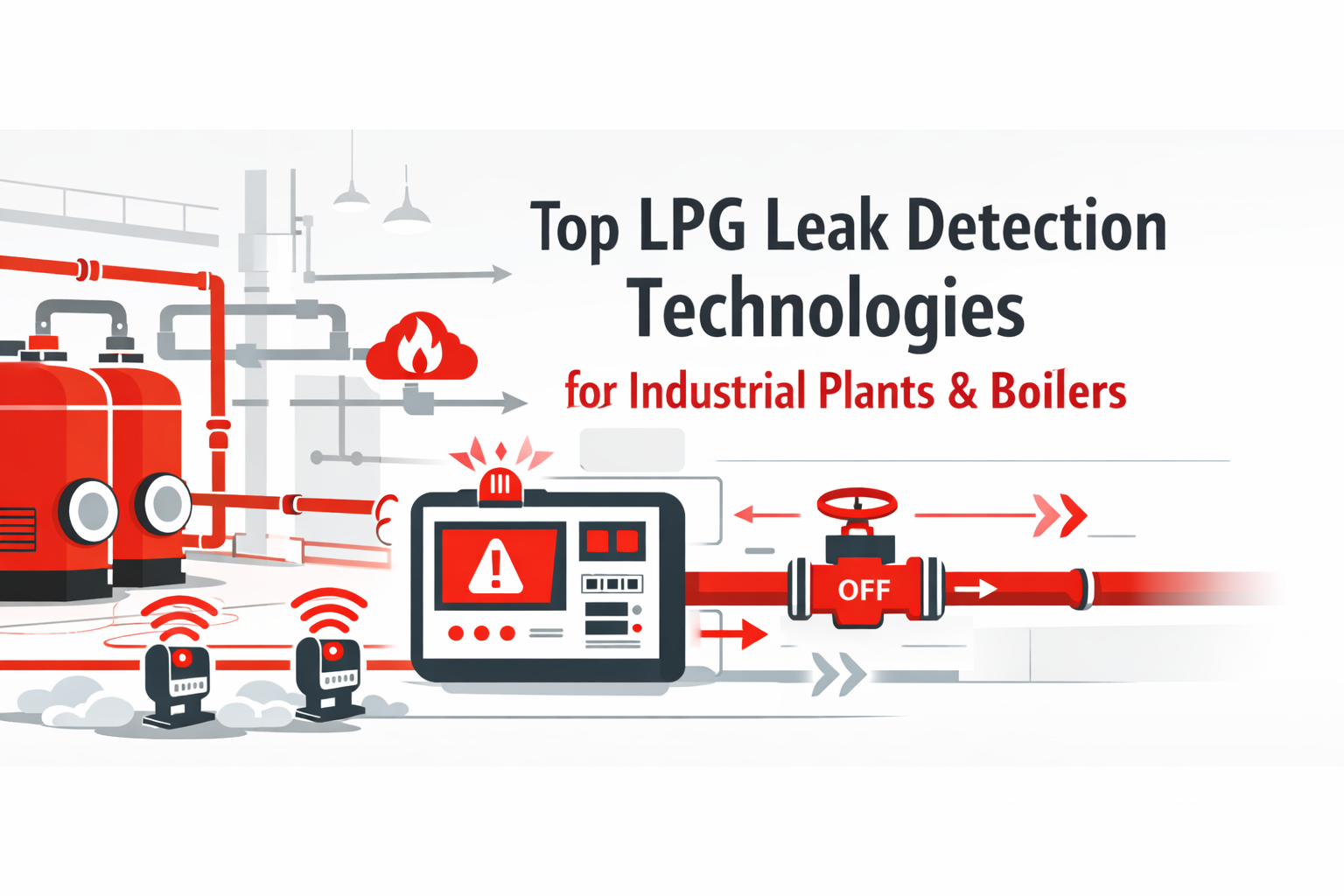
LPG leak detection technologies are a fundamental safety layer in modern industrial plants, particularly where boilers, burners, and bulk gas storage are in constant operation. For engineers and plant operators, these systems are not optional add-ons; they are engineered safeguards designed to prevent fires, explosions, production shutdowns, and costly asset damage. In high-throughput industrial settings, even a minor undetected LPG release can escalate into a major operational incident within minutes.

An effective lpg gas leak detection system continuously monitors the presence of gas and provides early warnings before concentrations reach flammable limits. In many cases, these systems are integrated with alarms, automatic shut-off valves, and control panels to isolate gas flow immediately. This proactive approach significantly reduces downtime, protects personnel, and helps facilities maintain compliance with industrial safety requirements across Pakistan.

A critical factor in LPG safety is its physical behaviour. LPG is heavier than air, which means it does not disperse upward like natural gas. Instead, it settles and accumulates near ground level. This makes lpg gas heavier than air leak detection especially important in basements, boiler rooms, service trenches, and enclosed plant areas where ventilation may be limited. In industrial facilities across Lahore and other manufacturing hubs, these low-lying spaces are common and often house pipelines, vaporizers, and pressure regulation equipment.

From an engineering perspective, lpg gas heavier than air leak safety depends heavily on correct sensor placement and system design. Detectors positioned too high may fail to identify gas pooling at floor level, allowing a hazardous concentration to build unnoticed. Diagrams that illustrate LPG accumulation near the ground can be particularly useful for visualising this risk during system planning and safety briefings, especially for multi-level boiler installations.

Industrial LPG leaks most commonly originate from mechanical interfaces rather than storage vessels themselves. Pipelines carrying LPG under pressure, isolation valves, flanged joints, vaporizers, and cylinder manifolds are all potential leak points. Over time, vibration, thermal expansion, corrosion, or improper maintenance can compromise seals and fittings. An industrial lpg gas leak detector is designed to monitor these areas continuously, offering a level of protection that manual inspections alone cannot achieve.

Beyond immediate safety benefits, reliable leak detection also supports operational continuity. Unplanned shutdowns caused by gas incidents can halt production, damage equipment, and disrupt supply commitments. Early detection allows maintenance teams to intervene in a controlled manner, often before a full shutdown is required. This makes leak detection technologies a practical risk-management investment, not just a regulatory requirement.

In Pakistan, industrial gas handling is governed by safety frameworks issued by the Oil and Gas Regulatory Authority. Facilities handling LPG are expected to implement appropriate detection and control measures in line with Oil and Gas Regulatory Authority guidelines for industrial gas systems. Aligning detection strategies with these regulations helps plants demonstrate due diligence during audits and inspections while maintaining a safer working environment.

For organisations seeking industrial LPG safety solutions in Pakistan, it is essential to work with suppliers who understand local operating conditions, regulatory expectations, and real-world plant layouts. Indus 3’s experience in industrial gas systems reflects over two decades of practical involvement in LPG equipment and safety engineering. To learn more about their background, visit https://indus3.pk/about-us/, or explore their broader capabilities at https://indus3.pk/ as part of a structured approach to industrial LPG safety.

Fixed LPG Gas Leak Detection Systems for Industrial Plants

A fixed LPG gas leak detection system is designed to provide continuous, automated monitoring in areas where LPG is stored, processed, or consumed. Unlike portable detectors, these systems operate permanently in the background, forming an integral part of industrial safety infrastructure. For engineers managing boiler rooms, LPG storage yards, and vaporizer skids, understanding the lpg gas leak detector working principle is essential for correct system design and reliable operation.

At the core of any fixed system are gas sensors installed at strategic locations. These sensors are calibrated to detect LPG at very low concentration levels, well before the gas reaches its lower explosive limit. Because LPG is heavier than air, sensors are typically mounted close to floor level, near pipelines, valves, vaporizers, and cylinder manifolds. In boiler rooms and enclosed plant spaces common in Pakistani factories, this positioning is critical to ensure early detection of gas accumulation that might otherwise remain unnoticed.

When LPG is present, the sensor converts the detected gas concentration into an electrical signal. This signal is transmitted to a central control panel, which acts as the system’s decision-making unit. The control panel continuously analyses incoming data from all connected sensors and compares it against pre-set alarm thresholds. This centralised approach allows multiple risk zones—such as an LPG storage yard and an adjacent vaporizer skid—to be monitored simultaneously through a single interface.

Once gas levels exceed the defined safe limit, the control panel initiates a series of automated responses. Audible and visual alarms are activated to alert plant personnel immediately. These alarms are typically installed both locally, near the leak source, and centrally in control rooms to ensure rapid awareness across the facility. In parallel, the system can trigger automatic shut-off valves installed on LPG supply lines. These valves close the gas flow within seconds, isolating the affected section and preventing further release. This automated isolation is a key advantage of an industrial lpg gas leak detector, as it reduces reliance on manual intervention during high-risk situations.

In industrial applications, fixed detection systems are often integrated with broader safety and control architectures. For example, a boiler room detection system may be linked to burner management systems, ventilation controls, or emergency shutdown protocols. In LPG storage yards, detectors may be connected to perimeter alarms and remotely operated valves, providing layered protection across open and enclosed areas. Vaporizer skids, which handle phase change and pressure regulation, are particularly sensitive zones where continuous detection is considered best practice due to the concentration of fittings and thermal stresses involved.

From a compliance and installation perspective, correct system design extends beyond equipment selection. Sensor spacing, mounting height, cable routing, and power redundancy all influence system reliability. Installation and commissioning should follow recognised safety standards issued by authoritative bodies such as Petroleum and Explosives Safety Organisation, whose engineering guidance is widely referenced across South Asia for gas detection and hazardous area practices. Adhering to such standards helps ensure that systems perform as intended under real operating conditions.

For clarity during planning and training, schematic-style system layout illustrations are often valuable. These diagrams typically show sensor locations, signal flow to the control panel, alarm points, and automatic shut-off valves within a boiler room or LPG yard. While not decorative, they support accurate installation and long-term maintenance.

Facilities looking to source industrial gas safety equipment can explore suitable components via https://indus3.pk/shop-page/, while those requiring tailored layouts or technical validation are encouraged to seek a consultation for LPG detection system design through https://indus3.pk/contact/. This approach ensures that fixed LPG detection systems are engineered as coherent safety solutions, rather than isolated devices, supporting both operational continuity and regulatory confidence.

Portable and Handheld LPG Gas Leak Detectors for Industrial Maintenance

For maintenance engineers and safety officers, portable gas detection plays a supporting but highly practical role alongside fixed safety systems. While fixed detectors provide continuous monitoring in defined zones, a lpg gas leak detector in portable or handheld form allows targeted checks during activities where system conditions change. Inspections, shutdowns, maintenance work, and commissioning phases all introduce temporary risks that fixed systems alone cannot fully cover.

During routine inspections, portable detectors are used to verify the integrity of pipelines, valves, flanged joints, and flexible connections. These are the areas most likely to develop minor leaks over time due to vibration, thermal cycling, or mechanical wear. A handheld detector allows the engineer to move systematically along gas lines and equipment, confirming that no LPG is escaping at connection points. This approach is especially valuable when investigating suspected issues such as the leaking of LPG cylinder connections in cylinder manifolds or changeover systems used as backup supply in industrial plants.

Portable detectors are also essential during planned shutdowns and maintenance activities. When sections of a boiler system or vaporizer skid are isolated and later brought back online, temporary joints may be disturbed, and seals may not seat correctly on the first attempt. Using a handheld detector during re-pressurisation provides immediate feedback, allowing maintenance teams to correct issues before full operation resumes. In commissioning scenarios, portable detection supports verification that newly installed equipment meets safety expectations before fixed systems are relied upon for long-term monitoring.

In commissioning and fault-finding work, portable detectors offer flexibility that fixed systems cannot. Engineers can approach confined or awkward locations, such as behind boilers, beneath pipe racks, or inside service trenches, where fixed sensors may not be installed. This makes portable detection an important tool for confirming safe conditions before work permits are issued or hot work begins.

However, it is important to recognise the limitations of handheld detection and use it appropriately. Unlike fixed systems, portable detectors do not provide continuous monitoring. They only detect gas at the moment and location where they are used. This means that leaks developing outside inspection periods may go unnoticed until the next check. Their effectiveness also depends on operator skill. Incorrect probe positioning, rushed inspections, or misunderstanding of detector readings can reduce reliability. Proper training and disciplined inspection routines are therefore essential to ensure consistent results.

Calibration is another critical factor. Portable detectors must be calibrated at defined intervals to maintain accuracy. Many manufacturers publish clear calibration and bump-test procedures within their technical documentation, which should be followed strictly. Referencing manufacturer guidance or recognised engineering safety documentation ensures that handheld devices perform as expected and that readings can be trusted during safety-critical decisions.

Handheld detector usage diagrams can be particularly helpful during training and toolbox talks. These diagrams typically illustrate correct sweeping techniques, probe distances, and inspection paths around common leak sources. While not a substitute for experience, they help standardise inspection practices across maintenance teams.

For facilities sourcing industrial inspection and safety tools, suitable portable detection equipment can be explored via https://indus3.pk/shop-page/. Equally important is access to reliable after-sales guidance and application support. Details on the technical support provided by Indus 3 are available at https://indus3.pk/about-us/, reinforcing the role of portable gas detection as part of a broader, well-managed industrial LPG safety strategy rather than a standalone solution.

Infrared and Semiconductor LPG Leak Detection Technologies

Infrared and semiconductor sensors are widely used within modern LPG leak detection technologies, particularly where higher accuracy, durability, or specific environmental resistance is required. In industrial boilers, processing plants, and LPG handling areas, these sensor types offer different strengths that engineers must understand to apply them correctly.

Infrared gas detection works on a straightforward physical principle. LPG molecules absorb infrared light at specific wavelengths. An infrared sensor emits a controlled beam of light across a measurement chamber and continuously monitors how much of that light is absorbed. When LPG enters the chamber, absorption increases, and the sensor converts this change into a gas concentration signal. Because this method is based on optical absorption rather than chemical reaction, infrared sensors tend to deliver stable, repeatable readings over long periods.

From an operational standpoint, infrared sensors offer strong resistance to environmental influences. They are largely unaffected by humidity, temperature fluctuations, or the presence of other non-reactive gases. This makes them well suited for boiler rooms and industrial plants where heat, steam, and variable airflow are common. In open or semi-open areas such as LPG storage yards, infrared detection also performs reliably, as wind and dust have minimal impact on optical measurement when systems are correctly enclosed and maintained.

Semiconductor sensors operate differently. These devices use a sensing element whose electrical resistance changes when exposed to LPG. As gas molecules interact with the sensor surface, resistance shifts, and this change is interpreted as a gas concentration. Semiconductor sensors are compact and respond quickly, which makes them suitable for detecting sudden releases in enclosed industrial spaces. Within LPG leak detection technologies, they are often applied in boiler rooms, burner enclosures, or service corridors where rapid response is valuable.

However, semiconductor sensors are more sensitive to environmental conditions than infrared systems. High humidity, airborne contaminants, or temperature extremes can influence readings if sensors are not properly specified or maintained. In industrial plants, this means careful consideration of mounting location, ventilation patterns, and routine calibration. When these factors are managed correctly, semiconductor detection remains an effective solution for many fixed installations.

When comparing the two technologies, accuracy and long-term stability are key differentiators. Infrared detection generally offers superior accuracy over time with lower drift, making it attractive for critical process areas and high-risk zones. Semiconductor sensors, while accurate in controlled environments, may require more frequent calibration and inspection to maintain consistent performance. This does not make one technology universally better than the other; rather, suitability depends on the specific application, environmental exposure, and maintenance strategy of the plant.

In industrial boilers and processing facilities, detection reliability directly affects safety and uptime. A well-designed system may even combine different sensor technologies to address varied risk zones within the same site. This application-driven approach reinforces the role of LPG leak detection technologies as engineered systems rather than standalone devices.

Technical guidance on sensor behaviour and performance is supported by international engineering documentation, including standards and application notes referenced by bodies such as the International Electrotechnical Commission, which outlines best practices for gas detection in hazardous industrial environments.

Facilities planning advanced industrial LPG systems can explore broader system concepts at https://indus3.pk/, while those requiring site-specific advice are encouraged to seek technical guidance on LPG detection technology via https://indus3.pk/contact/. This ensures sensor selection is aligned with real operating conditions, regulatory expectations, and long-term plant safety objectives.

LPG Gas Heavier Than Air: Detection Challenges and Safety Design

Understanding lpg gas heavier than air leak detection is central to safe industrial LPG system design. Unlike natural gas, LPG does not rise and disperse quickly when released. Instead, it settles at low levels and spreads horizontally along floors. In industrial environments, this behaviour directly shapes how leaks develop, where hazards form, and how detection systems must be engineered to respond effectively.

In many factories across Lahore and other industrial zones in Pakistan, LPG is used in boiler rooms, burner enclosures, and service areas that include pits, trenches, cable ducts, and partially enclosed rooms. These low-lying or confined spaces create natural collection points for LPG. A small release from a valve, flange, or regulator can migrate into these areas and remain undetected if sensors are positioned incorrectly. Over time, gas can accumulate to flammable concentrations even when the source leak appears minor.

This is why lpg gas heavier than air leak safety depends less on detection sensitivity alone and more on intelligent system layout. Sensors installed at ceiling height may never encounter the gas, while accumulation continues below. For effective detection, sensors must be positioned close to the floor, typically near likely leak sources such as boiler connections, vaporizer outlets, cylinder manifolds, and pipeline low points. In trenches or pits, additional sensors may be required where gas can collect outside the main equipment footprint.

Ventilation design works alongside detection to manage risk. In enclosed boiler rooms, mechanical ventilation helps dilute any released gas, reducing the likelihood of dangerous build-up. However, ventilation should never be treated as a substitute for detection. Airflow patterns can be unpredictable, especially in older industrial buildings or during equipment operation. A properly designed detection system ensures that gas is identified regardless of how it moves within the space.

From a practical engineering perspective, diagrams that illustrate LPG pooling near ground level are often helpful during design reviews and safety briefings. These visuals support better understanding of why sensor height and spacing matter, particularly for maintenance teams who may otherwise assume gas behaves like lighter fuels. Clear layout planning also simplifies future system expansion or modification when equipment is relocated or upgraded.

Safety design expectations in Pakistan are shaped by regulatory guidance on industrial gas handling. The Oil and Gas Regulatory Authority outlines requirements and best practices for LPG installations, including expectations around leak detection, ventilation, and hazard control. Aligning detection system design with these guidelines helps facilities demonstrate compliance while creating a safer working environment for operators and maintenance staff.

A safety-first approach treats LPG behaviour as a design input rather than an afterthought. Indus 3’s safety-first engineering approach reflects this principle by focusing on system layout, sensor positioning, and real-world operating conditions rather than generic configurations. More information on this approach is available at https://indus3.pk/about-us/.

For facilities assessing existing installations or planning new LPG systems, professional evaluation can identify areas where heavier-than-air gas behaviour has not been fully addressed. A structured site assessment for LPG safety compliance can be arranged via https://indus3.pk/contact/, supporting informed decisions that balance regulatory alignment, operational practicality, and long-term industrial safety.

Compliance, Regulations, and Industrial LPG Leak Detection in Pakistan

Regulatory expectations around LPG safety in Pakistan are designed to reduce preventable incidents while supporting safe, continuous industrial operations. For plant managers, engineers, and safety officers, compliance is not about meeting paperwork requirements alone. It is about implementing an lpg gas leak detection system that demonstrably reduces risk, supports inspections, and aligns with recognised safety frameworks.

At an industrial level, LPG leak detection systems are expected to provide early warning of gas release in areas where LPG is stored, transferred, or consumed. This includes boiler rooms, storage yards, vaporizer skids, and cylinder manifolds. Regulators typically expect detection systems to be permanently installed in higher-risk zones, correctly positioned based on gas behaviour, and integrated with audible or visual alarms. In some cases, automatic shut-off or interlock mechanisms are also expected as part of a layered safety approach.

In Pakistan, these expectations are shaped primarily by guidance issued by the Oil and Gas Regulatory Authority, which oversees LPG handling, storage, and distribution practices. OGRA’s framework emphasises risk identification, preventive controls, and ongoing system integrity rather than reactive measures after an incident. While OGRA does not prescribe one single system design, it expects facilities to justify their detection strategy based on site conditions, LPG usage, and hazard exposure.

A compliant detection system also plays a practical role during audits and inspections. Safety audits often focus on whether gas detection coverage matches the actual risk profile of the facility. Fixed detectors placed too high, inactive alarms, or poorly maintained sensors can raise concerns even if equipment is technically present. Conversely, a well-documented and properly maintained detection system demonstrates that LPG risks are understood and managed systematically. This can simplify regulatory inspections and reduce follow-up actions.

Insurance requirements are another important consideration. Insurers assess LPG installations based on loss prevention rather than regulatory wording. Facilities with robust leak detection systems, clear alarm responses, and maintenance records are generally viewed as lower risk. This can support insurance approvals, renewals, and, in some cases, more favourable terms. From this perspective, compliance-driven detection systems protect not only people and assets but also business continuity.

Beyond national oversight, many industrial safety principles applied in Pakistan align with international engineering guidance. Organisations such as the International Labour Organization provide broader occupational safety frameworks that reinforce the importance of gas detection, hazard zoning, and preventive controls in industrial environments. Referencing such authorities strengthens the technical justification for detection system design without introducing unnecessary complexity.

It is important to note that regulatory compliance should not be treated as a one-time installation task. Detection systems require ongoing inspection, calibration, and functional testing to remain effective. Records of these activities often form part of audit reviews and demonstrate that systems are not only installed but actively managed throughout their service life.

For facilities seeking guidance from a trusted LPG equipment supplier in Pakistan, Indus 3 supports industrial clients by aligning detection solutions with both regulatory expectations and real operational conditions. Their 24+ years of industrial gas expertise reflects long-term involvement in LPG system design, supply, and safety integration, as outlined at https://indus3.pk/about-us/.

Further information on complete LPG solutions and safety-focused system integration can be explored at https://indus3.pk/, supporting informed decisions that balance compliance, operational reliability, and long-term industrial safety.

Designing an Effective LPG Leak Detection Strategy for Industrial Plants

Planning an effective LPG detection strategy requires more than selecting individual devices. It is an engineering exercise that uses LPG leak detection technologies as a structured framework to manage risk across the entire lifecycle of an industrial plant. For engineers and safety managers, the objective is to design a system that is logical, resilient, and maintainable under real operating conditions.

The first step is understanding where and how LPG is used on site. Boiler rooms, vaporizer skids, storage yards, and distribution pipelines all present different risk profiles. A detection strategy should begin with a simple hazard assessment that identifies likely leak sources, gas behaviour, and occupancy patterns. Areas with enclosed spaces, low ventilation, or complex pipework typically require continuous monitoring through fixed detection, while open or transitional zones may be supported by portable inspection routines.

Once risk zones are defined, sensor placement becomes a matter of engineering logic rather than coverage by guesswork. Because LPG is heavier than air, detectors should be positioned near floor level and close to likely leak points such as valves, flanges, regulators, and manifold connections. In larger plants, this often means dividing the site into detection zones, each feeding back to a central control panel. This zoned approach improves fault identification and simplifies response when alarms are triggered.

Redundancy is another core principle of a robust detection strategy. Relying on a single sensor or a single response mechanism introduces unnecessary vulnerability. In higher-risk areas, overlapping sensor coverage ensures that a single device failure does not leave a critical zone unprotected. Similarly, integrating alarms with automatic shut-off valves and ventilation controls creates layered protection. Each layer reinforces the others, reducing dependence on manual intervention during an incident.

Maintenance and lifecycle planning should be considered from the outset. Detection systems are not fit-and-forget installations. Sensors require periodic calibration, alarms must be tested, and control panels need functional verification. Designing systems with accessible mounting points, clear zoning, and documented maintenance schedules reduces long-term operational burden. Maintenance flow charts can be particularly useful here, as they visualise inspection intervals, calibration steps, and escalation procedures in a way that supports consistent practice across teams.

System layout diagrams also play an important role in planning and ongoing management. These diagrams typically show detector locations, cable routes, control panels, alarms, and shut-off points within the plant. For new installations, they support coordination between engineering, electrical, and safety teams. For existing facilities, they help identify gaps when equipment is relocated or processes change. Over time, well-maintained diagrams become part of the site’s safety documentation, supporting audits and training.

A structured detection strategy also considers how portable detection supports fixed systems. Handheld detectors are valuable during commissioning, shutdowns, and maintenance activities, but they should complement—not replace—continuous monitoring in critical zones. Aligning these tools within a single strategy ensures that safety controls remain effective during both normal operation and non-routine work.

Facilities looking to specify or upgrade industrial LPG safety components can explore appropriate system elements at https://indus3.pk/shop-page/. For plants with complex layouts or evolving processes, professional input can help translate safety principles into practical designs. An engineering consultation for LPG systems via https://indus3.pk/contact/ supports informed decisions that prioritise reliability, maintainability, and long-term industrial safety without relying on short-term fixes.

Choosing the Right LPG Leak Detection Technology for Long-Term Plant Safety

Effective LPG safety is built on understanding risk, applying the right engineering controls, and maintaining those systems consistently over time. Throughout industrial environments, LPG leak detection technologies form a critical layer of protection that supports safe operation, regulatory alignment, and business continuity. When designed and managed properly, these systems reduce the likelihood of incidents that can disrupt production, damage assets, or endanger personnel.

A key takeaway is that LPG behaves differently from lighter gases. Because it is heavier than air, detection strategies must prioritise correct sensor placement, particularly in low-level and enclosed areas such as boiler rooms, pits, trenches, and service corridors. Fixed detection systems provide continuous monitoring in high-risk zones, while portable detectors support inspections, commissioning, and maintenance work. Used together, they create a balanced approach that addresses both routine operation and non-standard activities.

Technology choice should always be application-driven. Infrared and semiconductor sensors each offer advantages depending on environmental conditions, accuracy requirements, and maintenance capability. No single solution fits every site. Instead, reliable outcomes come from matching detection technology to plant layout, operating conditions, and lifecycle expectations. This systems-level thinking is what transforms individual devices into a coherent safety strategy.

Another important consideration is longevity. LPG detection is not a one-time installation task. Sensors require calibration, alarms need testing, and system layouts must be reviewed as plants evolve. Designing for accessibility, redundancy, and clear documentation simplifies maintenance and helps ensure that detection systems continue to perform as intended years after commissioning. Over time, this reduces operational risk and supports smoother audits and inspections.

From a business perspective, compliant and well-maintained detection systems are a long-term safety investment. They support insurance requirements, demonstrate responsible risk management, and help avoid unplanned shutdowns that can have significant financial impact. More importantly, they protect the people who work with and around LPG systems every day.

In this context, working with experienced partners matters. Indus 3 approaches LPG safety as an engineering discipline rather than a product exercise. With decades of involvement in industrial gas systems, the company focuses on practical layouts, appropriate technology selection, and real-world operating conditions. Their work supports complete industrial LPG solutions that align safety objectives with operational realities. Further information on their broader capabilities is available at https://indus3.pk/.

For facilities reviewing existing installations or planning new projects, early technical input can make a measurable difference. A structured discussion around risk zones, detection coverage, and maintenance planning often reveals opportunities to improve safety without unnecessary complexity. If you would like to speak with an LPG safety specialist and explore how detection technologies can be aligned with your plant’s needs, a consultation or site assessment can be arranged via https://indus3.pk/contact/.

Taking a considered, long-term view of LPG leak detection helps ensure that safety systems remain effective, compliant, and resilient as industrial operations grow and change.

Certified LPG Safety Equipment Pakistan: OGRA Compliance Guide | Indus 3

Industrial LPG system layout diagram showing certified LPG safety equipment Pakistan with compliance control points

In Pakistan’s industrial landscape, LPG is widely used across factories, warehouses, food processing units, and commercial kitchens. While LPG is efficient and reliable, it is also highly combustible. A minor leak, pressure imbalance, or faulty shut-off mechanism can escalate quickly into fire, explosion, or prolonged shutdown. In confined environments such as production halls or storage facilities, these risks multiply due to heat sources, human movement, and continuous operations.

This is why certified LPG safety equipment Pakistan is not a technical luxury—it is a foundational requirement for safe industrial operations. In real-world settings, incidents rarely happen because LPG itself is dangerous. They occur because safety systems fail under pressure, corrosion, improper installation, or poor-quality components that were never designed for industrial duty cycles.

Uncertified LPG safety equipment introduces multiple layers of risk. From an engineering perspective, uncertified components may lack pressure tolerance consistency, reliable sealing, or predictable response under abnormal conditions. This increases the likelihood of leaks, valve failures, and delayed system isolation during emergencies. Operationally, such failures lead to unplanned downtime, halted production, and costly recovery procedures. From a legal standpoint, the exposure is even greater—industrial operators may face regulatory penalties, insurance disputes, and long-term reputational damage following an avoidable incident.

The difference between compliance-driven procurement and price-driven purchasing becomes clear in these scenarios. Compliance-driven procurement evaluates equipment against regulatory acceptance, system compatibility, and long-term reliability. It considers how components perform together as part of a complete LPG system. Price-driven purchasing, on the other hand, often focuses on upfront cost alone. While this may reduce initial expenditure, it transfers risk directly into operations, safety, and liability—areas where compromise is rarely defensible.

Pakistan’s regulatory environment reinforces this reality. The Oil and Gas Regulatory Authority (OGRA) serves as the primary body overseeing LPG safety, licensing, and compliance across industrial and commercial sectors. OGRA’s role is not limited to documentation; it defines the framework within which LPG systems must operate safely. Aligning with OGRA-recognised standards ensures that safety equipment meets minimum technical and operational expectations set for Pakistan’s conditions and usage patterns. Regulatory guidance is available directly through OGRA’s official resources: https://ogra.org.pk/

For engineers and plant managers, understanding these risks is easier when visualised at system level. LPG system diagrams—showing storage, pipelines, pressure regulation points, and emergency shut-offs—help identify where failures are most likely to occur. These diagrams highlight how a single weak component can compromise an otherwise well-designed system. They also reinforce why certification matters at every critical control point, not just at the storage tank.

Working with an experienced industrial LPG supplier in Pakistan such as Indus 3 (https://indus3.pk/) provides an added layer of assurance. Experience in local industrial environments means understanding regulatory expectations, operating conditions, and long-term system behaviour—not just supplying components.

With over two decades of industry involvement, Indus 3’s background (https://indus3.pk/about-us/) reflects sustained engagement with industrial gas systems rather than transactional supply. This depth of experience supports safer decision-making at the procurement stage, where the right choices prevent problems long before installation begins.

Ultimately, LPG safety in Pakistan’s industrial sector is not defined by isolated components. It is defined by informed choices, regulatory alignment, and a clear understanding of how certified equipment protects people, property, and continuity of operations.

Understanding OGRA Standards for Certified LPG Safety Equipment in Pakistan

The Oil and Gas Regulatory Authority (OGRA) is Pakistan’s primary regulator for downstream gas activities, including LPG storage, handling, and distribution in industrial and commercial environments. Its regulatory scope focuses on safety, system integrity, and controlled operation rather than individual products in isolation. OGRA’s role is to ensure that LPG systems operate within defined technical limits that reduce risk to people, property, and surrounding infrastructure.

When discussing certified LPG safety equipment Pakistan, it is important to understand that OGRA does not approve equipment in the way a manufacturer certifies a component. Instead, OGRA establishes the regulatory framework that determines whether equipment, system design, and site operations are acceptable for use under Pakistani conditions. Compliance is therefore layered, not singular.

One common misunderstanding is the difference between equipment certification, system design approval, and site inspection. Equipment certification relates to whether a component has been manufactured, tested, and documented according to recognised technical standards. This may involve factory testing, pressure ratings, material specifications, and traceability documents. Certification alone, however, does not guarantee regulatory acceptance.

System design approval looks at how certified components are integrated into a complete LPG system. OGRA’s concern at this stage is whether the layout, pressure regulation strategy, isolation points, and safety controls collectively meet safety expectations. A well-certified valve installed in a poorly designed system still presents a risk. This is why compliance diagrams and approval-flow charts are often used by engineers to visualise how individual elements interact under normal and abnormal operating conditions.

Site inspection is the final layer. It evaluates whether the approved system design has been installed correctly and is being operated as intended. Factors such as accessibility, ventilation, separation distances, and maintenance readiness are assessed. Passing inspection depends not only on hardware quality but also on installation practices and operational discipline.

Another frequent misconception is the assumption that “imported means compliant.” Imported equipment may be manufactured to high standards, but OGRA compliance depends on suitability for local regulations, operating conditions, and integration into an approved system. Without proper documentation and design alignment, imported components can still fail regulatory review.

For readers seeking deeper technical clarity, this section supports the broader guidance provided in the pillar content on OGRA-compliant LPG safety systems, where system-level compliance is explained in more detail. That pillar resource should be treated as the primary reference point for planning and procurement decisions.

OGRA’s official rules, guidelines, and licensing frameworks are publicly available and should always be consulted for authoritative validation: https://ogra.org.pk/

In practice, navigating these regulatory layers often requires expert interpretation rather than checklist-based decisions. Discussing system requirements early with specialists can prevent redesigns, delays, and compliance setbacks later. For advisory support, readers are encouraged to discuss compliance requirements with experts via https://indus3.pk/contact/.

Understanding OGRA’s regulatory scope is less about memorising rules and more about recognising how certification, design, and inspection work together. When these elements are aligned, LPG systems operate safely, predictably, and within Pakistan’s regulatory expectations.

Selecting LPG safety equipment for industrial use is not only about meeting pressure ratings or material specifications. For engineers and technical buyers, the real question is whether a component has been tested, documented, and validated in a way that aligns with Pakistan’s regulatory expectations. This is where globally recognised certifications play a practical role.

International standards such as ISO define how industrial equipment should be designed, manufactured, and tested under controlled conditions. These standards do not replace local regulation, but they provide a technical baseline. When equipment is produced under ISO-controlled processes, it offers predictability in material quality, dimensional accuracy, and performance repeatability. From an engineering standpoint, this reduces uncertainty during system design and operation.

Manufacturer test approvals sit alongside international standards. Reputable manufacturers subject critical components to pressure testing, leak testing, and functional verification before release. These approvals are usually supported by datasheets, test certificates, and traceability records. While this does not constitute regulatory approval on its own, it provides the technical evidence needed to demonstrate that equipment can perform reliably under defined operating conditions.

This distinction is important for OGRA acceptance. OGRA does not certify equipment directly; it evaluates whether the equipment used within a system is suitable, documented, and compatible with an approved design. Equipment that carries recognised certifications and clear manufacturer documentation is far easier to justify during system review than components with no verifiable technical history. In this context, certified LPG safety equipment Pakistan becomes a matter of documented engineering confidence rather than branding or origin.

Engineers should rely heavily on schematics and datasheets during evaluation. These documents clarify pressure limits, temperature ranges, connection standards, and safety functions. They also allow designers to confirm whether a component fits logically within the wider LPG system. Manufacturer documentation, such as technical manuals and test protocols, serves as an external authority for validating these details; an example of this type of reference can be found in established manufacturer technical libraries such as https://www.emerson.com/en-us/catalog/valves-actuators-regulators (for general documentation structure, not product selection).

When reviewing available options, it is appropriate to consider equipment categories rather than individual models. For instance, safety valves as a category must meet strict performance and response criteria, regardless of supplier. The focus should remain on certification evidence, test documentation, and compatibility with system design—not on catalogue specifications alone.

Access to properly vetted components also matters. Educational resources such as certified LPG safety components available through https://indus3.pk/shop-page/ help engineers understand what compliant equipment typically looks like from a technical and documentation perspective, without turning procurement into a trial-and-error process.

Equally important is the sourcing discipline behind that equipment. Indus 3’s long-standing approach to verification and documentation is rooted in its industry background, outlined in its company profile: https://indus3.pk/about-us/. This experience supports informed evaluation rather than assumption-based selection.

In practice, certifications are not checkboxes. They are tools that help engineers assess risk, justify design decisions, and align equipment choices with regulatory review. When interpreted correctly, they bridge the gap between global manufacturing standards and local compliance requirements.

Selecting LPG safety equipment should always begin with the application, not the component catalogue. In industrial systems, safety performance is dictated by how the system behaves under load, pressure variation, and environmental stress. Engineers who start with system conditions make safer, more defensible decisions than those who start with individual items.

System size is the first determinant. Large storage installations feeding multiple downstream processes behave very differently from small, point-of-use systems. Larger systems store more energy, take longer to stabilise, and amplify the consequences of failure. As capacity increases, safety equipment must respond reliably under higher flow rates and sustained operating cycles. This is why scaling a system without reassessing safety assumptions often introduces hidden risk.

Operating pressure is equally critical. LPG systems experience pressure changes due to temperature fluctuation, consumption peaks, and process start-ups. Safety elements must tolerate both normal operating pressure and transient spikes without delayed response or mechanical fatigue. From an engineering perspective, pressure behaviour should be evaluated across the entire operating envelope, not just at nominal values. This is where certified LPG safety equipment Pakistan becomes relevant as a supporting requirement—documentation and testing help confirm predictable performance under pressure variation.

The operating environment further shapes safety needs. Indoor installations such as commercial kitchens and enclosed production areas demand tighter control due to limited ventilation and higher personnel exposure. Outdoor or semi-exposed industrial sites face corrosion, dust, vibration, and temperature extremes. These conditions influence material selection, enclosure requirements, and maintenance intervals. A safety approach that works in a controlled plant room may be unsuitable for a dusty warehouse or open yard installation.

Installation layout diagrams are especially valuable at this stage. Visual layouts showing storage, pipelines, isolation points, and safety controls allow engineers to identify stress points and failure paths before procurement begins. These diagrams help confirm whether safety measures are positioned to respond effectively, rather than merely existing within the system.

Application-based safety logic is reinforced by established engineering safety bodies. While regulatory frameworks differ by country, principles promoted by organisations such as PESO (Petroleum and Explosives Safety Organisation) validate the idea that system design, environment, and operating conditions must guide safety decisions—not product availability alone. Their guidance supports a risk-based approach that is widely recognised across the industry.

Only at this point does it make sense to reference broad equipment categories. For example, pressure relief devices must be selected based on system capacity, discharge paths, and environmental exposure rather than generic ratings. Mentioning categories helps clarify function without reducing the discussion to product selection.

Engineers exploring how these principles translate into real systems can review educational references to industrial LPG system components at https://indus3.pk/shop-page/. These resources help contextualise how different system elements typically interact.

For deeper system-level planning, this section supports the guidance outlined in the pillar content on OGRA-compliant LPG safety systems, where application-driven design is addressed holistically.

Ultimately, safe LPG system design is an exercise in understanding behaviour, not buying parts. When system size, pressure dynamics, and operating environment are properly assessed, safety equipment selection becomes a logical outcome rather than a procurement gamble.

Certified equipment is an essential starting point, but it does not, on its own, make an LPG system safe. In industrial environments, safety outcomes are determined just as much by how equipment is installed, inspected, and maintained as by how it was manufactured. From an engineering perspective, installation quality and inspection discipline are where compliant systems either succeed or quietly fail.

Incorrect installation can undermine even the highest-grade components. Misaligned connections, inadequate support, poor sealing practices, or incorrect positioning of safety controls can introduce stress points that were never accounted for in the design stage. Over time, these issues lead to leaks, pressure imbalance, and mechanical fatigue. In many post-incident investigations, the root cause is traced not to equipment failure, but to installation errors that went unnoticed during commissioning.

Inspection plays a similarly critical role. LPG systems are dynamic—they experience temperature variation, pressure cycling, vibration, and human interaction every day. Without routine inspection, early warning signs such as minor leaks, corrosion, or valve response delays remain undetected. This is why regulatory frameworks treat inspection as a continuous obligation rather than a one-time approval. Even when certified LPG safety equipment Pakistan is used, inspection remains the mechanism that confirms the system is still operating within safe limits.

OGRA places clear emphasis on inspection and operational readiness as part of its downstream gas safety oversight. Regulatory guidance focuses on periodic checks, documentation, and verification that approved systems continue to meet safety expectations after installation. Official inspection and compliance requirements are outlined through OGRA’s regulatory resources: https://ogra.org.pk/. These guidelines reinforce that safety is an ongoing process, not a box ticked at procurement.

Practical tools help engineers and site managers manage this responsibility. Inspection checklists provide structured verification of critical points such as joints, isolation points, ventilation, and emergency access. System diagrams, updated to reflect the as-built installation, allow inspectors to confirm that what exists on site matches the approved design. Together, these tools reduce reliance on memory or assumption and create a repeatable inspection process.

Equally important is accountability. Clear assignment of inspection responsibility ensures that checks are not deferred or informally handled. Documentation of findings, corrective actions, and follow-up inspections creates an auditable safety record—one that protects both personnel and management in the event of regulatory review.

This systems-level view is where experienced partners add value. Working with teams that understand how design intent translates into real-world installation reduces gaps between planning and operation. Indus 3’s focus on complete system understanding, rather than isolated components, is reflected in its role as a trusted industrial LPG specialist: https://indus3.pk/.

For organisations unsure whether their existing installations still meet current expectations, it is advisable to review your LPG system compliance with technical experts via https://indus3.pk/contact/. Early review often prevents costly retrofits, shutdowns, or compliance issues later.

In practice, LPG safety is not achieved at the point of purchase. It is achieved through correct installation, disciplined inspection, and ongoing system awareness. Certified equipment enables safety—but installation and inspection sustain it over the life of the system.

In many industrial projects, procurement decisions are made under intense commercial pressure. Budgets are fixed, timelines are tight, and there is constant pressure to reduce upfront costs. These realities are well understood across Pakistan’s industrial sector. However, when it comes to LPG systems, short-term savings achieved at the procurement stage often translate into long-term operational, safety, and compliance risks.

One of the most common mistakes is treating LPG safety equipment as a line item rather than as part of a risk-managed system. When price becomes the dominant decision factor, critical questions tend to be sidelined: Is the equipment properly documented? Has it been evaluated for compatibility with the system design? Will it perform predictably over years of operation? Without clear answers, the system inherits uncertainty from day one—even when certified LPG safety equipment Pakistan is partially involved.

Another frequent error is assuming that minimum compliance is sufficient. In practice, LPG systems operate in demanding environments where wear, pressure cycling, and human interaction are unavoidable. Equipment that merely meets baseline expectations may not provide adequate safety margins under real operating conditions. This gap between theoretical compliance and practical performance is where incidents, downtime, and regulatory scrutiny emerge.

Documentation is also often underestimated. In cost-driven procurement, technical records such as test certificates, installation drawings, and inspection logs are sometimes incomplete or fragmented. This creates problems later during audits, expansions, or incident reviews. Comparison tables and system schematics are valuable tools here; they allow decision-makers to see differences in compliance coverage, system integration, and long-term reliability without relying on assumptions.

There is also a misconception that safety upgrades can always be deferred. While this may reduce immediate expenditure, retrofitting safety measures into an operating LPG system is typically far more expensive and disruptive than integrating them correctly at the design stage. Production stoppages, redesign work, and reinspection costs often outweigh the original savings that drove the shortcut.

This is why guidance focused on choosing compliant LPG safety equipment should be treated as a corrective framework rather than a procurement checklist. The pillar content on this topic exists to help industrial operators align technical decisions with regulatory expectations and operational reality, reducing the likelihood of costly rework or non-compliance.

Credibility and experience matter in navigating these decisions. Organisations with long-term exposure to industrial LPG systems understand where cost pressures commonly lead to hidden risk. Indus 3’s background and industry involvement, outlined at https://indus3.pk/about-us/, reflect sustained engagement with compliance-driven system planning rather than transactional supply.

Ultimately, the real cost of LPG safety decisions is rarely visible on a purchase order. It appears later—in inspections, downtime, liability, and lost confidence. A balanced approach recognises commercial constraints while refusing to compromise on system integrity. When safety decisions are informed, documented, and system-focused, they protect both the budget and the operation over the long term.

Supporting compliant LPG systems requires more than access to equipment. It requires a disciplined approach to sourcing, verification, and technical continuity across the life of an installation. Indus 3’s role in this process is defined less by sales activity and more by how decisions are filtered before equipment ever reaches a site.

Sourcing begins with evaluation, not availability. Components are assessed against documented performance criteria, traceability, and suitability for industrial duty cycles. This means looking beyond catalogue descriptions to understand how equipment behaves under sustained load, pressure variation, and environmental stress. Only components supported by consistent manufacturer documentation are considered suitable for regulated LPG applications.

Verification follows sourcing. Technical datasheets, test records, and installation guidance are reviewed to ensure that specifications align with system-level requirements. This step is critical for engineers who must justify design choices during approval and inspection stages. Manufacturer documentation is not treated as supplementary material; it is treated as a core safety input that supports regulatory review and future maintenance.

Compliance support is approached at system level. Rather than viewing safety equipment as standalone items, Indus 3 focuses on how components integrate within an LPG system’s architecture. System schematics play an important role here. They help clarify flow paths, isolation points, and pressure control logic, allowing engineers to confirm that safety intent is preserved from design through installation. These schematics also serve as practical references during inspection and troubleshooting.

This system-oriented mindset is shaped by long-term exposure to industrial LPG environments. The company’s background, outlined through its established industrial LPG expertise, reflects sustained involvement with regulated installations rather than short-term supply cycles. That experience informs how compliance risks are identified early, when they are easiest to manage.

Access to properly vetted industrial LPG system components further supports this approach. Educational presentation of components allows engineers and procurement teams to understand typical system roles and documentation expectations without reducing decisions to part numbers. The emphasis remains on suitability and traceability rather than volume or speed.

Where a product category must be referenced, it is done at a functional level. For example, safety shut-off mechanisms are discussed in terms of response behaviour and integration, not models or specifications. This keeps attention on system performance rather than individual items.

Throughout this process, the objective is consistency. Consistency in documentation, in system logic, and in compliance readiness. When sourcing, verification, and system planning are aligned, regulatory review becomes a confirmation exercise rather than a corrective one.

This approach allows engineers and operators to make decisions with confidence. Not because risks are eliminated, but because they are understood, documented, and managed within a coherent system framework.

Choosing LPG safety solutions is not a routine procurement exercise. As this article has shown, it is a compliance-driven, risk-management decision that affects people, property, and operational continuity. In Pakistan’s industrial environments—where systems operate under pressure, heat, and constant use—safety outcomes depend on how well equipment, design, installation, and inspection work together.

The key takeaway is simple: certified LPG safety equipment Pakistan only delivers its intended value when it is selected, integrated, and maintained within a compliant system. Certification supports predictability and regulatory acceptance, but it does not remove responsibility from engineers, operators, or decision-makers. True safety is achieved when certification is combined with correct system design, disciplined installation, and ongoing inspection.

Throughout the article, the same pattern emerges. Shortcuts taken at the procurement stage often reappear later as downtime, rework, inspection failures, or liability exposure. In contrast, compliance-first decisions tend to reduce long-term cost, uncertainty, and operational disruption. This is why system-level planning, rather than component-level buying, should guide every LPG safety decision.

For readers seeking structured guidance, the pillar resource on OGRA-compliant LPG safety systems provides a consolidated view of how regulatory expectations, engineering logic, and real-world operation align. It serves as a reference point for planning new installations, reviewing existing systems, or preparing for inspection.

Equally important is knowing when to seek expert input. Many compliance challenges are not caused by negligence, but by gaps in interpretation—how standards apply to a specific site, or how legacy systems align with current expectations. In such cases, early consultation prevents costly corrections later. Organisations are encouraged to consult specialists on LPG system compliance via https://indus3.pk/contact/ to clarify requirements before risks materialise.

Indus 3’s role in this process is that of a long-term technical partner rather than a transactional supplier. With decades of exposure to regulated LPG systems, its focus remains on helping industrial operators make informed, defensible decisions that stand up to operational and regulatory scrutiny. That continuity of support matters, particularly as systems evolve, expand, or come under review.

In an environment where safety margins are non-negotiable, the most reliable approach is also the most sustainable one. Compliance-led planning protects assets, safeguards people, and ensures that LPG systems perform as intended over their full lifecycle. Working with experienced partners ensures those decisions remain sound not just today, but years into operation.

LPG Storage Tank Safety Guide for Industrial Sites | Indus 3

Diagram showing industrial LPG tanks, safety zones, and compliance visuals from an LPG storage tank safety guide

Introduction to LPG Storage Tank Safety in Pakistan

In Pakistan, industrial accidents rarely begin with a single mistake. They start with small oversights. A valve ignored. A checklist skipped. A regulation misunderstood. When LPG is involved, those oversights can escalate into fires, explosions, and irreversible losses within seconds.

LPG incidents at factories, ports, and storage yards have repeatedly exposed one hard truth. Compliance failures and weak storage practices are not paperwork issues. They are operational risks. Lives, assets, and entire supply chains depend on how safely LPG is stored and managed.

Across Pakistan, the demand for LPG continues to rise. Industries rely on it for heating, processing, and energy resilience. Ports handle bulk imports. Distributors operate storage plants near populated zones. Yet the safety discipline around the lpg storage tank often fails to keep pace with this growth.

This gap is where most disasters are born.

Why LPG Storage Safety Demands Serious Attention

An LPG leak does not behave like other industrial hazards. It spreads silently, hugs the ground, and ignites violently. In confined or poorly designed areas, even a small release can trigger catastrophic outcomes.

Industrial LPG sites face layered risks. These include pressure containment, fire exposure, human error, and regulatory non-compliance. When industrial lpg storage tanks are installed without proper spacing, foundation design, or licensing, risk compounds rapidly.

Pakistan’s industrial landscape makes this challenge more complex. Many storage facilities operate near residential areas. Others sit in ports or logistics corridors under constant operational pressure. In these environments, weak lpg handling and storage practices do not stay isolated for long.

They spill into public safety.

LPG Storage in Pakistan: Growth Without Margin for Error

The LPG sector in Pakistan has expanded faster than its safety culture. New storage plants, filling stations, and bulk tanks appear every year. However, enforcement and awareness often lag behind installation.

LPG storage Pakistan is governed by multiple regulatory frameworks. These include OGRA licensing conditions, the Pakistan Explosives Rules, and international safety standards like NFPA 58. Each exists to prevent known failure scenarios. Ignoring even one creates exposure.

Many industrial operators underestimate how closely regulators scrutinise storage design, documentation, and operational discipline. Others assume that once a tank is installed, compliance becomes optional. History shows the opposite.

Regulators usually arrive after incidents, not before them.

Who This LPG Storage Tank Safety Guide Is For

This LPG storage tank safety guide is written for decision-makers, not just engineers. It speaks to factory owners, plant managers, port operators, distributors, and safety officers responsible for LPG assets.

If your operation involves bulk LPG, cylinder storage, or filling systems, this guide is relevant. If your facility operates under OGRA licensing or explosives regulations, this guide is essential.

It is designed as a practical reference. Not theory. Not marketing. Just clarity around risks, rules, and responsibilities.

Organisations working with experienced industrial suppliers such as Indus 3 often recognise that safe LPG storage is not a single installation step. It is an ongoing operational discipline supported by proper equipment, layout, and compliance culture.
You can learn more about their industrial focus on the Indus 3 Home Page and background on the About Us page.

The Regulatory Reality Behind LPG Storage Safety

In Pakistan, LPG storage safety is not optional or flexible. It is governed by enforceable laws and internationally aligned standards.

OGRA Pakistan LPG regulations define licensing, capacity limits, and operational obligations. The Pakistan Explosives Rules set strict conditions for storage vessels, safety distances, and inspections. International guidance such as the NFPA 58 overview informs best practices followed worldwide.

Together, these frameworks exist for one reason. Every major LPG incident has already happened somewhere before. The rules are written in response to real failures, real fires, and real casualties.

This guide begins where those lessons matter most. Before the incident. Before the investigation. Before the loss.

LPG Storage Tank Types and Design Standards in Pakistan

Choosing the right LPG storage tank is not a cosmetic decision. It defines pressure safety, operational limits, and long-term compliance. In Pakistan, industrial LPG installations rely on a few proven tank designs, each selected for specific capacities, layouts, and risk profiles.

Understanding these designs helps operators make informed decisions and avoid costly retrofits later.

Bullet Tanks: The Most Common Industrial Choice

Bullet tanks are the most widely used LPG storage vessels in Pakistan. Their horizontal cylindrical shape with rounded ends allows uniform pressure distribution and structural stability.

These tanks are commonly installed at factories, filling plants, and distribution depots. Capacities typically range from 1000 kg to 10 tons, depending on site demand and licensing approval.

From an engineering perspective, bullet tanks follow strict lpg storage tanks design standards. Wall thickness, weld quality, and nozzle placement are determined through lpg storage tank design calculations that account for internal pressure, temperature variation, and seismic factors.

In practice, lpg bullet storage tank tanks are preferred because they are easier to transport, install, and maintain compared to larger configurations.

Spherical LPG Storage: Used for Very Large Capacities

LPG spherical storage tanks are designed for extremely large volumes. Their geometry offers the most efficient pressure distribution, reducing stress concentration across the shell.

In Pakistan, spherical tanks are rare and usually limited to ports, terminals, or strategic storage facilities. These installations require significant civil works, complex foundations, and advanced safety zoning.

While spheres offer excellent structural performance, their cost and space requirements make them unsuitable for most industrial sites. They are typically reserved for national-scale storage rather than private industrial use.

Dish-End LPG Storage Tanks and Their Role

Dish-end LPG storage tanks are a variation of horizontal bullet tanks. Instead of hemispherical ends, they use dished or torispherical end caps.

This design simplifies fabrication while still maintaining pressure integrity. Dish-end tanks are commonly used where manufacturing constraints or transportation limits apply.

From a compliance standpoint, dish-end vessels still fall under the same lpg storage tanks design standards as traditional bullet tanks. Design verification and testing remain mandatory.

Bulk Storage Tank Sizes and Practical Selection

Bulk LPG storage tanks are selected based on consumption patterns, delivery schedules, and regulatory limits. In Pakistan, common industrial sizes include 1000 kg, 3000 kg, 5000 kg, and 10-ton installations.

Larger tanks reduce delivery frequency but increase licensing complexity. Smaller tanks are easier to approve but may strain logistics during peak demand.

Regardless of size, every tank must comply with internationally recognised pressure vessel rules.

ASME Section VIII and NFPA 58 Alignment

Most LPG storage tanks used in Pakistan are designed in alignment with ASME Section VIII, the globally recognised pressure vessel code. This standard governs material selection, welding procedures, inspection methods, and pressure testing.

Pakistani manufacturers and importers adapt ASME requirements to local conditions. This includes environmental exposure, transportation stress, and regulatory inspection practices.

In parallel, NFPA 58 provides guidance on installation spacing, safety distances, and operational safeguards. While NFPA is not a manufacturing code, it heavily influences how tanks are placed, protected, and operated on-site.

Together, ASME Section VIII and NFPA 58 form the technical backbone of compliant LPG storage systems.
A high-level reference can be found in the ASME pressure vessel code, which underpins most certified LPG vessels worldwide.

Supporting Components and System Integrity

A storage tank never operates alone. Valves, regulators, safety relief devices, and filters all contribute to system safety. Selecting certified accessories is as critical as selecting the tank itself.

Industrial operators often source these components from specialised suppliers through platforms such as the Indus 3 Shop Page or dedicated categories like LPG Accessories.

Without proper integration, even a well-designed tank becomes a liability rather than an asset.

Understanding tank types and standards is the foundation. Everything else in LPG safety builds on this decision.

Regulatory Framework for LPG Storage in Pakistan

LPG storage in Pakistan operates under a tightly defined legal framework. These laws exist to standardise safety, control risk, and protect surrounding communities. For industrial operators, understanding regulation is not an administrative task. It is a core operational responsibility.

Every compliant facility begins with licensing. Every violation begins with assumptions.

OGRA Licensing and Regulatory Oversight

The Oil and Gas Regulatory Authority is the primary regulator for LPG storage and handling in Pakistan. Under Oil and Gas Regulatory Authority, any bulk LPG installation requires a formal lpg storage license.

OGRA evaluates storage capacity, site layout, safety distances, and operational readiness before issuing approval. This process applies to storage plants, filling stations, and bulk depots alike. Operators must submit detailed drawings, tank specifications, and safety documentation.

In practice, lpg storage ogra pakistan licensing is not a one-time event. Renewals, inspections, and compliance audits remain ongoing. Any expansion in capacity or modification in layout requires prior approval.

OGRA’s official LPG policy framework reinforces alignment with international standards while accounting for local risk conditions. This ensures consistency across provinces and industrial sectors.

Explosives Act and Mandatory Safety Control

Alongside OGRA, the Explosives Act governs the physical presence of LPG storage vessels. LPG is legally classified as a hazardous substance. As a result, an explosive licence for lpg storage is mandatory for most industrial installations.

This licence is issued and enforced by the Pakistan Explosives Department. Their mandate covers storage vessel construction, safety distances, fencing, and controlled access.

The Explosives Act focuses on preventing ignition scenarios. It regulates how close LPG tanks can be to buildings, public roads, and utilities. It also defines inspection schedules and enforcement powers.

Failure to obtain or renew an explosives licence places the entire facility in violation, regardless of OGRA approval.

LPG Storage and Filling Rules 2001 & 2010

Pakistan’s LPG sector is further governed by two critical rule sets. These are the LPG Storage and Filling Rules 2001 and the updated 2010 amendments.

Together, they define the operational backbone of every compliant LPG facility. The rules for lpg storage & filling plant cover tank installation, filling operations, emergency shutdowns, and staff competency.

The 2010 updates strengthened enforcement mechanisms and clarified responsibilities. They also introduced clearer definitions for bulk storage thresholds and operator accountability.

These rules apply equally to private industrial users and commercial distributors. Compliance is measured by documentation, physical inspection, and operational discipline.

Consequences of Non-Compliance

Non-compliance does not always lead to immediate shutdown. More often, it creates exposure. Licences may be suspended. Deliveries may be blocked. Insurance coverage may become invalid.

In serious cases, regulators can seal facilities or initiate legal proceedings. Operational delays and reputational damage often follow long before penalties are imposed.

The most common compliance failures involve expired licences, undocumented capacity changes, or unapproved tank relocations. These issues are avoidable, but only when regulation is treated as a continuous process.

Documentation, Accountability, and Industry Practice

Regulatory compliance is built on traceability. Approved drawings, inspection records, and licence certificates must remain accessible at all times. Regulators expect clarity, not explanations.

Industrial operators often seek guidance or clarification before making changes. Channels such as the Indus 3 Contact Page are commonly used for technical and compliance-related discussions. Legal boundaries and responsibilities are further outlined within published frameworks like the Terms & Conditions.

For authoritative reference, operators should consult the OGRA official LPG policy page and the Pakistan Explosives Department guidance documents directly.

Site Safety, Civil Works, and Storage Conditions

LPG storage safety is proven on the ground, not on paper. Even a fully licensed facility can become unsafe if civil works and site conditions are poorly executed. This is where many industrial sites in Pakistan fall short. The risks are subtle, cumulative, and often overlooked during daily operations.

Strong lpg storage conditions start with how the site is built and maintained.

Concrete Flooring and Structural Foundations

Concrete flooring is a non-negotiable requirement for LPG storage areas. Uneven surfaces, exposed soil, or cracked slabs increase the risk of tank settlement and pipe stress. Over time, this compromises fittings and joints.

Concrete flooring in lpg storage areas must be level, load-bearing, and resistant to weathering. The slab should support both static tank loads and dynamic forces during filling or maintenance. Poor foundations often lead to misalignment, which accelerates wear on valves and connections.

For cylinder storage, raised concrete platforms help prevent corrosion caused by standing water and ground moisture.

Drainage Slopes and Spill Control

Drainage is not about convenience. It is about controlling gas movement. LPG vapour is heavier than air and travels along the ground. Poor drainage allows gas to accumulate in low points.

Storage yards should be designed with gentle outward slopes. These guide any leaked vapour away from tanks and critical equipment. Drains must never lead toward buildings, pits, or enclosed spaces.

Open trenches, uncovered sumps, and basement drains near LPG storage areas are serious hazards. They create unseen accumulation zones.

Ventilation and Open-Air Requirements

LPG storage areas must remain open and well ventilated. Natural airflow is the primary defence against vapour build-up. Enclosed sheds, temporary walls, or stacked materials around tanks restrict dispersion.

Ventilation is especially critical for cylinder storage zones. Storage requirements for lpg cylinders specify separation, airflow, and height limits to prevent heat build-up and mechanical damage.

Any structure that limits airflow around storage vessels increases ignition risk, even if the tank itself is compliant.

Fencing, Access Control, and Exclusion Zones

Physical separation protects both equipment and people. LPG storage tanks must be fenced to prevent unauthorised access, accidental impact, or tampering.

Exclusion zones are defined safety buffers around tanks. These zones restrict vehicle movement, ignition sources, and non-essential personnel. They are based on tank size and capacity.

NFPA 58 spacing guidance, published by the National Fire Protection Association, is widely referenced when defining these distances. While not a local law, it informs best practice and inspection benchmarks.

Encroachment into exclusion zones is one of the most common violations found during audits.

A Practical LPG Storage Area Checklist

A compliant site follows routine checks, not assumptions. A basic lpg storage area checklist should include:

  • Level, crack-free concrete flooring under tanks

  • Clear drainage paths sloping away from storage vessels

  • Open ventilation with no airflow obstructions

  • Clearly marked exclusion zones

  • Secure fencing with controlled access points

  • No combustible materials stored nearby

These checks are simple, but their absence is often the root cause of incidents.

Supporting Safety Hardware on Site

Civil works alone cannot manage all risk. Mechanical safeguards play a critical role in on-ground safety. Emergency shut-off valves, excess flow valves, and pressure relief devices limit escalation during faults.

Many operators source certified components through specialised categories such as LPG Safety Devices and control hardware like LPG Ball Valves.

These components must be accessible, visible, and protected from physical damage. Buried or obstructed safety devices defeat their purpose.

Why Site Discipline Matters

Most LPG incidents are not caused by tank failure. They are caused by surroundings. Poor flooring. Blocked airflow. Encroached safety distances.

On-ground implementation turns written rules into real protection. Without it, compliance remains theoretical, and risk quietly accumulates.

Safe LPG storage is built into the site itself.

Risk Assessment, HAZOP Studies, and Emergency Planning

Industrial LPG storage does not fail randomly. Failures follow patterns. These patterns are well documented, repeatable, and preventable. The purpose of structured risk assessment is to expose these failure paths before they are triggered.

This is where HAZOP becomes essential.

Why HAZOP Matters for Industrial LPG Sites

A hazop study for lpg storage is not a formality. It is a systematic method to identify how an LPG system can deviate from safe operation. Unlike general safety audits, HAZOP focuses on process behaviour, not just equipment condition.

Industrial LPG sites in Pakistan operate under variable conditions. These include fluctuating demand, manual handling, inconsistent maintenance, and environmental exposure. Each variable introduces risk.

Without structured hazard identification, these risks remain invisible until an incident occurs.

HAZOP forces teams to ask disciplined questions. What happens if pressure rises unexpectedly? What if flow reverses? What if a valve fails closed instead of open? Each deviation is examined for cause, consequence, and safeguard.

Conducting a HAZOP Study for LPG Storage Tanks

A hazop study for lpg storage tank systems typically begins with process segmentation. The storage tank, piping, regulators, filling points, and safety valves are reviewed as connected nodes, not isolated parts.

Guide words such as “more”, “less”, “none”, or “reverse” are applied to process parameters like pressure, flow, and temperature. This structured approach reveals failure modes that routine inspections miss.

For example, a pressure regulator may be correctly installed but incorrectly sized. Under certain conditions, this mismatch creates overpressure risk downstream. HAZOP identifies this before the system is stressed.

Industrial operators often underestimate how small deviations compound. HAZOP exists to prevent that oversight.

The Role of Questionnaires and Structured Review

A questionnaire for lpg storage vessel assessment supports the HAZOP process. It standardises evaluation across sites and teams. Questions focus on design intent, operating limits, maintenance history, and emergency response readiness.

These questionnaires are not generic checklists. They are tailored to LPG behaviour and local operating conditions. In Pakistan, this includes power interruptions, ambient temperature extremes, and manual intervention during peak demand.

Consistent questioning reveals inconsistencies. Inconsistencies reveal risk.

Integration with Operational Risk Planning

HAZOP does not end with documentation. Its findings must feed directly into operational planning. Identified risks are prioritised based on severity and likelihood. Safeguards are reviewed for effectiveness.

Operational risk planning translates these findings into action. This may include procedural changes, additional instrumentation, or revised inspection intervals. It may also require upgrading control components such as regulators.

Operators often refer to technical resources like the Industrial Gas Regulator Pakistan guide to better understand regulator behaviour and failure modes. Hardware selection is equally important, with compliant equipment sourced through categories such as LPG Regulators.

Emergency Scenarios and Response Preparedness

HAZOP also informs emergency planning. Each credible failure scenario is linked to a response action. This ensures that emergency procedures are not generic but scenario-specific.

For LPG storage, this includes leak isolation, pressure relief activation, and controlled evacuation. Staff roles are defined in advance. Confusion during emergencies is a known risk multiplier.

International guidance, including frameworks from UK Health and Safety Executive, reinforces the importance of scenario-based planning. Similar principles are reflected in API risk assessment guidance for hydrocarbon facilities.

Why Informal Risk Assessment Is Not Enough

Many industrial sites rely on experience rather than analysis. While experience is valuable, it is also subjective. HAZOP introduces objectivity and repeatability.

In LPG operations, assumptions are dangerous. Systems evolve. Demand changes. Equipment ages. What was safe five years ago may no longer be safe today.

Structured hazard identification ensures that risk awareness evolves alongside operations. It turns safety from intuition into discipline.

HAZOP is not about predicting every failure. It is about removing surprise from the system.

LPG Storage vs LNG Storage – Safety and Design Differences

Industrial operators often group LPG and LNG together. Both are gases. Both are fuels. Both require controlled storage. This assumption creates risk. The difference between lpg and lng storage is not minor. It is fundamental to safety, design, and regulation.

Understanding this distinction is essential for any facility handling pressurised gas systems.

Pressure and Temperature: The Core Difference

LPG and LNG behave very differently under storage conditions. LPG is stored as a liquid under moderate pressure at ambient temperature. LNG, by contrast, is stored at extremely low temperatures, close to −162°C, at near-atmospheric pressure.

An lpg gas storage tank is therefore designed to contain pressure. Its primary challenge is mechanical strength. LNG storage focuses on cryogenic insulation and thermal control.

This single difference changes everything. Materials, valves, seals, and emergency systems are not interchangeable.

Storage Materials and Tank Construction

LPG storage tanks are typically fabricated from carbon steel. They are designed according to pressure vessel standards and tested to withstand internal pressure fluctuations. Corrosion protection and weld integrity are critical.

LNG tanks use specialised cryogenic steels or nickel alloys. These materials remain ductile at extremely low temperatures. Ordinary carbon steel becomes brittle and unsafe under cryogenic conditions.

This is why lpg storage vs lng storage standards cannot be mixed. A tank designed for one fuel is unsuitable for the other, regardless of capacity.

Risk Profiles and Failure Behaviour

The risk profile of LPG storage is dominated by flammability and vapour dispersion. LPG vapour is heavier than air. When released, it travels along the ground and accumulates in low areas. Ignition can lead to flash fires or explosions.

LNG vapour is initially heavier than air due to cold temperature but becomes lighter as it warms. LNG spills create rapid vapour clouds and intense cold hazards. Contact causes material embrittlement and severe burns.

Both fuels are hazardous, but in different ways. Safety planning must reflect these behavioural differences.

Operational Standards and Regulatory Approach

LPG storage systems follow pressure vessel codes and spacing rules designed to manage fire and explosion risk. LNG systems prioritise thermal insulation, spill containment, and vapour dispersion control.

International operators such as Shell and Chevron publish distinct standards for LPG and LNG facilities. These documents clearly separate design philosophy, materials, and emergency response models.

In Pakistan, LPG infrastructure is far more common than LNG at the industrial level. However, confusion arises when LNG concepts are applied incorrectly to LPG installations, or vice versa.

Role of Vaporizers in LPG Systems

Another point of confusion involves vaporizers. LPG systems often require vaporizers to convert liquid LPG into gas for controlled use. LNG systems use regasification units, which are far more complex and energy-intensive.

Industrial readers seeking clarity on LPG vaporisation often refer to resources like the LPG Vaporizers in Pakistan guide. Equipment selection depends heavily on understanding whether the fuel is LPG or LNG.

Dedicated hardware for LPG applications is available through specialised ranges such as the LPG Vaporizers Category. These products are designed for pressure-based systems, not cryogenic service.

Why the Distinction Matters in Practice

Misclassifying LPG as LNG, or assuming shared standards, leads to design errors. These errors may not be immediately visible. They surface under stress conditions, during peak demand, or during abnormal operations.

Correct classification ensures that storage tanks, valves, safety devices, and operating procedures align with the fuel’s physical behaviour. It also ensures regulatory compliance and inspection approval.

LPG and LNG share a name similarity, not a safety model. Treating them as equivalent is one of the most avoidable risks in industrial gas storage.

Clarity at this level prevents expensive mistakes later.

LPG Storage Tank Cost, Sizing, and Procurement in Pakistan

Buying an LPG storage tank is not a simple equipment purchase. It is a capacity decision tied to licensing, logistics, and long-term operating cost. Industrial buyers who focus only on headline numbers often face delays, redesigns, or compliance issues later.

The real cost of an LPG storage tank sits well beyond the tank itself.

Understanding Capacity: From 1000 kg to 10 Tons

Most industrial installations in Pakistan fall within a predictable capacity range. Smaller factories and standby systems often use 1000 kg tanks. Medium to large industrial sites typically move toward 5-ton or 10-ton installations.

Buyers frequently search for figures such as cost 1000 kg lpg storage tank or lpg storage tank price. While capacity is a starting point, it is not the final determinant.

Larger tanks reduce delivery frequency and improve supply stability. However, they trigger stricter licensing requirements, wider exclusion zones, and higher civil work standards. Smaller tanks are easier to approve but may increase operational dependency on frequent refilling.

Sizing must balance consumption patterns, delivery access, and regulatory thresholds.

Location Matters More Than Many Buyers Expect

Where the tank is installed has a direct impact on storage tank lpg cost in pakistan. Coastal and port locations face different constraints compared to inland industrial zones.

Sites near ports often deal with higher wind exposure, corrosion risk, and stricter security controls. Inland installations may face space limitations, access challenges, or proximity restrictions to nearby buildings.

In cities like Karachi, land cost, zoning sensitivity, and inspection intensity all influence total project cost. Port-adjacent facilities often require enhanced fencing, reinforced foundations, and additional safety documentation.

These factors do not change the tank’s price alone. They change the total installed system cost.

New vs Used LPG Storage Tanks

Another frequent market query is used lpg storage tanks for sale karachi. Used tanks can appear attractive on paper, especially for cost-sensitive projects.

However, buyers must account for inspection, recertification, transport, and potential refurbishment. A used tank may require ultrasonic testing, hydrostatic testing, or nozzle replacement before approval.

Regulators focus on certification, not age. If documentation is incomplete or fabrication history is unclear, approval delays are common. These delays often erase any upfront savings.

New tanks offer clearer compliance pathways, predictable lead times, and longer service life. The decision depends on project urgency and regulatory tolerance.

Compliance Costs Are Part of Procurement

Tank pricing does not include licensing, drawings, inspection fees, or civil works. These costs scale with tank size and location.

Larger capacities require more extensive documentation, increased safety distances, and formal hazard studies. Transport and installation logistics also grow more complex as tank size increases.

Buyers comparing lpg storage tank price across suppliers must compare like-for-like scopes. A lower tank quote can still lead to higher total cost if compliance elements are excluded.

Procurement Through Structured Channels

Industrial buyers often begin their evaluation through catalogues and supplier listings. Platforms such as the Indus 3 Shop Page provide visibility into available equipment categories and specifications.

However, tank procurement rarely ends at checkout. Most projects require site review, regulatory alignment, and system integration discussions. These conversations typically continue through technical coordination channels such as the Contact Page.

Early clarification prevents late-stage redesign.

Making the Sizing Decision Wisely

The right tank size is the one that supports operations without increasing regulatory burden unnecessarily. Over-sizing creates compliance drag. Under-sizing creates operational stress.

Experienced buyers evaluate consumption trends, delivery reliability, site constraints, and approval timelines together. This approach turns tank procurement from a cost exercise into a strategic decision.

In LPG storage, the cheapest option is rarely the most economical over time.

Building a Safe, Compliant LPG Storage Facility with Indus 3

LPG storage safety is not achieved through a single decision or document. It is built through a chain of responsibility that starts at design and continues through daily operation. Every section of this guide has pointed to the same reality. When LPG storage is treated as routine infrastructure, risk quietly accumulates. When it is treated as a system, safety becomes predictable.

This LPG storage tank safety guide has been written to serve as a long-term reference for industrial sites across Pakistan. Not a checklist to read once. Not a rulebook to revisit only during inspections. It is meant to sit alongside operational decisions, expansion plans, and compliance reviews.

Safe LPG storage depends on understanding how tanks behave under pressure, how sites influence risk, and how regulation shapes every installation. Design standards matter. Licensing matters. Civil works matter. Risk assessment matters. None of these elements work in isolation.

Safety Is an Operational Culture, Not a Feature

Industrial LPG incidents rarely stem from unknown dangers. They arise from familiar issues that were ignored or underestimated. A tank sized without considering future demand. A site modified without updating approvals. A safety distance reduced for convenience.

Operational responsibility means recognising that LPG storage conditions change over time. Consumption increases. Equipment ages. Surroundings evolve. Safety systems must evolve with them.

Facilities that maintain strong safety records tend to share one trait. They review their LPG systems as living assets, not static installations. This approach reduces downtime, prevents regulatory friction, and protects people and property.

Compliance as a Strategic Advantage

In Pakistan, compliance is often viewed as an obligation. In reality, it is a form of operational insurance. Sites that align early with regulatory expectations face fewer interruptions and fewer surprises.

OGRA licensing, explosives approvals, and adherence to recognised standards create clarity. They also build credibility with insurers, partners, and authorities. Compliance is not about avoiding penalties. It is about sustaining operations without disruption.

This guide has highlighted how regulation intersects with engineering and site practice. Treating these intersections seriously transforms compliance from a burden into a stabilising force.

The Role of the Right Industrial Partner

LPG storage safety is strengthened when equipment, design understanding, and regulatory awareness come together. This is where experienced industrial suppliers add value beyond hardware.

Indus 3 operates as a Pakistani industrial gas equipment specialist with a focused understanding of LPG systems, site realities, and local regulatory expectations. Their work spans equipment supply, technical alignment, and support for compliant installations across industrial sectors.

You can explore their industrial focus and background on the Indus 3 Home Page. Their product range and system components are available through the Shop Page, covering equipment designed for industrial LPG environments.

What distinguishes experienced partners is not just what they supply, but how well they understand where that equipment will operate.

Using This Guide Going Forward

This guide is designed to be revisited. During planning stages. During audits. During expansions. Each section connects to real decisions faced by industrial operators in Pakistan.

When LPG storage is approached with clarity, discipline, and informed support, it becomes a reliable asset rather than a constant concern.

If your facility is reviewing an existing LPG installation, planning a new storage system, or seeking clarity on compliance expectations, a technical conversation can often prevent costly missteps later.

For professional discussion, clarification, or technical consultation, the team at Indus 3 can be reached through the Contact Page.
The goal is not to sell equipment, but to help industrial sites operate safely, compliantly, and with confidence.

LPG Transportation Safety Pakistan: Rules, Risks & Compliance | Indus 3

Diagram showing LPG transportation safety Pakistan across road tankers, cylinders, and port handling operations

Understanding LPG Transportation Safety in Pakistan

Liquefied Petroleum Gas plays a critical role in Pakistan’s energy mix, supplying fuel to industries, commercial kitchens, hospitals, and millions of households. As consumption grows, LPG transportation safety Pakistan becomes a frontline concern for plant managers, contractors, and safety officers responsible for moving this fuel from import terminals and bottling plants to end users. Transportation is the most exposed stage of the LPG value chain, where technical risk meets public space.

LPG is classified globally as hazardous cargo because of its physical and chemical behaviour. It is stored and transported under pressure, allowing large quantities of energy to be concentrated in relatively small volumes. When released, LPG rapidly expands and forms vapour clouds that are heavier than air. This means leaked gas can travel along the ground, accumulate in low-lying areas, and reach ignition sources some distance away. Combined with its high flammability range, even a small loss of containment during transport can escalate into fires, explosions, or flashback incidents.

Why LPG Transportation Safety Pakistan Is a High-Risk Activity

Unlike many liquid fuels, LPG does not dissipate quickly in open air. In road or port environments, a leak can remain undetected until gas concentrations reach dangerous levels. Tanker rollover, valve damage, poor cylinder handling, or thermal exposure can all trigger release scenarios. These risks are amplified in Pakistan due to dense urban routes, mixed traffic conditions, and limited buffer zones between transport corridors and populated areas.

For safety officers, this makes transportation the phase where engineering controls, operating discipline, and emergency preparedness must work together. Without structured safety frameworks, reliance on experience alone is not enough to manage these hazards consistently.

How LPG Is Transported Across Pakistan

In Pakistan, LPG moves through three primary transport channels. Road tankers are the backbone of domestic distribution, carrying bulk LPG from refineries, import terminals, and storage depots to bottling plants and industrial consumers. These tankers operate under pressure and require robust vessel design, secure valves, and controlled loading and unloading practices to minimise risk during transit.

Cylinder transportation is the most visible form of LPG movement. Filled cylinders are distributed by trucks, pickups, and trolleys to commercial and domestic markets. While individual cylinders contain smaller quantities, the cumulative risk increases when many are transported together without adequate separation, securing, or impact protection.

Sea-based LPG imports add another layer of complexity. LPG transport ships deliver cargo to port terminals, where it is transferred into storage and onward distribution networks. This interface between marine transport and land logistics introduces additional ignition sources, transfer risks, and emergency response challenges, particularly in busy port environments.

The Need for Structured Safety Frameworks

The diversity of transport modes highlights why LPG transportation cannot rely on informal practices. Each stage introduces different failure points, yet all share the same fundamental hazards. This is why the industry increasingly depends on documented procedures, engineered safeguards, and regulatory oversight to create consistency across operators.

National oversight bodies such as Oil and Gas Regulatory Authority provide the regulatory context that shapes how LPG is moved safely across the country. Their role underlines the importance of aligning daily transport operations with recognised safety principles rather than ad-hoc decision-making.

For organisations involved in LPG handling and logistics, partnering with experienced technical suppliers and advisors becomes essential. Companies offering industrial LPG safety solutions such as those highlighted at https://indus3.pk/ help bridge the gap between theory and field reality. Backed by Indus 3’s industry experience (https://indus3.pk/about-us/), structured safety approaches can be embedded into transport systems before incidents occur.

A simple schematic-style illustration comparing road tankers, cylinder distribution, and sea-based LPG transport can be useful here, helping teams visualise where risks concentrate across the transport chain.

How Is LPG Transported? Road, Sea, and Bulk Handling Explained

For engineers and operators entering the LPG sector, one of the first practical questions is straightforward: how is LPG transported from source to point of use? In Pakistan, LPG logistics follow a structured but multi-modal flow, shaped by geography, infrastructure, and demand centres. Understanding this flow is essential before diving into detailed safety or compliance procedures.

How Is LPG Transported by Road in Pakistan

Road transport is the dominant method of LPG movement within Pakistan. Bulk LPG is carried in pressurised road tankers from refineries, import terminals, and storage depots to bottling plants and large industrial consumers. These tankers are not ordinary fuel trucks. They are cylindrical pressure vessels designed to withstand internal pressure, temperature variation, and mechanical stress during long-distance travel.

Key design features include thick steel shells, reinforced end caps, pressure relief valves, and protected liquid and vapour lines. The shape itself is intentional: a cylindrical vessel distributes stress evenly, reducing the likelihood of rupture under pressure. From a logistics perspective, road tankers offer flexibility. They can reach inland cities, industrial zones, and remote markets where pipeline infrastructure does not exist.

Alongside bulk tankers, road transport also handles LPG cylinders. Trucks and smaller vehicles distribute filled cylinders to distributors, commercial kitchens, and retail outlets. While each cylinder contains a limited quantity of gas, risks increase when many cylinders are transported together. Poor stacking, inadequate restraints, or impact during loading and unloading can damage valves, increasing the chance of leakage during transit.

Bulk LPG Transportation Versus Cylinder Movement

Bulk LPG transportation and cylinder movement serve different roles but are closely linked. Bulk tankers feed bottling plants and high-volume users, forming the upstream logistics layer. Cylinder distribution is downstream, closer to consumers and more exposed to traffic congestion, manual handling, and short-distance trips.

In practical terms, this means risk profiles differ. Bulk tankers operate on defined routes with controlled loading points, while cylinder vehicles make frequent stops in crowded urban environments. Understanding these differences helps operators choose suitable LPG transport and storage equipment and design workflows that match actual operating conditions rather than theoretical models.

LPG Transport Ship and Sea-Based Imports

Pakistan also relies heavily on sea-based LPG imports. This answers another common query: what is an LPG transport ship and how does it fit into local supply? LPG carriers deliver cargo to coastal terminals, where it is transferred into onshore storage before entering the domestic distribution network.

Port Qasim, including facilities such as the Pakistan International Bulk Terminal (PIBT), plays a critical role in this flow. At the port level, LPG handling focuses on controlled ship-to-shore transfer, temporary storage, and onward dispatch by road tankers. From a logistics standpoint, this is a transition point between marine transport and inland distribution, not an end destination.

At this stage, coordination matters more than speed. Delays, misalignment between ship schedules and road tanker availability, or inadequate staging areas can disrupt supply chains. A simple transport flow diagram comparing road-only distribution with combined sea-to-road movement is often useful for teams planning capacity and turnaround times.

Transport Classification and Standards Context

Across all these modes, LPG is formally classified as hazardous cargo due to its pressurised and flammable nature. Bodies such as Petroleum and Explosives Safety Organization provide internationally referenced classification frameworks that influence how LPG transport vessels and routes are designed, even when local enforcement varies.

For organisations navigating these complexities, early-stage planning and technical consultation (https://indus3.pk/contact/) can prevent costly redesigns later. Clear understanding of transport modes, equipment roles, and flow logic forms the foundation on which safety systems and compliance measures are built in subsequent stages.

LPG Transport Regulations in Pakistan: OGRA, PESO & Legal Compliance

LPG transportation in Pakistan operates under a tightly regulated framework because the consequences of failure are severe. LPG transport regulations are not administrative formalities; they are risk controls designed to prevent fires, explosions, supply disruptions, and loss of life. For operators, contractors, and fleet owners, non-compliance routinely results in vehicle impoundment, operational shutdowns, heavy fines, and—most critically—serious accidents.

At the centre of this framework is licensing and oversight by Oil and Gas Regulatory Authority (OGRA). Any entity involved in LPG transportation must hold valid authorisation that defines what can be transported, in what quantity, and under which conditions. From an operational perspective, this means transport activity is tied directly to documentation, traceability, and inspection readiness. Unlicensed or conditionally approved operations are among the most common reasons for enforcement action across Pakistan.

OGRA Licensing and Route Control

OGRA does not regulate LPG transport in isolation. Licensing is linked to approved transport routes, especially for bulk road tankers. These routes are selected to reduce exposure to dense populations, sensitive infrastructure, and high-traffic urban corridors where possible. Deviating from approved routes without authorisation is treated as a serious breach, even if no incident occurs.

In practice, route compliance is one of the most visible enforcement realities. Traffic stops, roadside inspections, and coordination with local authorities mean that transporters must assume they can be checked at any point. Operators who treat route approval as flexible often face immediate suspension rather than warnings. This is why structured planning, supported by LPG compliance support from experienced partners such as https://indus3.pk/, becomes a necessity rather than a safeguard.

Vehicle Certification and Fitness Requirements

Another core pillar of LPG transport regulations is vehicle certification. Road tankers and cylinder transport vehicles must meet defined construction and fitness standards. These include pressure vessel integrity, valve protection, emergency shut-off arrangements, and clear hazard identification markings.

From an operational standpoint, certification is not a one-time hurdle. Periodic inspections, pressure testing, and documentation renewal are required to keep vehicles legally active. In Pakistan, enforcement agencies increasingly focus on expired certificates and undocumented modifications. A tanker that appears structurally sound can still be taken off the road if paperwork is incomplete or inspection intervals are missed.

Internationally aligned standards, including those referenced by Petroleum and Explosives Safety Organization (PESO), influence how LPG transport vehicles are classified and assessed. While PESO is not a Pakistani authority, its technical benchmarks are widely recognised and often referenced in engineering and safety audits across the region.

Operator Training and Accountability

Regulations extend beyond equipment to the people operating it. OGRA places clear responsibility on licensed entities to ensure that drivers and handlers are trained specifically for LPG transportation. This goes beyond holding a standard driving licence. Operators must understand pressure behaviour, emergency isolation, leak recognition, and basic incident response.

In enforcement cases, lack of documented training is frequently cited as an aggravating factor. Even when equipment failure is the root cause, untrained response can turn a controllable event into a major incident. This is why companies with strong regulatory advisory experience, such as those outlined at https://indus3.pk/about-us/, emphasise training as part of compliance strategy rather than an afterthought.

Why Non-Compliance Has Immediate Consequences

Unlike many industrial regulations that rely on post-incident review, LPG transport enforcement in Pakistan is proactive. Authorities act on the assumption that prevention is cheaper than response. Shutdowns and fines are therefore applied early, sometimes on technical grounds that operators consider minor.

A regulatory checklist-style visual—covering licensing status, route approval, vehicle certification, and operator training—can be a practical tool for transport managers. It helps convert complex regulatory expectations into actionable, day-to-day controls.

Ultimately, LPG transport regulations exist to protect assets, people, and continuity of supply. Treating them as operational requirements rather than legal hurdles is the only sustainable way to operate in Pakistan’s high-risk, high-scrutiny LPG environment.

LPG Handling and Transport Safety at Ports, PIBT & Urban Areas

LPG handling and transport in Karachi present a distinct risk profile compared to inland routes. As Pakistan’s primary port city and a dense metropolitan area, Karachi concentrates port operations, fuel storage, road logistics, and large populations within a limited geographic footprint. For operators managing lpg handling and transport Karachi, safety is shaped as much by environment as by equipment.

LPG Handling and Transport at PIBT

Port Qasim is a key gateway for imported LPG, with facilities such as the Pakistan International Bulk Terminal (PIBT) forming a critical transition point between sea transport and inland distribution. At PIBT, LPG handling typically follows a clear flow: ship arrival, controlled unloading, temporary storage, and dispatch via road tankers to bottling plants and industrial users.

From a safety perspective, this interface between marine and road transport is where risks concentrate. Multiple ignition sources coexist in close proximity—ship engines, electrical equipment, tanker movements, and port machinery. LPG’s heavier-than-air behaviour means that any release during transfer can accumulate at ground level, especially in calm weather conditions common at port berths.

Operational focus at PIBT is therefore on maintaining controlled movement and separation. Tankers must be staged, loaded, and released in a sequence that avoids congestion within the terminal. An illustrated layout of port-side LPG handling—showing ship berths, transfer arms, storage areas, and tanker exit routes—can be especially effective in helping teams visualise how risk propagates through the system.

Dense Urban Routes and Congestion Risks

Once LPG leaves the port, it enters Karachi’s urban transport network. Congestion is not just a logistical inconvenience; it is a safety variable. Extended idling increases thermal exposure, traffic density raises collision probability, and proximity to informal roadside activities multiplies ignition sources.

Urban routes also amplify population exposure. In many parts of Karachi, LPG transport vehicles pass through mixed-use areas where residential buildings, shops, workshops, and street vendors operate side by side. A minor leak that might disperse harmlessly on an open highway can become critical in a confined street with poor ventilation.

This reality demands route planning that accounts for time of day, traffic patterns, and local activity levels. While approved routes set the baseline, real-world conditions require continuous situational awareness by drivers and dispatch teams.

Ignition Sources and Environmental Factors

Karachi’s port and urban environments introduce a wide range of ignition sources that are difficult to control externally. Open flames from food stalls, welding activities, unprotected electrical connections, and vehicle exhaust systems are common along transport corridors. High ambient temperatures further increase vapour pressure inside LPG containers, stressing valves and seals.

For this reason, LPG handling in Karachi cannot rely solely on compliance documentation. It must be supported by physical safeguards, monitoring, and rapid response capability. Selecting appropriate LPG safety devices (https://indus3.pk/shop-page/)—such as excess flow valves, pressure relief systems, and gas detection equipment—helps mitigate the consequences when environmental controls are limited.

Emergency Preparedness and Response Readiness

In high-density environments, response time is critical. Emergency preparedness for LPG transport around PIBT and urban Karachi focuses on early detection, immediate isolation, and clear communication. Drivers and site personnel must know when to stop operations, secure the area, and escalate incidents without hesitation.

Coordination with port authorities and local emergency services is an essential part of this readiness. Guidance from bodies such as the Port Qasim Authority underlines the importance of defined emergency access routes, muster points, and communication protocols within port limits.

For operators, periodic site safety assessment (https://indus3.pk/contact/) provides an opportunity to evaluate real transport conditions rather than assumed ones. By reviewing congestion patterns, ignition risks, and emergency access in Karachi’s evolving urban landscape, LPG handlers can adapt safety measures before incidents expose weaknesses.

In environments as complex as Karachi and PIBT, LPG transport safety is ultimately about anticipating interaction—between fuel, infrastructure, and people—and managing it deliberately rather than reactively.

LPG Cylinder Transportation Procedures and On-Site Safety

While bulk tankers attract most regulatory attention, a significant share of LPG incidents occur much closer to end users during transporting LPG gas bottles and short-distance cylinder movement. Cylinders are handled more frequently, moved manually, and often transported through congested areas. For this reason, lpg cylinder safety during transportation and on-site handling deserves focused operational discipline rather than informal practice.

Manual Handling Hazards in Cylinder Transport

LPG cylinders are heavy, pressurised containers with a high centre of gravity. Manual handling introduces risks that are not always obvious to untrained personnel. Dropping a cylinder, dragging it across rough surfaces, or allowing it to strike hard edges can damage valves or weaken the neck ring. Even when no visible damage is present, internal valve misalignment can lead to slow leaks during transit.

Repeated manual lifting also increases the likelihood of fatigue-related errors. In commercial distribution, cylinders may be loaded and unloaded dozens of times in a single shift. Without clear procedures, the probability of mishandling rises sharply. This is why cylinder movement should be treated as a controlled operation, not a routine task.

LPG Cylinders Trolley Transportation Procedure

Short-distance movement using trolleys is common at bottling plants, warehouses, and retail distribution points. A proper lpg cylinders trolley transportation procedure starts with using trolleys designed specifically for gas cylinders. These should provide stable support, secure retention points, and smooth-rolling wheels to avoid sudden impacts.

Cylinders must always be transported in an upright position. Laying cylinders horizontally on trolleys increases stress on valves and can compromise pressure relief mechanisms. Trolleys should never be overloaded; exceeding design capacity reduces stability and increases the risk of tipping, especially on uneven surfaces or ramps.

Clear pathways are equally important. Moving cylinders through cluttered areas or across steep inclines introduces unnecessary hazards. Where possible, dedicated cylinder routes should be marked within facilities to separate cylinder movement from pedestrian traffic and other operations.

Stacking Rules and Separation Distances

When cylinders are transported or temporarily staged, stacking rules play a critical role in preventing chain-reaction incidents. Cylinders should not be stacked in a way that places weight on valve assemblies. Interlocking stacks may appear stable, but they increase the risk of multiple cylinders falling if one shifts.

Separation distances are another key control. Cylinders in transit should be kept away from ignition sources, heat-generating equipment, and combustible materials. Even during short stops, cylinders should not be placed near open flames, welding activities, or electrical panels. Maintaining clear separation reduces the chance that a minor leak escalates into a fire.

Selecting appropriate cylinder safety accessories (https://indus3.pk/shop-page/)—such as valve caps, protective collars, and securing straps—adds a practical layer of protection during transport and handling.

Valve Protection and Leak Prevention

The valve is the most vulnerable component of an LPG cylinder. Damage to the valve is responsible for a large proportion of cylinder-related incidents. Protective caps should always be fitted during transport, even for short distances. Caps shield the valve from impact and prevent accidental opening caused by vibration or contact.

Routine visual checks before and after transport help detect early signs of leakage, corrosion, or mechanical damage. These checks are not a substitute for formal inspection, but they act as an immediate safeguard during daily operations.

Standards Context and Visual Aids

Internationally recognised safety bodies such as the Petroleum and Explosives Safety Organization provide widely referenced guidance on cylinder handling, stacking, and valve protection. Although enforcement frameworks vary by country, the technical principles remain consistent and are applicable across industrial settings in Pakistan.

Rather than relying on decorative photography, a simple safety illustration showing correct trolley use, upright positioning, valve protection, and separation distances can be far more effective. Visual clarity helps reinforce procedures on the ground, especially for teams working under time pressure.

Integrated into broader industrial LPG solutions (https://indus3.pk/), disciplined cylinder transportation practices reduce incidents at the most frequent and most human-dependent stage of the LPG supply chain.

Risk Analysis, HAZOP & Fire Safety in LPG Transportation

For engineers and safety auditors, managing LPG transport risk starts with structured analysis rather than reactive controls. Among the most widely applied methodologies is LPG transportation HAZOP (Hazard and Operability Study), which systematically examines how deviations in pressure, flow, temperature, or containment can escalate into incidents during transport. In LPG logistics, HAZOP is less about paperwork and more about anticipating failure modes before they manifest on the road or at transfer points.

LPG Transportation HAZOP Explained

A transport-focused HAZOP typically breaks the LPG movement chain into nodes: loading, transit, unloading, and temporary staging. Each node is analysed using guide words such as more pressure, less flow, leakage, or loss of containment. For example, a deviation like overpressure during transit may be linked to causes such as thermal expansion, blocked relief paths, or valve malfunction.

What makes LPG transport HAZOP particularly critical is mobility. Unlike fixed installations, transport systems are exposed to vibration, impact, traffic incidents, and environmental variation. A well-executed HAZOP therefore considers not only equipment failure but also human factors, route conditions, and external interference. The outcome is a prioritised list of credible scenarios that inform design choices and operational controls.

Fire, Leak, and Explosion Scenarios

Ignition scenarios in LPG transportation generally follow a predictable pattern. A leak occurs, gas accumulates in a low-lying area, and an ignition source is encountered. The source may be obvious, such as an open flame, or indirect, such as static discharge or vehicle exhaust.

From an engineering perspective, the key variable is time. The longer a leak remains undetected, the larger the vapour cloud becomes and the wider the potential impact zone. This is why transport risk assessments focus heavily on early detection and rapid isolation rather than relying solely on passive containment.

Collision-induced valve damage, hose failure during transfer, and thermal exposure during traffic delays are among the most commonly modelled scenarios. Each has a different escalation pathway, but all benefit from layered protection rather than single-point safeguards.

Layered Protection Systems in Practice

Layered protection is a core principle in LPG transport safety. No single device can eliminate risk; instead, multiple independent barriers reduce the likelihood and severity of incidents. At the equipment level, excess flow valves are designed to restrict gas release if downstream lines fail. Their role is preventive, limiting leak rates rather than stopping leaks entirely.

Gas detection systems add another layer by identifying abnormal conditions early. In transport and transfer environments, detection is most effective when paired with clear response protocols. Detection without action capability offers limited risk reduction.

Emergency shutoff systems form the final active barrier. When triggered manually or automatically, they isolate sections of the system to prevent continued release. When integrated correctly into LPG safety systems (https://indus3.pk/shop-page/), these devices work together to buy time—time for operators to respond and for emergency measures to take effect.

Fire Safety Validation and Standards Context

Fire behaviour and escalation modelling for LPG transport are guided by internationally recognised technical standards. Bodies such as the National Fire Protection Association provide validated methodologies for assessing flammable gas release, ignition probability, and thermal radiation impact. While these standards are not transport regulations in themselves, they underpin many engineering decisions related to separation distances, protection levels, and emergency planning.

Auditors often use these benchmarks to test whether transport systems meet accepted fire safety principles, even when local regulations are less explicit.

Visualising Risk Through Hazard Mapping

A hazard-mapping diagram can be particularly effective in transport risk assessments. By visually plotting potential leak points, ignition sources, and population exposure along transport routes or transfer areas, teams can see how individual hazards interact. This approach turns abstract HAZOP findings into actionable insights that support route selection, equipment placement, and emergency planning.

Backed by proven engineering expertise (https://indus3.pk/about-us/), structured risk analysis ensures that LPG transportation safety is engineered into the system rather than enforced after incidents occur.

Training, Certification & Safety Culture in LPG Transport Operations

In LPG transportation, equipment and procedures are only as effective as the people applying them. Strong lpg safety performance is consistently linked to training quality, certification discipline, and an organisational culture that treats incidents as learning opportunities rather than liabilities. For transport operators in Pakistan, this human layer is where many compliance gaps and preventable accidents originate.

Training as the First Line of Risk Control

Formal training for LPG transport personnel must go beyond basic driving or handling skills. Drivers, loaders, and supervisors are expected to understand how LPG behaves under pressure, how leaks develop, and how rapidly situations can escalate. This knowledge directly supports safe decision-making during routine transport and abnormal events.

Toolbox talks are one of the most effective ways to reinforce this understanding. Short, focused discussions conducted before shifts allow teams to review specific risks related to routes, weather, or recent incidents. For example, a toolbox talk before an urban delivery may focus on ignition sources and congestion, while a port-related briefing may emphasise coordination and exclusion zones. These sessions keep lpg safety practical and current rather than theoretical.

Refresher Training and Competency Maintenance

LPG transport conditions evolve over time. Routes change, equipment ages, and regulatory expectations tighten. Refresher training ensures that personnel do not rely on outdated assumptions or informal habits. Periodic re-training reinforces correct responses to leaks, valve damage, or traffic incidents and helps standardise behaviour across shifts and teams.

From a compliance perspective, refresher programmes also support the validity of an lpg gas safety certificate issued to operators or organisations. Certification is not merely proof of past attendance; it reflects ongoing competency. In enforcement reviews, regulators increasingly look for evidence that training is continuous rather than one-off.

Incident Reporting and Safety Culture

A mature safety culture encourages early reporting of near misses, minor leaks, or procedural deviations. In LPG transport, small incidents often precede major ones. A damaged valve guard, an unsecured cylinder, or an unexpected odour may seem insignificant in isolation, but each is a warning signal.

Organisations that penalise reporting tend to suppress these signals until an accident forces attention. In contrast, structured incident reporting systems allow safety teams to analyse trends and intervene early. This approach aligns with guidance from bodies such as Oil and Gas Regulatory Authority, which emphasise operator responsibility for training, documentation, and corrective action.

Certification and Regulatory Expectations

Training and certification are closely linked in LPG transport operations. Regulatory oversight bodies expect licensed operators to maintain verifiable records of training, assessments, and competency checks. These records demonstrate that safety controls extend beyond equipment into workforce capability.

Guidance influenced by organisations such as the Petroleum and Explosives Safety Organization (PESO) reinforces the principle that certified personnel reduce operational risk across the transport chain. While enforcement mechanisms vary, the underlying expectation is consistent: trained people are a core safety barrier.

Practical Tools for Training Effectiveness

Visual tools can significantly enhance training outcomes. Simple safety presentations illustrating correct cylinder handling, emergency isolation steps, or typical leak scenarios are often more effective than dense manuals. These visuals support different learning styles and help translate written procedures into real-world actions.

For companies seeking structured support, LPG safety advisory services such as those available at https://indus3.pk/ help align training programmes with operational realities. Where gaps are identified, targeted training consultation (https://indus3.pk/contact/) allows organisations to strengthen competency without disrupting operations.

In LPG transport, a strong safety culture is built through repetition, clarity, and openness. When training, certification, and reporting work together, they form a living system that protects people, assets, and continuity of supply.

Ensuring Safe and Compliant LPG Transportation in Pakistan

Across Pakistan’s LPG supply chain, transportation remains the most exposed and most scrutinised phase. From port-side transfers and long-haul road tankers to cylinder distribution in dense urban areas, the risks are varied but interconnected. What ties them together is the need for deliberate planning, engineered controls, and disciplined operations. LPG transportation safety Pakistan is not achieved through isolated fixes; it is built through alignment between regulation, equipment, people, and process.

From a regulatory standpoint, clear expectations already exist. Licensing, approved routes, certified vehicles, and trained operators are not optional layers—they define whether an LPG operation is allowed to function at all. Enforcement realities in Pakistan show that authorities act early, often shutting down transport activity before an incident occurs. This makes compliance a business continuity issue as much as a safety one.

Operationally, the way LPG is moved matters. Bulk road tankers, cylinder vehicles, and sea-to-land transfer points each introduce different hazards. Congestion, ignition sources, population exposure, and environmental conditions amplify these hazards, particularly in cities like Karachi and at port interfaces such as PIBT. Understanding transport flow and risk concentration points allows organisations to prioritise controls where they are most effective, rather than applying generic measures everywhere.

On the safety engineering side, structured risk analysis such as HAZOP, combined with layered protection systems, provides a practical framework for prevention. Early detection, controlled isolation, and clear response pathways consistently outperform reactive approaches. Just as importantly, trained personnel and a reporting-driven safety culture ensure that small deviations are addressed before they escalate.

Taken together, these elements point to a simple conclusion: safe LPG transportation is not the result of compliance documents alone, nor of equipment selection in isolation. It is the outcome of systems thinking—where regulation informs design, design supports operation, and operation is reinforced by training and accountability.

This is where the role of an experienced technical partner becomes critical. Indus 3 approaches LPG transportation safety not as a product transaction, but as a long-term engineering and advisory relationship. With 24+ years of industry experience (https://indus3.pk/about-us/), the focus remains on helping operators interpret regulatory intent, select fit-for-purpose equipment, and align real-world transport conditions with accepted safety principles.

Whether the requirement is a transport audit, a review of existing practices, guidance on equipment selection, or support in preparing for regulatory inspections, early consultation reduces uncertainty and cost. Engaging specialists before enforcement action or incidents occur allows organisations to correct gaps methodically rather than under pressure.

For plant managers, contractors, and safety officers seeking clarity and confidence in their LPG transport operations, the next step is conversation, not escalation. You can speak to LPG safety experts (https://indus3.pk/contact/) to discuss audits, compliance guidance, or operational improvements tailored to your transport environment.

In a sector where margins are tight and risks are high, investing in structured LPG transportation safety is not an overhead—it is a safeguard for people, assets, and long-term operational stability.

Buy Industrial LPG Vaporizers in Lahore | Best Prices in Pakistan – Indus 3

Industrial LPG vaporizers Lahore for factories, boilers, and commercial gas systems in Pakistan

Industrial LPG Vaporizers in Lahore: A Complete Buying Guide for Industries

Lahore’s industrial landscape is expanding at a rapid pace. From manufacturing units to large commercial kitchens, the demand for stable and high-volume gas supply continues to rise. As energy loads increase, industries are moving beyond cylinders and basic regulators toward more controlled LPG systems.

This is where Industrial LPG vaporizers Lahore searches are growing sharply. Industries now require consistent gas pressure, safer operation, and uninterrupted fuel flow. Vaporizers have become a core component of modern LPG installations across the city.

An LPG gas vaporizer is a device that converts liquefied petroleum gas from liquid form into vapour before use. LPG is stored as a liquid under pressure, but appliances can only burn it as a gas. Without controlled vaporisation, pressure drops, flame instability, and safety risks increase.

So, what is a LPG vaporizer in practical terms? It is the system that ensures LPG reaches burners, boilers, and furnaces in a steady gaseous state. This controlled conversion improves efficiency, protects equipment, and supports higher gas consumption without interruptions.

Factories in Lahore rely heavily on vaporizers for process heating and industrial burners. Textile units, food processing plants, and packaging facilities often require continuous gas flow for long operational hours. A well-sized vaporizer ensures production does not suffer from gas starvation.

Hotels and commercial kitchens face similar challenges. High-capacity cooking lines, hot water boilers, and space heating systems demand stable gas pressure. An industrial vaporizer prevents pressure drops during peak usage, especially during meal hours or high occupancy periods.

Boilers and furnaces used in industrial heating systems also depend on accurate LPG vapour delivery. Inconsistent gas supply can damage burners and reduce thermal efficiency. Vaporizers help maintain controlled combustion, improving both safety and operating costs.

Across LPG vaporizer Pakistan markets, industries are shifting toward standardised vaporizer systems. Regulatory awareness, safety audits, and insurance requirements are driving this change. Lahore, as a major industrial hub, leads this transition.

Businesses now prefer working with experienced system providers rather than assembling components separately. Trusted industrial gas equipment suppliers in Pakistan such as Indus 3 support industries with compliant, application-specific LPG solutions. Their role extends beyond supply into system planning and technical guidance.

Indus 3 offers a wide range of industrial LPG vaporizers suitable for different capacities and industries. These systems integrate seamlessly with regulators, safety valves, heaters, and flow controls. You can explore available models through their industrial LPG vaporizers catalogue.

From a safety perspective, proper vaporisation is not optional. International LPG guidelines stress controlled gas expansion and temperature regulation. The World LPG Association highlights vaporizers as essential for high-consumption LPG installations, particularly in industrial environments (https://www.wlpga.org).

In Lahore’s climate, fluctuating temperatures and heavy usage further increase the importance of vaporizers. Natural vaporisation from cylinders alone often becomes insufficient. Industrial vaporizers eliminate this dependency and deliver predictable performance.

Understanding vaporisers is the first step toward building a safe and efficient LPG system. As industries grow, investing in the right vaporisation technology becomes a necessity, not an upgrade. This guide explores how to choose, size, and deploy industrial LPG vaporizers correctly for Lahore’s demanding industrial conditions.

How Does an Industrial LPG Vaporizer Work? Explained Simply

Understanding how to work vaporizer LPG industrial systems does not require an engineering background. At its core, the process is about converting LPG safely and consistently from liquid into gas. This conversion is essential before LPG can be burned in industrial equipment.

LPG is stored in tanks as a liquid under pressure. Appliances, however, can only use LPG in vapour form. This is where the lpg vaporizer function becomes critical in industrial systems.

LPG Liquid to Vapour Conversion – Step by Step

The lpg liquid to vapor conversion process begins inside the storage tank. LPG remains liquid due to pressure, not temperature. When pressure is reduced, the liquid wants to turn into gas.

In small systems, this happens naturally. Heat from the surrounding air provides enough energy. In industrial settings, gas demand is much higher. Natural vaporisation alone becomes insufficient.

An industrial LPG vaporizer takes liquid LPG from the tank and controls this conversion. The liquid enters the vaporizer chamber through an inlet line. Inside, controlled heat is applied or absorbed, allowing LPG to change phase safely.

As LPG absorbs heat, it expands and becomes vapour. This vapour then exits the vaporizer at a regulated pressure. The gas is now ready for burners, boilers, or furnaces.

If you imagine an lpg vaporizer diagram, the flow is simple. Liquid enters at one end, heat is applied in the middle, and vapour exits from the other side. Safety devices monitor temperature and pressure throughout the process.

This controlled conversion prevents sudden pressure drops. It also protects downstream equipment from liquid carryover, which can damage valves and burners.

LPG Vaporizer: How It Works in Daily Operations

Many people ask lpg vaporizer how it works during peak industrial usage. The key is consistency. Vaporizers respond to gas demand automatically.

When gas consumption increases, more liquid LPG flows into the vaporizer. The system adjusts heat input to maintain steady vapour output. When demand drops, the vaporizer reduces output accordingly.

This balance ensures smooth operation across long production cycles. It also stabilises flame quality, which is critical in industrial heating applications.

Industrial vaporizers are designed to run continuously. They are built with materials that handle pressure, temperature changes, and long operating hours without failure.

Heater-Based vs Heaterless LPG Vaporizers

Industrial systems generally use two main vaporizer types. These are heater-based vaporizers and heaterless vaporizers.

Heater-based vaporizers use electric or hot water heating elements. These provide direct energy to convert liquid LPG into gas. They are ideal for high-demand systems where natural heat is insufficient.

Heaterless LPG vaporizers rely on ambient heat or heat exchange from the environment. They have no electrical components. These systems are simpler and often used where gas demand is moderate and ambient conditions allow.

Both designs perform the same lpg vaporizer function. The difference lies in capacity, control, and environmental dependency. Heater-based units offer higher output and better stability during heavy usage.

Heaterless vaporizers are energy-efficient and low-maintenance. However, their performance depends more on surrounding temperatures.

Industries select vaporizer types based on consumption, safety requirements, and operating conditions. This is why system design expertise matters.

You can explore different industrial configurations in the LPG Vaporizers category, which covers multiple capacities and designs.

Behind every reliable LPG installation is proper engineering support. Teams like experienced LPG system specialists ensure vaporisers are correctly sized, installed, and integrated with safety components.

For technical standards and safety principles, the World LPG Association provides authoritative guidance on vaporisation and LPG system design (https://www.wlpga.org). Their publications highlight controlled vaporisation as essential for industrial LPG use.

Understanding vaporiser operation helps industries make informed decisions. It reduces downtime, improves safety, and supports efficient fuel usage across demanding applications.

Types of LPG Vaporizers Used in Industrial Applications

Industrial LPG systems are not one-size-fits-all. Different industries in Lahore use different vaporizer types based on gas demand, operating hours, and safety needs. Understanding the main lpg vaporizers design options helps engineers and buyers select the right system.

At a basic level, all vaporizers perform the same task. They convert liquid LPG into gas before it reaches equipment. The difference lies in capacity, construction, and application suitability.

LPG Vaporizer Machine: Built for Industrial Duty

An lpg vaporizer machine is designed for continuous, high-load operation. These systems are commonly installed alongside a central lpg vaporizer tank in factories and large facilities. They handle steady gas flow for long production cycles.

In Lahore, manufacturing units often rely on electric or water-bath vaporizers. These machines provide controlled heating to ensure stable vapour output. This stability is critical for industrial burners, furnaces, and boilers.

Typical use cases include textile dyeing units, food processing plants, and chemical facilities. In these environments, inconsistent gas supply can halt production. Industrial vaporizer machines prevent that risk.

High-duty vaporizers are built with robust shells, safety valves, and thermostatic controls. Their design supports both efficiency and compliance with safety standards.

Small LPG Vaporizers for Targeted Applications

A small LPG vaporizer serves lower gas demands while maintaining controlled vaporisation. These units are common in commercial kitchens, bakeries, and medium-sized hotels. They are also used in workshops and small industrial setups.

In Lahore’s hospitality sector, small vaporizers support peak cooking hours without pressure drops. They prevent flame fluctuation and ensure even heat distribution across cooking lines.

Despite their size, these vaporizers still play an important role in the use of LPG vaporizer systems. They protect downstream equipment and improve gas utilisation efficiency.

Small vaporizers are often selected when space is limited or when electrical load must be kept low. Their compact design allows flexible installation near gas consumption points.

High-Capacity LPG Vaporizers for Heavy Industries

High-capacity systems are essential for large-scale industrial operations. These vaporizers are designed to serve multiple burners or high-output boilers simultaneously. In Pakistan, commonly used lpg vaporizer capacity ranges from 100kg/hr to 900kg/hr.

Large factories in Lahore often operate vaporizers in the 400kg to 800kg range. For example, the LPG Vaporizer 400kg is widely used in medium-to-large industrial plants. It balances output capacity with manageable energy consumption.

Higher-capacity units require careful system integration. Proper piping, pressure regulation, and safety controls are essential. This is why industrial vaporizers are always paired with compatible regulators and safety devices.

These systems are often connected to bulk LPG storage tanks. Together, they form a complete vaporisation solution capable of supporting round-the-clock operations.

Choosing the Right Vaporizer Design

The right vaporizer depends on gas demand, operating hours, and environmental conditions. The lpg vaporizers design must match actual usage, not estimated demand. Oversizing wastes energy, while undersizing causes pressure instability.

Lahore industries typically consider peak consumption, future expansion, and safety compliance. Vaporizers are selected as part of a system, not as standalone equipment.

A wide range of capacities and configurations is available through the Shop page, allowing industries to match vaporiser size to application needs.

From an industry standards perspective, proper vaporizer selection is strongly recommended. The World LPG Association outlines vaporizer usage as a key safety measure in high-demand LPG installations (https://www.wlpga.org).

Understanding vaporizer types ensures better system performance. It also reduces downtime, improves safety, and supports long-term operational efficiency for Lahore’s industrial sector.

Industrial LPG Vaporizer Capacity & Selection Guide

Selecting the correct lpg vaporizer capacity is one of the most important steps in designing a safe LPG installation. Capacity simply means how much LPG vapour the system can supply per hour. If this figure is wrong, the entire system suffers.

In simple terms, capacity must match gas demand. Too small, and pressure drops occur. Too large, and energy is wasted while costs increase unnecessarily.

Understanding LPG Vaporizer Capacity in Simple Terms

Capacity is usually measured in kilograms per hour. This number represents how much liquid LPG can be converted into vapour within one hour. The calculation starts with knowing how much gas your equipment consumes.

For example, a boiler using 30 kg of LPG per hour requires a vaporizer capable of delivering slightly more than that amount. Engineers always allow a safety margin. This ensures stable output during peak usage.

In Lahore, industries often operate multiple burners or machines together. Their combined consumption determines the required vaporizer size. This is why capacity calculations are done at system level, not equipment level.

Most lpg gas vaporizer system in Pakistan installations range between 50 kg/hr and 900 kg/hr. Smaller systems serve hotels and kitchens. Larger systems support factories and industrial boilers.

Components of an LPG Gas Vaporizer System

A complete lpg gas vaporizer system includes more than just the vaporizer body. Each component plays a role in safety and performance.

The vaporizer shell component is the outer structure that contains the heat exchange process. It is designed to withstand pressure and temperature variation. High-quality shells also protect internal elements from corrosion and mechanical stress.

Inside the shell, LPG flows through controlled channels. Heat is transferred evenly to avoid hotspots. This controlled environment ensures smooth liquid-to-gas conversion.

Beyond the vaporizer itself, safety components are critical. Safety valves protect the system from overpressure. If pressure exceeds safe limits, the valve releases gas safely rather than allowing system failure.

Filters are another key element. LPG often contains small impurities. Filters prevent debris from entering regulators, burners, and control valves. This protects equipment and improves system lifespan.

You can explore typical protection components under LPG Safety Devices, which form an essential layer of industrial gas safety.

Role of Thermostats in Vaporizer Safety

Thermostats control temperature during vaporisation. LPG must absorb enough heat to become vapour, but excessive heat can damage components. Thermostats monitor this balance continuously.

If temperatures rise beyond safe levels, thermostats trigger automatic cut-off or regulation. This prevents overheating and potential hazards.

In industrial systems, thermostats are not optional. They are a core safety requirement, especially in electric vaporizers. You can review commonly used options under LPG Thermostats.

Proper thermostat selection also affects efficiency. Accurate temperature control ensures consistent vapour output without unnecessary energy consumption.

Why System Balance Matters

Capacity is not just about vaporiser size. The entire system must be balanced. Oversized vaporizers can cycle inefficiently. Undersized units struggle during peak loads.

Pipe diameter, regulator sizing, filter capacity, and safety valves must all align. A mismatch in any component can create pressure instability.

This is why professional system design is emphasised across Pakistan’s industrial LPG sector. Standards bodies highlight this integrated approach. The World LPG Association provides clear guidance on vaporizer capacity planning and safety integration for industrial installations (https://www.wlpga.org).

Understanding capacity calculation helps industries avoid costly mistakes. It improves safety, ensures compliance, and supports reliable long-term operation across Lahore’s demanding industrial environments.

Industrial LPG Vaporizer Prices in Pakistan & Lahore Market Trends

When evaluating an industrial LPG system, pricing is often one of the first concerns. Searches for lpg vaporizer price and lpg vaporizer price in Pakistan usually come from engineers and procurement teams trying to balance safety, capacity, and budget. The reality is that vaporizer pricing varies widely, and understanding the drivers behind it matters more than the number itself.

Rather than a fixed rate, LPG vaporizer costs are best viewed as a range. This range depends on technical specifications, system design, and origin of manufacture.

What Influences LPG Vaporizer Price in Pakistan

The most significant factor is capacity. Higher-capacity vaporizers require stronger shells, larger heat exchange surfaces, and more advanced safety controls. Naturally, this increases cost.

Design type also matters. Heater-based vaporizers generally cost more than heaterless units. Electric heating elements, thermostats, and control systems add complexity and expense. Heaterless designs are simpler, but they may not suit high-demand environments.

Material quality plays a major role. Industrial-grade steel, corrosion-resistant coatings, and pressure-rated components increase durability and compliance. These features directly affect long-term reliability and maintenance costs.

Local installation conditions can also influence overall system cost. In Lahore, industries often require additional safety devices, filtration, and regulatory compliance checks. These elements are part of the broader LPG system investment, not just the vaporizer itself.

For a deeper overview of local pricing factors and availability, the LPG Vaporizers in Pakistan resource provides helpful background on the national market.

Imported LPG Vaporizers: China, Korea, and India

Many buyers compare imported options when assessing value. Searches such as lpg vaporizer china, lpg vaporizer korea, and lpg vaporizer india are common in Pakistan’s industrial sector.

Chinese vaporizers are often positioned at the lower end of the price range. They are widely available and suitable for basic applications. However, quality and consistency can vary significantly between manufacturers.

Korean vaporizers are typically associated with higher engineering standards. These units often feature robust construction and advanced controls. Their pricing reflects this, placing them in the mid-to-high range.

Indian vaporizers sit somewhere in between. Many Indian manufacturers produce vaporizers aligned with regional industrial standards. They are commonly used in South Asian markets due to compatibility and supply chain familiarity.

Import costs do not stop at the factory price. Duties, shipping, currency fluctuation, and after-sales support availability all affect the final cost. These hidden factors are often overlooked during initial comparisons.

Local Availability and Market Stability

One advantage of sourcing within Pakistan is market stability. Locally stocked vaporizers reduce lead times and simplify maintenance planning. Spare parts and technical support are also easier to manage.

Lahore’s industrial growth has increased demand for readily available LPG equipment. As a result, buyers now focus more on system compatibility and lifecycle cost rather than just upfront pricing.

The Shop page reflects this trend by offering a range of vaporizer capacities and configurations suitable for different industries.

From a trade perspective, LPG equipment pricing is influenced by global energy markets and regulatory frameworks. The World LPG Association regularly publishes insights into LPG supply chains and industrial equipment trends (https://www.wlpga.org). These trends indirectly affect pricing in Pakistan.

Understanding LPG vaporizer pricing requires looking beyond numbers. Capacity needs, system design, origin, and long-term reliability all shape value. A well-informed approach helps industries in Lahore invest wisely while maintaining safety and operational efficiency.

Why Choose Indus 3 for Industrial LPG Vaporizers in Lahore?

In Lahore’s fast-growing industrial environment, reliability matters more than ever. Gas systems are no longer peripheral equipment. They sit at the heart of production, safety, and operational continuity. This is why industries searching for Industrial LPG vaporizers Lahore increasingly focus on supplier credibility, not just product availability.

Indus 3 has positioned itself as a dependable name within Pakistan’s industrial gas sector. The company operates with a clear understanding of how LPG systems function in real industrial conditions, not just on paper.

Built Around Compliance and Safety Standards

Industrial LPG systems operate under pressure, temperature, and regulatory scrutiny. Compliance is not optional. Indus 3 aligns its equipment offering with recognised safety practices used across Pakistan’s industrial sector.

Every vaporizer is designed to integrate with standard safety components. These include pressure relief valves, thermostatic controls, and filtration systems. This approach reduces risk during both installation and operation.

Local industries increasingly face audits from insurers and safety consultants. Equipment compliance helps facilities pass these checks smoothly. Indus 3 supports this requirement by supplying vaporizers suitable for regulated environments.

Their technical approach reflects experience rather than assumption. You can learn more about the company’s background and operating philosophy through their About Us page.

Broad Product Range for Real Industrial Needs

Different industries consume LPG in very different ways. A hotel kitchen does not operate like a textile factory. Indus 3 addresses this reality through a wide product range.

Their catalogue includes vaporizers across multiple capacity bands. This allows systems to be sized accurately rather than oversized or undersized. Correct sizing improves efficiency and extends equipment life.

In addition to vaporizers, Indus 3 maintains compatibility across related system components. Regulators, safety valves, heaters, and thermostats are selected to work together. This reduces mismatched installations, which are a common cause of system failure.

Rather than pushing a single configuration, the focus remains on suitability. This makes the company relevant to both small-scale commercial users and heavy industrial operators across Lahore.

Local Stock Availability and Faster Project Timelines

One of the key challenges faced by Lahore industries is project delay. Imported equipment often involves long lead times, customs delays, and uncertain after-sales support. Local stock availability addresses this issue directly.

Indus 3 maintains readily available inventory for commonly used LPG vaporizer capacities. This helps industries move from planning to installation without unnecessary waiting periods.

Local availability also supports maintenance planning. Replacement parts and compatible accessories can be sourced without extended downtime. This is especially important for facilities operating continuous shifts.

Being locally based allows Indus 3 to respond quickly to technical queries. This practical support often proves more valuable than theoretical specifications.

Experience in Lahore’s Industrial Environment

Lahore presents unique operational challenges. Dense industrial zones, mixed-use developments, and fluctuating demand require adaptable LPG systems. Indus 3 understands these conditions through direct involvement in local projects.

Their experience spans manufacturing units, commercial kitchens, and process heating environments. This exposure allows realistic recommendations rather than generic solutions.

Clear communication is another strength. Engineers and procurement teams benefit from straightforward technical guidance. This reduces misunderstandings during system design and installation.

For discussions related to system suitability or technical clarification, the Contact page provides direct access to the Indus 3 team.

By combining compliance awareness, product depth, and local presence, Indus 3 continues to earn trust within Lahore’s industrial LPG market. Their role extends beyond supply into long-term system reliability and operational confidence.

Industries in Lahore That Use Industrial LPG Vaporizers

Lahore’s industrial diversity makes LPG a preferred fuel across many sectors. From heavy manufacturing to commercial food operations, LPG systems support reliable, clean energy delivery. At the centre of these systems sits the lpg gas vaporizer, ensuring consistent performance and operational safety.

Across the city, the adoption of industrial LPG vaporizer Pakistan solutions continues to grow as industries modernise their energy infrastructure.

Manufacturing Units & Industrial Boilers

Manufacturing remains one of Lahore’s largest LPG-consuming sectors. Textile mills, packaging plants, and chemical processors rely on LPG-fired boilers and process burners. These systems demand steady gas flow over long operating hours.

An industrial LPG vaporizer ensures liquid LPG is converted into gas before reaching the boiler. This prevents pressure drops that could interrupt production. Stable vapour supply also improves combustion efficiency, reducing fuel waste.

Safety is a major concern in manufacturing environments. Vaporizers help eliminate liquid LPG carryover, which can damage burners and valves. When paired with proper regulation, system reliability improves significantly.

Many facilities also integrate precision pressure control. The Industrial Gas Regulator Pakistan guide explains how regulators work alongside vaporizers to maintain safe operating conditions.

Commercial Kitchens, Hotels & Catering Facilities

Lahore’s hospitality sector operates under intense peak demand. Large hotels, banquet halls, and commercial kitchens consume high volumes of LPG during short time windows. This makes natural vaporisation from cylinders unreliable.

An lpg gas vaporizer supports consistent flame quality during busy service hours. Chefs benefit from even heat, while kitchen managers avoid sudden pressure loss. Vaporizers also reduce the number of cylinders required on-site.

Efficiency improves as burners receive gas at stable pressure. This leads to faster cooking times and better temperature control. Over time, fuel usage becomes more predictable and manageable.

Safety benefits are equally important. Controlled vaporisation reduces icing in cylinders and minimises risk during high-demand operation. These advantages make vaporizers a practical upgrade for commercial kitchens.

Burners, Furnaces & Process Heating Systems

Many Lahore industries use LPG for direct-fired burners and furnaces. These systems are common in metal treatment, ceramics, and glass processing. They require precise heat output to maintain product quality.

An industrial LPG vaporizer delivers gas at a consistent rate, supporting accurate flame control. This improves thermal efficiency and reduces material defects caused by uneven heating.

In process heating, even small pressure fluctuations can affect outcomes. Vaporizers stabilise gas delivery, ensuring repeatable results across production cycles. This reliability supports quality assurance standards.

Such systems often incorporate multiple safety layers. Accessories like filters, safety valves, and shut-off devices enhance system protection. These components are typically sourced alongside vaporizers through LPG Accessories.

Workshops & Medium-Scale Industrial Operations

Not all LPG users operate at massive scale. Lahore is home to many workshops and medium-sized industrial units. These include fabrication shops, food processing units, and packaging facilities.

In these environments, vaporizers bridge the gap between small cylinder setups and full bulk systems. They provide controlled vaporisation without excessive infrastructure investment.

Efficiency gains are immediate. Equipment runs smoother, and operators experience fewer interruptions. Maintenance costs also drop as downstream components are protected from liquid LPG exposure.

Safety and Efficiency as Common Drivers

Across all sectors, safety and efficiency remain the key reasons for vaporizer adoption. Controlled vaporisation protects people, equipment, and processes. It also supports compliance with insurance and regulatory expectations.

As Lahore industries continue to expand, LPG vaporizers play a critical role in modern energy systems. Their application spans sectors, but their benefits remain consistent: stable gas supply, improved efficiency, and enhanced safety.

Understanding sector-specific use cases helps businesses select the right vaporizer configuration. It also ensures LPG systems are designed for real-world operating conditions, not assumptions.

Buy Industrial LPG Vaporizers in Lahore from Indus 3 – Get Expert Support

Industrial energy systems are no longer built on guesswork. As Lahore’s factories, hotels, and commercial facilities continue to scale, the need for stable, safe, and efficient gas supply has become critical. Throughout this guide, one point remains clear: Industrial LPG vaporizers Lahore are not optional equipment. They are a core requirement for modern LPG installations.

We explored what an LPG vaporizer is and why it matters. LPG must be converted from liquid to gas before it can be used safely. In industrial environments, natural vaporisation alone is rarely sufficient. Vaporizers ensure consistent pressure, protect equipment, and support uninterrupted operations.

Understanding how vaporizers work helps avoid costly system failures. Controlled heat transfer, pressure regulation, and safety monitoring all play a role in delivering reliable gas flow. Whether heater-based or heaterless, the right vaporizer design depends on demand, environment, and operating hours.

We also examined the different types of vaporizers used across Lahore. From small systems supporting commercial kitchens to high-capacity units serving industrial boilers, capacity selection is key. Correct sizing improves efficiency, while poor sizing leads to instability and wasted energy.

System design does not stop at the vaporizer body. Safety valves, thermostats, filters, and compatible piping all contribute to long-term reliability. A properly configured LPG gas vaporizer system protects people, assets, and production continuity.

Pricing was addressed from a practical perspective. Instead of fixed figures, vaporizer costs reflect capacity, design complexity, material quality, and origin. Imported options from China, Korea, and India each carry trade-offs. Local availability, support, and system compatibility often prove just as important as initial price.

Sector-specific use cases further highlight why vaporizers matter. Manufacturing plants depend on stable heat for consistent output. Hotels and kitchens rely on uninterrupted flame performance during peak hours. Burners and furnaces require precise gas delivery to maintain product quality. Across all these sectors, vaporizers improve both safety and efficiency.

At the centre of these systems is the supplier. Indus 3 has positioned itself as a reliable partner for industries seeking dependable LPG solutions in Lahore. With a strong focus on compliance, practical system design, and local stock availability, the company supports real industrial needs rather than generic configurations.

As industrial gas equipment suppliers in Pakistan, Indus 3 understands local operating conditions, regulatory expectations, and industry demands. This experience allows them to guide clients toward systems that perform reliably over time, not just at installation.

If you are planning a new LPG installation or upgrading an existing one, exploring the full range of industrial LPG vaporizers is a logical next step. The available options cover multiple capacities and applications, making it easier to match equipment to actual demand.

For project-specific discussions, technical clarification, or quotation requests, the Contact page provides direct access to the Indus 3 team. Early consultation often prevents design errors and improves system outcomes.

To build confidence in the brand and its expertise, you can also visit the Indus 3 homepage, which outlines the company’s broader role within Pakistan’s industrial gas sector.

Choosing the right vaporizer is an investment in safety, efficiency, and operational stability. With the right guidance and equipment, Lahore’s industries can build LPG systems that support growth without compromise. Indus 3 stands ready to support that journey—from consultation to supply and beyond.

Top-Rated LPG Regulator Installers Lahore | Certified & Safe Installation

LPG regulator installers Lahore providing certified gas regulator installation for homes, restaurants, hotels, and industrial facilities with safety compliance

Why Choosing the Right LPG Regulator Installers in Lahore Matters

A single loose connection can turn LPG from a useful fuel into a serious hazard.
In Lahore, gas leaks, pressure failures, and poor fittings remain a silent risk.
Homes, restaurants, and factories rely on LPG daily, often without realising the danger of improper installation.

From small kitchens in Johar Town to large units in the Industrial Area Lahore, LPG systems operate under pressure.
When regulators are installed incorrectly, leaks and explosions become real threats.
This is why working with LPG regulator installers Lahore is not a luxury.
It is a safety requirement.

LPG regulators control gas pressure before it reaches appliances.
If the regulator fails, everything downstream is at risk.
Untrained installers often ignore pressure ratings, sealing standards, or compliance checks.
The result is unstable gas flow and long-term safety issues.

In residential areas like DHA and Gulberg, LPG is commonly used for cooking and heating.
Many homes still rely on makeshift fittings or unverified technicians.
These shortcuts save little but risk a lot.
Professional installation protects families, property, and peace of mind.

Commercial environments face even higher stakes.
Restaurants, hotels, and commercial kitchens depend on constant gas flow.
Pressure drops can shut operations down.
Leaks can lead to fires, legal penalties, or business closure.

Factories and industrial units carry the highest risk.
Industrial LPG systems run at higher pressures and volumes.
A poorly installed regulator can damage boilers, burners, or vaporizers.
That risk extends to workers, equipment, and production timelines.

This is why certified LPG regulator installers Lahore follow strict installation protocols.
They assess load requirements, pressure class, and pipe layout.
They test for leaks and verify compliance before commissioning the system.
Every step is documented and checked.

LPG safety is not just best practice.
It is a regulatory obligation in Pakistan.
Authorities such as the Oil and Gas Regulatory Authority (OGRA) define safety and installation standards for LPG systems.
You can review official LPG safety and compliance guidance directly from OGRA here:
https://ogra.org.pk/safety-guidelines/

Ignoring these standards can result in fines, shutdowns, or serious accidents.
Professional installers understand local regulations and apply them correctly.
They ensure systems meet legal, technical, and safety expectations.

At Indus 3, LPG systems are approached with an engineering-first mindset.
The focus is not just installation, but long-term reliability and safety.
From domestic kitchens to industrial plants, each project is handled with precision.

As an established industrial gas equipment supplier, Indus 3 supports LPG installations across Lahore.
Its work spans residential zones, commercial hubs, and industrial sectors.
You can learn more about the company’s background and technical expertise on the
About Us page.

For readers unfamiliar with LPG systems, it is important to understand the difference expertise makes.
Professional installers do not rely on guesswork.
They rely on standards, testing, and proven methods.

Whether you are setting up a new LPG connection or upgrading an old one, the installer matters.
Choosing qualified LPG regulator installers Lahore reduces risk at every level.
It protects people, property, and business operations.

For a broader view of LPG solutions, industrial equipment, and safety-driven services, explore the
Indus 3 homepage.

What Is an LPG Regulator and Why It Is Essential for Safe Gas Systems

Understanding what is an LPG regulator is the first step toward safe gas usage.
An LPG regulator is a control device that reduces high gas pressure from the cylinder or tank.
It delivers gas at a safe, usable pressure to appliances and equipment.

Without a regulator, LPG pressure would be dangerously high.
That pressure can damage appliances or cause leaks.
In worst cases, it can lead to fire or explosion.
This makes the regulator a critical safety component in every LPG system.

An LPG regulator sits between the gas source and the pipeline.
It controls flow, stabilises pressure, and protects downstream equipment.
Whether in a home kitchen or an industrial plant, its role remains the same.
Safety, stability, and control.

Types of LPG Gas Regulators Used in Lahore

There are several types of LPG gas regulators, each designed for specific applications.
The two most common categories are low-pressure and high-pressure regulators.

Low-pressure LPG regulators are mainly used in homes and small commercial settings.
They supply gas at a reduced and stable pressure.
This pressure is suitable for cooking stoves, heaters, and small burners.
Homes in areas like DHA and Gulberg typically rely on these regulators.

High-pressure LPG regulators are used where gas demand is higher.
These include restaurants, hotels, factories, and industrial boilers.
They allow controlled delivery of higher pressure gas.
This is essential for large burners, vaporizers, and industrial heating systems.

Choosing the wrong type can cause serious problems.
Low pressure on industrial equipment leads to inefficiency.
High pressure in domestic setups increases safety risks.
This is why professional LPG gas regulator installation Lahore is critical.

Role of LPG Regulators in Different Use Cases

In homes, LPG regulators ensure safe cooking and heating.
They prevent pressure fluctuations that can damage stoves.
They also reduce the risk of leaks in confined spaces.

In restaurants and commercial kitchens, regulators support continuous operation.
Stable pressure keeps flames consistent during peak hours.
It also protects staff and customers from gas-related hazards.

In hotels, LPG regulators often support multiple appliances.
These include kitchens, laundry systems, and water heating units.
Any pressure imbalance can disrupt operations across departments.

In factories and industrial units, the regulator plays a more technical role.
It protects boilers, burners, and vaporizers from pressure surges.
Industrial systems often require precise pressure control.
This makes regulator quality and correct installation essential.

Importance of Proper LPG Gas Regulator Installation

Even the best regulator can fail if installed incorrectly.
Poor fittings, wrong pressure ratings, or missing safety checks cause problems.
This is why LPG gas regulator installation Lahore must follow standards.

Professional installers assess gas load and application type.
They match the regulator to system requirements.
They test for leaks and verify pressure stability after installation.

Engineering bodies emphasise the importance of correct regulator use.
According to engineering safety guidance, regulators are designed to protect both users and equipment by controlling pressure accurately.
You can review a clear explanation of gas regulator functionality from an engineering safety perspective here:
https://www.engineeringtoolbox.com/gas-pressure-regulators-d_1852.html

Choosing the Right LPG Regulator Matters

Not all regulators are the same.
Material quality, pressure range, and certification all matter.
Using approved products improves system life and safety.

A wide range of approved regulators for domestic and industrial use can be explored in the
LPG Regulators category.
This helps buyers understand available options before installation.

For those planning a complete setup, including accessories and safety components, the
Indus 3 shop page provides a broader overview of LPG system equipment.

LPG Regulator Installation Process in Lahore: Step-by-Step Safety Guide

Installing an LPG regulator is not a simple fitting task.
It is a controlled safety procedure that protects people and property.
Understanding how to install LPG regulator safely helps explain why trained professionals matter.

In Lahore, both domestic and industrial setups follow similar core steps.
The difference lies in pressure levels, tools, and compliance depth.
Below is a clear, professional breakdown of the correct process used in LPG regulator fitting Lahore.


Step 1: Pre-Installation Inspection and Site Assessment

Every installation starts with inspection.
Technicians examine the LPG source, pipeline layout, and appliance requirements.
They confirm whether the setup is domestic, commercial, or industrial.

Pipe condition, thread quality, and valve compatibility are checked.
Any worn hoses or damaged fittings are replaced immediately.
This early step prevents failures later in the system.

A proper gas safety inspection also reviews ventilation and clearance.
Poor airflow increases gas accumulation risk.
This is especially critical in kitchens, boiler rooms, and enclosed plant areas.


Step 2: Selecting the Correct LPG Regulator

Not all regulators are interchangeable.
Pressure rating, inlet size, and flow capacity must match system demand.

Low-pressure regulators are selected for homes and small kitchens.
High-pressure regulators are chosen for restaurants, factories, and boilers.
Incorrect selection can cause pressure instability or equipment damage.

Professionals use approved accessories and fittings only.
These components are part of a complete LPG system, not standalone items.
Relevant safety components and fittings can be found under
LPG Accessories.


Step 3: Secure Regulator Fitting and Connection

Once selected, the regulator is installed in a stable, accessible position.
Threads are sealed using approved gas-grade sealing materials.
Over-tightening is avoided to prevent thread damage.

The regulator is aligned correctly with gas flow direction.
Incorrect orientation can affect pressure control.
This step ensures leak-proof installation from the start.

All upstream and downstream valves remain closed during fitting.
Gas is never introduced until mechanical installation is complete.


Step 4: Pressure Testing the LPG System

After fitting, pressure testing begins.
This is a critical part of LPG regulator testing and installation Lahore.

Specialised testing tools are used to measure pressure stability.
The system is pressurised gradually under controlled conditions.
Any pressure drop indicates a fault.

Testing ensures the regulator delivers consistent output pressure.
It also confirms that pipes and joints can handle operating conditions.
This step protects appliances and connected equipment.


Step 5: Leak Detection and Safety Verification

Leak detection follows pressure testing.
Technicians use approved leak detection solutions or electronic gas detectors.

Every joint, valve, and connection is checked carefully.
Even minor leaks are corrected immediately.
This stage is essential for long-term system safety.

Leak detection is never skipped.
Many LPG incidents occur due to undetected micro-leaks.
Professional installers treat this step as mandatory, not optional.


Step 6: Final Compliance Checks and System Commissioning

The final stage is compliance verification.
Installers confirm that installation meets safety standards and usage requirements.
Regulator labels, pressure ratings, and installation records are reviewed.

System operation is demonstrated under normal load conditions.
This confirms smooth gas flow and stable pressure.
Only after successful checks is the system approved for use.

International safety practices support this approach.
Standards such as ISO 4126 outline principles for pressure control and safety in gas systems.
A general overview of pressure regulation safety concepts can be reviewed here:
https://www.iso.org/standard/73670.html


Why Professional Installation Makes the Difference

Each step in this process serves a purpose.
Skipping any stage increases risk.
That is why professional LPG regulator fitting Lahore follows structured procedures.

If you need guidance, inspection, or technical consultation for LPG systems, professional support is essential.
For installation enquiries or safety assessments, details are available on the
Indus 3 Contact Page.

Domestic vs Industrial LPG Regulator Installation in Lahore: Key Differences Explained

LPG systems are not one-size-fits-all.
The way a regulator is installed depends on how and where the gas is used.
In Lahore, the gap between domestic LPG regulator installation Lahore and industrial setups is significant.

Understanding these differences helps users choose the right system.
It also explains why specialised industrial LPG regulator installers Lahore are essential for larger operations.

Pressure Requirements: Low Demand vs High Load Systems

Pressure is the first major difference.
Domestic LPG systems operate at low pressure.
They are designed for cooking stoves, heaters, and small appliances.

A home regulator reduces high cylinder pressure to a safe, steady output.
This prevents flame fluctuation and appliance damage.
Most residential systems only serve one or two appliances at a time.

Industrial systems work very differently.
Factories, boilers, and processing plants require higher and consistent gas flow.
These systems often use high-pressure or multi-stage regulators.

In LPG regulator setup for industry Lahore, pressure must match equipment specifications.
Too little pressure reduces efficiency.
Too much pressure damages burners and control valves.

This is why industrial regulators are larger, stronger, and precisely calibrated.

Pipe Sizing and System Layout Differences

Pipe sizing is another critical factor.
Domestic LPG pipelines are usually small in diameter.
They are designed for short distances and low gas volume.

Homes typically use copper or approved flexible piping.
The layout is simple and easy to inspect.
Fewer joints mean fewer potential leak points.

Industrial systems use larger pipes.
They carry higher gas volumes over longer distances.
Steel pipelines are common in factories and plants.

Pipe diameter must match flow demand.
Incorrect sizing causes pressure drops or unsafe gas velocity.
This makes professional design and installation mandatory in industrial settings.

Compliance and Safety Standards

Compliance requirements also differ greatly.
Domestic installations follow basic safety guidelines.
These include ventilation, regulator placement, and leak testing.

Industrial installations face stricter controls.
They must comply with engineering standards and safety audits.
Documentation, testing records, and periodic inspections are often required.

Industrial gas systems may also involve additional safety equipment.
These include safety shut-off valves, pressure relief devices, and alarms.
Such systems protect workers and equipment during abnormal conditions.

Internationally, industrial gas installations align with recognised standards.
For example, guidance from engineering bodies such as the American Society of Mechanical Engineers (ASME) outlines pressure system safety principles.
An overview of industrial pressure system safety can be reviewed here:
https://www.asme.org/codes-standards/find-codes-standards/b31-8-gas-transmission-distribution-piping-systems

Industrial Applications That Require Specialised Installation

Industrial LPG use goes beyond simple heating.
It powers boilers, furnaces, dryers, and processing units.
Food processing plants, textile units, and manufacturing factories all rely on LPG.

These applications demand stable pressure and uninterrupted supply.
Any regulator failure can halt production.
It can also cause costly equipment damage.

Many industrial systems also integrate LPG vaporizers.
Vaporizers convert liquid LPG into gas for high-demand operations.
This adds another layer of complexity to the system.

To understand how regulators and vaporizers work together, the detailed guide on
Industrial Gas Regulators in Pakistan offers useful technical insight.

For industries using bulk LPG, vaporizers play a central role.
You can explore their industrial use cases in this resource on
LPG Vaporizers in Pakistan.

Why the Installer’s Expertise Matters

Domestic installations focus on safety and simplicity.
Industrial installations demand engineering accuracy and compliance knowledge.
The risks, costs, and responsibilities are far higher in industrial environments.

This is why industrial LPG regulator installers Lahore operate differently.
They assess load calculations, pressure staging, and system integration.
Their role is not just installation, but risk management.

LPG Regulator Installation for Restaurants, Hotels, and Commercial Kitchens in Lahore

Food businesses depend on reliable energy every hour of operation.
For restaurants, hotels, and catering units, LPG is often the primary fuel.
This makes LPG regulator installation for restaurants Lahore a critical safety and performance issue.

Unlike residential setups, commercial kitchens operate under constant load.
Burners run for long hours.
Any pressure fluctuation affects cooking quality and service speed.

Why Commercial Kitchens Need Professional LPG Installation

A commercial kitchen LPG installation must deliver steady gas flow.
Inconsistent pressure causes uneven flames and cooking delays.
It also increases wear on burners and appliances.

Professional installation ensures pressure stability across multiple appliances.
This includes stoves, grills, ovens, and tandoors.
A correctly sized regulator balances gas demand during peak hours.

Restaurants in busy areas like DHA, Gulberg, and Johar Town cannot afford downtime.
Gas interruptions disrupt service and revenue.
Reliable installation prevents these issues before they start.

LPG Regulator Installation for Hotels and Large Food Operations

Hotels place even higher demands on LPG systems.
They often support multiple kitchens, bakeries, and hot water systems.
This makes LPG regulator installation for hotels Lahore more complex.

Hotel systems require regulators that can handle fluctuating demand.
Breakfast, lunch, and dinner peaks create pressure variation.
Professional installers design systems to handle these shifts smoothly.

In large hotels, regulators are often paired with safety shut-off devices.
These systems stop gas flow instantly during emergencies.
This protects guests, staff, and property.

Safety Audits and Fire Risk Management

Fire risk is a major concern in food businesses.
Grease, open flames, and heat sources increase hazard levels.
This makes safety audits essential.

Professional installers conduct full safety audits during installation.
They check regulator placement, pipe routing, and ventilation.
They also verify that emergency shut-off points are accessible.

Fire safety inspections often form part of regulatory compliance.
Local authorities may inspect LPG systems during licensing.
Non-compliant installations can result in fines or closure.

Safety devices play a key role in reducing risk.
These include excess flow valves, pressure relief devices, and gas leak detectors.
Approved components for such setups are available under
LPG Safety Devices.

Regulatory Compliance for Food Businesses

LPG systems in restaurants and hotels must meet safety regulations.
Compliance covers pressure limits, ventilation, and leak prevention.
Installations must follow recognised gas safety standards.

International hospitality safety guidelines stress proper gas system management.
For example, food safety authorities highlight gas safety as part of kitchen risk control.
An overview of commercial kitchen safety practices can be reviewed here:
https://www.hse.gov.uk/catering/gas.htm

Following these guidelines reduces accident risk.
It also protects business owners from legal issues.
Compliance is not optional for professional food operations.

Importance of Uninterrupted Gas Supply

In food service, gas supply reliability affects customer experience.
Pressure drops can delay orders and reduce food quality.
Frequent shutdowns damage reputation.

A professionally installed regulator ensures uninterrupted flow.
It maintains consistent pressure even during peak demand.
This stability supports efficient kitchen operations.

Regular inspections and maintenance also extend system life.
They reduce unexpected failures and emergency repairs.
This proactive approach saves time and money.

Planning a Safe LPG Setup for Your Business

Every restaurant and hotel has unique needs.
System design must match kitchen size and appliance load.
Generic installations often fail under real conditions.

Professional consultation helps identify the right solution.
For technical advice or compliance-related enquiries, support is available through the
Indus 3 Contact Page.

LPG Regulator Installation Cost in Lahore: What Influences the Price

Understanding the cost of LPG regulator installation helps buyers plan better.
In Lahore, prices vary based on system type and safety requirements.
There is no fixed rate that fits every setup.

People searching to buy LPG regulator with installation Lahore often expect one number.
In reality, several technical factors shape the final cost.
Transparency starts with knowing what you are paying for.

Regulator Type and Brand Selection

The type of regulator is a major cost factor.
Domestic regulators are simpler and lower rated.
Industrial regulators are heavier, more complex, and engineered for higher loads.

Well-known brands like RECCO and Madas are commonly used in Lahore.
These regulators are built to international standards.
They offer better pressure control and longer service life.

Industrial-grade regulators cost more than domestic ones.
However, they reduce long-term risk and maintenance issues.
This balance between upfront cost and safety is important.

A wide range of regulator options can be reviewed through the
Indus 3 Shop Page, which helps buyers compare specifications before installation.

Pressure Rating and System Demand

Pressure rating directly affects installation complexity.
Low-pressure systems are easier to install and test.
They usually serve homes and small kitchens.

High-pressure systems require stronger fittings and careful calibration.
They are used in restaurants, hotels, factories, and boilers.
This increases labour time and testing requirements.

Higher pressure also demands stricter safety checks.
That additional work influences overall installation cost.
This is especially relevant in LPG regulator replacement Lahore for older systems.

Pipe Length, Diameter, and Layout

Pipeline design plays a significant role in pricing.
Short pipe runs with few joints are more economical.
Longer runs increase material and labour requirements.

Larger pipe diameters are needed for higher gas flow.
Industrial setups often require steel piping instead of copper.
This adds to both material and installation effort.

Complex layouts with multiple bends or branches cost more.
They also require additional pressure testing and leak checks.
Proper planning helps avoid unnecessary expenses.

Safety Devices and Compliance Requirements

Safety devices are not optional extras.
They are essential components of a compliant LPG system.
These include shut-off valves, pressure relief devices, and leak detectors.

Adding safety devices increases initial cost.
However, they significantly reduce accident risk.
They also help meet regulatory and insurance requirements.

Commercial and industrial sites often need more safety layers.
This is reflected in LPG regulator supply and installation Lahore pricing.
Homes usually require fewer protective components.

New Installation vs Regulator Replacement

Replacing an old regulator is not always cheaper.
Existing systems may have worn pipes or outdated fittings.
These issues must be corrected during replacement.

In some cases, additional upgrades are required.
This can increase labour and material costs.
Professional assessment determines what needs attention.

New installations allow better system design from the start.
They often result in smoother installation and testing.
Both scenarios are evaluated differently by professionals.

Why Avoid Fixed Price Promises

Exact pricing without inspection is unreliable.
Each site has unique technical requirements.
Quoting without assessment increases safety risk.

Professional installers inspect before estimating.
They consider regulator type, pressure needs, and layout.
This approach ensures accurate and responsible pricing.

For buyers exploring regulator options, reviewing product specifications helps decision-making.
Industrial and domestic models from brands like RECCO and Madas are available through trusted suppliers.
Choosing quality products supports safer and more predictable installation outcomes.

How to Choose Professional LPG Regulator Installers in Lahore

Selecting the right installer is as important as choosing the right LPG regulator.
In Lahore, gas safety depends heavily on who installs the system.
Unqualified work increases risk, regardless of equipment quality.

This is why working with Certified LPG regulator technicians Lahore is essential.
Certification, experience, and compliance awareness separate professionals from casual installers.
Understanding these factors helps property owners make safer decisions.

Look for Certification and Technical Training

Certification is the first indicator of professionalism.
Trained technicians understand pressure systems and safety protocols.
They follow structured installation procedures rather than guesswork.

Certified installers are familiar with regulator specifications and pressure ratings.
They know how to match equipment to application needs.
This reduces the risk of incorrect installation.

In commercial and industrial settings, certification is even more critical.
Higher pressures and complex systems demand trained handling.
This is especially true in factories and processing units.

Experience Across Residential and Industrial Projects

Experience shapes judgment.
Installers who have worked across different environments perform better.
They anticipate issues before they become problems.

Residential installations require attention to confined spaces and ventilation.
Commercial kitchens demand stable pressure and uninterrupted flow.
Industrial sites require precision, documentation, and safety layering.

Experienced teams adapt to each scenario.
They understand how systems behave under real operating conditions.
This practical knowledge cannot be replaced by tools alone.

Compliance Mindset and Safety Awareness

A professional installer prioritises compliance.
They do not cut corners to save time.
Safety is treated as a requirement, not an option.

Compliance includes proper testing, documentation, and verification.
Installers should explain safety steps clearly.
This transparency reflects confidence and responsibility.

A strong compliance mindset also supports long-term reliability.
Systems installed correctly fail less often.
They also pass inspections more easily.

Local Area Familiarity Matters

Lahore’s diversity affects installation conditions.
Residential layouts vary across neighbourhoods.
Commercial zones bring different challenges.

Professional LPG regulator installers DHA Lahore often handle modern residential setups.
These areas require clean routing and aesthetic consideration.
Safety must blend with design.

In Johar Town and Gulberg, mixed-use buildings are common.
Installers must adapt to both residential and commercial demands.
Space and ventilation require careful planning.

The Industrial Area Lahore presents the highest complexity.
Large-scale operations involve high pressure and heavy equipment.
Only experienced industrial installers should handle such projects.

Local familiarity helps installers plan efficiently.
It also reduces delays caused by unexpected site conditions.

Ask About Installation Process and Testing

Professionals are transparent about their process.
They explain inspection, fitting, and testing steps.
They also describe how compliance is verified.

Pressure testing and leak detection should always be included.
Installers should mention tools and testing methods.
Vague answers are a warning sign.

Clear communication builds trust.
It shows that safety procedures are understood and valued.

Verify Business Credibility and Track Record

Established suppliers and installers operate with accountability.
They maintain records and follow standards consistently.
This reflects a long-term commitment to safety.

Learning about a company’s background helps assess reliability.
Details about experience, technical focus, and values are important.
You can explore this information through the
Indus 3 About Us page.

Professional installers also welcome enquiries.
They provide guidance without pressure.
For technical questions or installation assessments, communication matters.

If you need clarification or professional consultation, details are available via the
Indus 3 Contact Page.

Trusted LPG Regulator Installers in Lahore for Safe and Reliable Gas Systems

LPG systems demand respect, precision, and responsibility.
From small households to large industrial plants, safety starts with correct installation.
Across Lahore, incidents linked to poor fittings and untested systems highlight one truth.
Choosing the right LPG regulator installers Lahore is not optional.

Throughout this guide, one theme remains consistent.
Professional installation protects lives, property, and operations.
It ensures stable pressure, leak-free connections, and regulatory compliance.
Anything less introduces avoidable risk.

Safety Comes First, Always

An LPG regulator is the system’s control point.
If it fails, everything downstream is exposed.
That is why inspection, pressure testing, and leak detection matter.

Professional installers follow structured processes.
They assess system demand before selecting equipment.
They test under operating conditions, not assumptions.

Safety is not a single step.
It is a mindset applied from inspection to final commissioning.
This approach reduces accidents and long-term failures.

Expertise Makes the Difference

Experience separates routine work from professional execution.
Homes, restaurants, hotels, and factories all need different solutions.
Understanding these differences requires technical knowledge and field experience.

Qualified teams know how pressure behaves in real conditions.
They plan pipe sizing, regulator placement, and safety devices accordingly.
This expertise prevents pressure drops, flame instability, and equipment damage.

In industrial environments, the stakes are even higher.
Boilers, processing plants, and manufacturing units cannot afford errors.
Precision installation protects productivity and workforce safety.

Reliability for Long-Term Performance

Reliable LPG systems do not rely on luck.
They rely on correct design, quality components, and verified installation.
This combination delivers consistent performance year after year.

Properly installed regulators reduce maintenance issues.
They extend equipment life and improve operational stability.
This reliability translates into cost savings over time.

For businesses, reliability also protects reputation.
Service interruptions and safety incidents damage trust.
Professional installation prevents these risks at the source.

Indus 3 as a Complete LPG Solution Provider

Indus 3 brings together every critical element of LPG systems.
Supply, installation, testing, and compliance are handled under one roof.
This integrated approach removes gaps and uncertainty.

As an industrial gas equipment supplier, Indus 3 focuses on engineered solutions.
The emphasis is on safety, compliance, and performance.
Each installation follows established technical standards.

From domestic regulators to industrial-grade systems, product quality matters.
Approved regulators, accessories, and safety devices are available through the
Indus 3 Shop Page.
This ensures compatibility and reliability from source to appliance.

Installation does not end at fitting.
Testing and verification confirm system integrity.
Compliance checks ensure legal and safety obligations are met.

This end-to-end responsibility sets Indus 3 apart.
It simplifies decision-making for clients.
It also delivers peace of mind.

Take the Next Step Toward Safer LPG Systems

Whether you manage a home, restaurant, hotel, or factory, safety is your responsibility.
Partnering with experienced LPG regulator installers Lahore reduces risk at every stage.
It ensures systems are built to perform safely under real conditions.

If you are planning a new installation, upgrade, or replacement, professional guidance matters.
A proper assessment helps select the right regulator and setup.
It also prevents costly corrections later.

For expert advice, inspections, or installation services, reach out to the Indus 3 team.
Technical support and consultation are available through the
Indus 3 Contact Page.

LPG Heater Suppliers Lahore | Best Deals & Installation Services

LPG heater suppliers Lahore providing LPG gas heaters, room heaters, water heaters, and industrial LPG heating installation services

LPG Heater Suppliers in Lahore: Best Deals and Installation Services

Winter in Lahore has a way of arriving early and lingering longer than expected.
At the same time, rising electricity tariffs and frequent gas shortages are forcing households and businesses to rethink how they stay warm. This shift has pushed many people towards LPG-based heating as a practical, controllable alternative.

As demand grows, LPG heater suppliers Lahore are seeing increased enquiries from homes, shops, factories, and poultry farms alike. LPG offers flexibility where piped natural gas falls short, especially during peak winter months. It is available, efficient, and scalable across different heating needs.

An LPG heater is a heating appliance that runs on liquefied petroleum gas instead of electricity or natural gas. These heaters are designed to deliver consistent heat with better control over consumption. They are commonly used where gas pressure is unreliable or where electricity costs make electric heaters impractical.

For residential users, the most searched options include the lpg gas heater and lpg room heater. These units are typically compact, easy to operate, and suitable for bedrooms, lounges, and small offices. Many homeowners also look for clarity on lpg gas heater price in Pakistan, especially when comparing imported and locally assembled models.

Water heating is another major use case. LPG-powered water heaters are widely installed in homes, hostels, and commercial kitchens. Instant LPG gas water heaters provide hot water on demand without the waiting time associated with storage tanks. This makes them a preferred option during winters when water temperatures drop sharply.

Beyond homes, LPG heaters play a critical role in industrial and commercial environments. Factories, workshops, food processing units, and poultry farms rely on industrial LPG heaters for space heating, process heating, and maintaining controlled temperatures. These systems are usually paired with vaporizers, regulators, and safety devices to ensure stable gas flow and safe operation. This broader ecosystem is often referred to as industrial LPG solutions, where heater selection is only one part of a complete setup.
Learn more about integrated systems here: industrial LPG solutions.

Lahore’s dense urban spread also shapes buying behaviour. Smaller spaces tend to favour portable or wall-mounted LPG room heaters, while industrial zones lean towards high-capacity heaters connected to cylinder banks or bulk storage. This variety explains why searches related to lpg gas heater, lpg room heater, and lpg gas heater price in Pakistan continue to trend upward each winter season.

According to data and policy insights published by the Oil and Gas Regulatory Authority (OGRA), LPG consumption in Pakistan has steadily increased over recent years, particularly during periods of natural gas shortfall. OGRA highlights LPG as a supplementary fuel that helps bridge seasonal energy gaps, especially in urban centres like Lahore. This reinforces why LPG heating is no longer a niche choice but a mainstream solution during colder months.
(Source: OGRA Pakistan – LPG sector updates and energy reports)

With this growing reliance on LPG, understanding heater types, safety considerations, pricing factors, and installation requirements has become essential. Buyers are no longer just looking for a heater; they want reliability, compliance, and long-term efficiency. That starts with understanding the available options in the market.

To explore different categories and specifications, you can review a wide range of LPG heaters and accessories designed for both domestic and industrial use:
LPG heaters and accessories

Types of LPG Heaters Available in Pakistan (Room, Water & Industrial)

Choosing the right LPG heater depends on where it will be used, how much heat is required, and how frequently the system will operate. In Pakistan, LPG heaters are used across homes, commercial spaces, and industrial sites, each with very different requirements. Understanding these categories helps avoid over- or under-sizing and improves both safety and efficiency.

LPG Room Heaters and Portable Models

For households, the most common option is the lpg room heater. These heaters are designed to warm enclosed spaces such as bedrooms, living rooms, and small offices. They are typically compact, easy to operate, and compatible with standard LPG cylinders.

A popular variation is the portable lpg gas heater, which can be moved between rooms as needed. These heaters are favoured in rented homes and shops where fixed installations are not practical. Many modern models include safety features such as oxygen depletion sensors and flame failure devices, which automatically shut off gas flow if combustion becomes unsafe.

In terms of efficiency, room heaters are best suited for intermittent use rather than continuous operation. Proper ventilation is essential, especially in smaller rooms, to maintain safe oxygen levels and prevent gas buildup.

LPG Gas Water Heaters and Instant Systems

Hot water demand increases sharply during winter, making LPG water heaters a practical solution where electric geysers become expensive to run. An instant lpg gas hot water heater heats water only when needed, avoiding the energy losses associated with storage tanks.

These heaters are commonly installed in homes, hostels, clinics, and commercial kitchens. Their key advantage lies in consistent water temperature and lower operating costs compared to electric alternatives. However, correct installation is critical. Gas pressure regulation, proper exhaust routing, and stable water flow all directly affect performance and safety.

For higher-demand environments, pairing water heaters with properly sized LPG vaporizers ensures stable gas supply. This is especially relevant in commercial buildings using multiple outlets simultaneously. A detailed overview of vaporisation systems can be found in this guide:
LPG Vaporizers in Pakistan

Industrial LPG Heaters for Commercial Use

Industrial and commercial applications require far more robust solutions. An industrial lpg fan heater is commonly used in warehouses, factories, poultry farms, and workshops. These heaters deliver high heat output and are designed for continuous operation in large, ventilated spaces.

Unlike residential heaters, industrial systems rely on a complete LPG setup that includes vaporizers, regulators, safety valves, and thermostats. Efficiency here is measured not just by fuel consumption, but by temperature control, uniform heat distribution, and system reliability.

Industrial heaters are ideal for environments where precise heat levels are required, such as drying processes, curing, or maintaining livestock health. Because of the higher risks involved, installation and maintenance should always follow recognised engineering standards.

Japanese and Automatic LPG-Supported Heaters

Japanese heaters, particularly brands like Osaka and Rinnai, are widely recognised in Pakistan for their build quality and combustion efficiency. These units often feature automatic ignition, temperature sensors, and advanced safety shut-off mechanisms. Many are designed to support LPG with minor configuration adjustments.

Rinnai, for example, follows strict international safety and performance standards outlined in its global technical documentation and aligned with Japanese gas appliance regulations. According to the Japan Gas Association, certified gas heaters are tested for combustion efficiency, emission control, and operational safety under varied conditions, making them suitable for both domestic and light commercial use.

Automatic LPG-supported heaters are well suited for users seeking consistent performance with minimal manual intervention. However, compatibility with local gas pressure and proper conversion should always be verified before installation.

Matching Heater Type to the Right Environment

Each LPG heater type serves a specific purpose. Room heaters suit enclosed residential spaces, water heaters meet daily hot water needs, and industrial heaters support large-scale operations. Safety, efficiency, and lifespan all depend on correct selection and system design.

For a closer look at available specifications and categories, you can explore a wide range of options on the official catalogue:
Shop LPG heating equipment

LPG Gas Heater Prices in Pakistan – What Influences the Cost?

Price is often the first question buyers ask when exploring LPG heating options. Searches such as lpg gas heater price, lpg gas room heater price in Pakistan, and rinnai lpg gas heater price in Pakistan reflect a market that wants clarity before committing. In reality, LPG heater pricing is not fixed. It varies widely based on technical, safety, and origin-related factors.

Understanding what drives these costs helps buyers compare options fairly and avoid decisions based on headline prices alone.

Heating Capacity (kW) and Intended Use

One of the strongest price drivers is heating capacity, usually measured in kilowatts (kW). Smaller LPG room heaters designed for bedrooms or offices operate at lower capacities and require simpler components. These units naturally sit at the lower end of the price spectrum.

As capacity increases, costs rise. Industrial LPG heaters, including blower or fan-assisted models, are built for continuous operation and large spaces. Higher kW output means stronger burners, reinforced bodies, and more advanced control systems. This directly impacts manufacturing complexity and overall pricing.

Choosing capacity based on actual heat demand is critical. Oversized heaters increase upfront cost and fuel consumption, while undersized units struggle to perform efficiently.

Country of Origin and Manufacturing Standards

Another key factor is where the heater is manufactured. Locally assembled LPG heaters generally cost less due to lower import duties and logistics expenses. Imported heaters, particularly Japanese models, reflect stricter manufacturing standards and higher material quality.

This is where searches related to rinnai lpg gas heater price in Pakistan become relevant. Rinnai heaters are known for combustion efficiency, durable heat exchangers, and advanced safety systems. Their pricing reflects compliance with international gas appliance standards rather than just heating output.

According to import and manufacturing insights published by the Engineering Development Board Pakistan, equipment prices are influenced by tariffs, certification requirements, and component sourcing. These structural factors explain why two heaters with similar capacity may sit in very different price brackets.

Built-In Safety Systems and Controls

Safety features play a major role in pricing differences. Basic LPG heaters may include manual ignition and limited protection mechanisms. More advanced models integrate flame failure devices, overheat protection, and automatic gas shut-off valves.

Industrial and commercial heaters often rely on external safety components rather than built-in ones. These include pressure regulators, safety valves, and gas filters, which are essential for stable and compliant operation. Buyers should factor these components into total system cost, not just the heater itself.

You can review commonly used control components here:
LPG Regulators
LPG Safety Devices

Thermostats, Vaporizers, and System Integration

Thermostatic control adds another pricing layer. Heaters equipped with accurate thermostats provide better temperature stability and improved fuel efficiency. In industrial environments, external thermostats are often paired with heaters to regulate processes or maintain safe operating ranges.

Vaporizers also influence overall cost, particularly in medium to large LPG systems. While small room heaters can run directly from cylinders, higher-capacity heaters require consistent gas vaporisation. Adding a vaporizer increases upfront investment but protects heaters from pressure drops and freezing issues.

Pricing, therefore, should be viewed at a system level rather than as a single appliance purchase.

Why Price Comparisons Should Go Beyond the Heater

It is common to compare LPG heaters solely on sticker price. However, this approach often overlooks essential supporting equipment, installation quality, and long-term operating efficiency. A lower-priced heater without proper regulation or safety devices may lead to higher maintenance costs and safety risks.

A structured comparison that considers capacity, origin, safety systems, and integration components gives a more realistic picture of value. This is especially important in Pakistan’s variable gas supply conditions, where system stability directly affects performance.

Are LPG Gas Heaters Safe? Safety Standards, Myths & Best Practices

Safety is often the deciding factor when people consider LPG heating. The question are LPG gas heaters safe comes up repeatedly, especially among first-time users. The short answer is yes—LPG gas heaters are safe when correctly selected, installed, and maintained. Like any fuel-based system, safety depends on engineering controls rather than assumptions.

Evidence from international safety standards shows that LPG appliances, when compliant and properly installed, operate reliably across residential, commercial, and industrial environments.

Ventilation: The Foundation of Safe LPG Heating

Ventilation is the most critical safety requirement for LPG heaters. LPG combustion consumes oxygen and produces exhaust gases. Without adequate airflow, indoor air quality can drop quickly.

Room heaters should always be used in ventilated spaces with air inlets or exhaust paths. Industrial and commercial heaters are typically installed in open or semi-open environments where natural air exchange is continuous. For enclosed installations, flued or ducted systems are preferred to safely discharge exhaust gases outside.

Poor ventilation is not a heater flaw—it is an installation issue. When ventilation guidelines are followed, LPG heaters operate within safe combustion limits.

Flame Failure Devices and Automatic Shut-Off

Modern LPG heaters rely on flame failure devices to prevent gas leaks. These sensors detect whether the flame is present during operation. If the flame extinguishes due to wind, pressure drop, or fuel interruption, the device immediately cuts off gas flow.

This mechanism is standard in quality heaters, including Japanese and automatic LPG-supported models. It removes the risk of unburnt gas accumulation, which is often the biggest safety concern among users.

Automatic LPG heaters go a step further by integrating ignition control, temperature sensors, and timed shut-off features. These systems reduce human error and are particularly useful in high-usage environments.

Role of Regulators in Pressure Control

LPG regulators are essential safety components, not optional accessories. Cylinders store gas at high pressure, while heaters require stable, lower-pressure input. Regulators bridge this gap.

A properly selected regulator ensures consistent gas flow and prevents over-pressurisation of burners. In industrial setups, multi-stage regulation is common to maintain stability across varying loads. Using uncertified or mismatched regulators is one of the leading causes of unsafe operation.

Thermostats and Temperature Management

Thermostats add a vital layer of protection by preventing overheating. They regulate burner operation based on ambient or process temperature, switching the heater on or off as needed.

In industrial systems, thermostats protect both equipment and surrounding infrastructure. They also improve fuel efficiency by avoiding unnecessary continuous firing. You can explore commonly used control options here:
LPG Thermostats

Vaporizers and Gas Stability

Vaporizers play a safety role in medium to large LPG systems. When gas demand exceeds natural vaporisation capacity, pressure drops and cylinder freezing can occur. Vaporizers convert liquid LPG into gas at a controlled rate, maintaining steady pressure.

Stable pressure protects burners from incomplete combustion, which can otherwise lead to soot buildup and efficiency loss. Vaporizers are especially important in cold weather and continuous-operation environments.

Hybrid and LPG-Supported Automatic Heaters

Hybrid heaters that can operate on LPG alongside other fuel sources are increasingly common. These systems switch fuels based on availability, reducing downtime without compromising safety.

LPG-supported automatic heaters are designed with integrated safety logic. They monitor pressure, ignition, and temperature simultaneously. When installed according to specifications, they meet the same safety benchmarks as single-fuel systems.

What Safety Standards Actually Say

International guidelines support the safe use of LPG heating systems. The National Fire Protection Association (NFPA) and ISO LPG standards outline clear requirements for ventilation, pressure control, flame supervision, and component certification. These standards are globally adopted and form the basis for safe LPG system design.

Safety, therefore, is not about avoiding LPG. It is about respecting system design, component quality, and professional installation.

For organisations seeking deeper technical understanding and system-level planning, learning about the operational approach and engineering focus of experienced suppliers can be useful. You can read more about Indus 3’s background and technical orientation here:
About Indus 3

Installation Services for LPG Heaters in Lahore – What Professionals Do Differently

Installing an LPG heater is not just about connecting a cylinder and turning on the gas. In Lahore, where winter demand is high and gas pressure can fluctuate, professional installation plays a critical role in safety, efficiency, and long-term performance. Whether the system is residential or industrial, the installation process must follow structured engineering steps rather than informal practices.

Professional LPG heater installation begins with understanding the heating requirement, not the heater itself.

Load Calculation and Heater Selection

The first technical step is load calculation. This involves assessing the size of the space, insulation levels, ventilation, and intended operating hours. A small room heater may require only a few kilowatts, while an industrial heater serving a workshop or poultry facility demands significantly higher output.

Accurate load calculation prevents two common problems. Undersized heaters struggle to reach target temperatures, while oversized units waste fuel and increase operating costs. Professional installers use this calculation to determine heater capacity and burner size before any equipment is selected.

Vaporiser Sizing for Stable Gas Supply

Once heating demand is known, the next step is vaporiser sizing. LPG is stored as a liquid, and its natural vaporisation rate may not meet high or continuous demand. In such cases, vaporizers are required to convert liquid LPG into gas at a controlled rate.

Incorrect vaporiser sizing can lead to pressure drops, frost formation on cylinders, and inconsistent heater performance. Industrial installations often rely on dedicated vaporizers, such as electric or water-bath units, to maintain stable gas flow. A commonly used configuration includes an industrial-grade vaporiser matched to heater load and ambient conditions.
You can review an example component here:
Industrial LPG Vaporizer

Regulator Staging and Pressure Control

Regulator staging is another critical installation step. LPG systems operate across multiple pressure levels, from high-pressure storage to low-pressure burner input. Professional installers use single or multi-stage regulators depending on system complexity.

In industrial setups, staged regulation ensures that pressure is reduced gradually and safely. This protects burners, valves, and internal heater components from stress. It also improves combustion stability, which directly affects efficiency and emissions.

Improper regulator selection or direct high-pressure connections are common causes of unsafe installations. Regulator staging eliminates these risks when done correctly.

Leak Testing and System Verification

Before any LPG heater is commissioned, leak testing is mandatory. This process checks all joints, valves, and connections under pressure to confirm system integrity. Professional installers use calibrated testing methods rather than improvised checks.

Leak testing is not limited to initial installation. It is also performed after modifications, component replacement, or system expansion. For specialised installations, including configurations similar to gh 106 lpg heater installation, verification ensures that heater-specific requirements are met without compromising safety.

Compliance with Safety and Engineering Standards

In Pakistan, LPG installations are expected to align with regulatory and engineering guidelines. The Pakistan Engineering Council (PEC) emphasises compliance with recognised safety practices for mechanical and fuel-based systems. Similarly, OGRA outlines rules related to LPG storage, handling, and appliance installation.

Adhering to these frameworks ensures that LPG heater systems are not only functional but legally compliant and insurable. Professional installers remain informed about these requirements and integrate them into every project.

Why Installation Quality Matters in Lahore

Lahore’s dense construction, mixed-use buildings, and variable winter temperatures make installation quality especially important. Poorly installed heaters may function initially but develop issues under sustained use. Professional installation addresses current needs while allowing room for future system upgrades.

For property owners, facility managers, or businesses seeking technical clarification or installation planning, direct consultation is often the most effective step. Enquiries and site assessments can be initiated through the official contact channel:
Contact Indus 3

Popular LPG Heater Brands in Pakistan – Rinnai, Osaka & Local Manufacturers

When searching for quality heating solutions in Pakistan, brand credibility matters a great deal. Buyers often look for established names like Rinnai and Osaka, alongside specialised local manufacturers — especially when requirements extend to niche applications like poultry heating in Islamabad. This section compares these options, highlights specific product classes like caravan heaters and blower heaters, and touches on common conversion queries.

Rinnai LPG Gas Heaters – Trusted Performance & Options

Rinnai is a globally recognised brand in gas appliances, known for build quality, efficient combustion, and reliable temperature control. Their Rinnai LPG gas heaters combine advanced burners with safety features such as flame supervision and automatic shut-off.

Users searching for rinnai lpg gas heater often prioritise long-term reliability, lower emissions, and quieter operation. Because these units follow documented engineering standards from the manufacturer’s global documentation, they set a benchmark for performance consistency. A heater operating within its design parameters will typically deliver better fuel efficiency than unbranded alternatives.

Rinnai offers a range of configurations — from compact room heaters to more powerful models suitable for larger spaces. While the specifics of rinnai lpg gas heater price in Pakistan vary by model and specifications, brand reputation ensures that buyers know what they’re getting in terms of durability and technical support.

Osaka LPG Heaters – Japanese Build Meets Practical Use

Osaka-branded LPG heaters are another popular choice, particularly among users who value Japanese engineering influences at a competitive price point. These heaters often feature automatic ignition, adjustable thermostats, and robust chassis design.

Searches for osaka lpg heater and related terms usually indicate interest in products that balance performance with ease of use. Whether you need a portable heater for a residential space or a heavier-duty model for a workshop, Osaka units tend to offer solid mid-range performance. Some versions also include blower-assisted heat distribution for faster warmth dispersal.

Both Rinnai and Osaka heaters can be found under broader equipment categories like portable heaters, caravan heaters, and LPG-powered blower heaters, all of which serve different niches depending on capacity and usage patterns.

Local Manufacturers & Poultry Heater Solutions in Islamabad

Beyond international brands, local manufacturers in Islamabad focus on specialised heating solutions. One key segment is poultry heating — where maintaining stable temperature and air quality is essential for bird health and productivity.

Poultry heaters often differ from standard room heaters in their design priorities. They emphasise robust construction, efficient fuel usage, and compatibility with multi-cylinder systems. Poultry farm owners typically require heaters that operate continuously and integrate with larger LPG systems, including regulators and vaporizers.

Local manufacturers may also provide hybrid heaters that can operate on LPG and other fuels, offering flexibility when fuel availability fluctuates. These bespoke solutions are tailored to Pakistan’s agricultural and industrial context.

Blower Heaters, Caravan Heaters & Application Niches

Within the broader LPG heater category, some subtypes are worth understanding:

  • Blower heaters use built-in fans to circulate warm air quickly through larger or partitioned spaces. They are suitable for workshops, garages, or open-plan interiors where radiant heat alone isn’t sufficient.

  • Caravan heaters are compact units designed for mobile environments such as RVs or remote cabins. Their lightweight build and fuel efficiency make them ideal for temporary setups or off-grid sites.

  • Portable LPG heaters serve users who need flexibility, such as moving a heater between rooms or temporary event spaces.

All of these products can be explored under the main category:
LPG Heater category

Conversion Queries – LPG to Natural Gas (High-Level Overview)

One common question is how convert Rinnai LPG heater to natural gas. At a high level, this process involves adjusting the fuel delivery system, typically by changing jets/nozzles and reconfiguring pressure settings to match natural gas specifications. Because LPG and natural gas differ in calorific value and pressure characteristics, conversions should always be guided by manufacturer documentation and performed by trained technicians.

Incorrect or makeshift conversions can compromise safety and reduce heater efficiency. For technical context on safe gas pressure regulation and system adaptation, engineering resources like journals on combustion and fuel system standards are invaluable references.

Brand Choice – Balancing Quality, Support & Application

Choosing between Rinnai, Osaka, and local manufacturers depends on intended use, capacity needs, and long-term service expectations. For detailed insights on how gas pressure and regulators influence heater performance, refer to this technical blog:
Industrial Gas Regulator Guide

Why Indus 3 Is a Trusted Industrial Gas Equipment Supplier in Pakistan

Industrial LPG systems work best when they are designed as complete ecosystems rather than isolated components. This systems-based approach is where Indus 3 has established its reputation as one of Pakistan’s reliable industrial gas equipment suppliers. Instead of focusing on single products, the company operates with a broader technical understanding of how LPG heating systems function in real environments.

Across Pakistan’s residential, commercial, and industrial sectors, LPG usage presents unique challenges. Gas pressure fluctuations, seasonal demand spikes, and varying installation conditions require equipment that works together seamlessly. Indus 3 addresses this complexity by supporting integrated LPG solutions rather than standalone hardware.

At the centre of this ecosystem are LPG heaters. Whether the requirement is space heating, water heating, or process heating, heater performance depends heavily on the stability of the surrounding system. A heater operating without correct pressure control or temperature regulation cannot perform efficiently, regardless of its build quality.

This is where vaporizers play a critical role. Vaporizers ensure a consistent gas supply by converting liquid LPG into vapour at a controlled rate. In medium to large installations, especially during winter, natural vaporisation alone is often insufficient. Properly selected vaporizers protect heaters from pressure drops, freezing issues, and incomplete combustion. Indus 3’s product portfolio reflects this understanding by treating vaporizers as essential system components rather than optional add-ons.

Pressure regulation is another pillar of safe LPG operation. Regulators manage the transition from high-pressure storage to appliance-level pressure. Incorrect regulation can lead to unstable flames, excessive wear on burners, or safety shutdowns. Indus 3 supports a range of regulator configurations designed to match different system loads, installation scales, and operating conditions. This staged approach to pressure control is fundamental to industrial-grade LPG systems.

Temperature control further defines system reliability. Thermostats allow heaters to operate within defined limits, preventing overheating while improving fuel efficiency. In industrial settings, thermostats also protect surrounding equipment and materials from thermal stress. By integrating thermostatic control into system planning, Indus 3 reinforces both safety and operational consistency.

Safety valves complete the ecosystem. These devices act as fail-safes, releasing pressure or shutting down gas flow when abnormal conditions occur. Safety valves are especially important in continuous-operation environments, where unattended systems must still respond automatically to faults. Their inclusion reflects a preventative mindset rather than reactive troubleshooting.

What distinguishes Indus 3’s role is not the availability of individual components, but the way these components are aligned. Heaters, vaporizers, regulators, thermostats, and safety valves are treated as interdependent elements. This perspective reduces system stress, extends equipment lifespan, and supports compliance with engineering best practices.

From an operational standpoint, this ecosystem thinking supports scalability. Systems can be expanded, upgraded, or modified without compromising stability. Whether the application involves a small commercial setup or a large industrial installation, the same design principles apply.

For those seeking a clearer view of how industrial LPG systems are structured and supported, Indus 3 provides detailed technical resources and product access through its main platform. An overview of its engineering focus and product range can be explored on the official website:
Indus 3 Home

The complete catalogue of system components, including heaters and supporting equipment, is available through the online shop:
Indus 3 Shop

Choosing the Right LPG Heater Supplier in Lahore – Final Recommendations

Selecting the right LPG heating solution is no longer just a seasonal decision. For homes, businesses, and industrial users in Lahore, LPG heating has become a strategic response to rising energy costs, gas shortages, and the need for dependable winter performance. Throughout this guide, one message remains consistent: the heater itself is only one part of a much larger system.

Reliable LPG heater suppliers Lahore understand this reality. They look beyond product labels and focus on how heating systems perform in real operating conditions.

At a practical level, informed buyers consider several interconnected factors. These include the type of heater required, the environment it will operate in, and the supporting components that keep it running safely and efficiently. Room heaters, water heaters, and industrial fan or blower heaters all serve different purposes. Their success depends on correct sizing, stable gas supply, and proper control.

A well-designed LPG heating system typically balances:

  • Heating capacity matched to actual demand

  • Stable gas pressure through appropriate regulators

  • Consistent vaporisation under peak load conditions

  • Temperature control using thermostats

  • Built-in and external safety mechanisms

Ignoring any one of these elements often leads to poor performance, higher fuel consumption, or safety concerns. This is why professional guidance matters just as much as equipment selection.

Another key takeaway is that price alone should never be the deciding factor. While searches for lpg gas heater price or lpg gas room heater price in Pakistan are common, meaningful value lies in system reliability and lifecycle efficiency. Imported brands, local manufacturers, and specialised poultry heaters all have their place when chosen for the right application.

Safety has also emerged as a defining concern for LPG users. As explained earlier, LPG heaters are safe when installed correctly and operated within defined standards. Ventilation, flame failure protection, pressure regulation, and vaporisation control work together to reduce risk. Systems designed with these principles in mind are predictable and dependable, even during Lahore’s coldest months.

Installation quality is equally critical. Professional installation transforms individual components into a cohesive system. Steps such as load calculation, vaporiser sizing, regulator staging, and leak testing ensure that heaters perform as intended over time. Poor installation, on the other hand, often creates problems that no brand or price point can compensate for.

This is where experienced industrial gas equipment suppliers stand apart. Indus 3 approaches LPG heating as a complete ecosystem rather than a single purchase. By aligning heaters with vaporizers, regulators, thermostats, and safety valves, systems are designed to operate smoothly under Pakistan’s variable energy conditions.

For readers who have followed this guide from start to finish, the next step is clarity, not pressure. If you are planning a new LPG heating setup or reviewing an existing one, professional consultation helps avoid costly mistakes and ensures long-term reliability.

To explore available equipment categories and specifications, you can review the full range through the official catalogue:
Browse LPG heaters and system components

If you need guidance on heater selection, system design, or installation planning, direct consultation is the most effective starting point. Technical discussions, site assessments, and compliance-related queries can be addressed through the official contact channel:
Consult with Indus 3

LPG Gas Regulators Branderth Road Lahore: Best Prices & Features

LPG gas regulators Branderth Road Lahore with safety features and top brands like Belta, MACS, and MaxGas

LPG Gas Regulators Branderth Road Lahore: Best Prices & Features

Introduction to LPG Gas Regulators in Lahore

LPG gas regulators play an essential role in the daily operations of homes, businesses, and industries across Lahore. From cooking and heating to powering industrial machinery, these regulators ensure the safe and efficient flow of gas. Without a reliable regulator, the pressure of LPG could fluctuate dangerously, leading to potential hazards such as leaks, explosions, or equipment failure.

An LPG gas regulator is a crucial device that maintains the appropriate gas pressure for safe and optimal performance. It regulates the high-pressure gas from the cylinder to a level that can be safely used in appliances like stoves, heaters, and industrial machinery. By maintaining constant pressure, the regulator prevents the possibility of dangerous overpressure, making it an indispensable component in both residential and industrial setups.

In Lahore, the demand for reliable LPG gas regulators has surged, particularly in areas like Branderth Road—a hub for LPG gas equipment. Whether you’re looking to buy LPG gas regulator Lahore for your home or industrial site, Branderth Road remains a prime location for purchasing top-quality regulators. As LPG use continues to rise across residential, commercial, and industrial sectors, selecting the right regulator has never been more important.

The growing reliance on LPG for cooking and heating, coupled with the rapid industrialization of Lahore, has led to a significant increase in demand for efficient, safe, and durable LPG regulators. Areas like DHA Lahore and Canal View are also hotspots for customers seeking premium LPG products, including high-pressure regulators for large-scale operations.

When considering an LPG regulator Lahore, it’s important to focus on both quality and reliability. Top brands like Belta and MACS offer products that ensure safety and longevity. Choosing the right model for your needs is critical, as improper regulation can lead to inefficiencies, potential damage, and even safety risks.

For those interested in purchasing, the Shop page at Indus 3 provides a wide range of options to suit every need, from domestic to industrial-grade regulators. You can explore our collection and find the ideal regulator that guarantees safe and efficient gas usage for years to come.

Whether you’re looking to buy for residential or commercial use, Branderth Road is home to trusted suppliers offering competitive prices. Be sure to invest in a high-quality LPG gas regulator that matches your specific requirements, ensuring safety and efficiency for both your home and business.

For more details on the best LPG regulators in Lahore, visit our Shop page.

Types of LPG Gas Regulators Available in Lahore

When it comes to choosing an LPG gas regulator, understanding the different types available is essential for both residential and industrial applications. Lahore’s thriving gas market offers a variety of LPG regulators, each designed to meet specific needs, from household cooking to managing the high-pressure demands of industrial operations. Below, we’ll explore the most common types of LPG regulators found in Lahore: POL gas regulators, domestic LPG regulators, and high-pressure LPG regulators for industrial use.

POL Gas Regulators: Ideal for Domestic Use

POL gas regulators are the most commonly used type for residential purposes in Lahore. These regulators connect directly to the LPG cylinder via a POL valve (also known as a threaded valve). The POL gas regulator is designed to safely reduce the high pressure from the cylinder to a level suitable for household appliances, such as stoves and heaters.

The key benefits of POL regulators include:

  • Safety Features: POL regulators are built with safety valves to prevent overpressure and gas leaks, ensuring secure operation.

  • Efficiency: These regulators are designed for efficient gas flow, helping to minimize wastage and reduce fuel costs.

  • Affordability: POL regulators are cost-effective, making them a popular choice for homes.

For example, the RECCO Grey LPG Regulator ½ Inch is a perfect fit for household use, providing reliable and efficient performance. You can find it on our Shop page for more details.

Domestic LPG Regulators: Reliable for Household Needs

Domestic LPG regulators are similar to POL regulators but are designed specifically for low-pressure use in homes. These regulators are perfect for appliances like gas stoves and water heaters that require a constant, stable flow of gas.

Some benefits include:

  • Regulated Pressure: Domestic regulators provide a steady and manageable flow of gas, reducing the chances of accidents due to fluctuating pressure.

  • Compact Size: These regulators are designed to be small and easy to install in tight spaces, making them ideal for home kitchens and other small areas.

  • Affordability: Domestic regulators are generally more affordable compared to high-pressure industrial models.

If you’re searching for an LPG gas regulator near me Lahore, domestic models like the LPG Regulator RECCO 041 1.5” Heavy Duty can be found in local stores around Lahore for use in residential setups. Visit our Shop page to check out similar options.

High-Pressure LPG Regulators: Essential for Industrial Use

High-pressure LPG regulators are designed for industrial and commercial applications, where large volumes of gas are required to run heavy machinery or industrial ovens. These regulators handle much higher pressure levels compared to residential models, ensuring that the gas is regulated to a safe level for large-scale operations.

The benefits of high-pressure LPG regulators include:

  • Safety: High-pressure regulators come equipped with advanced safety mechanisms like automatic shutoff valves to prevent overpressure and ensure safe operation in commercial settings.

  • Durability: These regulators are built to withstand the demands of industrial environments, ensuring longevity even under continuous use.

  • Performance: They deliver high efficiency and consistent gas flow, making them ideal for industries that rely on large-scale heating or manufacturing processes.

For industrial use, products like LPG Regulator RECCO 041 1.5” Heavy Duty are perfect examples of heavy-duty regulators suitable for high-pressure needs. Visit our Shop page for more details.


When choosing the right LPG gas regulator, it’s important to consider the application—whether it’s for household cooking, heating, or industrial machinery. Each type of regulator offers distinct features designed to meet the demands of specific environments. Whether you’re looking for LPG gas regulators near me Lahore or need an industrial-grade solution, you can find the right product locally at competitive prices.

For a comprehensive selection of LPG regulators, visit our Shop page.

Residential LPG Gas Regulators: Key Features for Home Safety

When it comes to choosing an LPG gas regulator for your home in Lahore, safety should be the top priority. Residential LPG regulators are essential for regulating the flow of gas from cylinders to household appliances like stoves, water heaters, and ovens. Selecting the right regulator ensures not only efficient gas usage but also protects you and your family from potential gas-related hazards. In this section, we’ll explore the key safety features homeowners should look for in domestic LPG regulators Lahore.

Safety Features Every Home Should Have

Flame Control: A high-quality LPG gas regulator will help maintain a consistent flame size and intensity, which is crucial for cooking, heating, or any other gas-powered appliance. This control prevents fluctuations in gas pressure that could lead to dangerous situations, such as gas leaks or inefficient combustion. Flame control also improves cooking efficiency, ensuring that your appliances function optimally and safely.

Safety Valves: One of the most important safety features to consider is the safety valve. This valve is a built-in mechanism that prevents gas flow when the regulator detects any malfunction or excess pressure. If a regulator is not functioning correctly or the pressure is too high, the safety valve will shut off the gas supply, protecting your home from potential hazards like explosions or fire. This feature is particularly critical in households where multiple gas appliances are in use at once, as it ensures a stable and safe pressure.

Compatibility with Domestic Gas Systems: Not all LPG regulators are suited for residential use. When selecting an LPG regulator for your home, it’s crucial to choose one that is compatible with your domestic gas system. Many domestic LPG regulators are designed to work with low-pressure systems commonly used in homes, making them more suitable for day-to-day household needs. Be sure to check the regulator’s specifications to ensure it is designed for home use and will provide consistent gas flow for your appliances.

Low Pressure LPG Regulators: Essential for Household Safety

For home users in Pakistan, low-pressure LPG regulators are a critical consideration. These regulators are specifically designed for residential use, where the pressure of the gas must be controlled to a safe, low level for cooking or heating purposes. High-pressure regulators, typically used in industrial or commercial settings, are not suitable for home use and may pose significant safety risks if used in a domestic environment.

A low-pressure LPG regulator ensures that gas is safely and efficiently distributed to appliances without causing damage or risk. These regulators are designed to provide a steady flow of gas while maintaining a safe, controlled pressure, which is ideal for use in home kitchens, heating systems, and other household applications.

Top Product Recommendations for Residential Use

For homeowners looking to purchase a reliable LPG gas regulator, the RECCO LPG High Pressure Regulator ½ Inch is an excellent choice. Despite being a high-pressure model, it can also be used effectively in residential setups where the gas pressure is carefully controlled. This high-quality regulator features a durable build and advanced safety mechanisms, making it ideal for homes that require both efficiency and security. You can find this model and similar products on our Shop page.

Additionally, domestic LPG regulators Lahore are widely available and come in a variety of sizes and configurations, ensuring that you can find the perfect fit for your home’s needs. Always look for models that include essential safety features such as flame control and safety valves.

Why Choose Indus 3 for Your LPG Regulator?

At Indus 3, we understand the importance of safety and reliability when it comes to LPG gas regulators. Our selection of domestic LPG regulators is designed to meet high safety standards, ensuring that your home is protected from gas-related risks while providing optimal performance. Whether you’re replacing an old regulator or setting up a new home, our products guarantee peace of mind and efficiency.

For a complete selection of LPG gas regulators Lahore, visit our Shop page today and explore top-quality options like the RECCO LPG High Pressure Regulator ½ Inch and more. Protect your home and family with the best LPG regulators available on the market!

LPG Gas Regulator Prices in Lahore: What to Expect

When purchasing an LPG gas regulator in Lahore, the price can vary widely depending on several factors, including the brand, features, certification, and the specific needs of your home or business. Understanding these factors is crucial for making an informed decision, ensuring you get the best value for your investment. Let’s break down the key elements that influence LPG regulator prices Lahore and how you can find both affordable and high-end options to suit your needs.

Factors Influencing the Price of LPG Regulators

1. Brand
Brand reputation plays a significant role in the price of LPG gas regulators. Well-established brands like Belta, MACS, and RECCO are typically priced higher due to their quality, durability, and reliability. These brands offer products that meet international safety standards, making them ideal for both residential and industrial use. Premium brands usually come with advanced safety features, longer lifespans, and better customer support, which justify their higher price points.

2. Features and Models
The price of an LPG gas regulator also depends on the features and model type. Heavy-duty regulators, which are designed for high-pressure applications or larger gas cylinders, tend to be more expensive. These regulators are built to withstand the rigors of industrial environments and provide high efficiency under continuous use. On the other hand, domestic LPG regulators designed for low-pressure household use are typically more affordable. Features such as safety valves, flame control, and overpressure protection can also increase the cost, but they offer added safety and reliability.

3. Certification and Compliance
Regulators that are certified to meet national and international safety standards usually come at a higher price. Certification ensures that the product has undergone rigorous testing for safety and efficiency, making it a wise investment for long-term use. In Lahore, regulators with approved safety certifications (such as those meeting PSQCA standards) can be more expensive but offer peace of mind, especially for residential and commercial installations where safety is paramount.

Price Ranges for Different Types of LPG Regulators

When considering the LPG gas regulator cylinder regulator 20kg Lahore or “LPG regulator price Lahore,” there’s a wide range of options available to meet different needs and budgets.

  • Low-Pressure Domestic Regulators: For home use, the prices for standard LPG regulators usually range from PKR 1,000 to PKR 3,000. These are typically POL regulators or small domestic LPG regulators suitable for cooking and heating purposes.

  • Heavy-Duty and Industrial Models: High-pressure regulators, such as those used for industrial LPG systems or large cylinders (20kg or more), can cost anywhere from PKR 3,500 to PKR 10,000 or higher, depending on the brand and features. These are designed for more robust applications and are often found in commercial setups.

While LPG gas regulators canal view / DHA Lahore may feature both premium and budget-friendly options, it’s important to consider value over cost. Affordable options can still provide reliable performance, but investing in a more durable, branded product may save you from costly repairs and replacements in the future.

Affordable Options for Budget-Conscious Buyers

For those on a budget, there are still reliable options available without compromising safety and performance. Affordable domestic regulators can typically be found for PKR 1,500 to PKR 3,000 and are suitable for most home users. Look for well-reviewed brands that offer a good balance of price and quality. Many of these options come with essential features such as overpressure protection and safety valves, ensuring the safety of your home while being cost-effective.

Premium and Budget-Friendly Options in Lahore

For buyers in more upscale areas like DHA Lahore and Canal View, both premium and budget-friendly LPG gas regulators are available. You can find premium models that offer advanced features and certifications for higher efficiency and safety at prices ranging from PKR 4,000 to PKR 12,000. For more affordable models, you can still find reliable LPG gas regulators that meet safety standards and are ideal for everyday home use at prices under PKR 3,000.


Choosing the right LPG gas regulator depends on both your budget and safety requirements. While the LPG regulator price Lahore can vary significantly based on features, certification, and brand, there are options available for all budgets. Whether you’re in Canal View, DHA Lahore, or any other area in Lahore, ensure you select a product that offers the best value for your needs without compromising on safety.

For full transparency on pricing and to browse our wide selection of LPG gas regulators, visit our Shop page.

Top LPG Gas Regulator Brands in Lahore: Belta, MACS, and MaxGas

When it comes to purchasing an LPG gas regulator in Lahore, selecting a reliable brand is essential to ensure safety, efficiency, and durability. Three brands that consistently stand out in the local market are Belta, MACS, and MaxGas. These brands have earned the trust of both residential and commercial consumers due to their high-quality products, safety features, and local availability—especially in areas like Branderth Road Lahore, a hub for LPG equipment suppliers.

Belta LPG Regulators: Trusted for Safety and Durability

Belta LPG regulators are renowned for their reliability and long-lasting performance. These regulators are designed to meet stringent safety standards, making them a top choice for homeowners and businesses alike. Belta has earned a reputation for producing POL gas regulators Lahore, which are widely used in domestic settings for cooking and heating.

The key features that make Belta LPG regulators a popular choice include:

  • Safety Certifications: Belta regulators are certified to meet national and international safety standards, ensuring secure operation and preventing overpressure or leaks.

  • Durability: These regulators are built to last, even under high usage, making them a great investment for long-term use.

  • Efficient Gas Flow: Belta regulators are designed for efficient gas flow, reducing wastage and ensuring smooth operation for cooking and heating appliances.

For homeowners looking for LPG gas regulator Lahore, Belta offers affordable yet reliable options. One such product is the Madas FRG2MTE Gas Regulator 1 Inch, available on our Shop page, ideal for both residential and light commercial use.

MACS: Leading the Way in Industrial and Domestic Regulators

MACS is another leading brand in the Lahore LPG regulator market, known for producing both industrial and domestic LPG gas regulators. MACS regulators are favored for their robust construction and advanced safety features, making them suitable for various applications—from home kitchens to large-scale industrial gas systems.

Key advantages of MACS LPG regulators include:

  • Industrial-Grade Durability: MACS regulators are designed for high-pressure and industrial applications, ensuring they can handle the demands of commercial users while still being ideal for home use.

  • Advanced Safety Features: These regulators include features such as overpressure protection, safety valves, and flame control, making them highly reliable and safe to use.

  • Local Availability: MACS products are readily available in Lahore, especially in areas near Branderth Road, making them easy to source when needed.

For those interested in high-quality LPG gas regulators Lahore, the LPG Brass Ball Valve Heavy Duty by MACS is a great choice for both residential and industrial applications. This heavy-duty valve ensures reliable performance and safety, making it a perfect addition to any gas setup. You can find this product on our Shop page.

MaxGas: Affordable and Reliable for Domestic Use

MaxGas is another trusted name in Lahore’s LPG regulator market, especially for budget-conscious consumers looking for domestic LPG regulators. Known for offering high-quality products at competitive prices, MaxGas provides reliable gas regulators that meet local safety standards without breaking the bank.

MaxGas regulators are popular for:

  • Affordable Prices: MaxGas offers some of the most cost-effective LPG gas regulators in Lahore, making them ideal for homeowners and small businesses with budget constraints.

  • Dependable Performance: While more affordable, MaxGas regulators do not compromise on safety or efficiency. They are built with safety valves and overpressure protection, ensuring peace of mind for users.

  • Local Presence: MaxGas products are widely available at retail locations near Branderth Road Lahore, making them easy to find and purchase.

For customers looking for a balance between price and performance, MaxGas offers an excellent range of domestic LPG regulators Lahore that provide reliable gas flow and safety features.

Why Choose Belta, MACS, and MaxGas?

Each of these brands—Belta, MACS, and MaxGas—offers a unique value proposition to the local consumer in Lahore. Whether you are looking for a POL gas regulator Lahore for your home or an industrial-grade solution for your business, these brands cater to a variety of needs. They are trusted for their durability, safety certifications, and local availability, making them perfect choices for consumers looking to ensure safe and efficient gas usage.

To explore the full range of LPG regulators available from these trusted brands, visit our Shop page.

How to Install an LPG Gas Regulator: A Step-by-Step Guide

Installing an LPG gas regulator is a crucial task that requires careful attention to detail and safety precautions. Whether you’re setting up a new gas system in your home or replacing an old regulator, following the correct installation process ensures safe and efficient operation. In this guide, we’ll walk you through the steps for installing an LPG gas regulator, with a particular focus on safety and avoiding common mistakes.

Step 1: Choose the Right Regulator for Your Gas System

Before starting the installation process, ensure you have selected the right LPG gas regulator for your system. For home use, a low-pressure LPG regulator is typically required. These regulators are designed to safely manage the gas flow at a lower pressure, making them ideal for domestic appliances like stoves and heaters.

  • Compatibility: Make sure the LPG gas regulator Lahore you’ve chosen is compatible with the LPG cylinder and the appliances you’re connecting it to. For example, if you are using a 20kg cylinder, ensure the regulator is rated for that specific size.

  • Safety Features: Verify that your regulator has built-in safety features, such as a safety valve and overpressure protection, which are essential for preventing gas leaks and other hazards.

If you’re unsure about the right regulator for your needs, visit our About page to learn more about our expertise and product recommendations.

Step 2: Turn Off the Gas Supply

Before you begin installing the LPG gas regulator Lahore, ensure that the gas supply is turned off. This step is crucial for your safety to prevent gas leaks or accidents during installation.

  • Ensure the gas cylinder valve is closed: Turn the valve on the cylinder to the off position.

  • Ventilate the area: If you’re working indoors, open windows and doors to allow any gas to dissipate and ensure proper ventilation.

Step 3: Attach the Regulator to the Cylinder

Now that you’ve ensured the gas supply is off, it’s time to attach the LPG regulator to the cylinder. This step may vary slightly depending on whether you’re using a POL regulator or another type.

  • POL Regulators: If you are using a POL gas regulator, ensure the thread on the regulator fits the valve on the cylinder securely. Screw it onto the valve tightly but do not overtighten, as this can damage the regulator or cylinder valve.

  • Secure the Connection: Ensure that the connection is snug but not too tight. Check for any visible damage to the regulator or cylinder valve that might cause leaks.

Step 4: Check for Leaks

Once the LPG gas regulator Lahore is securely attached, it’s important to check for leaks before turning the gas supply back on. This step ensures that the regulator is functioning properly and safely.

  • Soap Solution Test: Mix a small amount of dish soap with water and apply it to the connection point between the regulator and cylinder. Turn the gas supply on slightly, and check for any bubbles. If bubbles form, it indicates a leak, and the regulator should be reattached or replaced.

  • Visual Inspection: Look for any signs of wear or cracks on the regulator and hose. Replace any damaged components immediately.

Step 5: Turn On the Gas and Test the System

With the regulator securely in place and the leak test complete, you can now turn the gas back on and test the system.

  • Turn on the cylinder valve slowly: Gradually open the valve on the gas cylinder, and observe the regulator’s performance.

  • Test Appliances: Check each appliance connected to the gas system to ensure it is receiving a steady gas flow and operating correctly.

Common Installation Mistakes to Avoid

While installing an LPG gas regulator is straightforward, there are several common mistakes to watch out for:

  • Incorrect Regulator Size: Ensure that the regulator matches the size and type of your gas cylinder. Using the wrong regulator can cause pressure issues or leaks.

  • Overtightening Connections: Tightening the connections too much can cause damage to the regulator or cylinder valve, leading to potential safety issues.

  • Ignoring Leak Tests: Always perform a leak test before using the gas system. Skipping this step is one of the most dangerous mistakes you can make during installation.

  • Improper Placement: Ensure the regulator is placed in a well-ventilated area and away from any heat sources to avoid damage or accidents.

Step 6: Final Check

After ensuring that everything is in place and functioning correctly, do one final check to confirm that the gas flow is steady and the regulator is properly controlling the pressure. If everything is working as expected, your installation is complete.


Installing an LPG gas regulator is a straightforward process when done correctly, and following these steps ensures safety and efficiency. If you need assistance or want to learn more about selecting the right regulator, visit our About page for more insights from Indus 3’s experts.

For quality low pressure LPG regulators and other gas equipment, check out our wide selection on the Shop page. Ensure your gas system operates safely with the right regulator today.

Routine Maintenance for LPG Gas Regulators: Keeping Your System Safe and Efficient

To ensure the LPG gas regulator operates safely and efficiently, regular maintenance is essential. Proper care can significantly extend the lifespan of the regulator, prevent costly repairs, and most importantly, keep your household or business safe. In this section, we’ll cover routine maintenance tasks such as cleaning, checking pressure, and replacing parts. We’ll also discuss common issues users face with LPG gas regulators Branderth Road Lahore and provide troubleshooting advice.

Regular Maintenance Tasks for LPG Gas Regulators

1. Cleaning the LPG Gas Regulator

Regular cleaning is crucial to keep the LPG gas regulator functioning properly. Over time, dust, dirt, and debris can accumulate on the regulator’s surface or within the valve, obstructing the gas flow or causing inefficiencies.

  • How to Clean: Use a soft, dry cloth to gently wipe the surface of the regulator. Avoid using harsh chemicals, as these may damage the regulator. For more thorough cleaning, you can remove the regulator from the gas cylinder and carefully clean any dust or dirt from the inlet and outlet ports with compressed air.

  • Importance of Cleaning: Regular cleaning prevents clogging, ensures smooth gas flow, and helps avoid unnecessary wear on the regulator’s components.

2. Checking the Pressure

It’s essential to check the pressure regularly to ensure the regulator is delivering the correct gas flow to your appliances. Incorrect pressure can lead to inefficient gas consumption or unsafe conditions, such as gas leaks or fires.

  • How to Check Pressure: Use a manometer or a pressure gauge to check the output pressure of the LPG regulator cylinder regulator 20kg Lahore. The correct pressure will vary depending on your appliance’s specifications, so always refer to the manufacturer’s instructions.

  • Why Pressure Matters: Ensuring that your regulator maintains the correct pressure is vital for safe and efficient operation. Low pressure may cause appliances to perform poorly, while high pressure can lead to dangerous gas leaks or damage to appliances.

3. Replacing Parts When Needed

Over time, certain parts of the LPG gas regulator can wear out or become damaged. Common parts that may need replacement include the diaphragm, seals, or safety valve.

  • When to Replace: If you notice any signs of wear, such as gas leakage around the regulator or the regulator failing to maintain consistent pressure, it’s time to replace the worn-out part.

  • Where to Find Replacement Parts: For high-quality, compatible replacement parts, check out our Shop page, where we offer a wide range of LPG regulator cylinder regulator 20kg Lahore parts, including diaphragms, seals, and safety valves.

Common Issues with LPG Gas Regulators and Troubleshooting Advice

1. Gas Leaks

One of the most common issues with LPG gas regulators is gas leakage, which can occur due to damaged seals or improper installation.

  • Troubleshooting: If you suspect a gas leak, immediately turn off the gas supply and perform a soap solution test. Apply soapy water to the regulator connections, and look for any bubbles, which indicate a leak. If you find a leak, tighten the connections or replace the seals.

  • Prevention: Regularly check the connections and replace any worn-out seals to prevent leaks.

2. Inconsistent Gas Flow

If your appliances are not receiving a steady flow of gas, it could be due to a clogged regulator or low gas pressure.

  • Troubleshooting: Start by checking the pressure with a manometer. If the pressure is too low, ensure the regulator is properly adjusted or replace it if necessary. You can also check the regulator for any debris or blockages that may be obstructing the gas flow.

  • Prevention: Clean the regulator regularly to prevent clogging and ensure the gas flows smoothly.

3. Overpressure or Underpressure Issues

Incorrect pressure can cause inefficient gas usage or even damage appliances. Overpressure can lead to leaks or system damage, while underpressure results in poor appliance performance.

  • Troubleshooting: If the gas flow is too strong, adjust the regulator to reduce pressure. If the flow is too weak, you may need to replace the regulator with one that matches the required pressure for your appliances.

  • Prevention: Regularly check the pressure and replace the regulator if it fails to maintain the correct settings.

The Importance of Regular Maintenance

Regular maintenance of your LPG gas regulator is essential not only for optimal performance but also for safety. A well-maintained regulator ensures that your gas appliances are running efficiently, saving you money on gas bills while also reducing the risk of accidents. Neglecting maintenance can lead to dangerous gas leaks, fire hazards, and equipment failures.

In Lahore, where LPG gas regulators Branderth Road Lahore are commonly purchased, ensuring that your regulator is in top condition is vital for both household and commercial applications. Regularly checking pressure, cleaning the regulator, and replacing worn-out parts can significantly extend its lifespan and prevent costly repairs down the line.

Conclusion

Maintaining your LPG gas regulator is simple yet essential for ensuring safety and longevity. By following these maintenance tasks and troubleshooting common issues, you can keep your regulator functioning efficiently for years to come. If you’re in need of replacement parts or a new regulator, visit our Shop page to find high-quality products for your home or business.

Stay safe, save energy, and extend the life of your LPG system with regular maintenance and care.

Selecting the Right LPG Gas Regulator: Why It Matters and Where to Buy in Lahore

Selecting the right LPG gas regulator is crucial for ensuring the safe and efficient operation of your gas appliances, whether you’re using it for cooking, heating, or industrial purposes. A reliable regulator ensures that the gas pressure is maintained at an appropriate level, preventing dangerous fluctuations that could lead to leaks, inefficient combustion, or equipment damage. The importance of choosing the right model cannot be overstated, as it directly impacts both the safety of your home or business and the longevity of your gas-powered appliances.

Why Choosing the Right LPG Gas Regulator Is Essential

The LPG gas regulator plays a pivotal role in controlling the pressure of the gas being supplied to your appliances. An inappropriate or low-quality regulator can result in:

  • Gas Leaks: Regulators that do not fit properly or lack adequate safety features may allow gas to leak, which is a serious fire hazard.

  • Inefficient Gas Flow: A faulty regulator may cause fluctuations in gas pressure, leading to uneven cooking temperatures, inefficient heating, or malfunctioning appliances.

  • Damage to Appliances: Continuous pressure issues can cause wear and tear on gas-powered appliances, leading to costly repairs or replacements.

For both residential and industrial use, choosing a high-quality regulator that meets safety standards is essential for long-term reliability.

Why Branderth Road Lahore Is the Best Place to Purchase

When it comes to purchasing LPG gas regulators Lahore, Branderth Road Lahore stands out as a convenient and trusted location for buying top-quality regulators. This area is known for being home to many gas equipment suppliers, making it easy to find a variety of options ranging from affordable models to premium brands. Whether you’re looking for a POL gas regulator Lahore for household use or a heavy-duty industrial model, Branderth Road offers a wide selection of regulators to meet different needs and budgets.

Additionally, buying locally ensures that you can physically inspect the products before purchase and consult with knowledgeable vendors about which regulator is best suited for your specific requirements. If you’re unsure, many stores along Branderth Road offer expert advice, helping you select the right product for your home or business.

Why Choose High-Quality Brands Like Belta, MACS, and MaxGas

Opting for reliable brands like Belta, MACS, and MaxGas provides several advantages over cheaper, lesser-known alternatives. These brands are trusted for their commitment to safety, quality, and durability, which are essential factors in the performance of your LPG gas regulator.

  • Belta LPG Regulators: Known for their robust construction and safety features, Belta regulators are an excellent choice for both residential and commercial use. They are designed to withstand high pressures and are equipped with advanced safety valves to prevent gas leaks.

  • MACS LPG Regulators: MACS is a well-established name in the industry, offering both industrial-grade and domestic models. Their regulators are durable, efficient, and certified for safety, making them a go-to choice for both small businesses and households.

  • MaxGas LPG Regulators: Affordable yet reliable, MaxGas regulators are perfect for budget-conscious buyers who don’t want to compromise on safety or performance. These regulators offer solid construction, reliable gas flow, and essential safety features at competitive prices.

By choosing a high-quality LPG gas regulator, you’re ensuring the long-term safety and efficiency of your gas appliances. While cheaper alternatives may seem appealing, investing in a trusted brand like Belta, MACS, or MaxGas ultimately saves you money by reducing the risk of future repairs and gas wastage.

Final Tips for Buying an LPG Gas Regulator

  • Check for Safety Certifications: Always look for regulators that have been tested and certified to meet national safety standards.

  • Consider the Right Size and Pressure Rating: Make sure the regulator matches the gas cylinder and appliances you plan to use.

  • Buy from Trusted Sources: Purchasing from reputable locations like Branderth Road Lahore ensures you’re getting a genuine product with customer support available when needed.

Your Trusted Source for LPG Gas Regulators in Lahore

Choosing the right LPG gas regulator is essential for maintaining safety, efficiency, and longevity in your gas-powered systems. Whether you’re shopping for a POL gas regulator Lahore for your home or a high-pressure industrial model, Branderth Road Lahore offers a convenient location to find top-quality products from trusted brands like Belta, MACS, and MaxGas. Don’t settle for less—invest in a high-quality LPG gas regulator for the peace of mind and reliability you deserve.

Visit Indus 3’s Shop today for the best selection of LPG gas regulators in Lahore! For more information or assistance, feel free to reach out via our Contact page.