
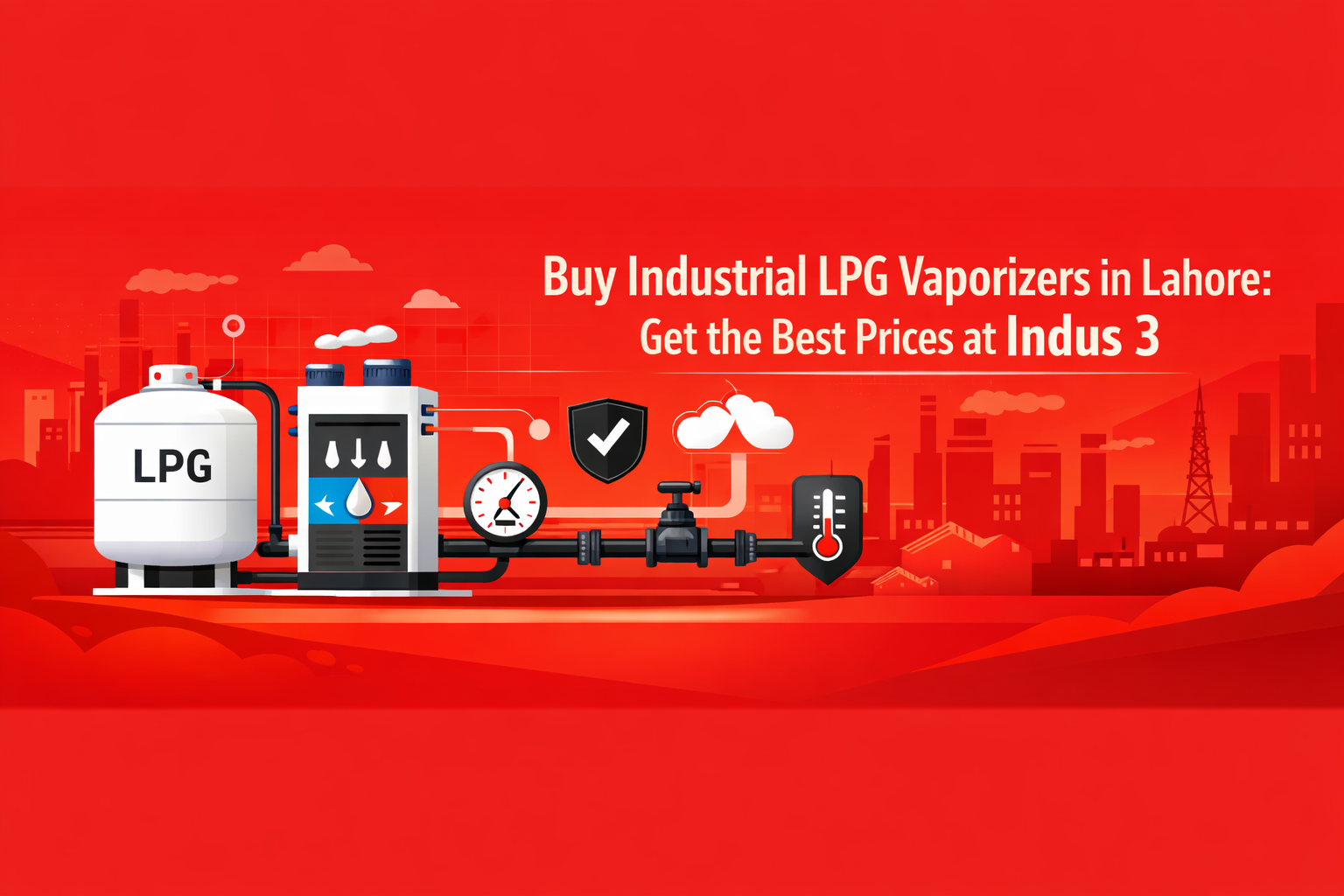
Industrial LPG Vaporizers in Lahore: A Complete Buying Guide for Industries
Lahore’s industrial landscape is expanding at a rapid pace. From manufacturing units to large commercial kitchens, the demand for stable and high-volume gas supply continues to rise. As energy loads increase, industries are moving beyond cylinders and basic regulators toward more controlled LPG systems.
This is where Industrial LPG vaporizers Lahore searches are growing sharply. Industries now require consistent gas pressure, safer operation, and uninterrupted fuel flow. Vaporizers have become a core component of modern LPG installations across the city.
An LPG gas vaporizer is a device that converts liquefied petroleum gas from liquid form into vapour before use. LPG is stored as a liquid under pressure, but appliances can only burn it as a gas. Without controlled vaporisation, pressure drops, flame instability, and safety risks increase.
So, what is a LPG vaporizer in practical terms? It is the system that ensures LPG reaches burners, boilers, and furnaces in a steady gaseous state. This controlled conversion improves efficiency, protects equipment, and supports higher gas consumption without interruptions.
Factories in Lahore rely heavily on vaporizers for process heating and industrial burners. Textile units, food processing plants, and packaging facilities often require continuous gas flow for long operational hours. A well-sized vaporizer ensures production does not suffer from gas starvation.
Hotels and commercial kitchens face similar challenges. High-capacity cooking lines, hot water boilers, and space heating systems demand stable gas pressure. An industrial vaporizer prevents pressure drops during peak usage, especially during meal hours or high occupancy periods.
Boilers and furnaces used in industrial heating systems also depend on accurate LPG vapour delivery. Inconsistent gas supply can damage burners and reduce thermal efficiency. Vaporizers help maintain controlled combustion, improving both safety and operating costs.
Across LPG vaporizer Pakistan markets, industries are shifting toward standardised vaporizer systems. Regulatory awareness, safety audits, and insurance requirements are driving this change. Lahore, as a major industrial hub, leads this transition.
Businesses now prefer working with experienced system providers rather than assembling components separately. Trusted industrial gas equipment suppliers in Pakistan such as Indus 3 support industries with compliant, application-specific LPG solutions. Their role extends beyond supply into system planning and technical guidance.
Indus 3 offers a wide range of industrial LPG vaporizers suitable for different capacities and industries. These systems integrate seamlessly with regulators, safety valves, heaters, and flow controls. You can explore available models through their industrial LPG vaporizers catalogue.
From a safety perspective, proper vaporisation is not optional. International LPG guidelines stress controlled gas expansion and temperature regulation. The World LPG Association highlights vaporizers as essential for high-consumption LPG installations, particularly in industrial environments (https://www.wlpga.org).
In Lahore’s climate, fluctuating temperatures and heavy usage further increase the importance of vaporizers. Natural vaporisation from cylinders alone often becomes insufficient. Industrial vaporizers eliminate this dependency and deliver predictable performance.
Understanding vaporisers is the first step toward building a safe and efficient LPG system. As industries grow, investing in the right vaporisation technology becomes a necessity, not an upgrade. This guide explores how to choose, size, and deploy industrial LPG vaporizers correctly for Lahore’s demanding industrial conditions.
How Does an Industrial LPG Vaporizer Work? Explained Simply
Understanding how to work vaporizer LPG industrial systems does not require an engineering background. At its core, the process is about converting LPG safely and consistently from liquid into gas. This conversion is essential before LPG can be burned in industrial equipment.
LPG is stored in tanks as a liquid under pressure. Appliances, however, can only use LPG in vapour form. This is where the lpg vaporizer function becomes critical in industrial systems.
LPG Liquid to Vapour Conversion – Step by Step
The lpg liquid to vapor conversion process begins inside the storage tank. LPG remains liquid due to pressure, not temperature. When pressure is reduced, the liquid wants to turn into gas.
In small systems, this happens naturally. Heat from the surrounding air provides enough energy. In industrial settings, gas demand is much higher. Natural vaporisation alone becomes insufficient.
An industrial LPG vaporizer takes liquid LPG from the tank and controls this conversion. The liquid enters the vaporizer chamber through an inlet line. Inside, controlled heat is applied or absorbed, allowing LPG to change phase safely.
As LPG absorbs heat, it expands and becomes vapour. This vapour then exits the vaporizer at a regulated pressure. The gas is now ready for burners, boilers, or furnaces.
If you imagine an lpg vaporizer diagram, the flow is simple. Liquid enters at one end, heat is applied in the middle, and vapour exits from the other side. Safety devices monitor temperature and pressure throughout the process.
This controlled conversion prevents sudden pressure drops. It also protects downstream equipment from liquid carryover, which can damage valves and burners.
LPG Vaporizer: How It Works in Daily Operations
Many people ask lpg vaporizer how it works during peak industrial usage. The key is consistency. Vaporizers respond to gas demand automatically.
When gas consumption increases, more liquid LPG flows into the vaporizer. The system adjusts heat input to maintain steady vapour output. When demand drops, the vaporizer reduces output accordingly.
This balance ensures smooth operation across long production cycles. It also stabilises flame quality, which is critical in industrial heating applications.
Industrial vaporizers are designed to run continuously. They are built with materials that handle pressure, temperature changes, and long operating hours without failure.
Heater-Based vs Heaterless LPG Vaporizers
Industrial systems generally use two main vaporizer types. These are heater-based vaporizers and heaterless vaporizers.
Heater-based vaporizers use electric or hot water heating elements. These provide direct energy to convert liquid LPG into gas. They are ideal for high-demand systems where natural heat is insufficient.
Heaterless LPG vaporizers rely on ambient heat or heat exchange from the environment. They have no electrical components. These systems are simpler and often used where gas demand is moderate and ambient conditions allow.
Both designs perform the same lpg vaporizer function. The difference lies in capacity, control, and environmental dependency. Heater-based units offer higher output and better stability during heavy usage.
Heaterless vaporizers are energy-efficient and low-maintenance. However, their performance depends more on surrounding temperatures.
Industries select vaporizer types based on consumption, safety requirements, and operating conditions. This is why system design expertise matters.
You can explore different industrial configurations in the LPG Vaporizers category, which covers multiple capacities and designs.
Behind every reliable LPG installation is proper engineering support. Teams like experienced LPG system specialists ensure vaporisers are correctly sized, installed, and integrated with safety components.
For technical standards and safety principles, the World LPG Association provides authoritative guidance on vaporisation and LPG system design (https://www.wlpga.org). Their publications highlight controlled vaporisation as essential for industrial LPG use.
Understanding vaporiser operation helps industries make informed decisions. It reduces downtime, improves safety, and supports efficient fuel usage across demanding applications.
Types of LPG Vaporizers Used in Industrial Applications
Industrial LPG systems are not one-size-fits-all. Different industries in Lahore use different vaporizer types based on gas demand, operating hours, and safety needs. Understanding the main lpg vaporizers design options helps engineers and buyers select the right system.
At a basic level, all vaporizers perform the same task. They convert liquid LPG into gas before it reaches equipment. The difference lies in capacity, construction, and application suitability.
LPG Vaporizer Machine: Built for Industrial Duty
An lpg vaporizer machine is designed for continuous, high-load operation. These systems are commonly installed alongside a central lpg vaporizer tank in factories and large facilities. They handle steady gas flow for long production cycles.
In Lahore, manufacturing units often rely on electric or water-bath vaporizers. These machines provide controlled heating to ensure stable vapour output. This stability is critical for industrial burners, furnaces, and boilers.
Typical use cases include textile dyeing units, food processing plants, and chemical facilities. In these environments, inconsistent gas supply can halt production. Industrial vaporizer machines prevent that risk.
High-duty vaporizers are built with robust shells, safety valves, and thermostatic controls. Their design supports both efficiency and compliance with safety standards.
Small LPG Vaporizers for Targeted Applications
A small LPG vaporizer serves lower gas demands while maintaining controlled vaporisation. These units are common in commercial kitchens, bakeries, and medium-sized hotels. They are also used in workshops and small industrial setups.
In Lahore’s hospitality sector, small vaporizers support peak cooking hours without pressure drops. They prevent flame fluctuation and ensure even heat distribution across cooking lines.
Despite their size, these vaporizers still play an important role in the use of LPG vaporizer systems. They protect downstream equipment and improve gas utilisation efficiency.
Small vaporizers are often selected when space is limited or when electrical load must be kept low. Their compact design allows flexible installation near gas consumption points.
High-Capacity LPG Vaporizers for Heavy Industries
High-capacity systems are essential for large-scale industrial operations. These vaporizers are designed to serve multiple burners or high-output boilers simultaneously. In Pakistan, commonly used lpg vaporizer capacity ranges from 100kg/hr to 900kg/hr.
Large factories in Lahore often operate vaporizers in the 400kg to 800kg range. For example, the LPG Vaporizer 400kg is widely used in medium-to-large industrial plants. It balances output capacity with manageable energy consumption.
Higher-capacity units require careful system integration. Proper piping, pressure regulation, and safety controls are essential. This is why industrial vaporizers are always paired with compatible regulators and safety devices.
These systems are often connected to bulk LPG storage tanks. Together, they form a complete vaporisation solution capable of supporting round-the-clock operations.
Choosing the Right Vaporizer Design
The right vaporizer depends on gas demand, operating hours, and environmental conditions. The lpg vaporizers design must match actual usage, not estimated demand. Oversizing wastes energy, while undersizing causes pressure instability.
Lahore industries typically consider peak consumption, future expansion, and safety compliance. Vaporizers are selected as part of a system, not as standalone equipment.
A wide range of capacities and configurations is available through the Shop page, allowing industries to match vaporiser size to application needs.
From an industry standards perspective, proper vaporizer selection is strongly recommended. The World LPG Association outlines vaporizer usage as a key safety measure in high-demand LPG installations (https://www.wlpga.org).
Understanding vaporizer types ensures better system performance. It also reduces downtime, improves safety, and supports long-term operational efficiency for Lahore’s industrial sector.
Industrial LPG Vaporizer Capacity & Selection Guide
Selecting the correct lpg vaporizer capacity is one of the most important steps in designing a safe LPG installation. Capacity simply means how much LPG vapour the system can supply per hour. If this figure is wrong, the entire system suffers.
In simple terms, capacity must match gas demand. Too small, and pressure drops occur. Too large, and energy is wasted while costs increase unnecessarily.
Understanding LPG Vaporizer Capacity in Simple Terms
Capacity is usually measured in kilograms per hour. This number represents how much liquid LPG can be converted into vapour within one hour. The calculation starts with knowing how much gas your equipment consumes.
For example, a boiler using 30 kg of LPG per hour requires a vaporizer capable of delivering slightly more than that amount. Engineers always allow a safety margin. This ensures stable output during peak usage.
In Lahore, industries often operate multiple burners or machines together. Their combined consumption determines the required vaporizer size. This is why capacity calculations are done at system level, not equipment level.
Most lpg gas vaporizer system in Pakistan installations range between 50 kg/hr and 900 kg/hr. Smaller systems serve hotels and kitchens. Larger systems support factories and industrial boilers.
Components of an LPG Gas Vaporizer System
A complete lpg gas vaporizer system includes more than just the vaporizer body. Each component plays a role in safety and performance.
The vaporizer shell component is the outer structure that contains the heat exchange process. It is designed to withstand pressure and temperature variation. High-quality shells also protect internal elements from corrosion and mechanical stress.
Inside the shell, LPG flows through controlled channels. Heat is transferred evenly to avoid hotspots. This controlled environment ensures smooth liquid-to-gas conversion.
Beyond the vaporizer itself, safety components are critical. Safety valves protect the system from overpressure. If pressure exceeds safe limits, the valve releases gas safely rather than allowing system failure.
Filters are another key element. LPG often contains small impurities. Filters prevent debris from entering regulators, burners, and control valves. This protects equipment and improves system lifespan.
You can explore typical protection components under LPG Safety Devices, which form an essential layer of industrial gas safety.
Role of Thermostats in Vaporizer Safety
Thermostats control temperature during vaporisation. LPG must absorb enough heat to become vapour, but excessive heat can damage components. Thermostats monitor this balance continuously.
If temperatures rise beyond safe levels, thermostats trigger automatic cut-off or regulation. This prevents overheating and potential hazards.
In industrial systems, thermostats are not optional. They are a core safety requirement, especially in electric vaporizers. You can review commonly used options under LPG Thermostats.
Proper thermostat selection also affects efficiency. Accurate temperature control ensures consistent vapour output without unnecessary energy consumption.
Why System Balance Matters
Capacity is not just about vaporiser size. The entire system must be balanced. Oversized vaporizers can cycle inefficiently. Undersized units struggle during peak loads.
Pipe diameter, regulator sizing, filter capacity, and safety valves must all align. A mismatch in any component can create pressure instability.
This is why professional system design is emphasised across Pakistan’s industrial LPG sector. Standards bodies highlight this integrated approach. The World LPG Association provides clear guidance on vaporizer capacity planning and safety integration for industrial installations (https://www.wlpga.org).
Understanding capacity calculation helps industries avoid costly mistakes. It improves safety, ensures compliance, and supports reliable long-term operation across Lahore’s demanding industrial environments.
Industrial LPG Vaporizer Prices in Pakistan & Lahore Market Trends
When evaluating an industrial LPG system, pricing is often one of the first concerns. Searches for lpg vaporizer price and lpg vaporizer price in Pakistan usually come from engineers and procurement teams trying to balance safety, capacity, and budget. The reality is that vaporizer pricing varies widely, and understanding the drivers behind it matters more than the number itself.
Rather than a fixed rate, LPG vaporizer costs are best viewed as a range. This range depends on technical specifications, system design, and origin of manufacture.
What Influences LPG Vaporizer Price in Pakistan
The most significant factor is capacity. Higher-capacity vaporizers require stronger shells, larger heat exchange surfaces, and more advanced safety controls. Naturally, this increases cost.
Design type also matters. Heater-based vaporizers generally cost more than heaterless units. Electric heating elements, thermostats, and control systems add complexity and expense. Heaterless designs are simpler, but they may not suit high-demand environments.
Material quality plays a major role. Industrial-grade steel, corrosion-resistant coatings, and pressure-rated components increase durability and compliance. These features directly affect long-term reliability and maintenance costs.
Local installation conditions can also influence overall system cost. In Lahore, industries often require additional safety devices, filtration, and regulatory compliance checks. These elements are part of the broader LPG system investment, not just the vaporizer itself.
For a deeper overview of local pricing factors and availability, the LPG Vaporizers in Pakistan resource provides helpful background on the national market.
Imported LPG Vaporizers: China, Korea, and India
Many buyers compare imported options when assessing value. Searches such as lpg vaporizer china, lpg vaporizer korea, and lpg vaporizer india are common in Pakistan’s industrial sector.
Chinese vaporizers are often positioned at the lower end of the price range. They are widely available and suitable for basic applications. However, quality and consistency can vary significantly between manufacturers.
Korean vaporizers are typically associated with higher engineering standards. These units often feature robust construction and advanced controls. Their pricing reflects this, placing them in the mid-to-high range.
Indian vaporizers sit somewhere in between. Many Indian manufacturers produce vaporizers aligned with regional industrial standards. They are commonly used in South Asian markets due to compatibility and supply chain familiarity.
Import costs do not stop at the factory price. Duties, shipping, currency fluctuation, and after-sales support availability all affect the final cost. These hidden factors are often overlooked during initial comparisons.
Local Availability and Market Stability
One advantage of sourcing within Pakistan is market stability. Locally stocked vaporizers reduce lead times and simplify maintenance planning. Spare parts and technical support are also easier to manage.
Lahore’s industrial growth has increased demand for readily available LPG equipment. As a result, buyers now focus more on system compatibility and lifecycle cost rather than just upfront pricing.
The Shop page reflects this trend by offering a range of vaporizer capacities and configurations suitable for different industries.
From a trade perspective, LPG equipment pricing is influenced by global energy markets and regulatory frameworks. The World LPG Association regularly publishes insights into LPG supply chains and industrial equipment trends (https://www.wlpga.org). These trends indirectly affect pricing in Pakistan.
Understanding LPG vaporizer pricing requires looking beyond numbers. Capacity needs, system design, origin, and long-term reliability all shape value. A well-informed approach helps industries in Lahore invest wisely while maintaining safety and operational efficiency.
Why Choose Indus 3 for Industrial LPG Vaporizers in Lahore?
In Lahore’s fast-growing industrial environment, reliability matters more than ever. Gas systems are no longer peripheral equipment. They sit at the heart of production, safety, and operational continuity. This is why industries searching for Industrial LPG vaporizers Lahore increasingly focus on supplier credibility, not just product availability.
Indus 3 has positioned itself as a dependable name within Pakistan’s industrial gas sector. The company operates with a clear understanding of how LPG systems function in real industrial conditions, not just on paper.
Built Around Compliance and Safety Standards
Industrial LPG systems operate under pressure, temperature, and regulatory scrutiny. Compliance is not optional. Indus 3 aligns its equipment offering with recognised safety practices used across Pakistan’s industrial sector.
Every vaporizer is designed to integrate with standard safety components. These include pressure relief valves, thermostatic controls, and filtration systems. This approach reduces risk during both installation and operation.
Local industries increasingly face audits from insurers and safety consultants. Equipment compliance helps facilities pass these checks smoothly. Indus 3 supports this requirement by supplying vaporizers suitable for regulated environments.
Their technical approach reflects experience rather than assumption. You can learn more about the company’s background and operating philosophy through their About Us page.
Broad Product Range for Real Industrial Needs
Different industries consume LPG in very different ways. A hotel kitchen does not operate like a textile factory. Indus 3 addresses this reality through a wide product range.
Their catalogue includes vaporizers across multiple capacity bands. This allows systems to be sized accurately rather than oversized or undersized. Correct sizing improves efficiency and extends equipment life.
In addition to vaporizers, Indus 3 maintains compatibility across related system components. Regulators, safety valves, heaters, and thermostats are selected to work together. This reduces mismatched installations, which are a common cause of system failure.
Rather than pushing a single configuration, the focus remains on suitability. This makes the company relevant to both small-scale commercial users and heavy industrial operators across Lahore.
Local Stock Availability and Faster Project Timelines
One of the key challenges faced by Lahore industries is project delay. Imported equipment often involves long lead times, customs delays, and uncertain after-sales support. Local stock availability addresses this issue directly.
Indus 3 maintains readily available inventory for commonly used LPG vaporizer capacities. This helps industries move from planning to installation without unnecessary waiting periods.
Local availability also supports maintenance planning. Replacement parts and compatible accessories can be sourced without extended downtime. This is especially important for facilities operating continuous shifts.
Being locally based allows Indus 3 to respond quickly to technical queries. This practical support often proves more valuable than theoretical specifications.
Experience in Lahore’s Industrial Environment
Lahore presents unique operational challenges. Dense industrial zones, mixed-use developments, and fluctuating demand require adaptable LPG systems. Indus 3 understands these conditions through direct involvement in local projects.
Their experience spans manufacturing units, commercial kitchens, and process heating environments. This exposure allows realistic recommendations rather than generic solutions.
Clear communication is another strength. Engineers and procurement teams benefit from straightforward technical guidance. This reduces misunderstandings during system design and installation.
For discussions related to system suitability or technical clarification, the Contact page provides direct access to the Indus 3 team.
By combining compliance awareness, product depth, and local presence, Indus 3 continues to earn trust within Lahore’s industrial LPG market. Their role extends beyond supply into long-term system reliability and operational confidence.
Industries in Lahore That Use Industrial LPG Vaporizers
Lahore’s industrial diversity makes LPG a preferred fuel across many sectors. From heavy manufacturing to commercial food operations, LPG systems support reliable, clean energy delivery. At the centre of these systems sits the lpg gas vaporizer, ensuring consistent performance and operational safety.
Across the city, the adoption of industrial LPG vaporizer Pakistan solutions continues to grow as industries modernise their energy infrastructure.
Manufacturing Units & Industrial Boilers
Manufacturing remains one of Lahore’s largest LPG-consuming sectors. Textile mills, packaging plants, and chemical processors rely on LPG-fired boilers and process burners. These systems demand steady gas flow over long operating hours.
An industrial LPG vaporizer ensures liquid LPG is converted into gas before reaching the boiler. This prevents pressure drops that could interrupt production. Stable vapour supply also improves combustion efficiency, reducing fuel waste.
Safety is a major concern in manufacturing environments. Vaporizers help eliminate liquid LPG carryover, which can damage burners and valves. When paired with proper regulation, system reliability improves significantly.
Many facilities also integrate precision pressure control. The Industrial Gas Regulator Pakistan guide explains how regulators work alongside vaporizers to maintain safe operating conditions.
Commercial Kitchens, Hotels & Catering Facilities
Lahore’s hospitality sector operates under intense peak demand. Large hotels, banquet halls, and commercial kitchens consume high volumes of LPG during short time windows. This makes natural vaporisation from cylinders unreliable.
An lpg gas vaporizer supports consistent flame quality during busy service hours. Chefs benefit from even heat, while kitchen managers avoid sudden pressure loss. Vaporizers also reduce the number of cylinders required on-site.
Efficiency improves as burners receive gas at stable pressure. This leads to faster cooking times and better temperature control. Over time, fuel usage becomes more predictable and manageable.
Safety benefits are equally important. Controlled vaporisation reduces icing in cylinders and minimises risk during high-demand operation. These advantages make vaporizers a practical upgrade for commercial kitchens.
Burners, Furnaces & Process Heating Systems
Many Lahore industries use LPG for direct-fired burners and furnaces. These systems are common in metal treatment, ceramics, and glass processing. They require precise heat output to maintain product quality.
An industrial LPG vaporizer delivers gas at a consistent rate, supporting accurate flame control. This improves thermal efficiency and reduces material defects caused by uneven heating.
In process heating, even small pressure fluctuations can affect outcomes. Vaporizers stabilise gas delivery, ensuring repeatable results across production cycles. This reliability supports quality assurance standards.
Such systems often incorporate multiple safety layers. Accessories like filters, safety valves, and shut-off devices enhance system protection. These components are typically sourced alongside vaporizers through LPG Accessories.
Workshops & Medium-Scale Industrial Operations
Not all LPG users operate at massive scale. Lahore is home to many workshops and medium-sized industrial units. These include fabrication shops, food processing units, and packaging facilities.
In these environments, vaporizers bridge the gap between small cylinder setups and full bulk systems. They provide controlled vaporisation without excessive infrastructure investment.
Efficiency gains are immediate. Equipment runs smoother, and operators experience fewer interruptions. Maintenance costs also drop as downstream components are protected from liquid LPG exposure.
Safety and Efficiency as Common Drivers
Across all sectors, safety and efficiency remain the key reasons for vaporizer adoption. Controlled vaporisation protects people, equipment, and processes. It also supports compliance with insurance and regulatory expectations.
As Lahore industries continue to expand, LPG vaporizers play a critical role in modern energy systems. Their application spans sectors, but their benefits remain consistent: stable gas supply, improved efficiency, and enhanced safety.
Understanding sector-specific use cases helps businesses select the right vaporizer configuration. It also ensures LPG systems are designed for real-world operating conditions, not assumptions.
Buy Industrial LPG Vaporizers in Lahore from Indus 3 – Get Expert Support
Industrial energy systems are no longer built on guesswork. As Lahore’s factories, hotels, and commercial facilities continue to scale, the need for stable, safe, and efficient gas supply has become critical. Throughout this guide, one point remains clear: Industrial LPG vaporizers Lahore are not optional equipment. They are a core requirement for modern LPG installations.
We explored what an LPG vaporizer is and why it matters. LPG must be converted from liquid to gas before it can be used safely. In industrial environments, natural vaporisation alone is rarely sufficient. Vaporizers ensure consistent pressure, protect equipment, and support uninterrupted operations.
Understanding how vaporizers work helps avoid costly system failures. Controlled heat transfer, pressure regulation, and safety monitoring all play a role in delivering reliable gas flow. Whether heater-based or heaterless, the right vaporizer design depends on demand, environment, and operating hours.
We also examined the different types of vaporizers used across Lahore. From small systems supporting commercial kitchens to high-capacity units serving industrial boilers, capacity selection is key. Correct sizing improves efficiency, while poor sizing leads to instability and wasted energy.
System design does not stop at the vaporizer body. Safety valves, thermostats, filters, and compatible piping all contribute to long-term reliability. A properly configured LPG gas vaporizer system protects people, assets, and production continuity.
Pricing was addressed from a practical perspective. Instead of fixed figures, vaporizer costs reflect capacity, design complexity, material quality, and origin. Imported options from China, Korea, and India each carry trade-offs. Local availability, support, and system compatibility often prove just as important as initial price.
Sector-specific use cases further highlight why vaporizers matter. Manufacturing plants depend on stable heat for consistent output. Hotels and kitchens rely on uninterrupted flame performance during peak hours. Burners and furnaces require precise gas delivery to maintain product quality. Across all these sectors, vaporizers improve both safety and efficiency.
At the centre of these systems is the supplier. Indus 3 has positioned itself as a reliable partner for industries seeking dependable LPG solutions in Lahore. With a strong focus on compliance, practical system design, and local stock availability, the company supports real industrial needs rather than generic configurations.
As industrial gas equipment suppliers in Pakistan, Indus 3 understands local operating conditions, regulatory expectations, and industry demands. This experience allows them to guide clients toward systems that perform reliably over time, not just at installation.
If you are planning a new LPG installation or upgrading an existing one, exploring the full range of industrial LPG vaporizers is a logical next step. The available options cover multiple capacities and applications, making it easier to match equipment to actual demand.
For project-specific discussions, technical clarification, or quotation requests, the Contact page provides direct access to the Indus 3 team. Early consultation often prevents design errors and improves system outcomes.
To build confidence in the brand and its expertise, you can also visit the Indus 3 homepage, which outlines the company’s broader role within Pakistan’s industrial gas sector.
Choosing the right vaporizer is an investment in safety, efficiency, and operational stability. With the right guidance and equipment, Lahore’s industries can build LPG systems that support growth without compromise. Indus 3 stands ready to support that journey—from consultation to supply and beyond.