Click on the Edit Content button to edit/add the content.

Where to Buy LPG Vaporizers in Lahore: Top Suppliers on Branderth Road

LPG Vaporizers Lahore Branderth Road – Electric and Water Bath Models Available

Introduction to LPG Vaporizers in Lahore

LPG vaporizers have become an essential piece of equipment in various industries in Lahore, as the demand for efficient and reliable gas conversion continues to rise. Whether for commercial kitchens, industrial processes, or even residential uses, LPG vaporizers are increasingly sought after to ensure the smooth and safe conversion of liquefied petroleum gas (LPG) into a vaporized form suitable for consumption or use.

LPG vaporizers play a crucial role in converting liquefied gas into a vapor state, which is necessary for the functioning of many industrial applications. By heating the LPG and converting it to gas form, vaporizers allow businesses to ensure a consistent and reliable supply of energy for their operations. This process is especially important in industries that rely on high-efficiency heating systems, like restaurants, factories, and large-scale commercial setups. The versatility and dependability of LPG vaporizers make them indispensable for those who rely on LPG as their primary energy source.

Branderth Road in Lahore has become a well-known hub for purchasing LPG vaporizers, with a wide concentration of suppliers and dealers in the area. This street has earned its reputation as a go-to location for those looking to buy LPG vaporizers due to the competitive pricing, variety of options, and the expertise available from local suppliers. Whether you are seeking a high-capacity vaporizer for an industrial facility or a smaller unit for a restaurant, Branderth Road offers a range of choices that can meet the specific needs of different businesses.

One of the key benefits of purchasing LPG vaporizers in this area is the cost-effectiveness. The competition among dealers in the vicinity allows consumers to shop around for the best prices, ensuring that they can find a unit that suits their budget without compromising on quality. Moreover, the convenience of having multiple dealers in one area streamlines the purchasing process, as it’s easier to compare models, prices, and features in person.

Furthermore, Branderth Road also provides a variety of options for LPG vaporizers. Whether you’re looking for a small, portable vaporizer for a modest kitchen setup or a large industrial model capable of handling high volumes of LPG, the area has you covered. Additionally, many of the dealers in this area also offer installation services, ensuring that your equipment is properly set up and functioning at its best. This makes it easier for businesses to get up and running with minimal downtime, which is crucial for maintaining productivity.

If you are in the market for an LPG vaporizer, Branderth Road should be at the top of your list. The area’s suppliers, like those found at Indus 3’s shop, offer not only competitive pricing but also expert guidance, making your purchasing decision more informed and straightforward. For more information on the products available, visit the Home Page.

In conclusion, LPG vaporizers are an essential investment for many industries in Lahore, and Branderth Road provides an excellent selection of products and services to meet the growing demand. With cost-effectiveness, variety, and convenience at the forefront, it’s no wonder that businesses are flocking to this vibrant area to secure their LPG vaporizer needs.

Top LPG Vaporizer Suppliers on Branderth Road

When it comes to purchasing LPG vaporizers in Lahore, Branderth Road is home to some of the leading suppliers that businesses trust for their industrial gas equipment needs. This area is well-known for its concentration of reputable LPG vaporizer suppliers, offering a variety of models to suit different applications, from restaurants to large-scale industrial sectors. Let’s explore the top LPG vaporizer companies in Lahore, their offerings, and what you should consider when choosing the right supplier.

Leading LPG Vaporizer Suppliers in Lahore

  1. Indus 3
    As one of the most trusted LPG vaporizer suppliers in Lahore, Indus 3 offers a wide range of high-quality vaporizers tailored to meet the needs of different industries. From small-capacity vaporizers for restaurants to large industrial units like the LPG Vaporizer 400kg, Indus 3 provides reliable and efficient products. Their extensive product range also includes LPG vaporizer accessories, ensuring businesses can get everything they need from one supplier. Their exceptional customer service is another highlight, offering installation support and easy access to products via their Shop Page.

  2. SNG Gas Solutions
    Specializing in providing LPG vaporizer solutions for both small and large businesses, SNG Gas Solutions is another prominent supplier on Branderth Road. Their offerings include both electric and water bath LPG vaporizers, catering to different requirements, such as restaurants and large industrial facilities. Known for their competitive prices and excellent customer support, SNG ensures their clients receive reliable equipment and timely installation services.

  3. LPG Solutions Pakistan
    LPG Solutions Pakistan offers a comprehensive range of vaporizer models, including 50kg/hr and 200kg/hr vaporizers, suitable for a wide variety of industries. They focus on providing custom solutions based on the client’s specific needs, ensuring maximum efficiency. Their reputation for offering top-notch customer service, including after-sales support and repairs, makes them a trusted choice for many businesses in Lahore.

  4. Recco LPG Systems
    Known for their high-performance vaporizers, Recco LPG Systems specializes in heavy-duty LPG vaporizer models. They provide both large industrial vaporizers and smaller systems for restaurants and commercial kitchens. With a strong focus on quality and safety, Recco is a go-to supplier for those requiring high-capacity, industrial-grade equipment.

Factors to Consider When Choosing an LPG Vaporizer Supplier

When selecting the right LPG vaporizer supplier in Lahore, there are several factors that businesses should consider:

  • Pricing
    LPG vaporizer prices can vary significantly depending on the type, capacity, and brand. Suppliers on Branderth Road offer competitive pricing, but it’s essential to balance cost with quality. Always request quotes from multiple suppliers and compare prices for similar models. Remember, the cheapest option may not always be the best in terms of long-term reliability and performance.

  • Product Range
    Different industries require different vaporizer specifications. Restaurants may need smaller, more compact models, while industrial sectors might require high-capacity vaporizers. It’s important to choose a supplier that offers a wide range of products and can guide you towards the right model for your needs. Suppliers like Indus 3 offer a variety of vaporizers, from 50kg/hr to 200kg/hr, and additional accessories for a complete LPG solution.

  • Customer Support and Installation Services
    Customer support is crucial when investing in industrial equipment. Ensure that the supplier offers comprehensive customer service, including pre-sale consultations, installation, and after-sale support. Installation is an essential step to ensure your vaporizer operates efficiently, so choosing a supplier that provides this service is vital. For instance, Indus 3 not only supplies vaporizers but also offers expert installation services, making the process easier for businesses.

  • Warranty and After-Sales Service
    Check if the supplier offers a warranty on their products, as this ensures peace of mind in case of equipment malfunctions. Additionally, inquire about the availability of after-sales service, including maintenance and repair options.

Branderth Road in Lahore is home to several top-tier LPG vaporizer suppliers who cater to various industries, from restaurants to large-scale industrial operations. Indus 3, SNG Gas Solutions, LPG Solutions Pakistan, and Recco LPG Systems are some of the leading companies in the area, offering a range of high-quality products and excellent customer service. When choosing a supplier, consider factors like pricing, product range, customer support, and warranty to ensure you get the best value for your investment. For more details on available products, visit the Shop Page, or get in touch through the Contact Page for further assistance.

LPG Vaporizer Price Range in Lahore

The price of LPG vaporizers in Lahore, especially those available on Branderth Road, varies based on several factors, including the type of vaporizer, its capacity, and the brand. Understanding the typical price range for these vaporizers will help businesses make informed decisions when purchasing one for their operations.

Typical Price Range for LPG Vaporizers

On Branderth Road, LPG vaporizers are available in a variety of models, each suited to different applications, and their prices can range significantly. For example:

  1. 50kg/hr Vaporizers – These smaller units are often priced between PKR 50,000 to PKR 80,000. They are ideal for small-scale commercial applications, such as in restaurants or small industries that need a consistent supply of vaporized LPG. For more details, visit LPG Vaporizer 50kg.

  2. 200kg/hr Vaporizers – Mid-range vaporizers for larger businesses and industrial use typically range from PKR 150,000 to PKR 250,000. These are suitable for medium-sized operations that require higher volumes of vaporized LPG for machinery, heating, or large kitchens.

  3. High-Capacity Vaporizers (e.g., 400kg/hr, 900kg/hr) – Large-capacity vaporizers are more expensive, often priced between PKR 300,000 and PKR 500,000, depending on the brand and specifications. These vaporizers are designed for large industries and heavy-duty applications where high LPG consumption is required. An example of such a product is the LPG Vaporizer 400kg.

Factors Influencing the Price of LPG Vaporizers

Several factors influence the price of LPG vaporizers, including:

  • Vaporizer Type
    The type of vaporizer you choose will significantly impact the price. There are two main types:

    • Electric Vaporizers: These units use electrical heating elements to vaporize LPG. They tend to be more energy-efficient and are ideal for areas with reliable electricity supply. Electric models like the LPG Vaporizer Electric Type tend to be priced higher than their water bath counterparts, generally falling in the range of PKR 80,000 to PKR 250,000 based on capacity.

    • Water Bath Vaporizers: These vaporizers use water to heat the LPG, providing a more consistent vaporization process. They are often priced more affordably, typically ranging from PKR 60,000 to PKR 150,000 for smaller models, and are commonly used in restaurants and other commercial settings.

  • Capacity
    The capacity of the vaporizer, measured in kg/hr (kilograms per hour), directly affects the price. As mentioned, smaller units like 50kg/hr vaporizers are more affordable, while larger models with higher capacities, such as 200kg/hr and 400kg/hr, come with a higher price tag due to their enhanced performance and ability to support more demanding industrial applications.

  • Brand
    The brand of the vaporizer plays a role in its price. Reputable brands that offer high-quality, reliable products, such as RECCO, Madas, and Indus 3, tend to command a premium price. However, these brands also offer better customer support, warranties, and longer product lifespans, making them a worthwhile investment for businesses looking for reliable equipment. Indus 3, for instance, offers a range of high-quality LPG vaporizers, ensuring customers get the best value for their money.

  • Installation Costs
    The installation of an LPG vaporizer is a critical component of its overall cost. Many suppliers on Branderth Road, including Indus 3, offer installation services as part of their package. Installation fees can range from PKR 10,000 to PKR 50,000, depending on the complexity of the system and the location. Proper installation ensures optimal efficiency and safety, which is essential for businesses using LPG vaporizers.

The price of LPG vaporizers in Lahore is influenced by several factors, including the type, capacity, brand, and installation requirements. Businesses can expect to pay anywhere from PKR 50,000 to PKR 500,000 for an LPG vaporizer, depending on their specific needs. For more options, visit the Shop Page, where you can find detailed information on a wide range of vaporizers.

LPG Vaporizer Installation Services in Lahore

Proper installation of an LPG vaporizer is critical to ensuring its optimal performance and safety. A professional setup not only maximizes the efficiency of the vaporizer but also minimizes the risk of safety hazards that can arise from improper installation. Whether you’re running a restaurant, industrial facility, or any other business that uses LPG, ensuring that your vaporizer is installed correctly is essential for smooth and safe operation.

The Importance of Professional Installation for LPG Vaporizers

Installing an LPG vaporizer involves more than simply setting up the equipment. A professional installation service ensures that all aspects of the system, including the vaporizer, gas supply lines, and associated safety devices, are properly integrated. Incorrect installation can lead to several issues, including:

  • Inefficiency: If the vaporizer is not set up correctly, it may not deliver the right amount of vaporized gas, leading to inefficiency in operations. This could result in wasted fuel and higher operational costs.

  • Safety Hazards: LPG is a highly flammable substance, and any leak, poor connection, or faulty installation can create significant risks, including fire or explosion. Professional installers ensure that all safety precautions are followed, including pressure testing and proper gas line sealing.

  • System Downtime: A poorly installed vaporizer can lead to frequent breakdowns and maintenance issues, which can disrupt operations. With proper installation, the system is more likely to run smoothly and require fewer repairs.

For these reasons, it’s essential to rely on professional installation services to avoid the potential risks and inefficiencies associated with DIY or improper installations.

Installation Services Offered by Top Suppliers on Branderth Road

On Branderth Road, several leading LPG vaporizer suppliers offer professional installation services to ensure that your vaporizer operates at its best. These services typically include:

  • Delivery and Setup: Suppliers like Indus 3, SNG Gas Solutions, and Recco LPG Systems offer full delivery and setup services for LPG vaporizers. This includes transportation of the unit to your location, unloading, and positioning it in the optimal location for use. Proper positioning is crucial for ensuring that the vaporizer functions efficiently and safely.

  • Testing and Calibration: After installation, the system undergoes thorough testing to ensure that it’s working properly. This includes pressure testing, checking for leaks, and making sure the vaporizer is producing the correct amount of gas for the intended use. Calibration ensures that the unit operates at peak efficiency, which can save businesses money on energy costs in the long run.

  • Safety Checks: Professional installers will also conduct safety checks, including ensuring that all gas lines are securely connected, the safety valves are functioning, and that the area around the vaporizer is free of any fire hazards. They’ll also verify that all relevant safety standards and regulations are met.

  • Training: Some suppliers also offer basic training on how to operate and maintain the LPG vaporizer, ensuring that businesses can make the most of their investment while maintaining safety and efficiency.

For more details or to inquire about LPG vaporizer installation in Lahore, visit the Contact Page, where you can reach out to our team for support and further information.

Choosing the Right Supplier for Installation Services

When selecting an LPG vaporizer supplier for installation, it’s important to consider the supplier’s reputation, the quality of their service, and the warranty offered. Leading suppliers on Branderth Road, such as Indus 3, are well-known for providing expert installation services and ensuring customer satisfaction. Look for suppliers that offer a comprehensive service package, including delivery, setup, testing, and ongoing support.

Professional installation is crucial for ensuring the safe and efficient operation of LPG vaporizers. By choosing a reputable supplier on Branderth Road that offers expert installation services, businesses can avoid potential issues and maximize the lifespan of their equipment. Whether you’re installing a small vaporizer for a restaurant or a large unit for industrial use, ensuring a proper setup is essential. For inquiries or to schedule installation services, visit the Contact Page to get in touch with Indus 3.

Types of LPG Vaporizers Available in Lahore

LPG vaporizers are essential equipment for businesses that rely on liquefied petroleum gas (LPG) as their primary energy source. In Lahore, there is a wide range of LPG vaporizers available to meet the diverse needs of different industries, from small-scale commercial kitchens to large industrial operations. The most common types of vaporizers include electric models, water bath models, and those designed for specific capacities like 50kg/hr or 200kg/hr. Each type serves distinct purposes, ensuring businesses can choose the right equipment for their specific needs.

1. LPG Vaporizer Electric Type Lahore

Electric LPG vaporizers use electrical elements to heat the LPG and convert it into vapor. These vaporizers are particularly popular in settings where a consistent and reliable power supply is available. The LPG vaporizer electric type Lahore is ideal for businesses that require quick and efficient vaporization with minimal maintenance.

  • Applications:
    Electric vaporizers are commonly used in restaurants, commercial kitchens, and small industrial facilities. They are suitable for businesses that need smaller quantities of vaporized LPG for cooking, heating, or other processes. These vaporizers are easy to install and operate, making them a popular choice for establishments that need a compact and cost-effective solution.

  • Key Benefits:

    • Efficiency: They offer precise control over vaporization temperature, ensuring efficient gas conversion.

    • Compact Design: Ideal for smaller spaces where installation space is limited.

    • Cost-Effective: While slightly more expensive than water bath models, electric vaporizers are efficient and have lower operating costs.

For a model that fits smaller to medium-sized commercial applications, check out the LPG Vaporizer 50kg.

2. LPG Vaporizer Water Bath Type Lahore

Water bath LPG vaporizers use water as the medium to heat the LPG, ensuring a steady and consistent conversion process. The LPG vaporizer water bath type Lahore is often used in environments where reliability and constant output are critical, making it a preferred choice for larger-scale industrial applications.

  • Applications:
    Water bath vaporizers are typically used in heavy-duty industrial sectors, such as manufacturing plants, large restaurants, or warehouses where a significant volume of vaporized LPG is needed. They are especially suited for businesses that require large amounts of LPG vapor for heating systems or machinery.

  • Key Benefits:

    • Consistent Performance: Water bath vaporizers provide a steady flow of vaporized LPG, making them suitable for continuous operations.

    • Durability: These units are built to withstand harsh industrial environments, making them more reliable for long-term use.

    • Safety: The water bath method is considered safer for larger-scale operations, as it reduces the risk of overheating.

For a better understanding of these models, consider checking out the Industrial LPG Vaporizer for larger-scale operations.

3. LPG Vaporizers for Specific Capacities (50kg/hr, 200kg/hr)

LPG vaporizers are also available in various capacities, typically measured in kilograms per hour (kg/hr). Two common capacity types available in Lahore are 50kg/hr and 200kg/hr models, each catering to specific business needs.

  • 50kg/hr LPG Vaporizers:
    These smaller vaporizers are designed for light commercial use, such as in small restaurants or cafes where a moderate amount of vaporized LPG is required for cooking or heating. They are compact, easy to install, and provide reliable vaporization for smaller establishments.

  • 200kg/hr LPG Vaporizers:
    On the other hand, the 200kg/hr vaporizer is ideal for larger businesses or industries that require higher volumes of LPG vapor. This capacity is commonly found in large industrial facilities, hotels, or food processing plants, where a continuous supply of LPG is needed for heating or manufacturing processes.

Each vaporizer’s capacity directly impacts its size, price, and application suitability. Businesses should carefully assess their LPG consumption needs before selecting a model.

For more details on these models, visit the LPG Vaporizer 200kg and the LPG Vaporizer 50kg.

Benefits of Using LPG Vaporizers for Businesses in Lahore

LPG vaporizers have become an indispensable asset for businesses in Lahore, particularly in sectors like hospitality and industry, where energy efficiency and cost management are paramount. By converting liquefied petroleum gas (LPG) into a vaporized form, these devices offer businesses a consistent and reliable energy source, improving operational efficiency, reducing costs, and contributing to sustainability goals.

Cost Savings for Businesses

One of the most significant advantages of using LPG vaporizers in Lahore is the potential for cost savings. When compared to alternative fuel sources, LPG is often more affordable and more energy-efficient. Vaporizers help businesses maximize their LPG usage by ensuring that the gas is vaporized efficiently and consumed without waste. By maintaining a steady supply of vaporized gas, businesses reduce downtime and avoid the inefficiencies that come with using liquid LPG.

For businesses in the restaurant sector, LPG vaporizers can significantly lower operational costs. Restaurants that rely on LPG for cooking can experience cost savings by using vaporizers to maintain a constant gas supply. Unlike traditional gas systems, which may fluctuate in performance or efficiency, LPG vaporizers ensure that the gas is vaporized at the correct rate for optimal cooking conditions. This consistency not only improves the quality of food preparation but also reduces gas wastage, leading to lower monthly energy bills.

Improved Energy Efficiency

LPG vaporizers enhance energy efficiency by converting LPG into a consistent vaporized form, making it easier for businesses to control their energy consumption. Unlike other systems that may result in irregular energy output or inefficiencies in gas combustion, LPG vaporizers ensure that the gas is converted at the ideal temperature, which maximizes combustion efficiency. This is especially important for industries that rely on consistent heat output, such as food processing plants and manufacturing facilities, where energy control is critical to production processes.

In the industrial sector, businesses benefit from the steady and reliable supply of vaporized LPG for use in boilers, furnaces, and other machinery. Consistent vaporization helps maintain high levels of productivity while reducing the chances of equipment malfunction due to inconsistent gas flow. Additionally, the efficient vaporization of LPG minimizes the environmental impact by ensuring that the fuel is fully utilized, preventing the release of unburnt gases into the atmosphere.

Enhanced Operational Output

Another key benefit of using LPG vaporizers is their ability to enhance operational output by providing businesses with a constant and reliable energy source. In industries such as restaurant kitchens or hotels, where cooking and heating are continuous processes, a steady supply of vaporized LPG ensures that operations run smoothly without interruptions.

For restaurants, maintaining a consistent supply of vaporized gas can improve food preparation efficiency and reduce wait times for customers. In larger-scale industrial settings, this translates to more reliable operations and reduced production downtime, ultimately improving output and profitability.

LPG vaporizers also improve safety by reducing the likelihood of gas-related accidents, which can occur when LPG is not properly vaporized or stored. With professional installation and regular maintenance, LPG vaporizers help businesses maintain safe operations, ensuring a secure working environment for employees and customers.

Why Choose Indus 3 for LPG Vaporizers?

As a trusted LPG vaporizer supplier in Lahore, Indus 3 offers a wide range of high-quality vaporizers designed to meet the needs of different industries. Whether you need a compact vaporizer for a restaurant or a heavy-duty unit for industrial applications, Indus 3 provides reliable products that ensure maximum efficiency and safety. Visit the Shop Page to explore our selection of LPG vaporizers or contact us through the About Page to learn more about how we can assist with your business needs.

Choosing the Right LPG Vaporizer for Your Needs

Selecting the right LPG vaporizer for your business in Lahore requires careful consideration of several factors, including vaporization capacity, vaporizer type, and intended application. Whether you’re running a restaurant, an industrial facility, or a small business, choosing the correct vaporizer can significantly impact your energy efficiency, operational cost, and safety. Below are some expert tips on how to select the best LPG vaporizer based on your specific needs.

1. Vaporization Capacity: 50kg/hr vs. 200kg/hr

The first factor to consider when choosing an LPG vaporizer is the vaporization capacity, which is typically measured in kilograms per hour (kg/hr). The right capacity depends largely on your business’s LPG consumption needs and the size of your operations.

  • 50kg/hr LPG Vaporizers:
    These vaporizers are perfect for small to medium-sized businesses, such as restaurants or cafes, where a moderate amount of vaporized LPG is required for cooking or heating. If you run a commercial kitchen and need a reliable gas supply for cooking equipment, a 50kg/hr vaporizer is often the ideal choice.

  • 200kg/hr LPG Vaporizers:
    If your business demands larger quantities of vaporized LPG—such as in industrial applications or large commercial kitchens—you will likely need a vaporizer with a higher capacity, such as 200kg/hr. These vaporizers are designed for continuous, high-volume gas consumption and are ideal for larger operations.

The higher the capacity, the more powerful and expensive the vaporizer. Therefore, it’s crucial to assess your actual consumption needs before making a decision. A vaporizer that is too small can result in inadequate supply, while one that is too large may waste gas and incur unnecessary costs.

2. Vaporizer Type: Electric vs. Water Bath

The type of LPG vaporizer you choose is another critical consideration. There are two main types of vaporizers: electric vaporizers and water bath vaporizers. Each type offers distinct advantages depending on the application.

  • Electric LPG Vaporizers:
    Electric vaporizers use heating elements powered by electricity to vaporize the LPG. They are typically more efficient and easier to maintain, as they require less setup. These are well-suited for restaurants or businesses with consistent power supply. The LPG vaporizer electric type Lahore provides precise control over vaporization temperature, which is ideal for industries requiring stable, energy-efficient vaporization.

  • Water Bath LPG Vaporizers:
    These vaporizers use water as the heating medium, which offers a gentler and more consistent vaporization process. Water bath vaporizers are perfect for industrial use and large-scale applications, where continuous, high-volume vaporization is required. The LPG vaporizer water bath type Lahore is often preferred in industries such as food processing and manufacturing due to its durability and reliability in demanding environments.

The choice between electric and water bath models depends on your specific application. If you require a constant, steady vaporized LPG supply and operate in an environment with frequent temperature fluctuations, a water bath vaporizer might be the better choice.

3. Intended Application: Restaurant vs. Industrial Use

The intended application of the vaporizer will influence both the capacity and type of vaporizer you need.

  • Restaurants and Commercial Kitchens:
    For restaurants or cafes, where consistent but moderate amounts of vaporized LPG are required for cooking, smaller vaporizers like those with a 50kg/hr capacity will suffice. These units are ideal for environments that require frequent but not high-volume LPG use. Electric vaporizers are commonly used in these settings because they offer quick setup and are energy-efficient.

  • Industrial Use:
    Larger facilities, such as factories, warehouses, or hotels, may require high-capacity vaporizers (like 200kg/hr) to meet their energy needs. Industries that depend on high-volume vaporized LPG for machinery, heating systems, or large-scale cooking operations will benefit from industrial-grade water bath or electric vaporizers.

It’s essential to match the vaporizer type and capacity to the specific needs of your business to ensure efficient operation and avoid unnecessary costs.

4. Other Considerations: Installation and Maintenance

Another key factor to consider is the installation and maintenance requirements of the LPG vaporizer. Proper installation is critical to the safety and efficiency of the vaporizer. Many suppliers, including Indus 3, offer installation services that ensure the vaporizer is set up correctly and safely.

  • LPG vaporizer installation Lahore is a service provided by reputable dealers, ensuring that the unit is installed according to industry standards. This service typically includes delivery, setup, and testing to verify proper functioning. After installation, regular maintenance is essential to keep the vaporizer running efficiently and to avoid unexpected failures.

Why Choose Indus 3 for Your LPG Vaporizer Needs

LPG vaporizers are essential for businesses in Lahore, providing a reliable source of vaporized LPG for a variety of applications, from commercial kitchens to industrial use. The range of LPG vaporizers available on Branderth Road in Lahore includes different types and capacities, such as electric vaporizers, water bath vaporizers, and models designed for specific volumes like 50kg/hr and 200kg/hr. Each type is designed to meet specific needs, ensuring efficiency, safety, and cost savings for businesses in different sectors.

Variety of LPG Vaporizers Available
In Lahore, particularly on Branderth Road, you can find a wide selection of LPG vaporizers suitable for businesses of all sizes. Whether you’re a small restaurant needing a 50kg/hr vaporizer or a large industrial facility requiring a 200kg/hr unit, there’s a vaporizer to match your needs. Electric and water bath models cater to different operational requirements, with electric vaporizers being ideal for small to medium-sized businesses, and water bath vaporizers providing continuous, high-volume vaporization for larger industries.

Key Benefits of LPG Vaporizers
Using LPG vaporizers offers numerous benefits, including cost savings, improved energy efficiency, and enhanced operational output. LPG vaporizers ensure a steady supply of vaporized gas, which reduces gas wastage and lowers operational costs. Businesses that rely on LPG for cooking or heating benefit from the consistent performance of vaporizers, allowing them to optimize their energy consumption. In industrial sectors, where high volumes of vaporized LPG are needed for machinery or large-scale heating systems, vaporizers play a crucial role in maintaining smooth and efficient operations.

Where to Buy LPG Vaporizers on Branderth Road
Branderth Road is home to some of the top LPG vaporizer suppliers in Lahore, making it the ideal location for purchasing high-quality vaporizers. Leading suppliers offer a variety of options, from smaller units for commercial kitchens to larger models for industrial use. When buying from reputable suppliers on Branderth Road, you can rest assured that you’re getting high-quality products that are backed by expert installation and customer support.

Why Choose Indus 3?
Among the many suppliers on Branderth Road, Indus 3 stands out as the go-to supplier for businesses looking for reliable and efficient LPG vaporizers in Lahore. Indus 3 offers a comprehensive range of vaporizers, including both electric and water bath models, to meet the needs of various industries. With competitive pricing, expert installation, and dedicated customer support, Indus 3 ensures that customers not only receive the best vaporizer for their needs but also the guidance and support to maximize its performance.

Indus 3 goes beyond just selling vaporizers – we provide full installation services, ensuring that your vaporizer is set up correctly and safely for optimal performance. Additionally, our customer service team is always available to assist with any questions or issues that arise after installation. Our commitment to quality and customer satisfaction makes us the trusted choice for businesses in Lahore.

For more information or to explore our range of LPG vaporizers, visit the Shop Page. If you have any questions or need personalized assistance, don’t hesitate to Contact Us. Learn more about our company and values by visiting our Home Page.

Ready to optimize your LPG usage? Contact Indus 3 today to discuss your vaporizer needs or browse our extensive range of products on the Shop Page. Whether you need a small vaporizer for a restaurant or a large industrial unit, we’ve got you covered with top-quality products and expert services!
Reliable Heat With LPG for Poultry Farms Pakistan | Setup, Sizing & Safety

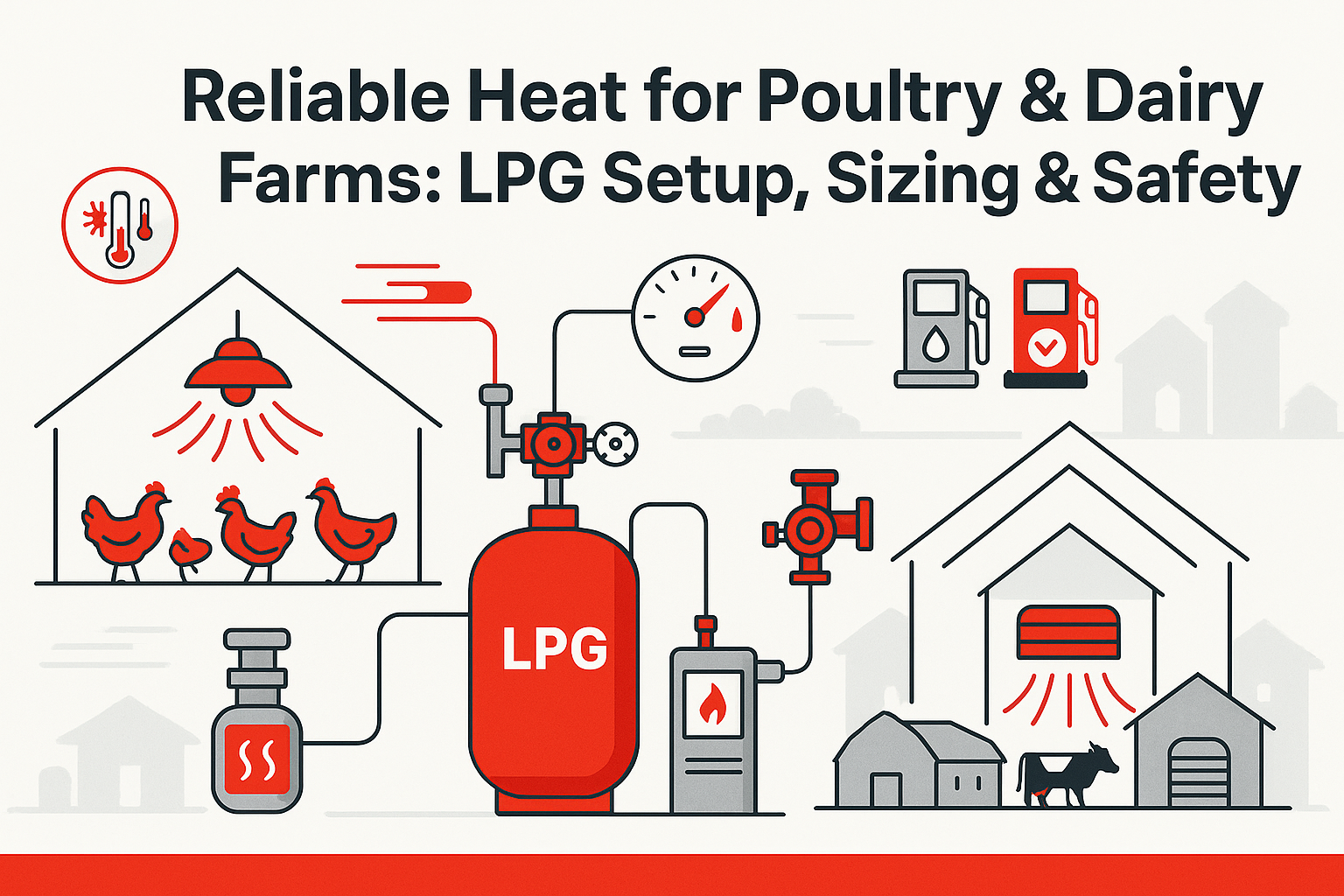
Featured image showing LPG for poultry farms Pakistan with brooders, vaporizers and heating systems for safe and efficient poultry shed climate control.

Why Reliable Heating Matters for Poultry Farms in Pakistan

Poultry farming in Pakistan runs on tight production cycles, rising energy costs and unpredictable winters. When temperatures dip suddenly — especially in Punjab and Khyber Pakhtunkhwa — the first casualties are broiler health, feed conversion rates and overall farm profitability. This is why dependable heating is no longer optional. It has become the backbone of modern poultry operations, and LPG for poultry farms Pakistan is rapidly emerging as the most stable and efficient heat source available to farmers today.

Young chicks cannot regulate their own body temperature during the early days. Even minor fluctuations can trigger stress, slowed growth and, in severe cases, higher mortality. For farmers working at scale, these losses add up quickly. Reliable heating isn’t just about comfort — it’s directly tied to revenue, flock uniformity and survival rates.

Pakistan’s climate makes this even more challenging. Warm days often crash into cold nights, and winter waves can hit unexpectedly. This inconsistency forces farmers to rely on heating systems that must perform under pressure. Diesel fumes, wood fires and makeshift heating arrangements simply don’t deliver the stability required for high-yield farming anymore.

That is exactly where LPG offers a practical advantage.


Rising Heating Demands in Modern Poultry Farming

Today’s poultry industry is far more sensitive to temperature control than it was a decade ago. With tighter integrations, higher stocking densities and faster growth cycles, the demand for uniform heat is rising across the country.

This is why many farms are upgrading to poultry shed heating solutions Pakistan. These modern systems allow farmers to maintain temperature accuracy day and night, regardless of outdoor conditions. Studies from the FAO show that broiler performance is closely tied to heat consistency during the first 21 days, making dependable heating the most influential environmental factor for flock health.

The push for automation is also increasing demand. As farms adopt better ventilation, cooling pads and humidity systems, heating becomes a crucial part of the climate control puzzle. Without stable heat, the entire environment becomes unbalanced.


Why LPG Is Becoming the Preferred Choice in Pakistan

Across the country, farmers are now comparing LPG vs natural gas for poultry farms, especially in peri-urban and rural clusters where pipeline gas is unavailable or inconsistent. LPG wins in three key areas:

1. Availability
LPG supply is widespread even in remote areas. Natural gas load shedding, particularly in winter, makes it unreliable for continuous farm operations.

2. Clean Combustion
LPG produces cleaner, more uniform heat without smoke or moisture. This reduces respiratory issues in chicks and keeps litter drier — an essential factor in flock health.

3. Consistent Pressure and Heat Output
Properly installed LPG systems give farms dependable flame control, ideal for brooders and space heaters.

Farm owners who previously used diesel brooders often report better flock uniformity after switching to LPG due to improved heat stability and reduced air contaminants.

If farmers want more insight into safe, stable systems, they can explore Indus 3 through the Indus 3 Home Page (https://indus3.pk/) or learn about the company’s expertise on their About Us page (https://indus3.pk/about-us/).


Impact of Poor Heating on Broiler Growth & Mortality

Temperature mismanagement is one of the biggest hidden drains on poultry profitability. Poor heat distribution leads to:

  • uneven broiler weights

  • increased feed consumption

  • wet litter and ammonia build-up

  • higher early mortality

  • slower recovery from stress

Effective broiler growth and temperature management depends on providing a stable thermal environment across every square metre of the shed. Chicks gather around hotspots when heat is insufficient, signalling energy loss and potential health issues. Meanwhile, overheated zones force birds away from feeders and drinkers, disrupting feed intake.

Poor heating doesn’t just cause direct losses — it affects long-term flock performance.

Understanding Heating Requirements for Broiler & Layer Sheds: Technical Essentials for LPG Systems

Managing heat correctly across a poultry shed is the single most influential factor in early flock performance. Temperature governs feed intake, immunity, gut development and uniform growth. For farms across Pakistan, where winter fluctuations can be unpredictable, understanding how to size heating systems and anticipate fuel needs becomes even more critical. This section explains the temperature curve from day 1 to day 35, heater output requirements, and the practical basics behind LPG consumption in poultry brooding — all essential for running successful sheds.


Ideal Temperature Ranges Across Each Poultry Growth Stage

A broiler chick enters the shed with an undeveloped thermoregulation system. This is why farms must replicate the warmth they would naturally receive from a mother hen. Global sources such as the FAO Poultry Production Guidelines note that early heat plays a decisive role in immunity and long-term growth patterns.

Here is the typical temperature curve used across Pakistani farms:

Day 1:
32–35°C — highest heat requirement. Chicks must never feel cold stress during the first 48 hours.

Days 2–7:
Reduce by 1°C per day, maintaining 30–32°C by the end of week one.

Days 8–14:
Reduce another 1–2°C weekly until reaching 26–28°C.

Days 15–28:
Gradual decline to 22–24°C as birds develop stronger thermoregulation.

Days 29–35:
Maintain stable temperatures between 20–23°C for final growth.

A consistent environment prevents clustering, panting, leg weakness and uneven bodyweight — issues that can escalate quickly when heat distribution is poor.


How to Estimate LPG Consumption in Poultry Brooding

To maintain the temperature curve above, farms must understand the fuel needed per square foot or per 1,000 chicks. The biggest variable is outdoor temperature, as cold nights increase heat loss from walls, bedding and ventilation.

Typical estimates for LPG consumption in poultry brooding in Pakistani winter conditions:

  • Early brooding (Day 1–7):
    0.45–0.65 kg of LPG per 1,000 chicks per hour depending on heater efficiency.

  • Mid-cycle (Days 8–21):
    0.25–0.40 kg of LPG per 1,000 chicks per hour.

  • Grow-out period (Days 22–35):
    0.15–0.30 kg per 1,000 chicks per hour.

Consumption declines as birds generate more internal heat, but poor insulation or leaky sheds can increase usage by up to 25%.

Farmers also monitor the poultry farm LPG price in Pakistan, which varies seasonally. Winter demand typically raises per-kg rates, making efficient systems essential for maintaining profitability. Modern thermostats, properly sized burners and walk-through inspections are critical for reducing heating costs in poultry sheds.

For equipment designed to improve fuel efficiency, farmers can explore category-specific heating solutions available in the Indus 3 Shop Page (https://indus3.pk/shop-page/).


Cost Factors Affecting LPG Usage in Pakistani Farms

Several real-world factors influence LPG consumption:

1. Shed Size and Insulation
Low-quality curtains or gaps in the structure allow heat to escape, forcing burners to run longer.

2. Heater Efficiency
A well-calibrated brooder or space heater delivers more heat per kilogram of LPG burned.

3. Weather Variability
Desert climates, foggy conditions and northern cold waves significantly increase hourly consumption.

4. Brooder Placement
Incorrect placement results in hotspots and cold zones, causing uneven bird distribution and wasted fuel.

The Punjab Livestock Department highlights that poor placement and ventilation alone can reduce heating efficiency by 15–20%.


Heater Output Needs and Brooder Spacing

For successful brooding:

  • One 3–4 kW brooder typically covers 400–500 chicks.

  • Brooders should be placed evenly to create uniform heat zones.

  • Avoid placing heaters directly under air inlets to prevent cold drafts.

  • Use chick behaviour as a guide — clustering indicates cold stress, while dispersal away from brooders suggests overheating.

Accurate output ensures steady heat without overspending on LPG.

If farmers want support sizing heaters or vaporizers, they can reach Indus 3 through the Contact Page (https://indus3.pk/contact/), where technical teams can help evaluate load requirements and match equipment to shed size.


Heating in poultry farming is both a science and an ongoing adjustment process. Understanding temperature curves, fuel behaviour and local climate realities allows farms to create stable, profitable operations powered by LPG.

LPG Heating Systems for Poultry Farms: Types, Components & Performance

The move from traditional fuels to modern LPG-based systems has transformed poultry production across Pakistan. Many farms that once struggled with inconsistent diesel burners, smoke contamination and high maintenance costs are now shifting to LPG because it delivers cleaner, safer and more controllable heat. To understand this transition, it helps to look at how today’s poultry sheds operate — and what makes LPG-based systems both practical and profitable for farmers.


Brooder Heaters, Space Heaters & LPG Boilers: What’s Best?

Picture a typical mid-sized poultry farm outside Faisalabad. For years, the shed relied on diesel brooders that often smoked, overheated corners or left cold patches during harsh winter nights. Chicks clustered together for warmth, creating stress and uneven growth. Last winter, after yet another fluctuation caused a spike in early mortality, the farm finally decided to upgrade.

Their new setup replaced the old system with LPG brooder heaters Pakistan models designed for uniform, controlled heat. Unlike diesel burners, LPG brooders produce a clean flame and consistent output, making them ideal for early-stage chick development.

Larger farms operating multiple sheds sometimes adopt LPG boilers for poultry farms Pakistan, especially where radiant heating or panel systems are used. Boilers distribute heat evenly and allow technicians to adjust temperature zones precisely across the shed.

Space heaters also play a major role. These high-output units warm larger areas quickly and efficiently — crucial during cold spells when chicks are highly vulnerable.

In each case, the benefit is stability. LPG systems deliver predictable heat, free from soot, odour and combustion residues that can compromise bird health.


Key LPG Components Every Poultry Shed Must Have

The reliability of an LPG heating system depends heavily on its supporting components. Indus 3 supplies many of these essential parts, each playing a vital role in efficiency, safety and heat distribution.

1. LPG Vaporizers
In winter, LPG in cylinders or tanks struggles to vaporise naturally. Vaporizers ensure a stable supply of vapour by converting liquid LPG into gas at a controlled rate. This prevents pressure drops that can cause heaters to flicker or shut off. Farmers can explore available capacities in the LPG Vaporizers category (https://indus3.pk/product-category/lpg-vaporizer/).

2. LPG Regulators
Precise control of pressure is essential for safe and efficient heater performance. High-quality LPG regulators ensure steady flow even when demand peaks or temperatures fall. Many Pakistani farms use two-stage regulation to maintain predictable pressure across the entire system. Options can be explored in the LPG Regulators category (https://indus3.pk/product-category/lpg-accessories/lpg-regulator/).

3. Thermostats
These devices monitor shed temperature and automatically adjust burners or boilers to maintain target ranges. Thermostats help reduce fuel waste and support energy-efficient poultry heating Pakistan.

4. Safety Valves
Overpressure conditions can occur when vapour demand spikes. Safety valves protect equipment and personnel by releasing excess pressure before it becomes dangerous.

Together, these components create a robust system capable of meeting the demanding heat profile of broiler and layer sheds.


Performance Considerations: Efficiency, Safety & Reliability

International guidelines, including those from ASHRAE and the FAO, emphasise that uniform heat distribution is essential for avoiding cold stress, wet litter and respiratory issues in poultry. LPG systems excel because they provide stable thermal output with significantly lower emissions and moisture release compared to diesel or wood-fired alternatives.

Key performance advantages include:

  • Faster recovery times: LPG burners respond quickly when shed temperatures drop.

  • Cleaner environment: No soot, smoke or residue to irritate chicks or affect feed intake.

  • Lower maintenance: Fewer moving parts and cleaner combustion reduce repair cycles.

  • Steady pressure delivery: When paired with vaporizers and regulators, heaters maintain consistent flames even during extreme cold.

The farm in Faisalabad saw immediate improvements after switching: reduced fuel wastage, more even broiler weights and fewer night-time interventions by staff.

LPG heating systems are not only solving Pakistan’s climate-related challenges — they are reshaping how poultry farmers think about efficiency and flock welfare.

Sizing Your LPG System Correctly: Tanks, Vaporizers & Load Calculations

Getting the sizing right for an LPG heating system is essential for stable, efficient and safe poultry operations. Undersized equipment causes pressure drops, flame instability and uneven temperatures. Oversized systems waste fuel and increase installation costs. This section breaks down the logic behind correct sizing so farm owners can confidently match their heating load with the right components — an essential step when using LPG for poultry farms Pakistan as a primary heat source.


Calculating Heat Load for Brooding & Grow-Out Cycles

Heat demand in poultry sheds changes significantly as chicks grow, making it important to size the system for the periods of highest requirement. In Pakistan’s winter conditions, heat loss is highest during the first seven days, especially in open-sided sheds or structures with poor insulation. The basic calculation includes:

  • Floor area (sq. ft.)

  • Number of chicks

  • Outdoor minimum temperature

  • Desired shed temperature

  • Type of heating equipment installed

A standard brooder rated at 3–4 kW can typically serve 400–500 chicks. However, colder regions like Murree, Abbottabad or northern Punjab may require additional burners or higher kW brooders to compensate for nighttime temperature drops.

This is where precise LPG flow becomes critical. If pressure declines during peak demand hours (usually 4 AM to 7 AM), heaters lose flame intensity, and the shed temperature can fall several degrees — enough to stress thousands of chicks.


Choosing the Right LPG Tank or Cylinder Setup

Farm size and daily consumption determine whether a shed should use cylinders, manifolded systems or LPG tanks for poultry units.

For small to mid-size farms:
Bundles of 45 kg cylinders work well when consumption stays moderate. These are easier to replace and widely available across Pakistan.

For large commercial farms:
Bulk tanks — often 500 to 3,000 litres — provide a more stable and economical supply. They eliminate frequent cylinder changes, ensure consistent vapour pressure and help farmers plan for uninterrupted heating during winter.

Many commercial farms are now opting for bulk LPG for poultry industry Pakistan because bulk purchase contracts offer better rates, especially during peak winter months when cylinder demand spikes in rural markets.

To explore fittings, valves, regulators and related items, farmers can browse the LPG Accessories category (https://indus3.pk/product-category/lpg-accessories/).


When You Need an LPG Vaporizer — and Which Size Fits

In low temperatures, LPG inside a cylinder or tank may struggle to vaporise naturally. Vapour generation slows down, and pressure drops — exactly when heaters need the most stable supply. Vaporizers solve this problem by converting liquid LPG into vapour at a controlled rate, ensuring heaters receive consistent pressure and flow.

Typical vaporizer sizes include:

  • 100 kg/hour — suitable for smaller sheds or limited heating zones

  • 200–300 kg/hour — ideal for medium commercial farms

  • 400–900 kg/hour — used where multiple sheds run simultaneously

  • 900 kg/hour and above — recommended for integrated poultry operations with high demand or centralised systems

A correctly sized vaporizer must match the maximum expected load, not average consumption. During winter, peak brooding loads and low ambient temperatures overlap — a scenario where undersized vaporizers commonly fail.

Farmers can review available options in the LPG Vaporizers category (https://indus3.pk/product-category/lpg-vaporizer/), ranging from smaller units for brooding sheds to industrial-grade models designed for continuous usage.


Why Proper Sizing Matters — Especially in Cold Weather

According to NFPA 58, vapour withdrawal rates decline significantly as cylinder temperature drops. This effect is especially noticeable in the northern poultry belts of Pakistan, where freezing nights are common. When the LPG cannot vaporise quickly enough, heaters flicker or shut down entirely, leading to cold stress and uneven flock growth.

Properly sized tanks, vaporizers and regulators ensure:

  • stable pressure even during peak demand

  • consistent heating in all shed zones

  • lower fuel waste

  • better control of industrial LPG Pakistan prices, since efficient systems burn less per hour

Correct sizing is not just a technical requirement — it is the foundation of reliable heating and flock safety in Pakistan’s variable climate.

Installation Best Practices: Safe, Efficient & OGRA-Aligned LPG Systems

Installing an LPG-based heating system for poultry sheds is a job that demands precision, safety awareness and strict compliance with local regulations. A well-designed installation not only ensures reliable heat for brooding but also protects workers, chicks and equipment from preventable hazards. OGRA guidelines and international standards such as NFPA-58 provide a clear framework for safe implementation — essential for any farm adopting LPG for poultry farms Pakistan as its primary fuel source.


Layout & Piping Do’s and Don’ts for Poultry Sheds

A poultry shed’s layout influences how efficiently heat spreads across the floor and how safely fuel travels from the storage point to heaters. OGRA stresses that all LPG piping must be properly rated, well supported and free from mechanical strain. Poorly routed pipelines are a major cause of leaks, corrosion and pressure loss.

Key recommendations include:

  • Keep main supply lines elevated and away from areas where feed or bedding may accumulate.

  • Avoid routing pipes under water lines or areas prone to moisture, which accelerates corrosion.

  • Use approved steel or copper piping — flexible rubber hoses should only be used where absolutely necessary and within approved lengths.

  • Install isolation valves at critical points so heaters can be serviced without shutting down the full system.

  • Maintain proper ventilation around heaters to prevent incomplete combustion and moisture build-up.

Heater spacing also matters. Overcrowded heaters create hotspots while uneven distribution leads to cold patches. A well-planned layout ensures uniform heat and reduces fuel waste, making it easier to maintain safe heating systems for poultry farms.


Safety Devices Every LPG System Must Include

To operate safely under Pakistan’s varying climate conditions, poultry farms must integrate a range of LPG safety components. Many of these are available through Indus 3’s dedicated categories for LPG Safety Devices (https://indus3.pk/product-category/lpg-accessories/lpg-safety/) and LPG Flow Meters (https://indus3.pk/product-category/lpg-accessories/lpg-flow-meter/).

Essential devices include:

1. Pressure Regulators
These stabilise pressure from cylinders or tanks before distributing it to heaters. Without consistent regulation, flames may fluctuate or blow out, risking cold stress in chicks.

2. Vaporizers
In low temperatures, liquid LPG struggles to vaporise naturally. Vaporizers maintain steady vapour supply, preventing pressure drops during peak brooding hours.

3. Filters
Dust, rust or debris inside pipes can clog burner nozzles, reducing heat efficiency. Filters ensure clean fuel flow — a critical step many farms overlook.

4. Safety Valves
Overpressure protection is mandatory. Relief valves release excess pressure before it becomes hazardous.

5. Thermostats
These automatically adjust heater output to maintain target brooding temperatures, improving consistency and preventing overheating.

A well-designed LPG system includes all these elements working together, ensuring a safe and efficient heating environment.


Common Installation Mistakes Seen in Pakistani Farms

Despite clear guidelines, several recurring errors are found during farm inspections. These mistakes often reduce system efficiency or compromise safety.

1. Using undersized regulators or vaporizers
When equipment cannot deliver required flow rates, heaters lose flame intensity, especially during winters. This creates cold stress and increases fuel consumption.

2. Improper cylinder storage
Cylinders placed inside sheds, under direct sunlight or on uneven surfaces significantly increase safety risks. OGRA specifies outdoor, shaded and ventilated storage.

3. Poor-quality fittings
Cheap, non-certified valves and hoses are common at smaller farms. These components often fail under pressure, leading to leaks and inconsistent heating.

4. Lack of leak testing
Regular leak checks with approved solutions are essential, particularly after cylinder changes. Farms that skip this step face repeated flame failures and safety hazards.

5. Inadequate ventilation
Heaters require oxygen for complete combustion. Insufficient ventilation increases carbon monoxide risk and reduces heater efficiency.

For farms working with LPG suppliers for poultry farms Pakistan, proper installation ensures that even high-quality fuel systems operate safely and reliably. According to OGRA’s publicly available safety standards (https://ogra.org.pk/), every installation must follow certified procedures to minimise risks and ensure compliance.

Operating an LPG System: Daily Use, Troubleshooting & Maintenance

Running an LPG heating system in a poultry shed requires more than simply turning on burners. Farm supervisors and technicians must understand fuel behaviour, pressure dynamics, and the way heating equipment responds to changing shed conditions. Good day-to-day management improves flock health, strengthens LPG fuel efficiency for broiler farms, and prevents small issues from turning into costly shutdowns.

Below is a practical, field-tested guide based on the challenges commonly seen across Pakistani farms.


Daily Operating Routine for Poultry Heating Systems

A consistent daily routine ensures that gas brooders for poultry houses operate safely and smoothly. The morning and late-evening checks are the most important, as these are the times when temperature changes and pressure drops occur most frequently.

Key daily checks:

  • Inspect flame colour: A clean blue flame indicates proper combustion. Yellow or flickering flames signal low pressure or blocked nozzles.

  • Verify temperature zones: Chicks should be evenly spread across the heated circle. Clustering indicates cold spots; scattering suggests overheating.

  • Check regulator pressure: Regulators must maintain stable flow, especially during cold mornings when vapourisation slows down.

  • Monitor litter conditions: Wet litter often indicates inconsistent heating or condensation from poorly adjusted burners.

  • Review thermostat settings: Modern temperature control systems for poultry sheds keep heat consistent, but settings must match the flock’s age and local weather.

These steps not only improve heat reliability but also maintain flock comfort throughout the critical brooding period.


Troubleshooting Low Pressure, Frosting & Burner Issues

Three issues occur repeatedly in Pakistani poultry sheds: frosting on regulators, pressure drops during winter, and clogged filters. Understanding their causes helps prevent heating interruptions.

1. Frost on Regulators
When liquid LPG draws too quickly or ambient temperature drops sharply, regulators can freeze. Frost reduces pressure and causes heaters to shut down. Solutions include:

  • using two-stage regulation

  • installing larger vapourisers where demand is high

  • ensuring regulators are not exposed directly to cold drafts

Farms can find certified regulators through the LPG Regulators category (https://indus3.pk/product-category/lpg-accessories/lpg-regulator/).

2. Winter Pressure Drops
During cold months, vapour production slows down in cylinders and tanks. This is one of the most common causes of heat loss at dawn. Good practices include:

  • pre-warming the shed before the coldest period

  • ensuring vapourisers are correctly sized

  • avoiding excessive simultaneous startup of heaters

According to PoultryHub Australia, pressure issues during brooding are directly linked to bird stress and behavioural changes, making early detection essential.

3. Clogged Filters
Dust, rust particles or oil residue inside supply lines can accumulate at filter points. A clogged filter disrupts burner performance and reduces flame stability. Maintenance teams should clean or replace filters weekly, especially when using older cylinders or in dusty environments.


Preventive Maintenance to Extend Equipment Life

Preventive maintenance is the backbone of any reliable LPG heating system. A well-maintained setup runs cleaner, wastes less fuel and creates safer working conditions for staff.

Weekly maintenance tasks:

  • Clean burner surfaces and check nozzles for carbon deposits.

  • Inspect vapourisers for unusual noise or fluctuating output.

  • Tighten fittings and check for leaks using approved solutions, never open flames.

  • Confirm thermostat accuracy with handheld temperature meters.

Monthly tasks:

  • Check the condition of regulators and relief valves.

  • Ensure cylinder storage remains ventilated and compliant.

  • Review heat distribution patterns across the shed and adjust brooder spacing if needed.

If issues persist, farms should reach technical assistance through the Contact Page (https://indus3.pk/contact/), especially when equipment requires recalibration or replacement.

Proper operation and maintenance keep heating systems dependable through changing seasons, safeguarding bird welfare and improving long-term heating efficiency

Comparing LPG, Diesel & Natural Gas for Farm Heating in Pakistan

Heating is one of the largest operational costs in poultry farming, especially during winter. Farm managers frequently ask whether diesel, LPG or natural gas provides the best performance and value. A clear comparison helps determine not only the cheapest heating fuel for poultry farms, but also the safest and most reliable solution for brooding. This section highlights how each fuel behaves under Pakistan’s climate conditions, and why many farms now prefer LPG as their primary heating option — aligning closely with the growing adoption of LPG for poultry farms Pakistan.


Fuel Cost Comparison: What Pakistani Farmers Are Paying

Poultry operators must balance heating performance with cost stability. While fuel prices fluctuate, the structure of each market affects long-term planning.

1. Diesel
Diesel offers strong heat output but is highly volatile in price. As per recent Pakistan Energy Yearbook data, diesel prices can rise sharply due to global market changes. Additionally, diesel consumption is often higher because heaters burn inefficiently, especially when poorly maintained. Smoke, soot and fumes create an unhealthy environment for chicks.

2. Natural Gas
Pipeline gas is affordable where available, but load-shedding and low pressure in winter make it unreliable for poultry sheds. Many peri-urban or rural clusters do not have access to natural gas infrastructure at all.

3. LPG
Although LPG prices vary, farms enjoy more predictable supply chains. Many poultry clusters benefit from bulk purchase contracts and competitive industrial LPG Pakistan prices. Because LPG burns cleanly and efficiently, overall consumption per hour is lower than diesel in most brooding setups.

Farmers can explore heating equipment and fuel handling solutions through the Indus 3 Shop Page (https://indus3.pk/shop-page/), where regulators, heaters and vapourisers support fuel-efficient operations.


Efficiency & Emission Differences that Affect Broiler Growth

The quality of heat matters just as much as its cost. Clean, consistent combustion supports healthier brooding environments.

Diesel Heaters:

  • Produce soot and particulate matter

  • Create moisture that can worsen litter quality

  • Require frequent maintenance

  • Can introduce fumes that irritate chicks’ respiratory systems

Natural Gas Heaters:

  • Clean burning, but unreliable pressure during winter

  • Depend on pipeline infrastructure that many regions lack

  • Can fail during peak cold hours, risking sudden heat loss

LPG Heaters:

  • Provide strong, consistent flame output

  • Burn cleanly with minimal emissions

  • Reduce litter moisture, improving footpad health

  • Work effectively with thermostats for energy-saving automation

This explains why LPG vs natural gas for poultry farms often results in LPG being chosen for brooding, particularly when stable temperatures from day 1–7 are required. FAO’s poultry welfare guidelines note that rapid temperature swings cause stress, reduce feed intake and increase early mortality — making combustion stability a decisive factor in heating system selection.


Why LPG Offers the Best Reliability for Rural Poultry Clusters

Rural and semi-urban poultry regions in Punjab, Sindh and Khyber Pakhtunkhwa face inconsistent energy access. Diesel availability can fluctuate during transport disruptions, and natural gas pressure drops sharply in winter — just when sheds need maximum heat consistency.

LPG overcomes these issues by offering:

  • Stable vapour supply when paired with vapourisers and proper regulation

  • High efficiency, creating more heat per kilogram of fuel burned

  • Flexible storage options (cylinders, manifolds, or bulk tanks)

  • Cleaner indoor air that supports uniform flock growth

  • Predictable logistics, with farms able to schedule deliveries ahead of cold spells

For farms wanting a closer look at heating solutions and combustion equipment, the Indus 3 Home Page (https://indus3.pk/) provides a direct route to explore local, farm-ready products.

The overall comparison shows that while each fuel has a place, LPG consistently delivers the most balanced performance across cost, efficiency and reliability — making it the preferred choice for commercial poultry farming in Pakistan.

Choosing the Right LPG Partner: Why Pakistani Poultry Farms Trust Indus 3

A reliable heating system is one of the strongest determinants of flock performance, profitability and long-term farm stability. After comparing fuel types, understanding heating requirements and reviewing safety and operational best practices, it becomes clear why so many farm owners now prefer LPG for poultry farms Pakistan. But fuel alone is not the full story — the real difference lies in choosing a partner who provides certified equipment, correct sizing, and dependable after-sales support.

Indus 3 has become a trusted name for poultry operators because it understands the realities of Pakistan’s climate, farm layouts and regulatory landscape. As OGRA emphasises in its LPG safety directives, proper installation, pressure control and compliant components are essential for safe operation across agricultural sites. Farms need more than heaters; they need a complete, coordinated solution that delivers stability day and night.


What Farmers Should Look for in an LPG Equipment Supplier

Selecting an LPG supplier is a strategic decision that impacts both operational costs and flock health. Poultry farms should prioritise partners who offer:

  • Certified and durable equipment that withstands continuous use

  • Accurate system sizing for burners, vapourisers and tanks

  • Pressure stability solutions, including high-quality regulators

  • Safety-focused components to comply with OGRA standards

  • Technical support teams familiar with poultry brooding demands

  • Nationwide delivery, ensuring uninterrupted supply during peak winter

Many farms also look for transparency in pricing, especially when comparing industrial LPG Pakistan prices and equipment costs. Indus 3 maintains clear sourcing standards and provides local guidance tailored to each region’s climate conditions.


How Indus 3 Supports Poultry Farms with Reliable Heating Solutions

Indus 3 helps farms transition to cleaner and more efficient heating systems by providing end-to-end LPG solutions. Their product range includes:

LPG Vaporizers
Crucial for winter operations, vapourisers ensure steady pressure even when natural vapourisation drops. Farmers can review all models through the LPG Vaporizers section on the Shop Page (https://indus3.pk/shop-page/).

LPG Regulators
Pressure stability is the backbone of dependable heat. Indus 3 supplies industrial-grade regulators designed for brooding demands, supporting automation and fuel efficiency.

Thermostats & Temperature Control
Precise temperature control reduces fuel wastage and minimises stress during early chick development.

Safety Devices
OGRA-aligned safety valves, filters and relief systems ensure safe, continuous operation throughout the brooding cycle.

Nationwide Delivery & Technical Assistance
Indus 3 serves poultry clusters across Punjab, Sindh, KP and Balochistan, ensuring farmers get timely delivery and installation support exactly when needed.

Whether a farm is switching from diesel, expanding shed capacity or upgrading old LPG lines, Indus 3 guides owners through correct sizing, component selection and compliance requirements.


Final Recommendations for a Safe, Efficient LPG Setup

The path to dependable poultry heating begins with three essentials:

  1. Correct sizing of vapourisers, regulators and heating units

  2. Compliant installation, following OGRA and NFPA-58 guidelines

  3. Ongoing operational checks to maintain temperature consistency

LPG’s clean combustion, high efficiency and flexible storage make it the strongest heating option for broiler and layer farms. But its true benefits emerge when farms partner with experienced suppliers who understand both the technical and environmental pressures of poultry production.

To explore certified equipment, farmers can visit the Indus 3 Home Page (https://indus3.pk/) or browse the full range of vapourisers, heaters and safety products on the Shop Page (https://indus3.pk/shop-page/). For system sizing, installation planning or expert technical support, farm owners can reach out through the Contact Page (https://indus3.pk/contact/).

Switch to LPG from Diesel: ROI, Emissions & Reliability in Pakistan

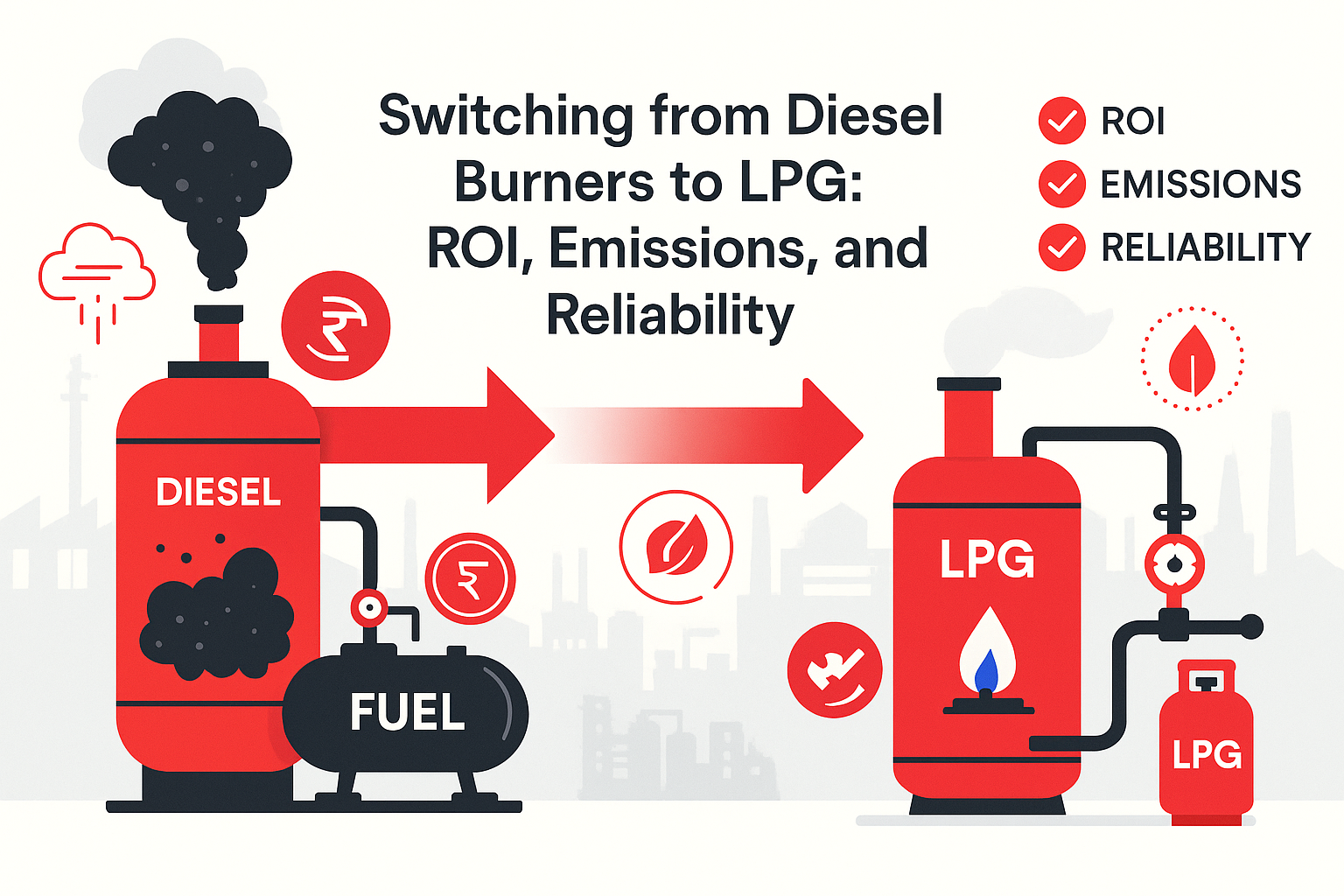
Featured image illustrating how industries switch to LPG from diesel with ROI savings, cleaner emissions, and reliable industrial heating systems in Pakistan.

The Rising Pressure on Diesel-Dependent Industries

Industrial decision-makers across Pakistan are feeling the pinch as energy costs continue to rise. That pressure has made many factories, mills, and processing plants reconsider their long-term fuel strategy and actively look to switch to LPG from diesel to stabilise expenses and improve operational efficiency. The shift isn’t just about fuel availability; it’s a broader movement driven by financial, environmental, and regulatory realities.

Diesel has traditionally powered everything from boilers to burners, but its volatility in pricing has become a serious burden. When managers compare the diesel vs LPG price per litre, the trend becomes clear: LPG has maintained more stable rates over the past few years, while diesel has spiked repeatedly. This volatility affects monthly budgets, especially in high-consumption sectors such as textiles, plastics, metal forging, and food processing.

Why LPG Has Become the Smarter Alternative

The benefits of LPG over diesel fuel have always been known in engineering circles, but it’s only recently that businesses across Pakistan have begun to act on them. LPG is cleaner, produces fewer harmful emissions, and offers more consistent combustion — essential for industries that demand steady heat levels and dependable burner performance. It also reduces soot buildup and equipment wear, which improves uptime and lowers maintenance costs.

Price stability is another major driver. Many industrial buyers now ask: “is LPG cheaper than diesel Pakistan?” Although LPG pricing still fluctuates with global markets, it has shown far less volatility compared with diesel. According to the International Energy Agency (IEA), global LPG markets remain relatively resilient due to diversified production sources, while diesel supply remains exposed to refining bottlenecks and geopolitical disruptions. These macro trends spill directly into Pakistan’s local pricing, influencing purchasing decisions in every industrial zone from Karachi to Faisalabad.

Beyond cost and performance, companies are now pushed by regulatory and environmental pressures. Diesel emissions contain sulphur compounds, nitrogen oxides, and particulate matter — all of which are tightly monitored by global and regional regulators. OGRA has repeatedly emphasised cleaner energy adoption across industrial setups, signalling a national shift toward lower-emission alternatives that align with global sustainability frameworks. This regulatory climate makes LPG a forward-looking choice for plants aiming to stay compliant over the next decade.

How Global Energy Trends Influence Pakistan’s Shift

Pakistan’s energy sector is strongly influenced by international developments. As global demand for cleaner fuels rises, LPG has gained favour due to its lower carbon footprint and its suitability for both small and large-scale industrial use. Industries that export to Europe and the Middle East increasingly prefer cleaner fuel signatures to meet buyer expectations, making LPG adoption a strategic advantage rather than just a cost decision.

The global movement toward decarbonisation is reshaping fuel portfolios everywhere. Reports from the World Bank and IEA highlight that nations with growing industrial bases are turning to LPG because it reduces greenhouse gas emissions without requiring expensive equipment overhauls. This aligns perfectly with Pakistan’s industrial landscape, where manufacturers often seek solutions that improve efficiency without forcing complete system redesigns.

Local businesses also observe what competitors are doing. As more factories adopt LPG for burners, boilers, and process heating, others follow suit to remain competitive. The wider availability of reliable LPG equipment — including vaporizers, regulators, and safety devices — has removed many of the adoption barriers that existed five to ten years ago.

To understand how companies like Indus 3 support this transition with safe, high-performance LPG systems, readers can explore the Indus 3 Home page at https://indus3.pk/ or learn more about the organisation’s expertise through the About Us section at https://indus3.pk/about-us/. These resources help businesses evaluate what equipment and installation standards are required for a successful conversion.

Pakistan’s industrial shift is no longer theoretical — it’s active, measurable, and accelerating. Rising diesel costs, tighter environmental rules, and the undeniable technical strengths of LPG have created a perfect storm pushing industries toward cleaner, more reliable fuel choices. As the sections ahead explore, the move to LPG is not just practical but financially rewarding for most high-consumption businesses looking for long-term stability.

Diesel vs LPG Price Per Litre: The Real-World Numbers

Diesel costs have climbed aggressively in Pakistan over the past few years, creating constant pressure on factory budgets. Every time the price rises, industries revisit their fuel strategies to assess whether they should switch to LPG from diesel for more predictable operating expenses. The comparison becomes even clearer when managers analyse the diesel vs LPG price per litre over the 2023–2025 period.

Based on OGRA and PSO pricing data, diesel has repeatedly crossed high volatility ranges, often increasing multiple times within a single quarter. In contrast, LPG prices, although influenced by international markets, have remained comparatively stable. This stability benefits high-consumption industries running boilers, ovens, kilns, and heaters for long production cycles.

When calculated on an hourly consumption basis, the pattern is obvious. For example, an industrial boiler that consumes 4 litres of diesel per hour becomes significantly more expensive than LPG, especially when the per-litre differential widens during peak months. These direct comparisons shape the national trend we’re now seeing across textile mills, food processing plants, and steel operations.

Understanding Diesel to LPG Conversion Cost

One of the biggest questions industrial buyers ask is the total diesel to LPG conversion cost. This cost typically includes vaporizers, regulators, piping, fittings, safety equipment, and installation labour. Depending on the size of the generator, burner, or boiler, the conversion can pay back surprisingly fast — often within months rather than years.

Pakistan’s recent fuel price patterns make the financial case even more compelling. Between 2023 and 2025, diesel prices reached record highs, while LPG remained within a manageable range. Industries using a switch diesel to LPG savings calculator often discover that LPG reduces hourly operating costs by 25% to 40% for mid-sized systems and even higher for large furnaces or chain-driven textile machinery.

To make this clearer, consider a standard 200 kVA diesel generator consuming roughly 40 litres per hour. At fluctuating diesel prices, this becomes an unpredictable expense. After conversion, dual-fuel LPG systems can replace a major portion of diesel consumption, dramatically smoothing monthly energy expenses. Similar savings apply to heaters and industrial ovens, where LPG delivers higher combustion efficiency.

Companies considering the equipment required for conversion can browse key components on the Indus 3 Shop page at https://indus3.pk/shop-page/. For custom quotes or sizing help, decision-makers can also reach out through the Indus 3 Contact page at https://indus3.pk/contact/.

Long-Term Cost Savings for Industrial Users

Long-term cost modelling consistently shows LPG outperforming diesel in most industrial settings. Because LPG burns cleaner, equipment lasts longer, maintenance intervals increase, and downtime decreases. This creates secondary savings that go far beyond the fuel tank — especially in factories that rely on around-the-clock production.

The financial benefit becomes clearer when reviewing international benchmarks. According to global energy price indexes and OGRA’s domestic updates, LPG’s price swings are usually far smaller than diesel’s. This difference provides stability in forecasting, budgeting, and cost-of-production calculations — essential for export-oriented businesses competing in tight global markets.

Industry engineers also report that LPG produces more consistent BTU output per unit of cost, which improves thermal efficiency in boilers and process heaters. This means factories don’t just save money on fuel; they get better performance from the same equipment. These performance gains amplify cost reductions over years of operation.

As Pakistan’s energy landscape evolves, more companies are conducting detailed cost-benefit analyses to determine long-term value. With diesel becoming increasingly unpredictable, LPG offers a way to stabilise expenses while unlocking operational efficiency. For many businesses, the numbers are no longer theoretical — they see measurable savings every month after converting.

Diesel Emissions and the Hidden Industrial Risks

Industries that decide to switch to LPG from diesel often begin the journey after reviewing the significant emissions difference between the two fuels. The gap becomes even clearer when comparing LPG emissions vs diesel emissions using data published by OGRA, WHO, and the US Environmental Protection Agency (EPA).

Diesel combustion releases a complex mix of pollutants, including sulphur oxides (SOx), nitrogen oxides (NOx), particulate matter (PM2.5), black carbon, and unburnt hydrocarbons. These pollutants accumulate inside factories and surrounding industrial zones, affecting workers’ health and contributing to environmental degradation. WHO classifies diesel exhaust as a Group 1 carcinogen due to its direct link to respiratory illnesses and cardiovascular stress.

Why LPG Burns Cleaner: The Science Explained Simply

The benefits of LPG over diesel fuel become obvious when examining the chemistry. LPG generates almost no SOx because it contains no sulphur. It also produces dramatically lower PM2.5 levels — the tiny particles that penetrate deep into the lungs. According to EPA studies, LPG combustion cuts particulate matter by up to 90% compared with diesel.

LPG also reduces NOx emissions by providing a cleaner, more controlled burn. This means less smog-forming pollution and fewer harmful gases in enclosed workspaces. For factory owners, these improvements directly enhance worker safety and reduce the long-term health risks associated with diesel fumes.

Black carbon — a major component of diesel soot — is another critical issue. Industrial machinery running on diesel gradually accumulates soot inside burners, chimneys, and heating chambers. LPG avoids this entirely, which not only helps the environment but also keeps equipment cleaner for longer.

Businesses exploring safe system design and compliance can review essential components on the LPG safety equipment section of Indus 3: https://indus3.pk/product-category/lpg-accessories/lpg-safety/. More information about the company’s expertise and engineering standards is available on the Indus 3 About page at https://indus3.pk/about-us/.

How Cleaner Fuel Improves Worker Safety and Plant Performance

The environmental advantages are important, but the operational impact is equally significant. Diesel fumes often linger inside factories, especially in plants with high-temperature processes such as forging, plastics, pharmaceuticals, and food processing. These fumes not only affect air quality but also settle as residue on machinery and work surfaces.

Cleaner combustion means less contamination and fewer interruptions for equipment cleaning. This is one of the often-overlooked advantages in discussions about the pros and cons of LPG diesel conversion. Lower emissions also reduce the strain on exhaust systems, allowing them to operate more efficiently and meet environmental compliance requirements more easily.

OGRA regulations already encourage industries to adopt cleaner-burning fuels where feasible, especially in dense industrial clusters. Moving from diesel to LPG aligns businesses with these expectations while preventing future compliance issues as environmental standards become stricter.

Cleaner air inside industrial facilities improves worker performance as well. When pollutants decrease, operators report fewer respiratory complaints, reduced symptoms of fatigue, and better overall productivity. These improvements, backed by WHO exposure guidelines, demonstrate the broader benefits that go beyond fuel cost and burner efficiency.

Pakistan’s industrial sector faces increasing scrutiny regarding emissions, both from regulators and from global clients demanding cleaner production practices. LPG offers a practical pathway that reduces environmental footprint without compromising output. For most businesses, the emissions difference alone provides a strong reason to transition.

The Core Components of an LPG Dual-Fuel System

Many industries are now evaluating what it actually takes to switch to LPG from diesel, especially for heavy-duty burners, boilers, furnaces, and generators. The foundation of any reliable system is the LPG dual-fuel system for diesel engine setups that allow LPG and diesel to work together for efficient combustion. These systems are engineered to reduce diesel dependency while delivering stable heat output for industrial applications.

A well-designed conversion setup typically includes key components such as vaporizers, regulators, flow meters, valves, and thermostats, each playing a distinct safety and performance role. Engineering standards such as NFPA 54, UKLPG guidance, and manufacturer installation manuals provide detailed requirements that ensure proper handling, pressure control, and combustion quality.

Industrial vaporizers are essential because LPG stored in cylinders or tanks is in liquid form. A vaporizer gently heats the liquid LPG and turns it into gas before it reaches the burner or generator. Equipment options suited for industrial loads can be explored in the LPG vaporizer range available at Indus 3: https://indus3.pk/product-category/lpg-vaporizer/.

Step-by-Step: How Diesel Generators and Burners Are Converted

When industries explore how to convert diesel generator to LPG, the process usually involves adapting fuel lines and introducing a controlled LPG feed that blends with diesel in measured proportions. In generators, LPG is often fed into the air intake system, where it mixes with incoming air before entering the combustion chamber. This reduces diesel consumption while maintaining reliable ignition and output.

For industrial burners and boilers, conversion systems feed LPG through a regulated gas line into the burner manifold. The burner then uses LPG as the primary fuel source, with diesel functioning as a backup or ignition stabiliser depending on system design. This hybrid approach ensures stable flame quality and consistent thermal output.

Furnaces in steel, textile, and packaging industries benefit from LPG conversion because LPG produces uniform heat without soot. The absence of heavy carbon buildup improves chamber cleanliness and reduces downtime. When engineers select the right components — particularly regulators, flow meters, and thermostats — the system becomes more efficient and far easier to maintain.

Regulators ensure correct downstream pressure and maintain safe flow conditions. Industrial-grade models are available in the LPG regulator section at Indus 3: https://indus3.pk/product-category/lpg-accessories/lpg-regulator/. Flow meters monitor usage for both efficiency tracking and billing accuracy, while thermostats regulate heat levels inside furnaces and boilers to maintain process stability.

Safety Controls, Regulators, and Vaporizers Required

A proper conversion isn’t just about introducing LPG; it must be engineered with correct safety controls. LPG travels under pressure, meaning every system needs certified regulators, shut-off valves, flame arrestors, and leak-prevention fittings. These elements ensure safe operation during both startup and high-load conditions.

Vaporizers are particularly critical for high-demand applications. Their role is to prevent freeze-ups, maintain stable vapour flow, and ensure burners never starve for fuel. External engineering codes such as NFPA 54 emphasise vaporizer sizing as a mandatory step in system design. Undersized vaporizers can cause flame drops, temperature instability, and unplanned shutdowns. Oversized vaporizers waste energy.

Some industries explore vehicle-based conversions using a diesel to LPG conversion kit for cars/trucks, but industrial conversions require far more robust and certified equipment. Heavy-duty machinery operates at higher pressures and larger volumes, which is why professional configuration is essential. Industrial conversions also require specialised piping, correct ventilation, and regular leak testing as outlined in international LPG safety standards.

Thermostats and automated controls play a final key role by keeping systems within the correct temperature range. They protect equipment from overheating, enhance efficiency, and contribute to consistent product quality.

Through properly designed conversion systems, industries gain a cleaner, more stable, and more economical fuel source without replacing their existing machinery. As LPG-compatible components become more accessible in Pakistan, more factories are upgrading safely and confidently to modern dual-fuel solutions.

Payback Period for Burners, Boilers, and Furnaces

For many factories in Pakistan, the journey to cost recovery begins almost immediately after they switch to LPG from diesel, with noticeable reductions in fuel expenditure appearing within the first few weeks. The most common question businesses ask is whether the investment makes financial sense — and the answer becomes clear when examining the numbers. Rising fuel volatility has pushed executives to compare actual savings against the diesel to LPG conversion cost, revealing short payback periods across multiple sectors.

Textile units, which consume large amounts of heat for dyeing, steaming, and calendaring, often see payback within three to six months. LPG’s cleaner burn reduces downtime caused by soot accumulation in boilers, extending maintenance intervals and enhancing output consistency. Studies by the International Energy Agency (IEA) emphasise that cleaner fuels improve thermal efficiency, which magnifies savings over time.

CNG stations running diesel-powered generators for compressors experience even faster recovery. Dual-fuel LPG systems reduce diesel usage significantly, especially during peak hours. Given the long daily operating cycles of CNG stations, cost savings compound rapidly, often surpassing expectations within the first year.

Fuel Efficiency Gains After Converting to LPG

Industrial engineering data consistently highlights the benefits of LPG over diesel fuel, particularly in systems requiring precise temperature control. LPG burns more efficiently, producing stable BTU output without the soot or residue associated with diesel combustion. This allows equipment to run longer at reduced operational cost.

Food processing plants, which require consistent heat for baking, roasting, drying, and sterilisation, benefit enormously from LPG’s clean combustion. Because their equipment must maintain uniform temperatures, the reliability of LPG reduces rejects and improves batch quality. According to the Asian Development Bank (ADB), industries using cleaner fuels experience up to 20% efficiency gains due to reduced heat loss and improved burner stability.

Metal and forging units also report significant improvements. High-temperature furnaces running on diesel are prone to carbon buildup, which reduces flame uniformity and forces frequent shutdowns. After conversion, LPG’s clean flame increases reliability and reduces scrap rates. These efficiency gains directly impact production capacity, enabling more output with less fuel.

Companies planning to purchase vaporizers, regulators, and accessories to optimise their systems can explore available options on the Indus 3 Shop page at https://indus3.pk/shop-page/. For personalised guidance or sizing assistance, businesses can reach out via the Indus 3 Contact page at https://indus3.pk/contact/.

Maintenance Savings and Reduced Downtime

Savings extend far beyond fuel consumption. Because LPG produces no soot, sludge, or heavy carbon, machinery stays cleaner for longer and requires significantly fewer maintenance hours. These factors create hidden but substantial ROI benefits that often exceed fuel savings alone.

Textile mills running on diesel frequently face clogged burner nozzles, fouled heat exchangers, and combustion chamber deposits. LPG eliminates these problems, allowing for steady production without constant stoppages. These maintenance efficiencies contribute to cost recovery that accelerates month by month.

Food processing industries similarly enjoy increased uptime due to cleaner heating operations. Production lines can operate longer between maintenance cycles, improving output capacity and reducing labour costs. Industries that rely on hygienic environments also appreciate LPG’s cleaner burn, as it reduces contaminants around sensitive production zones.

For CNG stations and forging units, the elimination of diesel soot translates to reduced servicing hours and extended equipment life. Diesel-based generators often require expensive overhauls due to carbon contamination; LPG significantly slows this wear and tear, lowering long-term operational costs.

Finally, the LPG fuel advantages diesel vehicle comparison also reflects industrial outcomes. Clean combustion means less engine stress, longer component life, and reduced repair bills — all of which strengthen ROI across heavy machinery.

As diesel prices continue to fluctuate and environmental standards tighten, Pakistan’s industrial sector increasingly views LPG conversion as a strategic investment rather than a cost. The result is a measurable financial advantage that businesses begin to realise in both the short and long term.

Why LPG Systems Deliver More Consistent Heat

For many industries, stable heat output is one of the strongest reasons to switch to LPG from diesel, especially in applications where temperature fluctuations can destroy product quality. LPG offers more consistent BTU output, which allows burners and boilers to maintain uniform thermal performance throughout long production cycles. This is a major operational strength and one of the most significant benefits of LPG over diesel fuel for process-driven factories.

Diesel combustion often produces hot and cold patches due to uneven burning and carbon deposits inside chambers. LPG, on the other hand, produces a clean, steady flame that reacts quickly to control adjustments. This enables operators to fine-tune temperatures with precision — vital for textiles, plastics, pharmaceuticals, and food processing.

Industrial standards from NFPA and ASME repeatedly highlight LPG’s combustion stability as a core advantage for large-scale heating applications. A consistent heat source leads to improved production quality and fewer rejects, contributing directly to operational efficiency.

Zero Sludge, Zero Smoke — What This Means for Machines

One of the biggest challenges of diesel-based heating systems is soot, sludge, and black carbon buildup. These deposits accumulate inside nozzles, heat exchangers, chimneys, furnaces, and even ventilation systems. Over time, they choke airflow, reduce burner performance, and force expensive downtime for cleaning and part replacements.

LPG eliminates these issues almost entirely. It burns without generating smoke or heavy particulates, keeping machinery clean and operating at optimal efficiency. This clean combustion is one of the most overlooked advantages in the broader discussion around the pros and cons of LPG diesel conversion. Lower contamination means longer maintenance intervals and significantly reduced mechanical wear.

Industries operating in dust-sensitive or hygiene-critical environments — such as bakeries, dairy plants, confectionery units, and pharmaceutical factories — benefit enormously. Cleaner heating systems reduce contamination risks, improve air quality, and support compliance with product safety standards.

Factories interested in improving system cleanliness can explore specialised gas filters available at Indus 3 (https://indus3.pk/product-category/lpg-accessories/gas-filter/), designed to protect equipment from impurities and extend lifespan.

For systems requiring controlled heating, such as industrial ovens, dryers, and space heaters, reliable equipment options can be found in the LPG heaters collection (https://indus3.pk/product-category/lpg-accessories/lpg-heater/).

Improving Uptime with the Right LPG Equipment

Operational uptime is directly tied to the durability and reliability of the fuel system. Diesel-powered units often suffer from clogged injectors, fouled burner heads, and unstable flame patterns. These problems lead to frequent stoppages and inconsistent production flow. LPG avoids these issues by providing clean combustion and stable supply pressure, allowing systems to run longer without interruption.

The LPG fuel advantages diesel vehicle comparison extends to industrial machinery as well. In both cases, LPG results in smoother operation, reduced vibration, and fewer mechanical complications. These performance improvements translate into higher uptime for factories and reduced expenditure on repairs and spare parts.

Temperature-sensitive production lines — such as textile dyeing, metal forging, chemical batching, and bakery ovens — benefit particularly from LPG’s precision. Operators can adjust heat levels quickly without worrying about soot interference or delayed flame response. According to engineering guidance from ASME, clean-burning fuels drastically improve burner responsiveness and longevity, making LPG a smart long-term investment.

Another critical aspect is start-up reliability. Diesel systems often require pre-heating or clearing of residue before stable combustion is achieved. LPG ignites consistently with minimal preparation, reducing the time required to bring systems online. This advantage becomes especially valuable in industries running multiple shifts or 24/7 operations.

By combining clean combustion with stable heat and low maintenance demands, LPG delivers a level of operational reliability that diesel simply cannot match. For factories intent on improving output consistency, reducing downtime, and extending equipment life, the shift to LPG is proving to be one of the most effective operational upgrades available in Pakistan today.

OGRA Regulations That Apply to LPG-Fuelled Systems

As more industries in Pakistan consider the operational and environmental benefits of making the shift to LPG, they quickly discover that compliance plays a central role in system design. Companies exploring whether to switch to LPG from diesel must understand the regulatory framework that governs safe handling, installation, and operation. OGRA remains the primary authority overseeing LPG licensing, storage, transport, and industrial usage.

OGRA’s technical guidelines align closely with standards from global bodies like NFPA, UKLPG, and international LPG associations. These rules cover everything from pressure ratings and approved piping material to ventilation requirements and emergency shut-off mechanisms. Industries transitioning from diesel — which often produces heavier pollutants as highlighted in comparisons of LPG emissions vs diesel emissions — must design LPG systems that fully meet these regulatory expectations.

Factories evaluating safety upgrades or installation planning can explore certified components through the dedicated LPG safety equipment category at Indus 3: https://indus3.pk/product-category/lpg-accessories/lpg-safety/.
More details on professional engineering support and compliance expertise can be found on the Indus 3 About page at https://indus3.pk/about-us/.

Critical Equipment You Must Install for Safety Compliance

A compliant LPG system relies on a combination of correctly sized and properly installed equipment. At the core are vaporizers, which convert liquid LPG into gas at stable temperatures, preventing freeze-ups and ensuring consistent supply to burners, boilers, furnaces, and generators. Undersized vaporizers lead to unstable flame patterns, while oversized units waste energy — a problem specifically highlighted by NFPA system-sizing standards.

Regulators are another critical component. These devices control downstream pressure, ensuring gas lines receive steady and safe flow. Only certified industrial regulators should be used, as low-quality or mismatched regulators greatly increase safety risks. Relief valves, excess-flow valves, and non-return valves must be installed throughout the system to prevent over-pressure incidents.

Proper piping material is essential as well. OGRA and PESO-type guidelines recommend seamless steel pipes for high-pressure lines and approved copper or stainless-steel options for low-pressure sections. Flexible hoses should be used sparingly and only where absolutely necessary. Poor-quality piping is one of the leading causes of industrial LPG accidents in South Asia.

Ventilation requirements are equally important. LPG is heavier than air, so confined spaces must have adequate floor-level ventilation to prevent gas accumulation. NFPA 58, used globally for LPG installation practices, emphasises consistent airflow and proper placement of exhaust vents and detectors. Leak detection systems — including gas detectors and flame failure devices — should be installed near burners and high-risk points throughout the facility.

Professional Installation vs Local Technicians — The Real Risks

Many industrial accidents occur not because of defective equipment, but because of improper installation. LPG is a high-pressure fuel that requires precise handling, unlike diesel systems that tolerate more contamination and minor assembly errors. This is why businesses evaluating the LPG fuel advantages diesel vehicle comparison quickly realise the importance of having LPG systems installed by trained professionals.

Professional teams follow OGRA-approved safety protocols, including leak testing, pressure balancing, system purging, and flame calibration. Local technicians, however talented, often lack training in international standards like NFPA 58 or ASME combustion safety guidelines. Incorrect pipe sizing, poor regulator selection, and inadequate ventilation are common errors that create dangerous operating conditions.

Industries investing in LPG systems must view installation as a long-term safety decision rather than a one-time expense. Proper commissioning ensures stable performance, reliable flame quality, and reduced maintenance costs. It also protects businesses from regulatory penalties and shutdowns during compliance inspections.

In Pakistan’s evolving industrial landscape, safety and compliance are no longer optional. Whether installing a new burner system or converting an existing diesel unit to LPG, following OGRA’s standards and using approved equipment remains the foundation of a safe, efficient, and future-ready energy setup. Indus 3 continues to support industries across Pakistan with engineering guidance, certified components, and full compliance alignment for every installation.

The Strategic Advantages of Switching Now

The case to switch to LPG from diesel has never been stronger for industrial businesses across Pakistan. Rising diesel prices, unstable supply chains, and increasingly strict emissions regulations have pushed companies to rethink their energy strategies. LPG stands out as a cleaner, more consistent, and more cost-effective alternative — offering both operational stability and measurable efficiency benefits.

Across earlier sections, the advantages became clear: LPG delivers cleaner combustion, reduces harmful pollutants, and lowers long-term maintenance costs. Even when reviewing LPG emissions vs diesel emissions, global bodies like the International Energy Agency (IEA) continue to highlight LPG’s significantly reduced carbon and particulate output. This positions LPG as a future-ready fuel for industries that want both performance and compliance.

This shift also aligns with Pakistan’s broader industrial transformation. Businesses striving for higher productivity and better energy efficiency can rely on LPG’s consistent thermal performance, lower contamination risk, and longer equipment lifespan. For companies that export globally, adopting cleaner fuel supports environmental requirements increasingly demanded by international buyers.

Who Benefits the Most from LPG Conversion?

While LPG advantages span almost every sector, some industries experience particularly strong gains. Textile mills, for example, benefit from stable heat output, reduced soot, and improved burner performance, which directly improves dyeing and processing quality. Food processing plants enjoy cleaner operations, less contamination, and more dependable temperature control.

Metal and forging industries gain predictable flame temperatures, reduced downtime, and lower maintenance demands. CNG stations, which rely on continuous generator operation, save significant amounts due to lower diesel consumption and improved runtime stability. In all these cases, LPG’s clean burn and consistent BTU output deliver practical results, illustrating the tangible benefits of LPG over diesel fuel in real-world conditions.

Businesses evaluating equipment or seeking professional guidance can easily explore heating solutions, vaporizers, and accessories through the Indus 3 Shop at https://indus3.pk/shop-page/. Those seeking information about Indus 3’s technical capabilities or mission can visit the Home page (https://indus3.pk/) for an overview of products and services supporting industrial conversion across Pakistan.

How Indus 3 Helps You Convert Safely and Profitably

Successful conversion requires more than just new equipment — it requires technical expertise, correct sizing, and compliance with OGRA and international LPG standards. Indus 3 supports industries across Pakistan with high-performance vaporizers, industrial regulators, flow meters, safety valves, heaters, and all critical LPG system components needed for a reliable conversion. Their engineering guidance ensures proper installation, stable output, and long-term operational safety.

From the initial consultation to final commissioning, Indus 3 helps businesses avoid common installation errors, ensuring safe pressure control, correct ventilation, proper regulator selection, and flame stability. This level of technical support is essential for companies comparing the long-term LPG fuel advantages diesel vehicle or considering the broader pros and cons of industrial conversion.

Businesses ready to begin their transition or seeking help with system design can reach Indus 3 through the Contact page at https://indus3.pk/contact/. This direct support ensures that every system is optimised for performance, safety, and cost efficiency — from small factories to large-scale industrial complexes.

A cleaner, cheaper, and more reliable energy future is within reach. Pakistan’s industrial sector is moving forward, and LPG is leading that shift with undeniable financial, operational, and environmental benefits. Now is the moment to upgrade your systems, secure your energy costs, and position your business for long-term success.

Take the next step with Indus 3 — your trusted partner for LPG vaporizers, regulators, safety devices, accessories, and complete diesel-to-LPG conversion solutions. Let their experts guide your factory into a cleaner, more profitable future.

LPG Storage Compliance in Pakistan: Complete Guide to PESO & OGRA Rules (2025)

LPG storage compliance in Pakistan — illustrated overview of OGRA rules, PESO safety standards, LPG tanks, cylinders, and industrial safety visuals

Understanding LPG Storage Compliance in Pakistan: Why It Matters in 2025

Pakistan’s demand for LPG has surged over the past decade, and with it, the pressure on businesses to store it safely. As usage rises across homes, restaurants, factories, hotels, transport fleets, and LPG filling plants, the spotlight on LPG storage compliance in Pakistan has become sharper than ever. A single weak point — a poorly stored cylinder or an unapproved tank — can trigger fires, explosions, legal action, and operational shutdowns. This is why understanding the country’s compliance framework is no longer optional. It is a business necessity.

Why LPG Storage Compliance in Pakistan Is a Critical Issue

LPG is widely used because it is efficient, affordable, and accessible. But its flammable nature demands strict control. In Pakistan, several high-profile industrial accidents and commercial kitchen fires have been traced back to poor storage practices. These incidents remind us that even a minor oversight, such as inadequate ventilation or an unsafe cylinder pile, can escalate dangerously.

With LPG now powering everything from large textile mills to small cafés, compliance has become part of everyday responsibility. Whether you run a hotel, manage a distribution outlet, operate a manufacturing plant, or rely on LPG for heating and production, safe storage directly impacts your employees, customers, assets, and legal standing.

Overview of OGRA, PESO, and Pakistan’s LPG Safety Framework

Pakistan’s regulatory structure for LPG is built on multiple layers of oversight. At the centre is the Oil and Gas Regulatory Authority (OGRA), responsible for licensing, monitoring, and enforcing safety requirements for LPG storage, filling plants, and distribution networks. Their full regulatory framework is publicly documented at https://ogra.gov.pk/.

Supporting OGRA is Pakistan’s adoption of international safety benchmarks, including guidance from NFPA-58, the global standard for safe LPG storage and handling. Many requirements used in Pakistan mirror global expectations, especially where high-risk equipment such as vaporizers, regulators, valves, and bulk tanks are involved. Local rules also draw inspiration from the Petroleum Act 1934, which governs the handling of flammable and combustible substances nationwide.

On the industrial side, Pakistan’s standards body — PSQCA (Pakistan Standards and Quality Control Authority) — also influences safety practices for LPG cylinders, fittings, and pressure components. Together, these institutions provide a unified framework designed to minimise hazards and keep facilities compliant.

For businesses looking to understand the structure behind these rules, you can explore more about Indus 3, a leading industrial gas equipment supplier in Pakistan, through the Home page at https://indus3.pk/ and the About Us page at https://indus3.pk/about-us/.

Key Laws Governing LPG Storage Today

Pakistan’s LPG storage system is governed by a combination of laws, safety rules, and operational standards. Three major regulatory documents form the backbone:

1. Petroleum Act 1934
This landmark legislation provides the foundation for safe fuel handling. It governs the storage, transportation, and protection of flammable substances in Pakistan. LPG falls under its purview, making it the first layer of compliance for any storage facility.

2. LPG (Production & Distribution) Rules, 2001
These rules outline licensing procedures, safety responsibilities, and operational conditions for LPG producers, distributors, and filling plant operators. They define storage requirements, staff training needs, and the technical specifications required for compliance.

3. Mineral & Industrial Gases Safety Rules, 2010
This set of rules focuses specifically on the safety of industrial gases, including LPG. It highlights technical requirements such as cylinder storage conditions, pressure equipment standards, leakage control, ventilation, emergency response planning, and site layout.

Together, these laws form the legal backbone of LPG storage compliance in Pakistan, setting standards that businesses must meet to operate safely and legally. They ensure that LPG handling aligns with both national laws and international safety expectations.

As Pakistan’s LPG consumption continues to rise, compliance becomes not just a regulatory requirement but a vital part of protecting lives, assets, and long-term business stability.

Pakistan’s Core LPG Laws Explained: OGRA, PESO & Key Regulations

Understanding the main laws behind LPG storage compliance in Pakistan helps businesses avoid accidental violations and operate safely. Whether you run a textile mill, restaurant, LPG distribution outlet, or a filling plant, these regulations guide how LPG must be stored, handled, and monitored. The goal is simple: reduce fire hazards, protect workers, and ensure the safe supply of LPG across Pakistan.

Mineral & Industrial Gases Safety Rules 2010

The Mineral & Industrial Gases Safety Rules 2010 Pakistan set a clear baseline for how LPG cylinders, tanks, and industrial equipment must be stored. These rules apply to small commercial kitchens as much as large factories.

They cover essential areas such as ventilation, distance from heat sources, protection of cylinders from direct sunlight, and regular inspection of pressure components. For example, a restaurant storing 15–20 LPG cylinders must ensure the area is open, shaded, and protected from ignition sources. A textile unit storing larger quantities must use approved cages, warning signage, and proper temperature monitoring.

These rules align with global practices, including NFPA-58 standards (https://www.nfpa.org/). Many of the safety expectations match what international regulators demand, making them easier for businesses to follow.

To explore safe accessories, regulators, vaporizers, or replacement parts, you can view the Indus 3 Shop at https://indus3.pk/shop-page/.

LPG (Production & Distribution) Rules 2001

The LPG (Production & Distribution) Rules, 2001 Pakistan define how LPG producers, distributors, and filling plants must operate. These rules highlight the technical and operational conditions required to keep LPG storage safe at all times.

They describe licence categories, staff training requirements, equipment specifications, emergency procedures, and storage limits. Filling plants, for example, must follow strict procedures for cylinder testing, leak detection, and safe filling line management. Even small distributors that supply commercial kitchens must record stock movements and maintain approved storage structures.

These rules are actively enforced by the Oil and Gas Regulatory Authority (OGRA), which publishes its regulatory framework on its official website https://ogra.gov.pk/. OGRA also ensures that storage depots, plants, and bowsers follow all mandatory safety criteria.

For businesses needing guidance or product support, the Indus 3 Contact page at https://indus3.pk/contact/ offers direct assistance.

Petroleum Act 1934 and Its Role in Modern Compliance

The Petroleum Act 1934 forms the legal foundation for all fuel-related safety in Pakistan. Although it is an older law, it remains central to the country’s approach to flammable materials. LPG falls directly under this act, which regulates its import, storage, transportation, and sale.

Under this act, businesses must ensure their LPG storage meets minimum safety distances, uses approved containers, and follows proper fire protection measures. Even modern OGRA LPG storage rules trace much of their legal authority back to this act. It also influences how enforcement teams inspect facilities and handle violations.

The act applies to many sectors — from roadside hotels storing 10 kg cylinders to industrial processing units storing bulk LPG tanks. For example, a small bakery that stores LPG indoors without proper ventilation can be penalised under this law. A large facility storing bulk tanks without firefighting systems also violates the same framework.

Overall, these three pieces of legislation work together to shape LPG storage compliance in Pakistan, creating a harmonised system of rules backed by OGRA, PESO principles, and international benchmarks like NFPA-58 and HSE UK guidelines. Understanding them helps businesses stay safe, legal, and audit-ready.

Licensing Requirements for LPG Storage Facilities in Pakistan

Securing the right licences is one of the most important steps toward achieving full LPG storage compliance in Pakistan. Whether you run a small LPG distribution point, a commercial hotel kitchen, or a full-scale industrial filling plant, the licensing process ensures your facility meets Pakistan’s national safety standards. The journey involves approvals, inspections, documentation checks, and verification by OGRA and other regulatory bodies.

How OGRA Issues Licences for LPG Storage & Filling Plants

Any facility that stores, fills, or distributes LPG must obtain an LPG storage & filling plant licence Pakistan before beginning operations. The process starts with submitting an OGRA licence application LPG plant, which includes site drawings, equipment lists, safety system details, layout plans, and proposed storage quantities.

OGRA then reviews the submitted documents to ensure the facility aligns with its official safety framework, published at https://ogra.gov.pk/. If the design meets the minimum criteria, OGRA grants a provisional No-Objection Certificate (NOC). Only after structural, mechanical, and safety installations are in place does OGRA proceed to the inspection stage.

For industrial plants, this includes verifying the presence of compliant safety devices such as flame arrestors, shut-off valves, excess flow valves, and gas detectors. You can explore approved safety equipment through the Indus 3 LPG Safety Devices category at https://indus3.pk/product-category/lpg-accessories/lpg-safety/.

Third-Party Inspections & Safety Audits in Pakistan

Before OGRA issues a final licence, businesses must undergo a third party inspection LPG storage Pakistan, conducted by an OGRA-approved inspection agency. These agencies assess whether the site physically matches the submitted drawings and complies with national and international standards.

Their checks include tank grounding, spacing, firefighting equipment, leak detection systems, ventilation, emergency routes, and pressure component safety. Inspectors also verify that equipment, such as vaporizers and regulators, meets NFPA-58 or equivalent benchmarks. You can consult NFPA’s inspection guidelines at https://www.nfpa.org/.

In some cases, PESO India’s guidelines serve as additional reference material, especially where cross-border industrial practices are similar. These inspections are crucial for all types of businesses — from hotels storing 45 kg cylinders to industrial plants with multi-ton bulk tanks.

After passing the third-party inspection, the agency sends a compliance report to OGRA. This report is a key requirement for final approval.

Common Mistakes That Delay Licence Approval

Many businesses in Pakistan experience delays during their licensing process, often due to simple oversights. Common issues include incorrect safety distances, non-compliant cylinder storage areas, outdated or uncertified equipment, and poor documentation. Small restaurants may fail due to inadequate ventilation, while textile mills often face issues with emergency evacuation planning.

Filling plants sometimes delay applications by using equipment not approved under OGRA’s standards or failing to perform hydrostatic testing on cylinders. Businesses also struggle when their site layouts differ from the designs submitted during their application.

These delays can lead to repeated inspections, extra costs, and prolonged downtime. Understanding the legal requirements early helps minimise these risks and ensures smooth progress toward regulatory approval.

For guidance on equipment selection or compliance questions, businesses can use the Indus 3 Contact page at https://indus3.pk/contact/. Following all steps carefully ensures faster licensing, stronger legal protection, and long-term operational safety under Pakistan’s strict LPG regulatory framework.

Technical Requirements: LPG Storage Distances, Ventilation & Safety Standards

Achieving full LPG storage compliance in Pakistan depends on following a set of technical rules that apply to every business using LPG. These rules cover storage distances, ventilation, equipment safety, tank protection, and fire-prevention measures. Whether you run a busy restaurant, a textile factory, an LPG distribution outlet, or a fleet of bowsers, the same core safety standards guide your day-to-day operations. These requirements are shaped by OGRA regulations, NFPA-58 compliance Pakistan LPG, and safety documentation issued by authorities such as HSE UK and PSQCA.

Minimum Distance Requirements for LPG Storage in Pakistan

One of the most important safety rules is maintaining proper spacing around cylinders and tanks. These LPG storage minimum distance requirements protect your facility from fire spread, ignition sources, and structural hazards. Distances vary depending on storage size, cylinder type, tank layout, and whether the installation is indoor or outdoor.

For example, a restaurant storing twelve 45 kg cylinders must keep them in a dedicated outdoor cage at least a few metres away from stoves, ovens, generators, and electrical panels. The area must remain clear of traffic and combustible materials. Hotels using centralised cylinder banks should place them away from parking areas and public access points.

Industrial setups follow stricter guidelines. A textile mill using bulk tanks must maintain marked safety zones around tank foundations, vaporizers, pumps, regulators, and pipelines. Even LPG bowsers parked inside industrial yards must follow OGRA’s spacing requirements to avoid exposure to heat sources or moving equipment.

When selecting pressure equipment, valves, and regulators, businesses can explore professional-grade options at Indus 3’s LPG Regulators category: https://indus3.pk/product-category/lpg-accessories/lpg-regulator/.

Ventilation Rules for Indoor & Outdoor Storage

Proper airflow prevents gas accumulation and reduces explosion risks. Pakistan’s ventilated LPG storage requirements apply to both small and large facilities. The rules are simple: LPG must always be stored in areas where leaked gas can escape safely.

For commercial kitchens, indoor storage is usually discouraged unless cylinders are kept inside approved compartments with louvered openings. Many restaurants keep one active cylinder indoors and store backups outdoors in a ventilated cage. Hotels with underground storage must use mechanical ventilation that pushes gas outward, as LPG is heavier than air and settles at floor level.

Industrial plants and distribution depots must ensure continuous airflow around bulk tanks. Structures such as vaporizers, which convert liquid LPG into gas for industrial use, also require ventilated environments to avoid overheating. Businesses can browse industrial-grade vaporisers suitable for compliant storage from Indus 3:
https://indus3.pk/product-category/lpg-vaporizer/.

Outdoor storage sites must remain open on at least two sides, allowing natural air movement. These rules come from NFPA-58 and are reinforced by OGRA and international bodies such as HSE UK.

Compliance with NFPA-58 and International Best Practices

While Pakistan has its own LPG standards, many expectations mirror global safety benchmarks. LPG tank safety standards Pakistan often reference NFPA-58, which sets international norms for tank installation, pressure control, emergency isolation valves, fire safety, and equipment testing. The NFPA guidelines are publicly available at https://www.nfpa.org/.

OGRA’s technical criteria also encourage businesses to follow international inspection procedures, especially for storage sites using large tanks, high-pressure lines, and vaporizers. Distribution outlets handling continuous cylinder movement must follow best practice rules such as keeping cylinders upright, separating filled and empty ones, and using shade or roofing to reduce heat exposure.

Factories must install certified safety valves, pressure regulators, flame arrestors, and gas detection systems. Hotels and commercial kitchens must ensure all hoses, fittings, and regulators meet approved standards and are replaced regularly.

These combined rules and international references create a strong, practical safety framework that supports LPG storage compliance in Pakistan. By following clear spacing requirements, ventilation guidelines, and NFPA-based standards, businesses significantly reduce operational risks and protect their staff, customers, and property.

Safe Cylinder Storage Practices for Pakistani Businesses

Safe cylinder handling is at the heart of LPG storage compliance in Pakistan, especially for small and mid-sized businesses that rely heavily on cylinders rather than bulk tanks. From restaurants and tandoor shops to textile mills and commercial hotels, the way cylinders are stored directly affects fire safety, legal compliance, and staff wellbeing. Pakistan follows clear rules built on OGRA safety circulars, World LPG Association recommendations, and NFPA cylinder storage guidelines, ensuring that even high-usage environments remain protected and efficient.

Cylinder Storage Rules for Commercial Kitchens & Restaurants

Most small businesses in Pakistan use multiple cylinders every day, especially restaurants, bakeries, cafés, and hotel kitchens. For them, following safe LPG cylinder storage Pakistan standards is essential. The basic rule is simple: keep cylinders outdoors in a protected, ventilated space.

Restaurants must use steel cages with wide mesh openings, allowing gas to escape easily in case of leakage. Cylinders should remain upright, secured with chains or brackets, and kept away from cooking ranges, tandoors, fryers, and electrical panels. Backup cylinders must never be stored indoors, even in storerooms or corridors. OGRA’s safety requirements also discourage placing cylinders under staircases or beside generators.

All connectors, hoses, and pressure components must be in good condition. Businesses can explore certified safety devices through Indus 3 at
https://indus3.pk/product-category/lpg-accessories/lpg-safety/.

Hotels operating centralised kitchens often store dozens of cylinders in designated storage yards. These areas must follow guidelines covering spacing, cylinder separation, shade protection, and fire-extinguisher placement. Hotels must also train staff to detect leaks, handle cylinders correctly, and respond to emergencies.

Industrial Cylinder Handling: What Most Businesses Overlook

Textile factories, chemical plants, garment units, and manufacturing facilities typically store larger volumes of cylinders. These environments require more structured compliance to meet both OGRA and global standards. Many factories overlook small but critical details, such as not separating empty and filled cylinders or failing to check for damaged valve guards.

LPG cylinder safety guidelines Pakistan stress that industrial sites must organise cylinders in rows, with access paths for emergency teams. Cylinders must remain protected from forklifts, falling objects, or machinery vibrations. Factories using vaporizers or high-pressure equipment should ensure their cylinder storage area coordinates with the main gas line setup and is free of ignition sources.

Facilities can enhance safety by using approved filters, regulators, and accessories. A range of industrial gas filters is available at
https://indus3.pk/product-category/lpg-accessories/gas-filter/.

World LPG Association resources and HSE UK safety commitments both highlight the need for routine inspections, cylinder rotation, and replacing expired or damaged units promptly. Implementing these steps significantly strengthens LPG storage compliance in Pakistan for industrial operators.

How to Build an Approved LPG Cylinder Storage Area

Creating an approved LPG storage facility Pakistan involves a few straightforward steps. First, select a site outdoors, ideally at ground level. The area should be shaded, fenced, and clearly marked with warning signs in Urdu and English. Ensure ventilation on all sides, using wire mesh or open barriers to prevent gas build-up.

Second, design the layout using spacing recommended by OGRA and NFPA. Cylinders should be arranged upright, with space for airflow and access. Group cylinders by type: full, empty, and in-use. Avoid stacking them horizontally or placing them near drains, basements, or enclosed corners.

Third, install basic protection systems such as fire extinguishers, leak-monitoring devices, and secure regulators. Regularly inspect valves, fittings, and pressure components. Many Pakistani businesses improve compliance by upgrading to reliable branded safety devices available locally.

Finally, maintain a simple logbook that tracks cylinder receipts, movements, inspections, and replacements. This documentation becomes important during audits and ensures consistent adherence to LPG storage compliance in Pakistan. Together, these steps help businesses create safe, efficient, and fully compliant cylinder storage facilities suitable for Pakistan’s diverse commercial landscape.

LPG Transport, Bowsers & Industrial Handling Regulations in Pakistan

Safe movement of LPG across Pakistan is just as important as safe storage. Every day, bowsers deliver LPG to factories, hotels, restaurants, and distribution outlets, making transport a high-risk but essential operation. OGRA enforces strict rules to ensure LPG transport & storage compliance Pakistan, covering vehicle design, driver training, route safety, inspection schedules, and storage behaviour at delivery sites. These rules help protect businesses and communities as LPG moves through busy urban roads, industrial clusters, and rural supply routes.

LPG Bowser Capacity Limits & Safety Rules

Transporting LPG in Pakistan requires adherence to specific capacity and equipment standards. The LPG bowser capacity limit Pakistan varies depending on the vehicle class and licensing status, but all bowsers must follow OGRA’s recognised limits for safe gas handling. Oversized loads, modified tanks, and unapproved fittings are strictly prohibited.

Bowsers must be fitted with compliant valves, pressure-relief devices, grounding systems, emergency shut-off controls, and certified flow meters. For industrial users needing accurate consumption and billing, Indus 3 provides high-quality gas flow meters suitable for compliant installations:
https://indus3.pk/product-category/lpg-accessories/lpg-flow-meter/.

Safety signage, reflective markings, and emergency response kits are mandatory. OGRA also requires regular third-party inspections to verify tank strength, piping integrity, leak resistance, and compliance with international transport norms. Many of these requirements align with global best practices recommended by the World LPG Association, which provides valuable guidance at https://www.wlpga.org/.

Drivers of bowsers must undergo specialised training in emergency handling, reversing procedures, safe filling, and offloading techniques. They must also follow approved routes, avoiding densely populated zones and high-risk crossings wherever possible.

Transporting LPG Across Provinces: OGRA Requirements

Cross-provincial LPG transport is governed by OGRA’s official transport guidelines, which outline documentation needs, route permissions, inspection intervals, and emergency protocols. These guidelines are publicly accessible through OGRA’s regulatory portal at https://ogra.gov.pk/.

Transporters must carry valid permits, delivery notes, product specifications, and proof of compliance with temperature, pressure, and loading requirements. Vehicles must also maintain proper separation between filled and empty cylinders during transport. This applies to small distribution pickups delivering cases of 45 kg cylinders to hotels, and to large industrial suppliers servicing manufacturing plants.

For industrial deliveries, bowsers must park at designated unloading points, away from workers, heat sources, or electrical equipment. Many factories install shelters or unloading bays designed around industrial LPG storage Pakistan standards, ensuring safe transfer into tanks or vaporizer units.

Businesses using vaporizers or heaters must ensure their delivery areas allow safe hose connections and grounding. To support safe site operations, Indus 3 supplies certified LPG heaters suitable for controlled environments:
https://indus3.pk/product-category/lpg-accessories/lpg-heater/.

Industrial LPG Storage: Compliance for Factories & Mills

Large-scale users such as textile mills, chemical factories, rice mills, food processors, steel workshops, and power generation units rely on bulk LPG deliveries. For them, transport compliance links directly to LPG storage compliance in Pakistan, as any unsafe delivery process increases storage risks onsite.

Bulk tanks must be installed according to OGRA-approved layouts, with clear spacing, defined hazard zones, and compliant vaporizers and regulators. Delivery bowsers must stop at safe distances, turn off ignition sources, and unload using approved procedures. Operators must check tank pressure, flow rates, valves, and regulator performance during each delivery. Faulty equipment or poorly fitted connections can lead to leaks or pressure accidents.

OGRA also requires regular tank testing, leak detection, and fire-readiness drills. Many industrial plants adopt NFPA-based unloading practices to reduce accident risks, especially during high-pressure transfers. Combining careful transport handling with properly managed storage systems helps ensure both operational efficiency and full LPG storage compliance in Pakistan.

With Pakistan’s growing reliance on LPG, safe transport and industrial handling remain central to protecting workers, customers, and properties across the country.

Compliance Failures, Penalties & How Businesses Can Stay Audit-Ready

Maintaining LPG storage compliance in Pakistan requires more than purchasing cylinders and equipment. It demands adherence to a structured set of rules, inspections, and ongoing monitoring. Unfortunately, many businesses fail to meet OGRA’s expectations due to avoidable mistakes. These failures create safety hazards, increase operational risk, and expose business owners to penalties, shutdowns, or licence suspensions.

Understanding the most common pitfalls can help businesses stay prepared before any surprise visit, third-party audit, or OGRA inspection.

Common Violations Found During OGRA or Third-Party Inspections

Most compliance issues arise from simple oversight rather than deliberate negligence. OGRA-approved auditors often identify patterns during evaluations, especially during third party inspection LPG storage Pakistan. These inspections form an essential part of the country’s safety framework and are closely aligned with global standards such as NFPA-58 checklists (https://www.nfpa.org/) and UK HSE LPG audit recommendations.

Here are the violations most frequently reported:

Incorrect storage distances:
Businesses often fail OGRA’s spacing checks. Cylinders placed too close to generators, ovens, electrical panels, or public walkways violate LPG storage regulatory criteria Pakistan. Even one metre of non-compliant spacing can result in a failed inspection.

Poor ventilation:
Restaurants and hotels sometimes store backup cylinders indoors without adequate airflow. Factories place cylinder banks in enclosed corners where gas can accumulate. OGRA and HSE UK clearly require natural ventilation or mechanical extraction.

Expired, damaged, or uncertified regulators:
Regulators must match approved specifications. Inspectors frequently encounter old, rusted, or mismatched regulators that fail to meet LPG storage compliance standards Pakistan. This can lead to immediate rejection during safety checks.

Unsafe or untested cylinders:
Cylinders without protective caps, dented bodies, or expired testing dates pose serious hazards. In many cases, distribution outlets or commercial kitchens continue using cylinders that would fail NFPA or OGRA testing protocols.

Unapproved filling operations:
Some businesses refill cylinders informally or set up unauthorised cylinder banks. These actions violate national safety laws and can attract serious penalties.

Undocumented storage records:
Industrial facilities must track cylinder quantities, pressure tests, regulator replacements, and leak inspection dates. Missing documentation raises red flags during audits.

To upgrade equipment or replace unsafe components, businesses can explore compliant products on the Indus 3 Shop page:
https://indus3.pk/shop-page/.

Penalties Under Pakistan’s LPG Laws

OGRA’s inspection guidelines (https://ogra.gov.pk/) outline clear penalties for non-compliance. Businesses may face fines, repeat inspections, temporary shutdowns, or cancellation of licences depending on the severity of violations. Filling plants that fail multiple inspections can lose their operating rights entirely. Hotels or commercial kitchens operating unsafe storage may be sealed until corrective measures are completed.

Unapproved cylinder filling, tampering with safety valves, ignoring regulator expiry dates, or bypassing OGRA licensing requirements can result in legal action. Industrial facilities handling bulk tanks may also face environmental and civil penalties for failing to follow storage requirements.

These penalties are not merely bureaucratic — they exist to protect workers, customers, and entire neighbourhoods from preventable LPG incidents.

How to Prepare for Annual Safety Audits

Becoming audit-ready requires consistency. Businesses need to follow a simple but disciplined approach to meet LPG storage compliance in Pakistan year-round.

Start with regular internal checks. Review spacing, cylinder conditions, ventilation, and equipment health. Replace worn-out hoses, damaged valves, and outdated regulators immediately. Train staff to recognise leaks and respond quickly.

Document everything — from cylinder receipts to periodic safety checks. Inspectors rely on paperwork as much as physical observation. Maintain records of regulator replacements, leak tests, and fire safety drills.

Finally, seek expert help when needed. Businesses can use Indus 3’s Contact page at https://indus3.pk/contact/ for equipment guidance or technical product support. Staying organised and proactive ensures smooth inspections and long-term compliance under Pakistan’s evolving LPG regulations.

Achieving Full LPG Storage Compliance in Pakistan: Final Checklist & Expert Support

Pakistan’s LPG ecosystem is expanding rapidly, and with it comes growing responsibility for safer storage, transport, and handling. This entire guide has shown how LPG storage compliance in Pakistan depends on multiple layers of regulations, technical standards, inspections, and everyday practices. From OGRA licensing to NFPA-58 requirements and from industrial tank spacing to safe restaurant cylinder storage, each step plays a role in reducing risk and strengthening operational safety.

For businesses — whether industrial plants, commercial kitchens, or distribution outlets — compliance is not just a regulatory need. It is a safeguard for employees, customers, and long-term business stability. Following Pakistan’s LPG rules also builds trust, especially when dealing with insurance bodies, auditors, procurement teams, and government inspectors.

The Ultimate Compliance Checklist for Pakistani Businesses

To create a safe and approved LPG storage facility that meets national and international expectations, businesses can use the following quick audit checklist:

  • Maintain proper spacing according to LPG storage minimum distance rules.

  • Store cylinders upright, ventilated, shaded, and away from heat sources.

  • Keep all regulators, valves, hoses, and gauges certified and up to date.

  • Follow OGRA’s storage, licensing, and documentation requirements (https://ogra.gov.pk/).

  • Use NFPA-58 and WLPGA guidelines for best-practice safety procedures.

  • Separate empty and filled cylinders clearly to avoid confusion during emergencies.

  • Install appropriate safety devices such as leak detectors, excess flow valves, and shut-off controls.

  • Keep delivery areas safe for bowser offloading and ensure grounding procedures.

  • Perform routine leak tests and maintain logs of inspections, replacements, and training.

  • Ensure ventilation meets Pakistan’s regulated airflow standards for LPG storage.

  • Use durable cages or fenced areas to prevent unauthorised access to cylinders.

  • Replace damaged or expired cylinders immediately based on inspection findings.

These steps reflect the core LPG storage regulatory criteria Pakistan expects businesses to follow, offering a simple way to stay aligned with OGRA’s framework and international gas-handling norms.

Why Working With Certified Suppliers Minimises Compliance Risk

Many compliance failures in Pakistan stem from poor-quality equipment, expired regulators, unreliable fittings, or mismatched pressure devices. Working with certified suppliers significantly reduces these risks. Suppliers offering compliant vaporizers, heaters, safety valves, gas filters, and regulators help businesses meet LPG storage compliance standards Pakistan without guesswork.

Indus 3, for example, sources industrial-grade components that meet OGRA and international expectations. Access to reliable equipment ensures stable operations, fewer leak incidents, and clean inspection results. Quality equipment is especially critical for industrial LPG storage, where vaporisers, pumps, flow meters, and regulators operate under continuous load.

To explore more about the brand’s mission and experience, you can visit the About Us page at https://indus3.pk/about-us/.

How Indus 3 Helps You Stay Safe, Legal & Efficient

As Pakistan’s demand for clean fuel rises, businesses need partners who understand both the technical and regulatory side of LPG systems. Indus 3 supports compliance through high-quality LPG equipment, technical guidance, and industry-driven product expertise. From small-scale restaurants to heavy industry, the right equipment makes compliance easier and inspections smoother.

You can explore the full range of LPG products on the Indus 3 Shop page:
https://indus3.pk/shop-page/
For direct support or tailored product recommendations, visit the Contact page:
https://indus3.pk/contact/
Or return to the Home page to explore all services: https://indus3.pk/.

If your business relies on LPG — whether through cylinders, vaporizers, or bulk tanks — now is the right time to upgrade your safety and compliance. Choose Indus 3 as your trusted partner for certified LPG regulators, vaporizers, safety devices, valves, filters, industrial heaters, flow meters, and all storage accessories. Your safety, compliance, and operational efficiency begin with the quality of the equipment you install — and Indus 3 delivers that quality with confidence and expertise.

LPG Regulator Freezing Solutions: Why Freeze-Up Happens & How to Prevent It in Pakistan

LPG regulator freezing solutions illustrated — frost on regulator, vaporisation process, insulation and vaporizer methods in Pakistan

When an LPG regulator suddenly turns white with frost, most people panic. It feels dangerous, looks alarming, and often happens at the worst time—usually when you need gas the most. That’s exactly why LPG regulator freezing solutions matter so much for households, restaurants, and industries across Pakistan. Understanding what’s really happening helps you handle the situation safely and prevent costly downtime.

What Is LPG Regulator Freeze-Up?

LPG regulator freeze-up happens when temperature around the regulator drops so rapidly that moisture in the air turns into frost. The result is a white, icy layer that often spreads across the regulator and parts of the cylinder valve.

It looks scary, but it doesn’t always mean danger. In most cases, it’s a natural outcome of pressure changes inside the regulator.

For many families in Pakistan, particularly in winter, this becomes a recurring issue. Domestic cylinders used in kitchens, restaurants, tandoors, or food stalls often show visible freezing. This leads people to assume the gas is “bad” or the cylinder is “overfilled.” Both are common myths.

To understand the real cause, you must look at how LPG behaves when it leaves the cylinder.

You can learn more about our work and expertise by exploring our Home page or visiting the About page.

Why LPG Regulators Freeze in Pakistan’s Winter Climate

Pakistan’s cold months create perfect conditions for regulator frost formation. Temperatures drop, humidity rises in certain cities, and LPG usage increases. This combination often triggers the typical LPG regulator frost problem Pakistan users report each winter.

When LPG leaves the cylinder, it rapidly changes from liquid to vapour. This vaporisation process absorbs heat from the surrounding metal. Because winter air is already cold, the regulator loses heat too quickly. Moisture on the metal surface then freezes instantly.

This is why regulators often freeze during early mornings or late nights in cities like Quetta, Murree, Abbottabad, and Gilgit. Even Karachi and Lahore experience freeze-up in peak winter when gas demand is high.

Commercial kitchens face even bigger challenges. High flow rates pull more LPG at once, causing faster cooling. This is why bakeries, hotels, and catering units often complain of regulator freezing during winter Pakistan.

International safety bodies also describe the same pattern. According to Energy Safety Canada, pressure reduction devices like regulators cool down rapidly during peak gas flow, often producing frost even when operated safely. The UK HSE also notes that freezing does not always indicate a leak but should be monitored when persistent.

Common Myths About Regulator Frost

LPG consumers in Pakistan often attach the wrong meaning to frost. Clearing these myths is crucial for safety and confidence.

Myth 1: “Frost means the cylinder is leaking.”
A leak may cause freezing, but most frost comes from natural vaporisation and pressure drop. True leaks usually produce a strong odour or hissing sound.

Myth 2: “Frozen regulators are always dangerous.”
Many safe regulators form frost during normal use. The danger appears only when freezing is excessive or sudden.

Myth 3: “The gas quality is poor.”
Freezing depends on physics, not gas purity. Even premium LPG can cause frost if demand rises suddenly.

Myth 4: “Covering the regulator with cloth fixes the issue.”
People often wrap the regulator or cylinder in blankets. This can trap moisture and worsen the situation.

For Pakistani users, especially in the northern regions or high-consumption commercial setups, knowing these truths helps reduce fear and improve handling confidence.

Understanding these causes and myths is the first step towards better control. In the next section, we’ll break down the science in more detail to explain why regulators freeze and what it really means for your system.

When winter hits Pakistan and gas demand spikes, many households and industries start noticing frost forming around the regulator and cylinder valve. Understanding LPG regulator freezing solutions begins with knowing the science behind this frost. It’s not random, and it’s not always dangerous—it’s a predictable physical reaction caused by pressure, temperature, and vapour behaviour.

How LPG Vaporisation Causes Rapid Cooling

Inside every LPG cylinder, the fuel exists partly as liquid and partly as vapour. When you open the regulator, the liquid LPG begins to boil and convert into vapour so it can travel through the hose to your stove, heater, tandoor, or industrial burner.

This process—called vaporisation—absorbs a lot of heat from the metal cylinder and regulator body. Because LPG vaporises at very low temperatures, it cools its surroundings rapidly.

This cooling becomes severe in winter when the ambient temperature is already low. Moisture in the air settles on the cold metal and freezes instantly. This explains many LPG cylinder regulator freezing causes that households and businesses experience.

The effect is stronger when gas consumption rises suddenly. For example:

  • A commercial kitchen running multiple burners at once

  • A bakery igniting a high-BTU oven

  • A restaurant starting tandoor operations early morning

  • An industry drawing high flow from a large cylinder bank

Higher gas flow means faster vaporisation, which results in more rapid cooling.

To explore high-quality equipment designed to handle such usage, you can browse the Shop page or explore the LPG Accessories category.

Pressure Drop & the Joule-Thomson Effect

The regulator’s main job is to reduce cylinder pressure to a safe, usable level. When gas expands from high pressure to low pressure, it cools dramatically. This is known as the Joule-Thomson effect, a core scientific reason behind gas regulator freezing issues in Pakistan.

Here’s how it works in everyday scenarios:

  • A domestic stove may need only a small amount of vapour.

  • A hotel kitchen requires a medium, steady flow.

  • An industrial burner may demand very high flow.

In each case, the regulator must drop the LPG pressure to a consistent level. When pressure drops, temperature also drops sharply. If the surrounding air is humid or already cold, frost forms around the regulator body.

This is why the phenomenon is more common in:

  • Murree, Abbottabad, Swat, and other cold regions

  • High-altitude areas where air pressure is naturally lower

  • Factories and restaurants with large burners

  • Early mornings and late nights during winter

The UK Liquid Gas Association explains that regulators often frost when demand rises suddenly or when the cylinder is partially empty. Frost alone isn’t a fault—it’s simply a physical consequence of pressure reduction.

International safety groups like PERC LPG Safety also emphasise that mild icing is normal, especially under high load or cold climate conditions.

Why Frost Appears on Cylinders & Regulators

Frost doesn’t come from inside the cylinder. It comes from water vapour in the surrounding air.

When the regulator becomes extremely cold due to vaporisation and pressure drop, the moisture around it begins to freeze. That’s why you see:

  • Thin white frost on the regulator knob

  • Ice rings near the cylinder valve

  • Frost patterns spreading down the cylinder neck

  • A cold patch that grows during continuous usage

These symptoms don’t always mean danger. They show that the gas is evaporating quickly and the regulator is doing its job.

However, frost becomes concerning when:

  • It appears suddenly and heavily

  • Ice forms even at low gas demand

  • You hear hissing or smell gas

  • The regulator stops supplying gas

In such situations, users should investigate deeper, as freezing may indicate excessive demand or equipment oversizing.

Understanding these scientific behaviours helps industries, hotels, and households better handle frost-related challenges. It also guides them towards more stable systems and upgraded solutions designed for Pakistan’s climate and usage patterns.

Frost forming on an LPG regulator is one of the most common complaints during winter across Pakistan. Whether it’s a household kitchen in Lahore, a commercial tandoor in Karachi, or an industrial burner in Faisalabad, the symptoms look the same—white frost spreading over the regulator, reduced gas flow, and equipment slowing down. Diagnosing the issue properly helps you decide whether it’s harmless cooling or something that needs urgent attention. Many users search for answers to the LPG regulator frost problem Pakistan faces every winter, and a clear diagnostic guide can make a big difference.

Visual Signs of Regulator Freeze-Up

The first step is observing the pattern of frost. Light, patchy frost on the regulator or cylinder valve usually indicates normal cooling. This happens when LPG shifts from liquid to vapour quickly, especially during peak use.

Domestic kitchens often see mild frosting when multiple burners run together. For example, using a large daig burner during winter afternoon cooking can make the regulator cold. In commercial settings like naan shops and tandoors, the high gas draw produces even faster cooling, causing frost to build up around the regulator body.

However, heavy, thick frost that spreads rapidly is a different story. If ice forms even at low gas usage, or if the frost appears suddenly, the issue might be linked to demand mismatch, regulator malfunction, or a leak. That’s where LPG regulator troubleshooting Pakistan practices come into play.

If you’re unsure, you can reach out through the Contact page for expert guidance.

Common Household & Commercial Symptoms

Diagnosing freeze-up is easier when you understand the symptoms and their meaning.

1. Weak or Flickering Flame

A fading or unstable flame often means the regulator is struggling to maintain flow. In domestic stoves, this may happen when the cylinder is nearly empty or the regulator is undersized. In commercial dhabas or biryani shops, flame drop usually indicates high draw from the cylinder.

2. Frost Only on the Regulator, Not the Cylinder

If frost appears mainly on the regulator and not the cylinder head, it suggests the pressure drop inside the regulator is causing most of the cooling. This is common with older or cheaper regulators that can’t handle high demand.

Explore options in the LPG Regulators category to understand which models handle higher loads safely.

3. Cylinder Sweating Before Frosting

Sometimes you’ll notice water beads forming on the cylinder before any frost appears. This shows that the LPG is vaporising quickly and pulling heat away from the surface. If the temperature continues to drop, the water freezes into frost and ice.

This is typical in large commercial kitchens and food factories.

4. Frost Despite Low Gas Usage

This is a red flag. When frost appears at low or moderate usage, you may be dealing with:

  • A partially clogged regulator

  • A damaged diaphragm

  • A leak in the valve or hose

  • A misaligned or worn-out connector

This category demands deeper inspection, especially for users wondering is LPG regulator freezing dangerous Pakistan.

When Freezing Indicates a Dangerous Leak

While most cases of frosting are harmless, certain patterns signal danger. If you see sudden, aggressive frost formation combined with a strong gas smell, stop using the system immediately. Frost caused by gas escaping under pressure can form quickly, wrapping the regulator in ice within minutes.

The NFPA 58 Liquefied Petroleum Gas Code warns that sudden icing around fittings, valves, or regulators may indicate uncontrolled gas release. The UK HSE also stresses that frost combined with hissing sounds needs immediate action. These standards provide clear guidelines that apply perfectly to Pakistani conditions.

Other serious signs include:

  • Loud hissing from the regulator

  • Frost forming near the hose connection

  • Regulator body becoming extremely cold instantly

  • Gas pressure dropping sharply even with full cylinders

Industrial users—such as textile plants, poultry farms, and baking facilities—should be particularly cautious. High-demand systems amplify any underlying issue, making leaks more dangerous.

Diagnosing regulator frost accurately helps prevent accidents and ensures smooth operation. Whether you’re dealing with a domestic setup or a high-consumption commercial system, careful observation and proper troubleshooting go a long way in maintaining safety and performance.

When winter settles across Pakistan, many homes and businesses face the same frustrating problem—regulators freezing up, gas flow dropping, and operations slowing down. Fortunately, there are reliable and practical LPG regulator freezing solutions that work well in both domestic and industrial settings. These fixes focus on improving cylinder efficiency, managing temperature, and ensuring stable gas flow.

Temperature-Control Fixes & Cylinder Positioning

One of the simplest ways to manage regulator freeze-up is by improving cylinder placement. Most freezing occurs because cold weather and high gas demand force the cylinder and regulator to cool too quickly. Adjusting the setup can reduce this cooling effect significantly.

Place the LPG cylinder in a dry, sheltered, and upright position. Direct exposure to cold winds increases the rate of frost formation. Sheltering the cylinder reduces airflow that accelerates cooling. This method is effective for homes, restaurants, and outdoor commercial kitchens.

Avoid placing the cylinder on cold concrete floors, especially in cities like Quetta, Gilgit, or Murree where winters are harsh. Instead, use a wooden or insulated base. This helps maintain a stable temperature around the cylinder.

High-demand setups like tandoors, biryani stalls, and industrial burners should ensure cylinders are not placed too close to metallic, cold surfaces. Using the cylinder in an upright and well-supported position reduces strain on the regulator and helps stabilise gas flow.

LPG Cylinder Insulation Techniques

Proper insulation is one of the most effective LPG cylinder insulation Pakistan practices. The aim is not to heat the cylinder—never use heaters, hot water, or open flames—but to slow down rapid temperature loss.

Here are safe insulation techniques widely used across Pakistan:

  • Wrap the cylinder with a dry, thick cloth, keeping the regulator area open.

  • Use a cylinder jacket made of insulated fabric.

  • Place the cylinder inside a ventilated enclosure, not a sealed box.

  • Avoid plastic coverings that trap moisture and cause faster icing.

Insulation helps maintain cylinder temperature, reduces frost buildup, and improves vaporisation. This technique is especially helpful in high-altitude regions where ambient temperatures drop very low.

For high-consumption commercial kitchens, insulation may not be enough alone. In such cases, supporting equipment like vaporizers becomes essential. You can explore these options in the LPG Vaporizers section.

Approved Industrial-Grade Solutions

Industrial users often face extreme freeze-up issues due to higher flow rates. This is where advanced, engineered solutions become necessary.

1. LPG Vaporizers

Vaporizers convert liquid LPG into vapour using controlled heating. They ensure a steady vapour supply regardless of temperature. When a factory, hotel, or bakery needs high gas flow, vaporizers prevent cooling-related blockages.

Vaporizers eliminate frost issues almost entirely because they stabilise vapour output. They are widely recommended by engineering and safety organisations, including Liquid Gas Europe and PERC LPG Safety, for high-demand systems in cold conditions.

2. High-Quality Regulators

Cheap or undersized regulators are more likely to freeze. Industrial-grade regulators are designed to handle higher loads and pressure drops without excessive cooling.

Upgrading to a heavy-duty model often reduces frost significantly. If a regulator is old or damaged, replacing it with a modern high-flow unit is often the best LPG regulator antifreeze solution.

3. Safety Devices

Freeze-up can sometimes mask leaks, making safety devices critical. Installing automatic shut-off valves, safety relief valves, and leak-detection accessories can prevent accidents.

You can browse essential safety equipment in the Safety Devices category.

How to Stop LPG Regulator Freezing in Pakistan

To summarise the practical approach:

  • Keep cylinders sheltered from cold winds.

  • Use insulation safely to slow temperature loss.

  • Ensure cylinders stay upright with valves unobstructed.

  • Avoid overloading the regulator with high demand.

  • Upgrade to industrial regulators if usage is heavy.

  • Consider vaporizers for factories, hotels, and bakeries.

  • Use approved safety devices to monitor leaks and pressure changes.

These techniques, supported by international safety standards and engineering best practices, help minimise freezing and ensure steady gas flow throughout Pakistan’s cold months.

Industrial facilities across Pakistan—textile mills in Faisalabad, poultry farms in Kasur, bakeries in Karachi, and large commercial kitchens nationwide—often deal with serious freeze-up problems during peak winter consumption. Unlike domestic systems, industrial burners demand high and continuous gas flow. This creates extreme cooling at the regulator and cylinder, leading to operational delays, weak flame output, or complete shutdowns. To address these challenges effectively, industries rely on engineered solutions designed for high-load environments. These technologies form the backbone of LPG vaporizer Pakistan solutions and heavy-duty freeze-prevention systems.

When to Use an LPG Vaporizer

LPG vaporizers are one of the most reliable tools for handling industrial LPG regulator freezing Pakistan cases. Unlike household setups, factories and commercial kitchens pull large volumes of LPG vapour in a short time. This rapid vaporisation drains heat from the cylinder faster than the environment can replace it. As a result, frost forms quickly and gas flow drops sharply.

An LPG vaporizer solves this problem by heating liquid LPG to produce a stable vapour supply. Instead of relying on ambient temperature, the vaporizer ensures consistent vapour output, even during extreme cold or heavy consumption.

Industries that commonly rely on vaporizers include:

  • Textile processing units using high-BTU burners

  • Poultry farms running heaters throughout winter

  • Bakeries and commercial ovens operating continuously

  • Chemical and plastic plants requiring stable flame temperatures

  • Large event caterers, hotels, and marriage halls

You can explore different vaporizer models in the Industrial Vaporizers section at Indus 3, where both low-capacity and high-capacity units are available.

International bodies like Liquid Gas Europe highlight vaporizers as essential components for high-demand LPG systems, especially in regions with cold winters. UL Standards also specify safe design guidelines for temperature-regulated LPG vaporisation equipment.

Best LPG Regulators for Cold Weather in Pakistan

Choosing the best LPG regulator for cold weather Pakistan industries often comes down to performance under pressure and temperature stability. Standard domestic regulators are not designed to handle rapid pressure drops or high gas volume. Industrial regulators, however, are built with reinforced diaphragms, better flow control, and materials that withstand extreme cooling.

Heavy-duty RECCO and Madas regulators are widely used in industrial environments because they maintain stable pressure even when cylinder temperature drops. These regulators also minimise frost buildup through better balancing of inlet and outlet pressures.

Industries should match the regulator size to their burner demand. Undersized regulators cause excessive cooling, while correctly sized ones provide stable flow. High-flow regulators reduce the risk of icing by distributing pressure drops more efficiently.

If your facility regularly faces freeze-up issues, upgrading the regulator is often the simplest and most effective solution. Browse the RECCO and Madas Regulators category to find heavy-duty models suitable for large burners, furnaces, and heating systems.

Industrial-Scale Freeze Prevention Methods

Beyond vaporizers and upgraded regulators, several additional components play a vital role in stabilising industrial LPG systems.

Gas Filters

Impurities inside pipelines can disrupt flow, create back pressure, and worsen freeze-up. Gas filters remove dirt, rust, and debris before they reach the regulator. Clean gas flow reduces turbulence and temperature fluctuations.

You can browse suitable industrial-grade filters in the Gas Filters category at Indus 3.

Cylinder Banks & Manifolds

Large-scale facilities often use manifold systems that combine multiple cylinders. Sharing the load across cylinders reduces the cooling effect on any single unit, lowering the risk of freeze-up.

Heated Enclosures & Protective Housing

For outdoor industrial setups, cylinders and regulators may require insulated or temperature-controlled enclosures. These prevent wind chill and excessive cooling while still allowing proper ventilation.

Preheaters & Line Heaters

Some facilities add inline heaters to maintain pipe and regulator temperature. This is especially useful in poultry farms and textile units with long gas lines exposed to cold air.

Industrial environments face far greater stress on their gas systems than domestic kitchens, making freeze-up a significant operational risk. Applying these engineered solutions ensures stability, safety, and uninterrupted performance throughout Pakistan’s cold season.

Winter brings a clear rise in frost-related complaints across Pakistan, especially in kitchens, restaurants, factories, and poultry farms. Frost on the regulator is usually a natural reaction to rapid cooling, but it can also mask leaks or create operational risks if not managed correctly. Understanding safety measures to prevent regulator freeze-up is essential for both homes and industries. These practices help maintain stable gas flow, reduce hazards, and improve equipment lifespan.

Safe Regulator Use During Winter

Cold weather increases the chance of frost because LPG vaporises quickly and pulls heat from the regulator body. Using the system safely during winter helps reduce unnecessary freezing.

Keep the cylinder upright and placed in a dry, sheltered space. Exposure to cold wind accelerates temperature drop, especially in cities like Quetta, Abbottabad, and Skardu. A sheltered position slows the cooling effect and reduces frost formation.

Avoid using water, warm cloths, or heat sources on the regulator. This is unsafe and may damage seals or cause thermal shock. Instead, allow the regulator to warm naturally when usage decreases. This follows widely recognised guidelines recommended by the Gas Safety Trust UK, which warns against applying direct heat to LPG components.

Check the regulator frequently during peak winter use. If frost builds up rapidly or appears suddenly, reduce gas demand to allow pressure to stabilise. Sudden frost can signal a mismatch between regulator capacity and gas consumption.

You can learn more about Indus 3’s background and expertise on the About Us page.

Installation Guidelines for Minimising Frost

Proper installation is one of the strongest defences against freeze-up. Many issues arise because regulators are installed incorrectly or paired with incompatible equipment.

Ensure tight, clean connections. A loose or misaligned connector accelerates freezing and may hide leaks. Use approved seals and washers that match the regulator model.

Keep hose length reasonable. Very long hoses create pressure drop, which increases the cooling effect and encourages frost. Industrial setups should use rigid piping when possible to reduce stress on the regulator.

Position the regulator away from vibrating machinery. Constant vibration weakens joints and may cause tiny leaks that contribute to frost accumulation.

Do not install the regulator inside a sealed box. Proper ventilation is required, and enclosed heat traps moisture, which then freezes faster.

For technical queries or installation support, you can reach out via the Contact page.

Industry groups like the Australian LPG Association highlight that correct installation is the first step in preventing icing, especially in high-demand systems.

Leak Prevention & Frost-Related Hazards

Freezing may look harmless, but it sometimes hides developing risks. Preventing leaks and frost-related hazards protects both users and equipment.

Check for odour regularly. LPG is treated with a strong smell so leaks can be detected early. If frost appears along with a noticeable odour, shut the system off.

Inspect hoses for hardness, cracks, or stiffness. Cold temperatures make rubber brittle. Replace old hoses before winter arrives.

Clean the regulator inlet periodically. Dust or oil inside the connector disturbs pressure flow and worsens freezing. Industrial kitchens often face this issue due to cooking vapours.

Monitor frost patterns. Light frost is often safe. Thick, fast-forming ice may indicate oversizing, undersizing, or equipment failure. This is especially common in restaurants running multiple burners, textile factories using continuous heating, and poultry farms operating gas brooders.

Use only approved regulators that comply with LPG regulator safety standards Pakistan. Cheap or counterfeit models fail faster and are more prone to frost-related pressure instability.

These safety habits reduce the risk of accidents and ensure reliable operation during winter. Whether you’re managing a small home kitchen or a large industrial facility, consistent checks and correct usage go a long way in ensuring LPG regulator leak and frost prevention Pakistan best practices are followed.

Keeping your LPG system well-maintained is the simplest and most reliable way to prevent frost, leaks, and performance issues during Pakistan’s winter season. A well-structured routine helps households, commercial kitchens, and industrial facilities avoid downtime and ensure safe operation. This guide presents a clear and practical LPG cylinder regulator maintenance checklist Pakistan users can apply throughout the year. It focuses on real-world usage patterns seen in hotels, bakeries, restaurants, tandoors, poultry farms, and domestic kitchens.

Daily & Weekly Household Maintenance

Daily habits prevent most problems before they start. These routine checks are simple, quick, and effective.

Daily Checklist

  • Check flame colour: A clean blue flame indicates healthy pressure. Yellow or unstable flames may signal a regulator issue.

  • Inspect for frost: Light frost is normal. Heavy frosting requires a closer look.

  • Verify cylinder position: Keep it upright, dry, and sheltered from cold wind.

  • Check for odour: Any gas smell means an immediate shutdown.

  • Avoid moisture exposure: Keep the regulator and hose dry at all times.

Weekly Checklist

  • Inspect hose condition: Look for stiffness or cracks caused by winter temperatures.

  • Clean regulator exterior: Dust and oil buildup affect long-term performance.

  • Check connector tightness: Ensure the regulator is firmly attached without over-tightening.

  • Monitor frost patterns: If frost grows rapidly each week, investigate deeper.

  • Test burner performance: Unusual sound or weak flame may require servicing.

These tasks align with best practices shared by international authorities like Gas Safe UK, which emphasises regular visual inspection and flame checking for LPG systems.

Commercial Kitchen & Industrial Checklists

High-consumption environments face heavier stress on their regulators. Regular maintenance helps avoid shutdowns during peak business hours.

Commercial Kitchen Routine

  • Check pressure stability during rush hours.

  • Monitor regulators for uneven cooling.

  • Inspect joints and manifolds for micro-leaks.

  • Replace worn hoses every season.

  • Clean grease and oil buildup around regulators to prevent overheating or contamination.

  • Rotate cylinders to ensure even usage when operating multiple units.

Industrial Facility Routine

Factories, poultry farms, and baking units should follow a deeper checklist:

  • Test gas pressure frequently to ensure stable output.

  • Inspect vaporizers if installed, ensuring no water ingress or electrical faults.

  • Check manifold alignment and joint torque.

  • Ensure all regulators match burner demand to avoid undersizing issues.

  • Check for ice formation at peak production times.

  • Keep spare regulators on site for emergency replacements.

Industries dealing with continuous heating—like textile processing or poultry brooding—often require more durable kits. Browsing the LPG Regulators category can help identify high-flow or cold-resistant models.

When to Replace a Faulty Regulator

Not all issues can be repaired. Some situations require immediate LPG regulator replacement Pakistan users should not delay.

Replace your regulator if you notice:

  • Consistent yellow flame despite cleaning

  • Gas odour near the connector

  • Hissing sounds during operation

  • Sudden frost formation even at low demand

  • Visible cracks, dents, or corrosion

  • Loose diaphragm behaviour (irregular flame pressure)

  • Age above 3–5 years in heavy-use environments

Old or damaged regulators lose pressure control and freeze quickly. Replacing them early avoids accidents and performance drops.

You can explore high-quality replacement options on the Shop page for heavy-duty, domestic, and industrial-grade regulators.

LPG frost issues affect thousands of homes, businesses, and industrial sites across Pakistan every winter. From a domestic cylinder running a family kitchen in Multan to a high-capacity burner powering a textile unit in Faisalabad, the challenges look similar—frosted regulators, weak flame output, and sudden gas dropouts. This is why understanding and applying the right LPG regulator freezing solutions is crucial. When users recognise the science, symptoms, and prevention techniques, they gain control over a problem that once felt unpredictable and unsafe.

Frost is often natural, but unmanaged freeze-up can disrupt business operations, create downtime, or in rare cases, hide a leak that needs attention. For this reason, every Pakistani user—whether a restaurant owner, poultry farmer, or domestic consumer—should take steps to avoid LPG regulator freeze up Pakistan by using safe, reliable equipment and following proper installation and maintenance routines.

Key Lessons on Preventing Regulator Frost

Across all use cases—household cooking, commercial food service, industrial production—the core principles remain the same. Regulators freeze when demand is high, temperatures are low, or equipment is undersized. Simple practices like sheltering the cylinder, insulating it safely, or reducing load temporarily can help stabilise pressure during winter. More advanced environments often require equipment upgrades, such as vaporizers, heavy-duty regulators, gas filters, and proper manifold systems.

Safety organisations like UKLPG and NFPA 58 stress that frost on its own is not always a fault. However, rapid or excessive icing, frost with odour, or freezing even at low gas flow must be treated as potential warning signs. These bodies also emphasise the importance of flame colour checks, leak detection, ventilation, and professional installation—practices that apply directly to Pakistan’s local conditions.

Why Reliable Equipment Matters in Pakistan

Pakistan’s climate varies widely—from the cold northern valleys of Gilgit to the coastal humidity of Karachi. LPG behaviour changes dramatically with weather and altitude. A low-quality regulator or incorrectly matched equipment struggles under these conditions, leading to repeated freeze-ups and inconsistent gas flow.

Choosing reliable equipment ensures:

  • Stable pressure even in cold weather

  • Reduced frost formation during high usage

  • Lower risk of hidden leaks

  • Safe operation for commercial and industrial systems

  • Longer equipment lifespan

Restaurants, bakeries, textile plants, poultry brooding units, and catering businesses rely heavily on uninterrupted gas supply. For them, investing in proper equipment is not a luxury—it’s essential for safety and operational continuity. Correct sizing also matters; following LPG regulator installation guidelines Pakistan helps prevent both frost formation and pressure instability.

To explore certified equipment, you can visit the Home page for an overview, browse premium industrial components on the Shop page, or reach out directly through the Contact page for expert guidance.

Work With Indus 3 for Industrial LPG Expertise

Across Pakistan, more households and industrial operators are learning that freeze-up is not a mysterious fault—it’s a predictable physical reaction that can be managed with the right tools and knowledge. From vapour pressure behaviour to regulator sizing and winter-ready equipment, each element plays a role in keeping your system stable through the cold months.

Indus 3 specialises in providing Pakistan’s most reliable industrial LPG solutions, including high-performance vaporizers, heavy-duty RECCO and Madas regulators, precision gas filters, safety devices, and professional installation guidance. Whether you run a commercial kitchen, a poultry farm, a textile mill, or a domestic setup, the right equipment changes everything.

If you’re ready to eliminate frost issues, protect your operations, and upgrade to certified LPG systems built for Pakistan’s conditions, Indus 3 is here to help. Explore our products, consult our experts, and make winter-ready performance your new standard.

Fire Safety for LPG Sites: Extinguishers, Signage, Training & Emergency Drills

LPG fire safety equipment for industrial and commercial LPG sites in Pakistan

Understanding LPG Fire Risks and Why the Right LPG Fire Safety Equipment Matters

LPG fires don’t give second chances. One spark near a leaking cylinder, a small oversight during refilling, or a faulty regulator inside a cramped storeroom can turn into a life-threatening emergency within seconds. Factories, restaurants, tandoors, hotels, and small workshops across Pakistan rely heavily on LPG, yet many operate with outdated or insufficient safeguards. This gap is exactly where the right LPG fire safety equipment becomes essential—not optional.

LPG is highly flammable, heavier than air, and quick to accumulate in low-lying areas. That means a minor leak can silently travel towards heat sources, electrical panels, or open flames. In Pakistan, many incidents occur in compressor rooms, storage sheds, and commercial kitchens where ventilation is poor and cylinders are placed too close to cooking stations. These are everyday realities that elevate fire risks beyond what traditional protections can handle.

Businesses that depend on LPG—manufacturing units, bakeries, industrial laundries, school canteens, bottling plants—face similar vulnerabilities. These sites store multiple cylinders, operate high-pressure lines, or keep equipment running around the clock. Without proper LPG safety equipment Pakistan industries face unnecessary danger. Even a well-trained staff member cannot control an LPG flash fire without appropriate tools.

Fire authorities and global safety bodies stress the unique behaviour of LPG during fires. The National Fire Protection Association (NFPA) outlines that LPG vapour clouds can ignite instantly, producing intense thermal radiation and rapid flame spread if the leak remains undetected. (Source: https://www.nfpa.org/)


Why LPG Fire Risks Demand Specialised Safety Measures

LPG fires behave differently from standard fuel or electrical fires. Because the gas disperses quickly and ignites with very low energy, the time between leak, ignition, and full-scale fire is extremely short. This is why every industrial, commercial, or residential site using cylinders or vapour systems needs strategically placed LPG fire safety equipment. These devices are designed to suppress flame intensity, interrupt fuel supply, and detect leaks before ignition.

Many local incidents highlight how small oversights become major disasters. In workshops across Lahore and Karachi, fires often start from loose cylinder valves or old hoses. In restaurants, grease, heat, and LPG cylinders are often kept dangerously close. In industrial estates, vapourisers and pipelines may run near electrical motors. This combination makes standard fire extinguishers insufficient. Instead, LPG fire safety devices Pakistan—including leak detectors, DCP extinguishers, flameproof regulators, thermal shut-off valves, and safety alarms—provide specialised layers of protection.

Proper spacing, ventilation, and safety signage are part of the equation too, but they only work when paired with certified equipment built for LPG behaviour. Pakistan’s industries increasingly recognise the need for compliant tools, especially as businesses seek safer and more modern setups.


Key Fire Hazards in Industrial and Residential LPG Use

Across the country, LPG incidents typically share the same root causes. Poorly maintained cylinders, expired accessories, makeshift installations, and untrained staff are among the biggest triggers. In homes, leaks often go unnoticed due to weak ventilation. In factories, cylinders are sometimes stored near boilers or welding areas. Storage sheds frequently lack early-warning systems, leaving people unaware that gas has already accumulated to dangerous levels.

This is why the demand for modern, reliable LPG fire safety equipment Pakistan is growing. For industrial facilities, the need is even greater because high-volume operations rely on vapourisers and pipelines that must be protected with industrial LPG fire suppression system Pakistan solutions. Early detection, immediate suppression, and controlled shutdowns are the essential pillars of a safe LPG environment.

To help businesses strengthen safety standards, Indus 3 offers certified products and expert guidance. For readers exploring equipment options, the LPG safety devices collection is available on the Shop. For broader system planning, visit our industrial LPG solutions page on the Home website.

Without the right tools, LPG sites simply operate on luck. With them, they gain real protection—built on global safety standards and grounded in Pakistan’s on-site realities.

Types of LPG Fire Extinguishers: Which One Do You Need?

Imagine a busy restaurant kitchen during peak hours. Cylinders are stacked near cooking stations, flames are high, and the air is hot. A loose valve, a small leak, or a sudden flash can escalate into a dangerous situation. The same risk exists inside a factory’s cylinder room or an outdoor LPG storage shed where multiple tanks sit close together. In these moments, the difference between a minor incident and a disaster often comes down to whether the right LPG fire safety equipment is available at arm’s reach.

LPG behaves aggressively when ignited, producing intense heat and rapid flame spread. Ordinary extinguishers struggle to suppress these fires effectively. That’s why every industrial and commercial setup must choose the correct extinguishing system—one designed specifically for flammable gas environments.

Pakistan’s industries, from tandoors and hotels to textile factories and workshops, rely on specialised cylinder LPG fire extinguisher Pakistan products that meet global safety standards. These extinguishers are engineered to interrupt gas combustion quickly, buying crucial seconds for evacuation or shutdown.


Dry Chemical Powder (DCP) Extinguishers for LPG Fires

For LPG fires, Dry Chemical Powder extinguishers remain the industry standard. DCP extinguishers work by smothering the flame and interrupting the chemical reaction that fuels combustion. Their effectiveness against Class B and Class C fires makes them the first choice for cylinder areas, vapouriser rooms, and industrial kitchens.

DCP extinguishers are ideal because they work quickly, tolerate wind, and handle sudden bursts of flame. They are also cost-effective, making them accessible for both small and large LPG-dependent businesses.

However, they come with certain limitations. Powder residue may affect machinery, food preparation areas, and electrical components. Cleanup takes time, especially in commercial kitchens. But compared to the risk of uncontrolled LPG fire, the trade-off is minor.

Every space that stores or uses LPG—even a single cylinder—should keep at least one DCP extinguisher nearby. Pairing extinguishers with certified LPG safety equipment Pakistan (regulators, valves, leak detectors) further strengthens on-site protection. Businesses can explore compatible LPG regulators here: https://indus3.pk/product-category/lpg-accessories/lpg-regulator/


CO₂ Extinguishers and Their Limitations

CO₂ extinguishers are another common sight in commercial environments, but they play a limited role in LPG fire suppression. CO₂ works by displacing oxygen and cooling the immediate area. This makes it excellent for electrical fires or equipment overheating.

However, LPG fires can reignite easily once the CO₂ cloud dissipates because the fuel source remains active. LPG is heavier than air, so CO₂’s rapid dispersion often leaves pockets of gas untouched. Outdoors, CO₂ becomes even less reliable because wind disrupts its concentration.

Despite these limitations, CO₂ extinguishers still hold value in LPG sites. They can cool overheated valves, prevent ignition during maintenance, and support DCP units in multi-layered fire suppression plans.

Businesses should never rely solely on CO₂ for LPG protection. Instead, they should combine it with certified LPG fire safety devices Pakistan such as safety shut-off valves, sensors, and alarms. For installation or product recommendations, you can speak to our safety specialists here: https://indus3.pk/contact/


Choosing the Right Cylinder LPG Fire Extinguisher in Pakistan

The correct extinguisher depends on the size of the LPG system, the surrounding environment, and the volume of cylinders stored. For small restaurants or homes with one or two cylinders, a 4–6kg DCP extinguisher is essential. In workshops or stores with multiple cylinders, 6–12kg units are recommended.

Industrial facilities, bottling plants, textile mills, and factories storing large tanks or vapourisers require multiple extinguishers placed at strategic points. Where automated risk exists, suppression systems should be paired with advanced LPG fire safety equipment such as gas leak detectors, emergency shut-off systems, and thermal valves.

According to HSE UK and NFPA fire protection guidelines, sites handling flammable gases must provide “readily accessible” extinguishers within 10–15 metres of the hazard zone. (Source: https://www.hse.gov.uk/)

In Pakistan’s climate—hot, dusty, and often poorly ventilated—fire safety becomes even more important. The right extinguisher doesn’t just put out flames. It protects workers, limits losses, and prevents a small spark from becoming a major emergency.

With the correct tools and proper placement, LPG sites across Pakistan can operate with confidence, knowing they’re equipped to respond instantly when it matters.

Gas Leak Detectors, Safety Alarms & Early Warning Devices for LPG Sites

A sudden LPG leak is one of the most dangerous emergencies a business or home can face. In busy tandoors, cramped restaurant kitchens, small workshops, and residential storerooms, leaks often go unnoticed until someone smells gas—or until it’s already too late. This is why reliable LPG fire safety equipment must include early-warning devices. These systems detect leaks long before flames appear, giving people precious seconds to shut valves, evacuate, or alert emergency teams.

Pakistan’s unique challenges make early detection even more important. Loadshedding disrupts ventilation fans. Older buildings often have worn-out piping. Many restaurants store cylinders indoors due to space constraints. Even a minor leak can accumulate near floors because LPG is heavier than air. Without detection systems, the risk grows silently.

Modern leak detection solutions now come in multiple forms—fixed, portable, wired, wireless, and IoT-enabled—making them accessible for both industrial and residential use.


Fixed Gas Leak Detector Systems for Industrial Sites

In factories, textile units, hotels, and commercial kitchens, fixed gas leak detectors provide continuous monitoring. They are mounted near cylinder banks, vapourisers, pipeline joints, or compressor rooms. These detectors work 24/7, even when staff is away. They sense gas at very low concentration levels, often long before a human can smell it.

Fixed systems usually include sensors, alarms, and relay outputs that can trigger fans or automatic shut-off valves. They are ideal for large cylinder storage sheds and busy industrial environments where leaks may go unnoticed due to noise or heavy activity.

These detectors integrate perfectly with other LPG fire safety devices Pakistan such as thermal valves, flame detectors, and emergency stop systems. Businesses looking to upgrade equipment can browse certified LPG safety devices here: https://indus3.pk/product-category/lpg-accessories/lpg-safety/

The importance of fixed detectors is recognised internationally. According to NFPA 58, LPG storage sites should maintain gas detection systems that alert occupants at the earliest sign of leakage. (Source: https://www.nfpa.org/)


Residential LPG Cylinder Safety Alarms in Pakistan

Homes across Pakistan face a different set of challenges. Ventilation is often poor. Cylinders are placed under kitchen counters. People may be asleep when leaks occur. And because load shedding can affect exhaust fans or ventilation windows, LPG can accumulate without warning.

A residential LPG cylinder safety alarm Pakistan model can prevent these dangerous situations. These compact devices are easy to install. They continuously monitor the air and sound a loud alarm the moment gas levels rise. Some models flash lights or activate phone alerts through mobile apps.

In small flats, hostels, and housing societies—especially older buildings with worn regulators—these alarms are essential. They create a safety buffer even when residents are not actively monitoring the kitchen or storeroom.

Many families now combine alarms with portable extinguishers and regulators to build a basic but effective safety setup. When paired with high-quality regulators and valves, the risk of ignition becomes significantly lower. You can learn more about Indus 3 as a trusted LPG equipment supplier in Pakistan here: https://indus3.pk/about-us/


How Early Detection Prevents Flashovers and Explosions

Early detection doesn’t just warn people—it prevents disaster. LPG needs very little to ignite. A single flame from a tandoor, a pilot light on a stove, or a spark from an electrical switch can ignite accumulated gas instantly.

In many Pakistani restaurants, cylinders sit near hot tandoors or fryers. Gas can escape through loose valves or damaged hoses. In factories, constant movement of cylinders increases the chance of accidental valve damage. In workshops, welding sparks or switches create ignition risks. These hazards magnify during load shedding when power returns unexpectedly and electrical surges occur.

A gas leak detector for LPG cylinder Pakistan instantly catches the first sign of trouble. It provides alerts before concentration reaches explosive levels. This early warning stops flashovers—sudden, widespread ignition seen in poorly ventilated rooms.

IoT-enabled detectors go a step further. These devices connect to mobile apps, allowing owners and supervisors to monitor cylinder areas remotely. Alerts can be sent via SMS, app notifications, or integrated industrial systems. In large facilities, IoT detectors help map risk zones and identify recurring leak points.

Whether for industrial plants or homes, early detection completes the first layer of effective LPG fire safety equipment. It ensures safety even when no one notices a leak, and it offers a vital line of defence against fast-moving LPG fires.

Fire Suppression Systems for Industrial LPG Plants & Cylinder Storage Areas

LPG-related fires move fast, burn hot, and leave very little time to respond. For Pakistan’s industrial sites—CNG workshops, hotels, textile factories, food-processing plants, and LPG bottling yards—manual intervention alone is not enough. These environments demand specialised LPG fire safety equipment supported by automated suppression systems that activate instantly and operate even when staff cannot. A well-designed system dramatically reduces damage, protects workers, and prevents small hazards from escalating into full-blown disasters.

Industrial LPG sites often store multiple cylinders, operate high-pressure lines, or run vapourisers around the clock. Heat, constant movement, and enclosed areas further intensify risk. This is why modern suppression technologies are becoming essential across Pakistan’s industrial landscape.


Automatic Industrial LPG Fire Suppression Systems in Pakistan

Industrial suppression systems are engineered to extinguish fires in seconds. They do not wait for human intervention. Instead, they activate based on temperature, flame, or gas concentration. In Pakistan, these systems are increasingly installed in cylinder stores, gas banks, vapouriser rooms, and filling stations where fire load is high.

One of the most widely used technologies is the dry chemical suppression system. It rapidly disrupts combustion and prevents flame resurgence. It is ideal for outdoor cylinder yards and bottling plants because it works in windy or open environments.

Water spray and mist systems are another layer of protection. They cool cylinders, reduce radiant heat, and prevent BLEVE (Boiling Liquid Expanding Vapour Explosion). In large LPG storage sheds, these systems keep cylinder surfaces cool while emergency teams respond.

Deluge systems provide complete coverage for high-risk facilities. Once triggered, they release large volumes of water or chemical agent across an entire zone. Their fast activation is especially useful in CNG conversion workshops, industrial kitchens, or vapouriser halls where fire spread is rapid.

Businesses upgrading their systems can explore certified industrial LPG safety gear here: https://indus3.pk/shop-page/

International standards emphasise the importance of these systems. According to NFPA 58, LPG installations must have fire suppression and emergency shutdown mechanisms suitable for cylinder volume and site layout. (Source: https://www.nfpa.org/)


How Thermal Valves and Shut-Off Devices Reduce Fire Spread

Suppression systems become significantly more effective when combined with automated shut-off valves. These devices stop the fuel flow during a fire, preventing leaks from feeding the flames.

Thermal valves use fusible links—small metal components that melt at a specific temperature. Once they melt, the valve closes instantly, cutting off gas supply. This simple but highly effective mechanism has saved countless facilities from massive losses.

Flame sensors also play a critical role. Installed near vapourisers, compressor rooms, or cylinder banks, they detect open flames within milliseconds. When triggered, they activate suppression systems, alarms, and emergency shutdown circuits.

In Pakistan’s industrial zones—especially in Lahore, Faisalabad, Karachi, and Gujranwala—many older facilities still rely on manual shut-off methods. These are not fast enough for high-pressure LPG systems. Modern automatic shut-off solutions minimise response time and limit fire spread, particularly in sites handling vapourisers and pipelines. Businesses using vapourisers can review high-quality LPG vaporizers here: https://indus3.pk/product-category/lpg-vaporizer/

The combination of automated valves, flame sensors, and suppression systems creates a resilient multilayered defence, ensuring fires are controlled before they grow.


Designing an Effective Suppression Layout for LPG Yards

Every LPG facility is unique. The layout, cylinder count, ventilation pattern, and vapouriser capacity all influence the suppression design. A well-structured system follows three principles: detect early, act fast, and block fuel supply.

In bottling plants, fire lines surround cylinder areas with DCP points, mist nozzles, and deluge valves. In hotels and commercial kitchens, suppression hoods protect stoves, fryers, and LPG pipeline joints. In CNG and automobile workshops, stations must prioritise cooling systems and dry chemical discharge units.

Factories with indoor cylinder rooms often add heat detectors near ceilings and fixed nozzles near cylinder racks. LPG storage sheds require wide-coverage spray systems to cool multiple cylinders simultaneously.

Lahore’s growing industrial sector is increasingly leaning towards automated LPG fire protection equipment Lahore, recognising the need for local compliance and global safety. Across Pakistan, the shift from manual extinguishers to integrated suppression reflects a maturing safety mindset.

With the right combination of suppression systems, thermal valves, and automatic sensors, LPG sites gain the protection they need to handle fire risks confidently—even in high-pressure environments.

Safety Signage, Floor Markings & Mandatory Labels for LPG Handling Areas

Clear signage saves lives long before an emergency starts. In any facility using LPG—whether a restaurant, factory, hotel boiler room, tandoor shop, or a bottling plant—well-placed signs and hazard labels act as silent protectors. They guide workers, warn visitors, and create order in high-risk spaces. Without visible markers, even the best LPG fire safety equipment loses its effectiveness because people may not know where to go, what to avoid, or how to respond.

Pakistan’s industrial environments face unique challenges. Poor lighting, congested areas, and ageing buildings often make emergency routes unclear. Many cylinder storage areas also lack consistent labelling. To maintain a safe environment, facilities should adopt a structured signage plan aligned with international safety practices and local requirements.


Mandatory LPG Warning Signs Every Site Must Install

Every location that handles LPG must have high-visibility warning signs. These include “Highly Flammable Gas,” “No Smoking,” “No Naked Flame,” “Cylinder Storage Area,” and “Emergency Shut-Off Valve Here.” Signs should be installed at eye level and use clear symbols that remain understandable even if lighting is poor.

For Pakistan, compliance is improving as PSQCA and PESO guidelines become more recognised. These authorities stress the importance of warning signs at cylinder storage racks, gas banks, valve rooms, and vapouriser points.

Facilities that store multiple cylinders should use reflective or photoluminescent signage. This ensures visibility during load shedding—a common challenge across cities like Lahore, Karachi, and Faisalabad. When combined with reliable LPG safety equipment Pakistan, these signs build the first layer of safety in any LPG environment.

International guidance is also helpful. ISO and NFPA offer clear layouts and colour codes that can be adopted easily. (Reference: ISO Safety Signage Standards: https://www.iso.org/)


Floor Markings, Exit Routes and Cylinder Handling Pathways

Floor markings guide staff during both routine work and emergencies. For LPG-dependent businesses, these markings should highlight:

  • Cylinder storage boundaries

  • Safe handling paths

  • Emergency assembly areas

  • Exit routes

  • Zones where LPG use is restricted

  • High-heat or open-flame areas

In many Pakistani restaurants and tandoor shops, cylinders are kept near heat sources due to space issues. Bold floor markings help workers maintain safe distances even in crowded environments. Factories and warehouses benefit from painted pathways that guide forklifts or workers moving multiple cylinders at once.

Emergency exit routes must be unobstructed and clearly highlighted. In Lahore’s industrial belts, inspections often reveal blocked exits due to stored materials. Proper markings minimise confusion during an evacuation and direct workers towards safe zones quickly.

Safety walkthroughs should be conducted weekly. A missing sign or faded floor marking may seem minor, but it can delay evacuation during a fire. For expert setup or guidance, businesses can consult Indus 3—your LPG system design experts: https://indus3.pk/


Placement Rules for Maximum Visibility and Compliance

Signs serve no purpose if placed incorrectly. LPG sites must follow placement rules to ensure visibility from all angles. Signs should be:

  • Mounted at consistent heights

  • Placed at every entry and exit point

  • Repeated along long corridors

  • Marked near valves, regulators, and pipeline joints

  • Installed near vapourisers and heating equipment

  • Positioned so they remain visible even when the area is crowded

Cylinder storage areas must include labels that show cylinder type, maximum capacity, last inspection date, and colour-coded hazard classifications. This helps staff identify faulty or expired cylinders before they become dangerous.

For facilities in Lahore and other large cities, sourcing compliant LPG fire protection equipment Lahore is essential. Proper signage should accompany equipment like vapourisers, regulators, safety valves, and emergency shut-off controls. Pairing labels with this equipment ensures workers know how to operate tools correctly under pressure.

International bodies such as HSE UK offer clear guidance on signage placement and hazard communication. (Reference: HSE Signage Guide: https://www.hse.gov.uk/)

If any facility is unsure about placement standards or compliance, they can get compliance guidance from Indus 3 here: https://indus3.pk/contact/

Effective signage is more than decoration. It serves as a first-response system—one that guides workers and prevents panic when seconds matter.

Employee Fire Safety Training: Skills Every LPG Site Team Must Master

Even the best LPG fire safety equipment cannot protect a site if staff do not know how to use it. In factories, commercial kitchens, workshops, storage areas, and tandoor shops across Pakistan, human error remains one of the most common causes of LPG-related incidents. Proper training transforms workers from passive observers into confident first responders. It reduces panic, improves reaction time, and strengthens overall site resilience.

Training must be practical, hands-on, and tailored to LPG environments. Employees need to understand how LPG behaves, how leaks develop, and how to act quickly during early danger signs. With consistent practice, even complex safety procedures become second nature.


Hands-On Training for Using LPG Fire Safety Devices

Every employee working near LPG cylinders, vapourisers, or pipelines should know how to operate fire extinguishers confidently. This includes identifying the right extinguisher type for LPG fires, checking pressure gauges, pulling safety pins, aiming at the base of the flame, and sweeping effectively.

Practical sessions offer real value. Staff can practise extinguishing controlled training fires using Dry Chemical Powder (DCP) extinguishers—the primary tool for LPG incidents. Demonstrations also cover CO₂ extinguishers and when they can support DCP units safely.

Workers should also be trained in using shutdown tools, safety valves, alarms, and other LPG fire safety devices Pakistan. Modern systems incorporate alarms, detectors, and thermal valves. Understanding how these work boosts worker confidence and speeds up emergency response.

Businesses upgrading or restocking equipment can purchase certified LPG safety tools here: https://indus3.pk/shop-page/

Hands-on sessions can be reinforced with regular refreshers so skills stay sharp and staff remain familiar with any new equipment installed on-site.


Teaching Workers to Identify Leaks, Smells and Early Risks

Most LPG emergencies start small. A faint smell. A soft hissing noise. A slightly loose valve. A worker who recognises these early warning signs can prevent a disaster with a single action.

Training should teach employees to:

  • Recognise the distinctive LPG odour

  • Identify visual clues such as frost lines or oil residues

  • Detect hissing sounds or vibrations

  • Understand how ventilation affects leak movement

  • Shut off cylinders safely

  • Report signs of corrosion or regulator damage

This becomes even more important in Pakistan, where load shedding can stop ventilation fans and allow gas pockets to accumulate. Staff should learn how LPG behaves in different spaces—commercial kitchens, basement storage rooms, open yards, and confined industrial units.

Workers should also be trained to use gas-leak detectors, alarms, and inspection tools. Modern LPG safety equipment Pakistan includes portable and fixed detectors designed to sense gas at extremely low concentrations. Demonstrating these tools in real conditions helps workers build trust in the system and respond faster during emergencies.

To understand Indus 3’s technical competence and safety-focused product philosophy, employees and managers can explore our industrial safety expertise here: https://indus3.pk/about-us/


Why Refresher Courses Are Essential for LPG Sites

Training is not a one-time activity. LPG safety requires repeated practice to keep skills fresh. Staff turnover, equipment updates, and layout changes all impact safety readiness. Regular refresher courses ensure every team member stays aligned with current procedures.

Refresher training should include:

  • Repeating extinguisher drills

  • Re-visiting evacuation routes

  • Conducting full gas-leak simulations

  • Re-teaching emergency shutdown methods

  • Inspecting equipment together as a team

  • Reviewing past incidents and learning from them

Simulation drills can be especially effective. By creating controlled scenarios that mimic cylinder leaks or vapouriser failures, workers get the chance to act out real responses. This lowers anxiety and builds muscle memory.

International organisations like NFPA and FEMA recommend regular fire simulations to maintain a high level of emergency readiness. (Reference: FEMA Fire Training: https://www.fema.gov/)

When employees know exactly how to respond, when to activate extinguishers, and how to shut down valves, the entire site becomes safer. Training empowers people to act swiftly, confidently, and decisively—long before a fire grows out of control.

Emergency Drills: Building a Fast, Coordinated Response for LPG Fire Accidents

Emergency drills turn theory into action. When an LPG leak or fire erupts in a busy environment—whether a restaurant kitchen, tandoor workspace, factory, or cylinder storage shed—people don’t rise to the level of their equipment; they fall to the level of their training. Even with advanced LPG fire safety equipment, untrained staff may panic or make dangerous decisions. Drills create confidence. They build familiarity. And they ensure that when an alarm sounds, every person in the facility knows exactly what to do.

LPG-specific emergency drills differ from generic fire drills because LPG behaves unpredictably and ignites more aggressively. This requires structured steps, dedicated team roles, and rapid coordination.


Creating an LPG-Specific Emergency Response Plan

An effective LPG response drill begins with a clear plan. This plan outlines evacuation routes, hazard zones, equipment locations, and shutdown points. In Pakistan’s commercial kitchens, tandoors, and industrial setups, the plan must consider the common layout problems—tight spaces, poor ventilation, and cylinder placement near heat sources.

Before any drill, the safety officer or facility supervisor gathers the team and outlines the scenario. Examples include:

  • A leaking cylinder behind a restaurant cooking area

  • A hose rupture in a factory line

  • Cylinder overheating in a storage shed

  • Vapour build-up near a boiler or tandoor oven

The drill leader explains potential ignition sources and the behaviour of LPG vapour, which sinks to the lowest part of the room. Staff must learn to avoid switching on lights, fans, or electrical appliances during suspected leaks.

The emergency plan must also identify trained personnel responsible for shutting off cylinders or activating emergency valves. These high-risk tasks must only be performed by designated workers, not by everyone rushing toward the hazard. Facilities upgrading their equipment can source professional LPG safety equipment here: https://indus3.pk/shop-page/

International standards offer valuable guidance. NFPA advises that drills for LPG environments should include shutdown simulations, evacuation rehearsals, and equipment activation practice. (Reference: NFPA Drill Guidelines – https://www.nfpa.org/)


Evacuation Drills for High-Risk Industrial Zones

Evacuation remains the most crucial part of any LPG emergency. In Pakistan’s fast-moving kitchens, bustling factories, and crowded workshops, confusion during evacuation can cause injuries long before fire reaches anyone.

Evacuation drills should:

  • Start with an alarm or verbal alert

  • Direct everyone away from low-lying vapour zones

  • Lead workers to pre-identified assembly points

  • Ensure staff avoid using electrical switches

  • Reinforce that doors must be left open to prevent gas compression

In industrial kitchens, workers must be trained to step away from hot surfaces immediately when a leak is detected. Tandoor operators, for example, often work in deep pits or partially enclosed spaces where LPG can gather unnoticed. Drills must teach them to climb out calmly and move toward safe exits without triggering sparks.

Factories with cylinder banks require broader evacuation strategies. Workers operating machinery must power down equipment without causing ignition. Supervisors should confirm full evacuation before shutting doors or activating mechanical ventilation.

Emergency assembly points should be located far from the cylinder storage zone, ideally upwind, to avoid drifting vapours. These areas must be clearly marked and free of obstacles—an essential requirement for businesses using LPG fire protection equipment Lahore and similar safety assets across Pakistan.


Coordinating Fire Wardens, Supervisors and Safety Staff

Successful drills depend on leadership. Fire wardens, safety officers, and shift supervisors must be trained to lead during chaos. Their responsibilities include:

  • Ensuring alarms are heard

  • Directing staff toward safe routes

  • Checking high-risk zones last

  • Communicating with maintenance teams

  • Reporting missing individuals

  • Overseeing extinguisher activation

  • Coordinating with external responders if necessary

In small restaurants or tandoors, the supervisor often becomes the warden by default. They must know how to shut off cylinders, manage staff movement, and contact emergency services.

Larger factories rely on a team-based response. Fire wardens may be assigned to different zones—boiler rooms, cylinder banks, vapouriser areas, and production floors. Each warden oversees their zone’s evacuation and confirms safety before reporting to the chief warden.

Equipment knowledge is a key part of leadership. Supervisors should know how each extinguisher works, how alarms are triggered, and how suppression systems respond. Facilities that lack proper gear should request a safety assessment through Indus 3: https://indus3.pk/contact/

With regular practice, staff stop reacting out of fear and start acting with precision—even under intense pressure. Routine drills build a culture of preparedness that protects both people and property.

Building a Fully Compliant LPG Fire Safety Framework for Your Site

LPG facilities—whether industrial plants, commercial kitchens, storage sheds, tandoor shops, hotels, or manufacturing units—rely on systems where a single weak link can trigger a catastrophic event. Throughout this guide, we explored how a strong safety framework is built layer by layer. Extinguishers, detectors, signage, training, and emergency drills work together to reduce risk, improve readiness, and protect people as well as property. At the centre of that framework is one constant: your choice of LPG fire safety equipment.

Every environment has unique hazards. In restaurants, open flames mix with cylinders placed near prep stations. In CNG workshops, sparks and welding equipment sit metres away from pipelines. In factories and bottling plants, storage areas hold dozens of cylinders under varying temperatures. These realities demand a structured and proactive approach—one strong enough to prevent emergencies and resilient enough to respond instantly when they occur.


Bringing All LPG Fire Safety Equipment Together

Your safety framework begins with extinguishers. Dry Chemical Powder (DCP) units remain the primary defence against LPG fires, capable of smothering flames in seconds. Larger facilities supplement them with CO₂ or water mist systems, creating layered protection suitable for high-risk areas.

Detectors and alarms add the next layer. Early-warning tools such as fixed gas sensors, portable detectors, and LPG fire safety devices Pakistan give teams the crucial time they need to shut valves, ventilate areas, and isolate hazards. Residential alarms protect homes and apartments in Pakistan’s dense urban areas, where ventilation gaps often make LPG more dangerous.

Signage and floor markings guide workers through every step. Clear “No Smoking” signs, cylinder storage labels, emergency exit routes, and hazard markers prevent confusion in high-pressure situations. Pakistan’s industrial zones—especially in Lahore and Karachi—see daily use of these signs in boiler rooms, kitchens, and manufacturing floors.

Training binds everything together. No tool, even the most advanced LPG safety equipment Pakistan, is effective without well-trained staff who understand how to use it. Regular extinguisher practice, leak recognition exercises, safety demonstrations, and hands-on shutdown training turn workers into confident responders.

Finally, emergency drills ensure that the entire system works in real-time. Drills simulate leaks, overheating cylinders, or flame flashovers, teaching teams to evacuate efficiently and follow established procedures. International standards such as NFPA 58 emphasise the importance of routine LPG emergency drills. (Reference: https://www.nfpa.org/)

When all these components operate together, your site becomes significantly safer, more compliant, and better prepared for emergencies.


Why Pakistan’s Businesses Need a Structured Fire Safety Plan

Pakistan’s climate, infrastructure gaps, and variations in building design create additional LPG vulnerabilities. Load shedding affects ventilation systems. Many facilities have insufficient storage space, forcing cylinders closer to heat sources. Ageing pipelines, outdoor kitchens, and compact restaurant setups further increase risk.

A structured safety plan helps businesses navigate these challenges. It ensures extinguishers are correctly placed, detectors are strategically positioned, drills are conducted regularly, and equipment is inspected on schedule. For high-density cities like Karachi, Lahore, and Rawalpindi, businesses should also consider how foot traffic and customer proximity influence their fire protection strategy.

Whether you aim to secure a new facility, upgrade an existing one, or buy LPG safety equipment Karachi, a formal plan ensures your investment works cohesively and complies with global safety standards.


Work With Indus 3 for Certified LPG Safety Equipment

Indus 3 helps businesses build safe, compliant, and expertly designed LPG systems. We supply certified equipment, offer installation guidance, and support businesses across Pakistan in building multi-layered safety frameworks.

For readers ready to strengthen their sites:

Ready to Protect Your LPG Facility?
Indus 3 is your trusted partner for certified LPG fire safety equipment. Whether you need extinguishers, detectors, valves, vapourisers, alarms, or complete suppression setups, our team provides expert guidance and professional installation support. Secure your site and safeguard your workforce—reach out to Indus 3 today and build a safer tomorrow.

LPG Consumption Calculator Pakistan – Simple Guide to Estimate Gas Use

LPG consumption calculator Pakistan illustrated guide for cylinder usage and gas cost estimation

Understanding LPG Usage in Pakistan: Why Accurate Measurement Matters

When your monthly LPG bill keeps rising yet your usage feels the same, it’s a sign something deeper is happening. That’s exactly why an LPG consumption calculator Pakistan has become essential for households, small shops, and local businesses trying to keep energy costs predictable. With more families switching to cylinders due to inconsistent pipeline gas supply, the need for clearer, smarter consumption estimation is higher than ever.

Google Trends data shows a massive rise in searches like “LPG cost per kg in Pakistan” and “LPG usage calculator Pakistan house”, proving how many people are actively trying to understand where their gas is going. Having a simple, reliable way to estimate LPG consumption for home Pakistan helps users avoid surprise expenses and make smarter fuel choices. But to do that, we first need to understand what drives LPG usage in the country.


Rising LPG Dependence in Pakistani Homes and Businesses

Across Pakistan, LPG is no longer limited to rural kitchens or remote areas. Urban families now depend on cylinders for cooking because of low pipeline pressure, especially in winter. Small commercial setups—tandoors, cafés, bakeries, roadside eateries—also rely heavily on cylinder-based systems to stay operational.

Reports from OGRA and SNGPL have highlighted how seasonal shortages lead to major shifts toward LPG cylinders, increasing national consumption year after year. As this trend grows, households need better tools to track usage, compare cylinder sizes, and forecast their monthly needs.

This is where digital and manual methods of how to calculate LPG consumption in Pakistan become genuinely useful.


Why Knowing Your LPG Consumption Saves Money & Energy

Most people in Pakistan estimate their usage based on “how long the last cylinder lasted.” It’s a guess at best, and completely unreliable at scale. Every appliance burns gas differently. A small domestic burner, a commercial tandoor, and an industrial heater consume LPG at dramatically different rates.

When families use an LPG usage calculator Pakistan house, they finally understand how much gas their stove or geyser actually consumes per hour. Knowing the burn rate helps:

  • Plan household budgets

  • Compare cylinder options

  • Prevent mid-month outages

  • Identify excessive or abnormal usage

The World LPG Association often emphasises that transparent consumption tracking reduces waste and makes energy use more predictable for consumers. Pakistan’s energy landscape makes such planning even more important.


Common Challenges in Estimating LPG Needs in Pakistan

The first challenge is that most households don’t know the BTU rating or hourly gas draw of their appliances. Tandoor owners, bakers, tea stalls, and home users often use equipment without documented specifications—making manual calculation difficult.

Another issue is inconsistent flame usage. A stove used for 20 minutes on a high flame consumes more gas than one used for 40 minutes on low. Many people assume usage is purely time-based, not understanding the burn intensity factor.

Also, different LPG brands provide slightly different calorific values. According to PSO LPG specifications, variations do exist—meaning two cylinders of the same weight may still burn at different efficiencies.

Without clear information, families rely on rough ideas rather than data. That’s why tools designed to estimate LPG consumption for home Pakistan are becoming increasingly popular. They simplify the maths and remove the guesswork, making it easier for both households and small businesses to make informed decisions.

For more technical clarity, readers can explore industrial LPG equipment in Pakistan via the
Indus 3 Home,
browse essential components on the Shop Page, or learn more about the brand on the About Us.

How LPG Consumption Works: The Science Behind Gas Usage

If you’ve ever wondered why two households using the same cylinder don’t get the same number of days out of it, the answer lies in how LPG behaves when burned. Understanding the science behind it helps you get accurate results when using an LPG consumption calculator Pakistan, especially when analysing costs for domestic kitchens, tandoors, geysers, and heaters. LPG systems across Pakistan follow the same technical principles, but real-world usage varies because of burn rate, equipment efficiency, and appliance size.

This section breaks down how LPG converts from liquid to flame, how its energy is measured, and why small variations in settings can change your monthly bill. It’s all the background knowledge you need before exploring LPG gas consumption calculation Pakistan for your home or business.


How LPG Burners Convert Liquid Gas into Usable Energy

Inside every LPG cylinder, the gas is stored as a liquid under pressure. When you open the burner valve, the pressure drops, causing the liquid LPG to vaporise instantly. This vapour mixes with air and burns as a blue flame. The stronger the flame, the more vapour is drawn from the cylinder.

In Pakistan, where cylinder quality, ambient temperature, and regulator type vary, the efficiency of this liquid-to-vapour process isn’t always consistent. A high-pressure regulator, for example, will release more vapour than a low-pressure one, which directly impacts how quickly a cylinder empties.

The World LPG Association (WLPGA) explains that LPG burns at a consistent calorific value—around 46 MJ/kg globally—but local factors such as gas purity and cylinder valve condition may influence real-world performance. This is why choosing reliable components like LPG regulators and thermostats helps stabilise consumption.


BTU, kWh, and Cylinder Capacity Explained in Simple Terms

Every LPG flame you see has a measurable heat output. This is expressed in BTUs (British Thermal Units) or kWh (kilowatt-hours). Most Pakistani gas appliances, especially imported ones, list their BTU rating on a sticker or metal plate. If it’s missing—as often happens with local stoves and tandoors—you can still measure consumption manually using tools like an LPG cylinder consumption calculator Pakistan.

Here’s the simple breakdown:

  • 1 kg of LPG = roughly 46,000 BTUs

  • Domestic stoves usually consume 6,000–9,000 BTUs per burner per hour

  • Commercial tandoors may exceed 25,000–30,000 BTUs per hour

  • Geysers and heaters draw significantly more depending on flame setting

Cylinder size then determines total available energy. A standard 11.8kg domestic cylinder holds enough LPG to deliver over 500,000 BTUs, but how fast you burn through them depends entirely on your appliance’s demand and your flame usage.

OGRA’s LPG quality guidelines also highlight how temperature affects gas vaporisation—cylinders in colder regions like Murree or Gilgit release vapour slower, often reducing appliance efficiency.


Factors That Increase or Reduce LPG Use in Pakistan

Every flame level, burner type, and appliance model burns gas differently. Even the weather changes how long a cylinder lasts. In winter, burners need more time to heat food, pushing homes to consume more gas per hour. In summer, the difference is noticeable—cylinders tend to last longer because cooking times shorten.

Here are the biggest factors influencing LPG usage in Pakistani homes and shops:

  • Flame intensity: Higher flames release more vapour per second.

  • Burner quality: Clogged or uneven burners waste 10–20% gas.

  • Regulator type: High-pressure regulators burn faster.

  • Appliance size: Commercial tandoors burn far more than domestic stoves.

  • Cylinder placement: Cold environments reduce vapour generation.

  • Gas purity: Lower-quality cylinders may contain moisture or impurities.

For accurate tracking, many users now rely on an LPG consumption calculator Pakistan to understand how these variables affect overall burn rate.

If you’re unsure whether your equipment is optimised, you can seek expert help through the Indus 3 Contact Page or browse reliable components via the Shop Page to improve stability and reduce wastage.

The Standard Formula: How to Calculate LPG Consumption in Pakistan

Most people guess how long a cylinder will last, but once you understand the simple maths behind LPG usage, the picture becomes much clearer. This is exactly why tools like an LPG consumption calculator Pakistan are growing in popularity—they turn guesswork into data. But even without a tool, anyone can calculate LPG consumption using a few easy steps.

This section breaks down the formula used across homes, commercial kitchens, and bakeries in Pakistan, helping you understand both kg per hour and Rupees per hour. Once you learn the basics, checking your usage becomes effortless—whether you’re running a stove, geyser, tandoor, or an industrial oven.


Step-by-Step LPG Consumption Formula (BTU → kg → Rupees)

LPG consumption is calculated using your appliance’s heat output. This is normally shown in BTUs, but if you don’t have the number, you can estimate based on appliance type.

Here’s the simple formula:

1. Convert appliance BTU to LPG (kg/hr)

1 kg LPG ≈ 46,000 BTU (based on PSO LPG specifications)

So:

LPG (kg/hr) = Appliance BTU per hour ÷ 46,000

Example:
A domestic stove burner rated at 8,000 BTU/hr consumes:

8,000 ÷ 46,000 ≈ 0.17 kg/hr

2. Convert kg/hr to Rupees/hr

Use OGRA’s latest LPG rate per kg.
If LPG is Rs. 250 per kg, then:

Cost per hour = 0.17 × 250 ≈ Rs. 42.50

These calculations are the basis of every online calculator, including any Pakistan LPG consumption calculator online.


LPG Consumption per Hour Calculation Pakistan (Domestic & Commercial)

Different appliances burn gas at different rates. Here are some real examples that match typical usage in Pakistan.

Domestic Stove (One Burner)

Average flame: 7,000–9,000 BTU/hour
Consumption formula:
7,000 ÷ 46,000 = 0.15 kg/hr
9,000 ÷ 46,000 = 0.19 kg/hr
So households usually burn 0.15–0.19 kg per hour per burner.

Instant Gas Geyser (Small Size)

Small geysers consume 25,000–30,000 BTU/hr.
30,000 ÷ 46,000 ≈ 0.65 kg/hr

In winter, usage rises sharply, increasing your cylinder turnover.

Commercial Tandoor (Clay Oven)

Commercial tandoors often run 28,000–35,000 BTU/hr.
At 30,000 BTU/hr → 30,000 ÷ 46,000 ≈ 0.65 kg/hr
At 35,000 BTU/hr → 0.76 kg/hr

This explains why many tandoor shops refill cylinders frequently.

Bakery Oven (Industrial)

Larger ovens run at 50,000–80,000 BTU/hr.
80,000 ÷ 46,000 ≈ 1.73 kg/hr

Industrial kitchens can burn through a large cylinder surprisingly fast.

Using an LPG consumption per hour calculation Pakistan helps both home cooks and commercial users manage costs better.


Real-World Examples Using Pakistani Appliance Sizes

Here are practical scenarios showing how long cylinders last with actual local usage.

Example 1: Domestic Cooking Family of Four

Daily stove usage: 2 hours
Burn rate: 0.18 kg/hr
Daily consumption: 0.36 kg
Monthly consumption: 10.8 kg

A standard 11.8kg cylinder will last almost exactly one month.

Example 2: Commercial Tandoor Shop

Running time: 6 hours/day at 0.70 kg/hr
Daily usage: 4.2 kg
A 45kg cylinder will last roughly 10 days.

Example 3: Bakery Oven (8 hours/day)

Consumption: 1.7 kg/hr × 8 hours = 13.6 kg/day
A 50kg cylinder lasts less than 4 days.


Using LPG Accessories to Improve Measurement Accuracy

Flow meters, regulators, and vaporizers play a huge role in stabilising gas pressure—which improves accuracy when using any LPG consumption calculator Pakistan.

You can browse:

Accurate pressure means accurate usage readings.

LPG Cylinder Sizes in Pakistan: How Long Does Each One Last?

Every home, shop, or commercial kitchen in Pakistan relies on the same core question: How long will my cylinder last? While the exact duration depends on your appliance burn rate, understanding different LPG cylinder capacities gives you a clear starting point. Whether you’re using an LPG cylinder consumption calculator Pakistan or estimating manually, knowing the cylinder’s total energy content is essential for planning your monthly gas needs.

In Pakistan, domestic users mostly depend on 11.8kg or 15kg cylinders, while bakeries, tandoors, industries, and commercial kitchens often use 45kg, 50kg, or even 210kg cylinders. Each size offers different usage timelines based on BTU output, appliance type, and operating hours. This section walks you through the most common capacities and how long each one typically lasts.


Domestic Cylinder Timelines: 11.8kg, 15kg, and 45kg

11.8kg Domestic Cylinder
This is the most widely used household cylinder across Pakistan.

  • Total energy content: ~540,000 BTUs

  • Typical stove burn rate: 0.15–0.19 kg/hr

  • Expected duration: 25–35 days for a family of four using one stove for 2–3 hours daily

If you use a small instant geyser, the burn duration decreases significantly. A geyser running at 0.6–0.8 kg/hr can consume an entire cylinder in 15–20 days, depending on winter usage.

15kg Cylinder
A popular choice for homes needing slightly longer duration.

  • Expected duration: 30–40 days (with regular cooking)

  • Ideal for larger families or homes using a single gas heater in winter

45kg Cylinder (Domestic + Light Commercial)
Some larger homes and small bakeries/tandoors prefer this size for convenience.

  • Expected duration (home use): 2–3 months

  • For cooking + geyser usage: 1.5–2 months

Using an LPG bottle usage calculator Pakistan helps compare these capacities based on your specific appliance usage.


Commercial Calculations for 50kg & 210kg Cylinders

Commercial setups often burn LPG far faster than domestic homes.

50kg Cylinder
Used in restaurants, tea shops, and medium-sized bakeries.

  • Burn rate for tandoors: 0.6–0.8 kg/hr

  • Daily consumption (8 hours): ~5–6 kg/day

  • Expected duration: 7–10 days

210kg Cylinder (Commercial Bulk Use)
Large bakeries, industrial ovens, hotels, poultry farms, and factory heating systems rely on this size.

  • Burn rate varies widely: 2–8 kg/hr

  • Expected duration:

    • Light commercial: 15–25 days

    • Heavy industrial: 7–12 days

OGRA’s technical data shows that variation in ambient temperature and pressure affects cylinder output, especially for commercial systems where rapid vapour draw is required. According to the World LPG Association, bulk cylinders also experience efficiency changes when used with multiple burners simultaneously.


How Burn Rate Influences Cylinder Duration in Real Use

Cylinder duration isn’t fixed—it changes based on:

  • Flame level (high vs low)

  • Burner size and cleanliness

  • Appliance type (stove, tandoor, geyser, bakery oven)

  • Continuous vs intermittent usage

  • Pressure regulation quality

For example:

  • A bakery oven running at 1.5–1.7 kg/hr will empty a 50kg cylinder in just 3–4 days.

  • A clay tandoor running 6–8 hours daily can finish a 45kg cylinder in 6–10 days.

  • A domestic stove used moderately may stretch an 11.8kg cylinder to a full month.

To stabilise consumption, users often upgrade to proper regulators, vaporizers, and heaters, all available on the Indus 3 Shop Page, which helps keep pressure consistent and burner performance efficient.

For more background on LPG handling and system components, you can learn about Indus 3’s expertise on the About Us page.

Pakistan LPG Consumption Calculator (Interactive Guide & Manual Method)

Most people want to know exactly how long their cylinder will last—but without the right data, it becomes guesswork. The LPG consumption calculator Pakistan solves this by converting your appliance’s heat demand into a clear estimate of gas usage, cylinder duration, and even monthly cost. Whether you’re running a domestic stove, a gas geyser, a tandoor, or a bakery oven, the calculator removes confusion and gives you fast, reliable numbers.

This section explains how the calculator works, what information you should enter, and how it arrives at accurate results. It also helps anyone using an LPG usage calculator Pakistan house understand the logic behind each field, so you can trust the numbers you receive.


How the LPG Consumption Calculator Works

The calculator uses two core pieces of information:

  1. Your appliance’s heat output (BTU/hr)

  2. Pakistan’s standard LPG calorific value (46,000 BTU per kg)

This standard value is sourced from PSO LPG specifications and aligns with international figures published by the World LPG Association. Once you enter the appliance’s BTU rating, the tool divides it by 46,000 to calculate kg per hour. This same formula was used earlier in the blog, but the calculator performs it instantly.

The tool also uses OGRA’s latest LPG rate per kg—updated monthly—to estimate your hourly or daily cost. This makes it a practical LPG cost calculator Pakistan, especially for homes and businesses planning monthly budgets.


Input Fields You Need: Burner Size, BTU, Hours Used

To get accurate results, the calculator usually asks for three simple inputs:

1. BTU Rating or Appliance Type

If you know the BTU rating, enter it directly.
If you don’t, choose your appliance type—stove, geyser, tandoor, heater, or bakery oven.
The calculator uses typical Pakistani BTU averages for each appliance type.

Examples of standard BTU values:

  • Domestic stove burner: 7,000–9,000 BTU

  • Instant geyser: 25,000–30,000 BTU

  • Tandoor: 28,000–35,000 BTU

  • Bakery oven: 50,000–80,000 BTU

These values are based on local appliance patterns observed in homes and small businesses across Pakistan.

2. Hours of Daily Usage

This field lets the calculator adjust for your real-world consumption.
Someone using a stove for two hours daily burns far less than a shop running a tandoor for eight hours.

3. Cylinder Size

Options typically include:

  • 11.8kg

  • 15kg

  • 45kg

  • 50kg

  • 210kg

Selecting the correct size allows the calculator to tell you how many days the cylinder will last.

This is especially helpful when trying to estimate LPG consumption for home Pakistan, because families often don’t realise how many hours they actually use the stove or geyser.


Manual Calculation Method for Households Without a Calculator

If you want to verify the results, or if you’re in a place without access to the online tool, you can calculate usage manually.

Step 1: Identify BTU Rating
If not listed, use the standard values provided above.

Step 2: Convert BTU to kg/hr
Use the formula:
kg/hr = BTU ÷ 46,000

Step 3: Multiply by Hours Used
Daily consumption = kg/hr × hours per day

Step 4: Calculate Cylinder Duration
Cylinder duration (days) = cylinder weight ÷ daily consumption

Step 5: Estimate Cost
Cost per day = daily consumption × LPG rate per kg (OGRA rate)

This mirrors the logic behind any Pakistan LPG consumption calculator online, making it easy to understand or confirm your results.


When You Need Accurate Pressure and Better Components

Even the best calculator cannot account for gas loss caused by faulty regulators, weak vapour pressure, or inconsistent flame flow. Using reliable system components ensures your calculations match real-world results.

If you need to upgrade or replace parts, explore the Indus 3 Shop for high-quality LPG regulators, vaporizers, thermostats, and flow meters.
For technical guidance or help verifying your appliance specs, you can reach out through the Indus 3 Contact Page.

LPG Cost Estimation: How Much Will You Pay Per Month?

Rising fuel prices have pushed many families and small businesses to track their LPG spending more closely. Once you know how much gas your appliances burn per hour, calculating your monthly cost becomes straightforward. This is where an LPG cost calculator Pakistan becomes genuinely helpful—it converts your daily usage into a clear monthly budget using OGRA’s official price notifications. Understanding this calculation is essential for anyone learning how to calculate LPG consumption in Pakistan with accuracy.

Monthly planning not only helps control expenses but also ensures you never run out of gas unexpectedly. Whether you’re cooking for a household, running a commercial tandoor, or operating bakery ovens, the same simple cost formula applies everywhere.


Current LPG Prices in Pakistan (Domestic & Commercial)

LPG prices in Pakistan change monthly based on OGRA’s official announcements. OGRA publishes the maximum retail price per kg, which serves as the benchmark across the country. While actual market prices may vary slightly depending on city or supplier, OGRA’s figure remains the most consistent reference.

For example (illustrative figures):

  • If OGRA announces LPG at Rs. 260 per kg, most retailers sell cylinders between Rs. 260–280 per kg depending on transport, distributor margin, and local demand.

PSO’s LPG specifications confirm that Pakistan’s LPG follows a standard calorific value of roughly 46,000 BTU per kg, ensuring consistent burn rates across most regions. These standard values make cost estimation more reliable.


Cost Breakdown Based on kg/hr Usage

Once you know your appliance’s hourly LPG burn rate (kg/hr), the monthly cost becomes easy to calculate.

Here’s the formula:

Monthly LPG Cost = (kg/hr × hours per day × 30 days) × LPG price per kg

Let’s break down a few real examples:


Example 1: Domestic Stove (Family Use)

Burn rate: 0.18 kg/hr
Usage: 2 hours per day
Daily usage: 0.18 × 2 = 0.36 kg/day
Monthly consumption: 0.36 × 30 = 10.8 kg/month
Monthly cost at Rs. 260 per kg → 10.8 × 260 = Rs. 2,808

This matches real usage patterns observed across Pakistani households.


Example 2: Gas Geyser (Winter Use)

Burn rate: 0.65 kg/hr
Usage: 1.5 hours/day
Daily consumption: 0.97 kg/day
Monthly consumption: 0.97 × 30 ≈ 29 kg/month
Monthly cost at Rs. 260 per kg → 29 × 260 = Rs. 7,540

Winter geyser usage significantly increases LPG spending.


Example 3: Commercial Tandoor Shop

Burn rate: 0.70 kg/hr
Usage: 8 hours/day
Daily consumption: 5.6 kg/day
Monthly consumption: 168 kg/month
Monthly cost at Rs. 260 per kg → 168 × 260 = Rs. 43,680

This demonstrates why tandoor owners rely heavily on consistent price forecasting.


Monthly Budget Planning for Houses, Tandoors & Small Shops

Planning a monthly LPG budget becomes easier when you follow these steps:

1. Identify Your Appliance Burn Rate
Use BTU values or default appliance averages discussed earlier.

2. Multiply by Daily Operating Hours
Homes often underestimate stove and geyser usage; track hours for accuracy.

3. Multiply by 30 Days
This gives your monthly consumption in kilograms.

4. Apply OGRA’s Monthly LPG Rate
OGRA’s announcement is the most authoritative pricing source in Pakistan.

5. Adjust for Seasonal Usage
Winter cooking and geyser demands can double consumption.

For better accuracy, the LPG consumption calculator Pakistan automates these steps and ensures your numbers align with real-world burn patterns.

If your current system consumes more gas than expected, inefficient regulators or incorrect pressure levels may be the cause. You can explore solutions like flow meters, vaporizers, and heavy-duty regulators on the Indus 3 Shop Page.
To understand more about LPG efficiency or industrial system upgrades, visit the Indus 3 Home Page for expert insights on advanced industrial LPG equipment.

How to Reduce LPG Consumption in Pakistani Homes and Businesses

For many households and small commercial setups, the monthly gas bill feels heavier every year. Yet a significant portion of LPG waste comes from small inefficiencies—things we often overlook in daily use. With just a few smart adjustments, families and business owners can meaningfully reduce their fuel costs without compromising on comfort or productivity. Using tools like an LPG bottle usage calculator Pakistan also helps track improvements over time, especially when paired with regular checks and good-quality equipment.

The advice below reflects real usage patterns observed across Pakistan’s kitchens, tandoor shops, bakeries, and industrial units, backed by global efficiency guidance from the World LPG Association (WLPGA).


Optimising Burners, Regulators & Flame Settings

A clean burner burns hotter, faster, and with less fuel. In many Pakistani homes, stove burners accumulate soot or food particles that block airflow. Even a 10–15% blockage can increase gas usage. Cleaning the burner holes with a pin or brush once a week ensures proper oxygen flow and a cleaner flame.

Flame strength also matters. A high flame doesn’t always cook faster—it just wastes LPG. Medium flames often provide the same cooking speed but with better efficiency. This small shift alone can reduce fuel consumption by up to 20%.

Regulator quality is another major factor. A low-quality regulator may leak, drop pressure, or release gas inconsistently, leading to uneven consumption. Upgrading to a stable, high-quality regulator helps create more predictable usage patterns. Reliable options are available on the Indus 3 Shop Page, including LPG regulators and pressure-stabilising accessories.

The WLPGA repeatedly emphasises that stable pressure and clean combustion are key contributors to fuel savings in domestic and commercial LPG systems.


Preventing Leaks and Inefficiency Losses

Leaks are one of the most common reasons for unexpected cylinder depletion in Pakistan. Many leaks occur silently—around joints, hoses, regulator valves, or stove connections. A quick soap-water test can detect bubbles around leaking areas. Performing this test monthly can save both money and safety risk.

Hoses should be replaced every 1–2 years, especially in humid kitchens where rubber stiffens quickly. Similarly, loose joints or worn-out washers cause slow leaks that burn away your cylinder without producing any heat. A few minutes of inspection can prevent major losses.

For commercial users, frequent cylinder shifts or heavy-duty connection handling increases leak risk. Investing in industrial-grade joints, safety valves, and reinforced hoses helps maintain system safety and efficiency. You can explore trusted components such as safety valves and vaporizers on the Indus 3 Shop Page.

If you need support understanding which accessories best fit your system, the Indus 3 team provides additional information on the About Us page.


Choosing the Right LPG Accessories for Better Efficiency

Even the best gas-saving habits won’t work well if your LPG system isn’t built with durable, well-calibrated components. Accessories such as vaporizers, gas filters, and thermostats help regulate the burn rate, especially for commercial tandoors, geysers, and ovens.

For example:

  • LPG vaporizers stabilise output pressure for continuous use.

  • Gas filters prevent debris from clogging burners.

  • Thermostats help maintain consistent heat without overfiring.

  • Flow meters let users measure hourly usage instead of guessing.

Businesses operating ovens, heaters, or high-BTU equipment see immediate savings when these components are correctly installed. This stabilisation also ensures more accurate readings when using the LPG gas consumption calculation Pakistan formula or any digital calculator.

Small households benefit too. Replacing a weak regulator or cleaning a clogged burner can extend cylinder duration by several extra days each month.

Final Thoughts: Calculate, Control & Optimise Your LPG Use (Pakistan Guide)

Pakistan’s reliance on LPG continues to grow every year, and with rising prices and shifting availability, households and businesses can no longer depend on guesswork to manage their fuel needs. This is exactly why an LPG consumption calculator Pakistan has become such a valuable tool. It gives users a clear, data-backed view of how much gas they truly consume—hourly, daily, and monthly—allowing them to plan with confidence rather than hope their cylinder lasts “a few more days.”

Throughout this guide, we explored how simple maths, appliance BTU ratings, and standardised calorific values form the foundation of accurate consumption tracking. Whether you’re using a domestic stove, a winter geyser, a clay tandoor, or a heavy bakery oven, the same principles apply. When you understand your burn rate, you gain control over your budget, your cylinder schedule, and your long-term energy planning. Even OGRA’s monthly LPG notifications emphasise the importance of transparent cost monitoring for consumers, reinforcing the value of data-driven usage management.


Why Accurate LPG Planning Matters for Every Pakistani Household

Most families underestimate how much LPG they use each day. Cooking time, flame level, appliance size, and seasonal habits all influence consumption. Without understanding these variables, cylinders tend to run out unexpectedly, leading to frustration—especially in winter when geysers dramatically increase usage.

Efficient planning helps families avoid last-minute refills, unnecessary expense, and disruptions in daily routines. Using tools like a calculator or even simple manual formulas gives you a realistic view of how long each cylinder will last. When paired with good-quality accessories, stable pressure, and proper maintenance, the impact becomes even more noticeable.

Even small savings—an extra 3–4 days per cylinder—add up significantly over the course of a year.


How Smart Equipment Improves Efficiency & Safety

Good planning doesn’t stop at calculation. It extends into the hardware that powers your gas system.

Pakistan’s domestic and commercial LPG setups vary widely, and efficiency often depends on the quality of components such as regulators, vaporizers, safety valves, thermostats, and flow meters. A weak regulator, a clogged burner, or an unstable pressure line can burn through extra kilograms of LPG every week without you ever realising it.

The World LPG Association highlights that pressure stability and clean combustion are key factors in reducing waste and enhancing safety. Reliable equipment gives you predictable output, which means predictable costs—something every Pakistani household, bakery, or tandoor shop needs.

To explore dependable industrial LPG equipment that supports efficiency and safety, visit the
Indus 3 Home or browse equipment on the
Indus 3 Shop Page.


Ready to Upgrade Your LPG System? Here’s Your Next Step

Now that you understand your gas usage, burn rate, and overall cost structure, you’re in the perfect position to optimise your setup. Whether you want to reduce cylinder frequency, stabilise pressure for commercial appliances, or simply run your home more efficiently, having the right tools and components makes all the difference.

If you need expert guidance tailored to your home or business, the Indus 3 team is here to help. You can reach out directly via the
Indus 3 Contact Page for recommendations, installation support, or technical questions.


Bold Move for Your Energy Future
Explore Pakistan’s most reliable LPG regulators, vaporizers, safety systems, and industrial components today—exclusively at Indus 3.

Your efficiency, your safety, and your peace of mind all start with the right equipment and the right calculations.

LPG for Bakeries Pakistan: Heat Profiles, Hygiene & Cost Control

ChatGPT Image Nov 21 2025 04 37 19 PM of Indus 3 Precision Burner Parts & Industrial Fasteners, Delivered Nationwide.

Introduction — Why LPG for Bakeries Pakistan Is Transforming Heat, Hygiene, and Cost Control

A bakery or tandoor only runs as well as its heat source allows. When the flame is inconsistent, every batch suffers—bread collapses, naan burns at the edges, and production slows down. This is exactly why LPG for bakeries Pakistan has become a quiet revolution across the country. Bakers who once struggled with uneven heat, smoke, or unreliable pipelines are now switching to LPG systems that deliver cleaner, steadier, and more predictable performance.

Across Pakistan’s bakery sector, owners are discovering how much difference stable heat actually makes. With industrial LPG ovens for bakery use, bakers gain precise temperature control, faster warm-up times, and the power to handle high production volumes without quality drops. From Lahore’s busy tandoors to Karachi’s commercial bakeries, businesses are shifting because they can no longer afford heat-related inefficiencies.

The rise of LPG is also linked to growth in commercial LPG supply for bakeries in Pakistan, as suppliers now offer bulk cylinders, controlled-pressure systems, and specialised regulators designed for commercial kitchens. Reliability has improved, safety standards have tightened, and equipment compatibility has widened. As a result, bakers no longer view LPG as an alternative fuel—but as the primary source of controlled, efficient heat.

Before diving deeper into the technical aspects, equipment choices, and hygiene standards, it’s important to understand how heat itself shapes bakery performance.


The Rise of LPG for Bakeries Pakistan

Heat consistency is the backbone of quality control. With traditional fuels such as wood, diesel, or poorly regulated pipeline gas, bakeries often struggle to maintain stable temperatures. These fluctuations affect everything from dough rise to crust texture.

LPG changes that dynamic entirely.

Modern bakery burners, vaporizers, and thermostats provide steady pressure and uniform flame distribution. This enables bakers to produce repeatable results even during peak hours. For tandoors, LPG ensures a clean-burning flame, faster recovery times, and a more uniform heat wall—something that pipeline gas frequently fails to maintain in Pakistan due to pressure drops.

Reports from OGRA and international LPG safety bodies highlight LPG’s efficiency and cleaner combustion profile compared to traditional fuels. These findings align with what bakery owners in Pakistan observe daily: LPG systems create cleaner workspaces, reduce soot buildup, and minimise downtime caused by fluctuating heat supply.

For those planning to upgrade equipment, specialist industrial gas equipment suppliers like Indus 3 (https://indus3.pk/) provide regulators, vaporizers, thermostats, and safety devices designed specifically for bakery environments. These tools ensure consistent flame behaviour, safer handling, and more efficient fuel use.


Why Traditional Fuels Fall Short

Wood and diesel are still used in some older bakeries, but both bring sizeable challenges. Wood requires constant feeding, creates soot, and risks contamination. Diesel produces unpleasant odours, uneven flames, and higher maintenance costs. Natural gas is cleaner, but pressure fluctuations across Pakistan’s grid make it unreliable for high-demand commercial ovens and tandoors.

By contrast, LPG delivers:
• A clean flame
• Predictable heat supply
• Faster ignition
• Better moisture control in baking
• Reduced contamination risk

In bakeries with large production cycles, LPG’s efficiency often translates into fewer wasted batches and more consistent daily output.

Upgrading is now easier than ever thanks to the availability of compatible burners, thermostats, and pressure regulators from the LPG equipment shop at Indus 3 (https://indus3.pk/shop-page/). Bakeries can match equipment to oven size, production volume, and desired heat profile without needing extensive modifications.


Fuel Choice and Bakery Profit Margins

Fuel costs form a significant chunk of operating expenses for bakeries and tandoors. When heat is unstable, wastage increases—dough fails, batches burn, and baking times stretch. LPG helps counter these losses by providing controlled, measurable, and efficient energy.

With LPG for bakeries Pakistan becoming a mainstream choice, bakeries now see improved margins without sacrificing quality. Across the country, owners note that switching to LPG leads to clearer flavour profiles, better hygiene standards, and reduced fuel waste.

This sets the tone for the deeper technical analysis in the following sections, where we’ll explore heat performance, hygiene benefits, cost control strategies, equipment compatibility, and safety essentials for Pakistan’s bakery industry.

Heat Profiles — How LPG Delivers Consistent, High-Quality Baking and Tandoor Performance

Heat consistency is the invisible force that decides whether a bakery thrives or struggles. When temperatures rise and fall unpredictably, dough behaves differently, crusts bake unevenly, and the flavour profile of products becomes unreliable. This is why the shift toward LPG for bakeries Pakistan has accelerated—owners are realising that mastering heat is the key to mastering quality.

Fuel choice shapes every step of production. A bakery oven or tandoor works best when the flame is predictable, pressure remains steady, and heat zones stay balanced throughout the day. LPG does this exceptionally well, giving bakers the kind of precision they need to maintain both quality and speed. Whether it’s nan, sheermal, biscuits, puff pastries, or high-volume bread batches, LPG-powered systems deliver the consistency that keeps customers coming back.


Precision Heat Control with LPG for Bakeries Pakistan

In bakery production, precision isn’t optional—it’s essential. LPG delivers a consistent BTU output, which means ovens hit their target temperatures faster and stay there without large dips or spikes. This alone can stabilise dough rise, shorten baking cycles, and prevent product waste.

Modern bakery burners are engineered to produce a uniform flame, reducing hot spots and improving air–heat circulation inside the chamber. With energy-efficient LPG ovens bakery Pakistan now widely available, bakers also benefit from improved insulation, automated thermostats, and advanced burner nozzles that regulate heat far more efficiently than older systems.

External studies, including research from the International Energy Agency (IEA), highlight LPG’s superior combustion stability and its ability to deliver controlled, measurable heat output. This is critical for bakeries that need steady temperature zones across multiple trays and shelves.

For bakers wanting expert guidance on system sizing and burner selection, visiting the About Indus 3 page (https://indus3.pk/about-us/) provides insight into equipment expertise and industry experience.


LPG vs Natural Gas Bakery Pakistan — A Clear Difference in Heat Stability

Pipeline natural gas may be cheaper in theory, but in practice it introduces unpredictable pressure fluctuations—especially in dense urban areas or peak usage hours. This inconsistency affects tandoors even more than ovens. A drop in pressure can instantly reduce wall temperature, weakening the char and texture of naan or roti.

LPG avoids this problem by providing constant, regulated pressure from cylinders or bulk tanks. Bakers using LPG report fewer spoiled batches and more predictable baking cycles. With advanced LPG regulators and thermostats, heat can be fine-tuned to match the exact baking requirement.

Compared to natural gas, LPG also produces a more concentrated flame with higher BTU output per unit. This makes it ideal for commercial-scale operations, especially those relying on deep heat penetration such as rotary ovens, double-deck ovens, and clay tandoors.

When bakeries need personalised recommendations, they can reach out through the contact for technical guidance page at https://indus3.pk/contact.


Fuel Efficiency and Temperature Stability in Modern Bakery Ovens

Efficiency is more than saving fuel—it’s about converting every unit of energy into consistent, usable heat. LPG-powered systems excel here. Their burners are designed to maximise flame retention, reduce wastage, and maintain high thermal output even during long production hours.

Heat zones in bakery ovens—top, bottom, centre, and convection pathways—stay more stable with LPG because regulators maintain steady flow rates. In tandoors, LPG ensures even wall saturation, allowing the clay to maintain its thermal mass throughout the day. This results in crisp, uniform baking without charring or uneven browning.

Energy-efficient LPG ovens in Pakistan often include:
• Auto-ignition systems
• Dual-layer insulation
• Digital thermostats
• High-efficiency burner jets
• Balanced combustion chambers

These features work together to ensure that bakeries get the most from every unit of LPG they consume.

By understanding heat profiles, flame behaviour, and the engineering behind modern LPG systems, Pakistani bakeries gain control over quality in ways traditional fuels simply can’t offer.

Hygiene & Food Safety — Why LPG Keeps Bakeries Cleaner, Safer, and More Compliant

A bakery’s reputation can rise or fall on its hygiene. Customers notice everything—the smell of the workspace, the colour of the walls, the cleanliness of the tandoor, and the consistency of the final product. This is why many owners now see LPG for bakeries Pakistan as more than a fuel choice. It’s a foundation for cleaner operations, safer environments, and visibly better baking conditions.

In Pakistan’s competitive food landscape, hygiene isn’t just a regulatory requirement. It’s a business advantage. LPG-powered ovens and tandoors produce cleaner combustion, reduce soot deposits, and help bakers meet food safety standards with less effort. With rising scrutiny from the Pakistan Food Authority (PFA) and customer expectations increasing every year, bakeries need predictable, clean-burning heat sources to maintain trust and compliance.


Cleaner Combustion with LPG for Bakeries Pakistan

Soot is the silent enemy of food quality. Traditional fuels like wood, diesel, or poorly maintained pipeline gas systems often create dark residue that collects on ceilings, oven walls, and even food trays. This creates a direct risk of contamination and makes deep-cleaning a constant burden.

LPG burns cleaner and leaves significantly less residue behind. Its combustion process produces minimal particulate matter, which helps reduce soot, smoke, and odour in confined bakery spaces. Studies referenced in Codex and IFSA hygiene guidelines highlight the importance of clean combustion fuels in food preparation environments—reinforcing why LPG is preferred for professional bakeries worldwide.

Bakers aiming to stabilise temperature while reducing contamination risk can benefit from precise heat control devices. For example, they can Shop LPG thermostats (https://indus3.pk/product-category/lpg-accessories/lpg-thermostate/) to maintain consistent oven temperatures that keep baking zones hygienic and predictable.


Hygiene Benefits for Tandoor Operations and Safe LPG Installation for Bakery Pakistan

Tandoors, whether clay or metal, show hygiene problems quickly. Blackened walls, residue crust, and uneven heat zones can affect both flavour and safety. Switching to LPG provides a cleaner flame that keeps tandoor interiors visibly cleaner. With fewer soot particles circulating, the working environment becomes healthier and easier to maintain.

A safe LPG installation for bakery Pakistan operations also plays an essential role in hygiene. Poorly fitted equipment or ageing pipework can leak gas, introduce moisture, or drop pressure—each of which affects both cleanliness and product quality. Professional installation ensures stable heat delivery, proper ventilation, and spotless combustion throughout the workday.

Bakers who want cleaner operations also rely on safety tools that reduce contamination risk. This includes regulators, valves, and emergency shut-offs available through Shop LPG safety devices (https://indus3.pk/product-category/lpg-accessories/lpg-safety/).

Temperature Control, Air Quality, and Bakery LPG Burner Maintenance Pakistan

Hygiene isn’t just about wiping surfaces—it’s also about controlling the environment. Stable heat prevents undercooked dough, moisture retention, and bacterial growth. LPG’s precise temperature control keeps ovens operating within safe thermal ranges, improving both food safety and flavour consistency.

Better air quality is another major benefit. With LPG, there’s less smoke accumulation, reduced carbon deposits, and fewer airborne contaminants. This creates a safer workspace for staff and keeps customer-facing areas smelling clean and fresh.

Proper bakery LPG burner maintenance Pakistan practices ensure long-term hygiene. Clean burners improve airflow, eliminate incomplete combustion, and maintain the bright blue flame required for efficient baking. Regular inspection also prevents debris from blocking nozzles or altering flame patterns, which can lead to soot formation.

Finally, LPG helps control one of the most overlooked hygiene factors: fuel cleanliness. Unlike diesel or wood, LPG comes sealed, filtered, and free from debris—reducing contamination risks before the fuel even reaches the flame.

By aligning with PFA guidelines, maintaining high air quality, and leveraging cleaner combustion, LPG enables bakeries and tandoors to protect their reputation through visible, reliable hygiene.

Cost Control — Reducing Fuel Waste, Improving Efficiency, and Lowering Baking Costs

Rising bakery fuel costs are putting pressure on businesses across Pakistan, forcing owners to rethink how they power their ovens and tandoors. With margins tightening and energy prices fluctuating, many are now exploring more reliable options—and this is where LPG for bakeries Pakistan stands out as a practical, high-value solution. Instead of battling unpredictable expenses, bakeries are turning to systems designed for efficiency, stability, and long-term cost control.

Fuel efficiency has become a competitive advantage. Bakeries that manage heat precisely, track consumption, and eliminate waste are better positioned to protect profits while maintaining product quality. LPG systems, when paired with the right equipment, can drastically reduce daily fuel burn, stabilise operating costs, and minimise downtime. This is exactly why more owners are upgrading to modern LPG technologies tailored for commercial baking.


LPG Bakery Fuel Solutions Pakistan — Controlling Your Costs with Smarter Systems

Most bakery owners now recognise that fuel choice directly impacts production cost. Traditional fuels like wood, diesel, or poorly regulated pipeline gas often cause wastage due to inconsistent temperatures. LPG, on the other hand, offers far greater efficiency—and when combined with modern equipment, the savings become even more substantial.

According to data referenced by OGRA and international pricing reports from Statista, LPG provides a more predictable cost curve compared to other fuels in Pakistan’s commercial sector. This makes budgeting easier and reduces the risk of sudden price shocks.

Bakery owners looking for advanced heat systems can browse industrial-grade LPG vaporizers (https://indus3.pk/product-category/lpg-vaporizer/) that deliver a steady supply of vaporised gas even during peak production. Vaporizers eliminate the common issue of cylinder frosting, ensuring that ovens and tandoors receive consistent pressure and flame quality throughout the day.

These systems are essential for bakeries that run high-volume production lines, where even a minor pressure drop can compromise entire batches.


Energy-Efficient LPG Ovens Bakery Pakistan — Smarter Heat, Lower Bills

Upgrading to energy-efficient LPG ovens bakery Pakistan isn’t just a matter of performance—it’s a financial decision. These ovens use insulated chambers, directional burners, and automated thermostats to regulate heat more precisely. The result is less wasted fuel, shorter warm-up times, and more uniform cooking cycles.

Smart thermostats play a big role here. They detect temperature fluctuations in real time and adjust the LPG flow automatically, keeping heat levels stable without consuming extra fuel. In traditional ovens, these adjustments must be made manually, leading to fluctuating heat and increased fuel consumption.

Modern ovens also improve BTU utilisation. Instead of allowing excess heat to escape, improved insulation and burner design push more energy directly into the baking chamber. Over time, this reduces the bakery oven fuel cost Pakistan LPG and delivers higher output per kilogram of LPG consumed.

When paired with efficient vaporizers and regulators, these ovens create a complete fuel-saving ecosystem.


High-Pressure Regulators, Pressure Balancing & Fuel Metering for Cost Stability

No LPG system is truly efficient without the right controls. This is where regulators, metering systems, and pressure-balancing equipment become crucial.

High-pressure regulators stabilise the gas flow so your ovens and tandoors receive controlled, even pressure. Without this, flames fluctuate, fuel is wasted, and baking results become inconsistent. Bakeries can explore high-pressure LPG regulators (https://indus3.pk/product-category/lpg-accessories/lpg-regulator/) to ensure their systems run smoothly and safely.

Fuel metering is another game changer. By monitoring consumption in real time, bakery owners can identify peak usage hours, detect leakage or inefficiencies, and optimise production schedules. Some modern meters even integrate with digital dashboards for instant insights.

Vaporizers, regulators, and smart thermostats all work together to:
• Deliver consistent pressure
• Prevent cylinder frosting
• Reduce flame instability
• Improve thermal output
• Lower daily fuel costs

This creates a controlled fuel environment where bakery owners know exactly how much LPG is being consumed and how efficiently it’s being used.

With the right system in place, LPG for bakeries Pakistan becomes not just a fuel choice, but a strategic tool for reducing costs, improving reliability, and sustaining long-term growth.

Equipment Compatibility — Choosing Ovens, Burners, and Accessories for LPG-Based Bakeries

Equipment compatibility defines the performance, consistency, and safety of every commercial bakery. When the oven, tandoor, burners, and accessories are not matched correctly, even the best recipes fall short. This is why many owners upgrading to LPG-powered systems begin by evaluating how well their setup aligns with modern standards—because the success of LPG for bakeries Pakistan depends as much on the equipment as the fuel itself.

Every bakery has unique production demands. Some prioritise high-volume bread batches, others focus on fast tandoor service, and many operate hybrid setups. Regardless of the style, all rely on equipment that can deliver stable heat, safe operation, and long service life. LPG systems provide these benefits, but only when paired with the right components engineered for commercial baking environments.


Bakery Equipment Compatible with LPG for Bakeries Pakistan

Modern baking equipment must be built to withstand intense, continuous operation. This is why industrial LPG ovens for bakery use are becoming standard across Pakistan. They are engineered with high-efficiency burners, insulated chambers, and thermostatic controls that work seamlessly with LPG’s steady pressure and clean combustion.

External standards like BS EN guidelines and manufacturers such as Recco and Madas emphasise the importance of using equipment certified for LPG use. Components designed to handle LPG’s specific pressure dynamics, vaporisation rate, and combustion characteristics help maintain consistent heat zones inside both ovens and tandoors.

Important compatibility elements include:
• Burners designed for LPG jets
• Thermostats that regulate temperature precisely
• Safety valves rated for higher LPG pressure
• Vaporizers that prevent frosting in continuous-use environments
• Flow meters ensuring accurate fuel supply

For airflow stability and contamination prevention, bakeries should also consider LPG filters (https://indus3.pk/product-category/lpg-accessories/gas-filter/) to prevent debris from entering the combustion system.


Bakery Gas Oven LPG Conversion Pakistan — Upgrading Without Replacing Your Oven

Not every bakery wants to purchase new equipment immediately. Many already have reliable electric or pipeline gas ovens that can be adapted through bakery gas oven LPG conversion Pakistan kits. These conversion systems replace burners, nozzles, and pressure regulators to ensure safe and efficient LPG operation.

A well-executed conversion allows existing ovens to:
• Achieve higher BTU output
• Reach target temperature faster
• Reduce operational costs
• Maintain uniform heat distribution

Conversion kits typically include LPG-compatible burners, dedicated thermostats, modified ignition systems, and recalibrated regulators. Some bakeries also add vaporizers to maintain consistent gas flow during long production cycles.

During conversion, safety is critical. High-quality valves and fittings must be installed to handle LPG’s pressure characteristics. For secure operation, bakeries can explore LPG ball valves (https://indus3.pk/product-category/lpg-accessories/lpg-ball-wall/) designed specifically for controlled pipeline switching and emergency shut-off capability.

Manufacturers like Recco and Madas outline clear safety protocols for conversions, including pressure testing, air-to-gas ratio calibration, and leak assessment. Following these guidelines ensures that bakeries benefit from improved performance without compromising operational safety.


Essential LPG Accessories for Bakeries — Burners, Thermostats, Flow Meters & Vaporizers

Beyond ovens and tandoors, accessories play a defining role in fuel efficiency and product consistency.

Burners:
LPG burners must be sized correctly to create balanced flame spread. A mismatch can lead to uneven baking, soot formation, or excess gas consumption.

Thermostats:
Accurate temperature control is essential for bread, biscuits, pastries, and naan. Modern thermostats regulate LPG flow and improve recovery time between batches.

Flow Meters:
Flow meters help bakeries measure real-time gas consumption, identify wastage patterns, and balance fuel distribution across multiple ovens or tandoors.

Vaporizers:
Continuous-use bakeries often experience cylinder frosting. Vaporizers eliminate this by converting LPG to vapour at a controlled rate, ensuring consistent pressure throughout service hours.

Safety Valves:
Safety valves—especially those certified under BS EN or recommended by Recco/Madas—prevent backflow, over-pressure scenarios, and emergency risk.

With the right combination of LPG-ready equipment, conversions, and accessories, bakeries in Pakistan can achieve stable performance, cleaner combustion, and more predictable operational costs—all while maximising the benefits of LPG-powered systems.

Safety Essentials — Installation, Maintenance, and Daily Checks for LPG Bakery Systems

In fuel-heavy environments, risk prevention is the difference between smooth daily operations and dangerous, costly interruptions. This is especially true for bakeries and tandoors where heat, flame, and constant production pressure intersect. For this reason, businesses adopting LPG for bakeries Pakistan must prioritise safety measures that ensure stable performance, clean combustion, and secure fuel handling from day one.

Bakeries operate in fast-paced settings where any technical fault—pressure drops, leaks, clogged burners, or faulty valves—can quickly disrupt production. The safest operations are those built on correct installation, regular maintenance, and strict adherence to industry standards such as OGRA and NFPA guidelines. LPG is an efficient fuel, but only when every component around it is installed and maintained correctly.

When bakery owners need professional guidance on setup or troubleshooting, they can reach out via Contact Indus 3 installation experts at https://indus3.pk/contact for support.


Safe LPG Installation for Bakeries Pakistan — Building the Foundation for a Secure System

Proper installation forms the backbone of safety. A safe LPG installation for bakery Pakistan operations includes secure pipe routing, pressure-rated fittings, correct regulator sizing, and properly ventilated combustion areas. Errors at this stage can lead to leaks, flame instability, equipment damage, or hazardous gas accumulation.

Pipe routing should prioritise accessibility, distance from heat sources, and minimal bends to maintain pressure stability. OGRA safety guidelines emphasise using approved materials and ensuring all joints undergo leak testing with soapy water or professional detectors.

Regulator selection is crucial. High-quality pressure regulators ensure balanced flame output and consistent gas flow, protecting both ovens and tandoors from pressure shocks. Thermostats must be installed in calibrated positions to read accurate chamber temperatures. Improper thermostat placement can result in overheating, burnt products, or unnecessary fuel consumption.

Emergency shut-off valves and safety devices are essential for preventing backflow or sudden surges. Bakeries can Shop LPG safety valves at https://indus3.pk/product-category/lpg-accessories/lpg-safety/ to ensure their installations meet commercial safety standards.

Ventilation completes the picture. Proper air circulation removes combustion gases, prevents carbon monoxide buildup, and stabilises flame quality.


Daily and Weekly Maintenance Checks for LPG for Bakeries Pakistan

Maintenance routines protect the long-term safety of LPG systems. Daily checks should include inspecting flames for colour and stability. A bright blue flame indicates clean combustion. Yellow or flickering flames signal air–fuel imbalance or burner blockages.

Weekly inspections should focus on hose fittings, regulators, thermostats, and pipe joints. Loose fittings or worn gaskets can create subtle leaks that impact flame consistency and fuel consumption. NFPA standards recommend routine leak testing in all commercial kitchens using gas-based equipment.

Burners should be cleaned regularly to prevent soot buildup. Soot affects heat distribution, contaminates food surfaces, and reduces thermal efficiency. This is why bakery LPG burner maintenance Pakistan is essential for ensuring fuel-efficient, hygienic baking.

Tandoors require special attention, as their enclosed walls can accumulate debris faster. Regular descaling, soot removal, and airflow checks help maintain even heating.


Ventilation, Pressure Balancing & LPG Cylinder Supply for Commercial Bakery Pakistan

Ventilation directly influences flame behaviour. Without a steady air supply, LPG cannot burn efficiently. Fresh air intakes and exhaust paths must remain unobstructed to prevent heat stagnation or carbon buildup. The goal is a balanced combustion environment where heat and airflow support one another.

Pressure balancing ensures even fuel delivery across multiple ovens or tandoors. Faulty regulators create temperature swings, making baking unpredictable and increasing fuel wastage. Upgrading to modern pressure regulators prevents these fluctuations and enhances operational safety.

For bakeries relying on cylinder-based systems, proper management of LPG cylinder supply for commercial bakery Pakistan is essential. Cylinders must be stored upright, shielded from heat, and rotated according to usage patterns. Cylinder valves should be inspected before each connection, and only approved hoses and connectors should be used.

Flow meters and vaporizers add further protection by regulating vaporisation rates and measuring precise consumption, helping bakers identify issues before they escalate.

By combining correct installation, methodical maintenance, and strict adherence to safety standards, bakery owners ensure that their LPG systems perform reliably, cleanly, and safely every day.

LPG Supply Models — Cylinders, Bulk Storage, and Vaporizers for High-Demand Bakeries

Supply reliability is the backbone of every successful bakery. When ovens cool unexpectedly or tandoors lose heat during peak hours, production stalls and customer trust slips. This is why modern businesses increasingly rely on LPG for bakeries Pakistan, choosing supply systems that ensure steady, uninterrupted fuel delivery from morning prep to late-night service.

Commercial bakeries and tandoors have varied fuel demands. Some require rapid bursts of high heat, while others need slow, uniform temperatures for long durations. The right LPG supply model—whether cylinders, bulk tanks, or high-capacity vaporizers—must match daily consumption rates and operational patterns. As OGRA and the World LPG Association frequently highlight, supply continuity and pressure stability are essential for safe, efficient commercial kitchens.


LPG Cylinder Supply for Commercial Bakery Pakistan — Reliable, Flexible, and Scalable

Cylinder-based systems remain one of the most widely used setups in Pakistan’s bakery industry. They offer flexibility, easy replacement, and lower initial investment. For small to medium bakeries, commercial LPG supply for bakeries in Pakistan often begins with high-quality cylinders connected through pressure regulators and safety valves.

Cylinder sizing is important. A single small cylinder may work for a tandoor but will struggle to maintain heat in a double-deck oven or rotary system. Multi-cylinder manifolds improve stability by providing constant pressure even as individual cylinders empty.

Safety valves play a crucial role here. Well-calibrated valves prevent backflow, manage sudden pressure changes, and protect ovens from flame inconsistencies. Bakery staff should be trained to inspect cylinder valves regularly and replace worn seals before they affect heat delivery.

Flow meters add another layer of reliability. They help teams track consumption patterns, detect leaks, and optimise cylinder rotation schedules. Bakeries can See LPG flow meters at https://indus3.pk/product-category/lpg-accessories/lpg-flow-meter/ to enhance monitoring and fuel efficiency.


Bulk Tanks and High-Volume Fueling — The Future of LPG for Bakeries Pakistan

Large bakeries with continuous production cycles often transition to bulk LPG tanks. These high-capacity models offer strong pressure stability, lower long-term costs, and reduced downtime from cylinder changes. For businesses exploring LPG bulk supply for bakeries Pakistan, bulk tanks provide unmatched convenience and reliability.

Tank sizing matters. A bakery must consider its peak consumption rate, daily production schedule, and type of equipment. A rotary oven, several tandoors, and proofing units running simultaneously require a larger tank with a reliable evaporation rate to maintain system balance.

External sources such as the IEA note that bulk LPG systems minimise vapour starvation, especially in cold environments or high-demand hours. Tanks paired with vaporizers ensure consistent gas output even when consumption peaks.

Bakeries can Browse LPG vaporizers at https://indus3.pk/product-category/lpg-vaporizer/ to support systems where natural evaporation cannot meet demand. Vaporizers prevent cylinder frosting, regulate output temperature, and ensure the fuel reaches burners in its optimal vapour state.


Choosing the Right Vaporizer Capacity and LPG Bakery Fuel Solutions Pakistan

Vaporizers are essential in medium to large bakeries, particularly those relying on continuous baking. The right vaporizer converts liquid LPG into gas at the required rate, preventing interruptions caused by frost buildup or pressure drops. Without a vaporizer, ovens risk flame instability and uneven heat distribution.

Selecting the correct vaporizer capacity requires understanding actual consumption rates. Bakeries using rotary ovens, tunnel ovens, or multiple tandoors consume gas rapidly. In such cases, undersizing a vaporizer leads to poor flame stability, wasted fuel, and inconsistent baking output. Oversizing, on the other hand, increases energy costs without added benefit.

Modern vaporizers come with built-in safety valves, temperature controls, and automatic pressure regulation systems—all essential elements of LPG bakery fuel solutions Pakistan. These features help maintain consistent combustion, protect equipment, and enable more efficient baking cycles.

Flow metering is equally important. Advanced meters allow owners to track fuel usage across different ovens or departments. This visibility supports budgeting, leak detection, and operational planning.

By choosing the right combination of cylinders, bulk tanks, vaporizers, and metering systems, bakeries build a reliable supply infrastructure that supports smooth, efficient, and high-quality production throughout the day—ensuring that LPG for bakeries Pakistan remains dependable even under demanding conditions.

Conclusion — The Future of LPG for Bakeries Pakistan: Reliability, Hygiene, and Sustainable Growth

The journey toward cleaner, safer, and more reliable heat begins with one decision—choosing the right fuel. For modern commercial kitchens, LPG for bakeries Pakistan has become that defining choice, transforming how tandoors fire, how ovens bake, and how businesses control their daily operations. After exploring heat consistency, hygiene improvements, cost management, equipment compatibility, and safe installation practices, one truth becomes clear: LPG is no longer just a fuel. It is a performance system built for today’s demanding bakery environment.

Across Pakistan, bakeries shifting from outdated fuels to LPG experience measurable improvements in quality, safety, and efficiency. They gain the ability to maintain stable temperatures, minimise contamination risks, optimise daily consumption, and streamline production flows. From energy-efficient LPG ovens bakery Pakistan to modern vaporizers and safety systems, the advantages extend far beyond convenience—they directly influence reputation, product reliability, and profitability.

As the Pakistan Food Authority (PFA), OGRA, and the World LPG Association continue to emphasise, cleaner-burning fuels and safer installations are now essential components of responsible food production. Bakeries that embrace these standards future-proof their operations and gain a clear competitive advantage.


Why LPG for Bakeries Pakistan Sets the Standard for Modern Food Production

Bakery owners today face tighter margins, stricter regulations, and higher customer expectations than ever before. Fuel choice touches all three challenges. LPG offers a balanced approach—clean burning, highly efficient, and compatible with a wide range of bakery equipment, from tandoors to rotary ovens.

Consistency is one of LPG’s greatest strengths. Businesses benefit from:
• Faster oven recovery times
• Stable flame patterns
• Even heat distribution
• Fewer burnt or undercooked batches

Hygiene is another defining advantage. Cleaner combustion reduces soot, lowers contamination risk, keeps ventilation systems clear, and supports healthy working conditions. PFA’s hygiene guidelines repeatedly highlight the importance of fuel cleanliness in food handling environments.

Safety is strengthened through regulated pressure control, certified accessories, and predictable performance. Whether using cylinders, bulk tanks, or high-capacity vaporizers, bakeries can operate confidently when supported by proper installation and maintenance practices.

Finally, cost control becomes simpler with LPG. Bakeries gain more predictable expenses, less fuel waste, and better output per kilogram of LPG consumed. For owners planning long-term growth, this stability matters.


Work With Indus 3 for a Safer, More Efficient Bakery Operation

At the heart of every high-performing bakery is the right fuel system—and the right partner. Indus 3 supports bakery owners with complete LPG solutions engineered for commercial use, including vaporizers, regulators, flow meters, thermostats, safety valves, installation services, and bulk supply guidance. Whether you’re upgrading an existing oven, converting a gas line, or planning a full-scale expansion, our team ensures every step meets global standards and Pakistan’s regulatory requirements.

Explore our full range of products via the Home page (https://indus3.pk/) and learn more About our expertise at https://indus3.pk/about-us/.
Browse commercial-grade equipment through our Shop (https://indus3.pk/shop-page/) or reach out directly through Contact (https://indus3.pk/contact) for tailored support.

Call to Action:
If you want cleaner baking, sharper heat control, safer operations, and predictable fuel costs, now is the time to make the switch. Partner with Indus 3 and power your bakery with industry-standard LPG vaporizers, regulators, and safety systems trusted nationwide. Let’s build a safer, smarter, and more sustainable future for your bakery—one flame at a time.

Your LPG System Service Schedule: Inspection Guide for Pakistan

Featured image showing LPG system service schedule, inspection of pipes, hoses, valves and regulators in Pakistan, maintenance and safety graphics.

Understanding Your LPG System Service Schedule in Pakistan

Keeping your LPG system healthy isn’t just a maintenance task — it’s a safety commitment. A reliable LPG system service schedule acts as your first line of defence against gas leaks, pressure loss, and sudden equipment failure, especially in Pakistan’s unpredictable climate. Google Trends data shows a steady rise in searches for LPG servicing frequency and LPG system checks, reflecting the country’s growing awareness of safety risks. Whether you run a small café or manage a large industrial operation, an organised LPG system service schedule Pakistan approach is no longer optional — it’s essential.

Why an LPG System Service Schedule Matters

LPG equipment naturally wears down over time because of heat, vibration, pressure cycles, and outdoor exposure. Without routine inspections, tiny cracks in hoses, loose valve fittings, or ageing regulators can turn into dangerous leaks. These issues rarely show early warning signs, making scheduled maintenance your most dependable safeguard. According to safety frameworks like NFPA 58, routine LPG system checks dramatically reduce accident probability. Similar principles apply across all LPG setups — from domestic cylinders to complex industrial lines.

For new readers learning about LPG and gas safety, the Indus 3 Home page offers a helpful starting point:
👉 Visit Home: https://indus3.pk/

Pakistan’s Unique Operating Conditions for LPG Systems

Pakistan’s environmental conditions demand more frequent attention compared to many regions. High summer temperatures can impact regulator performance, while winter low-pressure issues strain vaporizers and hoses. Dust-heavy environments found in cities like Lahore and Karachi can clog filters, reduce flow efficiency, and accelerate wear. These factors make a documented domestic LPG system service Pakistan routine even more important for households and small businesses relying on cylinders and compact setups.

Industrial users face even more pressure. Rapid transitions between high and low consumption periods, long operational hours, and outdoor installations expose LPG systems to constant stress. It’s why OGRA’s gas safety advisories regularly emphasise proactive inspections and timely component replacement. These Pakistan LPG maintenance guidelines serve as a baseline for safe operations nationwide.

If you want to understand how Indus 3 approaches safety and compliance, explore the company’s background here:
👉 About Us: https://indus3.pk/about-us/

What Counts as an LPG System “Service”?

An LPG service is far more than tightening a few fittings. It includes pressure tests, leak checks, regulator calibration, component cleaning, filter inspection, hose condition assessment, and detector testing. For domestic users, this means ensuring that cylinders, connectors, regulators, and flexible hoses remain in perfect condition. For commercial or industrial setups, servicing also extends to ball valves, vaporizers, thermostats, and flow meters — each with its own wear cycle.

A proper service follows industry standards such as NFPA 54 and OGRA safety guidance, ensuring equipment performs safely and efficiently throughout its lifecycle. Because system wear isn’t always visible, scheduled maintenance becomes the only reliable way to stop minor deterioration from escalating into costly breakdowns or safety hazards.

Recommended LPG Service Intervals for Homes and Businesses

Understanding the right LPG system service schedule can save you from pressure drops, leaks, and sudden shutdowns — especially in Pakistan, where climate conditions vary sharply between seasons. Frequent temperature swings, monsoon humidity, and dust-heavy environments all affect how often you should inspect and maintain your system. These realities make choosing the right LPG service interval Pakistan crucial for both safety and efficiency, whether your setup is domestic or commercial.

Domestic LPG System Service Schedule Pakistan

Household LPG systems might look simple on the surface, but they face daily wear. Flexible hoses become brittle in the summer heat. Regulators lose accuracy over time. Cylinders often operate in spaces exposed to moisture or dust. Because of these regional factors, the ideal domestic LPG system service Pakistan interval is every 6 to 12 months.

Seasonal changes play a major role. Winter pressure dips demand extra checks on regulators, while summer heat stresses connectors and seals. Monsoon humidity accelerates corrosion around valve fittings and joints. These conditions make it important to track how often to service LPG system Pakistan based on environmental exposure and cylinder usage.

For replacement regulators, hoses, ball valves, or safety devices, visit the Indus 3 Shop page here:
👉 https://indus3.pk/shop-page/

Commercial LPG System Service Schedule Pakistan

Commercial LPG systems run at far higher loads. Restaurants, textile units, hotels, bakeries, and manufacturing facilities often operate burners and vaporizers for long hours every day. Heavy usage means components age faster, pressure fluctuations increase, and fittings loosen more quickly. Because of this, the recommended commercial LPG system service schedule Pakistan is every 3 to 6 months, depending on load.

Industrial environments also expose systems to dust, vibrations, heat from machinery, and outdoor weather. Vaporizers, flow meters, and thermostats demand more frequent inspection, especially before summer and winter shifts. PESO India and NFPA 54 both highlight that commercial and industrial LPG systems require structured periodic inspection to ensure stable pressure control and leak prevention.

When businesses notice early signs like unstable flames or reduced flow, scheduling a service immediately is safer than waiting for the next interval. If you need help planning your next service, reach out using the Indus 3 Contact page:
👉 https://indus3.pk/contact/

How Often to Service LPG Systems for Safety

The ideal frequency depends on system type, environment, and usage level. But a general rule applies across Pakistan:

  • Domestic systems: full check every 6–12 months

  • Commercial systems: full check every 3–6 months

  • Industrial vaporizers and regulators: inspection every 3 months in high-load environments

These intervals align with real-world performance issues experienced nationwide. Dust contamination in urban areas, humidity in coastal cities, and temperature extremes in northern regions all contribute to faster wear and shorter service cycles.

By sticking to a structured LPG system service schedule, users reduce breakdowns, improve fuel efficiency, and avoid costly safety risks. Each inspection ensures your system can withstand Pakistan’s demanding operating conditions — whether you’re cooking at home, powering a hotel kitchen, or running industrial burners.

Monthly, Quarterly and Annual LPG System Inspection Checklist

A well-planned inspection routine is the backbone of any safe LPG setup in Pakistan. Whether you’re running a home kitchen or managing a commercial burner line, sticking to a structured schedule helps you spot problems before they turn into leaks, blockages, or pressure failures. This section offers a practical, Pakistan-focused guide shaped around the recommended LPG system service schedule, with real-world factors like heat, dust, humidity, and fluctuating pressure in mind. It also aligns with the LPG installation service checklist Pakistan requirements highlighted by safety bodies such as OGRA and HSE UK.

Monthly LPG Pipe and Hose Checks

Monthly checks don’t take long, but they prevent the biggest risks — leaks and hose degradation. Pakistan’s temperature variations and high dust levels mean flexible hoses age faster, especially in busy home or restaurant kitchens. A quick look every month keeps you ahead of the most common safety issues.

Monthly checklist:

  • Check for cracks, brittleness, or bulging on flexible hoses.

  • Inspect pipe joints for moisture, rust, or loose fittings.

  • Ensure clamps and connectors are firmly secured.

  • Confirm there is no gas odour near valves or hose ends.

  • Test the cylinder-to-regulator connection for tightness.

  • Remove dust buildup around burner inlets and regulators.

  • Make sure the flame colour remains blue and stable.

If your hoses, regulators or valves need replacement, explore verified options on the Indus 3 Shop page:
👉 https://indus3.pk/shop-page/

Quarterly LPG Valve, Regulator & Leak Tests

Quarterly checks allow deeper inspection beyond visual wear. Regulators and valves, especially in Pakistan’s hotter regions, lose accuracy over time due to pressure cycling. These parts should be tested often to ensure consistent flow and stable combustion.

Quarterly checklist:

  • Inspect regulators for uneven pressure output or delayed ignition.

  • Check all manual and ball valves for free movement and corrosion.

  • Perform a leak test using a soap-water solution on every joint.

  • Examine the condition of the cylinder O-ring and replace if worn.

  • Clean dust filters and remove any soot around burner heads.

  • Ensure pressure remains within the manufacturer’s recommended range.

  • Inspect vaporizers for frost, temperature imbalance or vibration.

Quarterly inspections are essential for LPG system inspection Pakistan standards, especially for restaurants, hotels, and medium-scale industries. They follow the preventive approach recommended in NFPA 54, which stresses regular pressure and leak checks across all LPG-dependent operations.

If you’d like to learn more about Indus 3 and its experience in industrial gas equipment, visit the About page:
👉 https://indus3.pk/about-us/

Annual Full-System Overhaul by Certified Technician

Annual servicing is your deepest and most detailed check of the year. This is where a trained technician inspects every component, tests pressure stability, reviews long-term performance, and replaces ageing parts before they fail. Because Pakistani systems face demanding conditions — from dusty Lahore workshops to temperature extremes in Quetta — a yearly overhaul is essential.

Annual service checklist:

  • Full leak audit across all joints, valves, and regulators.

  • Regulator calibration and pressure control verification.

  • Internal cleaning of vaporizers and flow meters.

  • Replacement of flexible hoses older than 18–24 months.

  • Removal of soot and residue from burners and pipelines.

  • Inspection of thermostats, filters and high-pressure fittings.

  • Review of previous year’s performance issues and risk areas.

  • Documentation of service findings and next-year recommendations.

A certified technician ensures your preventive maintenance LPG system Pakistan process meets OGRA-aligned standards. They also help you map the next cycle of inspections, acting as your long-term partner in system safety.

A consistent inspection routine doesn’t just reduce risks — it improves efficiency and extends the lifespan of every component. Following these checklists helps households, businesses, and industries maintain a dependable LPG setup tailored to Pakistan’s tough operating conditions.

Key Components That Define Your LPG System Service Schedule

Every LPG installation is only as safe and efficient as its individual components. Pipes, hoses, valves, regulators, vaporizers and filters each have their own wear patterns, service intervals and replacement timelines. Understanding how these parts age helps you build a smarter, more reliable LPG system service schedule that fits Pakistan’s demanding environment. From heat exposure to dusty urban settings, every factor plays a role in determining how often you should service, inspect or replace these components. This is where terms like LPG cylinder system service Pakistan, LPG system check-up schedule Pakistan, and LPG tank service schedule Pakistan become more than just industry phrases — they shape your daily safety plan.

LPG Pipes & Hoses: Wear, Cracks and Replacement Cycles

Pipes and flexible hoses are the first defence against leaks, yet they experience the most stress. Hoses face sharp temperature swings, moisture, cooking heat and Pakistan’s dust-heavy environment. Over time, they dry out, stiffen, crack or loosen at connection points. This is why flexible hoses often demand inspection every month and replacement every 18–24 months, even if they appear fine on the outside.

Pipelines, especially in restaurants or industrial sites, need routine checks for corrosion, rust, or pressure inconsistencies. A loose joint, even if tiny, can compromise your entire LPG system check-up schedule Pakistan, leading to inefficiencies or dangerous leaks.

If you need certified hoses, clamps, ball valves or replacement parts, explore the Indus 3 Shop page with full product categories including regulators, vaporizers, filters and accessories:
👉 https://indus3.pk/shop-page/

Regulators & Valves: Pressure Stability and Safety

Regulators and valves keep your system stable, but they’re also among the most sensitive components. A regulator under constant pressure fluctuation ages quickly, especially in commercial or heavy-use setups. According to NFPA 58 and UK HSE guidance, regulators must be tested regularly and replaced the moment they show signs of wear, unstable pressure output or delays in ignition.

Valves, particularly ball valves and cylinder valves, also require periodic lubrication, movement checks and corrosion inspection. In Pakistan’s humid and coastal cities, valves corrode far faster, making them a key factor in the LPG cylinder system service Pakistan routine. If your pressure drops unexpectedly or your burners show inconsistent flame colour, the regulator or valve is often the culprit.

For industrial-grade regulators, you can browse the dedicated regulator category via the shop to find reliable replacements.

Vaporizers, Filters & Thermostats: High-Load Industrial Components

Industrial LPG systems rely heavily on vaporizers, thermostats and gas filters to maintain stable flow and combustion. Vaporizers, especially, work under extreme conditions — constant heating, cooling, pressure cycling and outdoor exposure. Dust and soot deposits build up inside them, requiring more frequent servicing than other components. This is why many industries follow a 3-month LPG tank service schedule Pakistan, particularly for high-consumption burners and heating systems.

Gas filters also play a vital role. In dusty areas like Lahore or Faisalabad, filters clog quickly and need cleaning or replacement every 2–3 months to prevent flow restrictions. A clogged filter stresses regulators and reduces burner efficiency, throwing off your entire LPG system service schedule.

Thermostats in industrial heaters and vaporizers also need calibration checks to prevent overheating or temperature instability. These minor checks dramatically improve performance and safety.

To find vaporizers, filters, thermostats and related accessories, you can browse the specialised product categories linked within the Shop page. Each product is designed to meet industrial requirements and withstand Pakistan’s operating conditions.

Signs Your LPG System Needs Immediate Servicing

Even the most reliable LPG system service schedule can’t predict every issue. Sometimes, faults appear suddenly, long before your next planned inspection. Recognising these warning signs early can prevent serious hazards, costly downtime or dangerous leaks. In Pakistan, where heat, humidity and dust can accelerate system wear, knowing what to look for is essential. These red flags signal that your regular servicing isn’t enough — you need urgent action, ideally through a professional LPG system service Pakistan provider or a certified LPG technician Pakistan.

Irregular Flame, Pressure Drops & Sudden Odours

A healthy burner flame should be steady and blue. If you notice a yellow, orange or flickering flame, it indicates poor combustion or restricted flow. Sudden pressure drops, delayed ignition or burners shutting off unexpectedly all point to underlying system issues. These symptoms often appear when regulators start failing or filters clog due to dust, which is common across many Pakistani cities.

Gas odour is the most serious warning of all. A strong or persistent smell of LPG means you should stop using your system immediately and book an urgent LPG system safety inspection Pakistan. According to NFPA 58 leak-response guidelines, any suspected leak — no matter how minor — requires immediate isolation of the gas source and professional intervention.

If a faulty regulator, cracked hose or worn valve is causing the issue, you can quickly find replacements through the Indus 3 Shop page:
👉 https://indus3.pk/shop-page/

Component Heating, Vibrations or Abnormal Sounds

Burners, pipes or regulators should never feel excessively hot to the touch. Overheating around fittings, hoses or vaporizers suggests abnormal pressure build-up or internal blockage. Vibrations or “humming” noises from regulators or pipelines are also red flags. These often occur when valves fail to regulate pressure correctly or when vaporizers struggle to maintain temperature during heavy load.

In industrial environments, machinery heat and constant operation can push LPG components beyond their safe limits. That’s why Pakistan’s factory kitchens, textile units, hotels and tandoor shops must stay alert to unusual system behaviour. These symptoms mean your next scheduled inspection isn’t enough — immediate servicing is needed to avoid equipment burnout or system failure.

If your system shows any of these signs, contact Indus 3 immediately through the Contact page:
👉 https://indus3.pk/contact/

Visual Damage: Rust, Cracks, Loose Fittings

Visual checks often reveal the earliest signs of system deterioration. Rust on valves or pipes, especially in humid or coastal regions like Karachi and Gwadar, spreads quickly and can compromise structural integrity. Cracks in hoses, corrosion around joints, and worn-out O-rings are common in restaurants and domestic kitchens with high heat exposure.

Loose fittings are another silent hazard. Even a slightly loosened connector can cause micro-leaks that affect burner performance, pressure stability and indoor air quality. If you notice soot buildup around burners, moisture around fittings, or discolouration on regulators, these issues require attention before they escalate.

A certified LPG technician Pakistan will identify these small faults and repair them safely. While Pakistan’s temperature extremes and dust make these problems more common, they’re also easy to resolve when addressed early.

For replacement hoses, regulators, vaporizers or valves, browse trusted industrial parts on the Indus 3 Shop page:
👉 https://indus3.pk/shop-page/

Common LPG Failures Caused by Skipping Your LPG System Service Schedule

Ignoring your recommended LPG system service schedule may not cause an immediate breakdown — but the long-term consequences can be serious. LPG systems in Pakistan work under challenging conditions: dust infiltration, high summer temperatures, winter pressure drops, humidity exposure, and constant usage in busy commercial settings. When routine servicing is postponed, these everyday stresses begin to reveal themselves through leaks, unstable pressure, weak combustion and premature component failure. This is why following the right LPG servicing frequency Pakistan is not just good practice — it’s essential for safety and operational continuity.

Gas Leaks & Hazardous Pressure Build-Up

The most dangerous outcome of skipped maintenance is a gas leak. Leaks usually start small — a loose connection, a cracked hose, a worn O-ring — but escalate quickly. Without routine inspections, these minor issues go unnoticed until they become critical. According to NFPA leak incident data, many LPG-related accidents globally stem from neglected joints, ageing hoses or untested regulators.

In Pakistan’s climate, where materials face rapid wear due to heat and dust, leaks are more common when systems aren’t checked regularly. Poor sealing, corroded valves or misaligned connectors can cause pressure to build up behind the blockage, increasing the risk of sudden system failure. A consistent LPG system maintenance schedule Pakistan significantly reduces these risks.

If your system requires replacement valves, regulators or hoses, you can explore verified parts on the Indus 3 Shop page:
👉 https://indus3.pk/shop-page/

Regulator & Valve Failure from Wear

Regulators and valves are the control centre of your LPG system. When they degrade, the entire setup becomes unstable. A neglected regulator may stick, vibrate, or allow inconsistent flow. Valves can rust internally, making them stiff or prone to leaks. These issues affect burner performance, causing irregular flames, low heat and unpredictable shutdowns.

In commercial kitchens, tandoor shops, hotels and manufacturing plants, this can disrupt business operations or damage burners and vaporizers. Many incidents documented by the UK HSE highlight regulator failure as a key factor in LPG accidents, often linked to skipped servicing or overdue component replacement.

In Pakistan, where regulators work harder because of pressure fluctuations and dust-heavy environments, missing even one service cycle can cut their lifespan dramatically. This reinforces the need to follow Pakistan LPG maintenance guidelines consistently throughout the year.

To learn more about Indus 3’s role in ensuring system reliability, explore the company’s background here:
👉 https://indus3.pk/about-us/

Filter Blockages & Poor Combustion Efficiency

Filters prevent dust, soot and contaminants from entering your burners, regulators and vaporizers. In Pakistan, especially in industrial zones like Faisalabad, Karachi or Gujranwala, dust levels are far higher than international norms. When filters aren’t cleaned or replaced on time, blockages begin to restrict gas flow.

This leads to:

  • Weak or yellow flames

  • Higher gas consumption

  • Temperature imbalance during cooking or heating

  • Poor vaporisation in heavy-load systems

  • Increased soot formation on burners and pipelines

Over time, these symptoms strain other components and disrupt your planned LPG system service schedule, forcing expensive, reactive repairs instead of simple preventive maintenance.

Industrial sites also risk downtime when vaporizers struggle to maintain temperature due to restricted flow. A blocked filter may seem minor, but its impact cascades through the entire system.

By maintaining the correct LPG servicing frequency Pakistan, businesses avoid these failures and keep their systems running smoothly.

How Certified LPG Technicians Structure a Professional Service Visit

A professional LPG service isn’t just about tightening a few nuts or checking for leaks. It’s a structured, safety-driven process grounded in technical expertise, regulatory compliance and years of real-world experience. When you hire a certified LPG system technician Pakistan, you’re not only fixing immediate issues — you’re ensuring your installation follows the right LPG system service schedule designed for long-term reliability. This walkthrough explains what happens during a service visit and why each step matters for domestic, commercial and industrial users.

Step-by-Step Process of a Standard LPG Service Visit

A proper service begins with a visual review of the entire system. Technicians first assess the installation area, checking ventilation, equipment placement and any visible signs of heat damage or corrosion. Pakistan’s climate makes early visual checks valuable, as dust, humidity and high temperatures often leave clues around connectors, hoses and fittings.

Next, the technician follows an organised LPG installation service checklist Pakistan, which includes verifying hose condition, testing joints with leak-detection fluid, and inspecting regulator performance. They examine pipes for rust, cracks or misalignment, ensuring the system maintains consistent flow. In commercial settings, they also review vaporizers, filters and thermostats, as these components work harder under heavy load.

This methodical approach ensures nothing is overlooked — from the smallest O-ring to the main pressure regulator. It creates a baseline that keeps your system aligned with the recommended LPG system service schedule.

To explore Indus 3’s experience in LPG safety and equipment, visit the Home page:
👉 https://indus3.pk/

Testing Tools, Pressure Gauges & Safety Protocols

After visual inspection, technicians use calibrated tools to test pressure stability and flow efficiency. They attach manometers or digital pressure gauges to ensure the regulator is maintaining correct output. Inconsistencies here often indicate internal regulator wear or valve degradation. Pakistan’s temperature fluctuations can make regulators age faster, so this stage is essential.

A professional LPG system service Pakistan also includes leak testing on every joint, valve and regulator connection. Technicians apply a soap solution or electronic leak detector to ensure no gas escapes. They also verify vaporizers are heating correctly and maintaining stable temperature across all operational levels.

OGRA compliance rules require service professionals to evaluate the system’s safety zone, ventilation, distance from heat sources and the condition of cylinders or tanks. These checks help ensure installations meet local and international safety standards. It’s a thorough, non-negotiable part of every certified inspection.

If your service visit identifies parts that need immediate replacement, you can find regulators, hoses, valves, vaporizers and other components on the Indus 3 Shop page:
👉 https://indus3.pk/shop-page/

Documentation, Reporting & Next Service Recommendations

Once the hands-on inspection is complete, the technician documents every finding. This report highlights components needing future attention, estimated lifespans of hoses or regulators, and any hazards that must be fixed immediately. For commercial or industrial sites, this documentation becomes part of their annual compliance and insurance requirements.

A certified LPG system technician Pakistan will also provide a recommended servicing interval based on actual usage conditions. Homes with moderate usage may need annual service, while restaurants and factories often require checks every 3–6 months. These recommendations help you build a personalised LPG system service schedule tailored to Pakistani conditions.

Before leaving, the technician answers questions, explains the system’s condition in simple language, and guides you on preventive steps. Their goal isn’t just fixing problems — it’s building confidence, safety and long-term reliability into your LPG setup.

Building a Safer Future with a Reliable LPG System Service Schedule

A safe LPG setup doesn’t happen by accident — it’s the result of consistent care, timely inspections and a structured LPG system service schedule tailored to Pakistan’s unique operating conditions. Whether you manage a household kitchen, a hotel, a tandoor shop, or a large-scale industrial heating system, the principle remains the same: regular servicing safeguards lives, prevents downtime and protects your investment. Pakistan’s climate — with its heat waves, dust, humidity, and winter low-pressure fluctuations — demands a more vigilant approach than many regions. That’s why sticking to the right service schedule for LPG installation Pakistan is one of the smartest decisions any owner can make.

Why a Proactive Service Schedule Saves Money & Prevents Downtime

Routine servicing always costs less than reactive repairs. When hoses, regulators, valves and vaporizers are checked on schedule, you avoid the expensive surprises that come from sudden leaks, component failures or unstable combustion. A small crack in a hose or a weakened valve can escalate quickly, especially in busy commercial kitchens or industrial sites where LPG systems run for long hours.

A proactive mindset also means better fuel efficiency. Clean filters, well-calibrated regulators and stable pressure output ensure your burners use LPG efficiently, reducing wastage over time. According to safety bodies such as OGRA and NFPA, systems that follow a structured maintenance plan show significantly fewer leak incidents and mechanical failures. This is especially important in Pakistan, where dust and heat accelerate component wear faster than global averages.

If you need high-quality industrial LPG equipment — from regulators to vaporizers and safety valves — explore the Indus 3 Shop page:
👉 https://indus3.pk/shop-page/

Pakistan’s Growing Demand for Safe, Efficient LPG Systems

More businesses across Pakistan are shifting to LPG due to its reliability, cleaner burn and high thermal efficiency. With this growth comes increased responsibility. Hotels must maintain a consistent flame for cooking, bakeries rely on precise temperatures, textile units depend on stable vapour flow, and domestic kitchens need assurance that every component is leak-free.

Because high consumption leads to faster wear, a structured LPG station service schedule Pakistan is essential for large installations. Even small domestic setups require annual or bi-annual inspections to stay compliant with recommended safety practices. The rise in LPG usage is matched by growing awareness — Google Trends data shows more Pakistanis searching terms like “LPG system inspection” and “LPG maintenance schedule”, reflecting a nationwide shift toward proactive safety.

To book a professional inspection or discuss your servicing needs, visit the Indus 3 Contact page:
👉 https://indus3.pk/contact/

Work With Indus 3 for Certified LPG System Service & Equipment

LPG systems depend on trust — trust in the components, the installers and the ongoing servicing. With Pakistan’s demanding climate and growing industrial LPG adoption, working with trained professionals ensures every valve, hose, regulator, thermostat and vaporizer performs as it should. A structured LPG system service schedule protects your family, staff, equipment and business continuity.

At Indus 3, you get access to certified guidance, durable equipment and expert recommendations shaped by real-world experience. Whether you’re setting up a new installation or maintaining an existing one, our team ensures your system meets safety standards and stays efficient throughout its lifecycle.

Your Final Step: Secure a Safer LPG Future Today

If you want an LPG system that runs safely, smoothly and efficiently all year round, partner with a team that understands Pakistan’s conditions inside out. Indus 3 offers trusted equipment, expert servicing and honest, practical advice — all tailored to your home, commercial kitchen or industrial facility.

Choose safety. Choose reliability. Choose Indus 3.
Book your LPG system service today — and protect the people and places that matter most

Smart Gas Meter Pakistan Guide: Stop Wastage, Monitor Usage & Cut Bills

smart gas meter Pakistan illustration showing IoT monitoring, real-time usage tracking, digital metering, SME gas management features

What Is a Smart Gas Meter in Pakistan and Why SMEs Need It Today?

Rising gas prices, unpredictable monthly bills, and hidden wastage have pushed many small and medium enterprises (SMEs) in Pakistan to search for better control over their energy usage. In this fast-changing industrial environment, a smart gas meter Pakistan solution is no longer a luxury — it’s becoming a vital operational upgrade. Whether you run a restaurant, a manufacturing unit, a food-processing facility, or a textile workshop, smart metering gives you real visibility into how much gas you actually use, when you use it, and where you’re losing money.

A smart meter puts SMEs back in control. Instead of relying on estimated billing or manual readings, businesses gain real-time, accurate data — the foundation for cutting wastage and reducing operational costs.


How Smart Gas Meters Work in Pakistan

A modern digital gas meter Pakistan functions very differently from the older mechanical meters still installed across most cities. Traditional meters are blind instruments — they can’t track patterns, detect leaks, or send alerts. In contrast, a smart meter continuously collects consumption data and transmits it using wireless, IoT, or cloud-based technologies.

These advanced meters monitor usage every few seconds and present it through intuitive dashboards. Businesses can see hourly peaks, daily patterns, and monthly consumption reports. Many models, especially the growing category of smart natural gas meter Pakistan devices, also support remote reading. That means no more delays, no disputes over estimates, and no dependence on the meter reader’s visit.

International studies, including reports by Ofgem UK, show that smart metering significantly reduces billing errors and helps organisations identify inefficiencies early (Ofgem, “Smart Metering Benefits”). The same principles apply to Pakistan’s energy landscape, where accurate tracking is essential for keeping rising gas costs under control.


Why SMEs Face Gas Wastage Without Smart Metering

Most SMEs in Pakistan use burners, boilers, ovens, heaters, and small industrial equipment that consume gas continuously. The problem? They rarely know how much gas each process uses.

Without smart metering, Pakistani businesses often face:

• Undetected leaks – Even small leaks in burner lines or joints can add thousands of rupees to the monthly bill.
• Inefficient burner performance – Older burners consume excess gas without producing proportional heat.
• Overnight wastage – Restaurants and factories often leave small pilot lights or idle lines running.
• Billing surprises – Manual readings frequently lead to disputes or estimated bills.
• Peak-hour mismanagement – Businesses don’t realise which equipment is consuming the most gas during production spikes.

This lack of transparency makes it almost impossible for SMEs to optimise fuel usage. A real-time gas consumption meter Pakistan eliminates the guesswork by showing exact usage, moment to moment. When owners can finally see data clearly, they can fix inefficiencies before they turn into costly monthly losses.

For businesses in Pakistan — from a small chai café to a mid-sized textile processing unit — these insights directly impact profitability.


Benefits of Smart Gas Metering for Pakistani Businesses

The shift towards intelligent metering is accelerating because the benefits are immediate and measurable.

1. Full transparency of gas consumption
A smart meter tracks every cubic foot of gas you use and displays it clearly. SMEs can quickly identify which equipment drains the most energy and adjust accordingly.

2. Lower monthly gas bills
When businesses understand their usage behaviour, they naturally reduce wastage. Smart metering helps cut costs through better scheduling, preventive maintenance, and improved burner efficiency.

3. Leak detection and safety alerts
Smart meters notify owners about abnormal spikes — a crucial early warning for leaks. For SMEs with kitchens, furnaces, or industrial burners, this is both a safety feature and a cost-saver.

4. Remote monitoring and automated reporting
Owners can monitor their facility from anywhere. This is especially useful for businesses operating multiple branches across cities such as Lahore, Karachi, Faisalabad, or Rawalpindi.

5. Better decision-making for upgrades
Smart metering helps SMEs decide when to invest in new burners, vaporizers, regulators, or gas filters — products available at Indus 3’s Shop.

Pakistan’s energy landscape is evolving, and businesses need tools that provide accuracy, efficiency, and control. Smart gas meters are now part of that foundational shift.

To learn more about industrial gas equipment and modern gas safety solutions, explore the Indus 3 Home Page or visit the About Page for insights into their expertise.

The Growing Demand for Smart Gas Meters in Pakistan’s Industrial and Commercial Sector

Pakistan’s SMEs are feeling the heat — and not just from their production lines. Rising fuel prices, unpredictable billing, and increasing gas shortages mean businesses can no longer afford guesswork in their consumption. This pressure has sparked a major shift in the market, with smart gas meter Pakistan becoming one of the fastest-growing energy management tools across commercial and industrial sectors. Search interest for terms like “smart gas meter,” “digital gas meter Pakistan,” and “advanced gas metering Pakistan” has noticeably increased over the past year, reflecting clear intent from businesses looking for better control.

As industries adapt to tighter energy budgets, accurate and real-time tracking has turned into a strategic necessity. From Karachi’s commercial hubs to Faisalabad’s textile belt, companies are rapidly exploring smart alternatives that help them understand usage, reduce wastage, and plan more effectively.


Gas Price Pressures and Energy Efficiency Needs

Gas tariffs for industrial and commercial consumers have surged, with frequent revisions posing budgeting challenges. According to recent SNGPL and SSGC updates, rising operational costs are pushing businesses to find ways to regain stability. This is where the appeal of smart metering becomes obvious.

A smart natural gas meter Pakistan provides clear visibility into hourly and daily consumption trends. Instead of discovering wastage at month-end, SMEs can detect inefficiencies as they happen. Restaurants, bakeries, steel workshops, textile units, and food factories often run multiple burners at different intensities. Without real-time data, they struggle to pinpoint which processes consume excess fuel.

Smart meters help identify everything from leaky pipelines to inefficient furnace cycles, directly lowering operational costs. With global energy markets tightening — as highlighted by Bloomberg’s energy coverage — efficiency is no longer optional; it is a survival requirement.


Pakistan’s Move Toward Advanced Gas Metering

Energy stakeholders in Pakistan are gradually shifting towards advanced gas metering Pakistan systems. Utilities, industrial buyers, and commercial property owners are exploring technologies already common in Europe and the GCC.

Modern smart meters offer automated readings, remote monitoring, and accurate billing, which significantly reduces disputes. They help businesses avoid estimated charges and ensure transparency between utilities and consumers. Some utility providers have also begun experimenting with gas utility smart meter Pakistan pilots, especially in high-consumption zones.

This transition mirrors global trends where digital meters are replacing decades-old mechanical models. Pakistan’s industries — especially those operating around tight margins — now recognise that adopting smart metering is a long-term competitive advantage rather than a short-term upgrade.

Industries that rely on uninterrupted gas supply, such as chemical processing plants and large bakeries, find this shift particularly valuable. For businesses evaluating new equipment, Indus 3’s Shop Page offers industrial-grade gas components that complement modern metering systems.


Why SMEs Are Shifting to Digital and Wireless Gas Meters

SMEs in Pakistan have quickly realised that digital and wireless technologies are easier to manage, faster to install, and far more reliable. A wireless gas meter Pakistan lets businesses monitor consumption without physically accessing the meter, which is especially useful for rooftop installations or industrial plants with multiple zones.

These meters provide instant alerts during abnormal consumption, enabling owners to act before minor issues escalate into major losses. Digital meters also produce audit-ready reports, making them ideal for enterprises required to maintain compliance records.

SMEs using outdated mechanical meters often struggle with issues like misreadings, delayed billing, and manual documentation. Switching to smart meters removes these bottlenecks entirely. With monthly bills steadily rising, companies now see digital transformation as a practical necessity rather than an upgrade.

To explore more industry-focused energy solutions, SMEs regularly visit the Indus 3 Blog Page for insights and product recommendations designed for Pakistan’s industrial environment.

Pakistan’s industrial landscape is evolving, and smart gas metering is becoming a core part of efficient, modern operations.

Smart Gas Meter Pakistan: Core Features That Solve SME Problems

Every SME owner in Pakistan knows the frustration of receiving a gas bill that feels completely out of sync with real usage. Hidden leaks, inefficient burners, overnight wastage, and inaccurate readings all contribute to unpredictable monthly costs — and these problems stack up quickly in restaurants, factories, bakeries, kilns, and textile workshops. This is exactly where a modern smart gas meter Pakistan system changes the game, giving businesses full visibility and control over their consumption.

Smart meters combine sensors, IoT technology, automation, and cloud dashboards to offer the data traditional meters lack. Instead of relying on estimates or monthly guesswork, SMEs finally get real-time insights that help eliminate waste, avoid safety risks, and optimise burner performance.


Real-Time Usage Tracking and Remote Monitoring

One of the strongest advantages of a smart meter is its ability to track gas consumption second-by-second. With a modern IoT gas meter Pakistan, SMEs can log into a dashboard and view real-time usage patterns across the day. This helps identify which burners consume the most gas during peak hours, which processes run inefficiently, and where unnecessary consumption occurs.

Remote monitoring means owners don’t need to physically check the meter. Whether they are at home, visiting another branch, or managing operations from a different city, the dashboard provides instant access to:

  • Current gas flow

  • Daily and weekly consumption graphs

  • Usage anomalies

  • Hourly breakdowns

This data empowers owners to adjust production schedules, fine-tune burner settings, and prevent unnecessary wastage. A robust digital meter also reduces the risk of human error, which is common in manual readings.

For industrial-grade metering accessories and components that support smart systems, businesses can explore the Indus 3 Shop Page.


Alerts, Leak Detection, and Gas Theft Prevention

Gas leaks are one of the most dangerous and costly issues for SME operations. Advanced smart meters include automatic alerts that notify owners if consumption suddenly spikes or remains unusually high during off-hours.

A gas theft prevention meter Pakistan is particularly valuable for factories and commercial buildings where multiple users share a line. The system quickly detects unauthorised usage, helping SMEs avoid exploitation or silent consumption losses.

Key safety features include:

  • Instant leak detection alerts

  • Alerts for abnormal usage trends

  • Pressure drop warnings

  • Notifications for line tampering or bypassing

These features reduce safety risks while preventing financial loss. Safety regulators worldwide — including international gas bodies like the American Gas Association (AGA) — emphasise the importance of early leak detection in commercial settings (AGA Safety Publications).

By providing automated alerts, smart meters give SMEs immediate notice so they can shut off equipment and call a technician before the damage escalates.


Prepaid and Postpaid Billing Automation

Billing has always been a pain point for businesses, especially when relying on estimated meter readings. With a prepaid gas meter Pakistan, SMEs can load credit in advance and use gas with complete transparency. This eliminates billing surprises and helps businesses budget more accurately.

Postpaid smart meters automate the entire billing process through digital readings. Instead of waiting for someone to check the meter manually, the system sends data directly to dashboards or billing software. This dramatically reduces disputes and improves financial planning.

Key benefits of automated billing include:

  • No estimated bills

  • No manual reading errors

  • Accurate monthly statements

  • Predictable budgeting

  • Consumption-based billing accuracy

Businesses that operate multiple branches — such as chain restaurants or manufacturing units with multiple plants — especially benefit from consolidated digital billing.

To learn more about smart metering upgrades or industrial gas components that complement modern systems, businesses can reach out through the Indus 3 Contact Page.

Smart metering brings clarity, safety, and financial control to Pakistani SMEs — solving problems that traditional gas meters were never designed to handle.

Smart Gas Meter Installation in Pakistan: What SMEs Should Expect

When it comes to smart metering, installation quality can make or break the accuracy of your readings. A poorly fitted meter can misreport gas usage, trigger false alarms, or even compromise safety. That’s why SMEs investing in a smart gas meter Pakistan solution must understand the installation process clearly — from site inspections to final calibration. Modern metering technology is advanced, and upgrading from older systems requires a structured and compliant approach.

Whether you’re running a factory, a food outlet, or a commercial building, smooth installation ensures that your meter delivers the precision, transparency, and automation it was designed for. A high-quality setup is essential for businesses looking to switch from traditional equipment to a digital gas meter Pakistan or IoT-enabled model.


Pre-Installation Assessment and Safety Checks

Before any installation begins, technicians carry out a comprehensive assessment of your gas system. This step ensures that the new meter integrates safely with existing pipelines, burners, and control valves.

SMEs can expect the following checks:

1. Line pressure evaluation
Technicians confirm whether the operating pressure aligns with the meter’s specifications. High or unstable pressure can affect readings or damage the device.

2. Leak tests
Safety comes first. A full leak inspection ensures that the system is secure before installing sensitive digital equipment.

3. Compatibility review
Older burners or incorrect fittings sometimes require adjustments before upgrading. If you are considering a gas meter upgrade Pakistan, compatibility assessment ensures everything fits perfectly.

4. Environmental factors
Humidity, dust, heat exposure, and outdoor placement are evaluated to keep the meter safe from damage.

These steps follow global safety guidelines similar to those published by the American Gas Association (AGA) and international metering standards (AGA Installation Recommendations).


Installation Steps for Digital and IoT Gas Meters

Once your site passes the safety and compatibility checks, technicians move on to the actual installation. Modern smart meters — including IoT-enabled models — require precise fitting and calibration.

Here’s what the process generally includes:

1. Shutting off the gas supply
A controlled shutdown ensures safe removal of the existing meter.

2. Fitting the new digital meter
Technicians align the meter with the inlet and outlet pipes, ensuring secure connections and standardised positioning.

3. Connectivity setup
For IoT and wireless devices, technicians configure communication modules, connecting the meter to cloud dashboards or local monitoring systems. This is especially important for SMEs running multiple sites.

4. Pressure and flow calibration
The meter is calibrated to ensure accurate readings based on the SME’s operating environment.

5. Initial data testing
Technicians run a test cycle to confirm that the meter is reporting correctly, producing real-time usage data, and syncing with monitoring apps.

6. Staff briefing
Operators are shown how to check readings, monitor alerts, and interpret basic dashboard information.

Businesses needing installation guidance or expert consultation can reach out through the Indus 3 Contact Page.


Upgrading from Traditional Meters to Smart Metering

Most SMEs across Pakistan still operate older mechanical meters that offer no visibility, no automation, and no real-time tracking. Upgrading to smart metering requires both hardware replacement and system alignment.

Key upgrade considerations include:

• Pipe and fitting adjustments: Some old pipelines require resizing or cleaning to prevent flow obstructions.
• Regulator upgrades: Traditional regulators may not match the precision expectations of smart meters.
• Burner efficiency checks: A new digital meter may reveal underlying inefficiencies previously hidden by manual readings.
• Wiring or power configuration: Some smart meters require auxiliary power or wireless repeaters.

The transition from analogue systems to modern smart metering is smoother when supported by reliable industrial solutions. To learn more about Indus 3’s experience in delivering safe and compliant installations for energy equipment, explore the About Page.

Smart metering is a meaningful upgrade for Pakistan’s SMEs — but it is the installation quality that sets the foundation for long-term accuracy and safety.

Cost of Smart Gas Metering in Pakistan — Pricing Breakdown for SMEs

Every SME owner knows that sinking feeling when the monthly gas bill arrives and the numbers are far higher than expected. These unpredictable spikes make budgeting difficult and often point to hidden leaks, inefficient burners, or incorrect readings from outdated meters. This is why more businesses are exploring smart gas meter Pakistan solutions to stabilise costs and gain real visibility into their energy usage.

Smart meters come with an upfront investment, but the long-term savings often outweigh the initial cost — especially for restaurants, factories, commercial kitchens, and production units working with thin margins. Understanding what influences pricing can help SMEs make smarter decisions and plan for an efficient digital transition.


Smart Gas Meter Cost in Pakistan — Key Factors

The cost of a smart meter varies depending on several technical and operational factors. SMEs should expect different price brackets based on configuration, technology, and installation needs.

Key elements influencing pricing include:

• Type of smart meter
IoT-enabled models and advanced analytics dashboards cost more than basic digital meters. For example, a prepaid smart gas meter solution Pakistan typically includes additional software integration.

• Compatibility and upgrades
If the facility requires a digital gas meter upgrade, technicians may need to modify pipelines, fittings, or regulators. These adjustments add to the overall cost.

• Communication technology
Wireless modules, cloud connectivity, or GSM-based systems tend to be more expensive than simple wired meters.

• Installation complexity
Older buildings or commercial kitchens with complex line layouts usually require more labour and safety checks.

• Brand and build quality
Higher-quality meters with durable enclosures and advanced sensors come at a higher but more stable long-term price.

• Monitoring software
Some smart meters offer subscription-based dashboards, while others include basic reporting features.

External energy research bodies like the International Energy Agency (IEA) also highlight that digital metering systems globally tend to vary widely in price based on installation environment, technology sophistication, and long-term usage goals.

To explore industrial gas equipment compatible with modern metering solutions, SMEs can visit the Indus 3 Shop Page.


Comparing Traditional vs. Intelligent Gas Meters

Many SMEs still rely on old mechanical meters, which provide limited visibility and no real-time tracking. This creates several long-term disadvantages:

Traditional Meters

  • No automated readings

  • Vulnerable to billing errors

  • No leak detection

  • No data on usage patterns

  • Difficult to manage across multiple sites

Intelligent Gas Meter Pakistan Solutions

  • Automated digital readings

  • Real-time dashboards

  • Wireless or IoT connectivity

  • Alerts for abnormal consumption

  • Leak and tampering detection

  • Accurate billing with no estimates

  • Remote access for multi-branch businesses

While traditional meters cost less upfront, their hidden costs — unexpected bills, wastage, and safety risks — accumulate over time. Intelligent meters help eliminate these inefficiencies and support smarter decision-making.

For SMEs planning long-term operational improvements, moving from traditional to intelligent metering is often the more cost-effective path.


ROI and Long-Term Savings for SMEs

The return on investment for smart metering is significant because most savings come from waste reduction rather than reduced usage. Once businesses begin tracking consumption accurately, they immediately identify areas where gas was being lost or misused.

SMEs commonly experience ROI in areas such as:

• Leak detection
Early identification prevents financial loss and safety hazards.

• Burner optimisation
Knowing which burners consume disproportionate amounts of gas helps improve equipment maintenance.

• Wastage during idle hours
Smart meters reveal whether gas is being used overnight or during non-operational periods.

• Billing accuracy
Eliminating estimated billing removes financial uncertainty and reduces disputes.

• Multi-site cost control
Businesses with multiple branches can monitor each site independently, improving total monthly savings.

Smart meters also support compliance by generating digital logs that auditors and managers can review easily. With energy prices rising globally — as frequently reported in IEA and Bloomberg energy studies — efficient consumption tracking is becoming essential for survival in competitive markets.

SMEs looking to modernise their gas management systems can start exploring industrial components through the Indus 3 Home Page to understand available upgrade pathways.

Smart metering isn’t just a cost — it’s a strategic investment that pays back through efficiency, safety, and smarter energy planning.

Real-World Use Cases: Smart Gas Meter Pakistan Success Stories

Imagine walking into a busy commercial kitchen in Lahore just before lunchtime. Burners are roaring, ovens are heating up, and multiple gas-powered appliances are operating simultaneously. Yet, without proper monitoring, the owner has no idea which appliance is wasting fuel or why monthly bills have climbed unpredictably. This scenario is common across Pakistan — and exactly where a smart gas meter Pakistan system begins to prove its value. Real-world adoption is growing fast, and businesses using digital and wireless metering solutions are seeing measurable improvements in cost control, safety, and operational efficiency.

These examples highlight how different industries are benefiting from smarter energy management, supported by innovations similar to global case studies published by Smart Energy International (a leading external authority on smart metering adoption).


Restaurants and Food Factories Reducing Wastage

Food businesses are among the highest gas consumers in Pakistan, relying heavily on ovens, steamers, burners, and boilers. In Karachi, one mid-sized biryani chain struggled with unexpected monthly bills and frequent wastage during prep hours. Their existing meter gave no insight into what was happening behind the scenes.

After installing a wireless smart gas meter Pakistan case study, the team was shocked to discover unnecessary gas use during off-hours, pilot lights left running overnight, and inefficient burner flames. Within a month:

  • Wastage dropped by nearly 20%

  • Gas leaks were detected early

  • Daily monitoring helped the staff adjust prep schedules

  • Equipment needing maintenance was identified quickly

Similarly, a bakery in Faisalabad used real-time data to optimise oven operations. Instead of heating multiple ovens simultaneously, they staggered their processes based on usage insights from the smart meter. This small shift helped reduce peak-hour consumption and improved cost efficiency.

Food processing factories also benefit from accurate load monitoring. With multiple line burners and boilers running parallel processes, a smart meter helps identify which production stages need recalibration or energy balancing.


Textile and Manufacturing Units Improving Efficiency

Pakistan’s textile and small manufacturing sectors rely heavily on gas for dyeing, finishing, curing, heating, and steam generation. Inefficiencies can cost thousands of rupees daily, especially when equipment operates outside optimal ranges.

A textile unit in Faisalabad invested in an advanced smart meter after months of unexplained bill increases. Once installed, the smart gas meter Pakistan dashboard revealed sudden spikes during production transitions — particularly when machinery was heating or cooling. This previously undetected pattern helped the owners adjust their workflow, reducing unnecessary gas consumption.

Manufacturing workshops in Gujranwala and Sialkot also report that intelligent metering helped identify:

  • Poorly calibrated burners

  • Heat loss from exposed pipe sections

  • Gas usage surges during equipment start-up

  • Faulty pilot lines that consumed fuel silently

These insights guided maintenance planning, resulting in a more stable energy profile and significantly lower operational costs.

SMEs exploring advanced gas equipment to complement smart metering can browse the Indus 3 Shop Page for compatible components.


Commercial Buildings Using Remote Monitoring

For commercial buildings — including malls, corporate offices, hospitals, and mixed-use complexes — managing gas supply across multiple floors and tenants is a major challenge. Manual readings often lead to disputes, inconsistent billing, and untraceable wastage.

A real-world example comes from a commercial plaza in Islamabad that struggled to divide energy charges fairly. After switching to a smart gas meter for commercial buildings Pakistan, the management began using remote dashboards to track each tenant’s exact consumption.

The results were immediate:

  • Transparent and dispute-free billing

  • Early detection of leaks in low-traffic zones

  • Optimised heating schedules based on real-time insights

  • Reduced staff dependency for manual inspections

Remote monitoring also made it easier for building managers to review usage during holidays or after-hours, reducing unnecessary heating in unoccupied spaces.

To explore more practical insights and industry use cases, SMEs and property owners frequently visit the Indus 3 Blog Page for expert articles on industrial gas management.

Smart metering delivers clarity wherever gas drives operations — from kitchens to factories to commercial complexes — turning everyday challenges into clear, data-driven decisions.

Smart Gas Metering and IoT Integration for Pakistan’s Future Energy Landscape

Pakistan is moving rapidly into a digital-first era, where businesses are adopting smarter tools to stay efficient, competitive, and future-ready. As industries evolve, the demand for intelligent energy systems is accelerating — and the smart gas meter Pakistan ecosystem is at the heart of this transformation. The integration of IoT, cloud analytics, and automation is reshaping how SMEs and commercial facilities track, manage, and optimise their gas usage.

Modern industries can no longer rely on reactive decision-making. They need data-driven insights, instant alerts, and the ability to forecast consumption patterns. This is exactly why the next generation of metering solutions — including IoT gas meter Pakistan systems — are gaining traction across factories, restaurants, manufacturing units, and commercial buildings.


Smart Metering and Cloud-Based Analytics

Cloud analytics has unlocked a new level of transparency and control for SME owners. Traditional meters only provide basic readings, but modern smart meters pair advanced sensors with cloud platforms that visualise usage in real time. This gives businesses clarity on peak consumption hours, equipment performance, leakage behaviour, and overall energy efficiency.

With advanced gas metering Pakistan, cloud dashboards typically offer:

  • Hourly, daily, and monthly usage insights

  • Customised reports for audits and expense tracking

  • Alerts for abnormal consumption patterns

  • Comparative analytics between different branches or production lines

These dashboards are particularly useful for businesses operating in multiple cities. For example, a restaurant chain with outlets in Lahore, Karachi, and Islamabad can monitor all branches from a single screen. Managers no longer need to physically check gas meters or wait for manual reports — the system provides real-time data from anywhere.

Insights such as anomaly detection or excessive usage during non-operational hours help SMEs address small inefficiencies before they become costly problems. As highlighted in reports by Smart Energy International (a global authority on smart metering), cloud-driven metering significantly enhances operational efficiency and reduces energy waste.

For businesses interested in reliable industrial equipment supporting modern energy systems, the Indus 3 About Page provides details on their expertise and product range.


AI Alerts and Predictive Consumption Monitoring

Artificial intelligence is becoming a powerful ally for SMEs looking to optimise gas consumption. Modern smart meters powered by AI algorithms can identify unusual patterns, flag inefficiencies, and predict future usage trends.

AI-driven features typically include:

• Predictive consumption forecasts
Based on historical usage and equipment behaviour, the system can estimate future requirements — helping SMEs plan budgets more effectively.

• Anomaly detection
If consumption spikes suddenly or exceeds normal thresholds, the system triggers immediate alerts.

• Behaviour-based leak detection
Unlike traditional meters that only measure flow, smart meters use pattern recognition to identify subtle leaks early.

• Burner performance insights
AI models can track how efficiently burners operate and signal when maintenance is due.

These capabilities make an intelligent gas meter Pakistan more than just a consumption tracker. It becomes a strategic tool that helps businesses minimise waste, improve safety, and enhance overall energy efficiency.

For SMEs planning digital upgrades or seeking expert guidance, the Indus 3 Contact Page is a reliable place to begin.


Utility-Level Adoption Across Pakistan

Beyond individual businesses, utility companies across Pakistan are gradually exploring mass adoption of gas utility smart meter Pakistan systems. These meters support better billing accuracy, reduced losses, and improved transparency between suppliers and consumers.

Utility-level benefits include:

  • Automated meter readings without manual visits

  • Accurate billing with reduced discrepancies

  • Centralised data management for thousands of connections

  • Enhanced monitoring during shortages or peak demand

  • Early detection of large-scale leaks or theft

Pilot projects in urban regions indicate that digital transformation is already underway. As industries expand and consumption patterns shift, utilities are expected to accelerate smart meter rollout across both industrial and commercial zones.

With reliable IoT infrastructure and modern analytics, Pakistan is gradually building an energy ecosystem where decisions are faster, safer, and more reliable. Smart metering continues to lead this movement, shaping a more efficient future for all stakeholders.

Final Thoughts: Why Smart Gas Meter Pakistan Solutions Are Essential for SMEs

The realities of running an SME in Pakistan today are tougher than ever. Energy costs are rising, competition is intensifying, and inefficiencies that once went unnoticed now directly impact profitability. Throughout this guide, one message has remained consistent: adopting a smart gas meter Pakistan solution is no longer a luxury — it’s becoming a strategic necessity for any business that relies on gas-powered operations. From restaurants and food factories to textile units and commercial buildings, smart metering helps owners regain control, reduce wastage, and make data-backed decisions with confidence.


Recap — Why Smart Gas Meters Matter Now

Smart meters provide the clarity that traditional systems never could. SMEs can finally see when, where, and how gas is being used — and more importantly, wasted. With features such as real-time monitoring, automated reporting, alerts, leak detection, and consumption analytics, smart meters turn guesswork into precision.

Light integration of secondary keywords such as intelligent gas meter Pakistan, digital gas meter upgrade, and prepaid smart gas meter solution Pakistan reinforces the fact that modern businesses need reliable tools that match today’s operational demands.

International studies, including insights from Smart Energy International, highlight how digital metering improves efficiency and reduces losses across commercial and industrial sectors worldwide. The same benefits apply strongly in Pakistan, where accurate gas management is critical to stable growth.

For SMEs evaluating compatible equipment, the Indus 3 Home Page offers a clear starting point for understanding available industrial solutions.


How SMEs Can Start Their Upgrade Journey Today

Transitioning to smart metering doesn’t have to be overwhelming. SMEs can begin with a simple assessment of their existing gas systems. This includes checking burner efficiency, reviewing outdated meters, and identifying areas where consumption is unpredictable or unusually high.

Businesses should also consider:

  • Upgrading old mechanical meters

  • Integrating IoT monitoring with existing equipment

  • Replacing worn-out regulators, valves, and filters

  • Setting up wireless dashboards for multi-branch monitoring

Modern smart meters integrate seamlessly with industrial components such as burners, vaporizers, regulators, thermostats, and gas flow meters. Many of these essential items are available through the Indus 3 Shop Page, enabling SMEs to upgrade their systems all in one place.

A thoughtful, step-by-step upgrade strategy helps businesses shift from reactive energy management to proactive, data-led decision-making.


Work with Indus 3 for Reliable Industrial Gas Equipment

A smart metering system performs best when paired with reliable, high-quality industrial gas equipment. That’s where Indus 3 stands out. As one of Pakistan’s trusted suppliers of LPG vaporizers, regulators, ball valves, thermostats, safety devices, and accessories, Indus 3 ensures that every upgrade is backed by durable, industry-standard hardware.

Whether an SME needs guidance on selecting a suitable smart meter, upgrading regulators, or configuring a complete gas management system, Indus 3 offers expert support, practical recommendations, and dependable product quality.

For personalised advice or installation support, SMEs can reach out through the Indus 3 Contact Page to connect with a specialist.


Your Next Step — Take Control of Your Gas Usage Today

The future of energy management in Pakistan is digital, intelligent, and transparent. SMEs that adopt smart meters today position themselves for stronger operational control, reduced wastage, safer environments, and more predictable monthly expenses.

If you want to modernise your gas systems, cut unnecessary costs, and upgrade with confidence —
now is the time to partner with Indus 3.

Explore their industrial product range, discuss your requirements, or request guidance today.
Your business deserves clarity, efficiency, and long-term savings — and Indus 3 is ready to help you get there.