
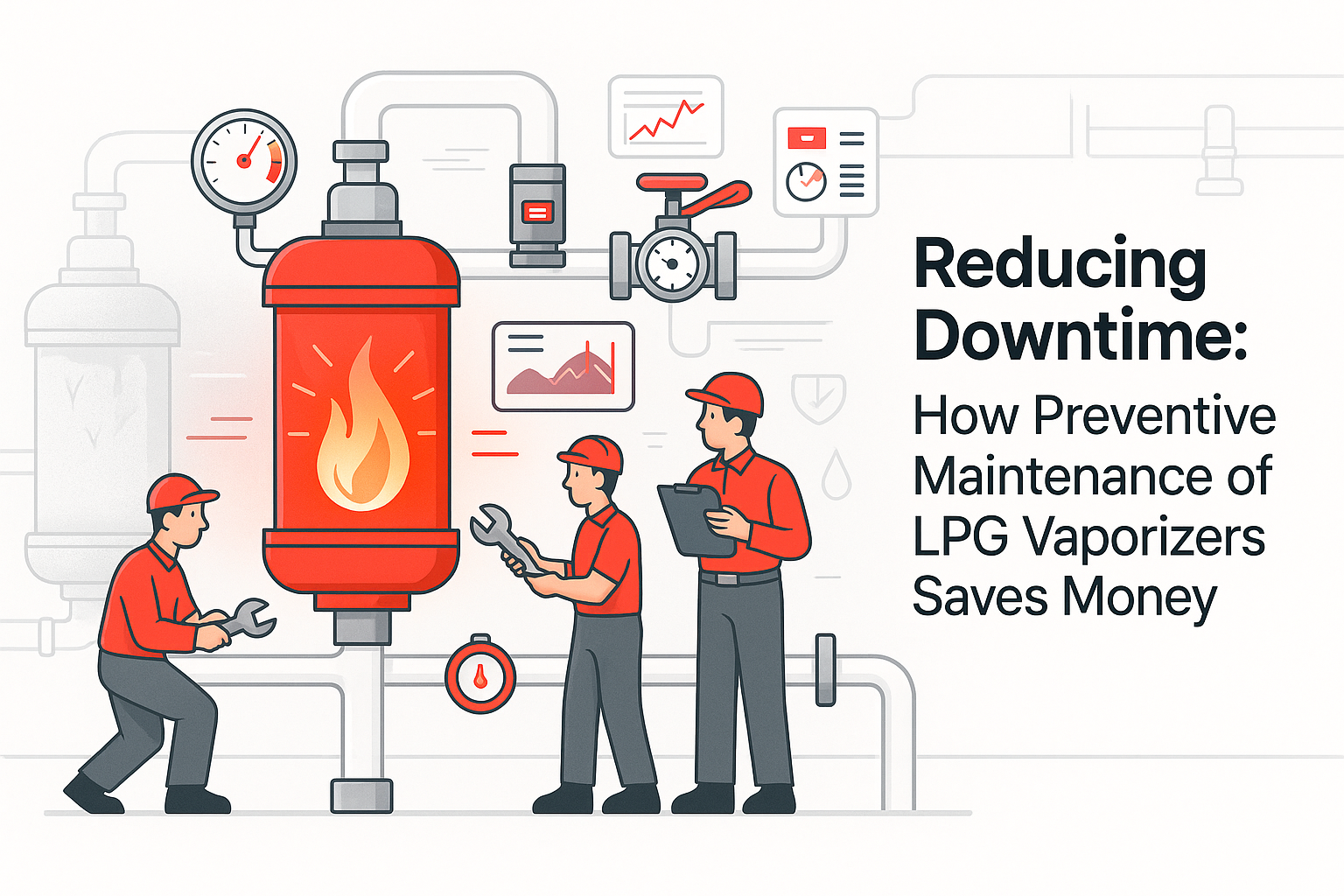
Reducing Downtime: How Preventive Maintenance of LPG Vaporizers Saves Money
The Cost of Neglecting LPG Equipment
In industrial operations, even a few minutes of downtime can cause serious financial losses, production delays, and safety concerns. When the source of energy disruption is an LPG vaporizer, the consequences can be even more costly. That’s why LPG vaporizer maintenance isn’t just a technical routine — it’s a strategic investment in efficiency, safety, and profitability. Across factories, food processing units, and bottling plants in Pakistan, a single malfunction in the vaporizer can halt the entire gas supply chain, forcing unplanned shutdowns that ripple across operations.
An LPG vaporizer’s primary function is to convert liquid LPG (stored under pressure) into vapour form suitable for burners and industrial systems. It ensures a consistent flow of gas regardless of ambient temperature or demand fluctuation. When these systems are neglected or improperly serviced, the result is erratic gas pressure, incomplete vaporisation, and a risk of gas accumulation or flame instability — all of which can jeopardise productivity and safety.
According to the World LPG Association, regular servicing of vaporizers and associated equipment can significantly extend operational life and minimise unplanned failures. For companies in Pakistan where industrial LPG usage is rapidly increasing, implementing a preventive maintenance schedule is no longer optional — it’s essential.
Why Preventive Maintenance Saves More Than Repairs
LPG vaporizer maintenance goes far beyond occasional cleaning or filter replacement. It’s about ensuring every component — from thermostats and regulators to heaters and safety valves — performs as designed. Scheduled servicing identifies potential issues like scaling, carbon build-up, or moisture ingress before they evolve into expensive breakdowns.
A structured LPG vaporizer service includes inspections, temperature checks, electrical connections, leak testing, and cleaning procedures. During this process, technicians also verify the integrity of safety devices and confirm that the vaporizer maintains optimal efficiency levels. In many cases, simple preventive steps such as timely LPG vaporizer cleaning or replacing worn-out seals can prevent major repairs that would otherwise cost several times more.
Propane vaporizer maintenance follows similar principles, especially in systems where propane serves as the main fuel for heating or industrial processes. A dirty or neglected vaporizer can reduce fuel efficiency by up to 15%, leading to higher operating costs and increased emissions. Conversely, regular maintenance helps maintain consistent heat output, supports combustion stability, and reduces overall gas consumption.
For industries operating in Pakistan’s climate, vaporizers are also vulnerable to dust accumulation, moisture intrusion, and power fluctuations. Regular inspection and cleaning ensure that electrical heating elements remain protected and thermostats accurately control temperature. At Indus 3, specialists recommend maintenance intervals based on the vaporizer model, usage frequency, and environmental conditions, ensuring equipment reliability year-round.
Linking Reliability, Safety, and Profitability
In a competitive industrial market, uptime directly translates into profitability. Properly maintained LPG vaporizers not only reduce unplanned outages but also extend the life of associated accessories such as regulators, ball valves, and safety devices. Routine maintenance also minimises the likelihood of safety incidents that can lead to costly downtime or regulatory penalties.
By partnering with an experienced industrial gas solutions provider like Indus 3’s expert team, facility managers can implement a proactive maintenance schedule tailored to their equipment. This approach allows early identification of inefficiencies, ensures compliance with safety standards, and reduces energy wastage.
Understanding LPG Vaporizers and Their Role in Continuous Operations
How Does an LPG Gas Vaporizer Work?
To understand why LPG vaporizer maintenance is essential, it helps to first look at how these systems actually work. An LPG vaporizer’s job is to transform liquid LPG — typically stored under high pressure — into vapour form suitable for combustion in industrial burners, ovens, or furnaces. This process is vital in environments where demand is high or ambient temperatures are too low to allow natural vaporisation.
There are two main types of vaporizers used across industries: direct-fired and water-bath models.
A direct-fired vaporizer uses a burner to directly heat a heat exchanger that warms the liquid LPG, causing it to convert into gas. It’s efficient and compact, ideal for applications where a steady gas flow is required quickly. In contrast, a water-bath vaporizer uses an indirect heating method. Here, hot water or glycol transfers heat evenly to the LPG via a coil system, ensuring stable gas production without overheating.
Regardless of the type, the goal is the same — maintain a consistent flow of LPG vapour to keep processes running smoothly. This is where LPG vaporizer maintenance plays a decisive role. Over time, neglecting simple servicing tasks can disrupt this delicate process, causing inconsistent gas flow or even equipment failure.
Common Problems from Poor Maintenance
When vaporizers are not properly maintained, several issues can emerge that affect both performance and safety. One of the most common LPG vaporizer problems is a drop in outlet pressure. This can occur when internal coils become coated with carbon deposits or when water-bath systems experience scale formation. The result is restricted heat transfer, leading to inefficient vaporisation and unstable pressure output.
Another frequent issue involves faulty thermostats or heating elements that fail to maintain the correct temperature range. These faults can lead to incomplete vaporisation, frost build-up, or vapour starvation — all of which can interrupt production. Simple issues such as worn seals, corroded fittings, or debris accumulation inside the chamber can also compromise efficiency.
Poor cleaning practices are another major culprit. Without regular LPG vaporizer maintenance, dust, oil residue, or impurities in the LPG supply can clog filters and restrict gas flow. Such obstructions not only affect performance but can also increase energy consumption as the vaporizer works harder to maintain pressure.
In most cases, these challenges can be avoided with proactive inspection and servicing. A detailed LPG vaporizer troubleshooting routine — involving pressure checks, thermostat calibration, and visual inspections — ensures that small defects are corrected before they cause larger operational disruptions.
Why Maintenance Ensures Consistent Gas Pressure
Consistent pressure is the backbone of reliable industrial gas systems. Inconsistencies in LPG vapour delivery can cause burners to underperform, resulting in uneven heating, incomplete combustion, or even system shutdowns. Regular LPG vaporizer maintenance ensures that heat exchangers remain clean, thermostats accurate, and safety devices responsive.
By integrating preventive care, operators can extend the lifespan of key accessories such as regulators, ball valves, and flow meters — all available in the LPG Accessories section on Indus 3. Likewise, when replacement or upgraded units are needed, plant managers can source durable, industry-compliant models directly from the LPG Vaporizers range.
Following recognised industry standards, such as those published by the Petroleum Equipment Institute, ensures that maintenance practices align with global safety norms and local compliance requirements.
The Economics of Preventive Maintenance: Saving Time, Energy, and Money
Cost of Emergency Repairs vs. Scheduled Servicing
In any industrial setting, unplanned downtime is one of the most expensive forms of waste. When an LPG system fails, operations can come to a complete standstill — halting production lines, delaying orders, and disrupting delivery commitments. The root cause is often preventable, stemming from overlooked LPG vaporizer maintenance or irregular LPG vaporizer service.
Unscheduled repairs typically cost several times more than routine maintenance. Emergency call-outs, rush-order parts, and lost production hours can multiply costs rapidly. Conversely, implementing a planned service interval allows facility managers to control expenses, schedule downtime strategically, and ensure spare parts are available ahead of time.
According to the UK Health and Safety Executive (HSE), consistent preventive maintenance not only reduces system failure rates but also lowers operational risk in high-pressure gas environments. For facilities in Pakistan, where industrial LPG consumption continues to grow, these savings can translate into substantial long-term financial benefits.
By budgeting for regular LPG maintenance, businesses can turn unpredictable breakdowns into predictable, manageable expenses — improving both cost control and operational confidence.
Efficiency Gains Through Regular Maintenance
Preventive LPG vaporizer service does more than prevent failures — it enhances the overall efficiency of the system. A well-maintained vaporizer optimises the conversion of liquid LPG to gas, ensuring that energy output remains consistent even during high-demand periods. This reduces the amount of fuel needed to sustain production, cutting overall energy bills.
Small adjustments during service, such as recalibrating the LPG vaporizer setting, cleaning heat exchangers, or replacing thermostats, can significantly improve performance. Dirty or misaligned components often force vaporizers to work harder, consuming more electricity or fuel to produce the same amount of vapour. Over time, this inefficiency can raise operating costs by 10–20%.
By scheduling cleaning, inspection, and recalibration at recommended intervals, facility managers can maintain optimal temperature control, ensure uniform vapour delivery, and prevent unnecessary energy loss. This also extends the life of key accessories such as gas regulators, flow meters, and thermostats — reducing the frequency of replacements.
When parts do need replacement, sourcing them from trusted suppliers like Indus 3’s Shop Page ensures that genuine, durable components are used. Each product is designed to withstand industrial-grade performance demands, supporting long-term efficiency and safety.
Reducing Safety Risks and Maximising Equipment Life
Neglecting LPG vaporizer maintenance can have serious safety consequences. Gas leaks, pressure fluctuations, and incomplete vaporisation are common issues that may lead to hazardous situations. Regular inspection identifies problems early, such as worn seals or corroded connections, preventing gas leaks and potential fire risks.
A proactive maintenance plan also safeguards workers and equipment from sudden malfunctions. In addition to cost savings, it promotes a safer work environment that complies with national safety standards. A single safety incident can lead not only to equipment damage but also to production downtime, investigations, and higher insurance costs — all of which are avoidable with routine checks.
Over the long term, consistent maintenance increases the vaporizer’s lifespan by reducing mechanical stress, corrosion, and heat fatigue. This ensures that industrial plants can rely on steady LPG supply without frequent capital investment in replacements.
To streamline professional servicing, plant operators can schedule inspections or maintenance consultations directly via the Indus 3 Contact Page. Expert technicians can advise on maintenance intervals suited to each facility’s workload, environment, and equipment size.
Step-by-Step LPG Vaporizer Maintenance Checklist (Indus 3 Recommended)
Preventive LPG vaporizer maintenance is not just about extending equipment life — it’s about ensuring uninterrupted operations, energy efficiency, and safety compliance. For industrial and commercial facilities across Pakistan, following a structured maintenance schedule can drastically reduce the risk of failure and cut down on repair costs. Below is a comprehensive checklist designed by Indus 3’s technical experts, combining best practices with reliable component recommendations.
🔍 Daily and Weekly Inspection Tasks
Regular visual checks are the first line of defence against unexpected failures. Daily inspections help detect early warning signs that could escalate into costly issues if ignored.
Daily Checks:
-
Inspect for leaks around joints, valves, and pipe fittings using a soap-water test.
-
Check for frost build-up on the vaporizer surface — a sign of inefficient vaporisation or heat imbalance.
-
Observe pressure and temperature readings to ensure they stay within safe operational limits.
-
Examine the burner flame (for direct-fired vaporizers) — it should be steady and blue. Irregular flame colour may indicate contamination or burner obstruction.
Weekly Checks:
-
Clean external surfaces of the vaporizer to remove dust or residue that may trap heat.
-
Inspect electrical connections and wiring insulation for signs of wear or corrosion.
-
Drain condensation or water build-up in water-bath vaporizers to prevent rust or bacterial growth.
-
Ensure safety valves and relief devices are free from obstructions and respond correctly when tested.
🧰 Monthly Maintenance Procedures
Monthly tasks focus on LPG vaporizer cleaning and fine-tuning performance settings. Proper cleaning enhances heat exchange efficiency and prevents system overloading.
Monthly Tasks:
-
Clean gas filters to remove impurities that can block gas flow. Replace if clogged — Indus 3 recommends the Madas Gas Filter 2 Inch Mod FM for superior filtration and long-term durability.
-
Test thermostats for accurate temperature regulation. Malfunctioning thermostats can cause under- or over-vaporisation. Use replacements like the Rainbow 320F Industrial LPG Thermostat to maintain precision control.
-
Check LPG regulators and ball valves for leaks or sluggish operation. Reliable replacements include the LPG Brass Ball Valve Heavy Duty to ensure secure gas control.
-
Inspect and clean heat exchangers to remove scale, soot, or carbon residue.
-
Verify all gauges and pressure indicators are calibrated correctly for accurate readings.
Regular LPG vaporizer cleaning at this stage ensures the vaporizer operates at maximum efficiency while reducing strain on heaters and thermostats.
⚙️ Quarterly and Bi-Annual Servicing
Every three to six months, in-depth mechanical and safety inspections are necessary. These help identify early signs of wear or corrosion.
Quarterly and Bi-Annual Checks:
-
Perform leak and pressure tests under controlled conditions.
-
Inspect internal coils and heating elements for scaling or pitting corrosion.
-
Check insulation resistance for electrical heaters to prevent short-circuits.
-
Inspect mounting and support structures for stability and vibration damage.
-
Clean or replace air intake filters on direct-fired vaporizers.
-
Lubricate moving parts such as valves and actuator mechanisms.
At this stage, keep an LPG vaporizer repair kit on hand containing seals, gaskets, and small components. Having essential parts ready allows for quick LPG vaporizer repair and reduces downtime during service intervals.
🧯 Annual Full-Service Tasks
A full annual maintenance cycle ensures compliance with safety standards and guarantees long-term reliability. This service should be carried out by certified technicians familiar with both local and international LPG safety codes.
Annual Maintenance Checklist:
-
Completely drain and inspect the vaporizer for sediment, scaling, or corrosion.
-
Replace worn seals, gaskets, and O-rings using OEM-grade components.
-
Perform detailed performance testing, including output flow rate, vapor pressure, and efficiency under load.
-
Recalibrate safety devices and thermostats according to manufacturer specifications.
-
Inspect the electrical control panel and test grounding connections.
-
Verify compliance with international safety standards such as the NFPA LPG Code Guidelines.
Following these comprehensive steps ensures that the vaporizer maintains consistent performance, avoids emergency shutdowns, and continues to deliver safe, reliable vapour output for critical operations.
✅ Why Routine Maintenance Pays Off
Adhering to this LPG vaporizer maintenance checklist minimises energy waste, improves safety, and ensures your system operates at peak performance year-round. By sourcing high-quality accessories from Indus 3, facility managers in Pakistan can depend on authentic components designed for durability and compliance.
Early Warning Signs: Identifying LPG Vaporizer Problems Before Failure
Pressure Drop and Inconsistent Gas Flow
Even the most reliable LPG vaporizers can experience performance issues if small faults go unnoticed. Early detection through LPG vaporizer troubleshooting is the key to preventing full-scale failures and costly downtime. One of the most common warning signs of a problem is inconsistent gas pressure at the outlet. When vapour pressure begins to fluctuate, burners or industrial heaters may operate unevenly, causing incomplete combustion or sudden flameouts.
This issue often points to a blocked gas filter, leaking valve, or damaged regulator diaphragm. Conducting regular inspections and pressure tests helps isolate the cause quickly. If you notice declining output despite normal operating temperatures, it’s time to clean or replace critical components. Replacing worn-out regulators — available in the LPG Regulators section — can restore stable gas flow and prevent unnecessary strain on the system.
If the issue persists, consider checking for leaks or cracks around joints and fittings. Using a leak detection solution or ultrasonic gas detector can help identify leaks that aren’t visible to the eye. In many cases, timely maintenance using an LPG vaporizer repair kit (which includes seals, O-rings, and pressure gaskets) can resolve the problem before it leads to complete failure.
Unusual Noises, Frosting, and Temperature Fluctuations
Another red flag during LPG vaporizer troubleshooting is unusual noise or vibration coming from the vaporizer unit. Rattling or hissing sounds may indicate internal blockage, uneven pressure distribution, or loose fittings. Left unchecked, these small signs can result in mechanical stress or cracking within the heat exchanger.
Frosting is another telltale symptom. While minor frost on pipes can occur naturally during vaporisation, excessive frost formation on the vaporizer shell often means improper heating or thermostat failure. A malfunctioning thermostat may fail to maintain the correct temperature balance, causing uneven vaporisation and reduced gas supply. Replacing faulty thermostats, such as the Rainbow 320F Industrial LPG Thermostat, helps restore optimal heat regulation.
Temperature swings can also signal issues with electrical heating elements or thermostat calibration. When the vaporizer runs too hot or too cold, fuel efficiency drops and component wear accelerates. Using authentic accessories and regular inspections ensures that the system maintains stable temperatures throughout the operating cycle.
Preventive Actions and Indus 3 Solutions
Many LPG vaporizer problems can be eliminated through consistent preventive care. Start with filter cleaning every month to remove impurities that restrict gas flow. Replace damaged filters and regulators using Indus 3’s high-quality parts to ensure long-term reliability. The LPG Safety Devices range offers certified valves and relief mechanisms that maintain system integrity and protect against overpressure incidents.
Implementing a structured inspection schedule helps technicians detect small irregularities before they escalate. Key preventive actions include:
-
Regular calibration of thermostats and regulators.
-
Checking for moisture build-up in water-bath vaporizers.
-
Cleaning carbon or scale from heating coils.
-
Tightening all fittings and verifying pressure relief valve function.
-
Keeping a stocked LPG vaporizer repair kit for immediate field replacement of worn seals or gaskets.
For advanced diagnostics or system overhauls, it’s best to consult qualified engineers who understand LPG system dynamics. Facility managers can schedule a service appointment directly through the Indus 3 Contact Page, ensuring expert assessment and safe, standards-compliant repair work.
According to the Energy Institute UK, proactive inspection and maintenance significantly reduce the likelihood of gas leaks and pressure instability in industrial fuel systems. Adopting these practices not only enhances operational reliability but also ensures compliance with safety standards applicable to LPG systems in Pakistan.
Reliability Through Vigilance
Detecting issues early is far less costly than managing system breakdowns. Simple observations — like unusual noises, frost patterns, or shifting pressure readings — often hold the clues to underlying LPG vaporizer problems. Combining routine inspection with quality components from Indus 3 ensures consistent vapour output, energy efficiency, and workplace safety.
Through disciplined LPG vaporizer troubleshooting and the use of trusted repair tools, facilities can avoid unexpected shutdowns, maintain peak efficiency, and extend the lifespan of their vaporizers — securing both performance and peace of mind.
The Role of Professional Servicing and OEM Components in Long-Term Reliability
Why Genuine Components Matter
When it comes to industrial LPG systems, reliability isn’t just about keeping the gas flowing — it’s about safeguarding people, assets, and productivity. Using genuine, OEM-grade components for LPG vaporizer maintenance is the cornerstone of operational safety and efficiency. Counterfeit or substandard parts may seem cost-effective initially, but they often lead to gas leaks, pressure inconsistencies, or premature system failure.
Every vaporizer, thermostat, and safety valve is engineered to function within precise tolerances. Using non-original parts compromises that integrity. For example, a cheap regulator might fail under high pressure, or an inferior thermostat may provide inaccurate temperature readings — both of which can disrupt the vaporisation process and create serious safety hazards. Genuine components, on the other hand, are rigorously tested to meet international safety standards and ensure long-term durability.
At Indus 3, quality is not negotiable. As one of Pakistan’s most trusted industrial gas equipment suppliers, the company only offers authentic products sourced from verified global manufacturers. Each component — whether it’s a heavy-duty safety valve, precision thermostat, or high-performance vaporizer — undergoes strict quality checks to ensure reliable performance even in challenging operating conditions.
Professional Servicing: The Difference Between Efficiency and Downtime
Industrial vaporizers demand specialised knowledge for installation, calibration, and maintenance. Professional servicing ensures that all safety devices, pressure regulators, and electrical elements work harmoniously. Skilled technicians use diagnostic tools to evaluate temperature balance, gas pressure, and energy efficiency. This level of precision reduces fuel wastage, prevents gas starvation, and maximises uptime.
Without professional oversight, even minor issues like faulty connections or clogged filters can escalate into full-blown operational stoppages. Engaging qualified service providers ensures that repairs are carried out with OEM-approved parts, eliminating the guesswork and ensuring compliance with recognised industry standards.
The LPG Vaporizers product list at Indus 3 features models built to meet international quality benchmarks, combining performance, safety, and durability. These include advanced vaporizers designed for continuous, high-volume applications, ensuring consistent pressure across all operating conditions.
Comparing Quality: Pakistan vs. International Standards
While many industrial buyers look at options such as LPG vaporizer manufacturers in India or search for the LPG vaporizer price in India to find cost-effective alternatives, it’s crucial to understand what those prices represent. Lower-cost imports often use lighter materials, non-compliant safety valves, or uncertified electrical systems. Although they may offer short-term savings, their long-term maintenance costs and risk of failure are significantly higher.
In contrast, Indus 3 supplies vaporizers and accessories that comply with both British Standards Institution (BSI) and international LPG safety codes. These products are built to last, ensuring consistent vapour output and safe pressure management over years of operation. Customers comparing the LPG vaporizer price should consider not just the upfront cost, but the value of efficiency, reliability, and compliance.
BSI guidelines emphasise that all LPG equipment must meet specific design, pressure, and performance criteria to ensure safe operation. Indus 3 adheres to these benchmarks, ensuring every component meets or exceeds international quality standards. This commitment to compliance means clients can operate their systems with complete peace of mind.
Indus 3: Your Trusted Partner in LPG System Reliability
With years of expertise in industrial gas systems, Indus 3 stands as a leading authority on safe, efficient, and reliable LPG solutions in Pakistan. From vaporizers and thermostats to regulators and safety valves, every product is selected to deliver superior performance under demanding industrial conditions.
Whether you’re installing a new system or replacing aging components, working with a trusted supplier ensures that every part contributes to the system’s longevity and efficiency. By combining professional servicing with genuine OEM components, you’re not just maintaining your LPG system — you’re protecting your investment.
In the long run, the difference between a low-cost part and a certified component can mean the difference between seamless operations and costly downtime. With Indus 3’s certified equipment and adherence to BSI standards, businesses across Pakistan can rely on consistent performance, reduced maintenance costs, and complete regulatory confidence.
Case Study: Preventive Maintenance Success in Industrial LPG Systems
Downtime Before vs After Maintenance
In early 2023, a large textile manufacturing facility in Faisalabad, Pakistan, faced recurring issues with its LPG supply system. The plant relied heavily on an industrial vaporizer setup to generate vapour for continuous dyeing and finishing processes. However, frequent shutdowns caused by inconsistent vapour pressure and thermostat failures were disrupting production schedules and increasing operational costs.
Before implementing structured LPG vaporizer maintenance, the factory experienced an average of 18 hours of downtime per month due to equipment malfunctions. Each outage not only halted production but also required emergency servicing and replacement of damaged parts. These unplanned interventions were costly and inefficient, contributing to higher fuel consumption and reduced machine lifespan.
In mid-2023, the company partnered with Indus 3, a trusted industrial gas equipment supplier in Pakistan, to introduce a preventive maintenance and LPG remodeling plan. The initiative focused on proactive inspection, regular cleaning, and scheduled replacement of worn-out components. Over a six-month period, measurable improvements were recorded across efficiency, reliability, and energy consumption.
ROI from Scheduled LPG Vaporizer Servicing
Following a detailed assessment by Indus 3’s engineers, the maintenance team replaced critical parts including regulators, valves, and heaters, which were identified as the root causes of previous failures. All replacements were sourced from Indus 3’s Shop Page to ensure genuine, OEM-grade quality and compliance with local safety standards.
Preventive steps were taken, such as periodic LPG vaporizer cleaning, recalibration of thermostats, and leak testing of all joints. Electrical elements were inspected for resistance irregularities, and new safety valves were installed to maintain consistent pressure.
Within just three months, the results were striking:
-
Downtime reduced by 72%, with monthly outages falling from 18 hours to under 5.
-
Energy savings improved by approximately 14%, thanks to optimised vaporisation and reduced re-heating cycles.
-
Repair frequency decreased by over 60%, as fewer components suffered heat or pressure damage.
The maintenance schedule also included quarterly propane vaporizer maintenance, as the plant operated dual-fuel systems. By maintaining both LPG and propane vaporizers, the company achieved better fuel flexibility and uninterrupted gas flow during seasonal demand fluctuations.
The financial return on investment was significant — within six months, the preventive maintenance programme had paid for itself by eliminating emergency service costs and lost production hours.
Long-Term Benefits and Industrial Insights
This case demonstrates the transformative value of preventive LPG maintenance and remodeling in Pakistan’s industrial sector. By adopting a structured servicing routine, the Faisalabad textile plant not only stabilised gas output but also extended the lifespan of its vaporizers by an estimated three to five years.
The improvements were made possible through expert guidance from Indus 3, whose technical specialists continue to monitor the system’s performance. They provided staff training on early fault detection, such as recognising frost patterns or pressure fluctuations — small signs that often precede larger system failures.
The company also invested in high-quality safety components, replacing older non-compliant devices with certified products from Indus 3’s Shop Page. These included thermostats, heavy-duty ball valves, and pressure regulators designed for continuous industrial use. The facility’s engineering team now conducts quarterly audits with Indus 3’s technicians, ensuring full compliance with local energy efficiency and safety standards.
For other industrial operators, this success story provides a strong case for moving away from reactive maintenance to a proactive model. Reliable LPG systems improve not just productivity but also sustainability by reducing energy waste.
As noted in the Pakistan Energy Yearbook, industrial energy efficiency initiatives — particularly those involving clean fuels like LPG — can significantly enhance output per unit of energy consumed. This aligns with national goals to improve energy productivity and reduce carbon emissions across Pakistan’s industrial base.
Facilities interested in replicating similar results can reach out to Indus 3’s expert team via the Contact Page for customised maintenance and system optimisation plans.
Conclusion & Call to Action — Partner with Indus 3 for Reliable LPG System Maintenance
Key Takeaways on Preventive LPG Maintenance
Throughout this article, one theme has remained constant — LPG vaporizer maintenance is far more than a technical necessity; it’s a smart business decision. Regular maintenance directly influences a facility’s bottom line by reducing unplanned downtime, extending equipment lifespan, and improving overall safety. From daily inspections to annual overhauls, every maintenance step plays a vital role in keeping industrial operations running efficiently and safely.
Preventive maintenance not only cuts the costs associated with emergency repairs but also ensures a stable gas supply for continuous production. Clean heat exchangers, properly calibrated thermostats, and leak-free valves translate into smoother operations and reduced energy waste. In short, a disciplined maintenance plan is an investment in reliability and profitability.
In earlier sections, we saw how proactive servicing — from LPG vaporizer cleaning and filter replacement to recalibrating vaporizer settings — helps facilities in Pakistan save thousands annually. Real-world results, such as the Faisalabad textile case study, prove that structured maintenance can reduce downtime by over 70% while improving fuel efficiency and safety standards.
Why Choose Indus 3 for LPG Equipment and Support
When it comes to industrial gas systems, trust and quality matter. Indus 3 has established itself as a leading industrial LPG equipment supplier in Pakistan, serving sectors such as textiles, food processing, and manufacturing. What sets Indus 3 apart is its unwavering focus on reliability, compliance, and long-term performance.
The company offers a comprehensive range of OEM-grade products, including:
-
LPG Vaporizers for continuous gas supply under fluctuating demand.
-
Heavy-duty regulators and thermostats that ensure precise control over pressure and temperature.
-
Industrial safety valves and accessories designed to comply with both local and international safety standards.
By sourcing from reputable global manufacturers, Indus 3 ensures that every component meets rigorous quality benchmarks. Each product undergoes technical validation to deliver safe, efficient, and consistent operation in demanding industrial environments.
Whether you need replacement parts, new installations, or a full system upgrade, Indus 3’s technical team provides personalised guidance tailored to your facility’s requirements. Their expertise extends beyond product supply — they help clients design and maintain LPG systems that align with best practices outlined by authorities such as the Oil and Gas Regulatory Authority (OGRA) Pakistan.
Your Next Step: Secure Efficiency, Safety, and Savings
If you’re ready to move from reactive repairs to proactive reliability, now is the time to act. Explore Indus 3’s extensive range of certified vaporizers, regulators, and safety devices on the Shop Page, or connect directly with their engineering team via the Contact Page for expert consultation and maintenance planning.
Indus 3’s professionals can help assess your existing setup, recommend optimal maintenance intervals, and supply genuine components designed for high-performance LPG systems. From small-scale commercial facilities to large industrial plants, their solutions are built to enhance efficiency, safety, and compliance — ensuring that your operations never stop running.
A Long-Term Commitment to Operational Excellence
Reliable energy is the backbone of every successful industry. By embracing a culture of preventive care, facilities can protect their infrastructure, reduce carbon emissions, and meet evolving safety standards with confidence. The long-term benefits of regular LPG vaporizer maintenance — lower energy costs, fewer breakdowns, and improved safety — far outweigh the short-term savings of delaying service.
One Reply to “Reducing Downtime: How Preventive LPG Vaporizer Maintenance Saves Money”