
Why LPG Vaporizer Issues Demand Immediate Diagnosis
Industrial LPG systems are built for consistency, safety, and output.
Yet a single vaporizer fault can quietly disrupt all three.
Across factories, hotels, food processing plants, and boiler rooms in Pakistan, LPG vaporizers operate under heavy demand. When problems begin, they rarely announce themselves clearly. Pressure dips, uneven flame quality, icing, or shutdowns often appear first. These are not minor annoyances. They are early warnings.
This is where LPG vaporizer issues diagnosis becomes critical. Early, structured diagnosis prevents downtime, protects equipment, and reduces safety risks. Ignoring small symptoms often leads to costly failures later.
What Is an LPG Vaporizer and Why It Matters
An LPG vaporizer converts liquid petroleum gas into a stable gaseous form before combustion.
Without proper vaporisation, LPG cannot burn efficiently or safely.
In industrial environments, vaporizers handle high flow rates and continuous loads. This makes them far more sensitive to pressure imbalance, temperature loss, and component failure. A poorly performing vaporizer can starve burners, overload regulators, or trigger safety shutdowns.
Common LPG vaporizer issues often begin with heat transfer loss, blocked filters, or incorrect sizing. Over time, these develop into full operational faults. That is why LPG vaporizer issues diagnosis must be systematic, not reactive.
For industries sourcing equipment locally, choosing the right system matters from day one. Reliable suppliers like Indus 3 support industrial users with correctly sized vaporizers, regulators, and safety components designed for Pakistan’s operating conditions.
The Cost of Ignoring Early Vaporizer Problems
Many operators delay troubleshooting until production is affected.
By then, damage is already underway.
Unresolved LPG vaporizer malfunction causes can lead to freezing coils, low outlet pressure, or unstable gas flow. These issues strain downstream equipment such as burners, boilers, and control valves. In worst cases, safety systems trip repeatedly, halting operations.
According to international LPG safety guidance from the World LPG Association, improper vaporisation is a leading contributor to industrial gas system failures. Regular inspection and diagnosis significantly reduce incident rates and operating costs.
There is also a financial angle. Poor vaporizer performance increases fuel waste and maintenance frequency. Replacing damaged heat exchangers or heaters costs far more than timely diagnosis.
Industrial users sourcing equipment from the Indus 3 shop often ask the same question. Why does a new system still struggle? In most cases, the answer lies in installation conditions, load mismatch, or overlooked maintenance steps.
Why Structured Diagnosis Matters in Pakistan
Pakistan’s climate presents unique challenges.
High ambient temperatures, dust, and inconsistent power supply all affect vaporizer performance.
Low-quality electrical connections, contaminated LPG, and improper earthing can trigger frequent faults. Without a clear diagnostic framework, technicians often replace parts unnecessarily. This increases cost without solving the root problem.
A structured approach to LPG vaporizer issues diagnosis focuses on symptoms, system design, and operating environment together. It helps identify whether the issue is mechanical, thermal, electrical, or operational.
This guide is written to support engineers, plant managers, and maintenance teams across Pakistan. It explains common LPG vaporizer issues, how to recognise them early, and how to diagnose faults accurately.
For organisations unsure where to begin, expert guidance makes the difference. You can always reach experienced engineers through the Indus 3 contact page for application-specific support.
Common LPG Vaporizer Issues Found in Industrial Systems
Industrial LPG vaporizers rarely fail without warning.
They show symptoms long before complete shutdown.
Understanding these warning signs is the foundation of effective LPG vaporizer issues diagnosis. When operators recognise problems early, they avoid production loss, safety risks, and costly repairs. Below are the most common LPG vaporizer issues seen across industrial installations in Pakistan.
LPG Vaporizer Not Vaporising Properly
When LPG fails to vaporise fully, gas supply becomes unstable.
Burners may flicker, pressure fluctuates, and equipment struggles to maintain output.
This issue often appears during peak demand periods. The vaporizer cannot absorb enough heat to convert liquid LPG into gas at the required rate. As a result, liquid carryover or partial vaporisation occurs.
Common causes include undersized vaporizers, fouled heat exchangers, or heater failure. Inaccurate load calculations during installation also contribute. These problems directly impact system efficiency and safety.
Many industrial users sourcing units from the LPG Vaporizers category face this issue when future expansion increases gas demand beyond the original design.
LPG Vaporizer Icing and Freezing Issues
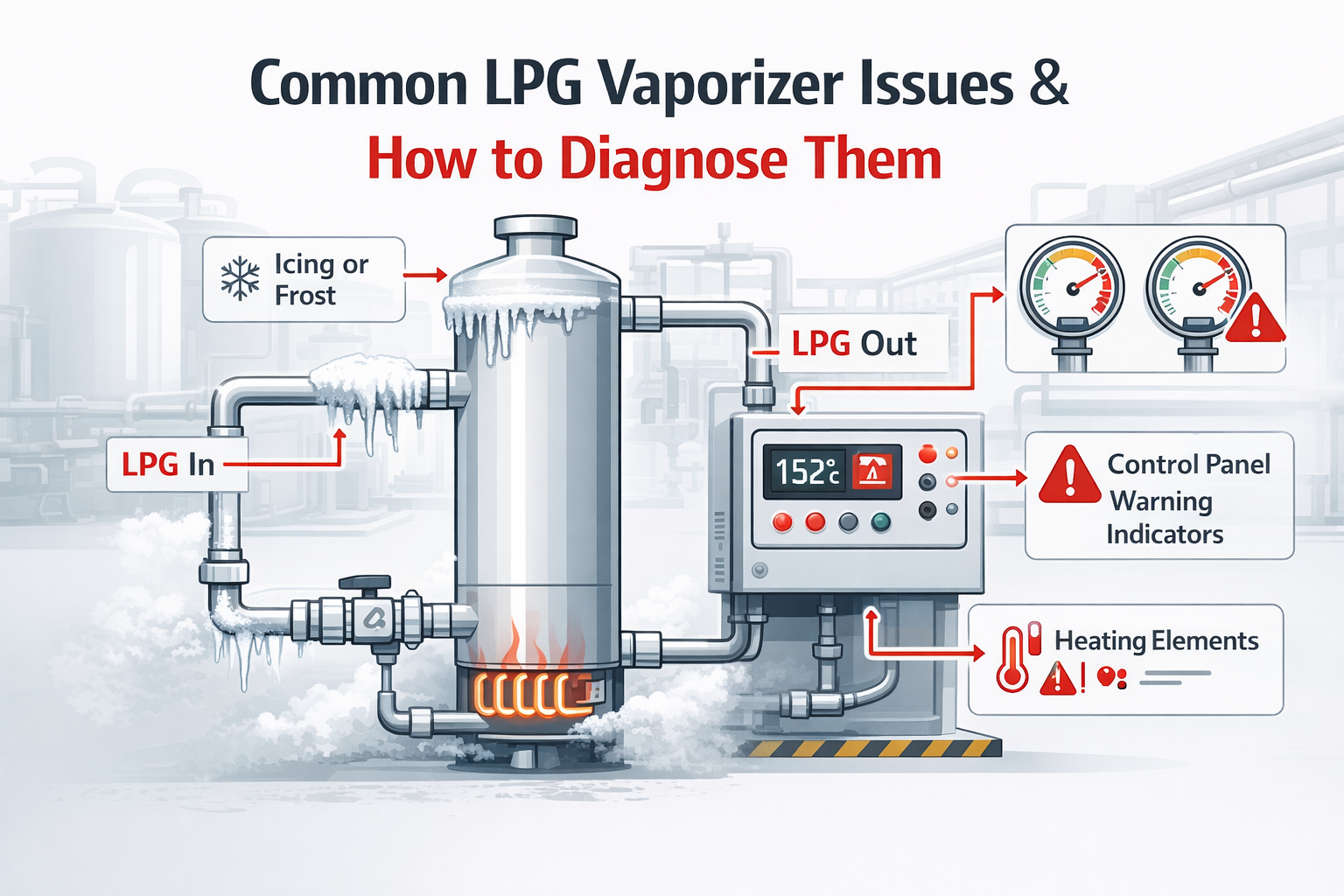
Icing is one of the clearest visual signs of vaporizer trouble.
It usually indicates severe heat loss.
As LPG vaporises, it absorbs heat from its surroundings. If heat input is insufficient, ice forms on coils or chambers. This restricts gas flow and worsens pressure loss.
The LPG vaporizer icing problem is common in high-flow systems and poorly ventilated installations. It becomes more severe during continuous operation. Over time, repeated freezing damages internal components.
According to engineering guidance published by the UK Health and Safety Executive, icing significantly increases the risk of regulator malfunction and downstream pressure instability. Addressing it early is critical.
Regular inspection, correct heater sizing, and clean gas supply help prevent this freezing issue.
Low Gas Pressure and Flow Instability
Low outlet pressure is one of the most reported complaints.
It often gets mistaken for regulator failure.
In reality, low gas pressure in LPG vaporizers usually starts upstream. Restricted vaporisation reduces available gas volume. This leads to pressure drop across the system, especially during load surges.
Blocked filters, undersized pipelines, and worn valves worsen the problem. Flow instability also increases wear on regulators and burners.
For accurate diagnosis, pressure must be checked at multiple points. Simply adjusting regulators masks the real issue.
Using proper flow measurement tools and correctly rated accessories from the LPG Flow Meters category helps identify whether the vaporizer is the true bottleneck.
Why These Issues Should Never Be Ignored
Each of these problems points to deeper operational faults.
Ignoring them increases safety risks.
Unresolved vaporizer issues raise fuel consumption and shorten equipment life. They also trigger frequent shutdowns that disrupt production schedules. In regulated industrial environments, repeated faults can lead to compliance concerns.
Effective LPG vaporizer issues diagnosis starts with recognising these common problems. Once identified, deeper fault analysis becomes faster and more accurate.
LPG Vaporizer Fault Diagnosis: Identifying Root Causes
Symptoms point to problems.
Diagnosis reveals why they exist.
Effective LPG vaporizer issues diagnosis goes beyond surface-level fixes. Adjusting regulators or resetting alarms may restore flow briefly, but the fault remains. True reliability comes from identifying the root cause and correcting it permanently.
Industrial LPG systems operate as a chain. When one component weakens, the entire system responds. This section breaks down the most common fault sources and how to diagnose them accurately.
Mechanical Causes of LPG Vaporizer Failure
Mechanical faults are among the most frequent causes of vaporizer problems.
They often develop slowly and go unnoticed.
Blocked heat exchangers restrict heat transfer and reduce vaporisation capacity. This usually results from contaminated LPG or neglected filtration. Over time, debris coats internal surfaces and lowers efficiency.
Valve wear is another common issue. Inlet and outlet valves exposed to repeated pressure cycles lose sealing integrity. This causes pressure loss and unstable flow. Pipe strain from poor alignment can also stress joints and connections.
During LPG vaporizer fault diagnosis, technicians should inspect filters, heat exchanger surfaces, and valve condition first. Using clean gas accessories from the gas filter category reduces repeat failures.
According to guidance published by the American Society of Mechanical Engineers, mechanical inspection should always precede electrical testing. This avoids misdiagnosis and unnecessary component replacement.
Electrical and Control-Related Faults
Electrical issues are less visible but equally disruptive.
They often trigger sudden shutdowns or erratic operation.
Common faults include damaged power cables, loose terminals, and poor earthing. In Pakistan, voltage fluctuations further increase failure risk. These problems directly affect heaters, sensors, and control panels.
Sensor failure is a major contributor to false alarms. Faulty temperature or pressure sensors send incorrect data to the control system. This leads to unnecessary safety shutdowns and unstable output.
Control panel errors also emerge from moisture ingress or dust accumulation. Once internal boards degrade, alarms become frequent and unpredictable.
A structured LPG vaporizer issues diagnosis process checks power supply stability, sensor calibration, and control logic in sequence. Random testing wastes time and increases downtime.
When electrical components require replacement, sourcing compatible parts from trusted suppliers is critical. Industrial users often consult the Indus 3 shop to match heaters, thermostats, and safety devices correctly.
Why Root Cause Diagnosis Saves Cost and Time
Replacing parts without diagnosis is expensive.
It rarely solves the underlying issue.
Root cause analysis reduces repeat failures, lowers maintenance costs, and improves safety. It also extends vaporizer life and stabilises downstream equipment performance.
Industrial operators benefit most when mechanical, thermal, and electrical factors are evaluated together. This holistic approach defines professional LPG vaporizer issues diagnosis.
Heating System Failures: A Major Cause of LPG Vaporizer Malfunction
Heat is the heartbeat of every LPG vaporizer.
When heating fails, vaporisation collapses.
In industrial environments, heating system problems are among the most common and damaging causes of malfunction. A proper LPG vaporizer issues diagnosis must always evaluate the heat source first. Whether electric, steam, water bath, or direct fired, each system has unique failure points.
Electric LPG Vaporizer Not Heating
Electric vaporizers are widely used due to precise temperature control.
Yet they are highly sensitive to electrical faults.
When an electric LPG vaporizer is not heating, the problem often lies in power supply instability, heater element burnout, or thermostat failure. Loose wiring and poor earthing further increase risk. In Pakistan, voltage fluctuations are a frequent contributor.
A failed heater reduces vaporisation capacity instantly. Gas flow becomes inconsistent, leading to pressure drops and safety alarms. Visual inspection alone is rarely sufficient. Electrical continuity and resistance testing are essential.
Using correctly rated heaters and thermostats from the LPG heaters category ensures long-term reliability and reduces repeat failures.
Steam and Water Bath Vaporizer Problems
Steam and water bath systems rely on indirect heat transfer.
This makes them efficient but maintenance-sensitive.
In steam LPG vaporizer troubleshooting, common issues include condensate buildup, blocked steam lines, and improper trap operation. These faults reduce heat availability and cause temperature fluctuation.
Water bath vaporizers face similar challenges. Low water levels, scale formation, and circulation pump failure limit heat transfer. Over time, this leads to partial vaporisation and icing.
According to engineering best practices published by the International Association of Plumbing and Mechanical Officials, regular inspection of heat transfer media is critical for stable vaporizer performance.
For accurate LPG vaporizer issues diagnosis, temperature must be monitored at multiple points, not just the outlet.
Direct Fired LPG Vaporizer Issues
Direct fired vaporizers deliver high output.
They also demand strict control.
Common direct fired LPG vaporizer issues include burner instability, flame failure, and heat exchanger damage. Dust, improper air-to-fuel ratio, or blocked exhaust paths often cause overheating or uneven heat distribution.
Safety interlocks may shut down the system if abnormal temperatures are detected. Repeated trips usually indicate combustion inefficiency rather than control failure.
Routine inspection of burners, flame sensors, and exhaust systems prevents long-term damage. Using quality control components from the LPG thermostats category improves temperature stability.
Why Heating Diagnosis Must Never Be Skipped
Heating failure is rarely isolated.
It triggers a chain reaction.
Insufficient heat leads to low pressure, icing, flow instability, and repeated shutdowns. These symptoms often mislead operators into adjusting regulators unnecessarily.
A structured LPG vaporizer issues diagnosis always verifies heating performance before addressing downstream components. This saves time, prevents component damage, and restores stable gas supply faster.
Capacity, Flow Rate, and Pressure Problems in LPG Vaporizers
Even a perfectly functioning vaporizer can fail on paper.
That happens when capacity does not match demand.
Many industrial LPG problems in Pakistan are not caused by faulty equipment. They stem from poor system sizing. A disciplined LPG vaporizer issues diagnosis must always confirm whether the vaporizer is capable of meeting real operating loads.
LPG Vaporizer Capacity Problems
Vaporizer capacity defines how much LPG can be converted per hour.
If demand exceeds this limit, performance drops immediately.
A common LPG vaporizer capacity problem occurs when production expands but the vaporizer remains unchanged. Additional burners, boilers, or ovens increase demand beyond design limits. The vaporizer responds with pressure loss, icing, or unstable flow.
Ambient temperature also affects capacity. High temperatures may help, but continuous high flow still overwhelms undersized units. Operators often misinterpret this as heater failure.
Correct LPG vaporizer issues diagnosis compares actual gas consumption against rated vaporizer output. Oversight at this stage leads to repeated breakdowns.
Industries planning upgrades often review larger units through the Indus 3 shop to restore balance between supply and demand.
Flow Rate Mismatch and Demand Surges
Flow rate issues appear suddenly.
They often coincide with peak operations.
An LPG vaporizer flow rate issue occurs when downstream demand spikes faster than vaporisation can respond. This creates pressure dips that affect flame stability and combustion quality.
Undersized piping, restrictive valves, and clogged filters amplify the problem. Flow surges also strain regulators, causing hunting and oscillation.
According to guidance from the Chartered Institution of Building Services Engineers, gas systems must be designed for peak demand, not average load. Ignoring this principle leads to chronic instability.
Using accurate measurement tools from the LPG flow meters category helps confirm whether the vaporizer or distribution system is limiting flow.
LPG Vaporizer Pressure Drop Problems
Pressure drop is a symptom, not a cause.
Treating it incorrectly wastes time.
An LPG vaporizer pressure drop problem usually follows capacity or flow mismatch. As vaporisation lags, pressure falls across the system. Regulators are often blamed, but they are reacting to upstream limitations.
Pressure should be checked at the tank outlet, vaporizer inlet, vaporizer outlet, and downstream header. This step-by-step method is essential in LPG vaporizer issues diagnosis.
If pressure loss appears before the vaporizer, supply issues may exist. If it appears after, vaporisation capacity is the likely cause.
Why Capacity Diagnosis Protects the Entire System
Ignoring capacity limits damages more than vaporizers.
It shortens the life of every connected component.
Burners suffer incomplete combustion. Regulators wear prematurely. Safety devices trip more often. Fuel efficiency declines steadily.
A properly sized vaporizer stabilises pressure, improves combustion, and reduces maintenance costs. Capacity checks should always be part of routine diagnostics, especially in growing industrial operations
Safety Shutdowns, Alarms, and Control System Errors
Safety systems exist to prevent accidents.
When they activate repeatedly, something deeper is wrong.
Frequent alarms and shutdowns frustrate operators, but they should never be ignored. In most cases, these events are the final signal of unresolved faults. A structured LPG vaporizer issues diagnosis treats safety trips as diagnostic clues, not inconveniences.
LPG Vaporizer Safety Shutdown Causes
A safety shutdown occurs when operating limits are exceeded.
This is by design.
Common LPG vaporizer safety shutdown causes include overheating, low outlet pressure, flame failure, and abnormal temperature rise. These conditions threaten system integrity and trigger automatic isolation.
In electric vaporizers, overheating often results from failed thermostats or poor heat dissipation. In direct fired systems, unstable combustion or blocked exhaust paths are frequent triggers.
Repeated resets without investigation worsen the issue. Each shutdown stresses electrical components and shortens equipment life. Proper diagnosis identifies whether the trip is thermal, pressure-based, or combustion-related.
According to international gas safety standards published by the National Fire Protection Association, repeated safety trips indicate unsafe operating conditions that must be corrected before restart.
Common LPG Vaporizer Alarm Triggers
Alarms are early warnings.
They speak before shutdowns act.
Typical LPG vaporizer alarm causes include sensor drift, wiring faults, voltage fluctuation, and communication errors within control panels. Temperature and pressure sensors are especially vulnerable to dust, moisture, and vibration.
A faulty sensor may report false readings. This leads to unnecessary alarms and shutdowns despite stable operating conditions. In such cases, recalibration or replacement is required.
Control panel errors also arise from power instability. In Pakistan, inconsistent supply can disrupt control logic and damage sensitive boards.
Accurate LPG vaporizer issues diagnosis involves verifying sensor accuracy, checking power quality, and inspecting control enclosures. Guesswork leads to repeated alarms and rising maintenance costs.
Why Alarms Should Guide Diagnosis, Not Panic
Alarms are diagnostic tools.
They narrow the search.
Each alarm code corresponds to a specific abnormal condition. Understanding these signals reduces troubleshooting time and prevents unsafe restarts. Operators should document alarm frequency and operating conditions when trips occur.
Using certified safety components from the LPG safety devices category improves system reliability and reduces false alarms.
When alarms persist despite corrective action, professional assessment becomes essential. Expert technicians can identify whether the fault lies in sensors, controls, or operating conditions.
LPG Vaporizer Inspection Checklist and Preventive Maintenance
Breakdowns rarely happen overnight.
They are usually built through neglect.
A disciplined inspection and maintenance routine is the most effective way to reduce faults. In industrial environments, preventive care often matters more than rapid repair. A structured LPG vaporizer issues diagnosis should always be paired with regular inspections.
Routine LPG Vaporizer Inspection Checklist
Inspections should be systematic, not rushed.
Each check protects a critical function.
A standard LPG vaporizer inspection checklist should include:
-
Visual inspection for icing, corrosion, or leaks
-
Verification of inlet and outlet pressure readings
-
Temperature checks across the vaporizer body
-
Inspection of heaters, burners, or steam lines
-
Condition of valves, joints, and seals
-
Cleanliness of filters and strainers
-
Function test of safety valves and sensors
These checks help detect early-stage faults before they escalate. Pressure imbalance, temperature fluctuation, and minor leaks are easier to correct when found early.
Using quality components from the LPG vaporizers category simplifies inspections and improves long-term stability.
Preventive Maintenance Best Practices
Preventive maintenance extends equipment life.
It also stabilises production.
Effective LPG vaporizer preventive maintenance includes scheduled cleaning, calibration, and component testing. Heat exchangers should be cleaned to maintain heat transfer efficiency. Electrical connections must be tightened and protected from moisture.
Sensor calibration is often overlooked. Incorrect readings lead to false alarms and unnecessary shutdowns. Regular calibration keeps control systems reliable.
According to maintenance guidelines published by the International Organization for Standardization, preventive maintenance reduces unplanned downtime by more than 30 percent in industrial gas systems.
Keeping maintenance records is equally important. Trends in faults and alarms often reveal underlying design or capacity issues. These insights strengthen future LPG vaporizer issues diagnosis.
Why Maintenance Is a Diagnostic Tool
Maintenance is not just routine work.
It is continuous diagnosis.
Each inspection confirms whether the vaporizer operates within design limits. Deviations signal developing faults long before failure occurs. This proactive approach protects burners, regulators, and downstream equipment.
Many industrial operators in Pakistan rely on experienced suppliers for both equipment and guidance. Technical articles and updates on the Indus 3 blog support maintenance teams with practical insights.
Expert LPG Vaporizer Diagnosis and Support in Pakistan
LPG vaporizers rarely fail without warning.
They fail when warnings are ignored.
Throughout this guide, we have explored how operational symptoms connect to deeper system faults. From icing and low pressure to heating failure and safety shutdowns, each problem follows a pattern. Accurate LPG vaporizer issues diagnosis means recognising these patterns early and responding with precision, not guesswork.
Industrial LPG systems are complex. Mechanical, thermal, electrical, and control elements interact constantly. When one weakens, others compensate until they cannot. This is why repeated faults, alarms, and inefficiencies often share a single root cause.
When to Call LPG Vaporizer Experts
Not every issue can be solved on site.
Knowing when to escalate saves time and money.
Professional support becomes essential when:
-
Safety shutdowns repeat despite corrective action
-
Pressure and flow remain unstable after adjustments
-
Heating systems fail intermittently
-
Sensors and control panels show inconsistent readings
-
Production demand exceeds original system design
At this stage, continued operation increases risk. Expert-led LPG vaporizer issues diagnosis identifies whether the solution lies in repair, upgrade, or system redesign.
Qualified engineers use structured testing, load analysis, and component verification. This approach eliminates trial-and-error maintenance and restores system stability faster.
Why Indus 3 Is Trusted Across Pakistan
Industrial reliability depends on more than equipment.
It depends on understanding applications.
Indus 3 supports industries across Pakistan with industrial LPG vaporizers, regulators, heaters, safety devices, and accessories selected for local operating conditions. From system sizing to troubleshooting support, the focus remains on long-term performance and safety.
Whether you are commissioning a new installation or struggling with recurring faults, Indus 3 provides practical, application-driven guidance. This ensures every recommendation aligns with actual gas demand, environment, and safety requirements.
Explore industrial-grade solutions through the Indus 3 shop or learn more about the company’s technical approach on the About Us page.
Take the Next Step with Confidence
Reliable vaporisation protects productivity.
Correct diagnosis protects everything else.
If your facility faces recurring vaporizer problems, unstable gas supply, or safety shutdowns, now is the time to act. Professional LPG vaporizer issues diagnosis reduces downtime, lowers operating costs, and restores confidence in your gas system.
For technical consultation, equipment selection, or troubleshooting support, connect directly with the Indus 3 team today. Visit the Indus 3 homepage or reach out via the contact page to discuss your industrial LPG requirements with experts who understand Pakistan’s operating realities.
A stable LPG system is not an upgrade.
It is a necessity.
One Reply to “LPG Vaporizer Issues Diagnosis for Industrial Systems | Indus 3”