
What Is an LPG Vaporizer and Why It Matters in Modern Industry
In the heart of Pakistan’s thriving industrial landscape, from bustling textile mills to high-efficiency food processing plants, LPG vaporizer applications are quietly driving productivity and safety. Behind every seamless production line and energy-efficient boiler room lies one essential component — the LPG vaporizer. Though often unseen, this equipment plays a pivotal role in ensuring that liquid petroleum gas (LPG) is transformed into a consistent, usable vapour form for industrial operations that rely on steady heating and fuel supply.
What Is an LPG Vaporizer Used For?
An LPG vaporizer is a specialised device designed to convert liquid LPG into vapour. In simple terms, it bridges the gap between LPG storage and fuel utilisation. When LPG is stored in its liquid state, it requires vaporisation to become combustible — suitable for use in burners, boilers, and furnaces. This is particularly critical in industrial environments where high-demand applications need continuous fuel flow without pressure drops.
In Pakistan, LPG vaporizer applications are increasingly vital in industries such as textiles, pharmaceuticals, bottling plants, and power generation. These systems ensure an uninterrupted gas supply even during cold weather when natural vaporisation slows down. Without a vaporizer, pressure in the LPG tank can fluctuate, leading to inconsistent performance or even process shutdowns — a risk no industrial operation can afford.
As one of Pakistan’s trusted suppliers, Indus 3 provides a range of reliable and high-performance vaporizers designed to meet diverse industrial requirements. For example, the LPG Vaporizer 400 kg model offers robust performance for medium to large-scale factories requiring stable energy conversion rates.
How LPG Vaporizers Work and Their Core Function
The working principle of an LPG vaporizer is based on controlled heating and phase conversion. Liquid LPG enters the vaporizer chamber, where it is gently heated — often through electric elements or water-bath systems — until it changes from liquid to gas. This vapour is then supplied under regulated pressure to the burner or appliance, ensuring optimal combustion and thermal efficiency.
Modern vaporizers feature safety valves, thermostat controls, and pressure regulators that maintain balance within the system. These safety mechanisms not only prevent over-pressurisation but also protect downstream equipment. Indus 3 offers complementary accessories, such as the LPG Regulator RECCO 041 1.5” Heavy Duty, to help maintain stable and efficient operations across all industrial gas systems.
Additionally, vaporizers reduce dependency on ambient temperature — a crucial factor in Pakistan’s variable climate — making them indispensable for year-round industrial efficiency.
Why Use a Vaporizer in High-Demand Applications?
In high-demand industrial environments, fuel consistency determines both productivity and safety. Using an LPG vaporizer ensures that every burner, boiler, or production line receives a stable vapour flow, avoiding the risks of flameout, fuel starvation, or uneven heating. Industries that rely heavily on heat or gas-based processes — such as textile dyeing, food bottling, and ceramic manufacturing — benefit from the uninterrupted operation and fuel efficiency these systems deliver.
Beyond performance, vaporizers contribute significantly to safety compliance and environmental sustainability. They minimise liquid carryover, optimise combustion, and help companies align with international standards such as BS EN 746-2 for industrial thermal processes.
According to the UK LPG Association and the Energy Institute, properly installed and maintained vaporizers enhance safety, reduce emissions, and improve overall system reliability — all critical for industrial growth in developing economies like Pakistan.
From reducing fuel waste to ensuring operational stability, LPG vaporizers form the backbone of efficient industrial energy systems. Whether it’s powering boilers in textile mills or maintaining flame stability in bottling lines, these devices embody the fusion of technology, safety, and performance that defines Pakistan’s modern industrial era. To learn more about Indus 3’s expertise in supplying and maintaining LPG systems, visit their About Us page.
Types of LPG Vaporizers and Their Industrial Functions
In Pakistan’s industrial landscape, LPG vaporizers play a critical role in ensuring a continuous and stable gas supply for large-scale operations. However, not all vaporizers are built alike. The right vaporizer type can significantly influence operational efficiency, fuel economy, and safety standards across industries. Understanding the LPG vaporizers’ function, types, and applications helps decision-makers choose the most suitable model for their process requirements and working environment.
Direct-Fired and Electric Vaporizers Explained
Direct-fired LPG vaporizers are among the most commonly used models in Pakistan’s industrial plants. These units employ an open flame to heat the heat exchanger, which in turn vaporises the liquid LPG. They are ideal for high-demand operations, such as textile mills and bottling plants, where large volumes of gas are required continuously. Direct-fired vaporizers offer rapid heat transfer and high output, though they require strict adherence to safety protocols and adequate ventilation.
On the other hand, electric LPG vaporizers use electric heating elements instead of an open flame. They are designed for precision, offering clean, flameless operation — a significant advantage in food, pharmaceutical, and chemical sectors where contamination and fire risk must be minimised. Electric models also feature thermostatic controls that maintain optimal temperatures, ensuring consistent vapour quality.
Both systems rely heavily on reliable safety valves and thermostats for performance stability. Indus 3 provides a complete selection of compatible safety components and regulators, ensuring compliance with global standards such as NFPA 58 (Liquefied Petroleum Gas Code) and the Liquefied Petroleum Gas Safety Institute guidelines.
Explore the full range of vaporizers and accessories available at Indus 3’s Shop Page for durable, high-quality solutions tailored to industrial needs.
Water-Bath and Ambient Air Vaporizers in Use
For applications requiring consistent vapour flow over extended periods, water-bath LPG vaporizers are often preferred. These units use a heated water reservoir to warm the LPG, producing vapour through a stable, controlled process. The water’s thermal mass ensures even heating, reducing the risk of overheating or pressure fluctuations — a common concern in direct-fired models. This makes them ideal for power plants, large-scale boilers, and bottling facilities with continuous gas requirements.
In contrast, ambient air vaporizers depend on environmental heat rather than a powered heating source. They are eco-friendly, low-maintenance, and energy-efficient, making them suitable for smaller operations or regions with moderate climates. Although their performance can fluctuate in colder conditions, integrating thermostats and flow meters — such as Indus 3’s LPG Flow Meter G6 — can enhance reliability and output monitoring.
Indus 3’s LPG Vaporizers Category includes models ranging from compact 15 kg units for smaller operations to powerful 900 kg vaporizers capable of supporting heavy industrial production. Each unit is engineered for durability and performance, ensuring compliance with both OGRA Pakistan and international LPG safety standards.
Choosing the Right Model for Your Operation
Selecting the right LPG vaporizer involves evaluating several critical factors — from capacity and heating method to control systems and safety integration. For industries requiring constant, high-volume fuel flow, direct-fired or water-bath vaporizers provide robust solutions. Conversely, businesses prioritising sustainability or operating in smaller facilities may find electric or ambient air vaporizers more efficient.
When choosing, consider:
-
Fuel demand and pressure requirements — ensure the vaporizer can handle your load without overexertion.
-
Safety mechanisms — look for integrated thermostats and pressure regulators to prevent system failures.
-
Energy source availability — select between electric, flame-based, or ambient systems depending on energy infrastructure.
Indus 3’s expert team assists industrial clients in selecting, installing, and maintaining the most suitable vaporizer systems to optimise performance and safety. Visit their Shop Page or explore the LPG Vaporizers Category to discover tailored options ranging from LPG Vaporizer 15 kg to LPG Vaporizer 900 kg, built to meet the toughest industrial demands.
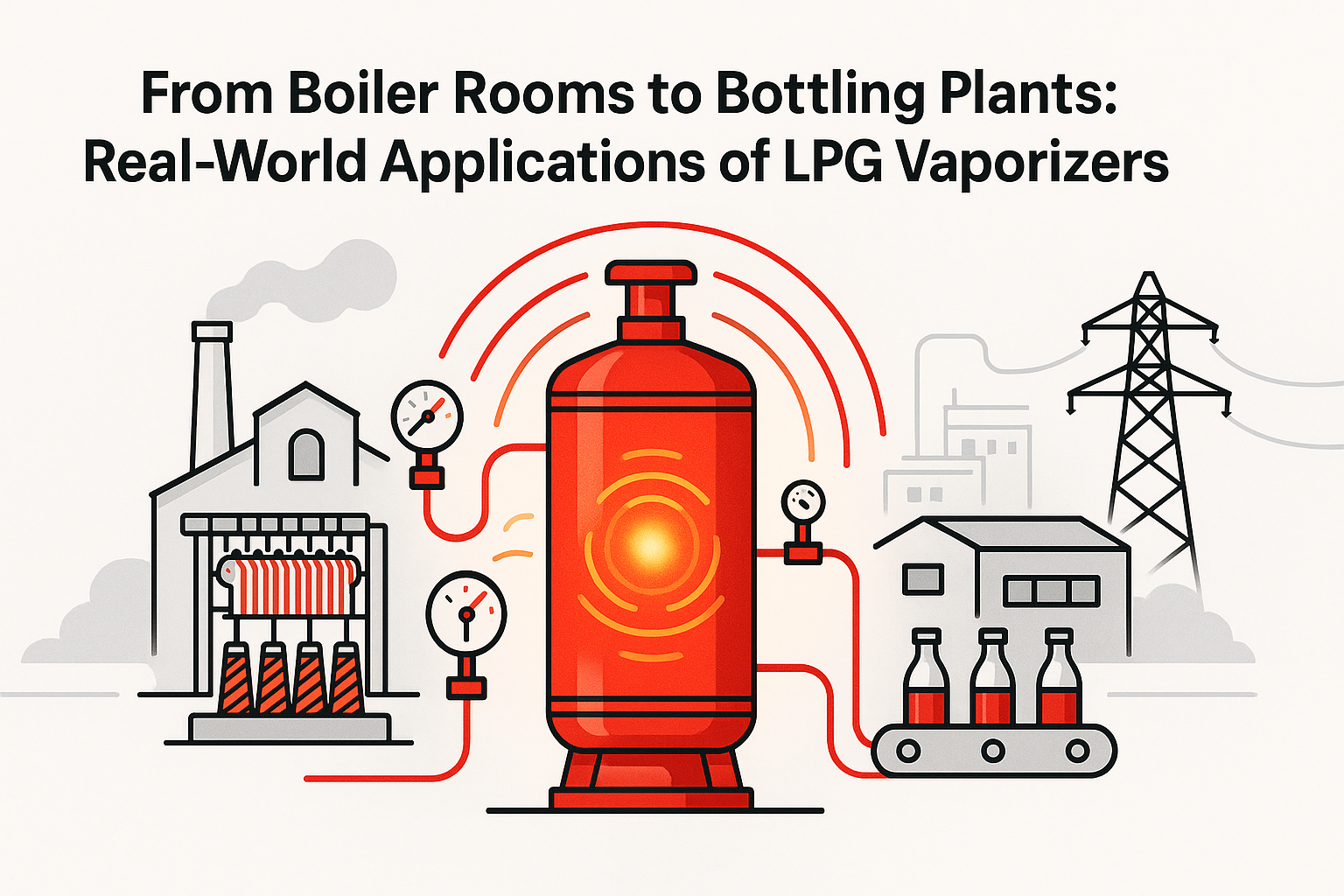
From Boiler Rooms to Bottling Plants — Where LPG Vaporizers Power Production
Across Pakistan’s industrial corridors — from the textile hubs of Faisalabad to the beverage bottling plants of Karachi — LPG vaporizer applications are transforming how factories maintain energy efficiency and operational continuity. As industries face growing pressure to meet production targets while keeping fuel costs under control, the reliability and safety of LPG systems have become non-negotiable. This section explores the top uses of LPG vaporizers for industrial applications across three major sectors, illustrating how Indus 3’s technology supports seamless, high-performance operations in the country’s most vital industries.
LPG Vaporizers in Textile Mills and Boiler Operations
The textile sector, Pakistan’s largest industrial contributor, relies heavily on consistent heating for dyeing, steaming, and drying processes. In traditional setups, fluctuating LPG pressure can lead to irregular heat supply, production delays, and even safety risks. Here, LPG vaporizers serve as a backbone of stability.
In Faisalabad’s industrial zones, mills utilising Indus 3’s Industrial LPG Vaporizer ½ Inch (view product) have reported enhanced process efficiency and reduced downtime. The vaporizer ensures that even during peak hours, boiler systems receive a continuous flow of evenly vaporised gas, eliminating flame instability and pressure drops.
These units are integrated with thermostat and safety valves to maintain precise heating control — essential for textile operations requiring accurate temperature regulation. Additionally, compliance with Pakistan Textile Council safety recommendations underscores Indus 3’s commitment to reliability and regulatory standards. The result: smoother operations, lower maintenance costs, and better fabric output quality.
Food and Beverage Processing Plants Using LPG Systems
In the food and beverage sector, hygiene, safety, and consistency are critical. LPG vaporizers are increasingly replacing traditional fuel systems due to their clean combustion and steady gas supply. From dairy processing plants in Punjab to carbonated drink bottling units in Karachi, industries depend on these systems for pasteurisation, sterilisation, and packaging.
For example, an FMCG bottling facility in Lahore deployed an Indus 3 LPG Vaporizer integrated with a LPG Flow Meter G6 (view product) to maintain constant gas flow during high-speed bottling cycles. The flow meter monitors consumption in real time, allowing operators to adjust output efficiently and detect anomalies early — ensuring zero interruptions in the production line.
As per Punjab Food Authority safety standards, LPG systems used in food processing must minimise combustion residue and temperature variations. Indus 3’s vaporizers meet these requirements through precision heating controls, making them an ideal fit for food-grade operations. The result is not only improved energy efficiency but also compliance with local safety norms and international hygiene protocols.
Power, Energy and Manufacturing Sector Integration
Beyond textiles and food, LPG vaporizers play an integral role in Pakistan’s broader energy and manufacturing landscape. Industries such as ceramics, pharmaceuticals, and packaging rely on vaporizers to fuel burners, ovens, and thermal units with uninterrupted gas supply — especially in areas where natural gas shortages are frequent.
In Sindh’s industrial belt, manufacturing units using Indus 3’s vaporizers alongside RECO Grey LPG Regulator ½ Inch (view product) have achieved improved energy stability and system longevity. These regulators maintain consistent outlet pressure, reducing wear on downstream components and enhancing operational safety.
Moreover, in power generation plants and backup energy facilities, LPG vaporizers ensure generators and turbines operate efficiently without manual intervention, even under heavy load conditions. This reliability aligns with recommendations by the Alternative Energy Development Board (AEDB), which highlights LPG as a dependable alternative energy source in Pakistan’s industrial ecosystem.
Whether it’s keeping textile boilers running without interruption or ensuring food packaging lines maintain precision heat control, Indus 3’s LPG systems empower industries to achieve higher output with greater safety. Businesses across Punjab and Sindh continue to trust Indus 3’s engineered solutions for top-performing LPG vaporizers and accessories built to global standards.
Safety First — Essential LPG Vaporizer Safety Measures and Devices
In industrial operations where liquefied petroleum gas (LPG) powers heating, production, or energy systems, safety isn’t optional — it’s fundamental. The efficiency of any vaporizer system depends not only on its performance but also on the safety infrastructure surrounding it. By integrating certified LPG safety devices, thermostats, and valves, factories in Pakistan can ensure operational reliability while protecting both personnel and equipment.
At Indus 3, every component — from the vaporizer itself to its smallest accessory — is designed with safety, compliance, and durability in mind. The company’s range of thermostats, regulators, and valves ensures that LPG systems function within controlled parameters, minimising risks of leaks, overpressure, or overheating.
LPG Safety Devices Every Industry Should Install
Every LPG installation should include critical safety devices that serve as the first line of defence against system failures. Among the most essential are pressure relief valves, automatic shut-off regulators, and thermostat safety controls. These devices work collectively to maintain steady operation and prevent accidents caused by excessive pressure or uncontrolled heating.
For instance, Indus 3’s LPG Safety Vaporizer ¼ Inch provides reliable pressure regulation, protecting vaporizer systems from overload. Similarly, the REGO ½ Inch Industrial Safety Valve is engineered to release pressure automatically when it exceeds safe limits, safeguarding both the equipment and nearby workers.
By installing these LPG safety devices, industries not only comply with the OGRA Pakistan Safety Code but also align with international standards such as the HSE UK LPG Guidelines, which emphasise proactive risk management in pressurised gas systems. Regular checks of these devices should be scheduled as part of routine maintenance to ensure consistent protection against leaks and pressure build-up.
To explore more equipment designed for industrial safety, visit Indus 3’s dedicated LPG Safety Devices Category.
Key Safety Guidelines and Operation Checks
Implementing LPG safety guidelines is not just about compliance — it’s about sustaining productivity while maintaining control. Operators should perform daily inspections to detect any abnormal noises, gas odours, or temperature fluctuations. Weekly checks should include verifying regulator integrity, tightening connections, and cleaning filters.
Before every startup, pressure gauges and thermostats must be calibrated to ensure precise readings. Furthermore, safety personnel should confirm that LPG safety valves and cut-off systems are fully functional. According to OGRA’s LPG (Production and Distribution) Rules, all LPG equipment in Pakistan must undergo periodic testing and certification by approved technical experts.
Additionally, adopting international standards, such as those from HSE UK, helps companies in Pakistan align with best practices that reduce incident rates across the global energy sector. These safety measures not only prevent accidents but also extend the lifespan of critical vaporizer components — creating a safer, more sustainable working environment.
Thermostat, Safety Valve and Maintenance Essentials
An effective LPG thermostat safety cover and high-quality safety valve are vital to vaporizer control systems. These devices prevent overheating and automatically maintain temperature equilibrium to ensure continuous, safe operation.
Indus 3’s Rainbow 320F Industrial LPG Thermostat offers superior heat control with built-in safety mechanisms that prevent over-temperature failures. When paired with safety valves and pressure regulators, it ensures the vaporizer operates within safe thermal and pressure ranges.
Routine maintenance should include:
-
Inspecting and testing safety valves for responsiveness.
-
Cleaning thermostats and ensuring their calibration is within factory-specified limits.
-
Replacing worn-out seals or fittings to prevent leaks.
-
Using protective thermostat covers to shield sensors from environmental damage.
Consistent adherence to LPG safety norms not only protects workers but also improves fuel efficiency and vaporizer performance.
By adopting these LPG safety tips and integrating industry-standard devices, Pakistani industries can achieve both productivity and peace of mind. Indus 3 remains at the forefront of providing certified equipment — from thermostats to safety valves — engineered for reliability and compliance. To learn more about selecting and maintaining the right safety components for your plant, explore the LPG Safety Devices Category on Indus 3’s official store today.
Enhancing Performance — Integrating Thermostats and Flow Control in LPG Systems
For industries that depend on LPG-powered operations, efficiency isn’t achieved by the vaporizer alone — it’s the synergy of thermostats, flow meters, and regulators that ensures consistent output and fuel economy. These precision-engineered devices act as the nervous system of an LPG setup, managing temperature, pressure, and flow in real time. When properly integrated, they enhance combustion efficiency, minimise gas waste, and maintain stable performance across demanding industrial environments.
Indus 3, a leading supplier of LPG equipment in Pakistan, provides a comprehensive range of these components, engineered to meet international safety and efficiency standards. From LPG thermostat safety switches to precision LPG flow meters and robust LPG regulators, each device contributes to operational reliability and cost savings for businesses nationwide.
Maintaining Consistent Temperature and Pressure
Consistency in temperature and pressure is essential for LPG vaporizers to function optimally. Without regulation, even minor fluctuations can cause incomplete combustion, reduced output, or equipment wear. The LPG thermostat safety switch plays a vital role in maintaining these parameters by automatically adjusting heat input and shutting down the system if temperatures exceed safe limits.
For instance, industrial facilities using Indus 3’s Rainbow 320F Industrial LPG Thermostat and compatible safety switches have seen a significant reduction in downtime caused by overheating or low-pressure faults. These devices ensure steady thermal performance, helping vaporizers operate efficiently even during high-demand cycles.
Moreover, precise pressure management prevents strain on pipelines and downstream equipment. This level of control not only aligns with British Standard BS 4250 for LPG equipment but also supports OGRA Pakistan’s safety compliance requirements. The result is an LPG system that delivers both energy efficiency and operational safety.
LPG Flow Meters for Precision Fuel Management
Effective fuel management is impossible without accurate measurement. That’s where LPG flow meters come in. By tracking gas consumption rates, they help industries monitor efficiency, detect irregularities, and optimise energy use.
Indus 3’s Gas Flow Meter G4 (view product) is a prime example of precision instrumentation built for industrial settings. It allows operators to measure vapour output with exceptional accuracy, ensuring every unit of gas contributes to production rather than being wasted. When paired with filtration equipment like the Madas Gas Filter 2 Inch Mod FM (view product), the system ensures clean, uninterrupted flow — preventing impurities from damaging valves or burners.
According to the Energy Efficiency Centre Pakistan, industries adopting advanced metering and monitoring systems report up to 15% savings in annual fuel costs. By integrating these technologies, businesses gain greater visibility over consumption patterns, enabling them to make data-driven decisions that reduce operational expenses and carbon emissions.
Smart Regulation and Energy Efficiency
At the heart of every LPG vaporizer system lies the LPG regulator — a crucial component that balances gas flow and pressure across the entire line. High-quality regulators, such as the LPG Regulator RECCO 041 ½ Inch (view product), are designed to maintain consistent gas output even under fluctuating inlet pressures. This results in improved burner stability, smoother combustion, and enhanced vaporizer lifespan.
Smart regulation also supports sustainability. When combined with flow meters and thermostats, these regulators create a closed feedback system that automatically optimises LPG delivery. This integrated setup reduces waste, limits manual intervention, and ensures steady performance under varying load conditions.
For businesses aiming to upgrade their systems, Indus 3 provides end-to-end LPG integration solutions — from thermostatic controls to advanced metering and pressure management equipment. Explore the complete range of efficiency-focused products on the Shop Page or learn about Indus 3’s expertise and industrial service excellence on the About Us page.
The Future of LPG Vaporization — Solar and Sustainable Energy Integration
As global industries accelerate toward decarbonisation and cleaner energy practices, Pakistan’s industrial sector is also rethinking how it powers its operations. One of the most promising developments in this transition is the application of solar energy to LPG vaporizer systems. These hybrid and renewable-powered solutions merge the reliability of LPG with the sustainability of solar energy, resulting in reduced emissions, lower operational costs, and a greener footprint for manufacturing, processing, and energy facilities nationwide.
At the forefront of this innovation, Indus 3 is introducing advanced technologies that help industries achieve operational efficiency while aligning with the country’s environmental goals and international sustainability frameworks.
Application of Solar Energy to LPG Vaporizer Systems
The application of solar energy to LPG vaporizer design represents a significant leap toward sustainable industrial heating. Traditionally, vaporizers rely on electrical or direct-fired systems for heat input. However, integrating solar panels to power these units or pre-heat water in water-bath vaporizers drastically reduces the dependence on grid electricity and fossil fuels.
In hybrid systems, solar thermal energy assists the vaporization process during daylight hours, while LPG or electric heaters automatically take over when sunlight is limited — ensuring consistent vapour generation. This intelligent combination delivers both efficiency and reliability without compromising industrial performance.
For example, pairing Indus 3’s LPG Heater 25 KW 2 Inch Threaded (view product) with a solar-powered auxiliary heating system allows companies to maintain optimal LPG vapour output with minimal energy draw from conventional sources. Such setups also align with recommendations from Pakistan’s Alternative Energy Development Board (AEDB), which advocates for hybrid energy systems across manufacturing and energy-intensive sectors.
Explore Indus 3’s full range of sustainable heating solutions in the LPG Vaporizers Category, where performance meets energy responsibility.
Reducing Carbon Footprint in Industrial Heating
One of the greatest advantages of hybrid LPG vaporizer systems is their ability to reduce the carbon footprint of industrial operations. By partially or fully substituting fossil-based electricity with renewable energy inputs, these systems can lower greenhouse gas emissions by up to 30%. This makes them a practical step toward achieving both cost efficiency and environmental compliance.
Industries such as textiles, chemicals, and food processing — traditionally reliant on continuous heating — can benefit most from solar-assisted LPG vaporizers. Not only do they cut energy expenses, but they also enhance brand reputation by aligning with global sustainability commitments such as the UN Energy Efficiency Programme and the Paris Agreement goals.
Moreover, solar integration reduces stress on Pakistan’s power grid, offering a stable, off-grid heating solution for industrial estates in Punjab, Sindh, and Balochistan. Companies adopting such eco-efficient systems can expect both short-term savings and long-term resilience against fluctuating energy prices.
Pakistan’s Shift Toward Green Energy Standards
Pakistan’s energy landscape is evolving, with government-backed initiatives encouraging industries to adopt green energy standards and reduce reliance on conventional fuels. The Alternative Energy Development Board (AEDB) has laid out plans for integrating renewable energy into industrial infrastructure — a direction that aligns perfectly with Indus 3’s mission to provide sustainable gas equipment solutions.
Through innovations such as solar-assisted LPG vaporizers, smart thermostats, and high-efficiency heaters, Indus 3 is helping manufacturers future-proof their operations. These technologies support OGRA-compliant safety and energy frameworks while meeting ISO and BS EN efficiency benchmarks.
As global demand for cleaner industrial processes grows, Indus 3 stands as a trusted partner for businesses in Pakistan looking to transition toward eco-efficient LPG systems. The company’s focus on engineering excellence and sustainability makes it a key player in shaping Pakistan’s renewable industrial future.
The fusion of LPG technology with renewable energy sources marks a new chapter in industrial innovation. With forward-thinking solutions like solar-assisted vaporizers and hybrid heating systems, Indus 3 is driving a cleaner, more sustainable era for Pakistan’s industrial sector — one where efficiency and environmental responsibility go hand in hand.
Maintaining LPG Vaporizers — Operation, Training and Inspection Best Practices
A well-maintained LPG vaporizer system is the backbone of industrial reliability and safety. Proper upkeep doesn’t just prevent breakdowns — it ensures long-term operational efficiency and compliance with both national and international safety codes. Whether powering textile boilers in Faisalabad or bottling plants in Karachi, LPG safety training, LPG safety operation, and regular LPG safety checks are vital for sustainable and risk-free performance.
At Indus 3, operational excellence and safety are inseparable. The company not only provides industry-grade vaporizers and accessories but also supports clients with technical insights and after-sales guidance to help ensure their systems perform safely and efficiently across all industrial environments.
LPG Safety Training and Operational Readiness
The foundation of safe LPG system management lies in effective LPG safety training. Every operator should understand the complete functionality of the vaporizer — including ignition procedures, shutdown sequences, and emergency responses. This training helps staff identify potential hazards before they become incidents, reducing downtime and ensuring a culture of safety awareness.
Training should cover areas such as:
-
Identifying leaks using approved detection methods.
-
Proper handling of thermostats, valves, and regulators.
-
Emergency isolation protocols for gas systems.
Indus 3 encourages industries to develop internal LPG safety operation programmes that are aligned with the Pakistan Engineering Council Safety Manual and the HSE UK Maintenance Checklist, both of which highlight continuous skill development and competency assessment for industrial teams.
For organisations looking to improve operator proficiency, Indus 3’s technical experts offer professional guidance — accessible via the Contact Page — to help develop bespoke training and inspection frameworks for LPG installations.
Routine Inspection and Performance Checklist
Routine inspection is the most practical way to prevent faults and extend equipment life. A structured LPG safety check should be performed daily, weekly, and monthly depending on operational intensity.
Key daily checks include:
-
Inspecting vaporizers for frost buildup or abnormal vibration.
-
Ensuring thermostats and heaters are maintaining stable temperature.
-
Verifying that safety valves and regulators are fully operational.
Weekly or monthly inspections should include thermostat calibration, gas line integrity tests, and filter cleaning. This is where Indus 3’s precision components make a difference. Their LPG Thermostats Category includes advanced models such as the Rainbow 320F Industrial LPG Thermostat, designed to deliver consistent heating control and automatic cut-off in case of overheating.
Additionally, installing accessories from the LPG Accessories range — such as regulators, valves, and flow meters — ensures better system performance and compliance with safety norms like BS EN 746-2 for industrial thermal systems.
Routine inspection not only reduces the risk of accidents but also enhances combustion efficiency, helping factories save on fuel costs and meet environmental standards.
Common Safety Reminders and Rules
Even the most advanced LPG systems require adherence to basic LPG safety rules to operate securely. These guidelines should be a permanent part of every industrial site’s safety documentation:
-
Always keep LPG cylinders and vaporizers in well-ventilated areas.
-
Conduct leak tests before every shift or production cycle.
-
Use flame arrestors and automatic cut-off systems where applicable.
-
Replace worn seals, hoses, or regulators immediately.
-
Keep fire extinguishers and emergency shut-off switches accessible at all times.
Compliance with both OGRA Pakistan and HSE UK regulations ensures legal and operational peace of mind. Routine audits and training refreshers further reinforce a culture of responsibility among teams.
Incorporating these best practices for LPG safety training, inspection, and operation ensures that vaporizers continue performing at peak efficiency while safeguarding both assets and personnel. Indus 3 remains committed to supporting Pakistan’s industrial sector with top-tier safety solutions and professional guidance.
For personalised advice or technical assistance in maintaining your LPG systems, reach out via the Contact Page and connect with Indus 3’s expert engineers — your trusted partners in safe, efficient, and compliant industrial gas management.
Why Industries Trust Indus 3 for Reliable LPG Vaporizer Applications in Pakistan
As Pakistan’s industrial landscape evolves, efficiency, safety, and reliability have become the cornerstones of modern energy infrastructure. From textile mills in Faisalabad to bottling plants in Karachi, LPG vaporizer applications continue to power essential manufacturing and processing operations. Throughout this transformation, Indus 3 has emerged as the country’s most trusted name in industrial gas equipment, providing state-of-the-art vaporizers and safety systems that meet international performance and environmental standards.
By combining engineering expertise with a commitment to safety, Indus 3 has built a reputation for excellence — helping factories and power plants achieve consistent output, lower emissions, and complete compliance with LPG safety measures and regulatory norms.
Proven Performance and Quality Assurance
Indus 3’s LPG vaporizers are engineered to perform under the toughest industrial conditions. Every unit, from the LPG Vaporizer 30 kg model to the high-capacity LPG Vaporizer 900 kg (view product), is built for continuous operation, even in Pakistan’s extreme climate variations. These vaporizers ensure uniform gas delivery, stable pressure, and efficient combustion — minimising downtime and maximising productivity across industries.
What sets Indus 3 apart is its rigorous adherence to LPG safety norms and global standards such as NFPA 58 and BS EN 746-2. Each product undergoes detailed quality checks, ensuring durability, precision, and compliance with the OGRA Pakistan Energy Report 2025, which highlights the growing demand for safe and efficient LPG infrastructure in the industrial sector.
Complementing these vaporizers are advanced components like the REGO ¼ Inch Safety Valve Vaporizer (view product) and LPG Brass Ball Valve Heavy Duty (view product), which enhance system control, prevent leaks, and maintain consistent fuel flow. These accessories collectively reinforce Indus 3’s position as a one-stop source for dependable and compliant LPG equipment.
End-to-End LPG Solutions from Indus 3
Beyond manufacturing excellence, Indus 3 offers comprehensive end-to-end LPG solutions tailored to Pakistan’s industrial needs. From equipment selection and installation to maintenance and safety inspections, Indus 3 ensures every stage of vaporizer deployment aligns with global best practices.
The company’s product range includes vaporizers, thermostats, flow meters, regulators, and safety valves — all designed to function cohesively for optimal system efficiency. Indus 3’s expertise extends beyond product supply; its engineers provide technical assistance and operational training based on detailed LPG safety charts and process documentation.
Explore these solutions in detail on the Shop Page or learn more about the company’s legacy of innovation on the Home and About Us pages. Each solution embodies Indus 3’s philosophy: engineering precision that delivers performance, reliability, and safety — every time.
Partner with Indus 3 for Your Next Industrial Project
In an era where energy stability and environmental responsibility define competitiveness, choosing the right LPG partner is critical. Indus 3 brings more than just equipment — it delivers confidence. With nationwide distribution, certified safety components, and a proven record of excellence, the company has become the preferred supplier for industries striving to balance productivity with sustainability.
Whether upgrading existing LPG systems or deploying new energy solutions, Indus 3 ensures compliance with LPG safety measures and international efficiency standards. Its commitment to customer satisfaction, backed by an expanding product range and expert technical support, positions it as the industry benchmark for quality and trust.
For factories aiming to future-proof their energy infrastructure, there’s only one direction to go — toward smarter, safer, and more efficient LPG systems powered by Indus 3.
Your Next Step Toward Industrial Efficiency
Contact Indus 3 today for expert advice and premium-grade LPG vaporizers built for Pakistan’s toughest industrial environments.
Explore cutting-edge vaporizers, thermostats, and safety accessories designed for performance, compliance, and longevity. Visit the Shop Page to browse the full range or reach out directly via the Contact Page to consult with Indus 3’s engineering team.
As highlighted in the OGRA Pakistan Energy Report 2025, the future of industrial gas efficiency lies in advanced LPG systems — and Indus 3 is leading that future with innovation, integrity, and unwavering commitment to Pakistan’s industrial progress.
One Reply to “From Boiler Rooms to Bottling Plants: Real-World Applications of LPG Vaporizers”