
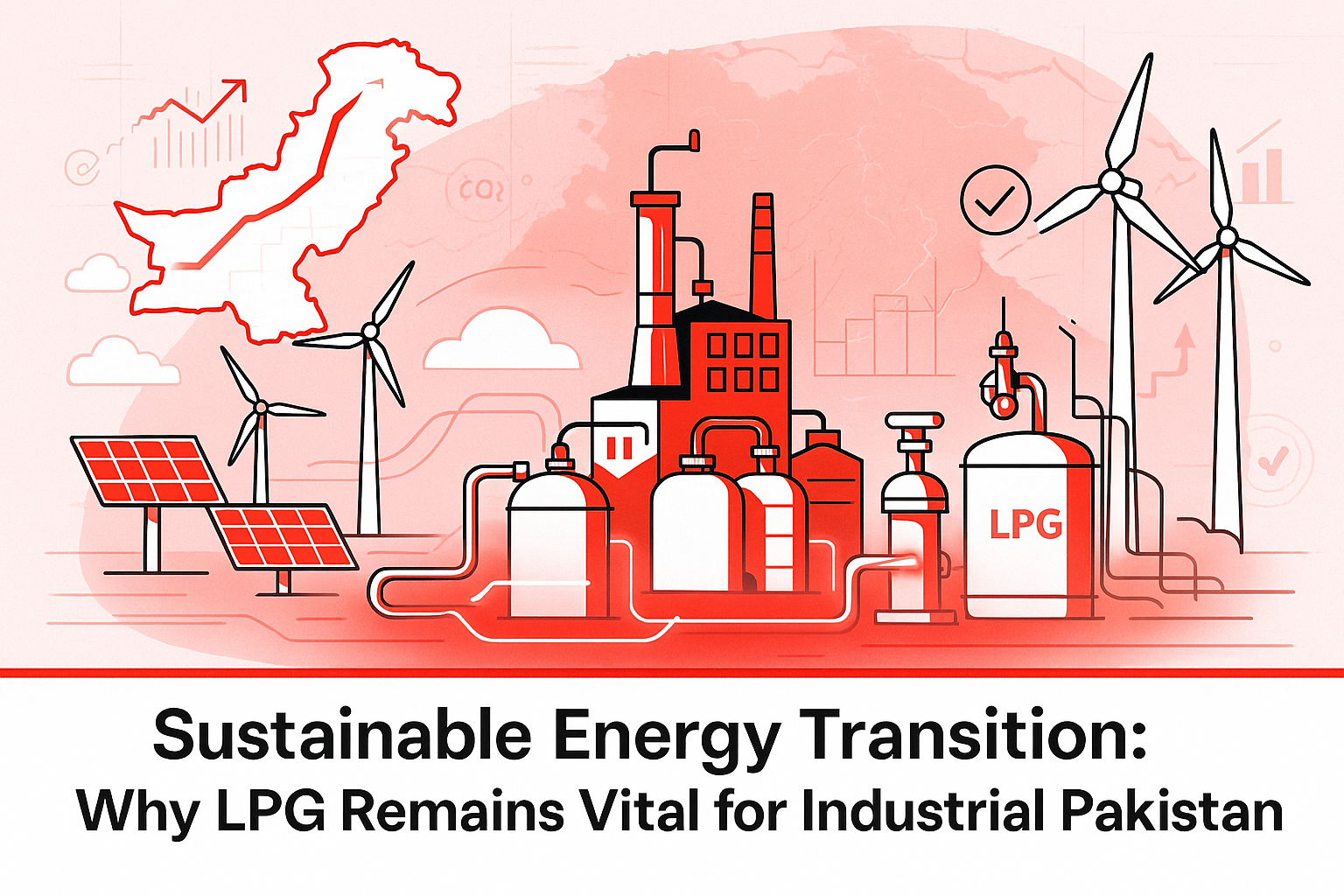
Pakistan’s Energy Transition: The Road to Cleaner Industrial Power
Pakistan’s Growing Industrial Energy Demand
Pakistan’s industrial landscape is expanding rapidly — but this growth demands an equally robust and sustainable energy backbone. From textile manufacturing in Faisalabad to steel and cement plants in Karachi, industries power much of the nation’s economic progress. However, with frequent power outages, surging oil prices, and an overburdened gas supply chain, Pakistan faces a mounting energy challenge.
This is where the concept of LPG energy Pakistan becomes crucial. Liquefied Petroleum Gas (LPG) offers an adaptable and cleaner alternative for industrial heating, production, and machinery operations. Unlike natural gas, which faces pipeline constraints, LPG can be stored, transported, and utilised efficiently even in remote industrial zones. According to the Pakistan Energy Yearbook 2024, industrial energy consumption has increased by over 6% annually, creating a pressing need for diversified, reliable fuel sources.
The International Energy Agency (IEA) further highlights that industrial energy demand will continue to rise through 2030, particularly in developing economies. For Pakistan, this means balancing economic expansion with environmental responsibility — and LPG provides a realistic bridge between conventional fuels and future renewables.
Indus 3’s industrial gas solutions play a key role in ensuring that industries can make this shift safely and efficiently, using tested and certified components that meet global standards.
From Coal and Oil to Cleaner Alternatives
Historically, Pakistan’s industries have leaned heavily on coal, furnace oil, and diesel — all high in emissions and operational costs. These fuels, while accessible, have contributed to urban air pollution, reduced air quality, and increased carbon footprints across industrial zones.
Transitioning away from these sources requires not only policy support but also infrastructure and trust in safer technologies. LPG energy Pakistan addresses both concerns effectively. It produces significantly lower CO₂ emissions, burns cleaner, and offers higher calorific value per unit compared to coal or diesel. For industries seeking energy efficiency and compliance with future green regulations, LPG stands out as a practical solution.
Moreover, Pakistan’s government has started to align with the United Nations’ Sustainable Development Goals (SDGs), especially Goal 7: Affordable and Clean Energy. In this context, LPG serves as a reliable transitional fuel — available, affordable, and scalable.
Companies like Indus 3, a trusted energy partner in Pakistan, are empowering industries to adopt LPG systems that not only meet operational needs but also align with safety and sustainability standards.
Where LPG Fits in the National Energy Mix
While Pakistan explores renewable technologies like solar and wind, these systems cannot yet sustain heavy industrial demand on their own. The country’s National Energy Policy envisions a gradual transition where LPG, natural gas, and renewables coexist — ensuring continuity and resilience in energy supply.
Within this framework, LPG energy Pakistan acts as a cornerstone for stability. It bridges supply gaps caused by seasonal gas shortages and provides consistent fuel quality for industrial processes such as metal fabrication, ceramics, and textile production. LPG’s flexible storage and distribution model make it ideal for both small-scale factories and large manufacturing plants.
The IEA and World Bank both recognise LPG’s role in supporting developing countries through transitional energy phases. Its lower environmental impact and compatibility with existing equipment make it the most viable short-to-medium-term energy choice for Pakistan’s industries.
By promoting high-quality LPG systems — including vaporizers, regulators, and safety devices — Indus 3 ensures that businesses can meet production demands without compromising safety or efficiency. The company’s focus on modern, compliant, and locally accessible solutions makes it a leader in supporting Pakistan’s sustainable industrial growth.
As Pakistan progresses toward its 2030 sustainability targets, LPG will remain a critical enabler — not as a competitor to renewables, but as their strongest ally. This balance between economic development and cleaner energy will define the next chapter of Pakistan’s industrial evolution, with Indus 3 leading the transformation toward a safer, greener, and more efficient energy future.
Why LPG Is Pakistan’s Bridge Fuel Toward Sustainable Industry
Defining Transitional Fuels in Developing Economies
In the global shift toward cleaner energy, developing nations like Pakistan face a unique challenge — balancing industrial growth with environmental responsibility. Renewable sources such as solar and wind are expanding rapidly but still face limitations in scale, reliability, and infrastructure. Hence, the world increasingly relies on transitional fuels that can bridge the gap between conventional fossil energy and full renewable adoption.
This is where LPG energy Pakistan comes into focus. Liquefied Petroleum Gas serves as a bridge fuel, allowing industries to reduce emissions immediately without sacrificing performance. It is abundantly available, easy to transport, and compatible with existing equipment, making it ideal for Pakistan’s diverse industrial ecosystem.
According to the World Bank Energy Transition Data (2024), transitional fuels like LPG are instrumental in helping emerging economies lower carbon intensity while maintaining economic growth. In Pakistan’s context, where manufacturing forms the backbone of GDP, LPG provides the balance between sustainability and operational continuity — something coal and oil cannot achieve sustainably.
Environmental Benefits of LPG Energy Pakistan
Unlike conventional fossil fuels, LPG burns more completely, releasing fewer pollutants such as sulphur oxides, particulates, and carbon monoxide. This translates directly into cleaner air and reduced maintenance costs for industrial equipment. In regions like Punjab and Sindh — where industrial emissions have long plagued local air quality — a switch to LPG can make a measurable difference.
From a greenhouse gas perspective, LPG generates up to 20% less CO₂ compared to furnace oil and 50% fewer particulates than coal combustion, according to the UNDP Pakistan Clean Energy Programme (2025). This aligns directly with Pakistan’s pledge to cut carbon emissions by 50% under the Nationally Determined Contributions (NDCs) agreement.
The environmental edge of LPG energy Pakistan lies not only in emissions reduction but also in efficiency. LPG systems can be easily controlled for precise temperature applications, which reduces wastage and optimises energy use — a critical factor for industries like textile, ceramics, and food processing.
By adopting clean fuel Pakistan solutions, industries can meet both international sustainability standards and local compliance frameworks, such as OGRA’s safety and emission regulations.
Industrial Applications Driving the Shift
The rise in industrial LPG usage reflects both practicality and foresight. Sectors such as textile processing, ceramics, pharmaceuticals, and metallurgy are increasingly turning to LPG for heating, drying, and production applications. Unlike grid electricity or pipeline gas, LPG ensures uninterrupted operation, especially in areas where infrastructure is weak or inconsistent.
The flexibility of industrial gas supply Pakistan enables manufacturers to scale energy usage as required — without heavy capital investments. LPG cylinders and bulk storage systems allow companies to manage their own supply and reduce dependence on unstable grid systems.
In factories, LPG offers better flame control, higher energy output, and cleaner burning — qualities essential for maintaining product quality and operational safety. Many industries are now upgrading to modern LPG-based systems using high-quality LPG vaporizers and regulators provided by Indus 3, ensuring optimal fuel conversion and workplace safety.
Furthermore, as Pakistan gradually diversifies its energy portfolio, LPG will remain a pivotal player. Its proven track record in cost efficiency, reliability, and environmental performance makes it the ideal transitional energy source. It not only meets today’s industrial energy needs but also paves the way for a greener tomorrow — positioning LPG as the true bridge between fossil dependence and renewable progress in Pakistan’s evolving energy landscape.
Inside Pakistan’s Industrial LPG Infrastructure: Safety, Storage, and Supply Chain
The Importance of Safety-Driven Infrastructure
The growth of LPG energy Pakistan depends not only on supply and affordability but also on safety. Pakistan’s expanding industrial base increasingly relies on LPG for consistent energy, yet the infrastructure for storage, transportation, and handling remains a critical factor in ensuring both safety and sustainability.
Transporting LPG is inherently sensitive — it is a highly flammable gas that requires precision engineering and strict compliance with safety standards. Unfortunately, Pakistan has faced several incidents in the past due to inadequate equipment and poor safety practices. To prevent such occurrences, the Oil and Gas Regulatory Authority (OGRA) enforces comprehensive guidelines covering cylinder manufacturing, storage systems, and on-site handling.
Modern safety-driven infrastructure focuses on more than just storage — it includes gas flow management, leak prevention, and automated shutdown mechanisms. This is where Indus 3’s expertise comes into play. As a trusted supplier of industrial gas regulators and advanced LPG control systems, Indus 3 ensures that every installation meets international safety standards.
Their products, built with robust materials and precision control features, allow industries to operate confidently while minimising accident risks. In a landscape where safety defines reliability, Indus 3 is setting a national benchmark for industrial LPG systems.
LPG Storage and Vaporisation Systems
A stable and efficient LPG supply depends on proper storage and vaporisation systems. In Pakistan’s industrial context, these components are the backbone of smooth production lines. LPG arrives as a liquid but must be converted into gas form for usage — a process handled by vaporizers that maintain consistent pressure and temperature.
The LPG Vaporizers offered by Indus 3 are designed for optimal performance across varying temperature ranges and industrial loads. These units prevent freezing issues, ensure steady fuel output, and support continuous operations in demanding environments.
Storage facilities, whether above-ground tanks or bulk cylinders, must comply with OGRA-approved standards. According to the Dawn Business Energy Report (2024), several industrial accidents over the past decade were linked to outdated vaporisation equipment and substandard fittings — a stark reminder of the importance of investing in certified systems.
Modern LPG infrastructure also relies on LPG safety devices, including automatic shut-off valves, pressure regulators, and thermostats, to manage real-time operational risks. Indus 3 supplies a comprehensive range of these products, helping businesses align with global safety practices while maximising operational uptime.
For industries using LPG to power furnaces, boilers, or dryers, adopting reliable vaporisation and safety systems directly translates to reduced downtime and higher efficiency — a competitive advantage in Pakistan’s fast-growing manufacturing sector.
Indus 3’s Role in Reliable LPG Supply Chains
A secure LPG ecosystem is more than just equipment — it’s about trust, consistency, and expertise. Indus 3 has built a strong reputation as a trusted supplier of safe gas distribution systems across Pakistan, ensuring that industries can depend on their energy sources with confidence.
From LPG vaporizers Pakistan to advanced LPG safety devices, the company provides end-to-end solutions tailored to meet the specific requirements of industrial clients. Its product range includes high-performance regulators, ball valves, and flow meters, each designed to enhance safety and precision in gas management systems.
Through ongoing collaboration with engineers, plant operators, and safety inspectors, Indus 3 promotes a culture of safety awareness. The company conducts technical guidance and equipment training sessions, ensuring clients operate in full compliance with OGRA and international standards.
Economic and Environmental Edge: LPG vs. Other Industrial Fuels
Cost Efficiency and Fuel Flexibility
When factories switch from diesel to LPG, energy savings follow immediately. The financial advantage of LPG energy Pakistan lies in its superior combustion efficiency and predictable pricing structure. Industrial plants across the country have discovered that LPG not only burns cleaner but also delivers a higher calorific value per unit compared to conventional fuels like furnace oil or coal.
According to World Bank industrial energy studies, LPG achieves up to 90% energy conversion efficiency, compared to roughly 70% for diesel and 60% for coal-fired systems. This means less fuel is required to produce the same output — directly reducing operational costs. Moreover, LPG systems allow precise control of flame intensity and temperature, enabling better product quality and less material wastage.
From small manufacturing units to large-scale production plants, the ability to store and transport LPG flexibly makes it an invaluable asset. It supports decentralised energy access, especially for remote areas where pipeline gas is limited or unavailable.
⦿ Up to 30% cost reduction versus diesel in industrial heating
⦿ Consistent energy supply unaffected by grid instability
⦿ Scalable usage — from single-burner applications to multi-furnace systems
To ensure these systems function optimally, industries rely on LPG Regulators from Indus 3, known for their precise pressure control and safety compliance. These regulators maintain steady output even under high-demand conditions, ensuring smooth and efficient industrial operations.
Lower Emissions, Cleaner Air for Industrial Zones
The ecological benefits of LPG energy Pakistan are equally significant. Data from the International Energy Agency (IEA) shows that LPG emits substantially fewer greenhouse gases and pollutants than diesel or coal. For every tonne of output, factories using LPG produce up to 40% less CO₂ and 80% less particulate matter compared to diesel-based systems.
⦿ 40% lower CO₂ emissions than diesel
⦿ 50% fewer nitrogen oxides than furnace oil
⦿ Virtually zero sulphur emissions compared to coal
These figures highlight why LPG is increasingly favoured in industrial clusters such as Faisalabad, Karachi, and Gujranwala — regions where air quality and regulatory compliance are growing concerns. Cleaner combustion not only helps factories meet environmental standards but also extends the lifespan of machinery and reduces maintenance downtime.
Furthermore, the absence of soot and residue means cleaner working environments, improved employee health, and better indoor air quality — a key productivity factor in enclosed industrial setups.
For precision measurement and efficiency tracking, industries are incorporating Gas Flow Meters from Indus 3, which ensure accurate fuel consumption readings and help monitor performance against emission targets.
Long-Term Sustainability Metrics
In the broader context of Pakistan’s industrial development, LPG represents a smart balance between cost control, operational reliability, and environmental responsibility. The World Bank’s 2025 Clean Energy Transition Report identifies LPG as a practical “transitional energy” — an adaptable alternative that can coexist with renewables in hybrid energy systems.
For industrialists concerned about long-term sustainability, LPG energy Pakistan provides measurable results. It requires lower upfront investment than solar or biomass systems while offering immediate reductions in emissions. Moreover, modern LPG installations can easily integrate with future energy technologies, making them future-proof.
Indus 3’s commitment to precision engineering ensures that its vaporizers, regulators, and safety valves perform consistently under demanding industrial conditions. Each component is designed for maximum efficiency, safety, and compliance with OGRA and international standards.
In the race to decarbonise Pakistan’s industries, LPG emerges not just as a cleaner fuel — but as an economically sound strategy. By embracing LPG today, industries prepare themselves for a sustainable tomorrow, driven by innovation, efficiency, and trust in Indus 3’s expertly engineered LPG systems.
Policy and Regulation: How Government Support Shapes the LPG Sector
Pakistan’s LPG Policy Framework
Energy policy plays a defining role in shaping how countries like Pakistan transition toward cleaner and more sustainable fuel sources. Over the last decade, the government has gradually refined its framework to encourage diversification — recognising that reliance on a single energy source leaves industries vulnerable to shortages and price volatility.
In this evolving landscape, LPG energy Pakistan has emerged as a central pillar in the national energy mix. The Ministry of Energy (Petroleum Division), through its LPG Policy 2024, has reaffirmed the importance of promoting liquefied petroleum gas as a reliable, efficient, and environmentally responsible alternative to conventional fuels. This policy aims to improve energy accessibility for remote regions, reduce pressure on the national gas grid, and promote local LPG bottling and distribution facilities.
Moreover, policy directives have also focused on reducing import dependency by encouraging private-sector investment in local storage and processing facilities. These measures create a stable supply chain that benefits industries seeking uninterrupted energy for production. As part of this strategy, the government provides tax incentives and import reliefs for compliant LPG equipment — a move that has significantly boosted adoption across Pakistan’s industrial sector.
OGRA Safety Standards and Industrial Compliance
A key enabler of sustainable LPG adoption in Pakistan is the strong regulatory oversight provided by the Oil and Gas Regulatory Authority (OGRA). The authority has developed extensive safety guidelines covering the design, installation, and operation of LPG systems across industrial, commercial, and domestic sectors.
Compliance is non-negotiable, particularly for large-scale factories using LPG for heating, manufacturing, or processing applications. OGRA mandates periodic inspections, operator training, and the use of certified safety equipment. In this regard, Indus 3 stands as a prime example of an organisation that upholds and exceeds these standards. Its products — including vaporizers, regulators, and safety devices — are rigorously tested and approved for industrial-grade performance.
Through its consistent adherence to compliance and safety protocols, Indus 3 has built trust among manufacturers nationwide. As a trusted energy partner, the company’s certified systems ensure that clients remain fully aligned with OGRA’s regulations while benefiting from efficient and uninterrupted operations.
By emphasising the importance of transparency and documentation, OGRA’s standards have not only improved safety but also enhanced investor confidence in Pakistan’s LPG infrastructure. This regulatory clarity is vital for the continued expansion of LPG energy Pakistan as a sustainable industrial solution.
Encouraging Private-Sector Partnerships
The government’s push for clean energy transition cannot succeed without active private-sector involvement. Recognising this, recent policy measures have been designed to foster collaboration between public entities, energy companies, and private investors. The UNDP Industrial Decarbonisation Initiative (2025) underscores the importance of such partnerships in accelerating Pakistan’s journey toward low-emission industrialisation.
In the LPG sector, these partnerships manifest in the form of co-investment in bottling plants, storage terminals, and technology transfer programmes. Local manufacturers, supported by global technology providers, are helping raise the standard of industrial gas infrastructure across the country.
LPG energy Pakistan benefits directly from this synergy — creating a more competitive, innovation-driven market that improves access, affordability, and safety. Indus 3, by aligning its strategy with national objectives, plays an integral role in this ecosystem. Through strong collaborations with suppliers and compliance authorities, the company ensures that Pakistani industries receive high-quality, regulation-compliant LPG systems designed to international benchmarks.
As Pakistan continues to strengthen its regulatory and policy foundation, LPG remains a model of how effective governance, coupled with private innovation, can transform the industrial energy landscape — paving the way for a cleaner, safer, and more sustainable future.
Industrial Case Studies: LPG Efficiency in Real-World Operations
Textile and Food Processing Plants
The textile and food sectors represent the backbone of Pakistan’s manufacturing industry — and both have been quick to embrace cleaner fuels. In recent years, many factories have transitioned from diesel and furnace oil to LPG, resulting in significant operational and environmental benefits. The adoption of LPG energy Pakistan is proving to be a practical, results-driven solution across these high-demand industries.
In one major textile facility in Faisalabad, switching from diesel-fired boilers to LPG vaporizers led to a 28% reduction in fuel costs and a 35% decrease in carbon emissions, according to the company’s internal sustainability report validated under IEA Industrial Energy Efficiency Report 2024 benchmarks. The consistent heating control achieved through LPG helped maintain precise dyeing temperatures, reducing fabric waste and improving output quality.
Similarly, a leading food processing unit in Lahore replaced its ageing oil burners with modern LPG systems. The change improved operational uptime by 40% due to reduced maintenance downtime and cleaner combustion. Employees also reported improved air quality in production areas — a testament to LPG’s low particulate emissions.
Both case studies underline how industries can achieve measurable savings while meeting environmental compliance standards. LPG’s reliability and clean combustion profile continue to make it the preferred energy choice for production plants that cannot afford disruptions.
Cement and Ceramics Industries
Heavy industries such as cement and ceramics have traditionally been associated with high energy intensity and pollution levels. Yet, many forward-thinking manufacturers in Pakistan are now proving that economic growth and environmental responsibility can coexist — with LPG as the bridge.
In southern Punjab, a ceramics manufacturer converted its kiln systems to LPG vaporizers to achieve higher temperature stability. The results were impressive: fuel consumption dropped by 22%, and product rejection rates decreased by nearly 18% due to more consistent firing cycles. The cleaner combustion from LPG also reduced exhaust soot, extending kiln maintenance intervals by up to six months.
Meanwhile, a cement grinding plant in Khyber Pakhtunkhwa integrated LPG into its pre-heating process. Despite initial cost concerns, the plant achieved a 25% operational cost reduction within the first year, coupled with a marked decline in emissions — aligning with environmental performance targets defined by Pakistan’s National Energy Efficiency and Conservation Authority (NEECA).
These examples demonstrate that LPG energy Pakistan not only contributes to cleaner air but also strengthens profitability through better process efficiency and reduced equipment wear.
Indus 3 Equipment Delivering Proven Results
Behind these transformations lies the precision engineering and reliability of equipment designed for industrial LPG systems. Companies across Pakistan trust Indus 3 for providing high-quality, compliant products that ensure consistent gas flow, temperature control, and safety in demanding environments.
For example, factories that adopted the LPG Vaporizer 400 kg experienced seamless vaporisation even during peak loads — preventing production halts caused by pressure drops. Similarly, the RECCO Grey Regulator has been instrumental in maintaining stable pressure output, ensuring optimal fuel usage and safety under industrial-grade conditions.
Each component supplied by Indus 3 undergoes strict quality control and conforms to OGRA and international safety standards. Their solutions are tailored for the complexities of Pakistan’s industrial environment — combining durability, precision, and compliance.
The success stories from textiles, food, ceramics, and cement sectors affirm a clear message: LPG, when paired with engineered systems from Indus 3, drives measurable efficiency and long-term value. These real-world results showcase how smart energy choices can elevate both productivity and sustainability across Pakistan’s industrial landscape — proving that innovation, safety, and cleaner energy can thrive together under LPG energy Pakistan.
Challenges Ahead: Ensuring Consistency, Supply, and Innovation in LPG Energy Pakistan
Supply Chain Volatility and Pricing Pressures
Despite its growing importance, LPG energy Pakistan faces significant challenges that could slow its industrial expansion — the most critical being supply-chain volatility and fluctuating prices. As Pakistan remains heavily dependent on imported LPG, any shift in global oil and gas prices directly affects domestic costs. According to the OGRA Price Review 2025, international market changes, shipping delays, and currency depreciation have collectively contributed to periodic price surges of up to 18% year-on-year.
The World Bank Pakistan Energy Outlook notes that such volatility poses risks to energy-intensive industries that rely on consistent fuel costs for production planning. Cement, textile, and food processing plants — many of which have transitioned to LPG — are particularly vulnerable to these fluctuations.
Compounding this issue is the lack of large-scale domestic LPG extraction and processing facilities. While Pakistan produces limited LPG from its natural gas fields, domestic supply still covers less than half of national demand. This imbalance leads to dependency on imported cargoes, often at prices linked to international benchmarks like the Saudi Aramco Contract Price (CP).
To mitigate these pressures, Pakistan needs robust storage capacity, strategic reserves, and improved import infrastructure. Indus 3, by providing safe and efficient LPG handling systems, ensures that industries maintain operational resilience even amid market volatility.
Local Manufacturing and Technology Transfer
Reducing dependency on imported equipment and technology is vital to stabilising the LPG energy Pakistan ecosystem. The country’s long-term sustainability depends on developing local manufacturing capabilities, especially for high-precision components such as regulators, vaporizers, and thermostats.
The Dawn Business Energy Updates (2025) highlight that while Pakistan has a growing network of distributors and installers, most core components are still imported. This not only increases costs but also introduces delays during maintenance and expansion cycles.
In response, forward-thinking companies like Indus 3 are spearheading efforts to promote local assembly and R&D-driven innovation. By investing in local partnerships and knowledge exchange, Indus 3 enhances quality assurance while strengthening domestic capability.
Its ongoing initiatives in safety valves and thermostats manufacturing reflect this commitment. The company’s advanced range of LPG Thermostats is engineered to meet international safety standards while being adapted for Pakistan’s industrial environment — combining reliability with affordability.
Encouraging technology transfer through collaborations with global suppliers and engineering firms can further reduce costs and enhance product longevity, enabling Pakistan to position itself as a regional hub for LPG infrastructure solutions.
Innovation in LPG Storage and Automation
Beyond supply and manufacturing, technological advancement will shape the next phase of LPG energy Pakistan. As industries modernise, the demand for intelligent monitoring systems, automated control units, and real-time safety diagnostics continues to rise.
Automation in LPG storage and distribution can dramatically reduce human error, improve efficiency, and ensure regulatory compliance. Smart flow meters, temperature sensors, and remote monitoring devices are now essential components of modern industrial setups. These systems allow plant operators to track usage, detect leaks instantly, and optimise energy consumption — contributing to both safety and sustainability.
Indus 3 has been at the forefront of introducing automation-friendly equipment into Pakistan’s industrial gas sector. Its commitment to precision engineering and integration-ready designs ensures that future factories can adopt smart LPG management systems without overhauling existing infrastructure.
However, innovation must go hand-in-hand with regulatory adaptation. OGRA and the Ministry of Energy must continue updating safety codes to accommodate digital technologies and IoT-based monitoring, ensuring that automation enhances — not complicates — operational safety.
While challenges persist — from price instability to technological gaps — the path forward remains promising. With companies like Indus 3 championing local innovation and quality manufacturing, Pakistan’s LPG sector stands poised to evolve into a stable, technology-driven, and globally competitive industry — one that continues to power the nation’s industrial growth through cleaner, smarter, and more efficient LPG energy Pakistan solutions.
One Reply to “Sustainable Energy Transition: Why LPG Remains Vital for Industrial Pakistan”