
What Is a Smart Gas Meter in Pakistan and Why SMEs Need It Today?
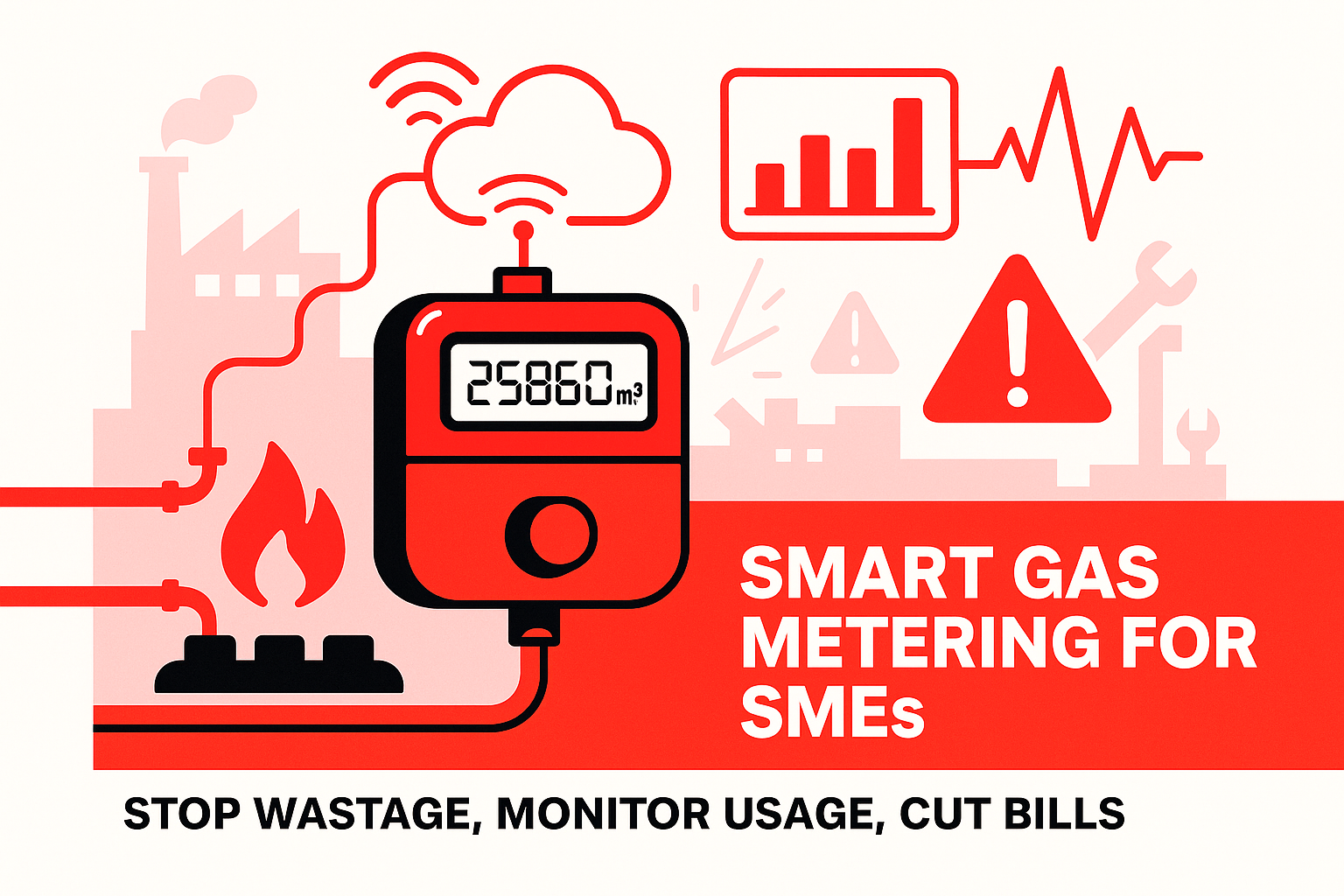
Rising gas prices, unpredictable monthly bills, and hidden wastage have pushed many small and medium enterprises (SMEs) in Pakistan to search for better control over their energy usage. In this fast-changing industrial environment, a smart gas meter Pakistan solution is no longer a luxury — it’s becoming a vital operational upgrade. Whether you run a restaurant, a manufacturing unit, a food-processing facility, or a textile workshop, smart metering gives you real visibility into how much gas you actually use, when you use it, and where you’re losing money.
A smart meter puts SMEs back in control. Instead of relying on estimated billing or manual readings, businesses gain real-time, accurate data — the foundation for cutting wastage and reducing operational costs.
How Smart Gas Meters Work in Pakistan
A modern digital gas meter Pakistan functions very differently from the older mechanical meters still installed across most cities. Traditional meters are blind instruments — they can’t track patterns, detect leaks, or send alerts. In contrast, a smart meter continuously collects consumption data and transmits it using wireless, IoT, or cloud-based technologies.
These advanced meters monitor usage every few seconds and present it through intuitive dashboards. Businesses can see hourly peaks, daily patterns, and monthly consumption reports. Many models, especially the growing category of smart natural gas meter Pakistan devices, also support remote reading. That means no more delays, no disputes over estimates, and no dependence on the meter reader’s visit.
International studies, including reports by Ofgem UK, show that smart metering significantly reduces billing errors and helps organisations identify inefficiencies early (Ofgem, “Smart Metering Benefits”). The same principles apply to Pakistan’s energy landscape, where accurate tracking is essential for keeping rising gas costs under control.
Why SMEs Face Gas Wastage Without Smart Metering
Most SMEs in Pakistan use burners, boilers, ovens, heaters, and small industrial equipment that consume gas continuously. The problem? They rarely know how much gas each process uses.
Without smart metering, Pakistani businesses often face:
• Undetected leaks – Even small leaks in burner lines or joints can add thousands of rupees to the monthly bill.
• Inefficient burner performance – Older burners consume excess gas without producing proportional heat.
• Overnight wastage – Restaurants and factories often leave small pilot lights or idle lines running.
• Billing surprises – Manual readings frequently lead to disputes or estimated bills.
• Peak-hour mismanagement – Businesses don’t realise which equipment is consuming the most gas during production spikes.
This lack of transparency makes it almost impossible for SMEs to optimise fuel usage. A real-time gas consumption meter Pakistan eliminates the guesswork by showing exact usage, moment to moment. When owners can finally see data clearly, they can fix inefficiencies before they turn into costly monthly losses.
For businesses in Pakistan — from a small chai café to a mid-sized textile processing unit — these insights directly impact profitability.
Benefits of Smart Gas Metering for Pakistani Businesses
The shift towards intelligent metering is accelerating because the benefits are immediate and measurable.
1. Full transparency of gas consumption
A smart meter tracks every cubic foot of gas you use and displays it clearly. SMEs can quickly identify which equipment drains the most energy and adjust accordingly.
2. Lower monthly gas bills
When businesses understand their usage behaviour, they naturally reduce wastage. Smart metering helps cut costs through better scheduling, preventive maintenance, and improved burner efficiency.
3. Leak detection and safety alerts
Smart meters notify owners about abnormal spikes — a crucial early warning for leaks. For SMEs with kitchens, furnaces, or industrial burners, this is both a safety feature and a cost-saver.
4. Remote monitoring and automated reporting
Owners can monitor their facility from anywhere. This is especially useful for businesses operating multiple branches across cities such as Lahore, Karachi, Faisalabad, or Rawalpindi.
5. Better decision-making for upgrades
Smart metering helps SMEs decide when to invest in new burners, vaporizers, regulators, or gas filters — products available at Indus 3’s Shop.
Pakistan’s energy landscape is evolving, and businesses need tools that provide accuracy, efficiency, and control. Smart gas meters are now part of that foundational shift.
To learn more about industrial gas equipment and modern gas safety solutions, explore the Indus 3 Home Page or visit the About Page for insights into their expertise.
The Growing Demand for Smart Gas Meters in Pakistan’s Industrial and Commercial Sector
Pakistan’s SMEs are feeling the heat — and not just from their production lines. Rising fuel prices, unpredictable billing, and increasing gas shortages mean businesses can no longer afford guesswork in their consumption. This pressure has sparked a major shift in the market, with smart gas meter Pakistan becoming one of the fastest-growing energy management tools across commercial and industrial sectors. Search interest for terms like “smart gas meter,” “digital gas meter Pakistan,” and “advanced gas metering Pakistan” has noticeably increased over the past year, reflecting clear intent from businesses looking for better control.
As industries adapt to tighter energy budgets, accurate and real-time tracking has turned into a strategic necessity. From Karachi’s commercial hubs to Faisalabad’s textile belt, companies are rapidly exploring smart alternatives that help them understand usage, reduce wastage, and plan more effectively.
Gas Price Pressures and Energy Efficiency Needs
Gas tariffs for industrial and commercial consumers have surged, with frequent revisions posing budgeting challenges. According to recent SNGPL and SSGC updates, rising operational costs are pushing businesses to find ways to regain stability. This is where the appeal of smart metering becomes obvious.
A smart natural gas meter Pakistan provides clear visibility into hourly and daily consumption trends. Instead of discovering wastage at month-end, SMEs can detect inefficiencies as they happen. Restaurants, bakeries, steel workshops, textile units, and food factories often run multiple burners at different intensities. Without real-time data, they struggle to pinpoint which processes consume excess fuel.
Smart meters help identify everything from leaky pipelines to inefficient furnace cycles, directly lowering operational costs. With global energy markets tightening — as highlighted by Bloomberg’s energy coverage — efficiency is no longer optional; it is a survival requirement.
Pakistan’s Move Toward Advanced Gas Metering
Energy stakeholders in Pakistan are gradually shifting towards advanced gas metering Pakistan systems. Utilities, industrial buyers, and commercial property owners are exploring technologies already common in Europe and the GCC.
Modern smart meters offer automated readings, remote monitoring, and accurate billing, which significantly reduces disputes. They help businesses avoid estimated charges and ensure transparency between utilities and consumers. Some utility providers have also begun experimenting with gas utility smart meter Pakistan pilots, especially in high-consumption zones.
This transition mirrors global trends where digital meters are replacing decades-old mechanical models. Pakistan’s industries — especially those operating around tight margins — now recognise that adopting smart metering is a long-term competitive advantage rather than a short-term upgrade.
Industries that rely on uninterrupted gas supply, such as chemical processing plants and large bakeries, find this shift particularly valuable. For businesses evaluating new equipment, Indus 3’s Shop Page offers industrial-grade gas components that complement modern metering systems.
Why SMEs Are Shifting to Digital and Wireless Gas Meters
SMEs in Pakistan have quickly realised that digital and wireless technologies are easier to manage, faster to install, and far more reliable. A wireless gas meter Pakistan lets businesses monitor consumption without physically accessing the meter, which is especially useful for rooftop installations or industrial plants with multiple zones.
These meters provide instant alerts during abnormal consumption, enabling owners to act before minor issues escalate into major losses. Digital meters also produce audit-ready reports, making them ideal for enterprises required to maintain compliance records.
SMEs using outdated mechanical meters often struggle with issues like misreadings, delayed billing, and manual documentation. Switching to smart meters removes these bottlenecks entirely. With monthly bills steadily rising, companies now see digital transformation as a practical necessity rather than an upgrade.
To explore more industry-focused energy solutions, SMEs regularly visit the Indus 3 Blog Page for insights and product recommendations designed for Pakistan’s industrial environment.
Pakistan’s industrial landscape is evolving, and smart gas metering is becoming a core part of efficient, modern operations.
Smart Gas Meter Pakistan: Core Features That Solve SME Problems
Every SME owner in Pakistan knows the frustration of receiving a gas bill that feels completely out of sync with real usage. Hidden leaks, inefficient burners, overnight wastage, and inaccurate readings all contribute to unpredictable monthly costs — and these problems stack up quickly in restaurants, factories, bakeries, kilns, and textile workshops. This is exactly where a modern smart gas meter Pakistan system changes the game, giving businesses full visibility and control over their consumption.
Smart meters combine sensors, IoT technology, automation, and cloud dashboards to offer the data traditional meters lack. Instead of relying on estimates or monthly guesswork, SMEs finally get real-time insights that help eliminate waste, avoid safety risks, and optimise burner performance.
Real-Time Usage Tracking and Remote Monitoring
One of the strongest advantages of a smart meter is its ability to track gas consumption second-by-second. With a modern IoT gas meter Pakistan, SMEs can log into a dashboard and view real-time usage patterns across the day. This helps identify which burners consume the most gas during peak hours, which processes run inefficiently, and where unnecessary consumption occurs.
Remote monitoring means owners don’t need to physically check the meter. Whether they are at home, visiting another branch, or managing operations from a different city, the dashboard provides instant access to:
-
Current gas flow
-
Daily and weekly consumption graphs
-
Usage anomalies
-
Hourly breakdowns
This data empowers owners to adjust production schedules, fine-tune burner settings, and prevent unnecessary wastage. A robust digital meter also reduces the risk of human error, which is common in manual readings.
For industrial-grade metering accessories and components that support smart systems, businesses can explore the Indus 3 Shop Page.
Alerts, Leak Detection, and Gas Theft Prevention
Gas leaks are one of the most dangerous and costly issues for SME operations. Advanced smart meters include automatic alerts that notify owners if consumption suddenly spikes or remains unusually high during off-hours.
A gas theft prevention meter Pakistan is particularly valuable for factories and commercial buildings where multiple users share a line. The system quickly detects unauthorised usage, helping SMEs avoid exploitation or silent consumption losses.
Key safety features include:
-
Instant leak detection alerts
-
Alerts for abnormal usage trends
-
Pressure drop warnings
-
Notifications for line tampering or bypassing
These features reduce safety risks while preventing financial loss. Safety regulators worldwide — including international gas bodies like the American Gas Association (AGA) — emphasise the importance of early leak detection in commercial settings (AGA Safety Publications).
By providing automated alerts, smart meters give SMEs immediate notice so they can shut off equipment and call a technician before the damage escalates.
Prepaid and Postpaid Billing Automation
Billing has always been a pain point for businesses, especially when relying on estimated meter readings. With a prepaid gas meter Pakistan, SMEs can load credit in advance and use gas with complete transparency. This eliminates billing surprises and helps businesses budget more accurately.
Postpaid smart meters automate the entire billing process through digital readings. Instead of waiting for someone to check the meter manually, the system sends data directly to dashboards or billing software. This dramatically reduces disputes and improves financial planning.
Key benefits of automated billing include:
-
No estimated bills
-
No manual reading errors
-
Accurate monthly statements
-
Predictable budgeting
-
Consumption-based billing accuracy
Businesses that operate multiple branches — such as chain restaurants or manufacturing units with multiple plants — especially benefit from consolidated digital billing.
To learn more about smart metering upgrades or industrial gas components that complement modern systems, businesses can reach out through the Indus 3 Contact Page.
Smart metering brings clarity, safety, and financial control to Pakistani SMEs — solving problems that traditional gas meters were never designed to handle.
Smart Gas Meter Installation in Pakistan: What SMEs Should Expect
When it comes to smart metering, installation quality can make or break the accuracy of your readings. A poorly fitted meter can misreport gas usage, trigger false alarms, or even compromise safety. That’s why SMEs investing in a smart gas meter Pakistan solution must understand the installation process clearly — from site inspections to final calibration. Modern metering technology is advanced, and upgrading from older systems requires a structured and compliant approach.
Whether you’re running a factory, a food outlet, or a commercial building, smooth installation ensures that your meter delivers the precision, transparency, and automation it was designed for. A high-quality setup is essential for businesses looking to switch from traditional equipment to a digital gas meter Pakistan or IoT-enabled model.
Pre-Installation Assessment and Safety Checks
Before any installation begins, technicians carry out a comprehensive assessment of your gas system. This step ensures that the new meter integrates safely with existing pipelines, burners, and control valves.
SMEs can expect the following checks:
1. Line pressure evaluation
Technicians confirm whether the operating pressure aligns with the meter’s specifications. High or unstable pressure can affect readings or damage the device.
2. Leak tests
Safety comes first. A full leak inspection ensures that the system is secure before installing sensitive digital equipment.
3. Compatibility review
Older burners or incorrect fittings sometimes require adjustments before upgrading. If you are considering a gas meter upgrade Pakistan, compatibility assessment ensures everything fits perfectly.
4. Environmental factors
Humidity, dust, heat exposure, and outdoor placement are evaluated to keep the meter safe from damage.
These steps follow global safety guidelines similar to those published by the American Gas Association (AGA) and international metering standards (AGA Installation Recommendations).
Installation Steps for Digital and IoT Gas Meters
Once your site passes the safety and compatibility checks, technicians move on to the actual installation. Modern smart meters — including IoT-enabled models — require precise fitting and calibration.
Here’s what the process generally includes:
1. Shutting off the gas supply
A controlled shutdown ensures safe removal of the existing meter.
2. Fitting the new digital meter
Technicians align the meter with the inlet and outlet pipes, ensuring secure connections and standardised positioning.
3. Connectivity setup
For IoT and wireless devices, technicians configure communication modules, connecting the meter to cloud dashboards or local monitoring systems. This is especially important for SMEs running multiple sites.
4. Pressure and flow calibration
The meter is calibrated to ensure accurate readings based on the SME’s operating environment.
5. Initial data testing
Technicians run a test cycle to confirm that the meter is reporting correctly, producing real-time usage data, and syncing with monitoring apps.
6. Staff briefing
Operators are shown how to check readings, monitor alerts, and interpret basic dashboard information.
Businesses needing installation guidance or expert consultation can reach out through the Indus 3 Contact Page.
Upgrading from Traditional Meters to Smart Metering
Most SMEs across Pakistan still operate older mechanical meters that offer no visibility, no automation, and no real-time tracking. Upgrading to smart metering requires both hardware replacement and system alignment.
Key upgrade considerations include:
• Pipe and fitting adjustments: Some old pipelines require resizing or cleaning to prevent flow obstructions.
• Regulator upgrades: Traditional regulators may not match the precision expectations of smart meters.
• Burner efficiency checks: A new digital meter may reveal underlying inefficiencies previously hidden by manual readings.
• Wiring or power configuration: Some smart meters require auxiliary power or wireless repeaters.
The transition from analogue systems to modern smart metering is smoother when supported by reliable industrial solutions. To learn more about Indus 3’s experience in delivering safe and compliant installations for energy equipment, explore the About Page.
Smart metering is a meaningful upgrade for Pakistan’s SMEs — but it is the installation quality that sets the foundation for long-term accuracy and safety.
Cost of Smart Gas Metering in Pakistan — Pricing Breakdown for SMEs
Every SME owner knows that sinking feeling when the monthly gas bill arrives and the numbers are far higher than expected. These unpredictable spikes make budgeting difficult and often point to hidden leaks, inefficient burners, or incorrect readings from outdated meters. This is why more businesses are exploring smart gas meter Pakistan solutions to stabilise costs and gain real visibility into their energy usage.
Smart meters come with an upfront investment, but the long-term savings often outweigh the initial cost — especially for restaurants, factories, commercial kitchens, and production units working with thin margins. Understanding what influences pricing can help SMEs make smarter decisions and plan for an efficient digital transition.
Smart Gas Meter Cost in Pakistan — Key Factors
The cost of a smart meter varies depending on several technical and operational factors. SMEs should expect different price brackets based on configuration, technology, and installation needs.
Key elements influencing pricing include:
• Type of smart meter
IoT-enabled models and advanced analytics dashboards cost more than basic digital meters. For example, a prepaid smart gas meter solution Pakistan typically includes additional software integration.
• Compatibility and upgrades
If the facility requires a digital gas meter upgrade, technicians may need to modify pipelines, fittings, or regulators. These adjustments add to the overall cost.
• Communication technology
Wireless modules, cloud connectivity, or GSM-based systems tend to be more expensive than simple wired meters.
• Installation complexity
Older buildings or commercial kitchens with complex line layouts usually require more labour and safety checks.
• Brand and build quality
Higher-quality meters with durable enclosures and advanced sensors come at a higher but more stable long-term price.
• Monitoring software
Some smart meters offer subscription-based dashboards, while others include basic reporting features.
External energy research bodies like the International Energy Agency (IEA) also highlight that digital metering systems globally tend to vary widely in price based on installation environment, technology sophistication, and long-term usage goals.
To explore industrial gas equipment compatible with modern metering solutions, SMEs can visit the Indus 3 Shop Page.
Comparing Traditional vs. Intelligent Gas Meters
Many SMEs still rely on old mechanical meters, which provide limited visibility and no real-time tracking. This creates several long-term disadvantages:
Traditional Meters
-
No automated readings
-
Vulnerable to billing errors
-
No leak detection
-
No data on usage patterns
-
Difficult to manage across multiple sites
Intelligent Gas Meter Pakistan Solutions
-
Automated digital readings
-
Real-time dashboards
-
Wireless or IoT connectivity
-
Alerts for abnormal consumption
-
Leak and tampering detection
-
Accurate billing with no estimates
-
Remote access for multi-branch businesses
While traditional meters cost less upfront, their hidden costs — unexpected bills, wastage, and safety risks — accumulate over time. Intelligent meters help eliminate these inefficiencies and support smarter decision-making.
For SMEs planning long-term operational improvements, moving from traditional to intelligent metering is often the more cost-effective path.
ROI and Long-Term Savings for SMEs
The return on investment for smart metering is significant because most savings come from waste reduction rather than reduced usage. Once businesses begin tracking consumption accurately, they immediately identify areas where gas was being lost or misused.
SMEs commonly experience ROI in areas such as:
• Leak detection
Early identification prevents financial loss and safety hazards.
• Burner optimisation
Knowing which burners consume disproportionate amounts of gas helps improve equipment maintenance.
• Wastage during idle hours
Smart meters reveal whether gas is being used overnight or during non-operational periods.
• Billing accuracy
Eliminating estimated billing removes financial uncertainty and reduces disputes.
• Multi-site cost control
Businesses with multiple branches can monitor each site independently, improving total monthly savings.
Smart meters also support compliance by generating digital logs that auditors and managers can review easily. With energy prices rising globally — as frequently reported in IEA and Bloomberg energy studies — efficient consumption tracking is becoming essential for survival in competitive markets.
SMEs looking to modernise their gas management systems can start exploring industrial components through the Indus 3 Home Page to understand available upgrade pathways.
Smart metering isn’t just a cost — it’s a strategic investment that pays back through efficiency, safety, and smarter energy planning.
Real-World Use Cases: Smart Gas Meter Pakistan Success Stories
Imagine walking into a busy commercial kitchen in Lahore just before lunchtime. Burners are roaring, ovens are heating up, and multiple gas-powered appliances are operating simultaneously. Yet, without proper monitoring, the owner has no idea which appliance is wasting fuel or why monthly bills have climbed unpredictably. This scenario is common across Pakistan — and exactly where a smart gas meter Pakistan system begins to prove its value. Real-world adoption is growing fast, and businesses using digital and wireless metering solutions are seeing measurable improvements in cost control, safety, and operational efficiency.
These examples highlight how different industries are benefiting from smarter energy management, supported by innovations similar to global case studies published by Smart Energy International (a leading external authority on smart metering adoption).
Restaurants and Food Factories Reducing Wastage
Food businesses are among the highest gas consumers in Pakistan, relying heavily on ovens, steamers, burners, and boilers. In Karachi, one mid-sized biryani chain struggled with unexpected monthly bills and frequent wastage during prep hours. Their existing meter gave no insight into what was happening behind the scenes.
After installing a wireless smart gas meter Pakistan case study, the team was shocked to discover unnecessary gas use during off-hours, pilot lights left running overnight, and inefficient burner flames. Within a month:
-
Wastage dropped by nearly 20%
-
Gas leaks were detected early
-
Daily monitoring helped the staff adjust prep schedules
-
Equipment needing maintenance was identified quickly
Similarly, a bakery in Faisalabad used real-time data to optimise oven operations. Instead of heating multiple ovens simultaneously, they staggered their processes based on usage insights from the smart meter. This small shift helped reduce peak-hour consumption and improved cost efficiency.
Food processing factories also benefit from accurate load monitoring. With multiple line burners and boilers running parallel processes, a smart meter helps identify which production stages need recalibration or energy balancing.
Textile and Manufacturing Units Improving Efficiency
Pakistan’s textile and small manufacturing sectors rely heavily on gas for dyeing, finishing, curing, heating, and steam generation. Inefficiencies can cost thousands of rupees daily, especially when equipment operates outside optimal ranges.
A textile unit in Faisalabad invested in an advanced smart meter after months of unexplained bill increases. Once installed, the smart gas meter Pakistan dashboard revealed sudden spikes during production transitions — particularly when machinery was heating or cooling. This previously undetected pattern helped the owners adjust their workflow, reducing unnecessary gas consumption.
Manufacturing workshops in Gujranwala and Sialkot also report that intelligent metering helped identify:
-
Poorly calibrated burners
-
Heat loss from exposed pipe sections
-
Gas usage surges during equipment start-up
-
Faulty pilot lines that consumed fuel silently
These insights guided maintenance planning, resulting in a more stable energy profile and significantly lower operational costs.
SMEs exploring advanced gas equipment to complement smart metering can browse the Indus 3 Shop Page for compatible components.
Commercial Buildings Using Remote Monitoring
For commercial buildings — including malls, corporate offices, hospitals, and mixed-use complexes — managing gas supply across multiple floors and tenants is a major challenge. Manual readings often lead to disputes, inconsistent billing, and untraceable wastage.
A real-world example comes from a commercial plaza in Islamabad that struggled to divide energy charges fairly. After switching to a smart gas meter for commercial buildings Pakistan, the management began using remote dashboards to track each tenant’s exact consumption.
The results were immediate:
-
Transparent and dispute-free billing
-
Early detection of leaks in low-traffic zones
-
Optimised heating schedules based on real-time insights
-
Reduced staff dependency for manual inspections
Remote monitoring also made it easier for building managers to review usage during holidays or after-hours, reducing unnecessary heating in unoccupied spaces.
To explore more practical insights and industry use cases, SMEs and property owners frequently visit the Indus 3 Blog Page for expert articles on industrial gas management.
Smart metering delivers clarity wherever gas drives operations — from kitchens to factories to commercial complexes — turning everyday challenges into clear, data-driven decisions.
Smart Gas Metering and IoT Integration for Pakistan’s Future Energy Landscape
Pakistan is moving rapidly into a digital-first era, where businesses are adopting smarter tools to stay efficient, competitive, and future-ready. As industries evolve, the demand for intelligent energy systems is accelerating — and the smart gas meter Pakistan ecosystem is at the heart of this transformation. The integration of IoT, cloud analytics, and automation is reshaping how SMEs and commercial facilities track, manage, and optimise their gas usage.
Modern industries can no longer rely on reactive decision-making. They need data-driven insights, instant alerts, and the ability to forecast consumption patterns. This is exactly why the next generation of metering solutions — including IoT gas meter Pakistan systems — are gaining traction across factories, restaurants, manufacturing units, and commercial buildings.
Smart Metering and Cloud-Based Analytics
Cloud analytics has unlocked a new level of transparency and control for SME owners. Traditional meters only provide basic readings, but modern smart meters pair advanced sensors with cloud platforms that visualise usage in real time. This gives businesses clarity on peak consumption hours, equipment performance, leakage behaviour, and overall energy efficiency.
With advanced gas metering Pakistan, cloud dashboards typically offer:
-
Hourly, daily, and monthly usage insights
-
Customised reports for audits and expense tracking
-
Alerts for abnormal consumption patterns
-
Comparative analytics between different branches or production lines
These dashboards are particularly useful for businesses operating in multiple cities. For example, a restaurant chain with outlets in Lahore, Karachi, and Islamabad can monitor all branches from a single screen. Managers no longer need to physically check gas meters or wait for manual reports — the system provides real-time data from anywhere.
Insights such as anomaly detection or excessive usage during non-operational hours help SMEs address small inefficiencies before they become costly problems. As highlighted in reports by Smart Energy International (a global authority on smart metering), cloud-driven metering significantly enhances operational efficiency and reduces energy waste.
For businesses interested in reliable industrial equipment supporting modern energy systems, the Indus 3 About Page provides details on their expertise and product range.
AI Alerts and Predictive Consumption Monitoring
Artificial intelligence is becoming a powerful ally for SMEs looking to optimise gas consumption. Modern smart meters powered by AI algorithms can identify unusual patterns, flag inefficiencies, and predict future usage trends.
AI-driven features typically include:
• Predictive consumption forecasts
Based on historical usage and equipment behaviour, the system can estimate future requirements — helping SMEs plan budgets more effectively.
• Anomaly detection
If consumption spikes suddenly or exceeds normal thresholds, the system triggers immediate alerts.
• Behaviour-based leak detection
Unlike traditional meters that only measure flow, smart meters use pattern recognition to identify subtle leaks early.
• Burner performance insights
AI models can track how efficiently burners operate and signal when maintenance is due.
These capabilities make an intelligent gas meter Pakistan more than just a consumption tracker. It becomes a strategic tool that helps businesses minimise waste, improve safety, and enhance overall energy efficiency.
For SMEs planning digital upgrades or seeking expert guidance, the Indus 3 Contact Page is a reliable place to begin.
Utility-Level Adoption Across Pakistan
Beyond individual businesses, utility companies across Pakistan are gradually exploring mass adoption of gas utility smart meter Pakistan systems. These meters support better billing accuracy, reduced losses, and improved transparency between suppliers and consumers.
Utility-level benefits include:
-
Automated meter readings without manual visits
-
Accurate billing with reduced discrepancies
-
Centralised data management for thousands of connections
-
Enhanced monitoring during shortages or peak demand
-
Early detection of large-scale leaks or theft
Pilot projects in urban regions indicate that digital transformation is already underway. As industries expand and consumption patterns shift, utilities are expected to accelerate smart meter rollout across both industrial and commercial zones.
With reliable IoT infrastructure and modern analytics, Pakistan is gradually building an energy ecosystem where decisions are faster, safer, and more reliable. Smart metering continues to lead this movement, shaping a more efficient future for all stakeholders.
Final Thoughts: Why Smart Gas Meter Pakistan Solutions Are Essential for SMEs
The realities of running an SME in Pakistan today are tougher than ever. Energy costs are rising, competition is intensifying, and inefficiencies that once went unnoticed now directly impact profitability. Throughout this guide, one message has remained consistent: adopting a smart gas meter Pakistan solution is no longer a luxury — it’s becoming a strategic necessity for any business that relies on gas-powered operations. From restaurants and food factories to textile units and commercial buildings, smart metering helps owners regain control, reduce wastage, and make data-backed decisions with confidence.
Recap — Why Smart Gas Meters Matter Now
Smart meters provide the clarity that traditional systems never could. SMEs can finally see when, where, and how gas is being used — and more importantly, wasted. With features such as real-time monitoring, automated reporting, alerts, leak detection, and consumption analytics, smart meters turn guesswork into precision.
Light integration of secondary keywords such as intelligent gas meter Pakistan, digital gas meter upgrade, and prepaid smart gas meter solution Pakistan reinforces the fact that modern businesses need reliable tools that match today’s operational demands.
International studies, including insights from Smart Energy International, highlight how digital metering improves efficiency and reduces losses across commercial and industrial sectors worldwide. The same benefits apply strongly in Pakistan, where accurate gas management is critical to stable growth.
For SMEs evaluating compatible equipment, the Indus 3 Home Page offers a clear starting point for understanding available industrial solutions.
How SMEs Can Start Their Upgrade Journey Today
Transitioning to smart metering doesn’t have to be overwhelming. SMEs can begin with a simple assessment of their existing gas systems. This includes checking burner efficiency, reviewing outdated meters, and identifying areas where consumption is unpredictable or unusually high.
Businesses should also consider:
-
Upgrading old mechanical meters
-
Integrating IoT monitoring with existing equipment
-
Replacing worn-out regulators, valves, and filters
-
Setting up wireless dashboards for multi-branch monitoring
Modern smart meters integrate seamlessly with industrial components such as burners, vaporizers, regulators, thermostats, and gas flow meters. Many of these essential items are available through the Indus 3 Shop Page, enabling SMEs to upgrade their systems all in one place.
A thoughtful, step-by-step upgrade strategy helps businesses shift from reactive energy management to proactive, data-led decision-making.
Work with Indus 3 for Reliable Industrial Gas Equipment
A smart metering system performs best when paired with reliable, high-quality industrial gas equipment. That’s where Indus 3 stands out. As one of Pakistan’s trusted suppliers of LPG vaporizers, regulators, ball valves, thermostats, safety devices, and accessories, Indus 3 ensures that every upgrade is backed by durable, industry-standard hardware.
Whether an SME needs guidance on selecting a suitable smart meter, upgrading regulators, or configuring a complete gas management system, Indus 3 offers expert support, practical recommendations, and dependable product quality.
For personalised advice or installation support, SMEs can reach out through the Indus 3 Contact Page to connect with a specialist.
Your Next Step — Take Control of Your Gas Usage Today
The future of energy management in Pakistan is digital, intelligent, and transparent. SMEs that adopt smart meters today position themselves for stronger operational control, reduced wastage, safer environments, and more predictable monthly expenses.
If you want to modernise your gas systems, cut unnecessary costs, and upgrade with confidence —
now is the time to partner with Indus 3.
Explore their industrial product range, discuss your requirements, or request guidance today.
Your business deserves clarity, efficiency, and long-term savings — and Indus 3 is ready to help you get there.