
LPG Vaporizers in Pakistan: Powering Industrial Efficiency and Reliability
In Pakistan’s rapidly developing industrial landscape, energy efficiency and reliability are no longer optional — they are the backbone of productivity. From textile mills in Faisalabad to hotel chains in Karachi, an increasing number of businesses are switching to Liquefied Petroleum Gas (LPG) as their primary fuel source. This shift is driven by the need for a cleaner, more consistent, and cost-effective energy solution compared to natural gas or diesel. Yet, one challenge remains: ensuring a stable gas supply when using liquid LPG. That’s where LPG vaporizers come in — a vital innovation that keeps industrial gas systems running smoothly and safely.
According to Energy.gov, LPG provides a dependable alternative fuel option that offers high energy density and low emissions, making it ideal for industrial applications. However, without vaporizers, industries risk pressure drops and erratic gas flow — both of which can disrupt operations and increase costs.
What Are LPG Vaporizers?
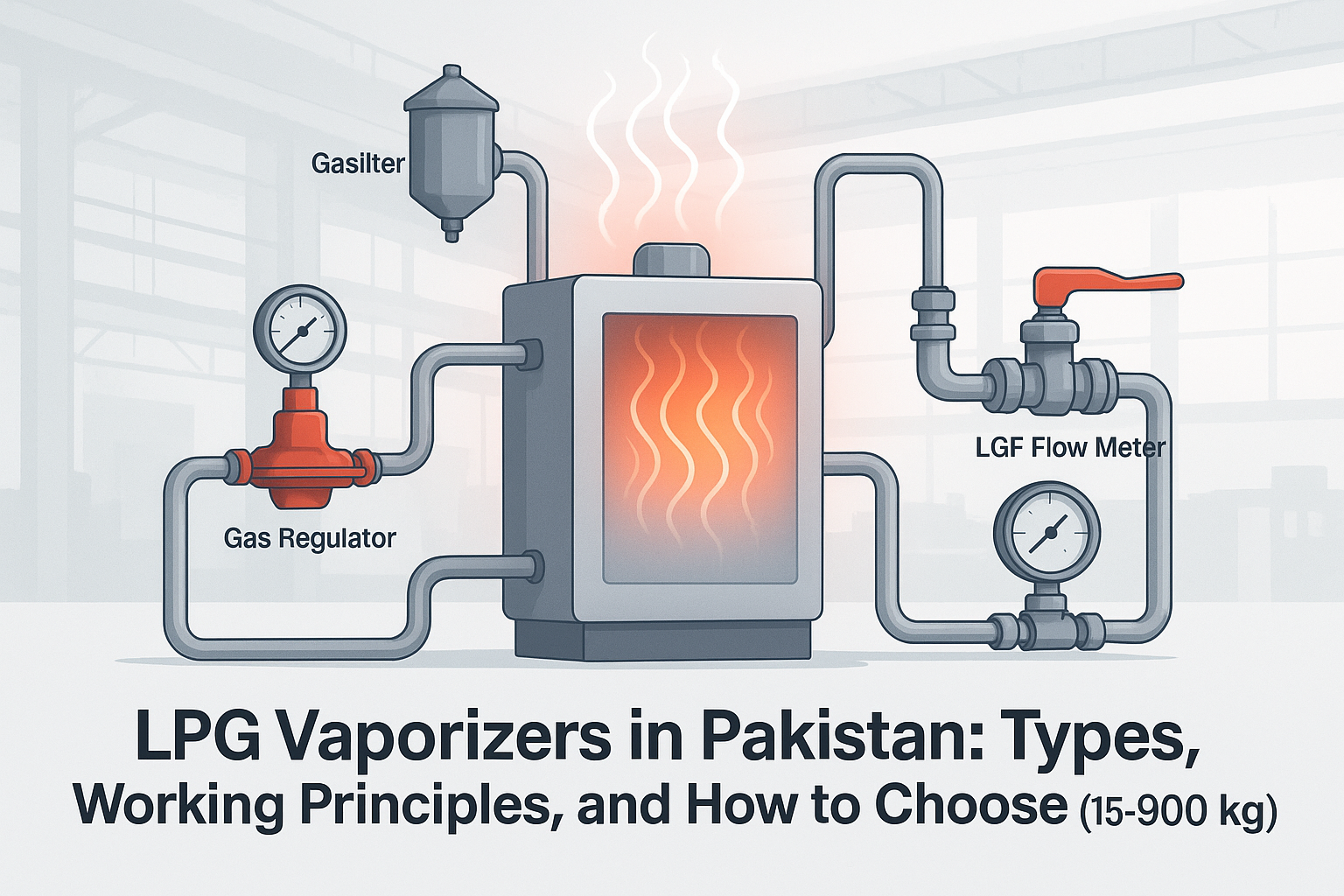
An LPG vaporizer is a specialised device designed to convert liquid LPG into vapour by applying controlled heat. In an industrial LPG system, LPG is typically stored in pressurised tanks in liquid form. When demand rises, the natural heat transfer from the tank surface is often insufficient to sustain vapour generation. This results in a pressure drop — an issue that can halt production lines or affect the efficiency of boilers, burners, or heating systems.
An LPG vaporizer solves this by ensuring a continuous and reliable gas flow, even when consumption levels are high. By using heat (either from electricity, water baths, or direct burners), the vaporizer maintains constant pressure and flow, guaranteeing that all downstream equipment receives consistent gas supply.
This process — known as LPG vaporizer working — is simple but crucial. The liquid LPG enters the vaporizer’s heat exchanger chamber, where it absorbs heat energy. As it vaporises, it exits the unit as a dry, gas-phase fuel ready for use in burners, furnaces, or heating systems. The result is a steady supply of fuel without frost accumulation or uneven gas pressure in the system.
At Indus 3, vaporizers are available in multiple configurations to meet different industrial requirements. You can explore various models and capacities directly from their Shop Page or browse the full LPG Vaporizer Category to find the right fit for your operation.
Why They Matter in Pakistan’s Industrial Sector
Pakistan’s energy mix has long been dominated by natural gas, but ongoing supply shortages have forced many industries to seek reliable alternatives. LPG has become the preferred choice for sectors such as food processing, textile manufacturing, metal fabrication, and hospitality — all of which require consistent heating and flame control.
However, the performance of these industrial LPG systems depends heavily on pressure stability. A sudden drop in vapour supply can cause burner inefficiency, reduced heat output, and in severe cases, equipment shutdowns. LPG vaporizers in Pakistan play a critical role in preventing these issues, ensuring that large-scale users can operate without interruption — even under fluctuating weather or demand conditions.
Moreover, vaporizers enhance both safety and efficiency. By reducing the strain on LPG cylinders and storage tanks, they minimise the risk of frosting and leakage. Modern designs often include thermostatic controls and safety shut-off systems, ensuring compliance with international gas handling standards, including those recommended by the Institution of Gas Engineers & Managers (IGEM).
As Pakistan’s industries continue to expand and adopt modern energy infrastructure, the demand for advanced vaporisation technology is increasing sharply. Businesses that invest in reliable LPG vaporizers not only safeguard their operations but also optimise fuel use — a key advantage in a market where energy costs and sustainability goals are tightly linked.
By maintaining steady gas flow, improving safety, and reducing downtime, LPG vaporizers have become indispensable assets for every forward-thinking industrial facility in the country.
How LPG Vaporizers Work: The Thermodynamics Behind Reliable Gas Flow
In every efficient industrial gas system, the stability of fuel flow determines the reliability of the entire operation. Whether it’s powering textile dyeing machines, industrial ovens, or hotel boilers, a consistent supply of vapour-phase LPG is essential for performance and safety. This consistency is maintained through a carefully engineered process inside the LPG vaporizer, which converts stored liquid LPG into usable gas using controlled heat transfer and pressure regulation.
Unlike basic evaporation from a cylinder, an LPG vaporizer ensures that liquid LPG is converted to vapour on demand, regardless of ambient temperature or flow rate. Understanding LPG vaporizer working principles helps industries make informed decisions about system design, maintenance, and efficiency optimisation.
The Principle of LPG Vaporisation
Liquefied Petroleum Gas (LPG) is stored as a pressurised liquid. When released under normal atmospheric pressure, it naturally vaporises — but only as long as sufficient heat is available to sustain the process. In industrial environments where large quantities of LPG are required rapidly, this natural vaporisation is not enough. That’s where vaporizers come in.
An LPG vaporizer applies controlled heat to the liquid gas stream, accelerating its phase change from liquid to vapour. The process is based on thermodynamics — specifically, heat exchange and energy absorption. When LPG absorbs enough thermal energy, its molecules gain the kinetic energy needed to overcome intermolecular forces, allowing it to expand into a gaseous state.
This ensures a steady gas flow to downstream systems such as burners, LPG heaters, and boilers — without pressure drops or freezing issues.
Key Components and Their Functions
The design of a typical vaporizer integrates several essential components, each contributing to reliable and efficient operation.
1. Heat Exchanger
The heat exchanger is the core of the vaporizer. It transfers heat from an external energy source — such as hot water, electricity, or combustion — to the liquid LPG. This controlled heat input ensures that the LPG reaches the correct vaporisation temperature without overheating or decomposing.
2. Vaporising Coil
Inside the heat exchanger lies the vaporising coil, which carries the liquid LPG through the heated chamber. The coil’s material (usually copper or stainless steel) allows optimal heat transfer while withstanding high pressure. As the liquid passes through, it absorbs heat uniformly and transforms into dry gas.
3. Thermostat and Temperature Control
An integrated thermostat continuously monitors the vaporiser’s internal temperature. If the system overheats or cools below the required threshold, the thermostat adjusts the heating input automatically. This mechanism is crucial for both safety and efficiency, ensuring the vaporiser maintains an optimal working range — typically between 120°C and 140°C.
You can find industrial-grade thermostats like the LPG Thermostat 120° Rainbow China that deliver precise control and durability for such systems.
4. Gas Outlet and Pressure Regulation
After vaporisation, the now gaseous LPG exits through the gas outlet and passes into the pressure regulator system. Maintaining consistent outlet pressure prevents fluctuations that could affect burner performance or system safety.
Heat Exchange and Gas Expansion
The process of heat exchange and gas expansion inside the vaporizer can be compared to a controlled boiling cycle. Heat is applied indirectly to avoid combustion risks, allowing the LPG to expand safely. The resulting vapour occupies approximately 250 times more volume than the liquid phase, creating the necessary pressure for gas delivery through pipelines.
Efficiency depends heavily on maintaining balanced temperature and pressure. Advanced systems use LPG heaters and thermostatic controls to optimise this equilibrium. For reliable performance and safety, explore industrial heating components on the LPG Heater Category page.
According to the Engineering Toolbox, factors such as specific heat capacity, flow rate, and pressure drop play a crucial role in determining vaporisation efficiency. By regulating these variables, industries can minimise fuel waste and prevent uneven heating or frost formation in tanks.
Ensuring Efficiency in Industrial Gas Systems
Efficient LPG vaporizer working depends on three key elements: accurate heat supply, stable temperature control, and consistent pressure management. Modern systems achieve this through thermostatic automation, high-grade materials, and integrated safety sensors.
By ensuring a steady gas flow, vaporizers not only protect expensive equipment from stress but also enhance energy performance across entire industrial gas systems. This precise blend of thermodynamics, safety control, and engineering makes LPG vaporizers an indispensable component of Pakistan’s growing industrial energy infrastructure.
Types of LPG Vaporizers: Choosing the Right Technology for Industrial Use
In Pakistan’s industrial sector — from textile manufacturing to hospitality — selecting the right LPG vaporizer is vital for ensuring safety, efficiency, and long-term performance. Different types of LPG vaporizers use distinct heating methods to convert liquid LPG into vapour. Understanding how each system operates helps businesses choose the right model for their energy and operational needs.
There are three main types used in industrial LPG systems today: Direct-fired, Indirect-water bath, and Electric vaporizers. Each has unique features, efficiency factors, and maintenance requirements suited to specific industrial environments.
For a complete range of vaporizers and accessories, explore Indus 3’s LPG Vaporizer Category or browse the LPG Accessories Category to build a safe and energy-efficient setup.
According to Wikipedia’s LPG Vaporizer overview, these devices are designed to ensure consistent vapour supply even when natural vaporisation from LPG tanks becomes insufficient due to temperature or demand fluctuations.
Direct-Fired Vaporizers
A direct vaporizer uses an open flame (usually powered by LPG itself) to heat a coil or heat exchanger. The liquid LPG flows through the heated coil and is converted into vapour by direct combustion heat.
This type is straightforward in design and offers a fast response time, making it suitable for locations where quick startup and high flow rates are required.
How It Works
-
LPG burns inside a combustion chamber.
-
Heat transfers directly to the vaporising coil.
-
The liquid LPG passes through, absorbing heat, and exits as dry vapour ready for use.
Advantages
-
Simple to install and operate.
-
Quick vapour generation — ideal for peak load applications.
-
Low initial cost.
Disadvantages
-
Requires flame monitoring and safety shut-offs.
-
Not recommended in enclosed or hazardous areas.
-
Higher emissions compared to electric or water bath systems.
Ideal Use Cases in Pakistan
-
Remote sites without electricity (e.g., rural factories or standalone boiler systems).
-
Short-cycle industrial operations needing instant vapour availability.
Indirect Water Bath Vaporizers
An indirect vaporizer uses a heated water bath as the medium for transferring heat to the LPG. A small gas or electric heater warms the water, which then indirectly heats the vaporising coil submerged within it.
This design ensures uniform heat distribution and greater safety, as the LPG never comes into direct contact with the flame.
How It Works
-
A heating element or gas burner heats a water-glycol mixture.
-
The coil containing liquid LPG is submerged in this bath.
-
Heat transfers evenly, vaporising the LPG safely and efficiently.
Advantages
-
High thermal stability and even vaporisation.
-
Safer than direct-fired models (no open flame exposure).
-
Suitable for high-capacity continuous use.
Disadvantages
-
Larger footprint and higher maintenance due to water quality checks.
-
Longer startup time.
Ideal Use Cases in Pakistan
-
Large industrial plants such as textiles, ceramics, and food processing facilities.
-
Continuous operations requiring stable pressure and volume control.
Electric Vaporizers – The Modern Alternative
An electric LPG vaporizer in Pakistan represents the latest generation of vaporisation technology. It replaces combustion-based heat with electrical resistance elements, offering a clean, precise, and low-maintenance solution for modern industries.
How It Works
-
Electric heating elements transfer controlled heat directly to the vaporising chamber.
-
Integrated thermostats maintain consistent temperature and vapour output.
-
The process eliminates emissions and allows fine temperature regulation.
Advantages
-
Zero on-site emissions — environmentally friendly.
-
Compact, lightweight design with minimal maintenance.
-
Excellent control for energy-efficient LPG systems.
-
Ideal for automation and modern plant integration.
Disadvantages
-
Requires stable electrical supply.
-
Slightly higher operational cost compared to direct systems.
Ideal Use Cases in Pakistan
-
Urban industries with reliable electricity access (e.g., Lahore, Karachi, Islamabad).
-
Clean environments like pharmaceutical or food packaging plants.
-
Facilities seeking energy-efficient and automated LPG systems.
Quick Comparison Table
| Type | Heating Source | Efficiency | Safety Level | Ideal Application |
|---|---|---|---|---|
| Direct-Fired | LPG Flame | Moderate | Moderate | Remote or temporary sites |
| Indirect Water Bath | Gas/Electric via water medium | High | High | Continuous industrial use |
| Electric | Electrical Resistance | Very High | Very High | Clean, automated industrial plants |
In summary, each vaporizer type offers distinct benefits depending on the scale, location, and nature of industrial demand. While direct vaporizers remain popular for remote or smaller facilities, indirect and electric vaporizers are increasingly preferred in modern plants prioritising energy efficiency, safety, and automation.
To explore high-performance LPG solutions tailored for your facility, visit Indus 3’s LPG Vaporizer Category and LPG Accessories Category.
How to Select LPG Vaporizer Capacity for Industrial Use in Pakistan
Selecting the right LPG vaporizer capacity is one of the most important steps in designing a reliable and efficient industrial gas system. The correct sizing ensures that your facility receives a steady and uninterrupted gas flow, even during peak consumption hours. Whether you’re running a textile dyeing plant in Faisalabad, a food production unit in Lahore, or a luxury hotel in Karachi, the vaporizer you choose must align precisely with your operational demand and equipment load.
An undersized vaporizer can lead to low gas pressure, burner inefficiency, and system downtime, while an oversized one may result in unnecessary energy consumption. Understanding the sizing logic (kg/hr) and matching it to your industrial needs helps prevent such issues and optimises both safety and cost-effectiveness.
Understanding Vaporizer Sizing Logic (kg/hr)
LPG vaporizers are rated by their vapour output capacity, typically expressed in kilograms per hour (kg/hr). This value indicates how much liquid LPG can be converted into gas within one hour under standard conditions.
For example, a LPG vaporizer 500 kg model can convert 500 kilograms of liquid LPG into gas every hour, making it suitable for medium-to-large industrial applications.
To determine the correct vaporizer capacity, you must calculate your total gas demand by summing up the consumption of all equipment connected to the system. Each burner, boiler, or furnace has a rated gas flow, usually mentioned in kilograms or cubic metres per hour. Once the total requirement is known, a safety margin of 10–20% is generally added to account for peak usage and environmental factors such as temperature fluctuations.
Sizing Formula (Simplified):
Total LPG Demand (kg/hr) = Sum of Equipment Consumption × 1.2 (Safety Factor)
For instance, if your combined burner load is 400 kg/hr, a 500 kg/hr vaporizer would be ideal to ensure stable pressure during high-demand periods.
Matching Capacity with Industrial Applications
Different industries have varying energy demands, which directly influence vaporizer selection:
-
Textile Plants: Require continuous high-pressure gas for boilers and dyeing machines. Models like 500 kg/hr or 900 kg/hr are best suited for these setups.
-
Hotels & Resorts: Often use LPG for heating, laundry, and cooking. Smaller models like 15 kg/hr, 30 kg/hr, or 60 kg/hr are more than sufficient.
-
Food & Beverage Processing Units: Require stable gas flow for ovens, fryers, and sterilisation systems. Mid-range models around 250 kg/hr or 500 kg/hr provide optimal efficiency and control.
Recommended Models for Industrial Use
| Model | Capacity (kg/hr) | Recommended Use |
|---|---|---|
| 15 kg/hr | Small-scale kitchens, backup heating | |
| 30 kg/hr | Hotels, bakeries, and small boilers | |
| 60 kg/hr | Restaurants, small industrial setups | |
| 250 kg/hr | Mid-sized factories, food processing plants | |
| 500 kg/hr | Large industrial operations and textiles | |
| 900 kg/hr | High-capacity LPG systems for 24/7 manufacturing |
Each capacity is designed to serve a specific demand profile. For example, the LPG vaporizer 500 kg unit is one of the most popular choices in Pakistan for its balance between output, energy efficiency, and reliability. It can comfortably handle multiple gas-fired systems simultaneously without compromising flow stability.
Factors Influencing Selection
-
Operating Temperature:
Ambient temperature affects LPG vaporisation efficiency. Lower temperatures (especially in winter) reduce natural evaporation from storage tanks, increasing reliance on vaporizers. -
Load Diversity:
If your facility operates variable loads (e.g., ovens used intermittently), choose a vaporizer slightly above the average consumption rate for smooth pressure regulation. -
System Pressure & Distance:
For facilities with long piping networks or multiple distribution points, a high-capacity LPG vaporizer is more suitable to maintain consistent output pressure across all lines. -
Budget & Maintenance:
While higher capacity vaporizers cost more upfront, their long-term performance often justifies the investment. To explore current LPG vaporizer price in Pakistan, visit Indus 3’s Shop Page for detailed listings and technical specifications.
Final Thoughts
Choosing the correct LPG vaporizer capacity is not merely about size — it’s about balancing performance, safety, and cost. A properly sized vaporizer ensures efficient fuel use, consistent burner performance, and extended equipment life across your industrial gas system.
Whether you’re scaling production or upgrading from manual evaporation methods, investing in the right capacity — such as the reliable 500 kg/hr or 900 kg/hr vaporizers — ensures long-term operational stability and energy efficiency for your industrial facility in Pakistan.
LPG Vaporizer Safety and Maintenance Best Practices
In any industrial LPG system, safety and reliability go hand in hand. While modern vaporizers are designed with advanced control mechanisms and robust materials, their performance and safety depend heavily on proper maintenance. Regular inspection, cleaning, and calibration help prevent gas leaks, pressure irregularities, and costly equipment failures. For industries in Pakistan relying on LPG for heating, production, or energy generation, implementing a structured maintenance plan is not just a precaution—it’s a regulatory requirement and a cornerstone of operational safety.
LPG System Safety Standards
Compliance with global and local standards ensures that LPG systems operate within safe limits. In Pakistan, the Oil and Gas Regulatory Authority (OGRA) governs the installation and operation of LPG storage, distribution, and vaporisation systems. Their guidelines align closely with the international NFPA 58 (Liquefied Petroleum Gas Code) and ISO safety frameworks, setting out best practices for design, inspection, and ongoing maintenance.
According to NFPA, every LPG vaporisation system should include pressure control devices, emergency shut-off valves, and safety relief mechanisms that can handle peak operational loads. These standards help prevent overpressure, backflow, and ignition risks during normal or emergency conditions.
In the context of LPG maintenance in Pakistan, industries must ensure:
-
Pressure relief valves are installed and tested periodically.
-
Gas filters and pressure regulators are inspected for blockages or corrosion.
-
All electrical components and thermostats comply with explosion-proof standards.
-
Operators are trained to recognise and respond to pressure anomalies or leaks immediately.
These practices align with ISO 15500 (gaseous fuel system components) and NFPA 58, both of which emphasise preventive maintenance and system redundancy for industrial safety.
Preventive Maintenance Practices
Effective maintenance of an LPG vaporizer and its accessories begins with a clear understanding of system components and their functions. The following key areas should be included in every maintenance schedule:
1. Regular Visual Inspections
Routine visual checks can identify early signs of wear, corrosion, or leakage. The vaporizer’s body, pipe joints, and connection points should be examined weekly. Look for frost accumulation, discolouration, or unusual noises—all potential indicators of gas leaks or incomplete vaporisation.
2. Pressure Regulator Maintenance
The LPG regulator plays a critical role in ensuring stable gas pressure downstream of the vaporizer. Over time, regulators can accumulate residue or experience diaphragm fatigue. Regular calibration and cleaning prevent fluctuations that could damage burners or lead to inefficient combustion.
To explore high-quality regulator solutions, visit the LPG Safety Valve Category for compliant pressure control components designed for long-term durability.
3. Gas Filter Cleaning and Replacement
Clean filtration is vital for system efficiency and safety. Gas filters prevent dirt, rust, or oil particles from entering the vaporizer and burner lines, protecting both valves and heat exchangers from blockages. Filters should be cleaned or replaced every three to six months depending on gas quality and system usage.
You can browse premium filters in the Gas Filter Category to maintain optimal fuel flow and prevent contamination-related malfunctions.
4. Safety Valve and Shut-off Testing
The LPG safety valve is the final line of defence against overpressure or equipment failure. It must be tested for responsiveness and tight sealing at regular intervals. These valves release excess gas safely during abnormal pressure conditions, preventing catastrophic system failures.
Always follow manufacturer instructions for testing procedures and maintain records of each inspection for compliance audits.
5. Thermostat and Electrical Checks
Modern vaporizers integrate LPG thermostats and electrical heating systems that require routine testing. Ensure all wiring is intact and insulation remains effective to avoid overheating or electrical hazards. Thermostat calibration is crucial for maintaining stable vaporisation temperatures and avoiding excessive pressure buildup.
Building a Culture of Safety
A proactive approach to LPG vaporizer safety minimises downtime, extends equipment lifespan, and ensures compliance with OGRA and NFPA 58 standards. In Pakistan’s industrial landscape—where LPG systems power everything from textile mills to food processing units—small lapses in maintenance can lead to major disruptions or safety risks.
By adopting scheduled inspections, maintaining accurate maintenance logs, and sourcing certified components from trusted suppliers like Indus 3, businesses can build safer and more efficient industrial gas systems that meet both national and international safety benchmarks.
Building a Reliable LPG System: Integrating Vaporizers and Accessories
An LPG vaporizer functions as the heart of any industrial gas system, but its performance and safety depend heavily on the components connected to it. To create a truly complete LPG system setup, industries must integrate key accessories that regulate pressure, control flow, filter impurities, and ensure precise measurement. From LPG regulators to ball valves, flow meters, and heaters, each accessory plays a vital role in ensuring smooth, efficient, and safe fuel delivery throughout the plant.
In Pakistan, where LPG is widely used across manufacturing, food processing, textile, and hospitality sectors, choosing the right LPG accessories is critical to achieving long-term reliability and compliance with safety standards. A properly integrated system not only enhances operational stability but also reduces gas losses, maintenance downtime, and energy costs.
The Role of Accessories in System Efficiency
A well-engineered LPG installation is more than just a vaporizer connected to a tank. It is a coordinated network of components that work together to maintain consistent pressure, safe flow, and optimal combustion. Below are the essential accessories that ensure efficient performance of LPG vaporizers in Pakistan:
1. LPG Regulators – Precision in Pressure Control
The LPG regulator is one of the most important components in any gas system. Its primary job is to reduce the high pressure from LPG storage tanks or vaporizers to a safe, usable level for downstream equipment such as burners or boilers.
Without proper regulation, fluctuations in gas pressure can lead to poor combustion, equipment damage, or even dangerous leaks.
Industrial regulators often come in two stages:
-
Primary regulators, which handle large pressure drops directly from the vaporizer.
-
Secondary regulators, which fine-tune the output for specific applications.
Regular maintenance ensures long-lasting stability and accuracy in pressure control. For durable and compliant options, explore the LPG Regulator Category at Indus 3, offering a range of high-performance models suited to various system capacities.
2. LPG Ball Valves – Safety Through Control
The LPG ball valve is a simple yet critical component for safety and flow management. It allows operators to manually shut off or isolate parts of the system during maintenance or emergencies. Made from brass or stainless steel, these valves ensure corrosion resistance and leak-proof operation, even under high-pressure conditions.
A high-quality valve like the LPG Brass Ball Valve Heavy Duty Gas Control Valve is ideal for industrial environments where reliability and rapid response are essential. These valves contribute to both safety and control, enabling maintenance without disrupting the entire LPG supply line.
3. Gas Filters – Protecting the System from Contaminants
In any complete LPG system setup, gas filters act as the first line of defence against contamination. They remove dust, oil, rust particles, and other impurities before LPG reaches sensitive components like regulators, heaters, and flow meters.
Clean gas not only enhances system performance but also prolongs the life of the vaporizer and downstream equipment.
Filters should be inspected and cleaned regularly, as clogged filters can reduce flow rates and cause uneven vaporisation. Industrial-grade filters from Indus 3’s LPG accessories collection provide reliable protection for long-term operations in demanding environments.
4. LPG Flow Meters – Ensuring Accurate Measurement
Monitoring gas consumption is essential for both safety and cost management. An LPG flow meter measures the precise amount of vapour or gas passing through the pipeline, helping operators detect irregularities, leaks, or inefficiencies in real time.
Accurate flow data allows industries to optimise energy use and forecast fuel needs more effectively. For robust and precise measurement systems, visit the LPG Flow Meter Category, featuring meters compatible with both low and high-pressure applications.
5. LPG Heaters – Supporting Vaporiser Performance
In colder climates or high-demand operations, LPG heaters play a supporting role in maintaining consistent temperature and preventing pressure drops. They work alongside vaporizers to keep LPG above its vaporisation point, ensuring efficient conversion even when ambient temperatures fall below optimal levels. Integrating heaters into the system also helps prevent frosting, which can affect both pressure stability and equipment longevity.
Why Integration Matters
A truly energy-efficient LPG system is one where each component — from vaporizer to valve — works in harmony. Poor integration or neglected accessories can lead to inefficiencies, frequent maintenance issues, and safety risks. By combining high-quality vaporizers with reliable LPG accessories in Pakistan, businesses can achieve steady performance, predictable operating costs, and compliance with industrial safety codes.
Whether you’re building a new facility or upgrading an existing installation, investing in a complete, well-integrated LPG system ensures smoother operations, improved safety, and higher energy efficiency — the foundation of any modern industrial energy strategy.
How LPG Vaporizers Boost Efficiency
The evolution of LPG vaporizer technology has transformed the way industries in Pakistan consume and manage energy. In the past, vaporizers were primarily mechanical systems relying on manual temperature adjustments and gas-fired heating. Today, modern designs integrate automatic thermostats, electric heating elements, and advanced insulation materials — all working together to improve industrial gas efficiency, reduce emissions, and deliver measurable cost savings.
As Pakistan’s manufacturing, textile, and hospitality sectors continue to expand, energy efficiency has become a critical competitive advantage. According to the International Energy Agency (IEA), improved energy efficiency can reduce overall industrial energy use by up to 20–30%, cutting both operational costs and greenhouse gas emissions. Modern LPG vaporizers are at the forefront of this transition, providing a sustainable, eco-friendly solution for businesses aiming to enhance productivity while lowering fuel consumption.
From Manual to Intelligent Control Systems
Older LPG vaporizers often relied on manual thermostats and direct-fired heating, which made temperature control inconsistent and energy use unpredictable. Operators needed to constantly monitor the heat source to prevent over- or under-vaporisation — leading to wasted fuel, pressure instability, and maintenance downtime.
In contrast, today’s energy-efficient LPG vaporizers incorporate automatic thermostatic control and digital temperature monitoring, ensuring precise heat delivery and stable vapour output. These systems automatically adjust heating intensity based on real-time demand, minimising unnecessary energy use and preventing system strain.
For example, models using electric heating rather than gas combustion not only eliminate open flames but also achieve higher thermal efficiency through controlled resistance heating. They operate silently, require minimal supervision, and are ideal for clean industrial environments such as food production or pharmaceutical facilities.
To maintain consistent temperatures in colder conditions or during high demand, many systems integrate auxiliary LPG heaters — such as the LPG Heater 25KW 2-Inch Threaded Model — ensuring smooth vaporisation without excessive energy draw.
Enhanced Design and Insulation
Another key factor driving modern vaporizer performance is advanced insulation technology. Earlier models often suffered from significant heat loss due to poor insulation around vaporising chambers and pipes. This meant more energy was needed to sustain vaporisation, increasing fuel consumption and operational expenses.
Modern systems now feature thermally insulated vaporising coils, double-walled casings, and energy-efficient materials that retain heat for longer periods. This results in faster startup times and reduced heat leakage, directly improving industrial gas efficiency. The insulation also prevents condensation and frost formation, which can affect system pressure and safety.
Moreover, new electric vaporizers use modular heating systems that distribute heat more evenly across the liquid LPG stream. This optimised heat transfer not only increases vaporisation speed but also ensures cleaner, more consistent gas quality delivered to downstream equipment such as burners and boilers.
Reducing Fuel Costs and Emissions
The economic impact of these technological upgrades is significant. Energy-efficient LPG vaporizers can reduce total LPG consumption by up to 15–25% compared to older direct-fired units. Over time, these LPG cost savings translate into a shorter payback period and higher long-term returns on investment.
Industries using automated electric models also benefit from reduced maintenance and downtime. With fewer moving parts, there’s less wear and tear, and the absence of combustion means no soot buildup or frequent burner servicing. This simplicity leads to lower annual operating costs and improved reliability for high-demand sectors like textiles, ceramics, and food processing.
Environmental benefits are equally important. By eliminating open flames and improving combustion efficiency, modern vaporizers contribute to eco-friendly LPG systems that produce fewer carbon emissions and comply with both local OGRA safety regulations and international sustainability targets.
ROI for Pakistan’s Industrial Sector
For Pakistani industries facing volatile fuel prices and increasing sustainability expectations, upgrading to a modern LPG vaporizer is a strategic investment. The combination of lower fuel use, reduced emissions, and automated operation creates a strong ROI that often offsets initial equipment costs within one to two years.
As part of a broader commitment to industrial innovation, businesses can explore a full range of efficient heating and vaporisation solutions on the Indus 3 Homepage — where performance, safety, and sustainability meet to power the next generation of energy-efficient LPG systems in Pakistan.
Why Indus 3 Leads Pakistan’s LPG Equipment Market
As Pakistan’s industries continue to grow and diversify, the demand for clean, efficient, and stable energy sources has never been greater. LPG vaporizers in Pakistan have become the backbone of reliable energy delivery systems for manufacturing, textile, food processing, and hospitality sectors — ensuring uninterrupted fuel flow where consistency is mission-critical. These systems not only enhance operational efficiency but also align with the country’s increasing focus on sustainable and safe industrial energy practices.
From small-scale hotels using compact 15 kg/hr units to large-scale production plants relying on high-capacity 900 kg/hr vaporizers, each installation contributes to Pakistan’s industrial modernisation. The key to maximising performance lies in understanding how correct sizing, maintenance, and accessories all work together to form a truly integrated industrial LPG system.
Throughout this guide, we’ve explored the full lifecycle of an LPG vaporizer — from understanding its working principles to evaluating energy efficiency and long-term return on investment. Each section underscores the same core message: choosing the right vaporizer is not simply a purchase decision; it’s an operational strategy that defines safety, productivity, and cost control.
The Importance of Correct Sizing and Integration
Selecting the correct vaporizer capacity is the foundation of an efficient setup. Oversized units waste energy, while undersized ones cause pressure instability and equipment downtime. For most medium-to-large industrial users, the LPG vaporizer 500 kg remains a versatile and cost-effective option, offering optimal output without excessive energy consumption.
Equally important is the integration of essential LPG accessories — including regulators, filters, safety valves, heaters, and flow meters — that keep the system balanced and secure. High-quality components prevent gas contamination, control pressure fluctuations, and ensure reliable combustion in demanding industrial environments. By investing in certified LPG accessories in Pakistan, businesses can extend the life of their vaporizers and maintain consistent output even during peak load conditions.
Regular maintenance and compliance with safety standards such as NFPA 58 and OGRA Pakistan guidelines are also crucial. Routine inspections, gas filter cleaning, and regulator checks not only protect the system from damage but also safeguard employees and property from potential hazards. These best practices ensure that LPG installations operate safely, efficiently, and within regulatory frameworks.
Driving Energy Efficiency and Cost Savings
Modern vaporizers have revolutionised how Pakistani industries manage fuel consumption. Electric and automatic models, equipped with thermostatic controls and advanced insulation, have replaced outdated manual systems. These energy-efficient LPG vaporizers reduce operational costs, improve combustion stability, and contribute to eco-friendly LPG systems that align with international sustainability goals.
Industries upgrading from older direct-fired models report notable improvements in gas pressure stability and up to 25% LPG cost savings. Over time, these savings directly contribute to a stronger return on investment while lowering environmental impact. For forward-thinking manufacturers, modern vaporizers are no longer a luxury — they’re a necessity for sustainable industrial growth.
Final Thoughts on Choosing the Right LPG Vaporizer
In Pakistan’s evolving industrial energy landscape, investing in a high-quality LPG vaporizer is more than a technical upgrade — it’s a long-term commitment to performance, safety, and reliability. Whether you operate a hotel, factory, or power plant, the success of your industrial LPG system depends on three key pillars: correct sizing, professional installation, and continuous maintenance.
By selecting a trusted supplier like Indus 3, you gain access to expertly engineered vaporizers, certified safety accessories, and dependable after-sales support. Each product is designed to meet international standards while catering to local industrial needs — ensuring your system remains efficient, compliant, and future-ready.
Looking to upgrade your industrial LPG setup?
Explore Indus 3’s Shop Page or visit the LPG Vaporizer Category to buy LPG vaporizer online. Discover premium models ranging from 15 kg to 900 kg, along with essential regulators, filters, and safety components built for long-term reliability.
With Indus 3, you’re not just purchasing equipment — you’re investing in performance, precision, and the future of Pakistan’s industrial energy infrastructure.
2 Replies to “LPG Vaporizers in Pakistan – Types, Working, and How to Choose the Right Model (15–900 kg) | Indus 3”