
Introduction: Why Power Backup Choices Matter in Pakistan
The Energy Challenge in Pakistan
In Pakistan, frequent power outages are not just an inconvenience — they’re a part of everyday life for households and industries alike. From small retail shops in Lahore to large-scale manufacturing units in Karachi and Faisalabad, electricity instability can disrupt production, affect livelihoods, and even cause equipment damage. Despite improvements in the national grid, load-shedding and voltage fluctuations remain recurring issues, particularly during summer peaks and fuel shortages. According to the National Electric Power Regulatory Authority (NEPRA) and World Bank Energy Outlook, Pakistan still faces a significant energy supply-demand gap, with millions relying on private generators as a backup source.
This growing dependence on standby power solutions has made the type of generator fuel a crucial decision for both residential and industrial users. Whether you operate a small business, a hospital, or a home-based setup, choosing the right generator fuel — LPG, natural gas, or diesel — can determine not only your operational costs but also your efficiency and environmental footprint.
To ensure you make the right decision, this article explores how each fuel type performs under Pakistan’s unique conditions and why LPG generator conversion Pakistan is becoming an increasingly popular choice.
Rise of LPG Generator Conversions
With natural gas shortages and diesel prices fluctuating almost monthly, many generator owners are switching to LPG (Liquefied Petroleum Gas). The trend of petrol to LPG generator conversion has grown rapidly across Pakistan, thanks to its cleaner combustion, reduced carbon emissions, and cost efficiency. LPG provides a consistent fuel source, especially in areas where piped gas is unavailable or unreliable.
An LPG conversion kit for generators allows existing petrol or dual-fuel units to operate seamlessly on LPG, making it a practical and affordable option. Users can simply install a compatible LPG generator kit Pakistan through professional technicians or workshops, instantly improving performance and reducing long-term maintenance costs.
Leading suppliers like Indus 3 have made this process simpler by offering high-quality LPG regulators, safety devices, and conversion kits that comply with industrial safety standards. Whether you’re running a dual fuel generator Pakistan setup or planning a complete conversion, LPG provides flexibility without compromising power output or reliability.
Unlike petrol, LPG does not evaporate quickly and leaves minimal carbon residue — extending engine life and improving fuel efficiency. In industrial settings, this translates into reduced downtime and smoother performance during extended outages.
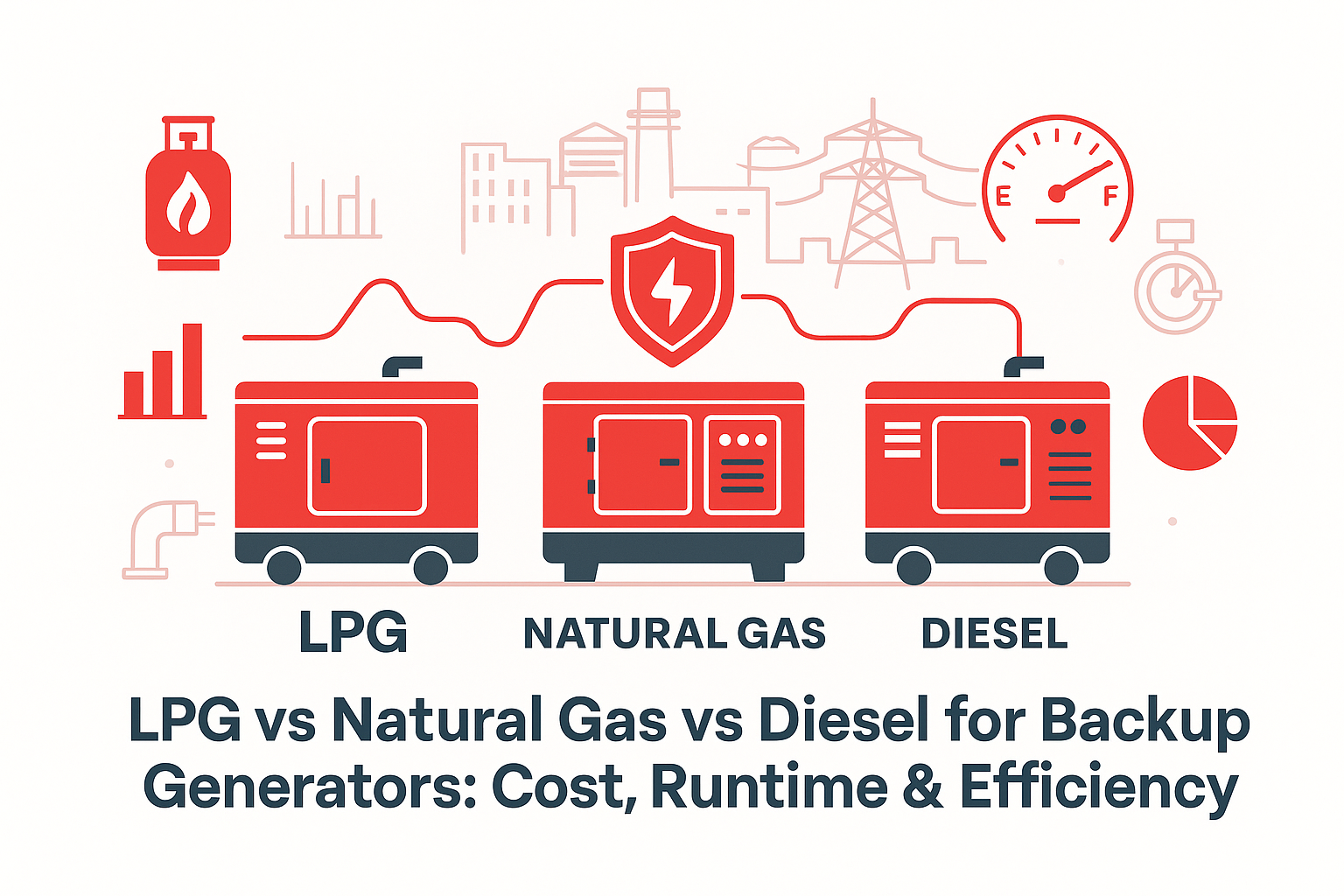
Overview: LPG vs Natural Gas vs Diesel
When evaluating your generator options, it’s important to understand what sets these three fuels apart.
-
LPG Generators:
LPG offers a balanced mix of affordability, availability, and efficiency. It burns cleanly, produces fewer emissions, and requires less frequent maintenance. For urban and rural areas alike, LPG cylinders or bulk storage options ensure a stable supply. -
Natural Gas Generators:
These are ideal where a reliable gas pipeline connection exists — such as in major cities like Lahore and Karachi. However, Pakistan’s inconsistent gas pressure, particularly in winter, often limits their reliability for continuous backup use. -
Diesel Generators:
Diesel remains a popular choice for heavy-duty applications because of its high torque and long runtime. Yet, the rising cost of imported diesel and its significant carbon footprint have prompted many users to reconsider it in favour of LPG.
In short, LPG generator conversion Pakistan provides a practical balance between cost-efficiency, availability, and environmental safety. It’s a smart move for users seeking dependable power without the high running expenses of diesel or the supply unpredictability of natural gas.
For more information on professional-grade conversion equipment and accessories, you can explore Indus 3’s Shop Page for LPG regulators, vaporizers, and conversion kits, or learn more about their mission and safety standards through the About Us page.
Understanding LPG, Natural Gas, and Diesel Generators
How Each Generator Fuel Works
Every generator runs on a basic principle — converting fuel energy into electrical power. The difference lies in the type of fuel used and how efficiently it’s converted.
LPG (Liquefied Petroleum Gas) generators use propane or butane stored under pressure in cylinders or bulk tanks. The gas is vaporised and mixed with air before being ignited in the combustion chamber. The process produces clean, stable power with minimal carbon residue. In Pakistan, this system is often achieved through petrol to LPG generator conversion, where a generator gas conversion kit is installed to modify the fuel input system. This kit includes a regulator, mixer, and adapter that allow smooth fuel switching and balanced air-fuel ratios.
Natural gas generators, on the other hand, draw fuel directly from piped networks. They are ideal for areas with uninterrupted gas supply, such as metropolitan centres. However, gas pressure fluctuations during winter often cause performance drops or sudden shutdowns.
Diesel generators rely on compression ignition — diesel fuel is injected into a high-pressure environment where it combusts spontaneously, generating mechanical energy to drive the alternator. Diesel engines are known for durability and torque but are heavier, noisier, and emit more pollutants compared to LPG or natural gas units.
For users in remote or semi-urban areas, LPG conversion offers a middle ground — reliable fuel availability and lower operational costs without heavy engine wear.
Fuel Availability in Pakistan
Fuel accessibility plays a defining role in generator choice across Pakistan. Diesel is widely available nationwide through filling stations, making it the default option for commercial setups and rural industries. However, its price volatility, driven by global oil market fluctuations, makes long-term operation expensive.
Natural gas, while cheaper per unit, is geographically restricted. Cities like Karachi, Lahore, and Islamabad benefit from continuous supply through pipeline infrastructure, but smaller cities and rural regions frequently face low pressure or complete shutdowns during high-demand seasons.
This is where LPG stands out. Packaged in cylinders or distributed via local depots, LPG can be delivered anywhere — from Gilgit to Gwadar. With robust distribution networks supported by OGRA (Oil and Gas Regulatory Authority) regulations, LPG ensures stable availability for both households and industries.
As a result, the rise in generator gas kit installation services across Pakistan — including generator gas kit Rawalpindi — has made conversion a feasible option for users seeking dependable and affordable backup power. LPG suppliers like Indus 3 now provide a full range of accessories and conversion kits designed for local conditions, ensuring safety and compatibility with various generator models.
Many generator conversion workshop Pakistan locations also offer on-site installation, helping customers switch from petrol or diesel to LPG without technical complications.
Key Differences in Power Output
The performance of each generator fuel type varies based on its combustion efficiency and energy content.
-
Diesel generators deliver higher torque and consistent performance, especially under heavy loads. They are often preferred for large-scale industrial use but require frequent maintenance to manage soot buildup and fuel filter issues.
-
Natural gas generators provide steady output but depend heavily on pipeline consistency. Pressure drops can significantly reduce performance or cause start-up delays.
-
LPG generators, however, offer balanced power output suitable for both residential and light industrial applications. The fuel’s clean-burning properties ensure longer engine life, quieter operation, and reduced oil contamination.
While diesel may provide marginally higher raw power, LPG’s efficiency and availability make it the smarter option for most Pakistani users, particularly given the growing challenges in gas supply and rising oil prices.
For expert advice or professional-grade accessories, users can reach out through the Contact Page on Indus 3’s official website — your trusted partner for LPG generator conversion Pakistan and high-quality industrial gas equipment.
External references such as Shell Pakistan, OGRA’s Annual LPG Report, and HSE UK guidelines support the growing consensus that LPG remains a safe, efficient, and sustainable alternative for generator users in Pakistan.
Cost Comparison: LPG vs Natural Gas vs Diesel
Fuel Price Trends in Pakistan
When it comes to powering backup generators, fuel cost is often the deciding factor for most Pakistani households and businesses. Prices of diesel, LPG, and natural gas fluctuate frequently due to changes in international markets and domestic supply constraints. According to the Pakistan State Oil (PSO) and OGRA (Oil and Gas Regulatory Authority), diesel prices have seen continuous upward trends in 2024–2025, averaging around PKR 290–305 per litre, depending on the region and tax adjustments.
By contrast, LPG has maintained a more stable cost pattern. As of recent OGRA notifications, cylinder prices hover between PKR 220–250 per kilogram, making it a competitive option for generator owners who use it as a primary or backup fuel. Natural gas, while cheaper per unit energy, remains inconsistent in availability, especially in winter when household and industrial demand peaks.
Due to this volatility, many users have begun exploring LPG generator conversion Pakistan as a strategic long-term investment — combining lower running costs with fuel stability. For industrial users, this shift also reduces downtime and maintenance expenses linked to diesel fuel contamination or storage issues.
Cost per kWh and Monthly Running Costs
The cost efficiency of each fuel type varies not only by price but also by energy output. To compare, let’s take a standard 5 kVA generator — a common size for residential and small commercial setups.
-
Diesel Generator:
Consumes roughly 1 litre per hour, generating 4–5 kWh of power. At PKR 300/litre, that equals PKR 60–75 per kWh. -
Natural Gas Generator:
Uses around 0.8 cubic metres per hour, averaging PKR 35–40 per kWh when pipeline pressure is stable. However, irregular supply often forces users to rely on backup fuels. -
LPG Generator:
Consumes about 0.8 kg of LPG per hour, producing around 4.5 kWh of energy. At PKR 230/kg, that’s roughly PKR 45–50 per kWh, making it nearly 30% cheaper than diesel.
In real-world terms, this means a small business running an LPG generator for eight hours daily could save approximately PKR 40,000–50,000 per month compared to a diesel setup. Additionally, LPG burns more cleanly, reducing carbon deposits and extending oil change intervals — further cutting maintenance costs.
The LPG generator price in Pakistan depends on size and features, ranging from PKR 80,000 to 250,000 for units between 3 kVA and 10 kVA. These are often found through generator conversion kit online Pakistan stores or trusted industrial suppliers like Indus 3’s Shop Page, where you can browse high-quality LPG Regulators, vaporizers, and accessories suited for both home and commercial use.
LPG Conversion Investment & Payback
For existing generator owners, LPG conversion offers a cost-effective alternative to buying a new unit. A typical LPG conversion kit — including the regulator, mixer, and installation — can range from PKR 15,000 to 30,000, depending on the generator’s size and model.
The LPG generator installation cost is minimal compared to potential savings. For example, a petrol generator converted to LPG may achieve full payback within 3–5 months due to reduced fuel costs and extended engine life. This makes it one of the quickest returns on investment for energy-conscious households and small enterprises.
Beyond cost, LPG also contributes to environmental and operational advantages. It emits significantly fewer particulates than diesel, requires no storage tanks or filtration systems, and avoids fuel theft — a common issue in industrial areas.
According to Energy Update Magazine, businesses switching to LPG-based solutions have reported up to 25–35% reduction in total generator operating expenses, with noticeable improvements in noise levels and reliability.
As energy prices continue to rise, LPG generator conversion Pakistan remains one of the most practical and sustainable choices for both residential and commercial users seeking to stabilise their power costs.
If you’re considering conversion, visit the Indus 3 Shop Page to explore premium LPG equipment designed for long-term reliability, or contact their expert team for tailored guidance on installation and system configuration.
Runtime & Performance: Which Fuel Lasts Longer?
LPG vs Petrol Generator Efficiency
When comparing generator fuels, efficiency and runtime play a critical role in determining long-term value. In Pakistan, where power outages can last several hours a day, the choice between petrol, diesel, and LPG affects both your energy budget and the lifespan of your equipment.
LPG (Liquefied Petroleum Gas) has emerged as a leading choice due to its clean combustion and consistent power output. On average, a 5 kVA petrol generator consumes around 1.2 litres of petrol per hour, producing roughly 4.5 kWh of energy. In contrast, an LPG generator uses approximately 0.8 kg of LPG per hour to generate the same output — a clear indicator of improved fuel efficiency and reduced cost.
Beyond just fuel economy, LPG combustion results in lower carbon deposits, minimising engine wear and extending oil change intervals. This means fewer maintenance cycles and smoother operation over time. According to Energy.gov and HSE UK guidelines, LPG-powered engines also produce up to 30% fewer greenhouse gas emissions compared to petrol, making them environmentally and mechanically superior for prolonged use.
For users looking to monitor performance precisely, Indus 3’s LPG Flow Meters help track fuel usage per hour, ensuring accurate cost and efficiency calculations. When paired with a high-quality LPG fuel system for generators, users benefit from steady pressure, clean burning, and optimal engine performance even during extended operations.
Diesel Runtime Advantages and Drawbacks
Diesel generators are often praised for their robust performance and higher torque output. They excel in heavy-duty or industrial scenarios where continuous, high-load operation is required — such as factories, construction sites, or large estates. Diesel fuel has a higher energy density than LPG or petrol, allowing generators to run longer per litre.
For instance, a standard 10 kVA diesel generator can operate up to 10–12 hours on a full 20-litre tank, making it suitable for prolonged blackouts. However, this benefit comes with notable drawbacks. Diesel engines produce more vibration, noise, and exhaust emissions, contributing to faster mechanical degradation and stricter maintenance requirements. Frequent filter replacements, oil changes, and carbon cleaning become unavoidable.
According to Briggs & Stratton, diesel engines also suffer from wet stacking — the build-up of unburned fuel in the exhaust due to light-load operation — which further reduces efficiency over time.
In comparison, LPG generator conversion Pakistan users experience fewer maintenance interruptions, cleaner oil, and easier starting in cold conditions. While diesel remains viable for large-scale applications, its operational and environmental costs are increasingly pushing residential and SME users toward LPG conversions for better long-term performance.
Dual Fuel Generator Performance
For users seeking flexibility, dual fuel generator Pakistan configurations offer the best of both worlds. These systems can run on either petrol or LPG, automatically switching depending on availability or preference. This adaptability is especially valuable in regions where LPG delivery or cylinder refilling can occasionally be delayed.
A dual fuel setup uses a specially designed conversion system — such as the best LPG generator conversion kit — to integrate both fuel sources safely. The LPG side maintains cleaner combustion, while petrol ensures easy ignition and backup continuity. The result is improved reliability with reduced running costs compared to petrol-only generators.
A typical 5 kVA dual fuel generator running on LPG can provide 8–10 hours of operation per cylinder, compared to 5–6 hours on petrol. Furthermore, LPG combustion generates less engine heat, reducing the likelihood of overheating during continuous use — an advantage particularly useful during Pakistan’s long summer outages.
These hybrid systems are growing in demand nationwide as more workshops offer professional installations and maintenance services. Indus 3 supports this shift by supplying reliable accessories, vaporizers, and flow meters designed for local environmental conditions.
To learn more about how these systems perform and why they’re ideal for Pakistan’s energy needs, visit Indus 3’s About Page for detailed insights into their safety-certified LPG components and industrial expertise.
Safety and Installation Guidelines for LPG Generator Conversions
Safety of LPG Generator Conversion
One of the most common questions people ask is — “Is LPG generator conversion safe in Pakistan?” The answer is yes, provided it’s done professionally and with approved safety components. An LPG-powered generator can operate as safely as a petrol or diesel one, but only if proper installation, leak testing, and regular maintenance are followed.
LPG (Liquefied Petroleum Gas) is a clean and efficient energy source, but it is also highly flammable. Therefore, even a small installation mistake — such as a loose fitting or low-quality regulator — can pose a safety risk. According to OGRA Safety Codes and the UK HSE LPG Storage Guide, safety begins with certified equipment and proper ventilation.
Using approved LPG regulators, flame arrestors, and safety valves is non-negotiable. These components ensure pressure control, prevent backfire, and stop potential leaks. Reputable suppliers such as Indus 3 offer high-quality LPG Safety Devices built for industrial-grade reliability. Their products meet both Pakistani and international safety standards, ensuring peace of mind for domestic and commercial users alike.
Another essential measure is leak detection. Technicians typically apply soapy water or electronic detectors to check all joints and connections after installation. Regular inspections — at least every six months — are strongly advised, especially for users in high-temperature or dusty environments.
How to Install an LPG Kit on a Generator in Pakistan
Installing an LPG kit for a generator involves several steps and must always be handled by trained professionals. For those wondering how to install an LPG kit on a generator in Pakistan, here’s a simplified overview:
-
Preparation: The generator is cleaned, and its carburettor and fuel system are inspected. Any worn-out petrol components are replaced.
-
Mounting the Kit: The LPG conversion kit — which includes a mixer, regulator, adapter, and fuel line — is securely fitted.
-
Pressure Regulation: The regulator is calibrated according to the generator’s power rating, ensuring steady gas flow and preventing backfire.
-
Leak Testing: Each joint is checked using OGRA-approved leak detection methods before the system is ignited.
-
Trial Run: The generator is run on LPG to verify efficiency, idle stability, and smooth switching between fuels.
For small and medium generators, such as a Honda petrol model, adding an LPG kit for Honda generator can extend runtime and cut operational costs significantly. However, self-installation is discouraged. Improper fittings or low-quality hoses can lead to gas leakage and severe hazards.
Local experts recommend sourcing components only from verified generator gas kit supplier Pakistan companies, such as Indus 3, where every product is tested for compatibility and pressure resistance.
Approved Workshops & Certified Technicians
In major urban centres such as Karachi, Lahore, and Islamabad, numerous generator conversion workshop Pakistan facilities now offer certified LPG conversion services. These workshops employ technicians trained under OGRA and HSE-compliant guidelines, ensuring that each installation meets Pakistan’s safety and performance standards.
A certified technician will:
-
Use branded, pressure-tested hoses and valves.
-
Secure the cylinder in a well-ventilated area, away from direct sunlight.
-
Install flame arrestors and non-return valves to prevent reverse gas flow.
-
Conduct full leak, ignition, and load testing before handing over the system.
For industrial users or heavy-load setups, safety checks should include cylinder placement, distance from electrical components, and grounding of the generator body to prevent static ignition.
Professional service not only ensures safety but also validates warranty claims and regulatory compliance. To locate a qualified expert near you, visit Indus 3’s Contact Page — their team connects customers with certified installers and helps source genuine conversion kits and safety devices.
In summary, an LPG generator conversion Pakistan is both safe and efficient, but only when carried out through professional channels with approved components. Choosing a trusted supplier and certified workshop ensures long-term performance and safety for every household or business relying on generator power.
Maintenance & Troubleshooting: Keeping Your LPG Generator Efficient
LPG Generator Maintenance Tips
Regular maintenance is essential to ensure your LPG generator continues to perform safely and efficiently, especially after a petrol to LPG generator conversion. Unlike diesel engines, LPG-powered generators require minimal servicing, but neglecting basic upkeep can still reduce efficiency and shorten lifespan.
Start with filter cleaning. Dust and debris can clog the air and gas filters, restricting airflow and fuel delivery. It’s recommended to clean or replace filters every three months, particularly in industrial or dusty environments. Using quality filters like the Madas Gas Filter 2 Inch Mod FM from Indus 3 ensures optimal filtration and consistent gas flow.
Next, check the regulator and vaporizer regularly. These components manage fuel pressure and gas flow to the carburettor, so periodic inspections prevent uneven burning or starting issues. For instance, LPG Vaporizers from Indus 3 are designed for long-term stability and precise performance under Pakistani temperature conditions.
Routine leak testing is equally important. Apply soapy water to all fittings or use an electronic gas detector every few weeks to detect leaks early. Always turn off the gas supply and disconnect the cylinder before maintenance work.
Lastly, monitor generator LPG consumption per hour. A sudden increase in fuel use could indicate issues like air blockage, faulty regulators, or carbon buildup. Installing an LPG flow meter or keeping a usage log helps track performance trends and identify problems before they become costly.
Common Conversion Issues & Fixes
Even with the best setup, small performance issues can occur after a generator LPG conversion. Recognising early signs and knowing quick fixes can save time and reduce repair costs.
1. Hard Starting or Irregular Idling:
Usually caused by incorrect air–fuel mixture or low cylinder pressure. Check the regulator adjustment and clean the mixer venturi. Ensure there are no leaks around the inlet or hose joints.
2. Backfiring or Flame Blowback:
This can result from improper installation or worn-out valves. Use approved LPG Safety Vaporizers and Thermostats to maintain temperature stability and prevent flashback. The Rainbow 320F Industrial LPG Thermostat from Indus 3 is an excellent choice for reliable control.
3. Engine Power Drops Under Load:
A clogged vaporizer or dirty air filter often causes this. Clean or replace filters and check for moisture accumulation in the vaporizer chamber.
4. High Fuel Consumption:
A damaged diaphragm in the regulator or improper pressure calibration can cause higher fuel use. Replacing the regulator or recalibrating the system typically resolves it.
Always refer to OGRA’s Maintenance Advisory and NFPA 58 Code for international safety and servicing standards. According to the Energy Efficiency Bureau India, timely component cleaning can improve generator fuel economy by up to 15%, ensuring smoother operation and fewer emissions.
When to Replace Your LPG Kit
Like any mechanical system, the LPG conversion kit has a service lifespan. Over time, rubber seals, diaphragms, and connectors degrade due to pressure, heat, and exposure to gas. On average, an LPG conversion kit should be replaced every 3–5 years, or sooner if frequent issues occur.
Key signs your system may need replacement include:
-
Noticeable gas smell even after leak checks.
-
Frequent stalling or power fluctuations.
-
Reduced runtime or increased LPG consumption.
-
Visual cracks or corrosion on hoses or fittings.
When replacement is necessary, always use genuine, safety-certified components from a verified supplier. The LPG conversion kit price in Pakistan varies depending on generator capacity, typically ranging from PKR 15,000–30,000. Though cheaper alternatives exist, they often compromise on safety and durability.
For best results, pair your setup with a high-quality LPG fuel system for generators, ensuring smoother flow, consistent pressure, and optimal performance. Indus 3 offers a complete range of vaporizers, filters, regulators, and thermostats designed for both domestic and industrial use — making them a trusted source for generator maintenance essentials.
With regular inspection, proper calibration, and quality parts, your LPG generator can deliver years of efficient, eco-friendly performance, making it one of the most reliable backup energy solutions in Pakistan.
Regional Availability & Market Trends in Pakistan
LPG Generator Conversion in Karachi, Lahore & Islamabad
Pakistan’s three largest cities lead the LPG conversion services in Pakistan. Karachi shows strong demand from SMEs and apartment complexes. The drivers are long outages, diesel price volatility, and limited pipeline gas reliability in peak seasons. Lahore’s adoption is rising in retail, clinics, and small manufacturing. Users want cleaner combustion and predictable runtime. In Islamabad, conversions are common in offices and gated communities seeking low-noise, low-maintenance backup power.
Workshops in these hubs now standardise installation checklists and post-install safety audits. Users also prefer branded kits and documented pressure testing. This shift improves confidence and reduces downtime after conversion. For background on Indus 3’s approach and product breadth, see Home and About Us. The pattern is clear: urban consumers value safety, parts availability, and warranties as much as headline fuel savings.
Generator Gas Kit Supply Chain in Pakistan
The supply chain has matured beyond ad-hoc imports. Distributors source regulators, mixers, vaporizers, and hoses built for local conditions. Generator gas kit Rawalpindi activity is notable due to twin-city access and steady workshop capacity. Stock rotation is faster in Punjab, reducing counterfeit risk and ageing elastomers. Coastal Karachi supports bulk logistics and cylinder distribution, helping stabilise LPG fuel system for generators components year-round.
Enterprises increasingly request documentation: conformity notes, pressure ratings, and temperature bands. This trend favours reputable suppliers over informal markets. Buyers of the best LPG conversion kit for 5kVA generator often ask for service intervals, diaphragm materials, and spare parts SLAs. These details protect runtime and maintain emissions performance after conversion.
Online Market & Workshop Growth
E-commerce has transformed where to buy LPG generator conversion kit solutions. Customers compare kits, read specs, and book installation slots online. Delivery to secondary cities is faster, making national rollouts feasible for chains and franchises. Stores like Indus 3’s Shop Page list regulators, vaporizers, thermostats, and safety devices with clear compatibility notes. This reduces mismatches at installation and improves first-time success rates.
Workshops now pair online orders with on-site commissioning. Installers arrive with leak detectors, flame arrestors, and calibrated manometers. The outcome is safer LPG generator conversion Karachi, LPG generator conversion Lahore, and LPG generator conversion Islamabad projects with traceable parts and signed checklists. In emerging markets like Multan, Gujranwala, and Peshawar, hybrid models are common: parts purchased online, installation by local technicians trained on vendor SOPs.
Media coverage mirrors the shift. ProPakistani Energy News reports sustained interest in alternative fuels as electricity and diesel costs rise. The News (Business) highlights SMEs prioritising predictable OPEX and cleaner emissions. Together, these signals point to steady growth for conversions across residential and commercial segments.
For buyers weighing options, two factors stand out. First, choose documented kits with known pressure ranges and OEM-grade seals. Second, plan professional commissioning and scheduled inspections from day one. Indus 3 supports both angles through catalogued parts, guidance, and nationwide coordination via Home and About Us.
Conclusion & Call to Action: Why Choose Indus 3 for Your LPG Generator Conversion
LPG Generator Conversions: The Smart Future
As Pakistan’s energy landscape continues to evolve, choosing the right generator fuel has never been more crucial. Between LPG, natural gas, and diesel, each option has its merits — but LPG consistently stands out for its cost-effectiveness, environmental benefits, and operational reliability. Diesel, while powerful, has become increasingly expensive and maintenance-heavy. Natural gas offers low-cost operation but remains unreliable in many regions due to fluctuating supply and pressure.
By contrast, LPG generator conversion Pakistan combines the best of both worlds — dependable supply and steady performance. LPG burns cleaner, generates less carbon residue, and offers longer runtime compared to petrol. It’s a sustainable solution for households, small businesses, and industries seeking consistent energy backup amid ongoing power challenges. Moreover, LPG storage and refuelling are simple and scalable, allowing users in both urban and rural Pakistan to access fuel easily.
Global authorities such as Energy.gov, NEPRA Pakistan, and OGRA endorse LPG as a safe, eco-friendly, and efficient energy source when managed through certified systems — further reinforcing its long-term viability for Pakistan’s energy future.
Why Indus 3 is Pakistan’s Trusted LPG Equipment Supplier
When it comes to reliable LPG solutions, Indus 3 has earned its place as one of Pakistan’s most trusted industrial gas equipment suppliers. With years of experience in the field, Indus 3 offers safety-certified, high-performance products including regulators, vaporizers, thermostats, gas filters, and safety devices — all tailored for Pakistani environmental conditions.
Whether you’re planning a dual fuel generator conversion kit Pakistan setup or a complete transition to LPG, Indus 3 ensures you have access to tested, OGRA-compliant equipment and expert technical guidance. Every product is inspected for quality assurance, pressure resistance, and long-term durability, giving customers the confidence to operate safely and efficiently.
In addition, Indus 3 provides full support for LPG generator installation cost planning, helping both residential and industrial clients estimate total expenses and payback periods. Their specialists understand that safety and performance come first, which is why every kit is designed to meet local and international standards.
From LPG vaporizers to safety valves, every component in their catalogue reflects precision and reliability. Customers can explore their product range, including conversion kits and accessories, through the Shop Page or learn more about their mission and values on the About Us page.
Get Your Generator Conversion Today
If you’re ready to upgrade your existing generator or invest in a cleaner, more efficient power solution, now is the time to act. Indus 3 offers a complete selection of LPG conversion kits, regulators, and vaporizers, all available for nationwide delivery through their Shop Page.
Their expert team can guide you through selecting the best generator conversion kit online Pakistan, whether for a small 5kVA residential unit or a large industrial setup. You can also reach out via the Contact Page to schedule a professional installation or consultation — ensuring your system meets all safety and performance standards.
With Indus 3’s growing network of certified workshops across Karachi, Lahore, Islamabad, and Rawalpindi, users can enjoy seamless LPG generator conversions with full technical support. Every installation includes thorough leak testing, calibration, and post-service inspection to ensure long-term reliability.
Indus 3 — your trusted partner for reliable LPG systems and generator solutions across Pakistan. From product selection to installation and maintenance, the company’s mission is simple: to make power backup safer, cleaner, and more affordable for every home and business.