
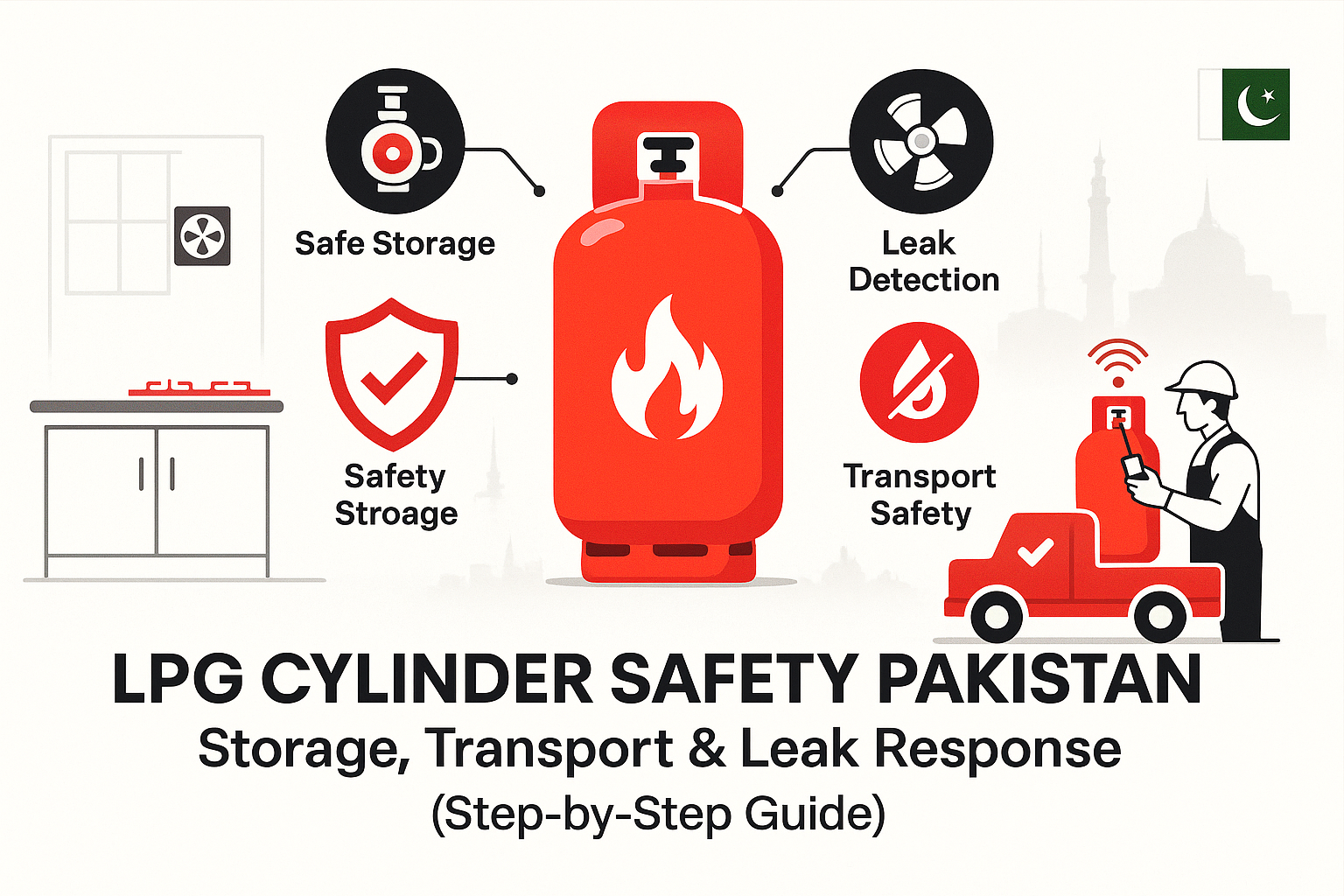
Understanding LPG Cylinder Safety in Pakistan: Why It Matters
Across Pakistan, millions of households rely on liquefied petroleum gas (LPG) every day for cooking, heating, and domestic convenience. With urbanisation and the growing gas shortage in many areas, LPG has become the go-to energy source for homes and small businesses alike. Yet, with this increasing dependency comes an urgent responsibility — ensuring LPG cylinder safety in Pakistan to prevent avoidable accidents, fires, and fatalities.
LPG is efficient and affordable, but it’s also highly flammable. A single safety lapse in handling, storing, or transporting a cylinder can result in devastating outcomes. This makes awareness and preventive action essential for every household and supplier involved in Pakistan’s growing LPG ecosystem.
The Rise of LPG Usage in Pakistan
In recent years, Pakistan’s LPG demand has soared as piped natural gas shortages continue to affect both rural and urban populations. According to OGRA Pakistan, more than three million domestic users depend on LPG cylinders for daily cooking, and that number continues to rise every year. Urban households, roadside eateries, and small industries have shifted to LPG as a dependable fuel alternative due to its easy availability and portability.
However, this rapid growth has also led to widespread use of non-certified cylinders and regulators, increasing the likelihood of gas leaks and explosions. Reports from Dawn.com and The News International highlight numerous incidents across major cities — Lahore, Karachi, and Rawalpindi — where poor-quality fittings and lack of awareness resulted in severe property damage and loss of life.
As more families adopt LPG for their homes, ensuring LPG (cooking gas) safety tips are followed at every stage — from purchase to use — becomes not just good practice, but a life-saving habit.
Common Safety Risks in Domestic LPG Systems
LPG systems are simple yet sensitive. The most common domestic safety hazards arise from:
-
Faulty regulators that fail to control gas flow properly.
-
Leaking hoses or poorly fitted connections.
-
Improper cylinder placement, especially near stoves, electrical outlets, or in enclosed areas.
-
Lack of regular inspection of valves, seals, and gas pipes.
Even a small leak can accumulate in closed spaces, creating an explosive environment. For instance, an improperly sealed cylinder placed in a poorly ventilated kitchen can ignite from a single spark. Therefore, understanding and applying LPG safety principles should be part of every home’s routine — much like checking smoke detectors or electrical wiring.
Trusted suppliers such as Indus 3 ensure that every component — from regulators to vaporizers — meets strict safety and performance standards. The company’s LPG Safety Devices category offers industrial-grade products that help prevent leaks, control gas pressure, and safeguard against unexpected flow surges.
To learn more about Indus 3’s quality standards and their mission to promote safe LPG usage across Pakistan, visit the About Us section of their website.
Why LPG Cylinder Safety Pakistan Is a National Priority
In a developing nation where energy demand continues to outpace supply, LPG plays a vital role in bridging the domestic fuel gap. However, without proper safety infrastructure, this convenience can become a national hazard. The Oil and Gas Regulatory Authority (OGRA) has repeatedly issued warnings about the sale of substandard cylinders and the dangers of refilling at unlicensed outlets.
Promoting LPG cylinder safety Pakistan isn’t just a domestic concern — it’s a matter of public policy, environmental protection, and industrial accountability. Government authorities, suppliers, and users must work together to enforce certification standards, conduct awareness campaigns, and promote safe handling practices.
At the community level, small actions such as checking cylinder seals, ensuring ventilation, and using certified accessories can drastically reduce the risk of accidents. Following these LPG (cooking gas) safety tips also helps conserve energy efficiency, reducing gas wastage and emissions.
For homes, restaurants, and industries alike, the message is clear: Safety is not optional — it’s essential.
Indus 3 stands as a leading example of responsible supply and public education, helping Pakistan move toward a safer, more sustainable LPG future. To explore their complete product line or to get professional assistance, visit their Home Page and discover how their engineered solutions can keep your household and business protected.
Safe LPG Cylinder Storage: Best Practices for Every Home
Proper storage is the foundation of LPG cylinder safety in Pakistan. Whether in urban apartments or rural homes, how and where you store your LPG cylinder can directly affect your family’s safety. Every year, accidents occur due to poorly placed cylinders, blocked ventilation, or damaged fittings — all of which are preventable with the right knowledge and care. By understanding the correct LPG gas storage Pakistan practices, homeowners can significantly reduce the risk of leaks, fires, or explosions.
Below are step-by-step safety measures for proper LPG cylinder storage, designed specifically for Pakistani households.
Ideal Location and Ventilation
The most crucial rule of LPG safety is to store your cylinder in a well-ventilated area. LPG is heavier than air, which means any leaked gas will settle near the floor rather than rising. Without proper airflow, gas can accumulate and ignite with a small spark.
For domestic users:
-
Always place the cylinder outside the kitchen in a shaded, well-ventilated area such as a balcony, verandah, or open utility space.
-
Keep the cylinder upright at all times — never lay it on its side.
-
Ensure the cylinder’s position allows for quick access to the valve and regulator in case of emergencies.
-
Maintain a minimum distance of 1.5 metres from stoves, switches, or electrical equipment.
-
Avoid storing the cylinder in basements or enclosed storage rooms where airflow is limited.
The Oil and Gas Regulatory Authority (OGRA) and Shell Pakistan both emphasise that poor ventilation is one of the leading causes of LPG-related fires. According to the HSE UK LPG Safety Guidelines, even a small leak in an unventilated room can become a serious hazard.
When in doubt, contact a licensed technician or your LPG supplier for placement advice — or reach out to Indus 3’s team for professional guidance.
Storage Do’s and Don’ts
Following a few practical safety habits can make your home significantly safer.
✅ Do’s:
-
Always purchase LPG cylinders from licensed distributors with OGRA certification.
-
Check that the rubber seal and regulator are tightly fitted and free of cracks.
-
Store the cylinder in a vertical position, away from direct sunlight or rain.
-
Keep flammable materials like paint, aerosol cans, or cloth away from the storage area.
-
Use industrial-grade safety accessories from trusted suppliers such as Indus 3.
❌ Don’ts:
-
Do not store LPG cylinders inside bedrooms or living spaces.
-
Do not attempt to repair leaks or faulty valves yourself.
-
Avoid placing heavy objects on top of the cylinder.
-
Never use the cylinder beyond its expiry date (check the manufacturing stamp).
-
Do not smoke or light matches near the cylinder, even if it appears off.
These straightforward LPG safety practices can prevent the majority of home-based gas incidents.
Regular Inspection and Maintenance
Your LPG system’s reliability depends on routine inspection and timely maintenance. Experts recommend checking your cylinder, hose, and fittings every time before use. Make sure:
-
The regulator is functioning properly — you can explore reliable options like the LPG Regulators available at Indus 3.
-
The hosepipe is flexible, free of cracks, and replaced every 2–3 years.
-
The LPG Ball Valves (view here) are tight and corrosion-free.
-
There are no visible signs of rust or leakage on the cylinder body.
If you detect any irregularities — such as a faint gas smell, hissing sounds, or weak regulator flow — immediately turn off the cylinder valve and call a professional. Never use open flames to check for leaks; instead, use a soap-water test to identify escaping gas bubbles safely.
As per OGRA’s LPG safety regulations, users should have their systems inspected annually by authorised service providers. This not only ensures compliance but also guarantees peace of mind for you and your family.
LPG Cylinder Transport in Pakistan: Handling & Vehicle Safety
Transporting LPG cylinders might seem like a routine task, but it’s one of the most critical aspects of LPG cylinder safety in Pakistan. Every day, thousands of domestic and commercial cylinders are moved across cities, neighbourhoods, and villages — often in unsuitable vehicles or without proper handling procedures. This increases the risk of leaks, fires, or even explosions during transit. Whether you’re a household consumer, delivery agent, or industrial supplier, following proper LPG transport safety practices ensures protection for both people and property.
How to Transport LPG Cylinders Safely
The first rule of safe LPG cylinder transport is stability. Cylinders must always be transported in an upright position to keep the liquid gas contained safely at the bottom while the vapour space remains at the top. Tilting or laying cylinders on their side can lead to leaks from the valve, especially if the regulator is not properly sealed.
For households in Pakistan:
-
Use licensed delivery services authorised by OGRA (Oil and Gas Regulatory Authority) instead of relying on informal or roadside suppliers.
-
Always verify the cylinder’s seal and valve before loading.
-
Ensure the cylinder cap or safety plug is securely fitted.
-
Never transport LPG cylinders inside the passenger cabin of a car or van.
-
Avoid transporting cylinders during extremely hot weather or direct sunlight exposure, as high temperatures can increase internal gas pressure.
According to OGRA’s LPG (Production and Distribution) Rules, cylinders must only be transported by authorised vehicles equipped with cylinder restraints, ventilation, and fire extinguishers. These rules align with global standards recommended by the World LPG Association (WLPGA) and the Pakistan Engineering Council (PEC), which stress the importance of secure cylinder handling at every stage.
Vehicle Safety and Positioning
When transporting LPG cylinders in Pakistan — whether for domestic use or in bulk for commercial delivery — vehicle safety plays a vital role. The vehicle should be well-ventilated and designed specifically for LPG transportation.
Key guidelines for LPG transport safety:
-
Use pickup trucks or delivery vans with open or ventilated compartments.
-
Secure cylinders upright with non-metallic straps or chain restraints to prevent rolling.
-
Keep the valve side upward, never facing the ground.
-
Avoid stacking multiple cylinders on top of each other.
-
Keep a minimum distance of 1.5 metres from heat sources or electrical panels.
Drivers should also be trained to identify early warning signs of leaks, such as the smell of gas or hissing sounds. In such cases, they must immediately stop the vehicle, switch off the engine, and move away from populated areas before addressing the issue.
Indus 3 supports these national safety practices by offering industrial-grade valves, regulators, and safety devices that meet international standards. For certified, safety-tested transport accessories, visit the Shop Page to explore Indus 3’s product range.
Handling Cylinders During Loading and Unloading
The process of loading and unloading LPG cylinders is just as crucial as transportation. Mishandling can damage valves or regulators, leading to potential leaks during use. Workers and delivery personnel should always follow these cooking gas cylinder handling tips:
-
Roll cylinders gently on their base ring; never drop or drag them.
-
Avoid impact or contact with sharp metal surfaces.
-
Inspect for dents, rust, or damaged valves before installation.
-
Always load and unload cylinders manually and upright, using trolleys if necessary.
-
Never attempt to repair or adjust valves in transit.
If a leak or suspected fault is detected, do not attempt to use the cylinder — return it immediately to the authorised supplier or report it to your LPG company for inspection.
The Pakistan Engineering Council advises using appropriate protective equipment such as gloves and safety boots during handling, particularly for commercial deliveries. Additionally, both OGRA and the World LPG Association recommend annual vehicle inspections to ensure ongoing compliance and minimise risks.
Detecting LPG Gas Leaks: Warning Signs & Safety Actions
In every Pakistani home that uses LPG for cooking or heating, knowing how to identify and respond to a gas leak can be life-saving. Even a small, unnoticed leak can quickly escalate into a fire or explosion if not handled correctly. Awareness is your first line of defence — understanding the signs of a gas leak, acting quickly, and using quality equipment are central to LPG cylinder safety in Pakistan.
LPG is an odourless gas in its natural state, but a strong-smelling chemical called ethyl mercaptan is added to help detect leaks easily. Recognising that smell — and knowing how to respond — could prevent a major household disaster.
Common Signs of an LPG Leak
There are three main indicators of an LPG leak: smell, sound, and sight.
1. Smell:
The most obvious warning is a strong, unpleasant odour similar to rotten eggs. This chemical alert is intentionally added so users can identify leaks even in small quantities. If you smell gas near your stove, regulator, or cylinder, treat it as a leak and act immediately.
2. Sound:
A faint hissing sound from the cylinder, hose, or regulator is another clear sign of escaping gas. This can occur due to worn-out seals, loose connections, or damaged valves. Never ignore it, even if the sound is slight.
3. Sight:
Look for bubbles forming when you apply a soap-water solution to pipe joints — this confirms a leak. Avoid using fire or matches to test for leaks, as this could ignite any escaping gas.
Other visible signs include frost or condensation on the regulator or cylinder body, which indicates that LPG is escaping under pressure.
These early indicators are critical components of LPG safety awareness and should be taught to every family member in the household.
What to Do Immediately During a Leak
If you suspect or confirm an LPG leak, follow these step-by-step safety actions right away:
-
Turn off the cylinder valve immediately. Do not panic or make sudden movements.
-
Do not ignite flames or operate electrical switches. Avoid turning lights or fans on or off — even a small spark can cause ignition.
-
Ventilate the area by opening all windows and doors to disperse the gas.
-
Move the cylinder to an open, well-ventilated space if it is safe to do so.
-
Evacuate everyone from the room until the smell completely disappears.
-
Call a professional technician or your gas supplier to inspect and repair the leak.
Keep an LPG safety device or leak detector installed in your kitchen. You can explore high-quality LPG Safety Accessories at Indus 3 — designed to alert you in case of leaks and automatically cut off gas flow.
The National Disaster Management Authority (NDMA) and OGRA Pakistan both recommend that homeowners maintain regular inspections and have leak detectors fitted in confined kitchen spaces. For technical advice or emergency product support, contact your supplier rather than attempting any DIY fixes.
Preventing Future Incidents
While quick response is vital, prevention is always better than cure. To ensure long-term LPG cylinder safety in Pakistan, follow these preventive practices:
-
Use certified regulators and hoses from trusted suppliers like Indus 3. A reliable option is the RECCO Grey LPG Regulator ½ Inch, engineered for consistent performance and safety compliance.
-
Inspect hoses regularly for cracks, wear, or stiffness. Replace them every 2–3 years.
-
Never use open flames to locate leaks — use a soap-water solution instead.
-
Keep the cylinder in an upright, ventilated position away from heat sources.
-
Conduct annual safety checks by certified professionals to test valves and pressure fittings.
As highlighted by the UK Gas Safe Register and OGRA guidelines, leaks often result from neglected maintenance and poor-quality fittings. Investing in compliant equipment and regular servicing dramatically reduces these risks.
LPG provides convenience and efficiency to millions of homes, but it must be handled with respect and caution. By combining awareness, certified components, and timely maintenance, Pakistani households can enjoy the benefits of LPG while keeping their loved ones safe.
LPG Regulator and Hose Maintenance: The Unsung Heroes of Safety
When discussing LPG cylinder safety in Pakistan, most people focus on cylinder storage or leak detection — but often overlook the two most vital components that connect the entire system: the regulator and the hose. These are the unsung heroes of gas safety, quietly managing pressure and flow to ensure your cooking gas operates smoothly. However, when neglected, they become silent threats that can lead to leaks, fires, or even explosions.
Regular inspection and timely replacement of these small but critical parts are essential to every household and commercial LPG setup. Proper gas regulator safety practices not only prevent accidents but also improve fuel efficiency and prolong the life of your appliances.
Understanding the Role of Regulators and Hoses
The LPG regulator controls the pressure of gas flowing from the cylinder to your stove or appliance, ensuring a steady and safe flame. The hose, on the other hand, acts as the flexible bridge that delivers gas from the cylinder outlet to the burner. When either part becomes worn, cracked, or clogged, gas leaks can occur — often without immediate detection.
In Pakistan’s climate, where high temperatures and humidity are common, rubber hoses can deteriorate faster, and unapproved regulators can fail to maintain safe pressure levels. Poor-quality fittings and overused parts are among the top causes of domestic LPG accidents, as noted in multiple Energy & Utilities Pakistan safety reports.
To ensure reliability, households and industries alike should invest in certified, high-performance regulators and hoses. Indus 3 offers robust and safety-tested options such as the RECCO LPG High Pressure Regulator – 1 Inch — ideal for consistent performance, even in demanding environments.
Routine Maintenance and Replacement Tips
Routine maintenance of LPG equipment is not optional; it’s essential. Regulators and hoses should be inspected every time the cylinder is changed, and replaced according to safety standards.
Here’s a simple guideline to follow:
-
Hosepipes: Replace every 2–3 years, or sooner if cracks or brittleness appear.
-
Regulators: Replace every 5 years, or earlier if any performance issues are detected.
-
Clamps and Fittings: Check for corrosion or looseness during every cylinder refill.
Always ensure that the regulator’s rubber seal (O-ring) is intact and fits snugly onto the cylinder valve. Never use makeshift parts or repair damaged hoses with tape — this is a common but dangerous mistake in many households.
Shell’s Domestic LPG Safety Manual strongly recommends keeping hoses short (not more than 1.5 metres), preventing bends, and avoiding contact with hot surfaces. This prevents internal weakening and extends product lifespan.
For professional or industrial users, monitoring gas flow accuracy is equally important. Explore Indus 3’s LPG Flow Meters — designed to ensure optimal pressure management and system performance across larger setups.
Signs Your Regulator or Hose Needs Attention
Early detection of wear or malfunction can prevent major safety hazards. Look out for the following signs that your regulator or hose may need replacement:
-
A smell of gas even when the stove is off.
-
The flame flickers or turns yellow instead of blue.
-
You hear a hissing sound from the regulator or pipe connection.
-
The regulator becomes difficult to attach or detach from the cylinder.
-
The hose appears discoloured, cracked, or stiff.
If you notice any of these issues, turn off the gas supply immediately and contact a qualified technician. Never attempt to repair or reuse damaged equipment. Replacing faulty components promptly is far more cost-effective — and infinitely safer — than dealing with the aftermath of a gas accident.
As confirmed by Energy & Utilities Pakistan and Shell Safety Manuals, regular inspection and certified components are the cornerstones of LPG system reliability. Investing in quality parts not only enhances LPG cylinder safety in Pakistan but also ensures peace of mind for families and business owners alike.
For expert-grade regulators, valves, and flow monitoring systems, explore Indus 3’s trusted collection of LPG Regulators and other industrial accessories — engineered to make safety a seamless part of your daily routine.
Emergency Response: What to Do If an LPG Cylinder Catches Fire
Even with proper precautions, emergencies can still happen — and when they do, your reaction in the first few moments can make all the difference. Understanding the correct LPG cylinder safety procedures in Pakistan can help prevent a small flame from turning into a disaster. Whether in homes, restaurants, or industrial sites, knowing what to do if an LPG cylinder catches fire can save lives, property, and entire neighbourhoods.
This section outlines a step-by-step action plan based on recommendations from the National Disaster Management Authority (NDMA) Pakistan and the World LPG Association Safety Guidelines.
First Response: Containing the Situation
If you ever face a cylinder fire, the first rule is stay calm and act fast. Panic leads to mistakes, and mistakes can cost lives. Follow these immediate steps:
-
Turn off the cylinder valve if it is safe to approach. This cuts off the gas supply feeding the fire. Always turn it clockwise using a dry cloth if the surface is hot.
-
Do not move the cylinder unless absolutely necessary. Movement may damage the valve or hose, worsening the leak.
-
Shut off all electrical appliances and open flames nearby, including stoves, heaters, and switches.
-
Use a fire extinguisher rated for Class B fires (gas and flammable liquids). Aim the nozzle at the base of the flame, not directly at the cylinder.
-
If available, use a wet cloth or towel to cool the cylinder surface while maintaining a safe distance.
For maximum safety, it’s advisable to keep LPG-specific fire extinguishers and protective gloves near every cylinder installation area. Industrial-grade safety fittings such as the REGO ½ Inch Industrial Safety Valve from Indus 3 can significantly reduce risks by automatically releasing excess pressure before a dangerous buildup occurs.
For professional assistance or replacement safety parts, contact the experts at Indus 3 for immediate guidance and product recommendations.
When to Evacuate and Call for Help
If the fire appears uncontrollable, or if the cylinder is engulfed in flames, do not attempt to handle it yourself. Your priority should be evacuation and alerting authorities.
-
Evacuate all occupants from the area immediately. Do not waste time collecting personal belongings.
-
Call the local emergency helpline (Rescue 1122) or the fire department without delay.
-
Keep others away from the danger zone — maintain at least a 50–100 metre distance from the burning cylinder.
-
If in an apartment or industrial facility, activate fire alarms and inform neighbours to evacuate.
-
While waiting for emergency responders, avoid using phones or lighters near the site, as even small sparks can reignite gas pockets.
According to NDMA Pakistan, most LPG-related casualties occur not during the initial fire but from secondary explosions when people attempt to move or spray water directly onto the cylinder. Always prioritise distance and safety over property.
Preventing Cylinder Explosions
An LPG cylinder doesn’t explode instantly — it builds pressure due to heat. This means you often have a small window to take action before the situation becomes catastrophic. Follow these measures to prevent explosions:
-
Cool the cylinder with water from a safe distance using a hose if available — this prevents the metal shell from overheating.
-
Remove nearby combustibles such as curtains, paper, or flammable liquids from the fire’s path.
-
Do not spray water directly into the valve or regulator — it may dislodge fittings and worsen the leak.
-
Never attempt to open or move the cylinder while flames are active.
-
After the fire is contained, have the cylinder and fittings inspected by a certified technician before reusing them.
For replacement parts or reliable equipment, explore Indus 3’s Shop Page featuring premium-quality regulators, valves, and safety accessories designed to meet industrial-grade standards.
The World LPG Association recommends every LPG user maintain a written safety plan — including extinguisher access, emergency contacts, and inspection intervals — as part of home and business safety culture.
Legal and Regulatory Framework for LPG Safety in Pakistan
Ensuring LPG cylinder safety in Pakistan isn’t just about following household precautions — it’s also about enforcing strict national standards that regulate production, storage, and distribution. Pakistan’s LPG sector operates under a comprehensive legal framework designed to protect consumers, maintain supply integrity, and reduce accidents caused by unlicensed or substandard equipment.
Understanding how these laws work — and how trusted suppliers like Indus 3 comply with them — helps both homeowners and industries make safer, more informed choices.
OGRA and LPG Safety Regulations
The Oil and Gas Regulatory Authority (OGRA) serves as the main body responsible for overseeing LPG operations in Pakistan. Established under the OGRA Ordinance of 2002, it governs licensing, transportation, bottling, and retail sale of LPG products nationwide.
OGRA’s LPG (Production and Distribution) Rules, 2001, set out clear safety requirements for all stakeholders in the LPG value chain, including:
-
Mandatory safety inspections for cylinder manufacturing and refilling plants.
-
Approved pressure standards for regulators, valves, and hoses.
-
Strict penalties for using uncertified or damaged cylinders.
-
Prohibitions on roadside refilling, illegal decanting, and resale of LPG without authorisation.
Violations of these laws can result in heavy fines or immediate suspension of licenses. OGRA also mandates that only PSQCA-certified cylinders and accessories be sold in the market to prevent low-quality imports from entering circulation.
You can explore OGRA’s detailed regulations and circulars directly on the OGRA Pakistan Official Website for the latest updates on national LPG safety policies.
Licensing and Compliance for Suppliers
All LPG producers, distributors, and dealers must obtain OGRA-issued licences to operate legally. These licences ensure that each entity complies with design, safety, and handling protocols across the entire supply chain.
Key compliance obligations include:
-
Cylinders must meet Pakistan Standards & Quality Control Authority (PSQCA) specifications for material strength, valve design, and leak testing.
-
Distributors must maintain traceable cylinder records to track ownership and prevent tampering.
-
Filling plants must be inspected periodically for pressure control, temperature safety, and employee training.
-
Retailers must only sell LPG from authorised sources, using properly labelled and sealed cylinders.
Non-compliance can result in immediate closure of facilities and legal prosecution under OGRA’s enforcement authority.
Indus 3 is proud to operate under these national compliance frameworks. As outlined in its About Us page, the company adheres to OGRA and PSQCA safety standards across all LPG components — from vaporizers to regulators — ensuring each product is engineered for reliability and certified for safe performance.
How Consumers Can Verify Certified Products
For everyday consumers, safety begins at the point of purchase. Knowing how to identify and verify certified LPG products can protect you from the dangers of counterfeit or poorly manufactured cylinders.
Before purchasing any LPG cylinder or accessory, always check for:
-
OGRA-licensed supplier details — printed on the cylinder label or invoice.
-
PSQCA certification marks — usually stamped or embossed on the cylinder’s body.
-
Manufacturer’s test date and batch number to confirm validity.
-
A clearly visible expiry date and tamper-proof seal.
Consumers are encouraged to ask their supplier for proof of certification or OGRA licence documentation. If in doubt, visit OGRA’s online database to verify the distributor’s legitimacy.
For households and industries seeking verified equipment, Indus 3 offers a complete range of compliant, high-performance products — including LPG Vaporizers, regulators, and safety devices, all meeting Pakistan’s national and international safety criteria.
By choosing PSQCA-approved equipment and OGRA-licensed distributors, you not only protect your property but also contribute to the national effort of improving LPG cylinder safety in Pakistan.
Regulations aren’t just paperwork — they are life-saving frameworks built on years of safety data and engineering standards. OGRA and PSQCA’s combined oversight ensures Pakistan’s LPG industry continues to evolve responsibly, minimising risk while maximising efficiency.
With trusted suppliers like Indus 3, consumers can rest assured that every product meets or exceeds these standards, supporting a safer, smarter, and more sustainable energy future for Pakistan.
Building a Safer Future: Indus 3’s Commitment to LPG Safety in Pakistan
Ensuring LPG cylinder safety in Pakistan is more than a matter of compliance — it’s a shared national responsibility. From households to large industries, every step of the LPG lifecycle, from storage and transportation to maintenance and usage, depends on awareness, discipline, and the right equipment.
As discussed throughout this guide, accidents involving LPG can be prevented through consistent application of safety practices: storing cylinders in ventilated areas, transporting them upright, detecting leaks early, and regularly maintaining regulators and hoses. But even the best safety habits rely on one crucial factor — trusted, certified equipment.
That’s where Indus 3 takes the lead — ensuring that Pakistani homes and businesses have access to durable, compliant, and performance-tested LPG components designed to meet international safety standards.
Empowering Safe LPG Practices Nationwide
Every year, hundreds of LPG-related incidents occur across Pakistan, often due to negligence, counterfeit parts, or lack of awareness. At Indus 3, the mission is clear: to empower safe LPG practices nationwide through education, innovation, and superior engineering.
By offering industry-grade components such as vaporizers, regulators, thermostats, and safety valves, Indus 3 helps minimise risks associated with household and industrial LPG systems. Their emphasis on LPG (cooking gas) safety tips aligns with the World LPG Association’s safety commitment, promoting global best practices for gas handling and accident prevention.
Every product supplied by Indus 3 undergoes strict inspection and quality assurance. The company’s engineering team ensures that all items comply with OGRA and PSQCA safety requirements — the backbone of LPG cylinder safety Pakistan standards. Whether it’s helping a homeowner replace a faulty regulator or providing bulk equipment to industrial clients, Indus 3’s dedication to safety excellence never wavers.
For more about the company’s story and values, visit Indus 3’s Home Page to understand how reliability, safety, and innovation drive their mission.
How Indus 3 Supports Homes and Industries
Indus 3 stands out as a safety-first LPG solutions provider — bridging the gap between domestic and industrial gas systems with products built to perform under pressure.
For households, the brand offers certified equipment like:
-
LPG Regulators — ensuring stable gas flow and preventing leaks.
-
LPG Safety Devices — automatic shut-off tools for emergencies.
-
LPG Ball Valves and Flow Meters — for precise control and measurement.
For industries, Indus 3 supplies heavy-duty vaporizers and thermostats designed for high-performance gas distribution systems. These tools help factories, hotels, and commercial kitchens maintain uninterrupted operations while complying with strict safety and environmental guidelines.
Explore the full product range on the Shop Page, where every item is engineered with precision and tested to meet international safety benchmarks. Each component reflects Indus 3’s long-standing promise — reliability you can trust, safety you can depend on.
Take the Next Step Toward Safer LPG Use
The path to a safer Pakistan begins with informed choices. Every homeowner who stores their cylinder correctly, every driver who transports LPG responsibly, and every supplier who uses certified components contributes to reducing fire and explosion risks across the country.
Indus 3 invites individuals, retailers, and industrial clients to take the next step toward safer LPG use. Whether you’re replacing your regulator, upgrading your system, or setting up new installations, choose equipment that’s tested, certified, and trusted.
👉 Ready to make your LPG setup safer?
Visit the Home Page to learn more about Indus 3’s safety standards, browse certified products on the Shop Page, or reach out via the Contact Page for expert assistance from their technical team.
Together, we can build a future where every household and industry in Pakistan enjoys the benefits of LPG — with confidence, compliance, and complete safety.