
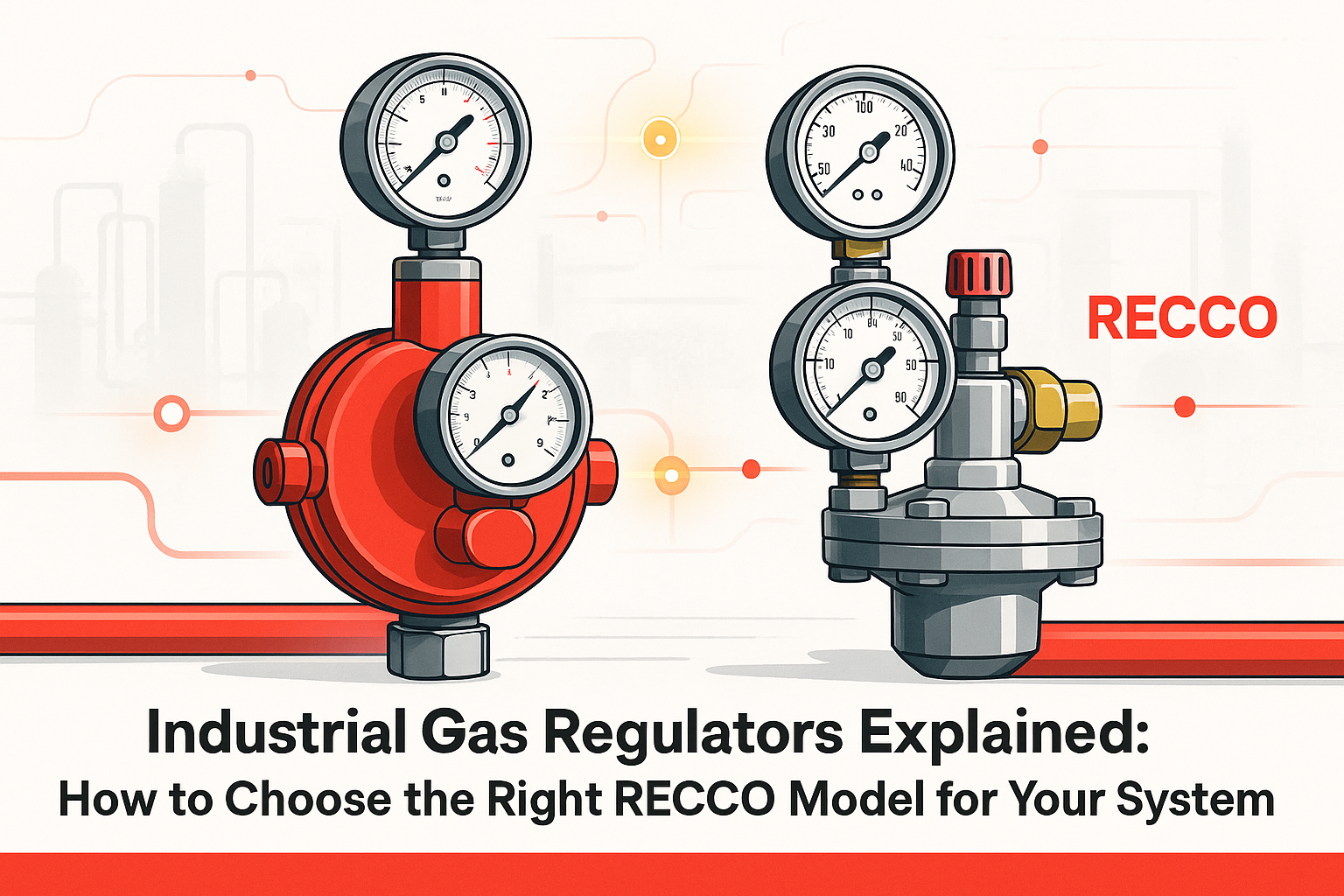
Understanding Industrial Gas Regulators
What Is an Industrial Gas Regulator?
Every industrial facility that relies on gas—be it LPG, oxygen, nitrogen, or natural gas—depends on one key component to ensure smooth, safe, and efficient operations: the industrial gas regulator. These devices control and stabilise the flow of gas from high-pressure cylinders or pipelines to machinery that requires precise, steady pressure. In essence, an industrial gas regulator acts as the system’s gatekeeper—balancing the gas supply to prevent dangerous surges or drops that could disrupt production or damage equipment.
In Pakistan, where manufacturing plants are increasingly adopting automated systems, selecting the right industrial gas regulator Pakistan has become more important than ever. It not only ensures safety and efficiency but also compliance with national and international standards. Brands like RECCO, available at Indus 3, are known for their precision-engineered regulators that meet the diverse requirements of local industries—from small-scale workshops to large refineries.
Industrial regulators differ from domestic ones in terms of design strength, pressure handling, and accuracy. While a home LPG regulator maintains relatively low pressures for kitchen stoves, industrial models are built to withstand far higher pressure levels and to deliver consistent output under varying load conditions. This distinction underscores their role as essential components in maintaining both operational safety and productivity.
Why Factories Need Pressure Regulators
In an industrial environment, gases are stored and transported at extremely high pressures—often exceeding 200 bar. Without a regulator, such force could be catastrophic, damaging machinery, pipelines, and end-use equipment. A properly calibrated pressure regulator reduces this pressure to a safe, usable level, ensuring stable operation across multiple processes like welding, heating, or material treatment.
Factories in Pakistan—from textile mills in Faisalabad to steel fabrication units in Karachi—depend on RECCO regulators to maintain efficiency and safety. These devices automatically adjust to changes in upstream pressure, providing steady downstream output without manual intervention. This function is especially vital for equipment that demands precise gas flow, such as welding torches or burners used in food and pharmaceutical plants.
Moreover, adherence to Pakistan Engineering Council (PEC) safety standards mandates the use of certified regulators to prevent workplace hazards. A minor leak or pressure spike can lead to significant losses or safety risks, making regulator quality and certification non-negotiable.
According to ScienceDirect’s studies on gas flow dynamics, pressure control not only influences safety but also affects fuel efficiency and emission levels—key concerns for industries striving toward sustainable operations. Thus, a reliable regulator isn’t just a safety tool; it’s a performance multiplier.
Key Differences Between Industrial and Domestic Regulators
While both types serve the same purpose—controlling gas pressure—their applications and build quality differ dramatically. Domestic regulators are lightweight, typically single-stage, and designed for small-scale, low-pressure use. Industrial regulators, on the other hand, feature robust materials such as brass, stainless steel, or die-cast aluminium, and can operate at variable pressures to match complex system demands.
Industrial models often include dual-stage designs, ensuring finer control of gas output. They’re equipped with heavy-duty diaphragms, gauges, and relief valves that maintain accuracy even in high-temperature or high-vibration environments. Furthermore, RECCO’s industrial gas regulators come with safety certifications aligned with international standards—something rarely found in household units.
Ultimately, understanding these differences helps plant managers and contractors make informed choices. A poorly selected regulator could lead to inefficiency, product defects, or even safety hazards. By sourcing certified regulators from reputable suppliers like Indus 3’s Home Page or exploring more about their expertise on the About Us page, industries can ensure they’re investing in durability, compliance, and long-term performance.
For more technical insight into how gas regulators function, refer to the Wikipedia – Pressure Regulator entry and PEC’s published Gas Safety Guidelines, which emphasise routine inspection and standardisation across industrial sites.
Types of Gas Regulators Used in Industry
Single vs Dual Stage Regulators
Industrial gas regulators come in two primary designs—single-stage and dual-stage—each serving specific operational needs. A single-stage regulator reduces cylinder pressure to the required working level in one step. It’s compact, cost-effective, and ideal for short-term applications or where gas pressure doesn’t fluctuate much. Many small workshops and repair units in Pakistan use single-stage models for basic heating and welding operations because of their simplicity and affordability.
On the other hand, dual-stage regulators—commonly referred to as dual stage gas regulator industrial Pakistan—offer enhanced precision and stability. They reduce pressure in two stages: the first controls the drop from high cylinder pressure to an intermediate level, and the second fine-tunes it for steady delivery. This design ensures constant flow even when cylinder pressure decreases over time. For factories in Karachi’s chemical plants, Lahore’s fabrication units, and Faisalabad’s textile sectors, dual-stage regulators from RECCO are a preferred choice for their reliability, longevity, and fine pressure control.
RECCO’s dual-stage models, supplied by Indus 3—a trusted industrial gas regulator company in Pakistan—are engineered with safety valves and precision diaphragms, meeting strict OIML pressure standards and British Gas Engineering specifications. This compliance ensures that every regulator performs consistently under varying industrial conditions while meeting international safety benchmarks.
LPG and Oxygen Gas Regulators for Industry
Industrial environments in Pakistan commonly depend on two major gases—LPG (Liquefied Petroleum Gas) and Oxygen—each requiring purpose-built regulators.
LPG regulators are used in metal casting, food processing, and textile finishing plants. They must handle high-pressure gas while maintaining steady flow rates for furnaces and burners. A RECCO LPG gas regulator industrial use Pakistan model ensures reliable control over large volumes of fuel gas without risking leakage or flame instability. These regulators are built to perform in Pakistan’s climate, from the heat of Karachi to the cooler zones of Islamabad, ensuring consistent combustion efficiency.
Oxygen regulators, by contrast, are critical in welding, cutting, and fabrication industries. A welding gas regulator Pakistan setup demands absolute precision—too little flow and the weld weakens; too much and safety risks increase. RECCO’s oxygen regulators feature stainless-steel diaphragms and dual gauges for accurate monitoring of both cylinder and outlet pressures. Their ergonomic knobs and brass body construction ensure safe operation even under prolonged use.
In both cases, proper pairing of the gas type and regulator is crucial. Using an LPG regulator on an oxygen cylinder—or vice versa—can cause catastrophic results. That’s why professionals rely on certified suppliers like Indus 3, ensuring every unit is compliant and tested before installation.
Selecting Regulator Material and Body Type
The material composition of a regulator directly affects its performance, lifespan, and resistance to corrosion. Common gas regulator material types include brass, aluminium, and stainless steel.
-
Brass regulators are durable, affordable, and ideal for general industrial use. They resist corrosion and handle moderate pressures well—making them a standard choice for RECCO’s LPG and oxygen product lines.
-
Stainless steel regulators offer superior corrosion resistance and are recommended for chemical, pharmaceutical, or food industries where purity is crucial.
-
Aluminium-body regulators are lightweight yet robust, suitable for portable or compact setups in workshops and laboratories.
When selecting a regulator, industrial managers should also consider connection size, pressure rating, and gas compatibility. Every RECCO model available at Indus 3’s Shop Page clearly specifies these parameters, allowing buyers to match their system’s requirements precisely.
Additionally, British Gas Engineering specifications emphasise using regulators with built-in relief valves and tamper-proof pressure adjustments to enhance operational safety—standards RECCO models consistently meet. This attention to quality has made RECCO one of the best gas regulator brands in Pakistan, trusted by companies across energy, manufacturing, and engineering sectors.
In essence, understanding the types and materials of industrial gas regulators is the first step to building a safer and more efficient system. Whether you need a single-stage for basic processes or a dual-stage for high-precision industrial tasks, RECCO regulators supplied by Indus 3 guarantee performance that meets both international standards and local industrial demands.
Working Principle of Industrial Gas Regulators
Pressure Regulation: How It Works
Think of an industrial gas regulator as a safety valve maintaining balance in a busy gas network. It’s the device that ensures gas moves from high-pressure storage to the equipment that needs it—at just the right pressure and flow rate. Inside, the regulator constantly adjusts itself to keep things stable, no matter how much gas is left in the cylinder or how fast it’s being used.
At its core, the pressure regulation process involves three key elements: a spring, a diaphragm, and a valve seat. When high-pressure gas enters the regulator, it pushes against the diaphragm. The diaphragm, in turn, moves a spring-loaded valve that either opens or closes to maintain a steady outlet pressure. Imagine a tightrope walker maintaining balance—the regulator’s spring and diaphragm play the same role, continuously adjusting to stay steady even as conditions change.
In RECCO industrial regulators, precision-engineered springs and diaphragms ensure accuracy and safety even in heavy-duty environments like LPG filling plants in Lahore or welding workshops in Karachi. These regulators are tested rigorously for inlet-to-outlet pressure consistency, ensuring that factory operations remain stable and energy-efficient.
For a more technical visualisation, reference the Engineering ToolBox – Pressure Regulator Diagrams, which illustrates how force balance is maintained between inlet pressure, spring tension, and outlet flow.
Main Components of a Gas Regulator
Every industrial gas regulator—whether single-stage, dual-stage, or high-pressure—has a set of standard components that work together to control gas flow. Understanding these industrial gas regulator components is essential for safe installation and troubleshooting.
-
Inlet Connection – The point where high-pressure gas from a cylinder or pipeline enters the regulator.
-
Valve Seat – Acts as a gate that opens or closes based on pressure balance, controlling how much gas moves through.
-
Spring and Adjustment Screw – Allow operators to manually set the desired outlet pressure.
-
Diaphragm – A flexible barrier that senses pressure changes and signals the valve to open or close accordingly.
-
Outlet Connection – Delivers the regulated, safe gas flow to downstream equipment.
In most RECCO models, these components are crafted from high-quality materials such as brass or stainless steel, ensuring long-term durability and corrosion resistance. The design also includes safety vents to release excess gas if overpressure occurs—preventing potential system failure.
The Cambridge University Engineering Department notes that even a small imperfection in valve seating or diaphragm elasticity can cause inconsistent output pressure. That’s why industrial regulators undergo detailed performance testing, ensuring smooth operation even under fluctuating conditions.
Understanding Inlet and Outlet Pressure Ratings
Industrial gas systems often operate at extremely high pressures—sometimes exceeding 200 bar. The inlet pressure rating indicates how much pressure the regulator can safely handle from the gas source, while the outlet pressure rating defines how much pressure is safely delivered to machinery.
Selecting the correct pressure rating is critical. If the inlet pressure exceeds a regulator’s capacity, it can damage internal components. Conversely, if the outlet pressure is set too high, it may pose a safety risk or cause equipment malfunction.
Understanding gas regulator inlet and outlet sizes also plays a vital role. In Pakistan’s industrial settings—especially in sectors like food processing, manufacturing, and energy—systems use varying pipe diameters and thread types (e.g., BSP, NPT). Matching these correctly prevents leaks, improves efficiency, and ensures regulatory compliance.
RECCO industrial gas regulators, distributed by Indus 3, are available in multiple pressure ranges and connection types. Each model is tested for consistent inlet-to-outlet pressure control, ensuring it meets both international and local standards.
For expert guidance on selecting the correct regulator size and pressure configuration, customers can reach out via the Contact Us page.
In simple terms, a gas regulator acts like an intelligent gatekeeper—controlling the rush of gas so that every machine in your factory receives the exact amount it needs, safely and efficiently. And when it comes to precision, reliability, and compliance, RECCO regulators from Indus 3 stand out as the trusted choice for Pakistan’s growing industrial landscape.
How to Choose the Right Gas Regulator for Your System
Key Factors When Selecting a Regulator
Choosing the correct industrial gas regulator isn’t just about compatibility—it’s about ensuring safety, efficiency, and long-term reliability. For plant managers and contractors in Pakistan, making an informed decision can directly influence production quality and workplace safety. This regulator selection guide for industrial equipment will help simplify the process.
Start by identifying the gas type your system uses—LPG, oxygen, nitrogen, or CO₂. Each gas requires a regulator designed for its chemical and pressure characteristics. For example, an LPG regulator cannot safely control oxygen flow, and vice versa. Next, determine whether your operation needs a single-stage regulator (for short, consistent tasks) or a dual-stage one (for extended, high-precision applications).
Equally important is choosing a regulator made from materials that can withstand your operating environment. RECCO regulators, available at Indus 3’s Shop Page, are constructed with brass and stainless steel components that resist corrosion and deliver consistent performance under heavy industrial use.
Finally, ensure that your selection aligns with Pakistan Standards & Quality Control Authority (PSQCA) regulations. Certified regulators ensure safe operation, proper performance, and compliance with national safety protocols—critical factors for any industrial setting.
Flow Rate and Pressure Considerations
One of the most common mistakes in gas system setup is overlooking the importance of flow rate and pressure ratings. These two parameters determine how effectively your gas system will perform.
The flow rate—usually measured in cubic feet per hour (CFH) or litres per minute (L/min)—indicates how much gas passes through the regulator. An undersized regulator can cause low pressure and poor equipment performance, while an oversized one may result in unstable output.
The inlet pressure is the amount of pressure entering from your gas source (such as a cylinder or bulk tank), while the outlet pressure represents the controlled amount supplied to your machines. When selecting a regulator, always check the PSI rating (pounds per square inch). For example, LPG systems in factories typically operate between 30–60 PSI, whereas oxygen systems may require higher ranges for welding or combustion applications.
RECCO regulators are precision-calibrated to handle these variations, ensuring constant gas delivery even when cylinder pressure drops over time. This consistency makes them ideal for industries in Lahore, Karachi, and Faisalabad, where manufacturing operations demand stable flow for extended hours.
If you’re unsure about the correct sizing or PSI rating, contact the technical team at Indus 3’s Contact Page. Their experts can help assess your flow requirements and match your system with the best regulator model.
Certification and Safety Standards in Pakistan
In Pakistan, every industrial gas regulator must meet local and international certification requirements to ensure safety and compliance. The Pakistan Standards & Quality Control Authority (PSQCA) plays a vital role in regulating the design, manufacturing, and testing of pressure regulators. Any product without PSQCA approval should be avoided for industrial use.
Globally recognised benchmarks such as ISO 2503 and British Safety Institute (BSI) standards further define testing methods for regulator strength, leakage prevention, and flow control accuracy. These standards specify performance under extreme temperature and pressure variations, ensuring that the regulator remains safe even in harsh operating environments.
All RECCO models, distributed by Indus 3, are manufactured and tested under these international frameworks. Each regulator undergoes rigorous quality assurance—ensuring resistance to vibration, corrosion, and mechanical fatigue. By choosing PSQCA- and ISO-certified regulators, factory owners protect both their equipment and personnel.
Beyond compliance, proper installation and routine inspection are equally crucial. Always verify that the regulator’s connection type (BSP/NPT) matches your system, and never modify the regulator to fit incompatible equipment.
For more details, factory managers can refer to the official PSQCA Standards Portal and British Safety Institute resources for up-to-date information on certification procedures.
Selecting the right gas regulator might seem technical, but it’s essentially a safety investment. By prioritising pressure ratings, material quality, and PSQCA certification, you’re ensuring a reliable and compliant setup. And when sourced through Indus 3, every RECCO industrial gas regulator combines precision engineering with trusted after-sales support—making it the smart choice for Pakistan’s industrial sector.
Common Industrial Gas Regulator Issues & Troubleshooting Guide
Signs of a Faulty Regulator
A properly functioning industrial gas regulator maintains steady gas flow and pressure. When it begins to fail, the signs are often subtle at first—but ignoring them can lead to safety risks or costly downtime. Here are the key indicators that your regulator may be malfunctioning:
-
Fluctuating or inconsistent pressure: If the gas pressure rises or drops unexpectedly, it may signal diaphragm wear, internal leakage, or a blocked valve seat.
-
Hissing or unusual noises: Continuous hissing or whistling sounds indicate escaping gas through damaged seals or fittings.
-
Frost or condensation buildup: A white frost layer on the regulator’s body is an early sign of freezing due to moisture or rapid depressurisation.
-
Gas smell near the regulator: A strong odour is a red flag for potential leaks, demanding immediate shutdown and inspection.
-
Corrosion or discolouration: Visual signs of rust or chemical reaction often indicate prolonged exposure to moisture or incompatible gases.
RECCO industrial regulators, available through Indus 3’s Shop Page, are designed with anti-corrosion materials and precision diaphragms to maintain long-term stability. Their advanced sealing technology helps prevent minor leaks—one of the most common causes of regulator inefficiency in industrial environments.
Causes of Regulator Failure and Freezing
Several environmental and operational factors can lead to regulator failure. Understanding these causes helps factory owners and maintenance teams prevent issues before they escalate.
1. Contaminated Gas Supply:
Dust, oil, or water particles entering the gas line can clog valves or damage diaphragms. Always ensure that filters and dryers are properly installed before the regulator.
2. Overpressure Events:
Connecting a regulator to a higher-than-rated gas source can rupture internal components. Always verify the PSI rating and inlet pressure before installation.
3. Temperature Extremes:
Cold weather, especially in northern Pakistan, can cause regulator freezing. When gas expands rapidly inside the regulator, it cools down, condensing moisture into ice. This blockage restricts gas flow and can cause erratic operation. To prevent this, use RECCO’s high-quality industrial gas regulators, which are engineered with moisture-resistant materials and tested for extreme Pakistani temperatures—from Karachi’s heat to Murree’s chill.
4. Poor Maintenance or Installation:
Loose fittings, unclean surfaces, or improper alignment during setup can result in leaks or mechanical strain. Following the manufacturer’s installation guide and regular inspections are key preventive steps.
As per OSHA Gas Safety Guidelines and HSE UK recommendations, routine checks should be performed before every cylinder change or pressure adjustment to ensure long-term reliability.
Troubleshooting Checklist for Factories
A structured inspection plan can prevent small issues from becoming major safety hazards. Use this industrial gas regulator safety inspection checklist during regular maintenance cycles:
-
Visual Inspection:
-
Check for rust, cracks, frost, or gas odours.
-
Inspect the inlet and outlet connections for damage.
-
-
Leak Test:
-
Apply a soap solution to joints and fittings; bubbles indicate leaks.
-
Never use open flames for leak detection.
-
-
Pressure Gauge Check:
-
Ensure the outlet pressure remains steady under normal operating conditions.
-
Replace any gauge showing erratic readings.
-
-
Functional Testing:
-
Close the cylinder valve and observe if pressure drops steadily; sudden drops indicate internal leakage.
-
Confirm that flow matches the equipment’s gas consumption rate.
-
-
Documentation:
-
Maintain records of inspection dates, test results, and replaced components for compliance audits.
-
If any issue persists or you suspect internal damage, avoid disassembly unless you are a certified technician. Instead, contact Indus 3’s service team via the Contact Page for expert guidance or replacement parts.
The Gas Safe Register also advises that only qualified professionals perform regulator repairs, as incorrect handling can compromise pressure integrity.
By following these steps, factories can reduce unplanned downtime and extend the lifespan of their equipment. Regular inspection, proper cleaning, and the use of RECCO regulators—renowned for their durable construction and compliance with global safety standards—ensure smooth gas flow and enhanced workplace safety. Whether you need new parts or maintenance assistance, Indus 3 provides the certified solutions your operation can rely on.
Maintenance and Calibration of Industrial Gas Regulators
Routine Inspection and Cleaning
Just like any precision component in an industrial setup, industrial gas regulators require consistent care to function safely and efficiently. Dust, oil, or even moisture can gradually degrade internal parts, leading to inconsistent gas flow or pressure fluctuations. Establishing a routine inspection and cleaning schedule helps extend the regulator’s lifespan and maintain optimal performance.
Start with daily visual checks. Inspect the regulator’s body for signs of corrosion, dirt accumulation, or frost. Check for unusual sounds or gas odours—both could indicate minor leaks. Monthly, perform a detailed cleaning: disconnect the regulator, ensure the valve is closed, and wipe external surfaces using a lint-free cloth and a mild solvent. Never submerge the regulator in water or apply oil-based lubricants, as these can interfere with internal seals and diaphragms.
Include this step in your industrial gas regulator safety inspection checklist—ensuring every technician verifies fittings, gauges, and outlet connections before operation. RECCO regulators, supplied by Indus 3, are designed with corrosion-resistant bodies and sealed components that minimise contamination risks, making maintenance simpler and safer for industrial environments across Pakistan.
How to Test and Calibrate a Regulator
Proper testing and calibration are essential for maintaining consistent gas flow and safety compliance. Knowing how to calibrate a gas regulator helps technicians ensure that pressure readings remain accurate over time.
-
Preparation:
Begin by isolating the regulator from the gas supply and ensuring that both inlet and outlet valves are closed. Attach a certified calibration gauge to verify readings. -
Testing Pressure Stability:
Reconnect the gas source gradually, allowing the system to stabilise. Compare the regulator’s gauge reading with the calibration instrument. If there’s more than a 5% deviation, adjustment or replacement may be necessary. -
Adjusting Set Pressure:
Using the adjustment screw or knob, increase or decrease outlet pressure until it aligns with the required PSI rating. Always make adjustments slowly to prevent sudden surges that could damage downstream equipment. -
Leak Detection:
Apply a soap solution to joints and fittings. Any visible bubbles indicate leakage—prompting seal or hose replacement.
According to the Gas Equipment Engineers Handbook, every regulator used in critical operations (such as oxygen cutting or LPG heating) should be recalibrated every six months or sooner under heavy use. This routine ensures efficiency and compliance with industry safety standards.
RECCO industrial regulators, available through Indus 3, are factory-tested for calibration accuracy and include detailed service manuals for maintenance teams. For on-site calibration support, users can reach out to the Contact Us page for authorised service partners and technical assistance.
Safety Tips for Factory Technicians
Safety should always come before convenience. Industrial environments involve high-pressure gases, and even a small oversight can have serious consequences. The following industrial gas regulator safety tips for factories should be part of every technician’s checklist:
-
Never attempt repairs on a pressurised regulator. Always isolate the system and release residual gas before inspection.
-
Use regulators only for their designated gas type. Cross-using LPG and oxygen regulators can cause explosions or contamination.
-
Avoid makeshift seals or Teflon tape unless explicitly recommended by the manufacturer—these can cause leaks or uneven pressure control.
-
Replace damaged hoses or gauges immediately. Even minor cracks can escalate under high-pressure flow.
-
Train staff regularly. Ensure every operator understands how to shut down the system quickly during emergencies.
The American Welding Society (AWS) emphasises that regular maintenance, proper storage, and adherence to manufacturer guidelines are key to preventing accidents in gas-handling systems.
By following these best practices and using RECCO’s robust industrial regulators, your facility can achieve both operational efficiency and workplace safety. Each unit supplied by Indus 3 comes with dedicated after-sales support, spare parts availability, and calibration manuals—ensuring your gas systems stay compliant, efficient, and dependable for years to come.
Comparing LPG vs CNG Regulators for Industrial Use
LPG Regulators: Features and Applications
Liquefied Petroleum Gas (LPG) remains one of the most widely used energy sources in Pakistan’s industrial sector. It powers furnaces, ovens, dryers, and boilers across textile mills in Faisalabad, food processing units in Karachi, and chemical plants in Lahore. Because LPG is stored as a liquid under pressure and vaporises when released, it demands regulators that can safely manage these transitions while maintaining consistent gas flow.
A LPG gas regulator industrial use Pakistan setup must handle both high inlet pressure and steady outlet delivery. RECCO’s LPG regulators, supplied by Indus 3’s Shop Page, are designed to meet these exact needs. Built with corrosion-resistant brass and stainless steel, they ensure safe and reliable operation even in humid or dusty factory environments. These regulators also feature dual-stage options—ideal for equipment that needs precise control, such as textile dryers or commercial heating units.
For high-demand systems, high-pressure gas regulator Pakistan models from RECCO provide greater stability and flow capacity. They’re engineered with reinforced diaphragms and safety relief valves that comply with Pakistan Oil & Gas Regulatory Authority (OGRA) standards, ensuring both safety and energy efficiency. Additionally, their compact designs allow easy installation in tight industrial spaces without compromising performance.
CNG Regulators in Industrial Plants
Compressed Natural Gas (CNG) has become an attractive energy source for many Pakistani industries due to its cleaner combustion and cost-effectiveness. It’s commonly used in automotive manufacturing, printing, and food packaging plants where stable pressure and high gas purity are critical. However, since CNG is stored at extremely high pressures—often above 200 bar—the choice of regulator becomes even more crucial.
RECCO’s CNG regulators, available via Indus 3, are specifically designed for high-pressure industrial systems. These regulators feature heavy-duty construction, pressure-balancing diaphragms, and built-in relief mechanisms that ensure safety even under intense operating conditions. They also maintain accurate flow regulation, reducing fluctuations that can affect production quality.
CNG systems also benefit from digital monitoring integration—some advanced industrial setups pair RECCO regulators with flow sensors or a gas flow rate calculator for industry, allowing real-time tracking of consumption and pressure levels. This helps facilities manage costs and optimise energy efficiency, a growing concern highlighted in the Energy Efficiency Journal’s 2025 report on Pakistan’s gas-dependent industries.
While CNG offers environmental benefits and a steady local supply, it requires meticulous maintenance and inspection due to the higher pressures involved. Hence, selecting an OGRA-approved regulator with tested performance is non-negotiable.
Choosing Between LPG and CNG for Your Facility
When deciding between LPG and CNG regulators, the right choice depends on your facility’s operational requirements, cost priorities, and existing infrastructure.
-
Choose LPG regulators if your facility relies on portable or bulk cylinder setups. They’re ideal for processes demanding moderate to high heat intensity—like baking, melting, and heating applications. LPG’s liquid form also makes it easier to store in remote industrial zones without access to a gas pipeline.
-
Opt for CNG regulators if your facility has a central gas line or prioritises cleaner emissions. CNG systems are more suitable for continuous-flow operations such as assembly lines or food packaging plants where pressure consistency and air quality matter.
From a long-term perspective, both fuel types can deliver efficiency if paired with the right regulator. RECCO, distributed by Indus 3, offers models tailored for both LPG and CNG use, ensuring that every unit meets OGRA and international safety standards. Whether your plant operates in Karachi’s coastal humidity or Islamabad’s cooler climate, these regulators maintain stable performance across varying conditions.
To explore RECCO’s full product range, visit the Home Page or Shop Page for technical specifications and support. For a deeper understanding of pressure classifications and gas flow efficiency, refer to the OGRA Guidelines on Industrial Gas Safety and the Energy Efficiency Journal’s studies on industrial gas usage trends in South Asia.
In summary, both LPG and CNG regulators play essential roles in Pakistan’s industrial ecosystem. The key lies in choosing a model that matches your factory’s gas type, pressure needs, and safety requirements. With RECCO’s robust line of high-pressure regulators, available exclusively at Indus 3, businesses can count on durability, compliance, and peak performance—no matter the energy source.
Why Choose RECCO Industrial Gas Regulators from Indus 3 (Pakistan)
Trusted Performance & Local Support
In an industrial environment, reliability isn’t optional—it’s everything. Every system that depends on pressurised gases, from textile mills in Faisalabad to chemical plants in Karachi, requires precision control and consistent performance. That’s where RECCO industrial gas regulators come in. Engineered to meet the rigorous demands of Pakistani industries, these regulators provide unmatched accuracy, safety, and endurance across LPG, CNG, and oxygen applications.
As one of the leading gas regulator suppliers in Pakistan, Indus 3 brings RECCO’s proven engineering excellence directly to local factories and workshops. Each product undergoes multi-stage pressure testing and quality inspection, ensuring steady performance even under fluctuating inlet pressures. Whether you’re managing a small fabrication unit or a large-scale manufacturing plant, RECCO regulators deliver the consistency your production line depends on.
But what truly sets Indus 3 apart is its local after-sales support. Their technical team provides on-site assistance, spare parts availability, and performance consultation—ensuring every installation continues running smoothly long after purchase. To explore models or request technical specifications, visit the Shop Page.
Certified Safety and Long-Term Value
Industrial safety regulations in Pakistan are becoming more stringent—and rightly so. A gas regulator isn’t just a piece of equipment; it’s a critical safety barrier that protects workers and assets from potential hazards. All RECCO regulators distributed by Indus 3 are fully compliant with OGRA Pakistan and ISO pressure equipment standards, ensuring each unit meets international benchmarks for safety and efficiency.
Their regulators are designed with high-precision diaphragms, reinforced valve seats, and corrosion-resistant materials to handle Pakistan’s diverse climatic conditions—from Karachi’s humid coast to Islamabad’s dry winters. Each model is pressure-rated and factory-calibrated, reducing the risk of gas surges or leaks that can disrupt industrial operations.
Choosing RECCO also means investing in long-term value. The company’s products are built to outlast conventional regulators through reduced wear, extended calibration intervals, and consistent flow control—factors that lower total maintenance costs over time.
To learn more about the brand’s testing procedures or certification details, reach out via the Contact Us page. The Indus 3 support team can provide compliance documentation, pressure charts, and tailored recommendations for your facility’s requirements.
Partner with Indus 3 for Your Industrial Gas Needs
As Pakistan’s trusted industrial gas regulator company, Indus 3 stands at the intersection of reliability, safety, and customer trust. With nationwide delivery, verified RECCO warranties, and a commitment to industrial excellence, they continue to power some of the country’s most demanding sectors—from power generation to food processing and construction.
When you choose Indus 3, you’re not just buying a product—you’re partnering with a team dedicated to helping your business operate safely and efficiently. Their regulators are certified, their expertise local, and their support always within reach.
🔹 Why choose Indus 3?
-
Official distributor of RECCO industrial gas regulators in Pakistan.
-
Full compliance with OGRA and ISO 2503 standards.
-
Expert consultation and after-sales support for every client.
-
Nationwide delivery and technical servicing from Karachi to Peshawar.
Visit the Home Page or Shop Page today to explore RECCO’s full range of industrial gas regulators. For technical inquiries or custom requirements, contact the support team via Contact Us.
Now’s the time to upgrade your system with precision, safety, and reliability—get a quote today and let Indus 3 power your next industrial breakthrough.
5 Replies to “Industrial Gas Regulator Pakistan | RECCO Buyer’s Guide – Indus 3”