
How LPG Vaporizers Work: Fundamental Concept Explained
Liquefied Petroleum Gas (LPG) is stored and transported in a liquid state under pressure. However, most industrial applications require LPG in its gaseous form to ensure consistent combustion and safety. Understanding how LPG vaporizers work is essential for engineers, contractors, and plant operators to optimise system performance and avoid operational risks.
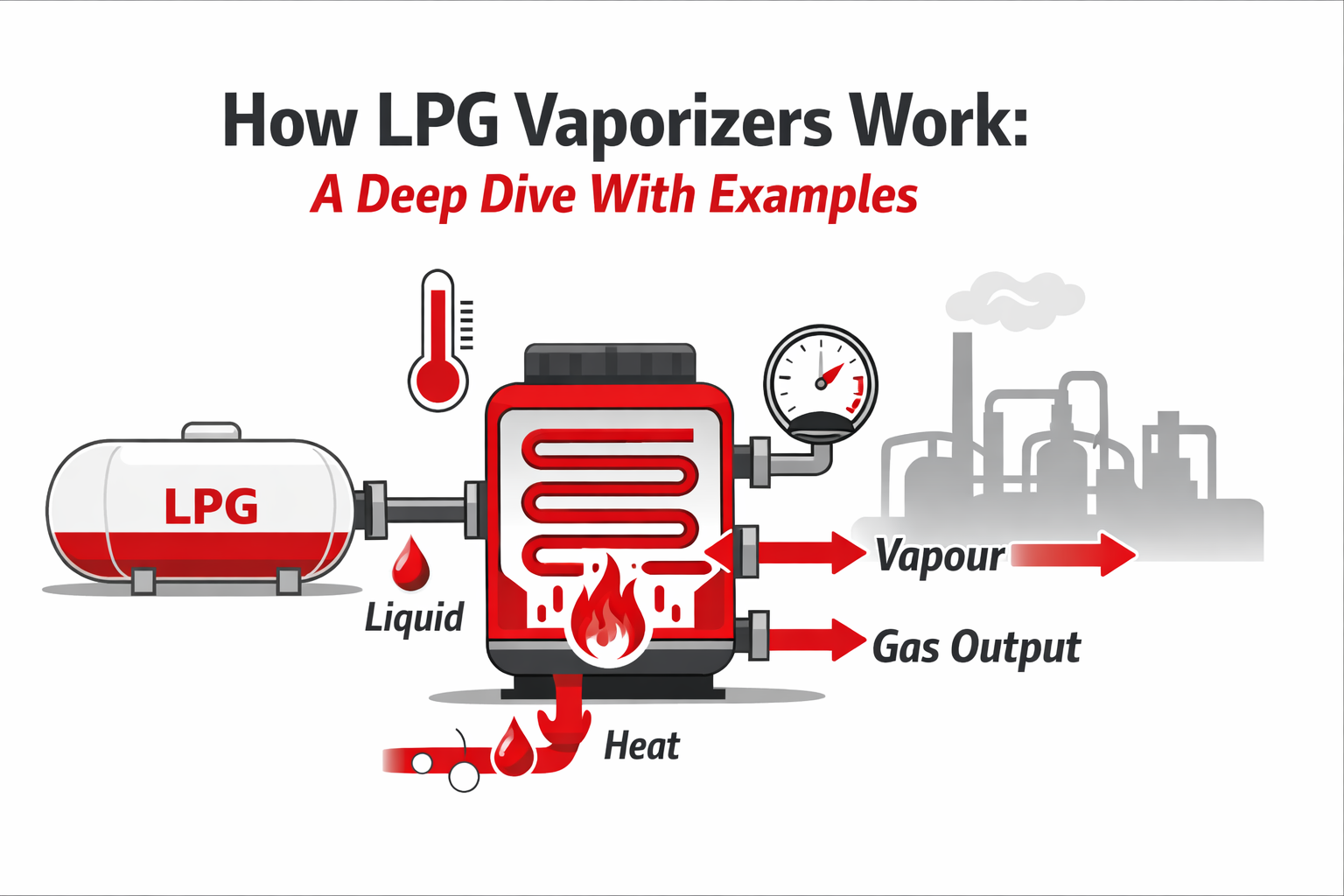
At its core, an LPG vaporizer converts liquid LPG into gas by applying controlled heat. Unlike natural evaporation, which relies solely on ambient temperature, vaporizers provide a steady and reliable gas supply regardless of environmental conditions. This controlled process is vital because LPG naturally evaporates slowly at low temperatures, especially during colder months or in shaded facilities.
Inside the vaporizer, liquid LPG passes through a heat exchanger or coil where it absorbs heat from an external source. This heat raises the LPG temperature above its boiling point, changing it into gas without increasing pressure excessively. This phase change from liquid to gas is central to the vapour production process and is precisely regulated to ensure safety and efficiency.
Natural evaporation, by contrast, is highly unpredictable and insufficient for large-scale or continuous industrial operations. It can lead to unstable gas pressure, causing equipment malfunction or safety hazards. Therefore, industrial LPG vaporizers provide a consistent and controlled supply of gaseous LPG, essential for processes such as boiler firing, heating, and manufacturing.
In Pakistan’s industrial landscape, where climate varies from hot summers to cold winters, LPG vaporizers ensure reliable operation year-round. Suppliers like Indus 3, with over 24 years of experience, offer tailored LPG vaporizer solutions to meet these specific needs. Their expertise in industrial gas equipment ensures that clients across Pakistan, including Lahore and beyond, receive systems that comply with local standards and operational demands.
For a deeper technical understanding of LPG vaporizers and their role in industrial gas systems, visit our industrial LPG vaporizer solutions pillar page. Explore our range of products designed to support efficient LPG gas conversion and system stability on our shop page.
LPG Vaporizer Working Principle and Thermodynamics
Understanding the LPG vaporizer working principle is key to appreciating how these systems deliver consistent gas flow under varying conditions. At the heart of this principle lies the controlled conversion of LPG from liquid to vapour by managing pressure and heat through thermodynamic processes.
LPG exists as a pressurised liquid inside storage tanks due to its low boiling point under atmospheric pressure. When pressure decreases in the delivery system, the liquid LPG tends to evaporate, absorbing heat from its surroundings to maintain phase equilibrium. However, this natural evaporation is often insufficient in industrial settings, especially in Pakistan’s colder regions like Lahore during winter.
The thermodynamics behind LPG vaporizers revolves around manipulating temperature and pressure to facilitate rapid and stable vaporisation. Vaporizers supply heat to LPG, increasing its temperature above the boiling point at a given pressure, thus inducing a phase change. This heat transfer process is meticulously designed to maintain the LPG vaporizer gas outlet pressure stability, ensuring a steady gas flow for industrial equipment such as boilers and furnaces.
Ambient temperature plays a significant role in vaporizer performance. Lower temperatures reduce the natural evaporation rate of LPG, causing a drop in gas pressure. To counter this, vaporizers use external heat sources—such as steam, electricity, or direct flames—to maintain the necessary temperature for consistent gas production, irrespective of weather conditions. This is particularly crucial in Pakistan, where temperature swings can affect operational efficiency.
The thermodynamic behaviour of LPG also dictates the design and sizing of vaporizer components. Efficient heat exchange maximises energy use while preventing freezing, a common challenge in colder climates. This ensures smooth operation without interruptions caused by pressure drops or temperature fluctuations.
For detailed information on the LPG vaporizer working principle and its thermodynamic considerations, please refer to our comprehensive LPG vaporizer working principle guide. You can also explore our curated range of LPG vaporizer systems suited for Pakistan’s diverse climate on the shop page.
For technical validation, the engineering principles explained here align with standards recommended by international manufacturers and can be further reviewed through technical documents from recognised bodies such as the Petroleum and Explosives Safety Organisation (PESO) PESO website, ensuring compliance and safety in industrial gas operations.
LPG Vaporizer Components and Their Functions
A thorough understanding of LPG vaporizer components and functions is vital for engineers and maintenance teams to ensure safe and efficient operation. Each part plays a specific role in converting liquid LPG into a stable gas supply for industrial use.
LPG Vaporizer Parts List and Function
The core components of an LPG vaporizer include the heat exchanger or coil, pressure regulator, thermostat control, and safety valves. The heat exchanger transfers heat from the external source to the liquid LPG, enabling the phase change without raising pressure dangerously. The coil, usually made from corrosion-resistant metals, provides the surface area necessary for effective heat transfer.
Heat Exchanger and Coil Function Explained
The heat exchanger’s efficiency directly impacts the vaporizer’s performance. It ensures LPG absorbs enough thermal energy to vaporise fully while preventing overheating. Proper design allows consistent temperature distribution, crucial for maintaining gas outlet pressure stability. The coil inside the vaporizer carries liquid LPG through heated water or another heat source, facilitating smooth phase transition.
Pressure Regulation and Gas Outlet Stability
Pressure regulators are essential to control the pressure of gaseous LPG leaving the vaporizer. Maintaining a constant pressure prevents equipment damage downstream and guarantees operational safety. The vaporizer’s pressure regulation function ensures fluctuations in demand or supply do not compromise the gas flow.
Thermostat controls monitor vaporizer temperature and automatically adjust the heat source to prevent freezing or overheating. Safety valves and relief mechanisms protect against overpressure, aligning with Pakistan’s regulatory requirements.
For operators seeking in-depth knowledge on these critical parts, Indus 3 offers detailed technical resources on LPG vaporizer components on our pillar page. Our product range includes robust heat exchangers and precision pressure regulators suited for the diverse industrial applications found across Pakistan. Explore these solutions on our shop page.
To ensure compliance with safety standards, refer to official guidelines issued by the Petroleum and Explosives Safety Organisation (PESO), which outline mandatory safety features for LPG equipment in industrial use. This guarantees both performance and regulatory adherence.
LPG Vaporizer Heat Transfer Process and Heat Sources
The efficiency of an LPG vaporizer largely depends on its heat transfer process and the type of heat source employed. Understanding these aspects is crucial for optimising performance, especially in the demanding industrial environments common in Pakistan.
LPG Vaporizer Heat Exchange Basics
At its core, the vaporizer uses a heat exchanger to transfer thermal energy to the liquid LPG, raising its temperature above the boiling point at a given pressure to convert it into gas. The heat exchanger typically consists of coils or plates that maximise surface contact between the heat source and LPG. Effective heat transfer ensures rapid vaporisation without causing pressure surges or overheating.
What Heats an LPG Vaporizer
Various heat sources are used to supply the necessary energy for vaporisation:
-
Direct Fired Vaporizers: These use a controlled flame to heat the vaporizer coil directly. While highly efficient, they require careful safety measures to prevent fire hazards.
-
Indirect Water Bath Vaporizers: Here, heat is transferred via a water bath heated by an external source, such as steam or electricity. This indirect method provides stable temperature control and reduces the risk of overheating or flame exposure.
-
Electric Vaporizers: These use electric heaters to warm the vaporizer coils. They are ideal for environments where combustion is undesirable or restricted and offer precise temperature regulation.
How LPG Vaporizers Prevent Freezing
Freezing can occur when the vaporization process causes rapid temperature drops, especially in colder climates like Lahore’s winter. To prevent this, vaporizers incorporate thermostatic controls that adjust heat supply based on temperature feedback. Indirect water bath vaporizers naturally mitigate freezing risks due to the thermal inertia of the water, while electric vaporizers maintain consistent heat input.
Choosing the right heat source depends on operational needs, safety considerations, and energy availability. In Pakistan’s industrial sector, factors such as energy cost, maintenance complexity, and local regulations influence this decision.
For detailed insights on LPG vaporizer heat transfer process and choosing the appropriate heat source, visit our comprehensive pillar page. Explore our tailored industrial LPG solutions designed for optimal heat management on the shop page.
For technical validation on heat exchanger design and safety, refer to standards published by recognised engineering bodies, ensuring your vaporizer complies with both performance and safety expectations.
Types of LPG Vaporizers and How Each One Works
Selecting the right LPG vaporizer for industrial applications requires understanding the differences between the main types and their working methods. Each vaporizer type has unique advantages tailored to specific operational needs, safety standards, and energy considerations.
Direct Fired LPG Vaporizer Working
Direct fired LPG vaporizers operate by burning a controlled flame beneath the vaporizer coil. This flame directly heats the LPG liquid passing through the coil, converting it into gas rapidly. These vaporizers are compact and efficient, making them suitable for applications where space and quick heat-up times are critical.
However, due to the open flame, strict safety mechanisms must be in place to prevent fire hazards. In Pakistan’s industrial settings, direct fired vaporizers are often used in robust, well-ventilated environments with trained personnel.
Indirect Water Bath LPG Vaporizer: How It Works
Indirect water bath vaporizers transfer heat to LPG through a water medium heated by an external source such as steam or electricity. The LPG passes through coils immersed in the heated water bath, ensuring gentle and uniform heat transfer.
This method provides enhanced temperature control and prevents localized overheating, making it ideal for sensitive applications like boiler operation or in colder climates. The water bath’s thermal mass also reduces the risk of freezing, a common challenge in regions like Lahore during winter.
Electric LPG Vaporizer Operation
Electric LPG vaporizers use electric heating elements to warm the vaporizer coil directly. They provide precise temperature control and eliminate the risks associated with open flames or water bath maintenance. Electric vaporizers are preferred in enclosed or safety-sensitive environments, such as pharmaceutical manufacturing or food processing plants.
Though initial energy costs may be higher, electric vaporizers reduce operational complexity and support remote monitoring and automation.
When considering which vaporizer best suits your facility, factors such as energy availability, safety regulations, and operational continuity must be assessed carefully. Indus 3’s experienced team can help you select the most suitable LPG vaporizer based on these parameters.
For a detailed comparison of LPG vaporizer types, visit our dedicated pillar page. Discover our range of LPG vaporizers for industrial use designed to meet Pakistan’s diverse needs on the shop page.
LPG Vaporizer Safety Mechanisms and Compliance Standards
Safety is paramount when operating LPG vaporizers in any industrial environment. Understanding the built-in LPG vaporizer safety mechanisms and adhering to regulatory compliance ensures not only smooth operation but also protects personnel, equipment, and facilities.
LPG Vaporizer Safety Features and Benefits
Modern LPG vaporizers are equipped with multiple safety features designed to prevent accidents and maintain system integrity. Key elements include thermostat control features that monitor vaporizer temperature, automatically regulating heat to avoid overheating or freezing. Pressure relief valves safeguard against dangerous overpressure scenarios, ensuring safe gas outlet pressure stability.
Alarms and shut-off systems activate during abnormal conditions, providing operators with timely warnings and preventing hazardous situations. These features collectively reduce downtime and extend equipment life, offering significant benefits for industrial users.
LPG Vaporizer Temperature and Pressure Controls
Precise control of temperature and pressure within the vaporizer is crucial. The thermostat ensures the heat source adapts to changing environmental and operational conditions, preventing thermal stress. Meanwhile, the pressure regulator maintains a steady outlet gas pressure, protecting downstream equipment such as burners and engines.
These controls are essential in Pakistan’s diverse climate, where ambient temperatures can fluctuate widely, affecting LPG vaporisation rates.
Compliance with OGRA and PESO Standards
In Pakistan, LPG vaporizer operation must comply with safety regulations set by authorities such as the Oil and Gas Regulatory Authority (OGRA) and the Petroleum and Explosives Safety Organisation (PESO). These bodies define rigorous standards for equipment design, installation, and operation to safeguard public and industrial safety.
Adhering to these standards is mandatory for all industrial LPG equipment suppliers and users. Indus 3’s vaporizer solutions meet and often exceed these requirements, ensuring both compliance and peace of mind.
For detailed guidance on safety features and compliance, visit OGRA’s official safety framework at OGRA website and PESO’s regulations at PESO website.
Explore Indus 3’s range of gas safety solutions and learn more about our commitment to industry best practices on our About Us page.
LPG Vaporizer Installation, Operation, and Maintenance Best Practices
Proper installation, operation, and maintenance of LPG vaporizers are crucial for ensuring long-term efficiency and safety in industrial environments. This section provides practical guidance tailored for engineers, contractors, and plant operators working across Pakistan.
LPG Vaporizer Installation Checklist
Successful vaporizer installation starts with site assessment, ensuring adequate ventilation, secure mounting, and proximity to the LPG source and end-use equipment. Key points include correct positioning to prevent freezing, proper connection of inlet and outlet lines, and verification of electrical or fuel supply systems for heat sources.
Installation must comply with local safety standards enforced by bodies like OGRA, which mandate clearances and fire protection measures. Using certified components and following manufacturer guidelines helps avoid operational issues later.
LPG Vaporizer Maintenance Procedures
Routine maintenance extends vaporizer life and optimises performance. Regular inspection of heat exchangers, coils, pressure regulators, and thermostat controls is essential. Cleaning heat exchanger surfaces prevents fouling that reduces heat transfer efficiency.
Checking for leaks, corrosion, and pressure drops helps identify early signs of wear. Calibration of pressure regulators and testing safety valves ensure the vaporizer operates within designed parameters. Maintenance schedules should align with manufacturer recommendations and industry best practices.
LPG Vaporizer Troubleshooting Common Problems
Common issues include pressure drops, inconsistent gas flow, freezing, and overheating. Causes may range from clogged heat exchanger coils, faulty pressure regulators, or inadequate heat supply.
Operators should monitor temperature and pressure readings closely and respond promptly to alarms or irregularities. Troubleshooting guides and support from experienced suppliers like Indus 3 can help resolve issues efficiently.
For detailed installation tips and maintenance guidance, visit our dedicated LPG vaporizer installation guide and connect with our technical experts through the contact page.
Maintaining a well-functioning vaporizer system not only ensures continuous gas supply but also contributes to safer industrial operations across Pakistan’s diverse climatic conditions.
Why LPG Vaporizers Are Essential for Reliable Industrial Gas Supply
Key Takeaways on How LPG Vaporizers Work
LPG vaporizers play a critical role in converting liquefied petroleum gas into a consistent, safe, and usable gaseous form essential for industrial processes. By employing precise heat transfer and pressure regulation, vaporizers ensure stable gas delivery regardless of ambient conditions. Understanding how LPG vaporizers work helps engineers and operators optimise performance and avoid costly downtime.
Choosing the Right LPG Vaporizer for Your Facility
Selecting the appropriate vaporizer involves evaluating factors such as heat source availability, safety requirements, operational continuity, and local climate conditions—especially in Pakistan’s varied environment from Lahore’s winters to warmer regions. Whether you require a direct fired, indirect water bath, or electric vaporizer, it is crucial to choose equipment that aligns with your process demands and complies with safety regulations.
Partnering with Indus 3 for Industrial LPG Solutions
With over 24 years of industry experience, Indus 3 stands as Pakistan’s trusted partner for industrial LPG vaporizer solutions. Our expert team offers tailored advice, ensuring you select and maintain the right vaporizer system to maximise efficiency and safety.
Explore our comprehensive range of industrial LPG vaporizer systems on the pillar page and discover high-quality products on our shop page. For personalised consultation or technical support, contact our dedicated engineers via the contact page.
One Reply to “How LPG Vaporizers Work: Industrial Guide | Indus 3”