
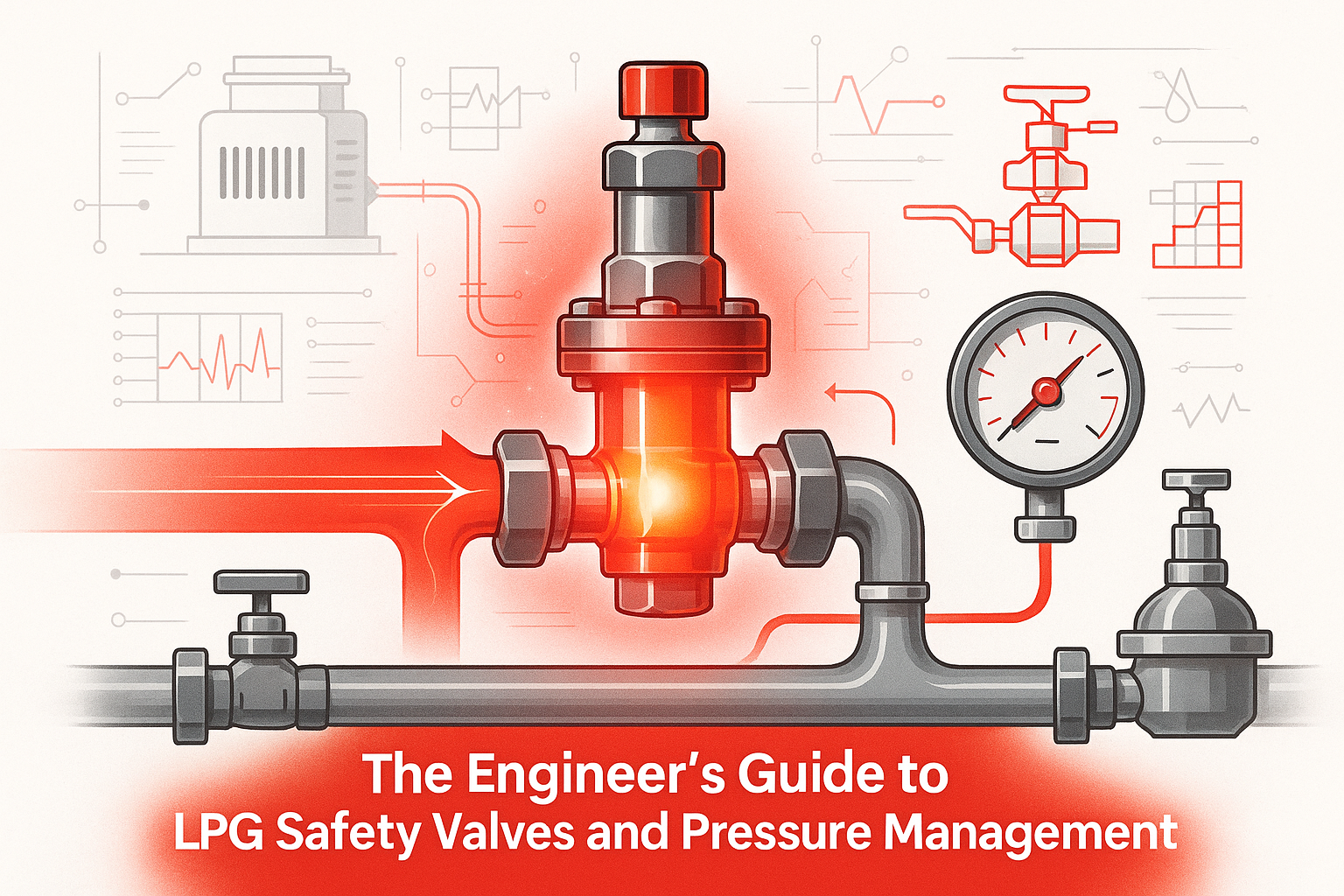
The Critical Role of LPG Safety Valves in Pakistan’s Industrial Infrastructure
Why LPG Safety Valves Matter in Modern Industries
In the world of industrial gas systems, safety is not a luxury — it is an absolute necessity. Nowhere is this more evident than in Pakistan’s rapidly expanding LPG sector, where LPG safety valves form the first line of defence against pressure-related hazards. From the massive refineries of Karachi to bottling plants across Punjab, each system depends on the integrity of a few crucial components — and among them, the safety valve stands as the silent guardian.
A single LPG safety valve can mean the difference between safe operations and catastrophic failure. These devices are engineered to automatically release excess pressure, preventing explosions, leaks, or system ruptures. As Pakistan continues to industrialise and adopt LPG as a cleaner alternative to other fossil fuels, the reliability of these valves has become paramount. This is where Indus 3, a trusted industrial gas equipment supplier, provides the engineering assurance that industries can depend on.
At Indus 3, each safety component — from vaporizers to regulators — is selected and tested according to international standards, ensuring robust protection for high-pressure systems. According to the Oil and Gas Regulatory Authority (OGRA) of Pakistan, adherence to approved safety standards is mandatory for all LPG facilities. This makes certified LPG safety valves Pakistan not only a technical requirement but also a legal obligation under OGRA’s LPG (Production and Distribution) Rules.
The importance of these valves extends beyond compliance. They also serve to enhance efficiency. When pressure levels remain stable, burners operate optimally, fuel wastage is reduced, and system lifespan increases. As outlined by the American Society of Mechanical Engineers (ASME) and ISO 4126, properly calibrated pressure relief devices ensure stable operations across complex LPG networks — from filling stations to industrial heating systems.
Pakistan’s LPG consumption has grown steadily in recent years, driven by energy diversification and increasing reliance on decentralised gas systems. This surge brings new challenges in maintaining uniform safety standards across hundreds of industrial plants. Indus 3 bridges this critical gap by supplying international-grade valves and fittings that meet the demands of large-scale industrial applications while complying with OGRA and PSQCA certification requirements.
The Engineering Challenge Behind Pressure Control
Pressure control in LPG systems is an intricate engineering discipline. Unlike natural gas networks, LPG systems handle liquefied gas that can vaporise rapidly with temperature fluctuations. This makes them inherently unstable without a properly designed safety mechanism. A well-calibrated safety valve must react instantly to abnormal pressure increases, venting excess gas before it endangers the system.
At the core of this design challenge lies precision engineering — the careful selection of materials, pressure ratings, and flow characteristics. Manufacturers such as REGO and MACS have spent decades refining valve mechanisms to achieve accurate blow-off pressures and minimal reseating leakage. Indus 3, as an authorised supplier of these trusted brands in Pakistan, provides engineers and plant managers with direct access to products that meet or exceed ASME and ISO performance standards.
Whether used in LPG bottling lines, industrial burners, or bulk storage tanks, these valves must maintain consistency under extreme temperature and load variations. The integrity of seals, the elasticity of springs, and the chemical resistance of the materials all determine performance and safety longevity.
As industries modernise across Pakistan, the call for locally available, globally certified LPG safety equipment has never been louder. Indus 3 answers this call with a commitment to engineering excellence, offering a comprehensive range of LPG safety devices and accessories designed for long-term reliability and compliance.
The engineering story of LPG safety valves is one of precision, protection, and partnership — and it is this story that continues into the next section, where we explore the types of safety valves and how each design serves a specific function in maintaining safe pressure levels across Pakistan’s LPG systems.
Understanding LPG Pressure Management: How Valves Maintain System Integrity
Fundamentals of LPG Pressure Regulation
Pressure regulation lies at the heart of every industrial LPG system. Whether in a bottling plant, textile factory, or power generation unit, maintaining the correct gas pressure is vital to ensure both performance and safety. In Pakistan, where industrial LPG adoption continues to accelerate, LPG safety valves play a critical role in balancing this delicate equation between efficiency and protection.
Liquefied Petroleum Gas (LPG) is stored under pressure in its liquid state. When released, it vaporises into gas — a process that rapidly increases pressure within pipes and tanks. Without a properly functioning regulator or relief valve, this pressure could exceed design limits, leading to ruptures or explosions. That’s why engineered systems always integrate LPG pressure relief valves and regulators in series, ensuring consistent downstream pressure while safeguarding equipment from overload.
According to OGRA’s LPG (Production and Distribution) Rules, all industrial LPG installations must be equipped with certified pressure control and safety devices that comply with ISO 4126 standards. This means every valve and regulator in the system must be calibrated to withstand Pakistan’s ambient temperature variations — a factor that significantly influences LPG vapour pressure.
At Indus 3, these engineering principles are embodied in a full range of regulators and safety valves. The LPG Regulator RECCO 041 1.5” Heavy Duty is designed for high-capacity applications, maintaining consistent output even under fluctuating input conditions. Similarly, the RECO Grey LPG Regulator ½ Inch provides precision control for smaller systems or distribution manifolds, ensuring balanced performance in light industrial use. Both models align with OGRA and Energy Institute UK safety benchmarks for gas flow management.
In essence, LPG safety valves Pakistan are not just regulatory requirements—they are engineering instruments that transform volatile gas into a safely usable energy source for the nation’s industries.
Key Engineering Parameters (Flow, Temperature, Pressure)
Designing and maintaining an industrial LPG system demands close attention to three interdependent engineering parameters: flow rate, temperature, and pressure. Each factor influences how the gas behaves, and each must be controlled to maintain safety.
1. Flow Rate:
Flow rate determines the amount of LPG that moves through a system per unit of time. Too high a flow can cause turbulence and uneven heating, while too low can reduce burner efficiency. Regulators such as the RECO LPG Regulator ½ Inch help stabilise flow across varying operational loads.
2. Temperature:
Temperature directly impacts vapour pressure. In Pakistan’s climate, daytime heat can cause a significant rise in tank pressure. Without relief mechanisms, this leads to dangerous overpressure conditions. Safety valves are engineered to discharge a controlled volume of gas when the temperature-induced pressure exceeds preset thresholds.
3. Pressure:
Pressure control is the cornerstone of LPG system safety. Excessive internal pressure can damage pipelines, vaporizers, and burner assemblies. Here, the LPG pressure relief valve functions as an automatic release point, restoring equilibrium instantly and preventing catastrophic failure.
To achieve optimal performance, engineers typically rely on a two-stage regulation process:
-
Primary regulation to reduce tank pressure to an intermediate level.
-
Secondary regulation to fine-tune pressure for appliance or process use.
This layered approach ensures system stability even during heavy load fluctuations, such as in textile processing plants or bottling facilities where demand can shift abruptly.
In advanced systems, multiple safety valves and regulators are installed in redundancy — a strategy recommended by the Energy Institute (UK) to ensure continuous protection even if one component fails.
Key benefits of an effective LPG pressure management system include:
-
Enhanced operator safety and reduced accident risk.
-
Lower maintenance costs due to controlled system stress.
-
Improved fuel efficiency and combustion quality.
-
Compliance with OGRA and international standards (ASME, ISO).
By integrating robust safety and regulation equipment, businesses in Pakistan can create reliable, high-performing LPG systems that meet modern industrial expectations. With Indus 3’s certified portfolio of valves, regulators, and accessories, industries can confidently maintain pressure stability while safeguarding lives and assets.
For more information on certified regulators, explore Indus 3’s LPG Regulators — engineered for precision, durability, and international compliance.
Types of LPG Safety Valves: From Pressure Relief to Excess Flow Systems
When managing industrial LPG systems, selecting the correct safety valve is as critical as the installation itself. Each type of valve serves a distinct purpose — from controlling pressure surges to isolating gas flow in emergencies. In Pakistan’s growing industrial landscape, where LPG networks power textile plants, bottling stations, and manufacturing units, understanding these valve categories helps engineers design safer and more efficient systems. Indus 3 supplies internationally certified components from REGO and MACS, ensuring both compliance and performance in all operating conditions.
Pressure Relief Valves (PRVs)
The Pressure Relief Valve (PRV) is the cornerstone of every LPG safety setup. Its primary role is to automatically vent excess gas when internal pressure surpasses the system’s design limit. Without it, the contained LPG could rapidly expand, causing structural failure or explosions.
PRVs are typically spring-loaded, with a preset pressure point that opens the valve when system pressure becomes unsafe. Once equilibrium is restored, the valve reseats itself, maintaining airtight performance.
In Pakistan, models like the REGO LPG Safety Valve 3129L and LPG Pressure Relief Valve PRV REGO A8436G have become industry standards due to their precision engineering and reliability. These devices are designed according to ASME Section VIII and ISO 4126 standards, ensuring predictable blow-off pressure and leak-tight reseating.
Engineers prefer brass or stainless-steel PRVs for their corrosion resistance and long service life in high-pressure environments. The LPG Safety Devices category at Indus 3 features a range of PRVs suited for both vapour and liquid-phase systems.
Example technical features:
-
Set Pressure Range: 250–400 PSI
-
Discharge Coefficient (Cd): Optimised for stable venting
-
Material: Brass, Stainless Steel
-
Temperature Tolerance: -40°C to +65°C
Figure 1: Cross-section of a spring-loaded PRV showing set pressure and reseating mechanism (Image Placeholder)
These valves are essential in industrial LPG systems across Pakistan, where daily temperature variations can cause rapid internal pressure changes. Proper installation and periodic inspection of PRVs are critical to meet OGRA safety compliance.
Excess Flow and Shut-Off Valves
While PRVs control overpressure, Excess Flow Valves (EFVs) respond to sudden or uncontrolled gas flow — typically caused by a pipeline rupture or equipment failure. When a break occurs, the valve senses the abnormal surge and shuts off instantly, preventing LPG discharge.
One of the most widely used models in Pakistan’s industrial sector is the Excess Flow Valve for LPG Tanks – Brass Safety Valve 2 Inch, known for its robust body and fast response time. These valves are commonly installed at tank outlets or manifold connections where gas flow can escalate suddenly.
EFVs work on a simple principle: a spring-loaded piston or ball remains open under normal flow but closes automatically when flow exceeds a calibrated threshold. Once the downstream pressure equalises, it resets automatically — a design that makes it both efficient and maintenance-friendly.
Example Applications:
-
LPG bulk storage tanks
-
Cylinder filling plants
-
Vapouriser feed lines
-
Tanker loading bays
The combination of REGO’s precision and MACS engineering reliability gives operators peace of mind. Both brands are globally recognised for exceeding NFPA 58 and EN 12864 standards. You can explore certified models directly on Indus 3’s Shop Page for availability and pricing.
Combination and Multi-Function Valves
Modern LPG systems demand more than isolated protection. This is where combination and multi-function valves come in — integrating pressure relief, excess flow, and shut-off features within a single assembly. These valves reduce installation complexity, minimise leakage points, and provide redundancy for high-risk environments such as refineries and transport depots.
Combination valves can include:
-
A PRV for overpressure protection
-
An EFV for flow isolation
-
A manual shut-off lever for emergency control
Manufacturers like REGO and MACS design these multi-functional valves to handle both liquid and vapour phases, making them ideal for Pakistan’s multi-temperature LPG conditions. Their design ensures compliance with international safety codes and simplifies maintenance for plant engineers.
Example Model: REGO 3129L series combination safety valve — offering integrated discharge and isolation capabilities.
Figure 3: Schematic diagram of a multi-function LPG valve assembly showing relief and shut-off sections (Image Placeholder)
By incorporating these advanced valve systems, industries not only enhance plant safety but also streamline operational control. Indus 3 remains Pakistan’s premier source for such certified components, backed by technical support and supply reliability.
To verify technical specifications or operating parameters, engineers can consult the official RegO Products Datasheets — a globally recognised reference for LPG system design and maintenance.
Global Standards and Pakistan Regulations: Ensuring LPG Safety Compliance
International Compliance: ASME, ISO 4126, EN 14994
Safety in LPG system engineering is not a matter of convenience — it is a global commitment to precision, consistency, and risk mitigation. Around the world, LPG safety valves are manufactured and tested under strict international standards that define every detail, from material composition to pressure performance. These frameworks ensure that each valve, whether installed in Europe, the Middle East, or Pakistan, performs with the same level of reliability under identical conditions.
The most recognised standards for LPG safety valves include:
-
ASME Section VIII (Boiler and Pressure Vessel Code): Governs the design and construction of pressure relief devices, setting benchmarks for discharge capacity, spring tension, and material durability.
-
ISO 4126 (Safety Devices for Protection Against Excess Pressure): Specifies the design and testing procedures for pressure relief valves, focusing on repeatable accuracy and failure prevention.
-
EN 14994 (European Standard for LPG Pressure Equipment): Details operational performance, corrosion resistance, and environmental safety for valves used in gas storage and distribution systems.
Manufacturers like REGO and MACS strictly comply with these standards, ensuring their products deliver consistent results across varied industrial conditions. These valves undergo rigorous factory testing — including hydrostatic, seat leakage, and set-pressure calibration — before being distributed worldwide.
For engineers designing or maintaining industrial LPG systems, understanding these standards is critical. A single deviation in pressure calibration or valve tolerance can lead to system instability, safety risks, and non-compliance with insurance and government requirements.
Indus 3, as an authorised distributor of internationally recognised brands, aligns its product line with these certifications. Each REGO or MACS valve available through Indus 3 meets or exceeds ASME and ISO benchmarks, ensuring consistent performance and long-term reliability in Pakistan’s demanding industrial climate.
To explore certified safety valves for your industrial applications, visit Indus 3’s About Page to learn about the company’s quality commitments and engineering partnerships.
Pakistan’s OGRA and PSQCA Standards for LPG Safety
While global standards ensure engineering consistency, Pakistan’s national authorities — OGRA (Oil and Gas Regulatory Authority) and PSQCA (Pakistan Standards and Quality Control Authority) — enforce these principles locally to protect industrial facilities and public safety.
Under OGRA’s LPG (Production and Distribution) Rules, every LPG installation — whether a bottling plant, storage terminal, or cylinder-filling facility — must be equipped with certified valves, regulators, and vaporizers that meet approved specifications. The regulation explicitly requires compliance with ISO 4126 and ASME Section VIII for all safety valves used in domestic and industrial LPG networks.
The PSQCA further ensures that all imported or locally manufactured valves meet material integrity and calibration standards before market approval. Regular audits, random testing, and inspection of supplier records help maintain national safety compliance. These measures collectively form the foundation of LPG safety valves Pakistan law, ensuring that only tested, certified, and traceable components are installed in critical gas-handling facilities.
Indus 3’s engineering and quality teams actively maintain documentation and compliance with these authorities. Each REGO, MACS, or Madas valve distributed by the company comes with verifiable certification, test data, and serial traceability — giving industrial clients confidence in both quality and regulatory adherence. This approach exemplifies LPG safety valves Pakistan engineering at its finest: precision-built, tested under global standards, and approved for national use.
Industrial buyers are encouraged to verify certification records or seek custom compliance documentation by contacting the technical team via Indus 3’s Contact Page. Their experts provide guidance on OGRA-approved products, system design compliance, and testing requirements for new or existing installations.
By adhering to both international and national frameworks, Indus 3 ensures that every valve it supplies — from pressure relief systems to excess flow protection — meets the dual criteria of engineering excellence and legal conformity.
Inside the Engineering: How Pressure Relief Valves (PRVs) Work
Mechanics of a Pressure Relief Valve
A Pressure Relief Valve (PRV) is one of the most critical components in any industrial LPG system, designed to automatically release excess pressure from tanks or pipelines before it exceeds the system’s design limits. Its mechanical operation is deceptively simple yet engineered with exceptional precision to ensure flawless reliability under high-stress conditions.
When the internal system pressure reaches the PRV’s set pressure, the force acting on the valve disc overcomes the spring tension holding it closed. The valve instantly opens, allowing the gas to escape through a discharge path, relieving excess pressure within milliseconds. Once equilibrium is restored, the spring reseats the valve, sealing the system again without leakage.
This automatic sequence — set pressure → lift (blow-off) → reseating — is fundamental to safe LPG operations. Proper calibration is essential: if the set pressure is too low, the valve may open unnecessarily, reducing system efficiency; too high, and it may fail to prevent a rupture.
A typical spring-loaded PRV includes a disc, nozzle, spring, spindle, and adjustment screw. The spring tension determines the activation point, while the disc and nozzle interface ensures a tight seal during normal operation. During pressure discharge, the gas flow creates an upward thrust (known as blowdown), which rapidly clears the excess before reseating.
Figure 1: Cross-section view of a spring-loaded PRV showing lift point and discharge path.
Internationally recognised models like the LPG Pressure Relief Valve PRV REGO A8436G are widely used in Pakistan’s LPG plants due to their precise calibration and durable design. These valves conform to ASME Section VIII and ISO 4126 standards, providing consistent response characteristics across temperature variations — a key factor in Pakistan’s hot industrial environments.
For smaller installations, such as cylinder filling and distribution systems, the NG/LPG Pressure Relief Valve 1 inch – MACS offers robust flow control with quick reseating action. Meanwhile, LOT Valves for 45 Kg LPG Cylinders – MACS integrate PRV technology within a compact assembly, optimising space while ensuring compliance with OGRA’s LPG (Production and Distribution) regulations.
Material Selection and Design Factors
The performance and longevity of a PRV depend significantly on material selection and design integrity. LPG, being a hydrocarbon-based gas, can corrode or degrade unsuitable materials over time — especially under fluctuating pressure and temperature cycles.
-
Body Material: High-grade brass or stainless steel is preferred for its corrosion resistance and ability to withstand continuous exposure to LPG vapour.
-
Seat Material: Soft-seated designs often use PTFE or NBR for tight shutoff and resilience against temperature variations.
-
Spring Alloy: Typically composed of chrome-silicon steel, providing excellent elasticity and fatigue resistance even after thousands of pressure cycles.
-
Sealing Integrity: O-ring seals are designed to prevent leakage during minor pressure fluctuations, ensuring consistent performance.
Manufacturers such as REGO and MACS subject their valves to comprehensive testing, including hydrostatic, leak, and blowdown tests, guaranteeing both durability and accuracy. These tests simulate real-world pressure events, verifying valve response at various flow rates and system configurations.
Indus 3 ensures that every safety component in its portfolio meets international specifications, offering industrial clients the reassurance of certified, field-tested performance.
Recommended PRVs for LPG Plants in Pakistan
For large-scale LPG facilities in Pakistan — including bottling, distribution, and storage plants — Indus 3 offers a wide selection of REGO and MACS valves tailored to operational needs:
-
REGO ½ Inch Industrial Safety Valve: Designed for vaporizers and pipeline systems, featuring precision-calibrated discharge and reseating characteristics.
-
LPG Safety Vaporizer ¼ Inch: Ideal for smaller capacity systems requiring accurate low-pressure relief.
-
LPG Pressure Relief Valve PRV REGO A8436G: Suitable for medium to high-pressure industrial setups.
-
NG/LPG Pressure Relief Valve 1 Inch – MACS: Optimised for general industrial applications with consistent blowdown performance.
-
LOT Valves for 45 Kg LPG Cylinders – MACS: Compact, integrated safety valves for portable or small-scale installations.
Each of these models is engineered to maintain compliance with OGRA, ASME, and ISO 4126 requirements, offering guaranteed protection against overpressure events. By using globally certified components from Indus 3, Pakistani industries ensure not only legal conformity but also operational peace of mind.
For further engineering details or selection guidance, technical professionals can refer to the RegO Valve Technical Manual or consult best practice documentation from the Petroleum Safety Authority Norway, both of which provide comprehensive data on PRV design and maintenance.
Selecting the Right LPG Safety Valve for Industrial Use
Choosing the correct LPG safety valve is a crucial step in ensuring both operational efficiency and safety within an industrial gas system. Each valve must be matched precisely to system parameters such as flow rate, operating pressure, and temperature range. In Pakistan’s diverse industrial settings — from manufacturing plants to LPG bottling depots — improper valve selection can lead to leakage, poor regulation, or even catastrophic overpressure events. To prevent such failures, engineers must evaluate several performance metrics before installation.
At Indus 3, every safety component — from pressure relief valves to ball valves and vaporizers — is designed to meet international engineering standards while remaining accessible to local industries. Engineers and technicians looking to buy safety gas valve online at the best price in Pakistan can find a complete range of globally certified REGO, MACS, and Madas products tailored for both low- and high-pressure LPG systems.
Key Parameters for Selection
Selecting an LPG safety valve begins with evaluating the system’s technical requirements. The following parameters should always be considered before purchasing or specifying a valve:
1. Inlet and Outlet Size
The valve size must correspond to the system’s pipe diameter. A mismatch can lead to flow restrictions or excessive backpressure. For small systems or vaporizers, a ¼ inch valve (such as the REGO ¼ Inch Safety Valve Vaporizer) is often sufficient. For higher capacity systems, 1-inch or 2-inch valves are more suitable to handle increased gas discharge.
2. Pressure Rating (Set Pressure)
Each safety valve has a calibrated set pressure — the point at which it activates. For LPG systems, this typically ranges between 250 to 400 PSI depending on tank design and local climate. Valves should comply with OGRA regulations and be tested according to BSI and ISO 4126 standards for consistent accuracy and reliability.
3. Material Selection (Brass vs Stainless Steel)
-
Brass: Highly corrosion-resistant and ideal for standard industrial environments. The LPG Brass Ball Valve Heavy Duty exemplifies durability with minimal maintenance.
-
Stainless Steel: Recommended for high-temperature or corrosive conditions, providing superior longevity and structural integrity under stress.
4. Temperature Limits
Since LPG systems experience rapid temperature changes due to phase transition, valves must handle a wide range of thermal conditions. Most industrial valves at Indus 3 are rated for temperatures between -40°C and +65°C, ensuring consistent performance across Pakistan’s varying climates.
5. Connection Type and Seal Integrity
Threaded (BSP/NPT) or flanged connections must align with existing pipelines. Engineers should prioritise valves with precision-machined threads or welded flanges to maintain leak-proof operation under dynamic pressure. Proper sealing — often using PTFE or nitrile materials — prevents micro-leakage and preserves system efficiency.
6. Certification and Compliance
Always ensure that valves bear certification marks from OGRA, ASME, or BSI, verifying their authenticity and suitability for industrial LPG systems. Indus 3’s partnership with internationally recognised brands guarantees adherence to these global standards.
Compatibility with LPG Vaporizers and Regulators
A well-designed LPG system operates as an integrated unit — the safety valve, regulator, and vaporizer all working in harmony to maintain stable gas flow. Engineers must therefore match each valve to the pressure dynamics of the vaporizer or regulator it supports.
For instance, the REGO ¼ Inch Safety Valve Vaporizer is specifically engineered to work with LPG vaporizers ranging from 100 kg to 400 kg, offering reliable venting during high-pressure fluctuations. Similarly, valves paired with high-pressure regulators such as the LPG Regulator RECCO 041 1.5” Heavy Duty ensure consistent discharge and protection across multiple industrial setups.
When selecting valves for LPG vaporizers, engineers should verify:
-
Operating pressure range of both the vaporizer and valve.
-
Flow capacity (Cv) to ensure adequate discharge in emergency conditions.
-
Installation orientation, as some PRVs are designed for vertical mounting only.
Indus 3’s Shop Page provides comprehensive product specifications and sizing charts for each safety device, simplifying compatibility checks for new and retrofit projects.
Figure Placeholder: Diagram illustrating valve-vaporizer-regulator integration in an industrial LPG system.
Using certified valves not only enhances operational safety but also ensures compliance with the British Standards Institution (BSI) pressure equipment directive, which governs selection, installation, and testing of all safety-critical gas components.
With Indus 3’s wide range of certified LPG safety products — from compact relief valves to heavy-duty brass ball valves — engineers across Pakistan can build resilient, compliant, and efficient gas systems that stand the test of time.
Maintenance, Testing, and Common Failures of LPG Safety Valves
A reliable LPG safety valve is only as effective as its maintenance routine. Over time, exposure to pressure cycles, temperature fluctuations, and environmental contaminants can degrade the internal components of even the most precisely engineered valves. For plant engineers and safety officers, establishing a structured LPG system inspection and maintenance schedule is essential to preventing unplanned shutdowns or dangerous system failures.
At Indus 3, every safety device supplied — from pressure relief valves to excess flow valves — is built for durability and long-term operation. However, like all mechanical components, they must undergo regular inspection and testing to ensure continued compliance with OGRA and NFPA 58 standards. Understanding inspection protocols, recognising early signs of wear, and working with qualified technicians can significantly extend valve lifespan and improve system integrity across Pakistan’s industrial LPG networks.
Routine Inspection and Test Procedures
Regular inspection of LPG safety valves is the cornerstone of industrial safety maintenance. According to OGRA’s LPG (Production and Distribution) Rules, all safety valves in service must be tested and calibrated annually by certified technicians or third-party inspectors. Similarly, the NFPA 58 LP-Gas Code recommends testing intervals based on usage frequency, operating environment, and system pressure classification.
Recommended inspection and testing protocols include:
-
Visual Inspection (Monthly/Quarterly): Check for visible damage, corrosion, or contamination on the valve body and outlet ports.
-
Hydrostatic Test (Annually): Performed using water to verify valve strength and integrity under simulated operating pressure.
-
Leak Test (Annually): Confirms seat tightness and seal effectiveness, ensuring no gas escapes under normal conditions.
-
Set Pressure Verification: Conducted using calibrated test benches to confirm that the valve opens at the specified set pressure and reseats properly.
Calibration must be performed with reference to ISO 4126 and ASME Section VIII guidelines. Each valve is tagged with the next inspection due date to ensure full traceability — a practice endorsed by the Health and Safety Executive (UK) for pressure systems.
For industrial clients in Pakistan seeking inspection or recalibration assistance, Indus 3’s technical support team provides expert maintenance services and product testing guidance. You can reach them through the Contact Page for inspection scheduling and service requests.
Signs of Wear, Corrosion, and Leakage
Understanding early warning signs can prevent catastrophic valve failures. Operators should monitor for:
-
Spring Fatigue: Repeated pressure cycles can weaken the spring, delaying valve opening or preventing reseating.
-
Seat Leakage: Caused by dirt accumulation, corrosion, or material degradation, leading to constant minor venting.
-
Corrosion and Erosion: Especially in humid or outdoor installations, oxidation can compromise metal integrity and affect calibration.
-
Sticky or Jammed Mechanisms: Build-up of hydrocarbon residues can restrict valve movement, preventing correct activation.
When these issues are detected, immediate isolation and replacement are necessary to avoid operational hazards. Using OEM-certified components like those found in Indus 3’s LPG Safety Devices category ensures consistent quality and compatibility during replacements.
Indus 3 also recommends maintaining a service logbook that documents each inspection, test result, and replacement — ensuring compliance with OGRA audit requirements and improving traceability during system certification.
Role of OGRA-Certified Technicians
The reliability of an LPG safety valve is not just a function of its design — it depends on the expertise of those who install, inspect, and maintain it. OGRA-certified technicians are trained to test safety valves according to national and international safety frameworks, guaranteeing accurate calibration and documentation.
These certified professionals use specialised equipment to perform hydrostatic and pneumatic testing, confirm set pressures, and evaluate blowdown recovery rates. Their reports are vital for compliance verification and insurance approval for industrial facilities operating under regulated LPG handling licenses.
At Indus 3, all service recommendations align with OGRA and NFPA standards, ensuring that every safety device installed or serviced meets the legal and technical benchmarks required in Pakistan’s industrial sector.
Regular LPG safety valves Pakistan testing not only extends the equipment’s lifespan but also ensures the uninterrupted, safe operation of entire gas networks — protecting infrastructure, workforce, and productivity.
For professional inspection scheduling, component testing, or replacement valve sourcing, contact Indus 3’s technical specialists via their Contact Page for certified assistance.
Conclusion & Call to Action: Trust Indus 3 for Certified LPG Safety Valves in Pakistan
Why Engineers Trust Indus 3
In the world of industrial gas engineering, precision and safety go hand in hand. From large-scale refineries to small bottling plants, the role of LPG safety valves in Pakistan cannot be overstated — they are the first and last line of defence in protecting both people and infrastructure from the dangers of overpressure and system failure. Every valve, regulator, and vaporizer installed in a facility forms part of a carefully designed ecosystem that ensures stability, compliance, and efficiency.
Throughout this guide, we have explored how pressure management, valve types, and regular testing work together to uphold industrial safety standards. Yet, these technical measures can only achieve their purpose when paired with certified, high-quality equipment — and that’s where Indus 3 stands as the trusted authority in Pakistan’s industrial gas sector.
As an authorised supplier of REGO, MACS, and Madas, Indus 3 combines global engineering excellence with local market expertise. Each product in its inventory undergoes stringent testing and quality assurance, conforming to international standards such as ASME Section VIII, ISO 4126, and EN 14994. The company’s reputation is built on consistency, technical support, and a relentless commitment to safety — making it the preferred partner for engineers across Pakistan.
Whether your application involves LPG bottling, storage, or vaporization, Indus 3 provides a full spectrum of industrial solutions that guarantee both performance and peace of mind.
Your Partner in LPG Safety and Performance
At Indus 3, safety isn’t just a compliance requirement — it’s the foundation of everything we deliver. Our extensive inventory includes:
-
LPG Vaporizers (400 kg – 900 kg): Designed for stable gas conversion across temperature ranges.
-
LPG Regulators: Precision-engineered models like the RECCO 041 1.5” Heavy Duty Regulator ensure accurate downstream pressure control.
-
Thermostats: Industrial-grade units such as the Rainbow 320°F Industrial LPG Thermostat for precise temperature regulation.
-
Ball Valves: Durable components like the LPG Brass Ball Valve Heavy Duty for high-pressure systems.
-
Flow Meters: Accurate measurement tools for maintaining process consistency and safety compliance.
Each of these products integrates seamlessly into LPG systems built to OGRA, PSQCA, and NFPA 58 standards — ensuring every valve and fitting contributes to safer operations.
For plant engineers seeking reliable solutions, Indus 3 provides not only equipment but also technical consultancy and after-sales support. Clients can explore the full catalogue via the Shop Page or connect directly with the team through the Contact Page for assistance in selecting and installing the right safety components.
In an era where industrial safety is tied directly to sustainability and operational efficiency, Indus 3’s certified range of LPG safety valves and accessories enables industries across Pakistan to achieve both with confidence.
Enhance your plant’s safety and efficiency — choose Indus 3’s certified LPG safety solutions today.
By aligning with global standards and offering locally supported, field-tested products, Indus 3 empowers industries to adopt a proactive safety culture that reduces downtime, ensures compliance, and safeguards lives.
For engineers and procurement professionals who value reliability, traceability, and precision, Indus 3 isn’t just a supplier — it’s your long-term partner in performance and protection.
To learn more about best practices in LPG safety management, refer to global authorities like the World LPG Association, which continues to advocate for international safety and operational excellence in the LPG industry.