Click on the Edit Content button to edit/add the content.

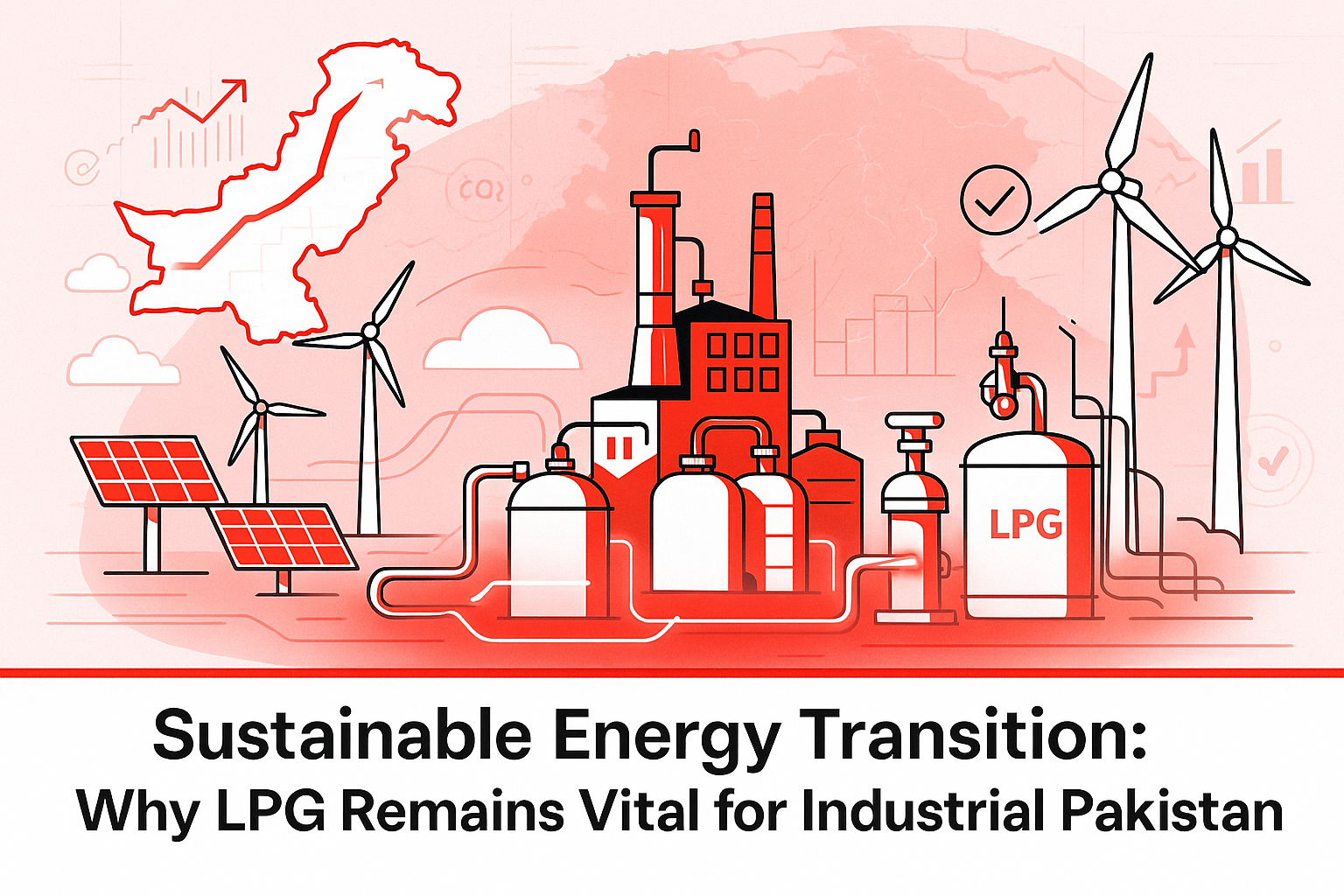
Sustainable Energy Transition: Why LPG Remains Vital for Industrial Pakistan

Illustration of Pakistan’s sustainable energy transition showing LPG storage tanks, solar panels, and wind turbines representing LPG energy Pakistan

Pakistan’s Energy Transition: The Road to Cleaner Industrial Power

Pakistan’s Growing Industrial Energy Demand

Pakistan’s industrial landscape is expanding rapidly — but this growth demands an equally robust and sustainable energy backbone. From textile manufacturing in Faisalabad to steel and cement plants in Karachi, industries power much of the nation’s economic progress. However, with frequent power outages, surging oil prices, and an overburdened gas supply chain, Pakistan faces a mounting energy challenge.

This is where the concept of LPG energy Pakistan becomes crucial. Liquefied Petroleum Gas (LPG) offers an adaptable and cleaner alternative for industrial heating, production, and machinery operations. Unlike natural gas, which faces pipeline constraints, LPG can be stored, transported, and utilised efficiently even in remote industrial zones. According to the Pakistan Energy Yearbook 2024, industrial energy consumption has increased by over 6% annually, creating a pressing need for diversified, reliable fuel sources.

The International Energy Agency (IEA) further highlights that industrial energy demand will continue to rise through 2030, particularly in developing economies. For Pakistan, this means balancing economic expansion with environmental responsibility — and LPG provides a realistic bridge between conventional fuels and future renewables.

Indus 3’s industrial gas solutions play a key role in ensuring that industries can make this shift safely and efficiently, using tested and certified components that meet global standards.


From Coal and Oil to Cleaner Alternatives

Historically, Pakistan’s industries have leaned heavily on coal, furnace oil, and diesel — all high in emissions and operational costs. These fuels, while accessible, have contributed to urban air pollution, reduced air quality, and increased carbon footprints across industrial zones.

Transitioning away from these sources requires not only policy support but also infrastructure and trust in safer technologies. LPG energy Pakistan addresses both concerns effectively. It produces significantly lower CO₂ emissions, burns cleaner, and offers higher calorific value per unit compared to coal or diesel. For industries seeking energy efficiency and compliance with future green regulations, LPG stands out as a practical solution.

Moreover, Pakistan’s government has started to align with the United Nations’ Sustainable Development Goals (SDGs), especially Goal 7: Affordable and Clean Energy. In this context, LPG serves as a reliable transitional fuel — available, affordable, and scalable.

Companies like Indus 3, a trusted energy partner in Pakistan, are empowering industries to adopt LPG systems that not only meet operational needs but also align with safety and sustainability standards.


Where LPG Fits in the National Energy Mix

While Pakistan explores renewable technologies like solar and wind, these systems cannot yet sustain heavy industrial demand on their own. The country’s National Energy Policy envisions a gradual transition where LPG, natural gas, and renewables coexist — ensuring continuity and resilience in energy supply.

Within this framework, LPG energy Pakistan acts as a cornerstone for stability. It bridges supply gaps caused by seasonal gas shortages and provides consistent fuel quality for industrial processes such as metal fabrication, ceramics, and textile production. LPG’s flexible storage and distribution model make it ideal for both small-scale factories and large manufacturing plants.

The IEA and World Bank both recognise LPG’s role in supporting developing countries through transitional energy phases. Its lower environmental impact and compatibility with existing equipment make it the most viable short-to-medium-term energy choice for Pakistan’s industries.

By promoting high-quality LPG systems — including vaporizers, regulators, and safety devicesIndus 3 ensures that businesses can meet production demands without compromising safety or efficiency. The company’s focus on modern, compliant, and locally accessible solutions makes it a leader in supporting Pakistan’s sustainable industrial growth.

As Pakistan progresses toward its 2030 sustainability targets, LPG will remain a critical enabler — not as a competitor to renewables, but as their strongest ally. This balance between economic development and cleaner energy will define the next chapter of Pakistan’s industrial evolution, with Indus 3 leading the transformation toward a safer, greener, and more efficient energy future.

Why LPG Is Pakistan’s Bridge Fuel Toward Sustainable Industry

Defining Transitional Fuels in Developing Economies

In the global shift toward cleaner energy, developing nations like Pakistan face a unique challenge — balancing industrial growth with environmental responsibility. Renewable sources such as solar and wind are expanding rapidly but still face limitations in scale, reliability, and infrastructure. Hence, the world increasingly relies on transitional fuels that can bridge the gap between conventional fossil energy and full renewable adoption.

This is where LPG energy Pakistan comes into focus. Liquefied Petroleum Gas serves as a bridge fuel, allowing industries to reduce emissions immediately without sacrificing performance. It is abundantly available, easy to transport, and compatible with existing equipment, making it ideal for Pakistan’s diverse industrial ecosystem.

According to the World Bank Energy Transition Data (2024), transitional fuels like LPG are instrumental in helping emerging economies lower carbon intensity while maintaining economic growth. In Pakistan’s context, where manufacturing forms the backbone of GDP, LPG provides the balance between sustainability and operational continuity — something coal and oil cannot achieve sustainably.


Environmental Benefits of LPG Energy Pakistan

Unlike conventional fossil fuels, LPG burns more completely, releasing fewer pollutants such as sulphur oxides, particulates, and carbon monoxide. This translates directly into cleaner air and reduced maintenance costs for industrial equipment. In regions like Punjab and Sindh — where industrial emissions have long plagued local air quality — a switch to LPG can make a measurable difference.

From a greenhouse gas perspective, LPG generates up to 20% less CO₂ compared to furnace oil and 50% fewer particulates than coal combustion, according to the UNDP Pakistan Clean Energy Programme (2025). This aligns directly with Pakistan’s pledge to cut carbon emissions by 50% under the Nationally Determined Contributions (NDCs) agreement.

The environmental edge of LPG energy Pakistan lies not only in emissions reduction but also in efficiency. LPG systems can be easily controlled for precise temperature applications, which reduces wastage and optimises energy use — a critical factor for industries like textile, ceramics, and food processing.

By adopting clean fuel Pakistan solutions, industries can meet both international sustainability standards and local compliance frameworks, such as OGRA’s safety and emission regulations.


Industrial Applications Driving the Shift

The rise in industrial LPG usage reflects both practicality and foresight. Sectors such as textile processing, ceramics, pharmaceuticals, and metallurgy are increasingly turning to LPG for heating, drying, and production applications. Unlike grid electricity or pipeline gas, LPG ensures uninterrupted operation, especially in areas where infrastructure is weak or inconsistent.

The flexibility of industrial gas supply Pakistan enables manufacturers to scale energy usage as required — without heavy capital investments. LPG cylinders and bulk storage systems allow companies to manage their own supply and reduce dependence on unstable grid systems.

In factories, LPG offers better flame control, higher energy output, and cleaner burning — qualities essential for maintaining product quality and operational safety. Many industries are now upgrading to modern LPG-based systems using high-quality LPG vaporizers and regulators provided by Indus 3, ensuring optimal fuel conversion and workplace safety.

Furthermore, as Pakistan gradually diversifies its energy portfolio, LPG will remain a pivotal player. Its proven track record in cost efficiency, reliability, and environmental performance makes it the ideal transitional energy source. It not only meets today’s industrial energy needs but also paves the way for a greener tomorrow — positioning LPG as the true bridge between fossil dependence and renewable progress in Pakistan’s evolving energy landscape.

Inside Pakistan’s Industrial LPG Infrastructure: Safety, Storage, and Supply Chain

The Importance of Safety-Driven Infrastructure

The growth of LPG energy Pakistan depends not only on supply and affordability but also on safety. Pakistan’s expanding industrial base increasingly relies on LPG for consistent energy, yet the infrastructure for storage, transportation, and handling remains a critical factor in ensuring both safety and sustainability.

Transporting LPG is inherently sensitive — it is a highly flammable gas that requires precision engineering and strict compliance with safety standards. Unfortunately, Pakistan has faced several incidents in the past due to inadequate equipment and poor safety practices. To prevent such occurrences, the Oil and Gas Regulatory Authority (OGRA) enforces comprehensive guidelines covering cylinder manufacturing, storage systems, and on-site handling.

Modern safety-driven infrastructure focuses on more than just storage — it includes gas flow management, leak prevention, and automated shutdown mechanisms. This is where Indus 3’s expertise comes into play. As a trusted supplier of industrial gas regulators and advanced LPG control systems, Indus 3 ensures that every installation meets international safety standards.

Their products, built with robust materials and precision control features, allow industries to operate confidently while minimising accident risks. In a landscape where safety defines reliability, Indus 3 is setting a national benchmark for industrial LPG systems.


LPG Storage and Vaporisation Systems

A stable and efficient LPG supply depends on proper storage and vaporisation systems. In Pakistan’s industrial context, these components are the backbone of smooth production lines. LPG arrives as a liquid but must be converted into gas form for usage — a process handled by vaporizers that maintain consistent pressure and temperature.

The LPG Vaporizers offered by Indus 3 are designed for optimal performance across varying temperature ranges and industrial loads. These units prevent freezing issues, ensure steady fuel output, and support continuous operations in demanding environments.

Storage facilities, whether above-ground tanks or bulk cylinders, must comply with OGRA-approved standards. According to the Dawn Business Energy Report (2024), several industrial accidents over the past decade were linked to outdated vaporisation equipment and substandard fittings — a stark reminder of the importance of investing in certified systems.

Modern LPG infrastructure also relies on LPG safety devices, including automatic shut-off valves, pressure regulators, and thermostats, to manage real-time operational risks. Indus 3 supplies a comprehensive range of these products, helping businesses align with global safety practices while maximising operational uptime.

For industries using LPG to power furnaces, boilers, or dryers, adopting reliable vaporisation and safety systems directly translates to reduced downtime and higher efficiency — a competitive advantage in Pakistan’s fast-growing manufacturing sector.


Indus 3’s Role in Reliable LPG Supply Chains

A secure LPG ecosystem is more than just equipment — it’s about trust, consistency, and expertise. Indus 3 has built a strong reputation as a trusted supplier of safe gas distribution systems across Pakistan, ensuring that industries can depend on their energy sources with confidence.

From LPG vaporizers Pakistan to advanced LPG safety devices, the company provides end-to-end solutions tailored to meet the specific requirements of industrial clients. Its product range includes high-performance regulators, ball valves, and flow meters, each designed to enhance safety and precision in gas management systems.

Through ongoing collaboration with engineers, plant operators, and safety inspectors, Indus 3 promotes a culture of safety awareness. The company conducts technical guidance and equipment training sessions, ensuring clients operate in full compliance with OGRA and international standards.

Economic and Environmental Edge: LPG vs. Other Industrial Fuels

Cost Efficiency and Fuel Flexibility

When factories switch from diesel to LPG, energy savings follow immediately. The financial advantage of LPG energy Pakistan lies in its superior combustion efficiency and predictable pricing structure. Industrial plants across the country have discovered that LPG not only burns cleaner but also delivers a higher calorific value per unit compared to conventional fuels like furnace oil or coal.

According to World Bank industrial energy studies, LPG achieves up to 90% energy conversion efficiency, compared to roughly 70% for diesel and 60% for coal-fired systems. This means less fuel is required to produce the same output — directly reducing operational costs. Moreover, LPG systems allow precise control of flame intensity and temperature, enabling better product quality and less material wastage.

From small manufacturing units to large-scale production plants, the ability to store and transport LPG flexibly makes it an invaluable asset. It supports decentralised energy access, especially for remote areas where pipeline gas is limited or unavailable.

⦿ Up to 30% cost reduction versus diesel in industrial heating
⦿ Consistent energy supply unaffected by grid instability
⦿ Scalable usage — from single-burner applications to multi-furnace systems

To ensure these systems function optimally, industries rely on LPG Regulators from Indus 3, known for their precise pressure control and safety compliance. These regulators maintain steady output even under high-demand conditions, ensuring smooth and efficient industrial operations.


Lower Emissions, Cleaner Air for Industrial Zones

The ecological benefits of LPG energy Pakistan are equally significant. Data from the International Energy Agency (IEA) shows that LPG emits substantially fewer greenhouse gases and pollutants than diesel or coal. For every tonne of output, factories using LPG produce up to 40% less CO₂ and 80% less particulate matter compared to diesel-based systems.

⦿ 40% lower CO₂ emissions than diesel
⦿ 50% fewer nitrogen oxides than furnace oil
⦿ Virtually zero sulphur emissions compared to coal

These figures highlight why LPG is increasingly favoured in industrial clusters such as Faisalabad, Karachi, and Gujranwala — regions where air quality and regulatory compliance are growing concerns. Cleaner combustion not only helps factories meet environmental standards but also extends the lifespan of machinery and reduces maintenance downtime.

Furthermore, the absence of soot and residue means cleaner working environments, improved employee health, and better indoor air quality — a key productivity factor in enclosed industrial setups.

For precision measurement and efficiency tracking, industries are incorporating Gas Flow Meters from Indus 3, which ensure accurate fuel consumption readings and help monitor performance against emission targets.


Long-Term Sustainability Metrics

In the broader context of Pakistan’s industrial development, LPG represents a smart balance between cost control, operational reliability, and environmental responsibility. The World Bank’s 2025 Clean Energy Transition Report identifies LPG as a practical “transitional energy” — an adaptable alternative that can coexist with renewables in hybrid energy systems.

For industrialists concerned about long-term sustainability, LPG energy Pakistan provides measurable results. It requires lower upfront investment than solar or biomass systems while offering immediate reductions in emissions. Moreover, modern LPG installations can easily integrate with future energy technologies, making them future-proof.

Indus 3’s commitment to precision engineering ensures that its vaporizers, regulators, and safety valves perform consistently under demanding industrial conditions. Each component is designed for maximum efficiency, safety, and compliance with OGRA and international standards.

In the race to decarbonise Pakistan’s industries, LPG emerges not just as a cleaner fuel — but as an economically sound strategy. By embracing LPG today, industries prepare themselves for a sustainable tomorrow, driven by innovation, efficiency, and trust in Indus 3’s expertly engineered LPG systems.

Policy and Regulation: How Government Support Shapes the LPG Sector

Pakistan’s LPG Policy Framework

Energy policy plays a defining role in shaping how countries like Pakistan transition toward cleaner and more sustainable fuel sources. Over the last decade, the government has gradually refined its framework to encourage diversification — recognising that reliance on a single energy source leaves industries vulnerable to shortages and price volatility.

In this evolving landscape, LPG energy Pakistan has emerged as a central pillar in the national energy mix. The Ministry of Energy (Petroleum Division), through its LPG Policy 2024, has reaffirmed the importance of promoting liquefied petroleum gas as a reliable, efficient, and environmentally responsible alternative to conventional fuels. This policy aims to improve energy accessibility for remote regions, reduce pressure on the national gas grid, and promote local LPG bottling and distribution facilities.

Moreover, policy directives have also focused on reducing import dependency by encouraging private-sector investment in local storage and processing facilities. These measures create a stable supply chain that benefits industries seeking uninterrupted energy for production. As part of this strategy, the government provides tax incentives and import reliefs for compliant LPG equipment — a move that has significantly boosted adoption across Pakistan’s industrial sector.


OGRA Safety Standards and Industrial Compliance

A key enabler of sustainable LPG adoption in Pakistan is the strong regulatory oversight provided by the Oil and Gas Regulatory Authority (OGRA). The authority has developed extensive safety guidelines covering the design, installation, and operation of LPG systems across industrial, commercial, and domestic sectors.

Compliance is non-negotiable, particularly for large-scale factories using LPG for heating, manufacturing, or processing applications. OGRA mandates periodic inspections, operator training, and the use of certified safety equipment. In this regard, Indus 3 stands as a prime example of an organisation that upholds and exceeds these standards. Its products — including vaporizers, regulators, and safety devices — are rigorously tested and approved for industrial-grade performance.

Through its consistent adherence to compliance and safety protocols, Indus 3 has built trust among manufacturers nationwide. As a trusted energy partner, the company’s certified systems ensure that clients remain fully aligned with OGRA’s regulations while benefiting from efficient and uninterrupted operations.

By emphasising the importance of transparency and documentation, OGRA’s standards have not only improved safety but also enhanced investor confidence in Pakistan’s LPG infrastructure. This regulatory clarity is vital for the continued expansion of LPG energy Pakistan as a sustainable industrial solution.


Encouraging Private-Sector Partnerships

The government’s push for clean energy transition cannot succeed without active private-sector involvement. Recognising this, recent policy measures have been designed to foster collaboration between public entities, energy companies, and private investors. The UNDP Industrial Decarbonisation Initiative (2025) underscores the importance of such partnerships in accelerating Pakistan’s journey toward low-emission industrialisation.

In the LPG sector, these partnerships manifest in the form of co-investment in bottling plants, storage terminals, and technology transfer programmes. Local manufacturers, supported by global technology providers, are helping raise the standard of industrial gas infrastructure across the country.

LPG energy Pakistan benefits directly from this synergy — creating a more competitive, innovation-driven market that improves access, affordability, and safety. Indus 3, by aligning its strategy with national objectives, plays an integral role in this ecosystem. Through strong collaborations with suppliers and compliance authorities, the company ensures that Pakistani industries receive high-quality, regulation-compliant LPG systems designed to international benchmarks.

As Pakistan continues to strengthen its regulatory and policy foundation, LPG remains a model of how effective governance, coupled with private innovation, can transform the industrial energy landscape — paving the way for a cleaner, safer, and more sustainable future.

Industrial Case Studies: LPG Efficiency in Real-World Operations

Textile and Food Processing Plants

The textile and food sectors represent the backbone of Pakistan’s manufacturing industry — and both have been quick to embrace cleaner fuels. In recent years, many factories have transitioned from diesel and furnace oil to LPG, resulting in significant operational and environmental benefits. The adoption of LPG energy Pakistan is proving to be a practical, results-driven solution across these high-demand industries.

In one major textile facility in Faisalabad, switching from diesel-fired boilers to LPG vaporizers led to a 28% reduction in fuel costs and a 35% decrease in carbon emissions, according to the company’s internal sustainability report validated under IEA Industrial Energy Efficiency Report 2024 benchmarks. The consistent heating control achieved through LPG helped maintain precise dyeing temperatures, reducing fabric waste and improving output quality.

Similarly, a leading food processing unit in Lahore replaced its ageing oil burners with modern LPG systems. The change improved operational uptime by 40% due to reduced maintenance downtime and cleaner combustion. Employees also reported improved air quality in production areas — a testament to LPG’s low particulate emissions.

Both case studies underline how industries can achieve measurable savings while meeting environmental compliance standards. LPG’s reliability and clean combustion profile continue to make it the preferred energy choice for production plants that cannot afford disruptions.


Cement and Ceramics Industries

Heavy industries such as cement and ceramics have traditionally been associated with high energy intensity and pollution levels. Yet, many forward-thinking manufacturers in Pakistan are now proving that economic growth and environmental responsibility can coexist — with LPG as the bridge.

In southern Punjab, a ceramics manufacturer converted its kiln systems to LPG vaporizers to achieve higher temperature stability. The results were impressive: fuel consumption dropped by 22%, and product rejection rates decreased by nearly 18% due to more consistent firing cycles. The cleaner combustion from LPG also reduced exhaust soot, extending kiln maintenance intervals by up to six months.

Meanwhile, a cement grinding plant in Khyber Pakhtunkhwa integrated LPG into its pre-heating process. Despite initial cost concerns, the plant achieved a 25% operational cost reduction within the first year, coupled with a marked decline in emissions — aligning with environmental performance targets defined by Pakistan’s National Energy Efficiency and Conservation Authority (NEECA).

These examples demonstrate that LPG energy Pakistan not only contributes to cleaner air but also strengthens profitability through better process efficiency and reduced equipment wear.


Indus 3 Equipment Delivering Proven Results

Behind these transformations lies the precision engineering and reliability of equipment designed for industrial LPG systems. Companies across Pakistan trust Indus 3 for providing high-quality, compliant products that ensure consistent gas flow, temperature control, and safety in demanding environments.

For example, factories that adopted the LPG Vaporizer 400 kg experienced seamless vaporisation even during peak loads — preventing production halts caused by pressure drops. Similarly, the RECCO Grey Regulator has been instrumental in maintaining stable pressure output, ensuring optimal fuel usage and safety under industrial-grade conditions.

Each component supplied by Indus 3 undergoes strict quality control and conforms to OGRA and international safety standards. Their solutions are tailored for the complexities of Pakistan’s industrial environment — combining durability, precision, and compliance.

The success stories from textiles, food, ceramics, and cement sectors affirm a clear message: LPG, when paired with engineered systems from Indus 3, drives measurable efficiency and long-term value. These real-world results showcase how smart energy choices can elevate both productivity and sustainability across Pakistan’s industrial landscape — proving that innovation, safety, and cleaner energy can thrive together under LPG energy Pakistan.

Challenges Ahead: Ensuring Consistency, Supply, and Innovation in LPG Energy Pakistan

Supply Chain Volatility and Pricing Pressures

Despite its growing importance, LPG energy Pakistan faces significant challenges that could slow its industrial expansion — the most critical being supply-chain volatility and fluctuating prices. As Pakistan remains heavily dependent on imported LPG, any shift in global oil and gas prices directly affects domestic costs. According to the OGRA Price Review 2025, international market changes, shipping delays, and currency depreciation have collectively contributed to periodic price surges of up to 18% year-on-year.

The World Bank Pakistan Energy Outlook notes that such volatility poses risks to energy-intensive industries that rely on consistent fuel costs for production planning. Cement, textile, and food processing plants — many of which have transitioned to LPG — are particularly vulnerable to these fluctuations.

Compounding this issue is the lack of large-scale domestic LPG extraction and processing facilities. While Pakistan produces limited LPG from its natural gas fields, domestic supply still covers less than half of national demand. This imbalance leads to dependency on imported cargoes, often at prices linked to international benchmarks like the Saudi Aramco Contract Price (CP).

To mitigate these pressures, Pakistan needs robust storage capacity, strategic reserves, and improved import infrastructure. Indus 3, by providing safe and efficient LPG handling systems, ensures that industries maintain operational resilience even amid market volatility.


Local Manufacturing and Technology Transfer

Reducing dependency on imported equipment and technology is vital to stabilising the LPG energy Pakistan ecosystem. The country’s long-term sustainability depends on developing local manufacturing capabilities, especially for high-precision components such as regulators, vaporizers, and thermostats.

The Dawn Business Energy Updates (2025) highlight that while Pakistan has a growing network of distributors and installers, most core components are still imported. This not only increases costs but also introduces delays during maintenance and expansion cycles.

In response, forward-thinking companies like Indus 3 are spearheading efforts to promote local assembly and R&D-driven innovation. By investing in local partnerships and knowledge exchange, Indus 3 enhances quality assurance while strengthening domestic capability.

Its ongoing initiatives in safety valves and thermostats manufacturing reflect this commitment. The company’s advanced range of LPG Thermostats is engineered to meet international safety standards while being adapted for Pakistan’s industrial environment — combining reliability with affordability.

Encouraging technology transfer through collaborations with global suppliers and engineering firms can further reduce costs and enhance product longevity, enabling Pakistan to position itself as a regional hub for LPG infrastructure solutions.


Innovation in LPG Storage and Automation

Beyond supply and manufacturing, technological advancement will shape the next phase of LPG energy Pakistan. As industries modernise, the demand for intelligent monitoring systems, automated control units, and real-time safety diagnostics continues to rise.

Automation in LPG storage and distribution can dramatically reduce human error, improve efficiency, and ensure regulatory compliance. Smart flow meters, temperature sensors, and remote monitoring devices are now essential components of modern industrial setups. These systems allow plant operators to track usage, detect leaks instantly, and optimise energy consumption — contributing to both safety and sustainability.

Indus 3 has been at the forefront of introducing automation-friendly equipment into Pakistan’s industrial gas sector. Its commitment to precision engineering and integration-ready designs ensures that future factories can adopt smart LPG management systems without overhauling existing infrastructure.

However, innovation must go hand-in-hand with regulatory adaptation. OGRA and the Ministry of Energy must continue updating safety codes to accommodate digital technologies and IoT-based monitoring, ensuring that automation enhances — not complicates — operational safety.

While challenges persist — from price instability to technological gaps — the path forward remains promising. With companies like Indus 3 championing local innovation and quality manufacturing, Pakistan’s LPG sector stands poised to evolve into a stable, technology-driven, and globally competitive industry — one that continues to power the nation’s industrial growth through cleaner, smarter, and more efficient LPG energy Pakistan solutions.
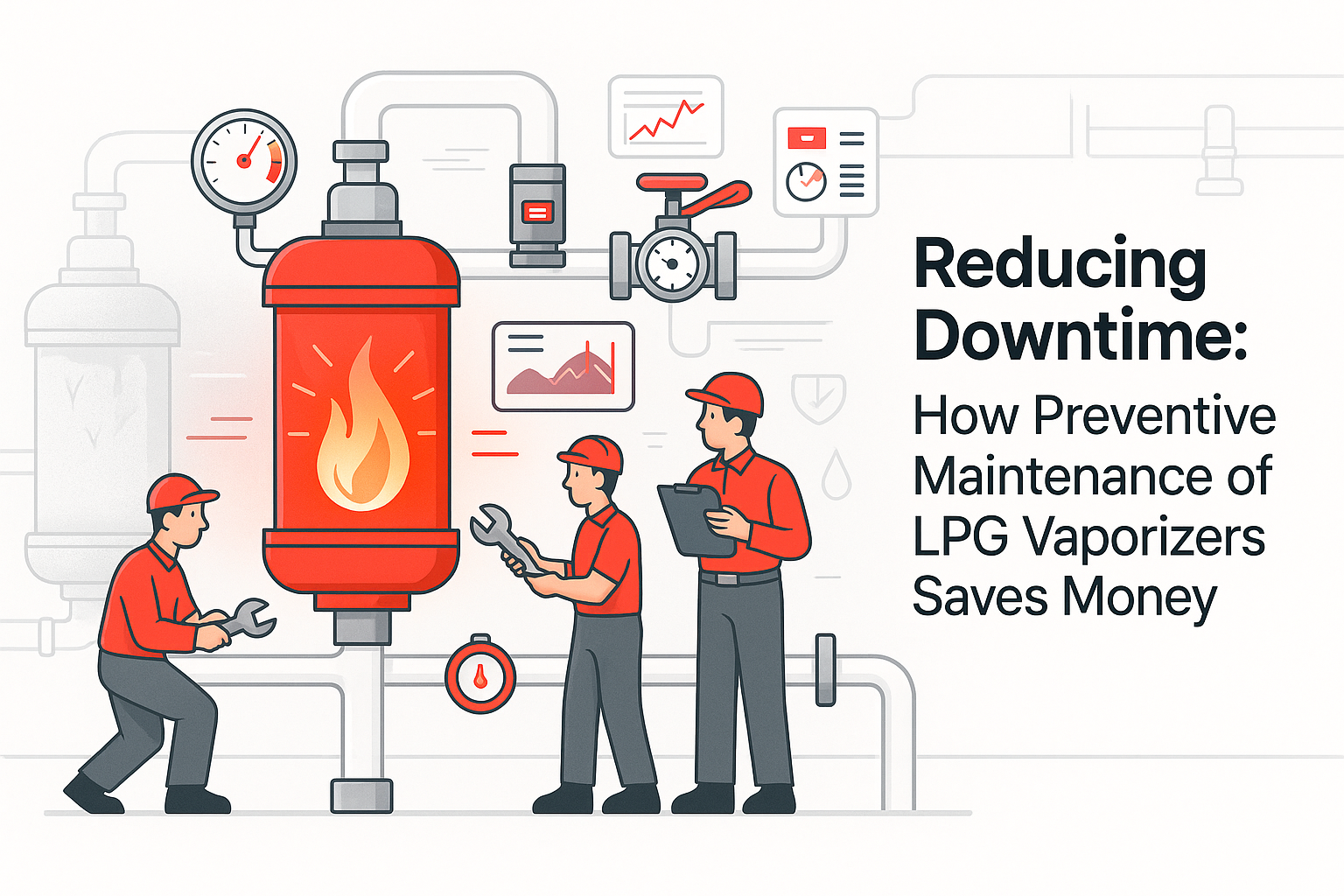
Reducing Downtime: How Preventive LPG Vaporizer Maintenance Saves Money

Industrial engineers performing LPG vaporizer maintenance on gas pipeline system — showcasing preventive care, safety valves, and thermostats to reduce downtime and save costs

Reducing Downtime: How Preventive Maintenance of LPG Vaporizers Saves Money

The Cost of Neglecting LPG Equipment

In industrial operations, even a few minutes of downtime can cause serious financial losses, production delays, and safety concerns. When the source of energy disruption is an LPG vaporizer, the consequences can be even more costly. That’s why LPG vaporizer maintenance isn’t just a technical routine — it’s a strategic investment in efficiency, safety, and profitability. Across factories, food processing units, and bottling plants in Pakistan, a single malfunction in the vaporizer can halt the entire gas supply chain, forcing unplanned shutdowns that ripple across operations.

An LPG vaporizer’s primary function is to convert liquid LPG (stored under pressure) into vapour form suitable for burners and industrial systems. It ensures a consistent flow of gas regardless of ambient temperature or demand fluctuation. When these systems are neglected or improperly serviced, the result is erratic gas pressure, incomplete vaporisation, and a risk of gas accumulation or flame instability — all of which can jeopardise productivity and safety.

According to the World LPG Association, regular servicing of vaporizers and associated equipment can significantly extend operational life and minimise unplanned failures. For companies in Pakistan where industrial LPG usage is rapidly increasing, implementing a preventive maintenance schedule is no longer optional — it’s essential.

Why Preventive Maintenance Saves More Than Repairs

LPG vaporizer maintenance goes far beyond occasional cleaning or filter replacement. It’s about ensuring every component — from thermostats and regulators to heaters and safety valves — performs as designed. Scheduled servicing identifies potential issues like scaling, carbon build-up, or moisture ingress before they evolve into expensive breakdowns.

A structured LPG vaporizer service includes inspections, temperature checks, electrical connections, leak testing, and cleaning procedures. During this process, technicians also verify the integrity of safety devices and confirm that the vaporizer maintains optimal efficiency levels. In many cases, simple preventive steps such as timely LPG vaporizer cleaning or replacing worn-out seals can prevent major repairs that would otherwise cost several times more.

Propane vaporizer maintenance follows similar principles, especially in systems where propane serves as the main fuel for heating or industrial processes. A dirty or neglected vaporizer can reduce fuel efficiency by up to 15%, leading to higher operating costs and increased emissions. Conversely, regular maintenance helps maintain consistent heat output, supports combustion stability, and reduces overall gas consumption.

For industries operating in Pakistan’s climate, vaporizers are also vulnerable to dust accumulation, moisture intrusion, and power fluctuations. Regular inspection and cleaning ensure that electrical heating elements remain protected and thermostats accurately control temperature. At Indus 3, specialists recommend maintenance intervals based on the vaporizer model, usage frequency, and environmental conditions, ensuring equipment reliability year-round.

Linking Reliability, Safety, and Profitability

In a competitive industrial market, uptime directly translates into profitability. Properly maintained LPG vaporizers not only reduce unplanned outages but also extend the life of associated accessories such as regulators, ball valves, and safety devices. Routine maintenance also minimises the likelihood of safety incidents that can lead to costly downtime or regulatory penalties.

By partnering with an experienced industrial gas solutions provider like Indus 3’s expert team, facility managers can implement a proactive maintenance schedule tailored to their equipment. This approach allows early identification of inefficiencies, ensures compliance with safety standards, and reduces energy wastage.

Understanding LPG Vaporizers and Their Role in Continuous Operations

How Does an LPG Gas Vaporizer Work?

To understand why LPG vaporizer maintenance is essential, it helps to first look at how these systems actually work. An LPG vaporizer’s job is to transform liquid LPG — typically stored under high pressure — into vapour form suitable for combustion in industrial burners, ovens, or furnaces. This process is vital in environments where demand is high or ambient temperatures are too low to allow natural vaporisation.

There are two main types of vaporizers used across industries: direct-fired and water-bath models.

A direct-fired vaporizer uses a burner to directly heat a heat exchanger that warms the liquid LPG, causing it to convert into gas. It’s efficient and compact, ideal for applications where a steady gas flow is required quickly. In contrast, a water-bath vaporizer uses an indirect heating method. Here, hot water or glycol transfers heat evenly to the LPG via a coil system, ensuring stable gas production without overheating.

Regardless of the type, the goal is the same — maintain a consistent flow of LPG vapour to keep processes running smoothly. This is where LPG vaporizer maintenance plays a decisive role. Over time, neglecting simple servicing tasks can disrupt this delicate process, causing inconsistent gas flow or even equipment failure.

Common Problems from Poor Maintenance

When vaporizers are not properly maintained, several issues can emerge that affect both performance and safety. One of the most common LPG vaporizer problems is a drop in outlet pressure. This can occur when internal coils become coated with carbon deposits or when water-bath systems experience scale formation. The result is restricted heat transfer, leading to inefficient vaporisation and unstable pressure output.

Another frequent issue involves faulty thermostats or heating elements that fail to maintain the correct temperature range. These faults can lead to incomplete vaporisation, frost build-up, or vapour starvation — all of which can interrupt production. Simple issues such as worn seals, corroded fittings, or debris accumulation inside the chamber can also compromise efficiency.

Poor cleaning practices are another major culprit. Without regular LPG vaporizer maintenance, dust, oil residue, or impurities in the LPG supply can clog filters and restrict gas flow. Such obstructions not only affect performance but can also increase energy consumption as the vaporizer works harder to maintain pressure.

In most cases, these challenges can be avoided with proactive inspection and servicing. A detailed LPG vaporizer troubleshooting routine — involving pressure checks, thermostat calibration, and visual inspections — ensures that small defects are corrected before they cause larger operational disruptions.

Why Maintenance Ensures Consistent Gas Pressure

Consistent pressure is the backbone of reliable industrial gas systems. Inconsistencies in LPG vapour delivery can cause burners to underperform, resulting in uneven heating, incomplete combustion, or even system shutdowns. Regular LPG vaporizer maintenance ensures that heat exchangers remain clean, thermostats accurate, and safety devices responsive.

By integrating preventive care, operators can extend the lifespan of key accessories such as regulators, ball valves, and flow meters — all available in the LPG Accessories section on Indus 3. Likewise, when replacement or upgraded units are needed, plant managers can source durable, industry-compliant models directly from the LPG Vaporizers range.

Following recognised industry standards, such as those published by the Petroleum Equipment Institute, ensures that maintenance practices align with global safety norms and local compliance requirements.

The Economics of Preventive Maintenance: Saving Time, Energy, and Money

Cost of Emergency Repairs vs. Scheduled Servicing

In any industrial setting, unplanned downtime is one of the most expensive forms of waste. When an LPG system fails, operations can come to a complete standstill — halting production lines, delaying orders, and disrupting delivery commitments. The root cause is often preventable, stemming from overlooked LPG vaporizer maintenance or irregular LPG vaporizer service.

Unscheduled repairs typically cost several times more than routine maintenance. Emergency call-outs, rush-order parts, and lost production hours can multiply costs rapidly. Conversely, implementing a planned service interval allows facility managers to control expenses, schedule downtime strategically, and ensure spare parts are available ahead of time.

According to the UK Health and Safety Executive (HSE), consistent preventive maintenance not only reduces system failure rates but also lowers operational risk in high-pressure gas environments. For facilities in Pakistan, where industrial LPG consumption continues to grow, these savings can translate into substantial long-term financial benefits.

By budgeting for regular LPG maintenance, businesses can turn unpredictable breakdowns into predictable, manageable expenses — improving both cost control and operational confidence.

Efficiency Gains Through Regular Maintenance

Preventive LPG vaporizer service does more than prevent failures — it enhances the overall efficiency of the system. A well-maintained vaporizer optimises the conversion of liquid LPG to gas, ensuring that energy output remains consistent even during high-demand periods. This reduces the amount of fuel needed to sustain production, cutting overall energy bills.

Small adjustments during service, such as recalibrating the LPG vaporizer setting, cleaning heat exchangers, or replacing thermostats, can significantly improve performance. Dirty or misaligned components often force vaporizers to work harder, consuming more electricity or fuel to produce the same amount of vapour. Over time, this inefficiency can raise operating costs by 10–20%.

By scheduling cleaning, inspection, and recalibration at recommended intervals, facility managers can maintain optimal temperature control, ensure uniform vapour delivery, and prevent unnecessary energy loss. This also extends the life of key accessories such as gas regulators, flow meters, and thermostats — reducing the frequency of replacements.

When parts do need replacement, sourcing them from trusted suppliers like Indus 3’s Shop Page ensures that genuine, durable components are used. Each product is designed to withstand industrial-grade performance demands, supporting long-term efficiency and safety.

Reducing Safety Risks and Maximising Equipment Life

Neglecting LPG vaporizer maintenance can have serious safety consequences. Gas leaks, pressure fluctuations, and incomplete vaporisation are common issues that may lead to hazardous situations. Regular inspection identifies problems early, such as worn seals or corroded connections, preventing gas leaks and potential fire risks.

A proactive maintenance plan also safeguards workers and equipment from sudden malfunctions. In addition to cost savings, it promotes a safer work environment that complies with national safety standards. A single safety incident can lead not only to equipment damage but also to production downtime, investigations, and higher insurance costs — all of which are avoidable with routine checks.

Over the long term, consistent maintenance increases the vaporizer’s lifespan by reducing mechanical stress, corrosion, and heat fatigue. This ensures that industrial plants can rely on steady LPG supply without frequent capital investment in replacements.

To streamline professional servicing, plant operators can schedule inspections or maintenance consultations directly via the Indus 3 Contact Page. Expert technicians can advise on maintenance intervals suited to each facility’s workload, environment, and equipment size.

Step-by-Step LPG Vaporizer Maintenance Checklist (Indus 3 Recommended)

Preventive LPG vaporizer maintenance is not just about extending equipment life — it’s about ensuring uninterrupted operations, energy efficiency, and safety compliance. For industrial and commercial facilities across Pakistan, following a structured maintenance schedule can drastically reduce the risk of failure and cut down on repair costs. Below is a comprehensive checklist designed by Indus 3’s technical experts, combining best practices with reliable component recommendations.


🔍 Daily and Weekly Inspection Tasks

Regular visual checks are the first line of defence against unexpected failures. Daily inspections help detect early warning signs that could escalate into costly issues if ignored.

Daily Checks:

  • Inspect for leaks around joints, valves, and pipe fittings using a soap-water test.

  • Check for frost build-up on the vaporizer surface — a sign of inefficient vaporisation or heat imbalance.

  • Observe pressure and temperature readings to ensure they stay within safe operational limits.

  • Examine the burner flame (for direct-fired vaporizers) — it should be steady and blue. Irregular flame colour may indicate contamination or burner obstruction.

Weekly Checks:

  • Clean external surfaces of the vaporizer to remove dust or residue that may trap heat.

  • Inspect electrical connections and wiring insulation for signs of wear or corrosion.

  • Drain condensation or water build-up in water-bath vaporizers to prevent rust or bacterial growth.

  • Ensure safety valves and relief devices are free from obstructions and respond correctly when tested.


🧰 Monthly Maintenance Procedures

Monthly tasks focus on LPG vaporizer cleaning and fine-tuning performance settings. Proper cleaning enhances heat exchange efficiency and prevents system overloading.

Monthly Tasks:

  • Clean gas filters to remove impurities that can block gas flow. Replace if clogged — Indus 3 recommends the Madas Gas Filter 2 Inch Mod FM for superior filtration and long-term durability.

  • Test thermostats for accurate temperature regulation. Malfunctioning thermostats can cause under- or over-vaporisation. Use replacements like the Rainbow 320F Industrial LPG Thermostat to maintain precision control.

  • Check LPG regulators and ball valves for leaks or sluggish operation. Reliable replacements include the LPG Brass Ball Valve Heavy Duty to ensure secure gas control.

  • Inspect and clean heat exchangers to remove scale, soot, or carbon residue.

  • Verify all gauges and pressure indicators are calibrated correctly for accurate readings.

Regular LPG vaporizer cleaning at this stage ensures the vaporizer operates at maximum efficiency while reducing strain on heaters and thermostats.


⚙️ Quarterly and Bi-Annual Servicing

Every three to six months, in-depth mechanical and safety inspections are necessary. These help identify early signs of wear or corrosion.

Quarterly and Bi-Annual Checks:

  • Perform leak and pressure tests under controlled conditions.

  • Inspect internal coils and heating elements for scaling or pitting corrosion.

  • Check insulation resistance for electrical heaters to prevent short-circuits.

  • Inspect mounting and support structures for stability and vibration damage.

  • Clean or replace air intake filters on direct-fired vaporizers.

  • Lubricate moving parts such as valves and actuator mechanisms.

At this stage, keep an LPG vaporizer repair kit on hand containing seals, gaskets, and small components. Having essential parts ready allows for quick LPG vaporizer repair and reduces downtime during service intervals.


🧯 Annual Full-Service Tasks

A full annual maintenance cycle ensures compliance with safety standards and guarantees long-term reliability. This service should be carried out by certified technicians familiar with both local and international LPG safety codes.

Annual Maintenance Checklist:

  • Completely drain and inspect the vaporizer for sediment, scaling, or corrosion.

  • Replace worn seals, gaskets, and O-rings using OEM-grade components.

  • Perform detailed performance testing, including output flow rate, vapor pressure, and efficiency under load.

  • Recalibrate safety devices and thermostats according to manufacturer specifications.

  • Inspect the electrical control panel and test grounding connections.

  • Verify compliance with international safety standards such as the NFPA LPG Code Guidelines.

Following these comprehensive steps ensures that the vaporizer maintains consistent performance, avoids emergency shutdowns, and continues to deliver safe, reliable vapour output for critical operations.


Why Routine Maintenance Pays Off

Adhering to this LPG vaporizer maintenance checklist minimises energy waste, improves safety, and ensures your system operates at peak performance year-round. By sourcing high-quality accessories from Indus 3, facility managers in Pakistan can depend on authentic components designed for durability and compliance.

Early Warning Signs: Identifying LPG Vaporizer Problems Before Failure

Pressure Drop and Inconsistent Gas Flow

Even the most reliable LPG vaporizers can experience performance issues if small faults go unnoticed. Early detection through LPG vaporizer troubleshooting is the key to preventing full-scale failures and costly downtime. One of the most common warning signs of a problem is inconsistent gas pressure at the outlet. When vapour pressure begins to fluctuate, burners or industrial heaters may operate unevenly, causing incomplete combustion or sudden flameouts.

This issue often points to a blocked gas filter, leaking valve, or damaged regulator diaphragm. Conducting regular inspections and pressure tests helps isolate the cause quickly. If you notice declining output despite normal operating temperatures, it’s time to clean or replace critical components. Replacing worn-out regulators — available in the LPG Regulators section — can restore stable gas flow and prevent unnecessary strain on the system.

If the issue persists, consider checking for leaks or cracks around joints and fittings. Using a leak detection solution or ultrasonic gas detector can help identify leaks that aren’t visible to the eye. In many cases, timely maintenance using an LPG vaporizer repair kit (which includes seals, O-rings, and pressure gaskets) can resolve the problem before it leads to complete failure.


Unusual Noises, Frosting, and Temperature Fluctuations

Another red flag during LPG vaporizer troubleshooting is unusual noise or vibration coming from the vaporizer unit. Rattling or hissing sounds may indicate internal blockage, uneven pressure distribution, or loose fittings. Left unchecked, these small signs can result in mechanical stress or cracking within the heat exchanger.

Frosting is another telltale symptom. While minor frost on pipes can occur naturally during vaporisation, excessive frost formation on the vaporizer shell often means improper heating or thermostat failure. A malfunctioning thermostat may fail to maintain the correct temperature balance, causing uneven vaporisation and reduced gas supply. Replacing faulty thermostats, such as the Rainbow 320F Industrial LPG Thermostat, helps restore optimal heat regulation.

Temperature swings can also signal issues with electrical heating elements or thermostat calibration. When the vaporizer runs too hot or too cold, fuel efficiency drops and component wear accelerates. Using authentic accessories and regular inspections ensures that the system maintains stable temperatures throughout the operating cycle.


Preventive Actions and Indus 3 Solutions

Many LPG vaporizer problems can be eliminated through consistent preventive care. Start with filter cleaning every month to remove impurities that restrict gas flow. Replace damaged filters and regulators using Indus 3’s high-quality parts to ensure long-term reliability. The LPG Safety Devices range offers certified valves and relief mechanisms that maintain system integrity and protect against overpressure incidents.

Implementing a structured inspection schedule helps technicians detect small irregularities before they escalate. Key preventive actions include:

  • Regular calibration of thermostats and regulators.

  • Checking for moisture build-up in water-bath vaporizers.

  • Cleaning carbon or scale from heating coils.

  • Tightening all fittings and verifying pressure relief valve function.

  • Keeping a stocked LPG vaporizer repair kit for immediate field replacement of worn seals or gaskets.

For advanced diagnostics or system overhauls, it’s best to consult qualified engineers who understand LPG system dynamics. Facility managers can schedule a service appointment directly through the Indus 3 Contact Page, ensuring expert assessment and safe, standards-compliant repair work.

According to the Energy Institute UK, proactive inspection and maintenance significantly reduce the likelihood of gas leaks and pressure instability in industrial fuel systems. Adopting these practices not only enhances operational reliability but also ensures compliance with safety standards applicable to LPG systems in Pakistan.


Reliability Through Vigilance

Detecting issues early is far less costly than managing system breakdowns. Simple observations — like unusual noises, frost patterns, or shifting pressure readings — often hold the clues to underlying LPG vaporizer problems. Combining routine inspection with quality components from Indus 3 ensures consistent vapour output, energy efficiency, and workplace safety.

Through disciplined LPG vaporizer troubleshooting and the use of trusted repair tools, facilities can avoid unexpected shutdowns, maintain peak efficiency, and extend the lifespan of their vaporizers — securing both performance and peace of mind.

The Role of Professional Servicing and OEM Components in Long-Term Reliability

Why Genuine Components Matter

When it comes to industrial LPG systems, reliability isn’t just about keeping the gas flowing — it’s about safeguarding people, assets, and productivity. Using genuine, OEM-grade components for LPG vaporizer maintenance is the cornerstone of operational safety and efficiency. Counterfeit or substandard parts may seem cost-effective initially, but they often lead to gas leaks, pressure inconsistencies, or premature system failure.

Every vaporizer, thermostat, and safety valve is engineered to function within precise tolerances. Using non-original parts compromises that integrity. For example, a cheap regulator might fail under high pressure, or an inferior thermostat may provide inaccurate temperature readings — both of which can disrupt the vaporisation process and create serious safety hazards. Genuine components, on the other hand, are rigorously tested to meet international safety standards and ensure long-term durability.

At Indus 3, quality is not negotiable. As one of Pakistan’s most trusted industrial gas equipment suppliers, the company only offers authentic products sourced from verified global manufacturers. Each component — whether it’s a heavy-duty safety valve, precision thermostat, or high-performance vaporizer — undergoes strict quality checks to ensure reliable performance even in challenging operating conditions.


Professional Servicing: The Difference Between Efficiency and Downtime

Industrial vaporizers demand specialised knowledge for installation, calibration, and maintenance. Professional servicing ensures that all safety devices, pressure regulators, and electrical elements work harmoniously. Skilled technicians use diagnostic tools to evaluate temperature balance, gas pressure, and energy efficiency. This level of precision reduces fuel wastage, prevents gas starvation, and maximises uptime.

Without professional oversight, even minor issues like faulty connections or clogged filters can escalate into full-blown operational stoppages. Engaging qualified service providers ensures that repairs are carried out with OEM-approved parts, eliminating the guesswork and ensuring compliance with recognised industry standards.

The LPG Vaporizers product list at Indus 3 features models built to meet international quality benchmarks, combining performance, safety, and durability. These include advanced vaporizers designed for continuous, high-volume applications, ensuring consistent pressure across all operating conditions.


Comparing Quality: Pakistan vs. International Standards

While many industrial buyers look at options such as LPG vaporizer manufacturers in India or search for the LPG vaporizer price in India to find cost-effective alternatives, it’s crucial to understand what those prices represent. Lower-cost imports often use lighter materials, non-compliant safety valves, or uncertified electrical systems. Although they may offer short-term savings, their long-term maintenance costs and risk of failure are significantly higher.

In contrast, Indus 3 supplies vaporizers and accessories that comply with both British Standards Institution (BSI) and international LPG safety codes. These products are built to last, ensuring consistent vapour output and safe pressure management over years of operation. Customers comparing the LPG vaporizer price should consider not just the upfront cost, but the value of efficiency, reliability, and compliance.

BSI guidelines emphasise that all LPG equipment must meet specific design, pressure, and performance criteria to ensure safe operation. Indus 3 adheres to these benchmarks, ensuring every component meets or exceeds international quality standards. This commitment to compliance means clients can operate their systems with complete peace of mind.


Indus 3: Your Trusted Partner in LPG System Reliability

With years of expertise in industrial gas systems, Indus 3 stands as a leading authority on safe, efficient, and reliable LPG solutions in Pakistan. From vaporizers and thermostats to regulators and safety valves, every product is selected to deliver superior performance under demanding industrial conditions.

Whether you’re installing a new system or replacing aging components, working with a trusted supplier ensures that every part contributes to the system’s longevity and efficiency. By combining professional servicing with genuine OEM components, you’re not just maintaining your LPG system — you’re protecting your investment.

In the long run, the difference between a low-cost part and a certified component can mean the difference between seamless operations and costly downtime. With Indus 3’s certified equipment and adherence to BSI standards, businesses across Pakistan can rely on consistent performance, reduced maintenance costs, and complete regulatory confidence.

Case Study: Preventive Maintenance Success in Industrial LPG Systems

Downtime Before vs After Maintenance

In early 2023, a large textile manufacturing facility in Faisalabad, Pakistan, faced recurring issues with its LPG supply system. The plant relied heavily on an industrial vaporizer setup to generate vapour for continuous dyeing and finishing processes. However, frequent shutdowns caused by inconsistent vapour pressure and thermostat failures were disrupting production schedules and increasing operational costs.

Before implementing structured LPG vaporizer maintenance, the factory experienced an average of 18 hours of downtime per month due to equipment malfunctions. Each outage not only halted production but also required emergency servicing and replacement of damaged parts. These unplanned interventions were costly and inefficient, contributing to higher fuel consumption and reduced machine lifespan.

In mid-2023, the company partnered with Indus 3, a trusted industrial gas equipment supplier in Pakistan, to introduce a preventive maintenance and LPG remodeling plan. The initiative focused on proactive inspection, regular cleaning, and scheduled replacement of worn-out components. Over a six-month period, measurable improvements were recorded across efficiency, reliability, and energy consumption.


ROI from Scheduled LPG Vaporizer Servicing

Following a detailed assessment by Indus 3’s engineers, the maintenance team replaced critical parts including regulators, valves, and heaters, which were identified as the root causes of previous failures. All replacements were sourced from Indus 3’s Shop Page to ensure genuine, OEM-grade quality and compliance with local safety standards.

Preventive steps were taken, such as periodic LPG vaporizer cleaning, recalibration of thermostats, and leak testing of all joints. Electrical elements were inspected for resistance irregularities, and new safety valves were installed to maintain consistent pressure.

Within just three months, the results were striking:

  • Downtime reduced by 72%, with monthly outages falling from 18 hours to under 5.

  • Energy savings improved by approximately 14%, thanks to optimised vaporisation and reduced re-heating cycles.

  • Repair frequency decreased by over 60%, as fewer components suffered heat or pressure damage.

The maintenance schedule also included quarterly propane vaporizer maintenance, as the plant operated dual-fuel systems. By maintaining both LPG and propane vaporizers, the company achieved better fuel flexibility and uninterrupted gas flow during seasonal demand fluctuations.

The financial return on investment was significant — within six months, the preventive maintenance programme had paid for itself by eliminating emergency service costs and lost production hours.


Long-Term Benefits and Industrial Insights

This case demonstrates the transformative value of preventive LPG maintenance and remodeling in Pakistan’s industrial sector. By adopting a structured servicing routine, the Faisalabad textile plant not only stabilised gas output but also extended the lifespan of its vaporizers by an estimated three to five years.

The improvements were made possible through expert guidance from Indus 3, whose technical specialists continue to monitor the system’s performance. They provided staff training on early fault detection, such as recognising frost patterns or pressure fluctuations — small signs that often precede larger system failures.

The company also invested in high-quality safety components, replacing older non-compliant devices with certified products from Indus 3’s Shop Page. These included thermostats, heavy-duty ball valves, and pressure regulators designed for continuous industrial use. The facility’s engineering team now conducts quarterly audits with Indus 3’s technicians, ensuring full compliance with local energy efficiency and safety standards.

For other industrial operators, this success story provides a strong case for moving away from reactive maintenance to a proactive model. Reliable LPG systems improve not just productivity but also sustainability by reducing energy waste.

As noted in the Pakistan Energy Yearbook, industrial energy efficiency initiatives — particularly those involving clean fuels like LPG — can significantly enhance output per unit of energy consumed. This aligns with national goals to improve energy productivity and reduce carbon emissions across Pakistan’s industrial base.

Facilities interested in replicating similar results can reach out to Indus 3’s expert team via the Contact Page for customised maintenance and system optimisation plans.

Conclusion & Call to Action — Partner with Indus 3 for Reliable LPG System Maintenance

Key Takeaways on Preventive LPG Maintenance

Throughout this article, one theme has remained constant — LPG vaporizer maintenance is far more than a technical necessity; it’s a smart business decision. Regular maintenance directly influences a facility’s bottom line by reducing unplanned downtime, extending equipment lifespan, and improving overall safety. From daily inspections to annual overhauls, every maintenance step plays a vital role in keeping industrial operations running efficiently and safely.

Preventive maintenance not only cuts the costs associated with emergency repairs but also ensures a stable gas supply for continuous production. Clean heat exchangers, properly calibrated thermostats, and leak-free valves translate into smoother operations and reduced energy waste. In short, a disciplined maintenance plan is an investment in reliability and profitability.

In earlier sections, we saw how proactive servicing — from LPG vaporizer cleaning and filter replacement to recalibrating vaporizer settings — helps facilities in Pakistan save thousands annually. Real-world results, such as the Faisalabad textile case study, prove that structured maintenance can reduce downtime by over 70% while improving fuel efficiency and safety standards.


Why Choose Indus 3 for LPG Equipment and Support

When it comes to industrial gas systems, trust and quality matter. Indus 3 has established itself as a leading industrial LPG equipment supplier in Pakistan, serving sectors such as textiles, food processing, and manufacturing. What sets Indus 3 apart is its unwavering focus on reliability, compliance, and long-term performance.

The company offers a comprehensive range of OEM-grade products, including:

  • LPG Vaporizers for continuous gas supply under fluctuating demand.

  • Heavy-duty regulators and thermostats that ensure precise control over pressure and temperature.

  • Industrial safety valves and accessories designed to comply with both local and international safety standards.

By sourcing from reputable global manufacturers, Indus 3 ensures that every component meets rigorous quality benchmarks. Each product undergoes technical validation to deliver safe, efficient, and consistent operation in demanding industrial environments.

Whether you need replacement parts, new installations, or a full system upgrade, Indus 3’s technical team provides personalised guidance tailored to your facility’s requirements. Their expertise extends beyond product supply — they help clients design and maintain LPG systems that align with best practices outlined by authorities such as the Oil and Gas Regulatory Authority (OGRA) Pakistan.


Your Next Step: Secure Efficiency, Safety, and Savings

If you’re ready to move from reactive repairs to proactive reliability, now is the time to act. Explore Indus 3’s extensive range of certified vaporizers, regulators, and safety devices on the Shop Page, or connect directly with their engineering team via the Contact Page for expert consultation and maintenance planning.

Indus 3’s professionals can help assess your existing setup, recommend optimal maintenance intervals, and supply genuine components designed for high-performance LPG systems. From small-scale commercial facilities to large industrial plants, their solutions are built to enhance efficiency, safety, and compliance — ensuring that your operations never stop running.


A Long-Term Commitment to Operational Excellence

Reliable energy is the backbone of every successful industry. By embracing a culture of preventive care, facilities can protect their infrastructure, reduce carbon emissions, and meet evolving safety standards with confidence. The long-term benefits of regular LPG vaporizer maintenance — lower energy costs, fewer breakdowns, and improved safety — far outweigh the short-term savings of delaying service.

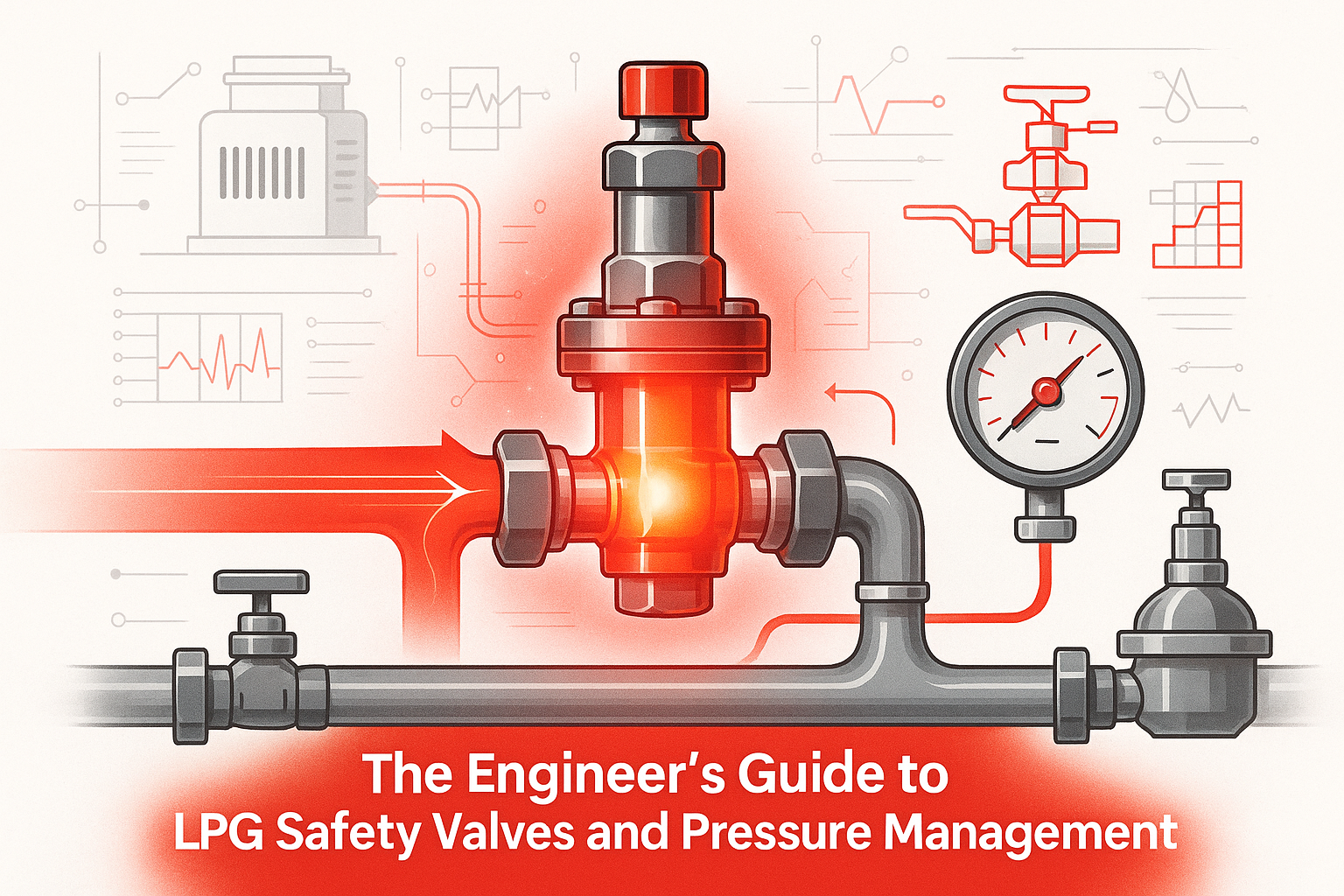
LPG Safety Valves in Pakistan: The Engineer’s Guide to Pressure Management and Industrial Safety

Professional illustration showing LPG safety valves in Pakistan for industrial pressure management — featuring brass valves, regulators, vaporizers, and flow systems

The Critical Role of LPG Safety Valves in Pakistan’s Industrial Infrastructure

Why LPG Safety Valves Matter in Modern Industries

In the world of industrial gas systems, safety is not a luxury — it is an absolute necessity. Nowhere is this more evident than in Pakistan’s rapidly expanding LPG sector, where LPG safety valves form the first line of defence against pressure-related hazards. From the massive refineries of Karachi to bottling plants across Punjab, each system depends on the integrity of a few crucial components — and among them, the safety valve stands as the silent guardian.

A single LPG safety valve can mean the difference between safe operations and catastrophic failure. These devices are engineered to automatically release excess pressure, preventing explosions, leaks, or system ruptures. As Pakistan continues to industrialise and adopt LPG as a cleaner alternative to other fossil fuels, the reliability of these valves has become paramount. This is where Indus 3, a trusted industrial gas equipment supplier, provides the engineering assurance that industries can depend on.

At Indus 3, each safety component — from vaporizers to regulators — is selected and tested according to international standards, ensuring robust protection for high-pressure systems. According to the Oil and Gas Regulatory Authority (OGRA) of Pakistan, adherence to approved safety standards is mandatory for all LPG facilities. This makes certified LPG safety valves Pakistan not only a technical requirement but also a legal obligation under OGRA’s LPG (Production and Distribution) Rules.

The importance of these valves extends beyond compliance. They also serve to enhance efficiency. When pressure levels remain stable, burners operate optimally, fuel wastage is reduced, and system lifespan increases. As outlined by the American Society of Mechanical Engineers (ASME) and ISO 4126, properly calibrated pressure relief devices ensure stable operations across complex LPG networks — from filling stations to industrial heating systems.

Pakistan’s LPG consumption has grown steadily in recent years, driven by energy diversification and increasing reliance on decentralised gas systems. This surge brings new challenges in maintaining uniform safety standards across hundreds of industrial plants. Indus 3 bridges this critical gap by supplying international-grade valves and fittings that meet the demands of large-scale industrial applications while complying with OGRA and PSQCA certification requirements.

The Engineering Challenge Behind Pressure Control

Pressure control in LPG systems is an intricate engineering discipline. Unlike natural gas networks, LPG systems handle liquefied gas that can vaporise rapidly with temperature fluctuations. This makes them inherently unstable without a properly designed safety mechanism. A well-calibrated safety valve must react instantly to abnormal pressure increases, venting excess gas before it endangers the system.

At the core of this design challenge lies precision engineering — the careful selection of materials, pressure ratings, and flow characteristics. Manufacturers such as REGO and MACS have spent decades refining valve mechanisms to achieve accurate blow-off pressures and minimal reseating leakage. Indus 3, as an authorised supplier of these trusted brands in Pakistan, provides engineers and plant managers with direct access to products that meet or exceed ASME and ISO performance standards.

Whether used in LPG bottling lines, industrial burners, or bulk storage tanks, these valves must maintain consistency under extreme temperature and load variations. The integrity of seals, the elasticity of springs, and the chemical resistance of the materials all determine performance and safety longevity.

As industries modernise across Pakistan, the call for locally available, globally certified LPG safety equipment has never been louder. Indus 3 answers this call with a commitment to engineering excellence, offering a comprehensive range of LPG safety devices and accessories designed for long-term reliability and compliance.

The engineering story of LPG safety valves is one of precision, protection, and partnership — and it is this story that continues into the next section, where we explore the types of safety valves and how each design serves a specific function in maintaining safe pressure levels across Pakistan’s LPG systems.

Understanding LPG Pressure Management: How Valves Maintain System Integrity

Fundamentals of LPG Pressure Regulation

Pressure regulation lies at the heart of every industrial LPG system. Whether in a bottling plant, textile factory, or power generation unit, maintaining the correct gas pressure is vital to ensure both performance and safety. In Pakistan, where industrial LPG adoption continues to accelerate, LPG safety valves play a critical role in balancing this delicate equation between efficiency and protection.

Liquefied Petroleum Gas (LPG) is stored under pressure in its liquid state. When released, it vaporises into gas — a process that rapidly increases pressure within pipes and tanks. Without a properly functioning regulator or relief valve, this pressure could exceed design limits, leading to ruptures or explosions. That’s why engineered systems always integrate LPG pressure relief valves and regulators in series, ensuring consistent downstream pressure while safeguarding equipment from overload.

According to OGRA’s LPG (Production and Distribution) Rules, all industrial LPG installations must be equipped with certified pressure control and safety devices that comply with ISO 4126 standards. This means every valve and regulator in the system must be calibrated to withstand Pakistan’s ambient temperature variations — a factor that significantly influences LPG vapour pressure.

At Indus 3, these engineering principles are embodied in a full range of regulators and safety valves. The LPG Regulator RECCO 041 1.5” Heavy Duty is designed for high-capacity applications, maintaining consistent output even under fluctuating input conditions. Similarly, the RECO Grey LPG Regulator ½ Inch provides precision control for smaller systems or distribution manifolds, ensuring balanced performance in light industrial use. Both models align with OGRA and Energy Institute UK safety benchmarks for gas flow management.

In essence, LPG safety valves Pakistan are not just regulatory requirements—they are engineering instruments that transform volatile gas into a safely usable energy source for the nation’s industries.


Key Engineering Parameters (Flow, Temperature, Pressure)

Designing and maintaining an industrial LPG system demands close attention to three interdependent engineering parameters: flow rate, temperature, and pressure. Each factor influences how the gas behaves, and each must be controlled to maintain safety.

1. Flow Rate:
Flow rate determines the amount of LPG that moves through a system per unit of time. Too high a flow can cause turbulence and uneven heating, while too low can reduce burner efficiency. Regulators such as the RECO LPG Regulator ½ Inch help stabilise flow across varying operational loads.

2. Temperature:
Temperature directly impacts vapour pressure. In Pakistan’s climate, daytime heat can cause a significant rise in tank pressure. Without relief mechanisms, this leads to dangerous overpressure conditions. Safety valves are engineered to discharge a controlled volume of gas when the temperature-induced pressure exceeds preset thresholds.

3. Pressure:
Pressure control is the cornerstone of LPG system safety. Excessive internal pressure can damage pipelines, vaporizers, and burner assemblies. Here, the LPG pressure relief valve functions as an automatic release point, restoring equilibrium instantly and preventing catastrophic failure.

To achieve optimal performance, engineers typically rely on a two-stage regulation process:

  • Primary regulation to reduce tank pressure to an intermediate level.

  • Secondary regulation to fine-tune pressure for appliance or process use.

This layered approach ensures system stability even during heavy load fluctuations, such as in textile processing plants or bottling facilities where demand can shift abruptly.

In advanced systems, multiple safety valves and regulators are installed in redundancy — a strategy recommended by the Energy Institute (UK) to ensure continuous protection even if one component fails.

Key benefits of an effective LPG pressure management system include:

  • Enhanced operator safety and reduced accident risk.

  • Lower maintenance costs due to controlled system stress.

  • Improved fuel efficiency and combustion quality.

  • Compliance with OGRA and international standards (ASME, ISO).

By integrating robust safety and regulation equipment, businesses in Pakistan can create reliable, high-performing LPG systems that meet modern industrial expectations. With Indus 3’s certified portfolio of valves, regulators, and accessories, industries can confidently maintain pressure stability while safeguarding lives and assets.

For more information on certified regulators, explore Indus 3’s LPG Regulators — engineered for precision, durability, and international compliance.

Types of LPG Safety Valves: From Pressure Relief to Excess Flow Systems

When managing industrial LPG systems, selecting the correct safety valve is as critical as the installation itself. Each type of valve serves a distinct purpose — from controlling pressure surges to isolating gas flow in emergencies. In Pakistan’s growing industrial landscape, where LPG networks power textile plants, bottling stations, and manufacturing units, understanding these valve categories helps engineers design safer and more efficient systems. Indus 3 supplies internationally certified components from REGO and MACS, ensuring both compliance and performance in all operating conditions.


Pressure Relief Valves (PRVs)

The Pressure Relief Valve (PRV) is the cornerstone of every LPG safety setup. Its primary role is to automatically vent excess gas when internal pressure surpasses the system’s design limit. Without it, the contained LPG could rapidly expand, causing structural failure or explosions.

PRVs are typically spring-loaded, with a preset pressure point that opens the valve when system pressure becomes unsafe. Once equilibrium is restored, the valve reseats itself, maintaining airtight performance.

In Pakistan, models like the REGO LPG Safety Valve 3129L and LPG Pressure Relief Valve PRV REGO A8436G have become industry standards due to their precision engineering and reliability. These devices are designed according to ASME Section VIII and ISO 4126 standards, ensuring predictable blow-off pressure and leak-tight reseating.

Engineers prefer brass or stainless-steel PRVs for their corrosion resistance and long service life in high-pressure environments. The LPG Safety Devices category at Indus 3 features a range of PRVs suited for both vapour and liquid-phase systems.

Example technical features:

  • Set Pressure Range: 250–400 PSI

  • Discharge Coefficient (Cd): Optimised for stable venting

  • Material: Brass, Stainless Steel

  • Temperature Tolerance: -40°C to +65°C

Figure 1: Cross-section of a spring-loaded PRV showing set pressure and reseating mechanism (Image Placeholder)

These valves are essential in industrial LPG systems across Pakistan, where daily temperature variations can cause rapid internal pressure changes. Proper installation and periodic inspection of PRVs are critical to meet OGRA safety compliance.


Excess Flow and Shut-Off Valves

While PRVs control overpressure, Excess Flow Valves (EFVs) respond to sudden or uncontrolled gas flow — typically caused by a pipeline rupture or equipment failure. When a break occurs, the valve senses the abnormal surge and shuts off instantly, preventing LPG discharge.

One of the most widely used models in Pakistan’s industrial sector is the Excess Flow Valve for LPG Tanks – Brass Safety Valve 2 Inch, known for its robust body and fast response time. These valves are commonly installed at tank outlets or manifold connections where gas flow can escalate suddenly.

EFVs work on a simple principle: a spring-loaded piston or ball remains open under normal flow but closes automatically when flow exceeds a calibrated threshold. Once the downstream pressure equalises, it resets automatically — a design that makes it both efficient and maintenance-friendly.

Example Applications:

  • LPG bulk storage tanks

  • Cylinder filling plants

  • Vapouriser feed lines

  • Tanker loading bays

The combination of REGO’s precision and MACS engineering reliability gives operators peace of mind. Both brands are globally recognised for exceeding NFPA 58 and EN 12864 standards. You can explore certified models directly on Indus 3’s Shop Page for availability and pricing.


Combination and Multi-Function Valves

Modern LPG systems demand more than isolated protection. This is where combination and multi-function valves come in — integrating pressure relief, excess flow, and shut-off features within a single assembly. These valves reduce installation complexity, minimise leakage points, and provide redundancy for high-risk environments such as refineries and transport depots.

Combination valves can include:

  • A PRV for overpressure protection

  • An EFV for flow isolation

  • A manual shut-off lever for emergency control

Manufacturers like REGO and MACS design these multi-functional valves to handle both liquid and vapour phases, making them ideal for Pakistan’s multi-temperature LPG conditions. Their design ensures compliance with international safety codes and simplifies maintenance for plant engineers.

Example Model: REGO 3129L series combination safety valve — offering integrated discharge and isolation capabilities.

Figure 3: Schematic diagram of a multi-function LPG valve assembly showing relief and shut-off sections (Image Placeholder)

By incorporating these advanced valve systems, industries not only enhance plant safety but also streamline operational control. Indus 3 remains Pakistan’s premier source for such certified components, backed by technical support and supply reliability.

To verify technical specifications or operating parameters, engineers can consult the official RegO Products Datasheets — a globally recognised reference for LPG system design and maintenance.

Global Standards and Pakistan Regulations: Ensuring LPG Safety Compliance

International Compliance: ASME, ISO 4126, EN 14994

Safety in LPG system engineering is not a matter of convenience — it is a global commitment to precision, consistency, and risk mitigation. Around the world, LPG safety valves are manufactured and tested under strict international standards that define every detail, from material composition to pressure performance. These frameworks ensure that each valve, whether installed in Europe, the Middle East, or Pakistan, performs with the same level of reliability under identical conditions.

The most recognised standards for LPG safety valves include:

  • ASME Section VIII (Boiler and Pressure Vessel Code): Governs the design and construction of pressure relief devices, setting benchmarks for discharge capacity, spring tension, and material durability.

  • ISO 4126 (Safety Devices for Protection Against Excess Pressure): Specifies the design and testing procedures for pressure relief valves, focusing on repeatable accuracy and failure prevention.

  • EN 14994 (European Standard for LPG Pressure Equipment): Details operational performance, corrosion resistance, and environmental safety for valves used in gas storage and distribution systems.

Manufacturers like REGO and MACS strictly comply with these standards, ensuring their products deliver consistent results across varied industrial conditions. These valves undergo rigorous factory testing — including hydrostatic, seat leakage, and set-pressure calibration — before being distributed worldwide.

For engineers designing or maintaining industrial LPG systems, understanding these standards is critical. A single deviation in pressure calibration or valve tolerance can lead to system instability, safety risks, and non-compliance with insurance and government requirements.

Indus 3, as an authorised distributor of internationally recognised brands, aligns its product line with these certifications. Each REGO or MACS valve available through Indus 3 meets or exceeds ASME and ISO benchmarks, ensuring consistent performance and long-term reliability in Pakistan’s demanding industrial climate.

To explore certified safety valves for your industrial applications, visit Indus 3’s About Page to learn about the company’s quality commitments and engineering partnerships.


Pakistan’s OGRA and PSQCA Standards for LPG Safety

While global standards ensure engineering consistency, Pakistan’s national authorities — OGRA (Oil and Gas Regulatory Authority) and PSQCA (Pakistan Standards and Quality Control Authority) — enforce these principles locally to protect industrial facilities and public safety.

Under OGRA’s LPG (Production and Distribution) Rules, every LPG installation — whether a bottling plant, storage terminal, or cylinder-filling facility — must be equipped with certified valves, regulators, and vaporizers that meet approved specifications. The regulation explicitly requires compliance with ISO 4126 and ASME Section VIII for all safety valves used in domestic and industrial LPG networks.

The PSQCA further ensures that all imported or locally manufactured valves meet material integrity and calibration standards before market approval. Regular audits, random testing, and inspection of supplier records help maintain national safety compliance. These measures collectively form the foundation of LPG safety valves Pakistan law, ensuring that only tested, certified, and traceable components are installed in critical gas-handling facilities.

Indus 3’s engineering and quality teams actively maintain documentation and compliance with these authorities. Each REGO, MACS, or Madas valve distributed by the company comes with verifiable certification, test data, and serial traceability — giving industrial clients confidence in both quality and regulatory adherence. This approach exemplifies LPG safety valves Pakistan engineering at its finest: precision-built, tested under global standards, and approved for national use.

Industrial buyers are encouraged to verify certification records or seek custom compliance documentation by contacting the technical team via Indus 3’s Contact Page. Their experts provide guidance on OGRA-approved products, system design compliance, and testing requirements for new or existing installations.

By adhering to both international and national frameworks, Indus 3 ensures that every valve it supplies — from pressure relief systems to excess flow protection — meets the dual criteria of engineering excellence and legal conformity.

Inside the Engineering: How Pressure Relief Valves (PRVs) Work

Mechanics of a Pressure Relief Valve

A Pressure Relief Valve (PRV) is one of the most critical components in any industrial LPG system, designed to automatically release excess pressure from tanks or pipelines before it exceeds the system’s design limits. Its mechanical operation is deceptively simple yet engineered with exceptional precision to ensure flawless reliability under high-stress conditions.

When the internal system pressure reaches the PRV’s set pressure, the force acting on the valve disc overcomes the spring tension holding it closed. The valve instantly opens, allowing the gas to escape through a discharge path, relieving excess pressure within milliseconds. Once equilibrium is restored, the spring reseats the valve, sealing the system again without leakage.

This automatic sequence — set pressure → lift (blow-off) → reseating — is fundamental to safe LPG operations. Proper calibration is essential: if the set pressure is too low, the valve may open unnecessarily, reducing system efficiency; too high, and it may fail to prevent a rupture.

A typical spring-loaded PRV includes a disc, nozzle, spring, spindle, and adjustment screw. The spring tension determines the activation point, while the disc and nozzle interface ensures a tight seal during normal operation. During pressure discharge, the gas flow creates an upward thrust (known as blowdown), which rapidly clears the excess before reseating.

Figure 1: Cross-section view of a spring-loaded PRV showing lift point and discharge path.

Internationally recognised models like the LPG Pressure Relief Valve PRV REGO A8436G are widely used in Pakistan’s LPG plants due to their precise calibration and durable design. These valves conform to ASME Section VIII and ISO 4126 standards, providing consistent response characteristics across temperature variations — a key factor in Pakistan’s hot industrial environments.

For smaller installations, such as cylinder filling and distribution systems, the NG/LPG Pressure Relief Valve 1 inch – MACS offers robust flow control with quick reseating action. Meanwhile, LOT Valves for 45 Kg LPG Cylinders – MACS integrate PRV technology within a compact assembly, optimising space while ensuring compliance with OGRA’s LPG (Production and Distribution) regulations.


Material Selection and Design Factors

The performance and longevity of a PRV depend significantly on material selection and design integrity. LPG, being a hydrocarbon-based gas, can corrode or degrade unsuitable materials over time — especially under fluctuating pressure and temperature cycles.

  • Body Material: High-grade brass or stainless steel is preferred for its corrosion resistance and ability to withstand continuous exposure to LPG vapour.

  • Seat Material: Soft-seated designs often use PTFE or NBR for tight shutoff and resilience against temperature variations.

  • Spring Alloy: Typically composed of chrome-silicon steel, providing excellent elasticity and fatigue resistance even after thousands of pressure cycles.

  • Sealing Integrity: O-ring seals are designed to prevent leakage during minor pressure fluctuations, ensuring consistent performance.

Manufacturers such as REGO and MACS subject their valves to comprehensive testing, including hydrostatic, leak, and blowdown tests, guaranteeing both durability and accuracy. These tests simulate real-world pressure events, verifying valve response at various flow rates and system configurations.

Indus 3 ensures that every safety component in its portfolio meets international specifications, offering industrial clients the reassurance of certified, field-tested performance.


Recommended PRVs for LPG Plants in Pakistan

For large-scale LPG facilities in Pakistan — including bottling, distribution, and storage plants — Indus 3 offers a wide selection of REGO and MACS valves tailored to operational needs:

  • REGO ½ Inch Industrial Safety Valve: Designed for vaporizers and pipeline systems, featuring precision-calibrated discharge and reseating characteristics.

  • LPG Safety Vaporizer ¼ Inch: Ideal for smaller capacity systems requiring accurate low-pressure relief.

  • LPG Pressure Relief Valve PRV REGO A8436G: Suitable for medium to high-pressure industrial setups.

  • NG/LPG Pressure Relief Valve 1 Inch – MACS: Optimised for general industrial applications with consistent blowdown performance.

  • LOT Valves for 45 Kg LPG Cylinders – MACS: Compact, integrated safety valves for portable or small-scale installations.

Each of these models is engineered to maintain compliance with OGRA, ASME, and ISO 4126 requirements, offering guaranteed protection against overpressure events. By using globally certified components from Indus 3, Pakistani industries ensure not only legal conformity but also operational peace of mind.

For further engineering details or selection guidance, technical professionals can refer to the RegO Valve Technical Manual or consult best practice documentation from the Petroleum Safety Authority Norway, both of which provide comprehensive data on PRV design and maintenance.

Selecting the Right LPG Safety Valve for Industrial Use

Choosing the correct LPG safety valve is a crucial step in ensuring both operational efficiency and safety within an industrial gas system. Each valve must be matched precisely to system parameters such as flow rate, operating pressure, and temperature range. In Pakistan’s diverse industrial settings — from manufacturing plants to LPG bottling depots — improper valve selection can lead to leakage, poor regulation, or even catastrophic overpressure events. To prevent such failures, engineers must evaluate several performance metrics before installation.

At Indus 3, every safety component — from pressure relief valves to ball valves and vaporizers — is designed to meet international engineering standards while remaining accessible to local industries. Engineers and technicians looking to buy safety gas valve online at the best price in Pakistan can find a complete range of globally certified REGO, MACS, and Madas products tailored for both low- and high-pressure LPG systems.


Key Parameters for Selection

Selecting an LPG safety valve begins with evaluating the system’s technical requirements. The following parameters should always be considered before purchasing or specifying a valve:

1. Inlet and Outlet Size
The valve size must correspond to the system’s pipe diameter. A mismatch can lead to flow restrictions or excessive backpressure. For small systems or vaporizers, a ¼ inch valve (such as the REGO ¼ Inch Safety Valve Vaporizer) is often sufficient. For higher capacity systems, 1-inch or 2-inch valves are more suitable to handle increased gas discharge.

2. Pressure Rating (Set Pressure)
Each safety valve has a calibrated set pressure — the point at which it activates. For LPG systems, this typically ranges between 250 to 400 PSI depending on tank design and local climate. Valves should comply with OGRA regulations and be tested according to BSI and ISO 4126 standards for consistent accuracy and reliability.

3. Material Selection (Brass vs Stainless Steel)

  • Brass: Highly corrosion-resistant and ideal for standard industrial environments. The LPG Brass Ball Valve Heavy Duty exemplifies durability with minimal maintenance.

  • Stainless Steel: Recommended for high-temperature or corrosive conditions, providing superior longevity and structural integrity under stress.

4. Temperature Limits
Since LPG systems experience rapid temperature changes due to phase transition, valves must handle a wide range of thermal conditions. Most industrial valves at Indus 3 are rated for temperatures between -40°C and +65°C, ensuring consistent performance across Pakistan’s varying climates.

5. Connection Type and Seal Integrity
Threaded (BSP/NPT) or flanged connections must align with existing pipelines. Engineers should prioritise valves with precision-machined threads or welded flanges to maintain leak-proof operation under dynamic pressure. Proper sealing — often using PTFE or nitrile materials — prevents micro-leakage and preserves system efficiency.

6. Certification and Compliance
Always ensure that valves bear certification marks from OGRA, ASME, or BSI, verifying their authenticity and suitability for industrial LPG systems. Indus 3’s partnership with internationally recognised brands guarantees adherence to these global standards.


Compatibility with LPG Vaporizers and Regulators

A well-designed LPG system operates as an integrated unit — the safety valve, regulator, and vaporizer all working in harmony to maintain stable gas flow. Engineers must therefore match each valve to the pressure dynamics of the vaporizer or regulator it supports.

For instance, the REGO ¼ Inch Safety Valve Vaporizer is specifically engineered to work with LPG vaporizers ranging from 100 kg to 400 kg, offering reliable venting during high-pressure fluctuations. Similarly, valves paired with high-pressure regulators such as the LPG Regulator RECCO 041 1.5” Heavy Duty ensure consistent discharge and protection across multiple industrial setups.

When selecting valves for LPG vaporizers, engineers should verify:

  • Operating pressure range of both the vaporizer and valve.

  • Flow capacity (Cv) to ensure adequate discharge in emergency conditions.

  • Installation orientation, as some PRVs are designed for vertical mounting only.

Indus 3’s Shop Page provides comprehensive product specifications and sizing charts for each safety device, simplifying compatibility checks for new and retrofit projects.

Figure Placeholder: Diagram illustrating valve-vaporizer-regulator integration in an industrial LPG system.

Using certified valves not only enhances operational safety but also ensures compliance with the British Standards Institution (BSI) pressure equipment directive, which governs selection, installation, and testing of all safety-critical gas components.

With Indus 3’s wide range of certified LPG safety products — from compact relief valves to heavy-duty brass ball valves — engineers across Pakistan can build resilient, compliant, and efficient gas systems that stand the test of time.

Maintenance, Testing, and Common Failures of LPG Safety Valves

A reliable LPG safety valve is only as effective as its maintenance routine. Over time, exposure to pressure cycles, temperature fluctuations, and environmental contaminants can degrade the internal components of even the most precisely engineered valves. For plant engineers and safety officers, establishing a structured LPG system inspection and maintenance schedule is essential to preventing unplanned shutdowns or dangerous system failures.

At Indus 3, every safety device supplied — from pressure relief valves to excess flow valves — is built for durability and long-term operation. However, like all mechanical components, they must undergo regular inspection and testing to ensure continued compliance with OGRA and NFPA 58 standards. Understanding inspection protocols, recognising early signs of wear, and working with qualified technicians can significantly extend valve lifespan and improve system integrity across Pakistan’s industrial LPG networks.


Routine Inspection and Test Procedures

Regular inspection of LPG safety valves is the cornerstone of industrial safety maintenance. According to OGRA’s LPG (Production and Distribution) Rules, all safety valves in service must be tested and calibrated annually by certified technicians or third-party inspectors. Similarly, the NFPA 58 LP-Gas Code recommends testing intervals based on usage frequency, operating environment, and system pressure classification.

Recommended inspection and testing protocols include:

  • Visual Inspection (Monthly/Quarterly): Check for visible damage, corrosion, or contamination on the valve body and outlet ports.

  • Hydrostatic Test (Annually): Performed using water to verify valve strength and integrity under simulated operating pressure.

  • Leak Test (Annually): Confirms seat tightness and seal effectiveness, ensuring no gas escapes under normal conditions.

  • Set Pressure Verification: Conducted using calibrated test benches to confirm that the valve opens at the specified set pressure and reseats properly.

Calibration must be performed with reference to ISO 4126 and ASME Section VIII guidelines. Each valve is tagged with the next inspection due date to ensure full traceability — a practice endorsed by the Health and Safety Executive (UK) for pressure systems.

For industrial clients in Pakistan seeking inspection or recalibration assistance, Indus 3’s technical support team provides expert maintenance services and product testing guidance. You can reach them through the Contact Page for inspection scheduling and service requests.


Signs of Wear, Corrosion, and Leakage

Understanding early warning signs can prevent catastrophic valve failures. Operators should monitor for:

  • Spring Fatigue: Repeated pressure cycles can weaken the spring, delaying valve opening or preventing reseating.

  • Seat Leakage: Caused by dirt accumulation, corrosion, or material degradation, leading to constant minor venting.

  • Corrosion and Erosion: Especially in humid or outdoor installations, oxidation can compromise metal integrity and affect calibration.

  • Sticky or Jammed Mechanisms: Build-up of hydrocarbon residues can restrict valve movement, preventing correct activation.

When these issues are detected, immediate isolation and replacement are necessary to avoid operational hazards. Using OEM-certified components like those found in Indus 3’s LPG Safety Devices category ensures consistent quality and compatibility during replacements.

Indus 3 also recommends maintaining a service logbook that documents each inspection, test result, and replacement — ensuring compliance with OGRA audit requirements and improving traceability during system certification.


Role of OGRA-Certified Technicians

The reliability of an LPG safety valve is not just a function of its design — it depends on the expertise of those who install, inspect, and maintain it. OGRA-certified technicians are trained to test safety valves according to national and international safety frameworks, guaranteeing accurate calibration and documentation.

These certified professionals use specialised equipment to perform hydrostatic and pneumatic testing, confirm set pressures, and evaluate blowdown recovery rates. Their reports are vital for compliance verification and insurance approval for industrial facilities operating under regulated LPG handling licenses.

At Indus 3, all service recommendations align with OGRA and NFPA standards, ensuring that every safety device installed or serviced meets the legal and technical benchmarks required in Pakistan’s industrial sector.

Regular LPG safety valves Pakistan testing not only extends the equipment’s lifespan but also ensures the uninterrupted, safe operation of entire gas networks — protecting infrastructure, workforce, and productivity.

For professional inspection scheduling, component testing, or replacement valve sourcing, contact Indus 3’s technical specialists via their Contact Page for certified assistance.

Conclusion & Call to Action: Trust Indus 3 for Certified LPG Safety Valves in Pakistan

Why Engineers Trust Indus 3

In the world of industrial gas engineering, precision and safety go hand in hand. From large-scale refineries to small bottling plants, the role of LPG safety valves in Pakistan cannot be overstated — they are the first and last line of defence in protecting both people and infrastructure from the dangers of overpressure and system failure. Every valve, regulator, and vaporizer installed in a facility forms part of a carefully designed ecosystem that ensures stability, compliance, and efficiency.

Throughout this guide, we have explored how pressure management, valve types, and regular testing work together to uphold industrial safety standards. Yet, these technical measures can only achieve their purpose when paired with certified, high-quality equipment — and that’s where Indus 3 stands as the trusted authority in Pakistan’s industrial gas sector.

As an authorised supplier of REGO, MACS, and Madas, Indus 3 combines global engineering excellence with local market expertise. Each product in its inventory undergoes stringent testing and quality assurance, conforming to international standards such as ASME Section VIII, ISO 4126, and EN 14994. The company’s reputation is built on consistency, technical support, and a relentless commitment to safety — making it the preferred partner for engineers across Pakistan.

Whether your application involves LPG bottling, storage, or vaporization, Indus 3 provides a full spectrum of industrial solutions that guarantee both performance and peace of mind.


Your Partner in LPG Safety and Performance

At Indus 3, safety isn’t just a compliance requirement — it’s the foundation of everything we deliver. Our extensive inventory includes:

  • LPG Vaporizers (400 kg – 900 kg): Designed for stable gas conversion across temperature ranges.

  • LPG Regulators: Precision-engineered models like the RECCO 041 1.5” Heavy Duty Regulator ensure accurate downstream pressure control.

  • Thermostats: Industrial-grade units such as the Rainbow 320°F Industrial LPG Thermostat for precise temperature regulation.

  • Ball Valves: Durable components like the LPG Brass Ball Valve Heavy Duty for high-pressure systems.

  • Flow Meters: Accurate measurement tools for maintaining process consistency and safety compliance.

Each of these products integrates seamlessly into LPG systems built to OGRA, PSQCA, and NFPA 58 standards — ensuring every valve and fitting contributes to safer operations.

For plant engineers seeking reliable solutions, Indus 3 provides not only equipment but also technical consultancy and after-sales support. Clients can explore the full catalogue via the Shop Page or connect directly with the team through the Contact Page for assistance in selecting and installing the right safety components.

In an era where industrial safety is tied directly to sustainability and operational efficiency, Indus 3’s certified range of LPG safety valves and accessories enables industries across Pakistan to achieve both with confidence.


Enhance your plant’s safety and efficiency — choose Indus 3’s certified LPG safety solutions today.

By aligning with global standards and offering locally supported, field-tested products, Indus 3 empowers industries to adopt a proactive safety culture that reduces downtime, ensures compliance, and safeguards lives.

For engineers and procurement professionals who value reliability, traceability, and precision, Indus 3 isn’t just a supplier — it’s your long-term partner in performance and protection.

To learn more about best practices in LPG safety management, refer to global authorities like the World LPG Association, which continues to advocate for international safety and operational excellence in the LPG industry.

Heavy-Duty Reliability: Why Brass Valves Still Dominate Industrial LPG Systems | Indus 3

High-quality illustration of LPG brass valves Pakistan in an industrial pipeline system showing durability, pressure control, and safety engineering — featured on Indus 3 blog

The Enduring Strength of LPG Brass Valves in Pakistan

What Makes Brass the Standard for LPG Systems?

When it comes to LPG brass valves Pakistan, few materials have proven as dependable and long-lasting as brass. Across industrial gas systems, from energy plants to bottling facilities, brass remains the gold standard — not merely because of tradition, but due to its unmatched combination of strength, corrosion resistance, and thermal stability. In a nation where industries depend on consistent gas flow under high pressure, reliability is not a luxury; it’s a necessity. Brass valves deliver precisely that reliability, making them the foundation of Pakistan’s growing industrial infrastructure.

Unlike cheaper alloys or synthetic materials, brass maintains performance in both humid coastal areas and hot, arid interiors — ensuring that critical systems stay operational regardless of environmental stress. Its superior machinability allows for precise sealing surfaces that prevent leaks, and its natural resistance to corrosion minimises maintenance cycles, reducing overall operational downtime.

Why “LPG Brass Valves Pakistan” Matters for Industry

The demand for LPG brass valves in Pakistan has surged as industries across the country shift toward automation and process standardisation. From textile mills in Faisalabad to bottling plants in Karachi, every operation that relies on LPG needs stable pressure control and zero leak tolerance. This is where brass outshines alternative materials.

According to the Pakistan Engineering Council (PEC), the safe handling and distribution of LPG depend heavily on the integrity of fittings and valves used throughout industrial systems. Brass, with its unique blend of copper and zinc, provides the mechanical strength needed for high-pressure LPG environments while maintaining elasticity — a crucial factor in absorbing system vibrations and pressure variations. Furthermore, compliance with British Standards (BS EN 331) ensures that locally produced brass valves align with international safety and performance criteria, reinforcing trust among engineers and plant managers alike.

As industrial processes evolve, so too does the importance of quality materials. With the rise of automated gas control systems and real-time monitoring, brass valves continue to play a vital role in achieving precision and safety within Pakistan’s energy and manufacturing landscapes.

Indus 3’s Role in Reliable Gas Infrastructure

At the forefront of this industrial evolution stands Indus 3 — a leading supplier of industrial LPG equipment in Pakistan. Through their nationwide distribution of certified LPG accessories, including brass valves, regulators, and safety devices, Indus 3 has become synonymous with reliability and trust. Each product is rigorously inspected to meet international standards and engineered to serve Pakistan’s rapidly expanding network of LPG systems.

Beyond product supply, Indus 3 actively promotes education and awareness within the industry, advocating for the use of certified components that enhance safety and sustainability. Their mission aligns with Pakistan’s broader shift toward industrial automation, where durability and precision engineering are central to long-term success.

By choosing Indus 3’s certified brass valves, industries secure more than just a product — they gain a partner committed to operational integrity, safety, and performance excellence. This solid foundation sets the stage for understanding why brass, from a material science perspective, continues to dominate industrial LPG systems — a topic explored in the next section.

The Science Behind Brass: Material Composition and Durability

Inside the Alloy: Copper–Zinc Balance

At its core, brass is not a simple metal but a carefully balanced alloy of copper and zinc, engineered to deliver mechanical resilience and chemical stability. This unique composition explains why LPG brass valves Pakistan remain the first choice for high-pressure gas systems across industrial sectors. The copper–zinc ratio, typically between 60:40 and 70:30, determines brass’s flexibility, hardness, and corrosion resistance — the very traits that make it indispensable in LPG valve manufacturing.

Brass’s copper base contributes to its exceptional ductility and resistance to fatigue, while zinc enhances hardness and tensile strength. This precise metallurgical balance ensures that each valve can withstand continuous stress from pressure fluctuations in LPG pipelines without deforming or cracking. According to research published on ScienceDirect, brass alloys perform consistently under high loads and temperatures, offering long-term durability superior to many alternative materials.

For LPG brass valves in Pakistan, where ambient temperatures can vary dramatically between 0°C and 50°C, this metallurgical stability is critical. Whether in a humid coastal refinery or a dry inland factory, the alloy retains its shape, seal integrity, and flow performance.

Corrosion Resistance and Temperature Tolerance

Corrosion is one of the most significant threats to any pressurised gas system. However, brass’s natural ability to resist corrosion, especially against moisture and chemical exposure, ensures a longer operational life. This property is essential for LPG brass valves Pakistan, where varying humidity levels and airborne contaminants could otherwise degrade system components.

Brass forms a thin, self-protecting oxide layer that prevents further oxidation, meaning it doesn’t rust like iron or steel. In LPG applications, where valves often encounter butane, propane, and trace impurities, this passive protection maintains both aesthetic and mechanical integrity. The ASTM B16 and EN 12165 standards classify brass alloys based on their mechanical properties and corrosion performance, ensuring global consistency in safety and quality.

Temperature tolerance is another hallmark of brass. With a melting point of around 900–940°C, brass retains its structure well beyond typical LPG operating temperatures. It also handles rapid thermal cycling — a condition common in gas vaporisers and industrial heaters — without expansion-related failures. This durability makes brass the preferred material for components connected to regulators and flow meters, where accuracy and pressure control are vital.

Comparing Brass with Steel and Aluminium

When comparing brass with materials like steel or aluminium, the difference in performance under LPG system conditions becomes apparent. Steel, while strong, is highly susceptible to rust and requires additional coatings or galvanisation — adding both cost and maintenance overhead. Aluminium, though lightweight, lacks the necessary pressure resistance and can deform under prolonged stress.

In contrast, brass offers the ideal strength-to-weight ratio, combining resilience with workability. It allows for tighter machining tolerances, which means valve seats and threads can be manufactured with extreme precision, ensuring leak-proof seals. Indus 3 sources precision-milled brass valves with uniform wall thickness and safety margins that exceed industry benchmarks. This ensures each component operates flawlessly within Pakistan’s demanding industrial environments.

Moreover, brass’s compatibility with elastomeric seals and gaskets makes it a safer, longer-lasting choice for modular LPG systems. When integrated with LPG regulators, brass valves deliver smoother gas flow and minimise energy loss — a critical advantage for both safety and efficiency.

Ultimately, the science behind brass explains its dominance: a metallurgical masterpiece tailored for endurance, precision, and reliability. From microstructure to macro performance, it’s this combination that keeps LPG brass valves Pakistan at the forefront of industrial gas safety and engineering innovation.

Performance Under Pressure: Safety and Compliance Standards

Pressure Ratings and Leak Prevention

In industrial gas systems, pressure is not just physics—it’s a safety promise. Every connection, every seal, and every valve must perform flawlessly under intense conditions where even minor leaks can have major consequences. That is why LPG brass valves Pakistan have become the trusted standard for industries that depend on precision-engineered safety.

Brass, by nature, provides superior resilience to pressure fluctuations. Its balanced alloy composition absorbs vibration and prevents microfractures that could lead to leaks over time. At Indus 3, each valve undergoes hydrostatic testing — a method that subjects valves to pressures well beyond their normal operating limits to verify structural integrity. This ensures that every product leaving the facility can withstand real-world stresses in LPG bottling plants, industrial vaporiser systems, and high-capacity distribution networks.

Leak prevention is further ensured through precision machining. Brass allows for tighter sealing tolerances and smoother thread finishes than alternative metals, reducing the risk of gas seepage even under fluctuating pressure. When integrated with LPG safety devices, these valves create a closed safety ecosystem that meets international best practices for gas handling and control.

Global Standards: ISO 9001, EN 331, and OGRA Compliance

Compliance with global safety standards is non-negotiable in the industrial gas sector. Indus 3’s LPG brass valves Pakistan are manufactured under strict adherence to ISO 9001 quality management systems and tested in accordance with EN 331 — the European standard for manually operated shut-off valves for gas appliances and pipelines. These certifications guarantee that every valve is designed for longevity, uniformity, and zero-defect performance.

In Pakistan, the Oil and Gas Regulatory Authority (OGRA) serves as the benchmark for industrial safety in LPG infrastructure. All valves supplied by Indus 3 comply with OGRA-approved material and pressure standards, ensuring safe operation across varied industrial applications. Independent verification by third-party agencies further strengthens this compliance, providing traceability through batch coding and stamped certification marks on each valve body.

As confirmed by ISO.org and OGRA’s official guidelines, maintaining such compliance not only protects human lives but also safeguards entire industrial assets. Adhering to these standards means valves are tested for operational endurance, internal leakage, and rapid shut-off response—each critical for preventing fire hazards or gas-related accidents.

Testing and Quality Assurance in Pakistan

Before reaching end users, Indus 3’s valves undergo a series of multi-stage quality assurance checks that mirror global best practices. Each batch is tested for:

  • Hydrostatic pressure retention, simulating real-world LPG pressure loads.

  • Leak integrity, using helium or nitrogen under controlled laboratory conditions.

  • Dimensional precision, ensuring that valve threads, seals, and seats match ISO and OGRA specifications.

These tests are conducted both internally and by third-party inspection bodies to validate that every unit is safe for industrial deployment. Every valve carries a traceable batch code that links back to its inspection and certification records, giving engineers and buyers complete confidence in product authenticity.

Through rigorous quality assurance, Indus 3 has established itself as a leader in safe and compliant gas control components. Their products represent more than engineering excellence — they reflect a commitment to Pakistan’s evolving industrial safety culture, where certified LPG brass valves are not an option, but an absolute requirement.

Why Brass Outperforms: Real-World Industrial Applications

Textile and Food Industries

In Pakistan’s thriving industrial heartlands, the hum of machinery rarely stops. From the weaving looms of Faisalabad’s textile mills to the heat-intensive cooking lines of Karachi’s food processing plants, gas-powered systems run around the clock. At the centre of these operations lie components that most people never notice—but without which production would grind to a halt: LPG brass valves Pakistan.

In textile manufacturing, brass valves regulate LPG flow to dyeing, heating, and drying machines. These processes often involve high temperatures, humidity, and continuous pressure fluctuations. Brass’s unique ability to endure repetitive thermal cycles makes it ideal for such demanding conditions. Its structural integrity remains intact even after thousands of open-close operations, preventing costly gas leaks and unplanned shutdowns.

In the food industry, hygiene and reliability are paramount. Brass, unlike iron-based materials, resists oxidation and surface corrosion, ensuring gas purity and system cleanliness. This feature reduces contamination risks—essential in food packaging and baking lines that depend on consistent thermal output. The low maintenance needs of brass valves also mean fewer operational disruptions, an advantage that translates directly into higher productivity and lower maintenance budgets.

Energy, Bottling, and Transport Sectors

Beyond textiles and food production, brass valves play a vital role in energy, bottling, and transport infrastructure. LPG bottling plants across Punjab and Sindh rely on brass valves for precise filling and flow control. The strength of brass ensures safe sealing even during rapid pressure fluctuations common in bulk transfer systems.

In the energy sector, brass valves form part of safety circuits in gas-fired power units and heat exchangers. These environments subject materials to extreme thermal stress, but brass’s superior tensile strength and corrosion resistance guarantee stability and longevity. According to Engineering Review Pakistan, the use of brass fittings in gas installations has grown steadily due to their proven ability to maintain performance in Pakistan’s varied climate—from coastal humidity to desert dryness.

The transport industry benefits equally. Tanker trailers carrying LPG across the country depend on heavy-duty brass valves for loading, unloading, and emergency venting. Their non-sparking property adds another layer of safety, reducing fire risks during high-pressure transfer operations. For road and rail logistics, the durability of brass translates directly into safer journeys and fewer leak-related incidents.

Case Snapshot: LPG Vaporizer Systems in Action

Perhaps the most telling demonstration of brass’s reliability can be found in LPG vaporizer systems, where heat, moisture, and high pressure converge. In these systems, brass valves control the precise release of liquid LPG into vaporizers that convert it into gas form for industrial combustion. These valves must endure continuous cycles of heating and cooling while maintaining leak-proof performance.

Indus 3 supplies heavy-duty brass valves specifically designed for such setups, featuring tight tolerances and reinforced sealing mechanisms. When paired with components like LPG heaters, these systems deliver unparalleled operational stability. Brass’s natural thermal conductivity also helps dissipate heat evenly, preventing pressure spikes and ensuring smooth system behaviour.

Reports from Dawn Business highlight Pakistan’s ongoing expansion of LPG-powered systems in manufacturing, logistics, and energy generation. As industries adopt automation and digitised controls, the dependability of mechanical components like brass valves becomes even more critical.

Ultimately, the real-world success stories across sectors—from fabric mills to fueling depots—underscore one clear truth: LPG brass valves Pakistan outperform alternatives not just in theory, but in every environment where reliability, safety, and endurance are non-negotiable.

Economic and Environmental Edge: Sustainability of Brass

Recyclability and Circular Manufacturing

As Pakistan’s industries shift toward eco-efficient manufacturing, sustainability is no longer just a corporate value—it’s a competitive advantage. Within this movement, LPG brass valves Pakistan stand out as a sustainable engineering solution, combining durability with full recyclability. Unlike composite or coated metals, brass is 100% recyclable without losing its structural integrity or metallurgical properties.

Every time a brass valve completes its lifecycle, it can be melted and remoulded into new industrial components, supporting the principles of circular manufacturing. This drastically reduces the environmental footprint of production, as recycled brass consumes up to 80% less energy than primary smelting from raw ores. According to reports from the United Nations Industrial Development Organization (UNIDO), recycling non-ferrous metals like brass is one of the most effective pathways to sustainable industrial growth in developing economies.

For a country like Pakistan, where industrial waste management and energy efficiency are rising concerns, choosing materials that can be reused indefinitely is both an economic and environmental win. By sourcing certified brass valves from Indus 3’s shop, businesses directly contribute to reducing their carbon footprint while maintaining performance standards that meet international benchmarks.

Long Lifespan Equals Lower Waste

Beyond recyclability, brass’s long operational lifespan significantly reduces industrial waste generation. When compared with cast iron or mild steel, brass valves last up to three times longer under identical pressure and temperature conditions. This longevity reduces the frequency of replacements, meaning fewer discarded components, lower material turnover, and minimal system downtime.

In practical terms, a well-maintained brass valve can operate efficiently for more than a decade, even in harsh LPG environments. Its resistance to corrosion, stress cracking, and pitting ensures it continues to perform safely with little to no degradation. This is particularly important in high-humidity industrial zones such as Karachi or coastal Balochistan, where corrosion-related failures in steel valves are a recurring problem.

According to the World Bank’s Sustainable Energy Reports, increasing component longevity directly contributes to national sustainability goals by reducing material consumption and promoting energy-efficient manufacturing cycles. In this context, LPG brass valves Pakistan not only enhance operational safety but also align with global environmental performance targets.

Economic Efficiency for Pakistani Industries

Sustainability often comes with financial benefits, and brass valves are a clear example. While the upfront cost of brass components may be slightly higher than that of iron or plastic alternatives, their extended lifespan, lower maintenance requirements, and recyclability lead to a significantly lower total cost of ownership (TCO).

Factories that switch to brass valves experience reduced maintenance intervals, lower energy loss due to tighter seals, and fewer emergency replacements. Over time, these savings compound—making brass not only the safer but also the smarter investment for long-term LPG infrastructure. This cost-efficiency is particularly crucial for medium-sized Pakistani manufacturers aiming to balance profitability with sustainable operations.

Indus 3’s focus on precision-engineered brass fittings ensures that every valve offers measurable economic value alongside environmental responsibility. Businesses interested in optimising both performance and sustainability can contact Indus 3 for expert advice on selecting the most efficient LPG accessories tailored to their systems.

Ultimately, brass represents the perfect equilibrium between economic durability and environmental responsibility. As Pakistan accelerates its industrial transformation, adopting sustainable materials like brass isn’t just a choice — it’s an investment in the nation’s industrial future.

Engineering Precision: How Indus 3 Ensures Quality Control

Certified Manufacturing Partnerships

When it comes to LPG brass valves Pakistan, precision isn’t optional—it’s the foundation of trust. Indus 3 partners with certified global valve manufacturers that follow internationally recognised quality systems and material standards. These partnerships ensure that every component supplied by Indus 3 meets stringent OGRA, ISO, and EN 331 requirements before reaching industrial sites across the country.

Each manufacturing partner is carefully vetted for process control, certification history, and compliance with TÜV SÜD and Intertek testing standards—organisations globally respected for their industrial inspection expertise. These certifications validate not just material integrity, but also pressure resistance, dimensional accuracy, and surface finish quality. Such collaboration allows Indus 3 to maintain a continuous feedback loop between manufacturing and performance testing, guaranteeing consistent results for Pakistan’s demanding industrial environments.

By aligning with these certified global manufacturers, Indus 3 ensures that its valves are not only robust and compliant but also traceable through batch and lot documentation. This traceability builds buyer confidence and simplifies maintenance planning for industrial engineers and plant managers nationwide.

Advanced CNC Machining and Inspection

Behind the reliability of Indus 3’s LPG brass valves Pakistan lies meticulous precision engineering. Each valve is crafted using CNC machining technology, allowing for micrometre-level accuracy across sealing faces, threads, and orifices. This ensures a perfect fit with regulators, flow meters, and gas control assemblies—key to preventing leakage and maintaining pressure stability.

Every production batch undergoes a sequence of dimensional checks and hydrostatic testing, simulating real-world operating conditions to verify tolerance consistency and pressure retention. These tests are OGRA-compliant and follow international benchmarks set by EN 12165 and ASTM B16 for brass material composition and machining standards.

To further ensure reliability, Indus 3 performs lot-based quality verification, where valves are randomly sampled, tested, and documented before shipment. This proactive approach eliminates the possibility of substandard components entering the market, protecting both end users and industrial infrastructure.

According to Intertek’s industrial valve testing protocols, such mechanical precision combined with third-party inspection provides the most effective safeguard against performance variability. Indus 3 integrates these principles into every stage of production, maintaining flawless alignment between engineering design and operational safety.

Distribution Network Across Pakistan

Precision alone means little without accessibility. Indus 3 complements its manufacturing excellence with a robust nationwide distribution network that ensures prompt delivery and customer support. From Karachi’s industrial ports to Lahore’s manufacturing clusters and northern refinery zones, Indus 3’s logistics system ensures that certified valves, regulators, and accessories reach clients on time and in perfect condition.

Through its Shop Page, customers can easily browse and order high-quality LPG accessories, while the company’s technical teams provide professional consultation for complex installations. For organisations seeking to verify Indus 3’s expertise, the About Us page details its mission, certifications, and partnerships—further demonstrating its commitment to transparent, high-quality industrial solutions.

Each delivery is backed by clear documentation, inspection certificates, and after-sales support, allowing engineers to maintain full compliance records. This reliability has positioned Indus 3 not just as a supplier but as a trusted engineering partner in Pakistan’s industrial gas ecosystem.

With certified manufacturing alliances, advanced machining, and dependable nationwide logistics, Indus 3 continues to raise the benchmark for quality assurance in LPG brass valves Pakistan—delivering components that embody precision, safety, and performance excellence across every industrial sector.

Market Comparison: Pakistan vs South Asia in Brass Valve Manufacturing

Regional Manufacturing Landscape

Across South Asia, the brass valve manufacturing industry has evolved into a critical pillar of industrial infrastructure. However, when examining LPG brass valves Pakistan vs South Asia, Pakistan’s market demonstrates a distinct balance of cost efficiency, material quality, and compliance that sets it apart from regional competitors like India, Bangladesh, and Sri Lanka.

Pakistan’s brass industry, particularly in hubs like Gujranwala and Lahore, has developed specialised machining capabilities that rival larger economies in the region. With growing investments in CNC precision technology and ISO-certified manufacturing plants, Pakistan has achieved production quality comparable to global benchmarks while maintaining lower operational costs.

According to UN Comtrade and the Pakistan Bureau of Statistics, the country’s exports of non-ferrous metal components, including brass valves, have seen steady growth over the past five years. These trends reflect not only domestic demand but also regional trust in Pakistani-made industrial fittings. Manufacturers such as Indus 3 have strengthened this position by delivering certified LPG valves that meet both OGRA and EN 331 standards, offering reliability on par with imported alternatives.

Import Standards and Pricing Differences

When comparing LPG brass valves Pakistan vs India, pricing dynamics reveal an important distinction. While India dominates in volume manufacturing, Pakistan’s producers excel in customisation, material integrity, and testing transparency. Indian suppliers often cater to mass-market export contracts, whereas Pakistani manufacturers focus on specialised, high-pressure LPG components tailored for industrial use.

This approach provides Pakistani industries with direct access to high-quality valves without the logistical and tariff complications associated with imports. The local production ecosystem also reduces lead times—crucial for sectors like power generation and food processing, where system downtime translates into significant operational losses.

Pricing analysis from Statista indicates that Pakistan’s brass fittings remain 10–15% more affordable than imported European or South Asian alternatives, while offering equal or superior performance due to adherence to ASTM B16 and EN 12165 standards. The combination of lower production costs, skilled labour, and proximity to industrial clients makes Pakistan’s brass sector a sustainable supply chain choice.

Moreover, adherence to Pakistan’s OGRA-certified inspection framework ensures that valves undergo robust hydrostatic and leak testing — a layer of assurance not consistently observed across South Asia. These standards are further reinforced by suppliers like Indus 3, who maintain traceability codes and batch-level certification for every distributed valve.

Why Pakistani Suppliers Hold an Advantage

The advantage of Pakistani suppliers extends beyond cost — it lies in engineering adaptability and local compliance expertise. Companies such as Indus 3 integrate international safety practices with deep knowledge of local industrial conditions, allowing them to produce LPG fittings optimised for Pakistan’s temperature, humidity, and gas composition.

Unlike some regional competitors that rely heavily on third-party imports, Indus 3’s supply chain operates domestically, ensuring better quality control, shorter delivery cycles, and responsive technical support. This local agility gives Pakistani manufacturers a long-term strategic edge in servicing industrial clients, from textile plants to bottling units and LPG distribution hubs.

Furthermore, the commitment to environmentally sustainable production — including recyclable brass alloys and energy-efficient machining — aligns Pakistan’s manufacturers with global ESG standards, enhancing their international competitiveness.

As the region’s industrial landscape continues to evolve, the comparative strength of LPG brass valves Pakistan vs South Asia becomes increasingly clear: Pakistan offers a blend of precision, reliability, and value that few can match.

Conclusion & Call-to-Action: Choose Certified LPG Brass Valves with Indus 3

Summing Up: Brass as the Benchmark of Reliability

After decades of proven service across Pakistan’s industrial landscape, it’s clear that LPG brass valves Pakistan remain the gold standard for reliability and safety. From textile factories and bottling plants to refineries and energy networks, brass has outperformed every alternative — not just as a material, but as a symbol of precision engineering. Its combination of durability, corrosion resistance, and leak prevention ensures uninterrupted gas flow in environments where performance failures are simply not acceptable.

Unlike lesser alloys or synthetic alternatives, brass stands firm against fluctuating temperatures, high pressure, and continuous mechanical stress. It offers a longer lifespan, requires minimal maintenance, and supports sustainability through recyclability. Each of these benefits contributes to a safer, more efficient, and environmentally responsible industrial ecosystem.

The extensive LPG brass valves Pakistan testing conducted by Indus 3—covering hydrostatic endurance, dimensional verification, and leak integrity—further validates brass as the industry’s most reliable choice. These rigorous inspections ensure that every valve upholds the performance benchmarks required for modern industrial operations under both national and international standards.

Partnering with Indus 3 for Certified LPG Solutions

For companies operating within Pakistan’s expanding industrial gas network, the right components can determine the difference between consistent productivity and costly downtime. That’s why Indus 3 has made it their mission to deliver certified LPG brass valves that meet OGRA, ISO, and EN compliance benchmarks.

Each product, from small fittings to LPG Brass Ball Valve Heavy Duty, is manufactured with precision and verified through multiple quality checkpoints. The result is a range of valves designed to withstand high pressure, prevent leaks, and integrate seamlessly with other system components like regulators, heaters, and vaporizers.

What sets Indus 3 apart is its commitment to both engineering excellence and customer trust. The company’s partnerships with global testing agencies, meticulous lot tracking, and consistent adherence to OGRA regulations ensure each valve performs exactly as intended. This attention to detail has made Indus 3 a go-to name in Pakistan’s LPG equipment supply chain.

Whether you’re a plant manager upgrading safety systems or an industrial engineer designing new installations, Indus 3’s team provides technical consultation, specification matching, and quick nationwide delivery through their Shop Page. Every valve that leaves their facility is a testament to engineering integrity and long-term dependability.

Take the Next Step Toward Industrial Safety

In today’s competitive manufacturing environment, operational reliability is inseparable from safety and compliance. Choosing uncertified or substandard valves might save costs in the short term, but it introduces risks that no responsible engineer should accept. With Indus 3’s certified LPG brass valves Pakistan, you gain more than just equipment—you secure peace of mind.

Visit the Shop Page to explore Indus 3’s full product catalogue, or reach out directly via the Contact page for expert advice on selecting the right solutions for your system. Whether your application involves industrial heating, vaporisation, or bottling, Indus 3 delivers valves built for longevity, precision, and performance.

For further reading on gas safety best practices, consult the UK Health and Safety Executive’s guide — an authoritative reference on safe gas system operations.

Upgrade to Indus 3’s certified LPG brass valves for unmatched reliability — where every fitting reflects decades of engineering expertise, strict compliance, and a commitment to keeping Pakistan’s industrial future both efficient and safe.

Smart Gas Management: How Industrial Automation is Transforming LPG Systems

Illustration showing smart LPG vaporizer and digital control dashboard symbolising industrial LPG automation and smart gas management systems

The Rise of Industrial LPG Automation: A New Era of Efficiency

What Is Industrial LPG Automation?

Industrial LPG automation refers to the integration of advanced technologies — such as IoT (Internet of Things), sensors, and digital control systems — into the management and operation of Liquefied Petroleum Gas systems. Instead of relying solely on manual controls and periodic checks, automation allows every aspect of the LPG process — from vaporisation to pressure regulation and distribution — to be continuously monitored and adjusted in real time.

In today’s industrial landscape, where downtime can mean substantial financial losses, automation ensures precise control, enhanced safety, and operational continuity. Through data-driven monitoring and intelligent responses, it transforms how factories, bottling plants, and energy facilities handle their gas systems. This evolution forms the foundation of what is known as smart gas management — a new era of connected, efficient, and sustainable LPG operations.

At Indus 3, we’ve seen firsthand how this transition from manual control to automated systems is reshaping Pakistan’s industrial gas landscape. With a product range that includes automation-ready LPG vaporizers, thermostats, regulators, and safety devices, Indus 3 stands as a reliable partner for industries aiming to future-proof their operations.


Why Automation Matters in the LPG Industry

The LPG industry is inherently complex. Gas systems require accurate temperature and pressure control, continuous safety monitoring, and compliance with industrial standards. Manual systems, while still common in many plants, are vulnerable to human error, inconsistent output, and maintenance delays.

Industrial LPG automation eliminates these inefficiencies by embedding smart sensors and digital controllers that maintain optimum conditions 24/7. For instance, an automated LPG vaporizer can adjust its heating cycle dynamically based on real-time temperature data, improving energy efficiency and reducing gas wastage.

According to the International Energy Agency (IEA), automation in industrial processes can reduce energy consumption by up to 15–25%, depending on system design and load management. The World LPG Association (WLPGA) further highlights automation as a cornerstone of industrial safety, particularly in environments dealing with high-pressure gas systems.

For local manufacturers in Pakistan, the adoption of such systems isn’t just about operational efficiency — it’s also about staying competitive in a rapidly digitalising global market. Companies investing in automation-ready LPG systems not only ensure compliance and reliability but also lower their long-term operational costs.


Global and Local Trends in Industrial Gas Automation

Globally, industrial automation has become a driving force behind safer and more efficient energy systems. From Germany’s automated LPG installations to Japan’s AI-driven gas management networks, industries are increasingly turning to data-centric solutions to boost productivity and sustainability.

In Pakistan, this transformation is now gaining momentum. As industries expand — particularly in textiles, food processing, and power generation — the demand for automation-enabled LPG systems continues to rise. Businesses are actively seeking trusted industrial LPG suppliers who can deliver not just hardware but intelligent, integrated solutions that meet international safety and performance benchmarks.

This is where Indus 3 plays a pivotal role. As one of Pakistan’s leading industrial LPG automation suppliers, Indus 3 offers high-performance equipment such as vaporizers, thermostats, and gas flow meters — all designed to integrate seamlessly with modern control systems. Whether you’re upgrading existing infrastructure or designing a new installation, you can explore Indus 3’s complete automation-ready product range in the Shop or learn more About Us.

IoT and Digital Controls: The Brain Behind Smart LPG Systems

Role of IoT in Industrial LPG Automation

The rise of industrial LPG automation has brought the Internet of Things (IoT) to the forefront of gas management systems. IoT acts as the “nervous system” connecting vaporizers, regulators, flow meters, and thermostats across an industrial network — enabling real-time data collection, communication, and response. Each component equipped with smart sensors can now transmit live operational data such as pressure, temperature, and gas flow rates to a central control unit or cloud platform.

For industries relying on LPG, this connectivity provides a quantum leap in visibility and control. Operators can monitor performance metrics, detect irregularities, and initiate automatic responses long before any safety or efficiency issue escalates. According to Automation.com, IoT-driven automation has been proven to reduce unplanned downtime in industrial plants by over 30%, showcasing the powerful synergy between connected devices and intelligent control.

As one of Pakistan’s leading industrial LPG suppliers, Indus 3 integrates IoT-ready products into its catalogue — ensuring that every gas handling solution aligns with the latest automation standards. This includes vaporizers, thermostats, and regulators designed to seamlessly communicate within modern industrial automation ecosystems.


Remote Monitoring and Predictive Maintenance

One of the most transformative outcomes of industrial automation is the shift from reactive maintenance to predictive maintenance. Through IoT sensors and programmable logic controllers (PLCs), plant managers can track performance trends and identify potential faults before they disrupt operations.

For example, when pressure fluctuations occur in a vaporizer or regulator, the system can instantly trigger alerts, schedule preventive maintenance, or even execute corrective commands remotely. This proactive approach significantly extends equipment life and enhances workplace safety. In a sector where gas leakage or overheating could lead to catastrophic damage, predictive analytics serves as a crucial protective layer.

With automation platforms connected to mobile dashboards or web interfaces, supervisors can monitor LPG systems from anywhere, reducing the need for physical inspections. This remote access is especially valuable for plants located in remote industrial zones across Pakistan.

At Indus 3, we champion the integration of remote monitoring through automation-ready tools like the Rainbow 320F Industrial LPG Thermostat and the Gas Flow Meter G6. These devices enable operators to fine-tune gas temperature and measure flow precisely, optimising both efficiency and energy consumption.


Smart Sensors and Control Panels in Action

The true intelligence of industrial automation controls lies in the seamless coordination between smart sensors and digital control panels. These panels serve as command centres that interpret sensor data and make real-time decisions — such as adjusting valve openings, triggering safety cut-offs, or recalibrating temperature levels.

For instance, when an LPG vaporizer experiences temperature drops below the optimum threshold, the control system automatically signals the heater to activate, ensuring continuous vaporisation. Similarly, if abnormal gas flow is detected by the Gas Flow Meter G6, the automation panel can isolate the affected section to prevent leakage or pressure imbalance.

Beyond operational efficiency, this system ensures compliance with industrial safety standards. Data from these digital panels can also be logged and analysed to optimise performance, reduce energy wastage, and meet sustainability goals.

Indus 3’s catalogue of industrial automation equipment — including smart thermostats, vaporizers, and regulators — offers companies the ability to design fully connected gas infrastructures. Explore automation-ready solutions on the Shop or reach out via the Contact page for tailored system consultations.

Inside an Automated LPG System: From Vaporizers to Valves

Key Components of an Automated LPG Setup

An automated LPG system is a finely tuned network of interconnected components working together to manage gas flow, pressure, and temperature with high precision. At its core, it brings together several industrial automation components—each serving a specific purpose in ensuring smooth, efficient, and safe gas operations.

The foundation of any modern LPG system begins with the vaporizer, which converts liquid gas into vapour suitable for downstream applications. Supporting it are regulators, thermostats, flow meters, and safety valves, all coordinated through a central control system equipped with sensors and digital logic. Together, these devices form what experts on ResearchGate describe as an integrated control loop, capable of self-adjusting to changing environmental and operational conditions.

Automation in this setup allows every unit—from vaporizers to valves—to communicate via IoT-enabled controllers, ensuring that the temperature, pressure, and gas volume are always maintained within safe and optimal limits. This digital synchronisation marks a major step forward in Pakistan’s industrial gas infrastructure, aligning it with international efficiency and safety standards.

For example, Indus 3 offers a complete range of automation-ready LPG components, designed to work seamlessly in both small- and large-scale industrial setups. These include high-performance vaporizers, thermostats, and regulators that deliver consistent reliability under continuous use.


Integrating Vaporizers, Regulators, and Valves

In a well-designed industrial automation system, integration is key. Each element of the LPG network plays a distinct yet complementary role, and automation ensures they operate harmoniously.

Take the LPG Vaporizer 400kg — a vital device responsible for converting liquid LPG into vapour using controlled heat. In traditional systems, temperature fluctuations or uneven gas supply could lead to inefficiencies or even unsafe conditions. However, in automated systems, sensors and thermostats feed continuous data to a central controller that dynamically adjusts heat input for stable vapour output.

From there, the RECO Grey LPG Regulator ½ Inch takes over, ensuring the vapour is delivered at a consistent pressure suitable for industrial use. The regulator works in tandem with automation logic to instantly respond to pressure changes, preventing overpressure scenarios that could compromise system safety.

Finally, the LPG Brass Ball Valve Heavy Duty plays a crucial role in flow management and isolation. Under automated control, these valves can be opened or closed remotely or automatically, based on operational requirements or emergency triggers. This level of control minimises the risk of human error and enhances safety in high-demand industrial environments.

This seamless integration of vaporizers, regulators, and valves demonstrates the power of industrial automation in transforming LPG systems from manually managed setups to smart, responsive infrastructures.


Achieving Balanced Pressure and Flow

Maintaining consistent pressure and flow within an LPG system is critical for both safety and efficiency. In manual setups, achieving this balance requires constant supervision. However, industrial automation systems handle it effortlessly through feedback loops and continuous monitoring.

Using real-time data from sensors installed across the pipeline, automation software adjusts the output of vaporizers, modifies regulator settings, and fine-tunes valve openings — creating a closed-loop control that keeps pressure and flow stable even under fluctuating load conditions.

This capability not only prevents system strain but also optimises fuel consumption and heat transfer. As a result, industries using automation-ready LPG systems experience fewer shutdowns, more consistent product quality, and significantly reduced maintenance costs.

Indus 3 supplies a comprehensive range of these components, making it easier for businesses in Pakistan to transition toward digitally managed LPG infrastructures. Each product — from thermostats to regulators — is engineered for compatibility with automation frameworks, helping industries embrace the future of smart gas management.

Industrial Automation and Control Systems: The Power of Integration

Advanced Control Systems for Gas Regulation

The evolution of industrial automation control systems has completely transformed how LPG operations are managed. In the past, operators relied on manual gauges, levers, and mechanical safety checks — a process prone to human error and limited accuracy. Today, with digital controllers, smart sensors, and PLC-integrated logic, LPG systems can regulate pressure, temperature, and flow with pinpoint precision.

These modern control systems function as the digital guardians of industrial gas plants. They continuously analyse sensor data and respond instantly to changing conditions — such as pressure spikes or sudden flow variations. Automated cut-off systems can immediately halt operations in unsafe conditions, preventing gas leaks or equipment failure.

For example, products like the Madas Gas Filter 2 Inch Mod FM offered by Indus 3 are designed to work efficiently within automation-ready systems, ensuring stable filtration and consistent gas purity throughout the process. These accessories complement high-end regulators, vaporizers, and thermostats to create a seamless flow of safe and clean LPG vapour.

By combining precision hardware with advanced software control, industrial LPG automation achieves the kind of reliability and safety standards previously seen only in large-scale energy facilities. This is not just innovation — it’s operational evolution.


PLC and SCADA Integration

At the heart of every smart LPG system lies two critical technologies — Programmable Logic Controllers (PLC) and Supervisory Control and Data Acquisition (SCADA) systems. Together, they form the backbone of modern industrial automation solutions, creating an intelligent framework capable of monitoring, analysing, and optimising every stage of gas handling.

A PLC is responsible for executing control logic in real-time. It receives signals from field devices such as thermostats, regulators, or vaporizers and sends precise commands to maintain system balance. This micro-level automation allows plants to operate safely even under varying loads or environmental changes.

Meanwhile, SCADA oversees the entire system — providing live visual dashboards that display operational data, system alerts, and performance analytics. According to Automation.com, PLC-SCADA integration not only boosts transparency and traceability but also enables remote supervision and data-driven decision-making, drastically reducing downtime.

For LPG facilities, this integration translates into better visibility across all units. Supervisors can monitor vaporizer performance, regulator output, and safety valve activity from a single control room or even via a mobile dashboard. This real-time connectivity enhances operational continuity while ensuring maximum workplace safety.


Benefits for Industrial LPG Operations

The benefits of industrial automation control systems in LPG plants extend far beyond convenience. They create measurable improvements in energy efficiency, system reliability, and cost-effectiveness. By maintaining precise temperature and pressure levels, automated systems ensure optimal fuel consumption — translating directly into reduced operational costs.

Automated alerts and predictive analytics further reduce maintenance expenses by identifying issues before they escalate. With human error minimised, plants can maintain continuous production while adhering to safety and environmental standards.

Energy efficiency is another major advantage. Automated systems regulate heating elements and vaporizers in real time, optimising power use and reducing waste. The result is not only lower energy bills but also a smaller carbon footprint — a step toward sustainable industrial practices in Pakistan’s growing LPG sector.

Indus 3 provides a comprehensive catalogue of automation-compatible LPG accessories — from regulators and valves to filters and thermostats — designed to integrate seamlessly into PLC-SCADA systems. Each component ensures accurate control and long-term reliability under demanding conditions.

For industries looking to enhance safety, accuracy, and energy performance, industrial LPG automation is not just a technological upgrade — it’s a strategic investment in the future of smart, sustainable energy. To explore customised automation solutions for your facility, visit our Home page or get in touch via the Contact page for expert consultation.

Real-World Applications: Automation in LPG Industries

LPG Automation in Manufacturing and Food Processing

Across the globe, industrial LPG automation is redefining how energy-dependent industries operate. In sectors like manufacturing and food processing, where precision, reliability, and safety are paramount, automation ensures that gas systems perform efficiently under continuous production loads.

In textile mills, for instance, LPG vaporizers are responsible for delivering consistent heat for dyeing and finishing processes. Traditionally, operators had to manually adjust regulators and thermostats to maintain stability — a process prone to human error and energy waste. Now, with IoT-enabled sensors and control systems, automated vaporizers such as the LPG Vaporizer 700kg automatically adjust heating output in response to real-time temperature fluctuations, maintaining perfect operational balance.

In the food and beverage industry, precise heat regulation is essential for baking, sterilisation, and packaging. Here, automation minimises the risk of temperature overshoot and ensures uniform energy distribution. Devices like the Rainbow LPG Thermostat 60°C Auto Stop play a critical role by automatically cutting off heating once the required temperature is reached — improving both safety and efficiency.

Such advancements make LPG not only a cleaner energy alternative but also a smartly managed fuel source capable of meeting modern production demands. Indus 3 has been at the forefront of this transformation, helping manufacturers integrate automation-ready LPG systems that combine sustainability with precision performance.


Smart LPG Management in Energy and Bottling Plants

In the energy sector, particularly in LPG bottling and power generation plants, automation is the key to balancing supply and safety. These high-pressure environments require unwavering precision — something only automated control systems can deliver.

Automation ensures that vapourisation rates match the energy output required at any given moment. Pressure and flow sensors continuously communicate with industrial automation controllers, enabling dynamic adjustments and preventing pressure surges or equipment stress.

For LPG bottling plants, automation also supports batch control and real-time monitoring. Supervisors can view live metrics of filling volumes, temperature, and gas flow from control dashboards — ensuring accuracy and compliance with safety standards. According to the World LPG Association (WLPGA), automation in bottling facilities has reduced gas loss by up to 20% and improved worker safety through advanced leak detection systems.

In Pakistan, where energy reliability is essential for industrial productivity, Indus 3’s range of automation-compatible products — including vaporizers, regulators, and thermostats — helps companies maintain efficiency even under fluctuating power conditions. By connecting smart thermostats, flow meters, and safety valves, industries can operate with greater control, consistency, and confidence.


Industrial Case Studies from Pakistan

Pakistan’s industrial landscape is rapidly adopting automation to keep pace with global standards. In recent years, several sectors — from textiles and food to chemicals — have modernised their LPG infrastructures with automated systems supplied by Indus 3.

For example, a leading textile manufacturer in Faisalabad implemented Indus 3’s LPG Vaporizer 700kg paired with digital thermostats to replace an outdated manual heating setup. The result was a 25% improvement in energy efficiency and a significant reduction in downtime caused by overheating incidents.

Similarly, a Karachi-based bottling plant integrated the Rainbow LPG Thermostat 60°C Auto Stop, enabling automated cut-offs that enhanced worker safety and reduced gas wastage. These real-world successes demonstrate how industrial LPG automation not only drives performance but also ensures compliance with global safety norms.

As a trusted industrial LPG supplier in Pakistan, Indus 3 continues to collaborate with factories, energy producers, and manufacturers to deliver custom automation solutions tailored to each facility’s needs. With decades of expertise in gas equipment and system design, the company is bridging the gap between traditional gas infrastructure and the next generation of automated LPG networks.

The Economic and Environmental Benefits of LPG Automation

Cost Efficiency Through Automation

In today’s competitive market, industrial leaders are constantly searching for ways to cut costs while boosting performance — and industrial LPG automation delivers both. By integrating industrial automation technology into LPG systems, companies gain precise control over temperature, pressure, and flow, which translates directly into reduced operational expenses and greater output efficiency.

According to the International Energy Agency (IEA), industries that employ automation can achieve energy savings of up to 25%, primarily through improved process control and reduced wastage. In the LPG sector, automated vaporizers and thermostats optimise heating cycles, ensuring that gas is used only when needed and in the exact quantities required. This precision eliminates the guesswork associated with manual systems, leading to lower fuel consumption and a substantial reduction in energy bills.

Indus 3 provides a range of automation-compatible LPG vaporizers and thermostats that are designed to maximise cost efficiency without compromising performance. Products such as high-capacity vaporizers and smart thermostats automatically regulate gas flow based on real-time demand — preventing overuse and unnecessary operational strain. For businesses looking to modernise, exploring Indus 3’s Shop is an ideal first step towards implementing smart, cost-effective gas management solutions.

By replacing outdated manual processes with industrial automation equipment, Pakistani industries can maintain steady output while significantly lowering long-term maintenance and operational costs.


Reducing Energy Waste and Emissions

One of the most impactful outcomes of industrial LPG automation is its ability to reduce energy waste and minimise harmful emissions. Traditional gas systems often run continuously, even when the demand fluctuates, leading to excessive fuel consumption and environmental stress. In contrast, automated systems operate based on real-time analytics, automatically adjusting vaporisation and heating processes to match actual energy requirements.

This real-time optimisation means that gas is neither overheated nor over-pressurised — cutting down on carbon emissions while conserving energy. According to studies published by the IEA, automated control systems can decrease industrial CO₂ emissions by 10–15%, contributing significantly to global sustainability goals.

Indus 3’s advanced range of products, such as automation-ready LPG vaporizers and thermostats, helps businesses in Pakistan transition toward greener energy practices. For instance, their smart thermostats, integrated with industrial automation technology, ensure that energy is never wasted due to overheating or system inefficiencies.

Automation also enhances leak detection and pressure control, helping to prevent gas loss — a critical environmental and economic concern. Each litre of LPG saved through automation not only reduces greenhouse gas emissions but also contributes to a more sustainable energy economy for Pakistan.

To learn more about eco-friendly LPG solutions, visit the Home page of Indus 3, where innovation meets responsibility.


Sustainability and Future of the LPG Industry

The global LPG industry is undergoing a major transformation as sustainability becomes a priority across all sectors. As governments and organisations worldwide enforce stricter energy and emission standards, automation stands as the bridge between industrial growth and environmental responsibility.

In Pakistan, where industries such as textiles, food processing, and energy are rapidly expanding, adopting industrial automation systems offers a dual benefit: improving production efficiency while meeting sustainability commitments. Automated LPG systems not only conserve resources but also align with global trends in low-carbon manufacturing.

By investing in industrial automation equipment, companies future-proof their operations — reducing dependence on manual oversight and embracing data-driven decision-making. Indus 3’s automation-ready LPG components, including vaporizers, regulators, and thermostats, enable businesses to achieve cleaner, smarter, and more sustainable operations.

The integration of industrial automation technology with LPG infrastructure marks the next stage in Pakistan’s energy evolution — one where profitability and environmental stewardship coexist. As industries continue to modernise, automation will remain central to achieving a balanced, efficient, and eco-conscious LPG ecosystem.

Overcoming Challenges in Industrial LPG Automation

Common Barriers to Automation in LPG Plants

While industrial LPG automation offers remarkable advantages in efficiency, safety, and sustainability, many industries — particularly in developing markets like Pakistan — still face significant challenges in adopting these systems. The most common barriers include outdated infrastructure, limited technical expertise, and the initial cost of automation equipment.

Many LPG plants and industrial facilities still rely on manual operations that lack data connectivity and precision control. Such systems, though inexpensive to maintain in the short term, are prone to inefficiencies, energy waste, and safety risks. According to research published on ResearchGate, nearly 40% of industrial accidents in gas-based plants stem from human error or insufficient system monitoring — challenges that automation could virtually eliminate.

Another key obstacle is the high upfront cost of modern automation technology. While the long-term savings outweigh the investment, smaller manufacturers often hesitate to commit capital without a clear understanding of the return on investment. Moreover, fragmented industrial ecosystems and the lack of standardised integration across legacy systems can complicate the automation process.

These issues underscore the importance of having reliable industrial LPG suppliers and automation experts who can deliver not only products but also practical, end-to-end implementation guidance.


Training and Technology Adoption

Adopting advanced industrial automation solutions requires more than just installing hardware — it demands a shift in knowledge, culture, and operational mindset. One of the primary bottlenecks in Pakistan’s LPG sector is the skills gap in handling automation tools such as PLCs, SCADA systems, and IoT-based controllers.

According to Automation.com, ongoing industrial automation training is crucial to ensure that engineers, technicians, and plant operators can fully leverage the capabilities of automation systems. Without adequate training, even the most advanced systems may operate below their full potential, reducing efficiency and increasing maintenance costs.

This is where Indus 3 plays a transformative role. As one of Pakistan’s most trusted industrial automation supply hubs, Indus 3 not only provides automation-ready LPG equipment but also assists industries in understanding how to integrate and maintain these systems effectively. The company’s expertise ensures smooth transitions from manual control to intelligent automation, reducing the risk of errors and downtime during implementation.

By offering advisory and technical support, Indus 3 helps clients develop internal capability — empowering them to take full control of their systems while enhancing long-term reliability and safety.


How Indus 3 Supports Industrial Transformation

At Indus 3, automation isn’t treated as a product — it’s a partnership. Recognising the challenges faced by industrial operators, the company provides comprehensive solutions that combine cutting-edge products, integration guidance, and local support. Whether a facility needs a simple regulator upgrade or a complete smart vaporiser system, Indus 3’s team ensures that each component fits seamlessly into the broader automation framework.

By leveraging global insights and local expertise, Indus 3 bridges the technology gap in Pakistan’s LPG industry. The company’s automation-ready equipment — including vaporizers, thermostats, valves, and regulators — is designed to meet international safety standards while remaining accessible for local industries.

Moreover, Indus 3 actively collaborates with engineers and plant managers to develop customised automation blueprints that balance performance with budget considerations. This approach makes automation achievable even for small and mid-sized enterprises that once viewed it as unattainable.

For businesses looking to begin their automation journey or upgrade existing systems, Indus 3’s consultation services offer a clear roadmap to success. To discuss your plant’s automation potential, visit the Contact page and connect directly with the company’s experts.

The Future of Smart Gas Management: Why Indus 3 Leads the Way

The Next Phase of Industrial LPG Automation

As industries worldwide continue to embrace digital transformation, industrial LPG automation stands at the heart of this evolution — merging precision, efficiency, and intelligence into one cohesive system. The next phase of smart gas management will be defined by deeper integration of IoT, AI, and real-time data analytics, creating gas infrastructures that can self-regulate, predict maintenance needs, and optimise performance without manual input.

Globally, the LPG industry is shifting towards predictive control systems that adapt dynamically to changing demand and environmental conditions. In Pakistan, this transformation has already begun — with forward-thinking businesses investing in automation-ready vaporizers, thermostats, and regulators that ensure reliability and safety at scale.

According to the World LPG Association (WLPGA), automation will play a pivotal role in achieving cleaner and more sustainable gas operations over the next decade. For industrial players, this means greater cost savings, enhanced safety compliance, and reduced carbon footprints — all while meeting the growing energy demands of modern production facilities.

By integrating smart components such as temperature sensors, flow controllers, and pressure regulators, industries can create closed-loop gas systems that optimise every drop of energy. This shift from reactive to proactive gas management marks a turning point for Pakistan’s industrial sector — and Indus 3 is leading the charge.


Why Choose Indus 3 for Automation-Ready LPG Solutions

In Pakistan’s rapidly evolving industrial landscape, Indus 3 has emerged as a trusted name in industrial LPG supply and automation-ready technology. With years of experience and a product catalogue designed for precision, safety, and efficiency, Indus 3 has positioned itself as a cornerstone in the country’s journey toward digitalised energy infrastructure.

What sets Indus 3 apart is its commitment to providing complete automation ecosystems, not just standalone products. The company’s inventory includes high-performance vaporizers, regulators, thermostats, and valves — each engineered to integrate seamlessly into modern industrial automation systems.

Among their best-selling automation-compatible products are:

Every component supplied by Indus 3 adheres to international safety and performance standards, making them compatible with automation systems powered by PLC and SCADA technology. These products not only enhance efficiency but also ensure that industries remain compliant with evolving safety regulations and sustainability goals.


Partner with Indus 3 for Smarter Gas Management

The road to intelligent gas infrastructure begins with choosing the right partner — one that understands the intersection of technology, safety, and performance. Indus 3 stands at this intersection, combining decades of technical expertise with a deep understanding of industrial needs across Pakistan.

Whether you operate in manufacturing, bottling, textiles, or energy production, Indus 3 provides end-to-end industrial automation solutions tailored to your operations. From consultation and system design to delivery and after-sales support, the company ensures that every stage of your automation journey is seamless and future-ready.

Ready to modernise your LPG systems with automation-ready solutions?
Visit Indus 3, explore the Shop, or Contact Us today to get expert guidance and high-performance industrial gas products that empower your business for the future.

As Pakistan moves toward a digitally driven industrial economy, automation will define competitiveness, safety, and sustainability in every sector. With its cutting-edge products, trusted expertise, and commitment to innovation, Indus 3 is not just keeping pace with this future — it’s shaping it.

Understanding LPG Thermostats: The Hidden Key to Temperature Control and Safety

Industrial illustration showing LPG thermostat safety and temperature control system with vaporizers, valves, and red pipelines — representing heat regulation and gas safety

Why LPG Thermostat Safety Matters in Every Industrial Setup

The Overlooked Guardian of Gas Systems

In the world of industrial energy systems, it’s often the smallest components that carry the greatest responsibility. Among these unsung heroes stands the LPG thermostat — a compact but vital device ensuring that liquefied petroleum gas systems run safely and efficiently. While large vaporizers and regulators often receive attention for their performance, the true backbone of safety lies in LPG thermostat safety. Without accurate temperature control, even the most advanced vaporizers or burners risk overheating, system inefficiencies, or worse, gas-related accidents.

These thermostats act as intelligent guardians, constantly sensing and adjusting temperature levels within vaporizers, heaters, and other gas equipment. When the temperature exceeds a safe limit, the thermostat automatically triggers a cut-off mechanism to prevent dangerous pressure build-up. It’s an elegant blend of mechanical precision and engineering foresight — ensuring that industries relying on LPG maintain operational stability and safety round the clock.

At Indus 3, such innovation lies at the core of every product supplied. From thermostats to vaporizers, every component is crafted to meet rigorous standards that protect both equipment and human life.


Why Temperature Control Defines LPG Safety

When dealing with LPG systems, temperature isn’t just a technical factor — it’s the defining variable that governs pressure, combustion quality, and overall safety. Overheating can cause vapour expansion beyond the designed limits, risking system leaks or explosions. On the other hand, insufficient heat may lead to incomplete vaporisation, reducing burner efficiency and causing gas wastage.

This is where LPG thermostat safety becomes indispensable. By regulating temperature precisely, thermostats maintain the delicate balance that ensures fuel efficiency and worker safety. Adhering to LPG safety guidelines, including proper installation, calibration, and inspection of thermostats, is therefore essential for industries like textiles, bottling plants, and food processing facilities that rely heavily on consistent heat supply.

As per recommendations from the Pakistan Standards and Quality Control Authority (PSQCA) and Health and Safety Executive UK (HSE), LPG equipment used in industrial environments must include certified thermostatic safety components to prevent overpressure incidents. These guidelines not only ensure compliance but also reflect a global understanding of best safety practices in the gas industry.

For plant managers and engineers, understanding these systems means more than compliance — it’s about proactively building resilience into their operations. When combined with comprehensive LPG safety tips such as regular maintenance checks and staff safety training, thermostat systems can prevent catastrophic failures and downtime.


A Quick Look at Pakistan’s Industrial LPG Usage

Pakistan’s industrial sector has witnessed a remarkable shift towards LPG as a cleaner and more reliable fuel alternative to traditional sources like diesel and furnace oil. From textile dyeing units in Faisalabad to beverage factories in Karachi, industries are adopting LPG vaporizers and heaters to achieve consistent heat generation. Yet, as consumption rises, so does the importance of LPG thermostat safety — especially in climates where fluctuating temperatures can impact system pressure and performance.

Modern industrial setups depend on thermostats not only for maintaining heat consistency but also for complying with LPG safety rules set by national and international regulators. In facilities where high-volume LPG vaporizers operate continuously, a malfunctioning thermostat can lead to overpressure or frozen vapour lines — both of which threaten productivity and safety.

That’s why responsible suppliers like Indus 3 ensure that every LPG thermostat distributed across Pakistan is engineered for precision, durability, and certified protection. Whether it’s a small bottling plant or a large-scale textile operation, thermostats form the invisible line between efficient energy use and operational hazard.


In essence, the LPG thermostat may be small, but its contribution to safe industrial performance is monumental. It represents a fusion of engineering intelligence and safety foresight — qualities that every industry in Pakistan must prioritise to sustain growth and safety together.

The Science Behind LPG Thermostats: Function and Working Principles

What is an LPG Thermostat?

At its core, an LPG thermostat is a precision control device designed to maintain stable temperatures in liquefied petroleum gas systems — from vaporizers to industrial heaters. It ensures that the system neither overheats nor operates below the required temperature threshold. This simple yet sophisticated mechanism is a crucial part of LPG thermostat safety, keeping both machinery and personnel protected.

Unlike standard household thermostats, industrial models are built for durability and precision under continuous, high-pressure conditions. Their role extends beyond mere comfort — they are fundamental to the stability of LPG vaporizers and heaters that power entire production lines. When heat levels rise beyond a set point, the thermostat’s control mechanism instantly cuts off the electrical or gas supply, preventing potential overheating and energy waste.

At Indus 3, thermostats such as the Rainbow 320F Industrial LPG Thermostat are designed to maintain this balance with high precision. These thermostats provide accurate temperature regulation, ensuring gas flow stability in both low- and high-pressure environments across Pakistan’s industries.


How Temperature Sensing and Cut-Off Work

The secret behind the thermostat’s intelligence lies in thermal expansion — the principle that materials expand when heated and contract when cooled. Inside every thermostat is a temperature-sensing element, often a bimetallic strip or a thermocouple, that reacts to heat fluctuations. When the temperature surpasses the set threshold, this component expands and triggers a safety switch — mechanically disconnecting the power or gas flow. Once the system cools, the connection is restored automatically.

This cycle repeats continually, allowing for precise control over gas vaporisation within industrial heaters or vaporizers. The inclusion of an LPG thermostat safety switch ensures that the system shuts off instantly if abnormal conditions arise — such as blocked pipelines or faulty vapour flow. The design not only prevents accidents but also preserves energy, reducing unnecessary LPG consumption and extending equipment life.

In setups like large-scale textile dyeing plants or food processing facilities, such automated control systems can mean the difference between smooth operation and catastrophic failure. Reliable LPG safety devices, including thermostats, valves, and regulators, form the first line of defence against overpressure and leakage risks.

To understand the thermodynamics involved, ScienceDirect offers in-depth discussions on thermostat function and heat control systems, illustrating how fine-tuned sensors translate physical expansion into electrical or mechanical responses.


Common Industrial Thermostat Designs

Industrial thermostats come in several designs, each suited to different system requirements. The most common types include immersion thermostats, which are submerged directly into the heating medium, and surface-mounted thermostats, which sense temperature through contact with pipes or tanks. Immersion models are particularly effective in LPG vaporizers and heaters, offering rapid response to fluid temperature changes.

Modern thermostats also incorporate safety covers and protective housings to shield sensitive components from dust, moisture, and high ambient heat — reinforcing LPG thermostat safety and compliance with industrial safety norms. The inclusion of an LPG thermostat safety cover helps prevent accidental tampering or damage, ensuring stable operation over years of continuous use.

For industrial buyers, selecting the right thermostat is as much about reliability as precision. Models such as the Rainbow series offered by Indus 3 are engineered to international standards, balancing accuracy with rugged build quality. You can explore these options on the LPG Thermostat Category Page, where each unit is designed to handle Pakistan’s diverse climate and demanding industrial conditions.

In essence, the thermostat acts as the system’s brain — constantly monitoring, adjusting, and protecting. Without it, even the most advanced vaporizers or regulators would risk inefficiency or unsafe operation.

As industries across Pakistan continue adopting modern LPG solutions, the science behind thermostat design becomes more than academic — it becomes essential to operational integrity. With robust LPG safety devices and proper maintenance, every thermostat serves as a silent guardian ensuring that energy, performance, and safety work in perfect harmony.

Safety First: How LPG Thermostats Prevent Accidents and Gas Loss

The Link Between Thermostats and LPG System Safety

In industrial environments where LPG powers heaters, vaporizers, or furnaces, precision is more than just efficiency — it’s a matter of safety. The LPG thermostat functions as the heart of a safety ecosystem, ensuring that temperature and pressure remain within controlled limits. Without proper LPG thermostat safety measures in place, even minor malfunctions can quickly escalate into system failures, leaks, or explosions.

When an LPG system overheats, it produces excessive vapour pressure that can strain joints, valves, and pipelines. Thermostats prevent this by automatically cutting off heat once the optimal temperature is reached. They also help maintain safe pressure levels, complementing other protective components like the LPG safety valve. Together, these devices form a coordinated defence system that keeps the fuel stable and the facility safe.

Regulatory bodies such as the Oil and Gas Regulatory Authority (OGRA) Pakistan and the National Fire Protection Association (NFPA) consistently emphasise the importance of temperature and pressure control in LPG installations. According to these standards, all industrial setups must integrate thermostatic safety components to prevent incidents arising from overheating or uncontrolled vapour expansion.


Overheating Prevention Mechanisms

Overheating is one of the most common hazards in LPG systems. When the liquid gas inside a vaporizer is heated excessively, it can rapidly expand, generating pressure beyond the system’s design capacity. This is where the thermostat’s intelligence plays a life-saving role.

An LPG thermostat continuously senses temperature changes within the vaporizer or heater. As soon as the system reaches its designated setpoint, the thermostat triggers a cut-off mechanism, halting further heat supply. This automatic response prevents the fuel from entering a volatile state, significantly reducing the risk of fires or explosions.

In a practical industrial scenario, consider a textile manufacturing facility using large-capacity vaporizers. If a thermostat fails or is absent, the excessive vapour pressure could rupture fittings or damage safety valves. But with a functioning thermostat, such risks are minimised — the unit stabilises temperatures, protecting both workers and assets.

At Indus 3, every LPG vaporizer and accessory is built with advanced safety integration in mind. Products like the Industrial LPG Vaporizer ½ Inch rely on thermostatic regulation to ensure smooth, uninterrupted operation even during high-demand production cycles. These mechanisms exemplify the importance of LPG safety operation — where technology and engineering combine to protect industrial systems from preventable hazards.


Gas-Saving Benefits Through Temperature Regulation

Safety and efficiency go hand in hand in modern gas systems. By maintaining optimal temperatures, LPG thermostats not only prevent accidents but also improve fuel economy. When gas is overheated, it expands excessively, leading to waste through venting or unutilised vapour. Conversely, when temperatures fall too low, vapour generation becomes inefficient, forcing equipment to consume more energy to maintain performance.

A precisely calibrated thermostat ensures consistent heat application, allowing vaporizers and heaters to operate within their most efficient range. This translates into measurable gas savings and longer equipment life. In large industrial setups — such as food processing plants or bottling facilities — thermostatic control can reduce LPG wastage by up to 10–15%, while maintaining consistent heat output.

Moreover, this controlled process aligns with global best practices under LPG safety operation standards, ensuring both environmental responsibility and cost efficiency. For industries in Pakistan where energy costs are high, such benefits make thermostats not just safety devices but vital economic assets.

Components of an LPG Thermostat System

Key Components: Probes, Housings, and Switches

Behind every reliable heating or vaporising system lies an LPG thermostat engineered to perform with precision and safety. Its efficiency depends on a set of core components that work seamlessly together to monitor and control temperature. Each element—whether it’s a sensor, a casing, or a switch—plays a vital role in ensuring consistent performance and long-term LPG thermostat safety.

The first critical component is the thermal probe (or temperature sensor). This element is responsible for detecting changes in temperature within the vaporiser or heater. Once it senses that the gas or liquid has reached a pre-set threshold, it sends a signal to the control unit to either activate or shut down the heating mechanism. In industrial setups, these probes are built to withstand high temperatures and chemical exposure, ensuring reliable readings even in extreme conditions.

The second key element is the bimetallic or electronic switch. This switch acts as the control brain of the system—responding to signals from the thermal probe to regulate power flow. When the probe detects excessive heat, the switch opens the circuit, halting the heating process and preventing potential system overload. This automatic cut-off mechanism lies at the heart of LPG safety measures, ensuring the system remains within safe operating limits without requiring constant human intervention.

Finally, thermostat housings and casings protect the internal components from environmental factors such as dust, moisture, and vibration. These enclosures are typically made from heat-resistant metals or reinforced polymers to maintain durability in harsh industrial settings. Products like the Rainbow LPG Thermostat 60°C Auto Stop exemplify this design philosophy—offering robust build quality and dependable performance for demanding LPG applications.

For technical readers seeking more detail, Engineering Toolbox provides comprehensive insights into how temperature sensors and control systems work across various industrial applications.


The Role of Thermostat Safety Covers

In high-pressure and high-temperature systems, safety covers are more than protective casings—they are the final barrier between stability and potential hazard. A well-designed LPG thermostat safety cover shields sensitive internal components from dust, heat surges, and accidental contact, preserving both performance and operator safety.

These covers also prevent direct exposure to electrical contacts or thermal probes, reducing the risk of short circuits, burns, or gas ignition. They are particularly important in vaporizers and heaters operating continuously in humid or dusty industrial environments. The use of safety covers aligns with LPG safety data sheet recommendations, which emphasise the importance of mechanical protection and routine equipment inspection.

High-quality models from Indus 3 are equipped with durable housings and thermal insulation to minimise wear and tear, even during prolonged operation. This layer of physical security complements the system’s electronic safeguards, ensuring that thermostats continue to deliver reliable performance without risking leaks, pressure surges, or temperature spikes.


Maintenance and Replacement Guidelines

Even the most advanced thermostat requires regular inspection to maintain LPG thermostat safety. Over time, constant exposure to fluctuating heat, pressure, and moisture can wear out probes and switches, affecting their accuracy. A neglected or faulty thermostat not only compromises performance but also increases the risk of overpressure and gas wastage.

Routine LPG safety measures include:

  • Inspecting thermal probes for corrosion or residue buildup.

  • Verifying the calibration of the temperature control switch.

  • Checking housings and safety covers for cracks or insulation damage.

  • Reviewing electrical connections for looseness or oxidation.

  • Replacing components according to manufacturer recommendations or after operational anomalies.

It’s equally essential to maintain up-to-date safety documentation, including the LPG safety data sheet, which outlines proper handling, inspection intervals, and material specifications.

For industries operating continuously—such as textile dyeing or food processing—scheduling preventive maintenance can significantly reduce downtime. When replacement is required, it’s advisable to source authentic, high-quality parts from reputable suppliers like Indus 3, ensuring compatibility and adherence to safety standards.

Industrial Applications: Where LPG Thermostats Keep the System Stable

Food and Beverage Processing

In Pakistan’s fast-growing food and beverage industry, precision and consistency are non-negotiable. From dairy processing plants to bottling facilities, temperature control defines product quality and operational safety. LPG thermostats play a vital role in maintaining these conditions, ensuring that heaters, vaporizers, and steam systems deliver just the right amount of heat — no more, no less.

The principle of LPG thermostat safety ensures that heating elements automatically shut off when reaching critical temperatures, preventing overboiling, gas wastage, or equipment failure. In bottling and pasteurisation plants, thermostats stabilise the thermal environment, allowing seamless operation during extended production hours. For example, an LPG heater paired with a thermostat guarantees that milk or juice maintains uniform temperatures throughout processing, which is essential for product hygiene and safety compliance.

Beyond process efficiency, thermostats protect against fire hazards that could result from overheated gas vapour. By following LPG safety rules, including regular maintenance and system calibration, manufacturers can reduce downtime and operational risk. You can explore advanced heating equipment on the LPG Heaters page, which highlights how these systems integrate seamlessly with thermostat-based control mechanisms for safe, efficient energy use.

Reports from the Pakistan Energy Yearbook confirm that LPG consumption in the food sector continues to rise, making safety devices like thermostats indispensable for sustainable industrial growth.


Textile Mills and Dyeing Units

Pakistan’s textile industry — the backbone of its economy — relies heavily on controlled heating systems. From yarn dyeing to finishing, each stage demands precise temperature management to maintain fabric quality and colour consistency. Here, LPG thermostats ensure that heating vats and steam generators operate within narrow thermal margins.

A sudden temperature spike could ruin entire dye batches or cause fibre damage. Thermostats prevent such mishaps through automatic cut-off mechanisms governed by LPG thermostat safety standards. They maintain ideal heat levels within dyeing tanks, helping operators meet production targets while adhering to LPG safety reminders that safeguard both workers and machinery.

For example, in a Faisalabad-based textile mill using large vaporizers and heaters, a properly calibrated thermostat keeps gas temperature consistent even during power fluctuations. This stability not only protects expensive equipment but also ensures energy efficiency and compliance with factory LPG safety rules.

To optimise control and monitoring, industries often pair thermostats with flow monitoring systems like those found in the LPG Flow Meters range at Indus 3. These tools work together to manage both the temperature and quantity of gas used — a vital combination for maintaining operational stability in large-scale textile operations.


Energy and Manufacturing Plants

In power generation and heavy manufacturing sectors, LPG thermostat safety becomes a cornerstone of reliable energy production. Boilers, heat exchangers, and industrial furnaces all depend on thermostats to regulate combustion temperature, ensuring optimal gas use and preventing overpressure situations. Without thermostatic control, such systems risk overloading and mechanical failure — incidents that could shut down entire production lines.

In manufacturing plants producing cement, ceramics, or glass, thermostats enable consistent heating cycles that directly influence product quality and material integrity. For instance, in glass production, even a 5°C variation can affect clarity and strength. Hence, thermostats integrated into LPG heating systems act as real-time controllers, adjusting temperature to prevent energy waste and operational hazards.

Energy analysts from the Asian Development Bank highlight that industrial LPG usage is increasing rapidly across South Asia, making temperature control systems an essential investment for both efficiency and safety. By combining thermostats with LPG safety devices such as valves and regulators, facilities can align with international standards while minimising maintenance costs.

Modern LPG thermostat systems supplied by Indus 3 allow industries across Pakistan to maintain operational stability under fluctuating energy demands — delivering consistent heat while adhering to LPG safety rules and sustainability principles.

Installation & Maintenance: Best Practices for Long-Term LPG Thermostat Safety

Installation Checklist for Engineers

The foundation of a reliable LPG system lies in proper installation. Whether it’s a vaporiser, heater, or storage unit, following a structured setup process is essential for maintaining LPG thermostat safety. Technicians and plant engineers must treat the thermostat not as a secondary accessory, but as a critical safety component that directly influences system stability.

Before beginning installation, ensure that all LPG safety checks are completed — including verifying gas supply lines, earthing points, and electrical insulation. The thermostat should be installed away from high-moisture zones or direct flame exposure, ideally within a controlled, ventilated environment.

A typical installation checklist includes:

  • Mounting the thermostat firmly onto the designated bracket or vaporiser housing.

  • Connecting sensor probes securely to ensure accurate temperature readings.

  • Verifying correct wiring between the thermostat, cut-off relay, and heating unit.

  • Testing the initial temperature range and adjusting according to manufacturer guidelines.

  • Ensuring that safety labels and LPG safety signages are visible near the control unit.

At Indus 3, every thermostat and accessory is manufactured to meet industrial standards, simplifying installation and ensuring consistency across diverse operational environments. Engineers seeking on-site guidance or system setup assistance can reach out directly via the Contact Page for professional support and product-specific configuration help.


Common Thermostat Safety Inspection Points

Once installed, thermostats should never be “fit-and-forget” components. Regular inspection is the key to preventing potential safety lapses and maintaining equipment longevity. Engineers should develop a routine inspection plan that aligns with factory operations and regulatory requirements.

Essential LPG thermostat safety inspection points include:

  • Visual Examination: Check for corrosion, cracks, or loose connections in thermostat housings and junction boxes.

  • Probe Condition: Ensure thermal probes are clean, free of carbon deposits, and properly inserted into vaporiser channels.

  • Switch Functionality: Verify that the bimetallic or electronic switch operates correctly during temperature fluctuations.

  • Casing Integrity: Inspect the thermostat’s external casing for heat damage or compromised insulation.

  • Safety Interlocks: Test the auto shut-off mechanism to confirm it triggers when overheating occurs.

Document all findings and corrective actions as part of a scheduled LPG safety check log. This not only ensures compliance with safety authorities but also helps track long-term performance trends. According to the Health and Safety Executive UK (HSE), periodic inspection of temperature control systems is essential to prevent pressure-related hazards and maintain gas equipment integrity.


Regular Testing and Calibration

Accurate temperature control is the defining factor in safe LPG operations. Over time, even the best thermostats can experience sensor drift or mechanical wear, making regular calibration indispensable. Calibration ensures that the thermostat’s temperature readings match actual system conditions, reducing risks of overheating or inefficiency.

Here’s a recommended testing and calibration routine:

  • Perform calibration at least once every six months, or more frequently in high-duty environments.

  • Use certified test instruments to measure actual temperature against thermostat readings.

  • Recalibrate the setpoint to maintain precise response times and reliable cut-off activation.

  • Test safety cut-off switches by intentionally increasing system temperature to trigger automatic shutdown.

  • Replace faulty sensors or relays immediately after testing to prevent operational delays.

To ensure effective maintenance, operators should conduct LPG safety training for technical teams. This training should cover thermostat calibration procedures, fault recognition, and emergency response in case of temperature anomalies. Additionally, every maintenance activity should be logged with date, technician name, and inspection outcome — reinforcing accountability and traceability.

At Indus 3, all thermostats and LPG accessories are designed with easy-access calibration interfaces, enabling quick adjustments and performance verification. For complex industrial setups, periodic service from qualified engineers is strongly advised to guarantee compliance and continuous system reliability.

Safety Standards, Regulations, and Certification in Pakistan

LPG Safety Standards in Pakistan

The backbone of industrial gas safety in Pakistan is built upon robust regulatory frameworks that govern the design, installation, and operation of LPG equipment. For thermostats, these frameworks are especially critical because they ensure precision temperature control and prevent hazardous pressure build-up in high-demand systems. At the heart of these regulations lies the commitment to LPG thermostat safety, a principle that protects both industry operations and the workforce.

In Pakistan, the Oil and Gas Regulatory Authority (OGRA) and the Pakistan Standards and Quality Control Authority (PSQCA) are the primary bodies responsible for setting and enforcing LPG safety standards. OGRA ensures that all industrial gas systems comply with approved safety protocols, while PSQCA provides certification for manufacturing quality and equipment reliability.

Every thermostat used in LPG systems must align with LPG safety norms related to temperature control, pressure limits, and material durability. These norms are reflected in compliance charts often referred to as LPG safety charts, which define permissible operating ranges and installation guidelines for industrial components.

At Indus 3, adherence to OGRA and PSQCA safety directives is a top priority. The company’s thermostats, regulators, and vaporizers undergo rigorous testing before market release, ensuring they meet both national and international benchmarks for industrial safety. For further reference, the OGRA Pakistan website outlines detailed technical regulations and operator responsibilities for all LPG system installations.


International Codes and Certification

Beyond local standards, LPG thermostat safety also falls under international certification systems designed to guarantee reliability and performance in global markets. Standards such as ISO 9001:2015 for quality management and ISO 14001 for environmental responsibility set the foundation for safe thermostat manufacturing and quality control processes.

Industrial safety frameworks from the National Fire Protection Association (NFPA) further emphasise the integration of automatic safety devices—such as thermostats and valves—to minimise the risk of explosion, leakage, or overpressure incidents. Compliance with these international codes ensures that Pakistani manufacturers and suppliers like Indus 3 meet the same quality expectations as leading global brands.

In addition, international testing authorities frequently inspect and certify equipment based on parameters such as heat tolerance, switching accuracy, and long-term operational stability. By aligning with these frameworks, Indus 3 guarantees that every thermostat—from small-scale units to heavy-duty industrial models—complies with LPG safety norms and temperature control best practices recognised worldwide.

Customers purchasing through the Shop Page can therefore trust that each product has passed rigorous safety and performance assessments, ensuring reliability and confidence in every installation.


Role of Inspection and Compliance Audits

Regulations alone aren’t enough; continuous inspection and compliance auditing form the practical backbone of safety enforcement. OGRA mandates periodic inspections of LPG installations to verify that thermostats and related devices operate within the recommended safety parameters. These inspections assess equipment integrity, pressure control functionality, and temperature cut-off accuracy—all vital to LPG thermostat safety.

Routine audits also involve reviewing the LPG safety chart, ensuring that operating data from each system matches permissible limits. This process helps engineers identify anomalies early, reducing risks of mechanical failure or gas loss. In addition, third-party compliance audits conducted by accredited safety inspectors validate adherence to both national and international standards, providing an extra layer of accountability.

Indus 3 actively participates in these compliance cycles. The company provides technical documentation, calibration data, and safety test results for every thermostat and vaporiser it supplies. This proactive approach ensures customers receive not just products but complete peace of mind—knowing that their equipment is verified under stringent inspection regimes.

By aligning with ISO.org certification protocols and NFPA safety guidelines, Indus 3 continues to raise the standard of industrial gas safety across Pakistan. These measures reinforce the company’s core philosophy: that operational efficiency and safety are inseparable in every LPG installation.

Conclusion & Call-to-Action: Partner with Indus 3 for Reliable LPG Safety Solutions

Why Temperature Safety Defines Operational Excellence

In every industrial setup—from food processing plants to textile mills and energy facilities—temperature control lies at the heart of safe and efficient LPG usage. When thermostats function with precision, they ensure that pressure remains stable, gas is efficiently vaporised, and operations continue without interruption or hazard. This is why LPG thermostat safety isn’t just a technical detail—it’s a defining factor of operational excellence.

Accurate thermostatic control prevents the hidden dangers that often go unnoticed until a system fails: overheating, vapour leaks, or energy waste. It enables factories to achieve consistent heat delivery, better fuel economy, and safer working conditions for employees. By embedding thermostats into every heating and vaporising process, industries not only meet compliance standards but also build resilience against accidents and downtime.

In a landscape where reliability and safety directly influence profitability, maintaining optimal LPG temperature control has become an essential competitive advantage.


Indus 3’s Role in Advancing LPG Thermostat Technology

As Pakistan’s trusted name in industrial gas solutions, Indus 3 continues to lead the evolution of LPG safety and efficiency. The company’s range of thermostats, regulators, vaporizers, and safety devices is designed to meet the stringent demands of modern industrial environments. Each product reflects Indus 3’s commitment to innovation, quality assurance, and compliance with LPG safety norms established by both national and international regulatory bodies.

Thermostats like the Rainbow 320F Industrial LPG Thermostat and Rainbow LPG Thermostat 60°C Auto Stop demonstrate how engineering precision translates into dependable performance. These models embody the highest standards of LPG thermostat safety, offering stable operation even under intense industrial pressure and temperature conditions.

Indus 3 doesn’t stop at supplying equipment—it partners with industries across Pakistan to ensure systems are installed correctly, calibrated precisely, and maintained routinely. Through its commitment to technical training, safety education, and responsive customer support, the company helps industrial clients reduce risks while improving energy efficiency.

With each deployment, Indus 3 reinforces the message that true safety lies not only in equipment but in the expertise and vigilance that sustain it.


Get Professional-Grade LPG Solutions Today

The journey toward a safer industrial future begins with smarter choices—and one of those is choosing a reliable partner for your gas control systems. Whether you’re setting up a new facility or upgrading an existing plant, Indus 3 provides the complete range of certified, high-performance components you need for stability, reliability, and compliance.

Explore the Shop Page to discover thermostats, vaporizers, safety valves, and regulators tailored for Pakistan’s industrial needs. For personalised guidance, professional installation, or expert consultation, connect with the Indus 3 technical team via the Contact Page. Their experts can help you design, install, and maintain a system that balances performance, efficiency, and safety seamlessly.

Regular maintenance, routine calibration, and staff training are not optional—they are the backbone of sustainable LPG thermostat safety. Each inspection and adjustment not only prevents accidents but ensures your equipment delivers consistent output and longer operational life.

As Pakistan’s industries embrace modernisation, the time to prioritise gas safety and intelligent temperature control is now. With Indus 3 at your side, you gain more than industrial components—you gain a partner committed to building a safer, smarter, and more energy-efficient industrial future.

Because when it comes to LPG systems, safety isn’t just a standard—it’s a promise.


From Boiler Rooms to Bottling Plants: Real-World Applications of LPG Vaporizers

Illustration showing LPG vaporizer applications in textile, food, and energy industries—central vaporizer emitting energy waves linking factories and power grids

What Is an LPG Vaporizer and Why It Matters in Modern Industry

In the heart of Pakistan’s thriving industrial landscape, from bustling textile mills to high-efficiency food processing plants, LPG vaporizer applications are quietly driving productivity and safety. Behind every seamless production line and energy-efficient boiler room lies one essential component — the LPG vaporizer. Though often unseen, this equipment plays a pivotal role in ensuring that liquid petroleum gas (LPG) is transformed into a consistent, usable vapour form for industrial operations that rely on steady heating and fuel supply.


What Is an LPG Vaporizer Used For?

An LPG vaporizer is a specialised device designed to convert liquid LPG into vapour. In simple terms, it bridges the gap between LPG storage and fuel utilisation. When LPG is stored in its liquid state, it requires vaporisation to become combustible — suitable for use in burners, boilers, and furnaces. This is particularly critical in industrial environments where high-demand applications need continuous fuel flow without pressure drops.

In Pakistan, LPG vaporizer applications are increasingly vital in industries such as textiles, pharmaceuticals, bottling plants, and power generation. These systems ensure an uninterrupted gas supply even during cold weather when natural vaporisation slows down. Without a vaporizer, pressure in the LPG tank can fluctuate, leading to inconsistent performance or even process shutdowns — a risk no industrial operation can afford.

As one of Pakistan’s trusted suppliers, Indus 3 provides a range of reliable and high-performance vaporizers designed to meet diverse industrial requirements. For example, the LPG Vaporizer 400 kg model offers robust performance for medium to large-scale factories requiring stable energy conversion rates.


How LPG Vaporizers Work and Their Core Function

The working principle of an LPG vaporizer is based on controlled heating and phase conversion. Liquid LPG enters the vaporizer chamber, where it is gently heated — often through electric elements or water-bath systems — until it changes from liquid to gas. This vapour is then supplied under regulated pressure to the burner or appliance, ensuring optimal combustion and thermal efficiency.

Modern vaporizers feature safety valves, thermostat controls, and pressure regulators that maintain balance within the system. These safety mechanisms not only prevent over-pressurisation but also protect downstream equipment. Indus 3 offers complementary accessories, such as the LPG Regulator RECCO 041 1.5” Heavy Duty, to help maintain stable and efficient operations across all industrial gas systems.

Additionally, vaporizers reduce dependency on ambient temperature — a crucial factor in Pakistan’s variable climate — making them indispensable for year-round industrial efficiency.


Why Use a Vaporizer in High-Demand Applications?

In high-demand industrial environments, fuel consistency determines both productivity and safety. Using an LPG vaporizer ensures that every burner, boiler, or production line receives a stable vapour flow, avoiding the risks of flameout, fuel starvation, or uneven heating. Industries that rely heavily on heat or gas-based processes — such as textile dyeing, food bottling, and ceramic manufacturing — benefit from the uninterrupted operation and fuel efficiency these systems deliver.

Beyond performance, vaporizers contribute significantly to safety compliance and environmental sustainability. They minimise liquid carryover, optimise combustion, and help companies align with international standards such as BS EN 746-2 for industrial thermal processes.

According to the UK LPG Association and the Energy Institute, properly installed and maintained vaporizers enhance safety, reduce emissions, and improve overall system reliability — all critical for industrial growth in developing economies like Pakistan.


From reducing fuel waste to ensuring operational stability, LPG vaporizers form the backbone of efficient industrial energy systems. Whether it’s powering boilers in textile mills or maintaining flame stability in bottling lines, these devices embody the fusion of technology, safety, and performance that defines Pakistan’s modern industrial era. To learn more about Indus 3’s expertise in supplying and maintaining LPG systems, visit their About Us page.

Types of LPG Vaporizers and Their Industrial Functions

In Pakistan’s industrial landscape, LPG vaporizers play a critical role in ensuring a continuous and stable gas supply for large-scale operations. However, not all vaporizers are built alike. The right vaporizer type can significantly influence operational efficiency, fuel economy, and safety standards across industries. Understanding the LPG vaporizers’ function, types, and applications helps decision-makers choose the most suitable model for their process requirements and working environment.


Direct-Fired and Electric Vaporizers Explained

Direct-fired LPG vaporizers are among the most commonly used models in Pakistan’s industrial plants. These units employ an open flame to heat the heat exchanger, which in turn vaporises the liquid LPG. They are ideal for high-demand operations, such as textile mills and bottling plants, where large volumes of gas are required continuously. Direct-fired vaporizers offer rapid heat transfer and high output, though they require strict adherence to safety protocols and adequate ventilation.

On the other hand, electric LPG vaporizers use electric heating elements instead of an open flame. They are designed for precision, offering clean, flameless operation — a significant advantage in food, pharmaceutical, and chemical sectors where contamination and fire risk must be minimised. Electric models also feature thermostatic controls that maintain optimal temperatures, ensuring consistent vapour quality.

Both systems rely heavily on reliable safety valves and thermostats for performance stability. Indus 3 provides a complete selection of compatible safety components and regulators, ensuring compliance with global standards such as NFPA 58 (Liquefied Petroleum Gas Code) and the Liquefied Petroleum Gas Safety Institute guidelines.

Explore the full range of vaporizers and accessories available at Indus 3’s Shop Page for durable, high-quality solutions tailored to industrial needs.


Water-Bath and Ambient Air Vaporizers in Use

For applications requiring consistent vapour flow over extended periods, water-bath LPG vaporizers are often preferred. These units use a heated water reservoir to warm the LPG, producing vapour through a stable, controlled process. The water’s thermal mass ensures even heating, reducing the risk of overheating or pressure fluctuations — a common concern in direct-fired models. This makes them ideal for power plants, large-scale boilers, and bottling facilities with continuous gas requirements.

In contrast, ambient air vaporizers depend on environmental heat rather than a powered heating source. They are eco-friendly, low-maintenance, and energy-efficient, making them suitable for smaller operations or regions with moderate climates. Although their performance can fluctuate in colder conditions, integrating thermostats and flow meters — such as Indus 3’s LPG Flow Meter G6 — can enhance reliability and output monitoring.

Indus 3’s LPG Vaporizers Category includes models ranging from compact 15 kg units for smaller operations to powerful 900 kg vaporizers capable of supporting heavy industrial production. Each unit is engineered for durability and performance, ensuring compliance with both OGRA Pakistan and international LPG safety standards.


Choosing the Right Model for Your Operation

Selecting the right LPG vaporizer involves evaluating several critical factors — from capacity and heating method to control systems and safety integration. For industries requiring constant, high-volume fuel flow, direct-fired or water-bath vaporizers provide robust solutions. Conversely, businesses prioritising sustainability or operating in smaller facilities may find electric or ambient air vaporizers more efficient.

When choosing, consider:

  • Fuel demand and pressure requirements — ensure the vaporizer can handle your load without overexertion.

  • Safety mechanisms — look for integrated thermostats and pressure regulators to prevent system failures.

  • Energy source availability — select between electric, flame-based, or ambient systems depending on energy infrastructure.

Indus 3’s expert team assists industrial clients in selecting, installing, and maintaining the most suitable vaporizer systems to optimise performance and safety. Visit their Shop Page or explore the LPG Vaporizers Category to discover tailored options ranging from LPG Vaporizer 15 kg to LPG Vaporizer 900 kg, built to meet the toughest industrial demands.

From Boiler Rooms to Bottling Plants — Where LPG Vaporizers Power Production

Across Pakistan’s industrial corridors — from the textile hubs of Faisalabad to the beverage bottling plants of Karachi — LPG vaporizer applications are transforming how factories maintain energy efficiency and operational continuity. As industries face growing pressure to meet production targets while keeping fuel costs under control, the reliability and safety of LPG systems have become non-negotiable. This section explores the top uses of LPG vaporizers for industrial applications across three major sectors, illustrating how Indus 3’s technology supports seamless, high-performance operations in the country’s most vital industries.


LPG Vaporizers in Textile Mills and Boiler Operations

The textile sector, Pakistan’s largest industrial contributor, relies heavily on consistent heating for dyeing, steaming, and drying processes. In traditional setups, fluctuating LPG pressure can lead to irregular heat supply, production delays, and even safety risks. Here, LPG vaporizers serve as a backbone of stability.

In Faisalabad’s industrial zones, mills utilising Indus 3’s Industrial LPG Vaporizer ½ Inch (view product) have reported enhanced process efficiency and reduced downtime. The vaporizer ensures that even during peak hours, boiler systems receive a continuous flow of evenly vaporised gas, eliminating flame instability and pressure drops.

These units are integrated with thermostat and safety valves to maintain precise heating control — essential for textile operations requiring accurate temperature regulation. Additionally, compliance with Pakistan Textile Council safety recommendations underscores Indus 3’s commitment to reliability and regulatory standards. The result: smoother operations, lower maintenance costs, and better fabric output quality.


Food and Beverage Processing Plants Using LPG Systems

In the food and beverage sector, hygiene, safety, and consistency are critical. LPG vaporizers are increasingly replacing traditional fuel systems due to their clean combustion and steady gas supply. From dairy processing plants in Punjab to carbonated drink bottling units in Karachi, industries depend on these systems for pasteurisation, sterilisation, and packaging.

For example, an FMCG bottling facility in Lahore deployed an Indus 3 LPG Vaporizer integrated with a LPG Flow Meter G6 (view product) to maintain constant gas flow during high-speed bottling cycles. The flow meter monitors consumption in real time, allowing operators to adjust output efficiently and detect anomalies early — ensuring zero interruptions in the production line.

As per Punjab Food Authority safety standards, LPG systems used in food processing must minimise combustion residue and temperature variations. Indus 3’s vaporizers meet these requirements through precision heating controls, making them an ideal fit for food-grade operations. The result is not only improved energy efficiency but also compliance with local safety norms and international hygiene protocols.


Power, Energy and Manufacturing Sector Integration

Beyond textiles and food, LPG vaporizers play an integral role in Pakistan’s broader energy and manufacturing landscape. Industries such as ceramics, pharmaceuticals, and packaging rely on vaporizers to fuel burners, ovens, and thermal units with uninterrupted gas supply — especially in areas where natural gas shortages are frequent.

In Sindh’s industrial belt, manufacturing units using Indus 3’s vaporizers alongside RECO Grey LPG Regulator ½ Inch (view product) have achieved improved energy stability and system longevity. These regulators maintain consistent outlet pressure, reducing wear on downstream components and enhancing operational safety.

Moreover, in power generation plants and backup energy facilities, LPG vaporizers ensure generators and turbines operate efficiently without manual intervention, even under heavy load conditions. This reliability aligns with recommendations by the Alternative Energy Development Board (AEDB), which highlights LPG as a dependable alternative energy source in Pakistan’s industrial ecosystem.


Whether it’s keeping textile boilers running without interruption or ensuring food packaging lines maintain precision heat control, Indus 3’s LPG systems empower industries to achieve higher output with greater safety. Businesses across Punjab and Sindh continue to trust Indus 3’s engineered solutions for top-performing LPG vaporizers and accessories built to global standards.

Safety First — Essential LPG Vaporizer Safety Measures and Devices

In industrial operations where liquefied petroleum gas (LPG) powers heating, production, or energy systems, safety isn’t optional — it’s fundamental. The efficiency of any vaporizer system depends not only on its performance but also on the safety infrastructure surrounding it. By integrating certified LPG safety devices, thermostats, and valves, factories in Pakistan can ensure operational reliability while protecting both personnel and equipment.

At Indus 3, every component — from the vaporizer itself to its smallest accessory — is designed with safety, compliance, and durability in mind. The company’s range of thermostats, regulators, and valves ensures that LPG systems function within controlled parameters, minimising risks of leaks, overpressure, or overheating.


LPG Safety Devices Every Industry Should Install

Every LPG installation should include critical safety devices that serve as the first line of defence against system failures. Among the most essential are pressure relief valves, automatic shut-off regulators, and thermostat safety controls. These devices work collectively to maintain steady operation and prevent accidents caused by excessive pressure or uncontrolled heating.

For instance, Indus 3’s LPG Safety Vaporizer ¼ Inch provides reliable pressure regulation, protecting vaporizer systems from overload. Similarly, the REGO ½ Inch Industrial Safety Valve is engineered to release pressure automatically when it exceeds safe limits, safeguarding both the equipment and nearby workers.

By installing these LPG safety devices, industries not only comply with the OGRA Pakistan Safety Code but also align with international standards such as the HSE UK LPG Guidelines, which emphasise proactive risk management in pressurised gas systems. Regular checks of these devices should be scheduled as part of routine maintenance to ensure consistent protection against leaks and pressure build-up.

To explore more equipment designed for industrial safety, visit Indus 3’s dedicated LPG Safety Devices Category.


Key Safety Guidelines and Operation Checks

Implementing LPG safety guidelines is not just about compliance — it’s about sustaining productivity while maintaining control. Operators should perform daily inspections to detect any abnormal noises, gas odours, or temperature fluctuations. Weekly checks should include verifying regulator integrity, tightening connections, and cleaning filters.

Before every startup, pressure gauges and thermostats must be calibrated to ensure precise readings. Furthermore, safety personnel should confirm that LPG safety valves and cut-off systems are fully functional. According to OGRA’s LPG (Production and Distribution) Rules, all LPG equipment in Pakistan must undergo periodic testing and certification by approved technical experts.

Additionally, adopting international standards, such as those from HSE UK, helps companies in Pakistan align with best practices that reduce incident rates across the global energy sector. These safety measures not only prevent accidents but also extend the lifespan of critical vaporizer components — creating a safer, more sustainable working environment.


Thermostat, Safety Valve and Maintenance Essentials

An effective LPG thermostat safety cover and high-quality safety valve are vital to vaporizer control systems. These devices prevent overheating and automatically maintain temperature equilibrium to ensure continuous, safe operation.

Indus 3’s Rainbow 320F Industrial LPG Thermostat offers superior heat control with built-in safety mechanisms that prevent over-temperature failures. When paired with safety valves and pressure regulators, it ensures the vaporizer operates within safe thermal and pressure ranges.

Routine maintenance should include:

  • Inspecting and testing safety valves for responsiveness.

  • Cleaning thermostats and ensuring their calibration is within factory-specified limits.

  • Replacing worn-out seals or fittings to prevent leaks.

  • Using protective thermostat covers to shield sensors from environmental damage.

Consistent adherence to LPG safety norms not only protects workers but also improves fuel efficiency and vaporizer performance.


By adopting these LPG safety tips and integrating industry-standard devices, Pakistani industries can achieve both productivity and peace of mind. Indus 3 remains at the forefront of providing certified equipment — from thermostats to safety valves — engineered for reliability and compliance. To learn more about selecting and maintaining the right safety components for your plant, explore the LPG Safety Devices Category on Indus 3’s official store today.

Enhancing Performance — Integrating Thermostats and Flow Control in LPG Systems

For industries that depend on LPG-powered operations, efficiency isn’t achieved by the vaporizer alone — it’s the synergy of thermostats, flow meters, and regulators that ensures consistent output and fuel economy. These precision-engineered devices act as the nervous system of an LPG setup, managing temperature, pressure, and flow in real time. When properly integrated, they enhance combustion efficiency, minimise gas waste, and maintain stable performance across demanding industrial environments.

Indus 3, a leading supplier of LPG equipment in Pakistan, provides a comprehensive range of these components, engineered to meet international safety and efficiency standards. From LPG thermostat safety switches to precision LPG flow meters and robust LPG regulators, each device contributes to operational reliability and cost savings for businesses nationwide.


Maintaining Consistent Temperature and Pressure

Consistency in temperature and pressure is essential for LPG vaporizers to function optimally. Without regulation, even minor fluctuations can cause incomplete combustion, reduced output, or equipment wear. The LPG thermostat safety switch plays a vital role in maintaining these parameters by automatically adjusting heat input and shutting down the system if temperatures exceed safe limits.

For instance, industrial facilities using Indus 3’s Rainbow 320F Industrial LPG Thermostat and compatible safety switches have seen a significant reduction in downtime caused by overheating or low-pressure faults. These devices ensure steady thermal performance, helping vaporizers operate efficiently even during high-demand cycles.

Moreover, precise pressure management prevents strain on pipelines and downstream equipment. This level of control not only aligns with British Standard BS 4250 for LPG equipment but also supports OGRA Pakistan’s safety compliance requirements. The result is an LPG system that delivers both energy efficiency and operational safety.


LPG Flow Meters for Precision Fuel Management

Effective fuel management is impossible without accurate measurement. That’s where LPG flow meters come in. By tracking gas consumption rates, they help industries monitor efficiency, detect irregularities, and optimise energy use.

Indus 3’s Gas Flow Meter G4 (view product) is a prime example of precision instrumentation built for industrial settings. It allows operators to measure vapour output with exceptional accuracy, ensuring every unit of gas contributes to production rather than being wasted. When paired with filtration equipment like the Madas Gas Filter 2 Inch Mod FM (view product), the system ensures clean, uninterrupted flow — preventing impurities from damaging valves or burners.

According to the Energy Efficiency Centre Pakistan, industries adopting advanced metering and monitoring systems report up to 15% savings in annual fuel costs. By integrating these technologies, businesses gain greater visibility over consumption patterns, enabling them to make data-driven decisions that reduce operational expenses and carbon emissions.


Smart Regulation and Energy Efficiency

At the heart of every LPG vaporizer system lies the LPG regulator — a crucial component that balances gas flow and pressure across the entire line. High-quality regulators, such as the LPG Regulator RECCO 041 ½ Inch (view product), are designed to maintain consistent gas output even under fluctuating inlet pressures. This results in improved burner stability, smoother combustion, and enhanced vaporizer lifespan.

Smart regulation also supports sustainability. When combined with flow meters and thermostats, these regulators create a closed feedback system that automatically optimises LPG delivery. This integrated setup reduces waste, limits manual intervention, and ensures steady performance under varying load conditions.

For businesses aiming to upgrade their systems, Indus 3 provides end-to-end LPG integration solutions — from thermostatic controls to advanced metering and pressure management equipment. Explore the complete range of efficiency-focused products on the Shop Page or learn about Indus 3’s expertise and industrial service excellence on the About Us page.

The Future of LPG Vaporization — Solar and Sustainable Energy Integration

As global industries accelerate toward decarbonisation and cleaner energy practices, Pakistan’s industrial sector is also rethinking how it powers its operations. One of the most promising developments in this transition is the application of solar energy to LPG vaporizer systems. These hybrid and renewable-powered solutions merge the reliability of LPG with the sustainability of solar energy, resulting in reduced emissions, lower operational costs, and a greener footprint for manufacturing, processing, and energy facilities nationwide.

At the forefront of this innovation, Indus 3 is introducing advanced technologies that help industries achieve operational efficiency while aligning with the country’s environmental goals and international sustainability frameworks.


Application of Solar Energy to LPG Vaporizer Systems

The application of solar energy to LPG vaporizer design represents a significant leap toward sustainable industrial heating. Traditionally, vaporizers rely on electrical or direct-fired systems for heat input. However, integrating solar panels to power these units or pre-heat water in water-bath vaporizers drastically reduces the dependence on grid electricity and fossil fuels.

In hybrid systems, solar thermal energy assists the vaporization process during daylight hours, while LPG or electric heaters automatically take over when sunlight is limited — ensuring consistent vapour generation. This intelligent combination delivers both efficiency and reliability without compromising industrial performance.

For example, pairing Indus 3’s LPG Heater 25 KW 2 Inch Threaded (view product) with a solar-powered auxiliary heating system allows companies to maintain optimal LPG vapour output with minimal energy draw from conventional sources. Such setups also align with recommendations from Pakistan’s Alternative Energy Development Board (AEDB), which advocates for hybrid energy systems across manufacturing and energy-intensive sectors.

Explore Indus 3’s full range of sustainable heating solutions in the LPG Vaporizers Category, where performance meets energy responsibility.


Reducing Carbon Footprint in Industrial Heating

One of the greatest advantages of hybrid LPG vaporizer systems is their ability to reduce the carbon footprint of industrial operations. By partially or fully substituting fossil-based electricity with renewable energy inputs, these systems can lower greenhouse gas emissions by up to 30%. This makes them a practical step toward achieving both cost efficiency and environmental compliance.

Industries such as textiles, chemicals, and food processing — traditionally reliant on continuous heating — can benefit most from solar-assisted LPG vaporizers. Not only do they cut energy expenses, but they also enhance brand reputation by aligning with global sustainability commitments such as the UN Energy Efficiency Programme and the Paris Agreement goals.

Moreover, solar integration reduces stress on Pakistan’s power grid, offering a stable, off-grid heating solution for industrial estates in Punjab, Sindh, and Balochistan. Companies adopting such eco-efficient systems can expect both short-term savings and long-term resilience against fluctuating energy prices.


Pakistan’s Shift Toward Green Energy Standards

Pakistan’s energy landscape is evolving, with government-backed initiatives encouraging industries to adopt green energy standards and reduce reliance on conventional fuels. The Alternative Energy Development Board (AEDB) has laid out plans for integrating renewable energy into industrial infrastructure — a direction that aligns perfectly with Indus 3’s mission to provide sustainable gas equipment solutions.

Through innovations such as solar-assisted LPG vaporizers, smart thermostats, and high-efficiency heaters, Indus 3 is helping manufacturers future-proof their operations. These technologies support OGRA-compliant safety and energy frameworks while meeting ISO and BS EN efficiency benchmarks.

As global demand for cleaner industrial processes grows, Indus 3 stands as a trusted partner for businesses in Pakistan looking to transition toward eco-efficient LPG systems. The company’s focus on engineering excellence and sustainability makes it a key player in shaping Pakistan’s renewable industrial future.


The fusion of LPG technology with renewable energy sources marks a new chapter in industrial innovation. With forward-thinking solutions like solar-assisted vaporizers and hybrid heating systems, Indus 3 is driving a cleaner, more sustainable era for Pakistan’s industrial sector — one where efficiency and environmental responsibility go hand in hand.

Maintaining LPG Vaporizers — Operation, Training and Inspection Best Practices

A well-maintained LPG vaporizer system is the backbone of industrial reliability and safety. Proper upkeep doesn’t just prevent breakdowns — it ensures long-term operational efficiency and compliance with both national and international safety codes. Whether powering textile boilers in Faisalabad or bottling plants in Karachi, LPG safety training, LPG safety operation, and regular LPG safety checks are vital for sustainable and risk-free performance.

At Indus 3, operational excellence and safety are inseparable. The company not only provides industry-grade vaporizers and accessories but also supports clients with technical insights and after-sales guidance to help ensure their systems perform safely and efficiently across all industrial environments.


LPG Safety Training and Operational Readiness

The foundation of safe LPG system management lies in effective LPG safety training. Every operator should understand the complete functionality of the vaporizer — including ignition procedures, shutdown sequences, and emergency responses. This training helps staff identify potential hazards before they become incidents, reducing downtime and ensuring a culture of safety awareness.

Training should cover areas such as:

  • Identifying leaks using approved detection methods.

  • Proper handling of thermostats, valves, and regulators.

  • Emergency isolation protocols for gas systems.

Indus 3 encourages industries to develop internal LPG safety operation programmes that are aligned with the Pakistan Engineering Council Safety Manual and the HSE UK Maintenance Checklist, both of which highlight continuous skill development and competency assessment for industrial teams.

For organisations looking to improve operator proficiency, Indus 3’s technical experts offer professional guidance — accessible via the Contact Page — to help develop bespoke training and inspection frameworks for LPG installations.


Routine Inspection and Performance Checklist

Routine inspection is the most practical way to prevent faults and extend equipment life. A structured LPG safety check should be performed daily, weekly, and monthly depending on operational intensity.

Key daily checks include:

  • Inspecting vaporizers for frost buildup or abnormal vibration.

  • Ensuring thermostats and heaters are maintaining stable temperature.

  • Verifying that safety valves and regulators are fully operational.

Weekly or monthly inspections should include thermostat calibration, gas line integrity tests, and filter cleaning. This is where Indus 3’s precision components make a difference. Their LPG Thermostats Category includes advanced models such as the Rainbow 320F Industrial LPG Thermostat, designed to deliver consistent heating control and automatic cut-off in case of overheating.

Additionally, installing accessories from the LPG Accessories range — such as regulators, valves, and flow meters — ensures better system performance and compliance with safety norms like BS EN 746-2 for industrial thermal systems.

Routine inspection not only reduces the risk of accidents but also enhances combustion efficiency, helping factories save on fuel costs and meet environmental standards.


Common Safety Reminders and Rules

Even the most advanced LPG systems require adherence to basic LPG safety rules to operate securely. These guidelines should be a permanent part of every industrial site’s safety documentation:

  • Always keep LPG cylinders and vaporizers in well-ventilated areas.

  • Conduct leak tests before every shift or production cycle.

  • Use flame arrestors and automatic cut-off systems where applicable.

  • Replace worn seals, hoses, or regulators immediately.

  • Keep fire extinguishers and emergency shut-off switches accessible at all times.

Compliance with both OGRA Pakistan and HSE UK regulations ensures legal and operational peace of mind. Routine audits and training refreshers further reinforce a culture of responsibility among teams.


Incorporating these best practices for LPG safety training, inspection, and operation ensures that vaporizers continue performing at peak efficiency while safeguarding both assets and personnel. Indus 3 remains committed to supporting Pakistan’s industrial sector with top-tier safety solutions and professional guidance.

For personalised advice or technical assistance in maintaining your LPG systems, reach out via the Contact Page and connect with Indus 3’s expert engineers — your trusted partners in safe, efficient, and compliant industrial gas management.

Why Industries Trust Indus 3 for Reliable LPG Vaporizer Applications in Pakistan

As Pakistan’s industrial landscape evolves, efficiency, safety, and reliability have become the cornerstones of modern energy infrastructure. From textile mills in Faisalabad to bottling plants in Karachi, LPG vaporizer applications continue to power essential manufacturing and processing operations. Throughout this transformation, Indus 3 has emerged as the country’s most trusted name in industrial gas equipment, providing state-of-the-art vaporizers and safety systems that meet international performance and environmental standards.

By combining engineering expertise with a commitment to safety, Indus 3 has built a reputation for excellence — helping factories and power plants achieve consistent output, lower emissions, and complete compliance with LPG safety measures and regulatory norms.


Proven Performance and Quality Assurance

Indus 3’s LPG vaporizers are engineered to perform under the toughest industrial conditions. Every unit, from the LPG Vaporizer 30 kg model to the high-capacity LPG Vaporizer 900 kg (view product), is built for continuous operation, even in Pakistan’s extreme climate variations. These vaporizers ensure uniform gas delivery, stable pressure, and efficient combustion — minimising downtime and maximising productivity across industries.

What sets Indus 3 apart is its rigorous adherence to LPG safety norms and global standards such as NFPA 58 and BS EN 746-2. Each product undergoes detailed quality checks, ensuring durability, precision, and compliance with the OGRA Pakistan Energy Report 2025, which highlights the growing demand for safe and efficient LPG infrastructure in the industrial sector.

Complementing these vaporizers are advanced components like the REGO ¼ Inch Safety Valve Vaporizer (view product) and LPG Brass Ball Valve Heavy Duty (view product), which enhance system control, prevent leaks, and maintain consistent fuel flow. These accessories collectively reinforce Indus 3’s position as a one-stop source for dependable and compliant LPG equipment.


End-to-End LPG Solutions from Indus 3

Beyond manufacturing excellence, Indus 3 offers comprehensive end-to-end LPG solutions tailored to Pakistan’s industrial needs. From equipment selection and installation to maintenance and safety inspections, Indus 3 ensures every stage of vaporizer deployment aligns with global best practices.

The company’s product range includes vaporizers, thermostats, flow meters, regulators, and safety valves — all designed to function cohesively for optimal system efficiency. Indus 3’s expertise extends beyond product supply; its engineers provide technical assistance and operational training based on detailed LPG safety charts and process documentation.

Explore these solutions in detail on the Shop Page or learn more about the company’s legacy of innovation on the Home and About Us pages. Each solution embodies Indus 3’s philosophy: engineering precision that delivers performance, reliability, and safety — every time.


Partner with Indus 3 for Your Next Industrial Project

In an era where energy stability and environmental responsibility define competitiveness, choosing the right LPG partner is critical. Indus 3 brings more than just equipment — it delivers confidence. With nationwide distribution, certified safety components, and a proven record of excellence, the company has become the preferred supplier for industries striving to balance productivity with sustainability.

Whether upgrading existing LPG systems or deploying new energy solutions, Indus 3 ensures compliance with LPG safety measures and international efficiency standards. Its commitment to customer satisfaction, backed by an expanding product range and expert technical support, positions it as the industry benchmark for quality and trust.

For factories aiming to future-proof their energy infrastructure, there’s only one direction to go — toward smarter, safer, and more efficient LPG systems powered by Indus 3.


Your Next Step Toward Industrial Efficiency

Contact Indus 3 today for expert advice and premium-grade LPG vaporizers built for Pakistan’s toughest industrial environments.

Explore cutting-edge vaporizers, thermostats, and safety accessories designed for performance, compliance, and longevity. Visit the Shop Page to browse the full range or reach out directly via the Contact Page to consult with Indus 3’s engineering team.

As highlighted in the OGRA Pakistan Energy Report 2025, the future of industrial gas efficiency lies in advanced LPG systems — and Indus 3 is leading that future with innovation, integrity, and unwavering commitment to Pakistan’s industrial progress.

Efficiency Under Pressure: Why Burner Spare Parts Define Industrial Performance | Indus 3

Efficiency Under Pressure — Industrial burner spare parts Pakistan improving combustion performance, reliability, and energy efficiency | Indus 3

The Backbone of Industrial Efficiency: Understanding Burner Spare Parts

What Are Burner Spare Parts and Why Do They Matter?

Every thriving industrial facility relies on precision, timing, and consistency — and at the heart of it all lies the burner system. Whether it’s powering furnaces, boilers, or heat exchangers, burners are the lifeblood of industrial production. When one component fails, efficiency falters, and downtime begins to cost thousands. This is why burner spare parts Pakistan have become a cornerstone of reliable industrial performance.

Burner spare parts include a wide range of components — such as ignition electrodes, nozzles, solenoid valves, gaskets, and control boxes — that ensure proper fuel combustion and temperature regulation. These small yet powerful elements work together to maintain the delicate balance between fuel and air, which defines efficiency, safety, and product quality. Without timely replacement or maintenance, even minor part degradation can lead to inefficiency, excessive fuel consumption, or complete burner failure.

High-quality industrial burner spare parts Pakistan are designed not only to replace worn-out elements but also to restore optimal combustion performance. That’s why modern industries invest in trusted burner parts suppliers in Pakistan who provide components engineered for long-lasting durability and precision.


How Burner Systems Drive Industrial Operations

Burner systems are the silent engines behind countless industrial applications — from textile and chemical processing to food manufacturing and power generation. These systems convert fuel into heat energy through a controlled combustion process, ensuring consistent output and energy efficiency. The better the burner components, the more stable and precise the flame, resulting in improved heat transfer and reduced operational waste.

Every part of a burner has a critical role. The nozzle atomises fuel, the electrode sparks ignition, and the solenoid valve regulates flow — all synchronised for seamless performance. If even one element underperforms, the entire system’s efficiency drops. A malfunctioning control box or worn gasket, for instance, can trigger fuel imbalances, incomplete combustion, and carbon buildup. These inefficiencies not only increase maintenance costs but also compromise worker safety and environmental compliance.

For Pakistan’s rapidly growing industrial sector, efficiency is not a luxury — it’s a necessity. With rising energy prices and tighter operational margins, reliable burner components are essential to achieving performance targets while controlling costs.


Why Pakistan’s Industrial Sector Depends on Reliable Components

Pakistan’s manufacturing and energy industries operate under immense pressure to maintain continuous production. Interruptions caused by poor-quality burner parts can lead to serious financial losses. According to Energy.gov, inefficient combustion systems can waste up to 20% of total fuel input — a figure that directly impacts profitability and sustainability targets.

Local industries are increasingly recognising that genuine, high-performance burner spare parts Pakistan offer a tangible return on investment. Reliable suppliers, such as Indus 3, ensure that businesses have access to precision-engineered components that match international safety and performance standards. From durable industrial gas accessories to complete burner systems, their solutions are built to withstand heavy industrial use under varying fuel and temperature conditions.

Moreover, partnering with a reputable company like Indus 3 gives engineers confidence in the longevity of their equipment. It ensures proper combustion calibration, extended burner lifespan, and reduced downtime — key ingredients for maintaining industrial momentum in sectors such as textiles, steel, and cement production.

How Quality Burner Parts Boost Efficiency and Reduce Downtime

The Science of Combustion Efficiency

At the core of every industrial heating system lies a simple yet powerful principle — efficient combustion. When fuel and air combine in the correct ratio, maximum energy is released with minimal waste. However, this delicate balance depends entirely on the precision and quality of individual burner components. High-quality gas burner spare parts Pakistan—such as nozzles, diffusers, solenoid valves, and ignition systems—ensure stable fuel atomisation, accurate flow control, and consistent flame formation.

In contrast, even minor deviations caused by worn or substandard parts can distort the air-fuel ratio, leading to incomplete combustion. According to Engineering ToolBox, poor combustion efficiency can increase fuel consumption by up to 15% while generating harmful emissions and carbon deposits that shorten equipment lifespan.

Industries using precision-engineered industrial gas burner parts enjoy not only better heat distribution but also smoother start-up cycles and reduced thermal stress. In Pakistan’s energy-intensive manufacturing environments—where textile, cement, and food sectors rely heavily on burners—these gains translate directly into operational stability and lower running costs.

For engineers sourcing trusted components, Indus 3’s Shop Page provides a full range of genuine burner parts designed to optimise combustion efficiency and extend system longevity.


Common Issues Caused by Low-Grade Burner Components

The consequences of using poor-quality burner parts often go unnoticed—until they cause major operational setbacks. Low-grade nozzles fail to atomise fuel properly, resulting in uneven heating and incomplete combustion. Defective solenoid valves may leak or stick, disrupting pressure regulation and compromising safety. Similarly, substandard diffusers can cause turbulent airflow, leading to irregular flames that damage heat exchangers and burners over time.

These inefficiencies do not just increase fuel consumption; they also place undue stress on other components. A faulty electrode or control box can cause frequent ignition failures, forcing unnecessary system restarts that degrade performance. Such recurring issues can accumulate into significant maintenance costs and unpredictable downtime.

Industrial experts stress that the burner parts price in Pakistan is a small investment compared to the financial losses caused by production halts and premature equipment failure. As ScienceDirect highlights in combustion system studies, maintaining precision and reliability in burner assemblies is vital to sustaining thermal performance over long production cycles.

By choosing certified gas burner spare parts Pakistan, manufacturers protect their assets and ensure that all elements—from ignition to flame stability—work in perfect synchrony.


The Cost of Downtime in Industrial Settings

In high-pressure production environments, every minute of downtime can translate to considerable financial loss. Unplanned shutdowns caused by malfunctioning burners halt entire production lines, waste fuel, and delay order fulfilment. For industries like steel processing or textile dyeing, where heat consistency is crucial, downtime can even result in product defects or rejected batches.

This makes proactive replacement of critical components an operational necessity. Routine inspections and the use of premium industrial gas burner parts significantly reduce failure risks, improve thermal efficiency, and extend overall equipment life. The result is a more predictable production schedule, stable energy consumption, and enhanced workplace safety.

Businesses across Pakistan are realising that investing in quality burner components pays off through sustained uptime and reduced fuel waste. Engineers looking for technical guidance or product compatibility can reach out through Indus 3’s Contact Page to consult experienced professionals who understand industrial combustion systems inside and out.

Key Components Explained: Burner Parts Names and Their Functions

Burner Nozzles, Electrodes, and Control Boxes

Every burner system is a collection of precisely engineered parts, each contributing to efficient combustion and safe operation. Among these, the burner nozzle, ignition electrode, and control box are fundamental. The burner nozzle is responsible for atomising fuel—whether gas or oil—into a fine mist or vapour before ignition. This ensures a uniform flame and consistent temperature control across industrial applications. In gas systems, nozzle shape and material directly influence flame stability and heat output.

The burner ignition electrode Pakistan acts as the spark initiator. It creates a high-voltage arc that ignites the fuel-air mixture. Over time, carbon buildup or surface wear can affect its conductivity, leading to delayed ignition or misfires. Regular inspection and replacement of electrodes maintain reliability and fuel efficiency.

The burner control box Pakistan serves as the system’s brain. It manages ignition timing, monitors flame detection, and ensures safe start-up and shutdown procedures. Advanced control boxes feature automatic safety locks that cut fuel supply in case of flame failure—an essential feature in industrial environments. According to Thermopedia, properly synchronised ignition and flame control systems significantly reduce fuel waste and improve thermal stability.

For engineers seeking authentic replacements, Indus 3’s Shop Page offers genuine spare parts sourced from global manufacturers, ensuring compatibility and compliance with industrial standards.


Understanding the Role of Solenoid Valves and Motors

The burner solenoid valve Pakistan controls fuel flow within the burner assembly. Acting as an electromechanical gate, it opens and closes precisely in response to the control box’s signals. Its job is critical—if the valve leaks or fails to close properly, it can lead to fuel wastage, incomplete combustion, or even hazardous gas accumulation. High-quality solenoid valves provide tight sealing and fast response times, ensuring both efficiency and safety in pressurised systems.

Equally important is the burner motor, which drives the air-fuel mixing process. The motor powers the fan that delivers the exact air volume needed for proper combustion. Inconsistent airflow from weak or failing motors often results in unstable flames and soot formation. In large-scale operations, this can reduce heat exchanger efficiency and increase maintenance costs.

The difference between oil and gas burners becomes clear at this stage: oil burners rely on pressure-atomising nozzles and robust pumps, while gas burners depend on valves and precise flow regulators. Both systems, however, demand synchronisation between air and fuel delivery—something only high-quality components can achieve reliably.

Industrial-grade assemblies, such as the RECCO LPG Regulator 041 1.5” Heavy Duty, are designed to maintain accurate pressure control under demanding conditions, reinforcing combustion stability and system integrity.


How Burner Coupling and Gasket Integrity Affect Safety

While smaller in appearance, the burner coupling and gasket play vital roles in ensuring mechanical safety and sealing performance. The coupling connects the motor shaft to the fuel pump or fan assembly, maintaining rotational alignment and torque transfer. A worn or misaligned coupling can cause vibration, uneven fuel delivery, or even motor failure.

Similarly, gaskets act as pressure seals between joints and flanges, preventing gas or air leakage. Compromised gasket integrity can result in fuel leaks, loss of combustion efficiency, or fire hazards. In environments handling LPG or natural gas, maintaining seal quality is non-negotiable for both safety and performance.

As highlighted by the ASHRAE Journal, preventive maintenance of these components extends system life and prevents catastrophic breakdowns. Engineers are encouraged to conduct regular inspections, replacing gaskets and couplings before visible wear occurs.

For reliable access to tested industrial burner spare parts Pakistan, visit the Indus 3 Shop Page. Their range of authentic parts ensures that every element—from ignition electrodes to gaskets—meets the exacting standards of Pakistan’s industrial sector.

Maintenance and Troubleshooting: Keeping Your Burners at Peak Performance

Burner Maintenance Checklist for Engineers

Preventive maintenance is the foundation of burner reliability and operational efficiency. Regular inspections not only prevent unexpected breakdowns but also ensure safety and compliance with industrial standards. A comprehensive burner maintenance checklist should include routine cleaning, component testing, and calibration of fuel-to-air ratios.

Engineers should begin with a visual inspection of the burner assembly, checking for soot deposits, corrosion, or leaks around the combustion chamber and fittings. The ignition electrode must be examined for wear or carbon buildup, while the nozzle should be inspected for blockages or irregular spray patterns. Ensuring the integrity of solenoid valves and gaskets is equally important to prevent gas leakage or pressure imbalances.

It is also vital to test the flame sensor and control box for consistent response during ignition. As recommended in the HSE UK Gas Safety Guidelines, industries should maintain proper documentation of inspection intervals and part replacements to ensure regulatory compliance and operational traceability.

By adopting these practices, engineers can maintain performance, extend burner lifespan, and minimise costly disruptions. For expert guidance or professional maintenance support, visit the Indus 3 About Us page to learn how the company’s technical team ensures precision across every installation.


Troubleshooting Gas Burners: Common Problems and Fixes

Even with regular servicing, burners can occasionally develop operational issues. Understanding how to diagnose these problems effectively is key to minimising downtime. The gas burner troubleshooting guide begins with checking for ignition failures, irregular flames, and inconsistent heat output.

Common burner problems include delayed ignition, noisy operation, and fluctuating flame intensity. These issues are often caused by faulty electrodes, blocked nozzles, or malfunctioning solenoid valves. Engineers should verify power supply continuity to the control box, check gas pressure levels, and inspect the flame sensor’s positioning and sensitivity. In some cases, inadequate air supply or clogged filters can disrupt the air-fuel ratio, resulting in incomplete combustion and higher emissions.

If the burner fails to ignite or maintain a steady flame, it’s advisable to perform sequential diagnostics — starting from the ignition circuit and moving toward the combustion chamber. Recording the findings during each maintenance cycle helps build a reliable operational history for future reference.

For complex or repeated faults, industrial operators can seek assistance through Indus 3’s Contact Page, where technical specialists provide in-depth troubleshooting support and component replacement advice tailored to specific burner models.


How to Replace Burner Parts Safely

Replacing worn-out components is an integral part of burner upkeep, but it must be done following strict safety procedures. Before performing any replacements, always disconnect the power source and isolate the gas supply. Wait until the system cools to a safe temperature. When replacing parts such as ignition electrodes, gaskets, or solenoid valves, engineers should use OEM-certified components to ensure compatibility and maintain pressure integrity.

Use proper tools to remove and refit parts without damaging adjoining components. After installation, inspect all joints for leaks using an approved leak detection spray and conduct a controlled ignition test. Follow manufacturer calibration procedures to restore optimal performance.

For high-pressure or automated systems, always refer to technical documentation provided by reputable suppliers like Indus 3, who specialise in industrial burner spare parts Pakistan and provide certified solutions for every industrial application.

As the HSE UK Gas Safety Guidelines emphasise, adherence to installation and maintenance safety standards reduces workplace risks and ensures sustained equipment performance. Regular checks, genuine parts, and professional installation together form the backbone of a safe and efficient industrial combustion system.

For expert after-sales assistance, engineers are encouraged to reach out via Indus 3 Contact for consultations or site-specific maintenance support — ensuring every system continues to operate safely and efficiently under pressure.

Fuel Efficiency and Sustainability: How Burner Design Impacts Energy Use

Energy-Saving Burner Innovations

In modern industrial environments, energy efficiency is no longer just a performance metric — it’s a sustainability imperative. With rising fuel costs and stricter environmental standards, industries in Pakistan are under increasing pressure to adopt cleaner, more efficient heating systems. High-quality burner spare parts Pakistan play a crucial role in this transition by optimising fuel combustion, minimising energy waste, and reducing harmful emissions.

Recent innovations in burner technology have focused on precision engineering and adaptive control systems that automatically balance air-to-fuel ratios. These advancements enable industries to achieve up to 10–20% fuel savings, as reported by the International Energy Agency (IEA). Components like advanced ignition systems, modulating control valves, and high-efficiency combustion chambers help stabilise flame temperature and ensure consistent performance under variable load conditions.

Suppliers like Indus 3 lead this energy-conscious transformation by providing industrial-grade parts designed for long-term reliability and reduced maintenance overheads. Their focus on sustainable engineering aligns with Pakistan’s industrial energy goals highlighted in the Pakistan Energy Yearbook 2024, which emphasises improving thermal efficiency and reducing dependency on imported fuels.

By integrating these innovations, industrial plants can cut operational costs while contributing to cleaner, greener manufacturing practices.


The Role of Nozzles and Diffusers in Fuel Optimisation

Among all burner components, the nozzle and diffuser have perhaps the most significant influence on combustion efficiency. The nozzle controls the flow and atomisation of fuel, ensuring even distribution for complete combustion. Different types of burner nozzles — such as hollow cone, solid cone, and semi-solid patterns — are selected based on the required flame shape, heat load, and fuel type. A properly designed nozzle prevents excess fuel from entering the chamber, thereby eliminating smoke, soot, and energy loss.

The diffuser, on the other hand, manages airflow to stabilise the flame and maintain optimal mixing of air and fuel. A well-calibrated diffuser ensures complete combustion with minimal carbon residue, directly improving both energy efficiency and equipment longevity. For engineers fine-tuning burner systems, following a structured burner flame adjustment guide is essential to maintain a precise air-to-fuel ratio.

When these components are replaced with low-quality alternatives, efficiency plummets. Poorly machined nozzles and diffusers lead to irregular flame patterns, increased fuel consumption, and higher emission levels. That’s why sourcing from verified suppliers such as Indus 3’s Shop Page ensures access to precision-engineered parts built for industrial endurance and energy optimisation.


Cleaner Combustion with Modern Burner Technology

Sustainability in industrial heating depends on more than just equipment durability—it requires clean, consistent combustion. High-quality industrial burner spare parts Pakistan enable industries to operate within modern emission standards by supporting cleaner flame generation and better temperature control. Components like low-NOx burner assemblies, heat-resistant gaskets, and automatic air regulators significantly reduce pollutants such as carbon monoxide and nitrogen oxides.

In Pakistan, where the energy sector continues to expand to meet industrial demand, adopting efficient burner systems has become vital for both economic and environmental stability. According to the Pakistan Energy Yearbook 2024, improving industrial combustion systems could reduce national energy waste by nearly 12% annually — an achievable goal through widespread use of energy-efficient burner components.

Indus 3 is at the forefront of this effort, supplying precision burner equipment that meets sustainability objectives while maintaining operational excellence. Their durable, performance-tested spare parts not only reduce fuel consumption but also extend burner life, allowing industries to operate more responsibly without compromising productivity.

Safety First: Ensuring Compliance in Industrial Burner Operations

Importance of the Burner Safety Checklist

In industrial heating systems, safety is not an option—it’s a mandatory commitment. Each component in a burner assembly works under high temperature and pressure, meaning even a minor fault can escalate into a critical hazard. A well-defined burner safety checklist is therefore essential to ensure operational compliance and worker protection.

A standard checklist should include inspection of gas lines, solenoid valves, flame sensors, ignition electrodes, and control boxes before each operation. Engineers must verify that there are no gas leaks, loose connections, or electrical irregularities. Calibration of air-to-fuel ratios and testing of flame supervision devices are equally critical to prevent incomplete combustion or flashbacks.

According to the Pakistan Standards & Quality Control Authority (PSQCA), all gas-fired equipment must comply with strict performance and safety standards to prevent occupational accidents. Regular adherence to a burner safety checklist not only protects equipment but also upholds compliance with workplace safety laws and environmental regulations.

To access certified industrial safety parts, engineers can explore Indus 3’s Shop Page, where every component meets PSQCA and international safety benchmarks for high-pressure industrial applications.


Gas Burner Safety Tips for Operators

Safe operation of industrial gas burners begins with proper training and disciplined maintenance. Operators must understand the fundamental gas burner safety tips to avoid common operational risks such as gas leaks, backfiring, and pressure imbalance.

Before ignition, ensure that ventilation systems are active and the combustion chamber is clear of residual gases. Never attempt to ignite a burner if a leak is suspected—use an approved leak detection spray instead of an open flame. Flame sensors and control boxes must be tested for automatic shutoff functionality, preventing unburnt fuel from accumulating inside the system.

Proper burner installation guide Pakistan practices should also be followed—this includes securing all electrical connections, verifying gas supply pressure, and ensuring grounding of all control equipment. Operators should maintain a safe distance during ignition and wear appropriate protective gear such as flame-resistant gloves and eye shields.

Additionally, NFPA 85 (Boiler and Combustion Systems Hazard Code) highlights the importance of interlocks and purge cycles to clear unburnt fuel before ignition. These safety steps are vital for industries relying on continuous heat processes like textiles, ceramics, and metal fabrication.

For detailed installation and operational support, industrial teams can learn more about Indus 3’s safety-driven approach through the About Us page, where their engineering ethos centres on safety, compliance, and precision.


Why Certified Burner Parts Prevent Industrial Hazards

The foundation of a safe industrial system lies in the quality of its components. Using uncertified or low-grade parts increases the risk of leaks, electrical faults, and pressure failures—potentially endangering workers and property. Certified components, however, are manufactured to withstand extreme operational stresses and meet internationally recognised safety standards.

For example, PSQCA mandates that solenoid valves and regulators must be tested for leak-proof performance and temperature resilience. Similarly, NFPA 85 requires that all flame-monitoring systems and safety interlocks be validated through endurance and sensitivity tests. These measures ensure early detection of combustion irregularities and automatic shutdown during hazardous events.

Certified burner parts also simplify burner fault diagnosis, as their consistent performance parameters make troubleshooting predictable and efficient. Components sourced from verified suppliers like Indus 3 offer the assurance of traceability, durability, and precision engineering—minimising risks while maximising uptime.

The Indus 3 Advantage: Precision, Reliability, and Local Expertise

Why Pakistani Industries Trust Indus 3

In Pakistan’s industrial landscape, reliability and efficiency are more than operational goals—they are the lifelines of production. For decades, businesses across manufacturing, energy, and processing sectors have trusted Indus 3 for their commitment to quality, precision, and engineering excellence. As a leading supplier of industrial gas and burner spare parts Pakistan, Indus 3 has built its reputation on delivering products that withstand demanding industrial conditions while maintaining peak performance.

The company’s strength lies in its deep understanding of Pakistan’s industrial challenges—rising energy costs, fluctuating fuel quality, and the need for long-term operational consistency. Indus 3 bridges this gap by offering world-class burner components, regulators, vaporizers, and accessories tailored to local environmental and operational requirements. Their solutions ensure that clients can operate with minimal downtime and maximum fuel efficiency.

Whether you’re seeking Riello burner spare parts Pakistan, oil burner parts Pakistan, or components for commercial burner systems, Indus 3 offers a dependable supply chain backed by technical expertise. For a complete overview of their product range, visit the Shop Page and explore precision-engineered solutions trusted by industries nationwide.


Quality Assurance and Global Brand Partnerships

Indus 3’s competitive edge comes from its uncompromising approach to quality and its strong alliances with internationally renowned brands. The company proudly partners with RECCO, Madas, and Riello, ensuring access to globally certified equipment that meets or exceeds international safety and performance standards. These partnerships allow Indus 3 to deliver products that integrate cutting-edge combustion technology with Pakistan’s local industrial needs.

RECCO, known for its high-performance LPG regulators and valves, ensures stability in pressure and flow control—essential for safe industrial operations. Madas, an Italian brand, contributes precision gas control devices, while Riello’s advanced burner technology sets the global benchmark for energy efficiency and combustion performance. (Source: Riello Official Site)

Through rigorous quality assurance protocols, every component supplied by Indus 3 undergoes meticulous inspection and compliance verification. From commercial burner parts Pakistan to high-capacity gas vaporizers and safety valves, the company guarantees reliability that endures even under the most intense industrial pressures.

This dedication to excellence has made Indus 3 the preferred partner for manufacturing facilities, refineries, and energy plants looking to optimise combustion systems and reduce operating costs without compromising safety.


Expert Support and After-Sales Service

What sets Indus 3 apart from traditional suppliers is not just the quality of its products but the expertise of its people. The company’s engineering-driven approach ensures that every client receives more than just equipment—they gain a long-term partner invested in their success.

Indus 3’s technical team provides end-to-end support, from product selection and installation guidance to calibration and system troubleshooting. Their after-sales assistance ensures that clients achieve consistent performance throughout the lifecycle of their equipment. This client-first ethos has positioned Indus 3 as one of the few suppliers in Pakistan capable of combining advanced product knowledge with responsive, on-site technical support.

Businesses seeking expert consultation or maintenance guidance can connect directly through the Contact Page. Meanwhile, those wanting to understand the company’s heritage, values, and industry expertise can learn more via the About Us page.

Powering Pakistan’s Industry with Reliable Burner Spare Parts

Summary: Efficiency Under Pressure

In today’s competitive industrial landscape, efficiency under pressure defines success. From energy-intensive plants to small-scale manufacturing units, every operation relies on consistent heat and combustion performance. As explored throughout this article, the role of burner spare parts Pakistan extends far beyond replacement—it is about ensuring stability, safety, and sustainability in production.

A properly maintained burner system delivers uniform heating, improved combustion efficiency, and reduced fuel wastage. On the other hand, poor-quality or neglected components often lead to inefficiency, costly downtime, and safety hazards. By investing in durable, precision-engineered parts, industries gain tighter operational control, longer equipment life, and compliance with international safety standards.

At the core of this reliability is Indus 3, a name synonymous with innovation and trust in Pakistan’s industrial sector. With a deep understanding of local energy challenges and a global approach to engineering excellence, Indus 3 continues to empower industries to operate smarter, safer, and more sustainably.


Long-Term Value of Quality Burner Components

The long-term benefits of using authentic, high-quality burner parts cannot be overstated. Every component—from ignition electrodes to solenoid valves—plays a pivotal role in maintaining combustion accuracy. When engineered to exacting standards, these parts ensure smooth fuel delivery, stable flames, and consistent heat output. Over time, this reliability translates into significant energy savings, reduced carbon emissions, and lower maintenance costs.

Industries operating dual or hybrid systems can particularly benefit from dual fuel burner parts Pakistan, which are designed for seamless transition between fuels without compromising performance. Similarly, automatic burner system Pakistan technologies are now allowing manufacturers to optimise fuel-to-air ratios in real time, reducing waste and enhancing operational control.

Moreover, efficient industrial burner troubleshooting practices—supported by precision-built spare parts—help detect issues early, preventing major breakdowns and ensuring that production continues uninterrupted. When industries choose certified suppliers like Indus 3, they aren’t just buying components—they are investing in performance longevity and peace of mind.

For companies seeking to elevate their energy management strategies, adopting Indus 3’s products represents a decisive step towards efficiency, sustainability, and profitability.


Why Indus 3 Is the Go-To Supplier for Industrial Burner Parts

When it comes to industrial reliability, Indus 3 stands unmatched. As Pakistan’s premier supplier of industrial gas and burner equipment, the company has consistently set the standard for precision, safety, and service excellence. Its partnerships with global brands like RECCO, Madas, and Riello demonstrate a strong commitment to quality, while its locally driven engineering expertise ensures solutions tailored to Pakistan’s specific industrial needs.

Indus 3 offers an extensive product range—from regulators and vaporizers to ignition systems and thermostats—all tested for endurance, accuracy, and efficiency. Beyond supply, their technical team provides consultation, maintenance advice, and operational training, enabling clients to make the most of their combustion systems.

Whether you manage a textile plant, a cement factory, or a power generation facility, Indus 3 is the partner you can trust to deliver durability, compliance, and value.


Your Next Step: Partner for Performance

Industrial performance is no longer just about keeping operations running—it’s about achieving sustainable efficiency under pressure. With Indus 3’s range of certified burner spare parts Pakistan, industries across the nation can achieve cleaner combustion, lower fuel costs, and improved safety compliance.

🔥 Explore our full range of precision burner spare parts at the Indus 3 Shop
📞 Or Contact Us today to enhance your industrial efficiency under pressure.

Backed by local expertise and global standards, Indus 3 continues to drive the future of industrial heating solutions in Pakistan—one reliable part at a time.

Industrial Gas Regulator Pakistan | RECCO Buyer’s Guide – Indus 3

Industrial Gas Regulator Pakistan – RECCO Models and Buyer’s Guide by Indus 3

Understanding Industrial Gas Regulators

What Is an Industrial Gas Regulator?

Every industrial facility that relies on gas—be it LPG, oxygen, nitrogen, or natural gas—depends on one key component to ensure smooth, safe, and efficient operations: the industrial gas regulator. These devices control and stabilise the flow of gas from high-pressure cylinders or pipelines to machinery that requires precise, steady pressure. In essence, an industrial gas regulator acts as the system’s gatekeeper—balancing the gas supply to prevent dangerous surges or drops that could disrupt production or damage equipment.

In Pakistan, where manufacturing plants are increasingly adopting automated systems, selecting the right industrial gas regulator Pakistan has become more important than ever. It not only ensures safety and efficiency but also compliance with national and international standards. Brands like RECCO, available at Indus 3, are known for their precision-engineered regulators that meet the diverse requirements of local industries—from small-scale workshops to large refineries.

Industrial regulators differ from domestic ones in terms of design strength, pressure handling, and accuracy. While a home LPG regulator maintains relatively low pressures for kitchen stoves, industrial models are built to withstand far higher pressure levels and to deliver consistent output under varying load conditions. This distinction underscores their role as essential components in maintaining both operational safety and productivity.


Why Factories Need Pressure Regulators

In an industrial environment, gases are stored and transported at extremely high pressures—often exceeding 200 bar. Without a regulator, such force could be catastrophic, damaging machinery, pipelines, and end-use equipment. A properly calibrated pressure regulator reduces this pressure to a safe, usable level, ensuring stable operation across multiple processes like welding, heating, or material treatment.

Factories in Pakistan—from textile mills in Faisalabad to steel fabrication units in Karachi—depend on RECCO regulators to maintain efficiency and safety. These devices automatically adjust to changes in upstream pressure, providing steady downstream output without manual intervention. This function is especially vital for equipment that demands precise gas flow, such as welding torches or burners used in food and pharmaceutical plants.

Moreover, adherence to Pakistan Engineering Council (PEC) safety standards mandates the use of certified regulators to prevent workplace hazards. A minor leak or pressure spike can lead to significant losses or safety risks, making regulator quality and certification non-negotiable.

According to ScienceDirect’s studies on gas flow dynamics, pressure control not only influences safety but also affects fuel efficiency and emission levels—key concerns for industries striving toward sustainable operations. Thus, a reliable regulator isn’t just a safety tool; it’s a performance multiplier.


Key Differences Between Industrial and Domestic Regulators

While both types serve the same purpose—controlling gas pressure—their applications and build quality differ dramatically. Domestic regulators are lightweight, typically single-stage, and designed for small-scale, low-pressure use. Industrial regulators, on the other hand, feature robust materials such as brass, stainless steel, or die-cast aluminium, and can operate at variable pressures to match complex system demands.

Industrial models often include dual-stage designs, ensuring finer control of gas output. They’re equipped with heavy-duty diaphragms, gauges, and relief valves that maintain accuracy even in high-temperature or high-vibration environments. Furthermore, RECCO’s industrial gas regulators come with safety certifications aligned with international standards—something rarely found in household units.

Ultimately, understanding these differences helps plant managers and contractors make informed choices. A poorly selected regulator could lead to inefficiency, product defects, or even safety hazards. By sourcing certified regulators from reputable suppliers like Indus 3’s Home Page or exploring more about their expertise on the About Us page, industries can ensure they’re investing in durability, compliance, and long-term performance.

For more technical insight into how gas regulators function, refer to the Wikipedia – Pressure Regulator entry and PEC’s published Gas Safety Guidelines, which emphasise routine inspection and standardisation across industrial sites.

Types of Gas Regulators Used in Industry

Single vs Dual Stage Regulators

Industrial gas regulators come in two primary designs—single-stage and dual-stage—each serving specific operational needs. A single-stage regulator reduces cylinder pressure to the required working level in one step. It’s compact, cost-effective, and ideal for short-term applications or where gas pressure doesn’t fluctuate much. Many small workshops and repair units in Pakistan use single-stage models for basic heating and welding operations because of their simplicity and affordability.

On the other hand, dual-stage regulators—commonly referred to as dual stage gas regulator industrial Pakistan—offer enhanced precision and stability. They reduce pressure in two stages: the first controls the drop from high cylinder pressure to an intermediate level, and the second fine-tunes it for steady delivery. This design ensures constant flow even when cylinder pressure decreases over time. For factories in Karachi’s chemical plants, Lahore’s fabrication units, and Faisalabad’s textile sectors, dual-stage regulators from RECCO are a preferred choice for their reliability, longevity, and fine pressure control.

RECCO’s dual-stage models, supplied by Indus 3—a trusted industrial gas regulator company in Pakistan—are engineered with safety valves and precision diaphragms, meeting strict OIML pressure standards and British Gas Engineering specifications. This compliance ensures that every regulator performs consistently under varying industrial conditions while meeting international safety benchmarks.


LPG and Oxygen Gas Regulators for Industry

Industrial environments in Pakistan commonly depend on two major gases—LPG (Liquefied Petroleum Gas) and Oxygen—each requiring purpose-built regulators.

LPG regulators are used in metal casting, food processing, and textile finishing plants. They must handle high-pressure gas while maintaining steady flow rates for furnaces and burners. A RECCO LPG gas regulator industrial use Pakistan model ensures reliable control over large volumes of fuel gas without risking leakage or flame instability. These regulators are built to perform in Pakistan’s climate, from the heat of Karachi to the cooler zones of Islamabad, ensuring consistent combustion efficiency.

Oxygen regulators, by contrast, are critical in welding, cutting, and fabrication industries. A welding gas regulator Pakistan setup demands absolute precision—too little flow and the weld weakens; too much and safety risks increase. RECCO’s oxygen regulators feature stainless-steel diaphragms and dual gauges for accurate monitoring of both cylinder and outlet pressures. Their ergonomic knobs and brass body construction ensure safe operation even under prolonged use.

In both cases, proper pairing of the gas type and regulator is crucial. Using an LPG regulator on an oxygen cylinder—or vice versa—can cause catastrophic results. That’s why professionals rely on certified suppliers like Indus 3, ensuring every unit is compliant and tested before installation.


Selecting Regulator Material and Body Type

The material composition of a regulator directly affects its performance, lifespan, and resistance to corrosion. Common gas regulator material types include brass, aluminium, and stainless steel.

  • Brass regulators are durable, affordable, and ideal for general industrial use. They resist corrosion and handle moderate pressures well—making them a standard choice for RECCO’s LPG and oxygen product lines.

  • Stainless steel regulators offer superior corrosion resistance and are recommended for chemical, pharmaceutical, or food industries where purity is crucial.

  • Aluminium-body regulators are lightweight yet robust, suitable for portable or compact setups in workshops and laboratories.

When selecting a regulator, industrial managers should also consider connection size, pressure rating, and gas compatibility. Every RECCO model available at Indus 3’s Shop Page clearly specifies these parameters, allowing buyers to match their system’s requirements precisely.

Additionally, British Gas Engineering specifications emphasise using regulators with built-in relief valves and tamper-proof pressure adjustments to enhance operational safety—standards RECCO models consistently meet. This attention to quality has made RECCO one of the best gas regulator brands in Pakistan, trusted by companies across energy, manufacturing, and engineering sectors.


In essence, understanding the types and materials of industrial gas regulators is the first step to building a safer and more efficient system. Whether you need a single-stage for basic processes or a dual-stage for high-precision industrial tasks, RECCO regulators supplied by Indus 3 guarantee performance that meets both international standards and local industrial demands.

Working Principle of Industrial Gas Regulators

Pressure Regulation: How It Works

Think of an industrial gas regulator as a safety valve maintaining balance in a busy gas network. It’s the device that ensures gas moves from high-pressure storage to the equipment that needs it—at just the right pressure and flow rate. Inside, the regulator constantly adjusts itself to keep things stable, no matter how much gas is left in the cylinder or how fast it’s being used.

At its core, the pressure regulation process involves three key elements: a spring, a diaphragm, and a valve seat. When high-pressure gas enters the regulator, it pushes against the diaphragm. The diaphragm, in turn, moves a spring-loaded valve that either opens or closes to maintain a steady outlet pressure. Imagine a tightrope walker maintaining balance—the regulator’s spring and diaphragm play the same role, continuously adjusting to stay steady even as conditions change.

In RECCO industrial regulators, precision-engineered springs and diaphragms ensure accuracy and safety even in heavy-duty environments like LPG filling plants in Lahore or welding workshops in Karachi. These regulators are tested rigorously for inlet-to-outlet pressure consistency, ensuring that factory operations remain stable and energy-efficient.

For a more technical visualisation, reference the Engineering ToolBox – Pressure Regulator Diagrams, which illustrates how force balance is maintained between inlet pressure, spring tension, and outlet flow.


Main Components of a Gas Regulator

Every industrial gas regulator—whether single-stage, dual-stage, or high-pressure—has a set of standard components that work together to control gas flow. Understanding these industrial gas regulator components is essential for safe installation and troubleshooting.

  1. Inlet Connection – The point where high-pressure gas from a cylinder or pipeline enters the regulator.

  2. Valve Seat – Acts as a gate that opens or closes based on pressure balance, controlling how much gas moves through.

  3. Spring and Adjustment Screw – Allow operators to manually set the desired outlet pressure.

  4. Diaphragm – A flexible barrier that senses pressure changes and signals the valve to open or close accordingly.

  5. Outlet Connection – Delivers the regulated, safe gas flow to downstream equipment.

In most RECCO models, these components are crafted from high-quality materials such as brass or stainless steel, ensuring long-term durability and corrosion resistance. The design also includes safety vents to release excess gas if overpressure occurs—preventing potential system failure.

The Cambridge University Engineering Department notes that even a small imperfection in valve seating or diaphragm elasticity can cause inconsistent output pressure. That’s why industrial regulators undergo detailed performance testing, ensuring smooth operation even under fluctuating conditions.


Understanding Inlet and Outlet Pressure Ratings

Industrial gas systems often operate at extremely high pressures—sometimes exceeding 200 bar. The inlet pressure rating indicates how much pressure the regulator can safely handle from the gas source, while the outlet pressure rating defines how much pressure is safely delivered to machinery.

Selecting the correct pressure rating is critical. If the inlet pressure exceeds a regulator’s capacity, it can damage internal components. Conversely, if the outlet pressure is set too high, it may pose a safety risk or cause equipment malfunction.

Understanding gas regulator inlet and outlet sizes also plays a vital role. In Pakistan’s industrial settings—especially in sectors like food processing, manufacturing, and energy—systems use varying pipe diameters and thread types (e.g., BSP, NPT). Matching these correctly prevents leaks, improves efficiency, and ensures regulatory compliance.

RECCO industrial gas regulators, distributed by Indus 3, are available in multiple pressure ranges and connection types. Each model is tested for consistent inlet-to-outlet pressure control, ensuring it meets both international and local standards.

For expert guidance on selecting the correct regulator size and pressure configuration, customers can reach out via the Contact Us page.


In simple terms, a gas regulator acts like an intelligent gatekeeper—controlling the rush of gas so that every machine in your factory receives the exact amount it needs, safely and efficiently. And when it comes to precision, reliability, and compliance, RECCO regulators from Indus 3 stand out as the trusted choice for Pakistan’s growing industrial landscape.

How to Choose the Right Gas Regulator for Your System

Key Factors When Selecting a Regulator

Choosing the correct industrial gas regulator isn’t just about compatibility—it’s about ensuring safety, efficiency, and long-term reliability. For plant managers and contractors in Pakistan, making an informed decision can directly influence production quality and workplace safety. This regulator selection guide for industrial equipment will help simplify the process.

Start by identifying the gas type your system uses—LPG, oxygen, nitrogen, or CO₂. Each gas requires a regulator designed for its chemical and pressure characteristics. For example, an LPG regulator cannot safely control oxygen flow, and vice versa. Next, determine whether your operation needs a single-stage regulator (for short, consistent tasks) or a dual-stage one (for extended, high-precision applications).

Equally important is choosing a regulator made from materials that can withstand your operating environment. RECCO regulators, available at Indus 3’s Shop Page, are constructed with brass and stainless steel components that resist corrosion and deliver consistent performance under heavy industrial use.

Finally, ensure that your selection aligns with Pakistan Standards & Quality Control Authority (PSQCA) regulations. Certified regulators ensure safe operation, proper performance, and compliance with national safety protocols—critical factors for any industrial setting.


Flow Rate and Pressure Considerations

One of the most common mistakes in gas system setup is overlooking the importance of flow rate and pressure ratings. These two parameters determine how effectively your gas system will perform.

The flow rate—usually measured in cubic feet per hour (CFH) or litres per minute (L/min)—indicates how much gas passes through the regulator. An undersized regulator can cause low pressure and poor equipment performance, while an oversized one may result in unstable output.

The inlet pressure is the amount of pressure entering from your gas source (such as a cylinder or bulk tank), while the outlet pressure represents the controlled amount supplied to your machines. When selecting a regulator, always check the PSI rating (pounds per square inch). For example, LPG systems in factories typically operate between 30–60 PSI, whereas oxygen systems may require higher ranges for welding or combustion applications.

RECCO regulators are precision-calibrated to handle these variations, ensuring constant gas delivery even when cylinder pressure drops over time. This consistency makes them ideal for industries in Lahore, Karachi, and Faisalabad, where manufacturing operations demand stable flow for extended hours.

If you’re unsure about the correct sizing or PSI rating, contact the technical team at Indus 3’s Contact Page. Their experts can help assess your flow requirements and match your system with the best regulator model.


Certification and Safety Standards in Pakistan

In Pakistan, every industrial gas regulator must meet local and international certification requirements to ensure safety and compliance. The Pakistan Standards & Quality Control Authority (PSQCA) plays a vital role in regulating the design, manufacturing, and testing of pressure regulators. Any product without PSQCA approval should be avoided for industrial use.

Globally recognised benchmarks such as ISO 2503 and British Safety Institute (BSI) standards further define testing methods for regulator strength, leakage prevention, and flow control accuracy. These standards specify performance under extreme temperature and pressure variations, ensuring that the regulator remains safe even in harsh operating environments.

All RECCO models, distributed by Indus 3, are manufactured and tested under these international frameworks. Each regulator undergoes rigorous quality assurance—ensuring resistance to vibration, corrosion, and mechanical fatigue. By choosing PSQCA- and ISO-certified regulators, factory owners protect both their equipment and personnel.

Beyond compliance, proper installation and routine inspection are equally crucial. Always verify that the regulator’s connection type (BSP/NPT) matches your system, and never modify the regulator to fit incompatible equipment.

For more details, factory managers can refer to the official PSQCA Standards Portal and British Safety Institute resources for up-to-date information on certification procedures.


Selecting the right gas regulator might seem technical, but it’s essentially a safety investment. By prioritising pressure ratings, material quality, and PSQCA certification, you’re ensuring a reliable and compliant setup. And when sourced through Indus 3, every RECCO industrial gas regulator combines precision engineering with trusted after-sales support—making it the smart choice for Pakistan’s industrial sector.

Common Industrial Gas Regulator Issues & Troubleshooting Guide

Signs of a Faulty Regulator

A properly functioning industrial gas regulator maintains steady gas flow and pressure. When it begins to fail, the signs are often subtle at first—but ignoring them can lead to safety risks or costly downtime. Here are the key indicators that your regulator may be malfunctioning:

  • Fluctuating or inconsistent pressure: If the gas pressure rises or drops unexpectedly, it may signal diaphragm wear, internal leakage, or a blocked valve seat.

  • Hissing or unusual noises: Continuous hissing or whistling sounds indicate escaping gas through damaged seals or fittings.

  • Frost or condensation buildup: A white frost layer on the regulator’s body is an early sign of freezing due to moisture or rapid depressurisation.

  • Gas smell near the regulator: A strong odour is a red flag for potential leaks, demanding immediate shutdown and inspection.

  • Corrosion or discolouration: Visual signs of rust or chemical reaction often indicate prolonged exposure to moisture or incompatible gases.

RECCO industrial regulators, available through Indus 3’s Shop Page, are designed with anti-corrosion materials and precision diaphragms to maintain long-term stability. Their advanced sealing technology helps prevent minor leaks—one of the most common causes of regulator inefficiency in industrial environments.


Causes of Regulator Failure and Freezing

Several environmental and operational factors can lead to regulator failure. Understanding these causes helps factory owners and maintenance teams prevent issues before they escalate.

1. Contaminated Gas Supply:
Dust, oil, or water particles entering the gas line can clog valves or damage diaphragms. Always ensure that filters and dryers are properly installed before the regulator.

2. Overpressure Events:
Connecting a regulator to a higher-than-rated gas source can rupture internal components. Always verify the PSI rating and inlet pressure before installation.

3. Temperature Extremes:
Cold weather, especially in northern Pakistan, can cause regulator freezing. When gas expands rapidly inside the regulator, it cools down, condensing moisture into ice. This blockage restricts gas flow and can cause erratic operation. To prevent this, use RECCO’s high-quality industrial gas regulators, which are engineered with moisture-resistant materials and tested for extreme Pakistani temperatures—from Karachi’s heat to Murree’s chill.

4. Poor Maintenance or Installation:
Loose fittings, unclean surfaces, or improper alignment during setup can result in leaks or mechanical strain. Following the manufacturer’s installation guide and regular inspections are key preventive steps.

As per OSHA Gas Safety Guidelines and HSE UK recommendations, routine checks should be performed before every cylinder change or pressure adjustment to ensure long-term reliability.


Troubleshooting Checklist for Factories

A structured inspection plan can prevent small issues from becoming major safety hazards. Use this industrial gas regulator safety inspection checklist during regular maintenance cycles:

  1. Visual Inspection:

    • Check for rust, cracks, frost, or gas odours.

    • Inspect the inlet and outlet connections for damage.

  2. Leak Test:

    • Apply a soap solution to joints and fittings; bubbles indicate leaks.

    • Never use open flames for leak detection.

  3. Pressure Gauge Check:

    • Ensure the outlet pressure remains steady under normal operating conditions.

    • Replace any gauge showing erratic readings.

  4. Functional Testing:

    • Close the cylinder valve and observe if pressure drops steadily; sudden drops indicate internal leakage.

    • Confirm that flow matches the equipment’s gas consumption rate.

  5. Documentation:

    • Maintain records of inspection dates, test results, and replaced components for compliance audits.

If any issue persists or you suspect internal damage, avoid disassembly unless you are a certified technician. Instead, contact Indus 3’s service team via the Contact Page for expert guidance or replacement parts.

The Gas Safe Register also advises that only qualified professionals perform regulator repairs, as incorrect handling can compromise pressure integrity.


By following these steps, factories can reduce unplanned downtime and extend the lifespan of their equipment. Regular inspection, proper cleaning, and the use of RECCO regulators—renowned for their durable construction and compliance with global safety standards—ensure smooth gas flow and enhanced workplace safety. Whether you need new parts or maintenance assistance, Indus 3 provides the certified solutions your operation can rely on.

Maintenance and Calibration of Industrial Gas Regulators

Routine Inspection and Cleaning

Just like any precision component in an industrial setup, industrial gas regulators require consistent care to function safely and efficiently. Dust, oil, or even moisture can gradually degrade internal parts, leading to inconsistent gas flow or pressure fluctuations. Establishing a routine inspection and cleaning schedule helps extend the regulator’s lifespan and maintain optimal performance.

Start with daily visual checks. Inspect the regulator’s body for signs of corrosion, dirt accumulation, or frost. Check for unusual sounds or gas odours—both could indicate minor leaks. Monthly, perform a detailed cleaning: disconnect the regulator, ensure the valve is closed, and wipe external surfaces using a lint-free cloth and a mild solvent. Never submerge the regulator in water or apply oil-based lubricants, as these can interfere with internal seals and diaphragms.

Include this step in your industrial gas regulator safety inspection checklist—ensuring every technician verifies fittings, gauges, and outlet connections before operation. RECCO regulators, supplied by Indus 3, are designed with corrosion-resistant bodies and sealed components that minimise contamination risks, making maintenance simpler and safer for industrial environments across Pakistan.


How to Test and Calibrate a Regulator

Proper testing and calibration are essential for maintaining consistent gas flow and safety compliance. Knowing how to calibrate a gas regulator helps technicians ensure that pressure readings remain accurate over time.

  1. Preparation:
    Begin by isolating the regulator from the gas supply and ensuring that both inlet and outlet valves are closed. Attach a certified calibration gauge to verify readings.

  2. Testing Pressure Stability:
    Reconnect the gas source gradually, allowing the system to stabilise. Compare the regulator’s gauge reading with the calibration instrument. If there’s more than a 5% deviation, adjustment or replacement may be necessary.

  3. Adjusting Set Pressure:
    Using the adjustment screw or knob, increase or decrease outlet pressure until it aligns with the required PSI rating. Always make adjustments slowly to prevent sudden surges that could damage downstream equipment.

  4. Leak Detection:
    Apply a soap solution to joints and fittings. Any visible bubbles indicate leakage—prompting seal or hose replacement.

According to the Gas Equipment Engineers Handbook, every regulator used in critical operations (such as oxygen cutting or LPG heating) should be recalibrated every six months or sooner under heavy use. This routine ensures efficiency and compliance with industry safety standards.

RECCO industrial regulators, available through Indus 3, are factory-tested for calibration accuracy and include detailed service manuals for maintenance teams. For on-site calibration support, users can reach out to the Contact Us page for authorised service partners and technical assistance.


Safety Tips for Factory Technicians

Safety should always come before convenience. Industrial environments involve high-pressure gases, and even a small oversight can have serious consequences. The following industrial gas regulator safety tips for factories should be part of every technician’s checklist:

  • Never attempt repairs on a pressurised regulator. Always isolate the system and release residual gas before inspection.

  • Use regulators only for their designated gas type. Cross-using LPG and oxygen regulators can cause explosions or contamination.

  • Avoid makeshift seals or Teflon tape unless explicitly recommended by the manufacturer—these can cause leaks or uneven pressure control.

  • Replace damaged hoses or gauges immediately. Even minor cracks can escalate under high-pressure flow.

  • Train staff regularly. Ensure every operator understands how to shut down the system quickly during emergencies.

The American Welding Society (AWS) emphasises that regular maintenance, proper storage, and adherence to manufacturer guidelines are key to preventing accidents in gas-handling systems.

By following these best practices and using RECCO’s robust industrial regulators, your facility can achieve both operational efficiency and workplace safety. Each unit supplied by Indus 3 comes with dedicated after-sales support, spare parts availability, and calibration manuals—ensuring your gas systems stay compliant, efficient, and dependable for years to come.

Comparing LPG vs CNG Regulators for Industrial Use

LPG Regulators: Features and Applications

Liquefied Petroleum Gas (LPG) remains one of the most widely used energy sources in Pakistan’s industrial sector. It powers furnaces, ovens, dryers, and boilers across textile mills in Faisalabad, food processing units in Karachi, and chemical plants in Lahore. Because LPG is stored as a liquid under pressure and vaporises when released, it demands regulators that can safely manage these transitions while maintaining consistent gas flow.

A LPG gas regulator industrial use Pakistan setup must handle both high inlet pressure and steady outlet delivery. RECCO’s LPG regulators, supplied by Indus 3’s Shop Page, are designed to meet these exact needs. Built with corrosion-resistant brass and stainless steel, they ensure safe and reliable operation even in humid or dusty factory environments. These regulators also feature dual-stage options—ideal for equipment that needs precise control, such as textile dryers or commercial heating units.

For high-demand systems, high-pressure gas regulator Pakistan models from RECCO provide greater stability and flow capacity. They’re engineered with reinforced diaphragms and safety relief valves that comply with Pakistan Oil & Gas Regulatory Authority (OGRA) standards, ensuring both safety and energy efficiency. Additionally, their compact designs allow easy installation in tight industrial spaces without compromising performance.


CNG Regulators in Industrial Plants

Compressed Natural Gas (CNG) has become an attractive energy source for many Pakistani industries due to its cleaner combustion and cost-effectiveness. It’s commonly used in automotive manufacturing, printing, and food packaging plants where stable pressure and high gas purity are critical. However, since CNG is stored at extremely high pressures—often above 200 bar—the choice of regulator becomes even more crucial.

RECCO’s CNG regulators, available via Indus 3, are specifically designed for high-pressure industrial systems. These regulators feature heavy-duty construction, pressure-balancing diaphragms, and built-in relief mechanisms that ensure safety even under intense operating conditions. They also maintain accurate flow regulation, reducing fluctuations that can affect production quality.

CNG systems also benefit from digital monitoring integration—some advanced industrial setups pair RECCO regulators with flow sensors or a gas flow rate calculator for industry, allowing real-time tracking of consumption and pressure levels. This helps facilities manage costs and optimise energy efficiency, a growing concern highlighted in the Energy Efficiency Journal’s 2025 report on Pakistan’s gas-dependent industries.

While CNG offers environmental benefits and a steady local supply, it requires meticulous maintenance and inspection due to the higher pressures involved. Hence, selecting an OGRA-approved regulator with tested performance is non-negotiable.


Choosing Between LPG and CNG for Your Facility

When deciding between LPG and CNG regulators, the right choice depends on your facility’s operational requirements, cost priorities, and existing infrastructure.

  • Choose LPG regulators if your facility relies on portable or bulk cylinder setups. They’re ideal for processes demanding moderate to high heat intensity—like baking, melting, and heating applications. LPG’s liquid form also makes it easier to store in remote industrial zones without access to a gas pipeline.

  • Opt for CNG regulators if your facility has a central gas line or prioritises cleaner emissions. CNG systems are more suitable for continuous-flow operations such as assembly lines or food packaging plants where pressure consistency and air quality matter.

From a long-term perspective, both fuel types can deliver efficiency if paired with the right regulator. RECCO, distributed by Indus 3, offers models tailored for both LPG and CNG use, ensuring that every unit meets OGRA and international safety standards. Whether your plant operates in Karachi’s coastal humidity or Islamabad’s cooler climate, these regulators maintain stable performance across varying conditions.

To explore RECCO’s full product range, visit the Home Page or Shop Page for technical specifications and support. For a deeper understanding of pressure classifications and gas flow efficiency, refer to the OGRA Guidelines on Industrial Gas Safety and the Energy Efficiency Journal’s studies on industrial gas usage trends in South Asia.


In summary, both LPG and CNG regulators play essential roles in Pakistan’s industrial ecosystem. The key lies in choosing a model that matches your factory’s gas type, pressure needs, and safety requirements. With RECCO’s robust line of high-pressure regulators, available exclusively at Indus 3, businesses can count on durability, compliance, and peak performance—no matter the energy source.

Why Choose RECCO Industrial Gas Regulators from Indus 3 (Pakistan)

Trusted Performance & Local Support

In an industrial environment, reliability isn’t optional—it’s everything. Every system that depends on pressurised gases, from textile mills in Faisalabad to chemical plants in Karachi, requires precision control and consistent performance. That’s where RECCO industrial gas regulators come in. Engineered to meet the rigorous demands of Pakistani industries, these regulators provide unmatched accuracy, safety, and endurance across LPG, CNG, and oxygen applications.

As one of the leading gas regulator suppliers in Pakistan, Indus 3 brings RECCO’s proven engineering excellence directly to local factories and workshops. Each product undergoes multi-stage pressure testing and quality inspection, ensuring steady performance even under fluctuating inlet pressures. Whether you’re managing a small fabrication unit or a large-scale manufacturing plant, RECCO regulators deliver the consistency your production line depends on.

But what truly sets Indus 3 apart is its local after-sales support. Their technical team provides on-site assistance, spare parts availability, and performance consultation—ensuring every installation continues running smoothly long after purchase. To explore models or request technical specifications, visit the Shop Page.


Certified Safety and Long-Term Value

Industrial safety regulations in Pakistan are becoming more stringent—and rightly so. A gas regulator isn’t just a piece of equipment; it’s a critical safety barrier that protects workers and assets from potential hazards. All RECCO regulators distributed by Indus 3 are fully compliant with OGRA Pakistan and ISO pressure equipment standards, ensuring each unit meets international benchmarks for safety and efficiency.

Their regulators are designed with high-precision diaphragms, reinforced valve seats, and corrosion-resistant materials to handle Pakistan’s diverse climatic conditions—from Karachi’s humid coast to Islamabad’s dry winters. Each model is pressure-rated and factory-calibrated, reducing the risk of gas surges or leaks that can disrupt industrial operations.

Choosing RECCO also means investing in long-term value. The company’s products are built to outlast conventional regulators through reduced wear, extended calibration intervals, and consistent flow control—factors that lower total maintenance costs over time.

To learn more about the brand’s testing procedures or certification details, reach out via the Contact Us page. The Indus 3 support team can provide compliance documentation, pressure charts, and tailored recommendations for your facility’s requirements.


Partner with Indus 3 for Your Industrial Gas Needs

As Pakistan’s trusted industrial gas regulator company, Indus 3 stands at the intersection of reliability, safety, and customer trust. With nationwide delivery, verified RECCO warranties, and a commitment to industrial excellence, they continue to power some of the country’s most demanding sectors—from power generation to food processing and construction.

When you choose Indus 3, you’re not just buying a product—you’re partnering with a team dedicated to helping your business operate safely and efficiently. Their regulators are certified, their expertise local, and their support always within reach.

🔹 Why choose Indus 3?

  • Official distributor of RECCO industrial gas regulators in Pakistan.

  • Full compliance with OGRA and ISO 2503 standards.

  • Expert consultation and after-sales support for every client.

  • Nationwide delivery and technical servicing from Karachi to Peshawar.

Visit the Home Page or Shop Page today to explore RECCO’s full range of industrial gas regulators. For technical inquiries or custom requirements, contact the support team via Contact Us.

Now’s the time to upgrade your system with precision, safety, and reliability—get a quote today and let Indus 3 power your next industrial breakthrough.


LPG Vaporizers in Pakistan – Types, Working, and How to Choose the Right Model (15–900 kg) | Indus 3

LPG vaporizers in Pakistan – Industrial LPG system with vaporizer, regulator, and safety valves

LPG Vaporizers in Pakistan: Powering Industrial Efficiency and Reliability

In Pakistan’s rapidly developing industrial landscape, energy efficiency and reliability are no longer optional — they are the backbone of productivity. From textile mills in Faisalabad to hotel chains in Karachi, an increasing number of businesses are switching to Liquefied Petroleum Gas (LPG) as their primary fuel source. This shift is driven by the need for a cleaner, more consistent, and cost-effective energy solution compared to natural gas or diesel. Yet, one challenge remains: ensuring a stable gas supply when using liquid LPG. That’s where LPG vaporizers come in — a vital innovation that keeps industrial gas systems running smoothly and safely.

According to Energy.gov, LPG provides a dependable alternative fuel option that offers high energy density and low emissions, making it ideal for industrial applications. However, without vaporizers, industries risk pressure drops and erratic gas flow — both of which can disrupt operations and increase costs.


What Are LPG Vaporizers?

An LPG vaporizer is a specialised device designed to convert liquid LPG into vapour by applying controlled heat. In an industrial LPG system, LPG is typically stored in pressurised tanks in liquid form. When demand rises, the natural heat transfer from the tank surface is often insufficient to sustain vapour generation. This results in a pressure drop — an issue that can halt production lines or affect the efficiency of boilers, burners, or heating systems.

An LPG vaporizer solves this by ensuring a continuous and reliable gas flow, even when consumption levels are high. By using heat (either from electricity, water baths, or direct burners), the vaporizer maintains constant pressure and flow, guaranteeing that all downstream equipment receives consistent gas supply.

This process — known as LPG vaporizer working — is simple but crucial. The liquid LPG enters the vaporizer’s heat exchanger chamber, where it absorbs heat energy. As it vaporises, it exits the unit as a dry, gas-phase fuel ready for use in burners, furnaces, or heating systems. The result is a steady supply of fuel without frost accumulation or uneven gas pressure in the system.

At Indus 3, vaporizers are available in multiple configurations to meet different industrial requirements. You can explore various models and capacities directly from their Shop Page or browse the full LPG Vaporizer Category to find the right fit for your operation.


Why They Matter in Pakistan’s Industrial Sector

Pakistan’s energy mix has long been dominated by natural gas, but ongoing supply shortages have forced many industries to seek reliable alternatives. LPG has become the preferred choice for sectors such as food processing, textile manufacturing, metal fabrication, and hospitality — all of which require consistent heating and flame control.

However, the performance of these industrial LPG systems depends heavily on pressure stability. A sudden drop in vapour supply can cause burner inefficiency, reduced heat output, and in severe cases, equipment shutdowns. LPG vaporizers in Pakistan play a critical role in preventing these issues, ensuring that large-scale users can operate without interruption — even under fluctuating weather or demand conditions.

Moreover, vaporizers enhance both safety and efficiency. By reducing the strain on LPG cylinders and storage tanks, they minimise the risk of frosting and leakage. Modern designs often include thermostatic controls and safety shut-off systems, ensuring compliance with international gas handling standards, including those recommended by the Institution of Gas Engineers & Managers (IGEM).


As Pakistan’s industries continue to expand and adopt modern energy infrastructure, the demand for advanced vaporisation technology is increasing sharply. Businesses that invest in reliable LPG vaporizers not only safeguard their operations but also optimise fuel use — a key advantage in a market where energy costs and sustainability goals are tightly linked.

By maintaining steady gas flow, improving safety, and reducing downtime, LPG vaporizers have become indispensable assets for every forward-thinking industrial facility in the country.

How LPG Vaporizers Work: The Thermodynamics Behind Reliable Gas Flow

In every efficient industrial gas system, the stability of fuel flow determines the reliability of the entire operation. Whether it’s powering textile dyeing machines, industrial ovens, or hotel boilers, a consistent supply of vapour-phase LPG is essential for performance and safety. This consistency is maintained through a carefully engineered process inside the LPG vaporizer, which converts stored liquid LPG into usable gas using controlled heat transfer and pressure regulation.

Unlike basic evaporation from a cylinder, an LPG vaporizer ensures that liquid LPG is converted to vapour on demand, regardless of ambient temperature or flow rate. Understanding LPG vaporizer working principles helps industries make informed decisions about system design, maintenance, and efficiency optimisation.


The Principle of LPG Vaporisation

Liquefied Petroleum Gas (LPG) is stored as a pressurised liquid. When released under normal atmospheric pressure, it naturally vaporises — but only as long as sufficient heat is available to sustain the process. In industrial environments where large quantities of LPG are required rapidly, this natural vaporisation is not enough. That’s where vaporizers come in.

An LPG vaporizer applies controlled heat to the liquid gas stream, accelerating its phase change from liquid to vapour. The process is based on thermodynamics — specifically, heat exchange and energy absorption. When LPG absorbs enough thermal energy, its molecules gain the kinetic energy needed to overcome intermolecular forces, allowing it to expand into a gaseous state.

This ensures a steady gas flow to downstream systems such as burners, LPG heaters, and boilers — without pressure drops or freezing issues.


Key Components and Their Functions

The design of a typical vaporizer integrates several essential components, each contributing to reliable and efficient operation.

1. Heat Exchanger

The heat exchanger is the core of the vaporizer. It transfers heat from an external energy source — such as hot water, electricity, or combustion — to the liquid LPG. This controlled heat input ensures that the LPG reaches the correct vaporisation temperature without overheating or decomposing.

2. Vaporising Coil

Inside the heat exchanger lies the vaporising coil, which carries the liquid LPG through the heated chamber. The coil’s material (usually copper or stainless steel) allows optimal heat transfer while withstanding high pressure. As the liquid passes through, it absorbs heat uniformly and transforms into dry gas.

3. Thermostat and Temperature Control

An integrated thermostat continuously monitors the vaporiser’s internal temperature. If the system overheats or cools below the required threshold, the thermostat adjusts the heating input automatically. This mechanism is crucial for both safety and efficiency, ensuring the vaporiser maintains an optimal working range — typically between 120°C and 140°C.

You can find industrial-grade thermostats like the LPG Thermostat 120° Rainbow China that deliver precise control and durability for such systems.

4. Gas Outlet and Pressure Regulation

After vaporisation, the now gaseous LPG exits through the gas outlet and passes into the pressure regulator system. Maintaining consistent outlet pressure prevents fluctuations that could affect burner performance or system safety.


Heat Exchange and Gas Expansion

The process of heat exchange and gas expansion inside the vaporizer can be compared to a controlled boiling cycle. Heat is applied indirectly to avoid combustion risks, allowing the LPG to expand safely. The resulting vapour occupies approximately 250 times more volume than the liquid phase, creating the necessary pressure for gas delivery through pipelines.

Efficiency depends heavily on maintaining balanced temperature and pressure. Advanced systems use LPG heaters and thermostatic controls to optimise this equilibrium. For reliable performance and safety, explore industrial heating components on the LPG Heater Category page.

According to the Engineering Toolbox, factors such as specific heat capacity, flow rate, and pressure drop play a crucial role in determining vaporisation efficiency. By regulating these variables, industries can minimise fuel waste and prevent uneven heating or frost formation in tanks.


Ensuring Efficiency in Industrial Gas Systems

Efficient LPG vaporizer working depends on three key elements: accurate heat supply, stable temperature control, and consistent pressure management. Modern systems achieve this through thermostatic automation, high-grade materials, and integrated safety sensors.

By ensuring a steady gas flow, vaporizers not only protect expensive equipment from stress but also enhance energy performance across entire industrial gas systems. This precise blend of thermodynamics, safety control, and engineering makes LPG vaporizers an indispensable component of Pakistan’s growing industrial energy infrastructure.

Types of LPG Vaporizers: Choosing the Right Technology for Industrial Use

In Pakistan’s industrial sector — from textile manufacturing to hospitality — selecting the right LPG vaporizer is vital for ensuring safety, efficiency, and long-term performance. Different types of LPG vaporizers use distinct heating methods to convert liquid LPG into vapour. Understanding how each system operates helps businesses choose the right model for their energy and operational needs.

There are three main types used in industrial LPG systems today: Direct-fired, Indirect-water bath, and Electric vaporizers. Each has unique features, efficiency factors, and maintenance requirements suited to specific industrial environments.

For a complete range of vaporizers and accessories, explore Indus 3’s LPG Vaporizer Category or browse the LPG Accessories Category to build a safe and energy-efficient setup.

According to Wikipedia’s LPG Vaporizer overview, these devices are designed to ensure consistent vapour supply even when natural vaporisation from LPG tanks becomes insufficient due to temperature or demand fluctuations.


Direct-Fired Vaporizers

A direct vaporizer uses an open flame (usually powered by LPG itself) to heat a coil or heat exchanger. The liquid LPG flows through the heated coil and is converted into vapour by direct combustion heat.

This type is straightforward in design and offers a fast response time, making it suitable for locations where quick startup and high flow rates are required.

How It Works

  • LPG burns inside a combustion chamber.

  • Heat transfers directly to the vaporising coil.

  • The liquid LPG passes through, absorbing heat, and exits as dry vapour ready for use.

Advantages

  • Simple to install and operate.

  • Quick vapour generation — ideal for peak load applications.

  • Low initial cost.

Disadvantages

  • Requires flame monitoring and safety shut-offs.

  • Not recommended in enclosed or hazardous areas.

  • Higher emissions compared to electric or water bath systems.

Ideal Use Cases in Pakistan

  • Remote sites without electricity (e.g., rural factories or standalone boiler systems).

  • Short-cycle industrial operations needing instant vapour availability.


Indirect Water Bath Vaporizers

An indirect vaporizer uses a heated water bath as the medium for transferring heat to the LPG. A small gas or electric heater warms the water, which then indirectly heats the vaporising coil submerged within it.

This design ensures uniform heat distribution and greater safety, as the LPG never comes into direct contact with the flame.

How It Works

  • A heating element or gas burner heats a water-glycol mixture.

  • The coil containing liquid LPG is submerged in this bath.

  • Heat transfers evenly, vaporising the LPG safely and efficiently.

Advantages

  • High thermal stability and even vaporisation.

  • Safer than direct-fired models (no open flame exposure).

  • Suitable for high-capacity continuous use.

Disadvantages

  • Larger footprint and higher maintenance due to water quality checks.

  • Longer startup time.

Ideal Use Cases in Pakistan

  • Large industrial plants such as textiles, ceramics, and food processing facilities.

  • Continuous operations requiring stable pressure and volume control.


Electric Vaporizers – The Modern Alternative

An electric LPG vaporizer in Pakistan represents the latest generation of vaporisation technology. It replaces combustion-based heat with electrical resistance elements, offering a clean, precise, and low-maintenance solution for modern industries.

How It Works

  • Electric heating elements transfer controlled heat directly to the vaporising chamber.

  • Integrated thermostats maintain consistent temperature and vapour output.

  • The process eliminates emissions and allows fine temperature regulation.

Advantages

  • Zero on-site emissions — environmentally friendly.

  • Compact, lightweight design with minimal maintenance.

  • Excellent control for energy-efficient LPG systems.

  • Ideal for automation and modern plant integration.

Disadvantages

  • Requires stable electrical supply.

  • Slightly higher operational cost compared to direct systems.

Ideal Use Cases in Pakistan

  • Urban industries with reliable electricity access (e.g., Lahore, Karachi, Islamabad).

  • Clean environments like pharmaceutical or food packaging plants.

  • Facilities seeking energy-efficient and automated LPG systems.


Quick Comparison Table

Type Heating Source Efficiency Safety Level Ideal Application
Direct-Fired LPG Flame Moderate Moderate Remote or temporary sites
Indirect Water Bath Gas/Electric via water medium High High Continuous industrial use
Electric Electrical Resistance Very High Very High Clean, automated industrial plants

In summary, each vaporizer type offers distinct benefits depending on the scale, location, and nature of industrial demand. While direct vaporizers remain popular for remote or smaller facilities, indirect and electric vaporizers are increasingly preferred in modern plants prioritising energy efficiency, safety, and automation.

To explore high-performance LPG solutions tailored for your facility, visit Indus 3’s LPG Vaporizer Category and LPG Accessories Category.

How to Select LPG Vaporizer Capacity for Industrial Use in Pakistan

Selecting the right LPG vaporizer capacity is one of the most important steps in designing a reliable and efficient industrial gas system. The correct sizing ensures that your facility receives a steady and uninterrupted gas flow, even during peak consumption hours. Whether you’re running a textile dyeing plant in Faisalabad, a food production unit in Lahore, or a luxury hotel in Karachi, the vaporizer you choose must align precisely with your operational demand and equipment load.

An undersized vaporizer can lead to low gas pressure, burner inefficiency, and system downtime, while an oversized one may result in unnecessary energy consumption. Understanding the sizing logic (kg/hr) and matching it to your industrial needs helps prevent such issues and optimises both safety and cost-effectiveness.


Understanding Vaporizer Sizing Logic (kg/hr)

LPG vaporizers are rated by their vapour output capacity, typically expressed in kilograms per hour (kg/hr). This value indicates how much liquid LPG can be converted into gas within one hour under standard conditions.

For example, a LPG vaporizer 500 kg model can convert 500 kilograms of liquid LPG into gas every hour, making it suitable for medium-to-large industrial applications.

To determine the correct vaporizer capacity, you must calculate your total gas demand by summing up the consumption of all equipment connected to the system. Each burner, boiler, or furnace has a rated gas flow, usually mentioned in kilograms or cubic metres per hour. Once the total requirement is known, a safety margin of 10–20% is generally added to account for peak usage and environmental factors such as temperature fluctuations.

Sizing Formula (Simplified):

Total LPG Demand (kg/hr) = Sum of Equipment Consumption × 1.2 (Safety Factor)

For instance, if your combined burner load is 400 kg/hr, a 500 kg/hr vaporizer would be ideal to ensure stable pressure during high-demand periods.


Matching Capacity with Industrial Applications

Different industries have varying energy demands, which directly influence vaporizer selection:

  • Textile Plants: Require continuous high-pressure gas for boilers and dyeing machines. Models like 500 kg/hr or 900 kg/hr are best suited for these setups.

  • Hotels & Resorts: Often use LPG for heating, laundry, and cooking. Smaller models like 15 kg/hr, 30 kg/hr, or 60 kg/hr are more than sufficient.

  • Food & Beverage Processing Units: Require stable gas flow for ovens, fryers, and sterilisation systems. Mid-range models around 250 kg/hr or 500 kg/hr provide optimal efficiency and control.


Recommended Models for Industrial Use

Model Capacity (kg/hr) Recommended Use
15 kg/hr Small-scale kitchens, backup heating
30 kg/hr Hotels, bakeries, and small boilers
60 kg/hr Restaurants, small industrial setups
250 kg/hr Mid-sized factories, food processing plants
500 kg/hr Large industrial operations and textiles
900 kg/hr High-capacity LPG systems for 24/7 manufacturing

Each capacity is designed to serve a specific demand profile. For example, the LPG vaporizer 500 kg unit is one of the most popular choices in Pakistan for its balance between output, energy efficiency, and reliability. It can comfortably handle multiple gas-fired systems simultaneously without compromising flow stability.


Factors Influencing Selection

  1. Operating Temperature:
    Ambient temperature affects LPG vaporisation efficiency. Lower temperatures (especially in winter) reduce natural evaporation from storage tanks, increasing reliance on vaporizers.

  2. Load Diversity:
    If your facility operates variable loads (e.g., ovens used intermittently), choose a vaporizer slightly above the average consumption rate for smooth pressure regulation.

  3. System Pressure & Distance:
    For facilities with long piping networks or multiple distribution points, a high-capacity LPG vaporizer is more suitable to maintain consistent output pressure across all lines.

  4. Budget & Maintenance:
    While higher capacity vaporizers cost more upfront, their long-term performance often justifies the investment. To explore current LPG vaporizer price in Pakistan, visit Indus 3’s Shop Page for detailed listings and technical specifications.


Final Thoughts

Choosing the correct LPG vaporizer capacity is not merely about size — it’s about balancing performance, safety, and cost. A properly sized vaporizer ensures efficient fuel use, consistent burner performance, and extended equipment life across your industrial gas system.

Whether you’re scaling production or upgrading from manual evaporation methods, investing in the right capacity — such as the reliable 500 kg/hr or 900 kg/hr vaporizers — ensures long-term operational stability and energy efficiency for your industrial facility in Pakistan.

LPG Vaporizer Safety and Maintenance Best Practices

In any industrial LPG system, safety and reliability go hand in hand. While modern vaporizers are designed with advanced control mechanisms and robust materials, their performance and safety depend heavily on proper maintenance. Regular inspection, cleaning, and calibration help prevent gas leaks, pressure irregularities, and costly equipment failures. For industries in Pakistan relying on LPG for heating, production, or energy generation, implementing a structured maintenance plan is not just a precaution—it’s a regulatory requirement and a cornerstone of operational safety.


LPG System Safety Standards

Compliance with global and local standards ensures that LPG systems operate within safe limits. In Pakistan, the Oil and Gas Regulatory Authority (OGRA) governs the installation and operation of LPG storage, distribution, and vaporisation systems. Their guidelines align closely with the international NFPA 58 (Liquefied Petroleum Gas Code) and ISO safety frameworks, setting out best practices for design, inspection, and ongoing maintenance.

According to NFPA, every LPG vaporisation system should include pressure control devices, emergency shut-off valves, and safety relief mechanisms that can handle peak operational loads. These standards help prevent overpressure, backflow, and ignition risks during normal or emergency conditions.

In the context of LPG maintenance in Pakistan, industries must ensure:

  • Pressure relief valves are installed and tested periodically.

  • Gas filters and pressure regulators are inspected for blockages or corrosion.

  • All electrical components and thermostats comply with explosion-proof standards.

  • Operators are trained to recognise and respond to pressure anomalies or leaks immediately.

These practices align with ISO 15500 (gaseous fuel system components) and NFPA 58, both of which emphasise preventive maintenance and system redundancy for industrial safety.


Preventive Maintenance Practices

Effective maintenance of an LPG vaporizer and its accessories begins with a clear understanding of system components and their functions. The following key areas should be included in every maintenance schedule:

1. Regular Visual Inspections

Routine visual checks can identify early signs of wear, corrosion, or leakage. The vaporizer’s body, pipe joints, and connection points should be examined weekly. Look for frost accumulation, discolouration, or unusual noises—all potential indicators of gas leaks or incomplete vaporisation.

2. Pressure Regulator Maintenance

The LPG regulator plays a critical role in ensuring stable gas pressure downstream of the vaporizer. Over time, regulators can accumulate residue or experience diaphragm fatigue. Regular calibration and cleaning prevent fluctuations that could damage burners or lead to inefficient combustion.

To explore high-quality regulator solutions, visit the LPG Safety Valve Category for compliant pressure control components designed for long-term durability.

3. Gas Filter Cleaning and Replacement

Clean filtration is vital for system efficiency and safety. Gas filters prevent dirt, rust, or oil particles from entering the vaporizer and burner lines, protecting both valves and heat exchangers from blockages. Filters should be cleaned or replaced every three to six months depending on gas quality and system usage.

You can browse premium filters in the Gas Filter Category to maintain optimal fuel flow and prevent contamination-related malfunctions.

4. Safety Valve and Shut-off Testing

The LPG safety valve is the final line of defence against overpressure or equipment failure. It must be tested for responsiveness and tight sealing at regular intervals. These valves release excess gas safely during abnormal pressure conditions, preventing catastrophic system failures.

Always follow manufacturer instructions for testing procedures and maintain records of each inspection for compliance audits.

5. Thermostat and Electrical Checks

Modern vaporizers integrate LPG thermostats and electrical heating systems that require routine testing. Ensure all wiring is intact and insulation remains effective to avoid overheating or electrical hazards. Thermostat calibration is crucial for maintaining stable vaporisation temperatures and avoiding excessive pressure buildup.


Building a Culture of Safety

A proactive approach to LPG vaporizer safety minimises downtime, extends equipment lifespan, and ensures compliance with OGRA and NFPA 58 standards. In Pakistan’s industrial landscape—where LPG systems power everything from textile mills to food processing units—small lapses in maintenance can lead to major disruptions or safety risks.

By adopting scheduled inspections, maintaining accurate maintenance logs, and sourcing certified components from trusted suppliers like Indus 3, businesses can build safer and more efficient industrial gas systems that meet both national and international safety benchmarks.

Building a Reliable LPG System: Integrating Vaporizers and Accessories

An LPG vaporizer functions as the heart of any industrial gas system, but its performance and safety depend heavily on the components connected to it. To create a truly complete LPG system setup, industries must integrate key accessories that regulate pressure, control flow, filter impurities, and ensure precise measurement. From LPG regulators to ball valves, flow meters, and heaters, each accessory plays a vital role in ensuring smooth, efficient, and safe fuel delivery throughout the plant.

In Pakistan, where LPG is widely used across manufacturing, food processing, textile, and hospitality sectors, choosing the right LPG accessories is critical to achieving long-term reliability and compliance with safety standards. A properly integrated system not only enhances operational stability but also reduces gas losses, maintenance downtime, and energy costs.


The Role of Accessories in System Efficiency

A well-engineered LPG installation is more than just a vaporizer connected to a tank. It is a coordinated network of components that work together to maintain consistent pressure, safe flow, and optimal combustion. Below are the essential accessories that ensure efficient performance of LPG vaporizers in Pakistan:


1. LPG Regulators – Precision in Pressure Control

The LPG regulator is one of the most important components in any gas system. Its primary job is to reduce the high pressure from LPG storage tanks or vaporizers to a safe, usable level for downstream equipment such as burners or boilers.
Without proper regulation, fluctuations in gas pressure can lead to poor combustion, equipment damage, or even dangerous leaks.

Industrial regulators often come in two stages:

  • Primary regulators, which handle large pressure drops directly from the vaporizer.

  • Secondary regulators, which fine-tune the output for specific applications.

Regular maintenance ensures long-lasting stability and accuracy in pressure control. For durable and compliant options, explore the LPG Regulator Category at Indus 3, offering a range of high-performance models suited to various system capacities.


2. LPG Ball Valves – Safety Through Control

The LPG ball valve is a simple yet critical component for safety and flow management. It allows operators to manually shut off or isolate parts of the system during maintenance or emergencies. Made from brass or stainless steel, these valves ensure corrosion resistance and leak-proof operation, even under high-pressure conditions.

A high-quality valve like the LPG Brass Ball Valve Heavy Duty Gas Control Valve is ideal for industrial environments where reliability and rapid response are essential. These valves contribute to both safety and control, enabling maintenance without disrupting the entire LPG supply line.


3. Gas Filters – Protecting the System from Contaminants

In any complete LPG system setup, gas filters act as the first line of defence against contamination. They remove dust, oil, rust particles, and other impurities before LPG reaches sensitive components like regulators, heaters, and flow meters.
Clean gas not only enhances system performance but also prolongs the life of the vaporizer and downstream equipment.

Filters should be inspected and cleaned regularly, as clogged filters can reduce flow rates and cause uneven vaporisation. Industrial-grade filters from Indus 3’s LPG accessories collection provide reliable protection for long-term operations in demanding environments.


4. LPG Flow Meters – Ensuring Accurate Measurement

Monitoring gas consumption is essential for both safety and cost management. An LPG flow meter measures the precise amount of vapour or gas passing through the pipeline, helping operators detect irregularities, leaks, or inefficiencies in real time.

Accurate flow data allows industries to optimise energy use and forecast fuel needs more effectively. For robust and precise measurement systems, visit the LPG Flow Meter Category, featuring meters compatible with both low and high-pressure applications.


5. LPG Heaters – Supporting Vaporiser Performance

In colder climates or high-demand operations, LPG heaters play a supporting role in maintaining consistent temperature and preventing pressure drops. They work alongside vaporizers to keep LPG above its vaporisation point, ensuring efficient conversion even when ambient temperatures fall below optimal levels. Integrating heaters into the system also helps prevent frosting, which can affect both pressure stability and equipment longevity.


Why Integration Matters

A truly energy-efficient LPG system is one where each component — from vaporizer to valve — works in harmony. Poor integration or neglected accessories can lead to inefficiencies, frequent maintenance issues, and safety risks. By combining high-quality vaporizers with reliable LPG accessories in Pakistan, businesses can achieve steady performance, predictable operating costs, and compliance with industrial safety codes.

Whether you’re building a new facility or upgrading an existing installation, investing in a complete, well-integrated LPG system ensures smoother operations, improved safety, and higher energy efficiency — the foundation of any modern industrial energy strategy.

How LPG Vaporizers Boost Efficiency

The evolution of LPG vaporizer technology has transformed the way industries in Pakistan consume and manage energy. In the past, vaporizers were primarily mechanical systems relying on manual temperature adjustments and gas-fired heating. Today, modern designs integrate automatic thermostats, electric heating elements, and advanced insulation materials — all working together to improve industrial gas efficiency, reduce emissions, and deliver measurable cost savings.

As Pakistan’s manufacturing, textile, and hospitality sectors continue to expand, energy efficiency has become a critical competitive advantage. According to the International Energy Agency (IEA), improved energy efficiency can reduce overall industrial energy use by up to 20–30%, cutting both operational costs and greenhouse gas emissions. Modern LPG vaporizers are at the forefront of this transition, providing a sustainable, eco-friendly solution for businesses aiming to enhance productivity while lowering fuel consumption.


From Manual to Intelligent Control Systems

Older LPG vaporizers often relied on manual thermostats and direct-fired heating, which made temperature control inconsistent and energy use unpredictable. Operators needed to constantly monitor the heat source to prevent over- or under-vaporisation — leading to wasted fuel, pressure instability, and maintenance downtime.

In contrast, today’s energy-efficient LPG vaporizers incorporate automatic thermostatic control and digital temperature monitoring, ensuring precise heat delivery and stable vapour output. These systems automatically adjust heating intensity based on real-time demand, minimising unnecessary energy use and preventing system strain.

For example, models using electric heating rather than gas combustion not only eliminate open flames but also achieve higher thermal efficiency through controlled resistance heating. They operate silently, require minimal supervision, and are ideal for clean industrial environments such as food production or pharmaceutical facilities.

To maintain consistent temperatures in colder conditions or during high demand, many systems integrate auxiliary LPG heaters — such as the LPG Heater 25KW 2-Inch Threaded Model — ensuring smooth vaporisation without excessive energy draw.


Enhanced Design and Insulation

Another key factor driving modern vaporizer performance is advanced insulation technology. Earlier models often suffered from significant heat loss due to poor insulation around vaporising chambers and pipes. This meant more energy was needed to sustain vaporisation, increasing fuel consumption and operational expenses.

Modern systems now feature thermally insulated vaporising coils, double-walled casings, and energy-efficient materials that retain heat for longer periods. This results in faster startup times and reduced heat leakage, directly improving industrial gas efficiency. The insulation also prevents condensation and frost formation, which can affect system pressure and safety.

Moreover, new electric vaporizers use modular heating systems that distribute heat more evenly across the liquid LPG stream. This optimised heat transfer not only increases vaporisation speed but also ensures cleaner, more consistent gas quality delivered to downstream equipment such as burners and boilers.


Reducing Fuel Costs and Emissions

The economic impact of these technological upgrades is significant. Energy-efficient LPG vaporizers can reduce total LPG consumption by up to 15–25% compared to older direct-fired units. Over time, these LPG cost savings translate into a shorter payback period and higher long-term returns on investment.

Industries using automated electric models also benefit from reduced maintenance and downtime. With fewer moving parts, there’s less wear and tear, and the absence of combustion means no soot buildup or frequent burner servicing. This simplicity leads to lower annual operating costs and improved reliability for high-demand sectors like textiles, ceramics, and food processing.

Environmental benefits are equally important. By eliminating open flames and improving combustion efficiency, modern vaporizers contribute to eco-friendly LPG systems that produce fewer carbon emissions and comply with both local OGRA safety regulations and international sustainability targets.


ROI for Pakistan’s Industrial Sector

For Pakistani industries facing volatile fuel prices and increasing sustainability expectations, upgrading to a modern LPG vaporizer is a strategic investment. The combination of lower fuel use, reduced emissions, and automated operation creates a strong ROI that often offsets initial equipment costs within one to two years.

As part of a broader commitment to industrial innovation, businesses can explore a full range of efficient heating and vaporisation solutions on the Indus 3 Homepage — where performance, safety, and sustainability meet to power the next generation of energy-efficient LPG systems in Pakistan.

Why Indus 3 Leads Pakistan’s LPG Equipment Market

As Pakistan’s industries continue to grow and diversify, the demand for clean, efficient, and stable energy sources has never been greater. LPG vaporizers in Pakistan have become the backbone of reliable energy delivery systems for manufacturing, textile, food processing, and hospitality sectors — ensuring uninterrupted fuel flow where consistency is mission-critical. These systems not only enhance operational efficiency but also align with the country’s increasing focus on sustainable and safe industrial energy practices.

From small-scale hotels using compact 15 kg/hr units to large-scale production plants relying on high-capacity 900 kg/hr vaporizers, each installation contributes to Pakistan’s industrial modernisation. The key to maximising performance lies in understanding how correct sizing, maintenance, and accessories all work together to form a truly integrated industrial LPG system.

Throughout this guide, we’ve explored the full lifecycle of an LPG vaporizer — from understanding its working principles to evaluating energy efficiency and long-term return on investment. Each section underscores the same core message: choosing the right vaporizer is not simply a purchase decision; it’s an operational strategy that defines safety, productivity, and cost control.


The Importance of Correct Sizing and Integration

Selecting the correct vaporizer capacity is the foundation of an efficient setup. Oversized units waste energy, while undersized ones cause pressure instability and equipment downtime. For most medium-to-large industrial users, the LPG vaporizer 500 kg remains a versatile and cost-effective option, offering optimal output without excessive energy consumption.

Equally important is the integration of essential LPG accessories — including regulators, filters, safety valves, heaters, and flow meters — that keep the system balanced and secure. High-quality components prevent gas contamination, control pressure fluctuations, and ensure reliable combustion in demanding industrial environments. By investing in certified LPG accessories in Pakistan, businesses can extend the life of their vaporizers and maintain consistent output even during peak load conditions.

Regular maintenance and compliance with safety standards such as NFPA 58 and OGRA Pakistan guidelines are also crucial. Routine inspections, gas filter cleaning, and regulator checks not only protect the system from damage but also safeguard employees and property from potential hazards. These best practices ensure that LPG installations operate safely, efficiently, and within regulatory frameworks.


Driving Energy Efficiency and Cost Savings

Modern vaporizers have revolutionised how Pakistani industries manage fuel consumption. Electric and automatic models, equipped with thermostatic controls and advanced insulation, have replaced outdated manual systems. These energy-efficient LPG vaporizers reduce operational costs, improve combustion stability, and contribute to eco-friendly LPG systems that align with international sustainability goals.

Industries upgrading from older direct-fired models report notable improvements in gas pressure stability and up to 25% LPG cost savings. Over time, these savings directly contribute to a stronger return on investment while lowering environmental impact. For forward-thinking manufacturers, modern vaporizers are no longer a luxury — they’re a necessity for sustainable industrial growth.


Final Thoughts on Choosing the Right LPG Vaporizer

In Pakistan’s evolving industrial energy landscape, investing in a high-quality LPG vaporizer is more than a technical upgrade — it’s a long-term commitment to performance, safety, and reliability. Whether you operate a hotel, factory, or power plant, the success of your industrial LPG system depends on three key pillars: correct sizing, professional installation, and continuous maintenance.

By selecting a trusted supplier like Indus 3, you gain access to expertly engineered vaporizers, certified safety accessories, and dependable after-sales support. Each product is designed to meet international standards while catering to local industrial needs — ensuring your system remains efficient, compliant, and future-ready.

Looking to upgrade your industrial LPG setup?
Explore Indus 3’s Shop Page or visit the LPG Vaporizer Category to buy LPG vaporizer online. Discover premium models ranging from 15 kg to 900 kg, along with essential regulators, filters, and safety components built for long-term reliability.

With Indus 3, you’re not just purchasing equipment — you’re investing in performance, precision, and the future of Pakistan’s industrial energy infrastructure.