
The Backbone of Industrial Efficiency: Understanding Burner Spare Parts
What Are Burner Spare Parts and Why Do They Matter?
Every thriving industrial facility relies on precision, timing, and consistency — and at the heart of it all lies the burner system. Whether it’s powering furnaces, boilers, or heat exchangers, burners are the lifeblood of industrial production. When one component fails, efficiency falters, and downtime begins to cost thousands. This is why burner spare parts Pakistan have become a cornerstone of reliable industrial performance.
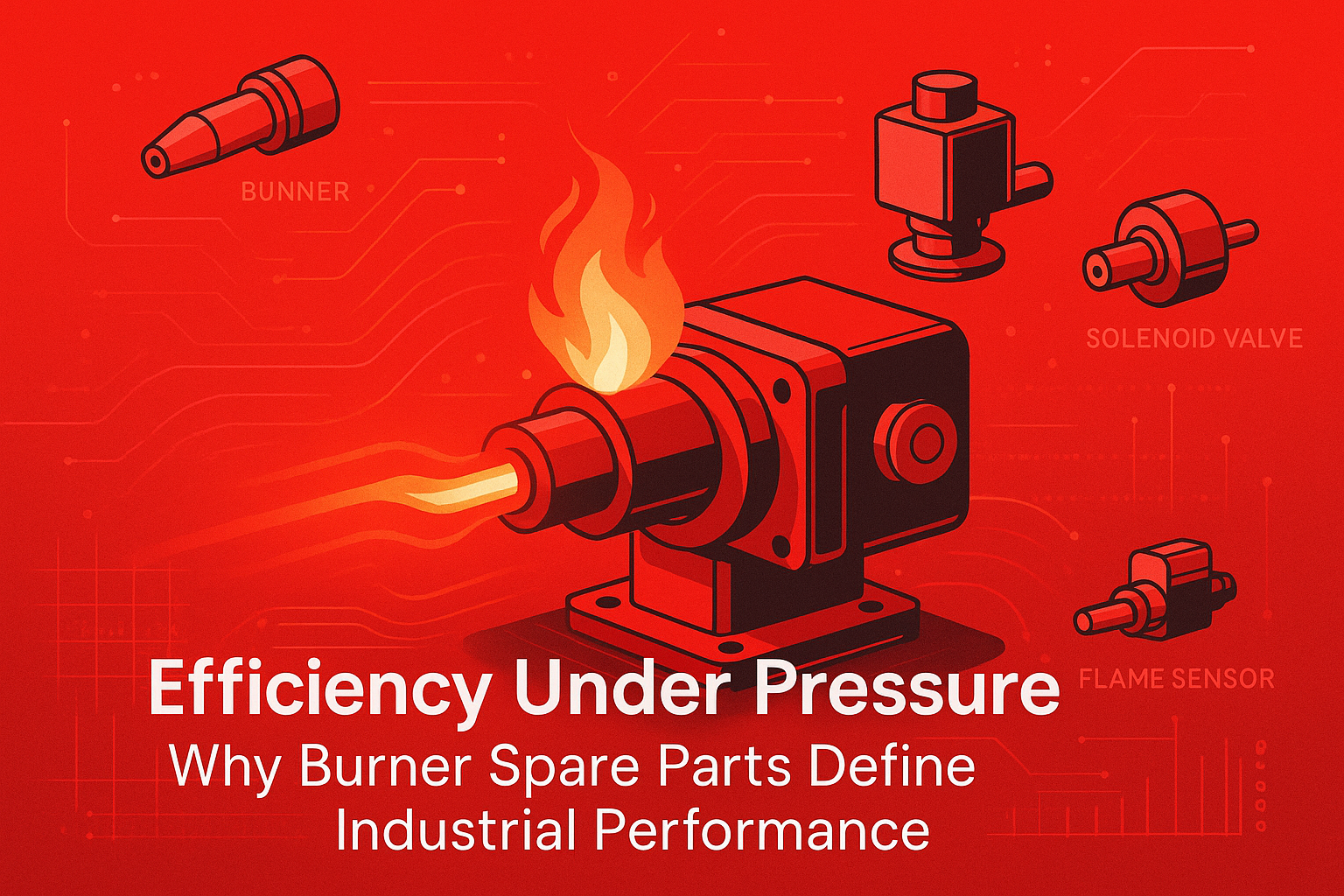
Burner spare parts include a wide range of components — such as ignition electrodes, nozzles, solenoid valves, gaskets, and control boxes — that ensure proper fuel combustion and temperature regulation. These small yet powerful elements work together to maintain the delicate balance between fuel and air, which defines efficiency, safety, and product quality. Without timely replacement or maintenance, even minor part degradation can lead to inefficiency, excessive fuel consumption, or complete burner failure.
High-quality industrial burner spare parts Pakistan are designed not only to replace worn-out elements but also to restore optimal combustion performance. That’s why modern industries invest in trusted burner parts suppliers in Pakistan who provide components engineered for long-lasting durability and precision.
How Burner Systems Drive Industrial Operations
Burner systems are the silent engines behind countless industrial applications — from textile and chemical processing to food manufacturing and power generation. These systems convert fuel into heat energy through a controlled combustion process, ensuring consistent output and energy efficiency. The better the burner components, the more stable and precise the flame, resulting in improved heat transfer and reduced operational waste.
Every part of a burner has a critical role. The nozzle atomises fuel, the electrode sparks ignition, and the solenoid valve regulates flow — all synchronised for seamless performance. If even one element underperforms, the entire system’s efficiency drops. A malfunctioning control box or worn gasket, for instance, can trigger fuel imbalances, incomplete combustion, and carbon buildup. These inefficiencies not only increase maintenance costs but also compromise worker safety and environmental compliance.
For Pakistan’s rapidly growing industrial sector, efficiency is not a luxury — it’s a necessity. With rising energy prices and tighter operational margins, reliable burner components are essential to achieving performance targets while controlling costs.
Why Pakistan’s Industrial Sector Depends on Reliable Components
Pakistan’s manufacturing and energy industries operate under immense pressure to maintain continuous production. Interruptions caused by poor-quality burner parts can lead to serious financial losses. According to Energy.gov, inefficient combustion systems can waste up to 20% of total fuel input — a figure that directly impacts profitability and sustainability targets.
Local industries are increasingly recognising that genuine, high-performance burner spare parts Pakistan offer a tangible return on investment. Reliable suppliers, such as Indus 3, ensure that businesses have access to precision-engineered components that match international safety and performance standards. From durable industrial gas accessories to complete burner systems, their solutions are built to withstand heavy industrial use under varying fuel and temperature conditions.
Moreover, partnering with a reputable company like Indus 3 gives engineers confidence in the longevity of their equipment. It ensures proper combustion calibration, extended burner lifespan, and reduced downtime — key ingredients for maintaining industrial momentum in sectors such as textiles, steel, and cement production.
How Quality Burner Parts Boost Efficiency and Reduce Downtime
The Science of Combustion Efficiency
At the core of every industrial heating system lies a simple yet powerful principle — efficient combustion. When fuel and air combine in the correct ratio, maximum energy is released with minimal waste. However, this delicate balance depends entirely on the precision and quality of individual burner components. High-quality gas burner spare parts Pakistan—such as nozzles, diffusers, solenoid valves, and ignition systems—ensure stable fuel atomisation, accurate flow control, and consistent flame formation.
In contrast, even minor deviations caused by worn or substandard parts can distort the air-fuel ratio, leading to incomplete combustion. According to Engineering ToolBox, poor combustion efficiency can increase fuel consumption by up to 15% while generating harmful emissions and carbon deposits that shorten equipment lifespan.
Industries using precision-engineered industrial gas burner parts enjoy not only better heat distribution but also smoother start-up cycles and reduced thermal stress. In Pakistan’s energy-intensive manufacturing environments—where textile, cement, and food sectors rely heavily on burners—these gains translate directly into operational stability and lower running costs.
For engineers sourcing trusted components, Indus 3’s Shop Page provides a full range of genuine burner parts designed to optimise combustion efficiency and extend system longevity.
Common Issues Caused by Low-Grade Burner Components
The consequences of using poor-quality burner parts often go unnoticed—until they cause major operational setbacks. Low-grade nozzles fail to atomise fuel properly, resulting in uneven heating and incomplete combustion. Defective solenoid valves may leak or stick, disrupting pressure regulation and compromising safety. Similarly, substandard diffusers can cause turbulent airflow, leading to irregular flames that damage heat exchangers and burners over time.
These inefficiencies do not just increase fuel consumption; they also place undue stress on other components. A faulty electrode or control box can cause frequent ignition failures, forcing unnecessary system restarts that degrade performance. Such recurring issues can accumulate into significant maintenance costs and unpredictable downtime.
Industrial experts stress that the burner parts price in Pakistan is a small investment compared to the financial losses caused by production halts and premature equipment failure. As ScienceDirect highlights in combustion system studies, maintaining precision and reliability in burner assemblies is vital to sustaining thermal performance over long production cycles.
By choosing certified gas burner spare parts Pakistan, manufacturers protect their assets and ensure that all elements—from ignition to flame stability—work in perfect synchrony.
The Cost of Downtime in Industrial Settings
In high-pressure production environments, every minute of downtime can translate to considerable financial loss. Unplanned shutdowns caused by malfunctioning burners halt entire production lines, waste fuel, and delay order fulfilment. For industries like steel processing or textile dyeing, where heat consistency is crucial, downtime can even result in product defects or rejected batches.
This makes proactive replacement of critical components an operational necessity. Routine inspections and the use of premium industrial gas burner parts significantly reduce failure risks, improve thermal efficiency, and extend overall equipment life. The result is a more predictable production schedule, stable energy consumption, and enhanced workplace safety.
Businesses across Pakistan are realising that investing in quality burner components pays off through sustained uptime and reduced fuel waste. Engineers looking for technical guidance or product compatibility can reach out through Indus 3’s Contact Page to consult experienced professionals who understand industrial combustion systems inside and out.
Key Components Explained: Burner Parts Names and Their Functions
Burner Nozzles, Electrodes, and Control Boxes
Every burner system is a collection of precisely engineered parts, each contributing to efficient combustion and safe operation. Among these, the burner nozzle, ignition electrode, and control box are fundamental. The burner nozzle is responsible for atomising fuel—whether gas or oil—into a fine mist or vapour before ignition. This ensures a uniform flame and consistent temperature control across industrial applications. In gas systems, nozzle shape and material directly influence flame stability and heat output.
The burner ignition electrode Pakistan acts as the spark initiator. It creates a high-voltage arc that ignites the fuel-air mixture. Over time, carbon buildup or surface wear can affect its conductivity, leading to delayed ignition or misfires. Regular inspection and replacement of electrodes maintain reliability and fuel efficiency.
The burner control box Pakistan serves as the system’s brain. It manages ignition timing, monitors flame detection, and ensures safe start-up and shutdown procedures. Advanced control boxes feature automatic safety locks that cut fuel supply in case of flame failure—an essential feature in industrial environments. According to Thermopedia, properly synchronised ignition and flame control systems significantly reduce fuel waste and improve thermal stability.
For engineers seeking authentic replacements, Indus 3’s Shop Page offers genuine spare parts sourced from global manufacturers, ensuring compatibility and compliance with industrial standards.
Understanding the Role of Solenoid Valves and Motors
The burner solenoid valve Pakistan controls fuel flow within the burner assembly. Acting as an electromechanical gate, it opens and closes precisely in response to the control box’s signals. Its job is critical—if the valve leaks or fails to close properly, it can lead to fuel wastage, incomplete combustion, or even hazardous gas accumulation. High-quality solenoid valves provide tight sealing and fast response times, ensuring both efficiency and safety in pressurised systems.
Equally important is the burner motor, which drives the air-fuel mixing process. The motor powers the fan that delivers the exact air volume needed for proper combustion. Inconsistent airflow from weak or failing motors often results in unstable flames and soot formation. In large-scale operations, this can reduce heat exchanger efficiency and increase maintenance costs.
The difference between oil and gas burners becomes clear at this stage: oil burners rely on pressure-atomising nozzles and robust pumps, while gas burners depend on valves and precise flow regulators. Both systems, however, demand synchronisation between air and fuel delivery—something only high-quality components can achieve reliably.
Industrial-grade assemblies, such as the RECCO LPG Regulator 041 1.5” Heavy Duty, are designed to maintain accurate pressure control under demanding conditions, reinforcing combustion stability and system integrity.
How Burner Coupling and Gasket Integrity Affect Safety
While smaller in appearance, the burner coupling and gasket play vital roles in ensuring mechanical safety and sealing performance. The coupling connects the motor shaft to the fuel pump or fan assembly, maintaining rotational alignment and torque transfer. A worn or misaligned coupling can cause vibration, uneven fuel delivery, or even motor failure.
Similarly, gaskets act as pressure seals between joints and flanges, preventing gas or air leakage. Compromised gasket integrity can result in fuel leaks, loss of combustion efficiency, or fire hazards. In environments handling LPG or natural gas, maintaining seal quality is non-negotiable for both safety and performance.
As highlighted by the ASHRAE Journal, preventive maintenance of these components extends system life and prevents catastrophic breakdowns. Engineers are encouraged to conduct regular inspections, replacing gaskets and couplings before visible wear occurs.
For reliable access to tested industrial burner spare parts Pakistan, visit the Indus 3 Shop Page. Their range of authentic parts ensures that every element—from ignition electrodes to gaskets—meets the exacting standards of Pakistan’s industrial sector.
Maintenance and Troubleshooting: Keeping Your Burners at Peak Performance
Burner Maintenance Checklist for Engineers
Preventive maintenance is the foundation of burner reliability and operational efficiency. Regular inspections not only prevent unexpected breakdowns but also ensure safety and compliance with industrial standards. A comprehensive burner maintenance checklist should include routine cleaning, component testing, and calibration of fuel-to-air ratios.
Engineers should begin with a visual inspection of the burner assembly, checking for soot deposits, corrosion, or leaks around the combustion chamber and fittings. The ignition electrode must be examined for wear or carbon buildup, while the nozzle should be inspected for blockages or irregular spray patterns. Ensuring the integrity of solenoid valves and gaskets is equally important to prevent gas leakage or pressure imbalances.
It is also vital to test the flame sensor and control box for consistent response during ignition. As recommended in the HSE UK Gas Safety Guidelines, industries should maintain proper documentation of inspection intervals and part replacements to ensure regulatory compliance and operational traceability.
By adopting these practices, engineers can maintain performance, extend burner lifespan, and minimise costly disruptions. For expert guidance or professional maintenance support, visit the Indus 3 About Us page to learn how the company’s technical team ensures precision across every installation.
Troubleshooting Gas Burners: Common Problems and Fixes
Even with regular servicing, burners can occasionally develop operational issues. Understanding how to diagnose these problems effectively is key to minimising downtime. The gas burner troubleshooting guide begins with checking for ignition failures, irregular flames, and inconsistent heat output.
Common burner problems include delayed ignition, noisy operation, and fluctuating flame intensity. These issues are often caused by faulty electrodes, blocked nozzles, or malfunctioning solenoid valves. Engineers should verify power supply continuity to the control box, check gas pressure levels, and inspect the flame sensor’s positioning and sensitivity. In some cases, inadequate air supply or clogged filters can disrupt the air-fuel ratio, resulting in incomplete combustion and higher emissions.
If the burner fails to ignite or maintain a steady flame, it’s advisable to perform sequential diagnostics — starting from the ignition circuit and moving toward the combustion chamber. Recording the findings during each maintenance cycle helps build a reliable operational history for future reference.
For complex or repeated faults, industrial operators can seek assistance through Indus 3’s Contact Page, where technical specialists provide in-depth troubleshooting support and component replacement advice tailored to specific burner models.
How to Replace Burner Parts Safely
Replacing worn-out components is an integral part of burner upkeep, but it must be done following strict safety procedures. Before performing any replacements, always disconnect the power source and isolate the gas supply. Wait until the system cools to a safe temperature. When replacing parts such as ignition electrodes, gaskets, or solenoid valves, engineers should use OEM-certified components to ensure compatibility and maintain pressure integrity.
Use proper tools to remove and refit parts without damaging adjoining components. After installation, inspect all joints for leaks using an approved leak detection spray and conduct a controlled ignition test. Follow manufacturer calibration procedures to restore optimal performance.
For high-pressure or automated systems, always refer to technical documentation provided by reputable suppliers like Indus 3, who specialise in industrial burner spare parts Pakistan and provide certified solutions for every industrial application.
As the HSE UK Gas Safety Guidelines emphasise, adherence to installation and maintenance safety standards reduces workplace risks and ensures sustained equipment performance. Regular checks, genuine parts, and professional installation together form the backbone of a safe and efficient industrial combustion system.
For expert after-sales assistance, engineers are encouraged to reach out via Indus 3 Contact for consultations or site-specific maintenance support — ensuring every system continues to operate safely and efficiently under pressure.
Fuel Efficiency and Sustainability: How Burner Design Impacts Energy Use
Energy-Saving Burner Innovations
In modern industrial environments, energy efficiency is no longer just a performance metric — it’s a sustainability imperative. With rising fuel costs and stricter environmental standards, industries in Pakistan are under increasing pressure to adopt cleaner, more efficient heating systems. High-quality burner spare parts Pakistan play a crucial role in this transition by optimising fuel combustion, minimising energy waste, and reducing harmful emissions.
Recent innovations in burner technology have focused on precision engineering and adaptive control systems that automatically balance air-to-fuel ratios. These advancements enable industries to achieve up to 10–20% fuel savings, as reported by the International Energy Agency (IEA). Components like advanced ignition systems, modulating control valves, and high-efficiency combustion chambers help stabilise flame temperature and ensure consistent performance under variable load conditions.
Suppliers like Indus 3 lead this energy-conscious transformation by providing industrial-grade parts designed for long-term reliability and reduced maintenance overheads. Their focus on sustainable engineering aligns with Pakistan’s industrial energy goals highlighted in the Pakistan Energy Yearbook 2024, which emphasises improving thermal efficiency and reducing dependency on imported fuels.
By integrating these innovations, industrial plants can cut operational costs while contributing to cleaner, greener manufacturing practices.
The Role of Nozzles and Diffusers in Fuel Optimisation
Among all burner components, the nozzle and diffuser have perhaps the most significant influence on combustion efficiency. The nozzle controls the flow and atomisation of fuel, ensuring even distribution for complete combustion. Different types of burner nozzles — such as hollow cone, solid cone, and semi-solid patterns — are selected based on the required flame shape, heat load, and fuel type. A properly designed nozzle prevents excess fuel from entering the chamber, thereby eliminating smoke, soot, and energy loss.
The diffuser, on the other hand, manages airflow to stabilise the flame and maintain optimal mixing of air and fuel. A well-calibrated diffuser ensures complete combustion with minimal carbon residue, directly improving both energy efficiency and equipment longevity. For engineers fine-tuning burner systems, following a structured burner flame adjustment guide is essential to maintain a precise air-to-fuel ratio.
When these components are replaced with low-quality alternatives, efficiency plummets. Poorly machined nozzles and diffusers lead to irregular flame patterns, increased fuel consumption, and higher emission levels. That’s why sourcing from verified suppliers such as Indus 3’s Shop Page ensures access to precision-engineered parts built for industrial endurance and energy optimisation.
Cleaner Combustion with Modern Burner Technology
Sustainability in industrial heating depends on more than just equipment durability—it requires clean, consistent combustion. High-quality industrial burner spare parts Pakistan enable industries to operate within modern emission standards by supporting cleaner flame generation and better temperature control. Components like low-NOx burner assemblies, heat-resistant gaskets, and automatic air regulators significantly reduce pollutants such as carbon monoxide and nitrogen oxides.
In Pakistan, where the energy sector continues to expand to meet industrial demand, adopting efficient burner systems has become vital for both economic and environmental stability. According to the Pakistan Energy Yearbook 2024, improving industrial combustion systems could reduce national energy waste by nearly 12% annually — an achievable goal through widespread use of energy-efficient burner components.
Indus 3 is at the forefront of this effort, supplying precision burner equipment that meets sustainability objectives while maintaining operational excellence. Their durable, performance-tested spare parts not only reduce fuel consumption but also extend burner life, allowing industries to operate more responsibly without compromising productivity.
Safety First: Ensuring Compliance in Industrial Burner Operations
Importance of the Burner Safety Checklist
In industrial heating systems, safety is not an option—it’s a mandatory commitment. Each component in a burner assembly works under high temperature and pressure, meaning even a minor fault can escalate into a critical hazard. A well-defined burner safety checklist is therefore essential to ensure operational compliance and worker protection.
A standard checklist should include inspection of gas lines, solenoid valves, flame sensors, ignition electrodes, and control boxes before each operation. Engineers must verify that there are no gas leaks, loose connections, or electrical irregularities. Calibration of air-to-fuel ratios and testing of flame supervision devices are equally critical to prevent incomplete combustion or flashbacks.
According to the Pakistan Standards & Quality Control Authority (PSQCA), all gas-fired equipment must comply with strict performance and safety standards to prevent occupational accidents. Regular adherence to a burner safety checklist not only protects equipment but also upholds compliance with workplace safety laws and environmental regulations.
To access certified industrial safety parts, engineers can explore Indus 3’s Shop Page, where every component meets PSQCA and international safety benchmarks for high-pressure industrial applications.
Gas Burner Safety Tips for Operators
Safe operation of industrial gas burners begins with proper training and disciplined maintenance. Operators must understand the fundamental gas burner safety tips to avoid common operational risks such as gas leaks, backfiring, and pressure imbalance.
Before ignition, ensure that ventilation systems are active and the combustion chamber is clear of residual gases. Never attempt to ignite a burner if a leak is suspected—use an approved leak detection spray instead of an open flame. Flame sensors and control boxes must be tested for automatic shutoff functionality, preventing unburnt fuel from accumulating inside the system.
Proper burner installation guide Pakistan practices should also be followed—this includes securing all electrical connections, verifying gas supply pressure, and ensuring grounding of all control equipment. Operators should maintain a safe distance during ignition and wear appropriate protective gear such as flame-resistant gloves and eye shields.
Additionally, NFPA 85 (Boiler and Combustion Systems Hazard Code) highlights the importance of interlocks and purge cycles to clear unburnt fuel before ignition. These safety steps are vital for industries relying on continuous heat processes like textiles, ceramics, and metal fabrication.
For detailed installation and operational support, industrial teams can learn more about Indus 3’s safety-driven approach through the About Us page, where their engineering ethos centres on safety, compliance, and precision.
Why Certified Burner Parts Prevent Industrial Hazards
The foundation of a safe industrial system lies in the quality of its components. Using uncertified or low-grade parts increases the risk of leaks, electrical faults, and pressure failures—potentially endangering workers and property. Certified components, however, are manufactured to withstand extreme operational stresses and meet internationally recognised safety standards.
For example, PSQCA mandates that solenoid valves and regulators must be tested for leak-proof performance and temperature resilience. Similarly, NFPA 85 requires that all flame-monitoring systems and safety interlocks be validated through endurance and sensitivity tests. These measures ensure early detection of combustion irregularities and automatic shutdown during hazardous events.
Certified burner parts also simplify burner fault diagnosis, as their consistent performance parameters make troubleshooting predictable and efficient. Components sourced from verified suppliers like Indus 3 offer the assurance of traceability, durability, and precision engineering—minimising risks while maximising uptime.
The Indus 3 Advantage: Precision, Reliability, and Local Expertise
Why Pakistani Industries Trust Indus 3
In Pakistan’s industrial landscape, reliability and efficiency are more than operational goals—they are the lifelines of production. For decades, businesses across manufacturing, energy, and processing sectors have trusted Indus 3 for their commitment to quality, precision, and engineering excellence. As a leading supplier of industrial gas and burner spare parts Pakistan, Indus 3 has built its reputation on delivering products that withstand demanding industrial conditions while maintaining peak performance.
The company’s strength lies in its deep understanding of Pakistan’s industrial challenges—rising energy costs, fluctuating fuel quality, and the need for long-term operational consistency. Indus 3 bridges this gap by offering world-class burner components, regulators, vaporizers, and accessories tailored to local environmental and operational requirements. Their solutions ensure that clients can operate with minimal downtime and maximum fuel efficiency.
Whether you’re seeking Riello burner spare parts Pakistan, oil burner parts Pakistan, or components for commercial burner systems, Indus 3 offers a dependable supply chain backed by technical expertise. For a complete overview of their product range, visit the Shop Page and explore precision-engineered solutions trusted by industries nationwide.
Quality Assurance and Global Brand Partnerships
Indus 3’s competitive edge comes from its uncompromising approach to quality and its strong alliances with internationally renowned brands. The company proudly partners with RECCO, Madas, and Riello, ensuring access to globally certified equipment that meets or exceeds international safety and performance standards. These partnerships allow Indus 3 to deliver products that integrate cutting-edge combustion technology with Pakistan’s local industrial needs.
RECCO, known for its high-performance LPG regulators and valves, ensures stability in pressure and flow control—essential for safe industrial operations. Madas, an Italian brand, contributes precision gas control devices, while Riello’s advanced burner technology sets the global benchmark for energy efficiency and combustion performance. (Source: Riello Official Site)
Through rigorous quality assurance protocols, every component supplied by Indus 3 undergoes meticulous inspection and compliance verification. From commercial burner parts Pakistan to high-capacity gas vaporizers and safety valves, the company guarantees reliability that endures even under the most intense industrial pressures.
This dedication to excellence has made Indus 3 the preferred partner for manufacturing facilities, refineries, and energy plants looking to optimise combustion systems and reduce operating costs without compromising safety.
Expert Support and After-Sales Service
What sets Indus 3 apart from traditional suppliers is not just the quality of its products but the expertise of its people. The company’s engineering-driven approach ensures that every client receives more than just equipment—they gain a long-term partner invested in their success.
Indus 3’s technical team provides end-to-end support, from product selection and installation guidance to calibration and system troubleshooting. Their after-sales assistance ensures that clients achieve consistent performance throughout the lifecycle of their equipment. This client-first ethos has positioned Indus 3 as one of the few suppliers in Pakistan capable of combining advanced product knowledge with responsive, on-site technical support.
Businesses seeking expert consultation or maintenance guidance can connect directly through the Contact Page. Meanwhile, those wanting to understand the company’s heritage, values, and industry expertise can learn more via the About Us page.
Powering Pakistan’s Industry with Reliable Burner Spare Parts
Summary: Efficiency Under Pressure
In today’s competitive industrial landscape, efficiency under pressure defines success. From energy-intensive plants to small-scale manufacturing units, every operation relies on consistent heat and combustion performance. As explored throughout this article, the role of burner spare parts Pakistan extends far beyond replacement—it is about ensuring stability, safety, and sustainability in production.
A properly maintained burner system delivers uniform heating, improved combustion efficiency, and reduced fuel wastage. On the other hand, poor-quality or neglected components often lead to inefficiency, costly downtime, and safety hazards. By investing in durable, precision-engineered parts, industries gain tighter operational control, longer equipment life, and compliance with international safety standards.
At the core of this reliability is Indus 3, a name synonymous with innovation and trust in Pakistan’s industrial sector. With a deep understanding of local energy challenges and a global approach to engineering excellence, Indus 3 continues to empower industries to operate smarter, safer, and more sustainably.
Long-Term Value of Quality Burner Components
The long-term benefits of using authentic, high-quality burner parts cannot be overstated. Every component—from ignition electrodes to solenoid valves—plays a pivotal role in maintaining combustion accuracy. When engineered to exacting standards, these parts ensure smooth fuel delivery, stable flames, and consistent heat output. Over time, this reliability translates into significant energy savings, reduced carbon emissions, and lower maintenance costs.
Industries operating dual or hybrid systems can particularly benefit from dual fuel burner parts Pakistan, which are designed for seamless transition between fuels without compromising performance. Similarly, automatic burner system Pakistan technologies are now allowing manufacturers to optimise fuel-to-air ratios in real time, reducing waste and enhancing operational control.
Moreover, efficient industrial burner troubleshooting practices—supported by precision-built spare parts—help detect issues early, preventing major breakdowns and ensuring that production continues uninterrupted. When industries choose certified suppliers like Indus 3, they aren’t just buying components—they are investing in performance longevity and peace of mind.
For companies seeking to elevate their energy management strategies, adopting Indus 3’s products represents a decisive step towards efficiency, sustainability, and profitability.
Why Indus 3 Is the Go-To Supplier for Industrial Burner Parts
When it comes to industrial reliability, Indus 3 stands unmatched. As Pakistan’s premier supplier of industrial gas and burner equipment, the company has consistently set the standard for precision, safety, and service excellence. Its partnerships with global brands like RECCO, Madas, and Riello demonstrate a strong commitment to quality, while its locally driven engineering expertise ensures solutions tailored to Pakistan’s specific industrial needs.
Indus 3 offers an extensive product range—from regulators and vaporizers to ignition systems and thermostats—all tested for endurance, accuracy, and efficiency. Beyond supply, their technical team provides consultation, maintenance advice, and operational training, enabling clients to make the most of their combustion systems.
Whether you manage a textile plant, a cement factory, or a power generation facility, Indus 3 is the partner you can trust to deliver durability, compliance, and value.
Your Next Step: Partner for Performance
Industrial performance is no longer just about keeping operations running—it’s about achieving sustainable efficiency under pressure. With Indus 3’s range of certified burner spare parts Pakistan, industries across the nation can achieve cleaner combustion, lower fuel costs, and improved safety compliance.
🔥 Explore our full range of precision burner spare parts at the Indus 3 Shop
📞 Or Contact Us today to enhance your industrial efficiency under pressure.
Backed by local expertise and global standards, Indus 3 continues to drive the future of industrial heating solutions in Pakistan—one reliable part at a time.
One Reply to “Efficiency Under Pressure: Why Burner Spare Parts Define Industrial Performance | Indus 3”