
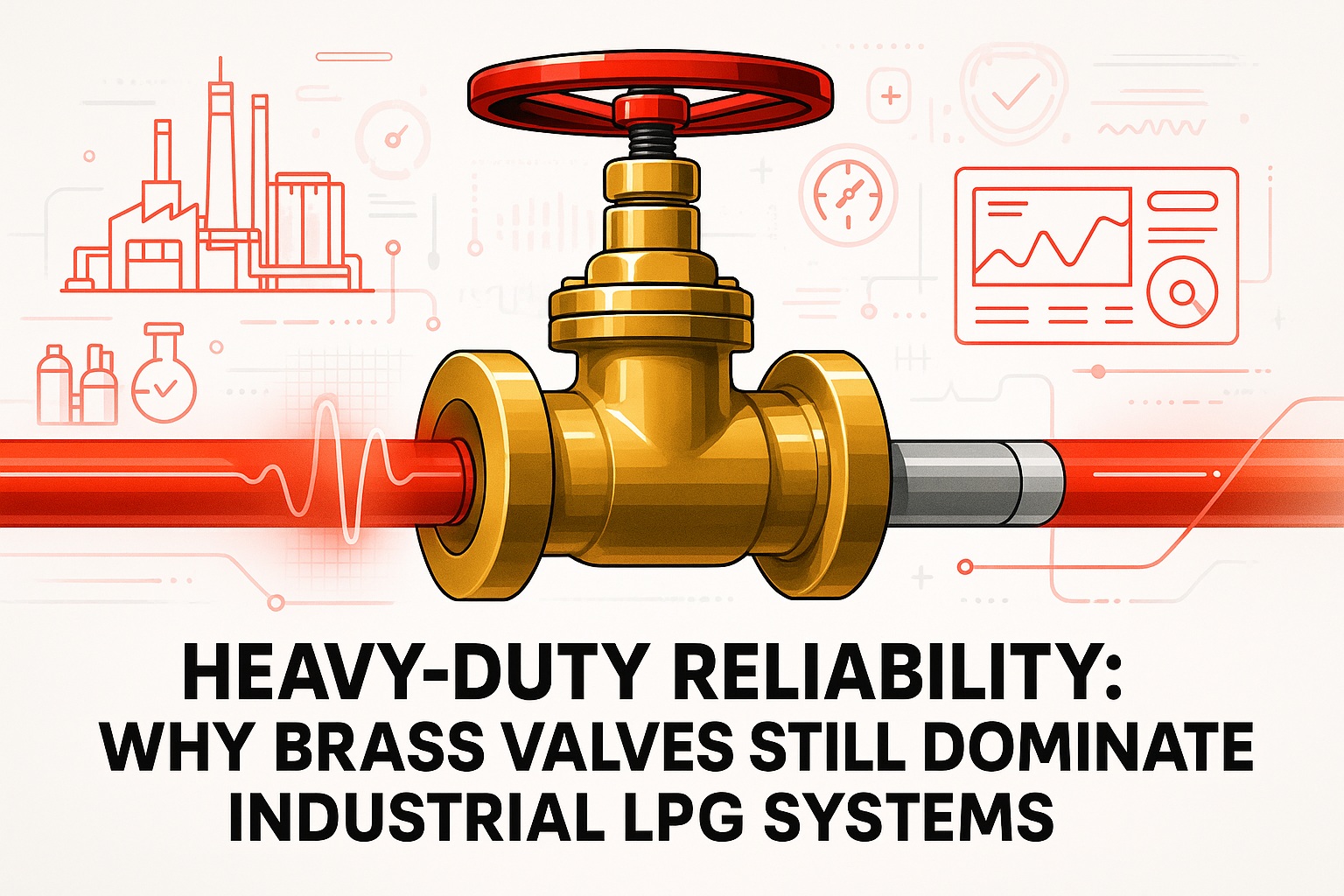
The Enduring Strength of LPG Brass Valves in Pakistan
What Makes Brass the Standard for LPG Systems?
When it comes to LPG brass valves Pakistan, few materials have proven as dependable and long-lasting as brass. Across industrial gas systems, from energy plants to bottling facilities, brass remains the gold standard — not merely because of tradition, but due to its unmatched combination of strength, corrosion resistance, and thermal stability. In a nation where industries depend on consistent gas flow under high pressure, reliability is not a luxury; it’s a necessity. Brass valves deliver precisely that reliability, making them the foundation of Pakistan’s growing industrial infrastructure.
Unlike cheaper alloys or synthetic materials, brass maintains performance in both humid coastal areas and hot, arid interiors — ensuring that critical systems stay operational regardless of environmental stress. Its superior machinability allows for precise sealing surfaces that prevent leaks, and its natural resistance to corrosion minimises maintenance cycles, reducing overall operational downtime.
Why “LPG Brass Valves Pakistan” Matters for Industry
The demand for LPG brass valves in Pakistan has surged as industries across the country shift toward automation and process standardisation. From textile mills in Faisalabad to bottling plants in Karachi, every operation that relies on LPG needs stable pressure control and zero leak tolerance. This is where brass outshines alternative materials.
According to the Pakistan Engineering Council (PEC), the safe handling and distribution of LPG depend heavily on the integrity of fittings and valves used throughout industrial systems. Brass, with its unique blend of copper and zinc, provides the mechanical strength needed for high-pressure LPG environments while maintaining elasticity — a crucial factor in absorbing system vibrations and pressure variations. Furthermore, compliance with British Standards (BS EN 331) ensures that locally produced brass valves align with international safety and performance criteria, reinforcing trust among engineers and plant managers alike.
As industrial processes evolve, so too does the importance of quality materials. With the rise of automated gas control systems and real-time monitoring, brass valves continue to play a vital role in achieving precision and safety within Pakistan’s energy and manufacturing landscapes.
Indus 3’s Role in Reliable Gas Infrastructure
At the forefront of this industrial evolution stands Indus 3 — a leading supplier of industrial LPG equipment in Pakistan. Through their nationwide distribution of certified LPG accessories, including brass valves, regulators, and safety devices, Indus 3 has become synonymous with reliability and trust. Each product is rigorously inspected to meet international standards and engineered to serve Pakistan’s rapidly expanding network of LPG systems.
Beyond product supply, Indus 3 actively promotes education and awareness within the industry, advocating for the use of certified components that enhance safety and sustainability. Their mission aligns with Pakistan’s broader shift toward industrial automation, where durability and precision engineering are central to long-term success.
By choosing Indus 3’s certified brass valves, industries secure more than just a product — they gain a partner committed to operational integrity, safety, and performance excellence. This solid foundation sets the stage for understanding why brass, from a material science perspective, continues to dominate industrial LPG systems — a topic explored in the next section.
The Science Behind Brass: Material Composition and Durability
Inside the Alloy: Copper–Zinc Balance
At its core, brass is not a simple metal but a carefully balanced alloy of copper and zinc, engineered to deliver mechanical resilience and chemical stability. This unique composition explains why LPG brass valves Pakistan remain the first choice for high-pressure gas systems across industrial sectors. The copper–zinc ratio, typically between 60:40 and 70:30, determines brass’s flexibility, hardness, and corrosion resistance — the very traits that make it indispensable in LPG valve manufacturing.
Brass’s copper base contributes to its exceptional ductility and resistance to fatigue, while zinc enhances hardness and tensile strength. This precise metallurgical balance ensures that each valve can withstand continuous stress from pressure fluctuations in LPG pipelines without deforming or cracking. According to research published on ScienceDirect, brass alloys perform consistently under high loads and temperatures, offering long-term durability superior to many alternative materials.
For LPG brass valves in Pakistan, where ambient temperatures can vary dramatically between 0°C and 50°C, this metallurgical stability is critical. Whether in a humid coastal refinery or a dry inland factory, the alloy retains its shape, seal integrity, and flow performance.
Corrosion Resistance and Temperature Tolerance
Corrosion is one of the most significant threats to any pressurised gas system. However, brass’s natural ability to resist corrosion, especially against moisture and chemical exposure, ensures a longer operational life. This property is essential for LPG brass valves Pakistan, where varying humidity levels and airborne contaminants could otherwise degrade system components.
Brass forms a thin, self-protecting oxide layer that prevents further oxidation, meaning it doesn’t rust like iron or steel. In LPG applications, where valves often encounter butane, propane, and trace impurities, this passive protection maintains both aesthetic and mechanical integrity. The ASTM B16 and EN 12165 standards classify brass alloys based on their mechanical properties and corrosion performance, ensuring global consistency in safety and quality.
Temperature tolerance is another hallmark of brass. With a melting point of around 900–940°C, brass retains its structure well beyond typical LPG operating temperatures. It also handles rapid thermal cycling — a condition common in gas vaporisers and industrial heaters — without expansion-related failures. This durability makes brass the preferred material for components connected to regulators and flow meters, where accuracy and pressure control are vital.
Comparing Brass with Steel and Aluminium
When comparing brass with materials like steel or aluminium, the difference in performance under LPG system conditions becomes apparent. Steel, while strong, is highly susceptible to rust and requires additional coatings or galvanisation — adding both cost and maintenance overhead. Aluminium, though lightweight, lacks the necessary pressure resistance and can deform under prolonged stress.
In contrast, brass offers the ideal strength-to-weight ratio, combining resilience with workability. It allows for tighter machining tolerances, which means valve seats and threads can be manufactured with extreme precision, ensuring leak-proof seals. Indus 3 sources precision-milled brass valves with uniform wall thickness and safety margins that exceed industry benchmarks. This ensures each component operates flawlessly within Pakistan’s demanding industrial environments.
Moreover, brass’s compatibility with elastomeric seals and gaskets makes it a safer, longer-lasting choice for modular LPG systems. When integrated with LPG regulators, brass valves deliver smoother gas flow and minimise energy loss — a critical advantage for both safety and efficiency.
Ultimately, the science behind brass explains its dominance: a metallurgical masterpiece tailored for endurance, precision, and reliability. From microstructure to macro performance, it’s this combination that keeps LPG brass valves Pakistan at the forefront of industrial gas safety and engineering innovation.
Performance Under Pressure: Safety and Compliance Standards
Pressure Ratings and Leak Prevention
In industrial gas systems, pressure is not just physics—it’s a safety promise. Every connection, every seal, and every valve must perform flawlessly under intense conditions where even minor leaks can have major consequences. That is why LPG brass valves Pakistan have become the trusted standard for industries that depend on precision-engineered safety.
Brass, by nature, provides superior resilience to pressure fluctuations. Its balanced alloy composition absorbs vibration and prevents microfractures that could lead to leaks over time. At Indus 3, each valve undergoes hydrostatic testing — a method that subjects valves to pressures well beyond their normal operating limits to verify structural integrity. This ensures that every product leaving the facility can withstand real-world stresses in LPG bottling plants, industrial vaporiser systems, and high-capacity distribution networks.
Leak prevention is further ensured through precision machining. Brass allows for tighter sealing tolerances and smoother thread finishes than alternative metals, reducing the risk of gas seepage even under fluctuating pressure. When integrated with LPG safety devices, these valves create a closed safety ecosystem that meets international best practices for gas handling and control.
Global Standards: ISO 9001, EN 331, and OGRA Compliance
Compliance with global safety standards is non-negotiable in the industrial gas sector. Indus 3’s LPG brass valves Pakistan are manufactured under strict adherence to ISO 9001 quality management systems and tested in accordance with EN 331 — the European standard for manually operated shut-off valves for gas appliances and pipelines. These certifications guarantee that every valve is designed for longevity, uniformity, and zero-defect performance.
In Pakistan, the Oil and Gas Regulatory Authority (OGRA) serves as the benchmark for industrial safety in LPG infrastructure. All valves supplied by Indus 3 comply with OGRA-approved material and pressure standards, ensuring safe operation across varied industrial applications. Independent verification by third-party agencies further strengthens this compliance, providing traceability through batch coding and stamped certification marks on each valve body.
As confirmed by ISO.org and OGRA’s official guidelines, maintaining such compliance not only protects human lives but also safeguards entire industrial assets. Adhering to these standards means valves are tested for operational endurance, internal leakage, and rapid shut-off response—each critical for preventing fire hazards or gas-related accidents.
Testing and Quality Assurance in Pakistan
Before reaching end users, Indus 3’s valves undergo a series of multi-stage quality assurance checks that mirror global best practices. Each batch is tested for:
-
Hydrostatic pressure retention, simulating real-world LPG pressure loads.
-
Leak integrity, using helium or nitrogen under controlled laboratory conditions.
-
Dimensional precision, ensuring that valve threads, seals, and seats match ISO and OGRA specifications.
These tests are conducted both internally and by third-party inspection bodies to validate that every unit is safe for industrial deployment. Every valve carries a traceable batch code that links back to its inspection and certification records, giving engineers and buyers complete confidence in product authenticity.
Through rigorous quality assurance, Indus 3 has established itself as a leader in safe and compliant gas control components. Their products represent more than engineering excellence — they reflect a commitment to Pakistan’s evolving industrial safety culture, where certified LPG brass valves are not an option, but an absolute requirement.
Why Brass Outperforms: Real-World Industrial Applications
Textile and Food Industries
In Pakistan’s thriving industrial heartlands, the hum of machinery rarely stops. From the weaving looms of Faisalabad’s textile mills to the heat-intensive cooking lines of Karachi’s food processing plants, gas-powered systems run around the clock. At the centre of these operations lie components that most people never notice—but without which production would grind to a halt: LPG brass valves Pakistan.
In textile manufacturing, brass valves regulate LPG flow to dyeing, heating, and drying machines. These processes often involve high temperatures, humidity, and continuous pressure fluctuations. Brass’s unique ability to endure repetitive thermal cycles makes it ideal for such demanding conditions. Its structural integrity remains intact even after thousands of open-close operations, preventing costly gas leaks and unplanned shutdowns.
In the food industry, hygiene and reliability are paramount. Brass, unlike iron-based materials, resists oxidation and surface corrosion, ensuring gas purity and system cleanliness. This feature reduces contamination risks—essential in food packaging and baking lines that depend on consistent thermal output. The low maintenance needs of brass valves also mean fewer operational disruptions, an advantage that translates directly into higher productivity and lower maintenance budgets.
Energy, Bottling, and Transport Sectors
Beyond textiles and food production, brass valves play a vital role in energy, bottling, and transport infrastructure. LPG bottling plants across Punjab and Sindh rely on brass valves for precise filling and flow control. The strength of brass ensures safe sealing even during rapid pressure fluctuations common in bulk transfer systems.
In the energy sector, brass valves form part of safety circuits in gas-fired power units and heat exchangers. These environments subject materials to extreme thermal stress, but brass’s superior tensile strength and corrosion resistance guarantee stability and longevity. According to Engineering Review Pakistan, the use of brass fittings in gas installations has grown steadily due to their proven ability to maintain performance in Pakistan’s varied climate—from coastal humidity to desert dryness.
The transport industry benefits equally. Tanker trailers carrying LPG across the country depend on heavy-duty brass valves for loading, unloading, and emergency venting. Their non-sparking property adds another layer of safety, reducing fire risks during high-pressure transfer operations. For road and rail logistics, the durability of brass translates directly into safer journeys and fewer leak-related incidents.
Case Snapshot: LPG Vaporizer Systems in Action
Perhaps the most telling demonstration of brass’s reliability can be found in LPG vaporizer systems, where heat, moisture, and high pressure converge. In these systems, brass valves control the precise release of liquid LPG into vaporizers that convert it into gas form for industrial combustion. These valves must endure continuous cycles of heating and cooling while maintaining leak-proof performance.
Indus 3 supplies heavy-duty brass valves specifically designed for such setups, featuring tight tolerances and reinforced sealing mechanisms. When paired with components like LPG heaters, these systems deliver unparalleled operational stability. Brass’s natural thermal conductivity also helps dissipate heat evenly, preventing pressure spikes and ensuring smooth system behaviour.
Reports from Dawn Business highlight Pakistan’s ongoing expansion of LPG-powered systems in manufacturing, logistics, and energy generation. As industries adopt automation and digitised controls, the dependability of mechanical components like brass valves becomes even more critical.
Ultimately, the real-world success stories across sectors—from fabric mills to fueling depots—underscore one clear truth: LPG brass valves Pakistan outperform alternatives not just in theory, but in every environment where reliability, safety, and endurance are non-negotiable.
Economic and Environmental Edge: Sustainability of Brass
Recyclability and Circular Manufacturing
As Pakistan’s industries shift toward eco-efficient manufacturing, sustainability is no longer just a corporate value—it’s a competitive advantage. Within this movement, LPG brass valves Pakistan stand out as a sustainable engineering solution, combining durability with full recyclability. Unlike composite or coated metals, brass is 100% recyclable without losing its structural integrity or metallurgical properties.
Every time a brass valve completes its lifecycle, it can be melted and remoulded into new industrial components, supporting the principles of circular manufacturing. This drastically reduces the environmental footprint of production, as recycled brass consumes up to 80% less energy than primary smelting from raw ores. According to reports from the United Nations Industrial Development Organization (UNIDO), recycling non-ferrous metals like brass is one of the most effective pathways to sustainable industrial growth in developing economies.
For a country like Pakistan, where industrial waste management and energy efficiency are rising concerns, choosing materials that can be reused indefinitely is both an economic and environmental win. By sourcing certified brass valves from Indus 3’s shop, businesses directly contribute to reducing their carbon footprint while maintaining performance standards that meet international benchmarks.
Long Lifespan Equals Lower Waste
Beyond recyclability, brass’s long operational lifespan significantly reduces industrial waste generation. When compared with cast iron or mild steel, brass valves last up to three times longer under identical pressure and temperature conditions. This longevity reduces the frequency of replacements, meaning fewer discarded components, lower material turnover, and minimal system downtime.
In practical terms, a well-maintained brass valve can operate efficiently for more than a decade, even in harsh LPG environments. Its resistance to corrosion, stress cracking, and pitting ensures it continues to perform safely with little to no degradation. This is particularly important in high-humidity industrial zones such as Karachi or coastal Balochistan, where corrosion-related failures in steel valves are a recurring problem.
According to the World Bank’s Sustainable Energy Reports, increasing component longevity directly contributes to national sustainability goals by reducing material consumption and promoting energy-efficient manufacturing cycles. In this context, LPG brass valves Pakistan not only enhance operational safety but also align with global environmental performance targets.
Economic Efficiency for Pakistani Industries
Sustainability often comes with financial benefits, and brass valves are a clear example. While the upfront cost of brass components may be slightly higher than that of iron or plastic alternatives, their extended lifespan, lower maintenance requirements, and recyclability lead to a significantly lower total cost of ownership (TCO).
Factories that switch to brass valves experience reduced maintenance intervals, lower energy loss due to tighter seals, and fewer emergency replacements. Over time, these savings compound—making brass not only the safer but also the smarter investment for long-term LPG infrastructure. This cost-efficiency is particularly crucial for medium-sized Pakistani manufacturers aiming to balance profitability with sustainable operations.
Indus 3’s focus on precision-engineered brass fittings ensures that every valve offers measurable economic value alongside environmental responsibility. Businesses interested in optimising both performance and sustainability can contact Indus 3 for expert advice on selecting the most efficient LPG accessories tailored to their systems.
Ultimately, brass represents the perfect equilibrium between economic durability and environmental responsibility. As Pakistan accelerates its industrial transformation, adopting sustainable materials like brass isn’t just a choice — it’s an investment in the nation’s industrial future.
Engineering Precision: How Indus 3 Ensures Quality Control
Certified Manufacturing Partnerships
When it comes to LPG brass valves Pakistan, precision isn’t optional—it’s the foundation of trust. Indus 3 partners with certified global valve manufacturers that follow internationally recognised quality systems and material standards. These partnerships ensure that every component supplied by Indus 3 meets stringent OGRA, ISO, and EN 331 requirements before reaching industrial sites across the country.
Each manufacturing partner is carefully vetted for process control, certification history, and compliance with TÜV SÜD and Intertek testing standards—organisations globally respected for their industrial inspection expertise. These certifications validate not just material integrity, but also pressure resistance, dimensional accuracy, and surface finish quality. Such collaboration allows Indus 3 to maintain a continuous feedback loop between manufacturing and performance testing, guaranteeing consistent results for Pakistan’s demanding industrial environments.
By aligning with these certified global manufacturers, Indus 3 ensures that its valves are not only robust and compliant but also traceable through batch and lot documentation. This traceability builds buyer confidence and simplifies maintenance planning for industrial engineers and plant managers nationwide.
Advanced CNC Machining and Inspection
Behind the reliability of Indus 3’s LPG brass valves Pakistan lies meticulous precision engineering. Each valve is crafted using CNC machining technology, allowing for micrometre-level accuracy across sealing faces, threads, and orifices. This ensures a perfect fit with regulators, flow meters, and gas control assemblies—key to preventing leakage and maintaining pressure stability.
Every production batch undergoes a sequence of dimensional checks and hydrostatic testing, simulating real-world operating conditions to verify tolerance consistency and pressure retention. These tests are OGRA-compliant and follow international benchmarks set by EN 12165 and ASTM B16 for brass material composition and machining standards.
To further ensure reliability, Indus 3 performs lot-based quality verification, where valves are randomly sampled, tested, and documented before shipment. This proactive approach eliminates the possibility of substandard components entering the market, protecting both end users and industrial infrastructure.
According to Intertek’s industrial valve testing protocols, such mechanical precision combined with third-party inspection provides the most effective safeguard against performance variability. Indus 3 integrates these principles into every stage of production, maintaining flawless alignment between engineering design and operational safety.
Distribution Network Across Pakistan
Precision alone means little without accessibility. Indus 3 complements its manufacturing excellence with a robust nationwide distribution network that ensures prompt delivery and customer support. From Karachi’s industrial ports to Lahore’s manufacturing clusters and northern refinery zones, Indus 3’s logistics system ensures that certified valves, regulators, and accessories reach clients on time and in perfect condition.
Through its Shop Page, customers can easily browse and order high-quality LPG accessories, while the company’s technical teams provide professional consultation for complex installations. For organisations seeking to verify Indus 3’s expertise, the About Us page details its mission, certifications, and partnerships—further demonstrating its commitment to transparent, high-quality industrial solutions.
Each delivery is backed by clear documentation, inspection certificates, and after-sales support, allowing engineers to maintain full compliance records. This reliability has positioned Indus 3 not just as a supplier but as a trusted engineering partner in Pakistan’s industrial gas ecosystem.
With certified manufacturing alliances, advanced machining, and dependable nationwide logistics, Indus 3 continues to raise the benchmark for quality assurance in LPG brass valves Pakistan—delivering components that embody precision, safety, and performance excellence across every industrial sector.
Market Comparison: Pakistan vs South Asia in Brass Valve Manufacturing
Regional Manufacturing Landscape
Across South Asia, the brass valve manufacturing industry has evolved into a critical pillar of industrial infrastructure. However, when examining LPG brass valves Pakistan vs South Asia, Pakistan’s market demonstrates a distinct balance of cost efficiency, material quality, and compliance that sets it apart from regional competitors like India, Bangladesh, and Sri Lanka.
Pakistan’s brass industry, particularly in hubs like Gujranwala and Lahore, has developed specialised machining capabilities that rival larger economies in the region. With growing investments in CNC precision technology and ISO-certified manufacturing plants, Pakistan has achieved production quality comparable to global benchmarks while maintaining lower operational costs.
According to UN Comtrade and the Pakistan Bureau of Statistics, the country’s exports of non-ferrous metal components, including brass valves, have seen steady growth over the past five years. These trends reflect not only domestic demand but also regional trust in Pakistani-made industrial fittings. Manufacturers such as Indus 3 have strengthened this position by delivering certified LPG valves that meet both OGRA and EN 331 standards, offering reliability on par with imported alternatives.
Import Standards and Pricing Differences
When comparing LPG brass valves Pakistan vs India, pricing dynamics reveal an important distinction. While India dominates in volume manufacturing, Pakistan’s producers excel in customisation, material integrity, and testing transparency. Indian suppliers often cater to mass-market export contracts, whereas Pakistani manufacturers focus on specialised, high-pressure LPG components tailored for industrial use.
This approach provides Pakistani industries with direct access to high-quality valves without the logistical and tariff complications associated with imports. The local production ecosystem also reduces lead times—crucial for sectors like power generation and food processing, where system downtime translates into significant operational losses.
Pricing analysis from Statista indicates that Pakistan’s brass fittings remain 10–15% more affordable than imported European or South Asian alternatives, while offering equal or superior performance due to adherence to ASTM B16 and EN 12165 standards. The combination of lower production costs, skilled labour, and proximity to industrial clients makes Pakistan’s brass sector a sustainable supply chain choice.
Moreover, adherence to Pakistan’s OGRA-certified inspection framework ensures that valves undergo robust hydrostatic and leak testing — a layer of assurance not consistently observed across South Asia. These standards are further reinforced by suppliers like Indus 3, who maintain traceability codes and batch-level certification for every distributed valve.
Why Pakistani Suppliers Hold an Advantage
The advantage of Pakistani suppliers extends beyond cost — it lies in engineering adaptability and local compliance expertise. Companies such as Indus 3 integrate international safety practices with deep knowledge of local industrial conditions, allowing them to produce LPG fittings optimised for Pakistan’s temperature, humidity, and gas composition.
Unlike some regional competitors that rely heavily on third-party imports, Indus 3’s supply chain operates domestically, ensuring better quality control, shorter delivery cycles, and responsive technical support. This local agility gives Pakistani manufacturers a long-term strategic edge in servicing industrial clients, from textile plants to bottling units and LPG distribution hubs.
Furthermore, the commitment to environmentally sustainable production — including recyclable brass alloys and energy-efficient machining — aligns Pakistan’s manufacturers with global ESG standards, enhancing their international competitiveness.
As the region’s industrial landscape continues to evolve, the comparative strength of LPG brass valves Pakistan vs South Asia becomes increasingly clear: Pakistan offers a blend of precision, reliability, and value that few can match.
Conclusion & Call-to-Action: Choose Certified LPG Brass Valves with Indus 3
Summing Up: Brass as the Benchmark of Reliability
After decades of proven service across Pakistan’s industrial landscape, it’s clear that LPG brass valves Pakistan remain the gold standard for reliability and safety. From textile factories and bottling plants to refineries and energy networks, brass has outperformed every alternative — not just as a material, but as a symbol of precision engineering. Its combination of durability, corrosion resistance, and leak prevention ensures uninterrupted gas flow in environments where performance failures are simply not acceptable.
Unlike lesser alloys or synthetic alternatives, brass stands firm against fluctuating temperatures, high pressure, and continuous mechanical stress. It offers a longer lifespan, requires minimal maintenance, and supports sustainability through recyclability. Each of these benefits contributes to a safer, more efficient, and environmentally responsible industrial ecosystem.
The extensive LPG brass valves Pakistan testing conducted by Indus 3—covering hydrostatic endurance, dimensional verification, and leak integrity—further validates brass as the industry’s most reliable choice. These rigorous inspections ensure that every valve upholds the performance benchmarks required for modern industrial operations under both national and international standards.
Partnering with Indus 3 for Certified LPG Solutions
For companies operating within Pakistan’s expanding industrial gas network, the right components can determine the difference between consistent productivity and costly downtime. That’s why Indus 3 has made it their mission to deliver certified LPG brass valves that meet OGRA, ISO, and EN compliance benchmarks.
Each product, from small fittings to LPG Brass Ball Valve Heavy Duty, is manufactured with precision and verified through multiple quality checkpoints. The result is a range of valves designed to withstand high pressure, prevent leaks, and integrate seamlessly with other system components like regulators, heaters, and vaporizers.
What sets Indus 3 apart is its commitment to both engineering excellence and customer trust. The company’s partnerships with global testing agencies, meticulous lot tracking, and consistent adherence to OGRA regulations ensure each valve performs exactly as intended. This attention to detail has made Indus 3 a go-to name in Pakistan’s LPG equipment supply chain.
Whether you’re a plant manager upgrading safety systems or an industrial engineer designing new installations, Indus 3’s team provides technical consultation, specification matching, and quick nationwide delivery through their Shop Page. Every valve that leaves their facility is a testament to engineering integrity and long-term dependability.
Take the Next Step Toward Industrial Safety
In today’s competitive manufacturing environment, operational reliability is inseparable from safety and compliance. Choosing uncertified or substandard valves might save costs in the short term, but it introduces risks that no responsible engineer should accept. With Indus 3’s certified LPG brass valves Pakistan, you gain more than just equipment—you secure peace of mind.
Visit the Shop Page to explore Indus 3’s full product catalogue, or reach out directly via the Contact page for expert advice on selecting the right solutions for your system. Whether your application involves industrial heating, vaporisation, or bottling, Indus 3 delivers valves built for longevity, precision, and performance.
For further reading on gas safety best practices, consult the UK Health and Safety Executive’s guide — an authoritative reference on safe gas system operations.
Upgrade to Indus 3’s certified LPG brass valves for unmatched reliability — where every fitting reflects decades of engineering expertise, strict compliance, and a commitment to keeping Pakistan’s industrial future both efficient and safe.