
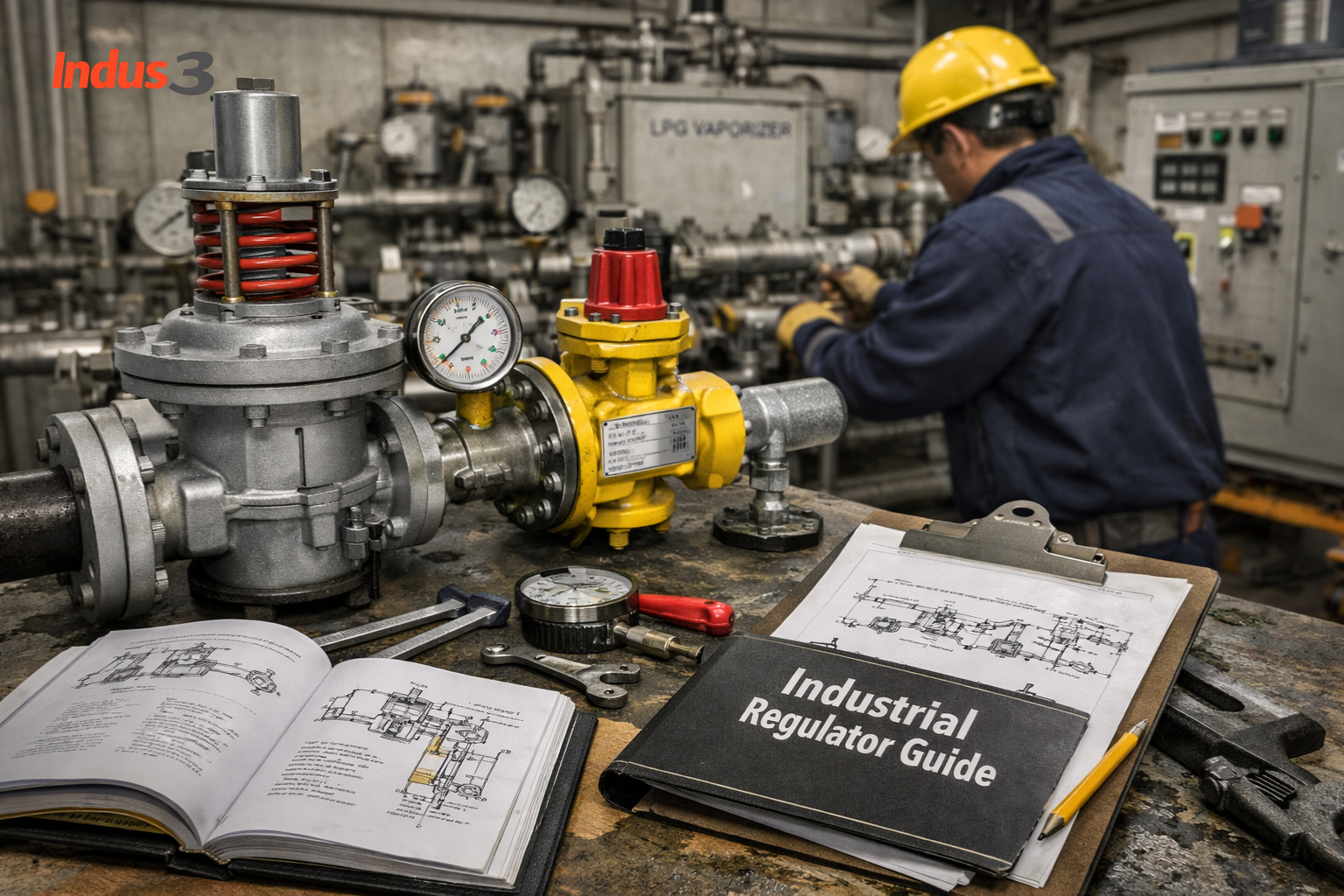
Industrial Gas Pressure Regulators: Buyer Guide & Safety Ratings
The Role of Industrial Gas Pressure Regulators in Pakistan’s Energy Infrastructure
Any serious industrial gas pressure regulator guide must begin with infrastructure reality. In Pakistan, pressure regulation is not a component choice. It is an operational survival requirement.
Industrial facilities operate within a supply framework governed by Sui Northern Gas Pipelines Limited (SNGPL), RLNG imports, and variable upstream transmission pressures. Whether the plant is located in Lahore, Faisalabad, Sundar Industrial Estate or a Special Economic Zone, inlet pressure instability is common. That instability must be engineered out at the plant level.
Re-Gasified Liquefied Natural Gas RLNG has improved supply continuity, but it has also introduced variability in calorific value and line pressure. Textile mills in Faisalabad running continuous dyeing lines, food processors operating 24 hour boilers, and generator-based captive power units in Lahore all depend on stable downstream pressure.
Without proper regulation, upstream fluctuation translates directly into burner instability, incomplete combustion, production loss and safety risk.
An industrial gas pressure regulator acts as the boundary between utility supply and process reliability. It reduces high inlet pressure to a stable working pressure suitable for burners, boilers, furnaces or generators. More importantly, it maintains that pressure despite load changes and supply variation.
This is where many plants underestimate system design.
The regulator is not a standalone device. It sits inside a structured gas train, typically including filters, safety shut-off valves and relief mechanisms. When engineers specify a regulator without considering total gas train behaviour, they expose the plant to creeping pressure drift and lock-up failure.
Industrial users operating under SNGPL industrial tariff structures also face economic pressure. Gas allocation constraints, seasonal curtailment and priority sector policies mean many facilities must optimise consumption efficiency. Stable pressure directly improves combustion control, reducing excess air and wasted fuel.
Plants switching from diesel to gas for cost reasons often consult resources such as the Industrial Gas Regulator Pakistan guide to understand sizing and compatibility. However, regulation strategy must be aligned with application. A natural gas regulator for generator applications in Lahore behaves differently from a regulator feeding a multi-burner boiler.
In textile sectors, for example, rapid load changes occur when steam demand spikes. A poorly sized regulator will exhibit droop under load, reducing downstream pressure and affecting steam stability. In food processing, where flame precision affects product consistency, pressure hunting becomes visible in quality variation.
Similarly, facilities relying on LPG backup systems must coordinate regulator behaviour with vaporiser performance. The interaction between vaporisation rate and pressure control is explained in technical discussions such as Industrial LPG Regulator Guide. Even when the primary fuel is natural gas, contingency systems require equal precision.
In Lahore and surrounding industrial hubs, demand for industrial gas pressure regulator solutions has grown alongside captive power generation. Gas engines are sensitive to pressure variation. Even minor deviation can cause knock, derating or shutdown. Regulation here is not optional; it is central to uptime.
From a compliance perspective, OGRA safety expectations require plants to maintain controlled downstream pressure within defined limits. Overpressure incidents can trigger penalties, forced shutdown or equipment damage.
Therefore, an industrial gas pressure regulator guide is not about product selection alone. It is about understanding how Pakistan’s energy supply structure behaves under stress, and how engineering decisions inside the plant determine operational resilience.
Pressure control, when designed properly, becomes invisible. When designed poorly, it becomes the root cause of downtime, inefficiency and risk.
The difference lies in system-level thinking.
Understanding Regulator Types: Direct Operated, Pilot Operated and Multi Stage Systems
An effective industrial gas pressure regulator guide must move beyond brand names and focus on operating principles. The way a regulator controls pressure determines how it behaves under load, how stable combustion remains, and how resilient the plant is to upstream fluctuation.
At the most fundamental level, regulators fall into two mechanical categories: direct operated and pilot operated systems. Each has advantages, but neither is universally suitable.
A direct operated regulator uses a spring and diaphragm arrangement to balance outlet pressure against spring force. As downstream demand increases, outlet pressure drops slightly, allowing the valve to open wider. This simplicity makes it robust and cost-effective for small to medium industrial loads.
However, direct operated systems exhibit droop under higher flow rates. As demand rises, the outlet pressure falls before stabilising. In applications such as small boilers or unit heaters, this is acceptable. In high precision processes, it becomes problematic.
By contrast, a pilot operated regulator uses a smaller control regulator, known as a pilot, to modulate the main valve. This two-layer control system significantly reduces droop and improves response stability. It is better suited for large industrial boilers, textile mills and continuous manufacturing lines where pressure consistency directly impacts output.
In facilities across Lahore and Faisalabad, pilot operated systems are increasingly preferred for high capacity applications because they manage supply pressure effect more effectively. Supply pressure effect refers to the influence of upstream pressure variation on downstream output. Where RLNG pressures fluctuate, pilot systems maintain tighter control.
Another distinction is between single stage gas regulator and multi-stage gas regulator configurations.
A single stage system reduces inlet pressure to final working pressure in one step. It is mechanically simpler but may struggle when inlet pressures are very high or when downstream demand varies rapidly.
Multi-stage systems divide pressure reduction across two regulators. The first stage reduces high transmission pressure to an intermediate level. The second stage fine-tunes pressure to burner requirement. This arrangement improves stability and reduces stress on diaphragms and internal components.
In high pressure LPG applications, multi-stage arrangements are common, particularly where vaporiser output must remain stable. Engineering considerations around freezing and pressure drop are often explored in references such as the Industrial LPG Regulator Guide.
Another important concept is the pressure compensated regulator, which incorporates an inlet pressure compensation diaphragm. This feature reduces the impact of upstream variation on outlet pressure. In environments where supply pressure swings during peak industrial hours, compensation prevents overcorrection.
For ratio control burners, a zero governor or ratio control regulator maintains a precise gas to air ratio. Instead of holding fixed outlet pressure, it matches gas flow proportionally to combustion air pressure. This is common in industrial furnaces and modulating burner systems.
Understanding these distinctions is not academic. It affects how the gas train assembly behaves under stress. A direct operated regulator in a high demand textile boiler may cause steam pressure fluctuation. A pilot operated unit, properly sized, will stabilise output.
Engineers also need to consider lock-up pressure. This is the pressure at which the regulator fully closes when there is no downstream demand. Poorly specified regulators can lock up above safe operating limits, increasing risk unless secondary protection such as slam shut valves is installed.
Manufacturers such as Emerson Fisher and Dungs provide technical specifications detailing droop curves, flow capacity and inlet pressure limits, available through official engineering documentation such as Emerson’s regulator catalogue at https://www.emerson.com/.
The choice between direct and pilot operated systems ultimately depends on flow rate, required accuracy, inlet pressure range and process sensitivity.
An industrial gas pressure regulator guide must therefore evaluate operating physics before evaluating price. In industrial settings, stability is often worth more than initial cost savings.
The regulator is not just a valve. It is a dynamic control mechanism shaping how energy enters the production process.
Key Components Inside an Industrial Gas Train Assembly
An industrial gas pressure regulator guide would be incomplete without examining the full gas train assembly. The regulator may be the central control element, but it does not operate in isolation. In industrial plants, safety and stability depend on how each upstream and downstream component interacts.
A properly engineered gas train is structured in layers. From inlet to burner, each device performs a defined function. When one layer is removed or poorly specified, system integrity weakens.
The first component typically encountered is the gas filter, often DN25 or DN50 depending on pipe size and flow capacity. In Pakistan’s supply environment, gas can carry dust, pipeline debris and moisture. Without filtration, regulator seats and diaphragms wear prematurely. This increases the risk of regulator creep and unstable lock-up.
After filtration, the gas enters the primary pressure regulator. In multi-stage systems, a first stage regulator reduces transmission pressure to an intermediate level before a secondary regulator stabilises it for burner use. This arrangement reduces stress on internal components and improves downstream consistency.
Beyond pressure reduction, safety becomes the priority.
Most industrial gas trains incorporate a Gas Safety Shut-Off Valve SSV, commonly referred to as a slam shut valve. These valves activate automatically when downstream pressure exceeds a preset limit. In overpressure scenarios caused by regulator failure, the slam shut valve isolates supply before damage occurs.
Given increasing awareness of risk, engineers frequently evaluate slam shut valve price Pakistan alongside regulator selection. However, price should never outweigh response time, reset mechanism reliability and certification compliance.
Another critical layer is the Safety Relief Valve SRV. Unlike slam shut valves, SRVs release excess pressure gradually rather than isolating flow entirely. They act as pressure balancing devices when small overpressure events occur. In many industrial boiler applications, both SSV and SRV are installed to provide redundancy.
Protection mechanisms also include Over Pressure Shut-Off OPSO and Under Pressure Shut-Off UPSO devices. OPSO protects downstream equipment from pressure spikes. UPSO prevents burner operation when pressure drops below safe combustion limits. In textile mills and food processing units, underpressure can cause flame instability, leading to incomplete combustion and safety risk.
Many modern systems integrate OPSO and UPSO into the regulator body itself, while others use standalone devices within the train. The configuration depends on capacity and compliance requirements.
Further downstream, double block safety valves are often installed before the burner manifold. These ensure complete isolation during shutdown cycles. Industrial burners require precise sequencing, and gas train integrity directly affects ignition safety.
In facilities upgrading combustion systems, engineers frequently consult component-specific resources such as LPG Safety Valves Pakistan and broader overviews like Certified LPG Safety Equipment Pakistan to align equipment with regulatory expectations.
It is also important to understand pipe sizing and connection integrity. Improper fittings introduce turbulence and pressure loss before gas reaches the regulator. Guidance on fittings and compatibility is discussed in technical references such as the LPG Hose and Fitting Guide.
International manufacturers including Kromschroder and Madas provide standardised gas train layouts for industrial burners. Their documentation illustrates how filters, regulators, safety valves and monitoring devices are layered for fail-safe operation.
What often differentiates a compliant installation from a risky one is not the presence of a regulator, but the integration logic of the entire train.
An industrial gas train assembly should be viewed as a coordinated safety system rather than a collection of parts. Each device anticipates a specific failure mode. Together, they ensure pressure control remains predictable, combustion remains stable and overpressure risk is contained.
When engineers design at system level rather than component level, reliability improves dramatically.
Safety Ratings, Compliance and OGRA Regulatory Framework
Any industrial gas pressure regulator guide must address compliance with the same seriousness as mechanical design. In Pakistan, gas infrastructure is regulated through a layered framework involving OGRA safety standards for gas, SNGPL engineering approvals, and internal plant audits. Equipment selection that ignores compliance eventually becomes a liability.
The Oil and Gas Regulatory Authority sets the overarching regulatory environment for gas transmission, distribution and industrial usage. While OGRA does not approve individual regulators model by model, it enforces compliance standards covering pressure limits, safety devices, inspection protocols and operational responsibility. Official regulatory context can be reviewed through the authority’s documentation at https://www.ogra.org.pk/.
At plant level, compliance begins during the SNGPL industrial gas connection procedure. When a facility applies for a new connection or load enhancement, SNGPL requires submission of a gas train layout, pressure reduction scheme and safety device configuration. Regulators must be rated for inlet pressure class, flow capacity and downstream design limits.
In high demand zones such as Sundar Industrial Estate and Quaid-e-Azam Business Park SEZ, engineering scrutiny has increased. Inspectors examine not only regulator capacity but also whether Safety Relief Valve SRV and Over Pressure Shut-Off OPSO mechanisms are installed correctly.
Pressure reduction systems must demonstrate safe lock-up behaviour. If a regulator locks up above rated burner pressure, an OPSO device is mandatory. If venting occurs, discharge must be safely routed. These are not theoretical considerations; they are conditions for connection approval.
Another compliance factor is certification origin. Industrial regulators imported from Europe often carry CE marking and conform to EN standards. American models may comply with ANSI or CSA specifications. Local authorities expect documentation proving material suitability, pressure rating and temperature class.
For LPG-based systems, compliance extends further. Storage, transport and emergency protocols are governed by safety frameworks detailed in technical guidance such as LPG Storage Compliance in Pakistan and operational planning documents like the LPG Emergency Response Plan. Even when the primary fuel is natural gas, backup LPG installations must meet similar safety thresholds.
Inspection frequency is another critical element. OGRA and distribution companies may conduct random audits. In addition, insurance providers increasingly require documented maintenance schedules. Preventive inspection regimes aligned with resources such as LPG System Service Schedule reduce risk exposure and support compliance reporting.
Safety ratings also determine installation environment. Indoor regulators require vent limiting features or controlled exhaust routing. Outdoor installations must consider weather protection and corrosion resistance. Environmental exposure in coastal regions or industrial zones with chemical emissions accelerates material degradation if improperly specified.
It is also essential to consider underpressure risk. While overpressure is more visible, Under Pressure Shut-Off UPSO systems prevent flame instability during supply dips. In boilers and furnaces, underpressure can cause delayed ignition or flame lift-off. Compliance standards increasingly emphasise protection against both extremes.
Regulatory enforcement in Pakistan has tightened over the past decade. Industrial accidents have resulted in greater oversight of gas handling systems. Engineering managers now recognise that regulator selection is part of risk governance, not merely procurement.
A compliant regulator is not defined only by brand or cost. It is defined by documented pressure class, integrated safety devices, traceable certification and alignment with national regulatory expectations.
In regulated energy infrastructure, safety ratings are not optional enhancements. They are the baseline requirement for operational continuity and legal protection.
Common Failure Modes: Creep, Hunting, Droop and Supply Pressure Effect
No industrial gas pressure regulator guide is complete without examining how regulators fail in real operating conditions. Most breakdowns are not dramatic ruptures. They are subtle performance degradations that compromise efficiency long before they trigger alarms.
Understanding failure modes allows engineers to design preventive strategies rather than reactive repairs.
One of the most common issues is regulator creep. Creep occurs when the regulator valve seat does not fully seal after downstream demand stops. Gas slowly leaks past the seat, causing outlet pressure to rise above the setpoint. Over time, this small pressure rise can activate safety relief valves or stress burner components.
Creep is typically caused by worn seats, debris contamination or diaphragm fatigue. In Pakistan’s industrial supply environment, inadequate filtration increases the likelihood of seat damage. This reinforces why upstream gas filters are not optional components.
A related but distinct issue is hunting. Hunting refers to rapid oscillation of outlet pressure. Instead of stabilising at the setpoint, the regulator repeatedly overcorrects. This results in fluctuating flame intensity, uneven steam pressure and unstable process temperatures.
Hunting often appears in systems where the regulator is oversized for the application. When the flow demand is small relative to regulator capacity, the control mechanism becomes overly sensitive. Incorrect spring selection can also contribute to oscillation.
Then there is droop. Droop is the natural decline in outlet pressure as flow increases. Every regulator has a droop curve. The question is how much droop is acceptable for the application.
In small industrial heaters, minor droop may not affect performance. In textile dyeing lines or food processing boilers, even a small pressure drop can reduce thermal consistency. Pilot operated regulators generally exhibit lower droop compared to direct operated models, which is why they are preferred in high precision operations.
Another critical parameter is lock-up pressure. This is the pressure at which the regulator fully closes when downstream demand ceases. If lock-up pressure exceeds burner design limits, the system relies on secondary protection such as OPSO or SRV devices to prevent damage.
Perhaps less discussed but equally important is Supply Pressure Effect SPE. SPE describes how changes in inlet pressure influence outlet pressure. In regions where upstream transmission pressure fluctuates during peak industrial hours, regulators without proper inlet pressure compensation can pass those variations downstream.
Modern pressure compensated regulators use an inlet pressure compensation diaphragm to minimise SPE. Without compensation, RLNG pressure variation can translate into unstable burner behaviour.
Mechanical degradation is another factor. Diaphragms harden over time due to thermal cycling. Springs lose calibration strength. Internal vent limiters clog with debris. Each of these conditions subtly shifts regulator performance away from specification.
Routine inspection and calibration reduce these risks. Facilities that integrate preventive checks into maintenance schedules often rely on structured programmes similar to those described in LPG System Service Schedule. Although developed for LPG systems, the same principles apply to natural gas regulator maintenance.
When symptoms appear, diagnostic references such as LPG Vaporizer Issues Diagnosis offer a framework for isolating pressure-related instability within broader combustion systems.
In some cases, external calibration services are required. Pressure calibration services in Lahore and other industrial hubs ensure regulators are reset to accurate setpoints following diaphragm or spring replacement.
Manufacturers such as Emerson and Tescom publish performance curves detailing droop, lock-up and SPE behaviour under varying conditions. Reviewing official documentation helps engineers compare expected performance against field observations.
The key insight is that regulator failure rarely announces itself loudly. It emerges gradually through pressure drift, combustion inconsistency or rising fuel consumption.
An industrial gas pressure regulator guide must therefore treat maintenance and failure analysis as core engineering disciplines, not afterthoughts.
Stability is not only achieved at installation. It is preserved through understanding how control systems age under real operating stress.
Brand and Model Comparison: Fisher, Pietro Fiorentini, Vanaz, Dungs and Others
A serious industrial gas pressure regulator guide must eventually confront brand selection. While operating principles determine baseline behaviour, manufacturing precision, material quality and long term reliability differ significantly across brands.
In Pakistan’s industrial market, several international and regional manufacturers dominate specification lists.
The Fisher 627-496 series remains one of the most widely recognised regulators in medium to high capacity industrial installations. Known for stable performance under fluctuating inlet pressures, the Fisher 627 regulator is often specified for boiler gas trains and industrial furnaces. Engineers evaluating Fisher 627 regulator price in Pakistan typically weigh its higher upfront cost against durability and predictable droop curves.
Fisher regulators perform well where RLNG pressure variation is significant. Their pilot operated configurations offer strong resistance to supply pressure effect and improved lock-up stability.
European manufacturers such as Pietro Fiorentini have also gained traction in Pakistan. The Pietro Fiorentini Governor, available in standard and high capacity versions, is common in transmission reduction stations and larger industrial users. For more refined control, the Pietro Fiorentini FE series two-stage regulators offer enhanced stability for sensitive applications.
The Pietro Fiorentini Reflux 819 is often used in distribution and intermediate pressure control scenarios, particularly where gradual modulation is required. These units are valued for smooth response under varying load conditions.
Italian manufacturer Madas provides models such as the Madas RG/2MC DN25, frequently integrated into compact gas train assemblies for industrial burners. These regulators are typically used in mid range boiler systems and light industrial applications.
Indian manufacturer Vanaz has established a strong presence in the region due to competitive pricing and acceptable performance under South Asian gas conditions. The Vanaz R-2301 ammonia regulator and Vanaz R-2322 high pressure regulator are commonly found in specialised applications. The Vanaz V-4321 slam shut off valve is frequently paired with primary regulators to provide overpressure protection.
German manufacturer Dungs produces high quality combustion control components. The Dungs FRS gas pressure regulator is widely used in burner gas trains due to its compact design and integrated safety features. In European engineered burner packages, Dungs is often specified alongside Kromschroder components such as the Kromschroder VGBF 80F10-3.
North American manufacturers such as Maxitrol RV48L gas regulator and Belgas P289 back pressure regulator serve niche applications, particularly where low pressure distribution or back pressure control is required.
In Pakistan’s local manufacturing segment, brands such as Pak Prime industrial gas regulator and Saffire single stage and multi-stage regulators offer cost effective alternatives. These are commonly installed in smaller plants where budget constraints outweigh the need for advanced pilot operated control.
When comparing brands, engineers should evaluate several criteria:
• Flow capacity relative to plant demand
• Droop performance at peak load
• Lock-up pressure behaviour
• Material compatibility with gas quality
• Availability of spare parts locally
• Certification documentation
Price alone does not determine lifecycle cost. In high demand textile mills or continuous process industries, premature diaphragm wear or unstable pressure behaviour can exceed initial savings within months.
Facilities exploring industrial regulator options often review broader technical context such as the Industrial Gas Regulator Pakistan guide or evaluate complementary combustion components through resources like Burner Spare Parts Pakistan.
Official manufacturer documentation, including technical data sheets from Fisher at https://www.fisherregulators.com/ and Pietro Fiorentini at https://www.fiorentini.com/, should always be reviewed before specification.
Ultimately, brand comparison is not about prestige. It is about matching regulator behaviour to process sensitivity, gas supply variability and maintenance capacity.
In industrial pressure control, reliability is measurable. It appears in stable flame, predictable steam pressure and reduced emergency shutdown events.
That is where true value emerges.
Pricing Benchmarks in Pakistan 2025 and SNGPL Industrial Connection Considerations
Any practical industrial gas pressure regulator guide must address pricing realities. Engineers may design for performance, but procurement teams operate within budget constraints shaped by market volatility, import duties and currency fluctuations.
In 2025, industrial gas regulator pricing in Pakistan is influenced by three core factors: brand origin, pressure class and flow capacity.
Imported European and American pilot operated regulators such as Fisher or Pietro Fiorentini typically command a premium due to precision machining, certification documentation and import costs. Exchange rate variation significantly affects final landed price. For large capacity units used in boiler gas trains, pricing may vary widely depending on diaphragm size and body material.
Mid range regulators, including Madas or Dungs units, often sit in the balanced segment. They provide strong performance for industrial burners without reaching the premium bracket of transmission-grade regulators.
Locally assembled or regionally manufactured regulators such as Pak Prime or certain Saffire models offer cost advantages. However, engineers must carefully assess long term durability, particularly under fluctuating RLNG supply pressures.
Specific price categories in the market include:
• High pressure LPG regulator 1 inch price typically varies based on whether the unit is single stage or multi-stage and whether it includes integrated OPSO.
• Low pressure gas regulator half inch price remains more accessible but is generally suited for smaller process heaters or limited flow applications.
• Slam shut valve price Pakistan fluctuates depending on trip mechanism type and reset design.
While price comparison is essential, installation approval adds another dimension.
Under the SNGPL industrial gas connection procedure, facilities must submit regulator specifications as part of their load approval documentation. The regulator must match inlet pressure class and downstream design limits. SNGPL engineers often verify whether the gas train includes appropriate shut-off and relief mechanisms before connection activation.
Industrial tariff structure also influences system design. The SNGPL industrial tariff varies depending on sector classification and supply type, including RLNG allocation. Facilities operating under higher tariff categories often seek efficiency improvements through stable pressure control and improved combustion tuning.
In industrial estates such as Sundar Industrial Estate and Quaid-e-Azam Business Park SEZ, infrastructure standards are increasingly enforced. Gas department inspections may examine pressure reduction station layout and confirm that regulator capacity aligns with approved load.
For facilities evaluating cost optimisation or considering fuel switching strategies, tools such as the LPG Consumption Calculator Pakistan and analytical insights like Switch to LPG from Diesel help contextualise fuel economics beyond regulator price alone.
It is also important to recognise hidden costs:
• Incorrectly sized regulators increase fuel wastage due to unstable combustion.
• Frequent diaphragm replacement increases maintenance expense.
• Non compliant installations risk forced shutdown or penalties.
When evaluating industrial gas regulator price in Pakistan 2025, lifecycle cost must be included in analysis. A lower cost direct operated regulator may appear attractive initially but can produce higher droop under peak demand, affecting boiler efficiency.
Imported regulators may involve longer lead times. Spare parts availability and after-sales technical support must be considered, especially in industrial hubs such as Lahore and Faisalabad.
Official tariff and infrastructure guidance can be reviewed through SNGPL documentation at https://www.sngpl.com.pk/ and regulatory oversight information at https://www.ogra.org.pk/.
Ultimately, pricing decisions should balance capital expenditure with operational reliability. In industrial pressure control, unstable performance often costs more than the regulator itself.
A disciplined procurement strategy aligns engineering performance criteria with regulatory approval and long term operating economics.
Selection Framework for Engineers: How to Choose the Right Industrial Gas Pressure Regulator
Every industrial gas pressure regulator guide eventually comes down to one question: how should engineers actually decide?
By this stage, we have examined infrastructure realities, regulator types, safety devices, failure modes and pricing. The final step is converting that knowledge into a structured selection framework that reduces risk and improves long term stability.
The first decision point is inlet pressure classification.
Engineers must confirm maximum and minimum inlet pressure from SNGPL or RLNG supply. Without this range, regulator sizing becomes guesswork. In high fluctuation zones, a pressure compensated regulator or pilot operated system is often more suitable.
Second is required flow capacity at peak load.
The regulator must handle maximum burner or boiler demand without excessive droop. Textile mills, food processors and generator installations typically experience load spikes. A pilot operated regulator offers tighter pressure control under varying demand compared to a basic direct operated unit.
Third is downstream equipment sensitivity.
High precision combustion systems and modulating burners require stable pressure. In such cases, droop tolerance must be minimal. Where ratio control burners are installed, integration with zero governor or ratio control systems must be considered within the overall gas train assembly.
Fourth is safety architecture.
Selection does not end with the regulator body. Engineers must determine whether the system requires integrated OPSO, UPSO, external slam shut valves or separate SRVs. Compliance with OGRA safety standards for gas and SNGPL approval procedures must be verified before procurement.
For industrial facilities in Lahore and surrounding zones, inspection scrutiny has increased. A properly documented regulator specification simplifies approval and reduces commissioning delays. Facilities evaluating installations in the region often reference technical resources such as the Industrial Gas Regulator Pakistan guide to ensure correct configuration.
Fifth is maintenance capability.
Even the most advanced regulator will degrade without periodic inspection. Availability of spare diaphragms, calibration support and local technical expertise must factor into brand selection. Maintenance planning should align with structured servicing schedules similar to those outlined in LPG System Service Schedule.
Sixth is fuel contingency planning.
Facilities operating dual fuel systems must evaluate how regulators interact with LPG backup arrangements. Stability between vaporiser output and pressure control becomes critical during fuel switching. Broader regulator principles are explored in the Industrial LPG Regulator Guide, which complements natural gas system design.
Finally, engineers must assess long term scalability.
Will plant expansion require higher flow? Will additional burners be installed? Selecting a regulator that operates near maximum capacity from day one leaves little margin for growth.
A practical engineering checklist therefore includes:
• Confirm inlet pressure range
• Calculate peak flow requirement
• Evaluate droop tolerance
• Determine required safety shut-off configuration
• Verify certification and compliance documentation
• Assess spare part availability
• Consider expansion margin
In industrial environments, regulator choice is not merely a procurement decision. It shapes combustion stability, fuel efficiency, compliance exposure and plant uptime.
For facilities seeking project level consultation or specification review, Indus 3 works with engineers across industrial hubs to evaluate system requirements and compliance alignment. Technical discussions can be initiated through the Contact page for structured assessment.
The most reliable systems are rarely the cheapest or the most complex. They are the ones engineered with clarity, documentation and foresight.
Pressure control, when properly selected, becomes invisible to operations. And in industrial energy systems, invisibility is often the highest measure of success.