
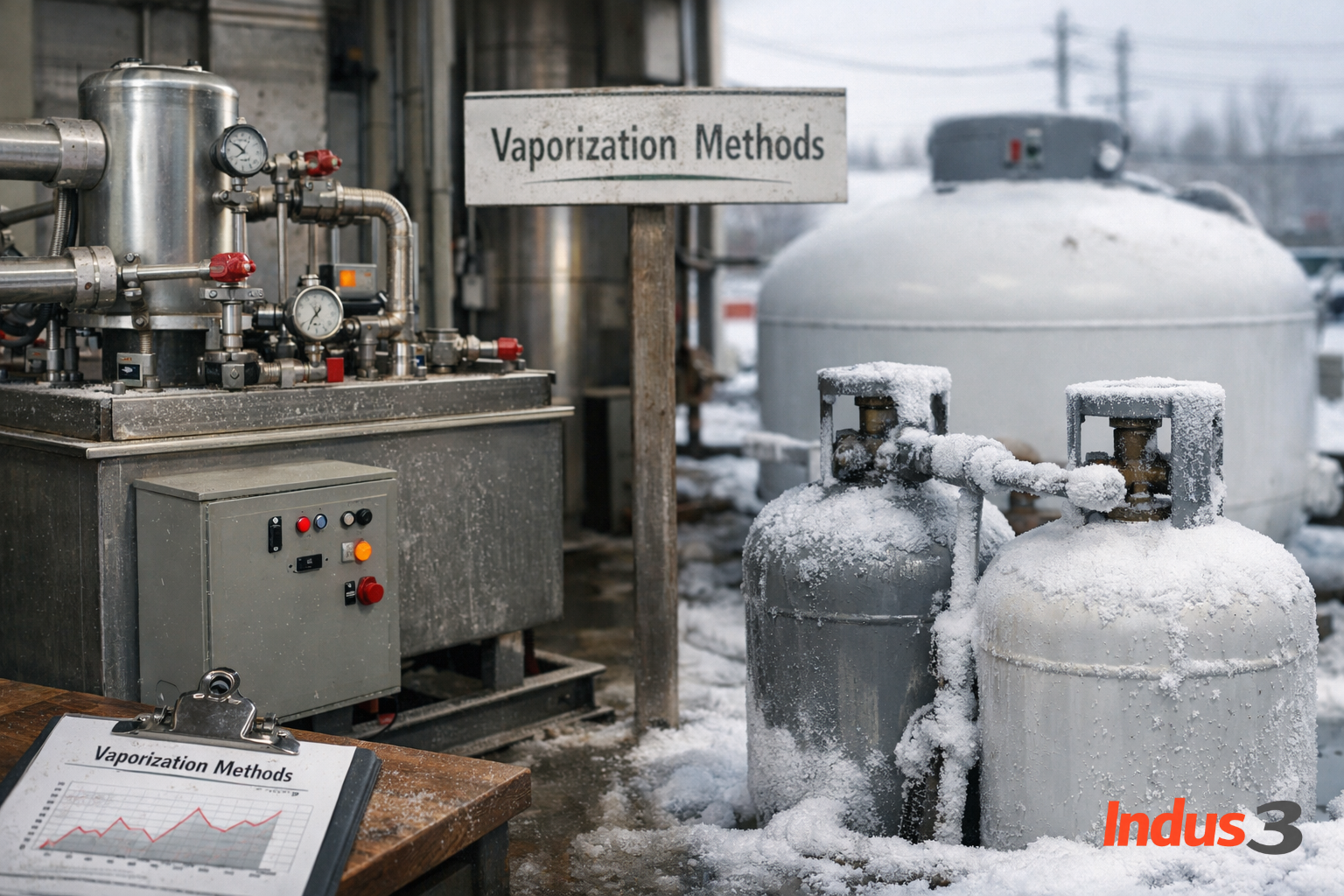
When discussing LPG systems, understanding the methods of vaporization is crucial to ensuring optimal performance and efficiency. Two primary methods are typically used: LPG vaporizers and natural vaporization. Both serve the same purpose of converting liquid LPG into a gaseous state for use in applications like heating, cooking, and industrial processes, but they operate in fundamentally different ways.
What is LPG Vaporization?
LPG vaporization refers to the process where liquid LPG (propane or butane) is heated to its boiling point, causing it to change into a gas. This heating process is controlled using an LPG vaporizer, a mechanical device designed to ensure consistent and efficient vaporization, regardless of ambient temperatures. LPG vaporizers come in various types, including electric, water bath, and air-heated vaporizers, each designed for specific industrial needs. These devices ensure that LPG gas is delivered at a consistent flow and pressure, even in cold weather or high-demand situations.
What is Natural Vaporization?
On the other hand, natural vaporization relies on the ambient temperature of the environment to convert liquid LPG into gas. In this method, the vaporization process occurs without additional heat sources. The liquid LPG absorbs heat from the surrounding environment, typically from the walls of the storage tank or the ambient air, to transition into a gaseous state. While this process works under mild conditions, it can be inefficient in colder climates or high-demand applications, leading to issues such as reduced vaporization rates or even tank freeze-ups.
Key Differences in Process and Efficiency
The primary difference between these two methods lies in how the heat for vaporization is provided. LPG vaporizers use an external heat source, whether electric, water-based, or air-heated, to ensure that the gas is vaporized at a controlled rate. This makes them far more reliable in colder climates or during periods of high gas demand. In contrast, natural vaporization is entirely dependent on the surrounding environment, making it less predictable and sometimes inadequate for industrial applications that require consistent gas flow.
For a deeper understanding of how LPG vaporizers function, particularly in industrial settings, you can check out our LPG Vaporizer Sizing Guide. Similarly, learn about the detailed working principles of LPG vaporizers for more technical insights into their operation.
As we explore the nuances of each method in this guide, we will discuss when it’s best to rely on natural vaporization versus when an LPG vaporizer is required for optimal performance.
The Principle of LPG Vaporization
LPG vaporization is a crucial process that converts liquid propane or butane into gas, which is then used for various applications, including heating, cooking, and industrial processes. In this process, liquid LPG stored in a tank or cylinder is exposed to heat, typically through a vaporizer, causing it to boil and change state into a gas. The conversion is not just a simple phase change; it requires sufficient heat to overcome the liquid’s boiling point, allowing it to vaporize effectively.
In an LPG vaporizer, heat is introduced through several methods, each designed for specific environmental and operational needs. These include electric vaporizers, water bath vaporizers, and air-heated vaporizers, which ensure that the LPG is vaporized efficiently and safely. This controlled process helps maintain consistent gas flow and pressure, critical for high-demand industrial applications or cold environments where natural vaporization would fail.
Types of LPG Vaporizers
Understanding the different types of LPG vaporizers is key to selecting the right one for your needs. Each type has distinct advantages depending on the operational environment and demand:
-
Electric Vaporizers: These vaporizers use electric heaters to generate the necessary heat for vaporization. Electric vaporizers are ideal for areas where a stable power supply is available and where precise temperature control is necessary. They are often used in industrial settings where large quantities of gas are needed consistently.
-
Water Bath Vaporizers: These vaporizers use water, heated by a burner or electrical element, to transfer heat to the LPG. They are commonly used in colder climates where heat transfer from ambient air is insufficient. The water bath vaporizer is effective because water can hold and transfer heat efficiently, maintaining a steady vaporization rate.
-
Air-Heated Vaporizers: Air-heated vaporizers use ambient air to provide the necessary heat for vaporization. These are more energy-efficient in moderate climates but may struggle in extremely cold weather. They are often used in smaller operations where gas demand is moderate.
Each of these vaporizer types plays a crucial role in ensuring that LPG is vaporized at a consistent rate, which is vital for maintaining pressure and flow in systems like gas burners, industrial heaters, and generators. For more detailed comparisons of the types of vaporizers, check out our LPG Vaporizer Types Comparison.
The Importance of Heat Transfer in LPG Vaporization
One of the most important factors in LPG vaporization is heat transfer efficiency. The efficiency of the heat transfer process directly affects the speed and consistency of the vaporization process. If the heat is transferred poorly or insufficiently, the LPG may not vaporize efficiently, leading to low gas output or fluctuating pressure. This is particularly problematic in applications where a steady supply of gas is essential, such as in industrial heating systems or in LPG-powered generators.
Effective heat transfer can be achieved through various methods, including the use of thermal jackets, heat exchangers, and optimized vaporizer designs. High-performance vaporizers are engineered to maximize heat exchange while minimizing energy loss, ensuring that the vaporization process remains reliable under varying environmental conditions. Understanding how different vaporizers manage heat transfer is crucial for selecting the right system based on your operational requirements.
To dive deeper into how LPG vaporizers work and the principles of heat transfer, take a look at our comprehensive LPG Vaporizer Guide. This resource provides valuable insights into the technical aspects of vaporizer operations and will help you make informed decisions when selecting the right system for your needs.
By understanding these fundamentals, we can now explore the differences between LPG vaporizers and natural vaporization, highlighting where each method excels and where one may fall short.
Fundamental Differences in Operation
The primary difference between LPG vaporizers and natural vaporization lies in how they provide the necessary heat to convert liquid LPG into gas. LPG vaporizers are designed to supply controlled, external heat, ensuring a consistent vaporization rate regardless of environmental factors. This heat is supplied either through electricity, a water bath, or air-heating methods. These vaporizers are reliable and can maintain a constant gas flow, even under challenging conditions such as low ambient temperatures or high gas demand.
In contrast, natural vaporization relies solely on ambient temperature to provide heat. The liquid LPG absorbs heat from the surrounding environment, typically from the walls of the storage tank or from the surrounding air, to vaporize. While this process can work efficiently under ideal conditions (such as in warmer climates or during low demand), it becomes less effective when external temperatures drop or when the gas demand spikes.
Environmental Impact on Performance
One of the key limitations of natural vaporization is its dependence on ambient temperature. During colder weather or in regions with freezing temperatures, the natural heat from the environment is insufficient to adequately vaporize LPG. This can result in a reduced vaporization rate or, in extreme cases, even cause the propane or butane in the tank to freeze, halting the flow of gas entirely. In these situations, the tank pressure may drop, and the vaporizer may fail to supply gas at the required rate, leading to operational disruptions.
Conversely, LPG vaporizers are designed to function optimally in a wider range of temperatures, including colder environments. The use of artificial heat sources ensures that the LPG remains in a gaseous state regardless of the weather, making vaporizers a more reliable solution in colder climates or high-demand applications. For more on how ambient temperature impacts vaporization, check out our LPG in Winter Guide.
Vaporization Capacity and Demand Handling
Natural vaporization is typically more suited for low-demand applications where the gas flow rate is relatively low and the temperature remains within a manageable range. However, when gas demand increases significantly, natural vaporization may not provide the necessary gas output. In high-demand scenarios—such as in industrial heating, large-scale cooking, or in areas with fluctuating gas consumption—a vaporizer is the more effective solution.
LPG vaporizers can maintain a consistent gas flow, even under these high-demand conditions. Whether you’re running a large industrial process, a commercial kitchen, or a high-capacity generator, vaporizers ensure that there’s always an adequate supply of gas available. Additionally, vaporizers can be sized to meet specific requirements, allowing for scalable solutions based on the demand at any given time.
Efficiency and Reliability
While natural vaporization is cost-effective and simple, it does have limitations in terms of efficiency and reliability. As previously mentioned, the process depends heavily on external conditions, such as ambient temperature and tank size. In colder temperatures or during periods of high usage, these limitations can result in inconsistent vaporization, leading to system downtime or pressure issues.
On the other hand, LPG vaporizers offer higher efficiency and reliability. They provide a consistent vaporization rate, ensuring a steady gas supply regardless of environmental conditions. Moreover, many modern vaporizers come with features designed to maximize heat transfer and minimize energy waste, further enhancing their efficiency.
For a deeper understanding of how these systems work in different settings, you can refer to our LPG Vaporizer Issues Diagnosis guide, which provides a detailed analysis of potential challenges and solutions.
Conclusion of Key Differences
In summary, the key differences between LPG vaporizers and natural vaporization come down to the level of control over the vaporization process and the reliability of the system. LPG vaporizers offer greater control, performance, and reliability, especially in demanding environments, while natural vaporization is more suited to smaller, low-demand applications where the environmental conditions are favourable. Understanding these distinctions will help you make an informed decision about which method to choose for your LPG system, based on your specific needs and conditions.
As we continue exploring, the next section will delve into the factors affecting natural vaporization in LPG tanks, helping you understand the limitations and challenges associated with relying on natural vaporization alone.
Temperature Dependence
One of the most significant factors affecting natural vaporization is the ambient temperature. As the name suggests, natural vaporization relies on the heat from the surrounding environment to vaporize LPG. This process is highly dependent on the temperature of the air, the LPG tank, and even the surrounding soil if the tank is buried.
In warmer conditions, natural vaporization works relatively efficiently. The liquid LPG absorbs enough heat from the environment to transition into a gas. However, as temperatures drop, the rate of natural vaporization slows down significantly. In cold weather, the LPG in the tank may not receive enough heat, resulting in reduced vaporization rates. This can cause a decrease in pressure and even freeze-ups within the tank, which are a major concern, particularly in colder climates or during winter months. To learn more about how to address these challenges in cold weather, refer to our LPG in Winter Guide.
Tank Size and Insulation
The size of the LPG tank also plays a crucial role in the efficiency of natural vaporization. Larger tanks have a greater volume of liquid LPG, and this larger volume requires more time to vaporize naturally. In high-demand situations, where more gas is needed at once, larger tanks may struggle to provide sufficient gas flow due to slower vaporization rates.
Additionally, the insulation of the tank can affect the amount of heat it absorbs. Tanks that are poorly insulated will lose heat to the surrounding environment, further decreasing the efficiency of natural vaporization. This is why in certain applications, such as large industrial operations or remote locations, using an LPG vaporizer becomes essential. Vaporizers offer a solution by providing a consistent and controlled heat source, regardless of the tank size or insulation. You can learn more about vaporizer sizing in our LPG Vaporizer Sizing Guide.
LPG Composition and Vaporization Rates
The composition of LPG itself also affects how easily it can be vaporized. LPG is typically a mixture of propane and butane, and the ratio of these gases influences the vaporization process. Propane, for example, vaporizes at a lower temperature than butane, which means that mixtures with a higher proportion of butane may require more heat to vaporize effectively.
This factor is particularly relevant in industrial settings where LPG is used in large quantities. A higher proportion of butane in the LPG mix can lead to slower vaporization rates, making it harder for natural vaporization to keep up with demand. In these cases, relying on a vaporizer may be the only way to ensure a consistent gas supply.
To optimize vaporization and address composition-related challenges, some industries use LPG blends that are designed to maximize the vaporization rate under varying temperatures. If you’re dealing with propane-butane mixtures, understanding the properties of each is crucial to maintaining efficient vaporization. For more insights, refer to our guide on LPG Vaporizer Maintenance, which covers strategies to enhance vaporizer performance.
Environmental Considerations
The surrounding environment—such as altitude, humidity, and wind speed—also plays a role in natural vaporization. In high-altitude regions, where atmospheric pressure is lower, natural vaporization may not occur at the same rate as it would at sea level. This is because the boiling point of LPG decreases with lower atmospheric pressure, which can slow down the vaporization process.
Humidity can also affect the efficiency of natural vaporization. In areas with high humidity, the air is already saturated with moisture, making it harder for LPG to absorb sufficient heat from the air. This can lead to inefficient vaporization, requiring larger or more frequent tanks to meet demand.
Understanding how these environmental factors influence natural vaporization can help in planning and mitigating potential issues. In many cases, an LPG vaporizer may be the solution to overcome these environmental challenges.
Inadequate Vaporization Symptoms
When natural vaporization is insufficient, it manifests in several ways. The most common symptom is a drop in tank pressure. As vaporization slows down, the amount of gas available for use decreases, causing pressure to fall. This can lead to inconsistent gas delivery or even system shutdowns if the pressure drops too low. In extreme cases, the tank may freeze, especially during winter months or in high-demand situations.
Another sign of insufficient vaporization is a decrease in the flow rate of gas to equipment. If the vaporization rate cannot keep up with the demand for gas, there will be a noticeable reduction in performance, especially in heating systems or industrial applications that require continuous and high-volume gas flow.
To address these issues, installing an LPG vaporizer may be necessary to maintain a consistent and reliable gas supply. Vaporizers ensure that the LPG remains in a gaseous state, even under challenging conditions. For troubleshooting vaporizer issues, refer to our LPG Vaporizer Issues Diagnosis guide.
Conclusion of Natural Vaporization Limitations
In conclusion, while natural vaporization is a cost-effective and simple method for vaporizing LPG, it comes with a range of limitations. It is highly susceptible to environmental factors such as temperature, humidity, and altitude, and may not be sufficient in high-demand or colder climates. For industrial operations or areas with fluctuating gas needs, using an LPG vaporizer provides a more reliable and efficient solution.
In the next section, we’ll explore when it’s best to use an LPG vaporizer instead of relying on natural vaporization, helping you make an informed decision based on your specific requirements.
When Natural Vaporization Isn’t Enough
In many situations, natural vaporization is simply not adequate to meet the demands of an industrial or commercial application. The limitations of natural vaporization, particularly in cold weather or high-demand environments, can lead to inconsistent gas supply, reduced system performance, or even complete failure of the vaporization process. In these instances, an LPG vaporizer becomes an essential tool to ensure a steady and reliable gas supply.
A key indicator that natural vaporization won’t meet your needs is when the system is struggling to maintain pressure or gas flow. If the gas demand exceeds what the natural vaporization process can supply—particularly in colder temperatures or during periods of high usage—the vaporizer will ensure that the gas remains in a vaporized state, ready for use. This is especially critical in industries like manufacturing, food processing, or any setting where consistent gas flow is required for equipment to function correctly.
For example, in cold climates, natural vaporization may struggle to provide sufficient gas due to lower ambient temperatures. During winter months, ambient temperatures can cause significant drops in vaporization rates, which could compromise industrial heating systems, leading to operational inefficiencies. In such cases, relying on a vaporizer ensures that the LPG is always heated to the required temperature, regardless of the external environment.
High-Demand Applications and Consistent Gas Flow
When dealing with high-demand applications, such as in large-scale manufacturing or commercial cooking operations, maintaining a constant gas flow is critical. Industrial systems that rely on LPG for heating, power generation, or chemical processes require an uninterrupted supply of gas at a consistent pressure. Natural vaporization, which is dependent on environmental factors, can become inconsistent in these settings, especially during peak demand or in areas where the weather is less predictable.
For instance, large gas burners used in industrial furnaces or boilers require a substantial amount of gas at a steady pressure. In these applications, relying on natural vaporization can result in fluctuations in gas pressure, which can cause the burners to function inefficiently or shut down entirely. An LPG vaporizer ensures that the system can supply a constant, controlled flow of gas, regardless of the external temperature or demand fluctuations. This makes vaporizers the preferred choice for high-demand applications that require reliability.
Cold Climates and Outdoor Installations
In regions with cold climates or areas where LPG tanks are used outdoors, natural vaporization is often insufficient. As ambient temperatures drop, the heat available to vaporize the LPG decreases, leading to a reduced vaporization rate. In extreme cases, the LPG in the tank can freeze, halting the vaporization process entirely. This can be particularly problematic for outdoor installations, where heating options are limited and natural vaporization struggles to keep up with demand.
Using an LPG vaporizer in these situations is essential to ensure reliable vaporization. A vaporizer can maintain a consistent heat source, ensuring that the LPG is heated to the necessary temperature to remain in a gaseous state, even in freezing conditions. For example, in cold regions of Pakistan, where temperatures can drop significantly, using a water bath or electric vaporizer will guarantee that the LPG supply is uninterrupted.
Industrial and Commercial Efficiency
In industrial and commercial settings, where large amounts of LPG are required on a regular basis, efficiency is key. Relying on natural vaporization alone can result in wasted time and energy, especially when the vaporization rate cannot keep up with the demand. In such environments, an LPG vaporizer is a more efficient solution, as it ensures that the LPG is vaporized quickly and efficiently, meeting the system’s demands without delay.
LPG vaporizers are designed to optimize heat transfer and minimize energy consumption. Unlike natural vaporization, which can be slow and inefficient, vaporizers provide a controlled environment where the liquid LPG is quickly transformed into gas, ensuring that the system operates at peak efficiency. For industries that rely heavily on LPG, such as food processing or chemical manufacturing, using a vaporizer is crucial to maintain consistent production and avoid costly downtimes.
Choosing the Right Vaporizer for Your Needs
When deciding whether to use an LPG vaporizer, it’s essential to consider your specific needs, such as the size of the operation, the climate, and the gas demand. For example, a small restaurant may be able to rely on natural vaporization during moderate weather conditions, but a large factory operating in a colder region will likely need a vaporizer to ensure a consistent supply of gas.
The type of vaporizer you choose will also depend on your requirements. Electric vaporizers are ideal for consistent, controlled heating in industrial applications, while water bath vaporizers are better suited for extremely cold environments. Air-heated vaporizers offer an efficient and cost-effective solution for moderate conditions.
For more information on selecting the right vaporizer, check out our LPG Vaporizer Sizing Guide, which can help you determine the appropriate vaporizer type and size based on your operational requirements.
Conclusion of When to Use a Vaporizer
In summary, an LPG vaporizer is essential when natural vaporization fails to meet the demands of an application. Whether due to cold weather, high gas demand, or the need for consistent performance, vaporizers ensure that LPG remains in a gaseous state at the necessary flow and pressure. By selecting the right vaporizer based on your specific needs, you can ensure a reliable, efficient LPG supply for your operation, no matter the external conditions.
In the next section, we will examine the performance of LPG vaporizers in both cold and high-demand climates, and how they stand up to natural vaporization in these challenging environments
Understanding LPG Vaporization Efficiency
Efficiency in LPG vaporization directly impacts the overall performance of gas systems, particularly in industrial applications. The goal is to ensure that the vaporizer converts liquid LPG into gas quickly and consistently, without wasting energy or losing heat. Inadequate vaporization can lead to issues such as reduced pressure, poor system performance, or even complete shutdowns, especially in high-demand scenarios.
Optimizing LPG vaporization efficiency ensures that the system operates at maximum capacity, which is critical for industries that rely on a steady supply of gas. To achieve this, a combination of proper vaporizer selection, regular maintenance, and strategic heat management is essential.
In industrial settings where LPG is used for heating, power generation, or chemical processing, ensuring optimal vaporization efficiency is vital. Whether you’re running a large-scale operation or a smaller, high-demand setup, here are key strategies to enhance the efficiency of LPG vaporization.
Choosing the Right Vaporizer for Your Application
The first step in optimizing LPG vaporization efficiency is selecting the right vaporizer for your specific needs. Vaporizers come in various types, including electric, water bath, and air-heated models, and each has its advantages depending on the operational environment.
-
Electric Vaporizers: Best for environments where a consistent and reliable power supply is available. These vaporizers offer precise control over temperature and can be easily adjusted to meet the demand of the system.
-
Water Bath Vaporizers: Ideal for colder climates, these vaporizers use heated water to transfer heat to the LPG, ensuring that it vaporizes efficiently even in freezing conditions. Water bath vaporizers are highly effective in maintaining stable vaporization rates during high-demand periods.
-
Air-Heated Vaporizers: Most effective in mild climates, air-heated vaporizers use ambient air to transfer heat to the LPG. These are an energy-efficient option for environments where temperatures are not too low and gas demand is moderate.
Selecting the appropriate vaporizer based on environmental conditions and system requirements is critical for ensuring efficient operation. To help you make the right choice, consider consulting our LPG Vaporizer Sizing Guide for more detailed advice on selecting the ideal vaporizer type.
Maximizing Heat Transfer Efficiency
Heat transfer efficiency is a key factor in optimizing vaporization performance. The faster and more effectively heat is transferred from the vaporizer to the LPG, the more efficiently the gas will vaporize. This ensures that the system provides a steady and reliable gas supply, without excessive energy consumption.
Several strategies can help maximize heat transfer efficiency in LPG vaporization systems:
-
Insulation: Proper insulation of both the vaporizer and LPG storage tanks helps minimize heat loss, allowing the system to maintain a consistent temperature and maximize vaporization rates. Insulating pipes and tank walls reduces energy wastage and keeps the LPG heated to the optimal temperature.
-
Heat Exchangers: Installing a heat exchanger in the system can significantly improve heat transfer. Heat exchangers are designed to increase the surface area through which heat is transferred, helping to vaporize more LPG with less energy.
-
Vaporizer Maintenance: Regular maintenance is essential to ensure that the vaporizer continues to operate at peak efficiency. Over time, buildup of debris or wear and tear on internal components can reduce heat transfer efficiency. Scheduling regular inspections and cleaning can prevent such issues, ensuring the system continues to run smoothly.
For more information on maintaining the performance of your vaporizer, check out our LPG Vaporizer Maintenance guide.
Optimizing Flow Rates for Consistent Performance
Another important factor in optimizing LPG vaporization is controlling the flow rate of LPG to the vaporizer. If the flow rate is too high, the vaporizer may struggle to keep up with the demand, resulting in inefficient vaporization. On the other hand, if the flow rate is too low, the system may not provide enough gas to meet operational needs.
To achieve optimal flow rates, consider the following:
-
Vaporizer Sizing: Ensure that the vaporizer is sized correctly to handle the peak gas demand of the system. An undersized vaporizer will not be able to meet high flow rates, while an oversized vaporizer may lead to wasted energy.
-
Pressure Regulators: Use pressure regulators to control the pressure of the LPG entering the vaporizer. This ensures that the vaporizer receives a consistent flow of LPG at the correct pressure, which is crucial for efficient vaporization.
-
Flow Meters: Installing flow meters allows you to monitor and adjust the flow of LPG to the vaporizer. This helps ensure that the system is always operating within the optimal range for efficient vaporization.
Utilizing Advanced Technologies for Efficiency
Modern LPG vaporization systems are increasingly being equipped with advanced technologies designed to improve efficiency. For example, some vaporizers come with integrated thermostats that monitor temperature in real-time and adjust heat output to maintain consistent vaporization rates. These systems can automatically adjust to changing environmental conditions, ensuring that the vaporizer remains efficient even during fluctuations in gas demand or external temperatures.
In addition, some advanced vaporizers use automated control systems that allow operators to monitor and adjust settings remotely. These systems provide more precise control over vaporization rates, improving overall system efficiency and reducing the need for manual intervention.
For more details on how automation and advanced technologies can enhance your LPG vaporization system, explore our guide on Industrial LPG Automation.
Improving Vaporizer Efficiency with Regular Monitoring
Regular monitoring and diagnostics are essential for ensuring that your LPG vaporization system is operating efficiently. By using monitoring systems that track key performance indicators—such as vaporization rate, temperature, and gas pressure—you can identify any inefficiencies or potential problems early on. This allows you to take corrective action before issues escalate, minimizing downtime and reducing energy costs.
Additionally, implementing predictive maintenance tools that analyze system data can help forecast when maintenance is needed, preventing unexpected failures and ensuring the vaporizer continues to operate at peak efficiency.
Conclusion: Achieving Optimal LPG Vaporization Efficiency
In industrial applications, optimizing LPG vaporization efficiency is critical for maintaining system performance, reducing energy costs, and ensuring a reliable gas supply. By selecting the right vaporizer, maximizing heat transfer, controlling flow rates, and using advanced technologies, you can significantly enhance the efficiency of your vaporization system.
For industries facing cold climates, high-demand periods, or complex applications, investing in the right vaporizer and implementing efficiency strategies will help ensure continuous operation without disruptions.
As we move into the next section, we’ll wrap up with a strategic overview of when to use an LPG vaporizer versus relying on natural vaporization, helping you make the most informed decision for your LPG system.
Recap of Key Insights
When deciding between LPG vaporizers and natural vaporization for your system, several factors must be considered to ensure optimal performance. Natural vaporization, while cost-effective and simple, often falls short in high-demand applications or extreme environmental conditions, such as cold climates. The reliance on ambient temperature makes it less predictable and efficient during colder weather or high-gas usage periods.
In contrast, LPG vaporizers offer greater control, reliability, and efficiency, especially in these challenging scenarios. Whether it’s the steady heat provided by electric, water bath, or air-heated vaporizers, these systems are designed to ensure that LPG is consistently vaporized at the required rate, regardless of the weather or demand.
When to Choose an LPG Vaporizer
You should opt for an LPG vaporizer when:
-
Cold Climates: Natural vaporization struggles when temperatures drop. A vaporizer provides a steady heat source, ensuring consistent vaporization even in freezing conditions.
-
High-Demand Applications: Industries such as manufacturing, power generation, and commercial kitchens require constant, high-volume gas supply. A vaporizer ensures that there is no interruption in gas flow, even when demand spikes.
-
Industrial Settings: Large-scale operations or complex industrial systems often require precise, efficient vaporization that can’t be provided by natural vaporization, especially when gas is needed at specific pressures or in large quantities.
-
Operational Reliability: If your system requires continuous operation without the risk of failure due to fluctuating vaporization rates, an LPG vaporizer guarantees that the system will always operate efficiently.
When Natural Vaporization May Work
Natural vaporization might still be suitable for smaller-scale or less-demanding applications, particularly in regions with consistently warm climates. If gas demand is low, the ambient temperature is sufficient, and the application does not require a precise flow of gas, natural vaporization could be a cost-effective solution.
However, even in these cases, it’s essential to regularly monitor the system to ensure that the rate of vaporization is consistent and that external conditions are not causing issues. For larger applications or where gas supply consistency is critical, relying solely on natural vaporization can lead to system inefficiencies and downtime.
The Benefits of Vaporizers in Industrial Settings
LPG vaporizers are the preferred choice for industrial and commercial applications where a steady and reliable gas supply is essential. Whether you are working in an environment where temperatures fluctuate or where gas demand varies throughout the day, vaporizers ensure that your system operates efficiently and without interruption.
Beyond efficiency, vaporizers also provide the flexibility to tailor the vaporization process to your specific needs. Whether through optimizing heat transfer, adjusting vaporizer capacity, or automating control processes, vaporizers offer greater precision and adaptability compared to natural vaporization methods.
If you’re unsure whether to rely on natural vaporization or invest in an LPG vaporizer for your application, our team at Indus3 is here to help. We specialize in providing tailored solutions to meet the unique needs of industries across Pakistan. Whether you’re looking to optimize your existing LPG system or explore new vaporization technologies, we can guide you in making the best choice for your operation.
To learn more about selecting the right vaporizer or to get advice on improving your LPG system’s performance, explore our LPG Vaporizer Applications guide, or get in touch with us today to discuss your specific requirements.
By understanding the differences between LPG vaporization and natural vaporization, you can make an informed decision that ensures consistent performance, efficiency, and cost-effectiveness for your business.