
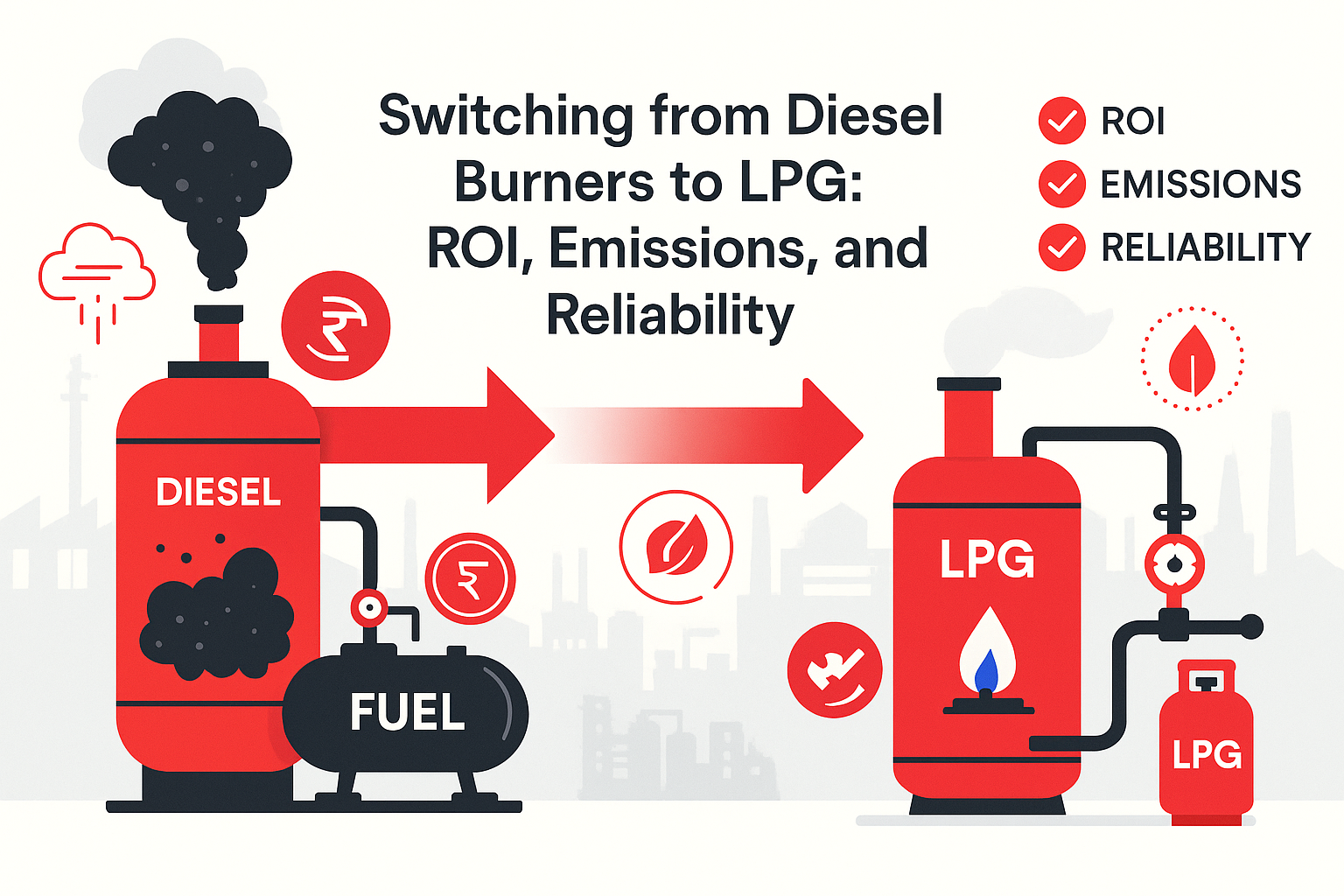
The Rising Pressure on Diesel-Dependent Industries
Industrial decision-makers across Pakistan are feeling the pinch as energy costs continue to rise. That pressure has made many factories, mills, and processing plants reconsider their long-term fuel strategy and actively look to switch to LPG from diesel to stabilise expenses and improve operational efficiency. The shift isn’t just about fuel availability; it’s a broader movement driven by financial, environmental, and regulatory realities.
Diesel has traditionally powered everything from boilers to burners, but its volatility in pricing has become a serious burden. When managers compare the diesel vs LPG price per litre, the trend becomes clear: LPG has maintained more stable rates over the past few years, while diesel has spiked repeatedly. This volatility affects monthly budgets, especially in high-consumption sectors such as textiles, plastics, metal forging, and food processing.
Why LPG Has Become the Smarter Alternative
The benefits of LPG over diesel fuel have always been known in engineering circles, but it’s only recently that businesses across Pakistan have begun to act on them. LPG is cleaner, produces fewer harmful emissions, and offers more consistent combustion — essential for industries that demand steady heat levels and dependable burner performance. It also reduces soot buildup and equipment wear, which improves uptime and lowers maintenance costs.
Price stability is another major driver. Many industrial buyers now ask: “is LPG cheaper than diesel Pakistan?” Although LPG pricing still fluctuates with global markets, it has shown far less volatility compared with diesel. According to the International Energy Agency (IEA), global LPG markets remain relatively resilient due to diversified production sources, while diesel supply remains exposed to refining bottlenecks and geopolitical disruptions. These macro trends spill directly into Pakistan’s local pricing, influencing purchasing decisions in every industrial zone from Karachi to Faisalabad.
Beyond cost and performance, companies are now pushed by regulatory and environmental pressures. Diesel emissions contain sulphur compounds, nitrogen oxides, and particulate matter — all of which are tightly monitored by global and regional regulators. OGRA has repeatedly emphasised cleaner energy adoption across industrial setups, signalling a national shift toward lower-emission alternatives that align with global sustainability frameworks. This regulatory climate makes LPG a forward-looking choice for plants aiming to stay compliant over the next decade.
How Global Energy Trends Influence Pakistan’s Shift
Pakistan’s energy sector is strongly influenced by international developments. As global demand for cleaner fuels rises, LPG has gained favour due to its lower carbon footprint and its suitability for both small and large-scale industrial use. Industries that export to Europe and the Middle East increasingly prefer cleaner fuel signatures to meet buyer expectations, making LPG adoption a strategic advantage rather than just a cost decision.
The global movement toward decarbonisation is reshaping fuel portfolios everywhere. Reports from the World Bank and IEA highlight that nations with growing industrial bases are turning to LPG because it reduces greenhouse gas emissions without requiring expensive equipment overhauls. This aligns perfectly with Pakistan’s industrial landscape, where manufacturers often seek solutions that improve efficiency without forcing complete system redesigns.
Local businesses also observe what competitors are doing. As more factories adopt LPG for burners, boilers, and process heating, others follow suit to remain competitive. The wider availability of reliable LPG equipment — including vaporizers, regulators, and safety devices — has removed many of the adoption barriers that existed five to ten years ago.
To understand how companies like Indus 3 support this transition with safe, high-performance LPG systems, readers can explore the Indus 3 Home page at https://indus3.pk/ or learn more about the organisation’s expertise through the About Us section at https://indus3.pk/about-us/. These resources help businesses evaluate what equipment and installation standards are required for a successful conversion.
Pakistan’s industrial shift is no longer theoretical — it’s active, measurable, and accelerating. Rising diesel costs, tighter environmental rules, and the undeniable technical strengths of LPG have created a perfect storm pushing industries toward cleaner, more reliable fuel choices. As the sections ahead explore, the move to LPG is not just practical but financially rewarding for most high-consumption businesses looking for long-term stability.
Diesel vs LPG Price Per Litre: The Real-World Numbers
Diesel costs have climbed aggressively in Pakistan over the past few years, creating constant pressure on factory budgets. Every time the price rises, industries revisit their fuel strategies to assess whether they should switch to LPG from diesel for more predictable operating expenses. The comparison becomes even clearer when managers analyse the diesel vs LPG price per litre over the 2023–2025 period.
Based on OGRA and PSO pricing data, diesel has repeatedly crossed high volatility ranges, often increasing multiple times within a single quarter. In contrast, LPG prices, although influenced by international markets, have remained comparatively stable. This stability benefits high-consumption industries running boilers, ovens, kilns, and heaters for long production cycles.
When calculated on an hourly consumption basis, the pattern is obvious. For example, an industrial boiler that consumes 4 litres of diesel per hour becomes significantly more expensive than LPG, especially when the per-litre differential widens during peak months. These direct comparisons shape the national trend we’re now seeing across textile mills, food processing plants, and steel operations.
Understanding Diesel to LPG Conversion Cost
One of the biggest questions industrial buyers ask is the total diesel to LPG conversion cost. This cost typically includes vaporizers, regulators, piping, fittings, safety equipment, and installation labour. Depending on the size of the generator, burner, or boiler, the conversion can pay back surprisingly fast — often within months rather than years.
Pakistan’s recent fuel price patterns make the financial case even more compelling. Between 2023 and 2025, diesel prices reached record highs, while LPG remained within a manageable range. Industries using a switch diesel to LPG savings calculator often discover that LPG reduces hourly operating costs by 25% to 40% for mid-sized systems and even higher for large furnaces or chain-driven textile machinery.
To make this clearer, consider a standard 200 kVA diesel generator consuming roughly 40 litres per hour. At fluctuating diesel prices, this becomes an unpredictable expense. After conversion, dual-fuel LPG systems can replace a major portion of diesel consumption, dramatically smoothing monthly energy expenses. Similar savings apply to heaters and industrial ovens, where LPG delivers higher combustion efficiency.
Companies considering the equipment required for conversion can browse key components on the Indus 3 Shop page at https://indus3.pk/shop-page/. For custom quotes or sizing help, decision-makers can also reach out through the Indus 3 Contact page at https://indus3.pk/contact/.
Long-Term Cost Savings for Industrial Users
Long-term cost modelling consistently shows LPG outperforming diesel in most industrial settings. Because LPG burns cleaner, equipment lasts longer, maintenance intervals increase, and downtime decreases. This creates secondary savings that go far beyond the fuel tank — especially in factories that rely on around-the-clock production.
The financial benefit becomes clearer when reviewing international benchmarks. According to global energy price indexes and OGRA’s domestic updates, LPG’s price swings are usually far smaller than diesel’s. This difference provides stability in forecasting, budgeting, and cost-of-production calculations — essential for export-oriented businesses competing in tight global markets.
Industry engineers also report that LPG produces more consistent BTU output per unit of cost, which improves thermal efficiency in boilers and process heaters. This means factories don’t just save money on fuel; they get better performance from the same equipment. These performance gains amplify cost reductions over years of operation.
As Pakistan’s energy landscape evolves, more companies are conducting detailed cost-benefit analyses to determine long-term value. With diesel becoming increasingly unpredictable, LPG offers a way to stabilise expenses while unlocking operational efficiency. For many businesses, the numbers are no longer theoretical — they see measurable savings every month after converting.
Diesel Emissions and the Hidden Industrial Risks
Industries that decide to switch to LPG from diesel often begin the journey after reviewing the significant emissions difference between the two fuels. The gap becomes even clearer when comparing LPG emissions vs diesel emissions using data published by OGRA, WHO, and the US Environmental Protection Agency (EPA).
Diesel combustion releases a complex mix of pollutants, including sulphur oxides (SOx), nitrogen oxides (NOx), particulate matter (PM2.5), black carbon, and unburnt hydrocarbons. These pollutants accumulate inside factories and surrounding industrial zones, affecting workers’ health and contributing to environmental degradation. WHO classifies diesel exhaust as a Group 1 carcinogen due to its direct link to respiratory illnesses and cardiovascular stress.
Why LPG Burns Cleaner: The Science Explained Simply
The benefits of LPG over diesel fuel become obvious when examining the chemistry. LPG generates almost no SOx because it contains no sulphur. It also produces dramatically lower PM2.5 levels — the tiny particles that penetrate deep into the lungs. According to EPA studies, LPG combustion cuts particulate matter by up to 90% compared with diesel.
LPG also reduces NOx emissions by providing a cleaner, more controlled burn. This means less smog-forming pollution and fewer harmful gases in enclosed workspaces. For factory owners, these improvements directly enhance worker safety and reduce the long-term health risks associated with diesel fumes.
Black carbon — a major component of diesel soot — is another critical issue. Industrial machinery running on diesel gradually accumulates soot inside burners, chimneys, and heating chambers. LPG avoids this entirely, which not only helps the environment but also keeps equipment cleaner for longer.
Businesses exploring safe system design and compliance can review essential components on the LPG safety equipment section of Indus 3: https://indus3.pk/product-category/lpg-accessories/lpg-safety/. More information about the company’s expertise and engineering standards is available on the Indus 3 About page at https://indus3.pk/about-us/.
How Cleaner Fuel Improves Worker Safety and Plant Performance
The environmental advantages are important, but the operational impact is equally significant. Diesel fumes often linger inside factories, especially in plants with high-temperature processes such as forging, plastics, pharmaceuticals, and food processing. These fumes not only affect air quality but also settle as residue on machinery and work surfaces.
Cleaner combustion means less contamination and fewer interruptions for equipment cleaning. This is one of the often-overlooked advantages in discussions about the pros and cons of LPG diesel conversion. Lower emissions also reduce the strain on exhaust systems, allowing them to operate more efficiently and meet environmental compliance requirements more easily.
OGRA regulations already encourage industries to adopt cleaner-burning fuels where feasible, especially in dense industrial clusters. Moving from diesel to LPG aligns businesses with these expectations while preventing future compliance issues as environmental standards become stricter.
Cleaner air inside industrial facilities improves worker performance as well. When pollutants decrease, operators report fewer respiratory complaints, reduced symptoms of fatigue, and better overall productivity. These improvements, backed by WHO exposure guidelines, demonstrate the broader benefits that go beyond fuel cost and burner efficiency.
Pakistan’s industrial sector faces increasing scrutiny regarding emissions, both from regulators and from global clients demanding cleaner production practices. LPG offers a practical pathway that reduces environmental footprint without compromising output. For most businesses, the emissions difference alone provides a strong reason to transition.
The Core Components of an LPG Dual-Fuel System
Many industries are now evaluating what it actually takes to switch to LPG from diesel, especially for heavy-duty burners, boilers, furnaces, and generators. The foundation of any reliable system is the LPG dual-fuel system for diesel engine setups that allow LPG and diesel to work together for efficient combustion. These systems are engineered to reduce diesel dependency while delivering stable heat output for industrial applications.
A well-designed conversion setup typically includes key components such as vaporizers, regulators, flow meters, valves, and thermostats, each playing a distinct safety and performance role. Engineering standards such as NFPA 54, UKLPG guidance, and manufacturer installation manuals provide detailed requirements that ensure proper handling, pressure control, and combustion quality.
Industrial vaporizers are essential because LPG stored in cylinders or tanks is in liquid form. A vaporizer gently heats the liquid LPG and turns it into gas before it reaches the burner or generator. Equipment options suited for industrial loads can be explored in the LPG vaporizer range available at Indus 3: https://indus3.pk/product-category/lpg-vaporizer/.
Step-by-Step: How Diesel Generators and Burners Are Converted
When industries explore how to convert diesel generator to LPG, the process usually involves adapting fuel lines and introducing a controlled LPG feed that blends with diesel in measured proportions. In generators, LPG is often fed into the air intake system, where it mixes with incoming air before entering the combustion chamber. This reduces diesel consumption while maintaining reliable ignition and output.
For industrial burners and boilers, conversion systems feed LPG through a regulated gas line into the burner manifold. The burner then uses LPG as the primary fuel source, with diesel functioning as a backup or ignition stabiliser depending on system design. This hybrid approach ensures stable flame quality and consistent thermal output.
Furnaces in steel, textile, and packaging industries benefit from LPG conversion because LPG produces uniform heat without soot. The absence of heavy carbon buildup improves chamber cleanliness and reduces downtime. When engineers select the right components — particularly regulators, flow meters, and thermostats — the system becomes more efficient and far easier to maintain.
Regulators ensure correct downstream pressure and maintain safe flow conditions. Industrial-grade models are available in the LPG regulator section at Indus 3: https://indus3.pk/product-category/lpg-accessories/lpg-regulator/. Flow meters monitor usage for both efficiency tracking and billing accuracy, while thermostats regulate heat levels inside furnaces and boilers to maintain process stability.
Safety Controls, Regulators, and Vaporizers Required
A proper conversion isn’t just about introducing LPG; it must be engineered with correct safety controls. LPG travels under pressure, meaning every system needs certified regulators, shut-off valves, flame arrestors, and leak-prevention fittings. These elements ensure safe operation during both startup and high-load conditions.
Vaporizers are particularly critical for high-demand applications. Their role is to prevent freeze-ups, maintain stable vapour flow, and ensure burners never starve for fuel. External engineering codes such as NFPA 54 emphasise vaporizer sizing as a mandatory step in system design. Undersized vaporizers can cause flame drops, temperature instability, and unplanned shutdowns. Oversized vaporizers waste energy.
Some industries explore vehicle-based conversions using a diesel to LPG conversion kit for cars/trucks, but industrial conversions require far more robust and certified equipment. Heavy-duty machinery operates at higher pressures and larger volumes, which is why professional configuration is essential. Industrial conversions also require specialised piping, correct ventilation, and regular leak testing as outlined in international LPG safety standards.
Thermostats and automated controls play a final key role by keeping systems within the correct temperature range. They protect equipment from overheating, enhance efficiency, and contribute to consistent product quality.
Through properly designed conversion systems, industries gain a cleaner, more stable, and more economical fuel source without replacing their existing machinery. As LPG-compatible components become more accessible in Pakistan, more factories are upgrading safely and confidently to modern dual-fuel solutions.
Payback Period for Burners, Boilers, and Furnaces
For many factories in Pakistan, the journey to cost recovery begins almost immediately after they switch to LPG from diesel, with noticeable reductions in fuel expenditure appearing within the first few weeks. The most common question businesses ask is whether the investment makes financial sense — and the answer becomes clear when examining the numbers. Rising fuel volatility has pushed executives to compare actual savings against the diesel to LPG conversion cost, revealing short payback periods across multiple sectors.
Textile units, which consume large amounts of heat for dyeing, steaming, and calendaring, often see payback within three to six months. LPG’s cleaner burn reduces downtime caused by soot accumulation in boilers, extending maintenance intervals and enhancing output consistency. Studies by the International Energy Agency (IEA) emphasise that cleaner fuels improve thermal efficiency, which magnifies savings over time.
CNG stations running diesel-powered generators for compressors experience even faster recovery. Dual-fuel LPG systems reduce diesel usage significantly, especially during peak hours. Given the long daily operating cycles of CNG stations, cost savings compound rapidly, often surpassing expectations within the first year.
Fuel Efficiency Gains After Converting to LPG
Industrial engineering data consistently highlights the benefits of LPG over diesel fuel, particularly in systems requiring precise temperature control. LPG burns more efficiently, producing stable BTU output without the soot or residue associated with diesel combustion. This allows equipment to run longer at reduced operational cost.
Food processing plants, which require consistent heat for baking, roasting, drying, and sterilisation, benefit enormously from LPG’s clean combustion. Because their equipment must maintain uniform temperatures, the reliability of LPG reduces rejects and improves batch quality. According to the Asian Development Bank (ADB), industries using cleaner fuels experience up to 20% efficiency gains due to reduced heat loss and improved burner stability.
Metal and forging units also report significant improvements. High-temperature furnaces running on diesel are prone to carbon buildup, which reduces flame uniformity and forces frequent shutdowns. After conversion, LPG’s clean flame increases reliability and reduces scrap rates. These efficiency gains directly impact production capacity, enabling more output with less fuel.
Companies planning to purchase vaporizers, regulators, and accessories to optimise their systems can explore available options on the Indus 3 Shop page at https://indus3.pk/shop-page/. For personalised guidance or sizing assistance, businesses can reach out via the Indus 3 Contact page at https://indus3.pk/contact/.
Maintenance Savings and Reduced Downtime
Savings extend far beyond fuel consumption. Because LPG produces no soot, sludge, or heavy carbon, machinery stays cleaner for longer and requires significantly fewer maintenance hours. These factors create hidden but substantial ROI benefits that often exceed fuel savings alone.
Textile mills running on diesel frequently face clogged burner nozzles, fouled heat exchangers, and combustion chamber deposits. LPG eliminates these problems, allowing for steady production without constant stoppages. These maintenance efficiencies contribute to cost recovery that accelerates month by month.
Food processing industries similarly enjoy increased uptime due to cleaner heating operations. Production lines can operate longer between maintenance cycles, improving output capacity and reducing labour costs. Industries that rely on hygienic environments also appreciate LPG’s cleaner burn, as it reduces contaminants around sensitive production zones.
For CNG stations and forging units, the elimination of diesel soot translates to reduced servicing hours and extended equipment life. Diesel-based generators often require expensive overhauls due to carbon contamination; LPG significantly slows this wear and tear, lowering long-term operational costs.
Finally, the LPG fuel advantages diesel vehicle comparison also reflects industrial outcomes. Clean combustion means less engine stress, longer component life, and reduced repair bills — all of which strengthen ROI across heavy machinery.
As diesel prices continue to fluctuate and environmental standards tighten, Pakistan’s industrial sector increasingly views LPG conversion as a strategic investment rather than a cost. The result is a measurable financial advantage that businesses begin to realise in both the short and long term.
Why LPG Systems Deliver More Consistent Heat
For many industries, stable heat output is one of the strongest reasons to switch to LPG from diesel, especially in applications where temperature fluctuations can destroy product quality. LPG offers more consistent BTU output, which allows burners and boilers to maintain uniform thermal performance throughout long production cycles. This is a major operational strength and one of the most significant benefits of LPG over diesel fuel for process-driven factories.
Diesel combustion often produces hot and cold patches due to uneven burning and carbon deposits inside chambers. LPG, on the other hand, produces a clean, steady flame that reacts quickly to control adjustments. This enables operators to fine-tune temperatures with precision — vital for textiles, plastics, pharmaceuticals, and food processing.
Industrial standards from NFPA and ASME repeatedly highlight LPG’s combustion stability as a core advantage for large-scale heating applications. A consistent heat source leads to improved production quality and fewer rejects, contributing directly to operational efficiency.
Zero Sludge, Zero Smoke — What This Means for Machines
One of the biggest challenges of diesel-based heating systems is soot, sludge, and black carbon buildup. These deposits accumulate inside nozzles, heat exchangers, chimneys, furnaces, and even ventilation systems. Over time, they choke airflow, reduce burner performance, and force expensive downtime for cleaning and part replacements.
LPG eliminates these issues almost entirely. It burns without generating smoke or heavy particulates, keeping machinery clean and operating at optimal efficiency. This clean combustion is one of the most overlooked advantages in the broader discussion around the pros and cons of LPG diesel conversion. Lower contamination means longer maintenance intervals and significantly reduced mechanical wear.
Industries operating in dust-sensitive or hygiene-critical environments — such as bakeries, dairy plants, confectionery units, and pharmaceutical factories — benefit enormously. Cleaner heating systems reduce contamination risks, improve air quality, and support compliance with product safety standards.
Factories interested in improving system cleanliness can explore specialised gas filters available at Indus 3 (https://indus3.pk/product-category/lpg-accessories/gas-filter/), designed to protect equipment from impurities and extend lifespan.
For systems requiring controlled heating, such as industrial ovens, dryers, and space heaters, reliable equipment options can be found in the LPG heaters collection (https://indus3.pk/product-category/lpg-accessories/lpg-heater/).
Improving Uptime with the Right LPG Equipment
Operational uptime is directly tied to the durability and reliability of the fuel system. Diesel-powered units often suffer from clogged injectors, fouled burner heads, and unstable flame patterns. These problems lead to frequent stoppages and inconsistent production flow. LPG avoids these issues by providing clean combustion and stable supply pressure, allowing systems to run longer without interruption.
The LPG fuel advantages diesel vehicle comparison extends to industrial machinery as well. In both cases, LPG results in smoother operation, reduced vibration, and fewer mechanical complications. These performance improvements translate into higher uptime for factories and reduced expenditure on repairs and spare parts.
Temperature-sensitive production lines — such as textile dyeing, metal forging, chemical batching, and bakery ovens — benefit particularly from LPG’s precision. Operators can adjust heat levels quickly without worrying about soot interference or delayed flame response. According to engineering guidance from ASME, clean-burning fuels drastically improve burner responsiveness and longevity, making LPG a smart long-term investment.
Another critical aspect is start-up reliability. Diesel systems often require pre-heating or clearing of residue before stable combustion is achieved. LPG ignites consistently with minimal preparation, reducing the time required to bring systems online. This advantage becomes especially valuable in industries running multiple shifts or 24/7 operations.
By combining clean combustion with stable heat and low maintenance demands, LPG delivers a level of operational reliability that diesel simply cannot match. For factories intent on improving output consistency, reducing downtime, and extending equipment life, the shift to LPG is proving to be one of the most effective operational upgrades available in Pakistan today.
OGRA Regulations That Apply to LPG-Fuelled Systems
As more industries in Pakistan consider the operational and environmental benefits of making the shift to LPG, they quickly discover that compliance plays a central role in system design. Companies exploring whether to switch to LPG from diesel must understand the regulatory framework that governs safe handling, installation, and operation. OGRA remains the primary authority overseeing LPG licensing, storage, transport, and industrial usage.
OGRA’s technical guidelines align closely with standards from global bodies like NFPA, UKLPG, and international LPG associations. These rules cover everything from pressure ratings and approved piping material to ventilation requirements and emergency shut-off mechanisms. Industries transitioning from diesel — which often produces heavier pollutants as highlighted in comparisons of LPG emissions vs diesel emissions — must design LPG systems that fully meet these regulatory expectations.
Factories evaluating safety upgrades or installation planning can explore certified components through the dedicated LPG safety equipment category at Indus 3: https://indus3.pk/product-category/lpg-accessories/lpg-safety/.
More details on professional engineering support and compliance expertise can be found on the Indus 3 About page at https://indus3.pk/about-us/.
Critical Equipment You Must Install for Safety Compliance
A compliant LPG system relies on a combination of correctly sized and properly installed equipment. At the core are vaporizers, which convert liquid LPG into gas at stable temperatures, preventing freeze-ups and ensuring consistent supply to burners, boilers, furnaces, and generators. Undersized vaporizers lead to unstable flame patterns, while oversized units waste energy — a problem specifically highlighted by NFPA system-sizing standards.
Regulators are another critical component. These devices control downstream pressure, ensuring gas lines receive steady and safe flow. Only certified industrial regulators should be used, as low-quality or mismatched regulators greatly increase safety risks. Relief valves, excess-flow valves, and non-return valves must be installed throughout the system to prevent over-pressure incidents.
Proper piping material is essential as well. OGRA and PESO-type guidelines recommend seamless steel pipes for high-pressure lines and approved copper or stainless-steel options for low-pressure sections. Flexible hoses should be used sparingly and only where absolutely necessary. Poor-quality piping is one of the leading causes of industrial LPG accidents in South Asia.
Ventilation requirements are equally important. LPG is heavier than air, so confined spaces must have adequate floor-level ventilation to prevent gas accumulation. NFPA 58, used globally for LPG installation practices, emphasises consistent airflow and proper placement of exhaust vents and detectors. Leak detection systems — including gas detectors and flame failure devices — should be installed near burners and high-risk points throughout the facility.
Professional Installation vs Local Technicians — The Real Risks
Many industrial accidents occur not because of defective equipment, but because of improper installation. LPG is a high-pressure fuel that requires precise handling, unlike diesel systems that tolerate more contamination and minor assembly errors. This is why businesses evaluating the LPG fuel advantages diesel vehicle comparison quickly realise the importance of having LPG systems installed by trained professionals.
Professional teams follow OGRA-approved safety protocols, including leak testing, pressure balancing, system purging, and flame calibration. Local technicians, however talented, often lack training in international standards like NFPA 58 or ASME combustion safety guidelines. Incorrect pipe sizing, poor regulator selection, and inadequate ventilation are common errors that create dangerous operating conditions.
Industries investing in LPG systems must view installation as a long-term safety decision rather than a one-time expense. Proper commissioning ensures stable performance, reliable flame quality, and reduced maintenance costs. It also protects businesses from regulatory penalties and shutdowns during compliance inspections.
In Pakistan’s evolving industrial landscape, safety and compliance are no longer optional. Whether installing a new burner system or converting an existing diesel unit to LPG, following OGRA’s standards and using approved equipment remains the foundation of a safe, efficient, and future-ready energy setup. Indus 3 continues to support industries across Pakistan with engineering guidance, certified components, and full compliance alignment for every installation.
The Strategic Advantages of Switching Now
The case to switch to LPG from diesel has never been stronger for industrial businesses across Pakistan. Rising diesel prices, unstable supply chains, and increasingly strict emissions regulations have pushed companies to rethink their energy strategies. LPG stands out as a cleaner, more consistent, and more cost-effective alternative — offering both operational stability and measurable efficiency benefits.
Across earlier sections, the advantages became clear: LPG delivers cleaner combustion, reduces harmful pollutants, and lowers long-term maintenance costs. Even when reviewing LPG emissions vs diesel emissions, global bodies like the International Energy Agency (IEA) continue to highlight LPG’s significantly reduced carbon and particulate output. This positions LPG as a future-ready fuel for industries that want both performance and compliance.
This shift also aligns with Pakistan’s broader industrial transformation. Businesses striving for higher productivity and better energy efficiency can rely on LPG’s consistent thermal performance, lower contamination risk, and longer equipment lifespan. For companies that export globally, adopting cleaner fuel supports environmental requirements increasingly demanded by international buyers.
Who Benefits the Most from LPG Conversion?
While LPG advantages span almost every sector, some industries experience particularly strong gains. Textile mills, for example, benefit from stable heat output, reduced soot, and improved burner performance, which directly improves dyeing and processing quality. Food processing plants enjoy cleaner operations, less contamination, and more dependable temperature control.
Metal and forging industries gain predictable flame temperatures, reduced downtime, and lower maintenance demands. CNG stations, which rely on continuous generator operation, save significant amounts due to lower diesel consumption and improved runtime stability. In all these cases, LPG’s clean burn and consistent BTU output deliver practical results, illustrating the tangible benefits of LPG over diesel fuel in real-world conditions.
Businesses evaluating equipment or seeking professional guidance can easily explore heating solutions, vaporizers, and accessories through the Indus 3 Shop at https://indus3.pk/shop-page/. Those seeking information about Indus 3’s technical capabilities or mission can visit the Home page (https://indus3.pk/) for an overview of products and services supporting industrial conversion across Pakistan.
How Indus 3 Helps You Convert Safely and Profitably
Successful conversion requires more than just new equipment — it requires technical expertise, correct sizing, and compliance with OGRA and international LPG standards. Indus 3 supports industries across Pakistan with high-performance vaporizers, industrial regulators, flow meters, safety valves, heaters, and all critical LPG system components needed for a reliable conversion. Their engineering guidance ensures proper installation, stable output, and long-term operational safety.
From the initial consultation to final commissioning, Indus 3 helps businesses avoid common installation errors, ensuring safe pressure control, correct ventilation, proper regulator selection, and flame stability. This level of technical support is essential for companies comparing the long-term LPG fuel advantages diesel vehicle or considering the broader pros and cons of industrial conversion.
Businesses ready to begin their transition or seeking help with system design can reach Indus 3 through the Contact page at https://indus3.pk/contact/. This direct support ensures that every system is optimised for performance, safety, and cost efficiency — from small factories to large-scale industrial complexes.
A cleaner, cheaper, and more reliable energy future is within reach. Pakistan’s industrial sector is moving forward, and LPG is leading that shift with undeniable financial, operational, and environmental benefits. Now is the moment to upgrade your systems, secure your energy costs, and position your business for long-term success.
Take the next step with Indus 3 — your trusted partner for LPG vaporizers, regulators, safety devices, accessories, and complete diesel-to-LPG conversion solutions. Let their experts guide your factory into a cleaner, more profitable future.